NihontoWatch MonNihontoWatchBETA
MarketEncyclopedia
NihontoWatch Mon

NihontoWatchBETA

Market
Encyclopedia
Overview·Kantei·Designations·Provenance·Blade Forms·Signatures·Lineage·School
OverviewKanteiDesignationsProvenanceBlade FormsSignaturesLineageSchool
  1. Schools
  2. Rai
  3. Mitsukane

Rai Mitsukane

光包

Tokujū
Vol. 6, No. 8 · Tantō

Rai Mitsukane

光包

15 ranked works

ProvinceYamashiroEraKagen (1303–1306)PeriodKamakuraSchoolRaiTraditionYamashiro-denTeacherKunitoshiTypeSwordsmithCodeMIT94
4Jūyō Bunkazai
3Tokubetsu Jūyō8Jūyō Tōken

Overview

Mitsukane of Yamashiro, active at the end of the period, is recorded as a pupil of Kunitoshi and, in the 's recurring phrase, "a smith apart within the school" (来派中異色の刀工). Tradition gives him a chapter as well: he is said to have gone to and studied under Nagamitsu, and on the order of events the published sources are precise, observing that "most transmitted records state that he first studied under Nagamitsu and afterwards entered the school of Kunitoshi" (はじめ長光に学び、のち来国俊の門に入ると記す伝書が多い). He lived and worked at Tozu in Omi, whence the name Tozu (戸津来), and by the legend the texts repeat in nearly every designation he withdrew to forge at the Konpon Chudo, the central hall of Enryaku- on Mt. Hiei, whence the name by which he is best known, Chudo (中堂来). He signed with the two characters Mitsukane alone, never crowning the signature with the character . About scarcity the record is emphatic: "examples encountered are extremely few; there are no , only " (経眼する遺例は極めて少なく), and the signed work is confined to .

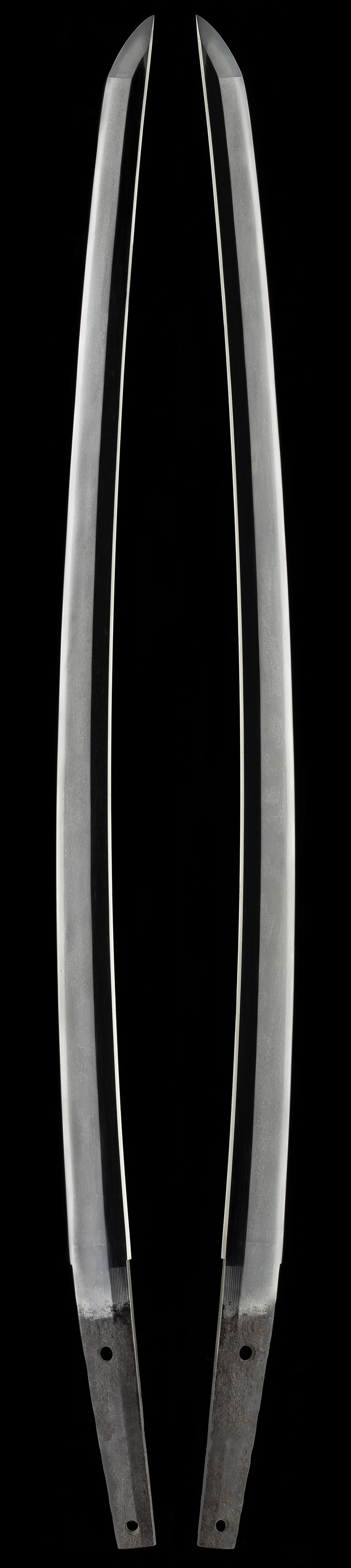
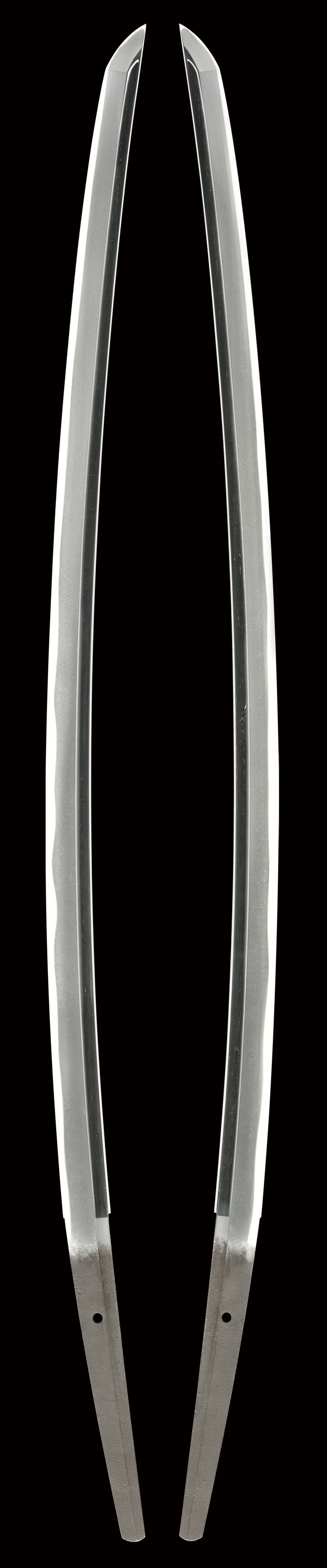
The build announces him before the steel does. His are with , somewhat elongated and often a little wide in the , with , and the published sources fix the construction in a standing formula, naming "the thick and sturdy construction" (重ねの厚い丈夫な造込み) together with a "whose roundness is large and whose returns wide, deep and long" (帽子の丸みが大きく且つ返りの焼幅が広く長く返る) among the features to see. The oldest commentary in the corpus already treats both points as his habit, writing that "there is rather more variation within the than in his teacher Kunitoshi, and the of the is as a rule long" (師の来国俊よりもむしろ刃中の変化があり). The itself is a in the manner of his teacher, though one designation adds that he "burns a wider than Kunitoshi's" (来国俊より広い直刃を焼き). Into the quiet line mix , a feeling of or , and ; and enter, the runs deep, lies thickly, and and fine work through a that stays bright and clear.

The is the declared tell, and the states it almost verbatim across the later texts: the of this smith "has as its special quality that the is laid on exceptionally thickly so that it looks strong, and the loose, weak texture called - is in general rare in him" (地沸を一際厚く敷いて強く見えるのが持味). The is a finely packed , mixing flowing toward the or along the edge and a touch of larger at the ; the sits dust-fine and thick, a rises, and the steel is bright. One designation widens the contrast to the whole school, finding that "the is stronger and clearer than that of Kunitoshi or Kunimitsu" (地がねが来国俊や来国光よりも強く冴えている) and naming that strength a point to see. The old literature reached the judgment in its own words: the quotes the text Nyote-hikisho (如手引抄) to the effect that, compared with Kunitoshi, the color of his is bluer and clear to the bottom, the fine and vivid, "like the of Yoshimitsu" (粟田口吉光景気の沸のごとし). appear on a few pieces, paired with a stout , or a on the with on the .

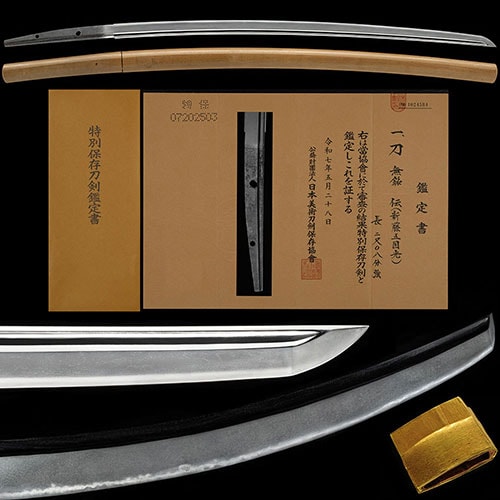
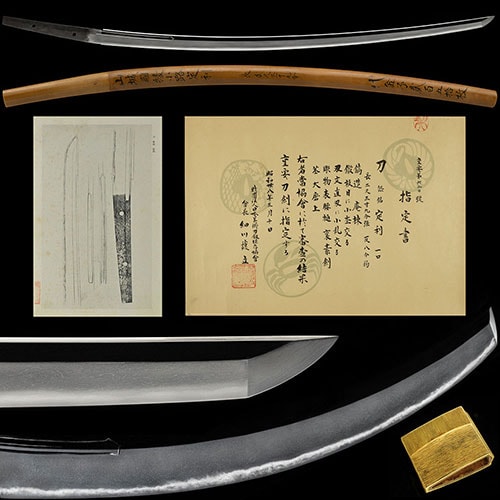
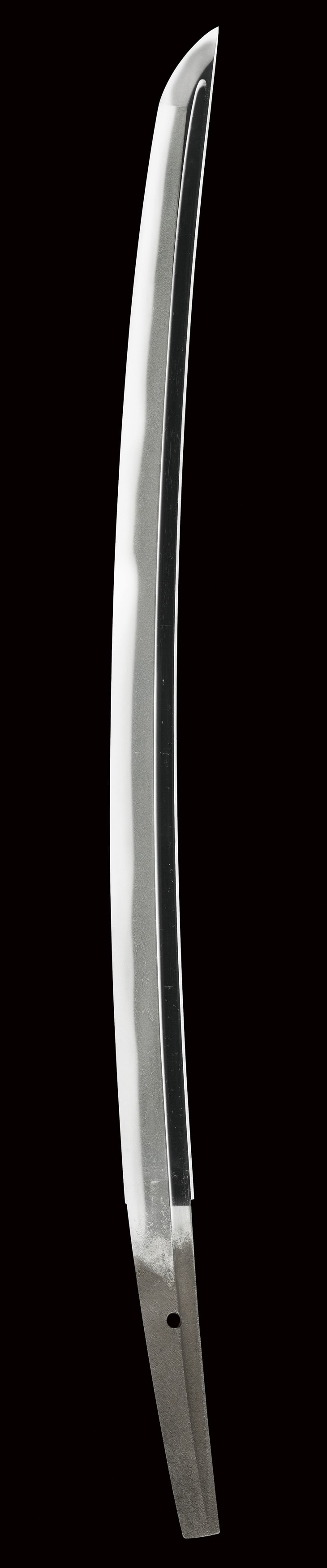
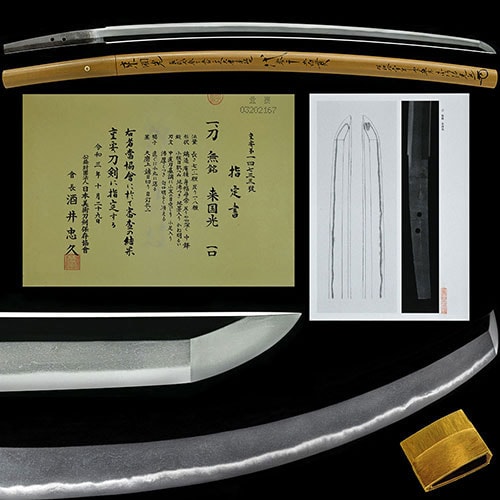
Against this mainstream the texts set exactly one exception, rehearsed in nearly every designation: "there exists one single work that burns a -ba led by , of a kind that underwrites the theory that he was Nagamitsu's pupil" (唯一口、長光門人説を裏付けるような互の目主調の乱れ刃を焼いた作), the -Mitsukane (名物乱光包), an Important Cultural Property whose at first sight recalls . The oldest text in the corpus names the teacher as Kagemitsu rather than Nagamitsu, judging works of this group "almost the image of Kagemitsu, though stronger than Kagemitsu in the of and "; the later texts settle on Nagamitsu. The surviving record divides as well by signature. The signed pieces are slender in a fine , while the broad wide- examples are the larger unsigned works, among them a carrying not a signature but a , the house's red-lacquer attribution reading Mitsukane with Hon'a and a , whose the judges "an accomplishment surpassing even the signed Mitsukane" (在銘の光包を凌ぐほどの出来映え); the document of its old scabbard records that the fifth shogun Tsunayoshi presented it in Enpo 8 (1680) to mark his son Tokumatsu's move to the Nishinomaru of castle.

In he stands as the strong pole of the school. Where the school's quiet can ride on a soft, loose , his carries laid on thickly over a tight ; where his teacher's are slender, his run thicker in the and a little longer in the body; the is wider, the movement within it greater, and the rounder, its deeper and longer. The literature reaches past his own school for the comparison, likening the fineness and vividness of his upward to Yoshimitsu rather than across to his fellows. The texts name no pupils and no continuing line, and his manner closes with him; what remains is a small, coherent body of in which, as the published sources put it of the best examples, the typical manner of Chudo Mitsukane is displayed to the letter.

Fifteen designated works stand on the official record: four Important Cultural Properties, among them the -Mitsukane and a signed transmitted in the Date family, three , and eight , eleven blades in all in the and tiers; five of the fifteen are signed, ten unsigned. The provenance recorded against them runs through the great houses of the period. The Kuwayama Mitsukane (名物桑山光包), an listed in the Kyoho -cho, takes its name from Kuwayama Iga-no-kami Motoharu, passed to the third shogun Iemitsu, was granted by him to Maeda Toshitsune, and descended thereafter in the Maeda family; it stands today among his . The descends from the Tokugawa main line. Of recorded whereabouts, his blades rest with the Tokyo National Museum, the Fukuyama Art Museum and the Kurokawa Research Institute, with one in private hands. The four Important Cultural Properties are patrimony, preserved where they are; the eleven blades of the and tiers are what a collector could in principle encounter, and for a smith whose surviving examples the published sources themselves call extremely few, one reaching the market is a rare event.

Kantei

one coherent manner, the Chudo Rai suguha tanto: thick-kasane, uchizori hira-zukuri tanto and sunnobi ko-wakizashi in a Kunitoshi-style suguha over an exceptionally strong nie-laden jigane, with a large round, deep and long-returning boshi; flanked by a single documented Bizen-echo pole, the gunome midare of the meibutsu Midare-Mitsukane; signed work is nijimei tanto only and rare, most designated pieces being mumei attributions

Mitsukane, called Chudo because tradition has him forging in seclusion at the Konpon Chudo on Mt. Hiei, and Tozu from his residence at Tozu in Omi, was a pupil of Kunitoshi at the end of ; most old records say he first studied under Nagamitsu before entering the Kunitoshi school, and the calls him the singular figure of the school. Surviving works are extremely few, only with no , almost all in a Kunitoshi-style ; yet his blades are stockier than his teacher's, the thick and the build sturdy, the laid on exceptionally thickly so the looks strong, the loose weak - rare in him, with more workings in the than Kunitoshi and a of large roundness returning wide, deep and long. A single famous exception, the -Mitsukane, burns a that recalls and underwrites the Nagamitsu tradition.

Diagnostic discriminators

57% of his works · 3.4× vs Rai Kunitoshi

36% of his works · 6.0× vs Rai Kunitoshi

29% of his works · 7.1× vs Rai Kunitoshi

50% of his works · 3.1× vs Rai Kunimitsu

Observation by phase

Prime manner, the Chudo Rai suguha tanto

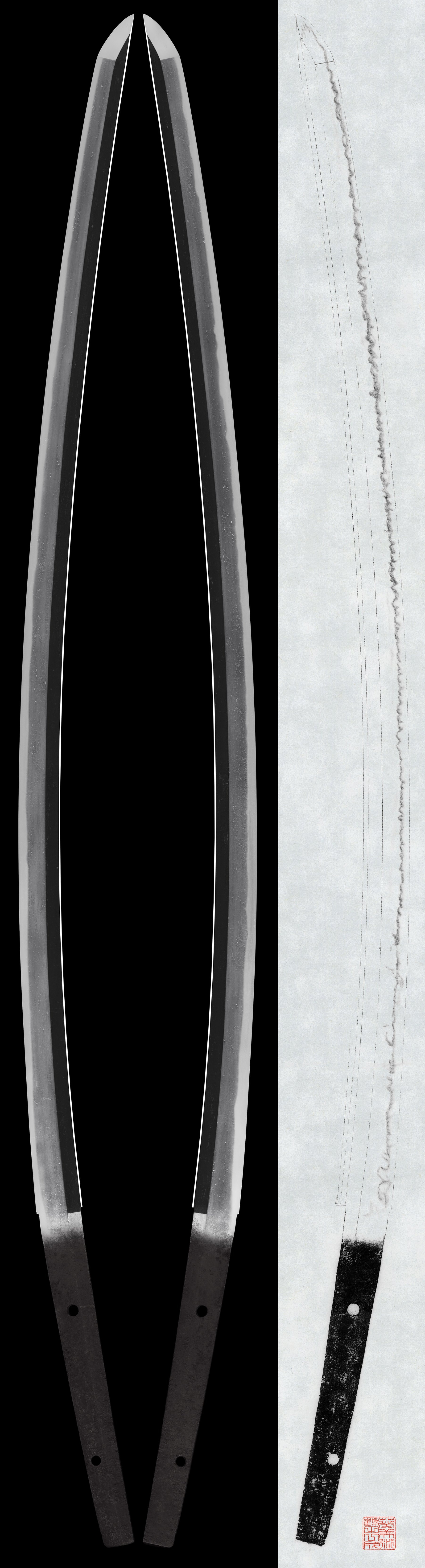
Virtually the whole surviving record. and pieces with thick and , somewhat elongated and sturdily built. The is a finely packed , often mixing flowing toward the or the edge, with okada in places at the ; sits dust-fine and thick, rises, and the steel is bright. The runs from a slender to a notably wide , mixing , or feeling and , and entering, deep, thick, and fine working, the bright and clear, with more movement in the than his teacher shows. The is the tell: of large roundness, sometimes with a pointed tendency or light , the wide, deep and long. appear on a few pieces, paired with a stout , or and . The signed pieces are slender in a fine ; the broad wide- examples are the large and pieces.

Sugata 姿
Jigane 地鉄
Hamon 刃文
Bōshi 帽子

The Bizen echo, the Midare-Mitsukane pole

less firmly establisheda single work: the meibutsu Midare-Mitsukane (Juyo Bunkazai), the one midare-ba piece the NBTHK cites in nearly every text as the proof of the Nagamitsu-pupil tradition; it lies outside this corpus

Against the mainstream the texts set exactly one exception: a -led -ba, the -Mitsukane, which at first sight recalls , the older texts saying it is almost the image of Kagemitsu though with stronger in and than Kagemitsu shows. The reads this single blade as the evidence for the tradition that he studied at under Nagamitsu before entering the Kunitoshi school. This pole is known through that one work alone; no piece in the present corpus shows it.

Hamon 刃文
Scholarship

The order of his training is the standing question: most denshō record that he first studied under Nagamitsu and then entered the Kunitoshi school, and the NBTHK repeats this formula while the single midare work carries the burden of proof.

The oldest text in this corpus gives the Bizen teacher as Kagemitsu rather than Nagamitsu, saying the Midare-Mitsukane group is almost the image of Kagemitsu with stronger nie in ji and ha; later texts settle on Nagamitsu.

He signs Mitsukane in two characters and does not crown the signature with the character Rai; the signed record is tanto only.

The Edo kantei text Nyote-hikisho is quoted on his steel: compared with Kunitoshi the color of the ji is bluer and clear to the bottom, the nie fine and vivid, like the nie of Awataguchi Yoshimitsu.

His residence is recorded at Tozu in Omi, whence the name Tozu Rai; surviving examples are called extremely few.

Designations

Kokuhō—
Jūyō Bunkazai4
Jūyō Bijutsuhin—
Gyobutsu—
Tokubetsu Jūyō3
Jūyō Tōken8

Elite Standing

0.47 across 15 designated works

Top 5% among smiths

Provenance

10 documented provenances across certified works by Mitsukane

Provenance Standing

8 works held in elite collections across 10 documented provenances

Top 13% among smiths

Raw score: 2.29 / 10

Blade Forms

Distribution across 15 ranked works

Signatures

Signature types across 15 ranked works

Currently Available

Lineage

TeacherKunitoshi
Mitsukane

Rai School

Other artisans of the Rai school

  1. 1.Kuniyuki國行1 for sale125designated
  2. 2.Kunitoshi國俊84designated
  3. 3.Kunitoshi國俊5 for sale208designated
  4. 4.Kunimitsu國光4 for sale269designated
  5. 5.Kunitsugu國次2 for sale65designated
  6. 6.Kunizane國眞1 for sale26designated
  7. 7.Kunihide國秀7designated
  8. 8.Tomokuni倫國5designated
  9. 9.Kunisue國末1designated
  10. 10.Mitsushige光重2designated
  11. 11.Kunitake國武1designated
  12. 12.Kunimune國宗1designated