NihontoWatch MonNihontoWatchBETA
MarketEncyclopedia
NihontoWatch Mon

NihontoWatchBETA

Market
Encyclopedia
Overview·Kantei·Designations·Work Types·Signatures·Lineage·School
OverviewKanteiDesignationsWork TypesSignaturesLineageSchool
  1. Schools
  2. Yokoya
  3. Yanagawa
  4. Ishiguro
  5. Koretsune

Ishiguro Koretsune

是常

Jūyō
Vol. 61, No. 208 · Tsuba

Ishiguro Koretsune

是常

4 ranked works

ProvinceMusashiEralate Edo (early-mid 19th century)SchoolYokoya>Yanagawa>IshiguroTraditionMachiboriTeacherMasatsuneSpecialtieskozuka, fuchi-kashira, tsubaTypeTosogu MakerCodeISH002
4Jūyō Tōken

Overview

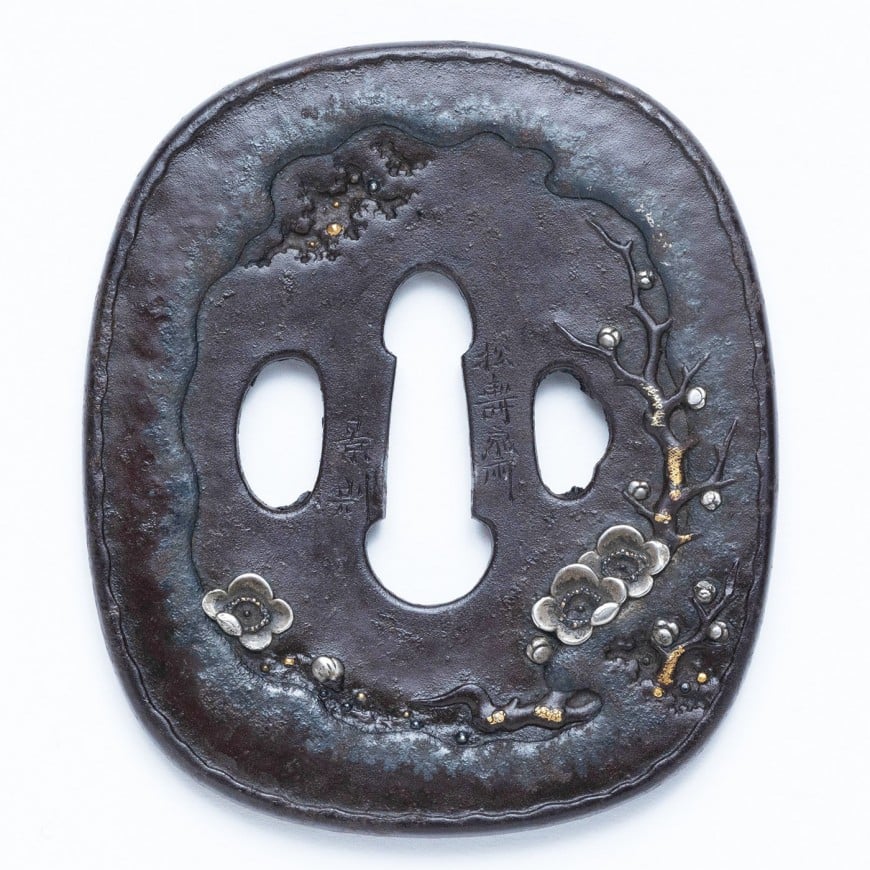
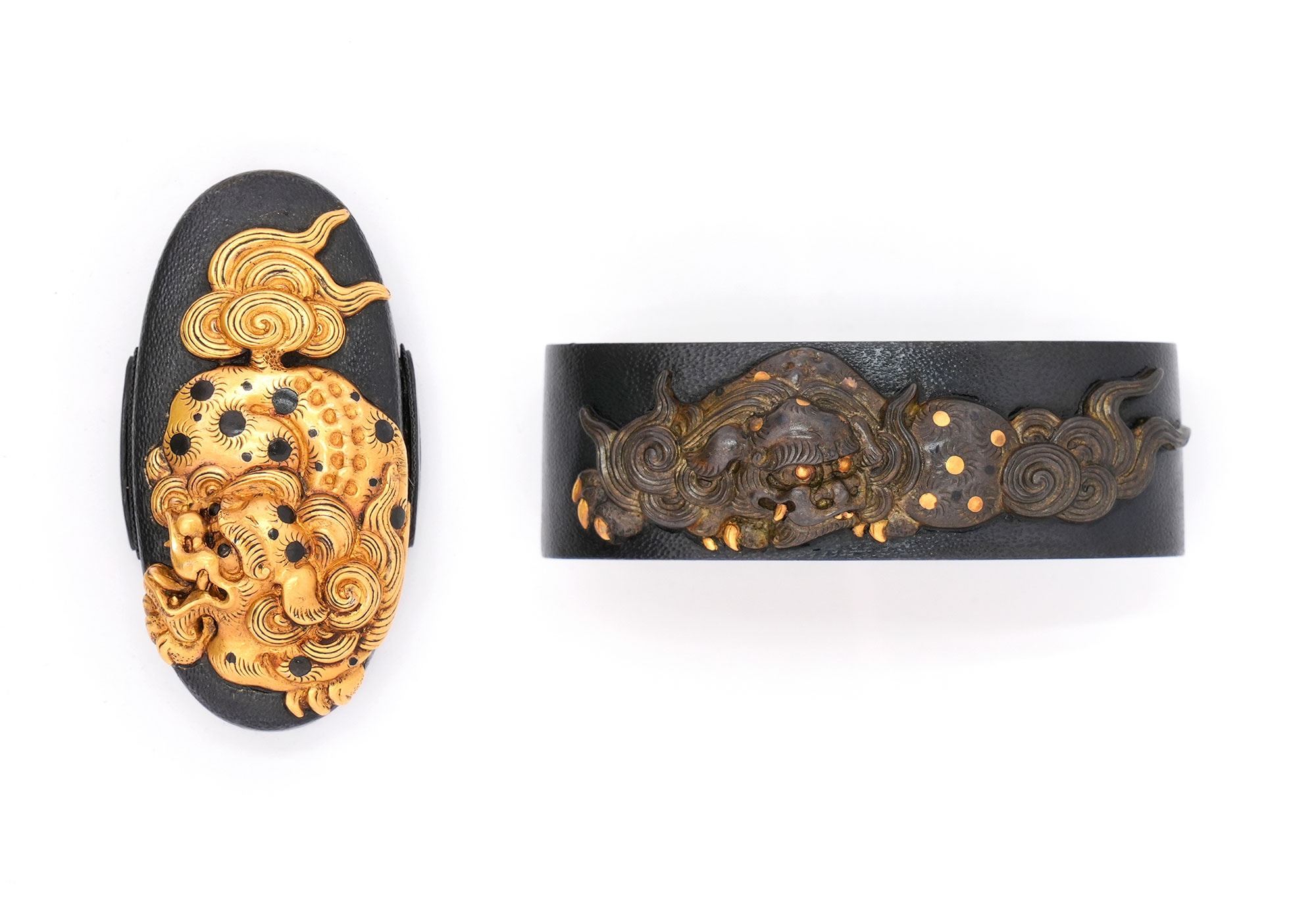
Ishiguro Koretsune was the eldest son of the first-generation Masatsune, the founding master of the Ishiguro school within the broader Yokoya lineage. Known by the common name Shukichi, he employed the art names Togakushi and Shuhosai. Together with the second-generation Masatsune, Koretsune served as a substitute maker () for his father, assuming a central role in the workshop's prolific output during the late period. He is further credited with having provided technical guidance to the first-generation Koreyoshi, thereby transmitting the school's methods to the next generation. It is recorded that Koretsune died in the prime of life, lending a particular rarity to his surviving oeuvre.

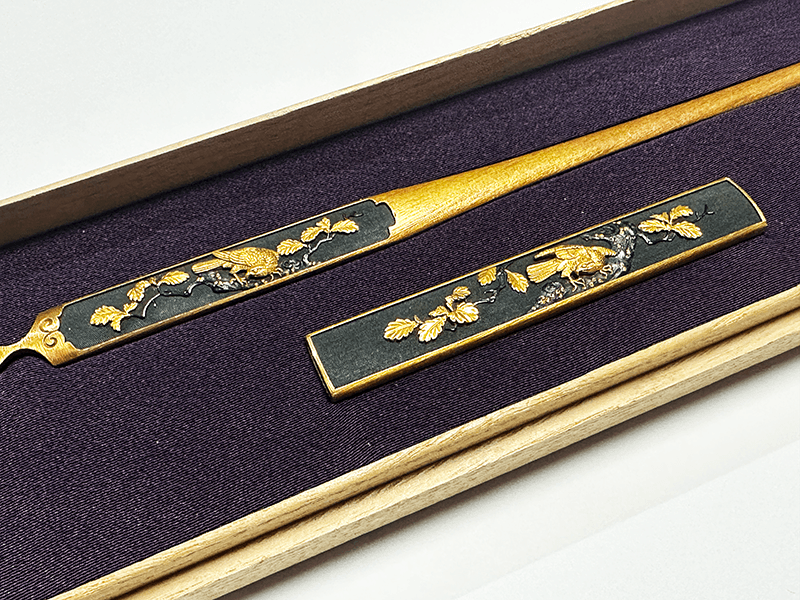
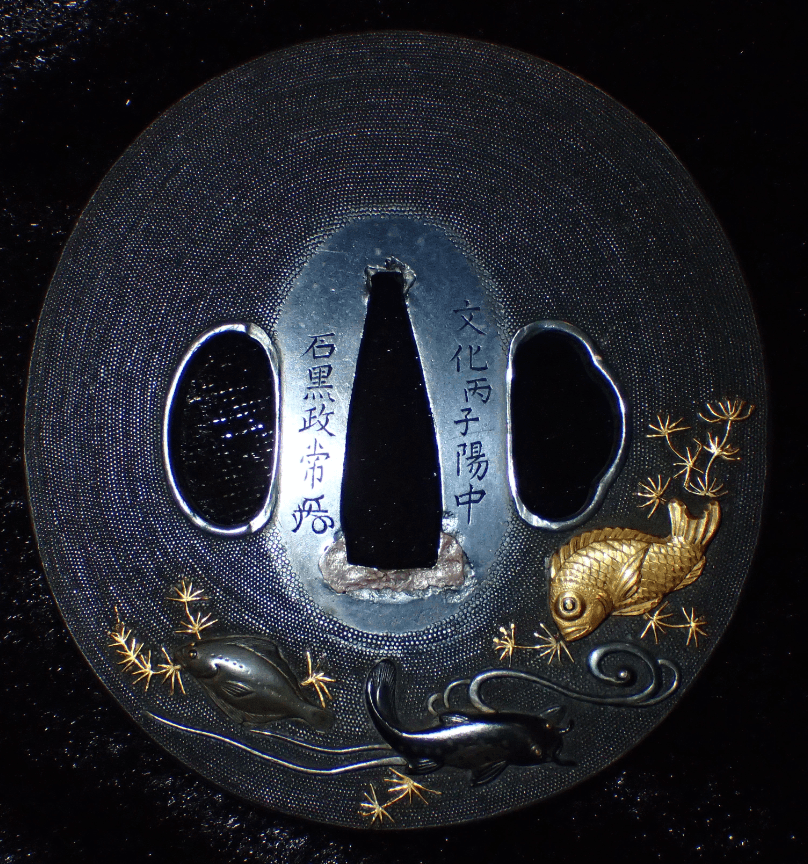
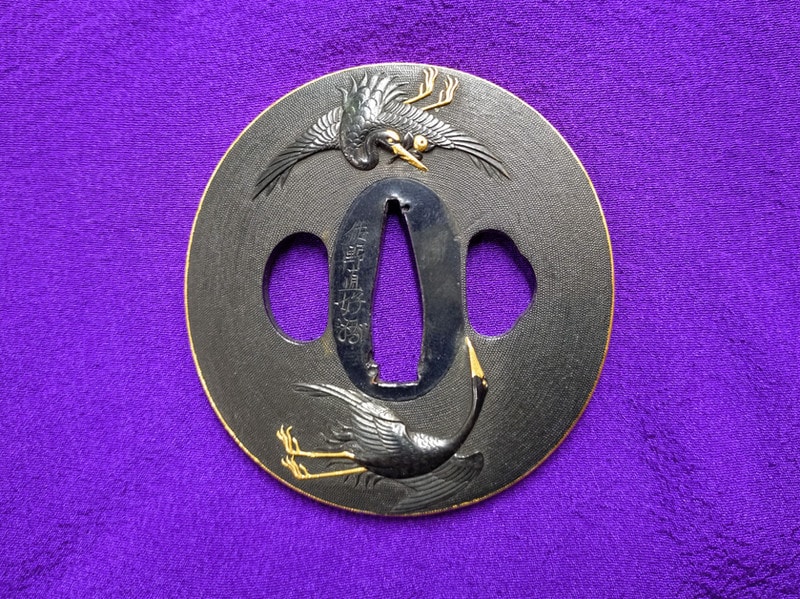
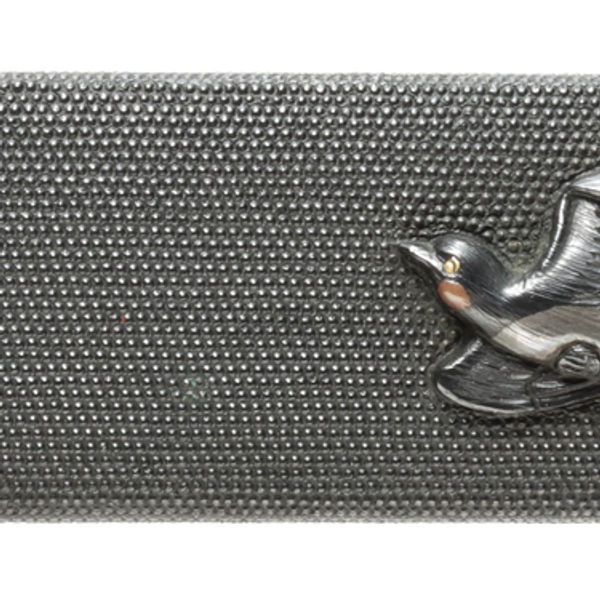
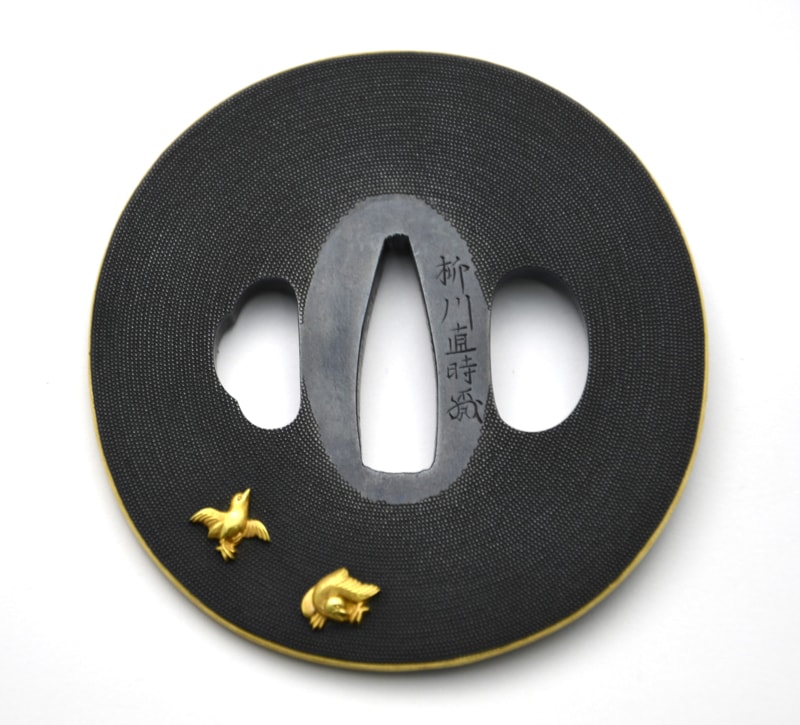
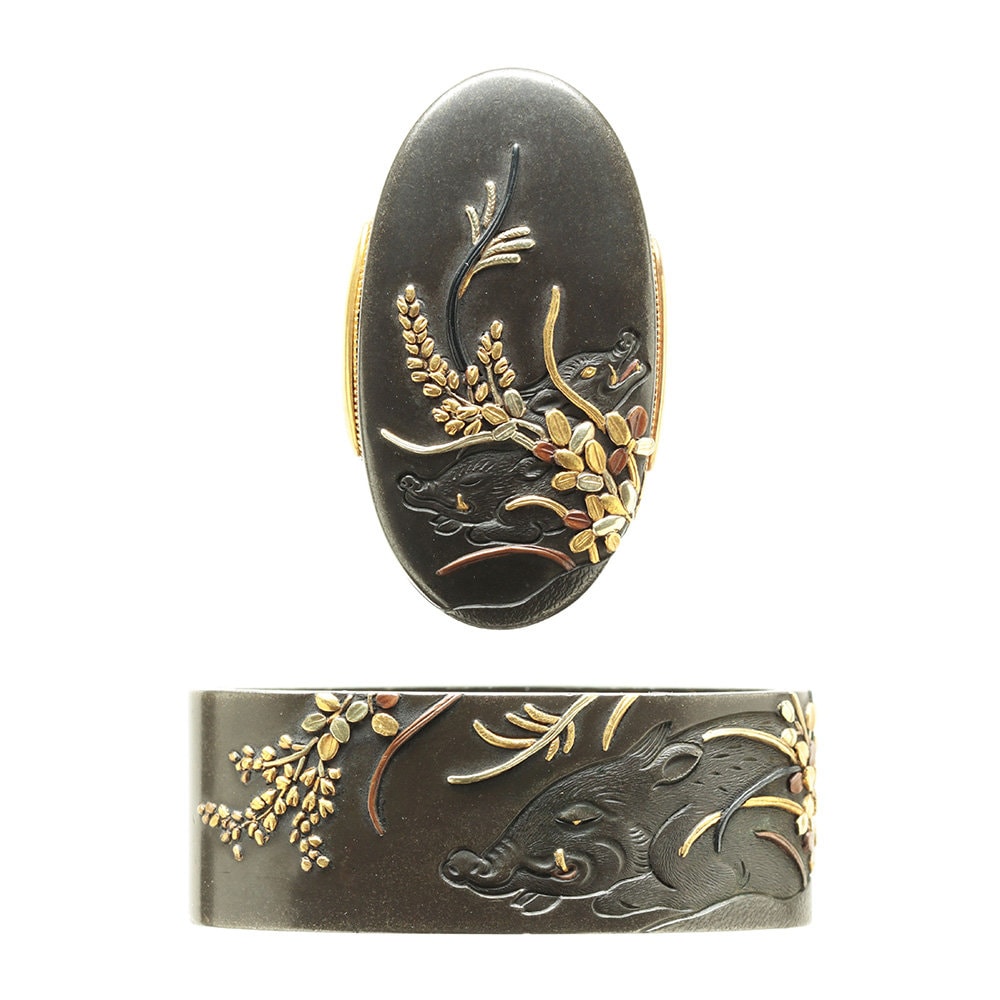
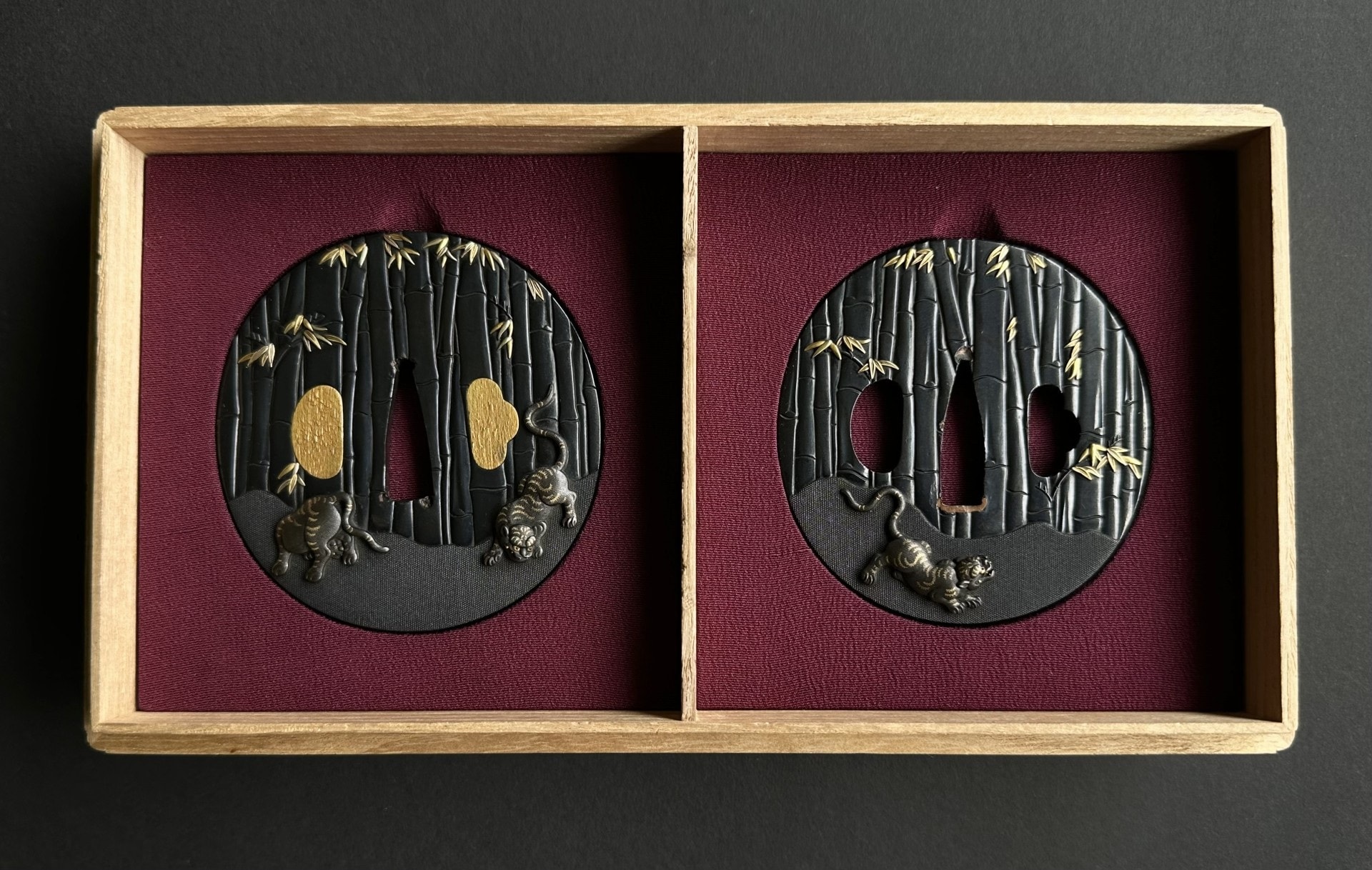
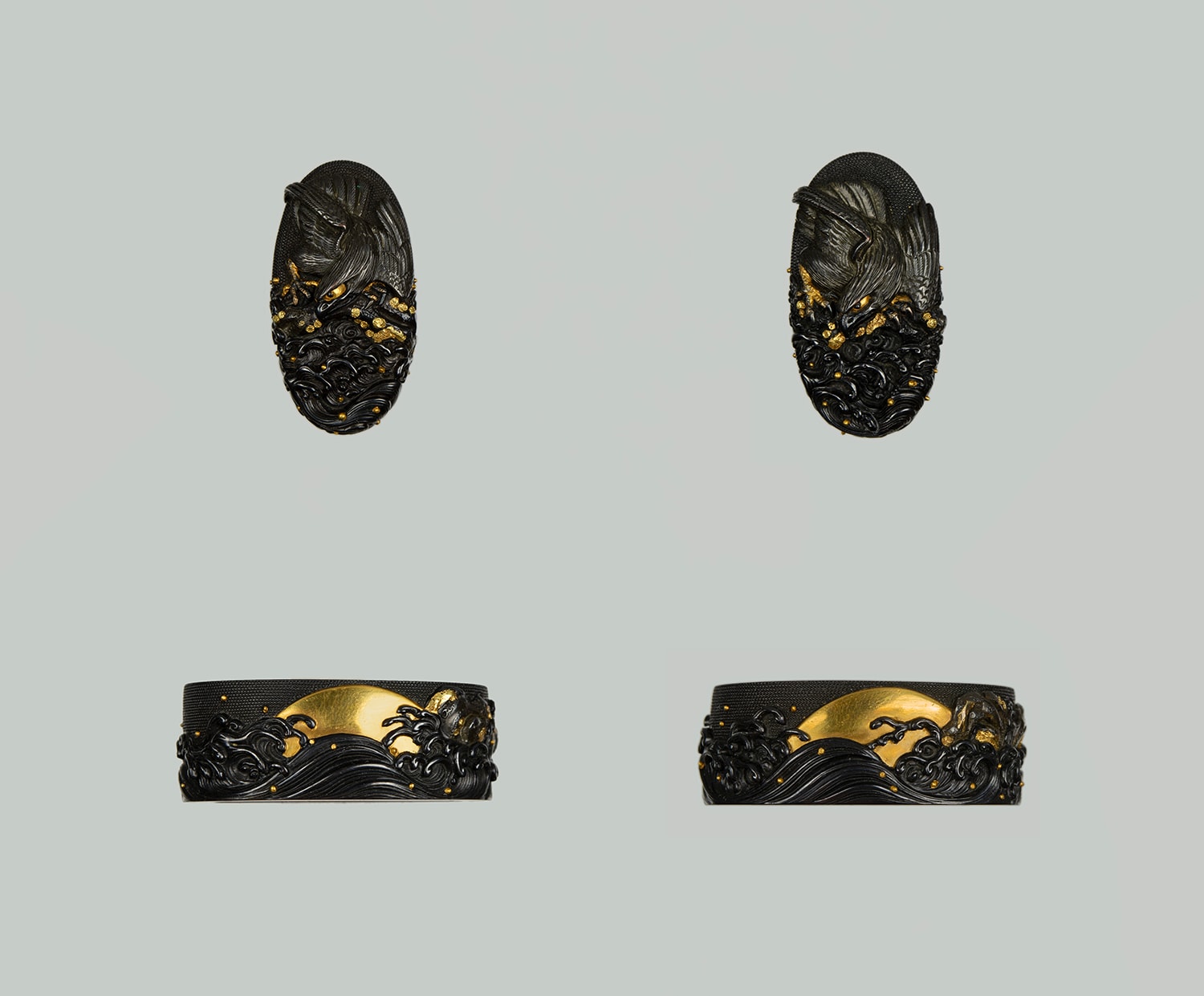
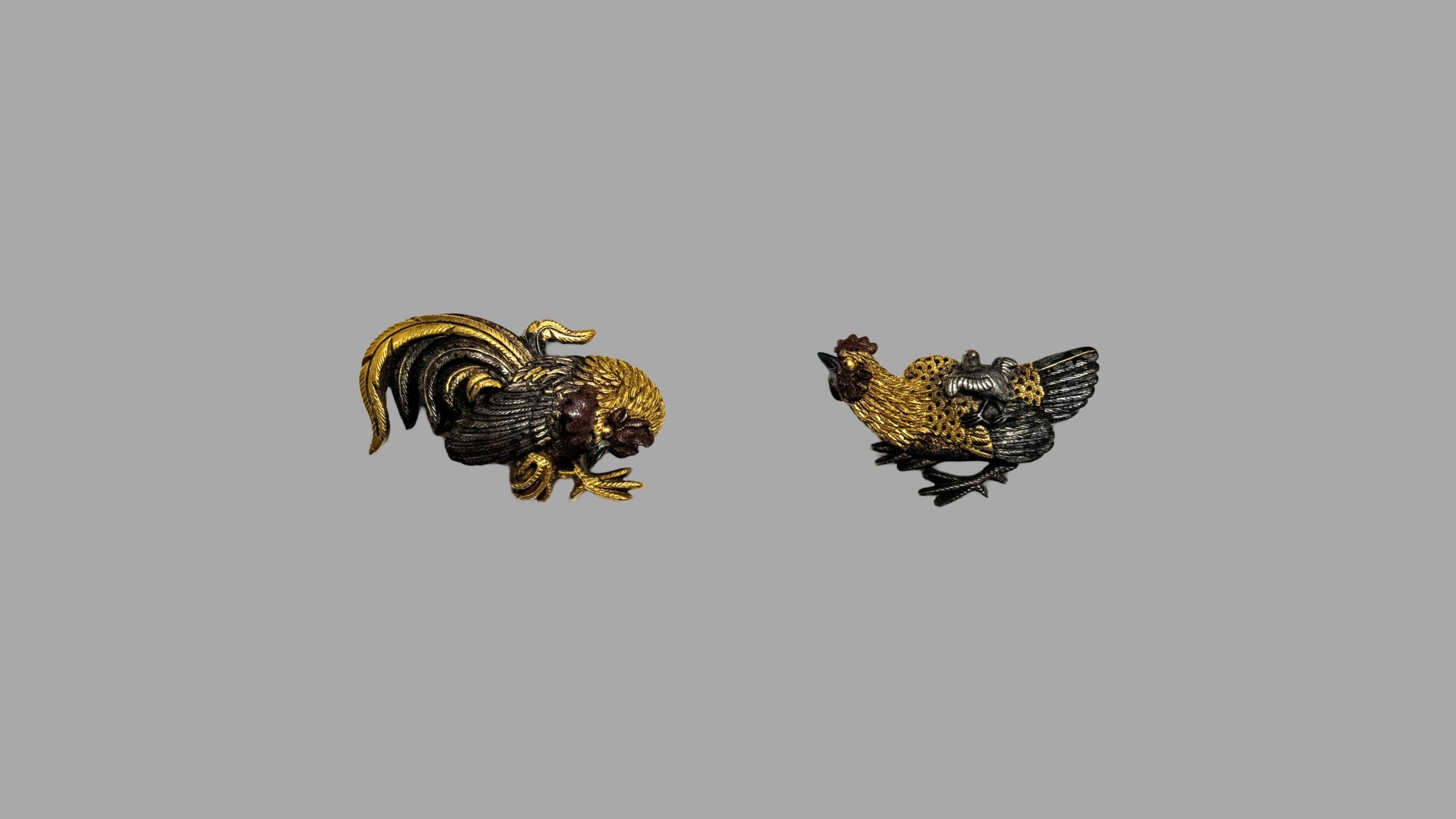
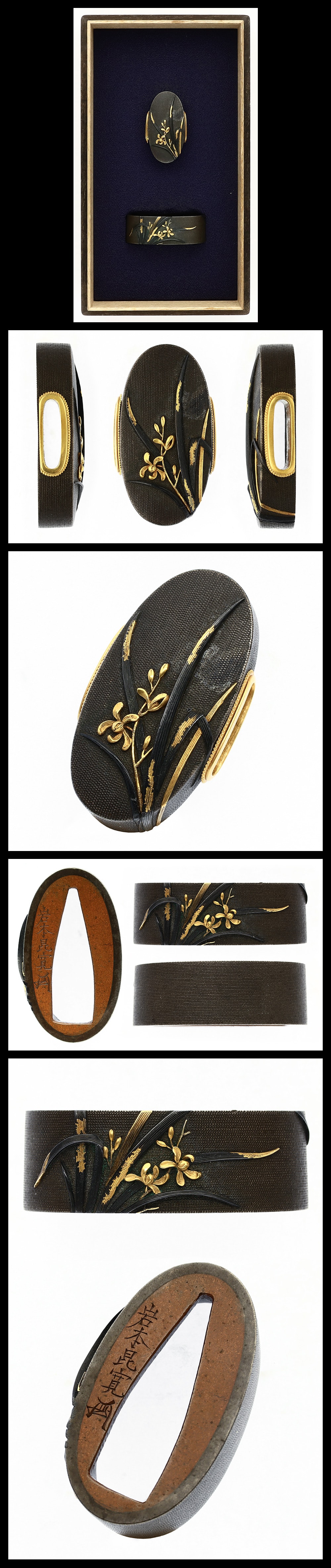
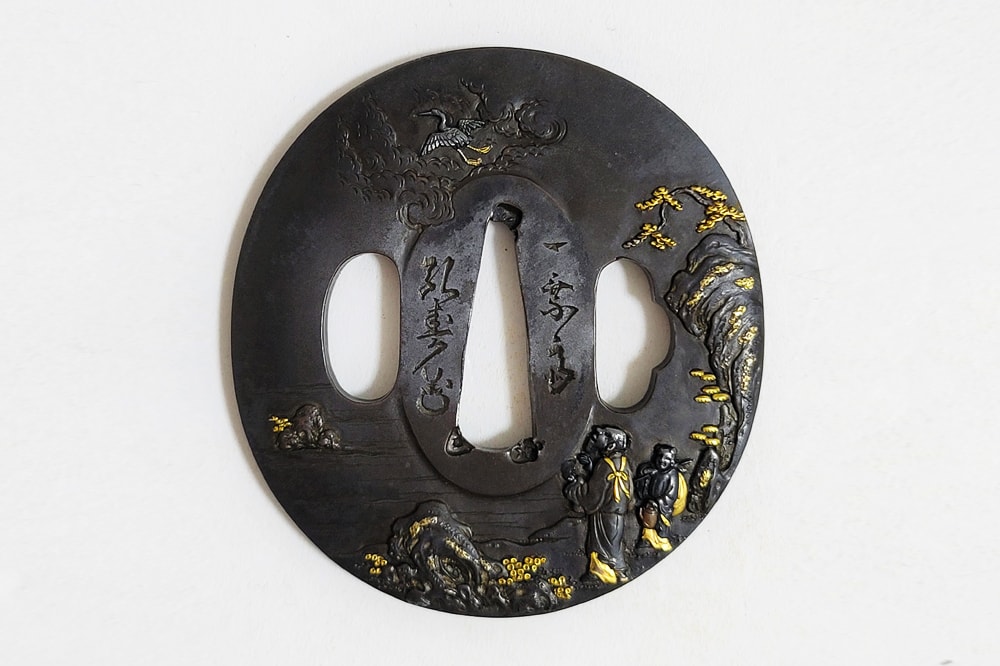
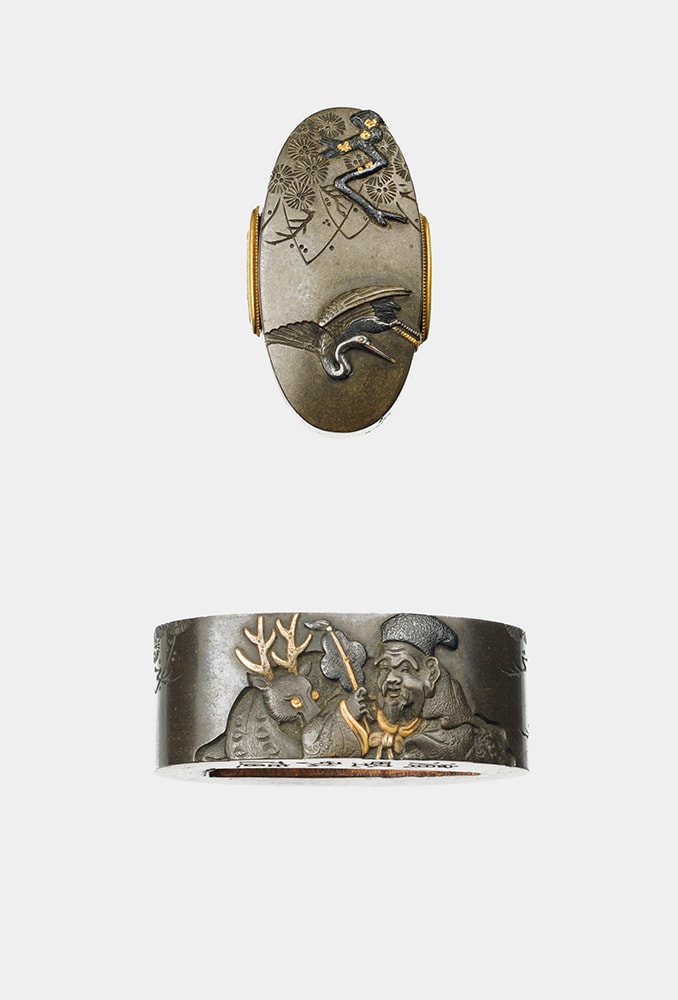
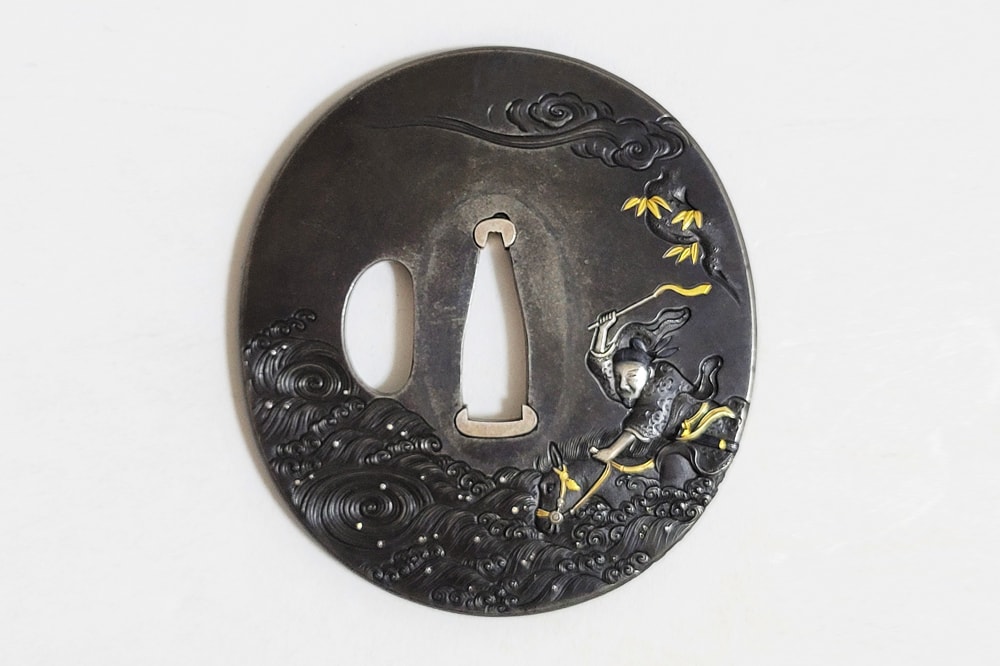
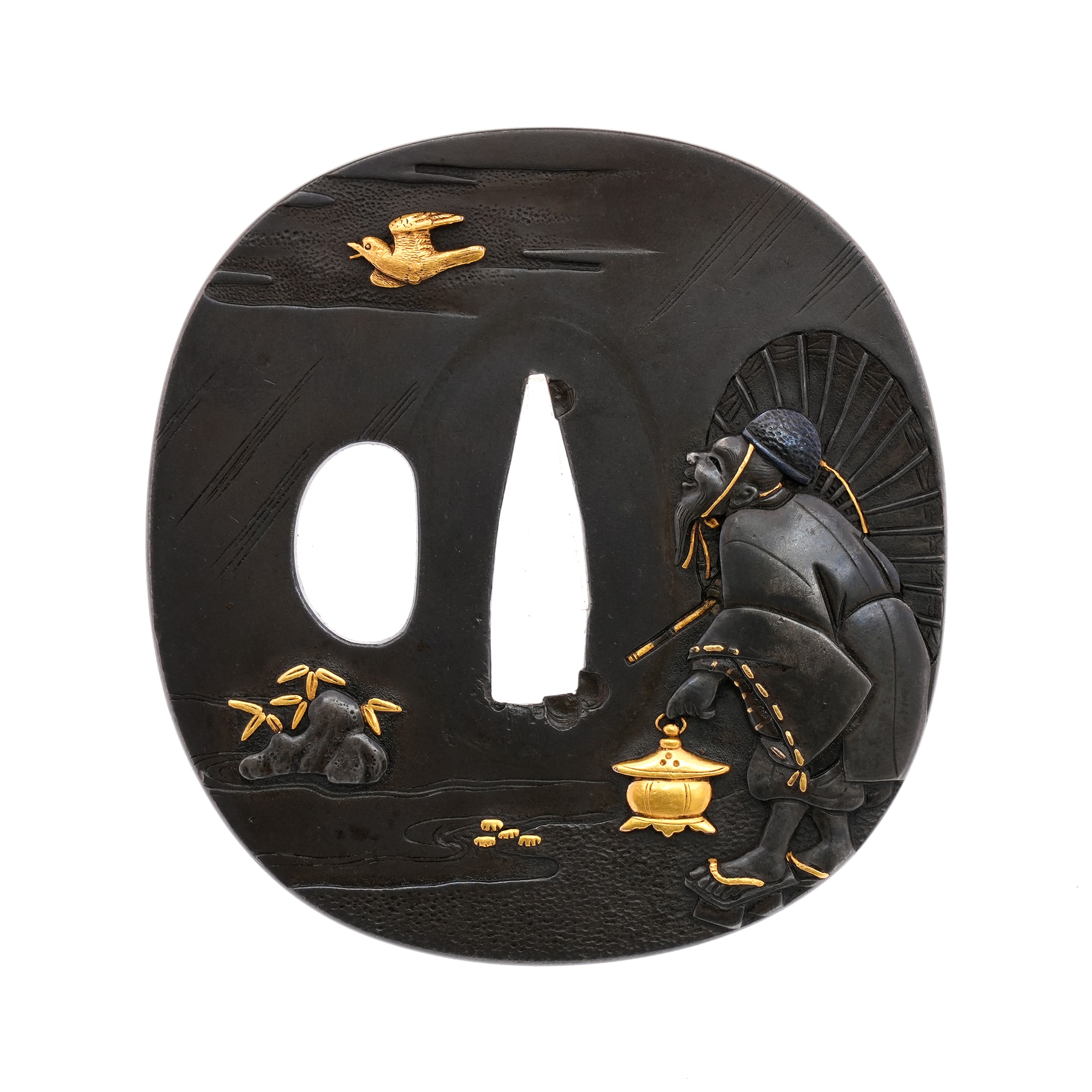
Koretsune's carving methods are characterized by the as "dignified and sumptuous, yet steadfast and reliable." Working principally on grounds, he excelled in bold with polychrome employing gold, silver, , , and hi-irodo (scarlet copper). His command of sculptural depth is especially notable: by subtly lowering the from the toward the rim, he achieved a heightened sense of perspective that transforms the surface into what the examiners describe as "a magnificent and excellent screen-painting transformed into metalwork." His bird-and-flower subjects — from phoenix and paulownia to raptorial birds upon aged plum trees — display vigorous, spreading forms and a courageous bearing that constitute "the very essence of the Ishiguro school."

Koretsune's significance rests both in his role as the vital link between the first-generation Masatsune and the school's later flourishing, and in the exceptional quality of his individual production. The has consistently praised works in which "Koretsune's full strengths are amply displayed," noting in particular his lavish yet controlled use of gold and his ability to render subjects with an immediacy "such that the bird seems about to burst forth from the surface." Because examples by Koretsune are acknowledged to be scarce, each surviving work is valued not only as a demonstration of supreme craftsmanship but also as "important material for the study of the Ishiguro school."

Kantei

3 descriptive axes: material (shakudo worked in fine nanako above all) x technique (dense high relief and applied suemon with rich gold, silver and colour-metal iro-e) x themes (the bird-and-flower realism of the Ishiguro house, the phoenix singled out as his forte). The corpus is too thin (4 pieces) to fix a stylistic separator that would mark Koretsune off from his father and his school: everything in it is the shared house foundation, so the load-bearing separator is honestly his own signature, with the phoenix offered as a low-confidence, setsumei-named secondary tell.

Ishiguro Koretsune, common name Shukichi, is the eldest son of the founder Ishiguro Masatsune the First and a senior hand of the Ishiguro school of kinko. Together with the second Masatsune he served as proxy-maker () for the first Masatsune, and the records say he died in middle age. He used the art-names Togakushi, shared with his father, and Shuhosai. The records credit him with skill rivalling his father, say he gave technical instruction to the first Koreyoshi, and note a settled reputation for solemn, magnificent and solid carving. A metalwork artist of the late period, he renders the bird-and-flower realism that the Ishiguro made their own, in dense high relief and rich colour-metal iro-e on -; the corpus is very thin, four pieces, all bearing his signature and all in the shared house manner, with the phoenix the subject the records single out as his forte.

Diagnostic discriminators

unique vs the rest of the Ishiguro school, who work the same house manner

the phoenix appears on three of the four pieces, and two setsumei name it the subject Koretsune excelled at and his true mettle (鳳凰の画題を得意とする是常の真骨頂); presented as a low-confidence tell because the wider Ishiguro house art is bird-and-flower and the phoenix is a house-shared subject, so this is the setsumei's own characterization at very low n (4 pieces), not a corpus-proven separator from his school

Material (grounds)

worked in fine, orderly above all, with solid gold ground on besides; silver, , and copper-red are used among the inlaid colour-metals.

Technique

Dense high relief and applied with rich gold and colour-metal iro-e and inlay, the in , one in raised ; the records praise the high quality of the Ishiguro house high-relief technique and call his carving solid and reliable.

Themes (bird-and-flower)

Bird-and-flower above all, the manner the Ishiguro made their own: the phoenix on paulownia carved across his three-piece and four-piece sets, the golden pheasant with peony, the raptor on aged plum; the records call the phoenix the subject he excelled at and his true mettle.

Bird-and-flower realism

The phoenix on paulownia, the golden pheasant with peony, the raptor on aged plum, rendered with dense, colourful realism on orderly , the feathers given a lifelike vigour.

Full iconography

Signature chronology

Placement
Recorded signatures

Documentary note

He signs the core name Ishiguro Koretsune with a throughout the corpus, and prefixes a go on two pieces: Shuhosai (種宝斎) on the peony-and-golden-pheasant , and Togakushi (東岳子), the go he shares with his father, on the four-piece set; on the three-piece set the are cut as the split short-strip Ishiguro-sai and Koretsune (石黒斉・是常). The signatures carry the engraving verb 鐫 or 作 after the name. The records give his common name as Shukichi and place him as the eldest son of the first Masatsune; the 常 of Koretsune he shares with his father Masatsune (政常) and the wider line. The honest separator is the full Ishiguro Koretsune; the school-mate 石黒是美 (Koreyoshi, his pupil) and the second Masatsune (二代政常) sign distinct names and are not confused with him.

Scholarship

One setsumei calls his surviving examples few and names them precious for the study not only of Koretsune himself but of the Ishiguro school; presented honestly as a single-record judgment.

Designations

Kokuhō—
Jūyō Bunkazai—
Jūyō Bijutsuhin—
Gyobutsu—
Tokubetsu Jūyō—
Jūyō Tōken4

Elite Standing

0.02 across 4 designated works

Top 32% among makers

Work Types

Distribution across 4 ranked works

Other
250%
Tsuba
250%

Signatures

Signature types across 4 ranked works

Currently Available

Lineage

TeacherMasatsune
Koretsune

Ishiguro School

Other artisans of the Ishiguro school

  1. 1.Masayoshi政美4 for sale30designated
  2. 2.Masatsune政常1 for sale17designated
  3. 3.Masaaki政明16designated
  4. 4.Koreyoshi是美4designated
  5. 5.Masachika政近2designated
  6. 6.Masatsune政恒1designated
  7. 7.Masaharu政春1designated
  8. 8.Mitsutsune光常1designated

Koretsune

Koretsune(是常) was a maker of Japanese sword fittings (tōsōgu) of the Ishiguro school in Musashi province, active during the late Edo (early-mid 19th century) period.

The work follows the Machibori tradition.

Designated works by Koretsune include 4 Jūyō.