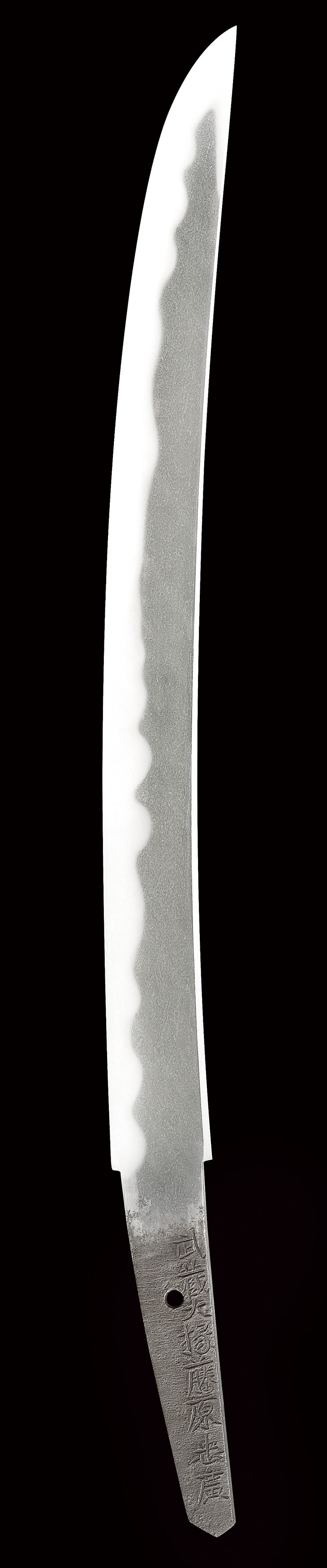
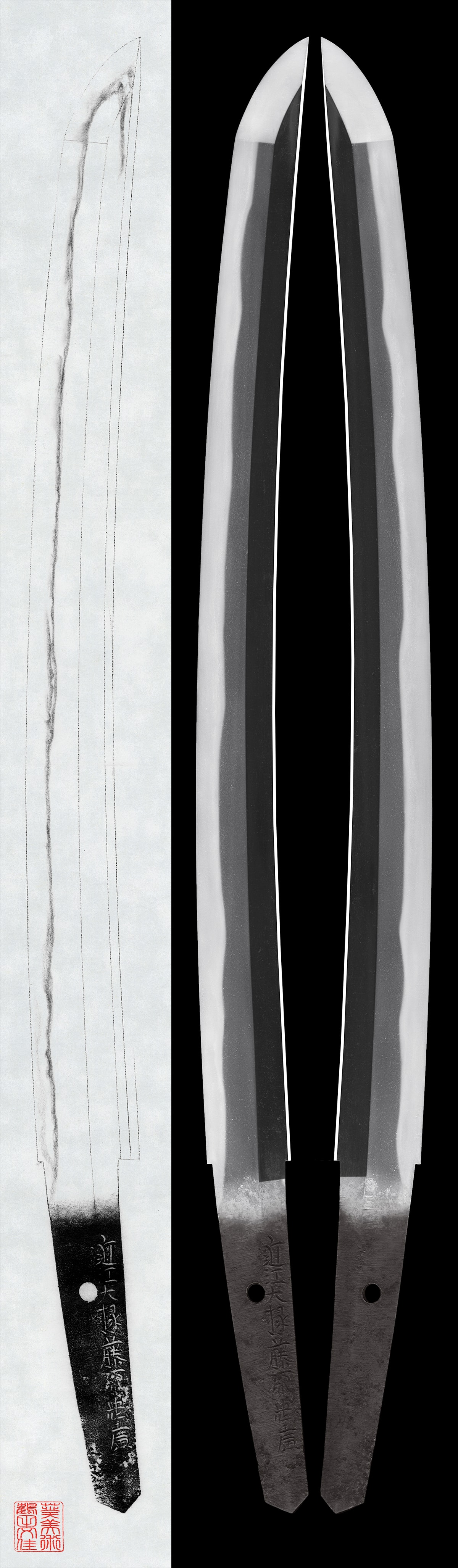
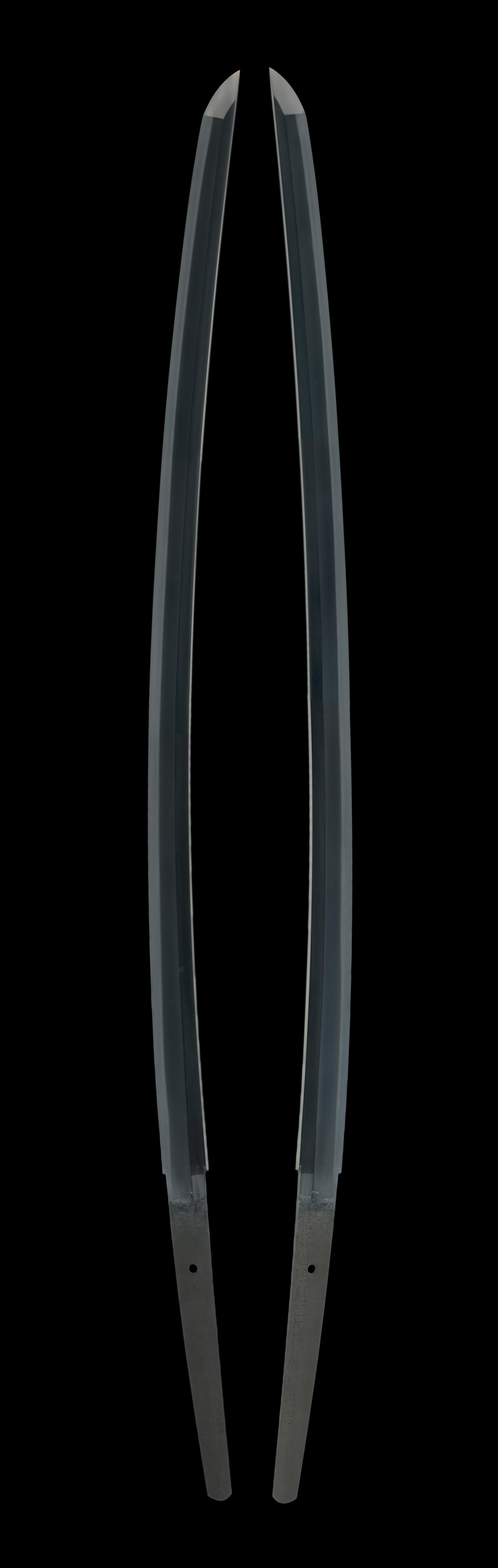
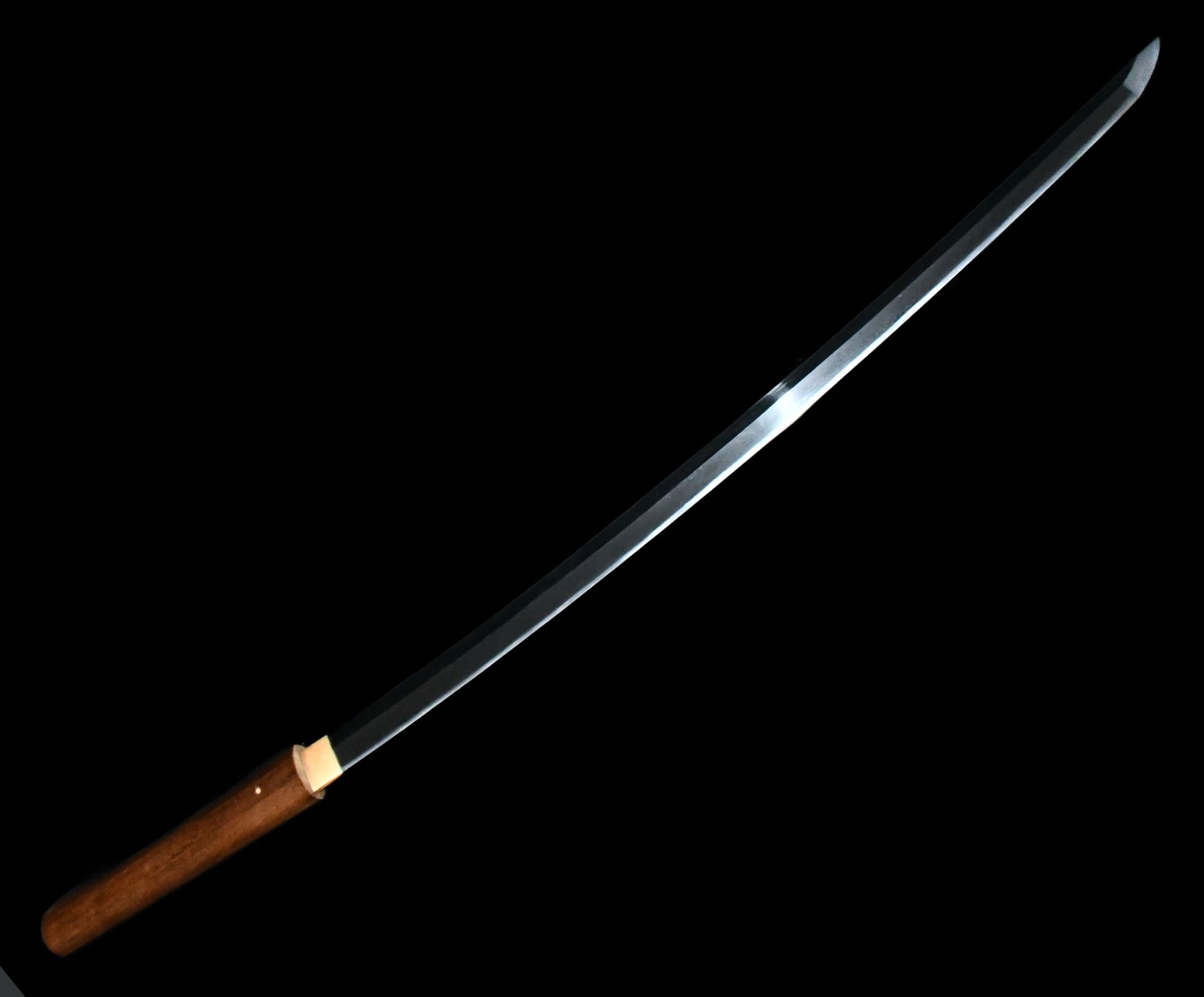
Hironori is an obscure smith of Province whose extant works are exceedingly rare and whose documentary record remains unclear. Reference works record him simply as "a resident of Province" active during the Keicho era (1596-1615). Judging from his surviving works, this dating is appropriate, and his manner closely resembles that of the first-generation . He is accordingly presumed to have been a disciple of the first-generation master and, moreover, one of the smiths who served as a daisakusha (substitute maker) — a circumstance that readily explains the scarcity of signed works.
Hironori's forging is a closely packed with clear and well-adhering . The presents mixed with , with and , frequent , and a tight with and clear brilliance. In his , also appear. The enters in with turnback, often showing . His in bear skillful including and in a manner that may be regarded as carvings in the style of Yoshinaga. The tang finishing, with tip and , is consistent with the broader workshop.
The observes that Hironori's workmanship, "both in quality of forging and in the manner of finishing the tang's file marks," closely resembles Daijo Tadahiro. His blades are recognized as constituting "valuable material for research into swords" and "important examples for the study" of the early tradition surrounding the first-generation 's workshop.