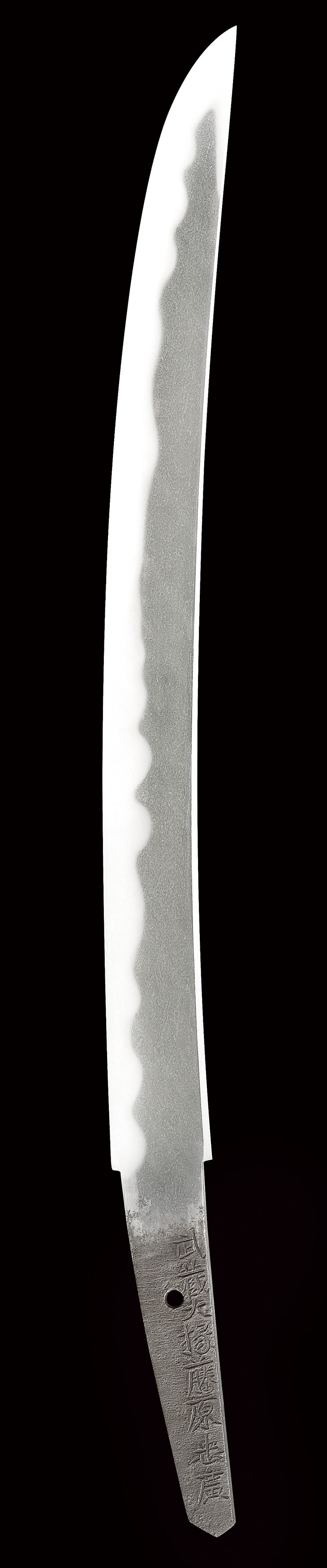
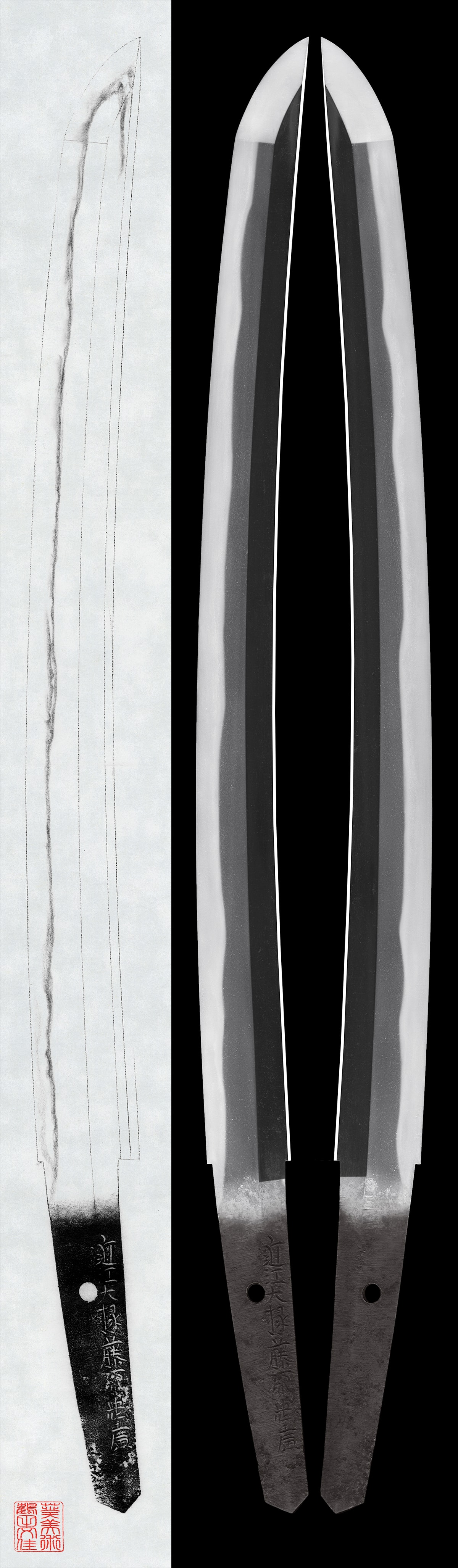
Yoshinobu was the third son of Nakajima Shingobee, known by the common name Yashichibee, and he entered the founding workshop of the tradition at Saga as the adopted son-in-law of the first-generation . His sons were the first-generation Masahiro and Yukihiro, the two lines that would carry the school forward, so that he stands at a hinge of its early history. The published sources read him as a smith who served in a supporting role to the first , and they note that surviving examples of his work are few. He is graded Jo by Fujishiro. A tradition gave his death as 'ei 10, but the published commentary corrects this from the work itself, since blades dated 'ei 13 survive and a letter addressed to him is dated 'ei 14, concluding that the reported year of death must be an erroneous tradition. The few works that carry his name are thus a documentary thread through the founding years of the school.
His characteristic hand is the flamboyant, spirited wing of the early workshop. The temper takes and as its principal motif, worked high and lively, mixing in small and pointed elements so that the whole reads as varied and animated. Through it run deep and well-adhering , with passing broadly across the blade and entering, while appears here and there and the stays bright. The published sources call one such blade spirited in character, a mixed with , and they return repeatedly to the judgment that this manner clearly expresses the characteristic features of blades. Where the family is best known for a tight, calm temper, his own is read by its breadth and movement, the active and the bright the marks of his individuality. The resolves either in a small round with a somewhat deep turnback or runs in with and a swept point.
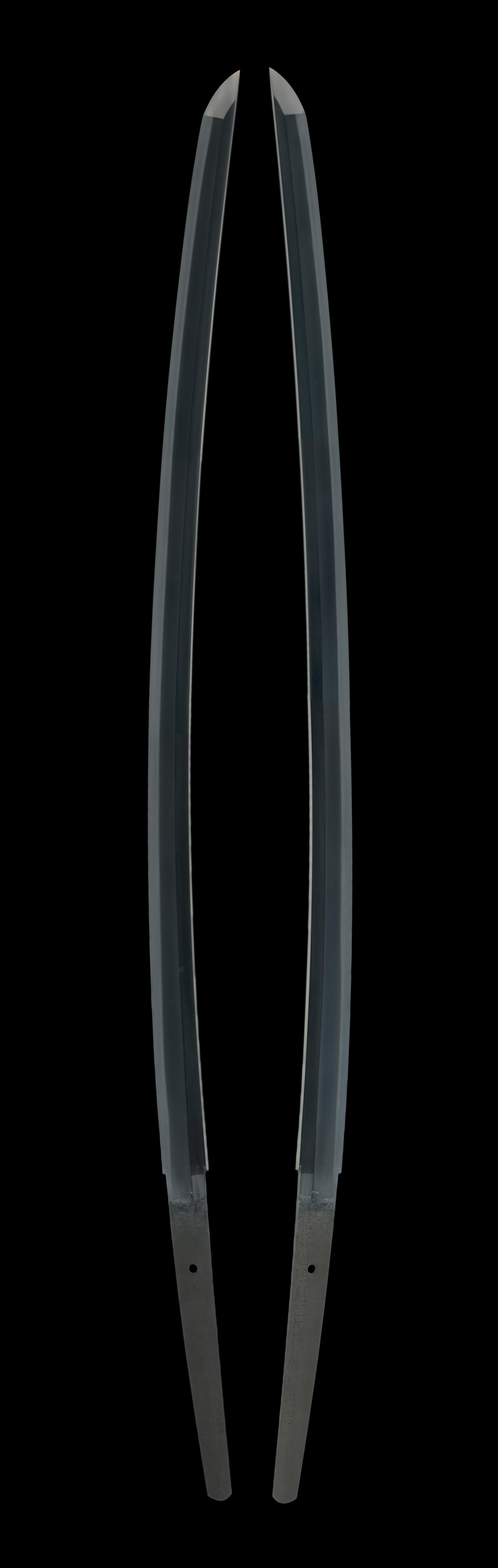
The is a tightly forged , closely packed and well ordered, over which gathers in fine particles and delicate enters. Near the the grain at times takes on a slight . This is the lustrous, finely worked steel of the school carried into a more active register, the temper above it animated rather than restrained. The surviving are built broad in the , slightly overlong and thick in the , and on these the published sources record the forged especially high and flamboyant, with the valleys of the irregularities showing an even more concentrated layering of , an elaborated and worked effect. These pieces carry carving as well, with a clawed sword, cut to run off, the published commentary finding the carvings simple yet well harmonized with the blade.
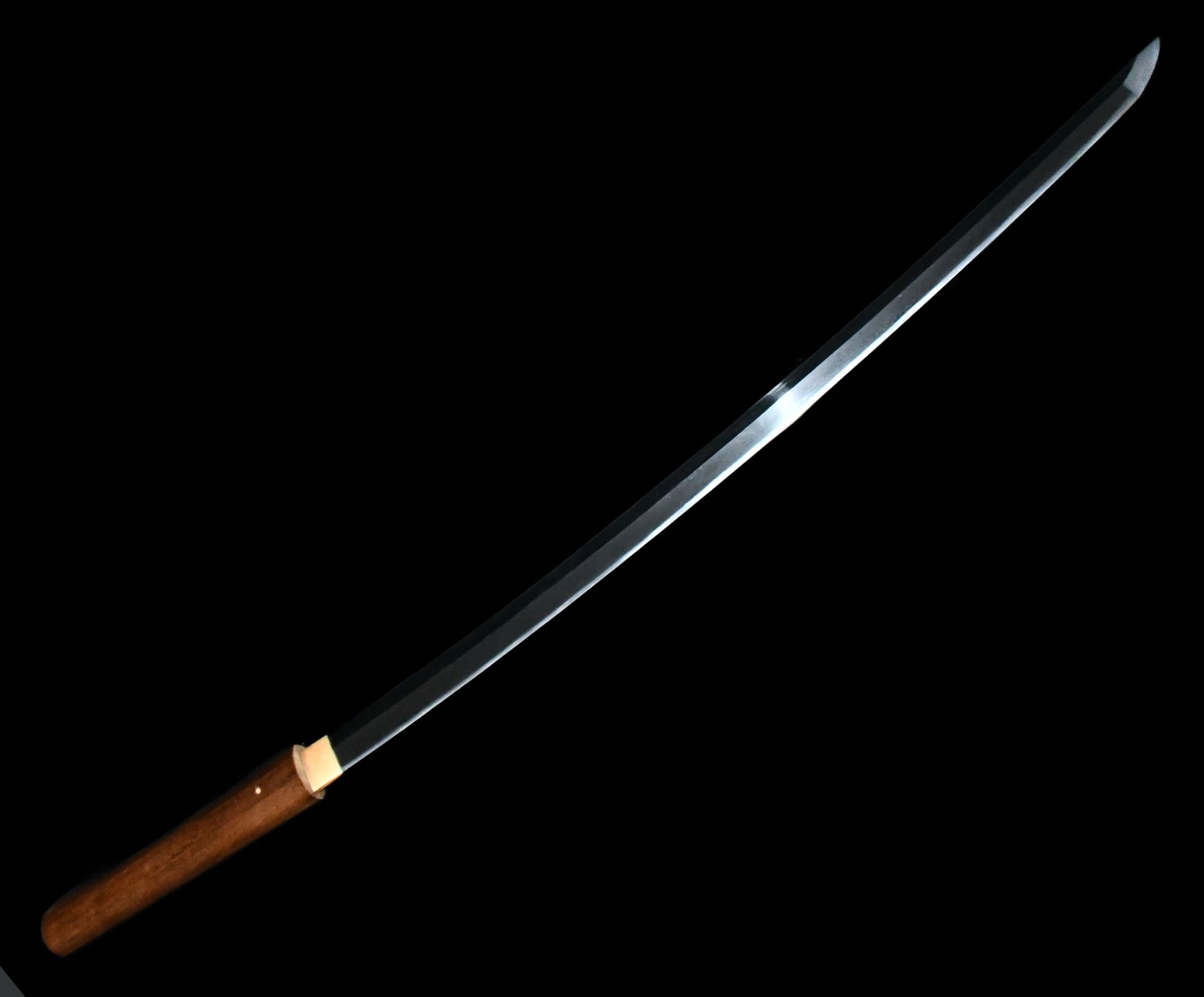
The small body of his recorded work falls into two registers that share one hand. The keep deep curvature and an extended , the temper centered now on , now on , with and entering abundantly to give the temper a lively and animated impression. The broad push the flamboyance furthest, employing large-scale patterns and an especially brilliant irregular temper to vary the , which the published sources judge an excellent result. All four recorded blades are and signed, the inscription cut boldly and somewhat large with a thick chisel, a seven-character long signature on two of them, and the published commentary draws particular attention to the manner of that signature, noting that it closely resembles the presentation signatures of the first-generation Tadahiro and the early, pre-appointment signatures of the first Masahiro.
Within the school the published sources place Yoshinobu as a forerunner. They read his high, flamboyant as a pioneering example of the manner later broadly termed Soba-, and they connect it directly to the youthful, pre-appointment work of his son the first Masahiro, in whose blades the construction and the general type of carving recur. The commentary takes this as an intriguing view into the commonality of parent-and-child workmanship, so that his individuality is read as the spirited, active wing of the family, the bridge from the founder's generation to the showier hands that followed. His bright , his broad and his occasional set his work apart from the calmer body of the school, and the resemblance of his signature to the first Tadahiro and the first Masahiro ties him firmly into its central line.
In Fujishiro's grading he is Jo , and the designation record behind his name is small and entirely at the rank, with no National Treasure or Important Cultural Property among the recorded works and no provenance roll preserved in their papers. One of the is held at Naritasan Shinshoji in Chiba, its blade carvings added in later times by Asai Tadamasa, a man of Saga whose primary calling was painting. The published sources value these few designated blades as much for their documentary worth as their quality, calling one a fine piece among the very few extant works by Yoshinobu and precious material for researching the full scope of his workmanship. What a collector may realistically encounter is therefore one of these signed blades, a scarce record of the flamboyant early- hand at the root of the Masahiro and Yukihiro lines; they come to the market rarely, and a signed example is a notable thing when one appears.