Muromachi turned sword making into an industry: the uchigatana rose with massed infantry warfare, Osafune and Seki produced bundle swords beside custom orders, and the Ming trade carried Japanese blades abroad by the tens of thousands.
 NihontoWatchNihontoWatch
No rust, no chips. Mokume hada. Suguha mixed with notare. Ko-kissaki. Ubu nakago. Kurijiri. Copper habaki. A kawari-tsuya saya, 2/3 overall vermilion and 1/3 black lacquer. There are oil stains inside the saya. Square-shaped sukashi iron tsuba. Repairs to the black lacquer of the koshirae. Offered at a low price due to scratches on the toshin that look like they were made by a wire.
NihontoWatchOffered by Nakano Kosen
We couldn’t find current papers for this piece. Ask the dealer whether it has been, or can be, submitted to shinsa. — Hoshi
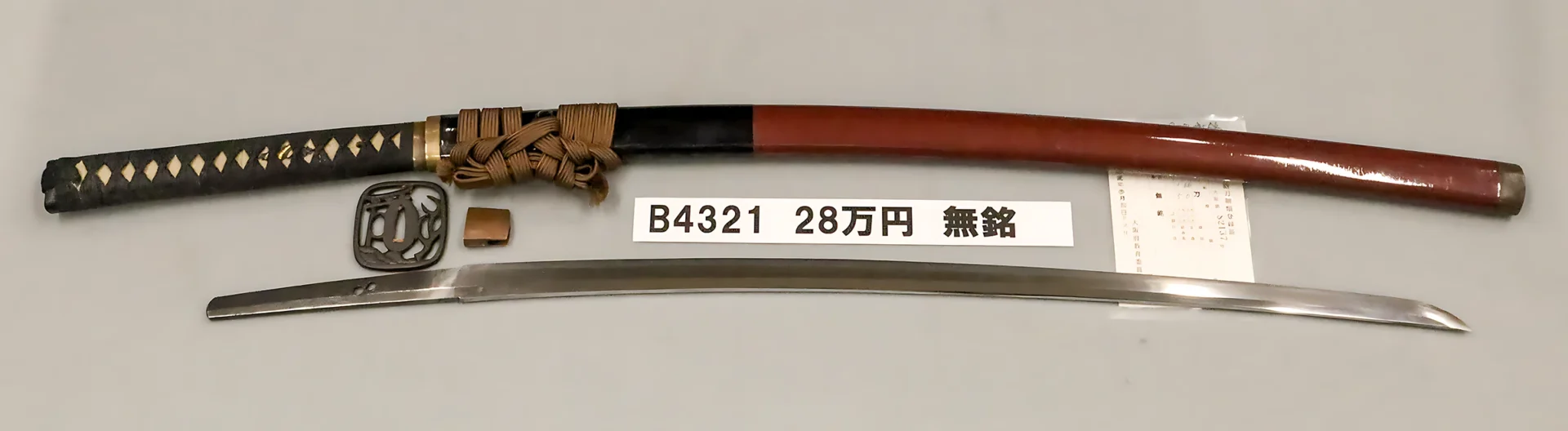
As written by the shop
Machine translation from the shop's Japanese · may contain errors ·
The Muromachi period (1392 to 1573)
Muromachi turned sword making into an industry: the uchigatana rose with massed infantry warfare, Osafune and Seki produced bundle swords beside custom orders, and the Ming trade carried Japanese blades abroad by the tens of thousands.
We could not find an authenticity certificate on the seller’s listing. Japanese swords and fittings are normally papered by the NBTHK (or the NTHK). Without one, the attribution is the seller’s own assessment and has not been independently verified — treat it with caution and ask the dealer about certification before buying.
¥280,000