Muromachi turned sword making into an industry: the uchigatana rose with massed infantry warfare, Osafune and Seki produced bundle swords beside custom orders, and the Ming trade carried Japanese blades abroad by the tens of thousands.
 NihontoWatchNihontoWatch
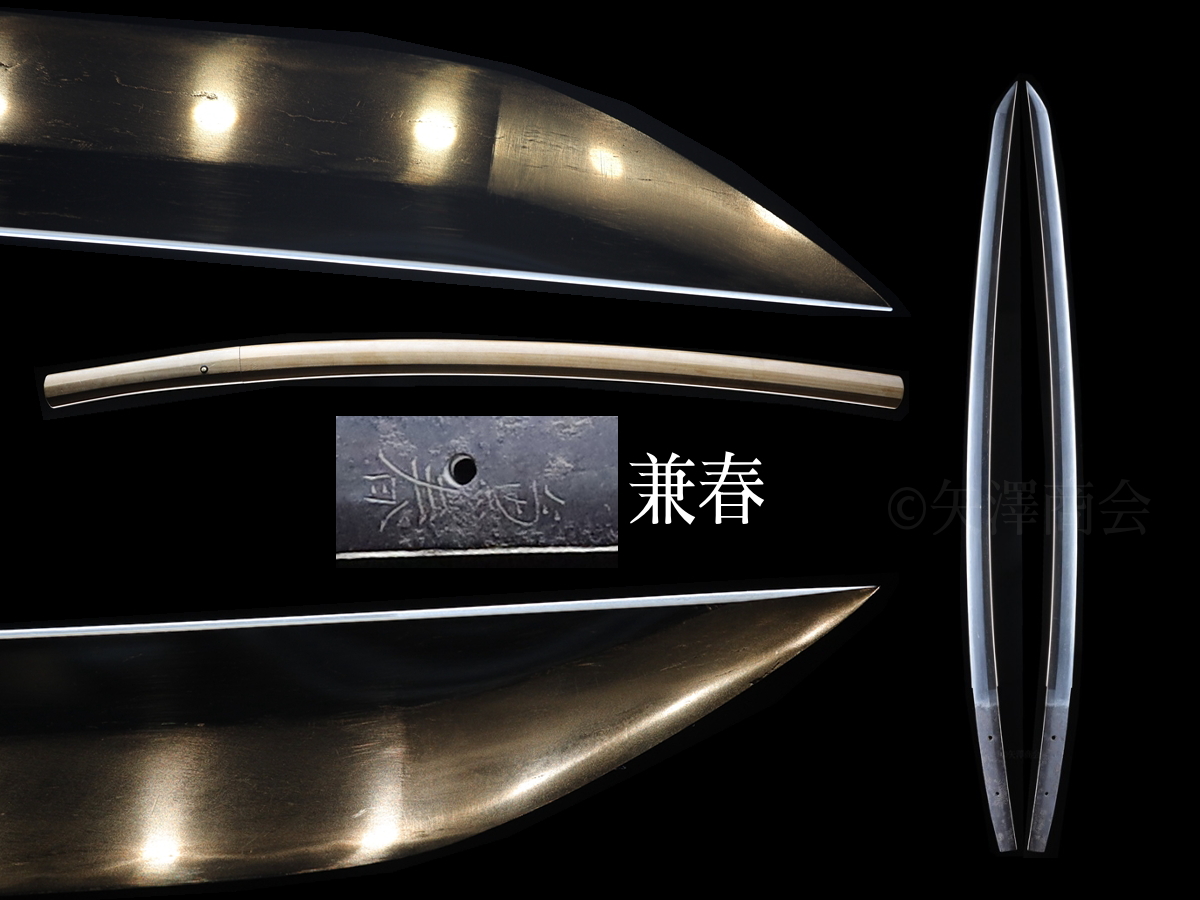
A Sengoku period sword from Mino (Seki) with midare-utsuri appearing Kaneharu About Kaneharu Kaneharu was a swordsmith of the Sanami school that flourished from the mid-Muromachi period until Genroku in the mid-Edo period. This sword is observed to be from around the late Muromachi period. A blade that can be looked forward to in shinsa (Shinsa agency service) For those who require Hozon, Tokubetsu Hozon kanteisho (Kyokai), or Shoshin kanteisho (NPO Hozonkai), etc., we can accept the request for the kantei fee (actual cost) and an agency fee of 20,000 yen (10,000 yen for Hozonkai), though it will take several months until the kanteisho is issued. Important Notes The registration certificate existence has been confirmed (2026.10.22) and the registration certificate matches the ledger of the Board of Education, but there is a 5 mm discrepancy only between the registration certificate and the actual nagasa. There are no other problems. Since there is no issue with the registration certificate, the change of ownership itself is possible as is, but those who are concerned can make the actual object and the registration certificate the same through a physical inspection. If re-registering or correcting after a physical inspection, a fee of 6,300 yen will occur. Decades have passed since registration and nagasa changes due to polishing and such, so I consider 5 mm to be just within the margin of tolerance, but I have noted it just in case. Incidentally, differences of 1-2 mm often occur at each Board of Education due to differences in measuring equipment. As this is an antique art object, please refer to the photos before bidding. We do not go as far as guaranteeing Shoshin or Hozon. Condition of the product *There are ha-kobore and fukure. There are no ha-gire, ha-karami, shinae, nioi-gire, or kakedashi. *Please understand there may be dirt, fine scuff scratches, deterioration, etc., due to age. Please refer to the photos.
NihontoWatchKaneharu兼春
Offered by Yazawa Shokai

The listing mentions papers that aren’t in our records yet. Current NBTHK and NTHK shinsa papers are the independent check we rely on, so it’s worth asking the dealer for a clear photo of the certificate. — Hoshi




As written by the shop
Machine translation from the shop's Japanese · may contain errors ·
Mino · around 1504-1521
The Muromachi period (1392 to 1573)
Muromachi turned sword making into an industry: the uchigatana rose with massed infantry warfare, Osafune and Seki produced bundle swords beside custom orders, and the Ming trade carried Japanese blades abroad by the tens of thousands.
We could not find an authenticity certificate on the seller’s listing. Japanese swords and fittings are normally papered by the NBTHK (or the NTHK). Without one, the attribution is the seller’s own assessment and has not been independently verified — treat it with caution and ask the dealer about certification before buying.
¥200,000