Yasukuni Swordsmith (Yasukuni Tosho)
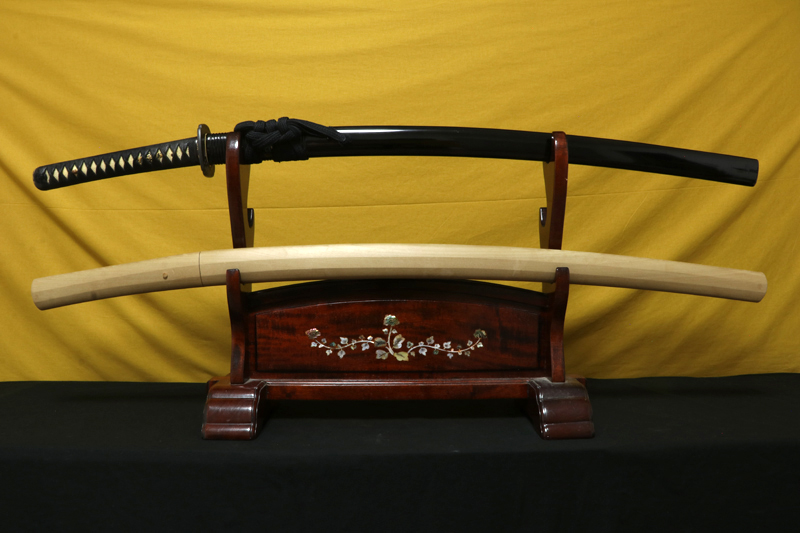
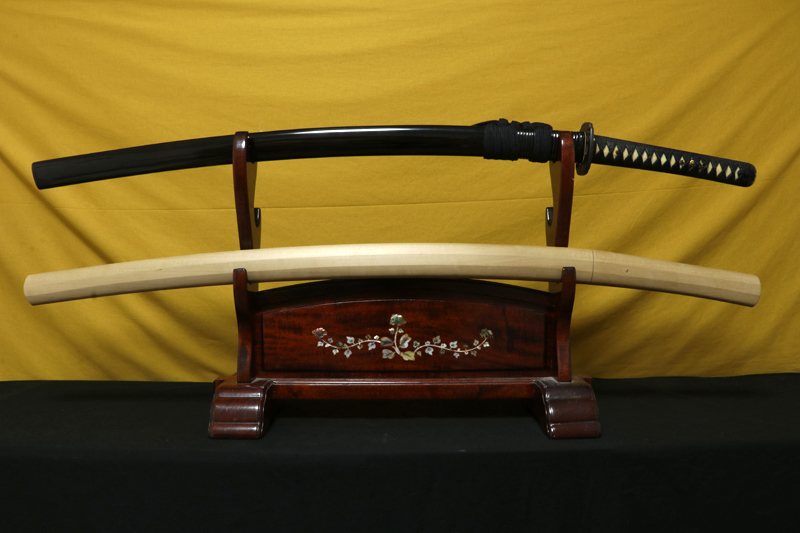
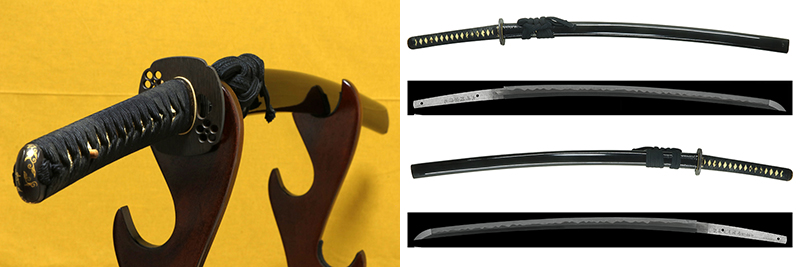
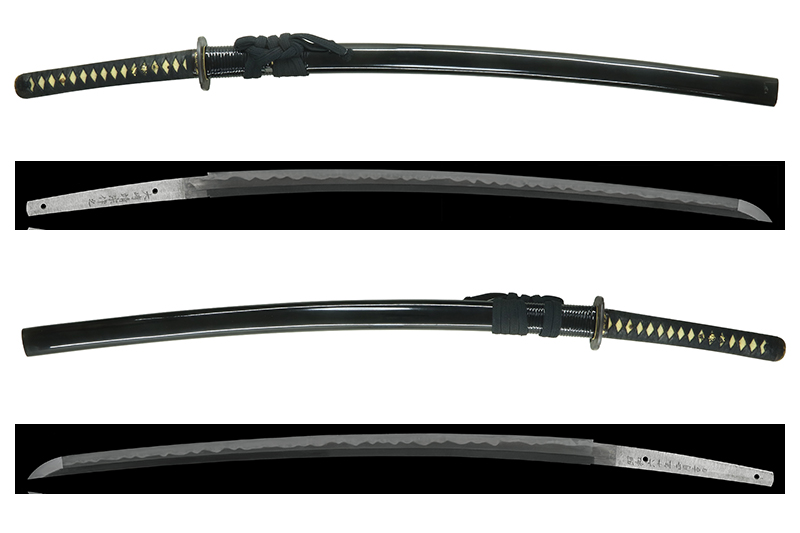
Osaki Yasumune saku with Kosirae and Shirosaya.
Osaki Yasumune was a highly skilled swordsmith who trained at the Nihonto Tanrenkai at Yasukuni Shrine and received numerous awards after World War II.
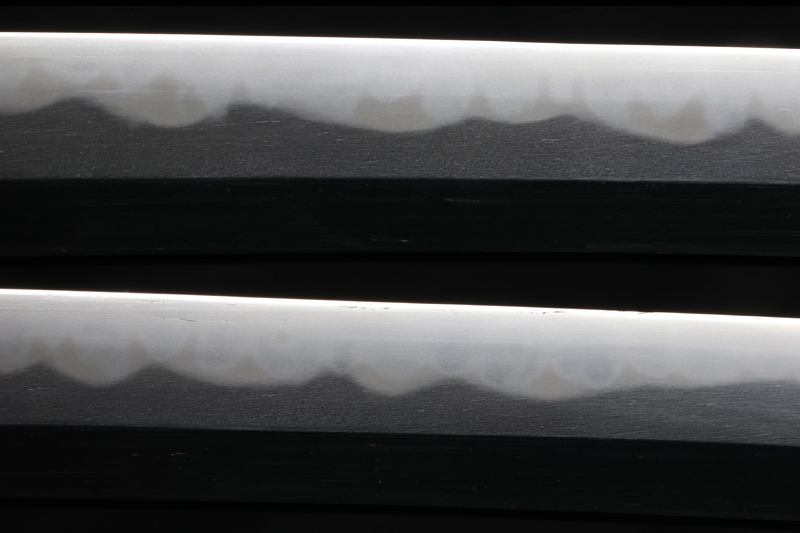
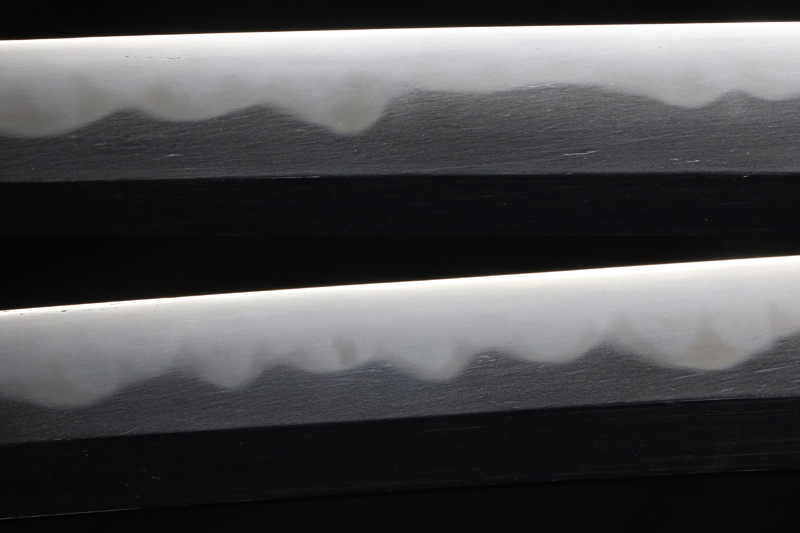
This work is a fine piece featuring a flamboyant choji hamon on ko-itame hada. Although it is in an older polish, the condition of the blade is generally good.
The koshirae is also of high quality with little signs of use, and it can be used for Iaido or tameshigiri immediately after purchase.
Osaki Yasumune was a highly skilled swordsmith who trained at the Nihonto Tanrenkai at Yasukuni Shrine and received numerous awards after World War II.
This sword is a fine example of his work, featuring a ko-itame hada and a beautiful choji hamon. Despite its older polish, the blade remains in generally good condition.
The koshirae is of high quality and shows little wear. The sword is ready for immediate use in Iaido or tameshigiri after purchase.
「体配 sugata」
Shinogi-zukuri, iori-mune, wide mihaba and thick, torii-zori, o-kissaki. Nakago is ubu, yasurime are kiri, nakagojiri is kurijiri.
「地鉄 jigane」
Jigane is ko-itame flowing into masame, with hada-tachi and ji-nie.
「刃紋 hamon」
Hamon is choji, with plenty of ashi, sunagashi along the habuchi, and kinsuji inside the blade. Boshi is midarekomi returning in komaru.
「特徴 detailed」
Osaki Yasumune, real name Osaki Shigeharu. Born in Taisho 4 (1915) in Yamagata Prefecture. He was a swordsmith who lived in Sumida-ku, Tokyo. In Showa 12 (1937), he entered the Nihonto Tanrenkai within the grounds of Yasukuni Shrine and studied under both swordsmiths Shimazaki Yasuoki and Yakuwa Yasutake. He was granted the character "Yasu," which is the honor of Yasukuni swordsmiths, and took the name "Yasumune."
He continued making swords after the war and belonged to the All Japan Swordsmith Association. He was a highly skilled swordsmith who won the Effort Award three times at the Shinsaku Meito Ten, in addition to having many other award records.
This work is a blade featuring a flamboyant choji hamon on well-tightened ko-itame hada. There are some small scratches and hike from the older polish on the blade, but there are no defects such as conspicuous kitae-ware, and the condition is generally good.
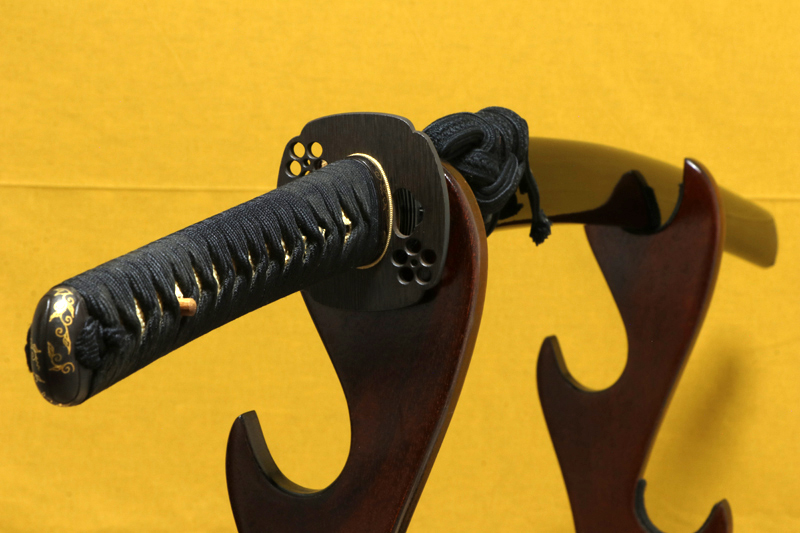
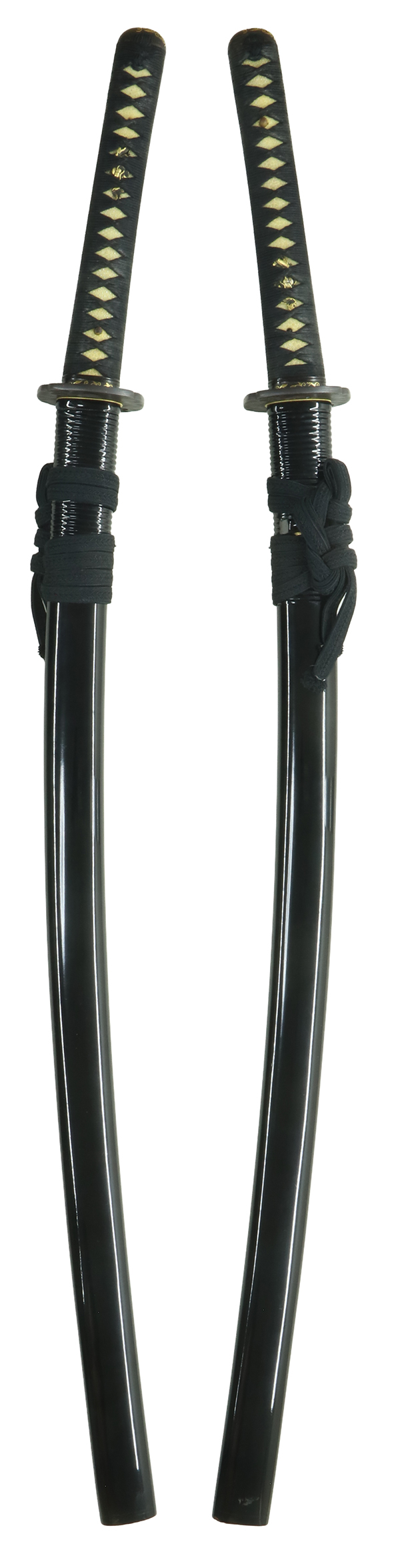
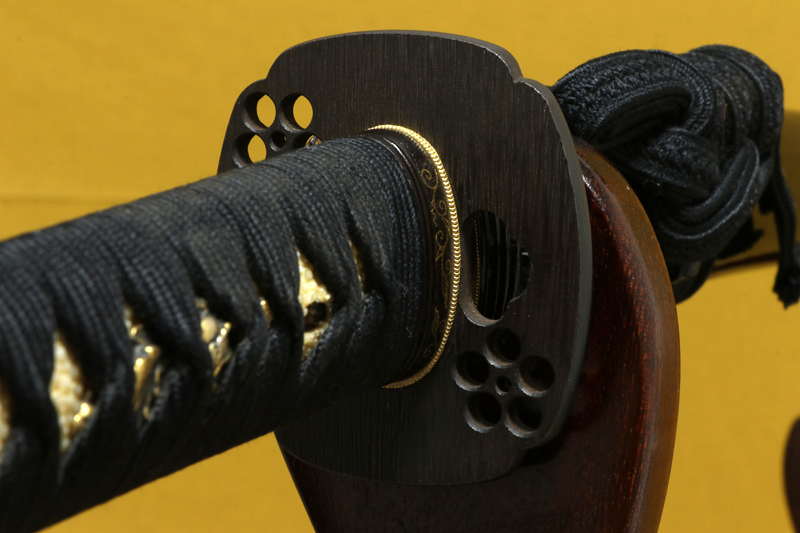
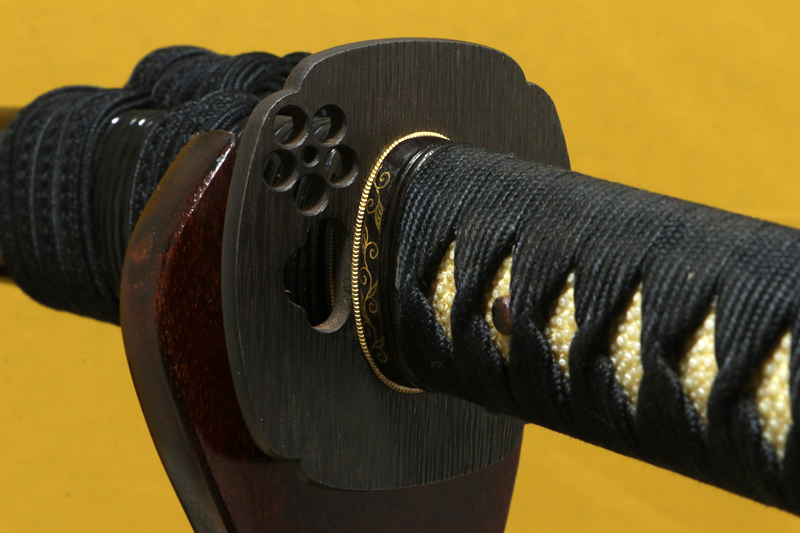
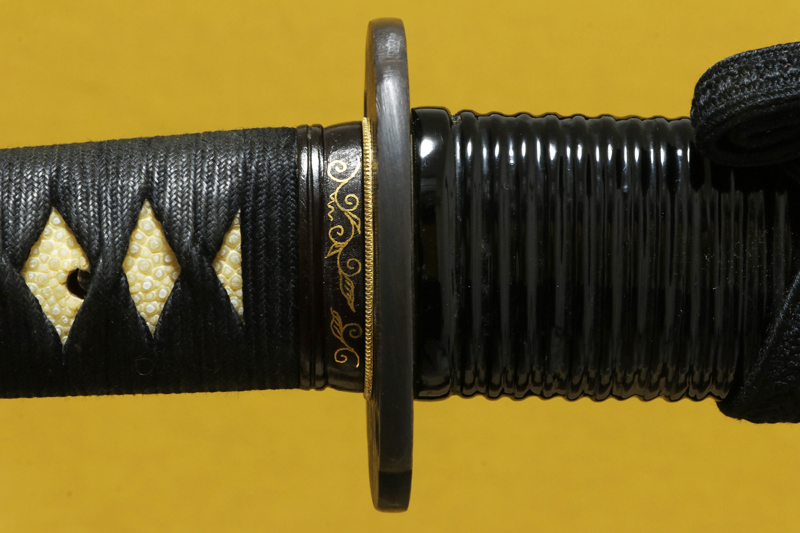
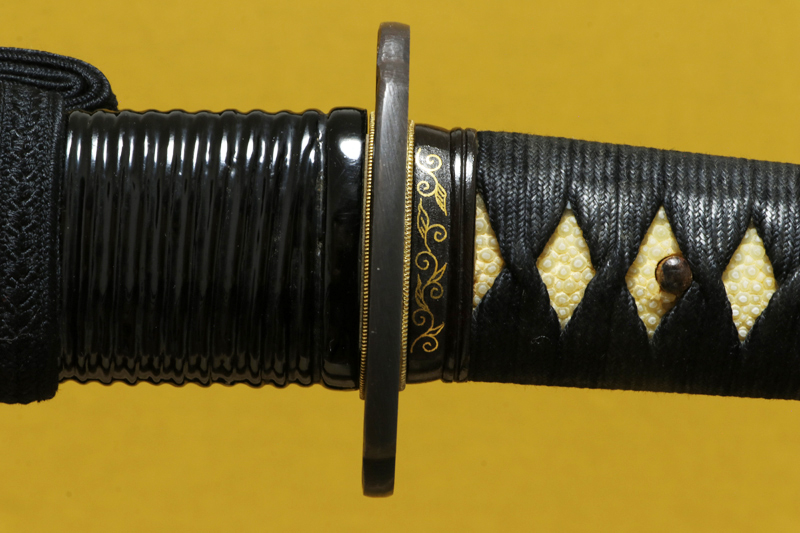
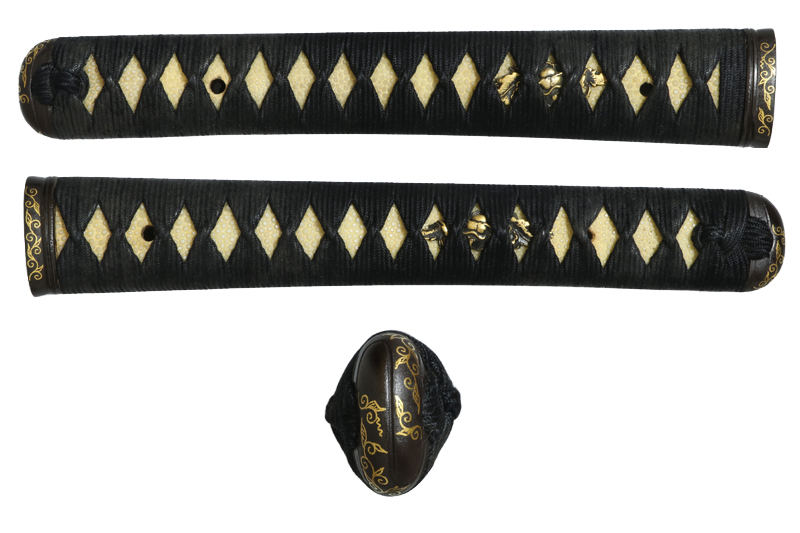
The koshirae is a high-quality mounting with a kuro-ro-nuri saya featuring sendan-kizami near the koiguchi, and fuchi-kashira made of iron with Higo karakusa-mon nunome zogan. There is some feeling of use on the tsuka, but there is little damage to the inside of the koiguchi, and it is thought that the frequency of use in Iaido was low. Also, it is thought that there is no history of use in tameshigiri.
Both the blade and koshirae are in good condition, and it is a recommended blade that can be used for Iaido or tameshigiri immediately after purchase.
Osaki Yasumune, whose real name was Osaki Shigeharu, was born in 1915 in Yamagata Prefecture and later resided in Sumida, Tokyo. In 1937, he joined the Nihonto Tanrenkai (Japanese Sword Forging Association) at Yasukuni Shrine, where he studied under the swordsmiths Shimazaki Yasuoki and Yakuwa Yasutake. He was granted the honor of using the character “Yasu” (靖), traditionally bestowed upon Yasukuni swordsmiths, and adopted the smith name Yasumune.
After World War II, he resumed sword production and became a member of the All Japan Swordsmith Association. He was a highly skilled swordsmith who received three Effort Awards and numerous other honors at the Shinsaku Meito Exhibitions.
This sword features a finely forged ko-itame hada with a beautiful choji hamon. The blade has some minor scratches and light surface marks from its older polish, but there are no significant forging flaws, and its overall condition is good.
The koshirae features a black gloss-lacquered saya with a sendan-kizami (thousand-step carved) design near the koiguchi. The fuchi and kashira are made of iron with Higo-style arabesque designs in nunome gold inlay, giving the mounting an elegant appearance.
The tsuka shows some signs of use, but the interior of the koiguchi has very little wear, suggesting that the sword was rarely used for Iaido. It also appears that the sword has never been used for tameshigiri.
Both the blade and koshirae are in good condition. This is a recommended sword, ready for immediate use in Iaido or tameshigiri after purchase.
「拵 Koshirae」
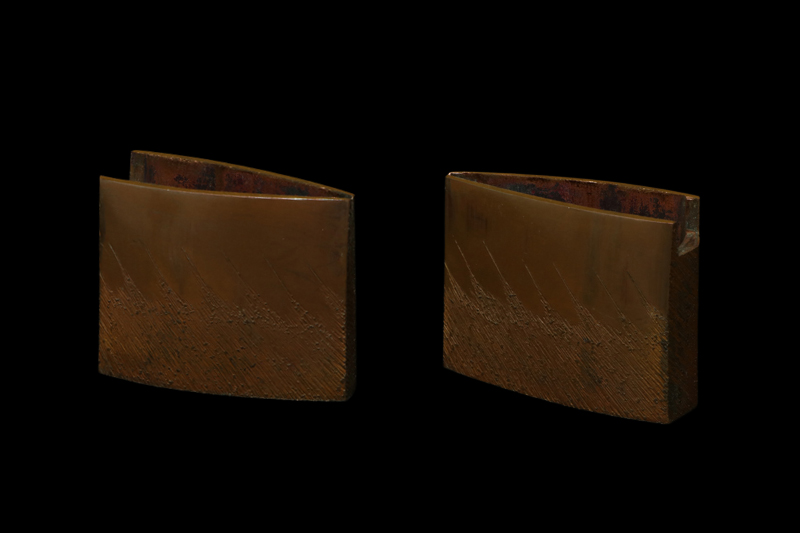
Habaki: Su-akagane-ji single-layer koshi-yujo.
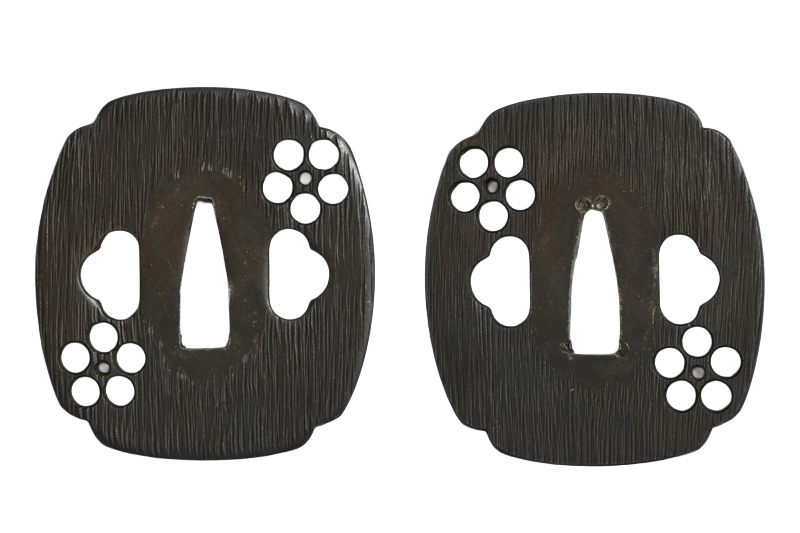
Tsuba: Iron-ji mokko-gata with sakura-kage sukashi.
Fuchi-kashira: Iron-ji Higo karakusa nunome zogan.
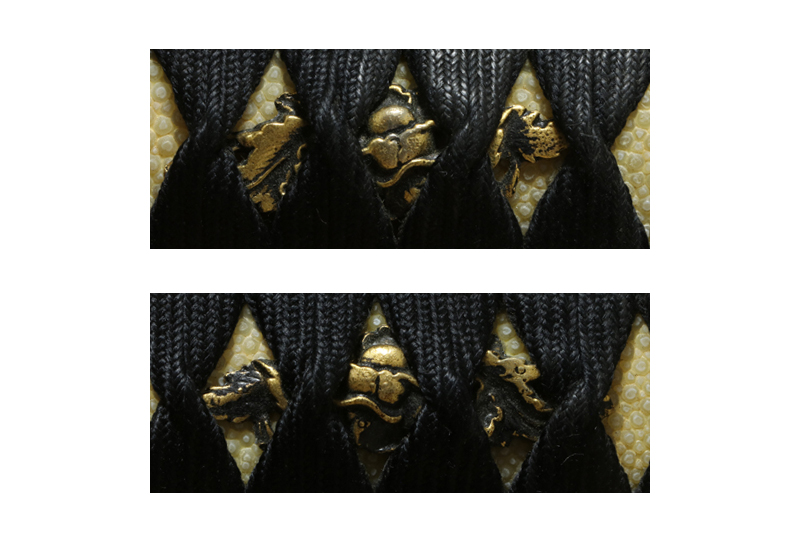
Menuki: Design of a turnip.
Tsuka: Tsuka-maki is black pure silk moro-tsumi-maki.
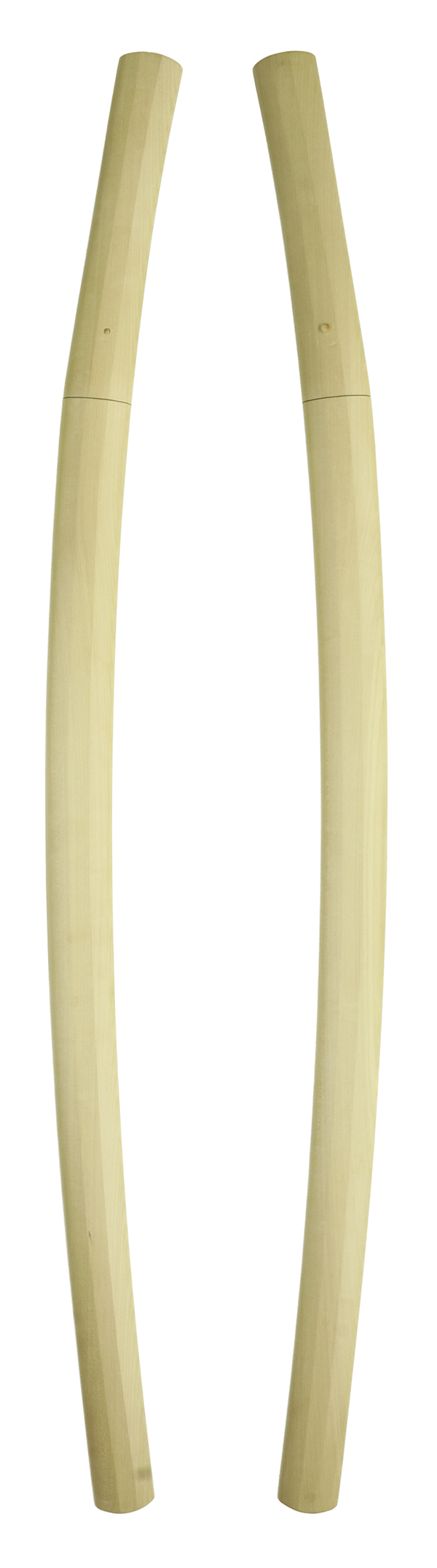
Saya: Sendan-kizami kuro-ro, shirosaya, tsunagi.
「刀剣の状態 condition of blade」
Polish: Older polish but generally good.
Flaws: There are a few small scratches, but no defects such as conspicuous kitae-ware.
Machine translation from the shop's Japanese · may contain errors ·
Yasukuni Swordsmith (Yasukuni Tosho)
Osaki Yasumune saku with Kosirae and Shirosaya.
Osaki Yasumune was a highly skilled swordsmith who trained at the Nihonto Tanrenkai at Yasukuni Shrine and received numerous awards after World War II.
This work is a fine piece featuring a flamboyant choji hamon on ko-itame hada. Although it is in an older polish, the condition of the blade is generally good.
The koshirae is also of high quality with little signs of use, and it can be used for Iaido or tameshigiri immediately after purchase.
Osaki Yasumune was a highly skilled swordsmith who trained at the Nihonto Tanrenkai at Yasukuni Shrine and received numerous awards after World War II.
This sword is a fine example of his work, featuring a ko-itame hada and a beautiful choji hamon. Despite its older polish, the blade remains in generally good condition.
The koshirae is of high quality and shows little wear. The sword is ready for immediate use in Iaido or tameshigiri after purchase.
「体配 sugata」
Shinogi-zukuri, iori-mune, wide mihaba and thick, torii-zori, o-kissaki. Nakago is ubu, yasurime are kiri, nakagojiri is kurijiri.
「地鉄 jigane」
Jigane is ko-itame flowing into masame, with hada-tachi and ji-nie.
「刃紋 hamon」
Hamon is choji, with plenty of ashi, sunagashi along the habuchi, and kinsuji inside the blade. Boshi is midarekomi returning in komaru.
「特徴 detailed」
Osaki Yasumune, real name Osaki Shigeharu. Born in Taisho 4 (1915) in Yamagata Prefecture. He was a swordsmith who lived in Sumida-ku, Tokyo. In Showa 12 (1937), he entered the Nihonto Tanrenkai within the grounds of Yasukuni Shrine and studied under both swordsmiths Shimazaki Yasuoki and Yakuwa Yasutake. He was granted the character "Yasu," which is the honor of Yasukuni swordsmiths, and took the name "Yasumune."
He continued making swords after the war and belonged to the All Japan Swordsmith Association. He was a highly skilled swordsmith who won the Effort Award three times at the Shinsaku Meito Ten, in addition to having many other award records.
This work is a blade featuring a flamboyant choji hamon on well-tightened ko-itame hada. There are some small scratches and hike from the older polish on the blade, but there are no defects such as conspicuous kitae-ware, and the condition is generally good.
The koshirae is a high-quality mounting with a kuro-ro-nuri saya featuring sendan-kizami near the koiguchi, and fuchi-kashira made of iron with Higo karakusa-mon nunome zogan. There is some feeling of use on the tsuka, but there is little damage to the inside of the koiguchi, and it is thought that the frequency of use in Iaido was low. Also, it is thought that there is no history of use in tameshigiri.
Both the blade and koshirae are in good condition, and it is a recommended blade that can be used for Iaido or tameshigiri immediately after purchase.
Osaki Yasumune, whose real name was Osaki Shigeharu, was born in 1915 in Yamagata Prefecture and later resided in Sumida, Tokyo. In 1937, he joined the Nihonto Tanrenkai (Japanese Sword Forging Association) at Yasukuni Shrine, where he studied under the swordsmiths Shimazaki Yasuoki and Yakuwa Yasutake. He was granted the honor of using the character “Yasu” (靖), traditionally bestowed upon Yasukuni swordsmiths, and adopted the smith name Yasumune.
After World War II, he resumed sword production and became a member of the All Japan Swordsmith Association. He was a highly skilled swordsmith who received three Effort Awards and numerous other honors at the Shinsaku Meito Exhibitions.
This sword features a finely forged ko-itame hada with a beautiful choji hamon. The blade has some minor scratches and light surface marks from its older polish, but there are no significant forging flaws, and its overall condition is good.
The koshirae features a black gloss-lacquered saya with a sendan-kizami (thousand-step carved) design near the koiguchi. The fuchi and kashira are made of iron with Higo-style arabesque designs in nunome gold inlay, giving the mounting an elegant appearance.
The tsuka shows some signs of use, but the interior of the koiguchi has very little wear, suggesting that the sword was rarely used for Iaido. It also appears that the sword has never been used for tameshigiri.
Both the blade and koshirae are in good condition. This is a recommended sword, ready for immediate use in Iaido or tameshigiri after purchase.
「拵 Koshirae」
Habaki: Su-akagane-ji single-layer koshi-yujo.
Tsuba: Iron-ji mokko-gata with sakura-kage sukashi.
Fuchi-kashira: Iron-ji Higo karakusa nunome zogan.
Menuki: Design of a turnip.
Tsuka: Tsuka-maki is black pure silk moro-tsumi-maki.
Saya: Sendan-kizami kuro-ro, shirosaya, tsunagi.
「刀剣の状態 condition of blade」
Polish: Older polish but generally good.
Flaws: There are a few small scratches, but no defects such as conspicuous kitae-ware.
The twentieth century nearly killed the craft twice: wartime distortion, then the occupation ban. The NBTHK’s founding in 1948 and licensed forging from 1953 rebuilt the sword as an art, crowned by Living National Treasures and the mukansa rank.
We could not find an authenticity certificate on the seller’s listing. Japanese swords and fittings are normally papered by the NBTHK (or the NTHK). Without one, the attribution is the seller’s own assessment and has not been independently verified — treat it with caution and ask the dealer about certification before buying.
Within 3 days of the item's arrival, we offer a refund or an exchange. Return shipping and the bank transfer fee for the refund are at the customer's expense.


 NihontoWatch