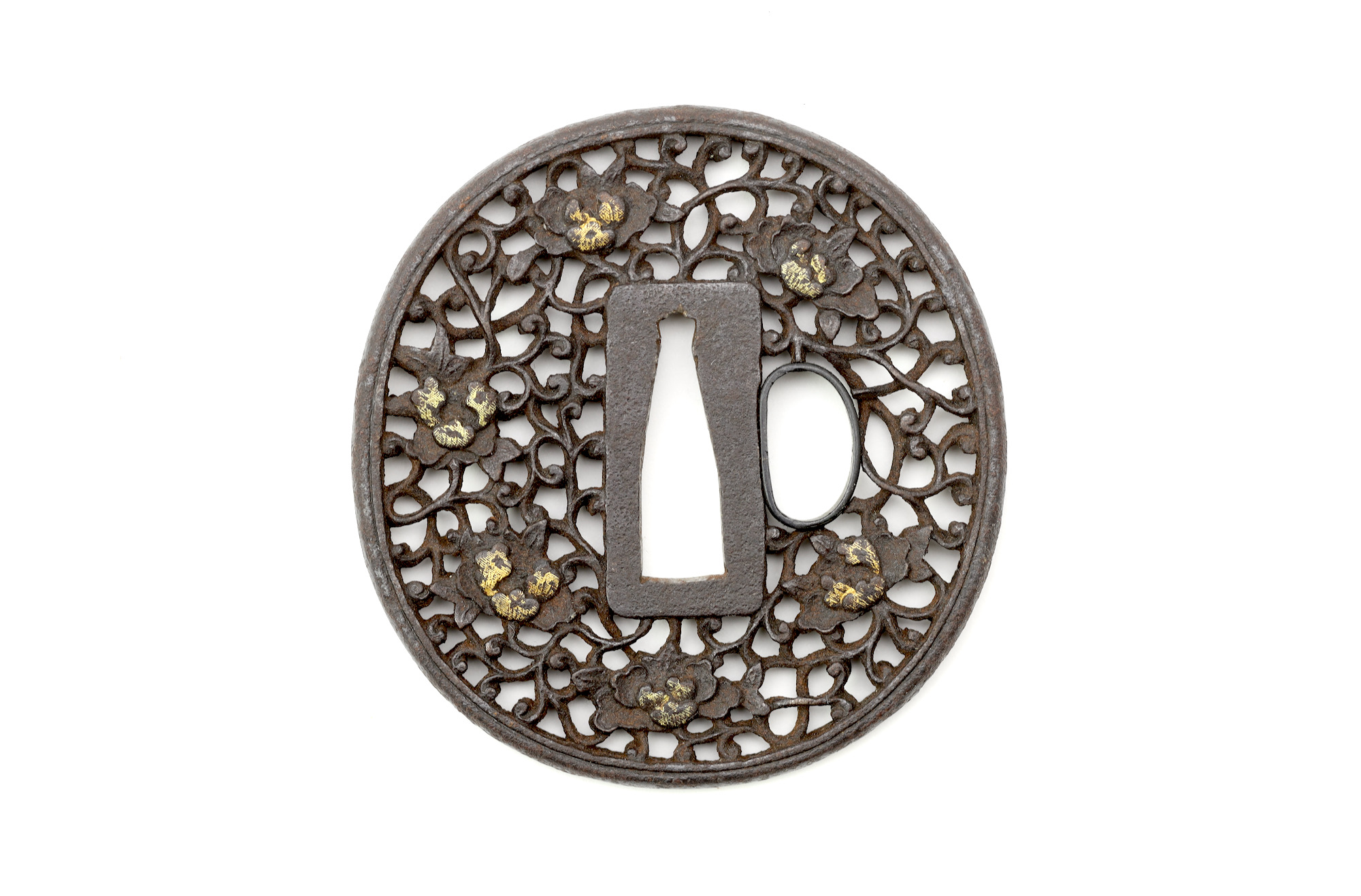
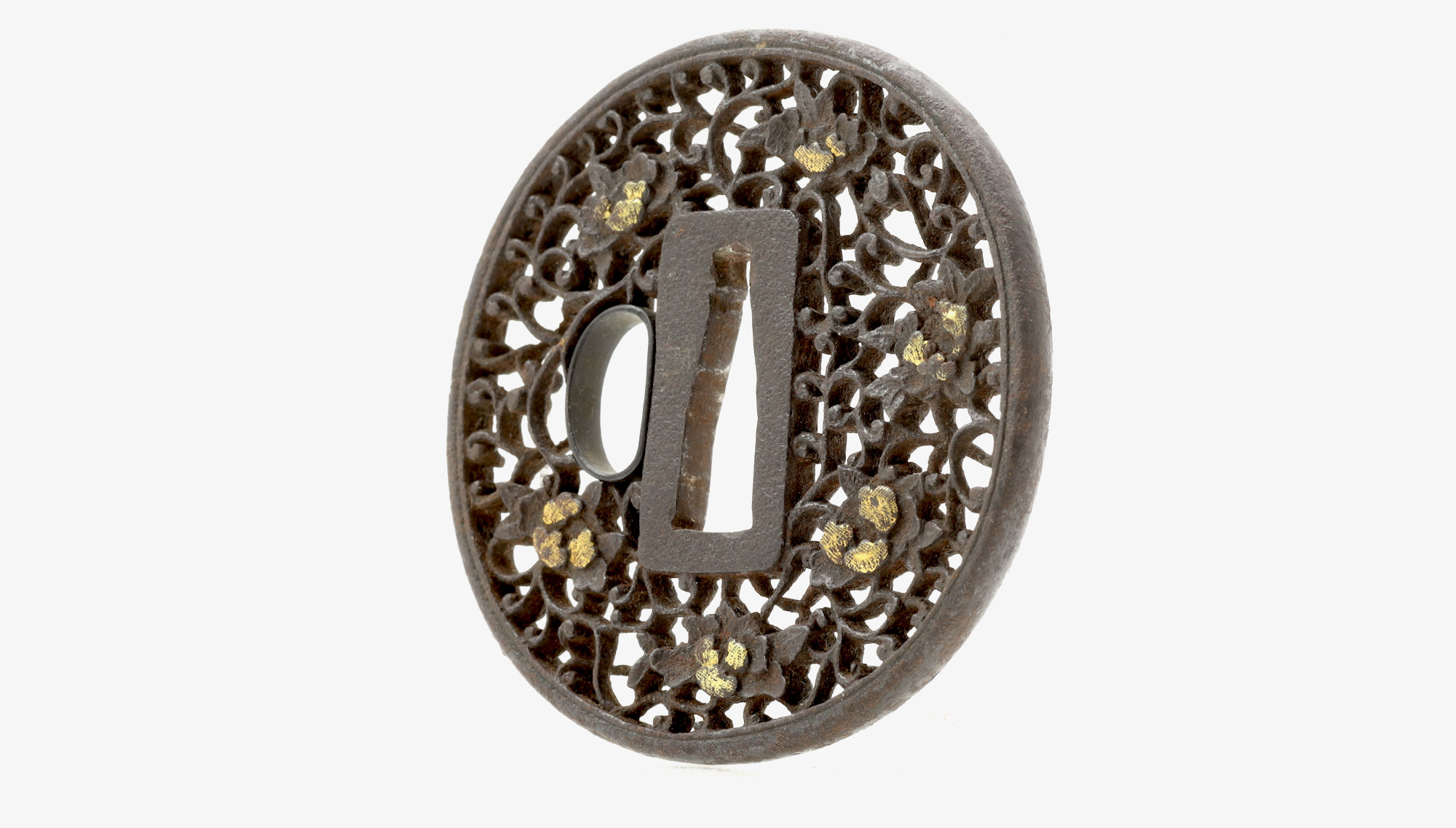
A Japanese tsuba from the Yagami school in Hizen, dating to the 18th century. It features complex karakusa vine work with six articulated peonies, executed in relief with gold leaf over three-directional cross-hatching. The tsuba exhibits strong Chinese influence, including a rectangular seppa-dai and a single shakudō-lined hitsu-ana for the kozuka.
 NihontoWatch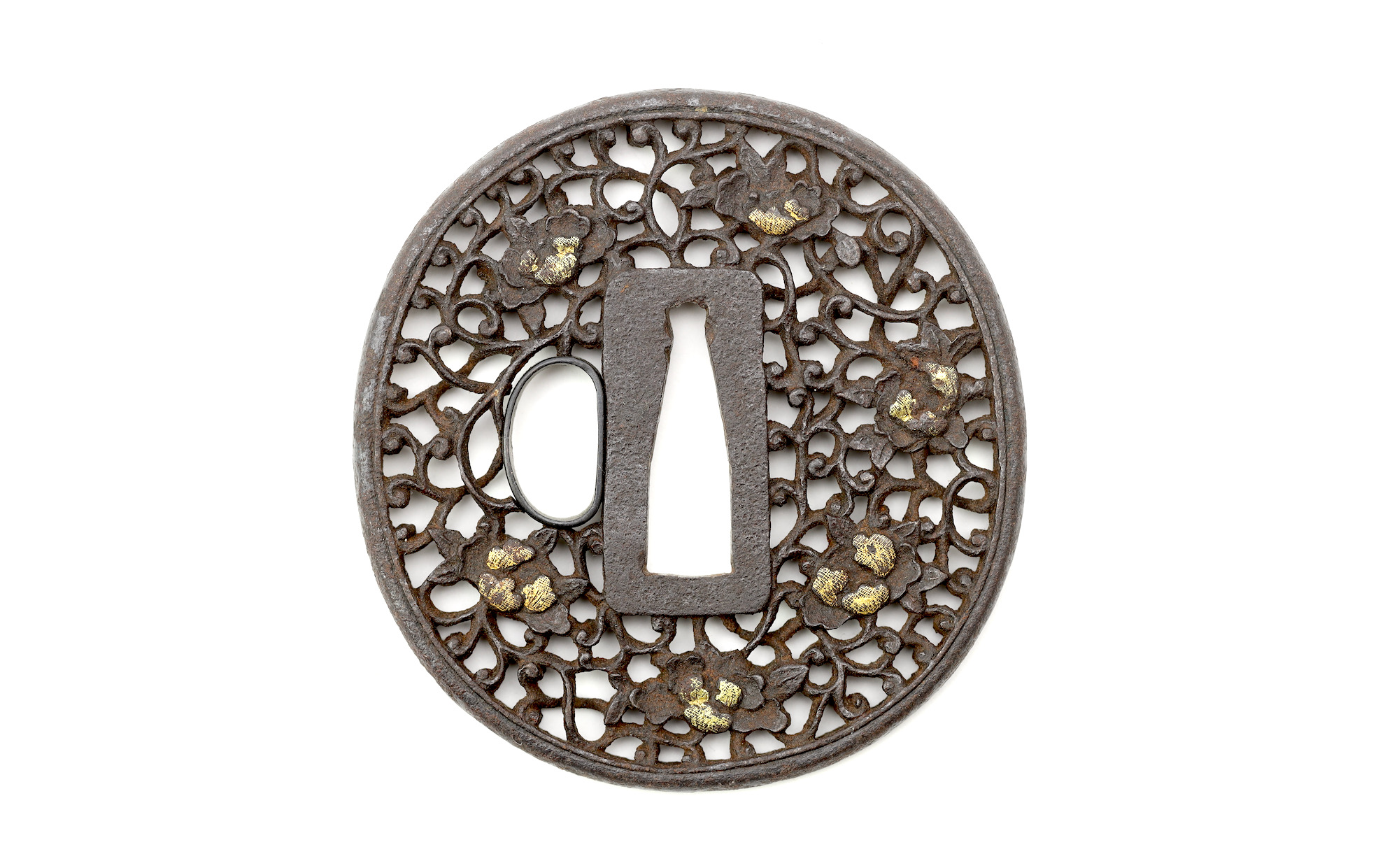

Edo
Hizen
We could not find an authenticity certificate on the seller’s listing. Japanese swords and fittings are normally papered by the NBTHK (or the NTHK). Without one, the attribution is the seller’s own assessment and has not been independently verified — treat it with caution and ask the dealer about certification before buying.
Returns accepted on items ordered from the site when an item does not appear to be as depicted and described; buyer must notify via email within 7 days of receipt. Refund covers purchase price minus shipping, bank fees, and currency conversion. Sales on items paid in terms are final, as are sales of items personally inspected.
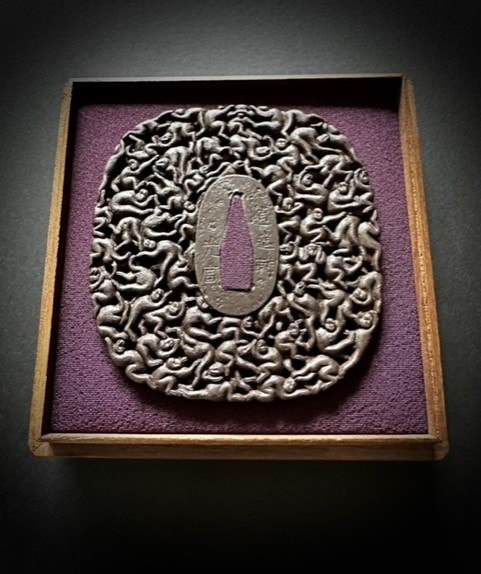
A Japanese tsuba from the Yagami school in Hizen, dating to the 18th century. It features complex karakusa vine work with six articulated peonies, executed in relief with gold leaf over three-directional cross-hatching. The tsuba exhibits strong Chinese influence, including a rectangular seppa-dai and a single shakudō-lined hitsu-ana for the kozuka.
NihontoWatchEdo
Hizen
We could not find an authenticity certificate on the seller’s listing. Japanese swords and fittings are normally papered by the NBTHK (or the NTHK). Without one, the attribution is the seller’s own assessment and has not been independently verified — treat it with caution and ask the dealer about certification before buying.
Returns accepted on items ordered from the site when an item does not appear to be as depicted and described; buyer must notify via email within 7 days of receipt. Refund covers purchase price minus shipping, bank fees, and currency conversion. Sales on items paid in terms are final, as are sales of items personally inspected.

