 NihontoWatchNihontoWatch
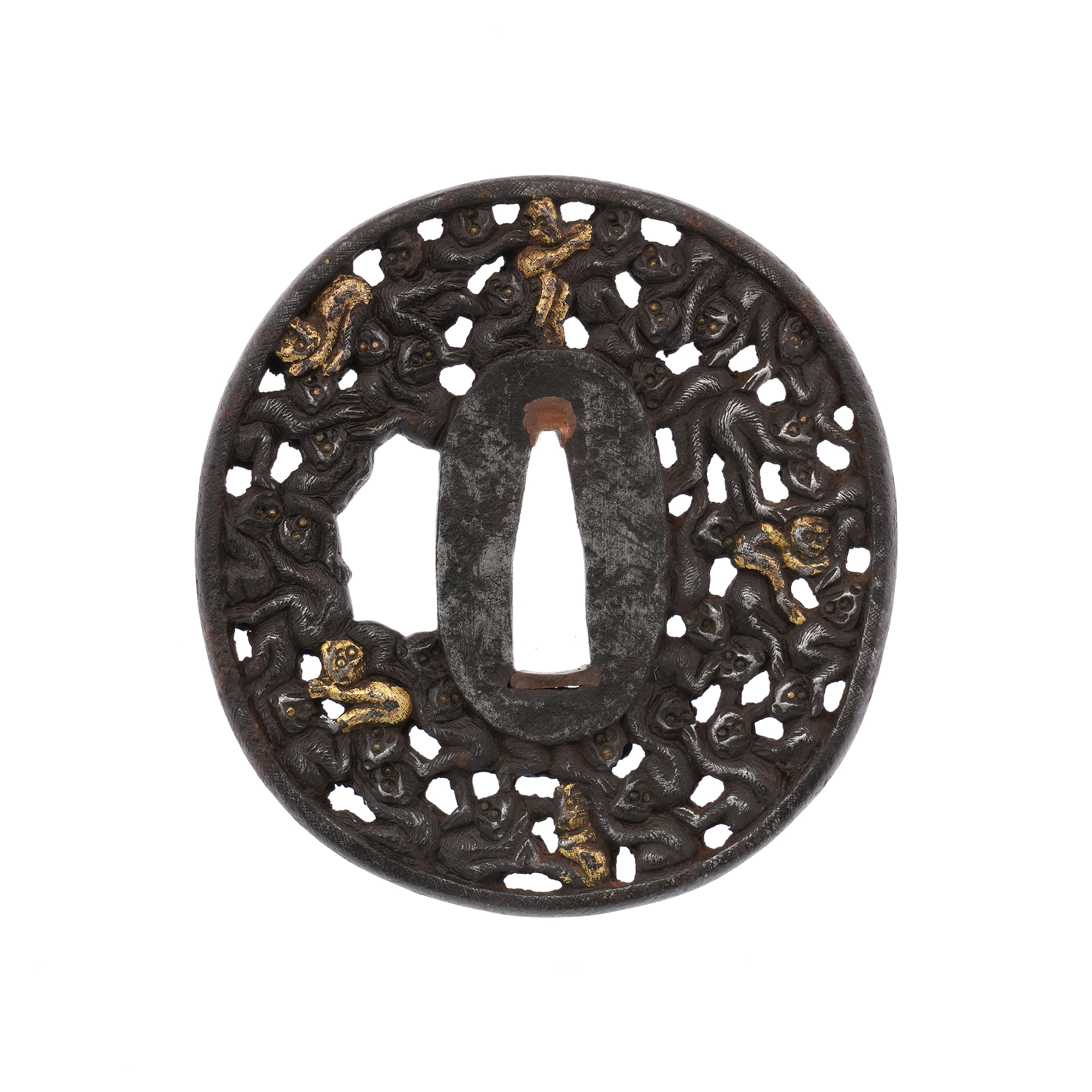
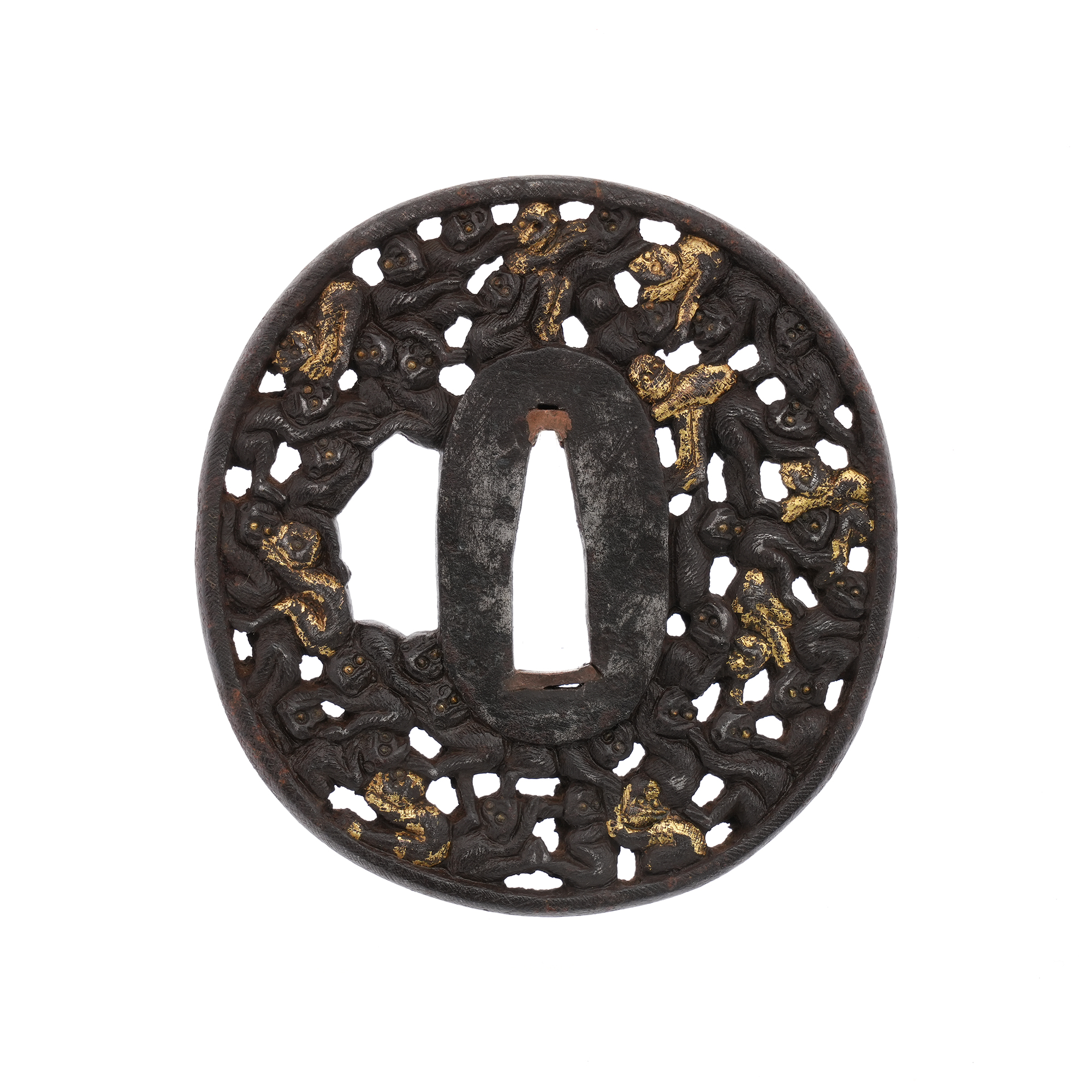
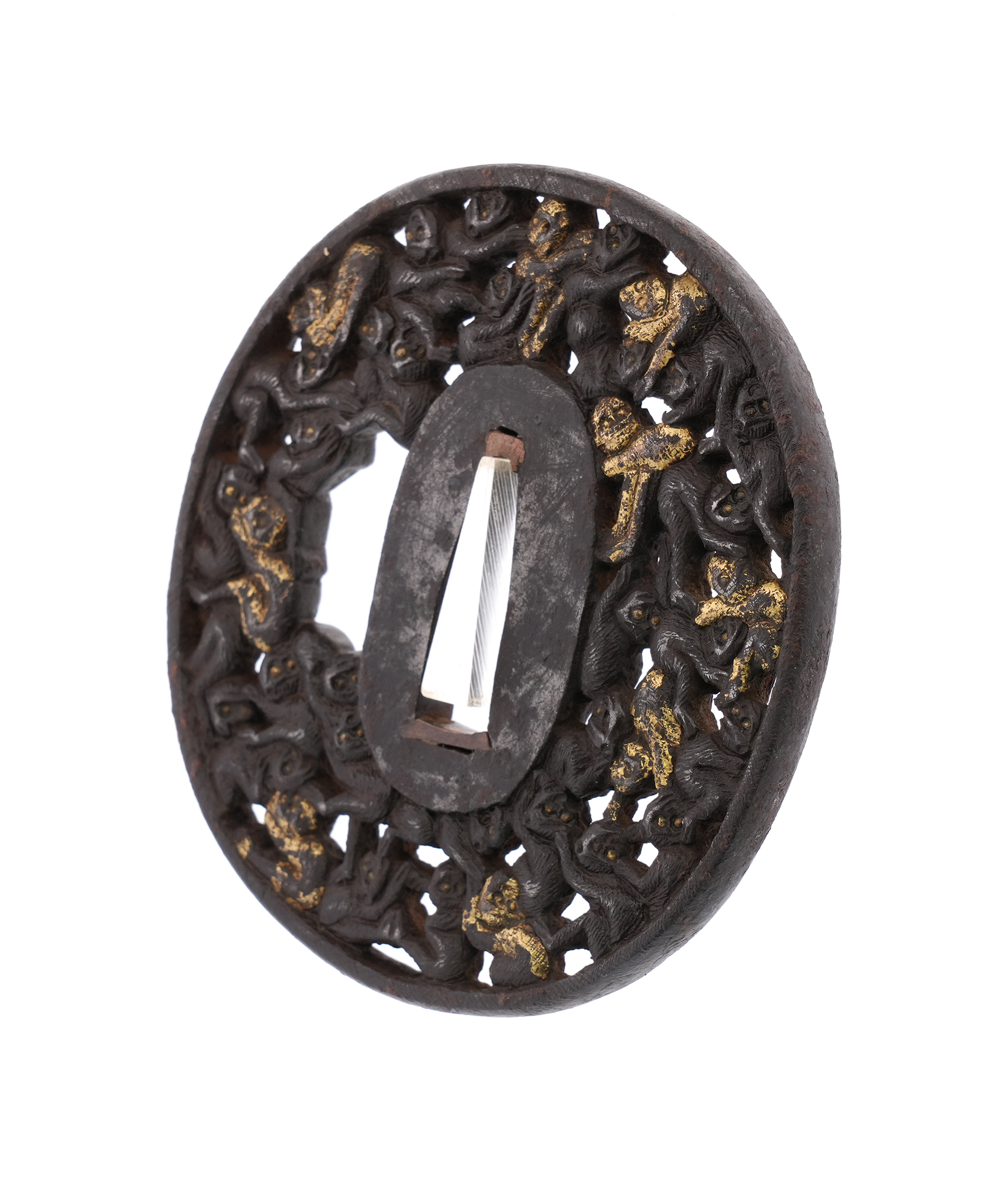
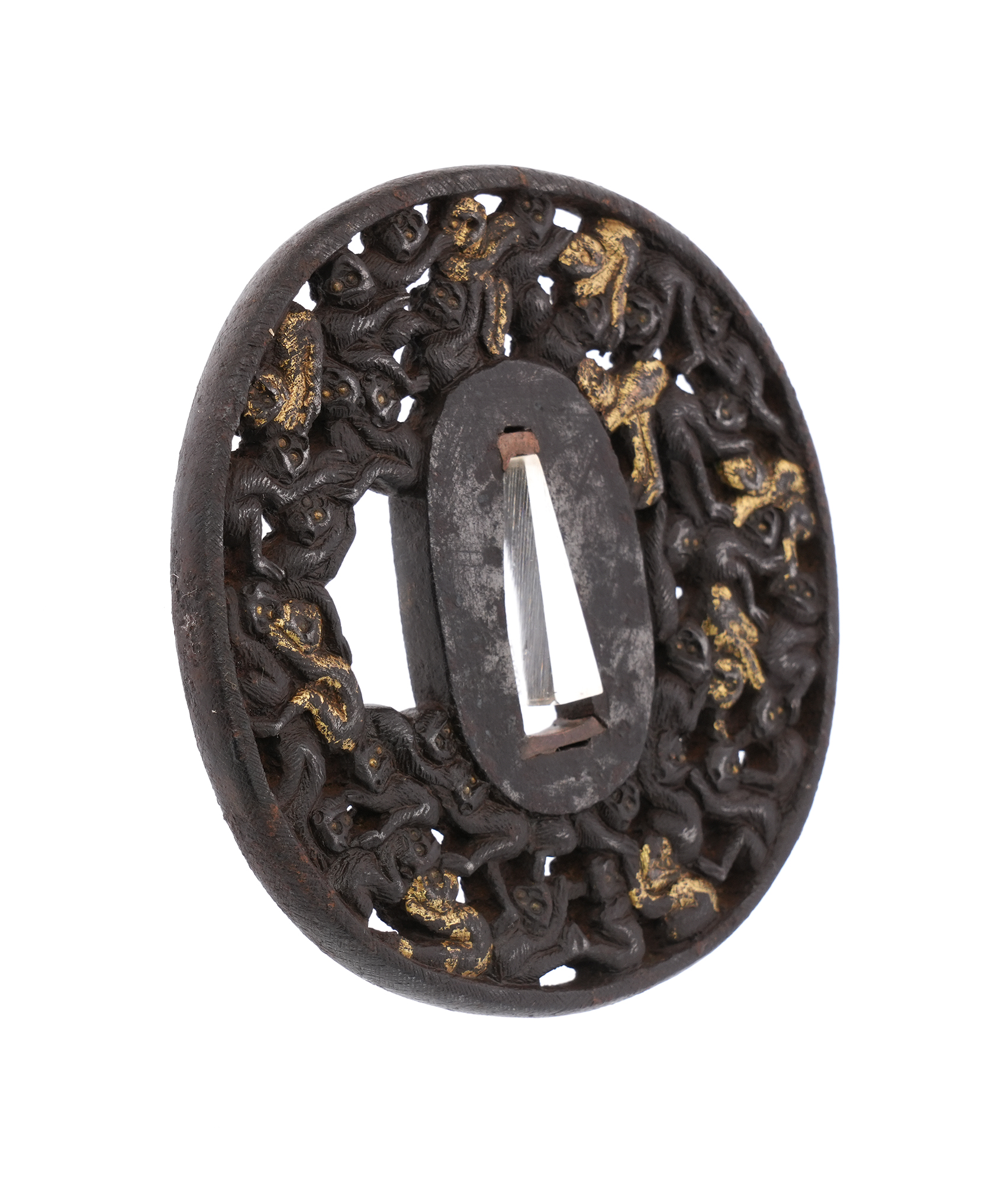
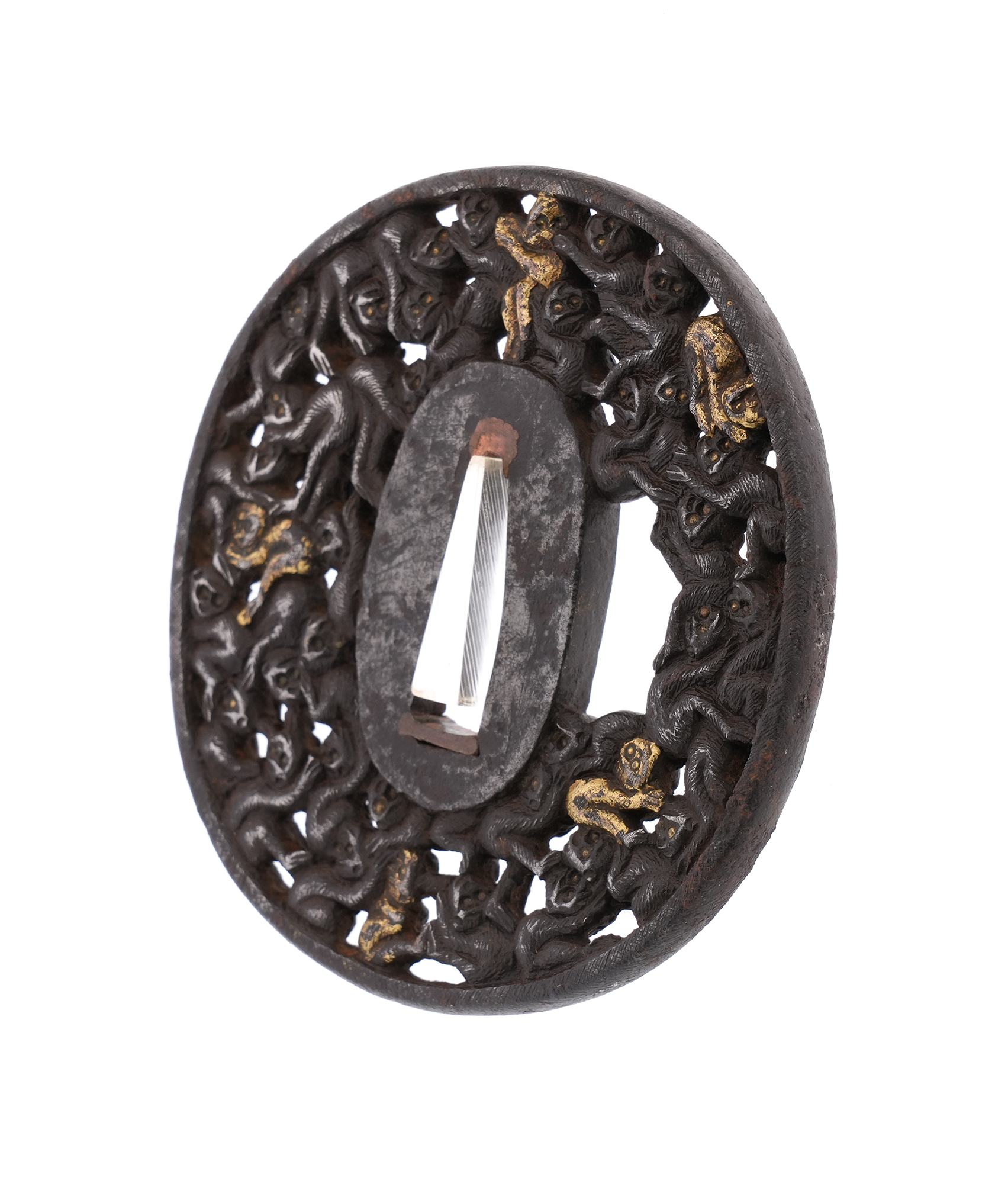
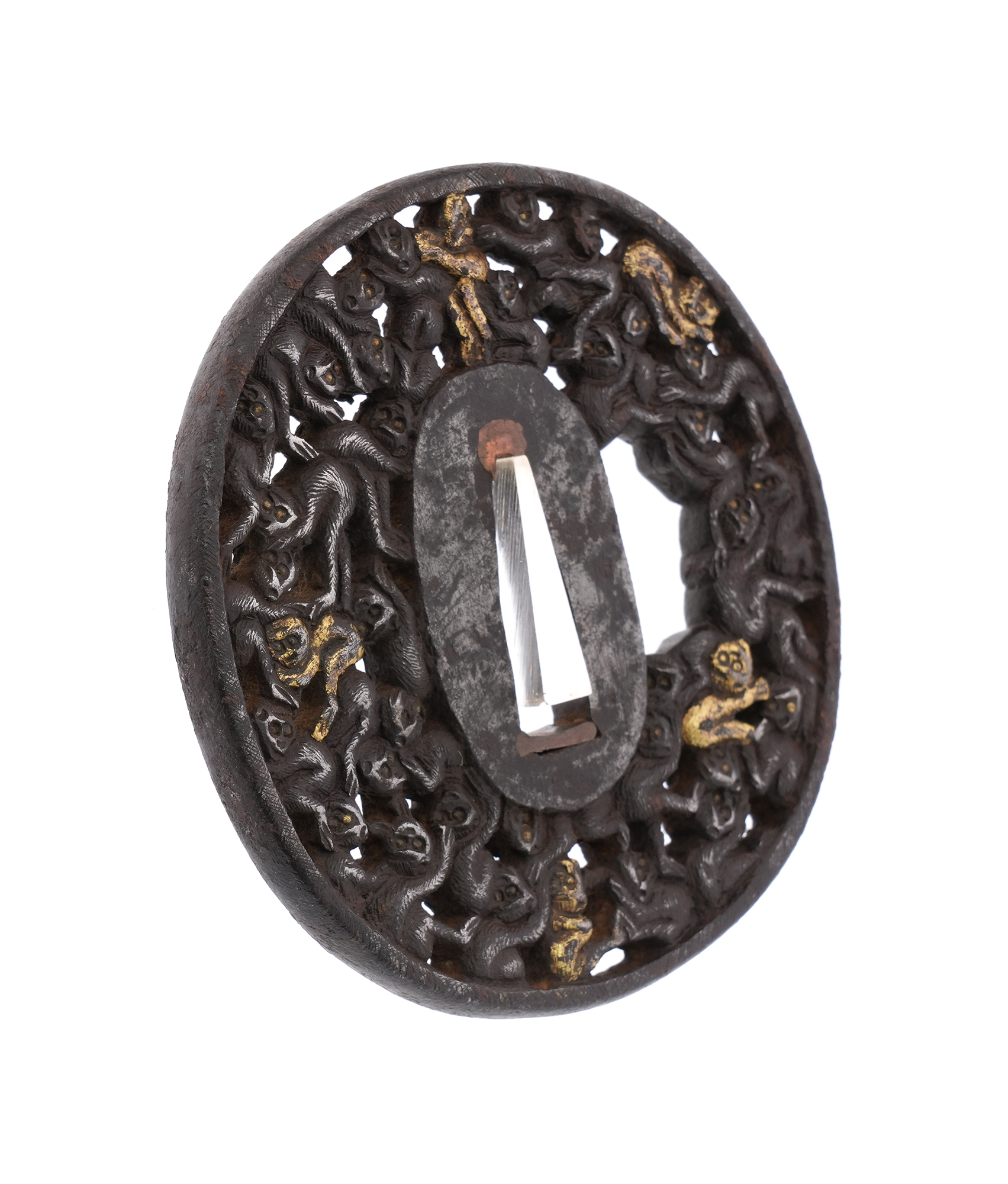
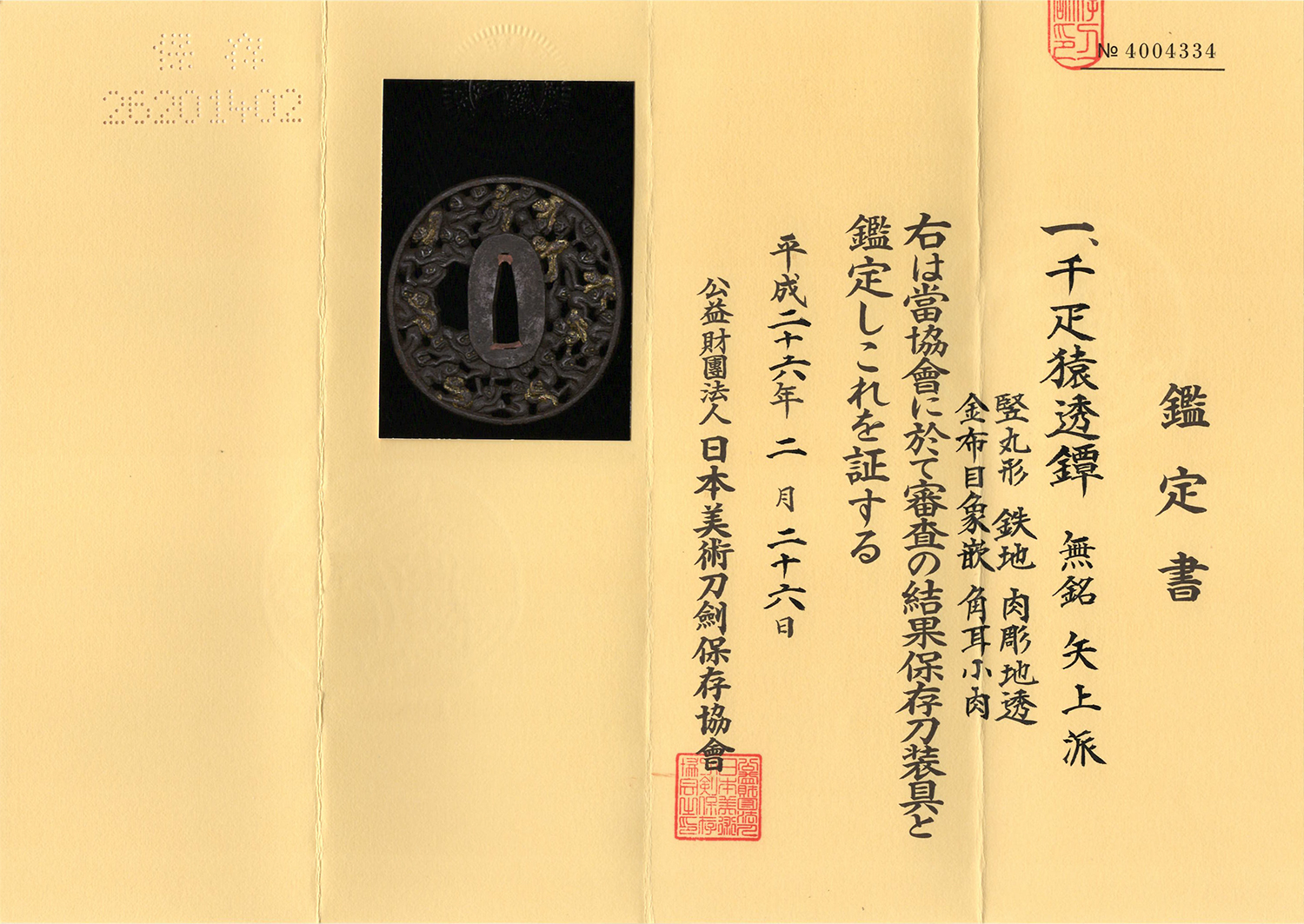
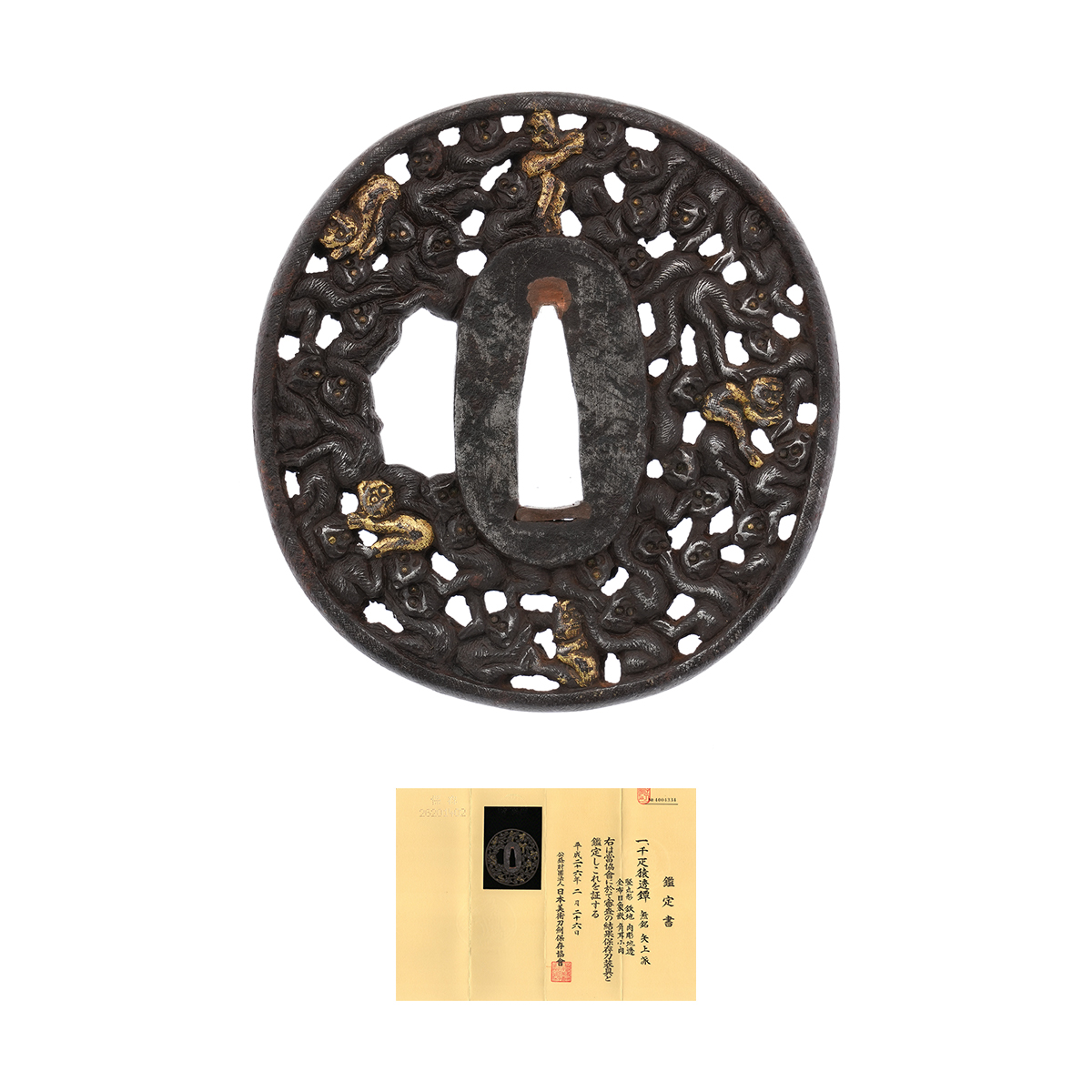
Accompanied by: Nippon Bijutsu Token Hozon Kyokai Hozon Tosogu Kanteisho, kiri box The Yagami school was a group of kinkou active in the Yagami region of Hizen Province from the latter half of the mid-Edo period through the late Edo period, and they are widely known for excelling at "Senbiki-zaru" (a thousand monkeys), which depicts countless monkeys assembled in marubori-style nikubori ji-sukashi. In particular, the first generation Mitsuhiro, who was active in the late 18th century, elevated this motif to the point where it became synonymous with the school, and his name and style were inherited by later generations, with production continuing until around the Bakumatsu period. Although this piece is mumei, it has been given a kiwame to the Yagami school in the Hozon Tosogu Kanteisho by the Nippon Bijutsu Token Hozon Kyokai, and the characteristics unique to this school are clearly expressed in the composition that gathers the bodies of a group of monkeys entwined with each other into the shape of a tsuba, the three-dimensional work deeply carving and piercing the tetsu-ji, and the kin-zogan applied to the eyes. Senbiki-zaru does not literally mean a count of one thousand monkeys, but is a name indicating a scene where an uncountable number of monkeys gather; monkeys have been cherished as auspicious symbols associated with "evil departing" (yaku ga saru) and "misfortune departing" (wazawai ga saru), and have also been entrusted with wishes for longevity and professional success. In this piece, each individual is given a different posture and expression—monkeys sitting down, monkeys twisting their bodies, those reaching out to the monkey next to them, those clinging to a back, and those peeking their faces through slight gaps—and the bodies of the monkeys themselves are continued as the skeleton of the tsuba. Despite being a dense composition, the individual figures are not lost, and in a composition where a new monkey appears every time one shifts their gaze, one can feel the wit and high level of design power that never bores the viewer. The tetsu-ji is finished so that the roundness of the monkeys' faces, limbs, backs, and bellies are plumply carved out, and by carrying the tagane through to the fur and fingertips, one can enjoy a dense group portrait from the front and the deep shadows of the multiple layers of nikubori from an angle. Small grains of kin-zogan are applied to the eyes of the monkeys, and furthermore, by decorating the bodies of several monkeys among the group with kin-nunome-zogan, the brilliance of gold is rhythmically scattered within the calm blackish-brown tetsu-aji. On the other hand, one can see traces that gin-nunome-zogan had been applied to the ears, and the delicate remnants still remaining today add a quiet light and shade to the lively motif; while accompanied by wear from many years, the vestiges of gold and silver blend well into the tetsu-ji rich in antique color, creating a keshiki unique to period kinkou that does not lean toward excessive flashiness. Because the group of monkeys is arranged with the same density not only on the omote but also on the ura, and the figures of the monkeys are wrapped all the way to the mimi, the carving is uninterrupted no matter which direction it is viewed from, and the entire tsuba possesses a sense of fulfillment like a single three-dimensional sculpture. While using many complex sukashi, each part is skillfully connected to maintain strength, and by naturally converging the lines of the monkeys' limbs and bodies around the seppa-dai, the structure as a practical item and the interest of the motif are balanced at a high level. In addition to the peace of mind provided by the Hozon Tosogu Kanteisho, this is a tsuba rich in highlights suitable for both collecting and display, allowing one to appreciate in a single piece the popular motif symbolizing the Yagami school, the labor-intensive carving filling the omote and ura, and the charm and brilliance created by the kin-zogan eyes.
Offered by Toushin

As written by the shop
Machine translation from the shop's Japanese · may contain errors ·
Certifies a genuine fitting worth preserving: a correct signature, or, if unsigned, an identifiable era and school, with recognized artistic and craft value.
The NBTHK (Nihon Bijutsu Tōken Hozon Kyōkai, the Society for the Preservation of Japanese Art Swords) is a public-interest incorporated foundation founded in 1948 and supervised by Japan’s Agency for Cultural Affairs (Bunkachō); it is based at the Japanese Sword Museum in Tokyo. Its expert panels physically examine each submitted work (shinsa) and issue a certificate (kanteishō) ranking it by artistic and historical merit. NBTHK papers are the most widely recognized standard of authentication for Japanese swords and fittings.
NBTHK official siteAs a rule we do not accept returns, except when we have sent a different item from the one ordered or when there is a significant discrepancy between the description and the item. If you wish to return an item, please contact us within 3 days of its arrival and then send it back.
¥330,000