 NihontoWatchNihontoWatch
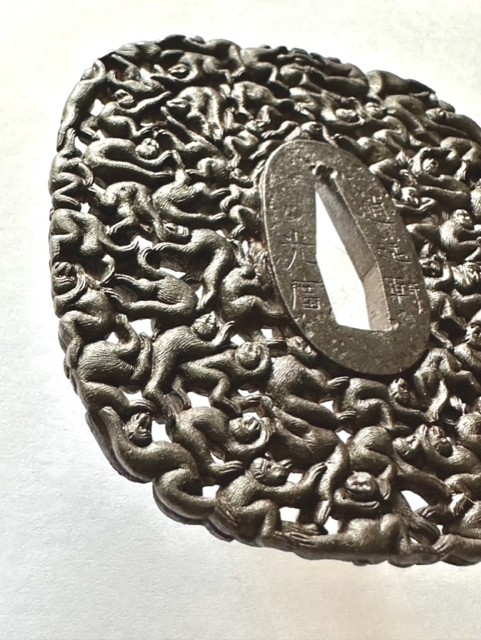
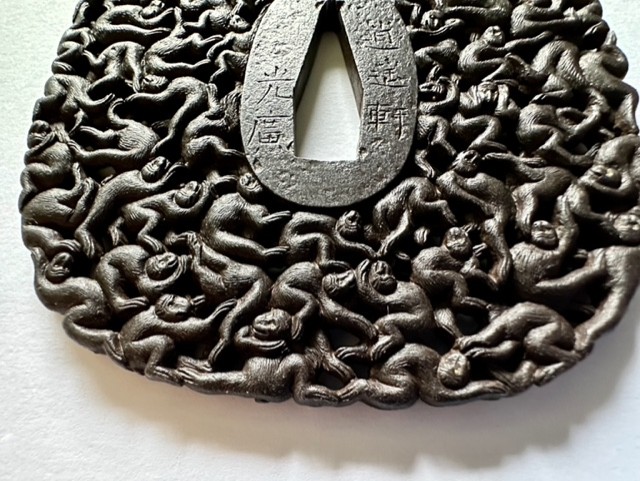
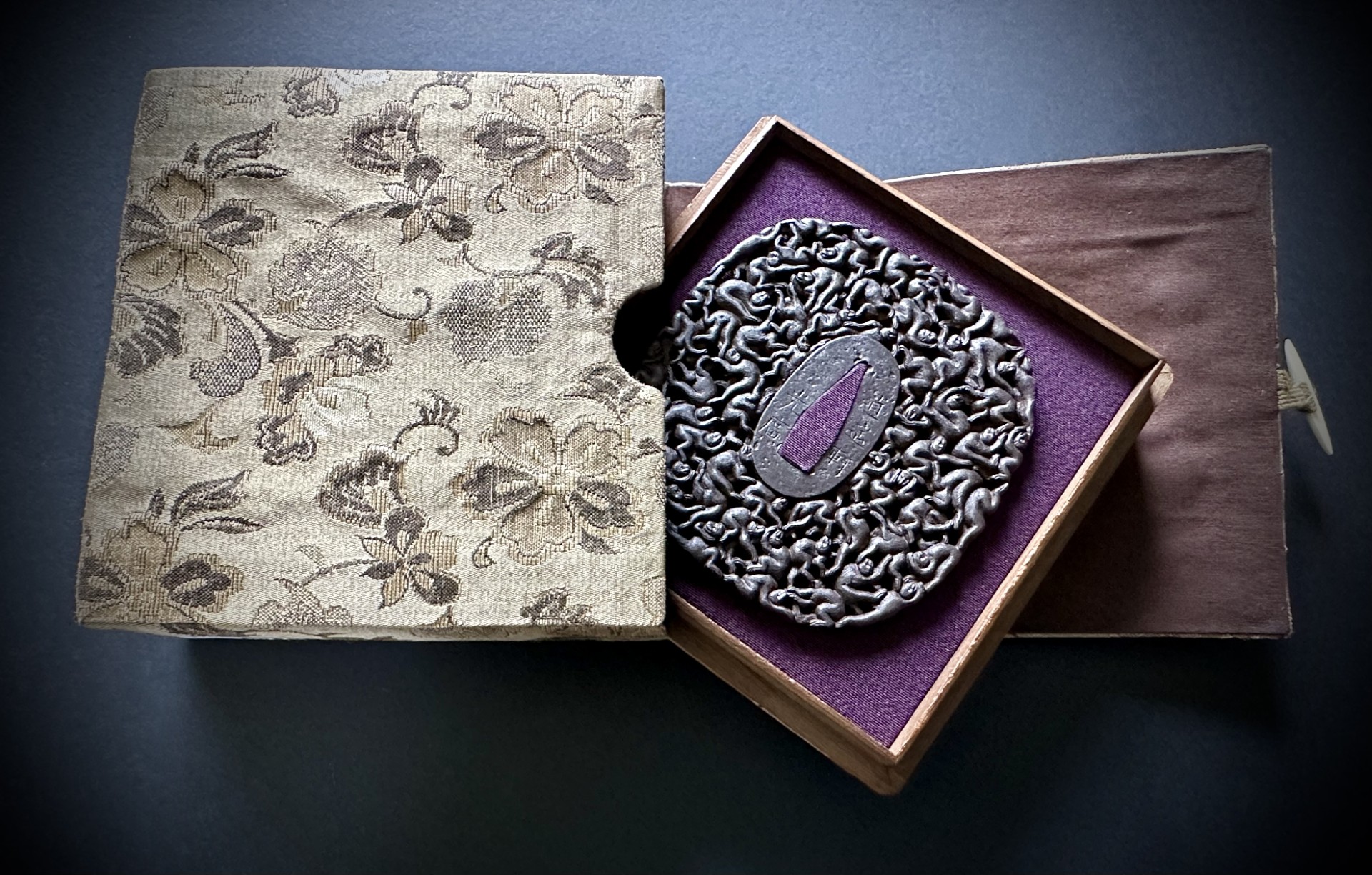
Explanation: This tsuba shows a great number of densely arranged monkeys carved out in three-dimensional openwork (nikubori ji-sukashi), an interpretation which is referred to as "Thousand Monkeys" (senbiki-zaru). The motif of Thousand Monkeys was the hallmark of the Yagami School (矢上) which was based in Hizen province (present-day Nagasaki Prefecture). Representative master of the Yagami School was Mitsuhiro (光広) who was active in the second half of the 18th century. His name was then used on a hereditary basis until the end of the feudal era (1868) The Yagami (矢上) school started in the 18th century with first-generation Mitsuhiro, who was succeeded under that name by his younger brother, and then the 1st generation's son made the 3rd generation. The two sons of the first generation took over under the names Seishirō and Hanjirō. They worked mostly in carving iron but sometimes other metals are seen.Located in a suburb of Nagasaki, their designs took inspiration from Chinese dragons and art motifs, designs that would later become known as Nanban, "Southern Barbarian". They also made designs with many monkeys, referred to by collectors as "1000 monkeys," and works with hares and shrimp are also known. MITSUHIRO SHOYOKEN D: Born1748, died August 4, 1823. This Tsuba is quintessential work by Mitsuhiro and the Monkeys are executed all with different faces and angles with gold eyes in minute detail. Senbiki Zaru Zu Sukashi Tsuba NBTHK Tokubetsu Hozon Tosogu ( Extraordinarily Worthy of Preservation ) ( Note : From my experience there are sometimes similar Tsuba available depicting the Senbiki Saru design by other makers who have tried to copy, however they are nowhere as brilliant as the originator of this design Mitsuhiro's and fall short.)
NihontoWatchOffered by Connoisseur Arms
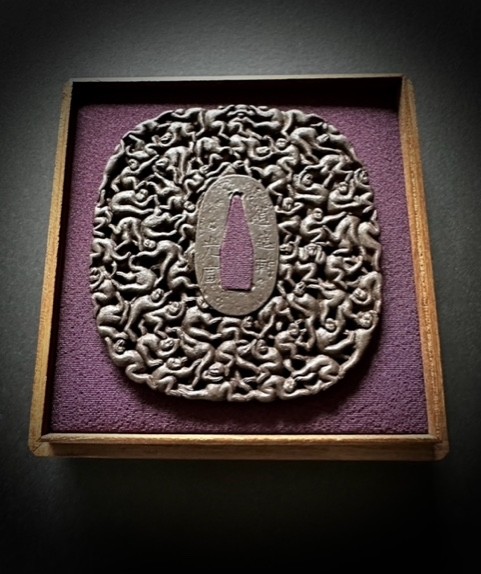
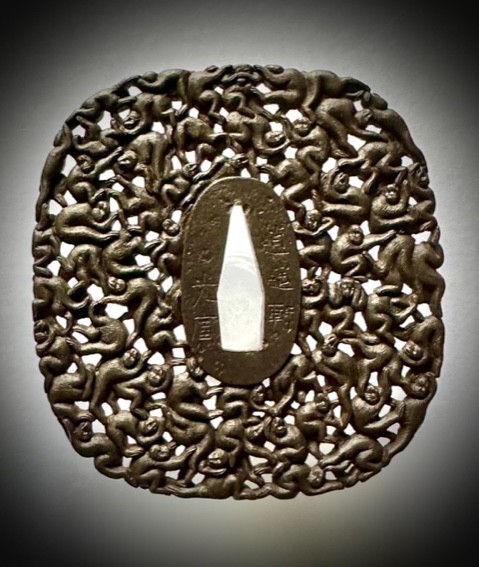
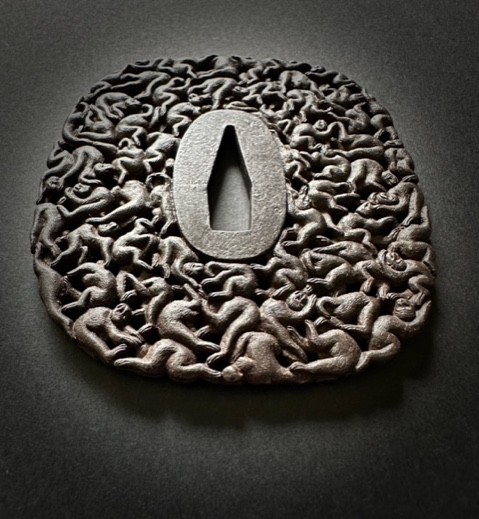
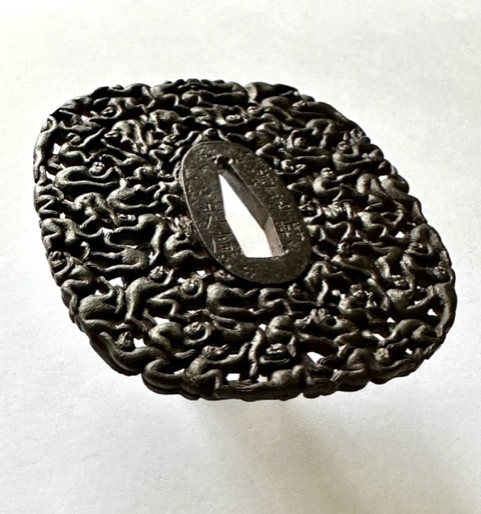
A Hozon-certified fitting of notably superior craftsmanship and condition, often with signature or workmanship of high reference value.
The NBTHK (Nihon Bijutsu Tōken Hozon Kyōkai, the Society for the Preservation of Japanese Art Swords) is a public-interest incorporated foundation founded in 1948 and supervised by Japan’s Agency for Cultural Affairs (Bunkachō); it is based at the Japanese Sword Museum in Tokyo. Its expert panels physically examine each submitted work (shinsa) and issue a certificate (kanteishō) ranking it by artistic and historical merit. NBTHK papers are the most widely recognized standard of authentication for Japanese swords and fittings.
NBTHK official sitePurchases are final and items cannot be returned unless otherwise stated.
Price on request