 NihontoWatchNihontoWatch
Introduction The Yagami (矢上) school started in the 18th century with first-generation Mitsuhiro, who was succeeded under that name by his younger brother, and then the 1st generation's son made the 3rd generation. The two sons of the first generation took over under the names Seishirō and Hanjirō. They worked mostly in carving iron but sometimes other metals are seen. Located in a suburb of Nagasaki, their designs took inspiration from Chinese dragons and art motifs, designs that would later become known as Nanban, "Southern Barbarian". They also made designs with many monkeys, referred to by collectors as "1000 monkeys," and works with hares and shrimp are also known. This example This very finely carved tsuba ranks among the best works done in the Nanban style in Japan. It depicts two dragon among foliage, chasing the sacred pearl. The pearl is a movable iron ball in a larger casing. The dragons are very detailed, their bodies moving in and out of undercut foliage. Even the rim is done entirely in openwork with slender scrolling tendrils. The work is highlighted with elegant use of gold overlay on the dragon's claws, flames, and a ken sword hold in the tail of one of the dragons. N.B.T.H.K. papers It comes with N.B.T.H.K. Hozon papers which don't say much other than describe the physical appearance of the piece and mumei, nanban. (Unsigned, foreign barbarian). This is unfortunately often the case with pieces in the Nanban style, they stop looking at details that make the piece attributable to a specific school. A more precise attribution In this case the finishing of the seppa-dai (washer plate) and both hitsu-ana (openings left and right) which are lined with a thin metal strip, plus the style and manner of carving, all point to Yagami school. Possibly the 2nd generation Mitsuhiro, the best of the three generations. One of his hallmarks was a complex rim where designs did not repeat itself, as seen here.1 There is a tsuba exhibiting similar style and workmanship, but this time with symmetrically placed dragons in Musée Cernuschi, musée des Arts de l’Asie de la Ville de Paris, accession number M.C. 1802. It is signed: Hizen Yagami-Ju Mitsuhiro "Mitsuhiro, resident of Yagami [in] Hizen" Notes 1. Robert Burawoy; Mitsuhiro of Hizen, identifies the three generations. Published in; Bushido, An International Journal of Japanese Arms, vol 3, No 1. Pages 18-21.
NihontoWatchOffered by Mandarin Mansion

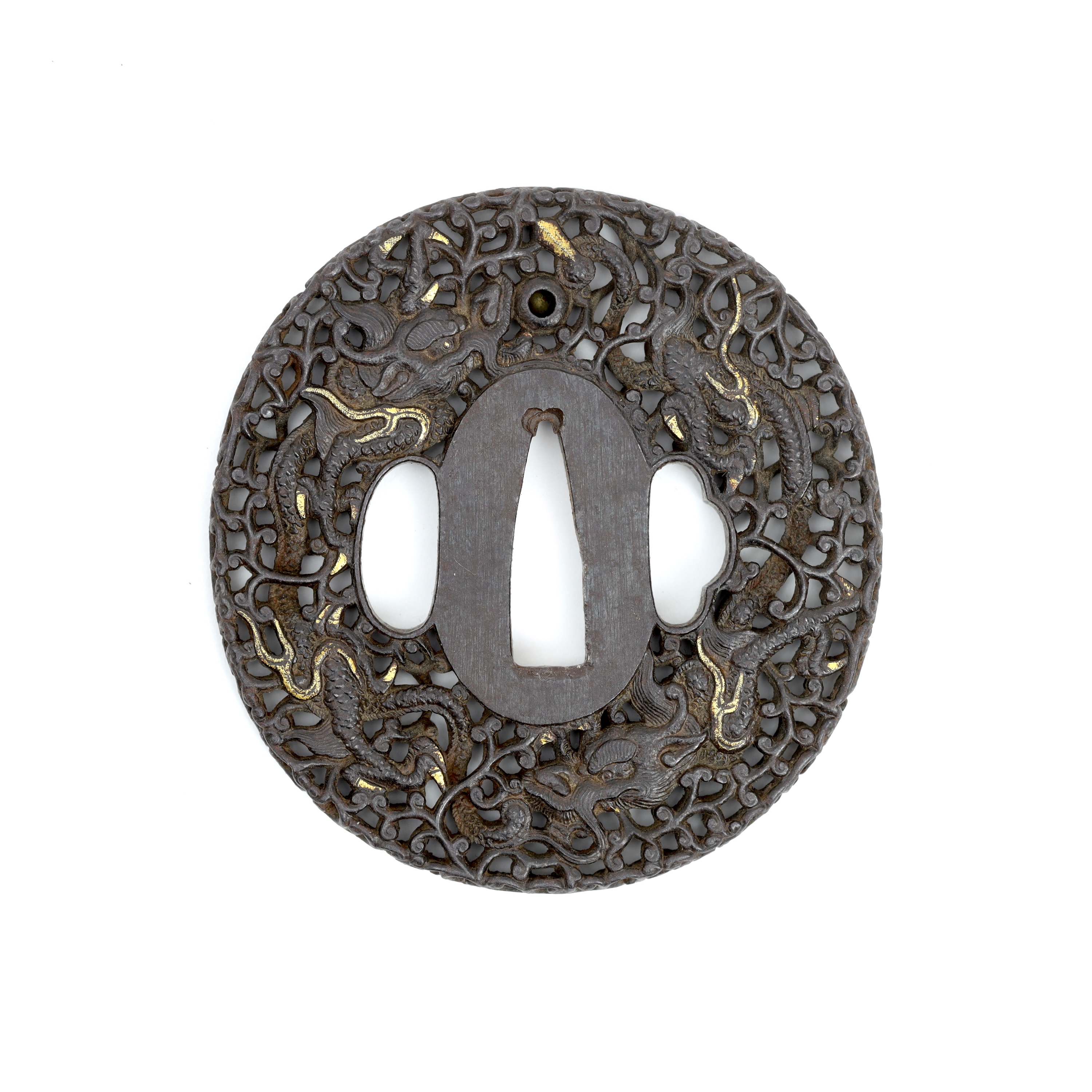
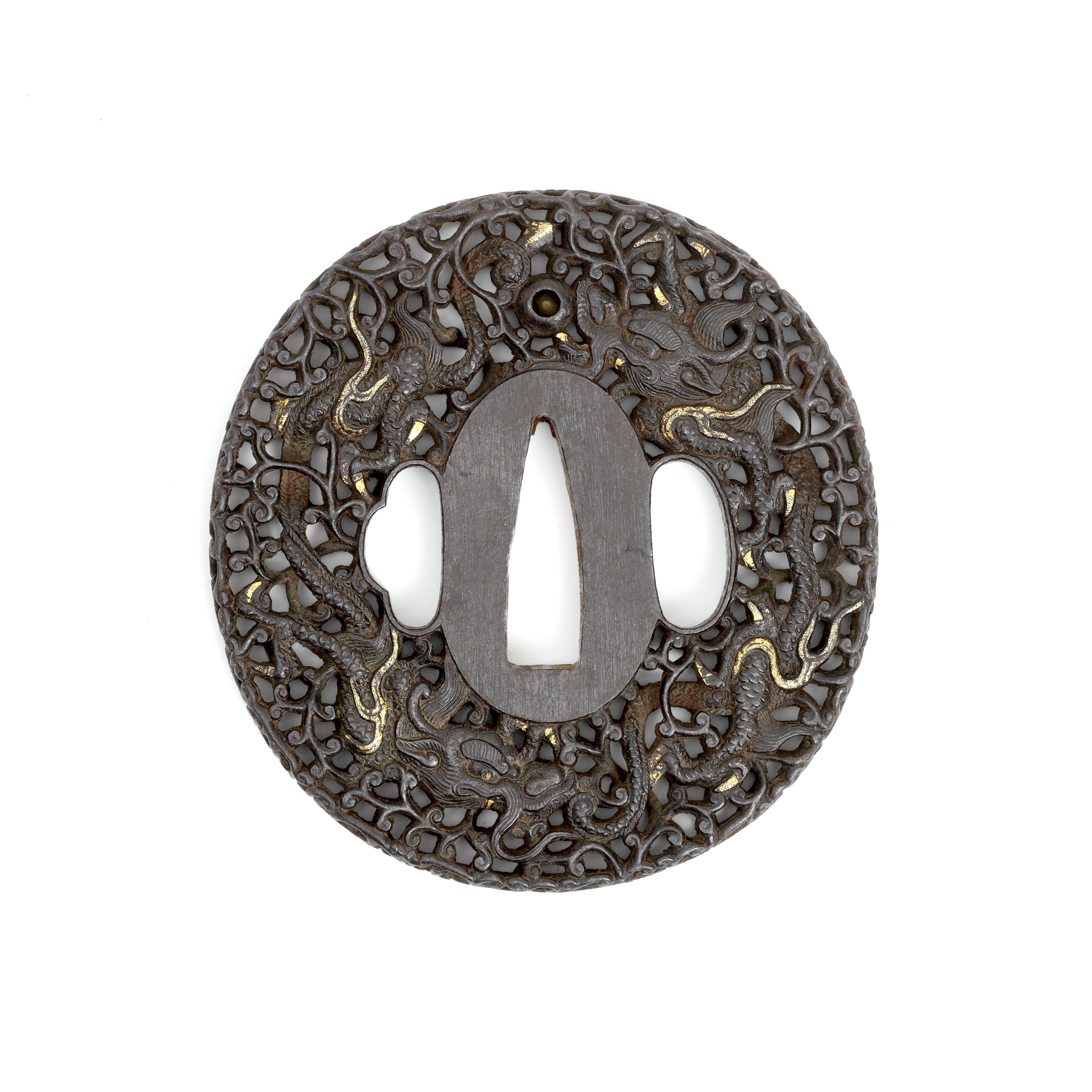
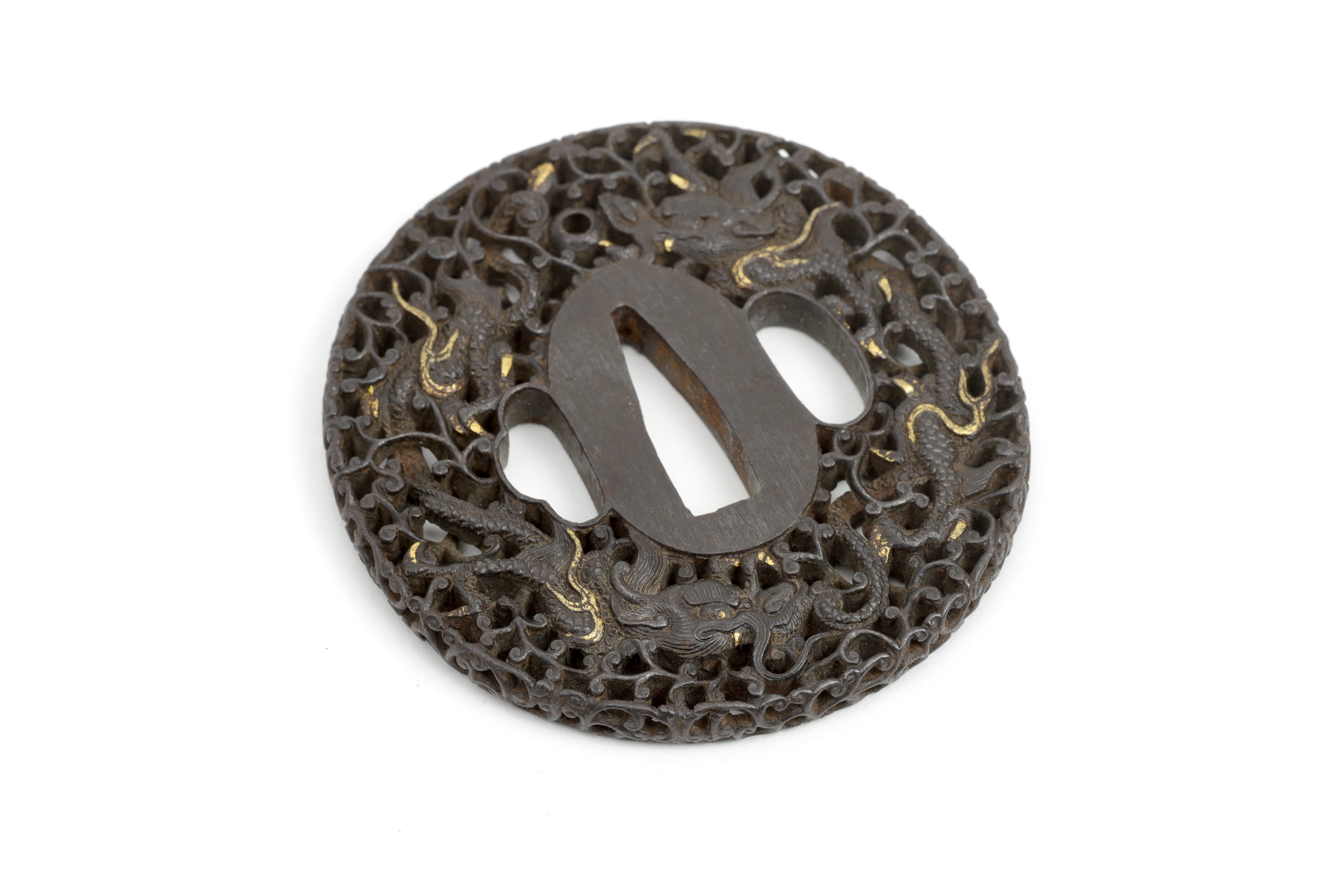
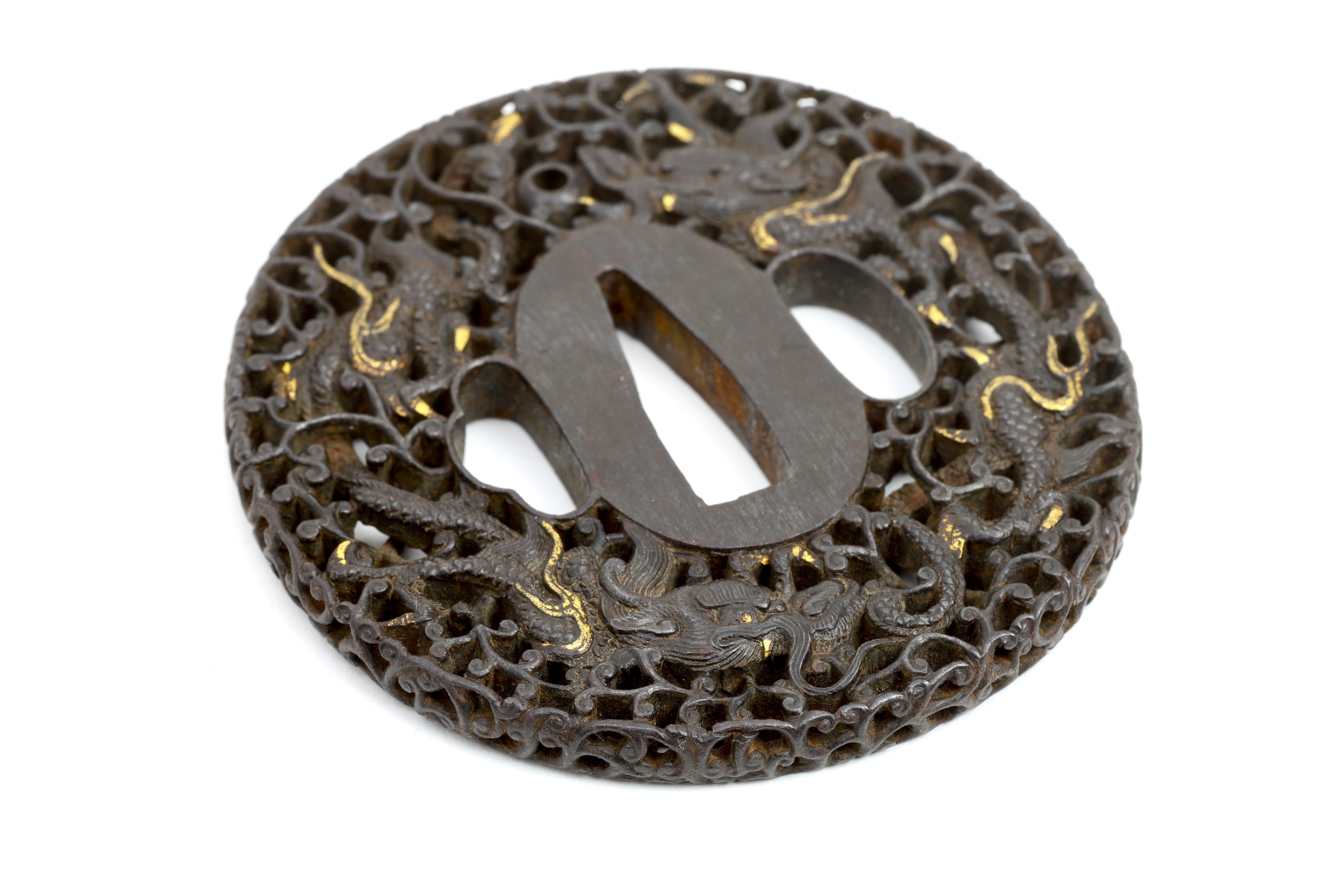
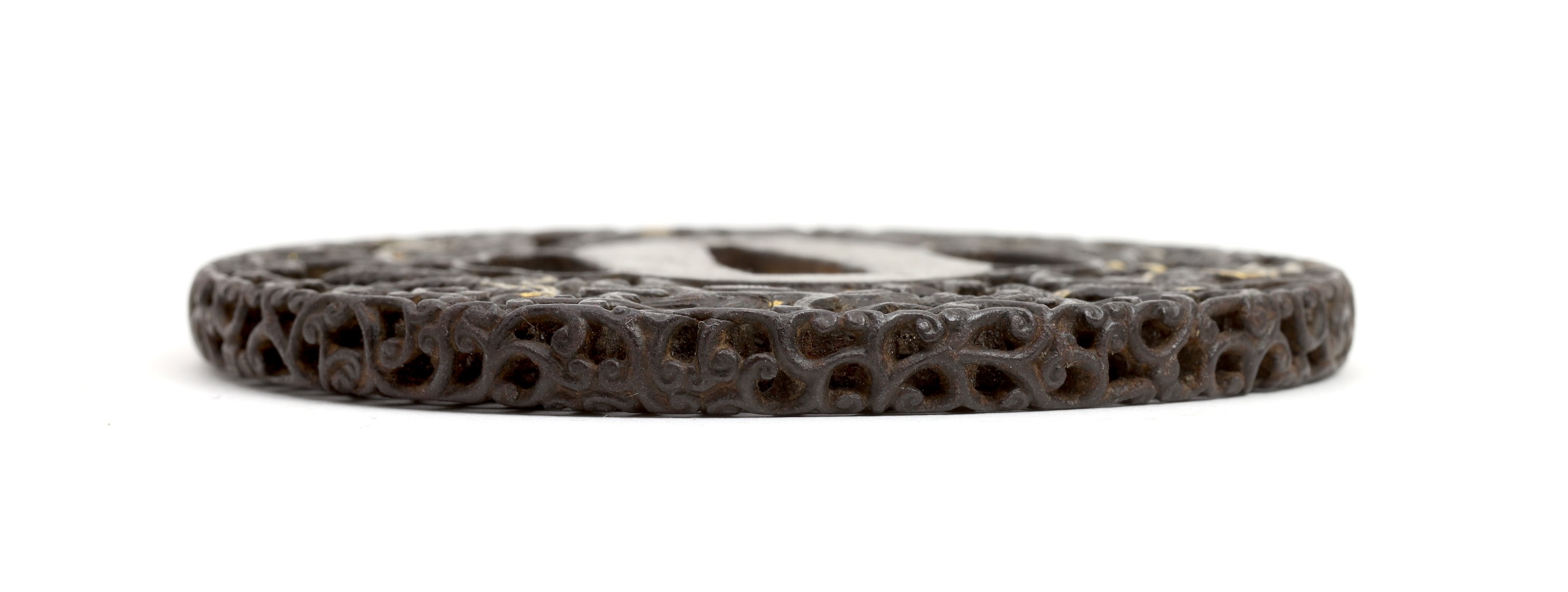
Iron-tsuba
Certifies a genuine fitting worth preserving: a correct signature, or, if unsigned, an identifiable era and school, with recognized artistic and craft value.
The NBTHK (Nihon Bijutsu Tōken Hozon Kyōkai, the Society for the Preservation of Japanese Art Swords) is a public-interest incorporated foundation founded in 1948 and supervised by Japan’s Agency for Cultural Affairs (Bunkachō); it is based at the Japanese Sword Museum in Tokyo. Its expert panels physically examine each submitted work (shinsa) and issue a certificate (kanteishō) ranking it by artistic and historical merit. NBTHK papers are the most widely recognized standard of authentication for Japanese swords and fittings.
NBTHK official site
Returns accepted on items ordered from the site when an item does not appear to be as depicted and described; buyer must notify via email within 7 days of receipt. Refund covers purchase price minus shipping, bank fees, and currency conversion. Sales on items paid in terms are final, as are sales of items personally inspected.
€2,000