 NihontoWatchNihontoWatch
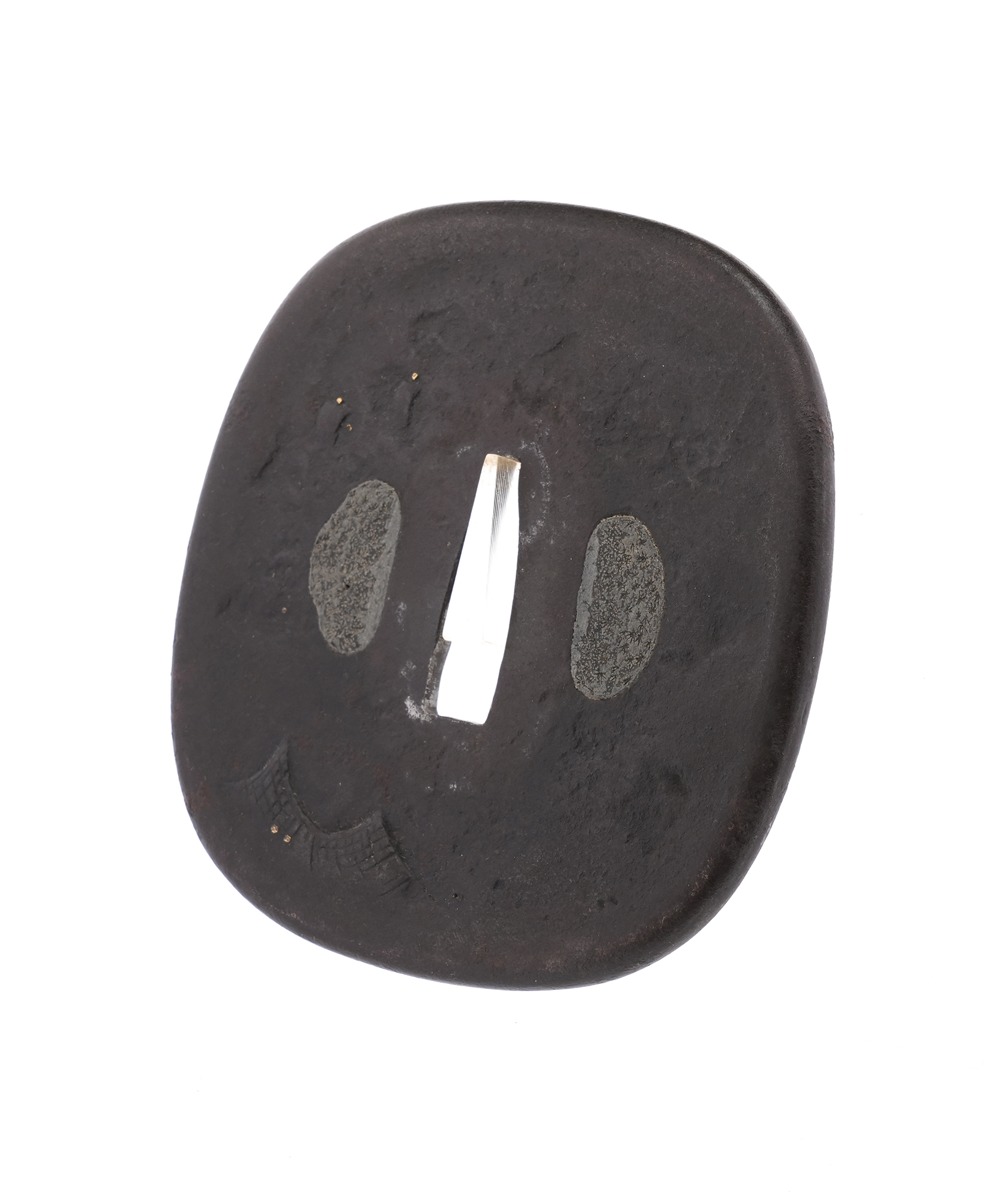
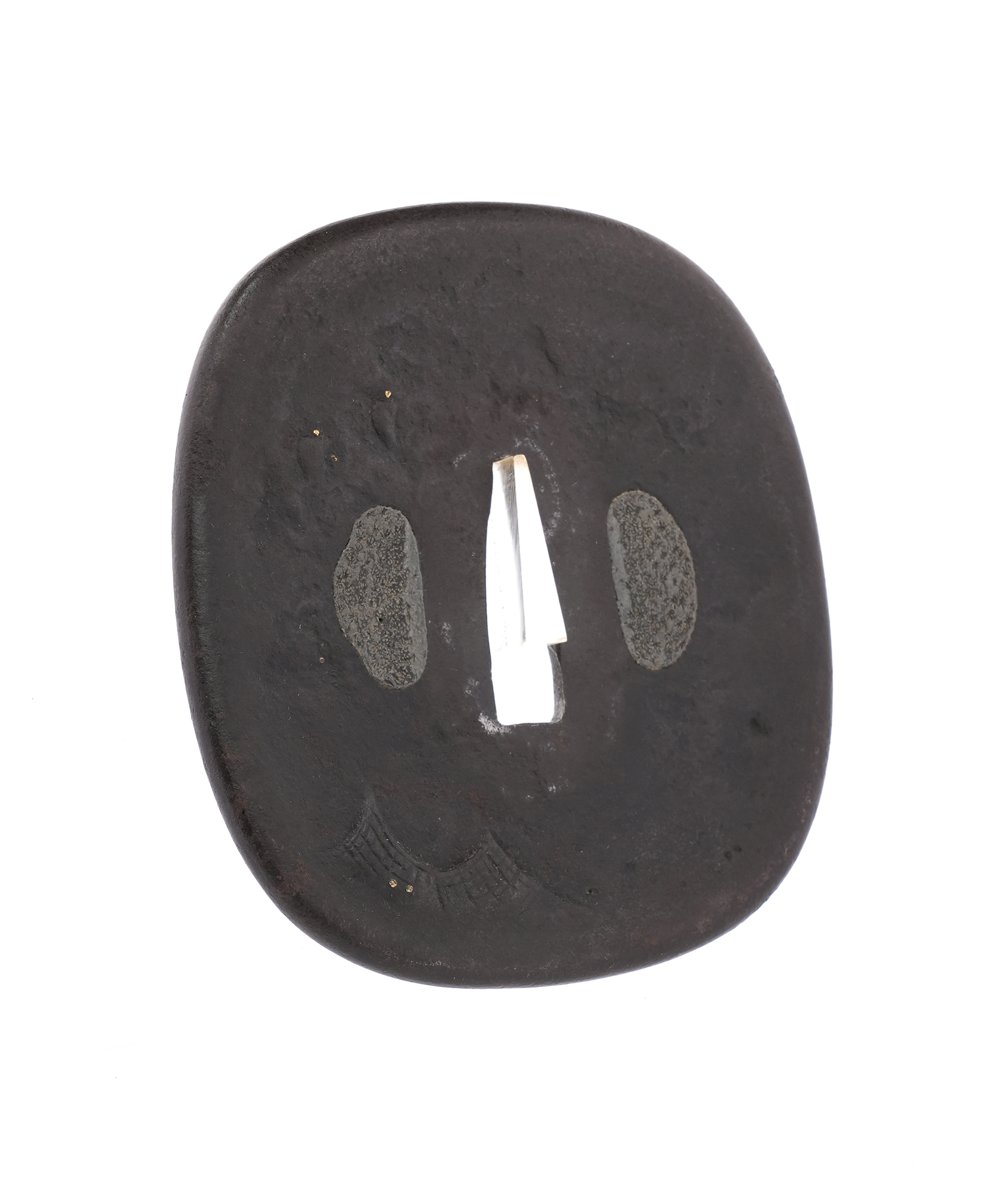
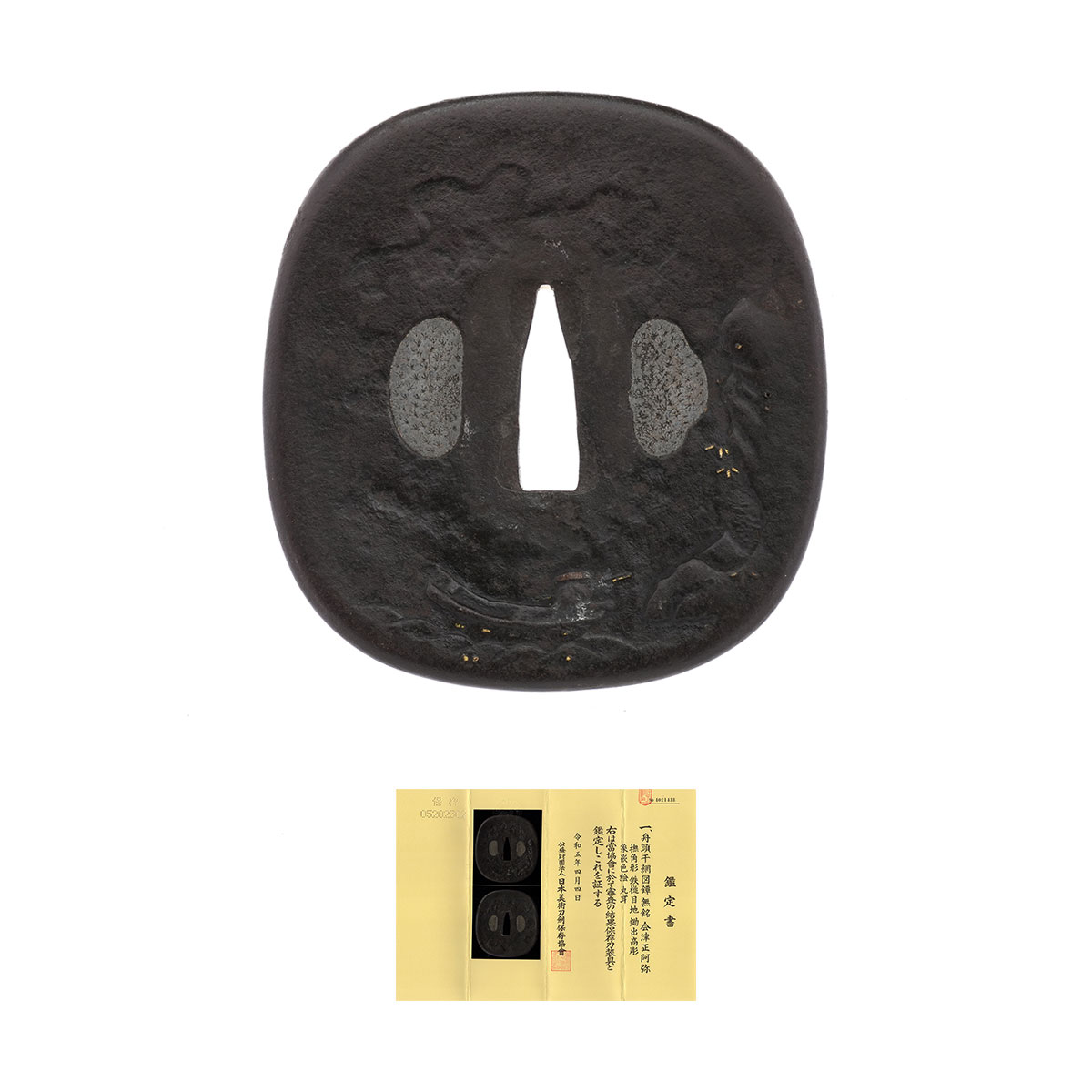
Aizu Shoami is a school of tosogu kinkou belonging to the Shoami lineage that was active centered around Mutsu no Kuni Aizu during the Edo period. The Shoami school spread its lineages to various regions, and in Aizu as well, many tsubako were active and achieved unique development, becoming a representative school of tosogu kinkou in that region. The style is not uniform; primarily using tetsu-ji, they employed diverse techniques such as jisukashi, nikubori, sukidashibori, kebori, and zogan iroe with gold, silver, or suaka, representing a wide range of subjects from kamon, plants, animals, and figures to historical events and sansui landscapes. They left behind many works that harmonize decorative and pictorial qualities within a robust iron framework, and the charm of Aizu Shoami lies in the ability to enjoy the deep tetsumi and designs rich in variety. The Sento Hoshiami-zu is a fuzoku theme that combines a boatman maneuvering a boat with fishing tools within a waterside landscape, depicting human activity and the expanse of nature in a single composition; its elegance lies in evoking the movement of the body propelling the boat, the wind crossing the shore, and even the lingering sound of waves, and to establish a continuous story by arranging the boat, figure, crags, waves, kasumi, and hoshiami on the omote and ura within the limited surface of a tsuba requires not only carving skill but also excellent compositional ability. This item likens a grand nade-kaku-gata tetsu-ji to a vast waterside, powerfully raising a sheer cliff on the right side of the omote using sukidashi takabori, making the bamboo grass growing on the rock face stand out in gold, and placing a slender boat and a boatman holding a long pole below to capture the moment it is just about to proceed across the quiet water surface. By carving multiple layers of waves beneath the boat and scattering golden spray here and there, it creates the movement of water and the sparkle of light within the blackish-brown tetsu-ji, and the composition contrasting the small figure with the large cliff expands the limited tsuba surface into a majestic sansui. The upper portion is carved one level shallower in sukisage, treated as a landscape where kasumi envelops the waterside without clearly defining the outlines, resulting in a skillful expression of perspective that leads to an atmospheric distant view behind the powerfully shown Chikakage crags and boat. The ura surface concisely represents a net stretched out to dry toward the lower left, and by quietly leaving the activity of fishing after the boat's passage on the omote, the flamboyant omote and the lingering ura correspond, allowing one to savor a depth as if viewing the same waterside through a different flow of time each time the tsuba is turned over. Both hitsu-ana are inlaid with a lead-like silver-gray metal, with fine taganeme layered on the surface, and the soft gray placed on the left and right acts as a quiet tone connecting the blackish-brown tetsu-ji, the deep shadows of the cliff, and the gold of the bamboo grass and wave spray. With its archaic nakago-ana, jihada retaining tsuchime, thin yet large and tense jitetsu, gentle contours of the maru-mimi, and a bold composition representing kasumi through sukisage, it is an impressive piece where discoveries continue from a single boat traveling through deep mountains from a distance to the boatman's movements, bamboo grass, wave spray, and hoshiami at hand, allowing one to fully enjoy the tetsumi and pictorial quality of Aizu kinkou.
Offered by Toushin

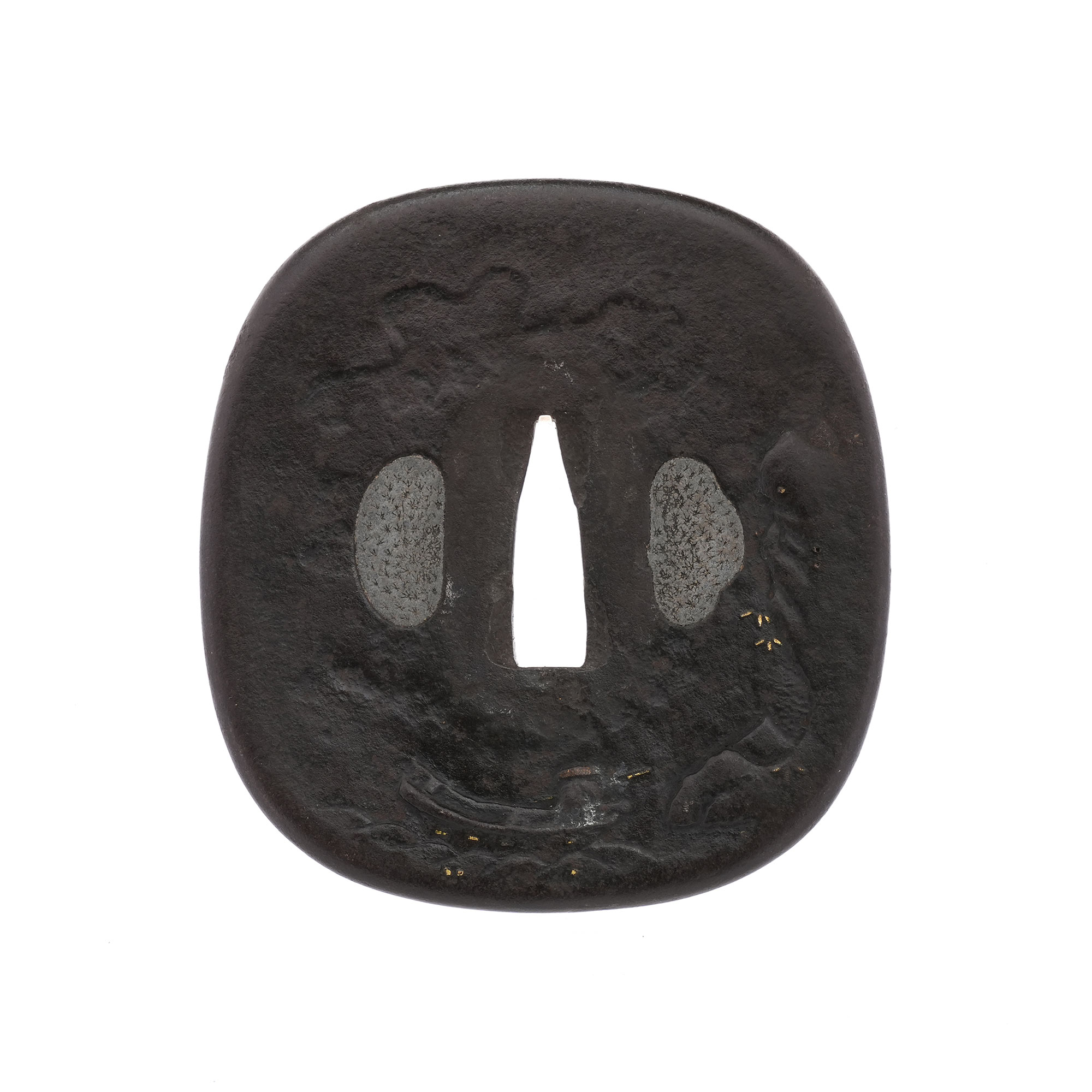
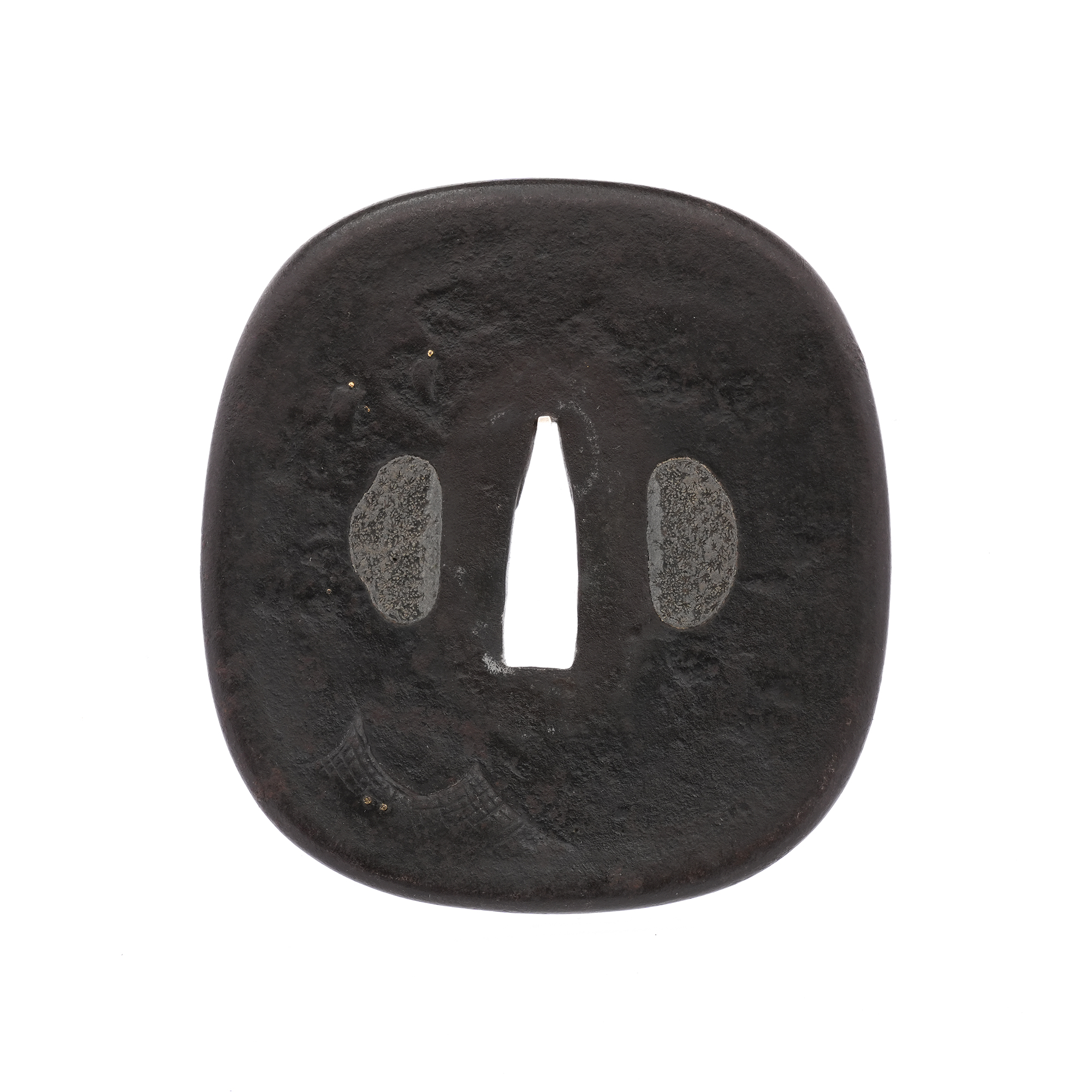
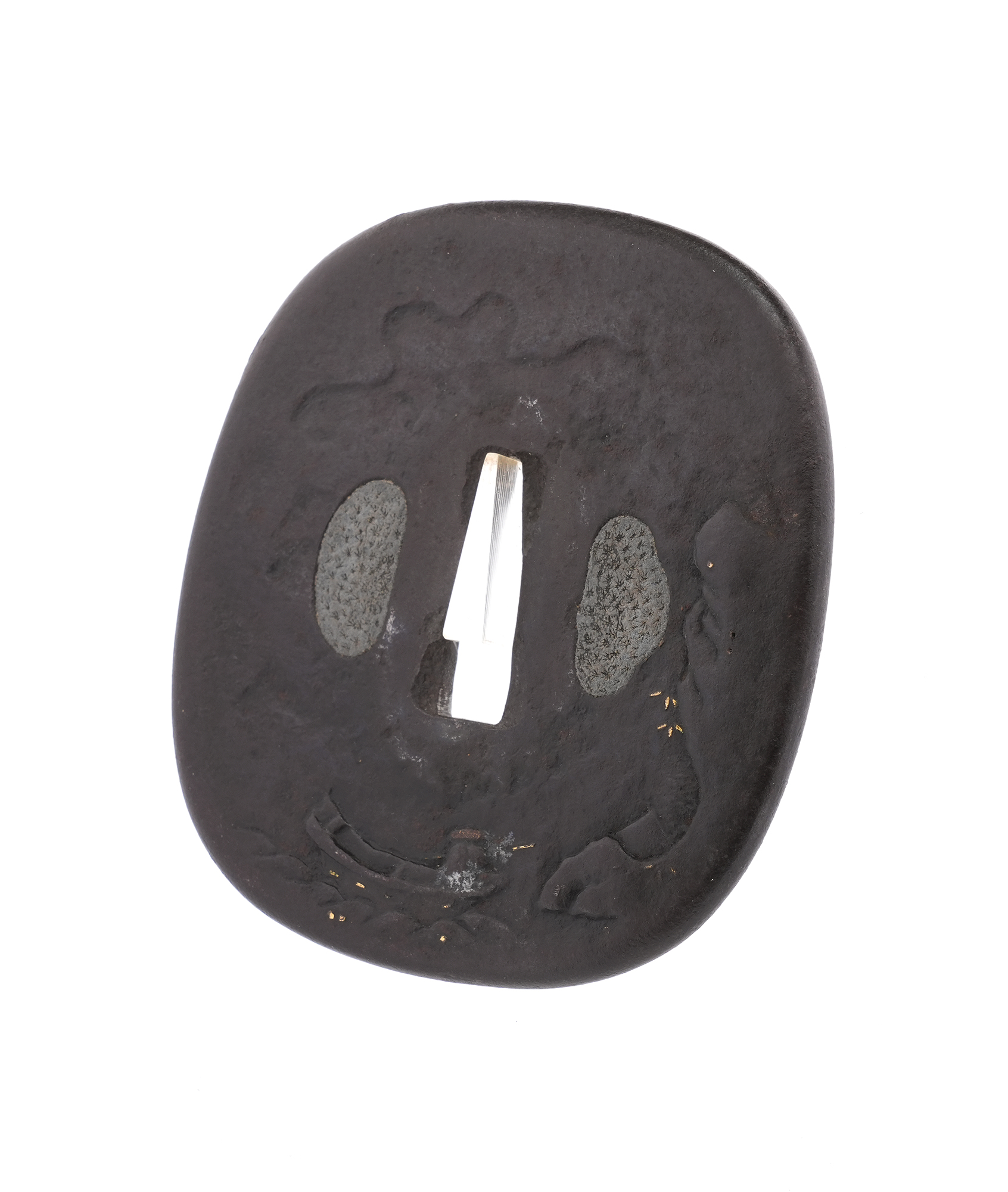
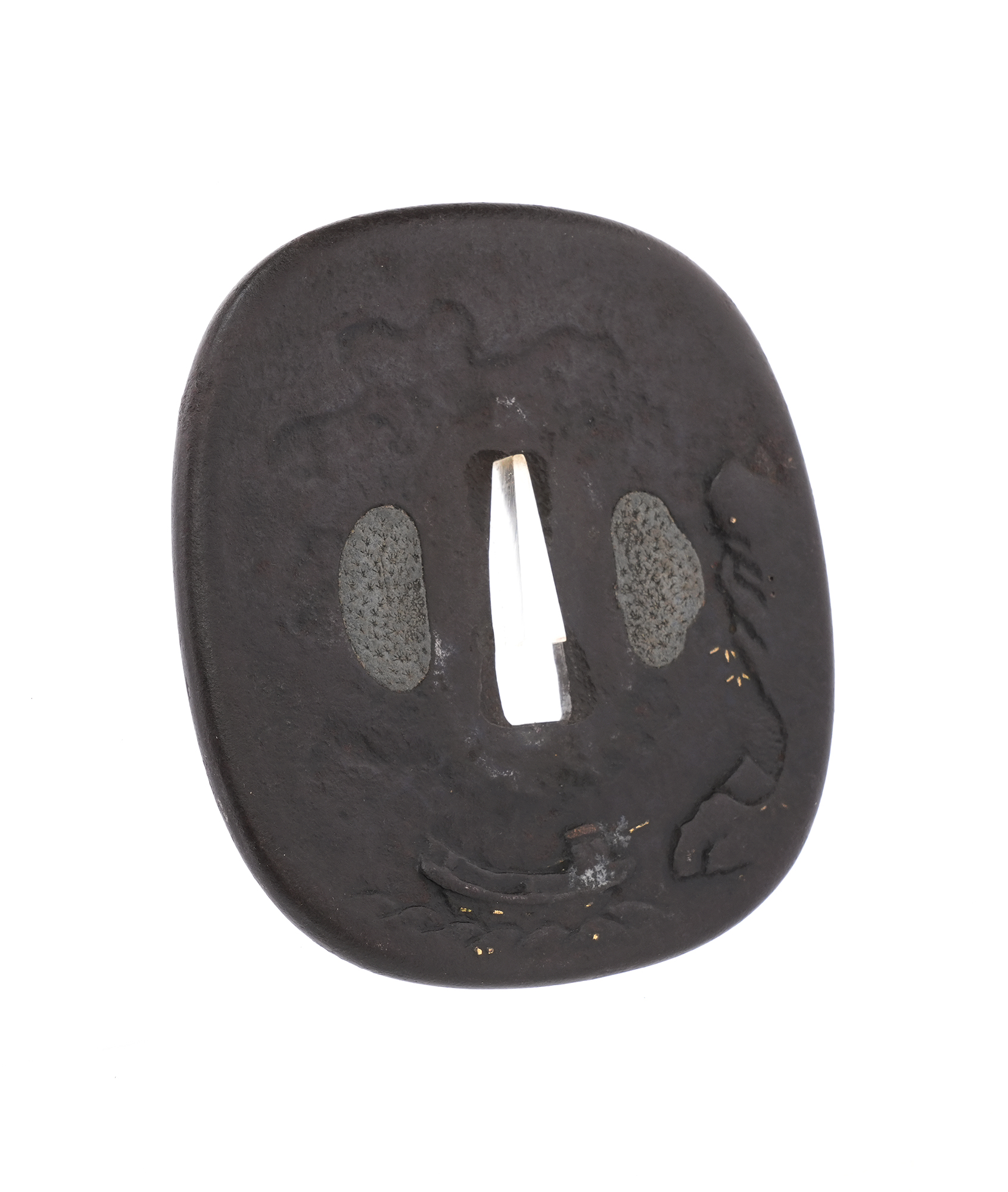
Shoami School
late Muromachi (c. 1500)
Mutsu
Unsigned
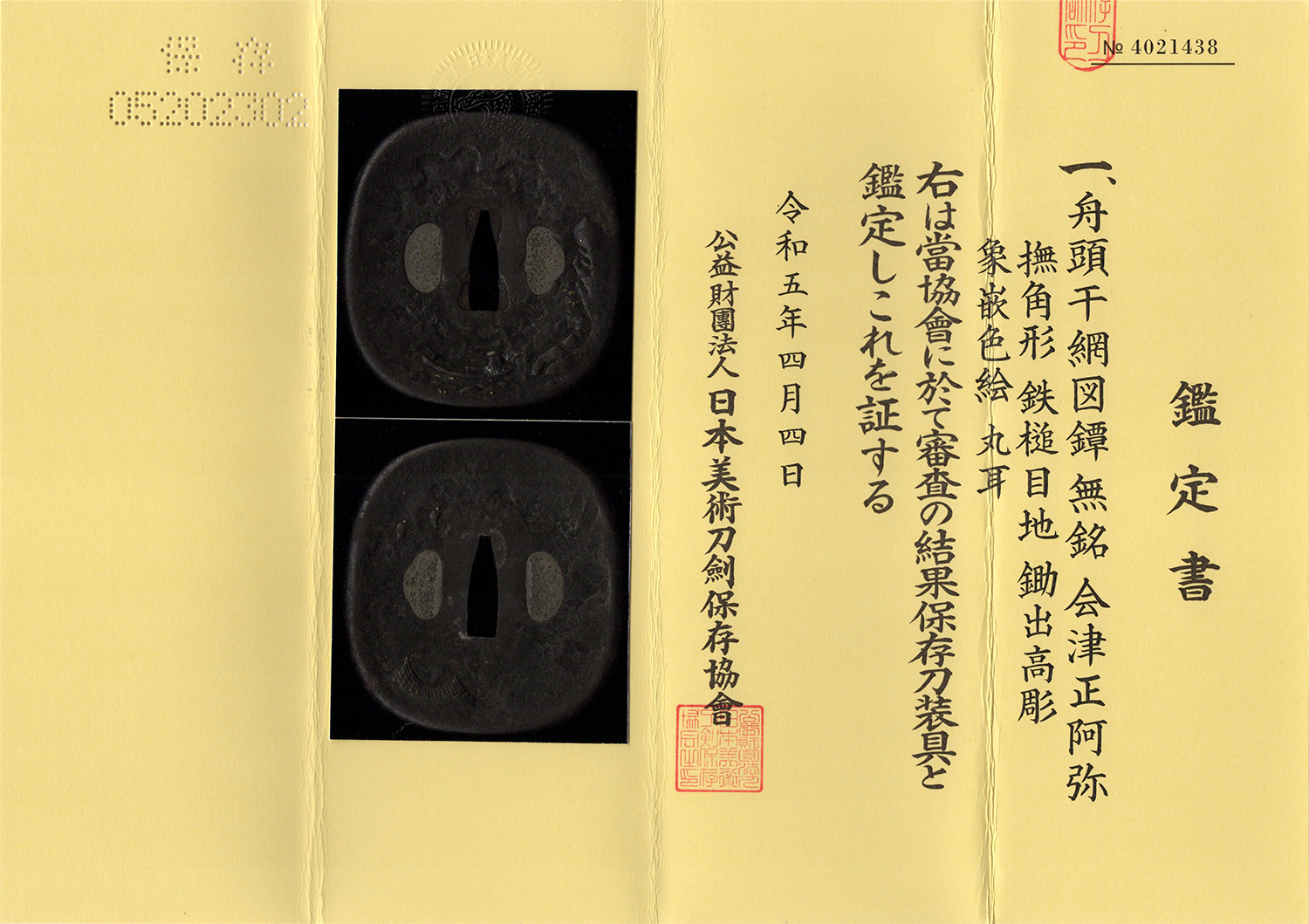
Hozon (NBTHK)
Machine translation of the shop's Japanese ·
Machine translation from the shop's Japanese · may contain errors ·
Iron-tsuba · Kyoto
161 pieces on the market now
The Shoami (正阿弥) school arose in Kyoto as one of the principal lineages among the specialist tsuba makers who came to the fore from the middle through the late Muromachi period. Its roots lie in the capital's communities of ami-shū, who served as dōbōshū (attendant artisans) and within whose circles Shōami lineages existed; the prevailing view today is that these artisans originally worked as makers of tōsōgu in general and later became specialized tsuba craftsmen. Works of this early Kyoto phase are customarily referred to as Ko-Shōami ("Old Shōami") — a corpus without widely celebrated signed masterpieces, yet one that defines the school's foundation. In the Momoyama period the group prospered in Kyoto: the maker Hikojūrō, whose tachi tsuba and ō-seppa bear the date Keichō 8 (1603), belonged to this flourishing. Entering the Edo period, the school's craftsmen migrated and formed flourishing offshoots in many regions — chief among them, in the setsumei, the Akita Shōami, founded in effect by Denbei Shigeyoshi, an officially retained artisan of the Satake lords from Enpō 3 (1675) whose main line continued through Dennai Shigetaka, Denshichi Shigetsune, and Kakitsu Shigeō, and the Okayama Shōami, whose Tōshirō (Fujishirō) house served the Ikeda domain into the nineteenth century. Surveying the style of works termed Ko-Shōami, the usual practice is to pierce the iron plate with openwork carving and then apply nunome-zōgan (textile-pattern inlay) in gold, silver, and other metals. Characteristic are thin, well-forged plates of polished ground (migaki-ji) with daring large openwork — paired square seals, namako apertures, four-petaled flowers, diamond clouds with warabite — enlivened by hizashi-yasuri ("sun-ray" file marks) with shakudō inlay, rope-pattern silver inlay on the rim, or linked thunder-pattern (raimon-tsunagi) gold nunome-zōgan. The school equally commanded the formal soft-metal idiom: tachi fittings and itomaki tachi koshirae suites associated with Hikojūrō, Chōemon, and the Akita master Rokumi are executed in shakudō nanako-ji with family crests scattered in gold iroe.
The regional branches developed distinct vocabularies. Shōami Denbei — born in Shōnai in Keian 4 (1651), trained in Edo under Shōami Yoshinaga, and Akita's foremost metalworker — rendered local subjects such as Akita's famed butterbur (fuki) and cloud-and-dragon themes in nikubori ji-sukashi with inlay, produced guri-bori achieving effects reminiscent of lacquer tsuishu, and deployed line inlay, nunome-zōgan, and gold cloisonné inlay entirely identical to the methods of the main Hirata lineage. In Okayama, Shōami Katsuyoshi united weighty takabori with painstakingly meticulous inlay in gold, silver, shakudō, suaka, and shibuichi, absorbing aspects of Gotō Ichijō's manner through his elder brother Katsuzane. The setsumei attest the school's standing at the highest levels of warrior culture: Ko-Shōami guards grace mountings transmitted in the Higo Hosokawa family and the "Great Tokugawa" house, a Higo koshirae modeled on the "Nobunaga koshirae," and the personal mounting of Terao Nobuyuki, senior disciple of Miyamoto Musashi. Dated works — Hikojūrō's Keichō 8 set, judged of exceptionally high documentary value for the advancement of Shōami studies, and Rokumi's guard of Tenmei 2 (1782) — anchor the school's chronology. Denbei's work is praised as conveying the well-practiced hand of traditions inherited from the Shōami forebears, adding elegance to the ideal of practical beauty, while the narrative guards of Denshichi and Shigeteru sustained the Akita line's assured composition and carving under Satake patronage. The tradition closed with Katsuyoshi, ninth head of the Okayama Shōami, who ceased making sword fittings upon the Haitōrei of Meiji 9 (1876); masterpieces such as his Jikokuten guard and the Naniwa-gata uta-e tsuba carved in his seventy-third year stand among the summits of late metalwork, securing this widespread network — to which perhaps a tenth of all surviving tsuba is attributed — an enduring place in the tosogu canon. Learn more →
| Smith | Era | Designated |
|---|---|---|
| Denbei傳兵衛 | — | 13 |
| Shoami Katsuyoshi正阿弥勝義 | — | 7 |
| Matashichi又七 | — | 0 |
| Yoshikazu吉一 | — | 0 |
| Jihachiro治八郎 | — | 0 |
Certifies a genuine fitting worth preserving: a correct signature, or, if unsigned, an identifiable era and school, with recognized artistic and craft value.
The NBTHK (Nihon Bijutsu Tōken Hozon Kyōkai, the Society for the Preservation of Japanese Art Swords) is a public-interest incorporated foundation founded in 1948 and supervised by Japan’s Agency for Cultural Affairs (Bunkachō); it is based at the Japanese Sword Museum in Tokyo. Its expert panels physically examine each submitted work (shinsa) and issue a certificate (kanteishō) ranking it by artistic and historical merit. NBTHK papers are the most widely recognized standard of authentication for Japanese swords and fittings.
NBTHK official siteAs a rule we do not accept returns, except when we have sent a different item from the one ordered or when there is a significant discrepancy between the description and the item. If you wish to return an item, please contact us within 3 days of its arrival and then send it back.
¥220,000