After the Ōnin War broke the Ashikaga order, a century of Sengoku warfare armed nearly every province in Japan. The era rewards a discriminating eye: routine work exists in quantity, and beside it stand custom blades of the first rank.
 NihontoWatchNihontoWatch
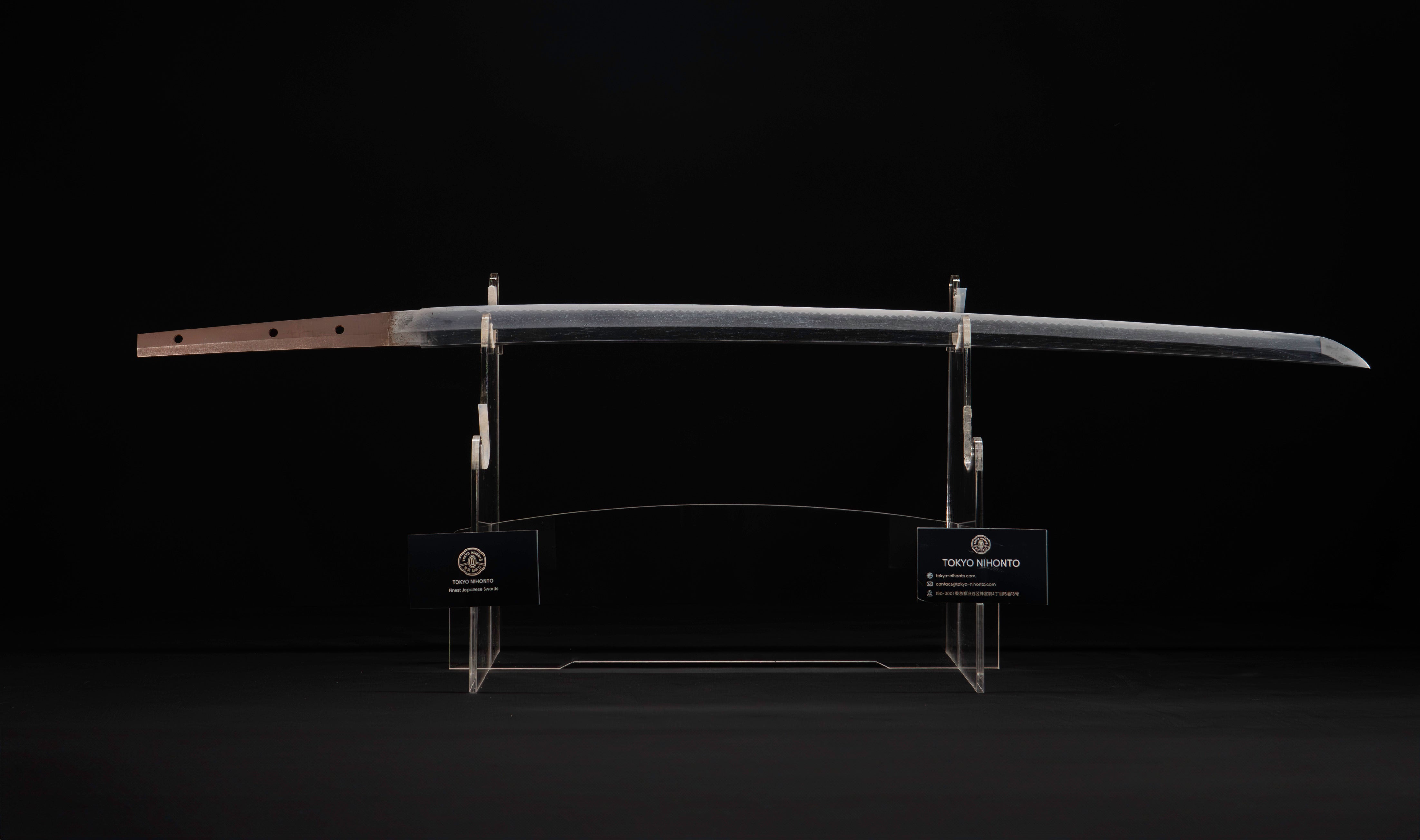
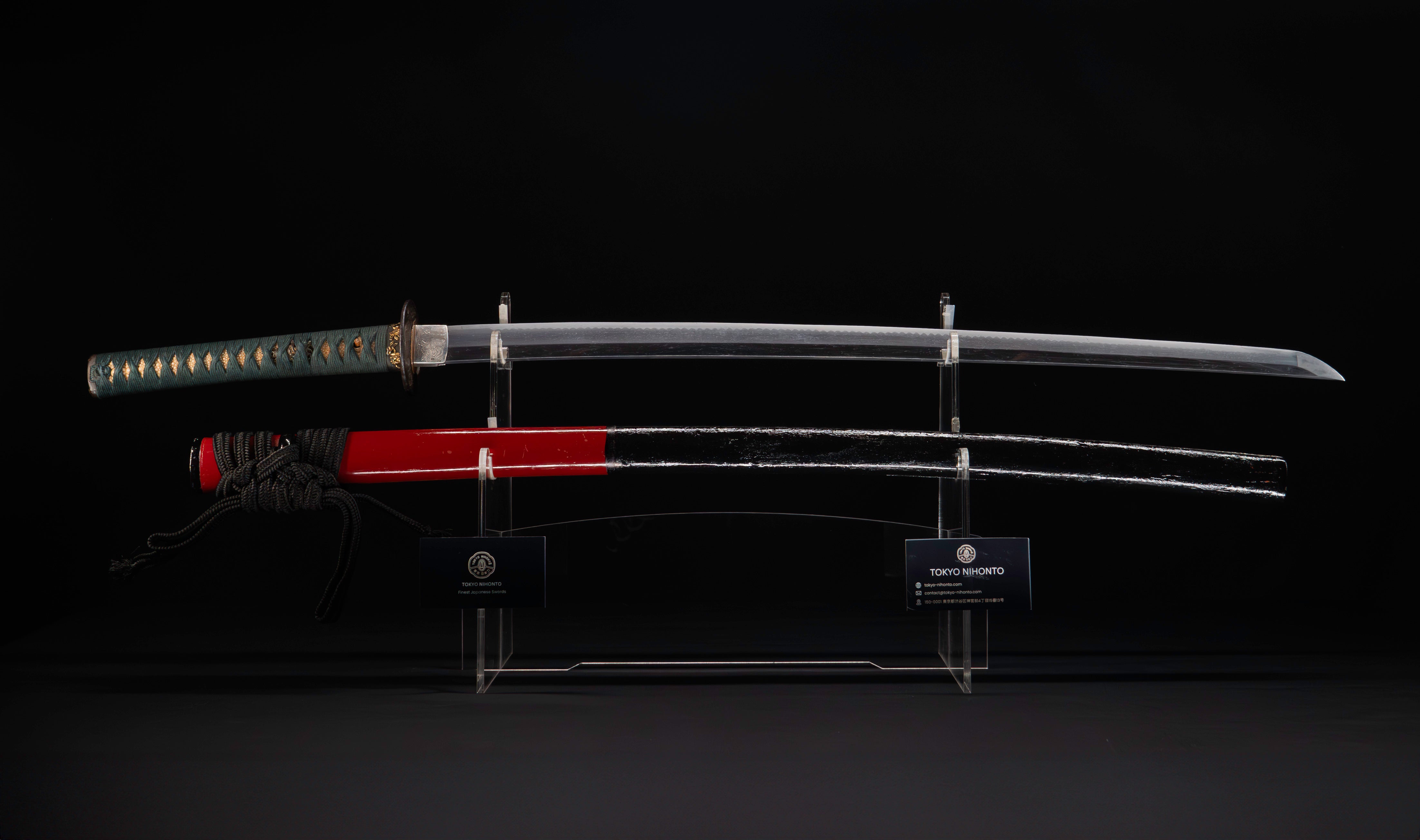
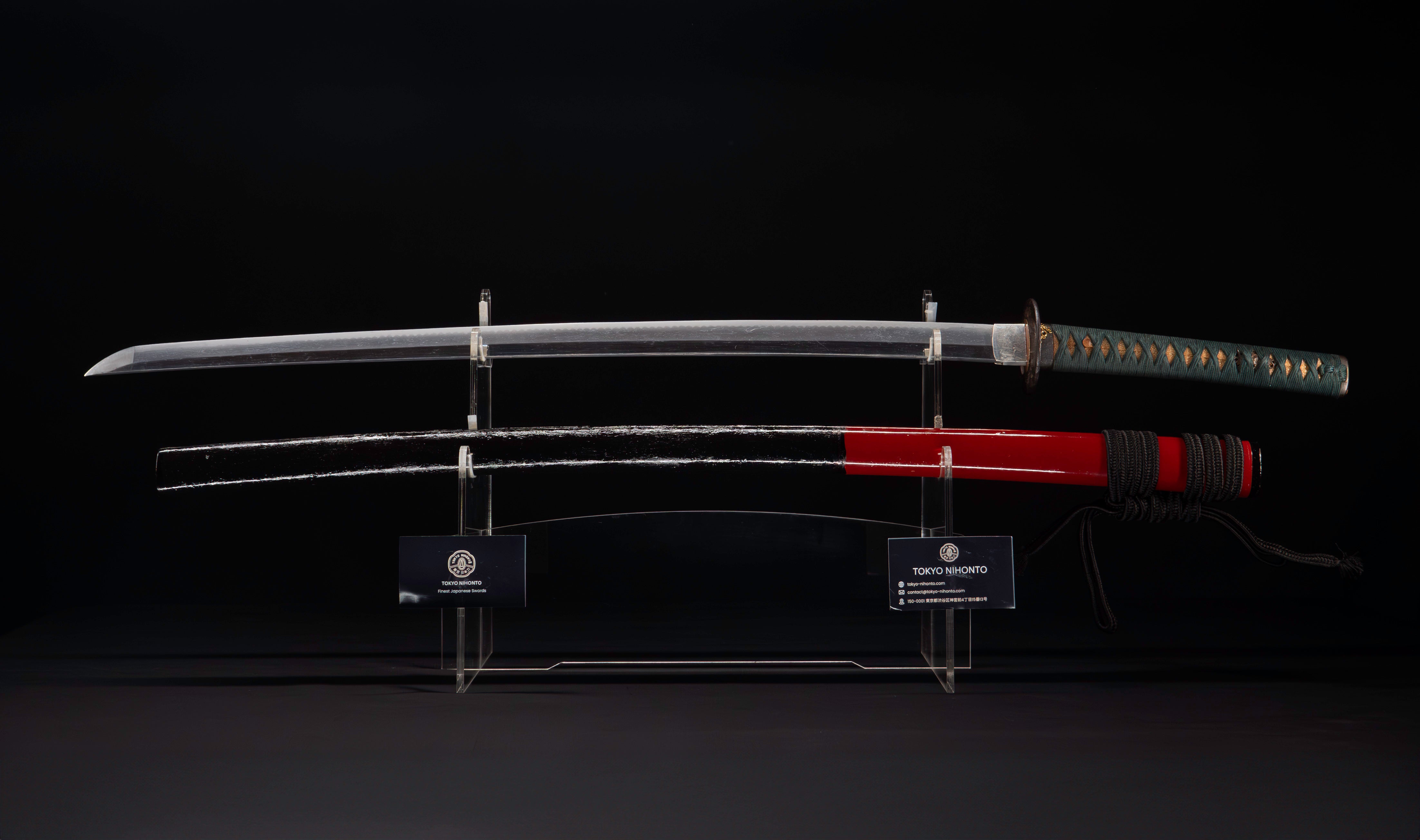
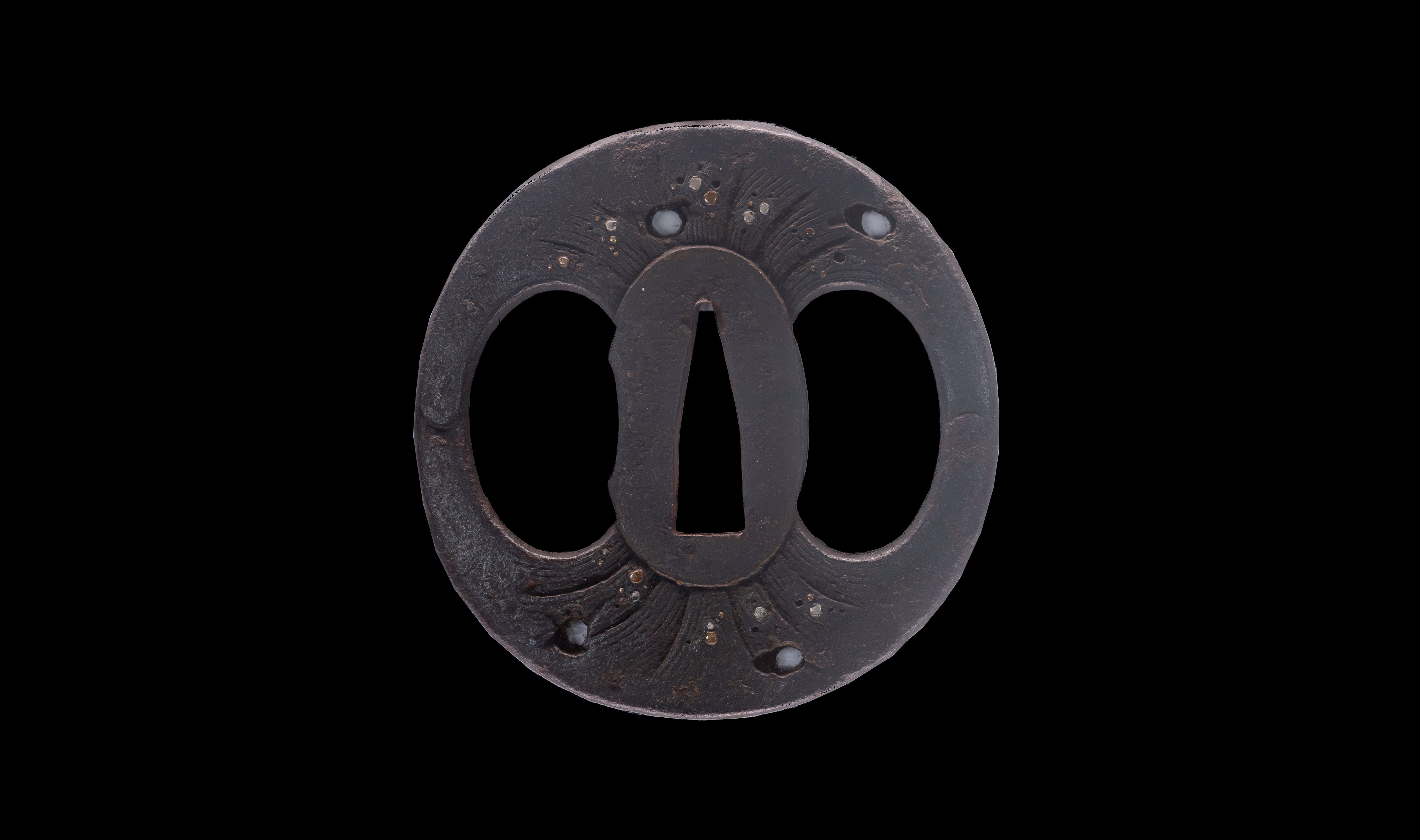
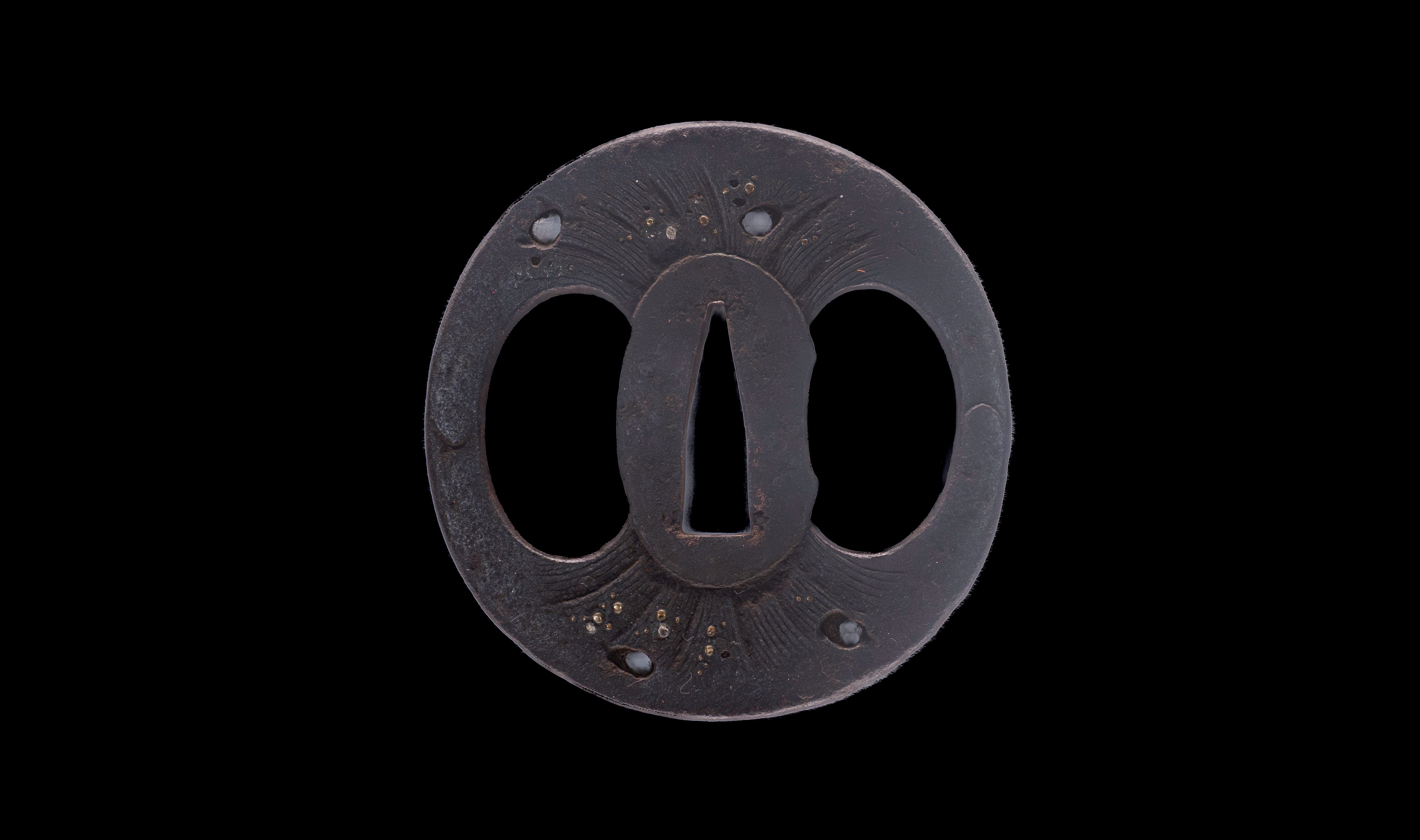
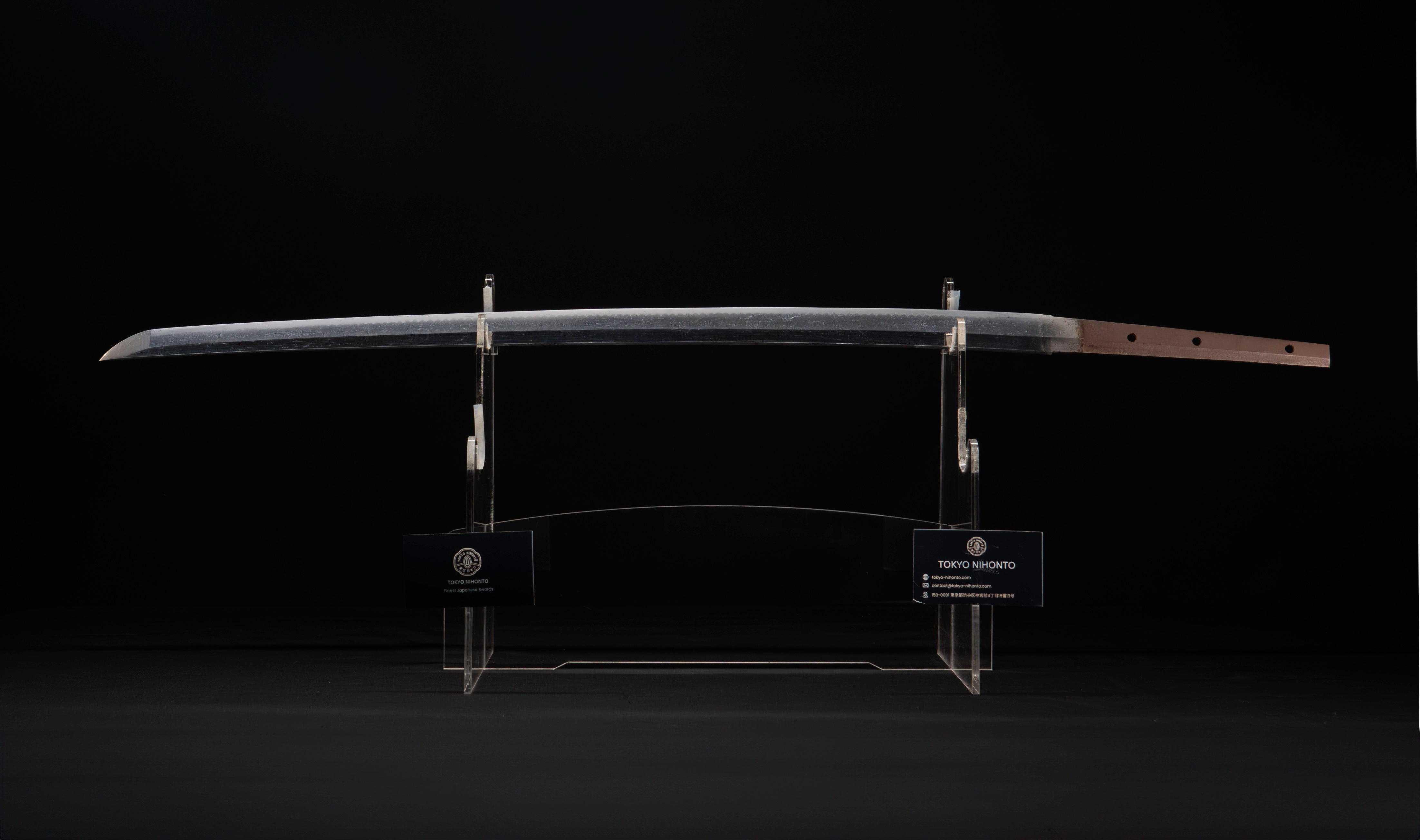
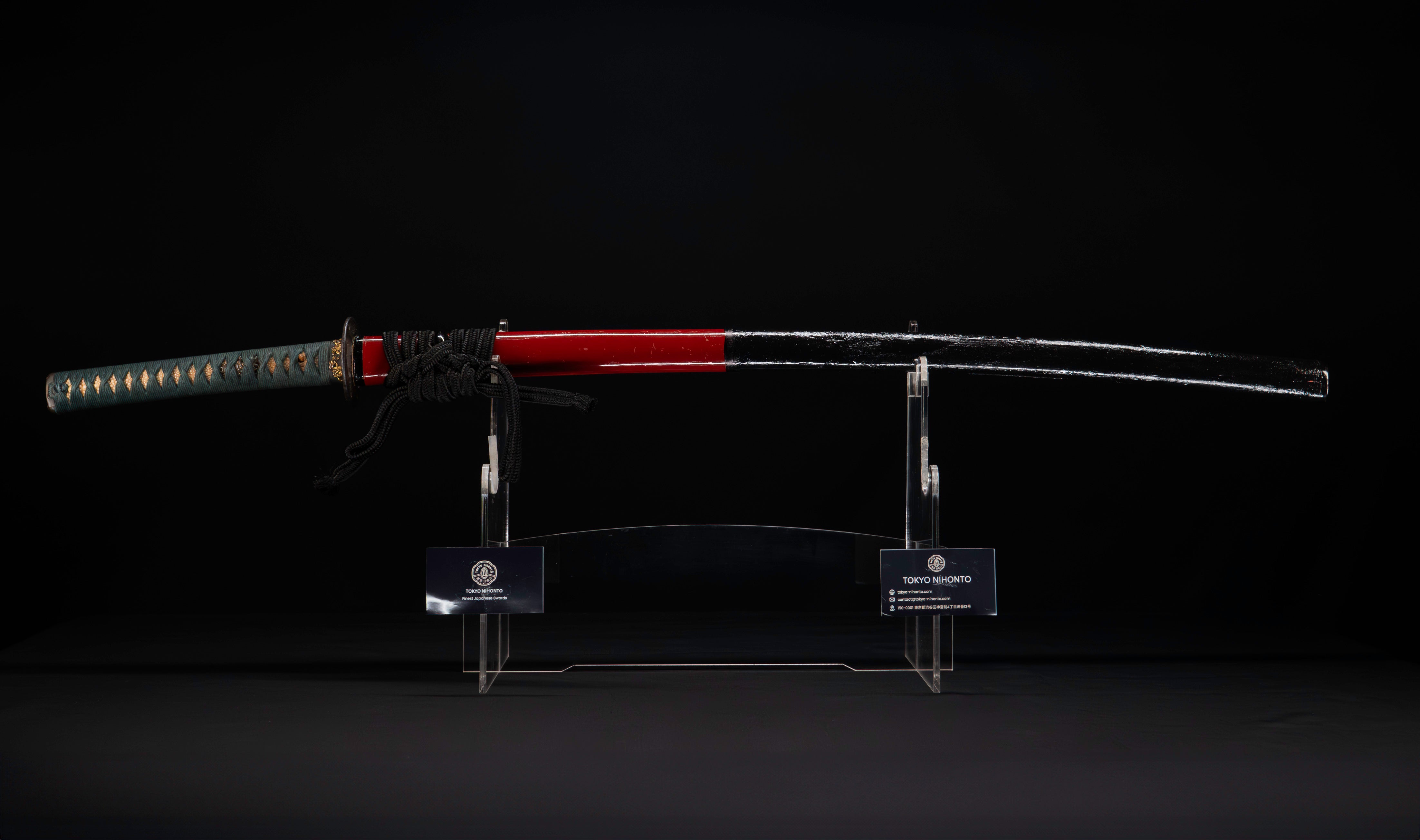
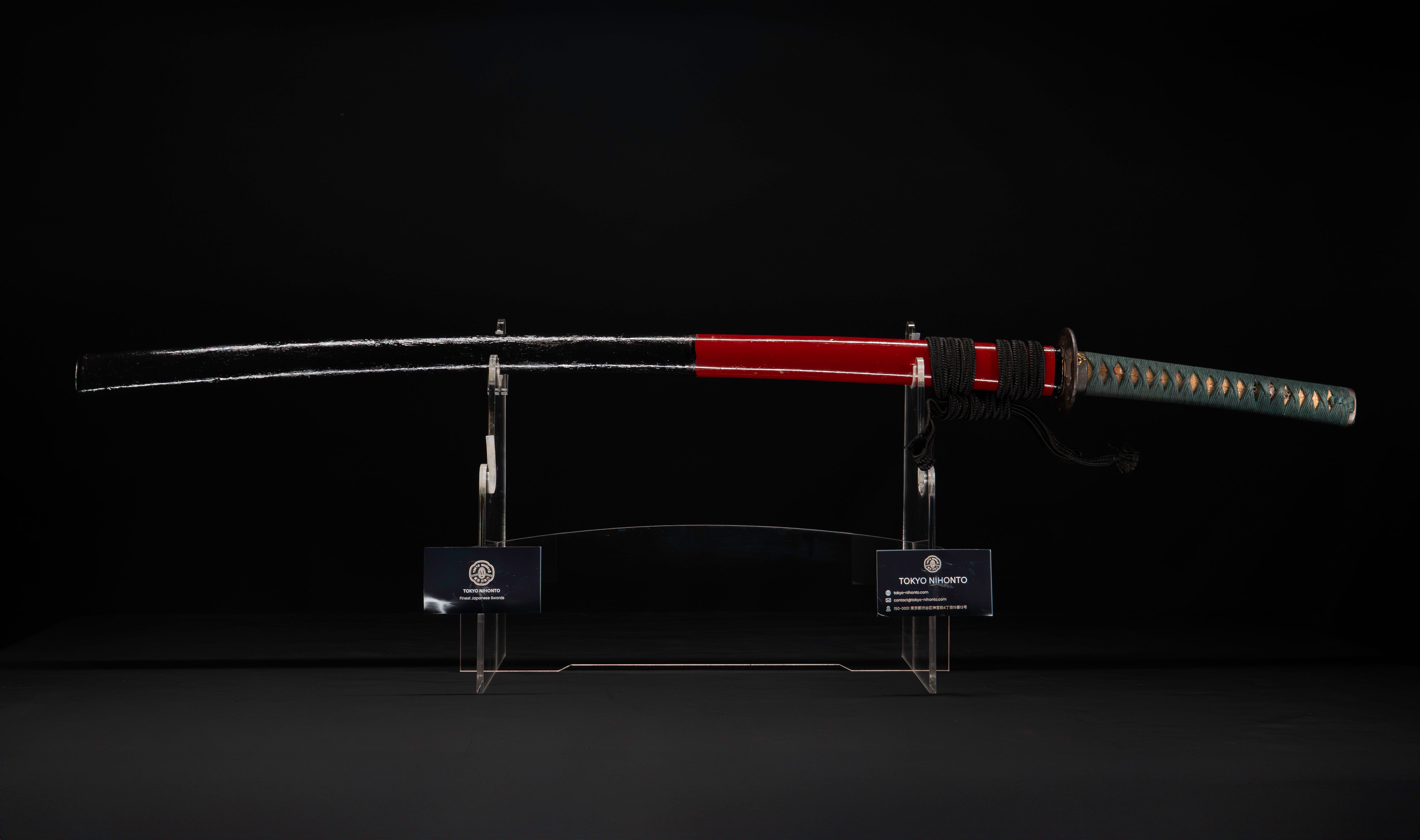
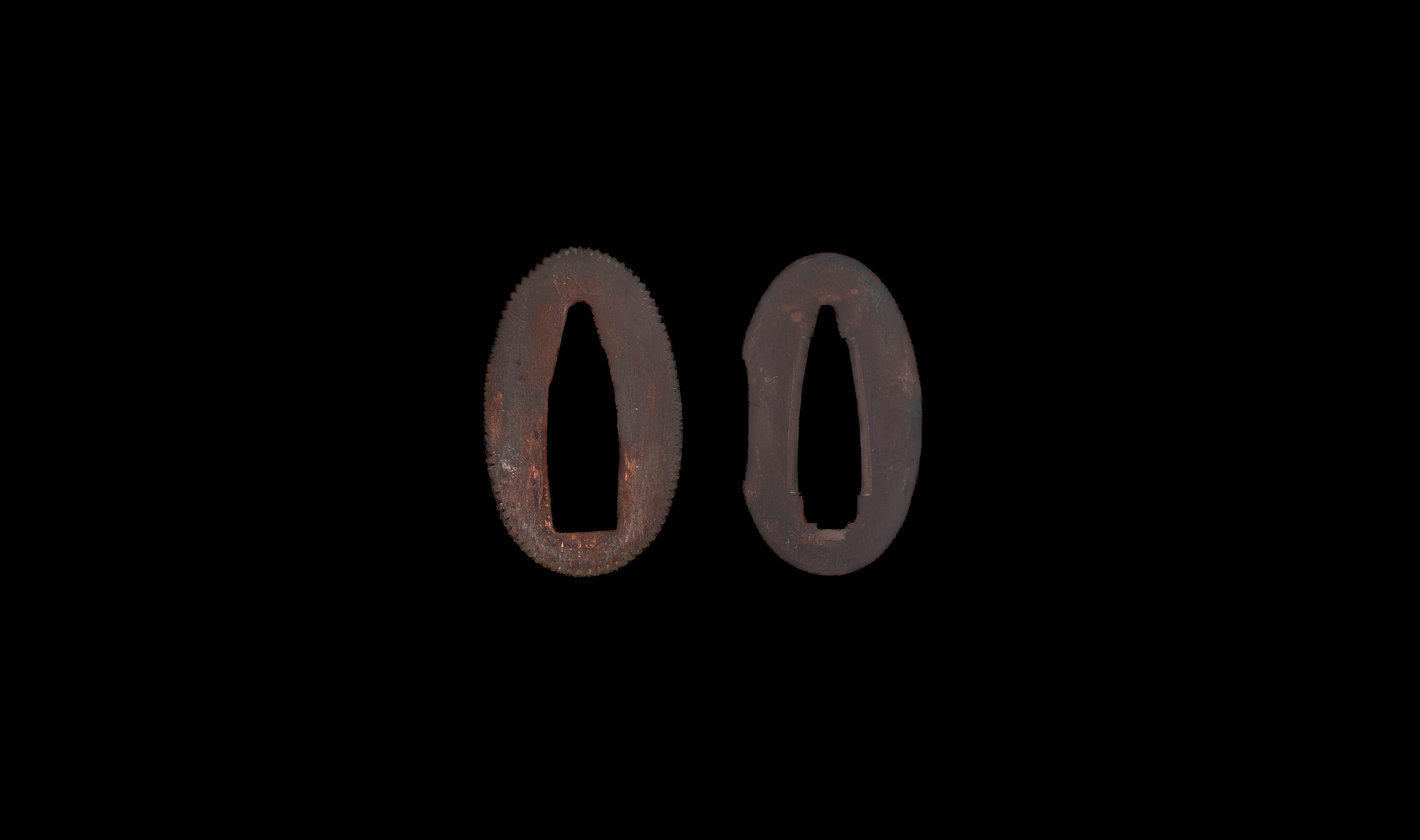
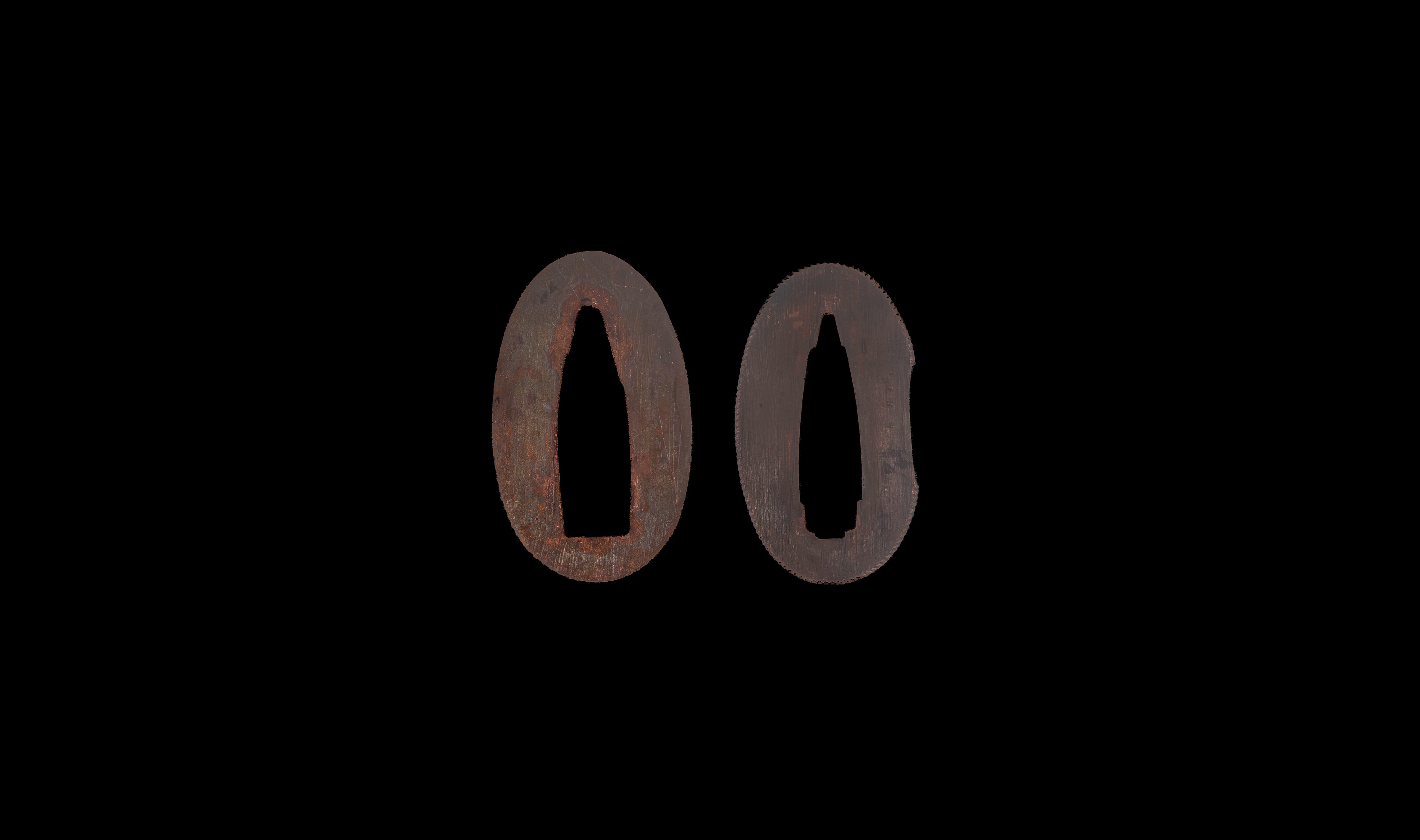
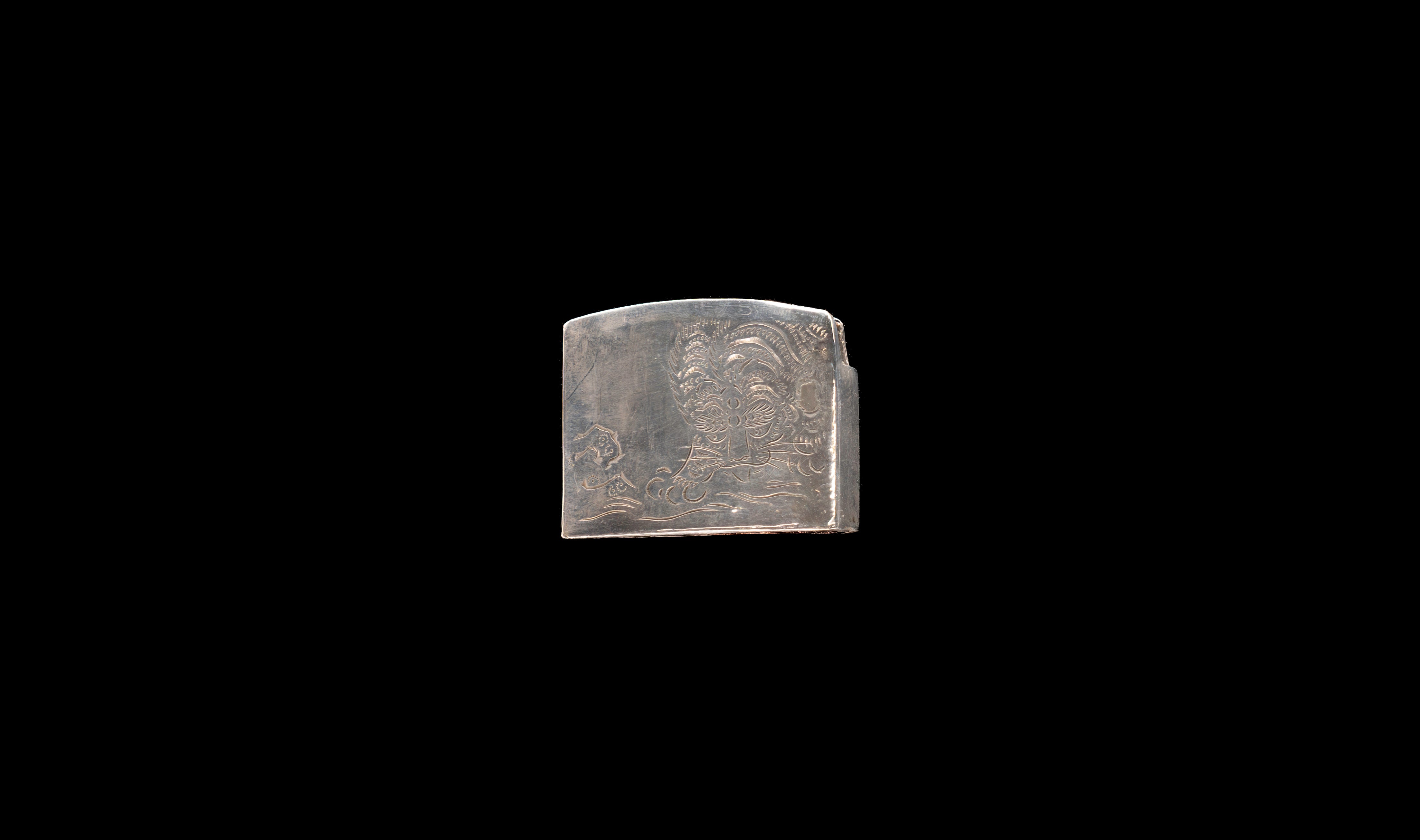
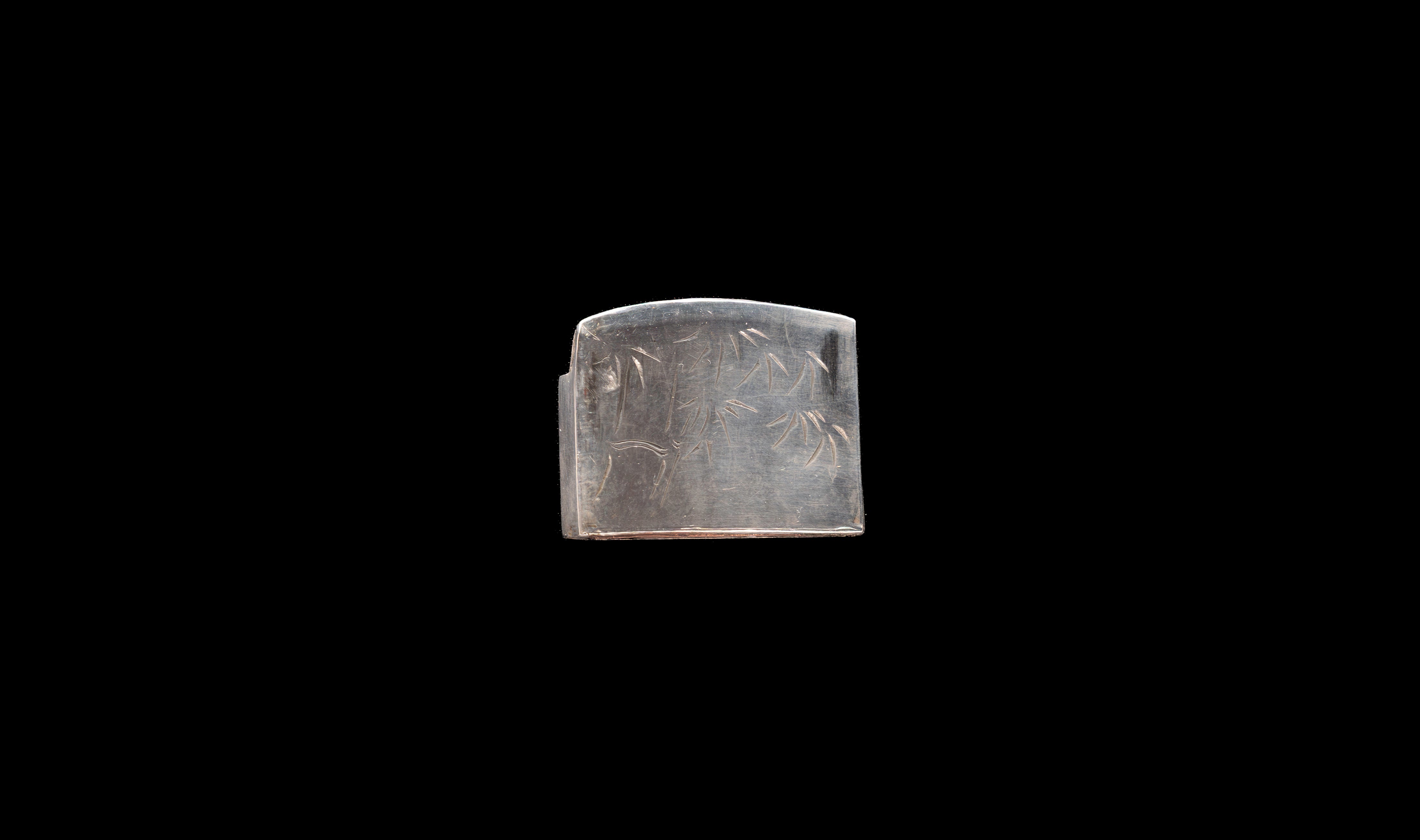
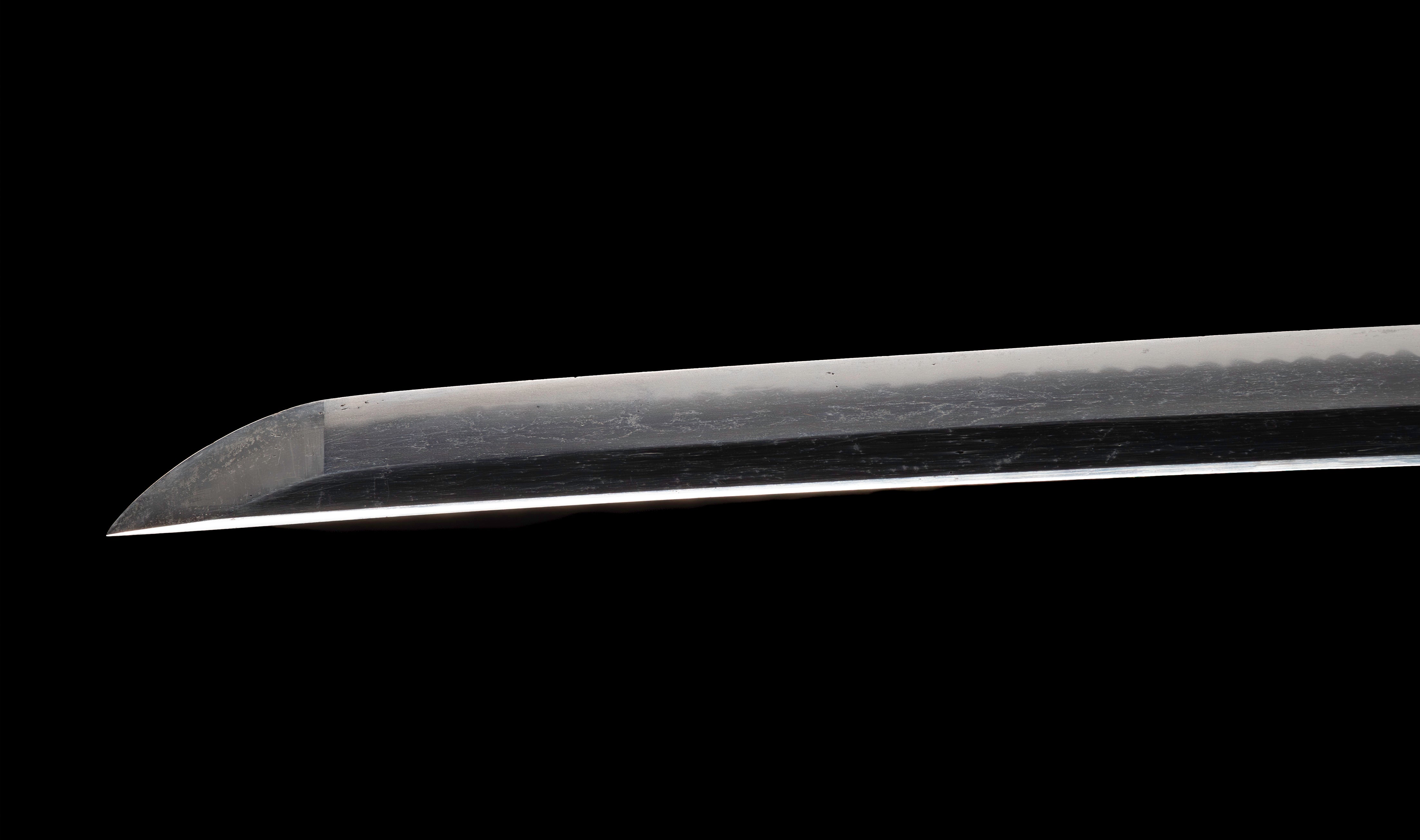
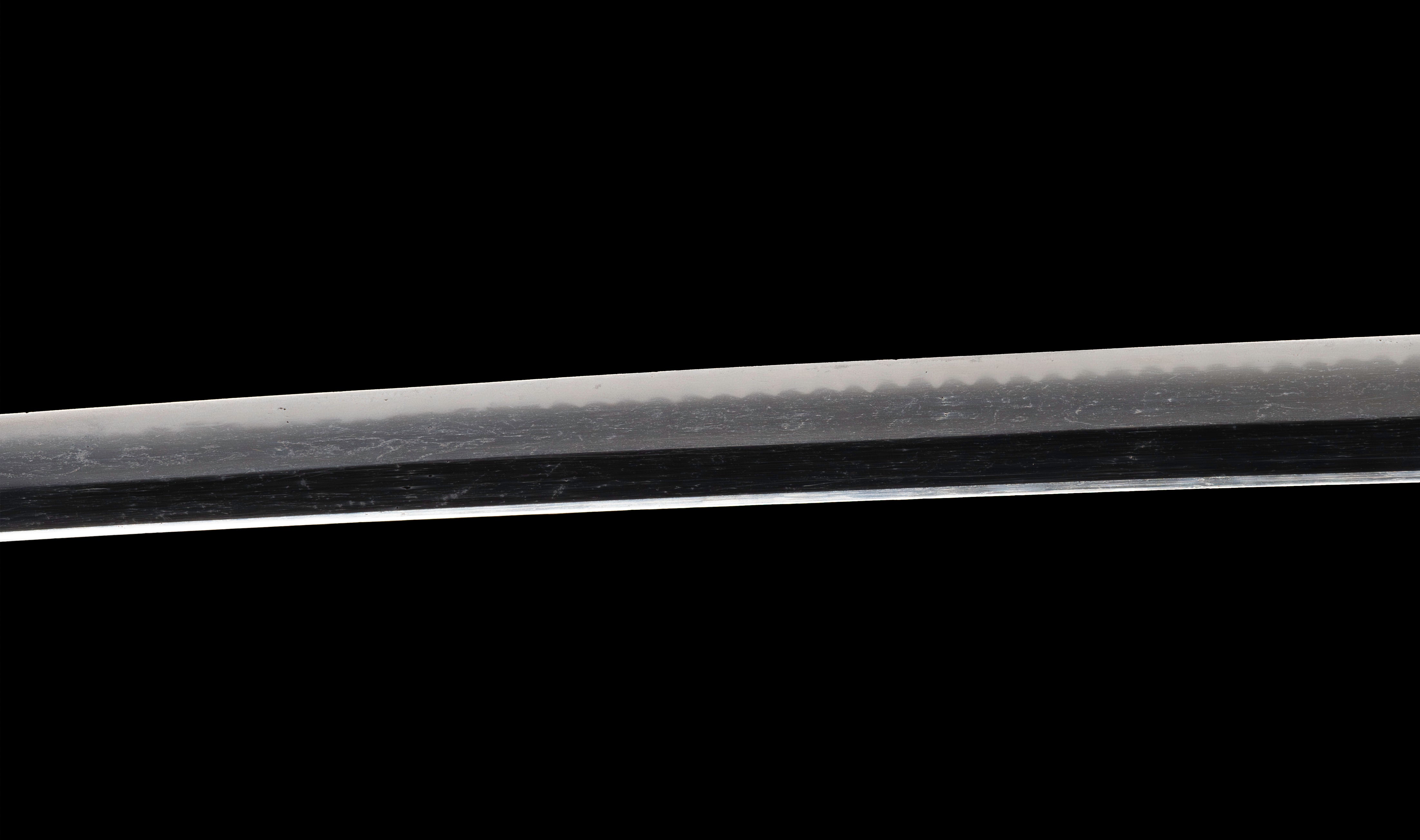
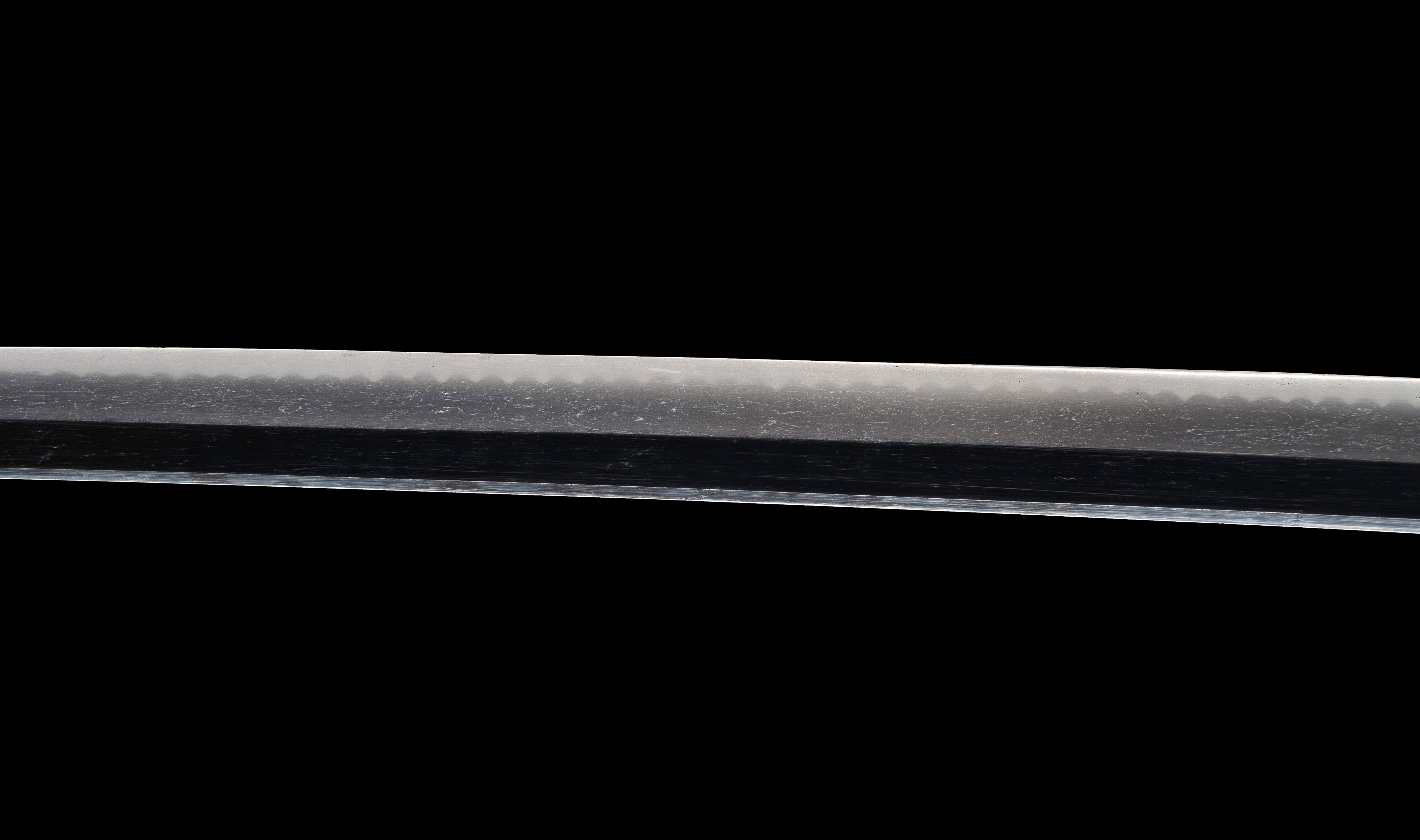
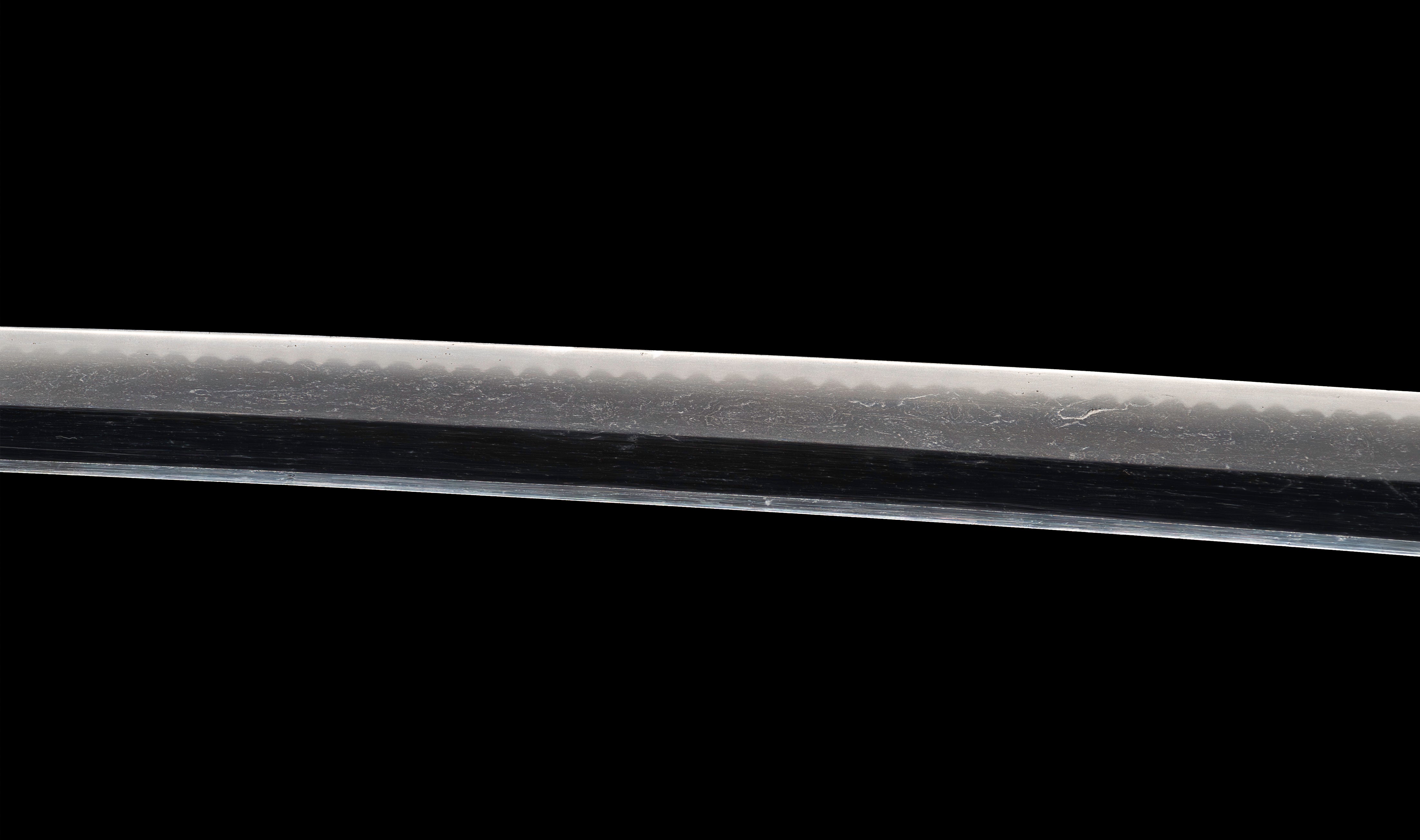
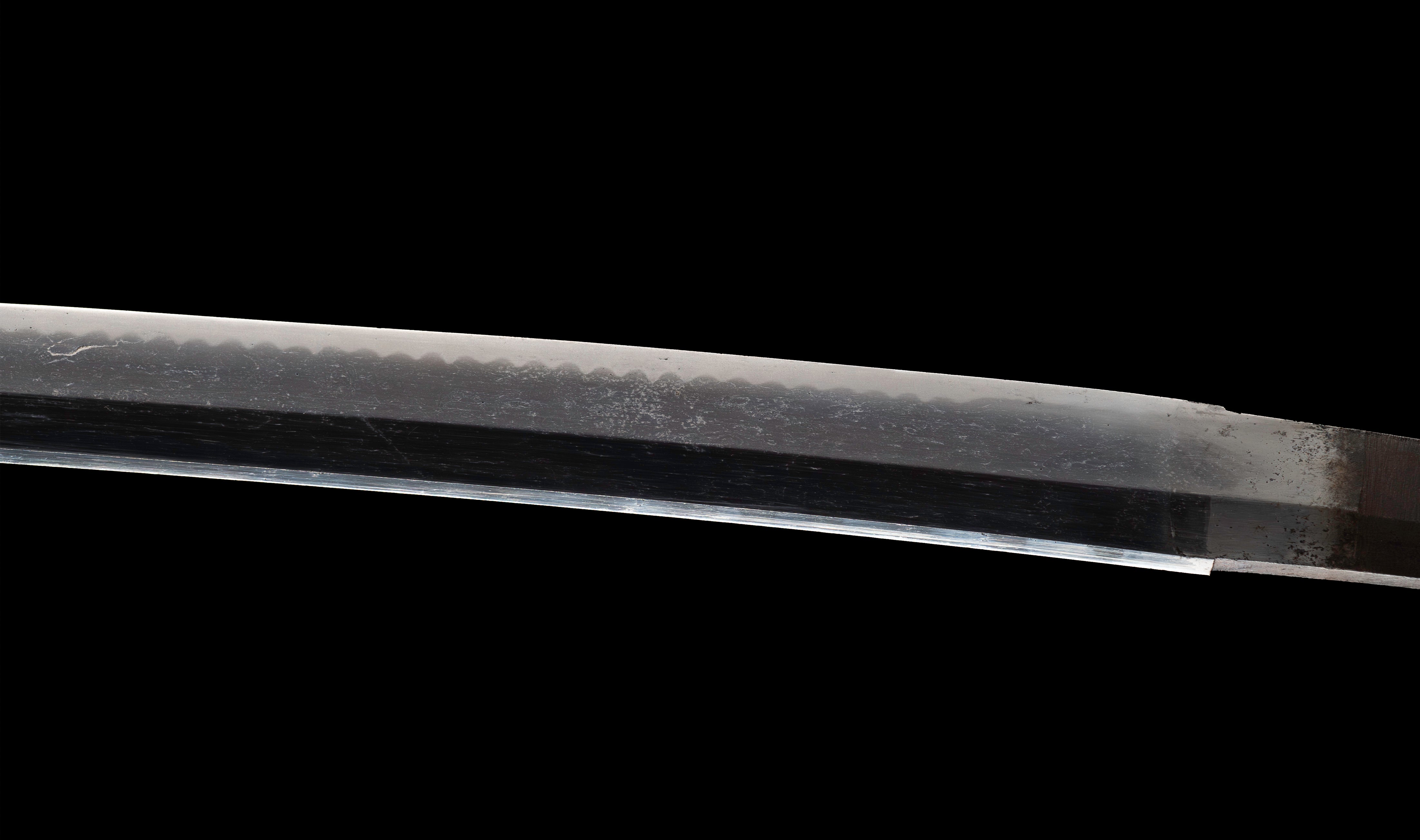
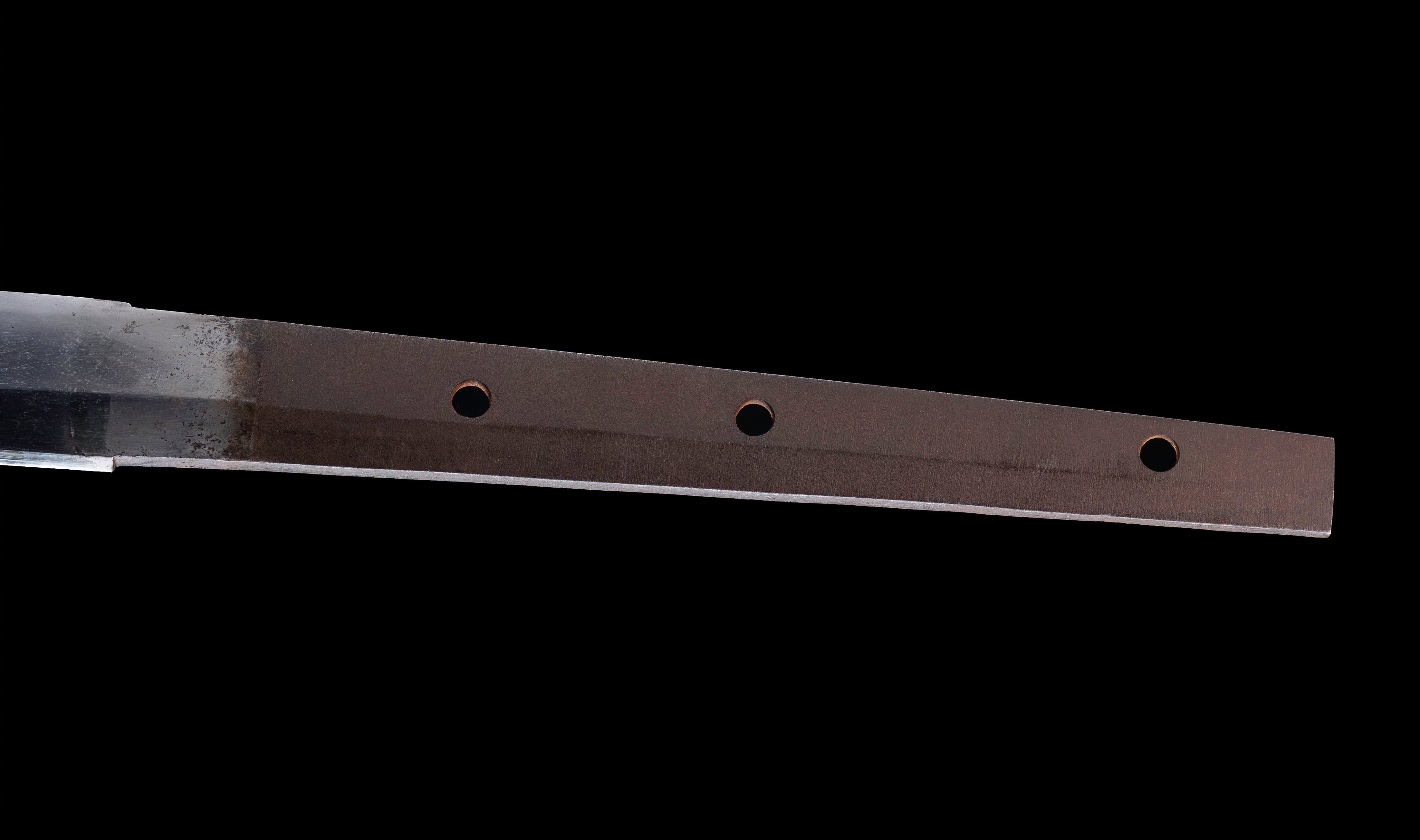
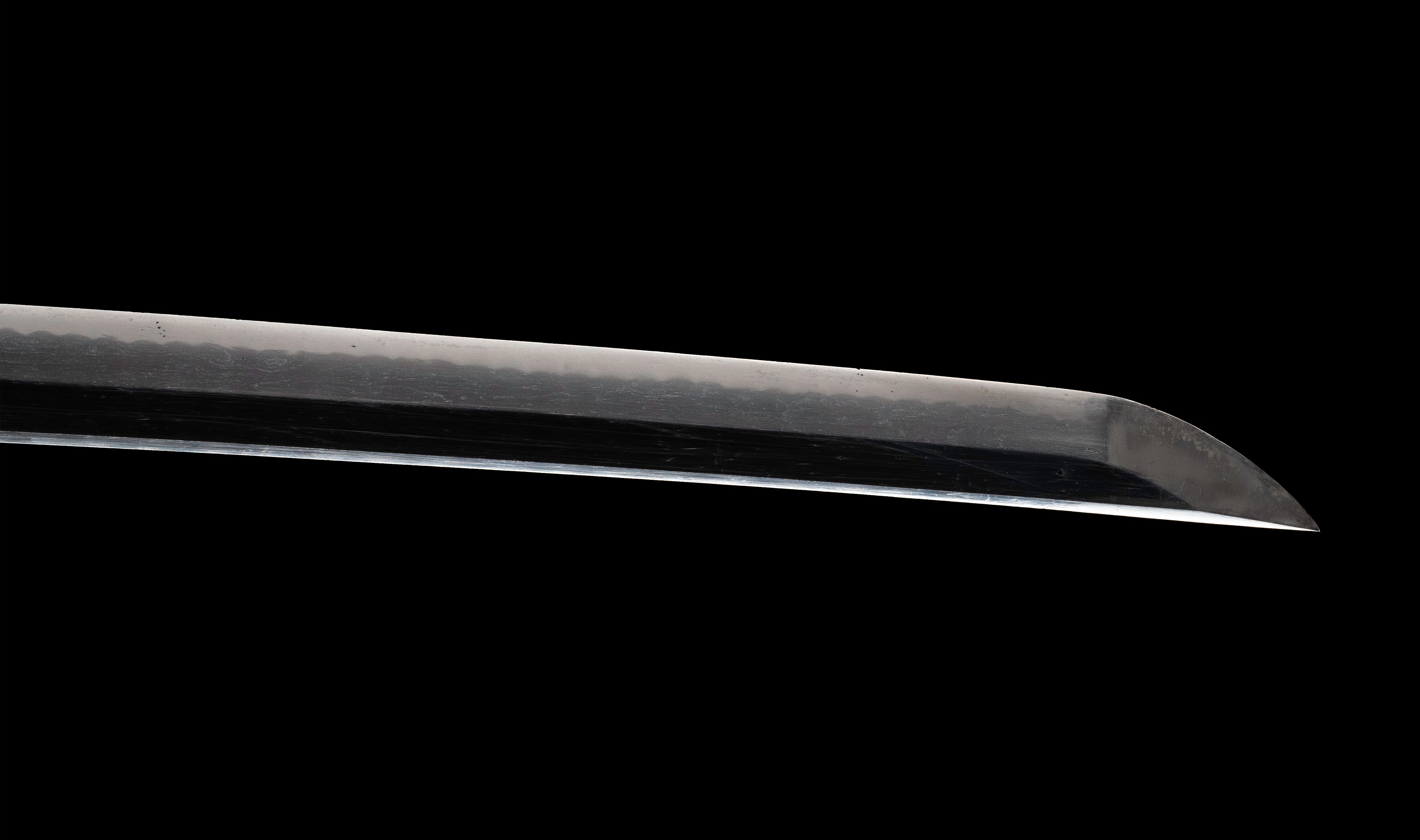
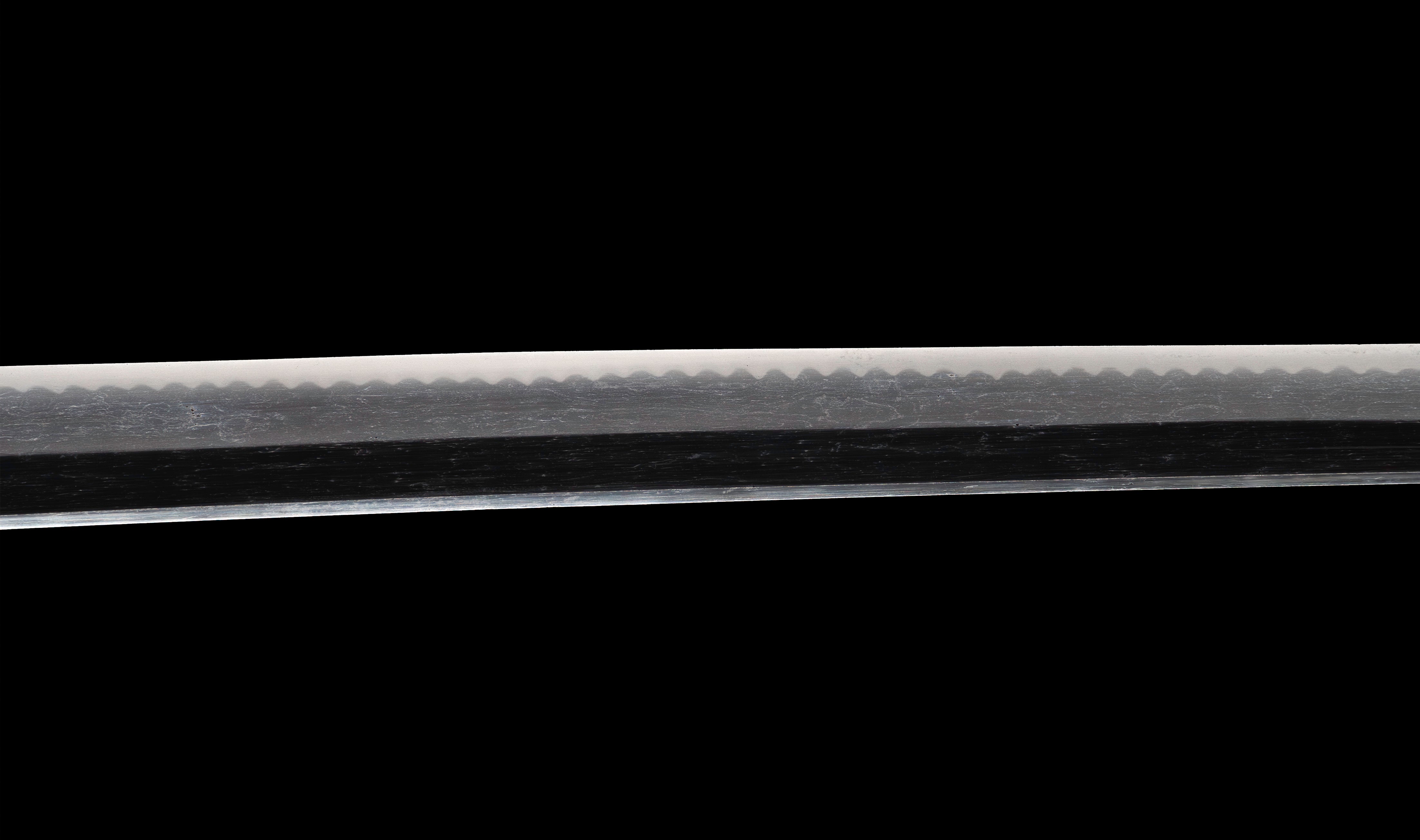
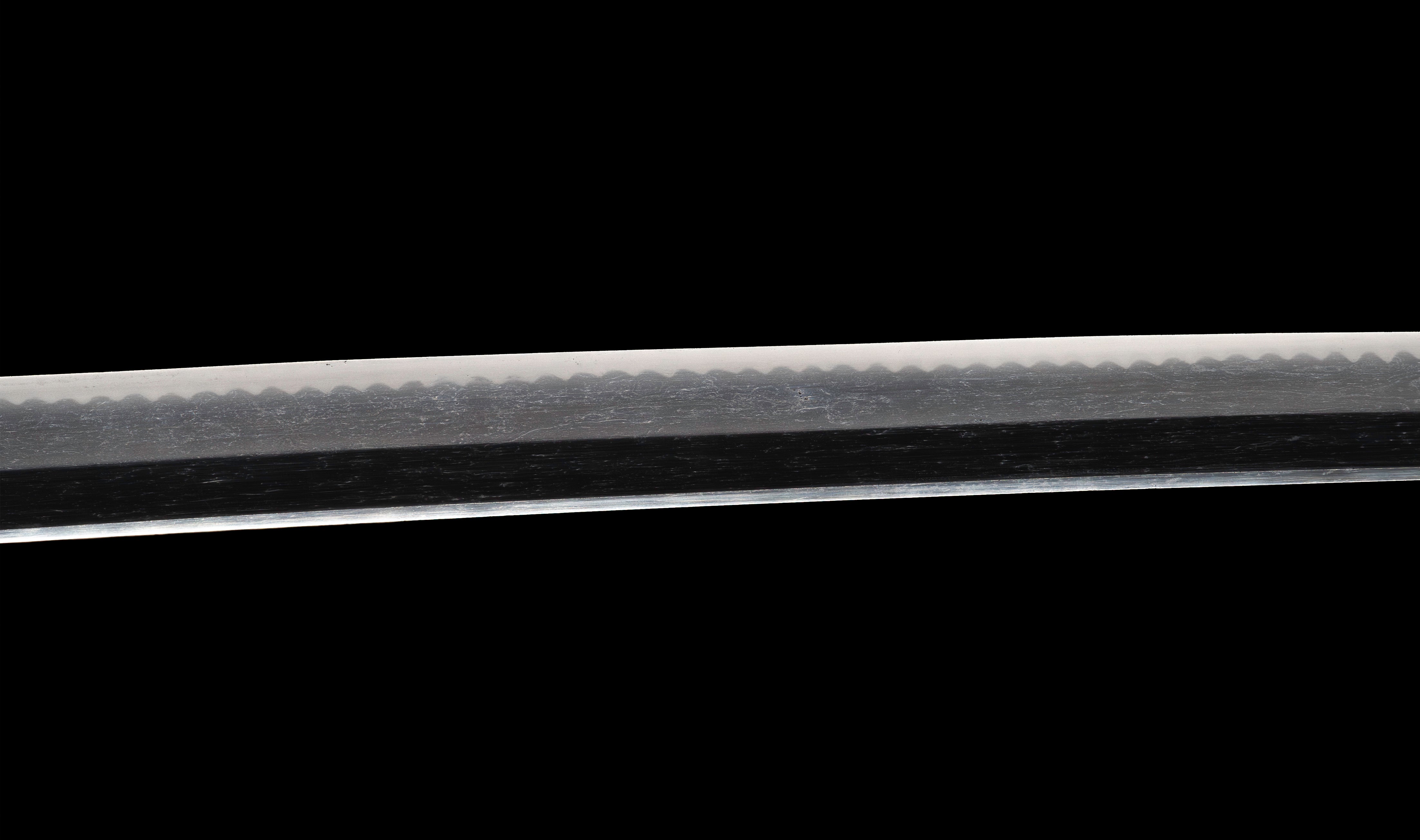
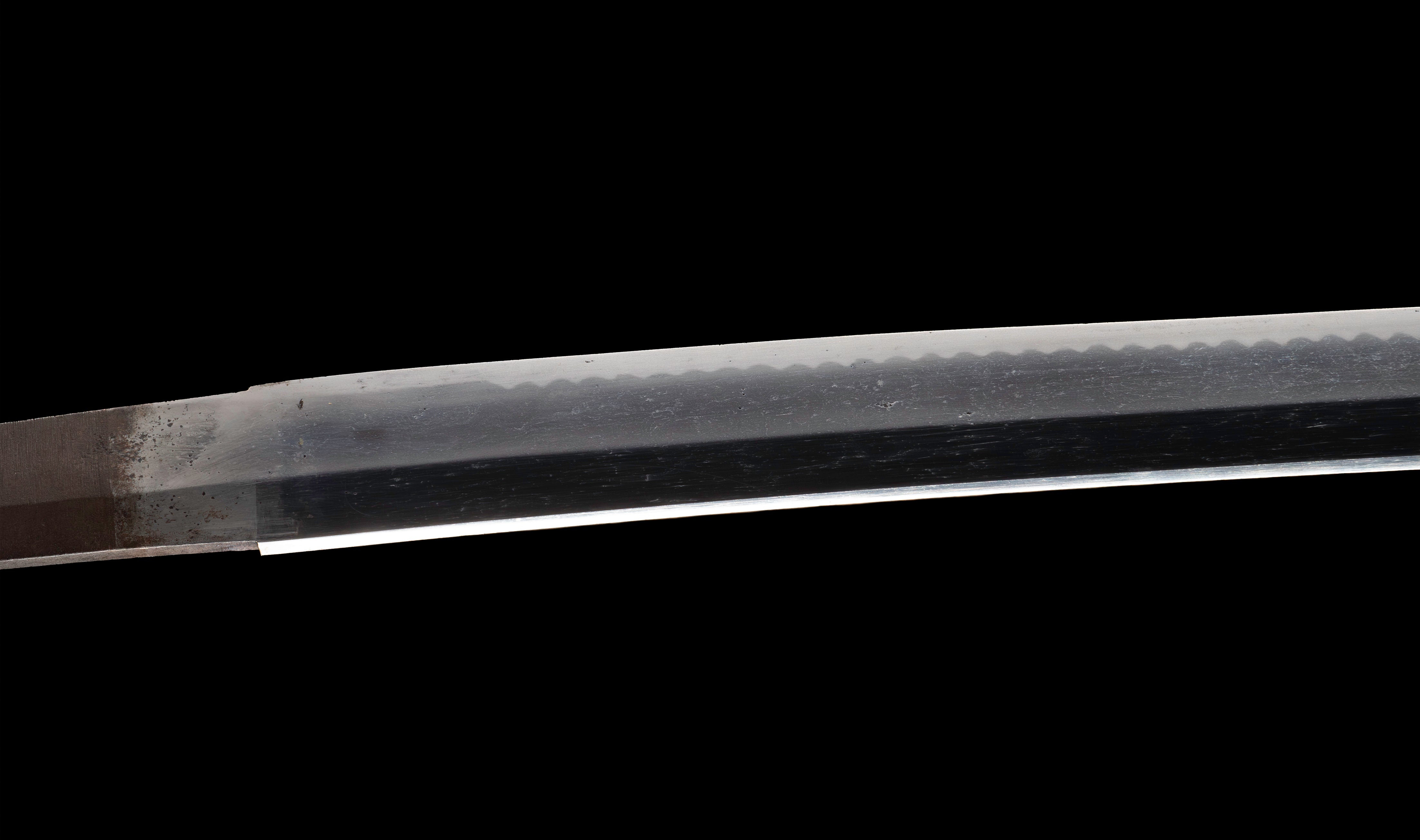
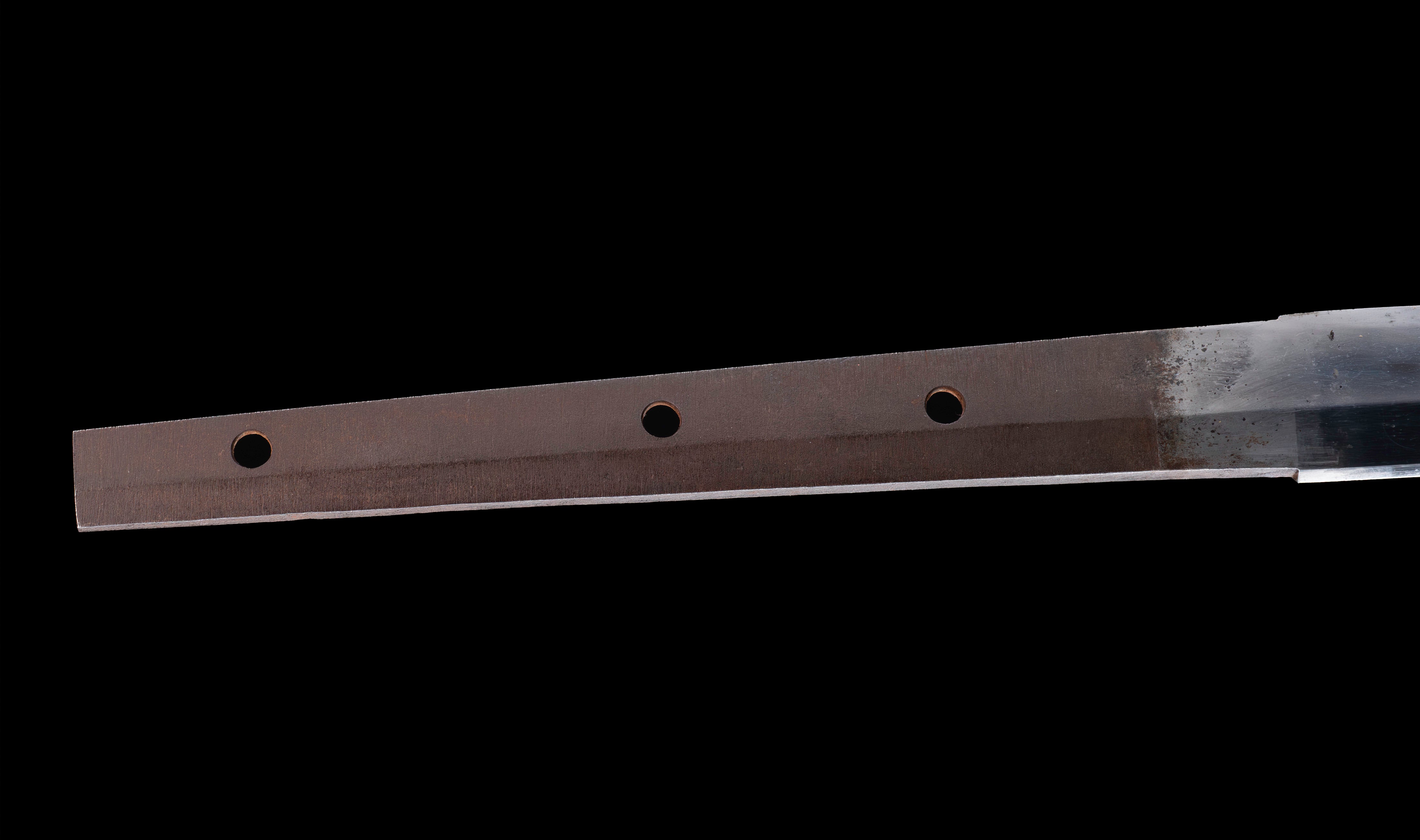
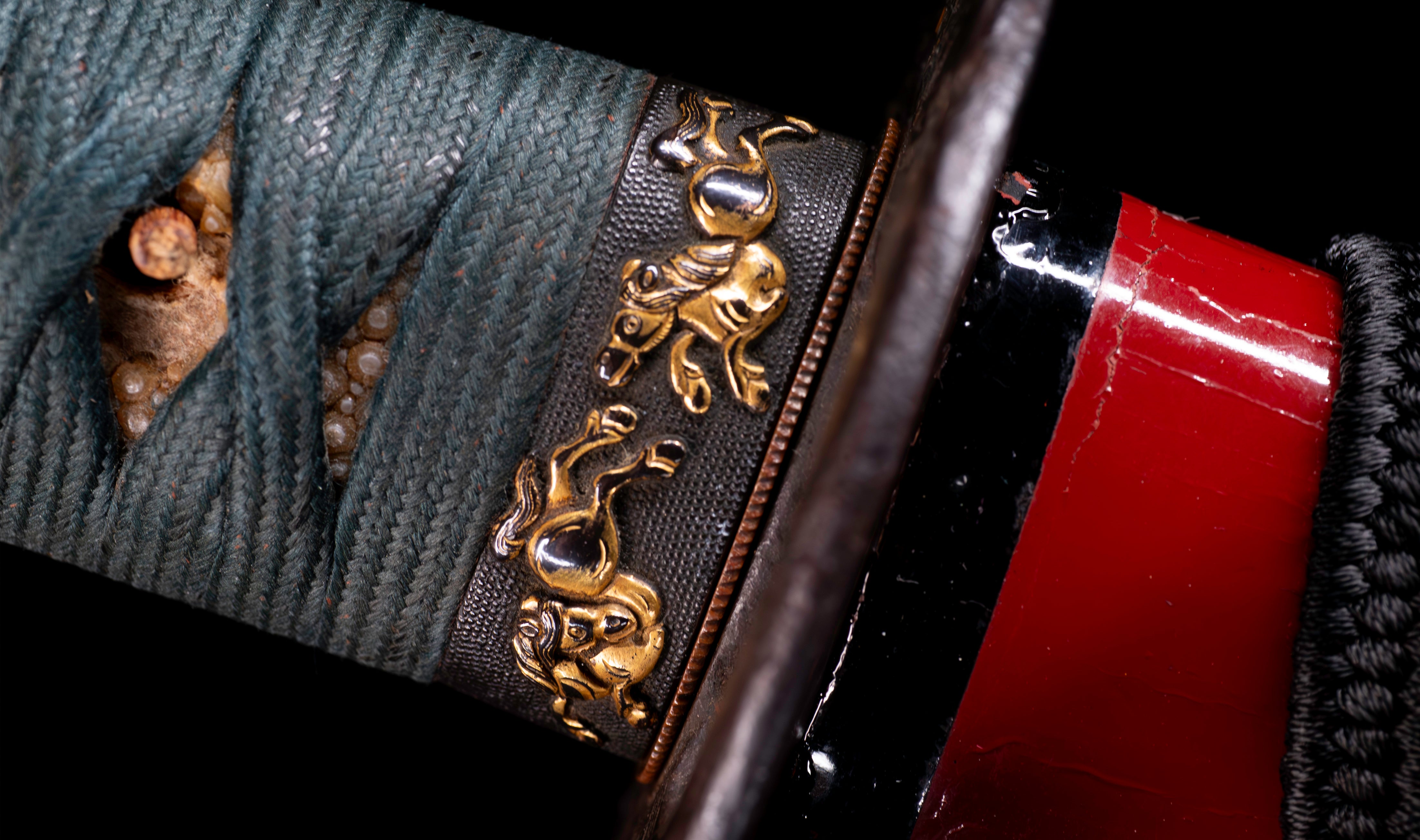
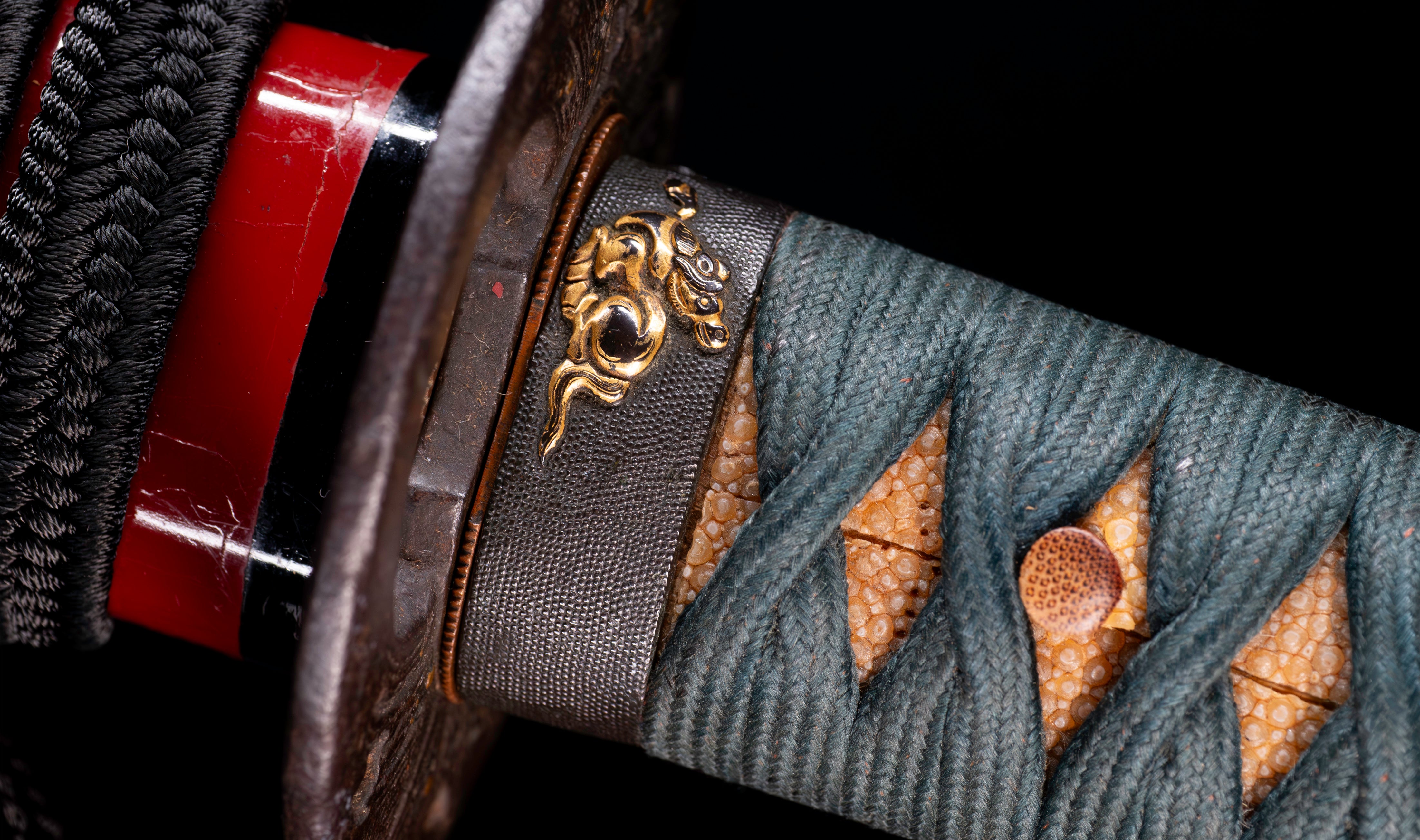
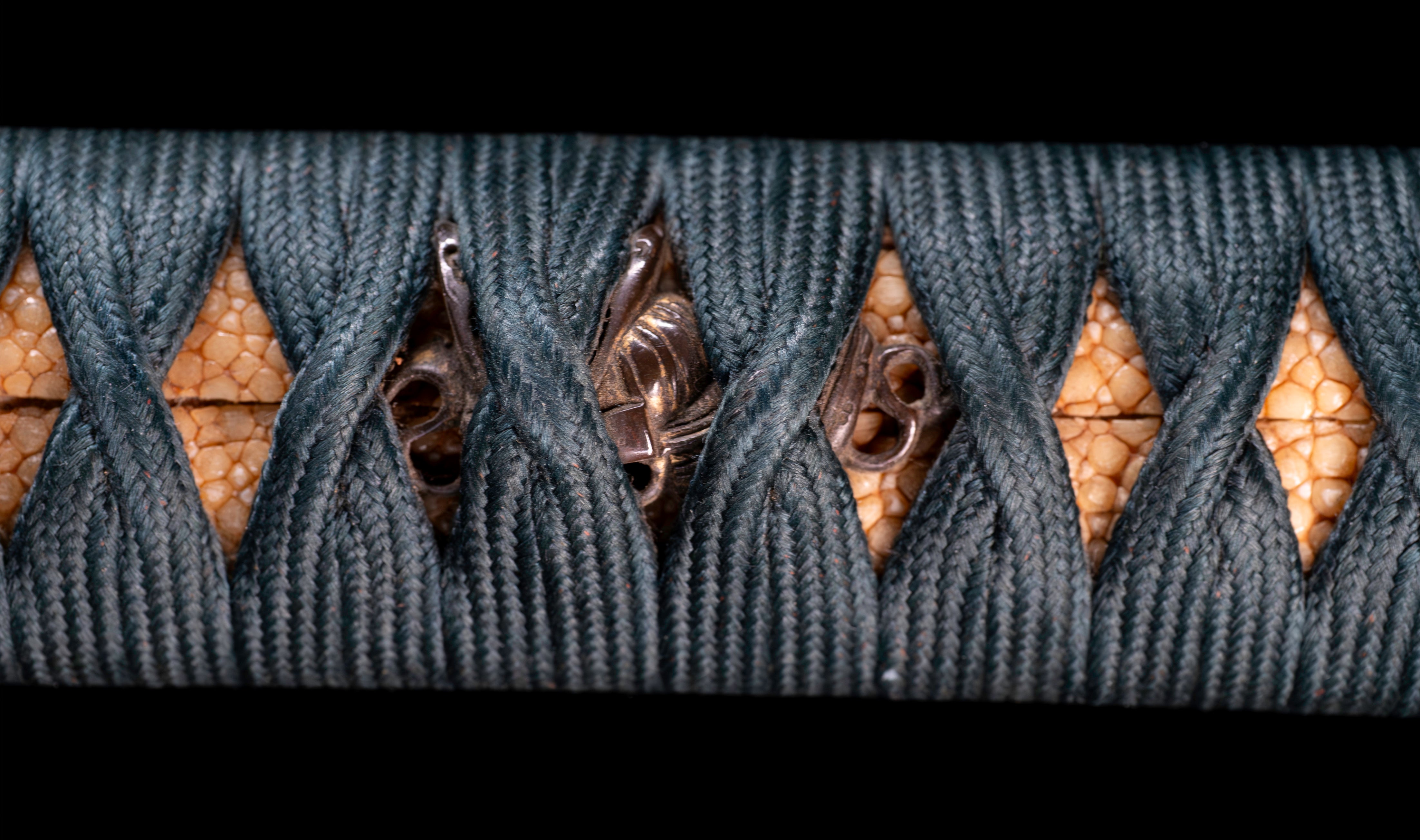
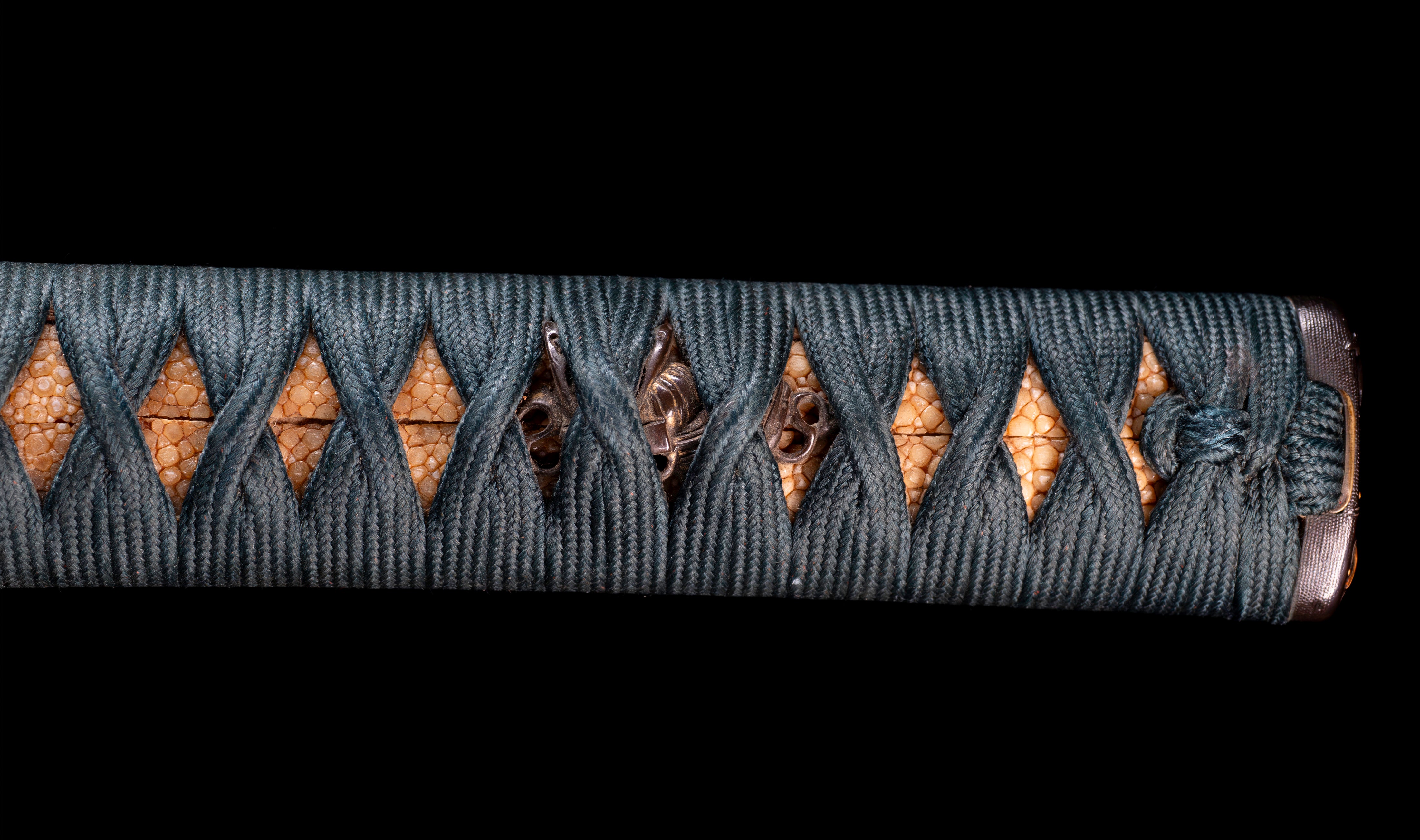
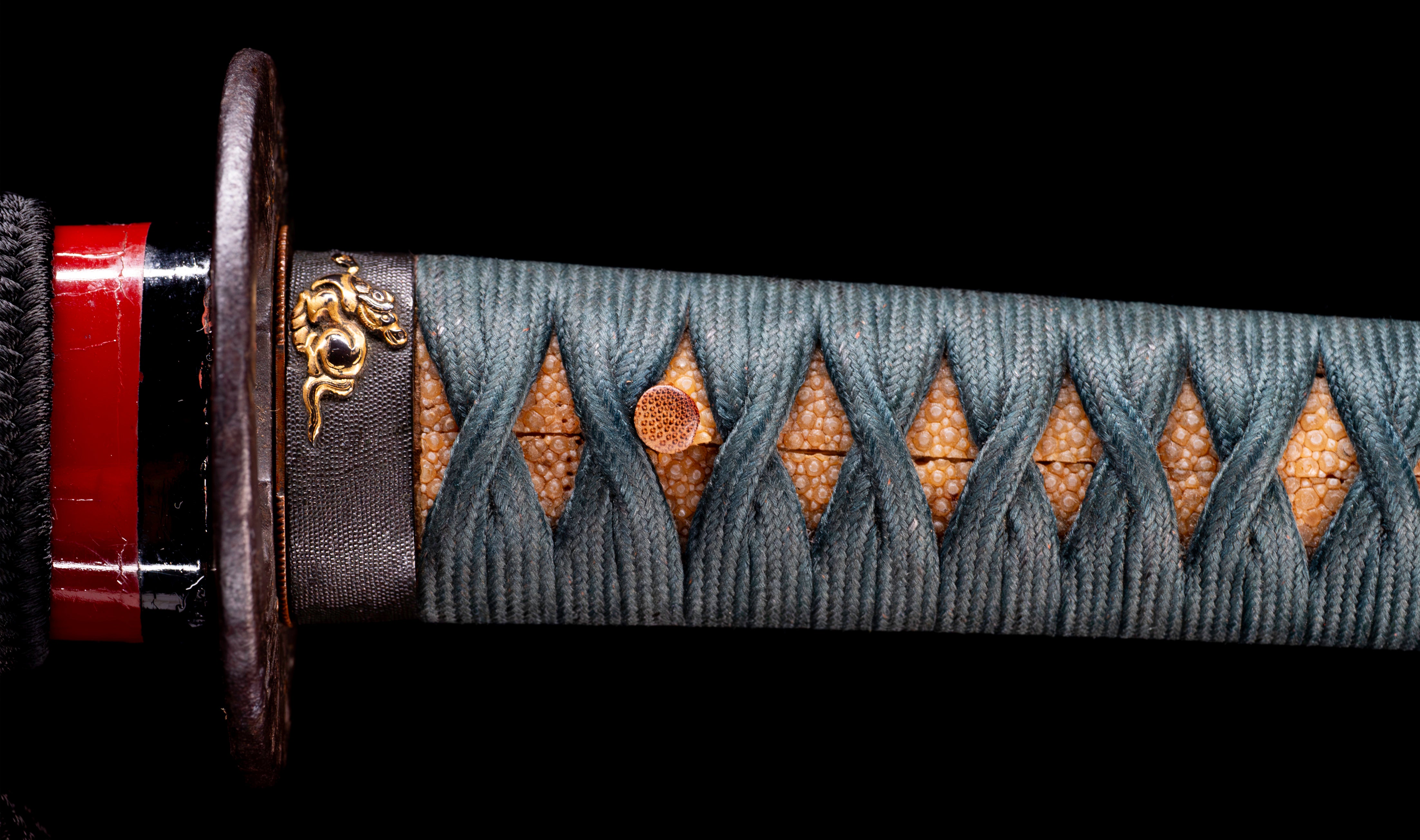
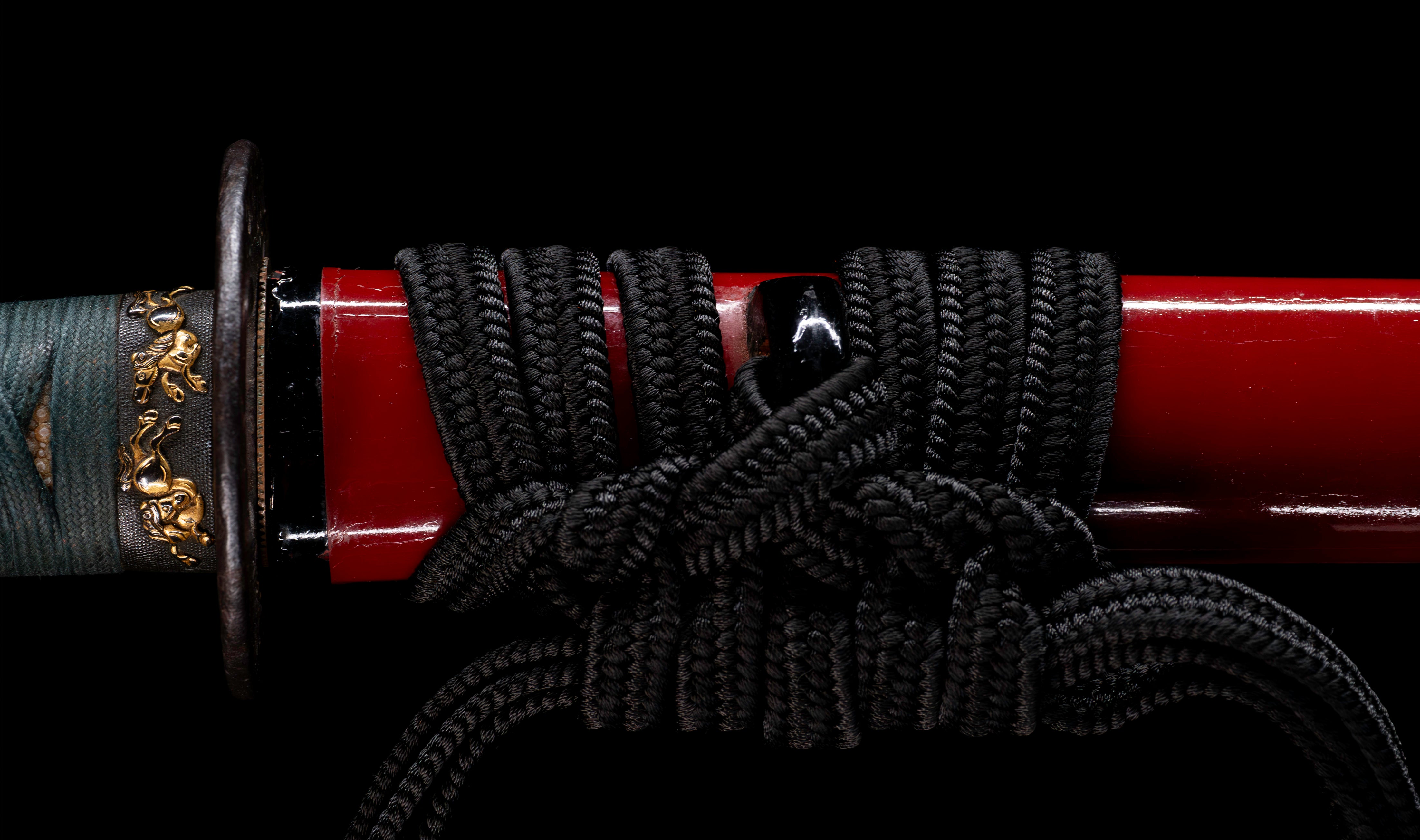
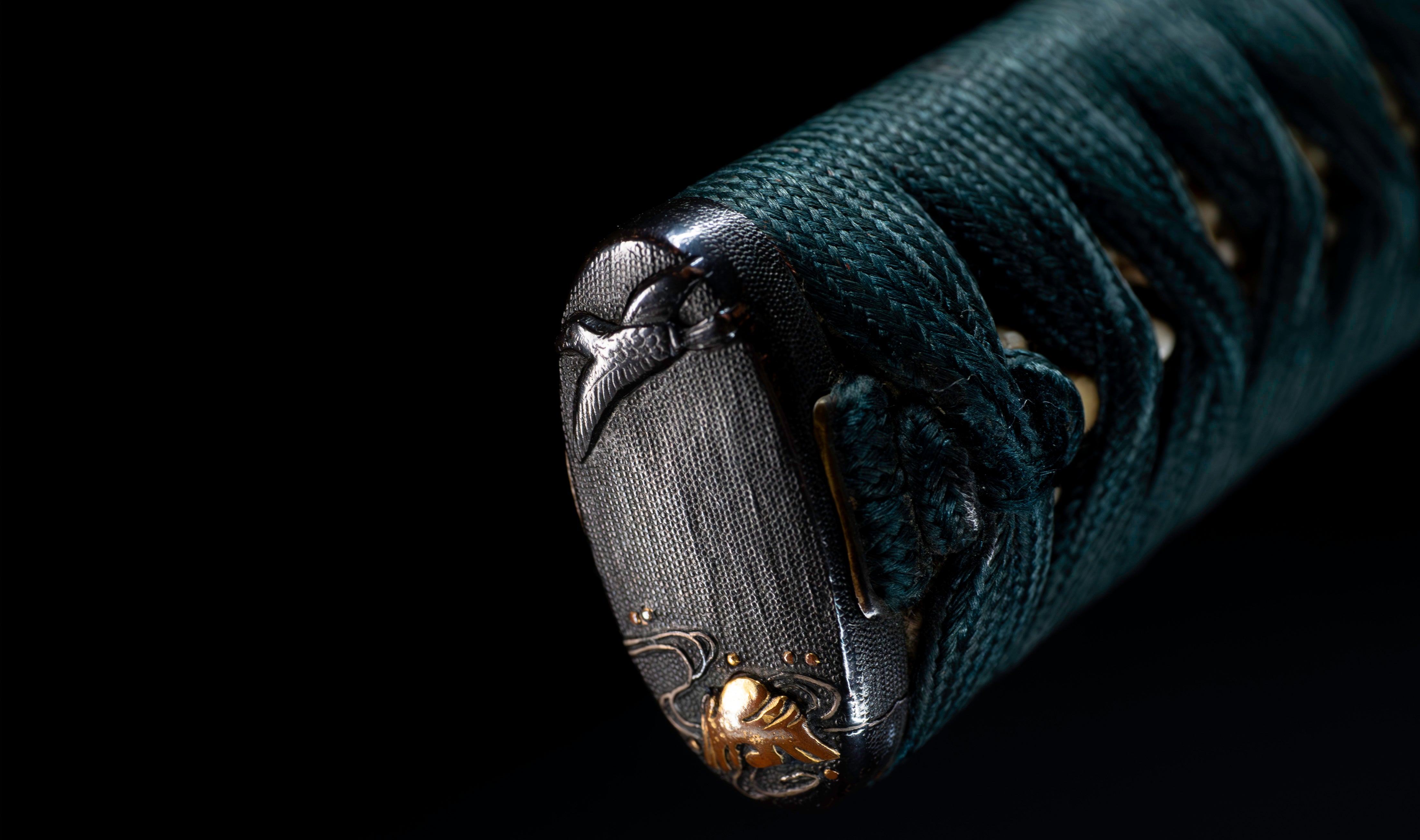
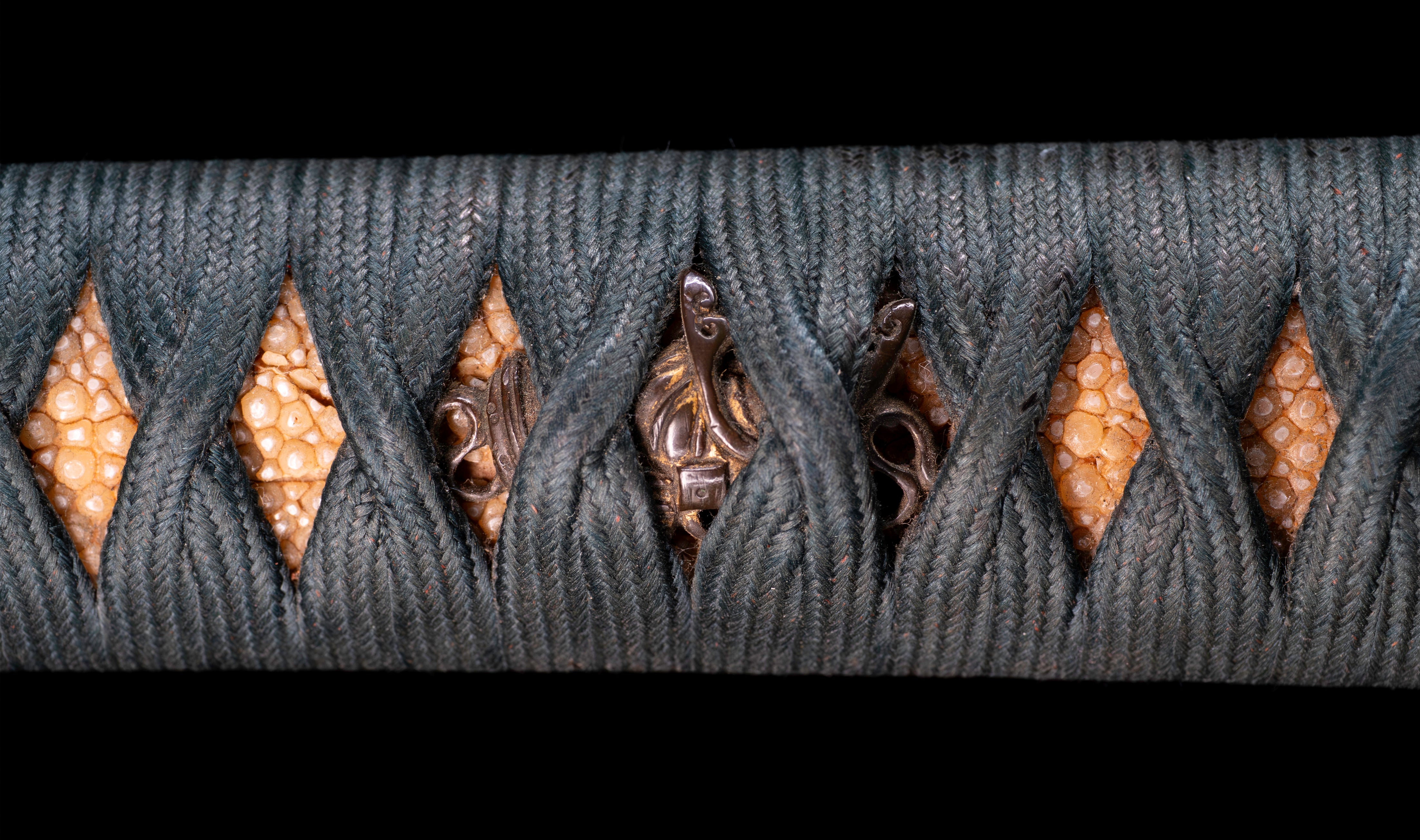
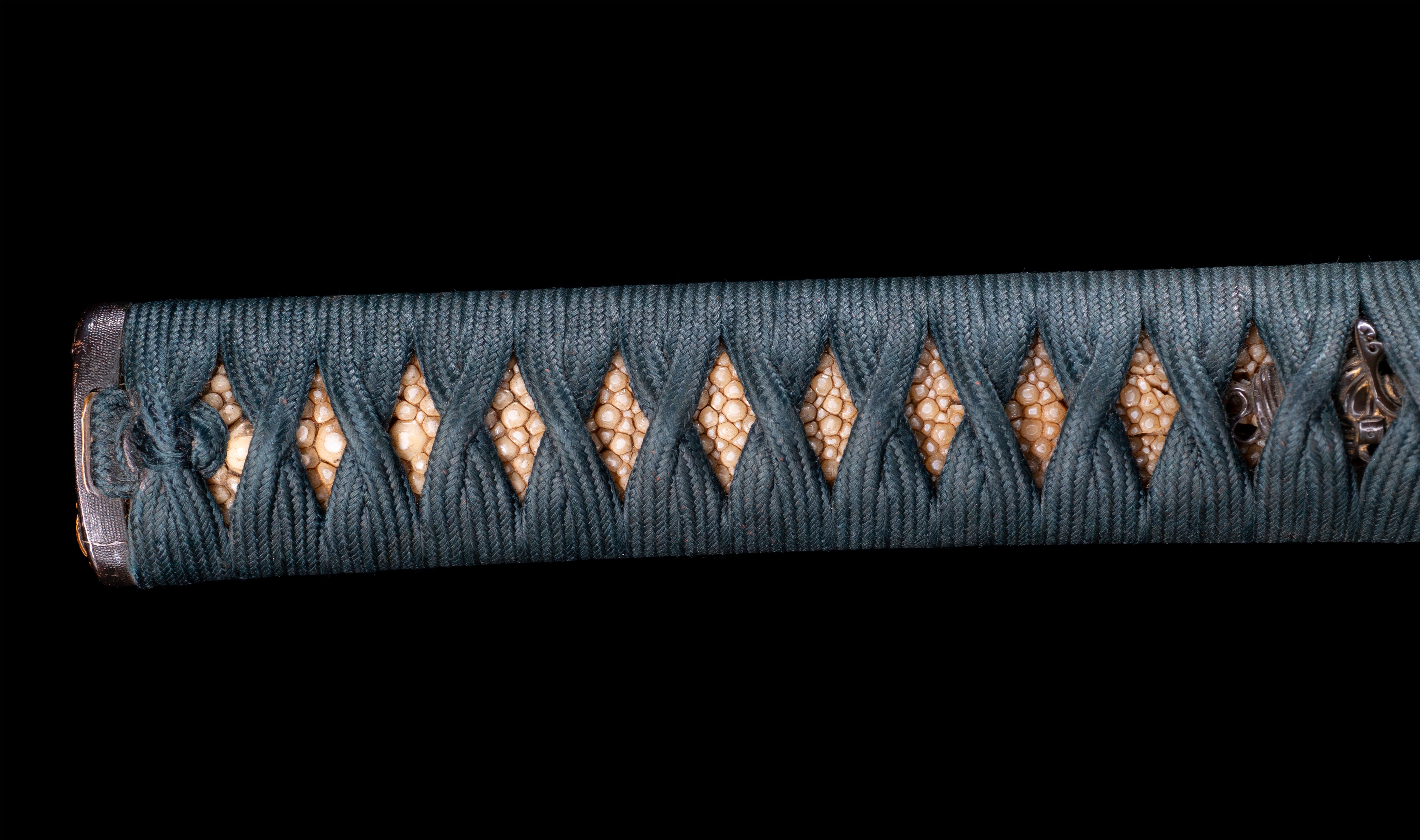
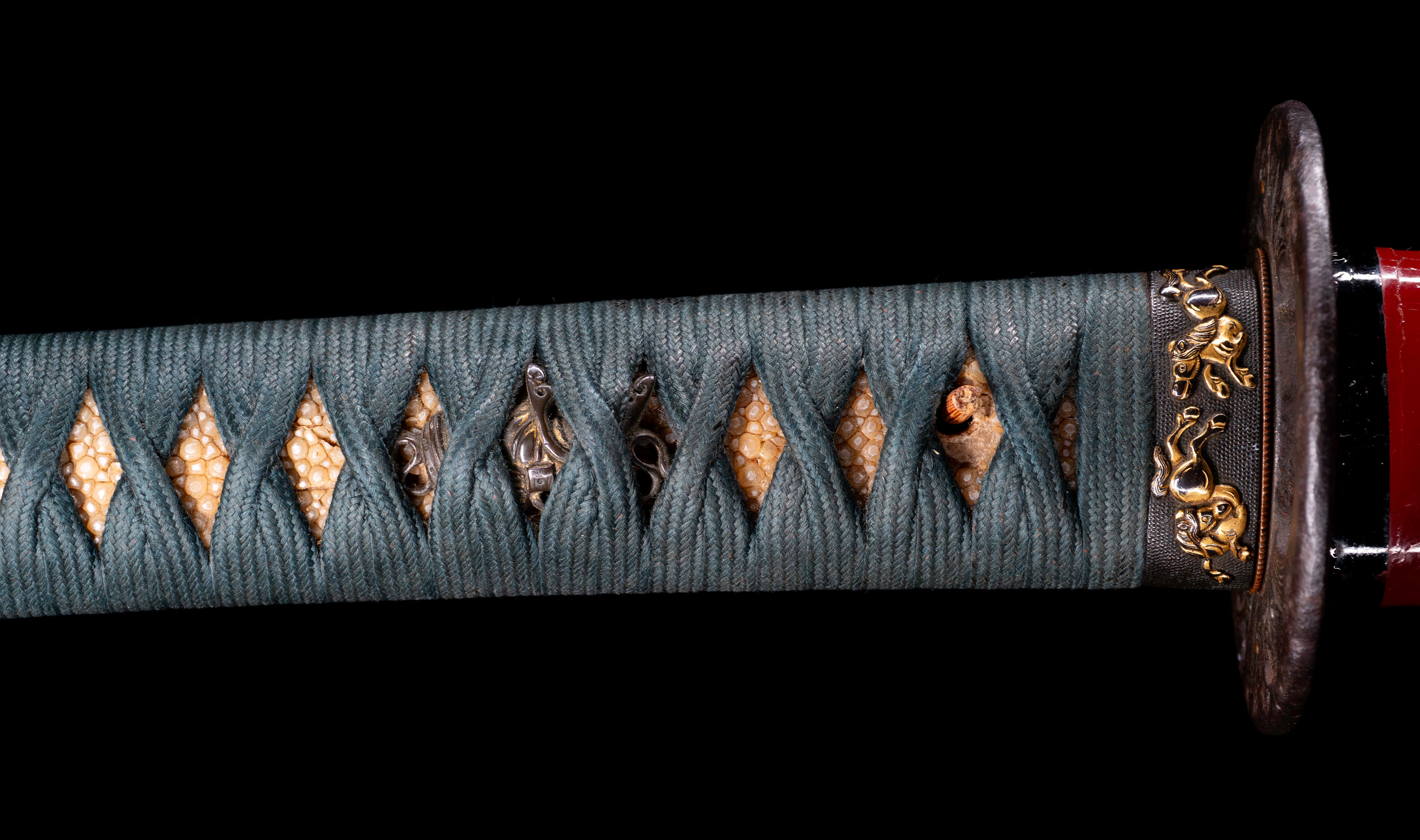
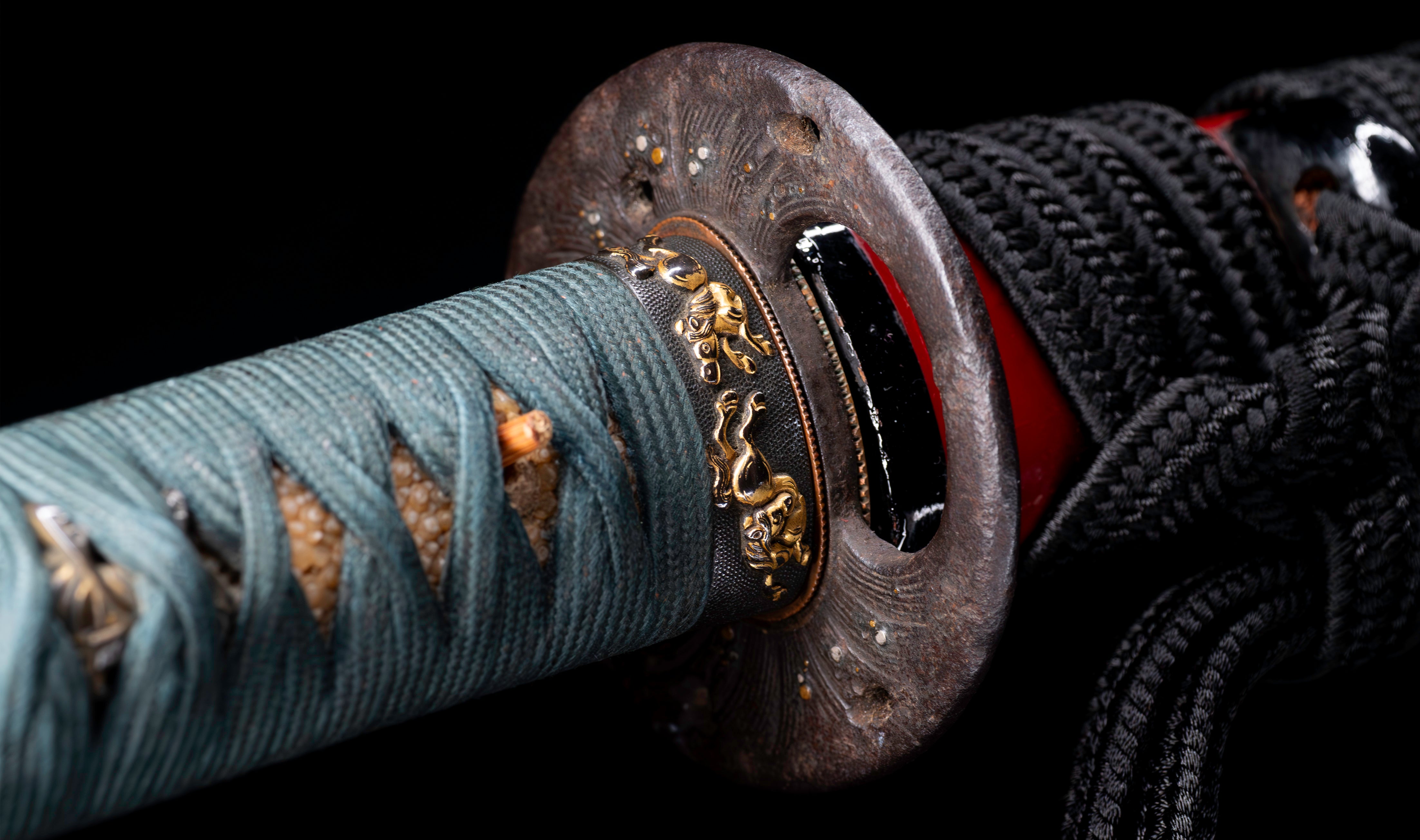
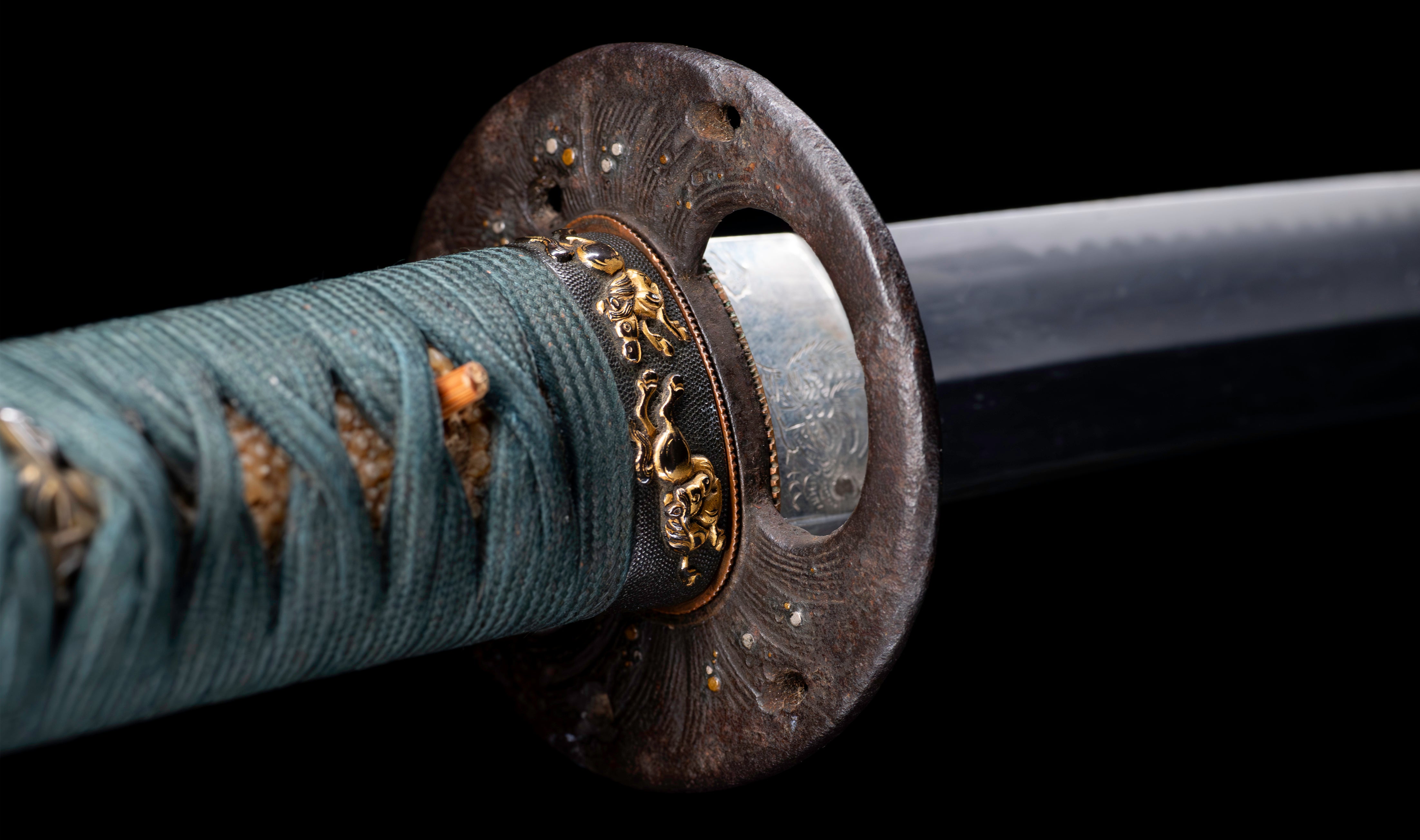
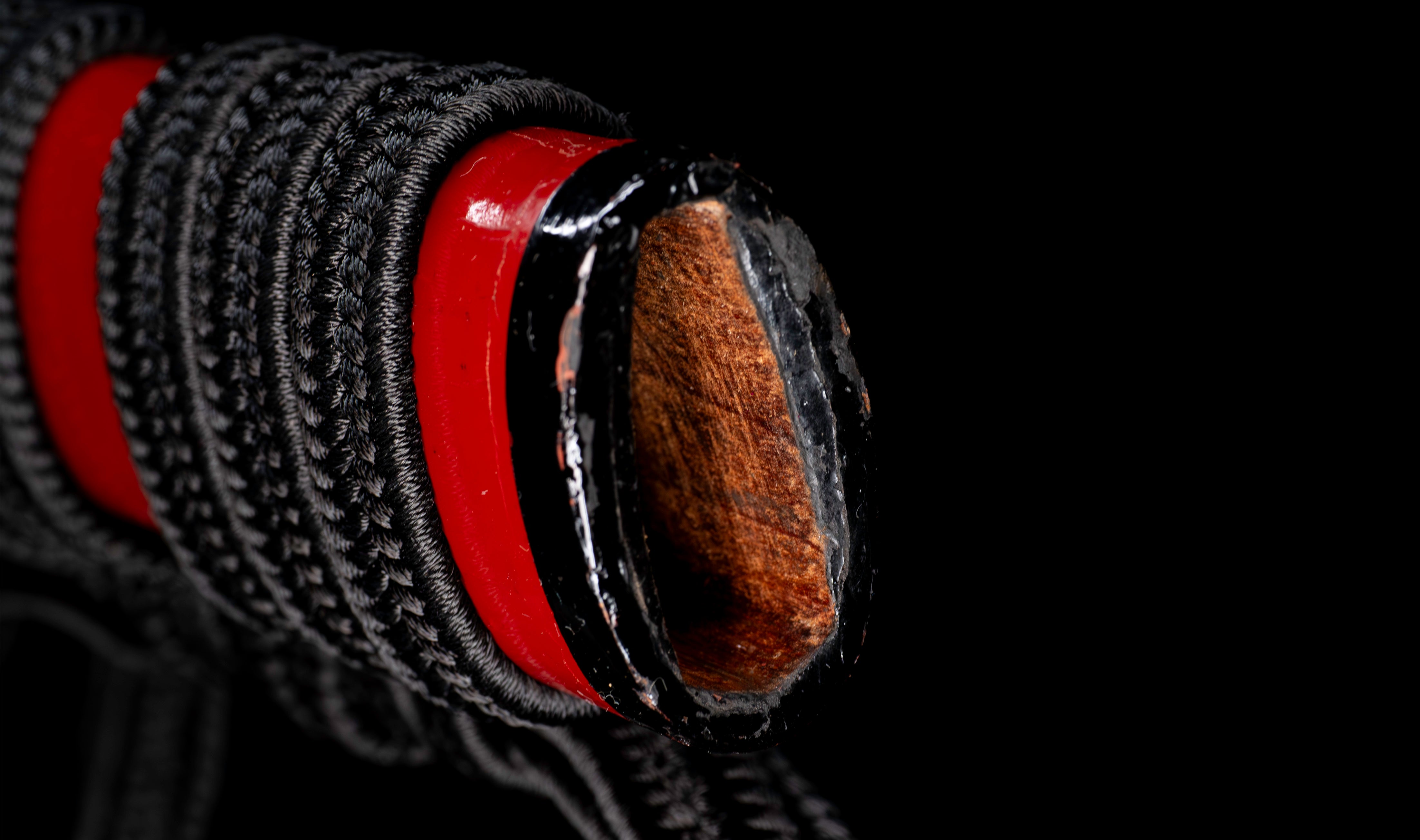
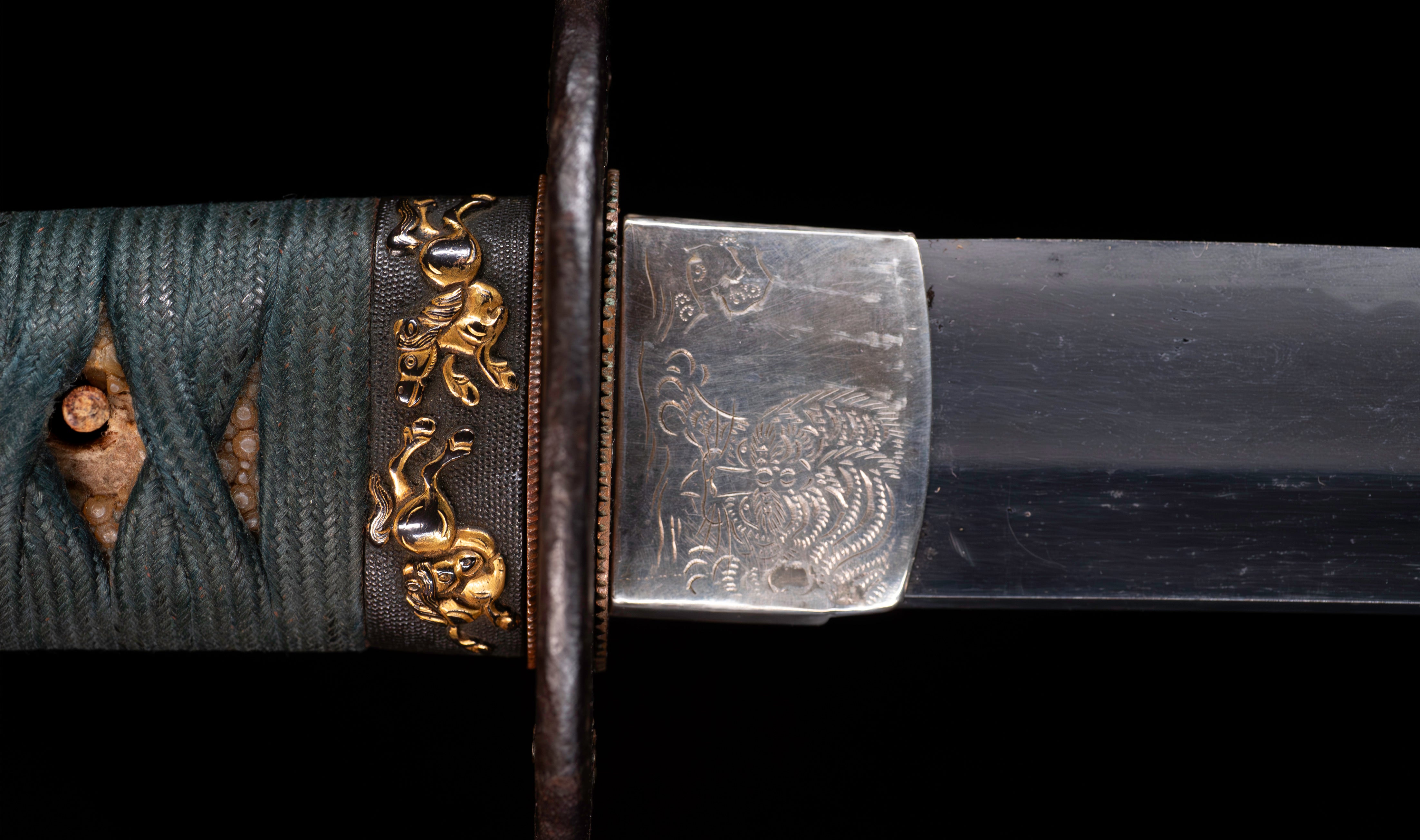
Signature (Mei): Mumei ( 無銘 ) — unsigned Period: Kotō — late Muromachi period Attribution: No shinsa paper Registration (Tōroku-shō): Iwate Prefecture No. 26385, issued 17 July 1981 (Shōwa 56) Mounting: Complete katana koshirae — red and black lacquer saya, round iron tsuba with gold and silver dot inlay, shakudō nanako fuchi with gold shishi, teal silk ito over honey-toned same Blade Length (Nagasa): 69.9 cm Curvature (Sori): 0.8 cm — shallow, the original curve reduced by the shortening Mekugi-ana: 3 Nakago: Ō-suriage, flat-cut end, dark even patina Shape (Sugata): Shinogi-zukuri, iori-mune, chū-kissaki Jihada: Tight ko-itame, dark and closely worked Hamon: Regular gunome in nioi-deki, with a tight nioiguchi, even from the machi to the monouchi Bōshi: Midare-komi, faint in the present polish Habaki: Single-piece silver-coloured habaki, engraved on both faces A Kotō katana of the late Muromachi period , ō-suriage and mumei : shortened at the tang long ago, with the smith's signature lost in the process. The blade measures 69.9 cm of nagasa with 0.8 cm of sori and carries three mekugi-ana . It comes in complete koshirae , and the temper line reads clearly from end to end. The dating is written into the sword itself. Blades made from the Edo period onward were forged to the length they were meant to be worn at, so they are rarely cut down; the swords that get shortened are the older ones, made for a different way of fighting. Three mekugi-ana say the same thing from another angle — this blade was refitted at least twice after it left the forge. The shallow 0.8 cm of sori is not an Edo trait here but a consequence of that shortening: the deepest part of the original curve sat in the steel that was cut away at the base. The hamon settles the question. It is a regular gunome — evenly spaced, evenly sized rounded heads repeating without hesitation the whole length of the ha — worked in nioi-deki with a tight, controlled nioiguchi . That disciplined, repeating temper over
NihontoWatchOffered by Tokyo Nihonto
This piece has sold

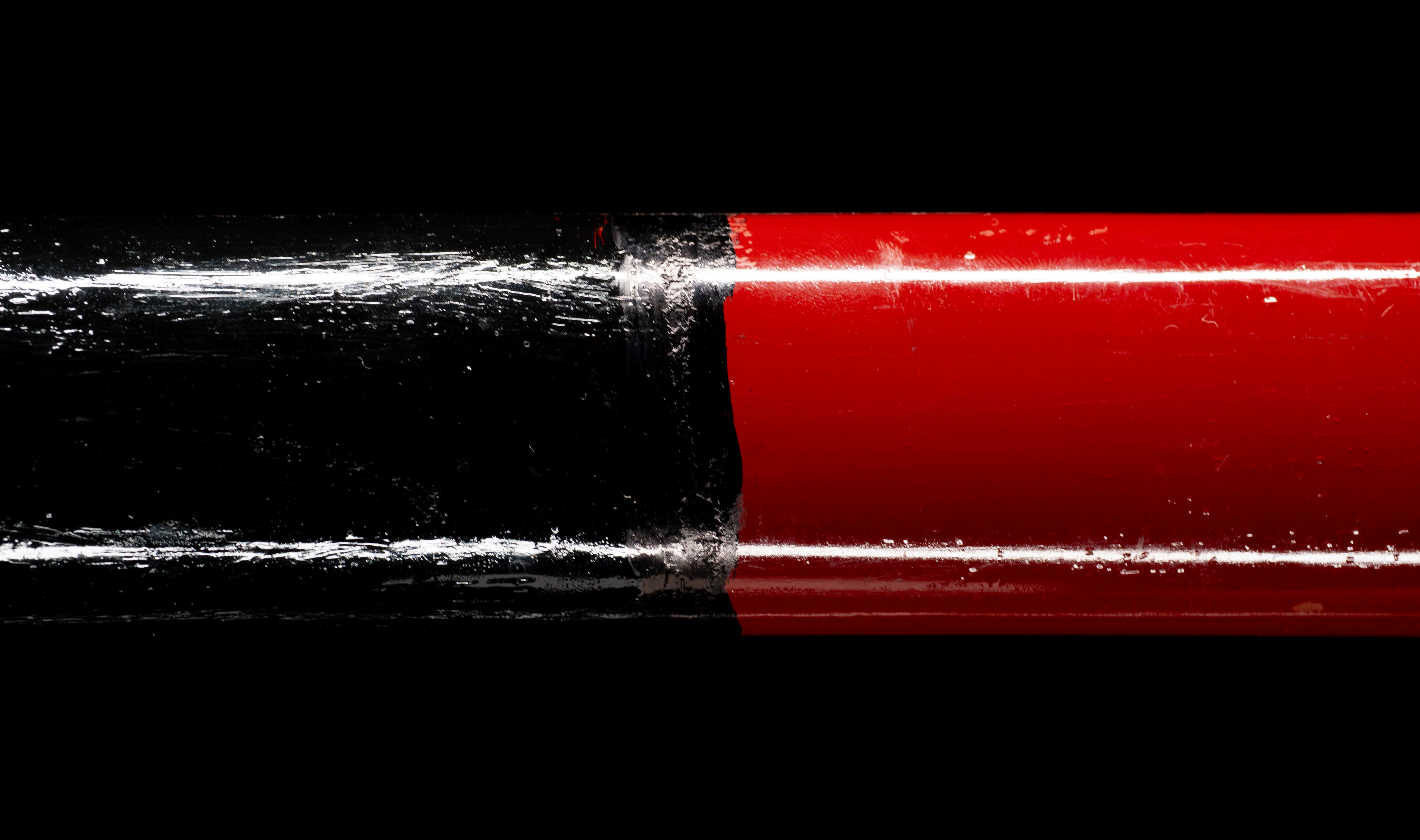
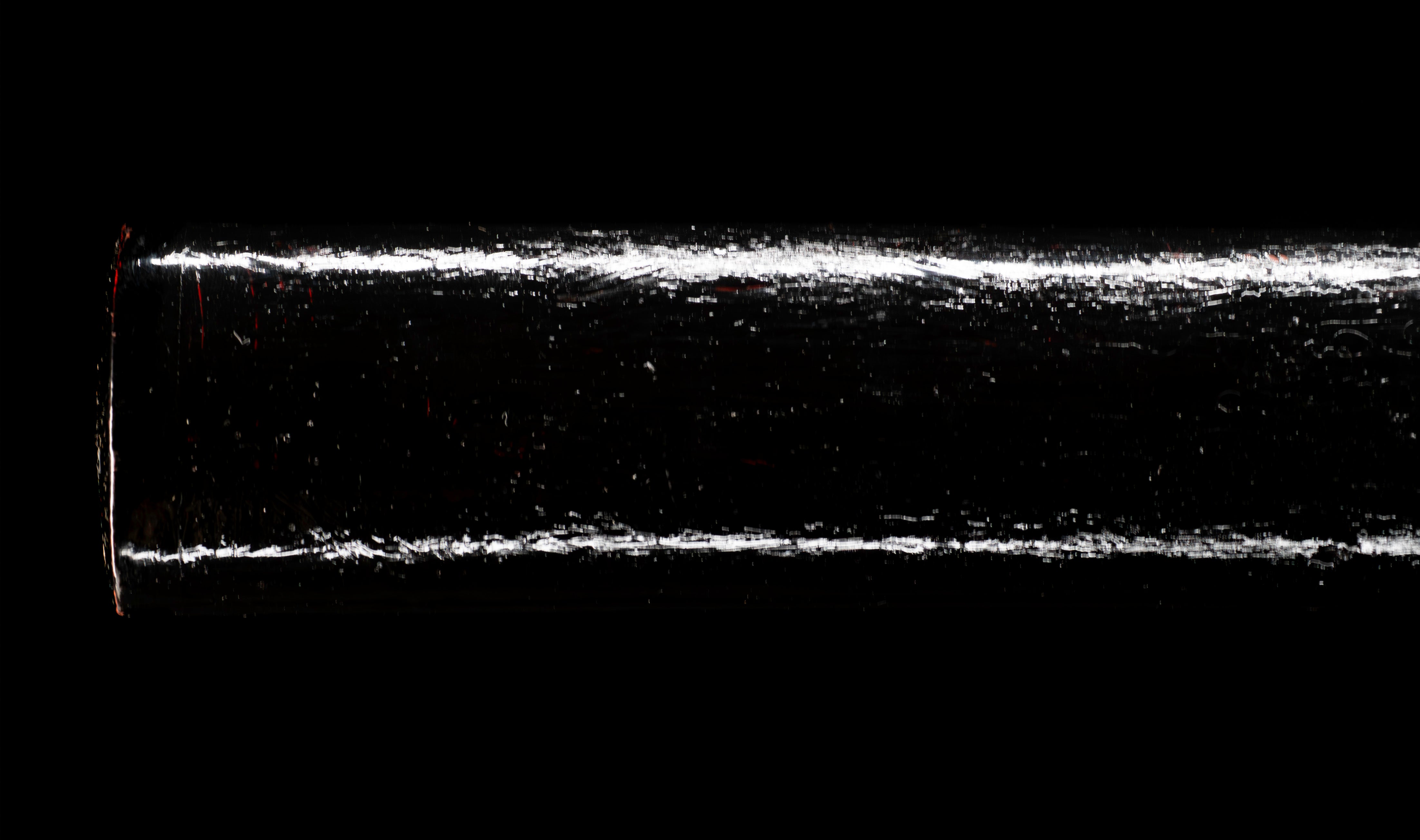
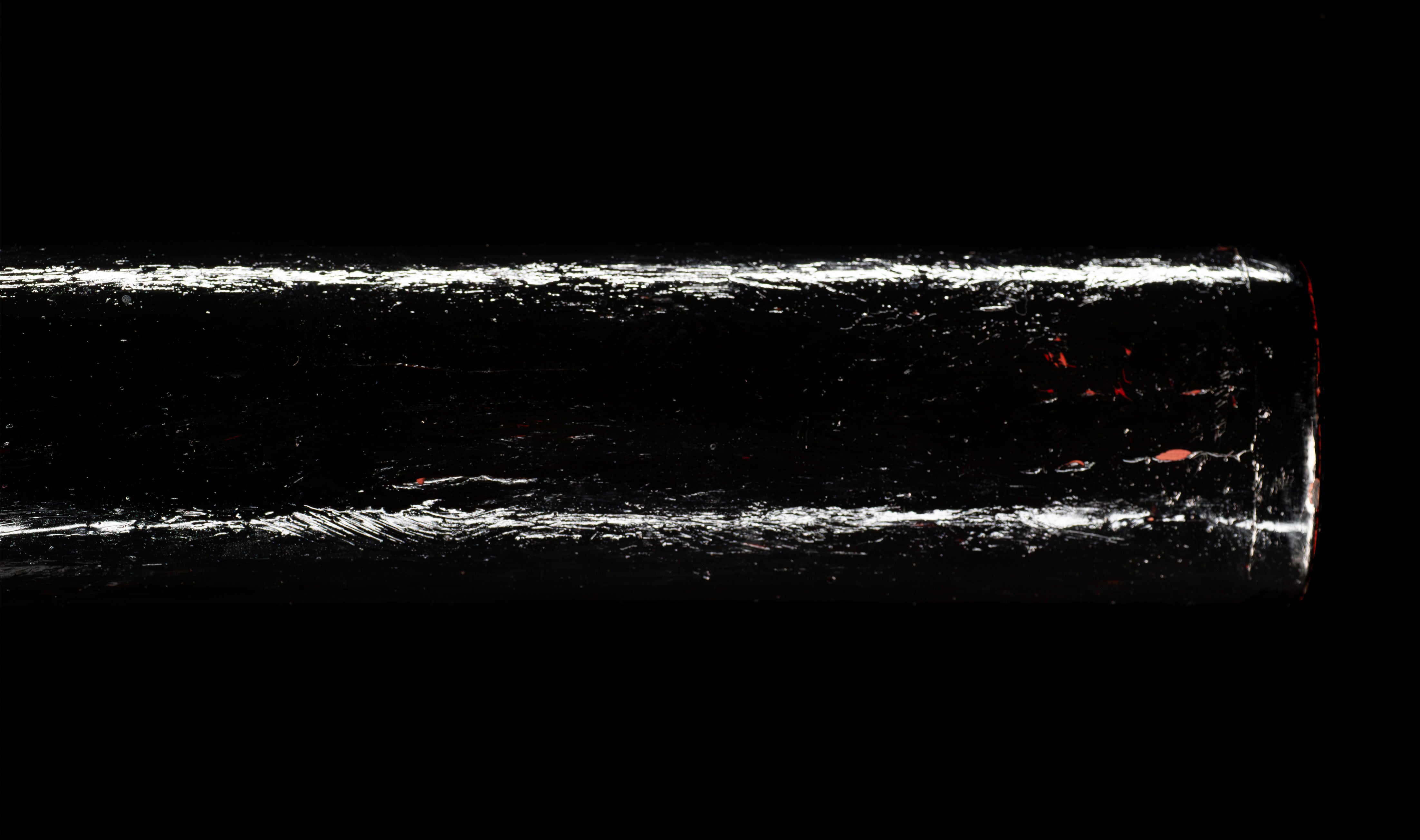
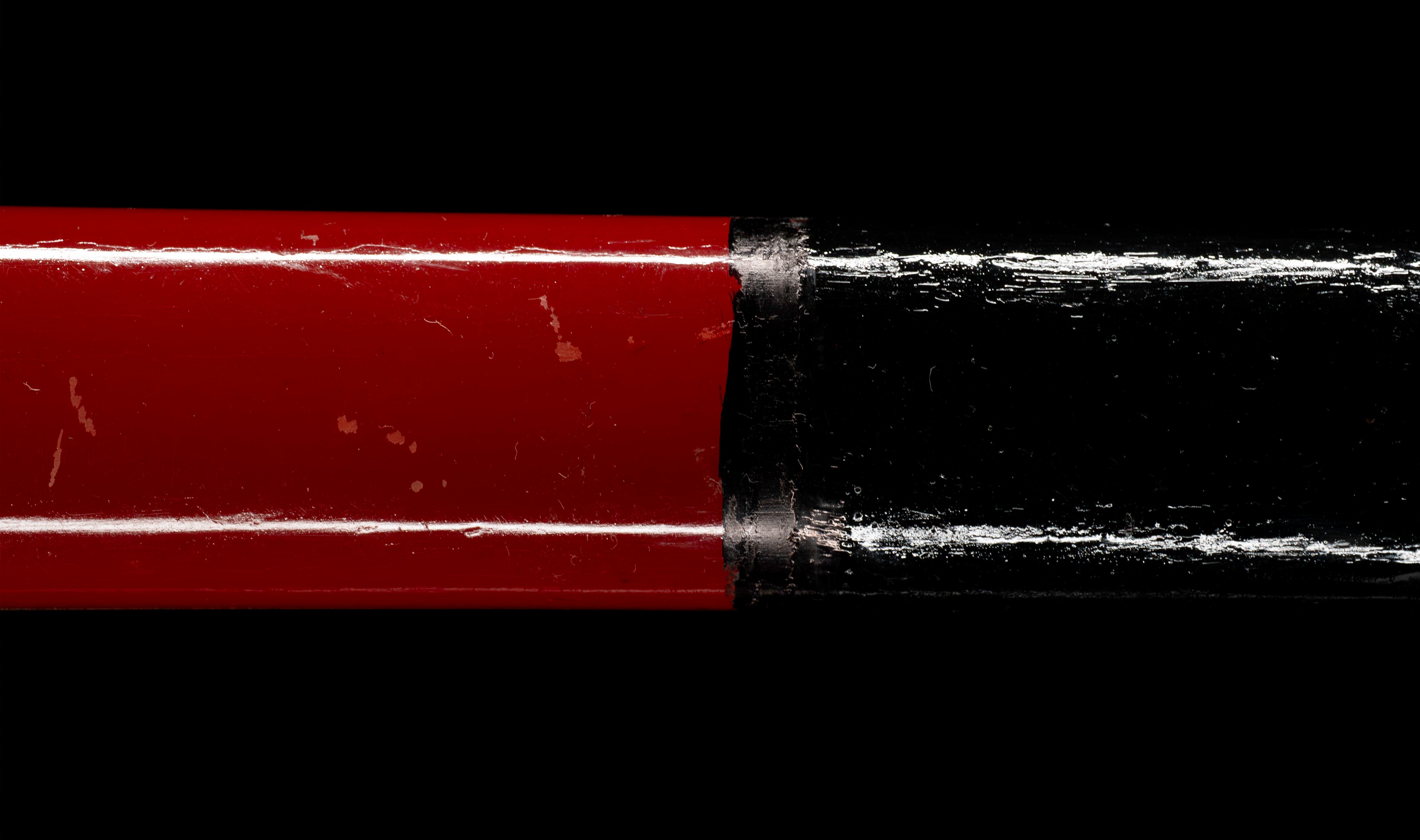
The Muromachi period (1392 to 1573)
After the Ōnin War broke the Ashikaga order, a century of Sengoku warfare armed nearly every province in Japan. The era rewards a discriminating eye: routine work exists in quantity, and beside it stand custom blades of the first rank.
Returns/exchanges only for manufactured defects or incorrect products; notify within 72 hours of delivery. Cancellation only within 2 hours of placing. Customer pays return shipping. Refund within 3 business days of package arrival.