 NihontoWatchNihontoWatch
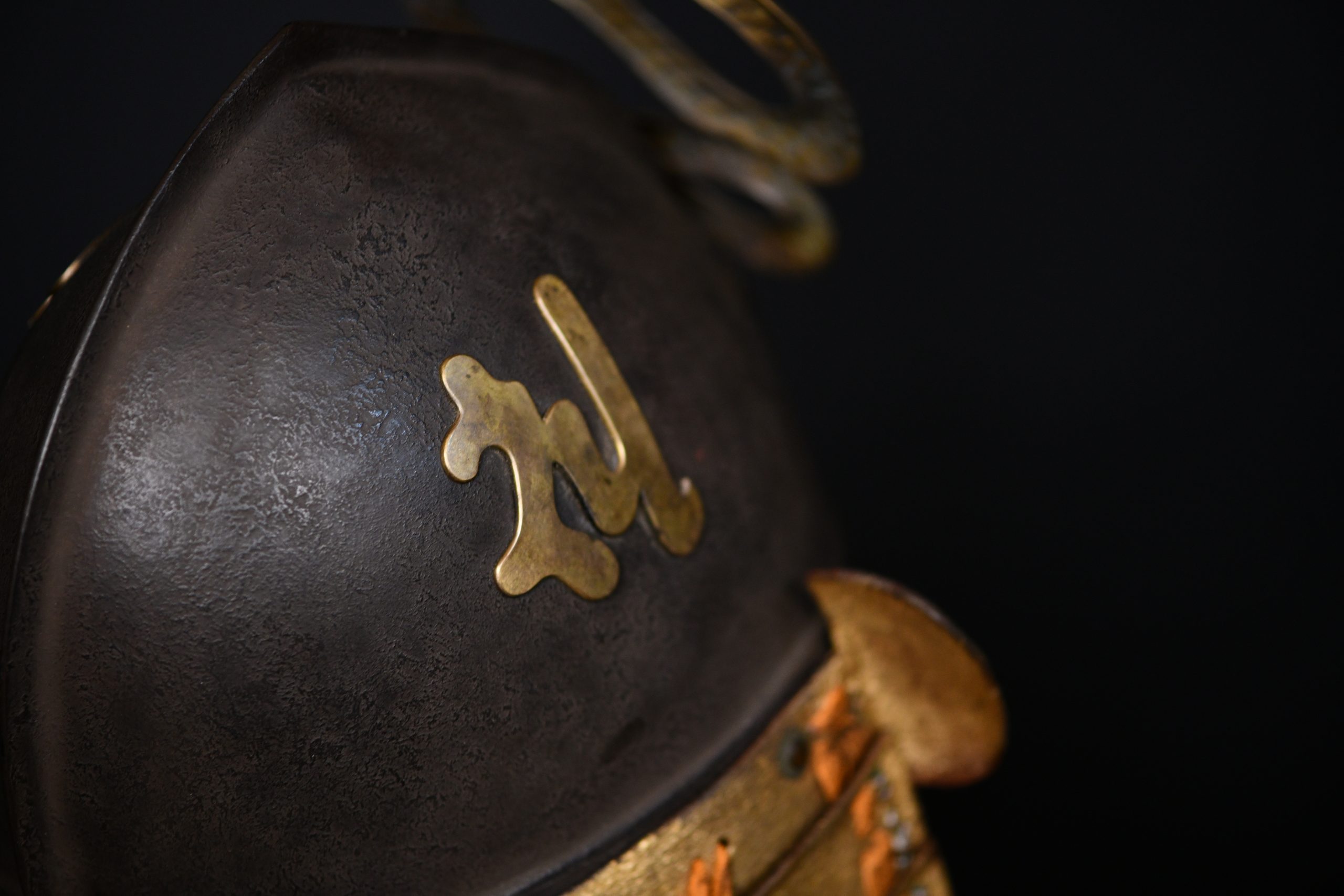
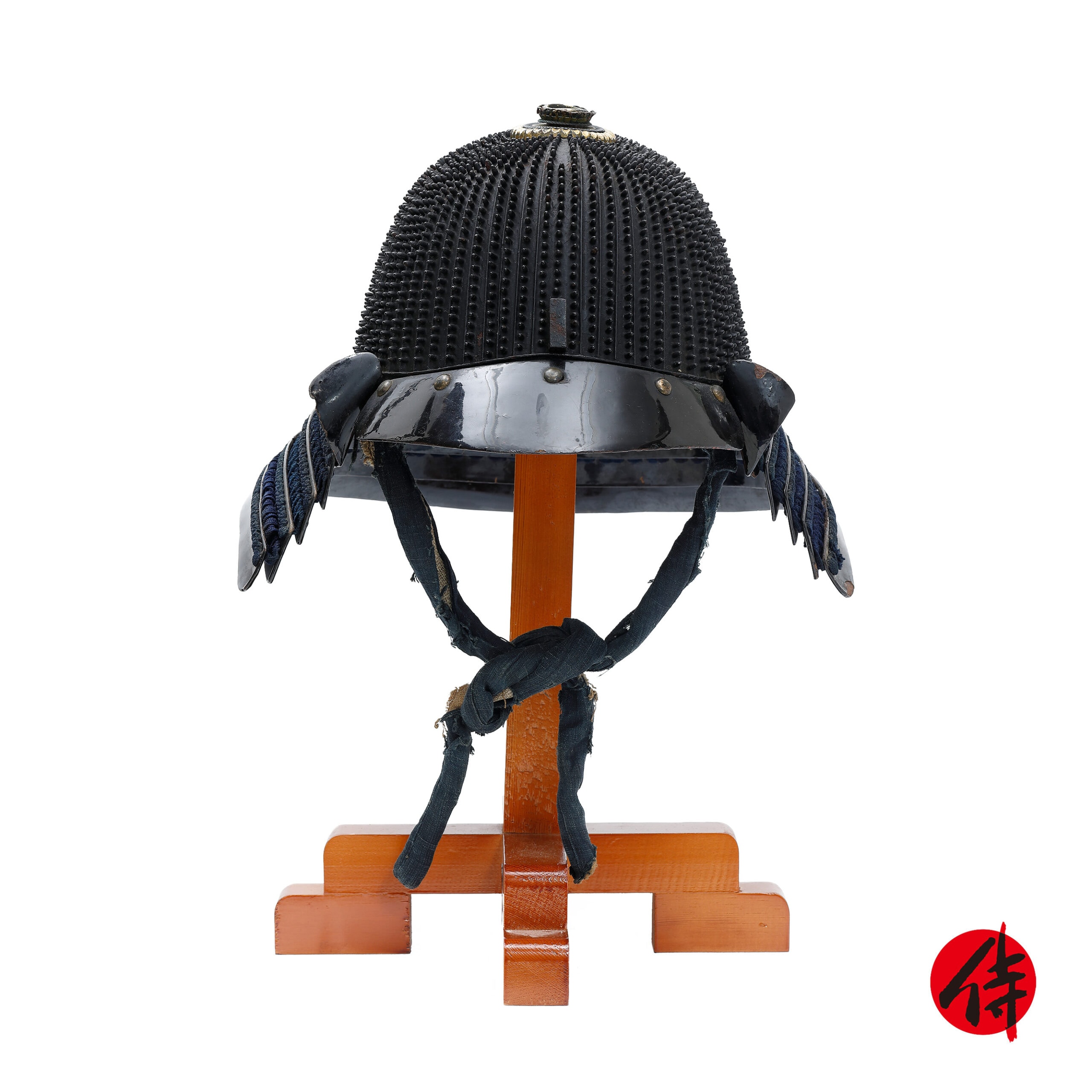
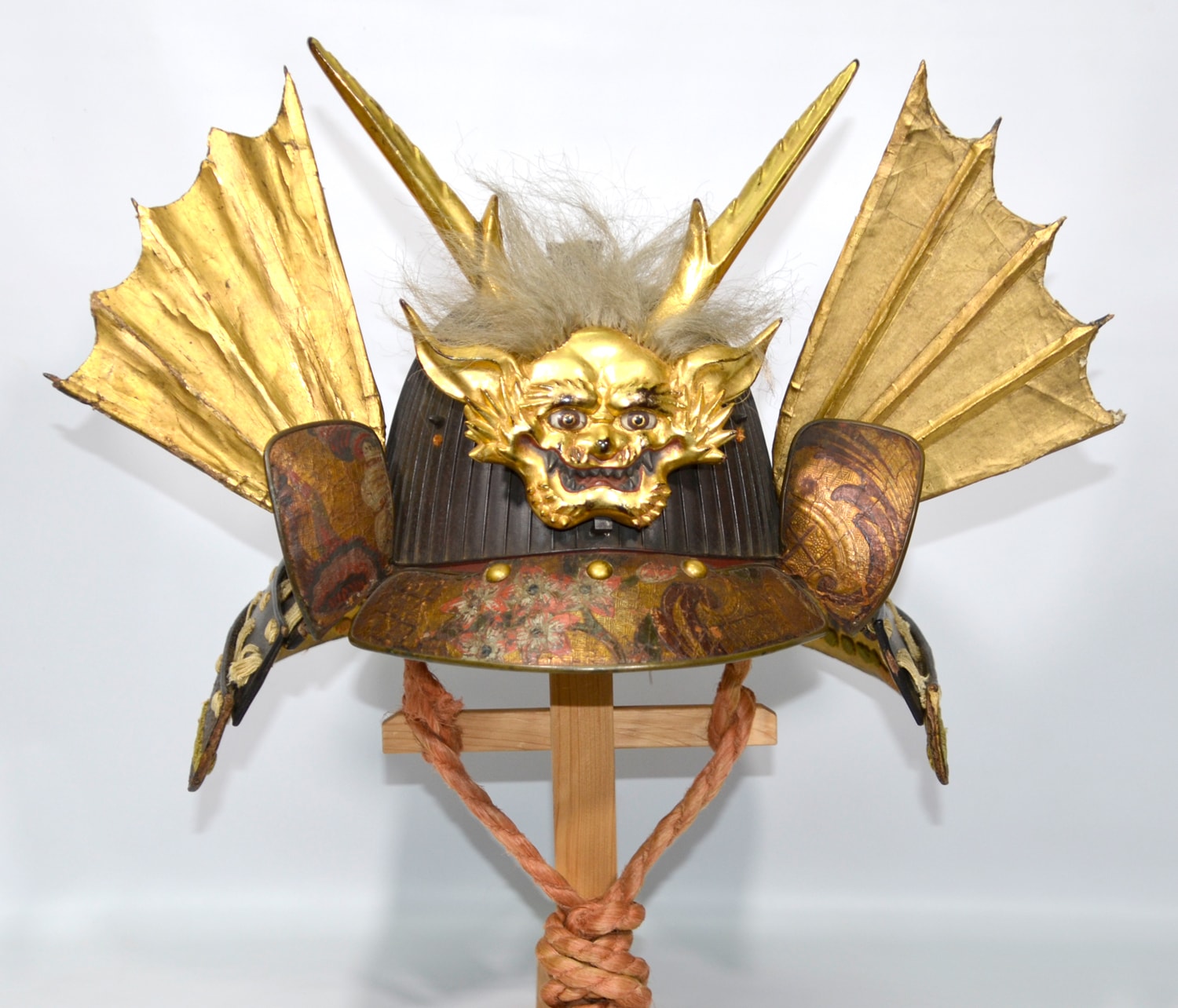
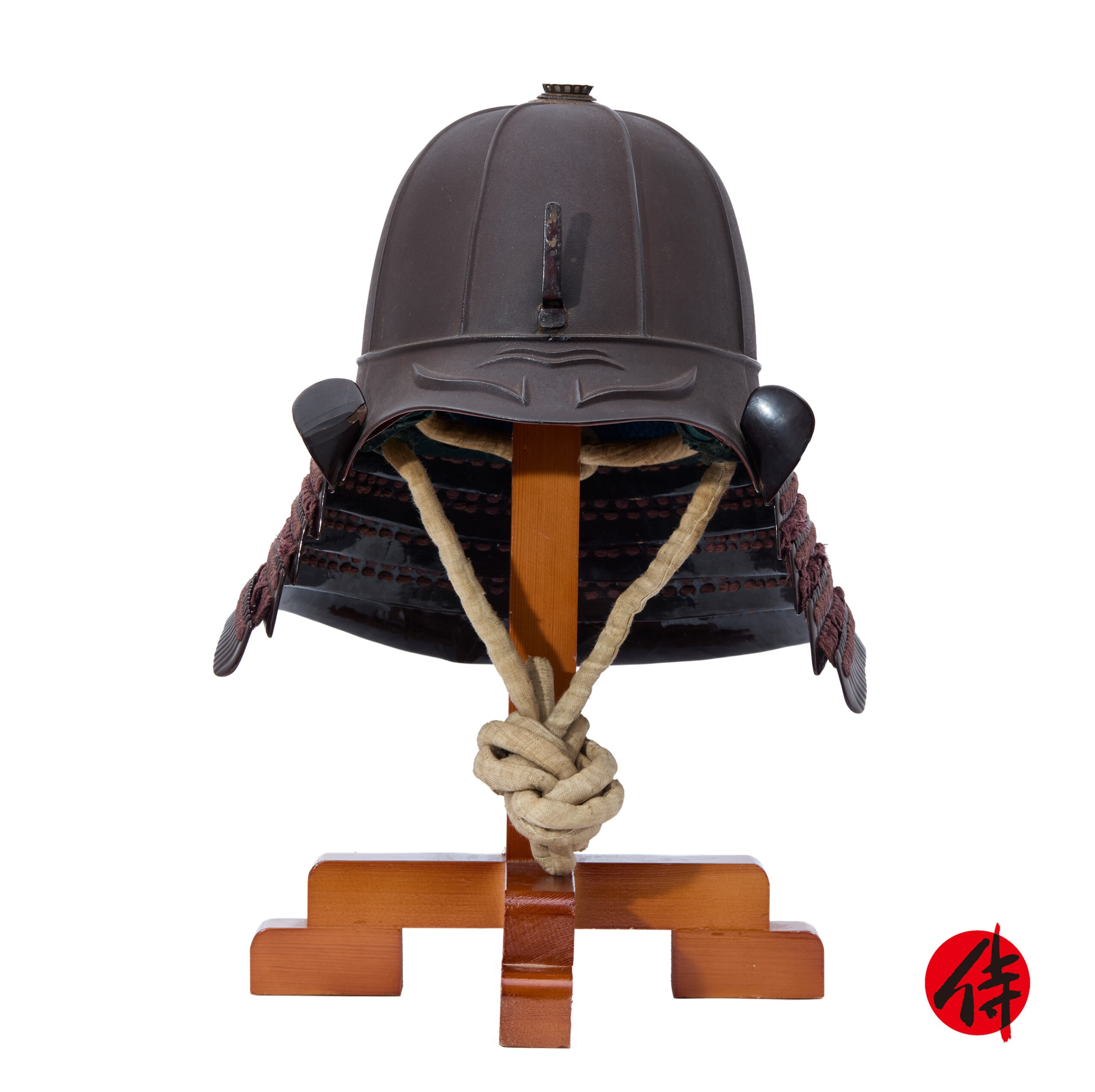
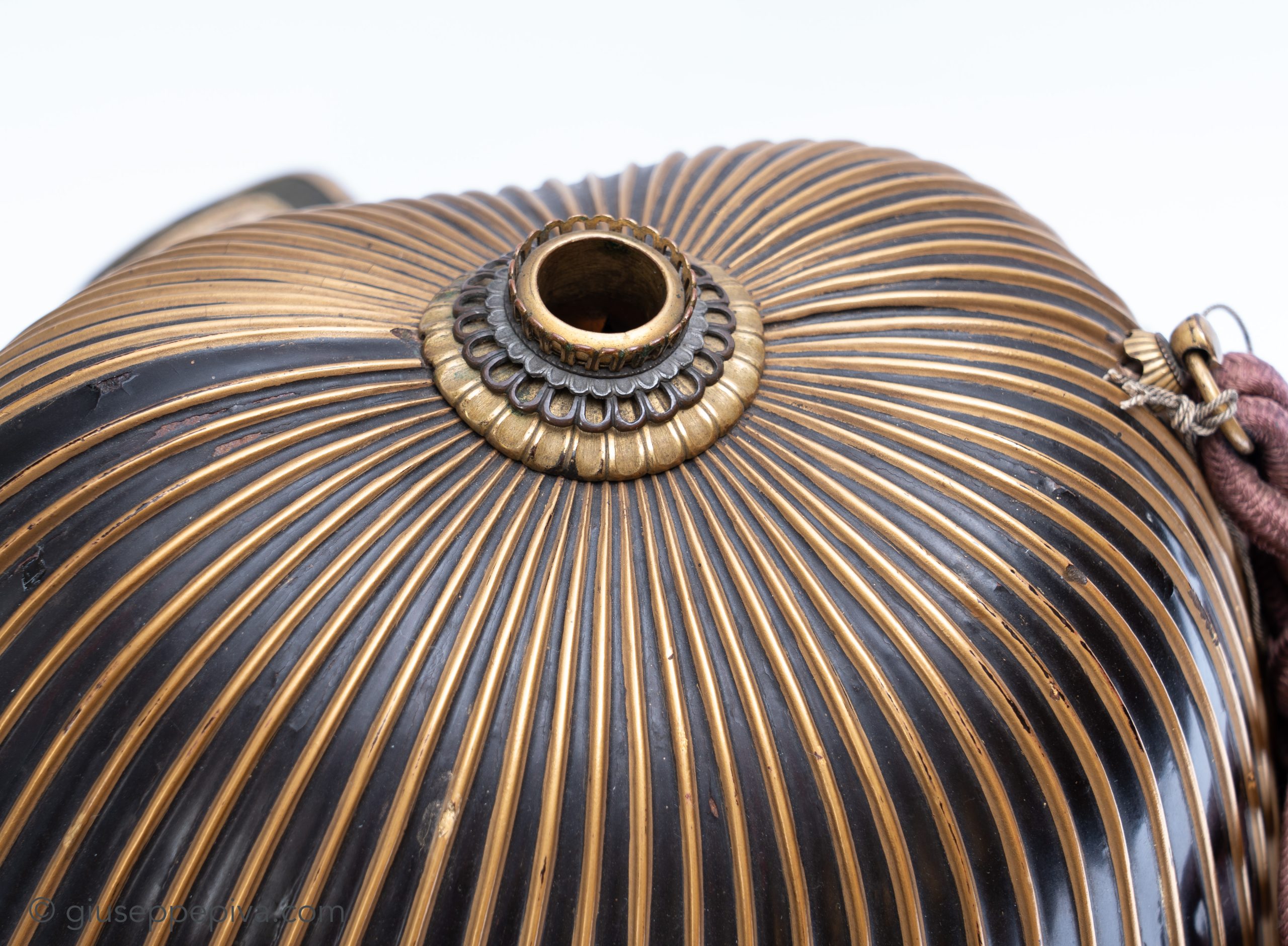
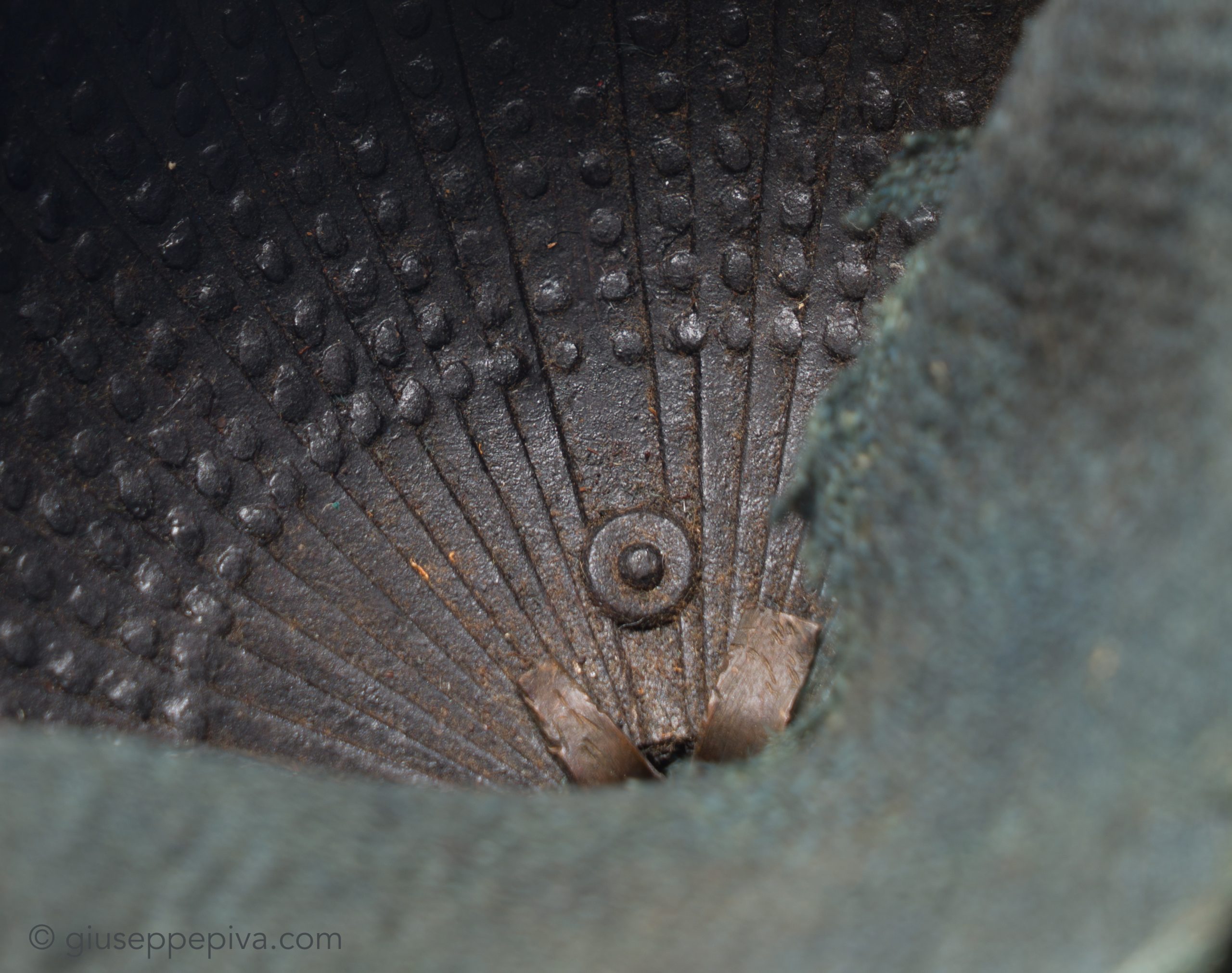
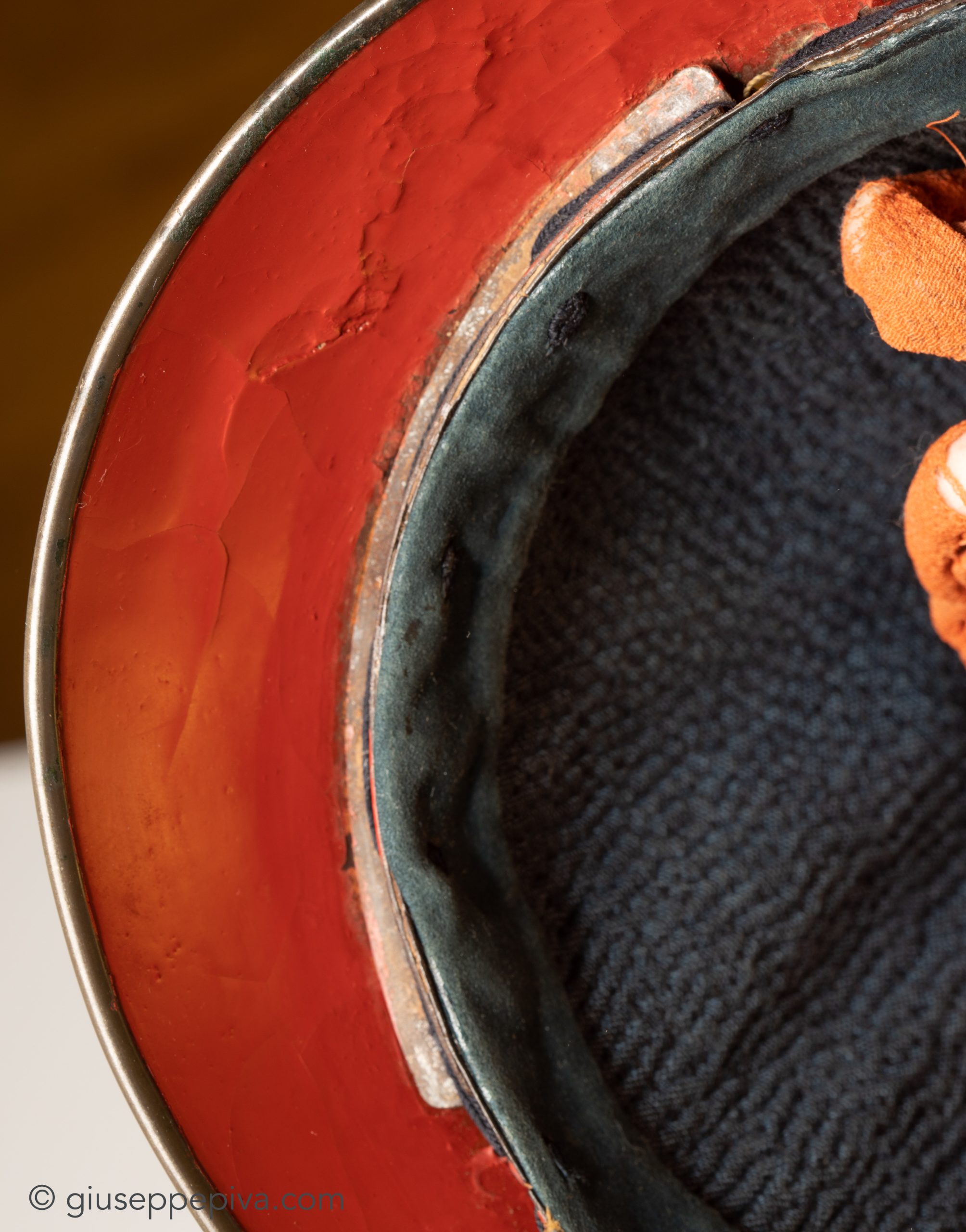
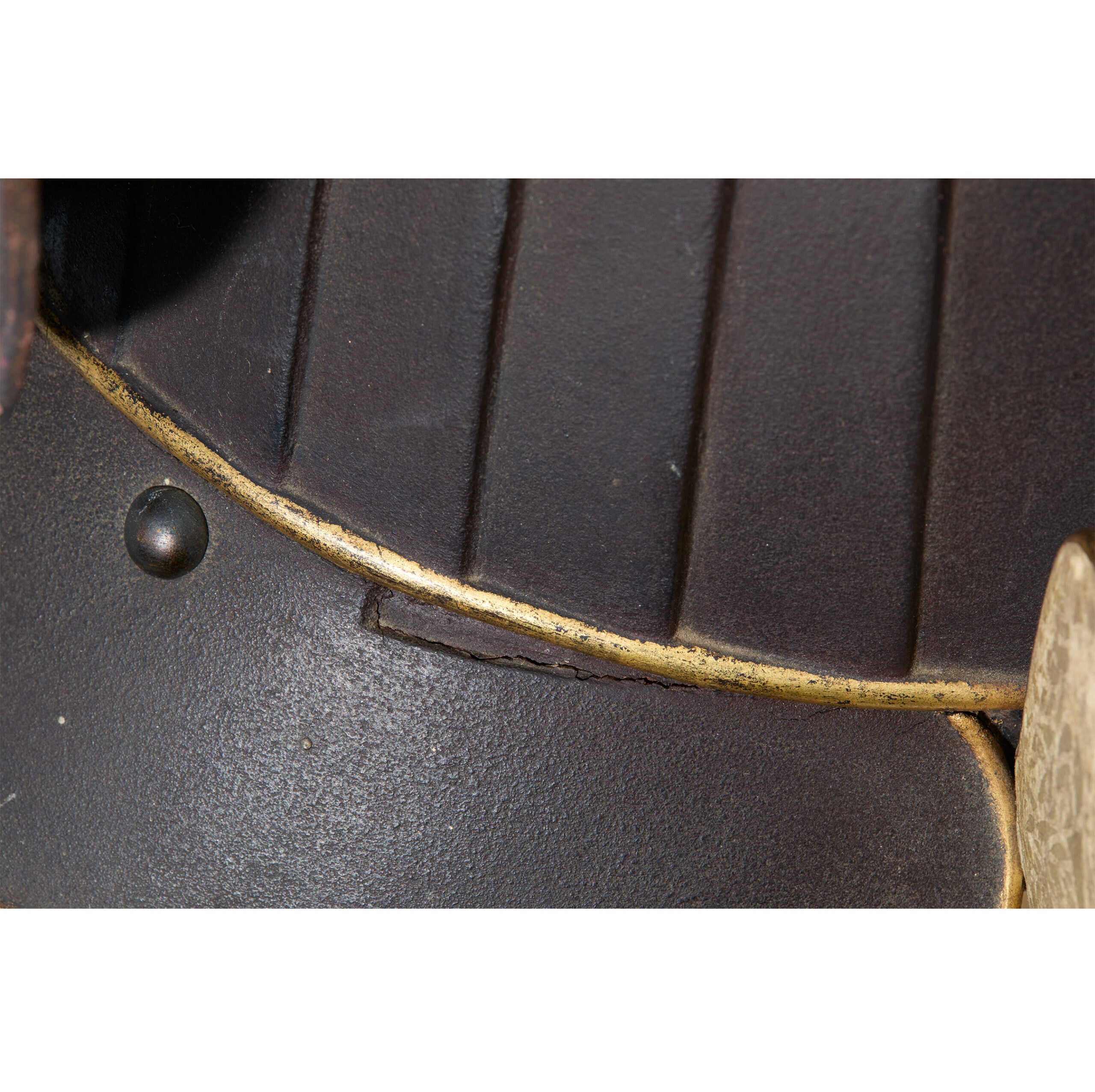
Momonari kabuto were produced in great numbers during the Momoyama period due to a structure capable of deflecting the impact of teppo. In addition to the shape of the hachi, with its central ridges running front to back, being the core of its appeal, this piece features a design where the gold-powder finished tentsuki stands out against the black urushi ground. The tentsuki, which has its ancestral form in the kuwagata equipped on o-yoroi, was created as one of the creative and diverse wakidate such as hoko-tsuno, shika-tsuno, and suigyu-tsuno, and like kamon and hata-jirushi, it served as a symbol representing the house. As the name suggests, the shape piercing the heavens must have been particularly eye-catching. This tentsuki wakidate is made of shibo-kawa with a stable and lightweight construction. The mabizashi, which projects sharply forward, is decorated with three sharply rising lines of uchi-mayu, and the edges of the mabizashi are encircled with a karakusa-mon fukurin in shakudo-ji kin-iroe finish, giving it high dignity. The four-stage tsuzuri no suso-ita of tetsu-ji, wrapped in shibo-kawa and finished in cha-urushi, is decorated with a maru-ni-hishi jomon in gold powder. A haraidate is provided at the center of the hachi. The ukibari remains in healthy condition.
NihontoWatchOffered by Choshuya
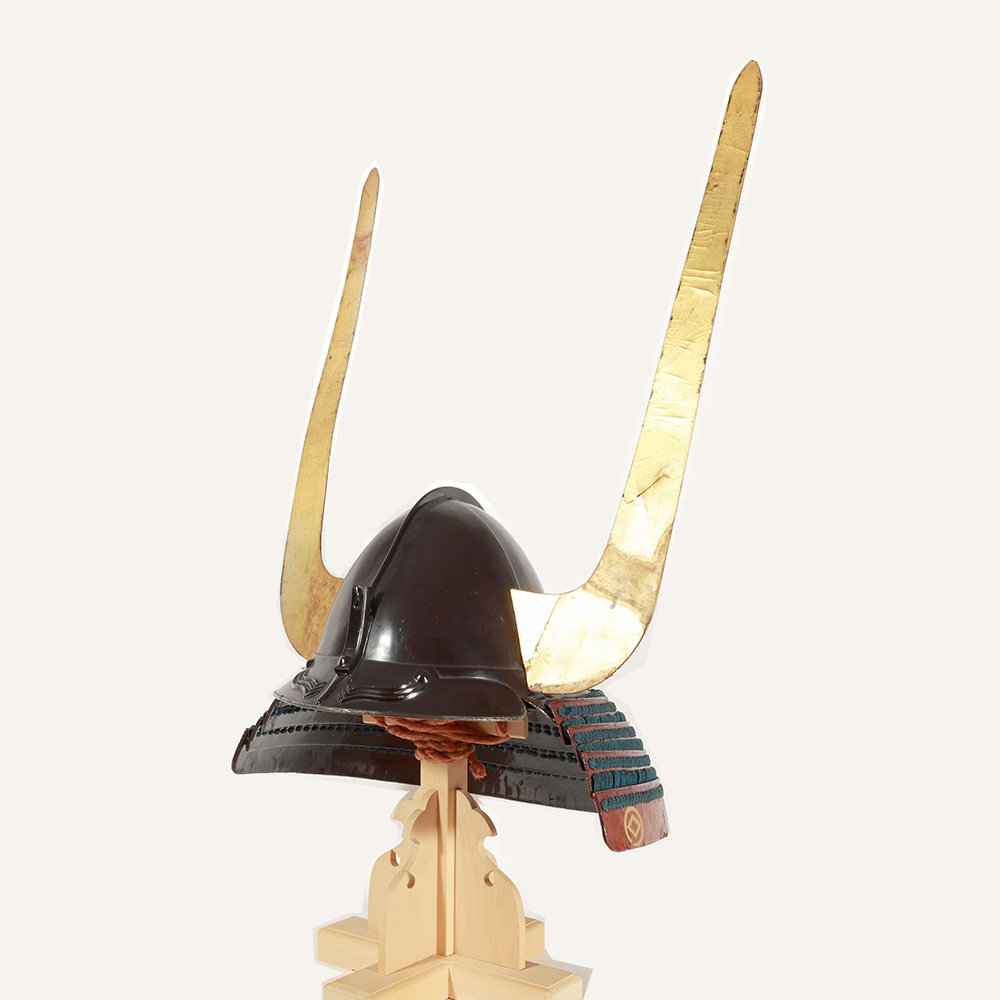
Kabuto only
4-plate · Momonari
Unsigned
Kebiki-odoshi · Nando
Maru ni Hishi (diamond in a circle)
Edo
As written by the shop
Machine translation from the shop's Japanese · may contain errors ·
We could not find an authenticity certificate on the seller’s listing. Japanese armour is normally certified by the Nihon Katchū Bugu Kenkyū Hozon Kai (the armour society). Without one, the attribution is the seller’s own assessment and has not been independently verified — treat it with caution and ask the dealer about certification before buying.
If, due to our fault, the item differs significantly from its proper condition, the item may be returned. Cooling-off is within one week of the item's arrival.
Price on request