Muromachi turned sword making into an industry: the uchigatana rose with massed infantry warfare, Osafune and Seki produced bundle swords beside custom orders, and the Ming trade carried Japanese blades abroad by the tens of thousands.
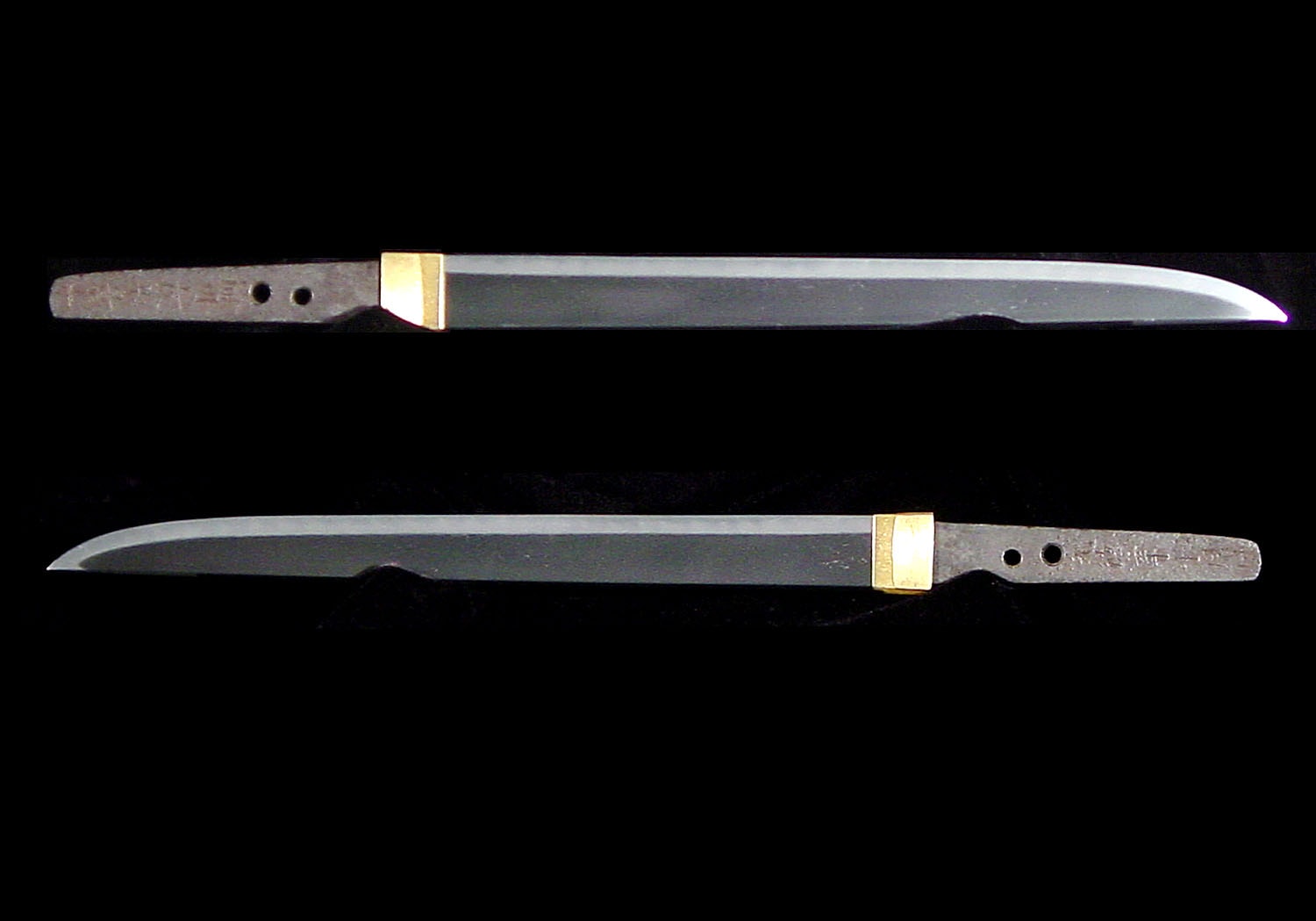
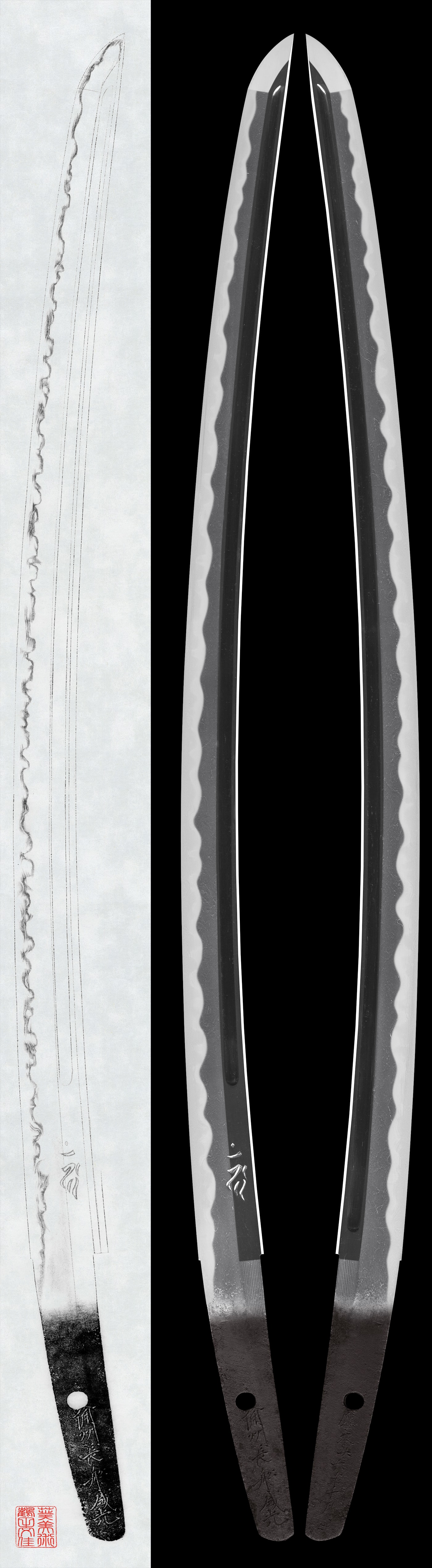
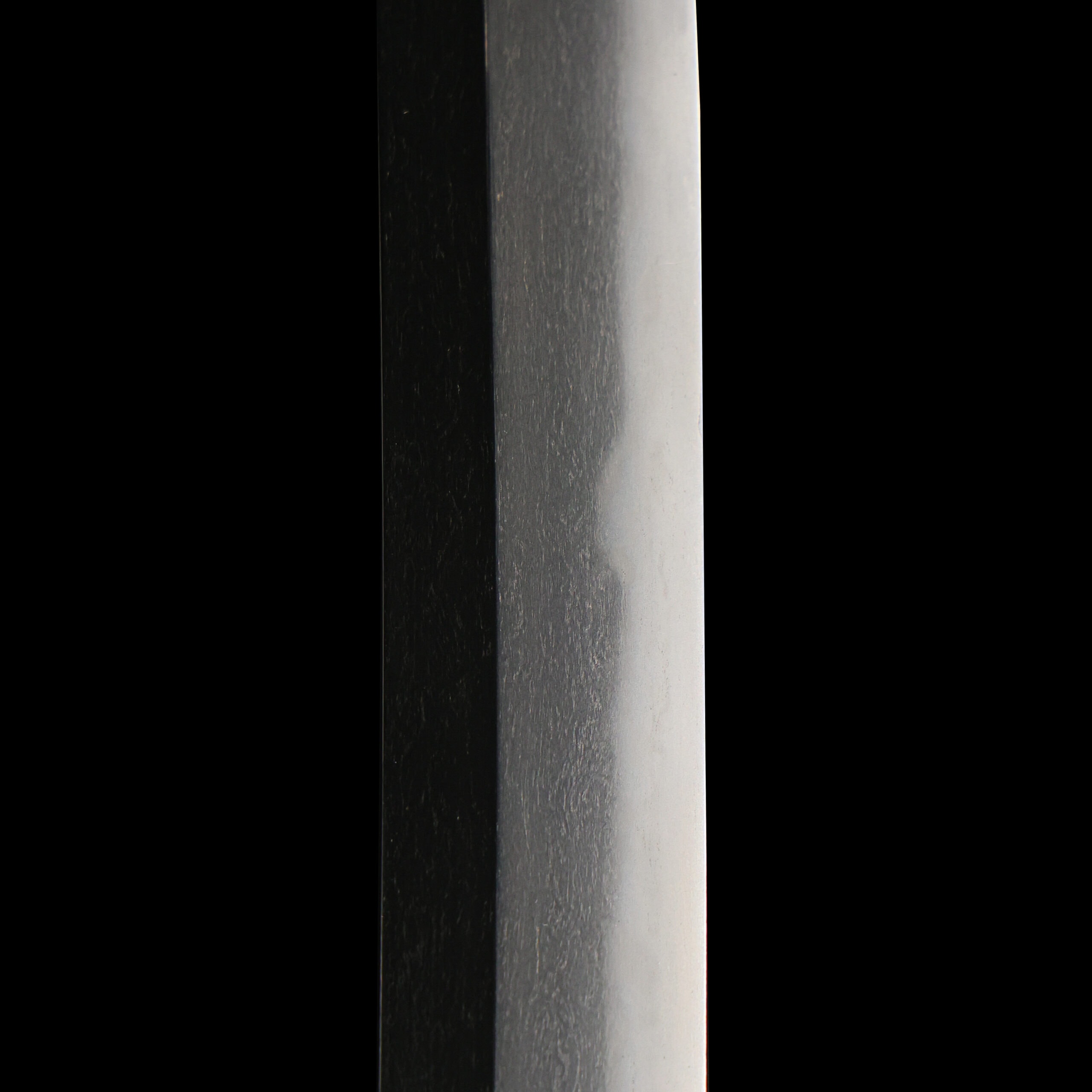
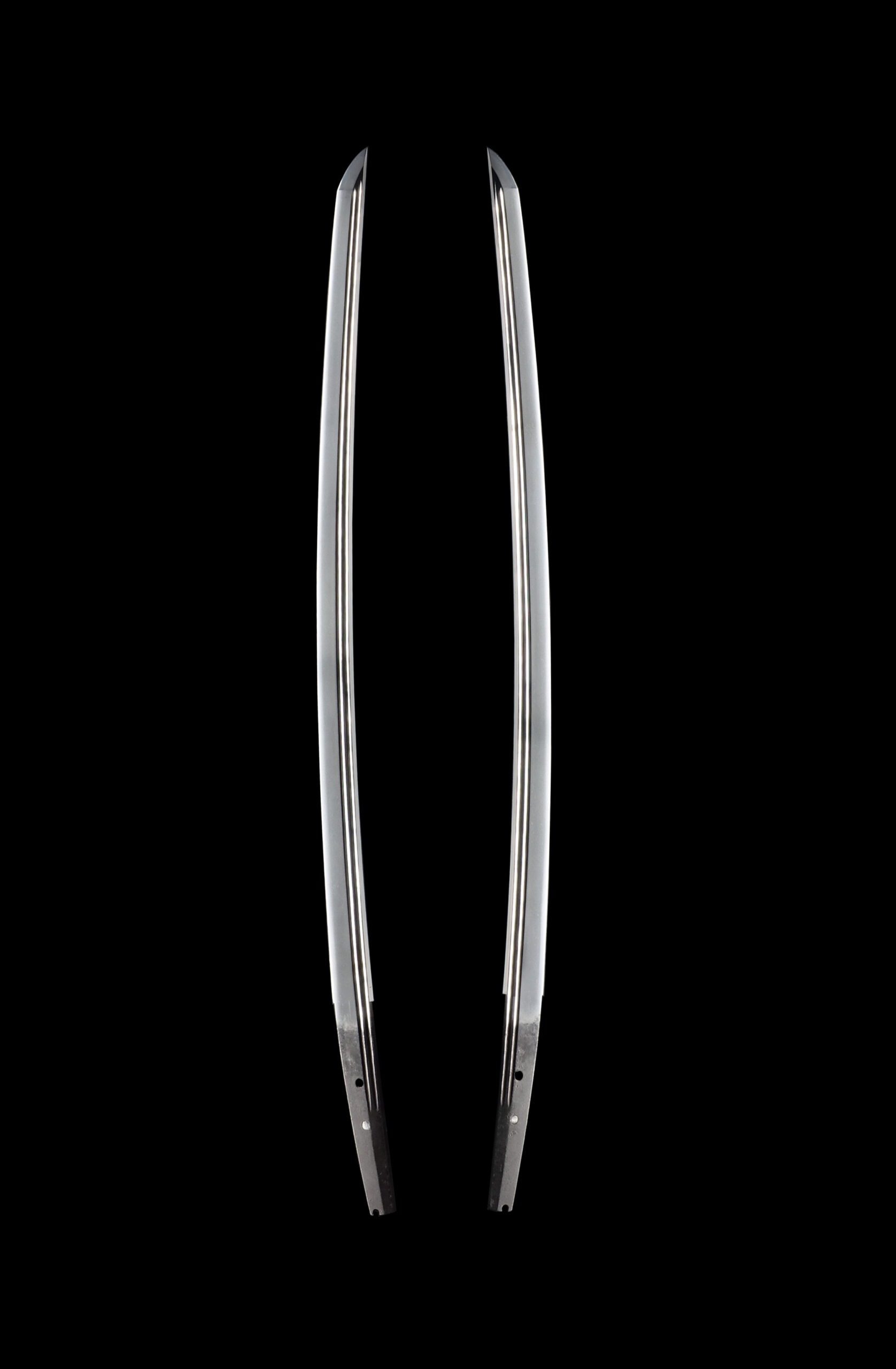
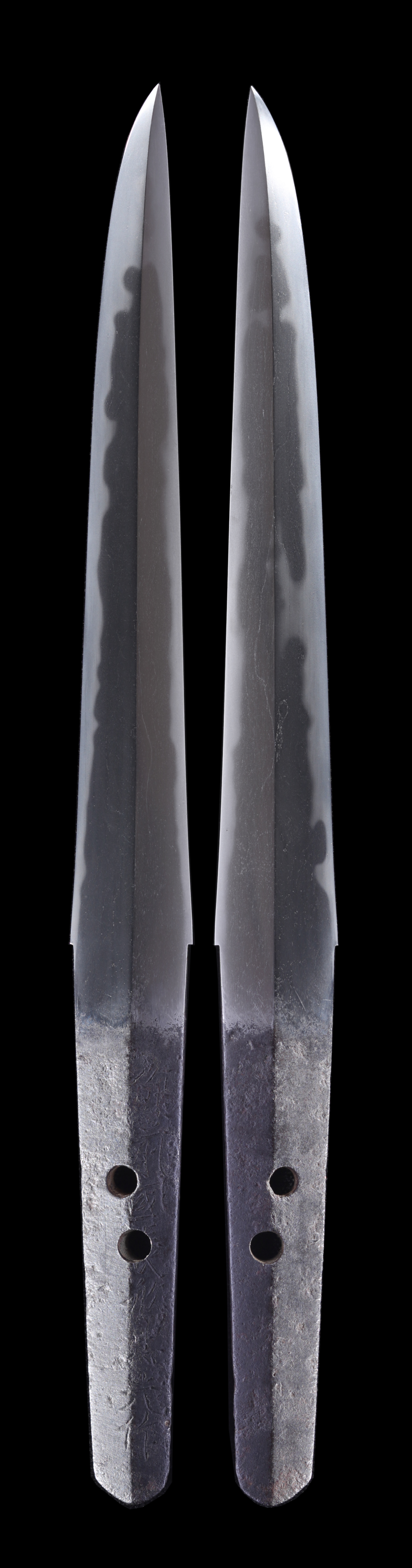
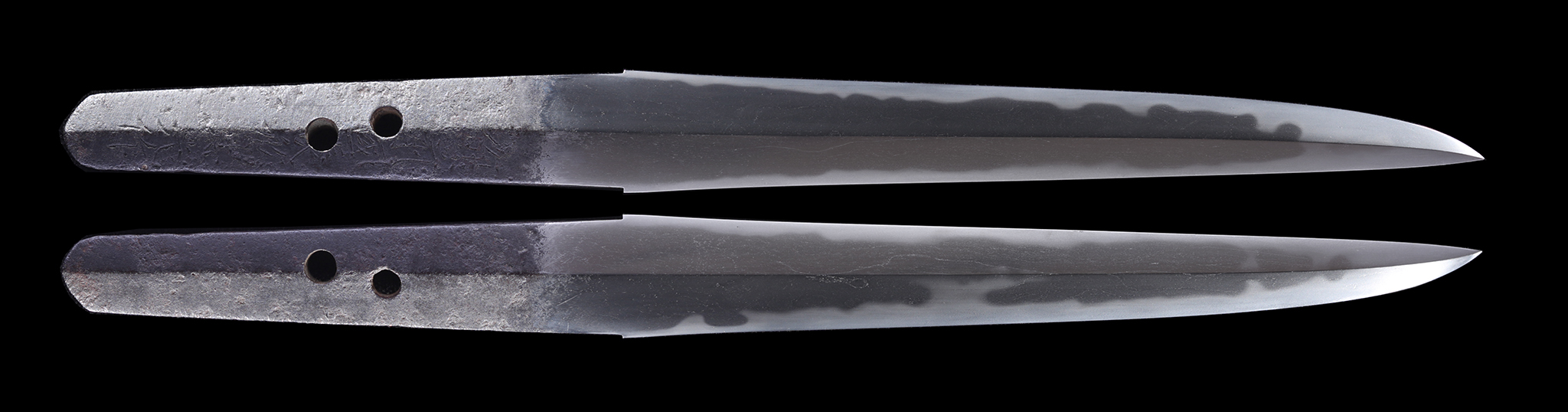
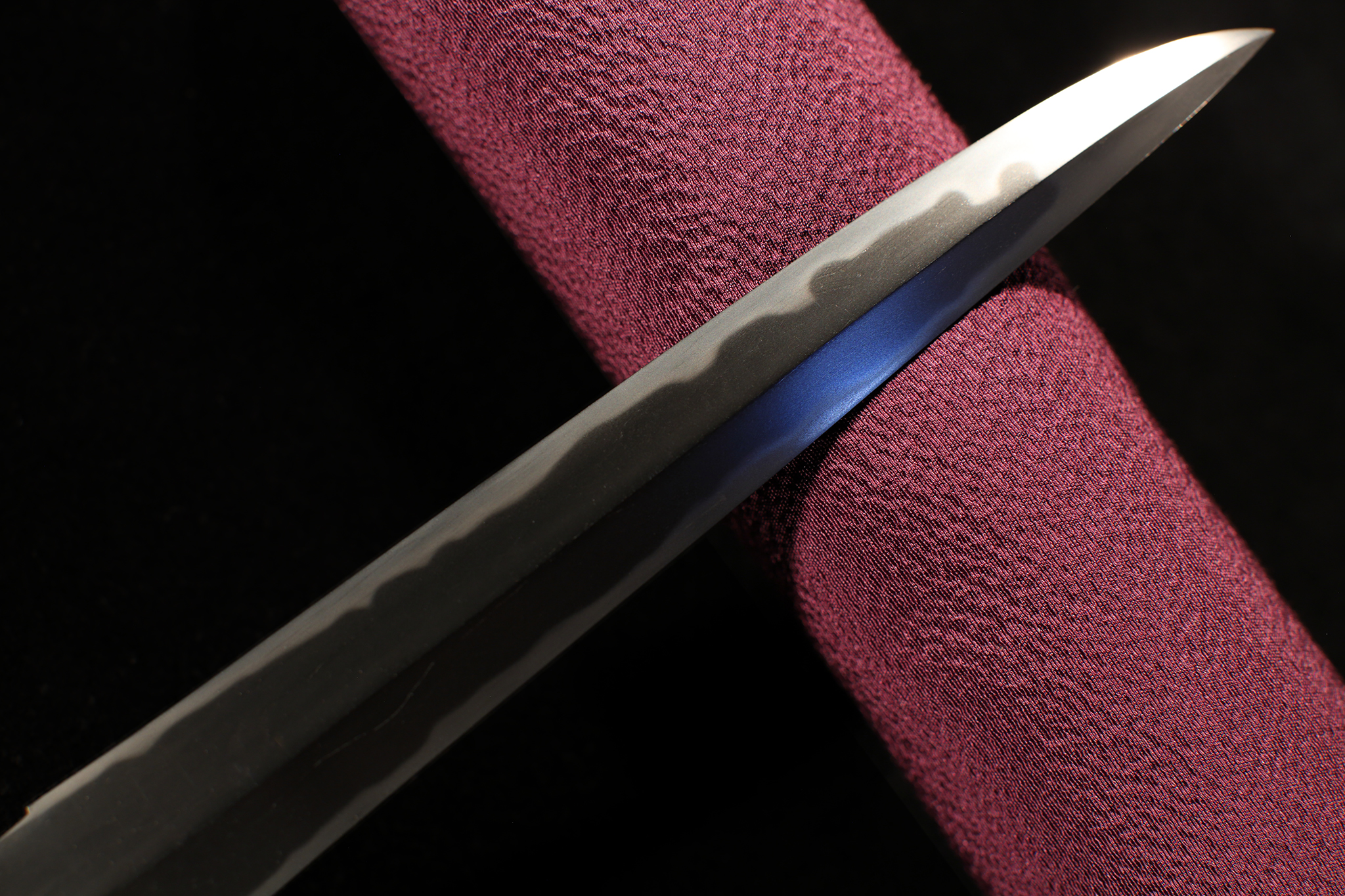
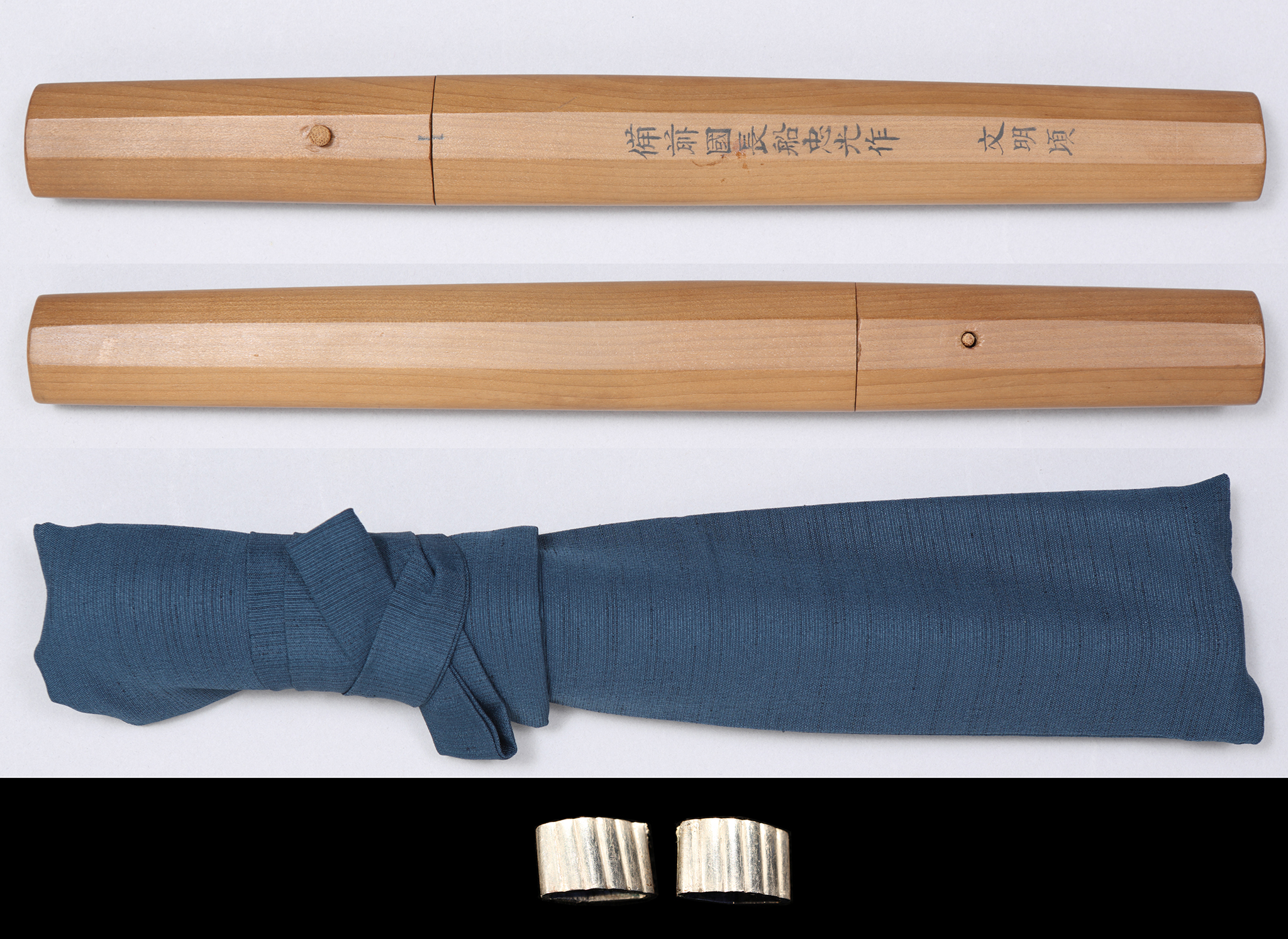
This is a small tanto by Osafune Tadamitsu, a representative smith of Bizen province who continued for over ten generations from the Nanbokucho period to the late Muromachi period. It features a moroha-zukuri (double-edged) form with a well-forged jitetsu of ko-itame mixed with itame and flowing grain, and a bright nie-deki gunome-midare hamon. The blade is attributed to the late Muromachi period and comes with a silver single habaki, shirasaya, shirasaya bag, and a certificate from the Juhō Tōken Kenkyūkai.
 NihontoWatch
mei · Osafune · Muromachi · nagasa 15.5cm
The Muromachi period (1392 to 1573)
Muromachi turned sword making into an industry: the uchigatana rose with massed infantry warfare, Osafune and Seki produced bundle swords beside custom orders, and the Ming trade carried Japanese blades abroad by the tens of thousands.
We could not find an authenticity certificate on the seller’s listing. Japanese swords and fittings are normally papered by the NBTHK (or the NTHK). Without one, the attribution is the seller’s own assessment and has not been independently verified — treat it with caution and ask the dealer about certification before buying.
If you judge that the condition of the delivered item differs significantly from the photos or description on our site, a return is possible. However, the return shipping cost is the customer's responsibility. To use cooling-off, please apply in writing by postal mail within one week of the item's arrival. The return shipping cost is the customer's responsibility.
¥400,000
This is a small tanto by Osafune Tadamitsu, a representative smith of Bizen province who continued for over ten generations from the Nanbokucho period to the late Muromachi period. It features a moroha-zukuri (double-edged) form with a well-forged jitetsu of ko-itame mixed with itame and flowing grain, and a bright nie-deki gunome-midare hamon. The blade is attributed to the late Muromachi period and comes with a silver single habaki, shirasaya, shirasaya bag, and a certificate from the Juhō Tōken Kenkyūkai.
NihontoWatchmei · Osafune · Muromachi · nagasa 15.5cm
The Muromachi period (1392 to 1573)
Muromachi turned sword making into an industry: the uchigatana rose with massed infantry warfare, Osafune and Seki produced bundle swords beside custom orders, and the Ming trade carried Japanese blades abroad by the tens of thousands.
We could not find an authenticity certificate on the seller’s listing. Japanese swords and fittings are normally papered by the NBTHK (or the NTHK). Without one, the attribution is the seller’s own assessment and has not been independently verified — treat it with caution and ask the dealer about certification before buying.
If you judge that the condition of the delivered item differs significantly from the photos or description on our site, a return is possible. However, the return shipping cost is the customer's responsibility. To use cooling-off, please apply in writing by postal mail within one week of the item's arrival. The return shipping cost is the customer's responsibility.
¥400,000