The Shintō era was largely invented in Kyōto: Umetada Myōju’s workshop trained the movement, Horikawa Kunihiro raised a generation, and the Hon’ami appraisers, who held no forge, governed the meaning of famous blades.
 NihontoWatchNihontoWatch
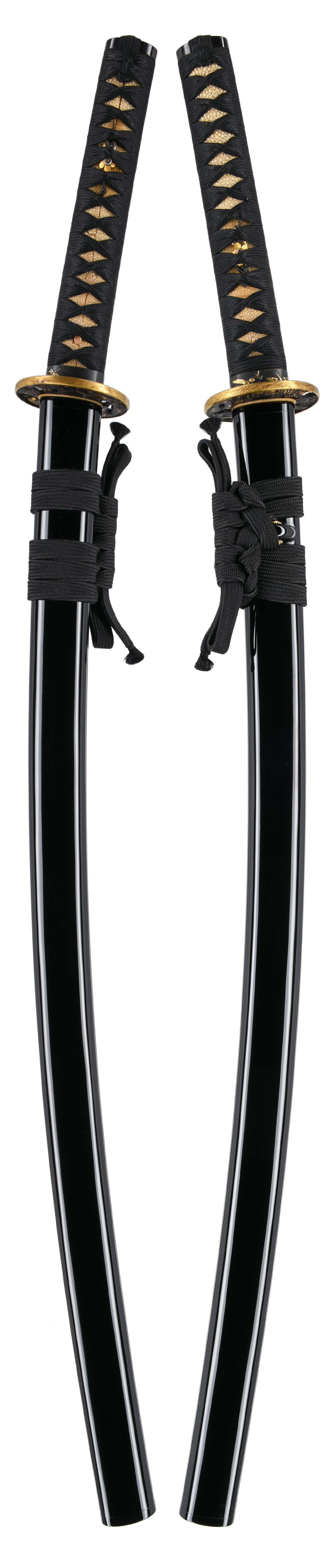
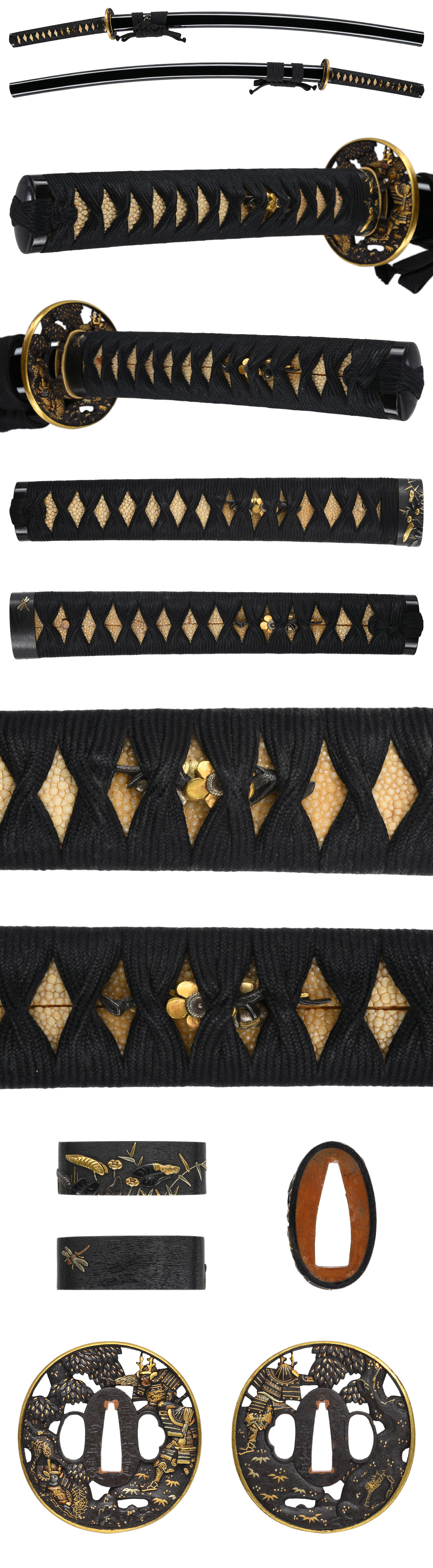
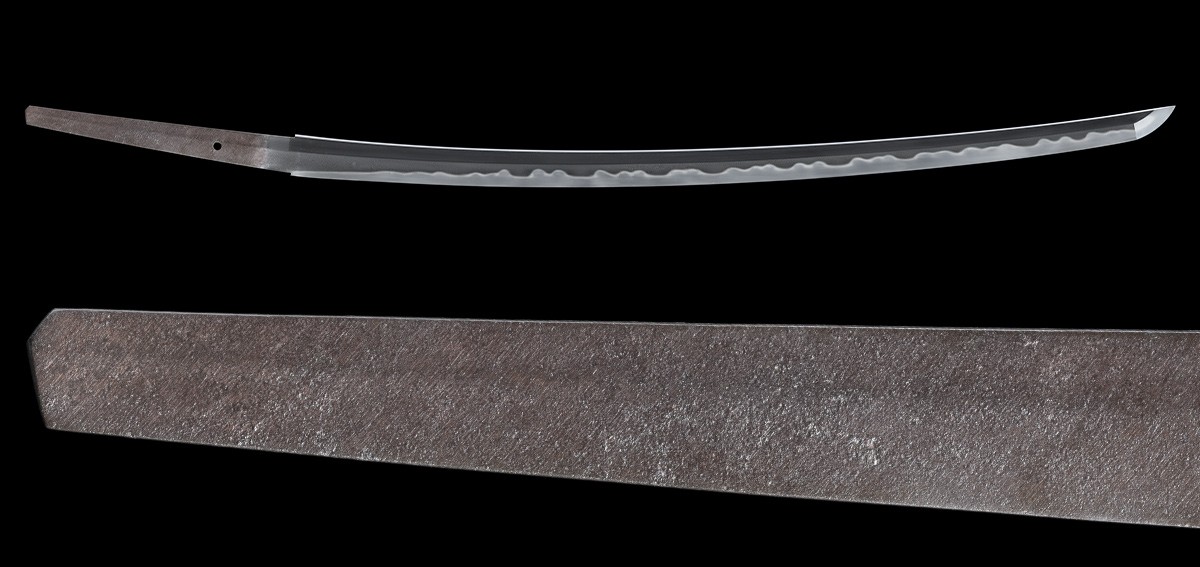
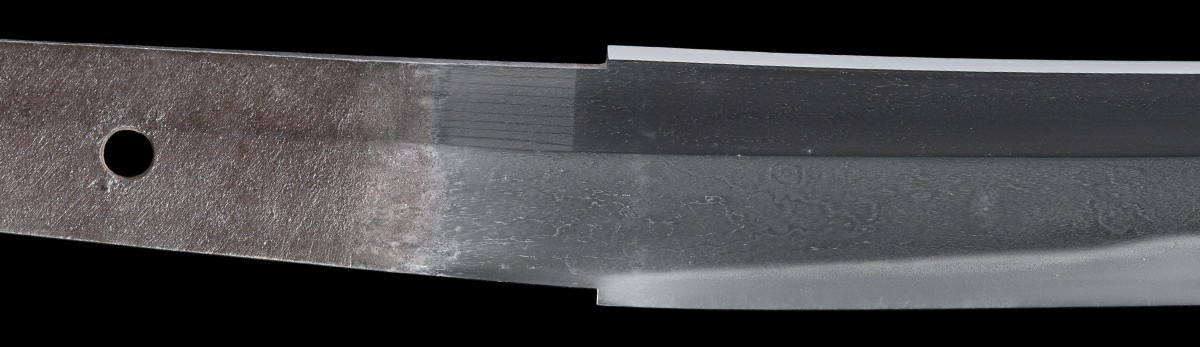
丹後守兼道(初代)は通説に京二代吉道のニ男と伝え、三品吉兵衛と号し、直道とも刻銘しました。寛永二年(1625)に丹後守を受領、大阪でも鍛刀しました。寛文十二年(1672)に七十歳で没します。二代丹後守兼道は、初代の子で、喜平次と称し、元禄・宝永頃に年紀のある作品が残ります。初代の作品の多くは、「一」と「菊紋」を茎に切りますが、二代の作品にはそれらが見られないことから、はっきりと代を区別することができます。初代の作風は三品家の得意とする簾刃、互の目に丁子を交えた刃を焼き、二代は趣を異にして、匂深い直刃調、濤瀾風の互の目乱れを焼き、当時の大阪新刀の流行を伺える作柄を示します。 本作体配は、刃長が二尺二寸九分、身幅元先で広く、重ね尋常、反り深くつき、中切っ先が延びごころで、気品のある刀姿となります。地鉄は小板目肌に地沸微塵につき、地景が細かに入ります。焼刃は直ぐに焼き出し、小湾れを挟んで、互の目を二つ、三つと連れて焼き、尖り刃交じって総体に濤瀾風を呈し、刃中に足太く入って、沸匂深く、明るく冴えます。帽子は直ぐで先丸く返ります。茎は生ぶ、化粧筋違鑢目で刀工銘を切ります。本刀は二代丹後守兼道による一口です。鍛えは小板目肌が精緻で、刃文は互の目に湾れを交えて濤瀾風となるなど、派手やかな出来口をみせます。白鞘、金着二重はばき、黒蝋色塗鞘打刀拵、特別保存刀剣鑑定書。
NihontoWatchOffered by World Seiyudo
This piece has sold
Get an email when a new Mishina Kanemichi piece hits the market.
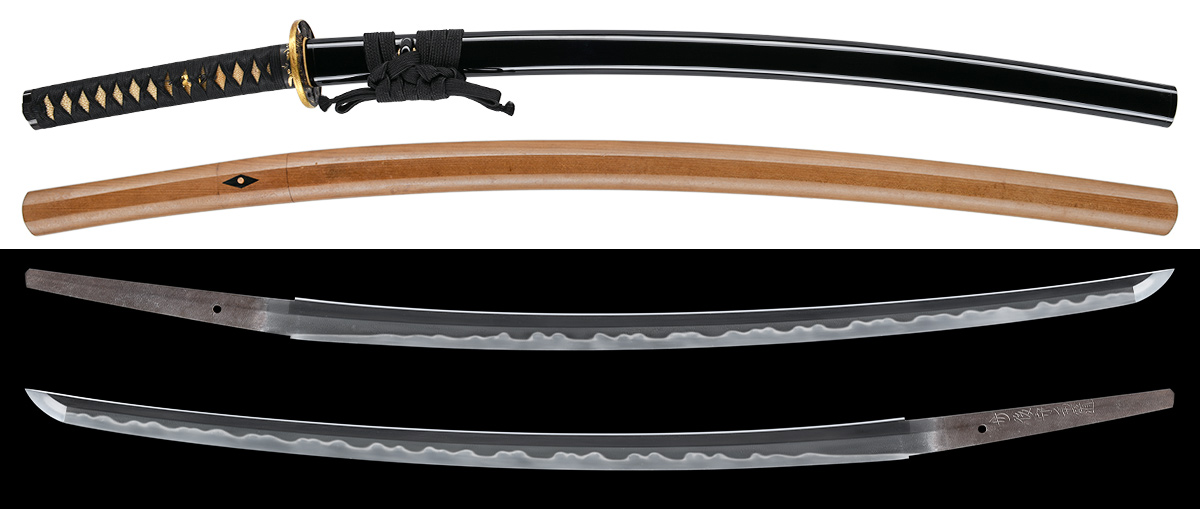

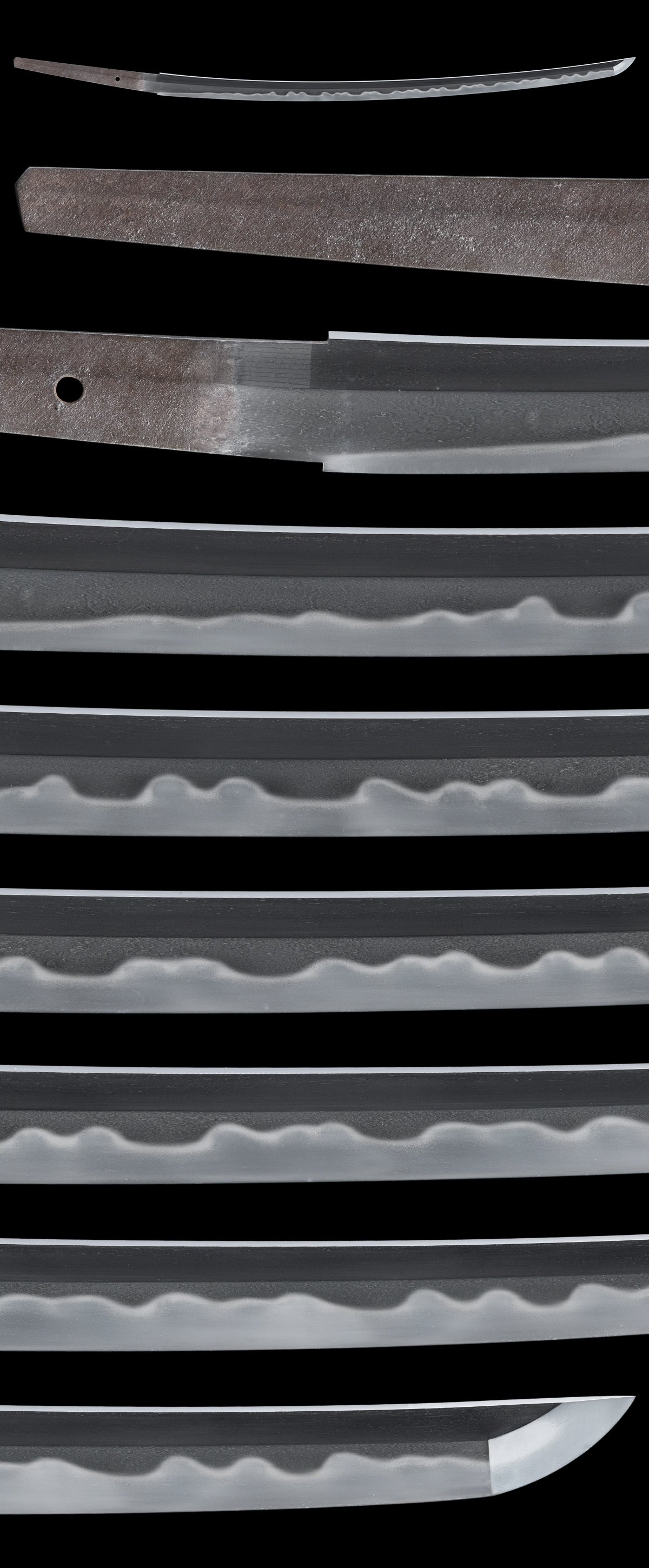
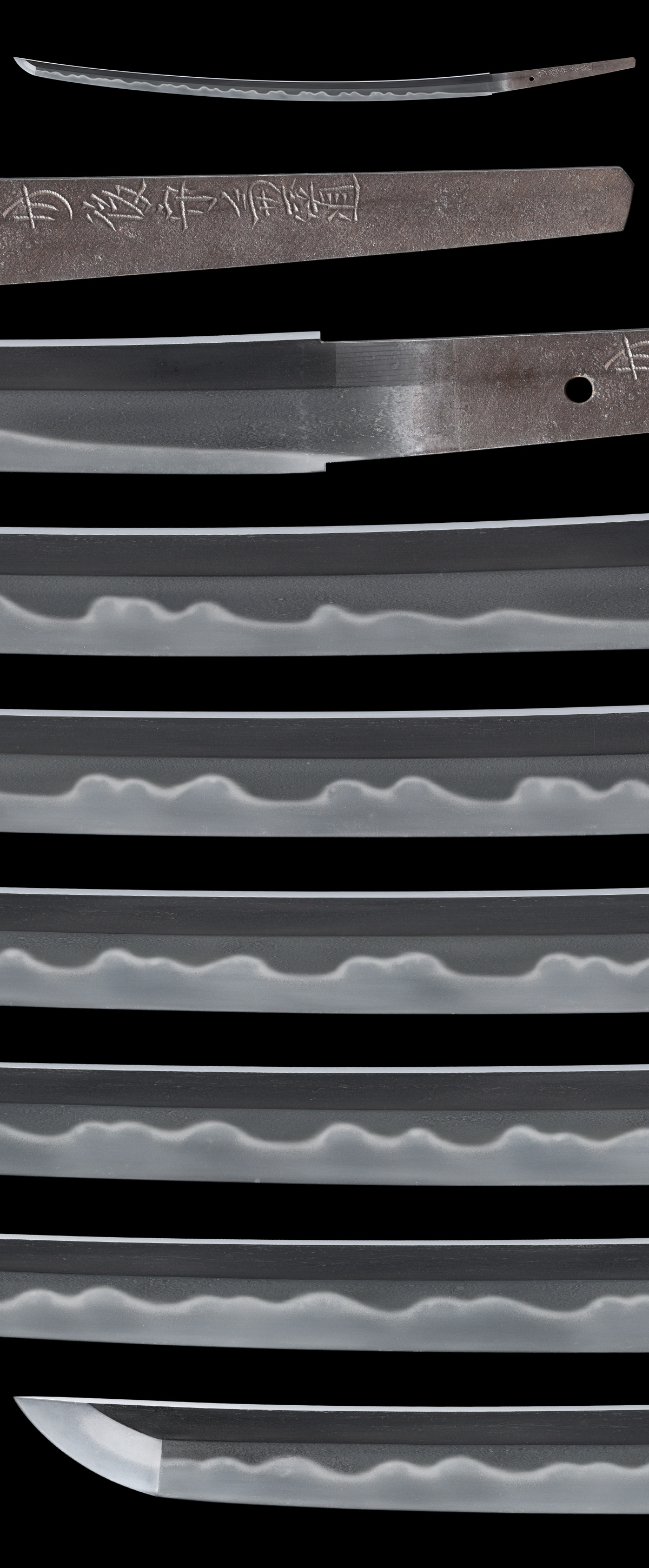
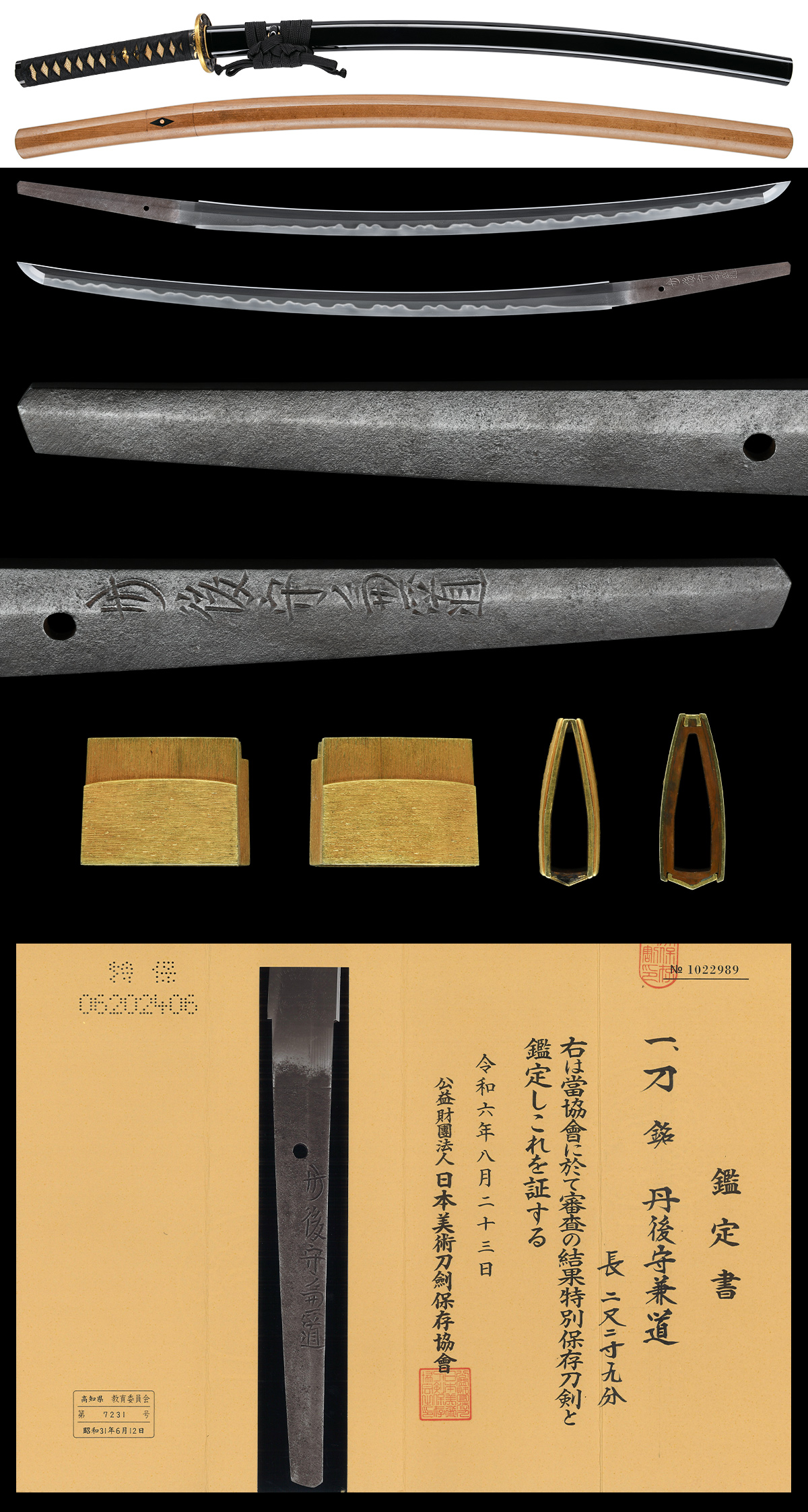
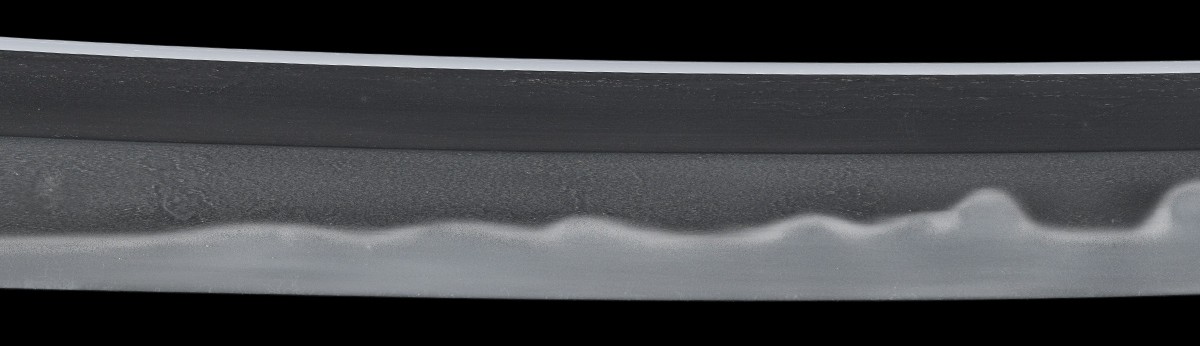
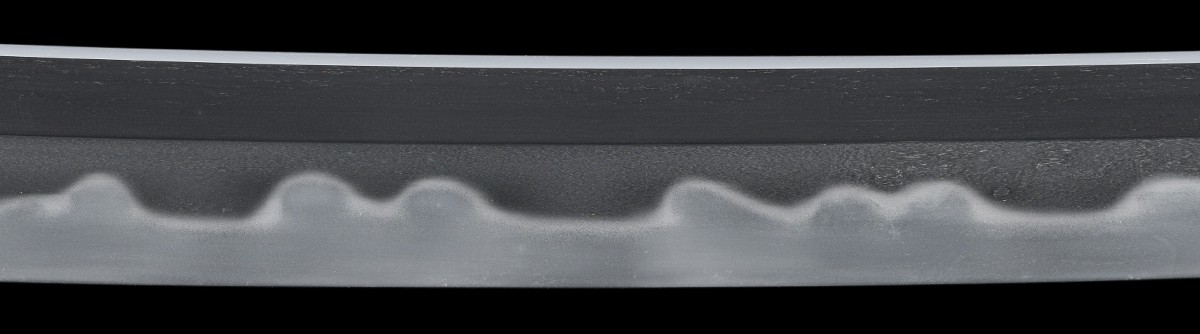
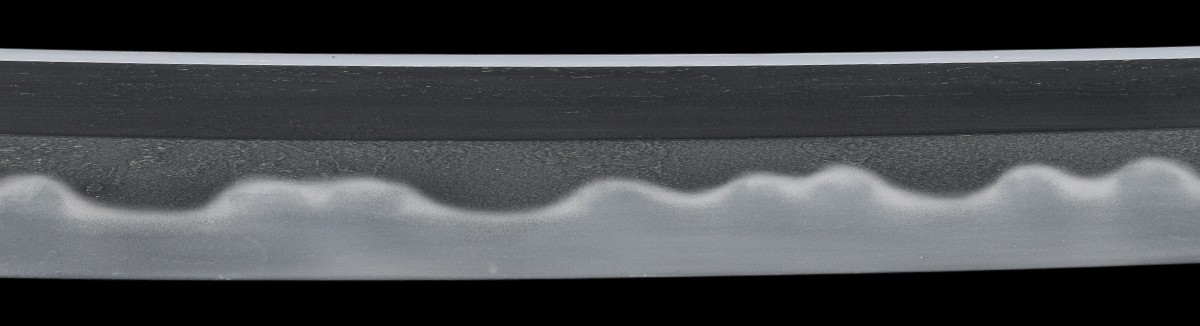
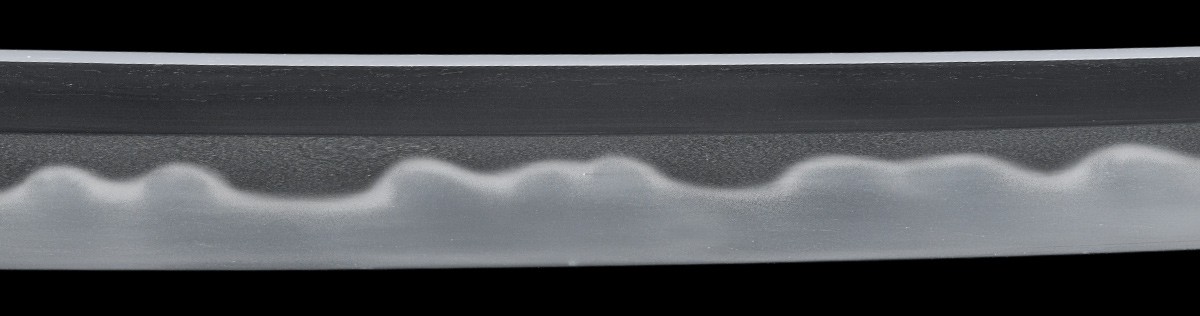
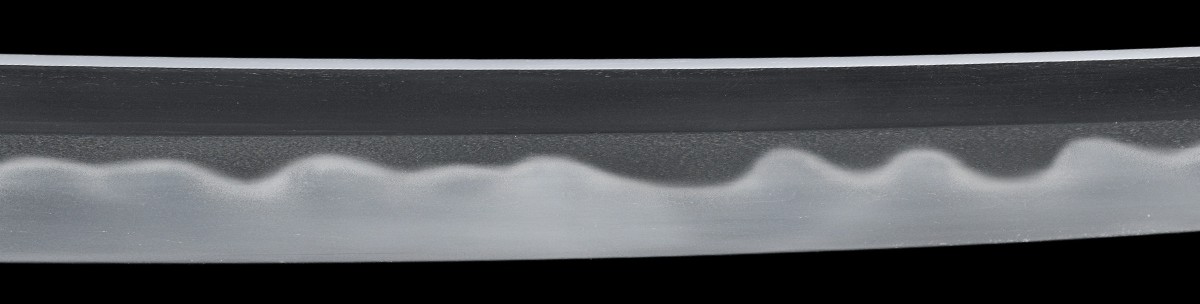
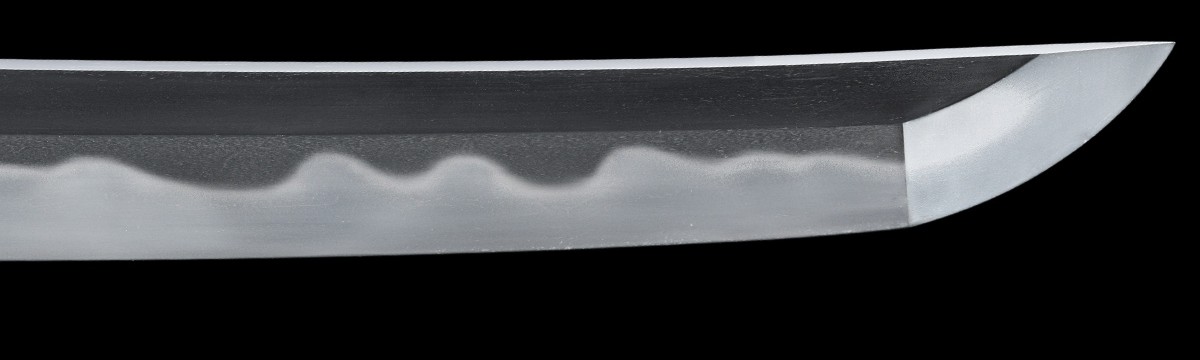
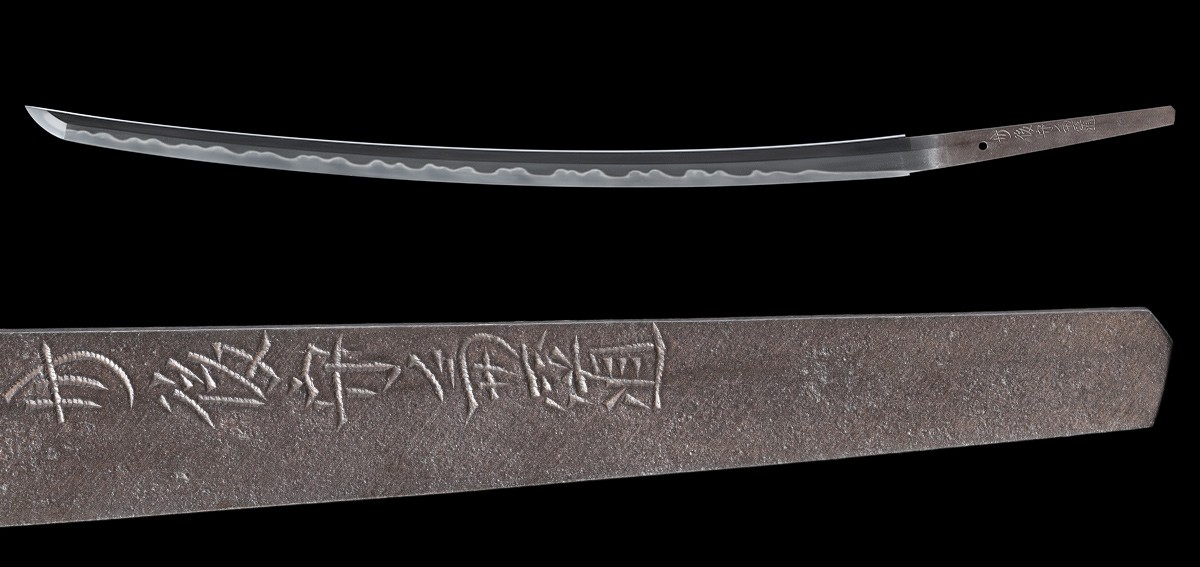
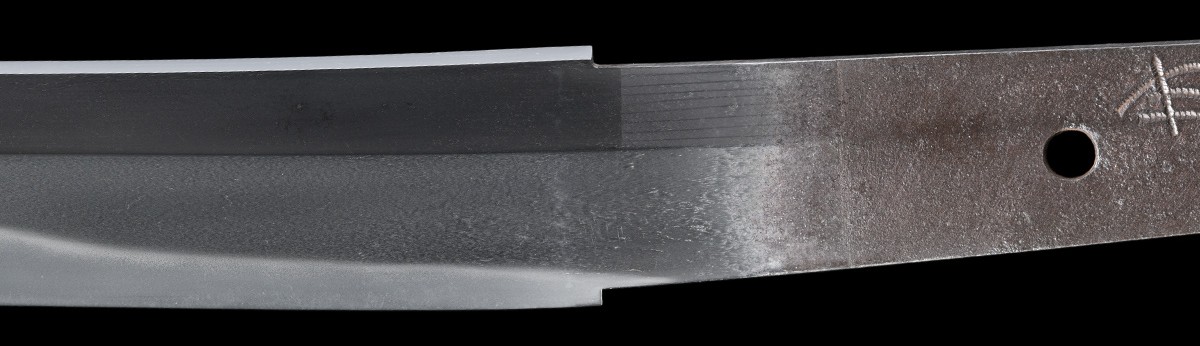
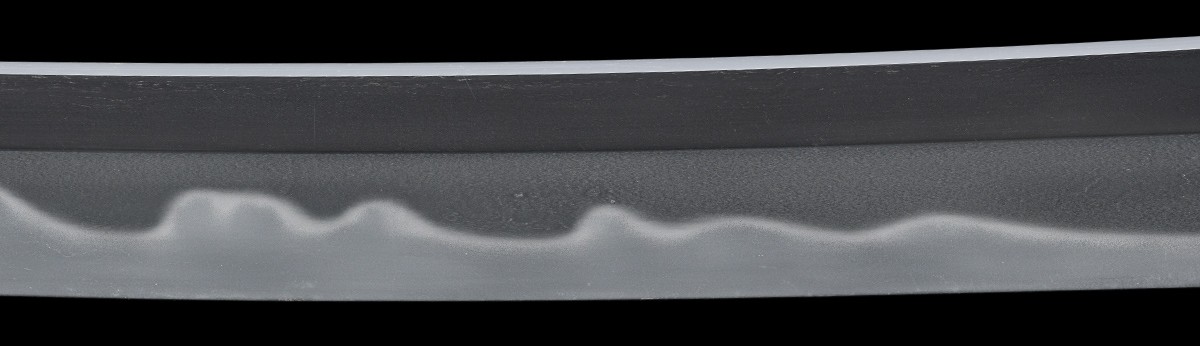
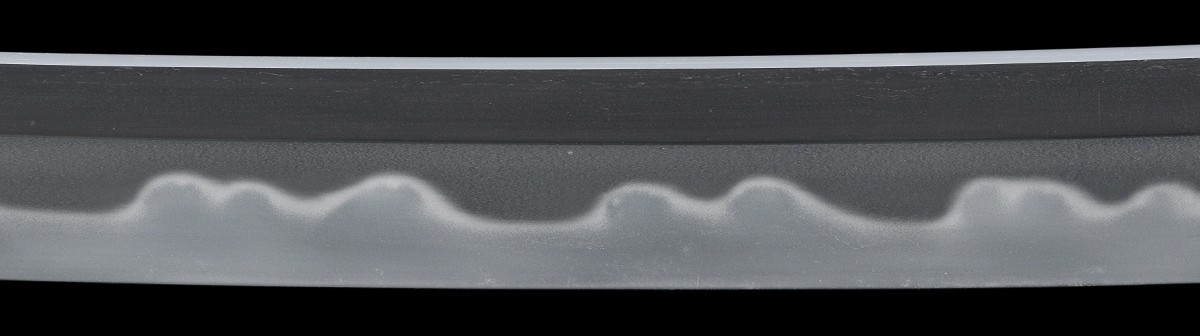
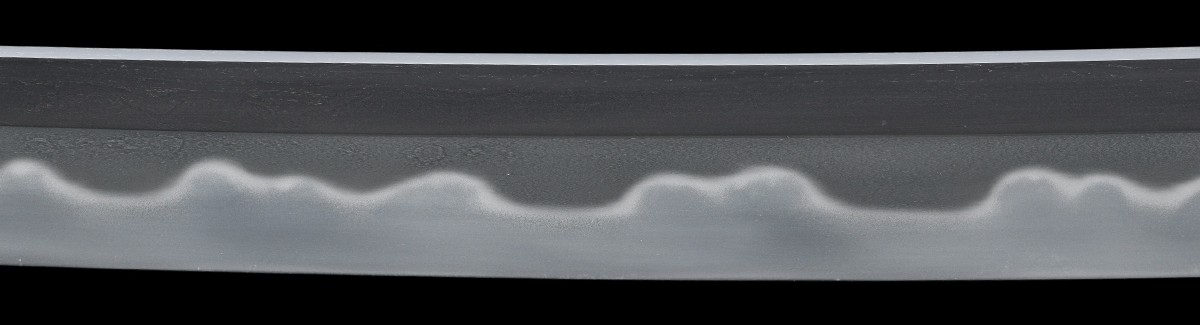
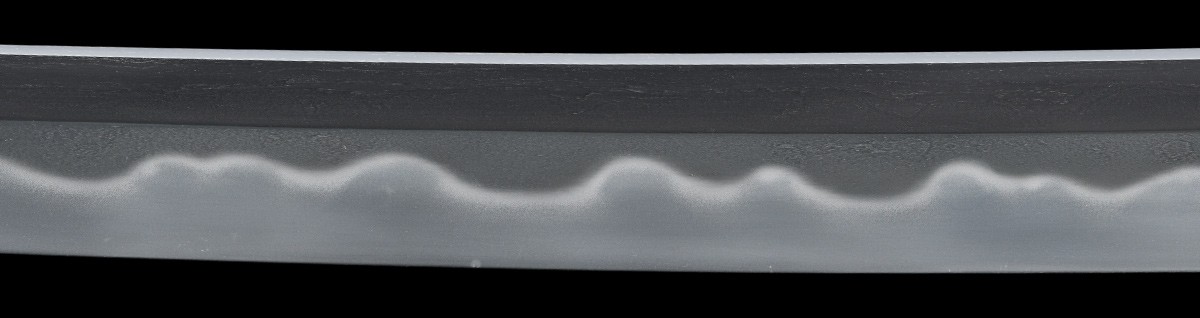
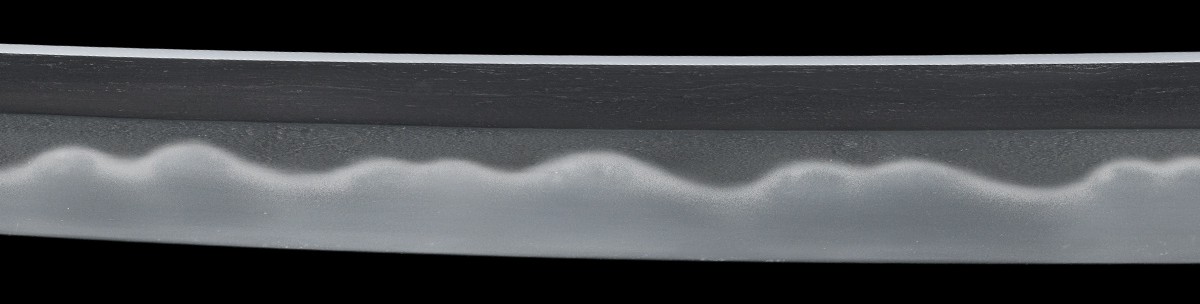
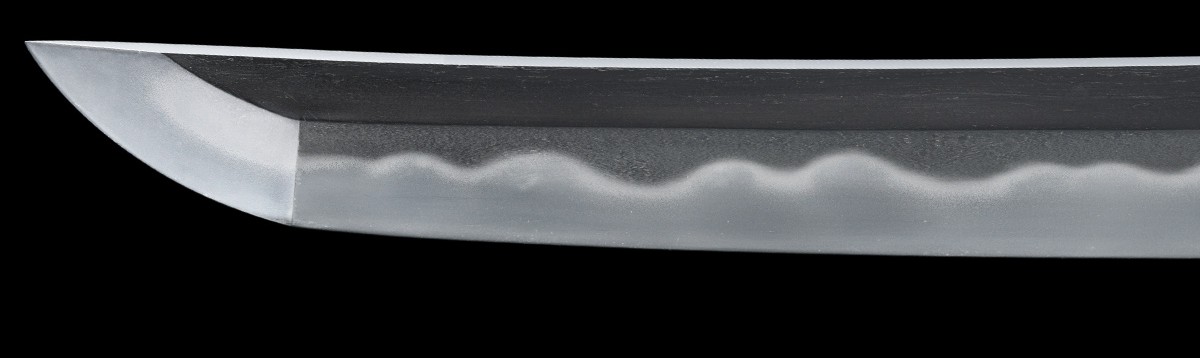
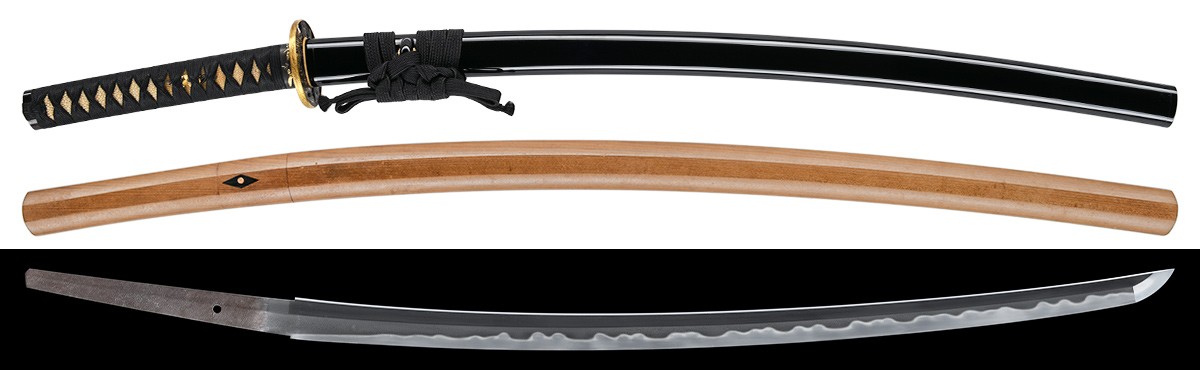
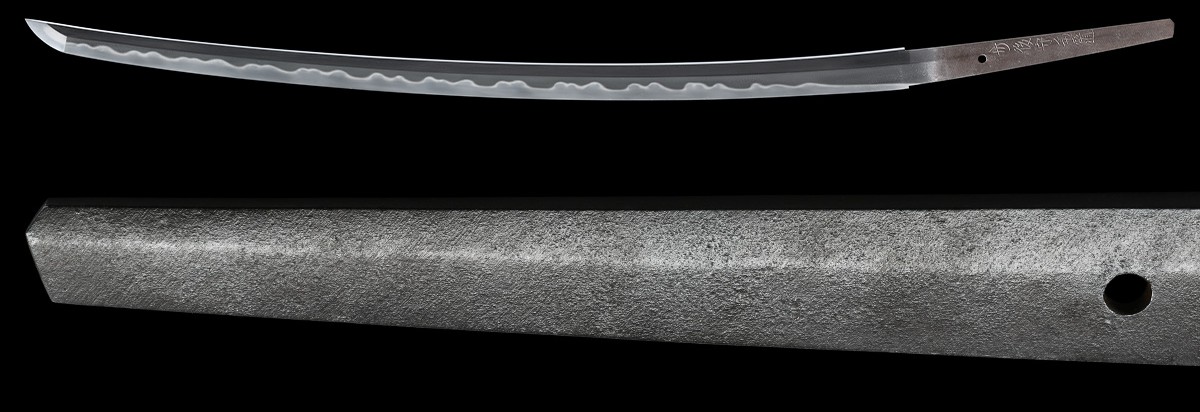
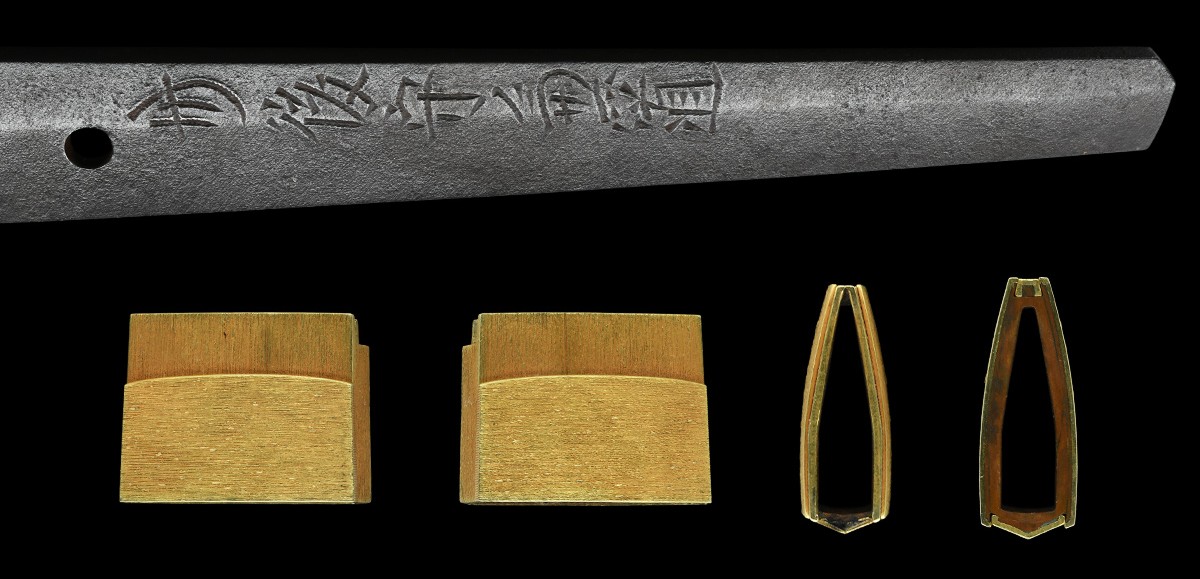
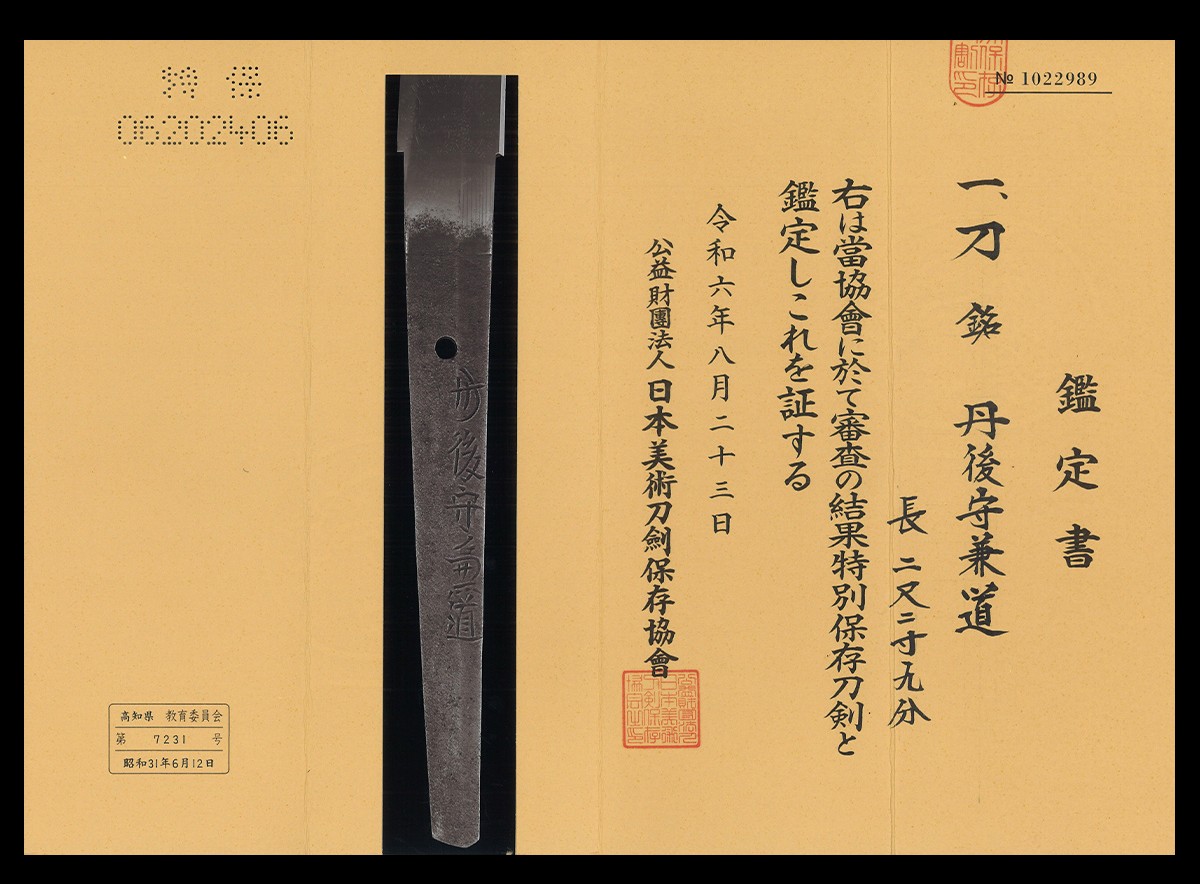
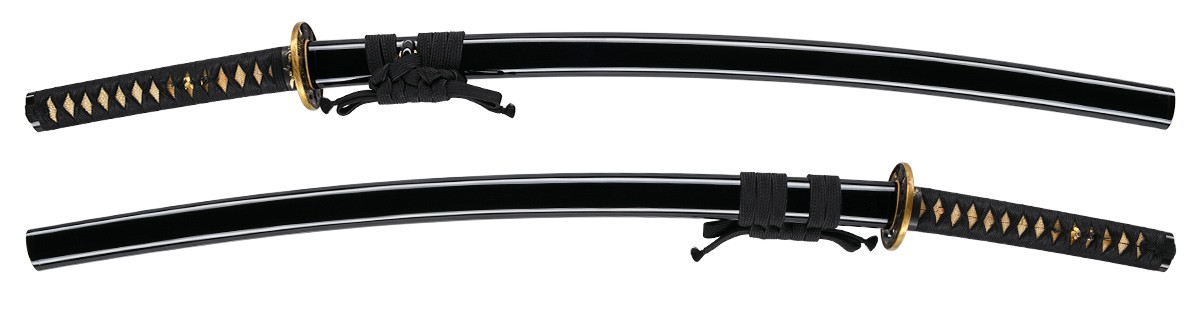
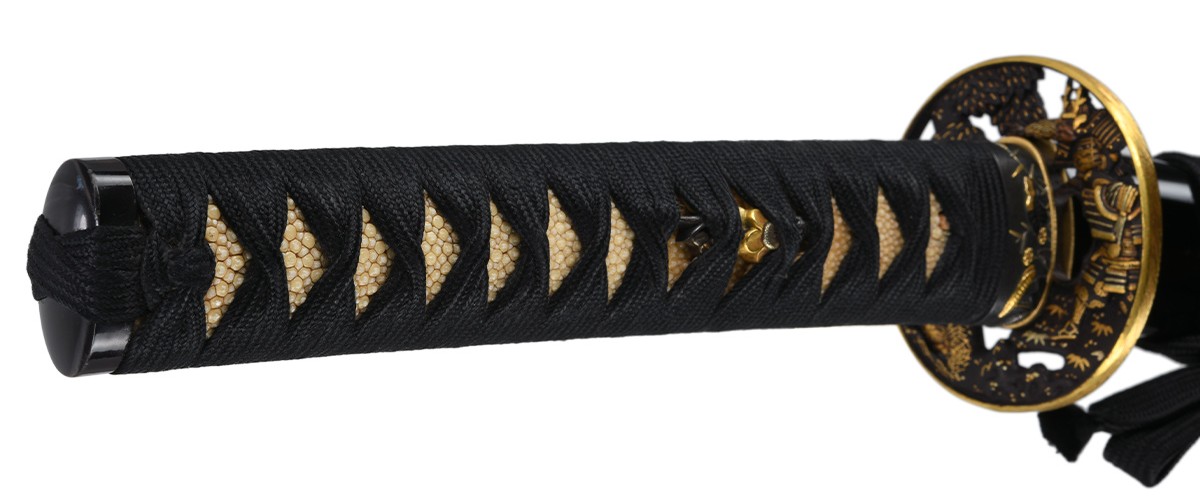
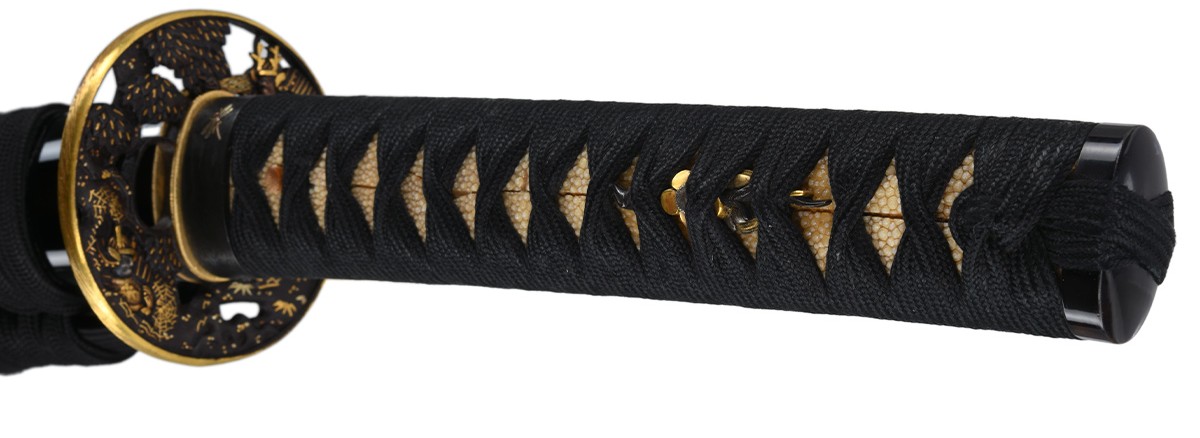
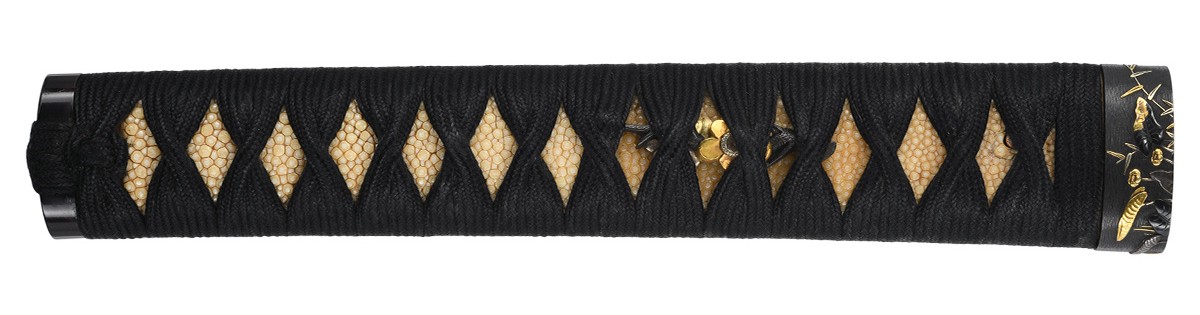
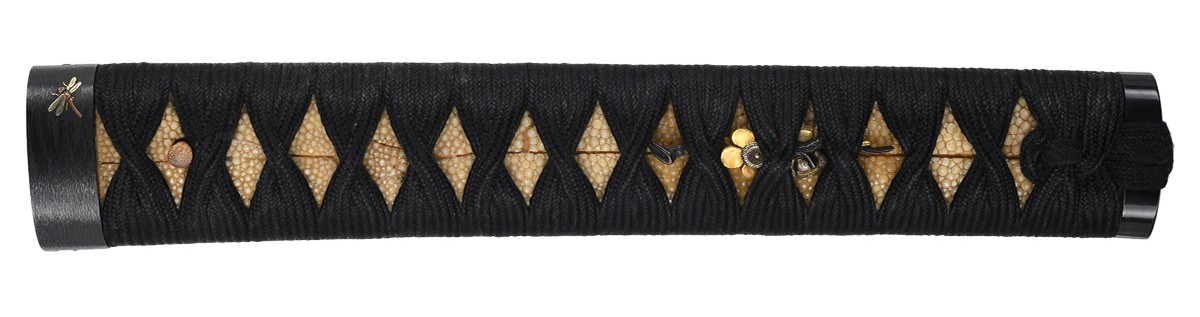
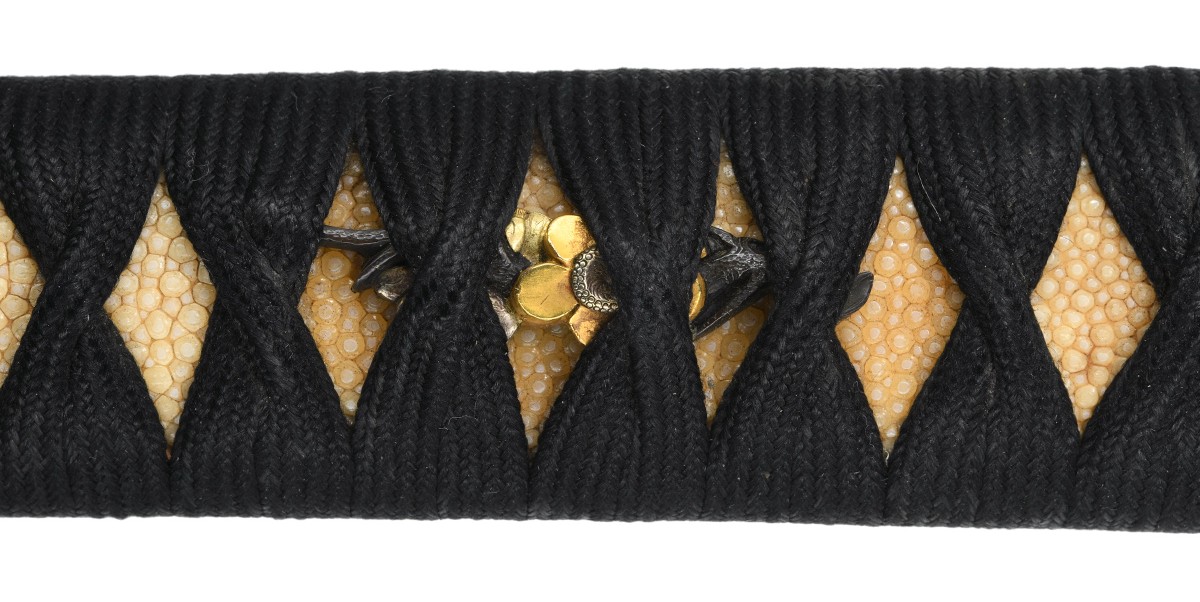
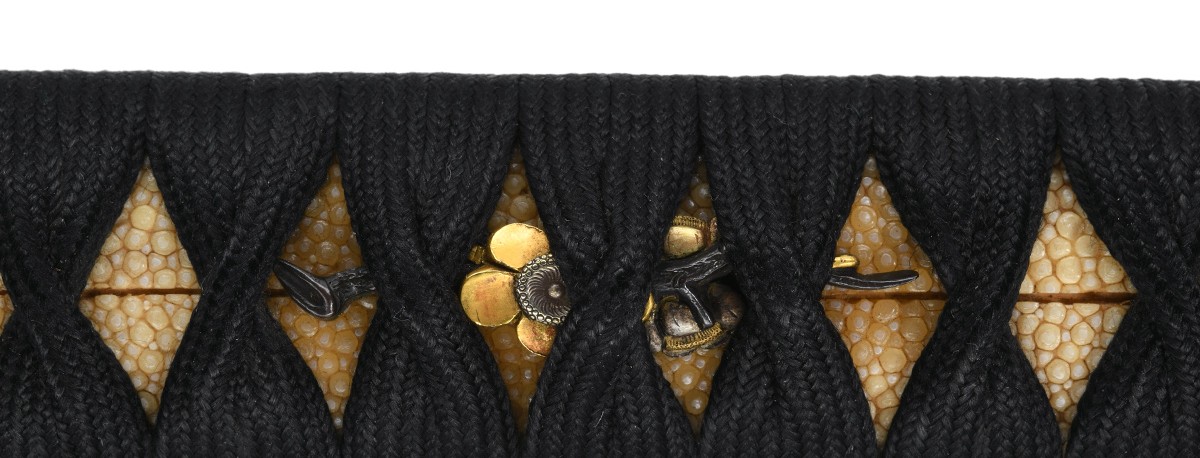
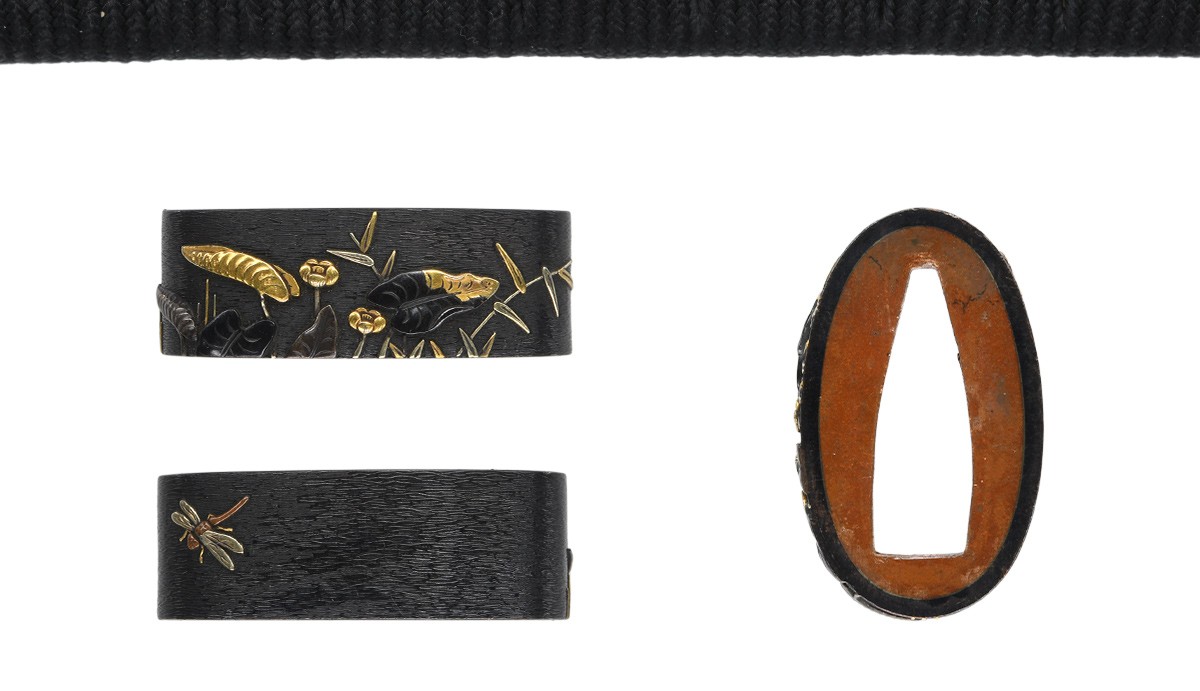
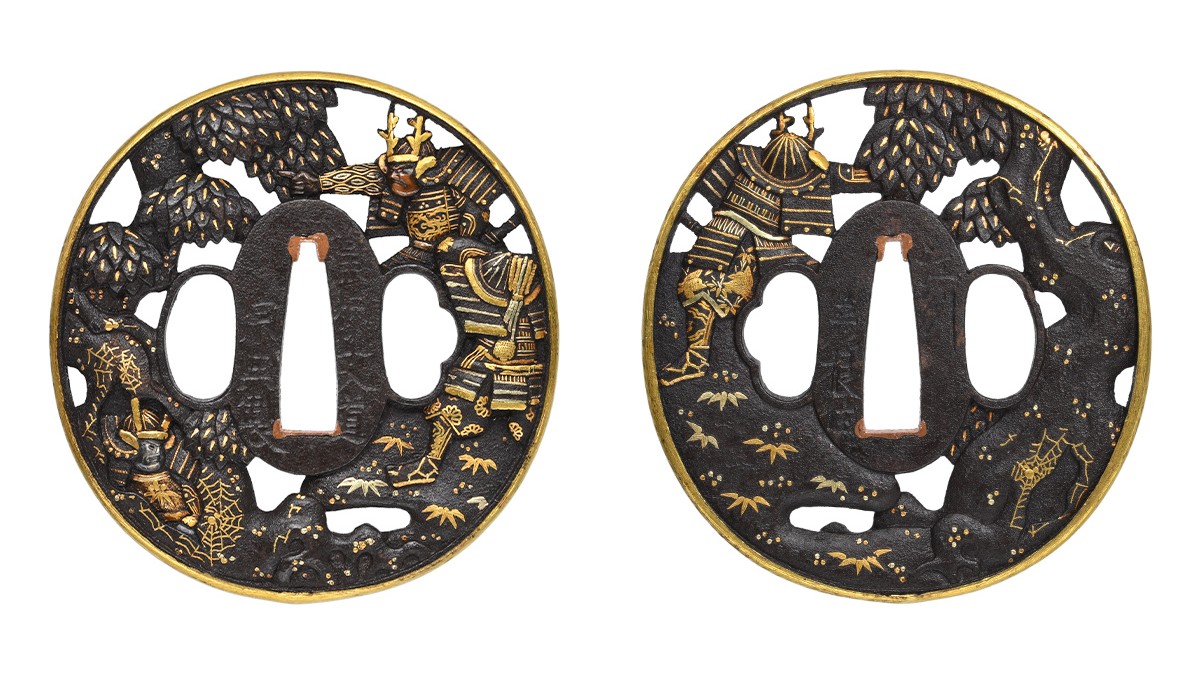
Mishina school, Osaka (Tango-no-kami Kanemichi line, second generation) · Settsu · around 1681-1704
Fujishiro Chu-jo saku · Tōken Taikan top 76%
2 pieces on the market now
A katana in the forty-first Jūyō session carries the date Genroku 14, the year 1701, cut on the reverse of the nakago beneath a bold five-character signature, Tango-no-kami Kanemichi, and it is one of the very few year-dated blades by which his active span can be fixed at all. This is the second-generation Tango-no-kami Kanemichi, called Kiheiji, who worked at Ōsaka about the Genroku and Hōei years and is recorded as having forged in Edo as well. The published sources transmit him as the son of the first Tango-no-kami Kanemichi, in the received account the second son of the Kyōto second-generation Tanba-no-kami Yoshimichi, and so a branch of the Mishina school that Kanemichi the Mino-Seki smith carried into Kyōto. The first Tango-no-kami, named Mishina Kihei and signing at first as Naomichi, settled in Ōsaka and was known for the sudare-ba and the chōji-tinged gunome that were the family specialty. His son took a deliberately different course, and that divergence is the spine of his identity on the blade.
Where the first generation tempered the sudare-ba and the chōji-laden gunome that the published sources call the house specialty, the second cast off the chōji and turned to a flamboyant tōran-style large gunome that mirrors the Ōsaka shintō fashion of his day. His most particular tell is constructive rather than decorative. Across the upper and lower halves of the ha he forges gunome in alternating linked sequences, two joined and then three joined, repeating one against the other so that the tōran gathers its variety from the pattern itself. Of one such blade the published sources write that 「互の目の二つ連れた刃と三つ連れた刃とが相互に交じる点に大きな特色が見られる」, that the great distinguishing feature lies precisely in this mutual mixing of two-joined and three-joined gunome, and of his matched daishō, on which the long and short blades reverse the order of the joined groups, that the variation shows 「彼の工夫の跡」, the trace of his own contrivance. Ashi enter thickly into this temper, the nioi runs deep, the nie lies thick and at times coarse, sunagashi and kinsuji play through it, tobiyaki appear with the mune tempered, and the nioiguchi stays bright.
The jigane beneath this showy temper is quiet and clean, the true Ōsaka steel. He forges a tightly gathered ko-itame in which the ji-nie settles dust-fine and chikei enter finely, the surface closing rather than standing, a jigane that distinguishes the second generation from the more standing itame of the older Mino-rooted Mishina work. Over it the temper opens always from a straight yakidashi at the machi, the Ōsaka shintō base from which both his manners rise, before it widens into the tōran. The bōshi answers the ha: it comes to a ko-maru, returns rather deeply, and brushes into hakikake, with a faint pointed tendency on the wider blades. The horimono, where present, are a plain bōhi run to a rounded finish with an accompanying soebi. The sugata is heavy and forceful in the Genroku taste, wide in the mihaba, thick in the kasane, with a sense of funbari, the curve deep and the kissaki extended, a build the published sources note recurs among smiths of the Jōkyō and Genroku years.
The published sources draw his work into two registers. The principal one is the tōran-style large gunome just described, the manner in which they find this smith's distinctive hand and which they tie directly to the contemporary Ōsaka taste. The second is quieter and, they are careful to note, one the first generation did not leave: a deep-nioi suguha. Here the straight yakidashi opens into a broadly tempered suguha base, shallowly notare, ashi entering vigorously, the nioi deep, the nie thick with some coarse grains, the upper half showing a two-stepped futasuji-fu effect, kinsuji and sunagashi running well. Of a blade in this register the published sources write that it 「真改風の作柄をあらわしている」, that it shows a workmanship in the manner of Shinkai, and the comparison is exact: it is the deep-nioi, thickly nie-laden straight temper of Inoue Shinkai, the great Ōsaka master, that this calmer face most nearly approaches. The two registers are not a chronology but a range, the same Ōsaka hand stated once as spectacle and once as restraint.
What places him is the careful distinction the published sources draw between the two generations, a distinction that is itself the kantei. The first Tango-no-kami cut a chrysanthemum crest and the character ichi below the machi on much of his work and leaned to the family sudare-ba and chōji-tinged gunome; the second carries neither crest nor character and turns instead to the deep-nioi suguha and the tōran-style large gunome that reflect the fashion of his time. His distinction is therefore best drawn by his own grounded traits rather than by his father's: the alternating joined-gunome tōran, the bright deep-nioi temper read as Shinkai's, the clean dust-fine ko-itame and the straight Ōsaka yakidashi set him apart within the Mishina line and within his own family, and of his large-gunome work the published sources say plainly that 「この工の特徴」, this smith's characteristic, is to be read in the very shape of those linked gunome. He stands as a competent and individual second generation, faithful to the Ōsaka idiom of his day while working a constructive variation that is recognizably his own.
Kanemichi is rated Chū-jō saku in the Fujishiro ranking, and five of his blades hold the rank of Jūyō-Tōken, all of them signed, with no National Treasure or Important Cultural Property among them; his is the record of a sound and individual Ōsaka shintō master rather than a great national name. The body that survives in this designated tier is small and wholly signed, which for a shintō smith is itself a documentary virtue, the name fixed rather than appraised. One of his katana descends from the Aoyama house, the wardens of Ōsaka castle, and the published sources, calling it 「大坂城代青山家伝来の一口」, note that long blades of just this kind are repeatedly met among that house's old swords and were likely forged to its order, a thread of daimyō provenance that ties his work to the city he served. A matched daishō of his also survives, the published sources calling such a pair from the second generation extremely rare and of documentary value. For a collector his work sits among the more attainable of the Ōsaka shintō masters: most of his designated blades rest in the Jūyō tier rather than locked away as patrimony, and a signed, dated example such as the Genroku 14 katana, which fixes both the hand and the year, is the rarer and more desirable encounter, coming to light from time to time and rewarding patience.
Where Kanemichi stands among comparable artisans: across all of nihontō, and within tradition, era, and period. The tiers (Foremost · Leading · Major · Notable) weigh official designations from the NBTHK and Japan's Agency for Cultural Affairs, together with historical honors of lasting repute such as the Sansaku and Meibutsu-chō.
Select a lens to see how it's measured.
Years he was demonstrably active, proven by signed-and-dated blades
Shinto · Yamashiro
55 pieces on the market now
The Mishina school (三品), one of the two dominant smithing groups of early Edo Kyoto beside the Horikawa, grew from the late-Mino workshop of Kanemichi of Seki, whose dated blades run through the Tenbun, Eiroku, and Tenshō eras. During the closing decades of the sixteenth century Kanemichi came up to the capital with his four sons and settled at Nishinotōin Ebisugawa, where the eldest, Iga no Kami Kinmichi, is recorded as having greatly raised the name of the line. The brothers, Kinmichi together with Izumi no Kami Rai Kinmichi, Tanba no Kami Yoshimichi, and Etchū no Kami Masatoshi, became known collectively as the Sanpin (三品) makers, and the published sources count Kinmichi head of the Kyō go-kaji, the five Kyoto smiths. From the second generation the house held a hereditary right to recommend smiths to the court for their titles and added that by-line to its signatures. The name continued under the same appellation to the end of the Tokugawa period, throwing off branches that included the Tango no Kami line working at Ōsaka into the Genroku years, though the published record consistently holds the founding generation the most outstanding of the line. Beneath every branch lies a shared vocabulary carried up from Mino-Seki. The jigane is the constant: an itame mixed with mokume that flows into nagare-hada and tends toward masame near the mune, the grain standing, with thick fine ji-nie and frequent chikei. Over it the Mino-derived gunome and togariba are refined toward a Kyoto manner, the nie strong and at times coarse, gathering unevenly, kinsuji and vigorous striped sunagashi running throughout. Two tells bind the house. The first is the Mishina bōshi, a notare or midare run-in pointed at the tip and swept with vigorous hakikake, the form Masatoshi shows at its clearest, described as if drawn from a picture. The second is sudareba, the bamboo-blind temper in which layered sunagashi and yubashiri stripe into parallel bands; Tanba no Kami Yoshimichi devised it, and the first-generation hand keeps it a free, semi-cursive disorder where his heirs would regularize it into a fixed lattice.
The lines diverge from that common ground. Kinmichi and his younger brother Masatoshi both excelled in a Shizu manner, the large midare of Mino grafted onto Sōshū nie, with Masatoshi the most versatile, ranging across Shizu, Mino sanbon-sugi, Yamato suguha, and Sōshū hitatsura. The later Ōsaka Tanba branch held to the sudareba alone, opening from a straight yakidashi, while the second Tango no Kami Kanemichi cast off the family chōji for a flamboyant tōran-style large gunome in alternating two-joined and three-joined groups, and a deep-nioi suguha read in the manner of Inoue Shinkai. To kantei Mishina is to read these two house marks first. The pointed, hakikake-swept bōshi and the striped sudareba, set over a standing itame that flows to masame, place a blade within the line before any signature is weighed; the sunagashi, far heavier than on a Bizen ji, is the very material from which the temper is built. Within the house the founding generation sets the standard. Fujishiro grades Kinmichi and Masatoshi Jō-jō saku, the Ōsaka Tanba shodai Jō-saku, and the second Tango no Kami Chū-jō saku, the sources judging the later Kyoto and Ōsaka generations markedly inferior to the founders as the manner thinned toward a single uniform pattern. Provenance on record runs through samurai and collector hands rather than great museums: a Kinmichi katana among the cherished swords of Tani Tateki, a Yoshimichi katana made for Naitō Kuroemon and another now in the Kyoto National Museum, Masatoshi blades passing through Oda Urakusai and the Imperial household, and a second Tango no Kami katana descending from the Aoyama wardens of Ōsaka castle. The brothers' blades are signed and knowable, dated examples rare, so the manner of the mei joins the workmanship in placing them; for the Ōsaka and Kyoto branches the cut of the character 守 separates one hand from the next. Most designated work is held rather than traded, so a signed founding-generation Mishina blade comes to light only from time to time, and with it the temper in which one of the most recognizable hamon of the Shintō era was first being worked out. Learn more →
| Smith | Era | Designated |
|---|---|---|
| Kinmichi金道 | 1596-1615 | 25 |
| Yoshimichi吉道 | 1596-1615 | 36 |
| Masatoshi正俊 | 1596-1615 | 29 |
| Kanemichi兼道 | 1681-1704 | 5 |
| Eisen来栄泉 | 1673-1688 | 3 |
Kyōto: the revival workshop
The Shintō era was largely invented in Kyōto: Umetada Myōju’s workshop trained the movement, Horikawa Kunihiro raised a generation, and the Hon’ami appraisers, who held no forge, governed the meaning of famous blades.
A Hozon-certified blade judged to show notably superior workmanship and a better state of preservation. The bar is higher: re-tempered blades and most unsigned Muromachi/Edo works are excluded.
The NBTHK (Nihon Bijutsu Tōken Hozon Kyōkai, the Society for the Preservation of Japanese Art Swords) is a public-interest incorporated foundation founded in 1948 and supervised by Japan’s Agency for Cultural Affairs (Bunkachō); it is based at the Japanese Sword Museum in Tokyo. Its expert panels physically examine each submitted work (shinsa) and issue a certificate (kanteishō) ranking it by artistic and historical merit. NBTHK papers are the most widely recognized standard of authentication for Japanese swords and fittings.
NBTHK official siteNo cooling-off period or returns; refund only if the purchased sword is proven fake, capped at purchase price (excludes commission sales, accessories, auction items).