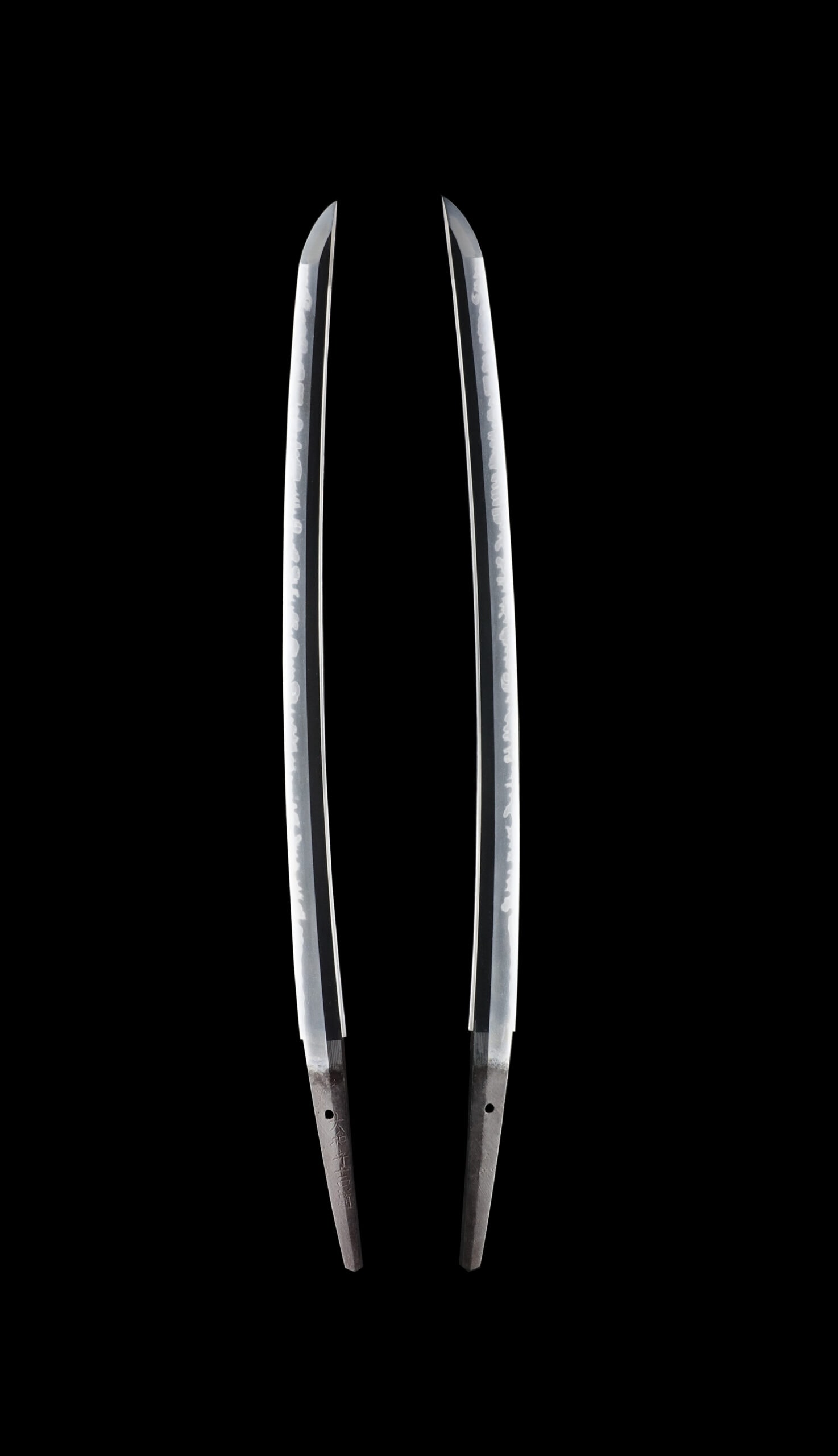
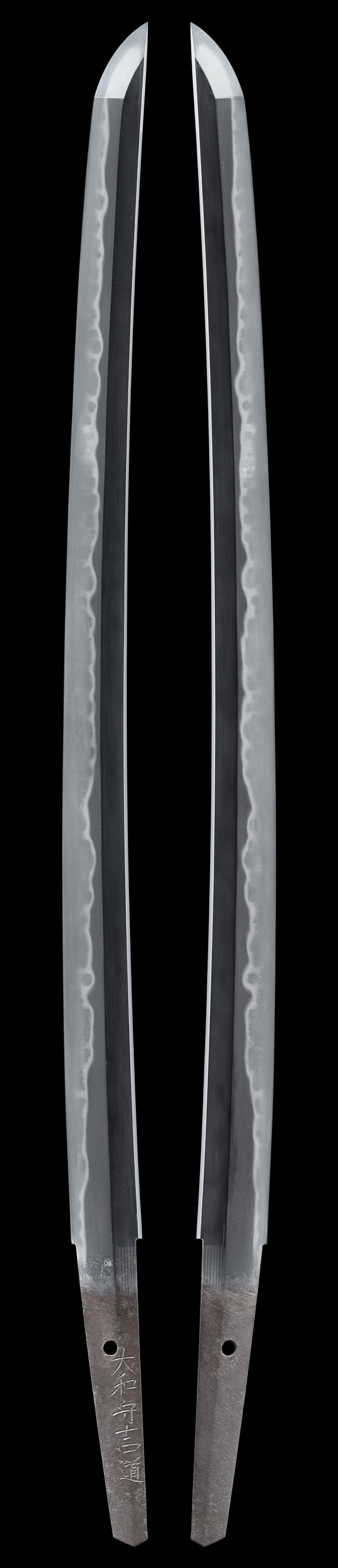
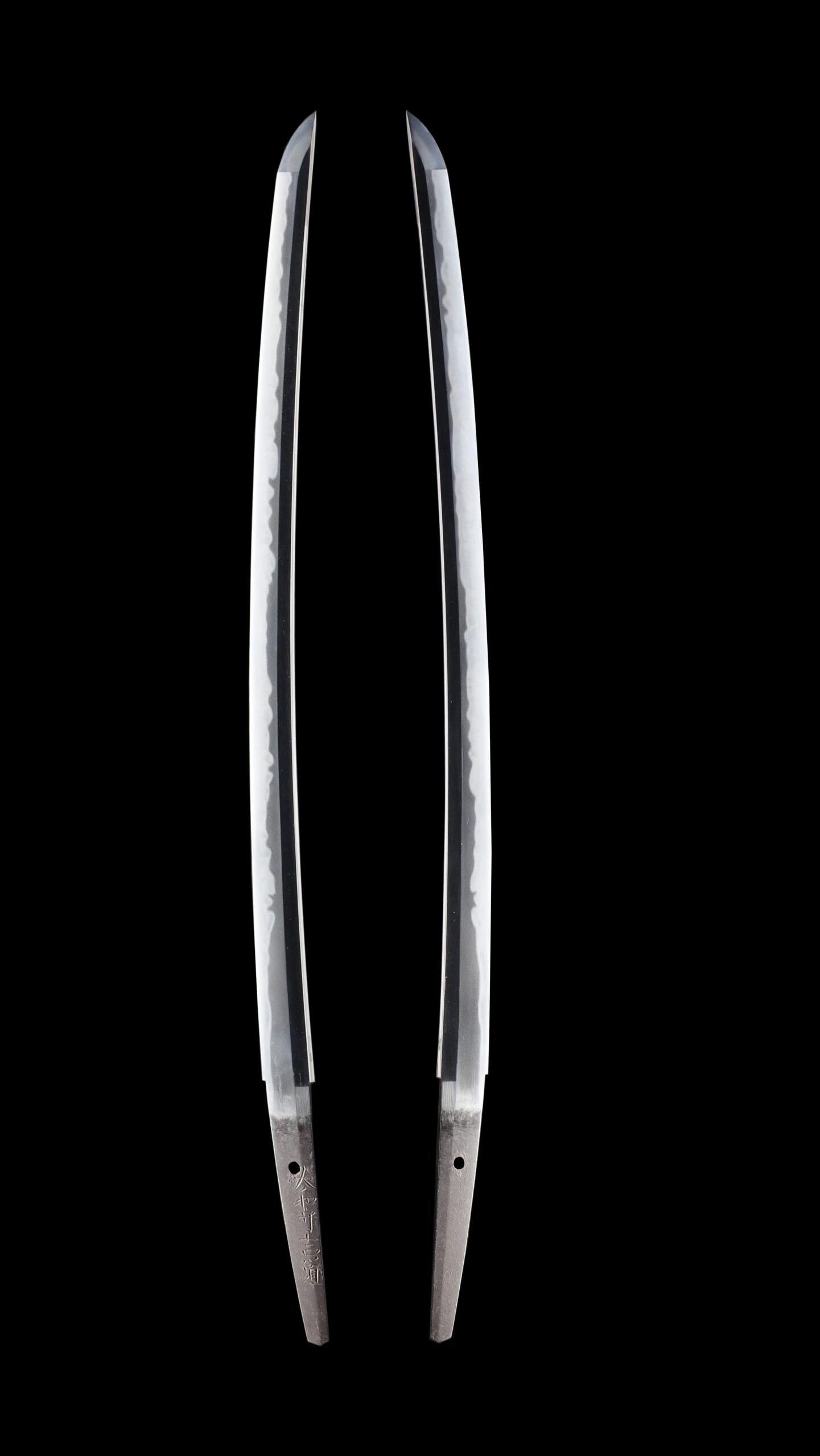
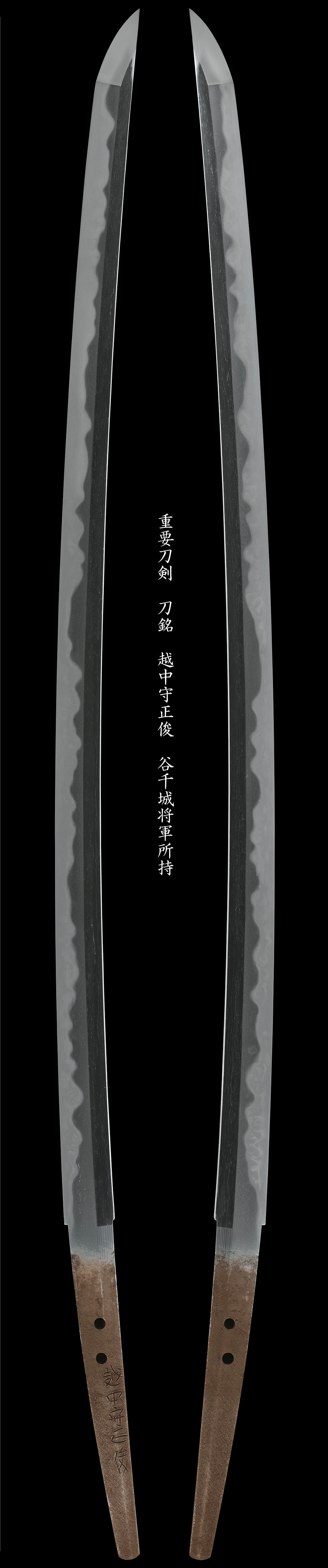
A in the forty-first session carries the date Genroku 14, the year 1701, cut on the reverse of the beneath a bold five-character signature, Tango-no-kami Kanemichi, and it is one of the very few year-dated blades by which his active span can be fixed at all. This is the second-generation Tango-no-kami Kanemichi, called Kiheiji, who worked at Ōsaka about the Genroku and Hōei years and is recorded as having forged in as well. The published sources transmit him as the son of the first Tango-no-kami Kanemichi, in the received account the second son of the Kyōto second-generation Tanba-no-kami Yoshimichi, and so a branch of the school that Kanemichi the -Seki smith carried into Kyōto. The first Tango-no-kami, named Kihei and signing at first as Naomichi, settled in Ōsaka and was known for the and the -tinged that were the family specialty. His son took a deliberately different course, and that divergence is the spine of his identity on the blade.
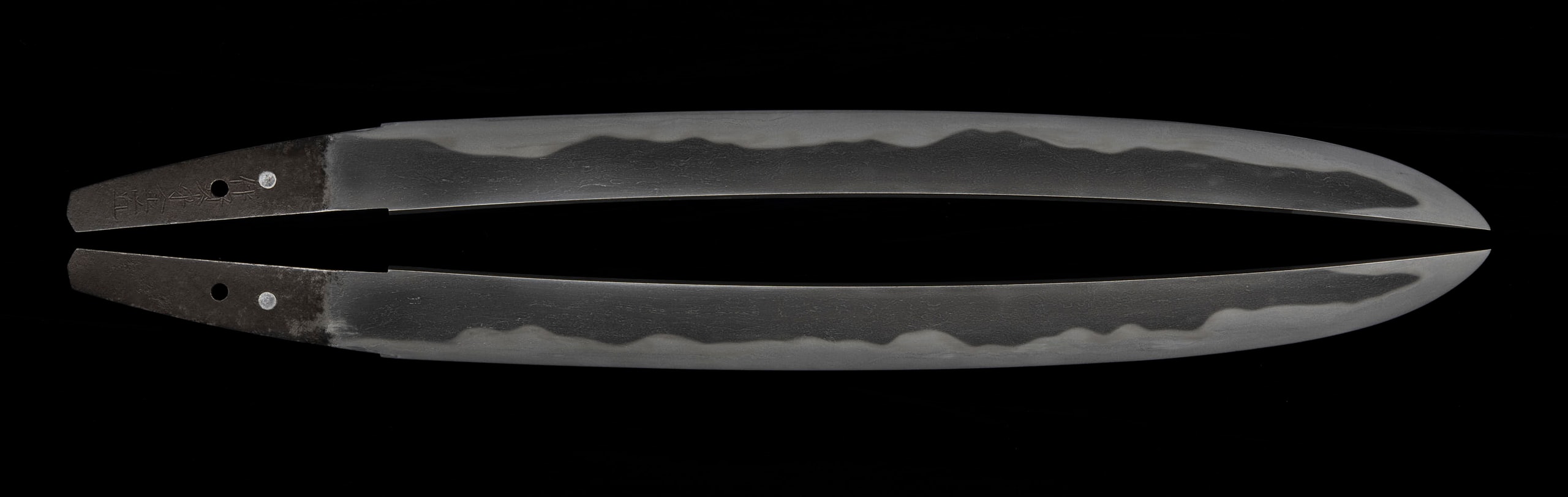
Where the first generation tempered the and the -laden that the published sources call the house specialty, the second cast off the and turned to a flamboyant tōran-style large that mirrors the Ōsaka fashion of his day. His most particular tell is constructive rather than decorative. Across the upper and lower halves of the he forges in alternating linked sequences, two joined and then three joined, repeating one against the other so that the tōran gathers its variety from the pattern itself. Of one such blade the published sources write that 「互の目の二つ連れた刃と三つ連れた刃とが相互に交じる点に大きな特色が見られる」, that the great distinguishing feature lies precisely in this mutual mixing of two-joined and three-joined , and of his matched , on which the long and short blades reverse the order of the joined groups, that the variation shows 「彼の工夫の跡」, the trace of his own contrivance. enter thickly into this temper, the runs deep, the lies thick and at times coarse, and play through it, appear with the tempered, and the stays bright.
The beneath this showy temper is quiet and clean, the true Ōsaka steel. He forges a tightly gathered in which the settles dust-fine and enter finely, the surface closing rather than standing, a that distinguishes the second generation from the more standing of the older -rooted work. Over it the temper opens always from a straight at the , the Ōsaka base from which both his manners rise, before it widens into the tōran. The answers the : it comes to a , returns rather deeply, and brushes into , with a faint pointed tendency on the wider blades. The , where present, are a plain run to a rounded finish with an accompanying . The is heavy and forceful in the Genroku taste, wide in the , thick in the , with a sense of , the curve deep and the extended, a build the published sources note recurs among smiths of the Jōkyō and Genroku years.
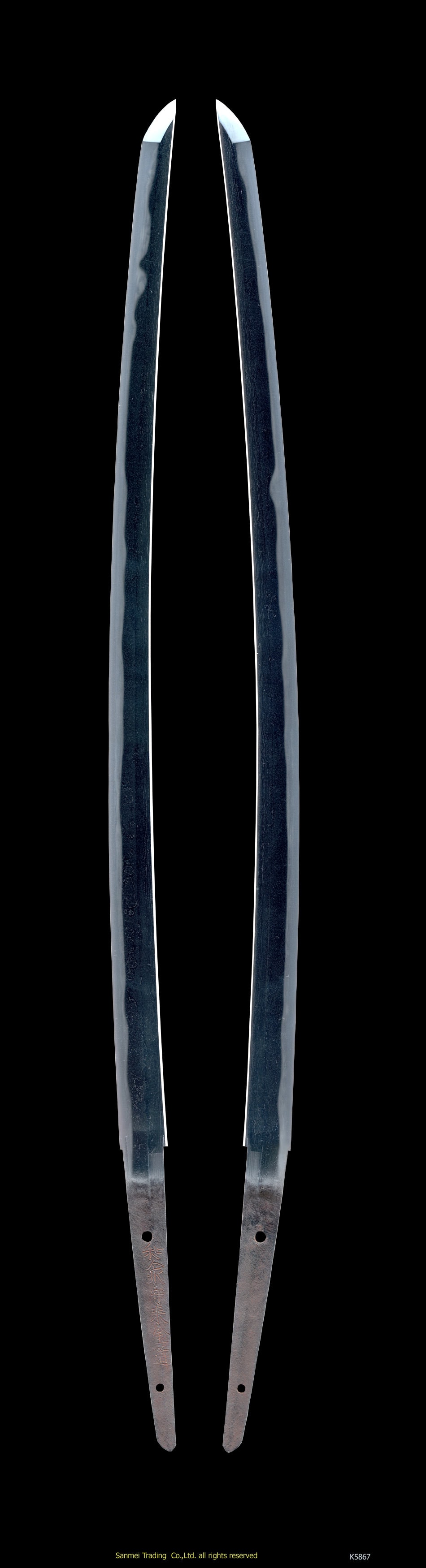
The published sources draw his work into two registers. The principal one is the tōran-style large just described, the manner in which they find this smith's distinctive hand and which they tie directly to the contemporary Ōsaka taste. The second is quieter and, they are careful to note, one the first generation did not leave: a deep- . Here the straight opens into a broadly tempered base, shallowly , entering vigorously, the deep, the thick with some coarse grains, the upper half showing a two-stepped futasuji- effect, and running well. Of a blade in this register the published sources write that it 「真改風の作柄をあらわしている」, that it shows a workmanship in the manner of Shinkai, and the comparison is exact: it is the deep-, thickly -laden straight temper of Inoue Shinkai, the great Ōsaka master, that this calmer face most nearly approaches. The two registers are not a chronology but a range, the Ōsaka hand stated once as spectacle and once as restraint.
What places him is the careful distinction the published sources draw between the two generations, a distinction that is itself the . The first Tango-no-kami cut a chrysanthemum crest and the character below the on much of his work and leaned to the family and -tinged ; the second carries neither crest nor character and turns instead to the deep- and the tōran-style large that reflect the fashion of his time. His distinction is therefore best drawn by his own grounded traits rather than by his father's: the alternating joined- tōran, the bright deep- temper read as Shinkai's, the clean dust-fine and the straight Ōsaka set him apart within the line and within his own family, and of his large- work the published sources say plainly that 「この工の特徴」, this smith's characteristic, is to be read in the very shape of those linked . He stands as a competent and individual second generation, faithful to the Ōsaka idiom of his day while working a constructive variation that is recognizably his own.
Kanemichi is rated Chū-jō in the Fujishiro ranking, and seven of his blades hold the rank of -, all of them signed, with no National Treasure or Important Cultural Property among them; his is the record of a sound and individual Ōsaka master rather than a great national name. The body that survives in this designated tier is small and almost wholly signed, which for a smith is itself a documentary virtue, the name fixed rather than appraised. One of his descends from the Aoyama house, the wardens of Ōsaka castle, and the published sources, calling it 「大坂城代青山家伝来の一口」, note that long blades of just this kind are repeatedly met among that house's old swords and were likely forged to its order, a thread of provenance that ties his work to the city he served. A matched of his also survives, the published sources calling such a pair from the second generation extremely rare and of documentary value. For a collector his work sits among the more attainable of the Ōsaka masters: most of his designated blades rest in the tier rather than locked away as patrimony, and a signed, dated example such as the Genroku 14 , which fixes both the hand and the year, is the rarer and more desirable encounter, coming to light from time to time and rewarding patience.