 NihontoWatchNihontoWatch
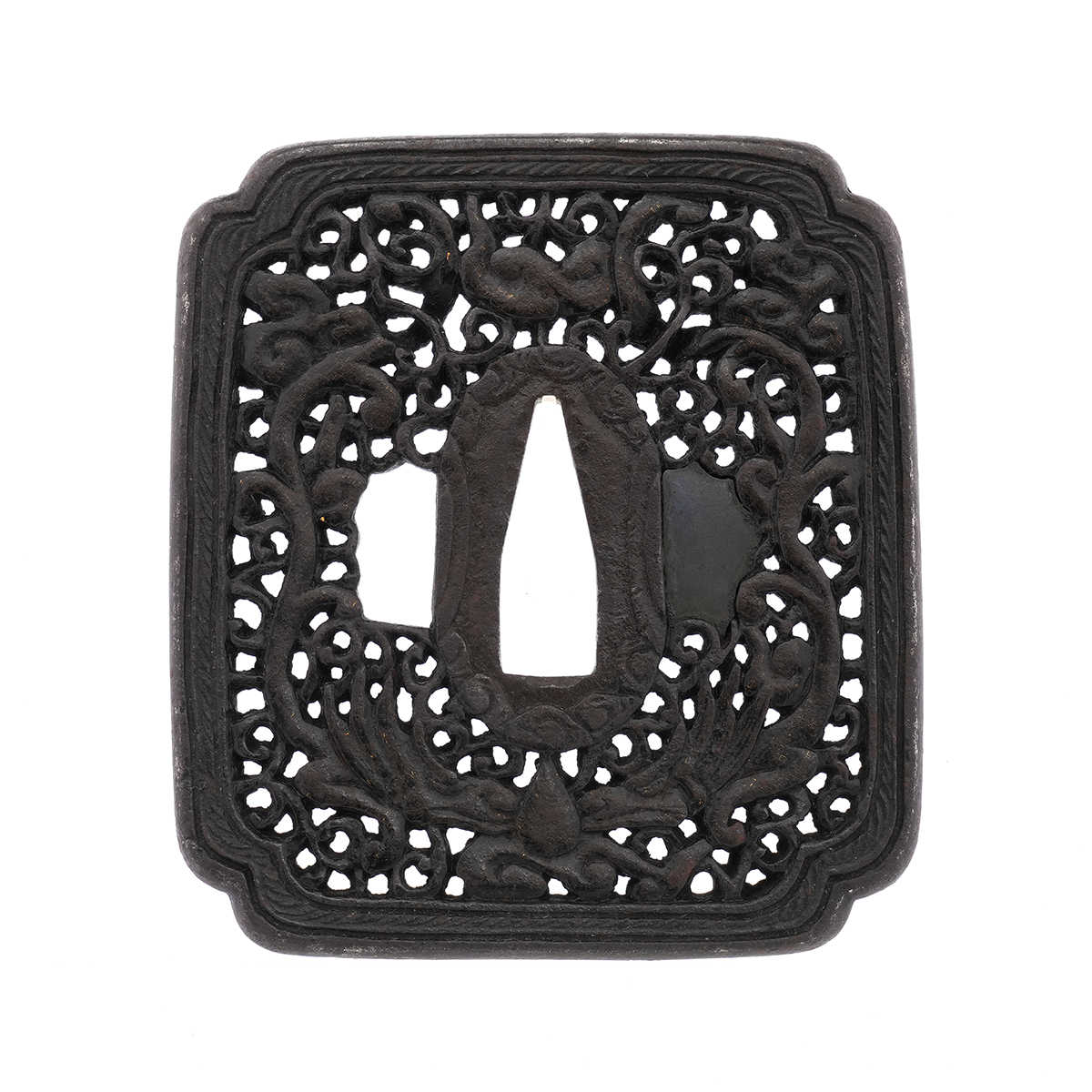
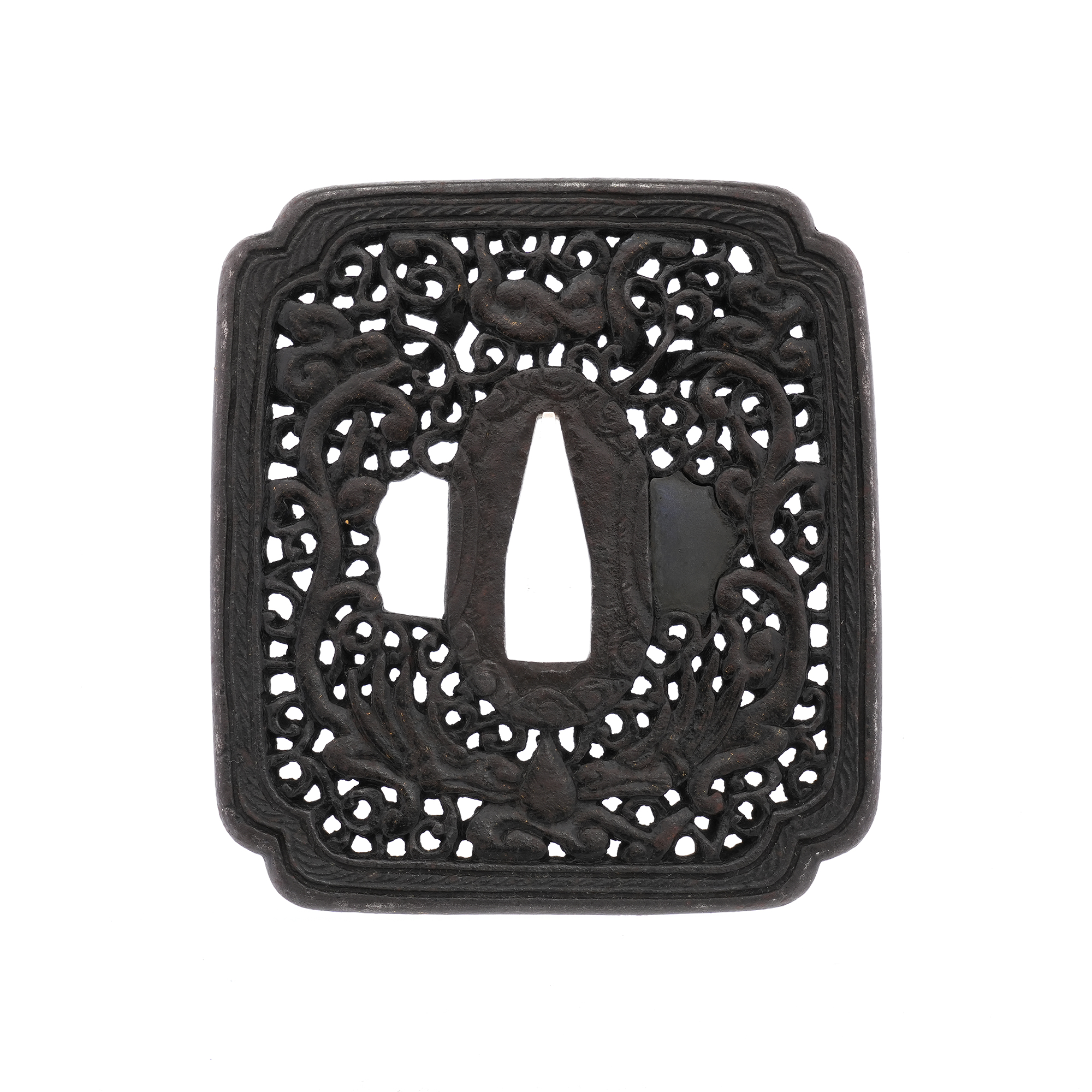
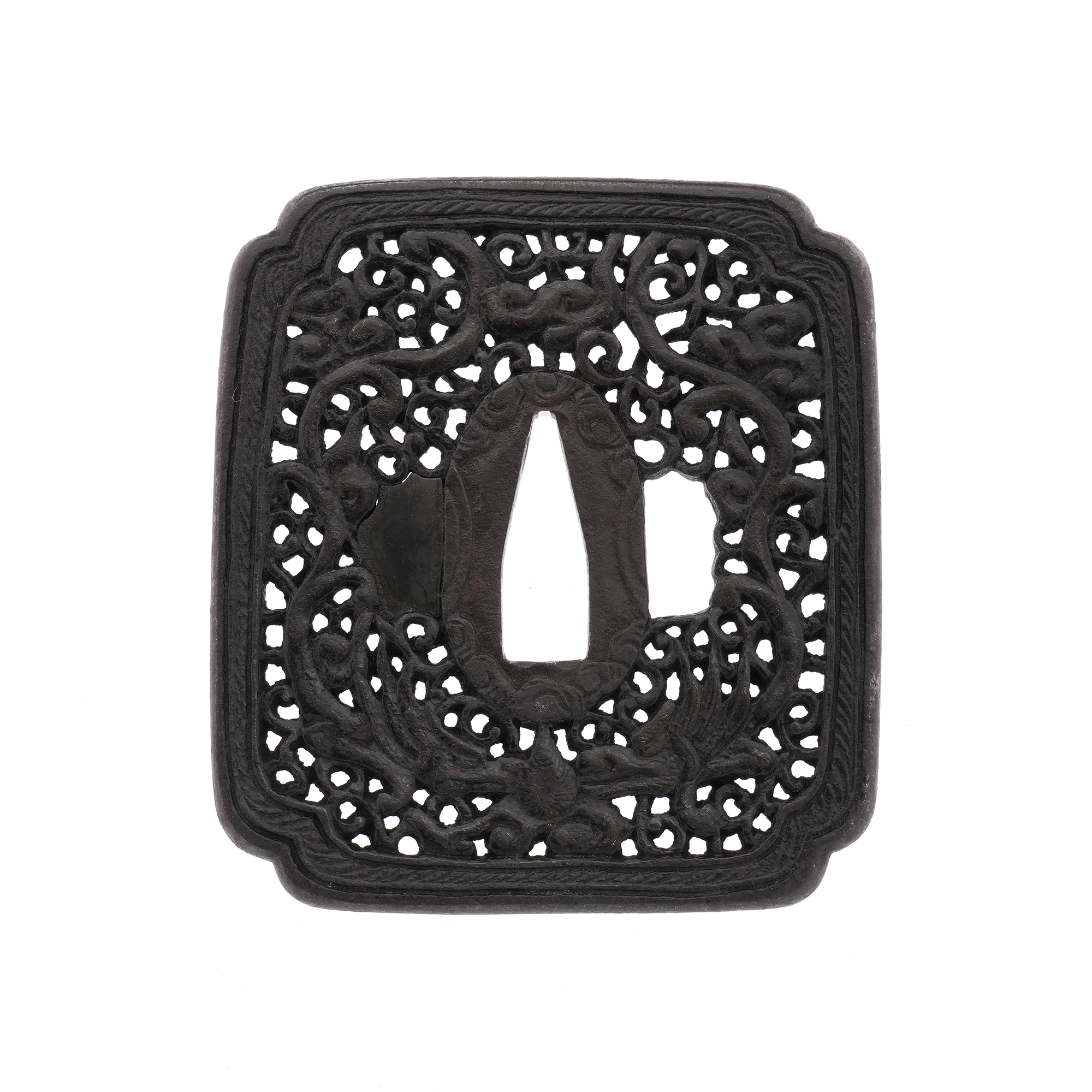
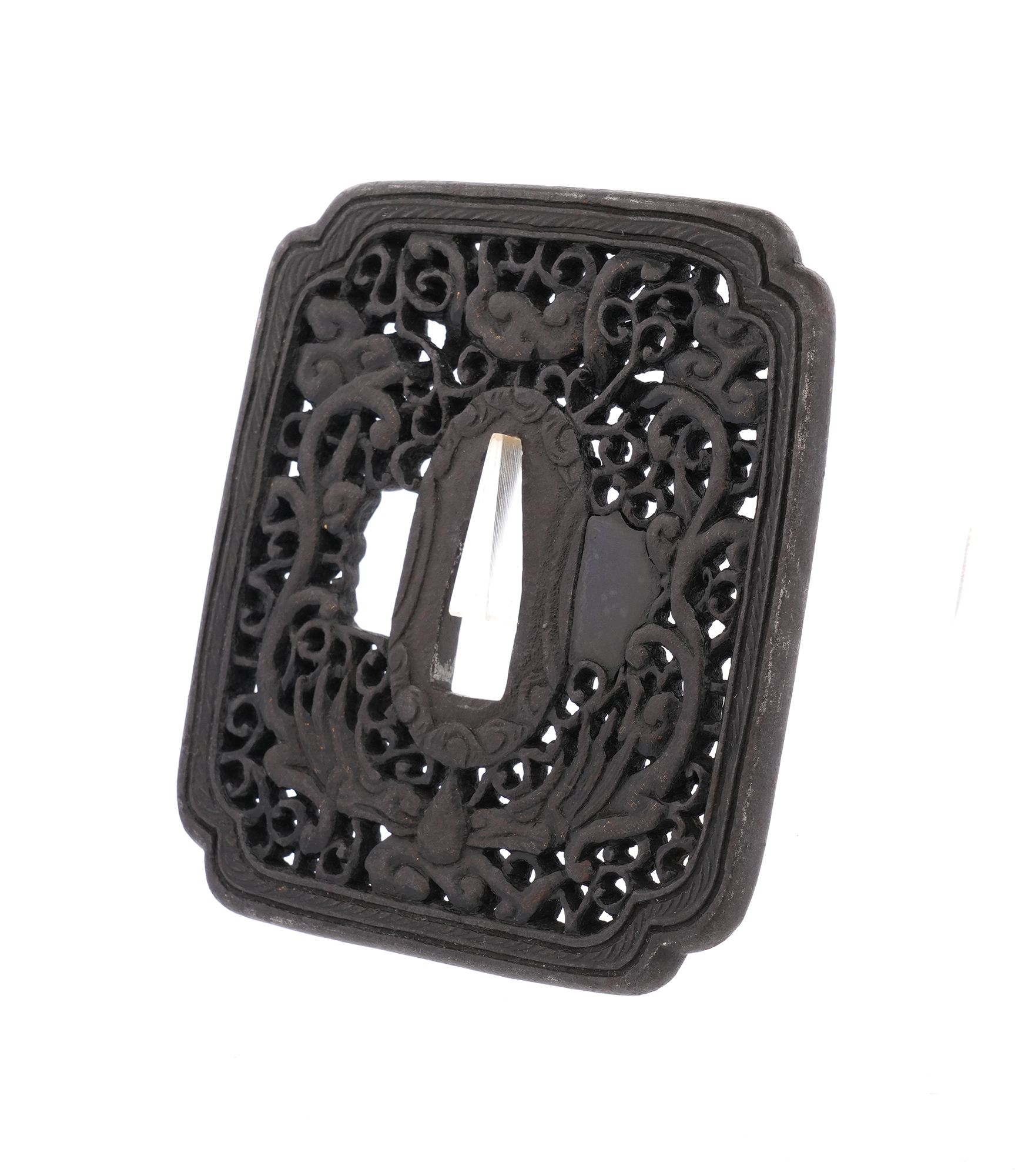
Nanban tsuba are a group of works that incorporated designs and sculptural sensibilities brought through overseas trade, depicting dragons, hoju, clouds, and karakusa with dense nikubori jisukashi, spreading to various regions during the Edo period with Nagasaki as the gateway. The composition that fills the entire surface while continuing patterns from the front to the back, the seppa-dai with exotic decorations, and the construction around the mimi encircling the piece like a frame are highlights unique to Nanban tsuba, and this piece clearly demonstrates that dense and powerful aesthetic. The large sumi-iri kaku-gata surface is tightened by multiple borders, with three clouds placed at the top and complex, intricate karakusa arranged around them, while a pair of facing amaryu are powerfully expressed from the left and right in nikubori jisukashi. There is a sense of tension in the composition where two dragons face each other in pursuit of the central hoju, and the high-density carving that skillfully blends the dragon bodies into the curves of the clouds and karakusa possesses the depth characteristic of Nanban tsuba, where new details appear the more one looks. A unique pattern with a strong exotic taste is also carved into the seppa-dai, and the thorough craftsmanship that does not let the decoration break even at the practical parts cannot be overlooked. A nawame pattern is run along the edge of the mimi, adding delicate variation to the thick and imposing outer frame. One hitsu-ana has been carefully filled with shakudo, and while the blackish hue blends naturally into the tetsu-ji, it quietly tells the history of its actual use in a koshirae. With its deeply sunken iron color, large and dignified outline, and the precise volume of work filling the surface, this single piece allows one to enjoy the unique design where Eastern and Western cultures intersect; it is recommended not only for those seeking a strong individuality as the center of a koshirae, but also for enthusiasts who wish to savor the true pleasure of Nanban tsuba by taking time to decipher the details.
NihontoWatchOffered by Toushin

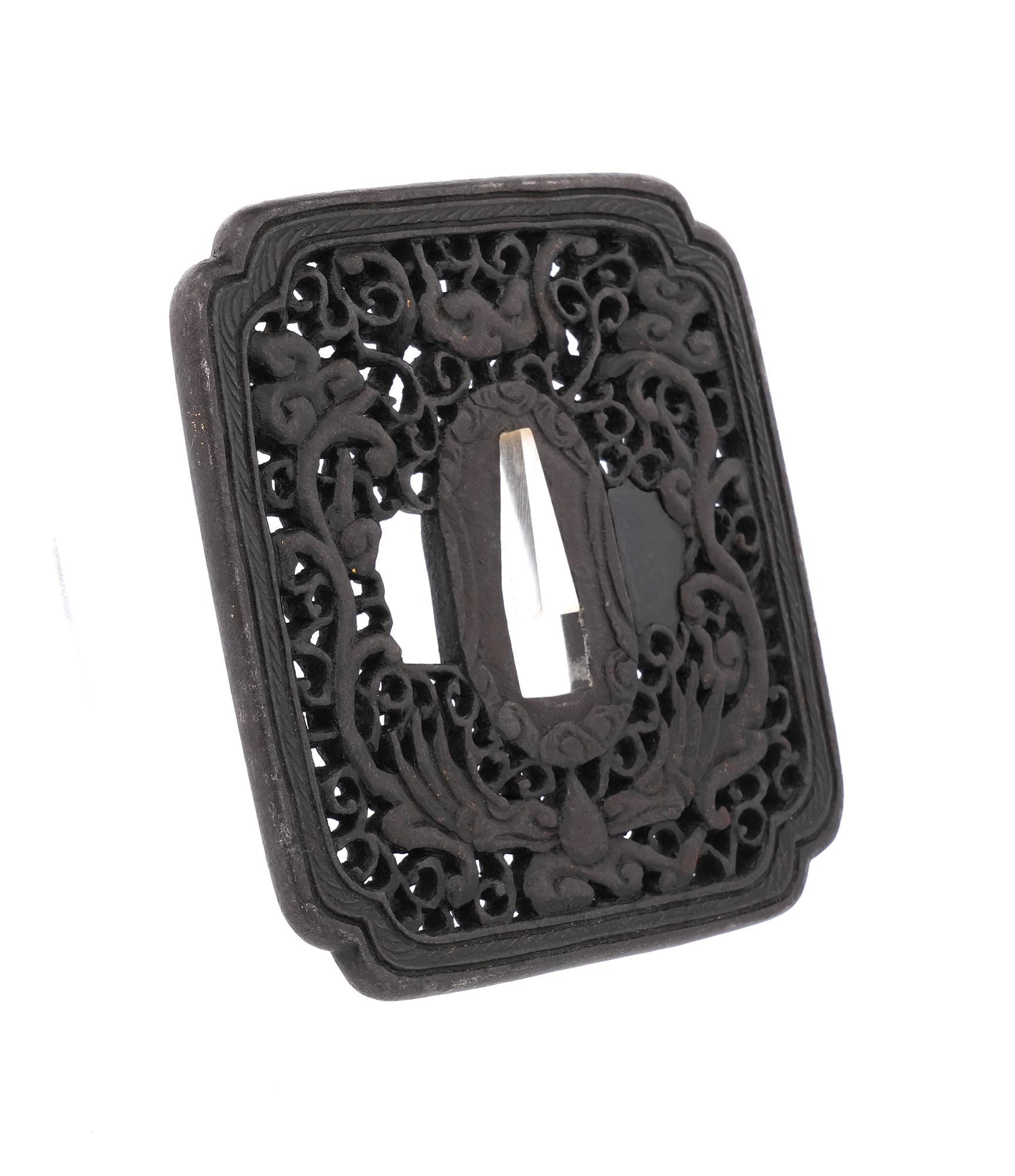
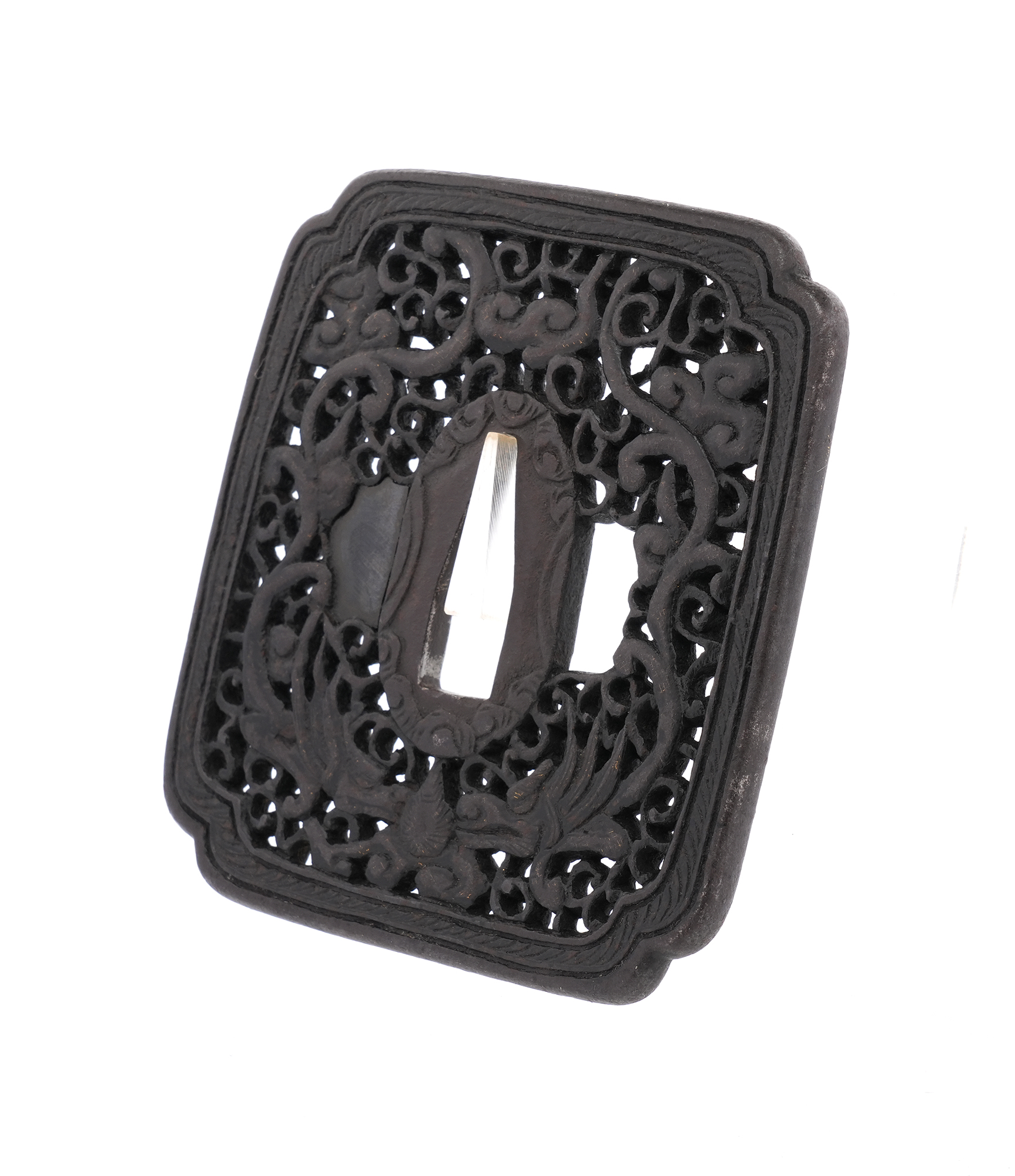
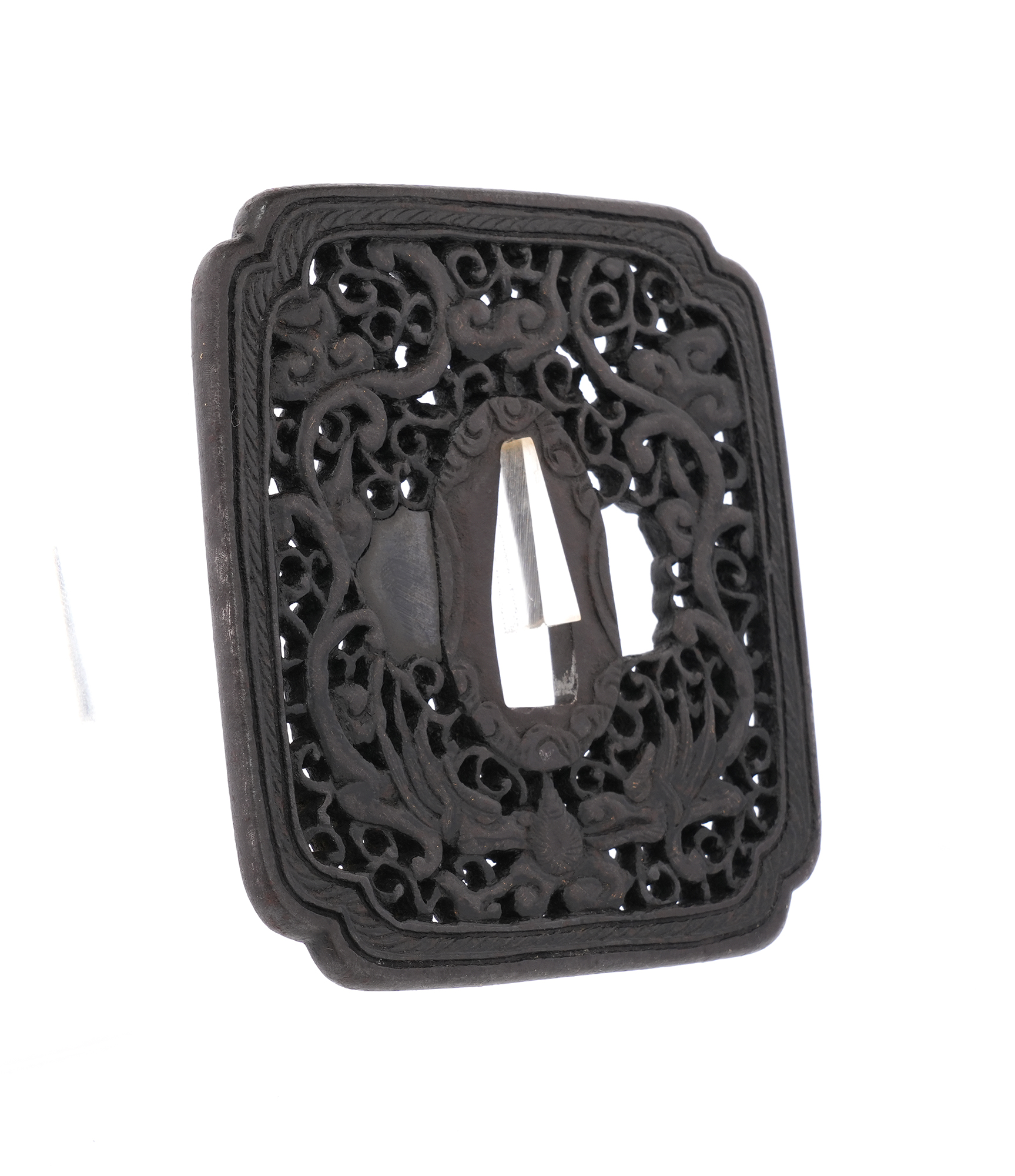
Unsigned
As written by the shop
Machine translation from the shop's Japanese · may contain errors ·
We could not find an authenticity certificate on the seller’s listing. Japanese swords and fittings are normally papered by the NBTHK (or the NTHK). Without one, the attribution is the seller’s own assessment and has not been independently verified — treat it with caution and ask the dealer about certification before buying.
As a rule we do not accept returns, except when we have sent a different item from the one ordered or when there is a significant discrepancy between the description and the item. If you wish to return an item, please contact us within 3 days of its arrival and then send it back.
¥66,000