 NihontoWatchNihontoWatch
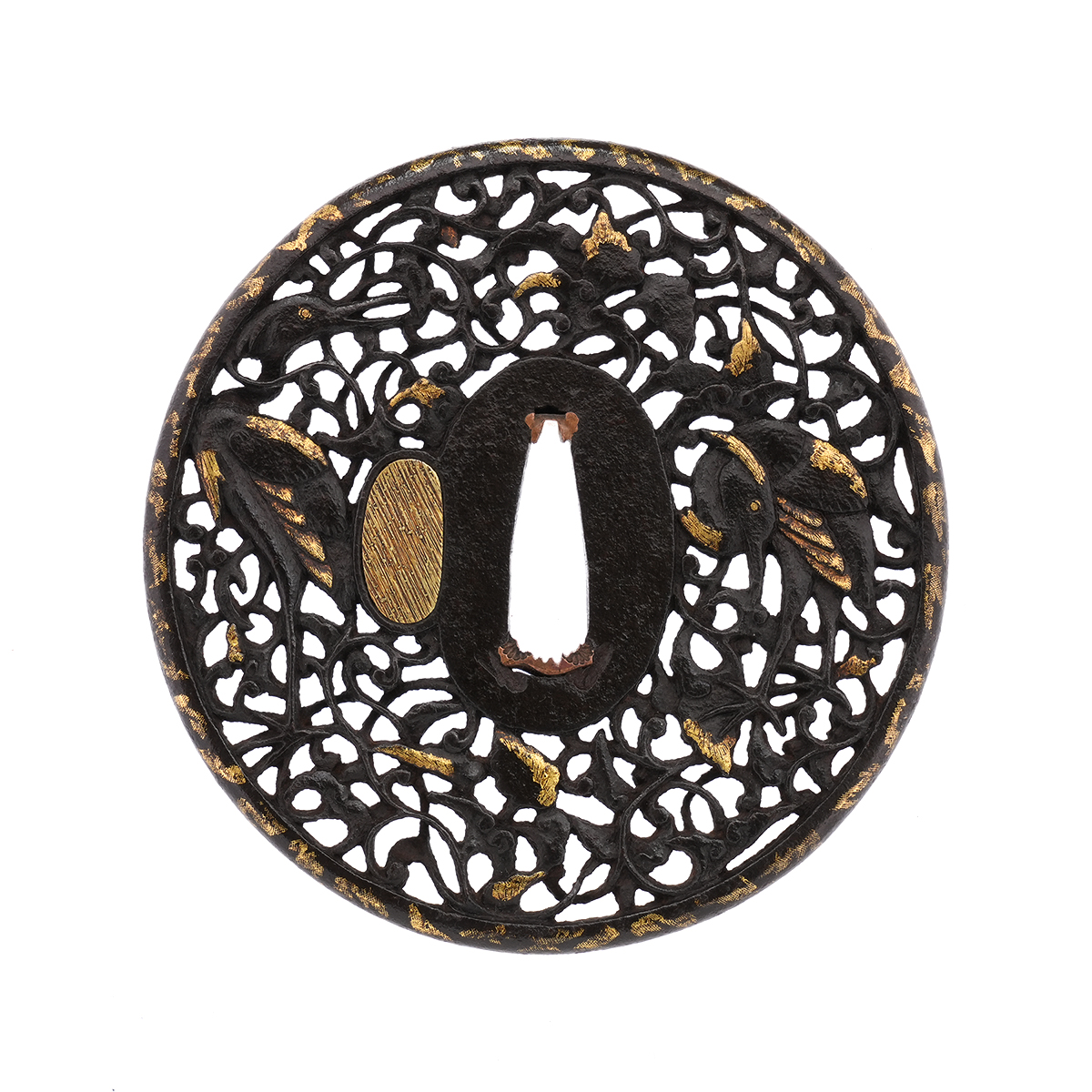
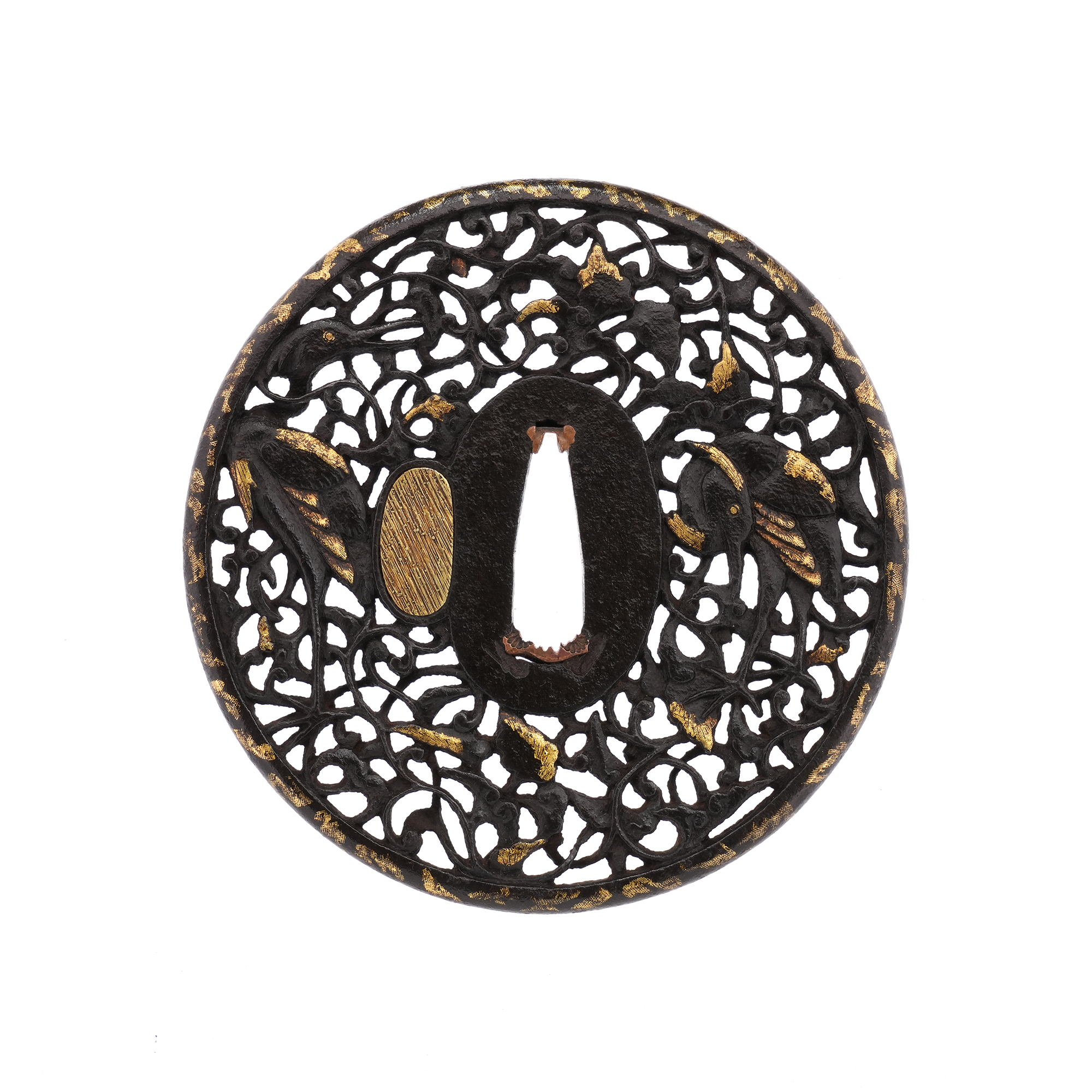
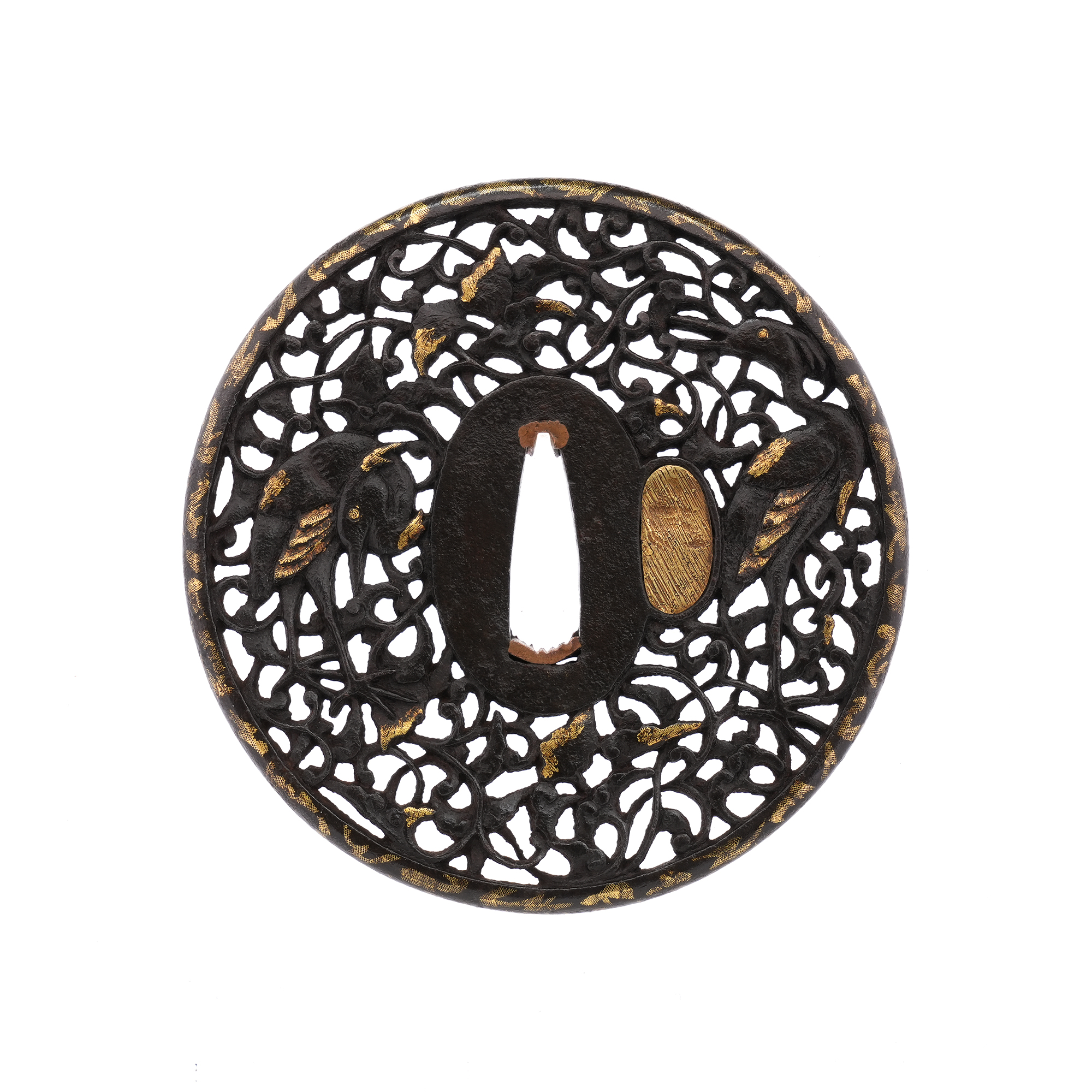
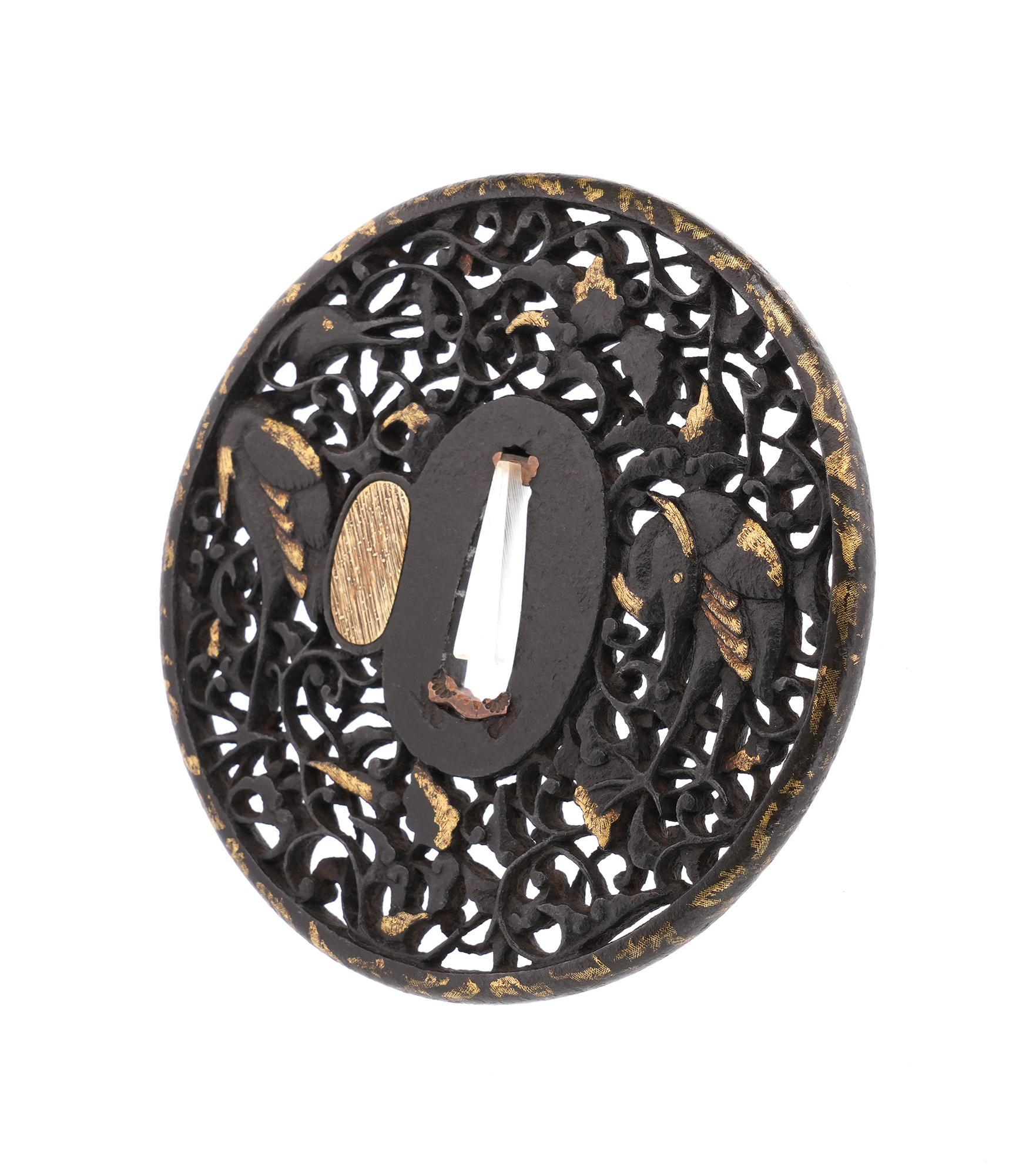
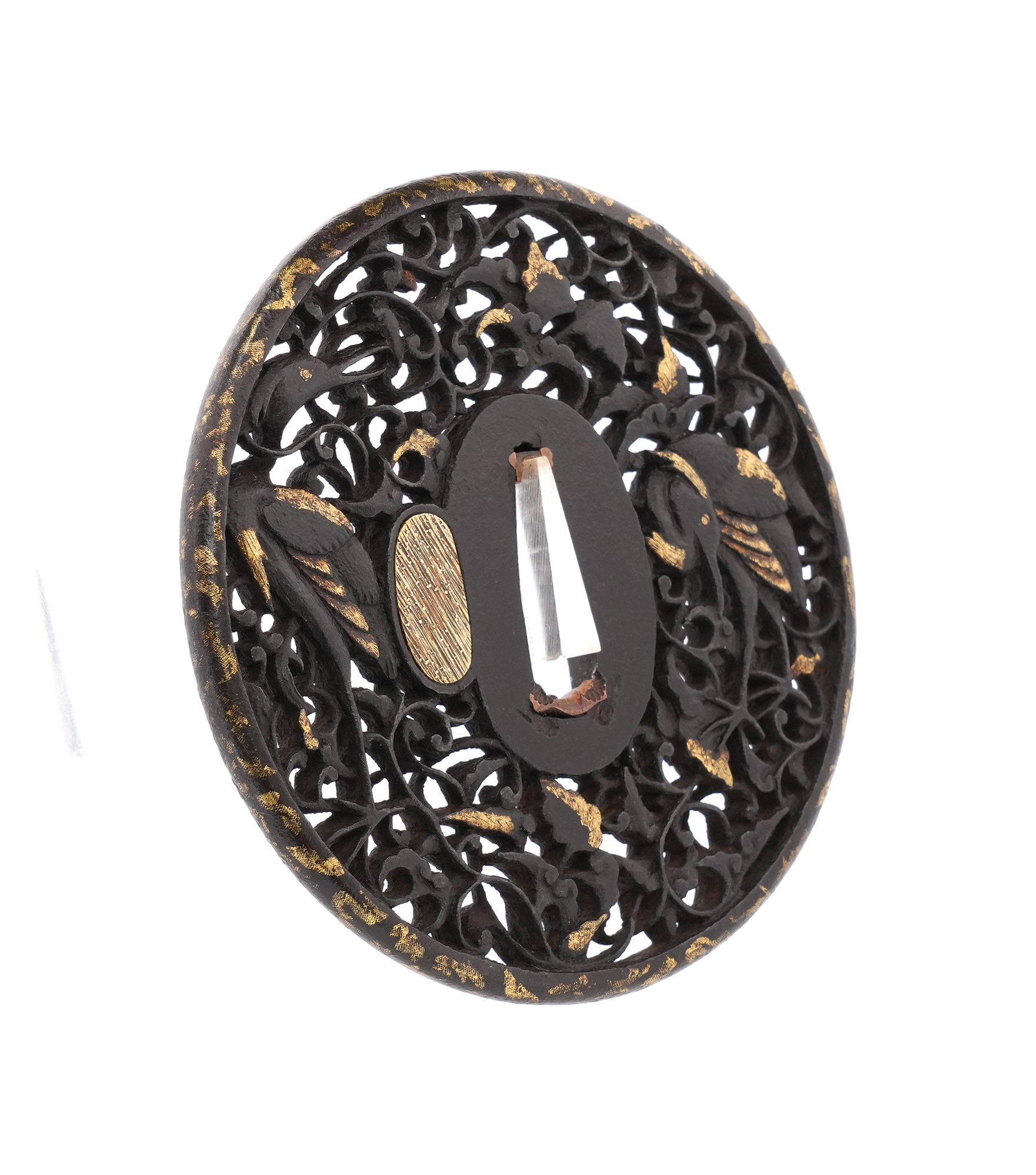
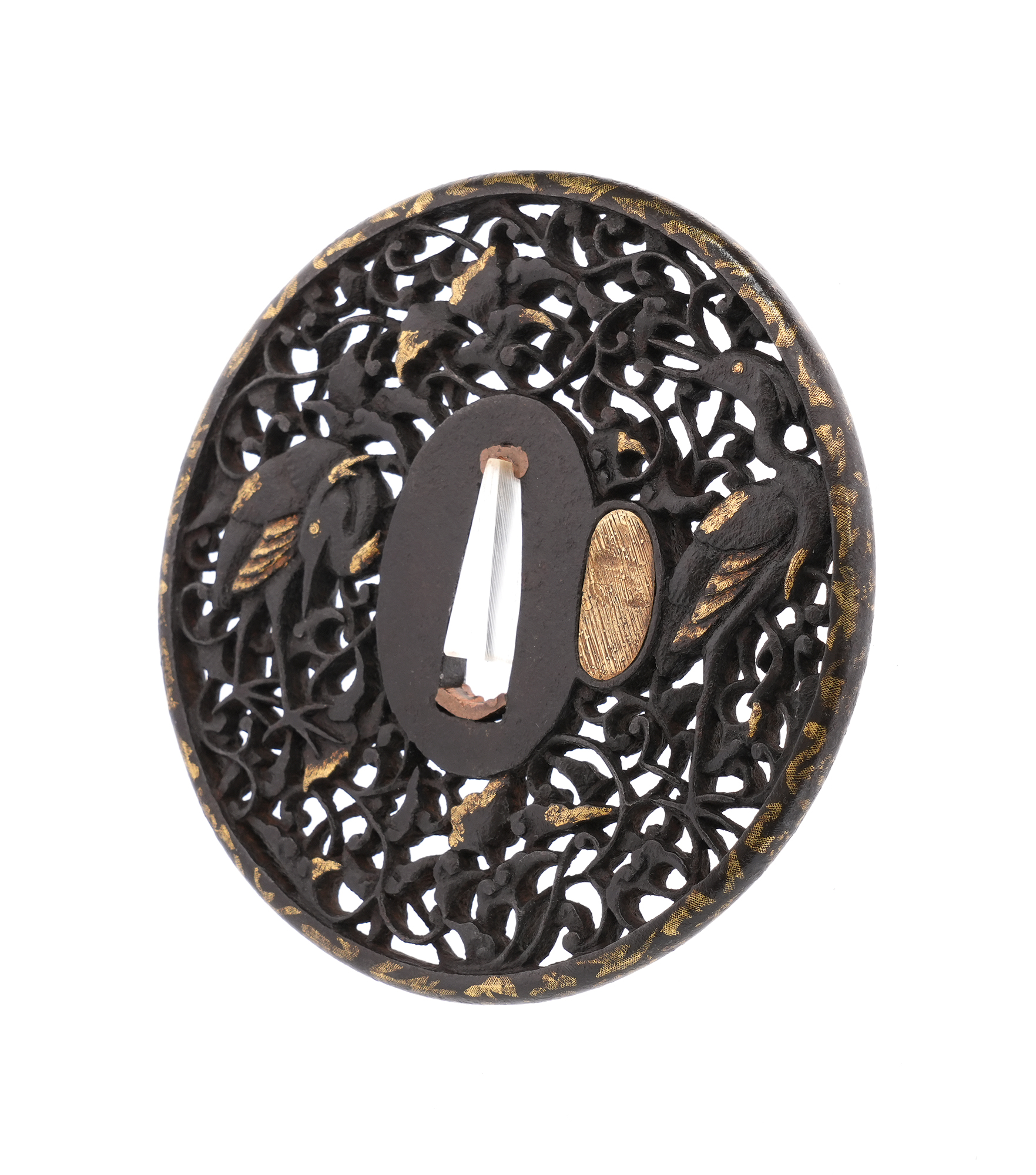
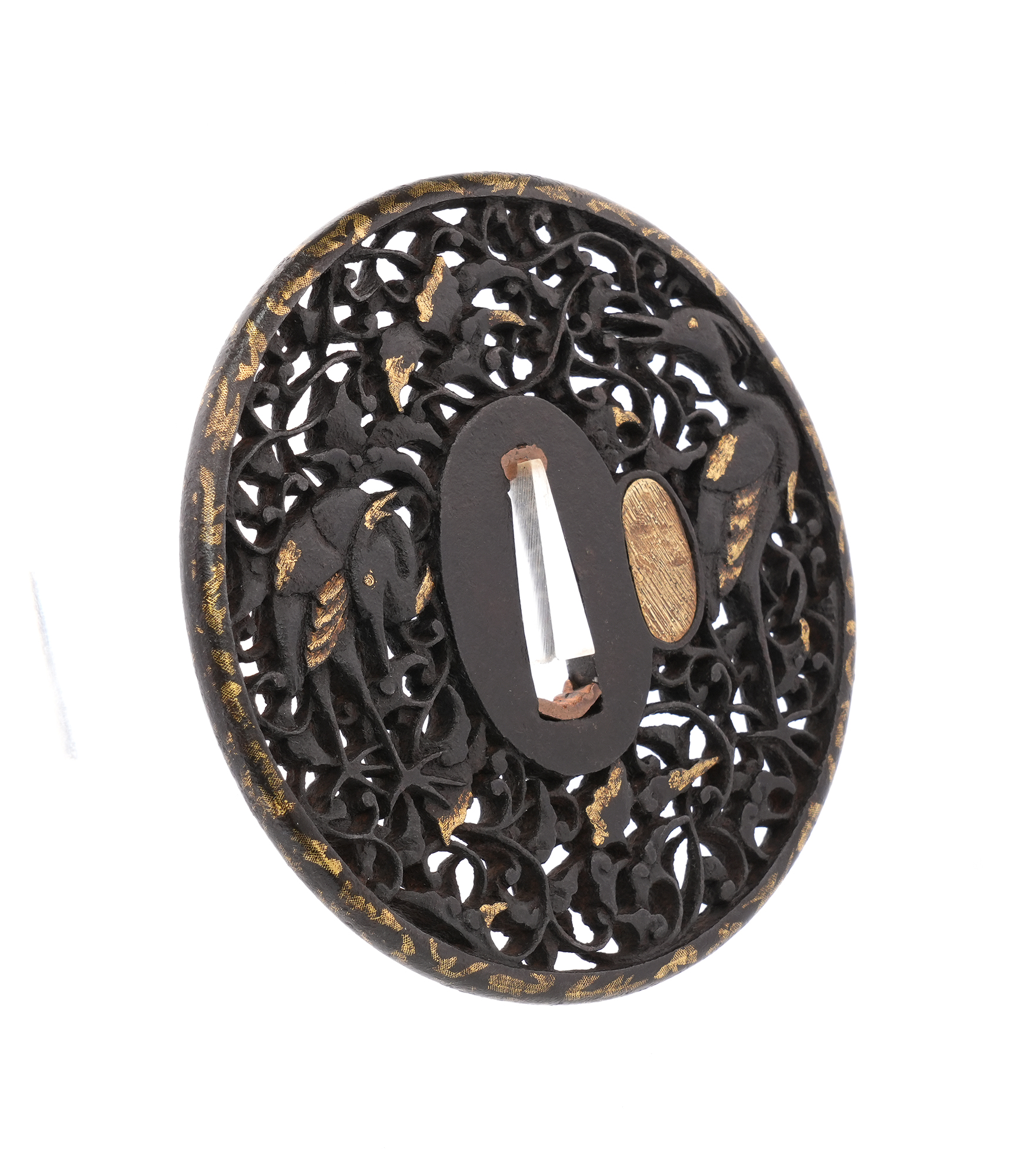
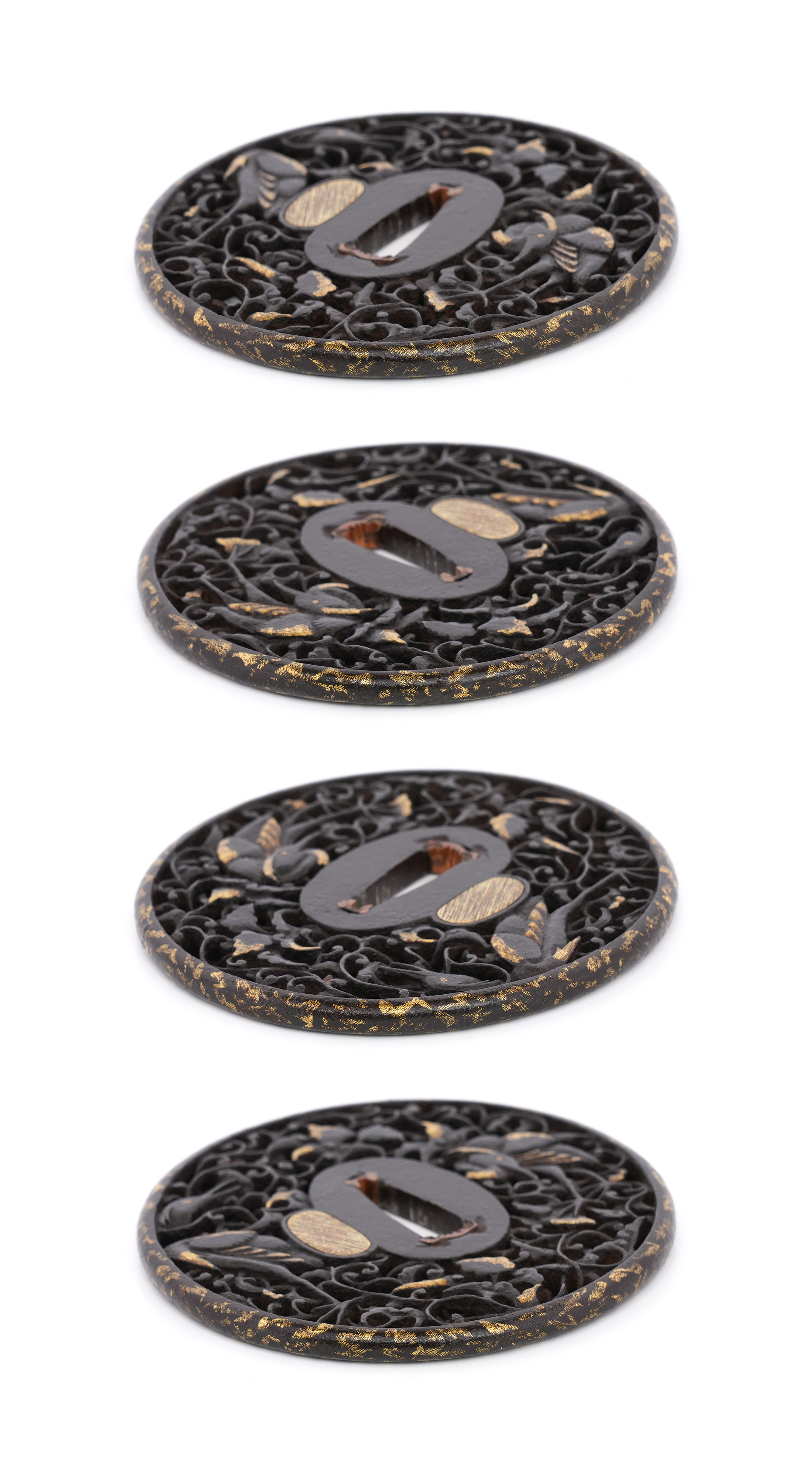
Nanban tsuba is a general term for tsuba that were influenced by overseas culture and imported designs that flowed in from the Momoyama to the Edo period, expressing exotic karakusa, dragons, birds and beasts, and characters with dense sukashi. Produced in Nagasaki and various other regions, their great appeal lies in the decoration that fills the ji-ita, carving that extends to both the front and back, gold nunome zogan, and patterns that intertwine complexly while maintaining a base of bilateral symmetry. This work, while mumei, has a Nanban kiwame, and through a rare composition combining facing herons and karakusa, it incorporates the elegance of Japanese waterfowl into a typical exotic taste. This work is a piece where a large-sized tetsu-ji is almost entirely carved in sukashi with winding karakusa and two herons, and unlike the Nanban tsuba with a strong exotic impression that one usually sees, it features very realistic carving. The thin vines cross up, down, left, right, front, and back to connect the mimi and seppa-dai, while the figures of the herons emerge between them; the gold nunome zogan applied to the front and back is splendid, adding an archaic brilliance to the deep blackish-brown tetsu-ji, and with a solid construction of 5.3 mm thickness and 133 grams weight, the framework has power despite the detailed sukashi, and the karakusa patterns in gold nunome zogan applied even to the mimi create rich shadows. At first glance, the dense karakusa patterns catch the eye, but as one gazes at it, the heads, wings, and legs of the herons and the flow of the vines are discovered one after another, holding the viewer's gaze for a long time. The remaining gold and the koshoku of the iron have a charm unique to items that have passed through many years, with a deep flavor not found in uniform new items. Because it is large-sized and has high decorative density, it exhibits a strong presence even when displayed alone, allowing one to enjoy both the exoticism of Nanban tsuba and Japanese bird patterns. For those who like complex sukashi, old kin zogan, and designs with a sense of story, this is one of the finest masterpieces of Nanban tsuba that can be recommended as a core piece for a collection.
NihontoWatchOffered by Toushin

We couldn’t find current papers for this piece. Ask the dealer whether it has been, or can be, submitted to shinsa. — Hoshi

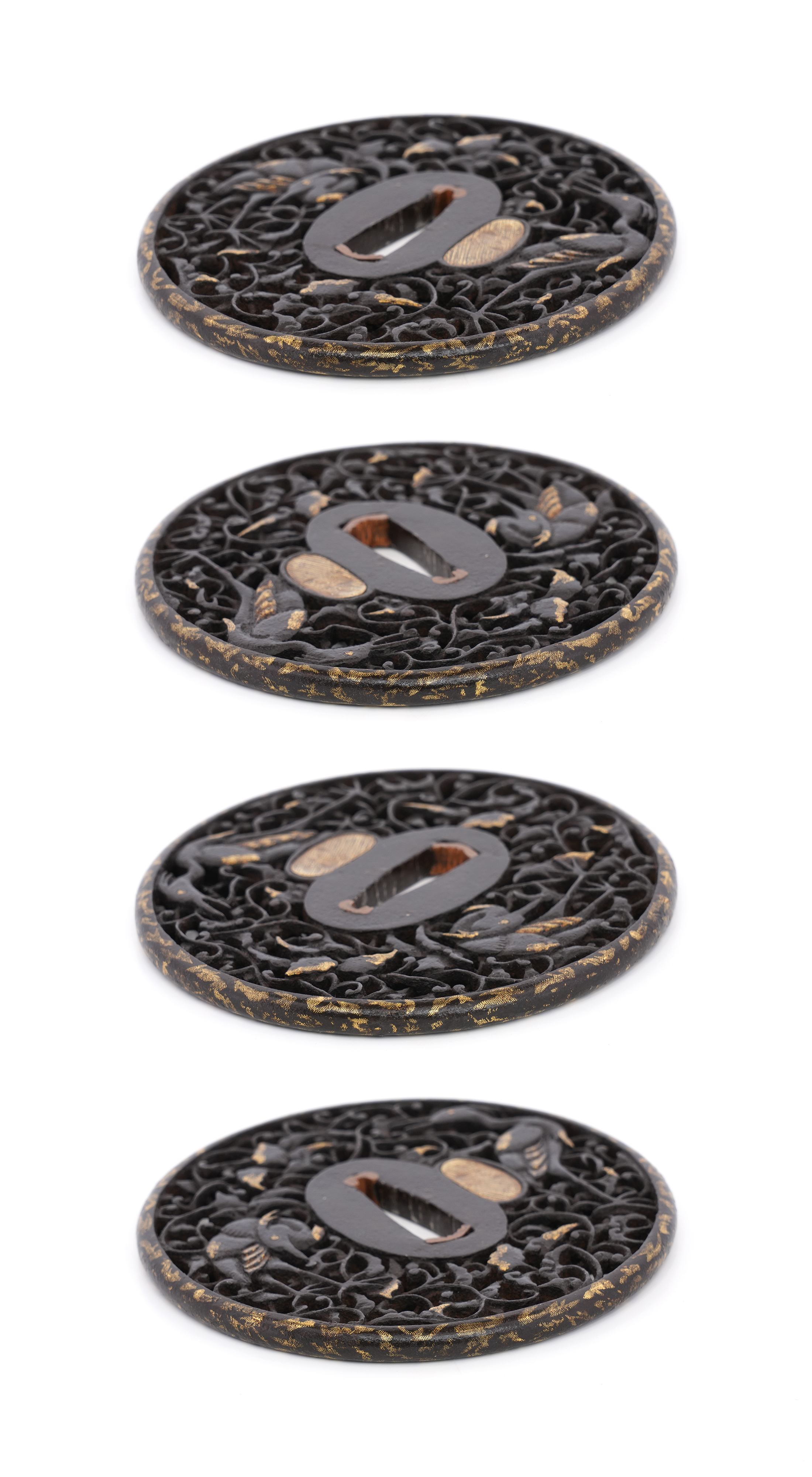
Unsigned
As written by the shop
Machine translation from the shop's Japanese · may contain errors ·
We could not find an authenticity certificate on the seller’s listing. Japanese swords and fittings are normally papered by the NBTHK (or the NTHK). Without one, the attribution is the seller’s own assessment and has not been independently verified — treat it with caution and ask the dealer about certification before buying.
As a rule we do not accept returns, except when we have sent a different item from the one ordered or when there is a significant discrepancy between the description and the item. If you wish to return an item, please contact us within 3 days of its arrival and then send it back.
¥330,000