 NihontoWatchNihontoWatch
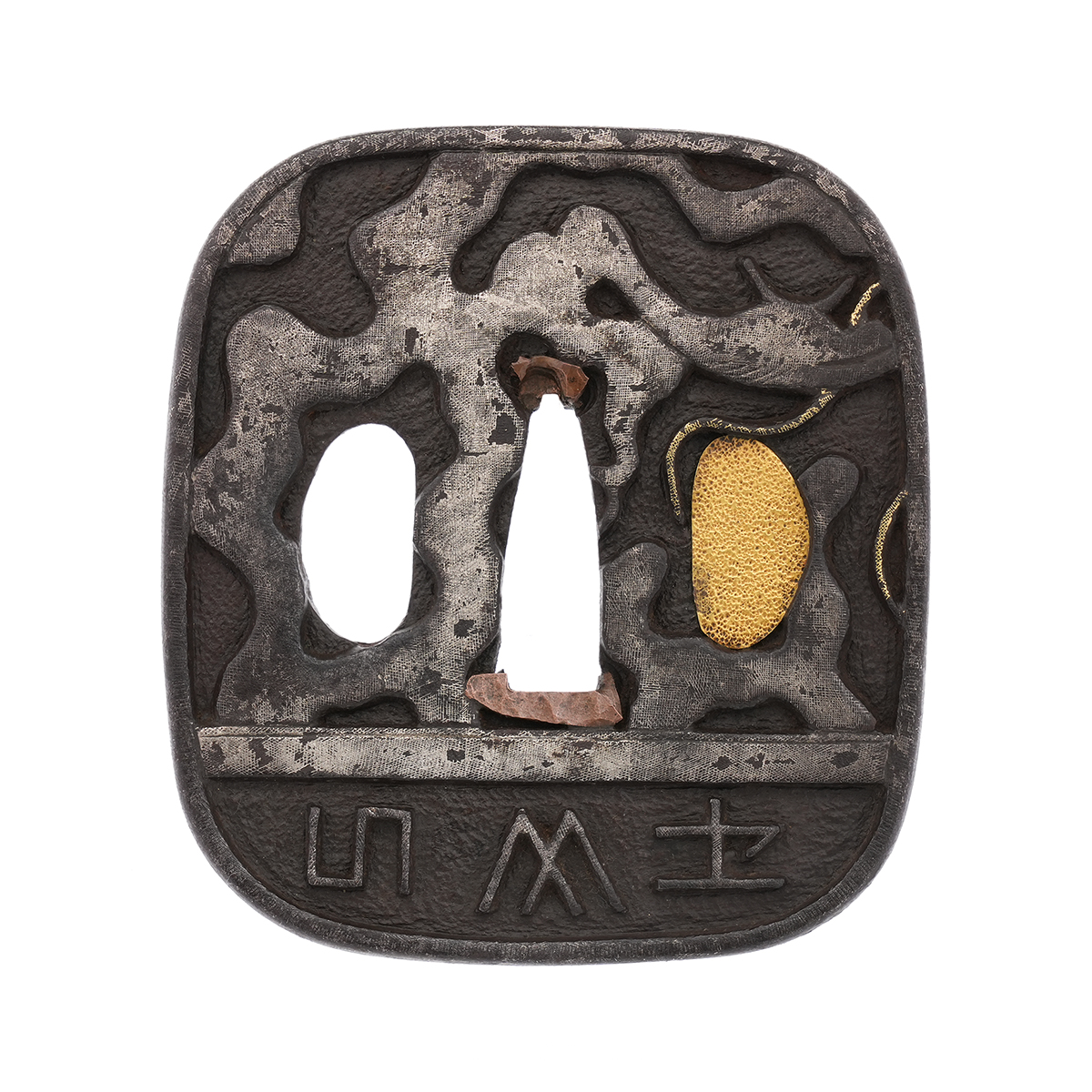
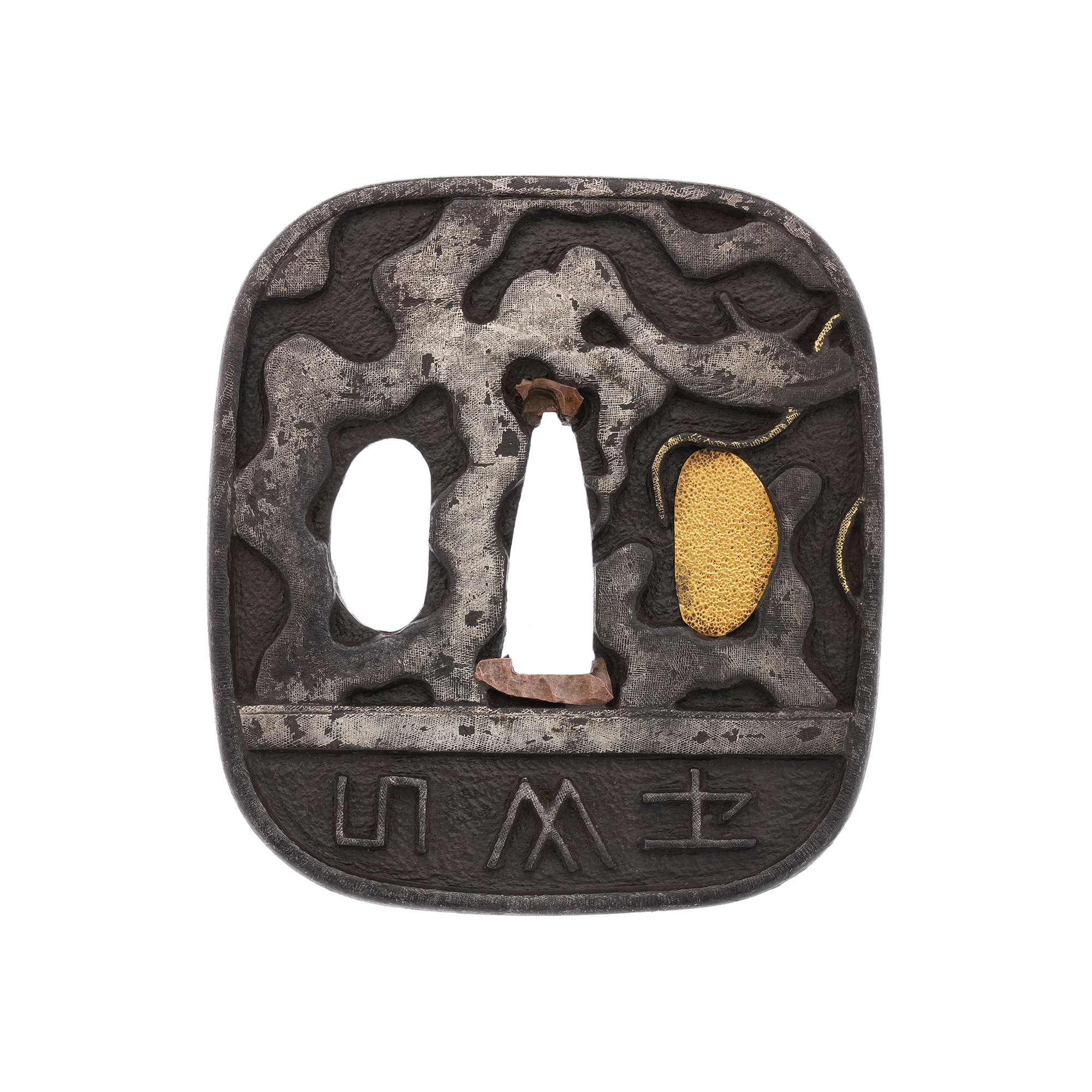
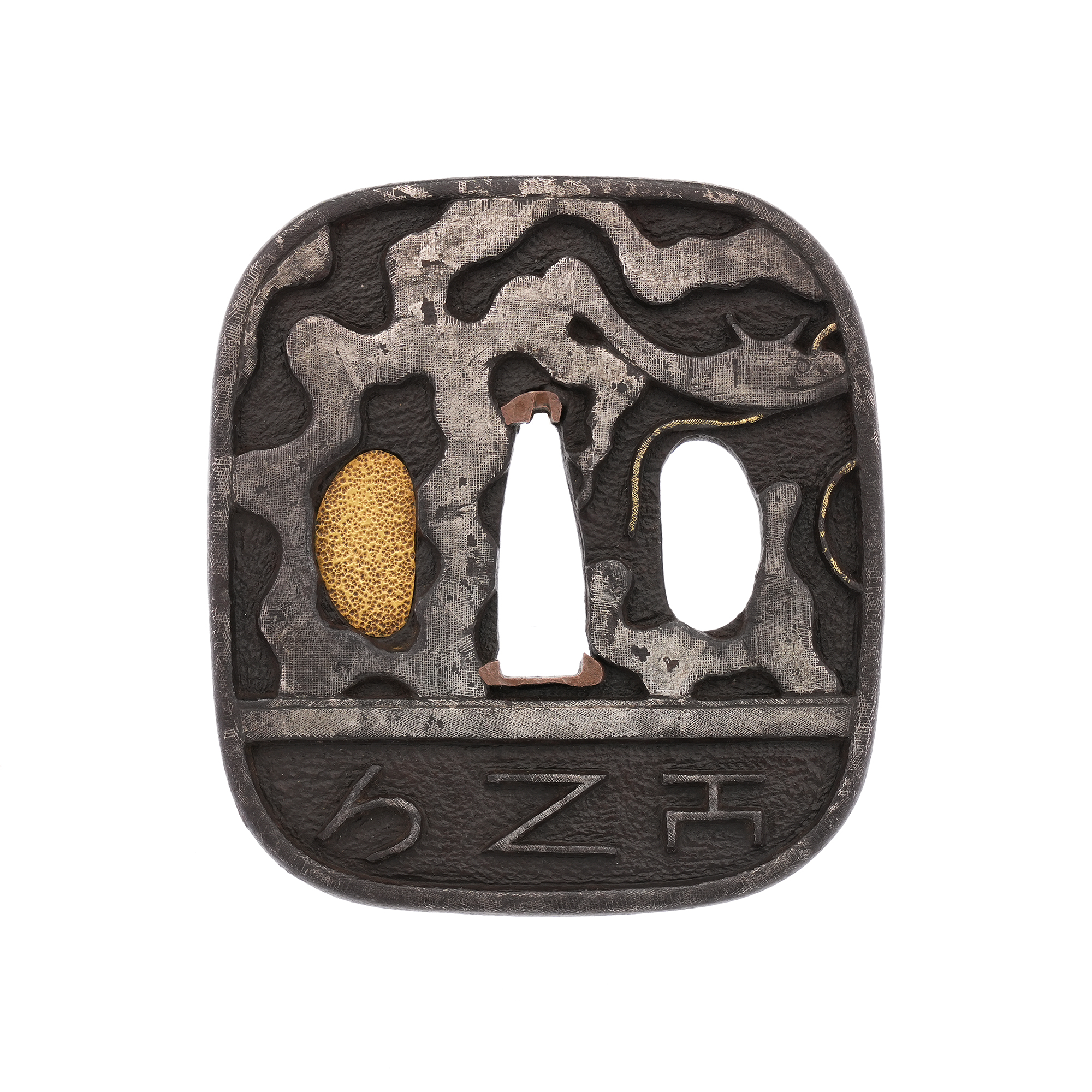
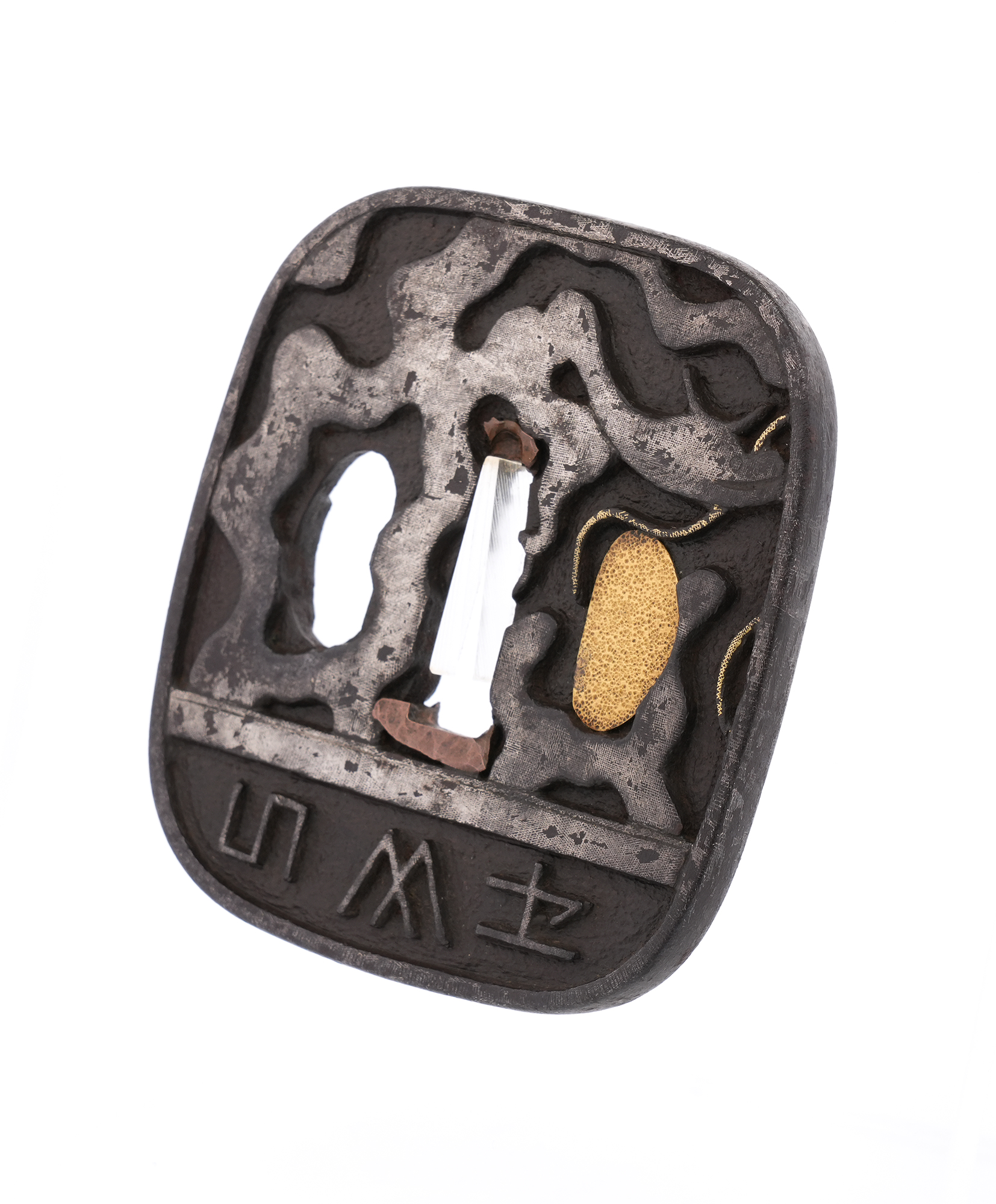
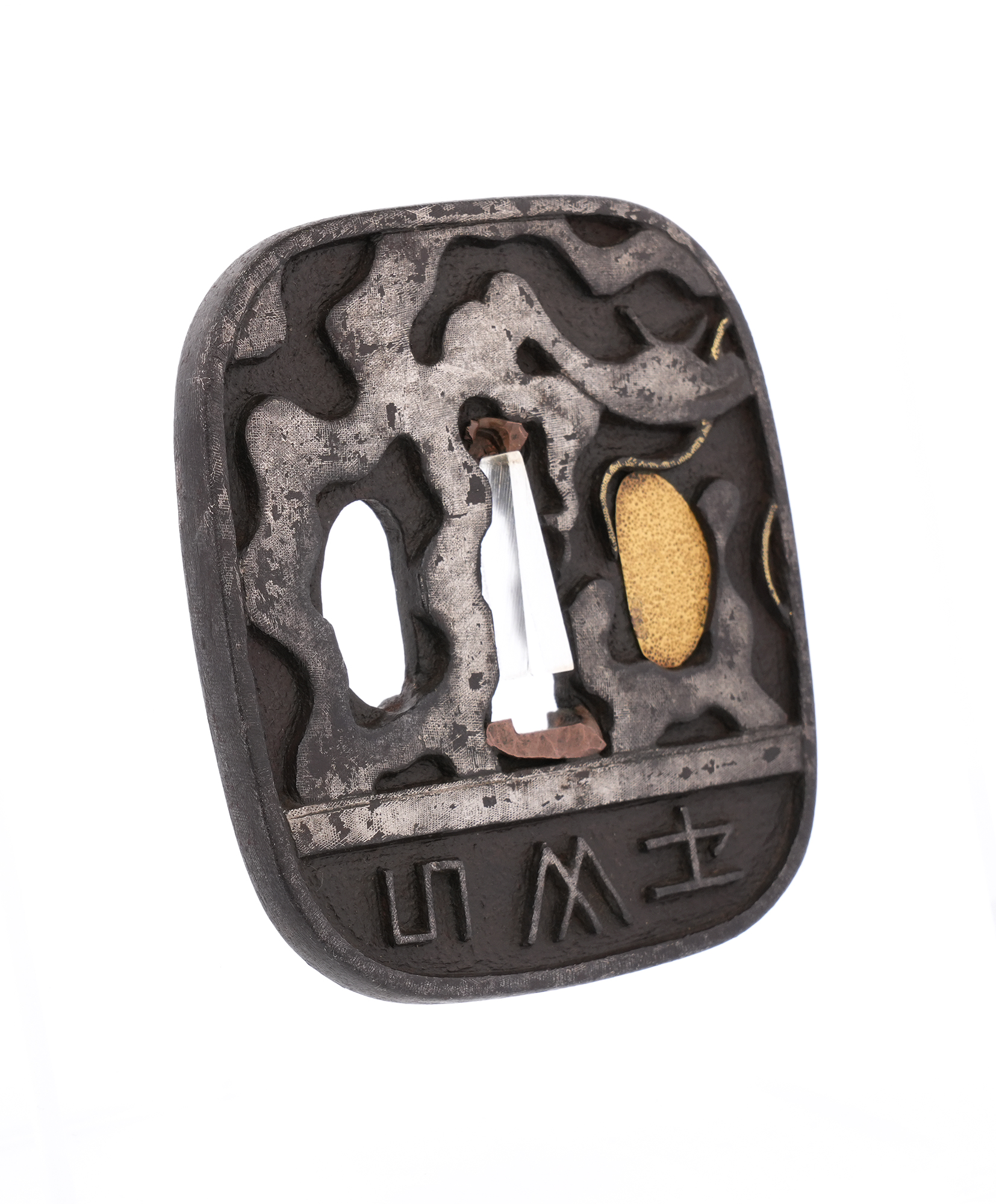
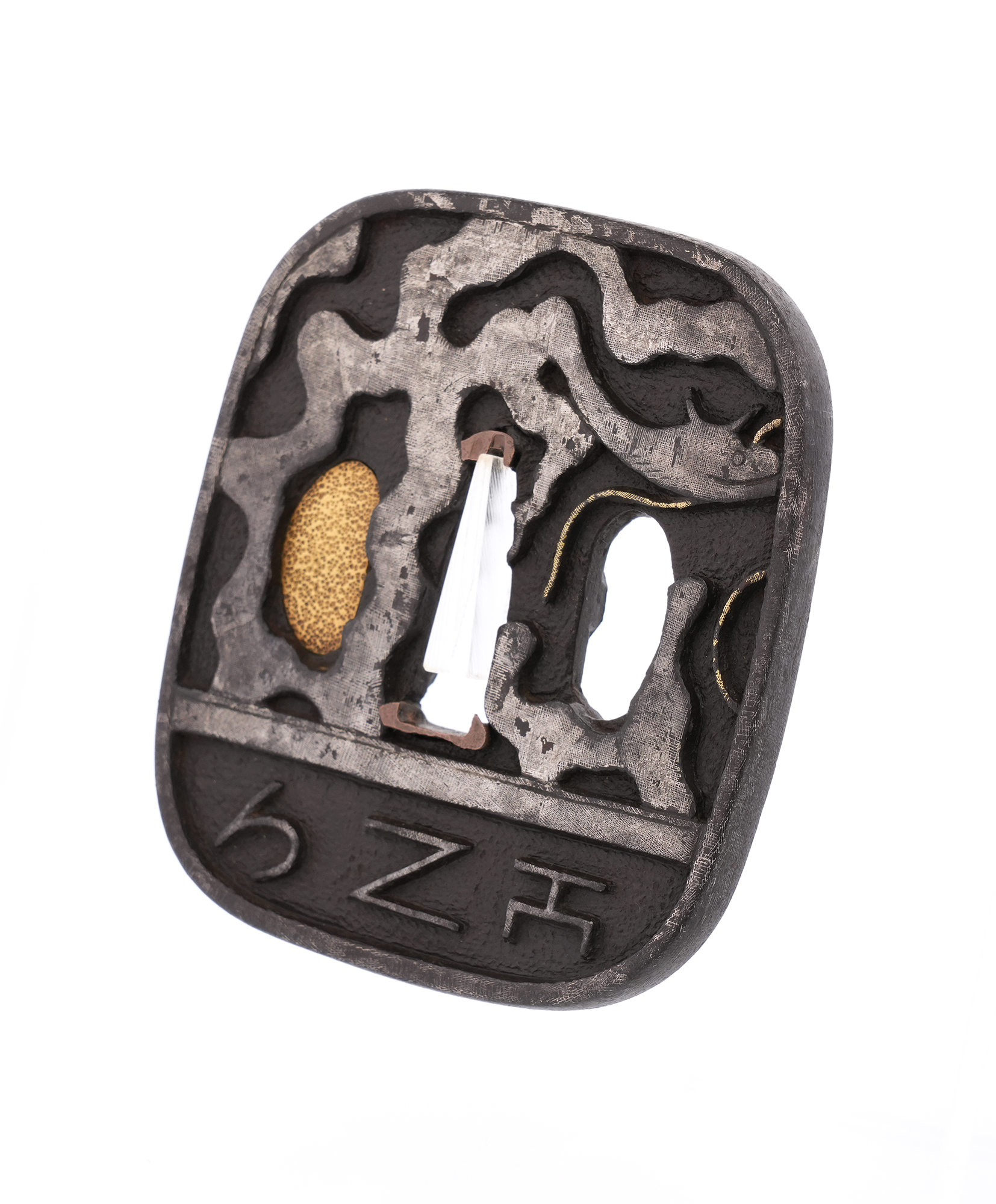
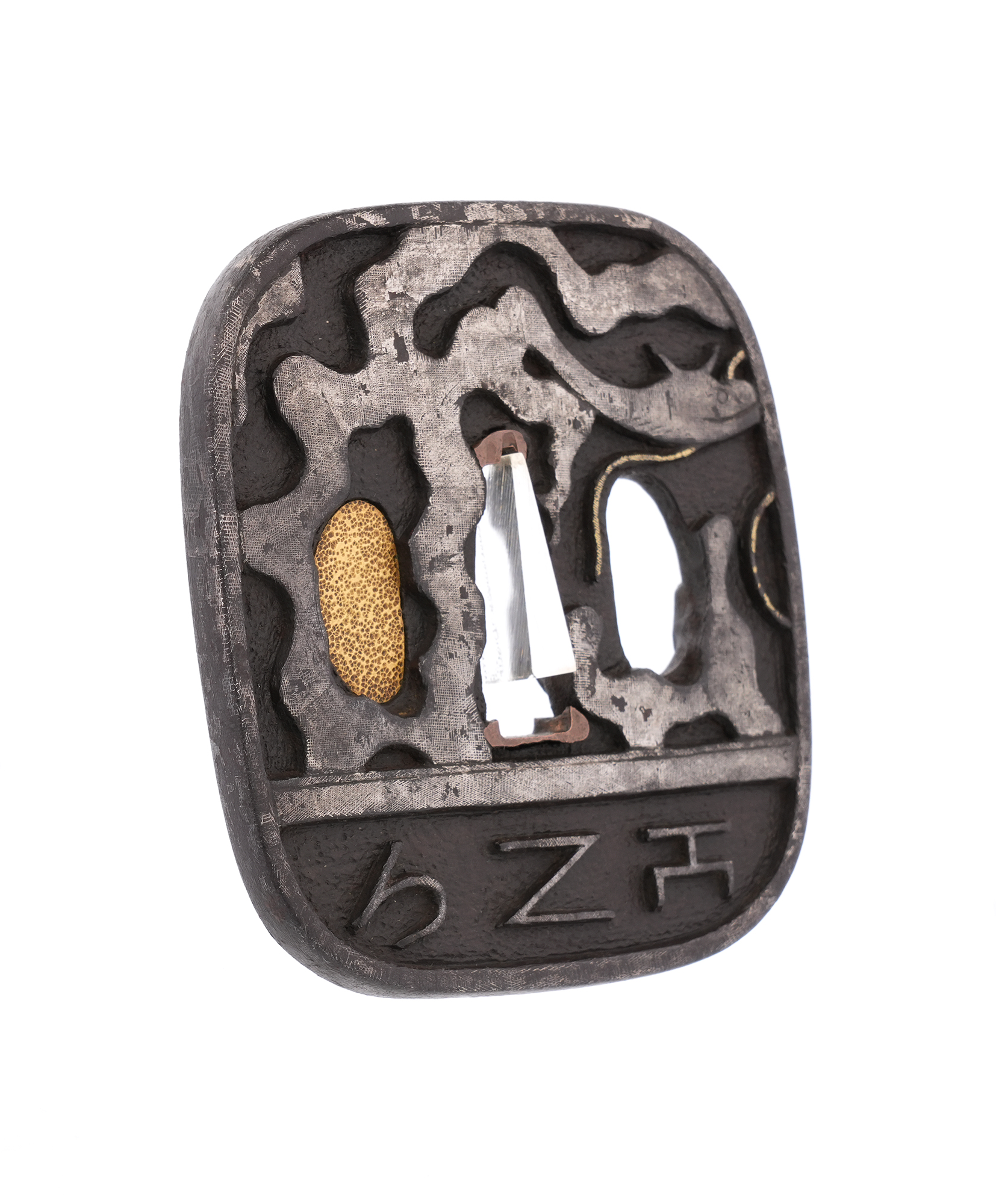
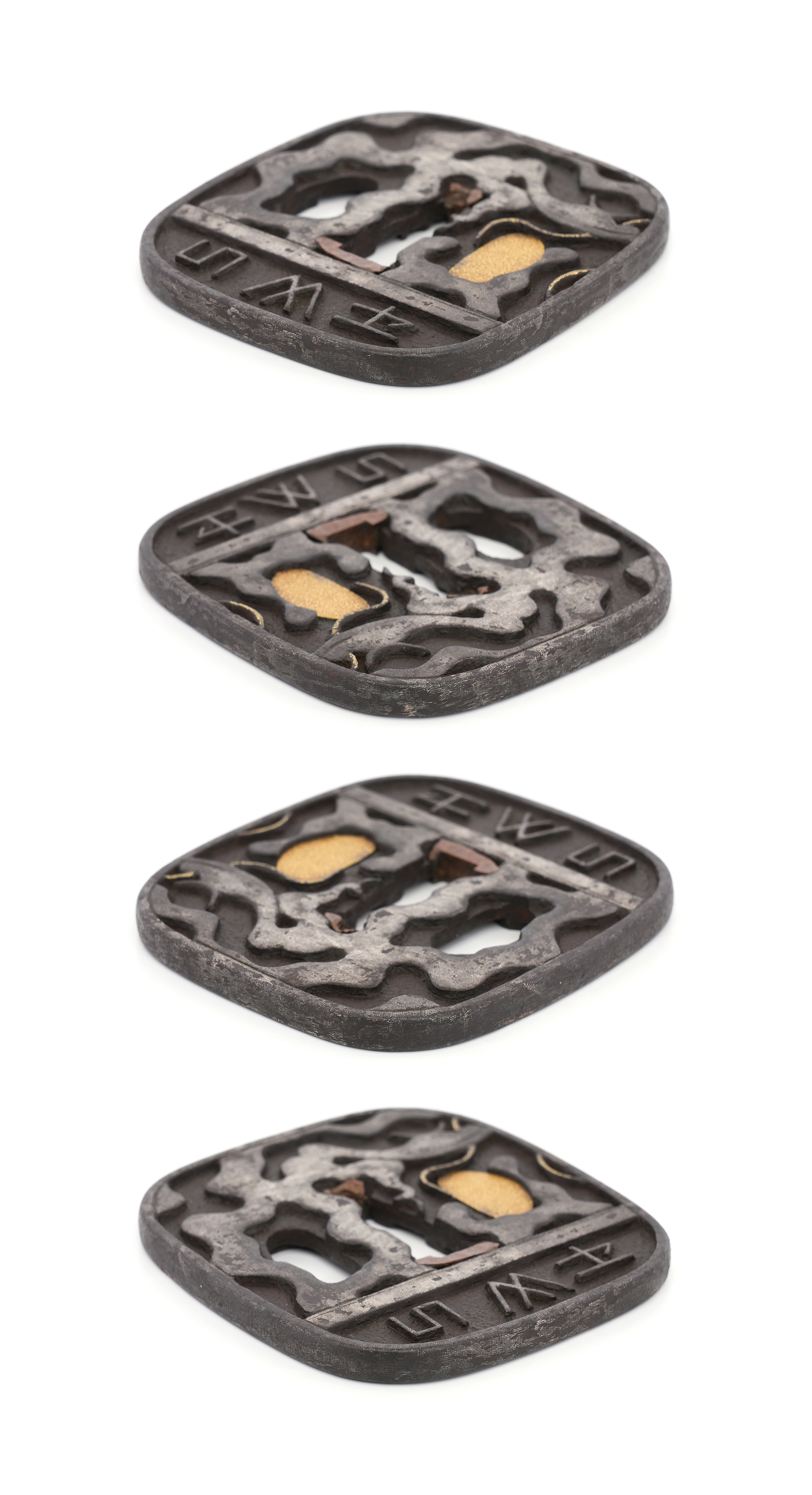
Nanban tsuba refers broadly to exotic sword fittings established from the end of the Momoyama period through the Edo period under the influence of overseas cultures such as China and Europe, and examples are known featuring dragons, arabesques, foreign figures, ships, and characters on tetsu-ji with gold and silver nunome zogan. In particular, Nanban tsuba with foreign-style designs became popular during the middle of the Edo period, and examples combining dragons with Western-style characters reminiscent of the alphabet still exist. These characters do not necessarily form meaningful European text, and there are examples where the foreign characters themselves were incorporated as decorative motifs; it is appropriate to view the character-like patterns lined up at the bottom of this work as belonging to that lineage. This work is a single piece with a large dragon carved into a tetsu-ji fashioned into a kaku-gata with a substantial feel, measuring 6.1 mm in thickness and 137 grams in weight. Silver nunome zogan is applied extensively to the body of the dragon, and silver nunome zogan is also applied across the entire mimi. The silver nunome zogan on the side of the mimi has been rubbed away through many years of use to the point of remaining only as traces, but one can imagine that at the time of its creation, it presented a gorgeous appearance vastly different from its current state, shining in silver from the dragon's body to the mimi. Gold nunome zogan is applied to the whiskers to create a color contrast with the silver, and the kogai-hitsu-ana has been filled, suggesting that it was handed down while actually being mounted on a koshirae. And above all, the charm of this work is surely the expression of the dragon. Differing in style from the intimidating and fierce dragons seen on typical tsuba, the large head, rounded eyes, and somewhat goofy facial features have a charm like a dragon appearing in an illustration of a folk tale. On the other hand, the design is truly uninhibited, with a bold composition of the dragon's body, silver nunome zogan as the main element with gold nunome zogan on the whiskers, and Western-style characters placed largely at the bottom. It is a Nanban tsuba that allows one to enjoy not just a competition of precision, but how the metalworkers of that time understood foreign cultures and reconstructed them with their own sensibilities, and the rubbing of the silver zogan has also become a keshiki that tells the story of its long transmission through generations.
NihontoWatchOffered by Toushin

We couldn’t find current papers for this piece. Ask the dealer whether it has been, or can be, submitted to shinsa. — Hoshi

Unsigned
As written by the shop
Machine translation from the shop's Japanese · may contain errors ·
We could not find an authenticity certificate on the seller’s listing. Japanese swords and fittings are normally papered by the NBTHK (or the NTHK). Without one, the attribution is the seller’s own assessment and has not been independently verified — treat it with caution and ask the dealer about certification before buying.
As a rule we do not accept returns, except when we have sent a different item from the one ordered or when there is a significant discrepancy between the description and the item. If you wish to return an item, please contact us within 3 days of its arrival and then send it back.
¥110,000