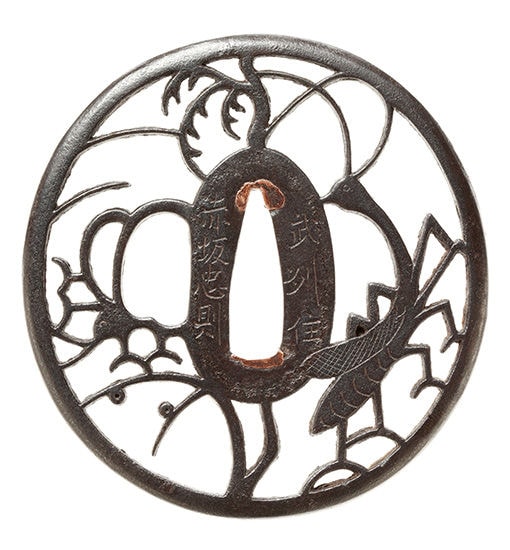
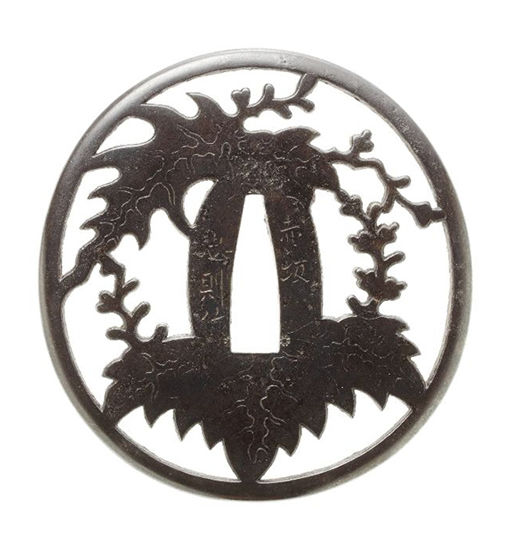
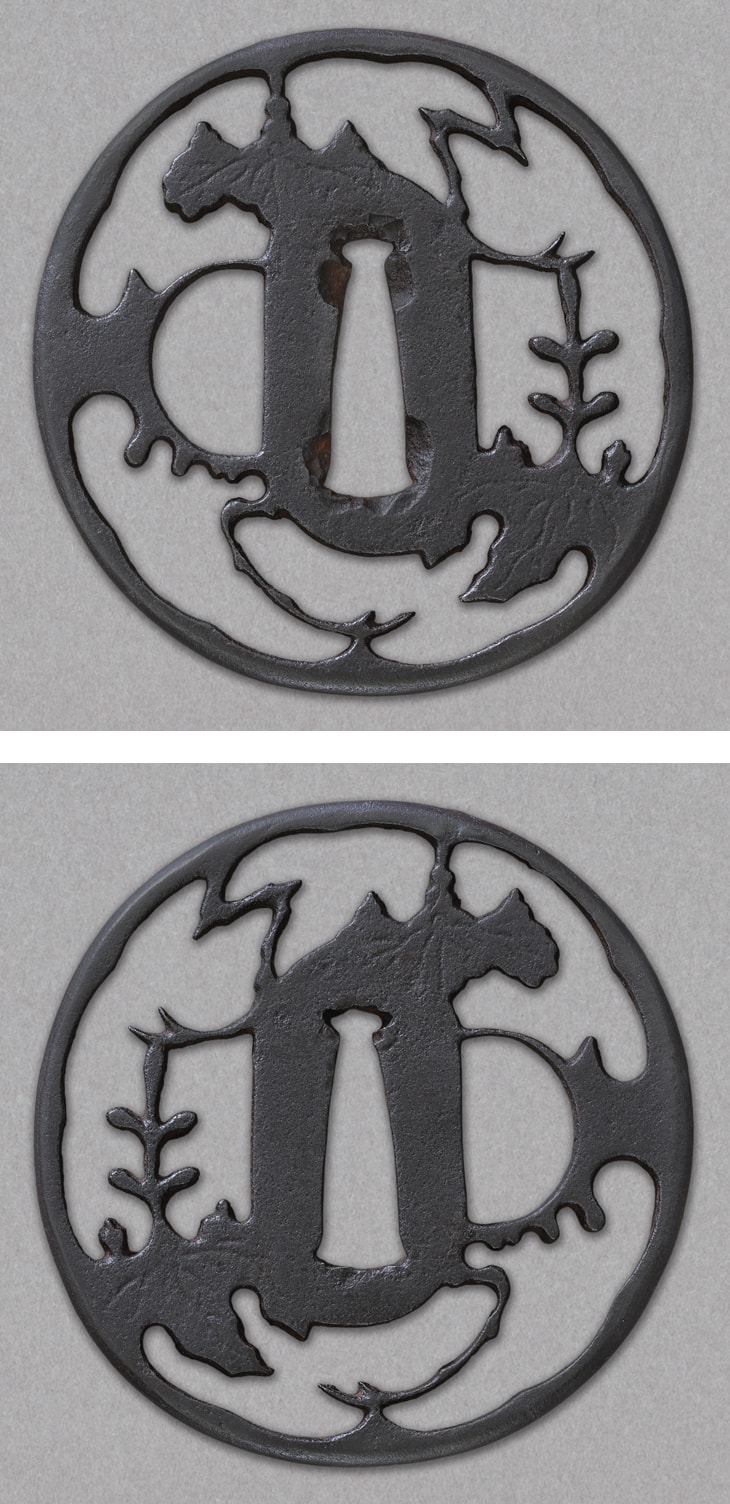
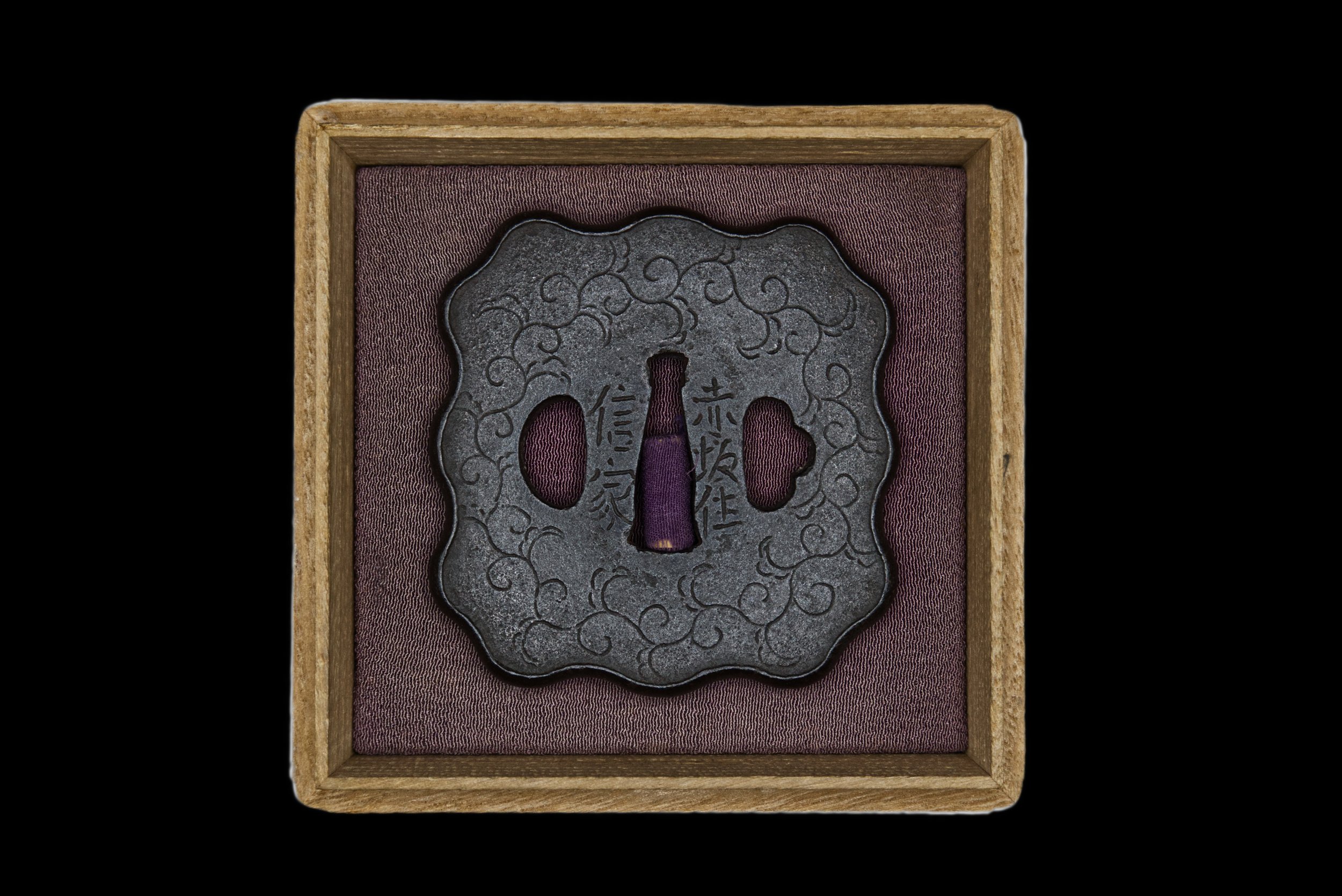
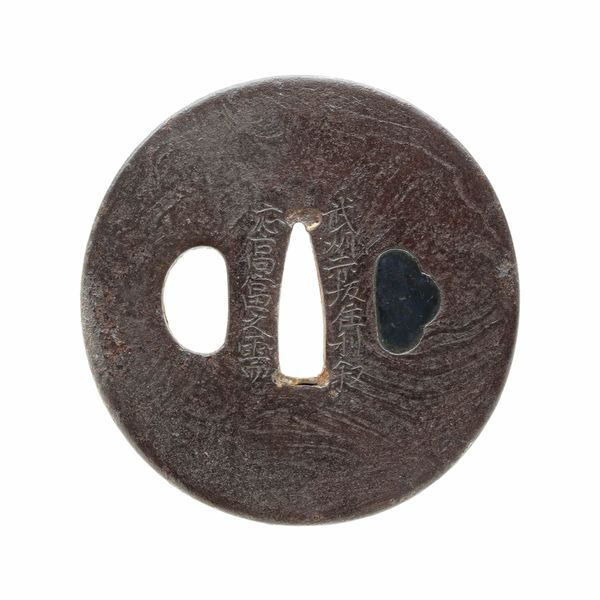
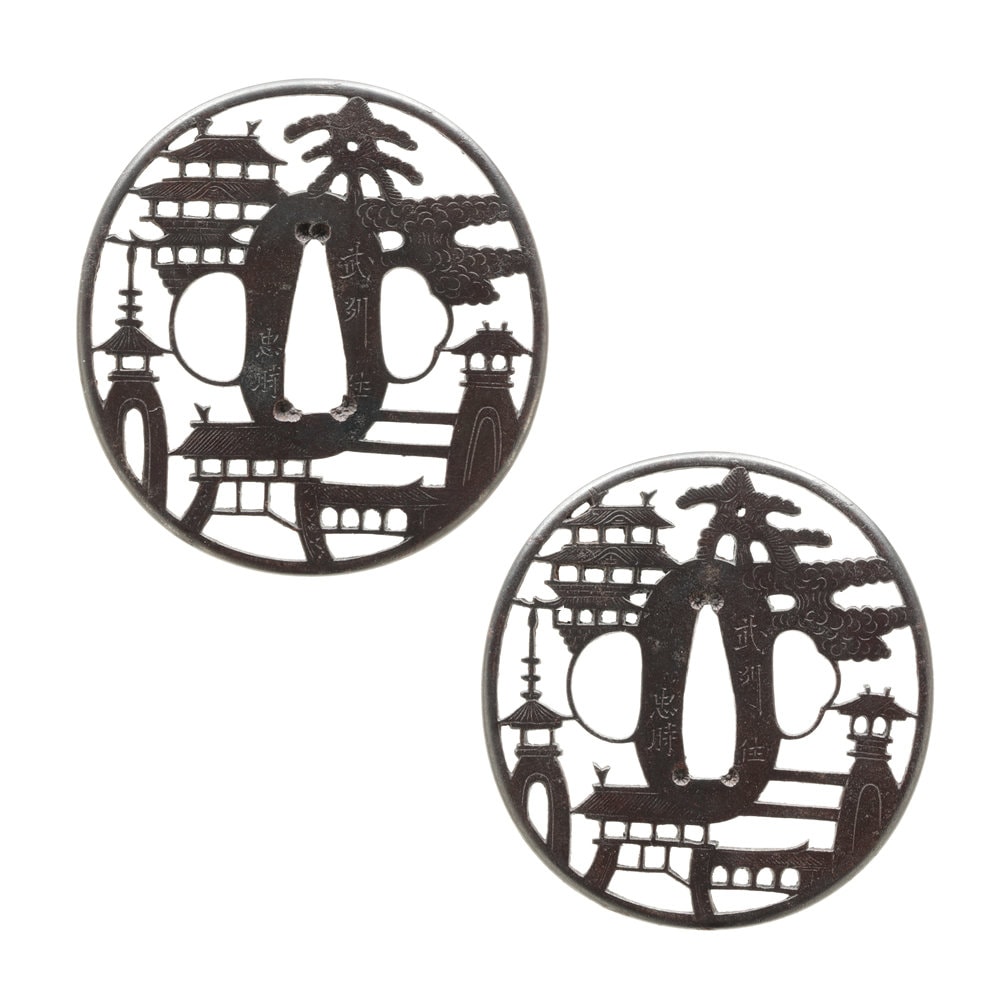
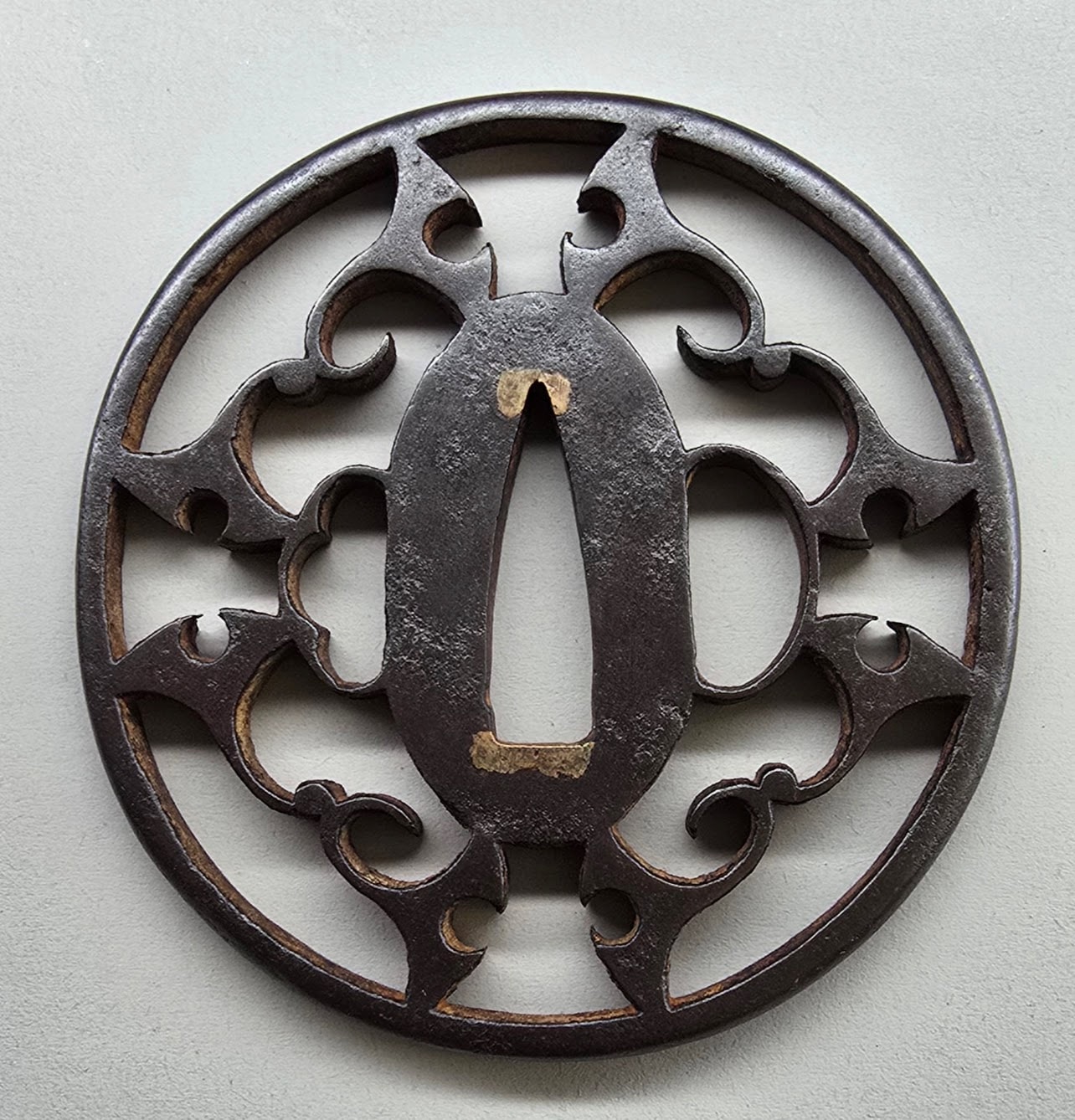
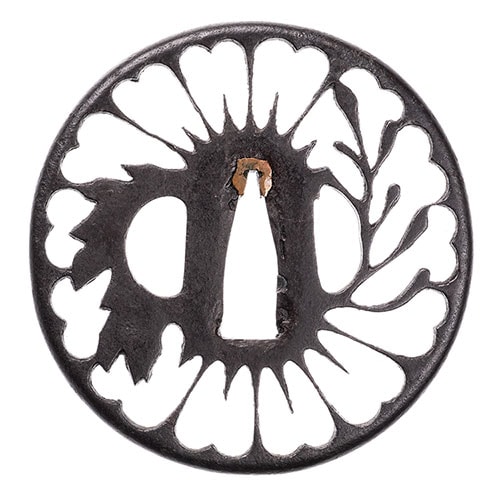
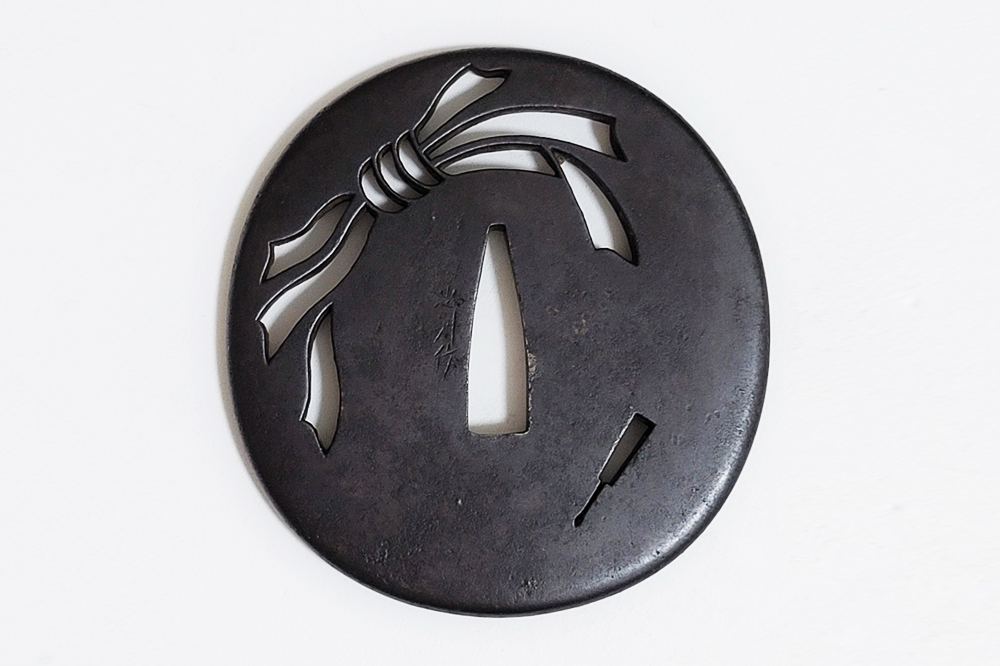
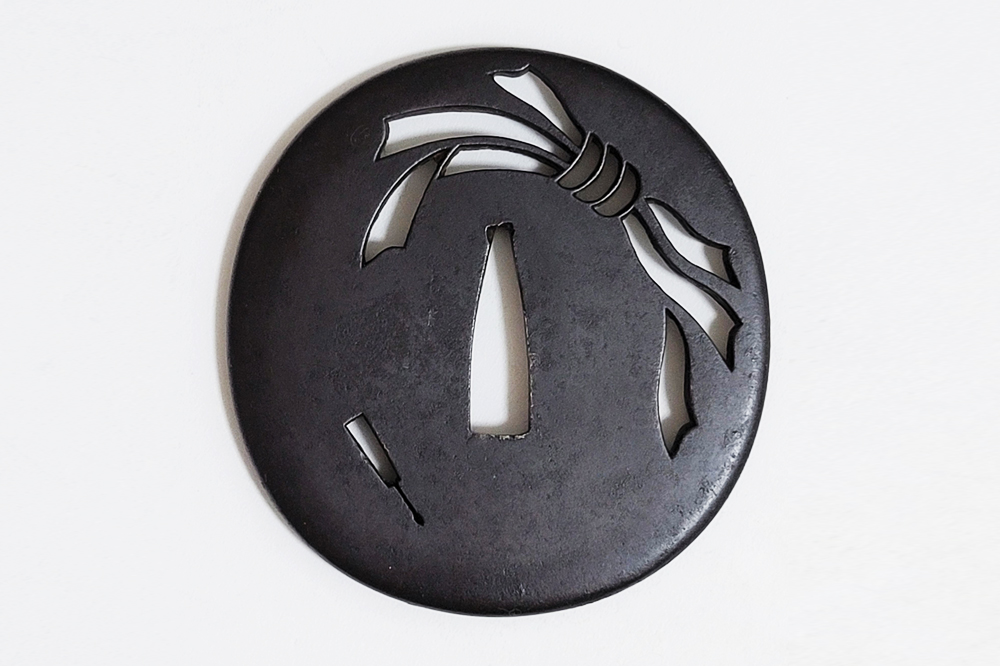
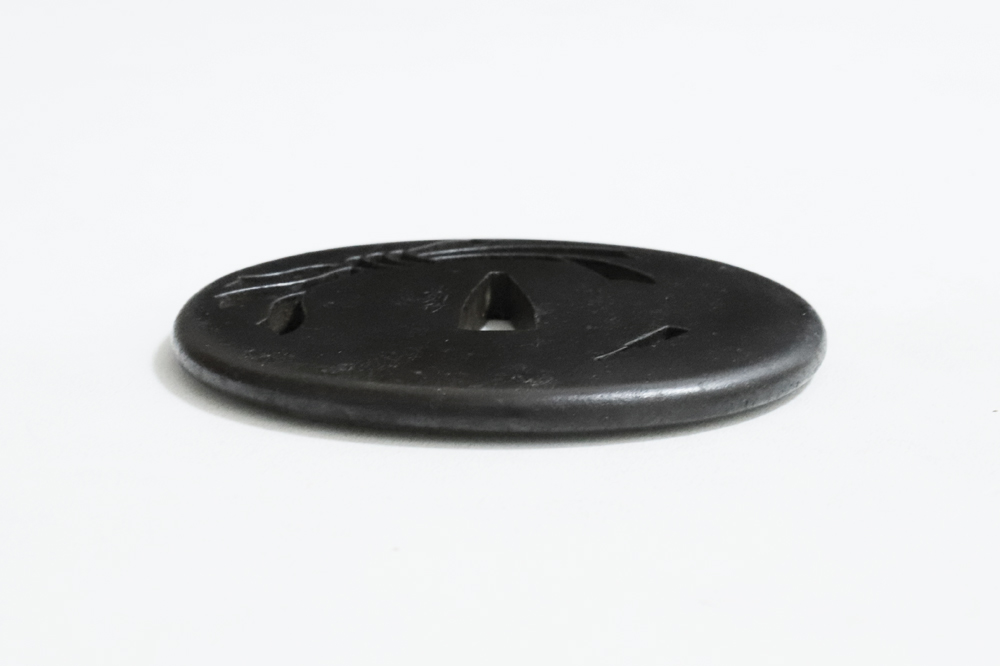
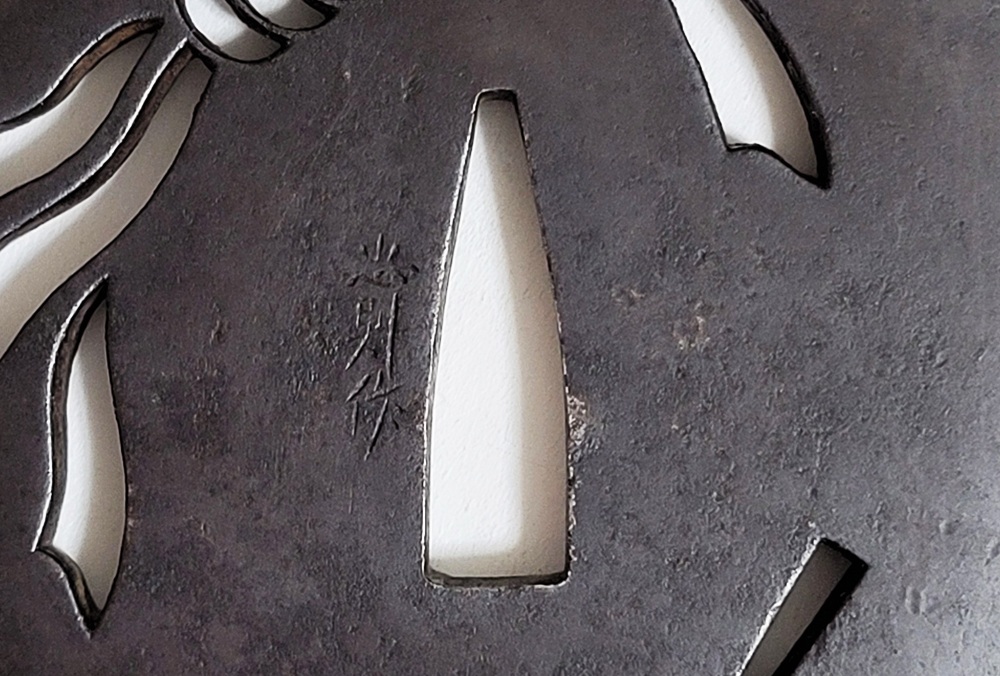
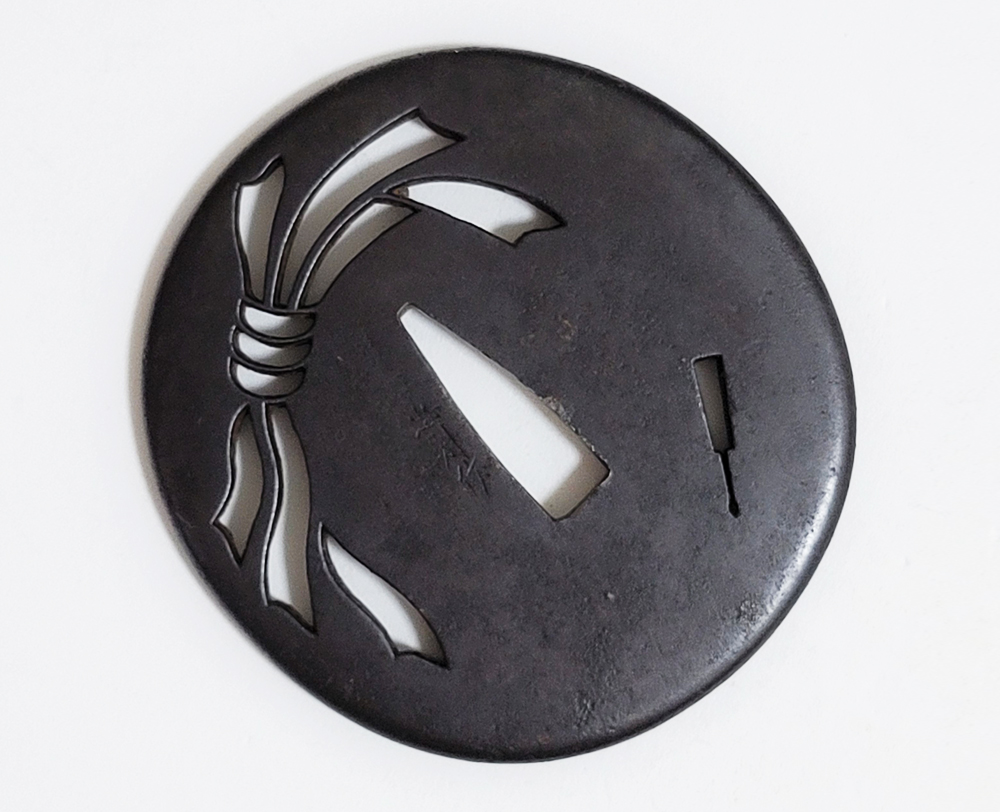
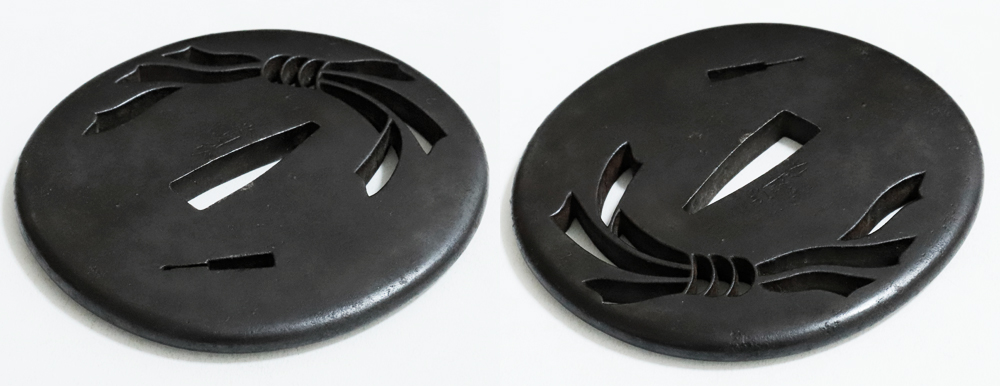
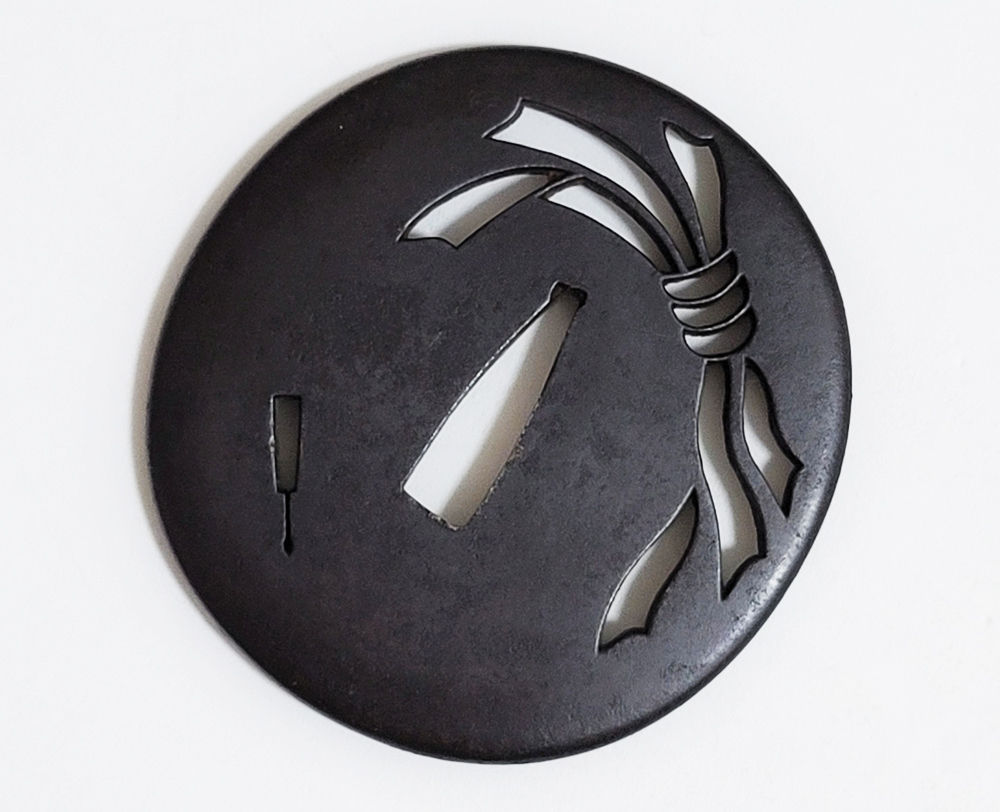
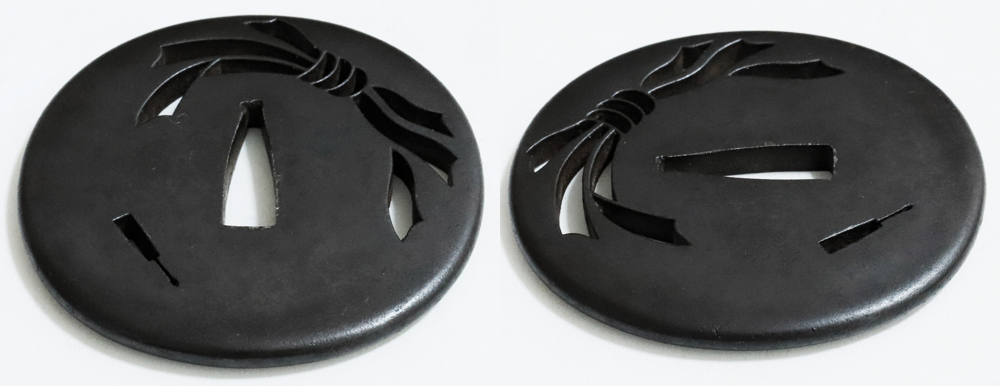
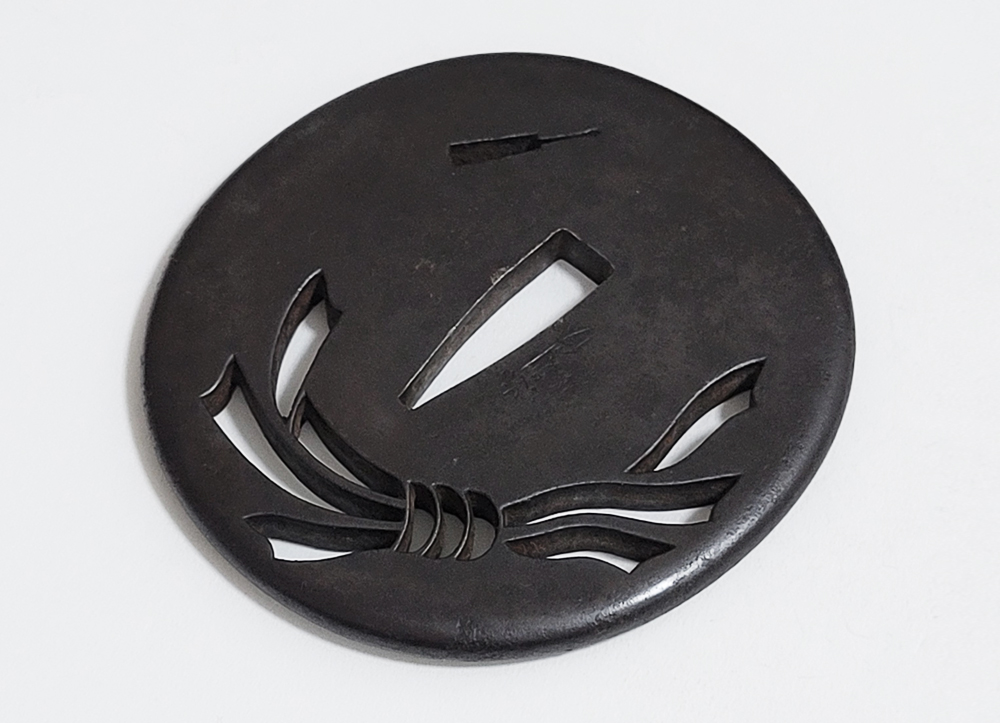
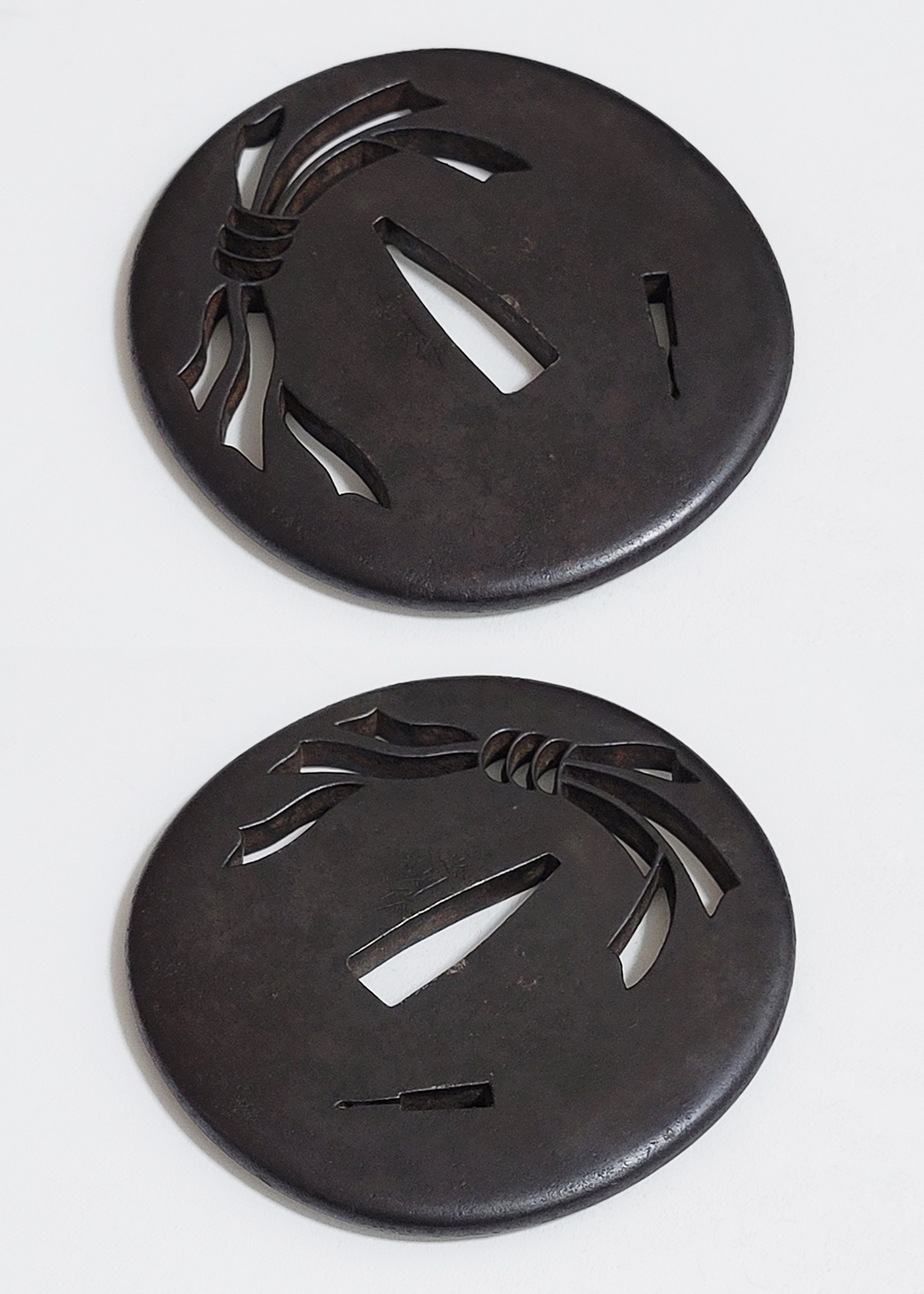
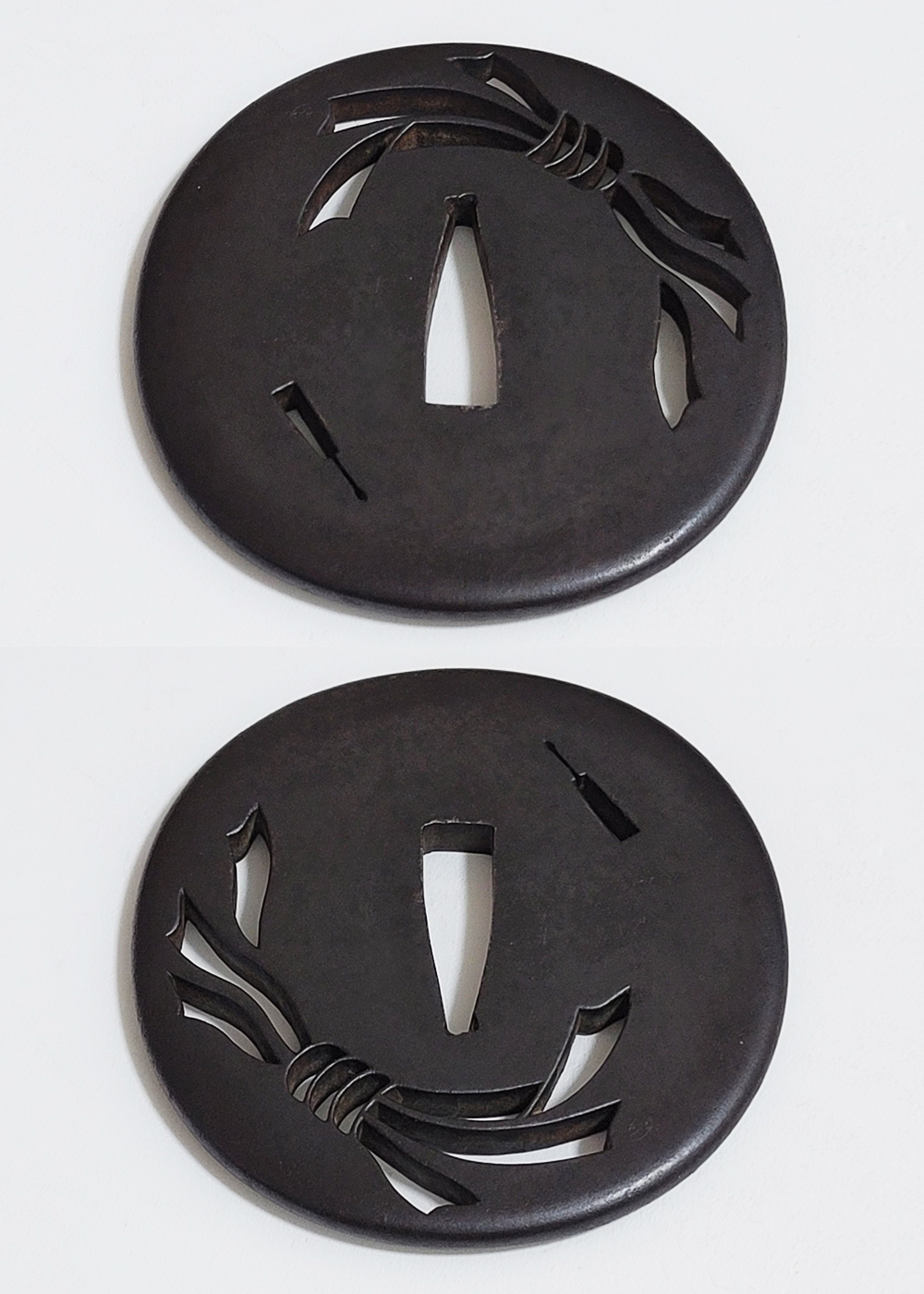
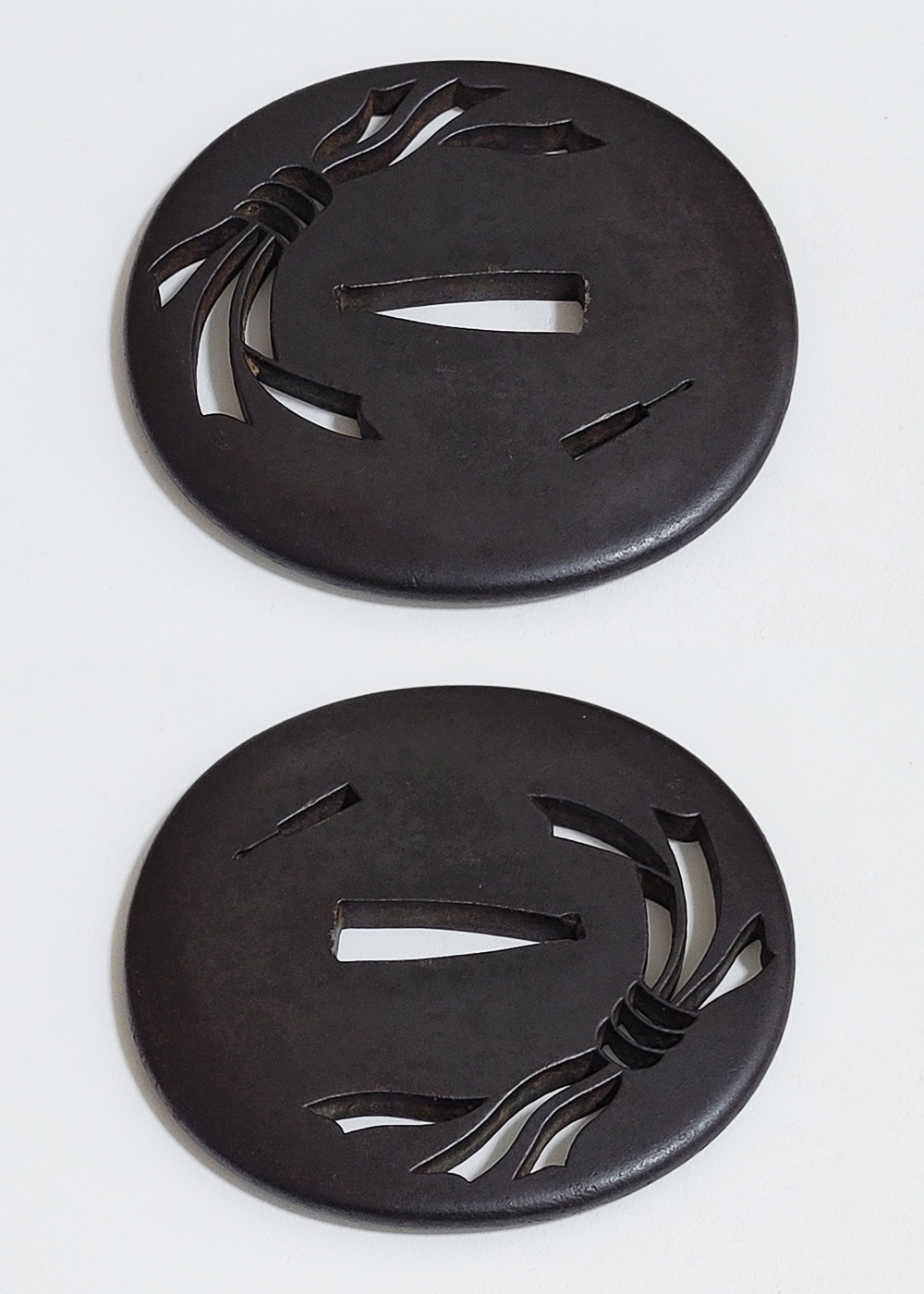
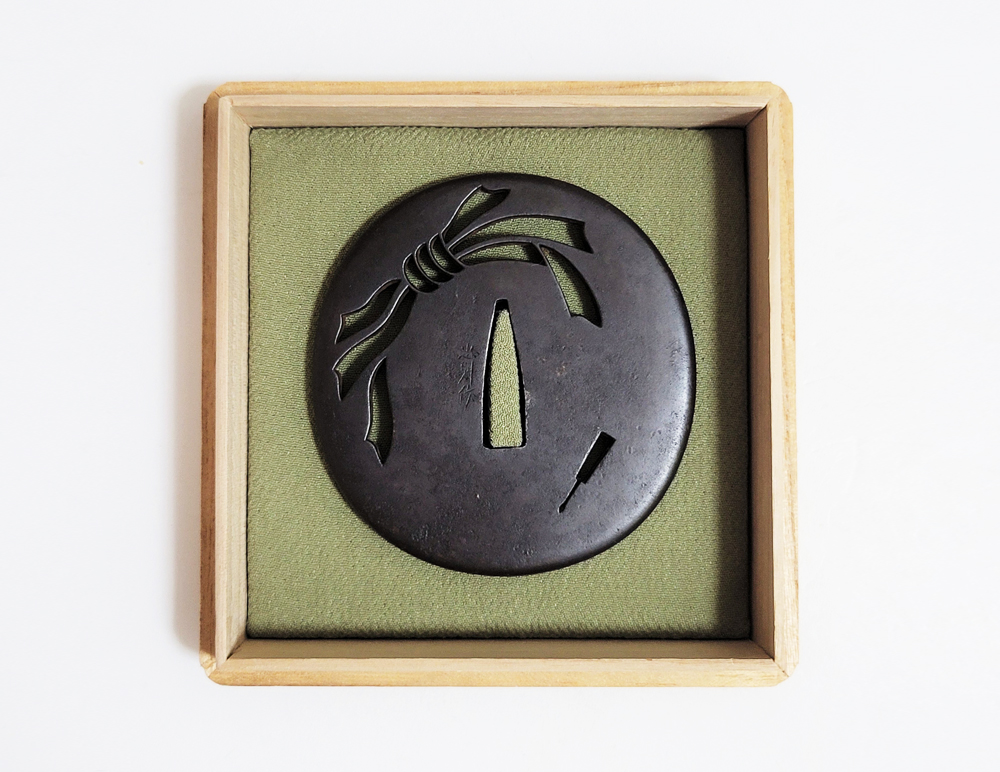
This tsuba features a design of bundled noshi and a folding fan skillfully rendered in openwork on a well-forged iron ground. The composition is simple yet elegant, making good use of negative space, with a large spread noshi bundle and a small folded fan on the opposite side. The bundled noshi is an auspicious motif symbolizing longevity, prosperity, and good relationships, while the fan, with its 'suehirogari' shape that widens towards the tip, symbolizes future development and prosperity. The signature reads 'Tadanori saku'. Based on the signature style and workmanship, this Tadanori is believed to be a pupil of Akasaka 3rd generation Tadatoki, though distinguishing between the first and second generations is considered difficult. It is a refined tsuba characteristic of the Akasaka school.
 NihontoWatch
mei · Akasaka · Edo
Iron-tsuba · Musashi · around 1730-1780
2 pieces on the market now
Iron-tsuba · Edo
Phase: Akasaka赤坂· 1688–1860
80 pieces on the market now
| Smith | Era | Designated |
|---|---|---|
| Tadamasa忠正 | 1624-1658 | 7 |
| Tadashige忠重 | 1730-1816 | 5 |
| Tadatoki忠時 | 1704-1764 | 0 |
| Tadanao忠直 | 1661-1688 | 0 |
| Tadamune忠宗 | 1707-1746 | 0 |
We could not find an authenticity certificate on the seller’s listing. Japanese swords and fittings are normally papered by the NBTHK (or the NTHK). Without one, the attribution is the seller’s own assessment and has not been independently verified — treat it with caution and ask the dealer about certification before buying.
Domestic: items may be returned within 7 days in original condition for a full refund (buyer covers transport). Overseas orders: no-refunds, no-returns.
¥65,000
This tsuba features a design of bundled noshi and a folding fan skillfully rendered in openwork on a well-forged iron ground. The composition is simple yet elegant, making good use of negative space, with a large spread noshi bundle and a small folded fan on the opposite side. The bundled noshi is an auspicious motif symbolizing longevity, prosperity, and good relationships, while the fan, with its 'suehirogari' shape that widens towards the tip, symbolizes future development and prosperity. The signature reads 'Tadanori saku'. Based on the signature style and workmanship, this Tadanori is believed to be a pupil of Akasaka 3rd generation Tadatoki, though distinguishing between the first and second generations is considered difficult. It is a refined tsuba characteristic of the Akasaka school.
NihontoWatchmei · Akasaka · Edo
Iron-tsuba · Musashi · around 1730-1780
2 pieces on the market now
Iron-tsuba · Edo
Phase: Akasaka赤坂· 1688–1860
80 pieces on the market now
| Smith | Era | Designated |
|---|---|---|
| Tadamasa忠正 | 1624-1658 | 7 |
| Tadashige忠重 | 1730-1816 | 5 |
| Tadatoki忠時 | 1704-1764 | 0 |
| Tadanao忠直 | 1661-1688 | 0 |
| Tadamune忠宗 | 1707-1746 | 0 |
We could not find an authenticity certificate on the seller’s listing. Japanese swords and fittings are normally papered by the NBTHK (or the NTHK). Without one, the attribution is the seller’s own assessment and has not been independently verified — treat it with caution and ask the dealer about certification before buying.
Domestic: items may be returned within 7 days in original condition for a full refund (buyer covers transport). Overseas orders: no-refunds, no-returns.
¥65,000