


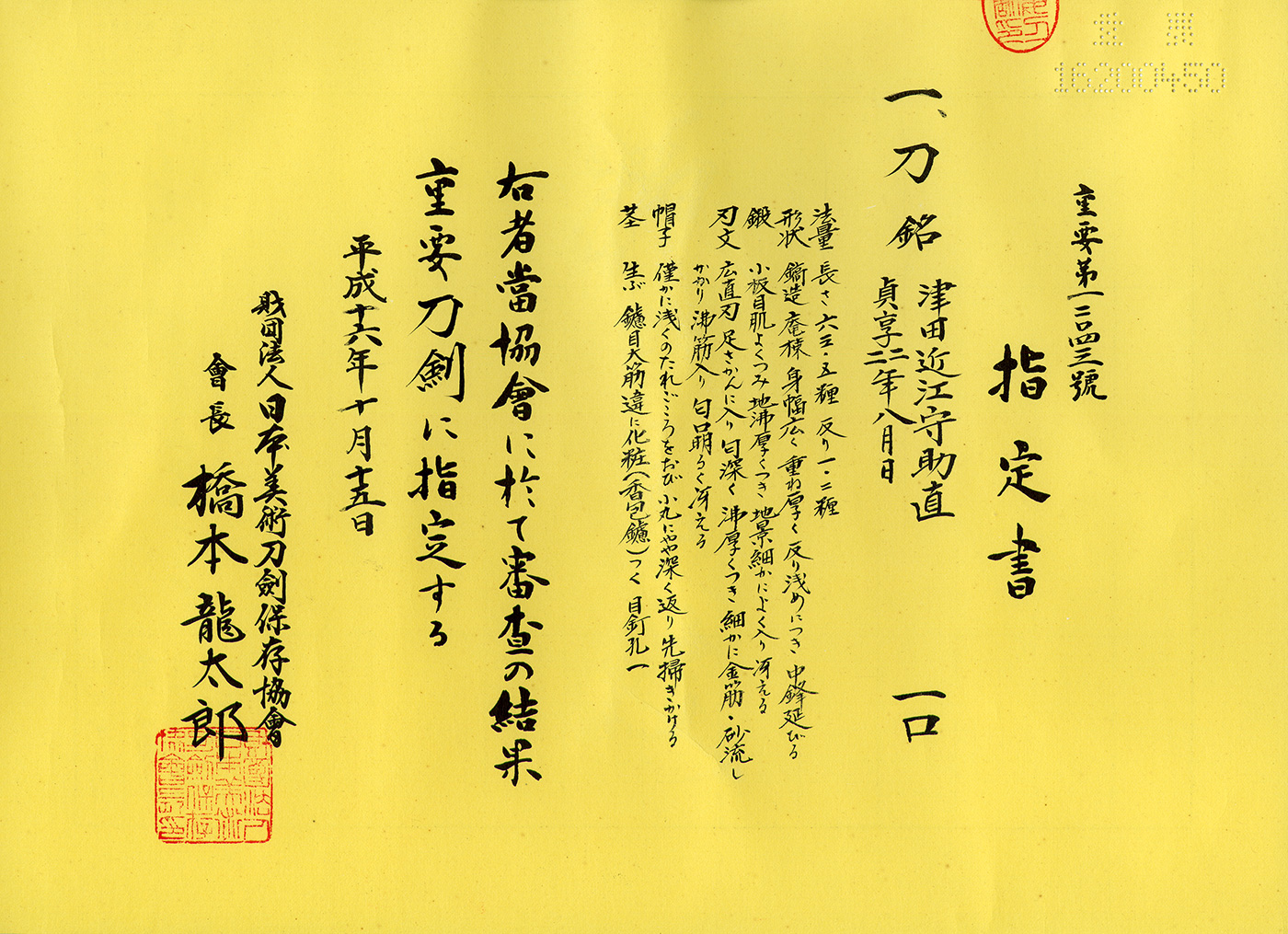
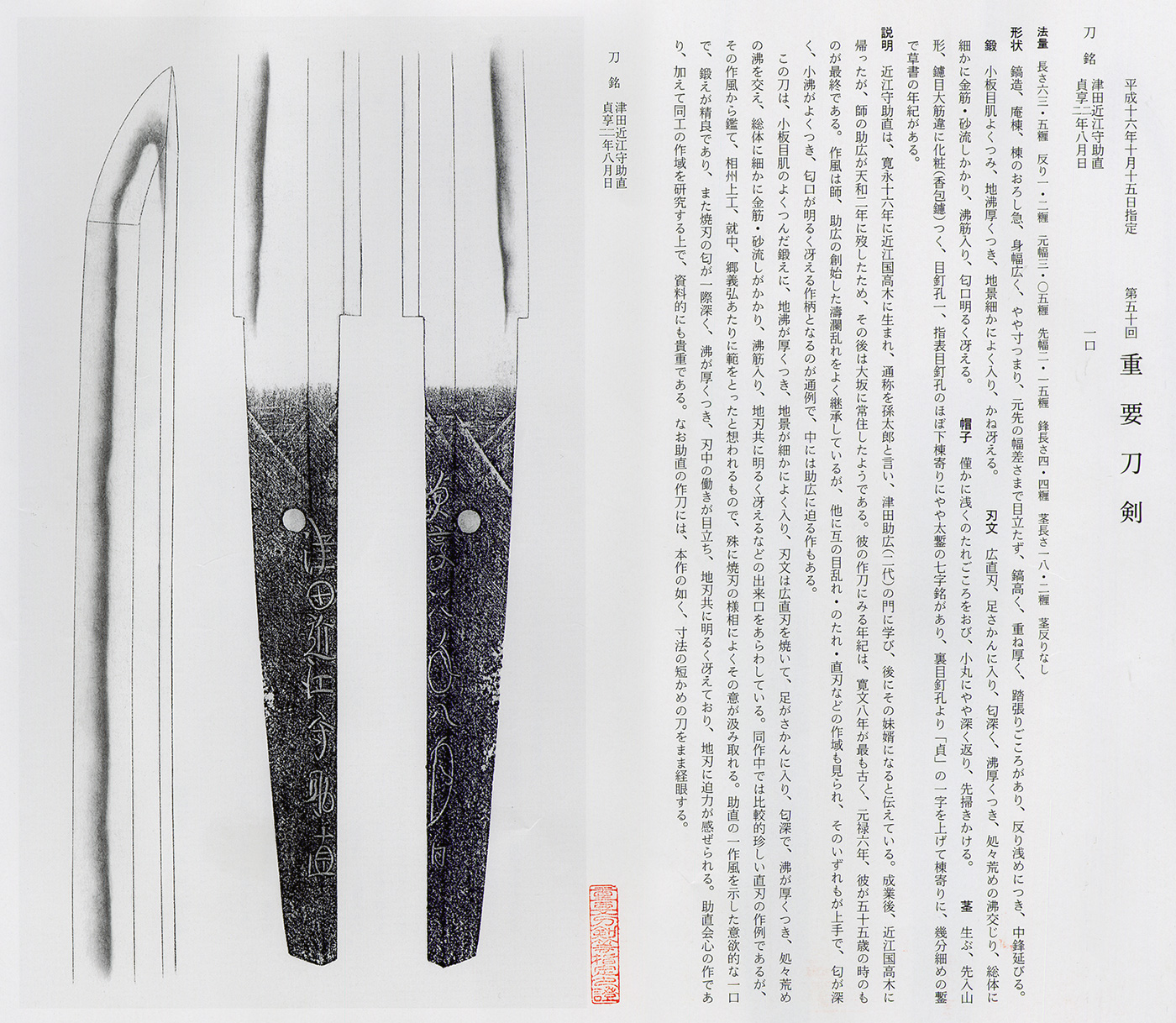
-, 50th Session — Designated October 15, 2004
, : Tsuda Ōmi no Kami Sukenao (津田近江守助直)
Measurements 63.5 cm, 1.2 cm, 3.05 cm, 2.15 cm, 4.4 cm, 18.2 cm
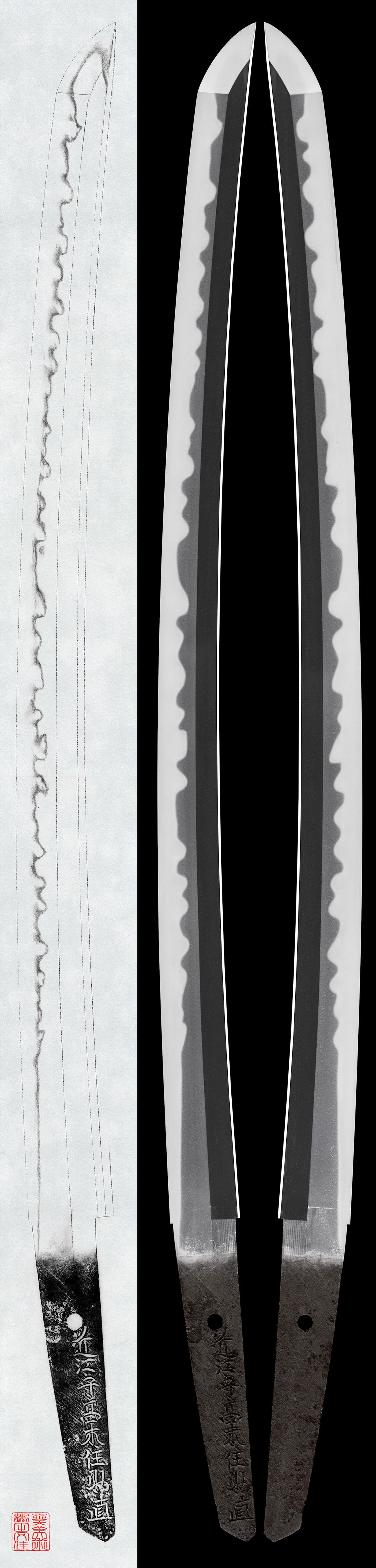
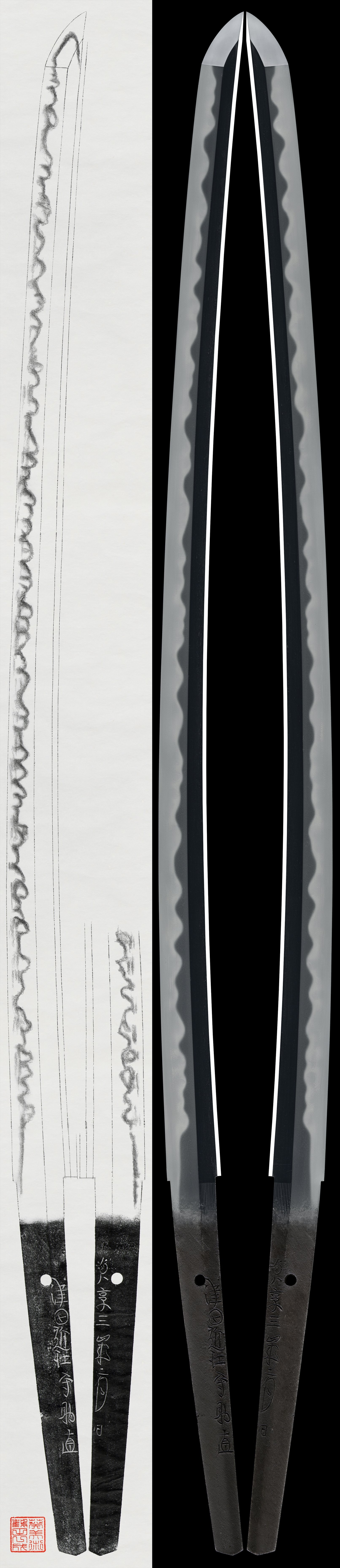
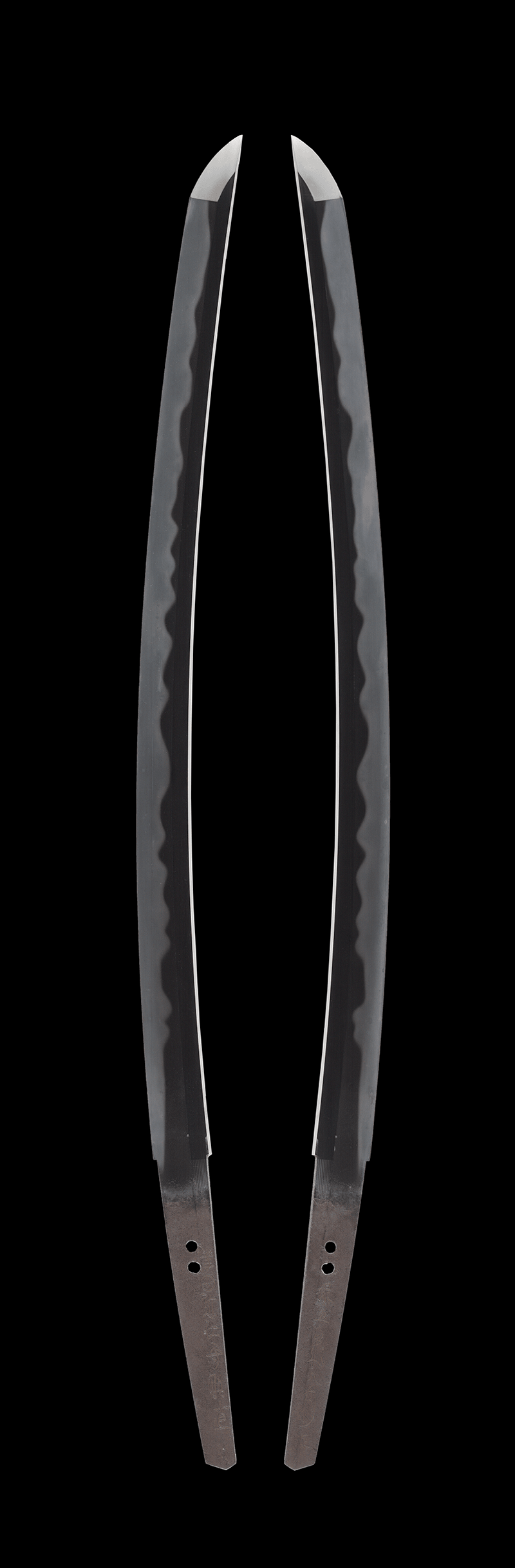
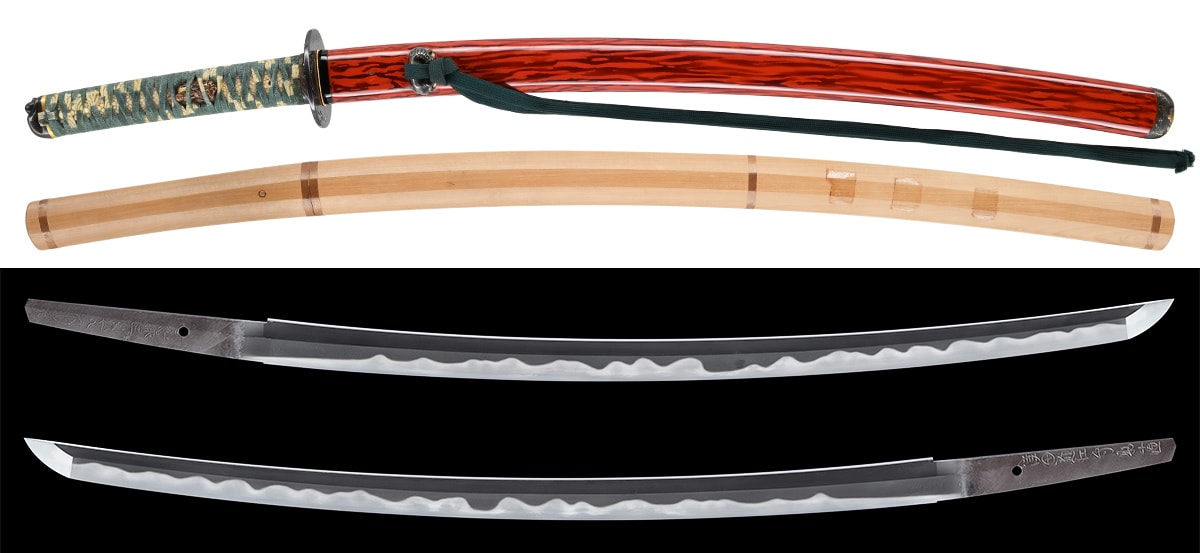
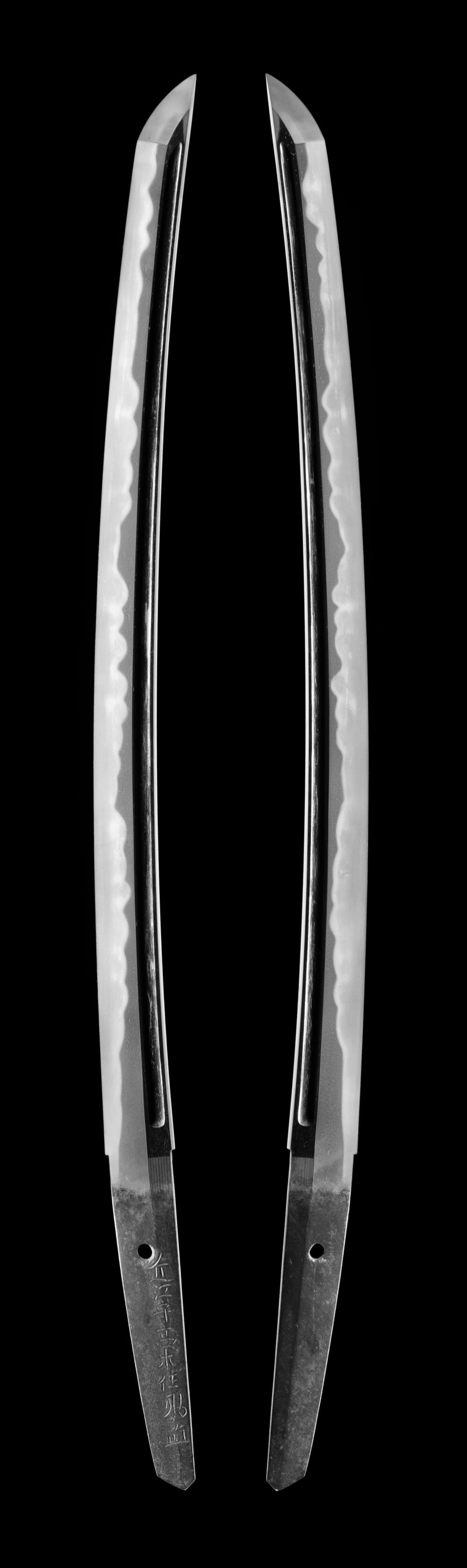
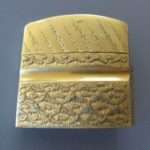
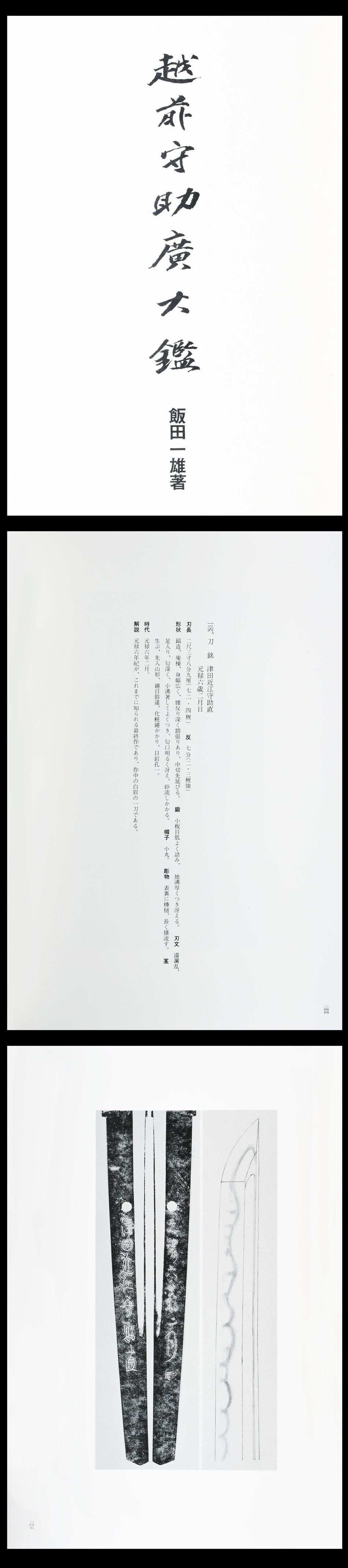
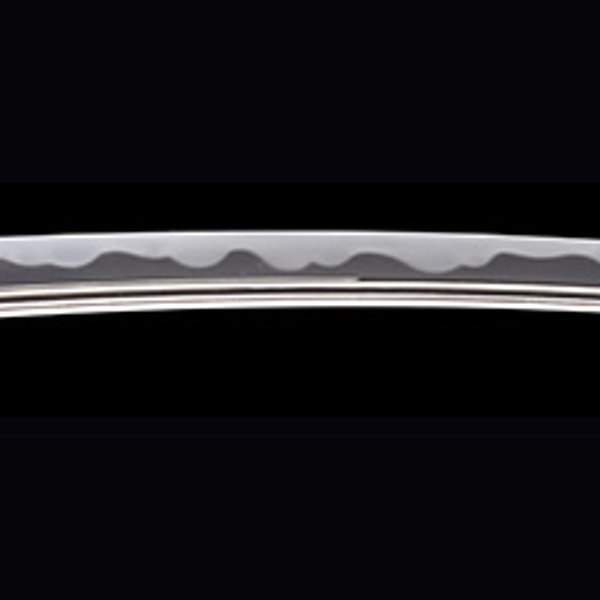
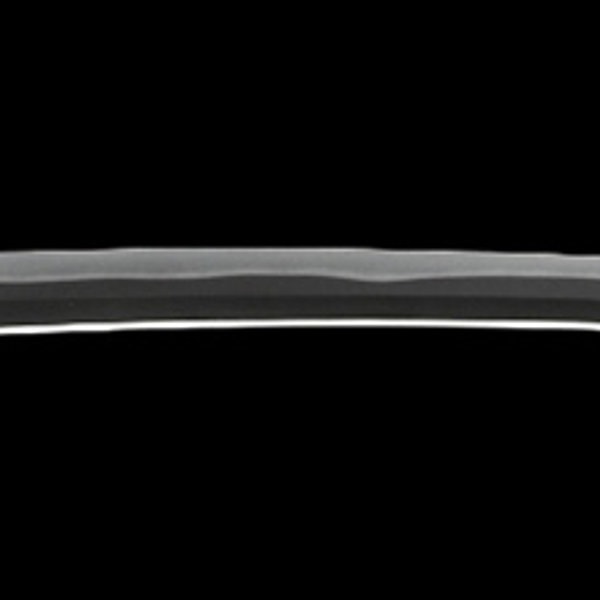
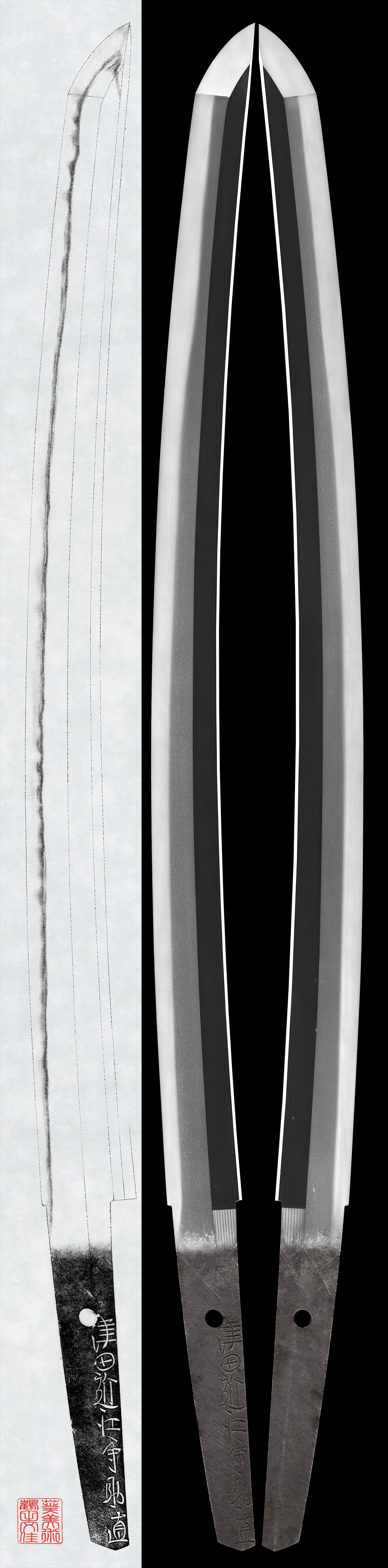
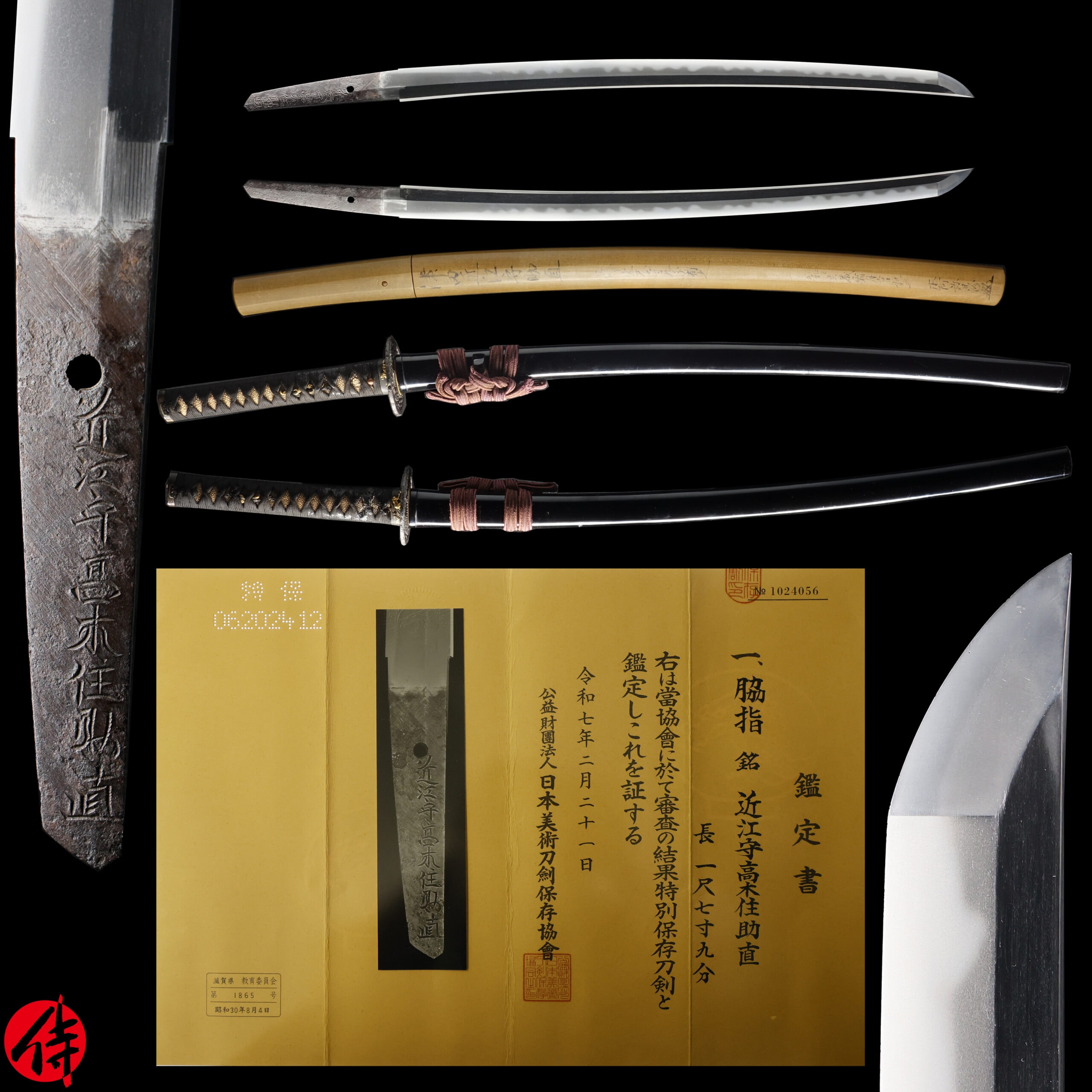
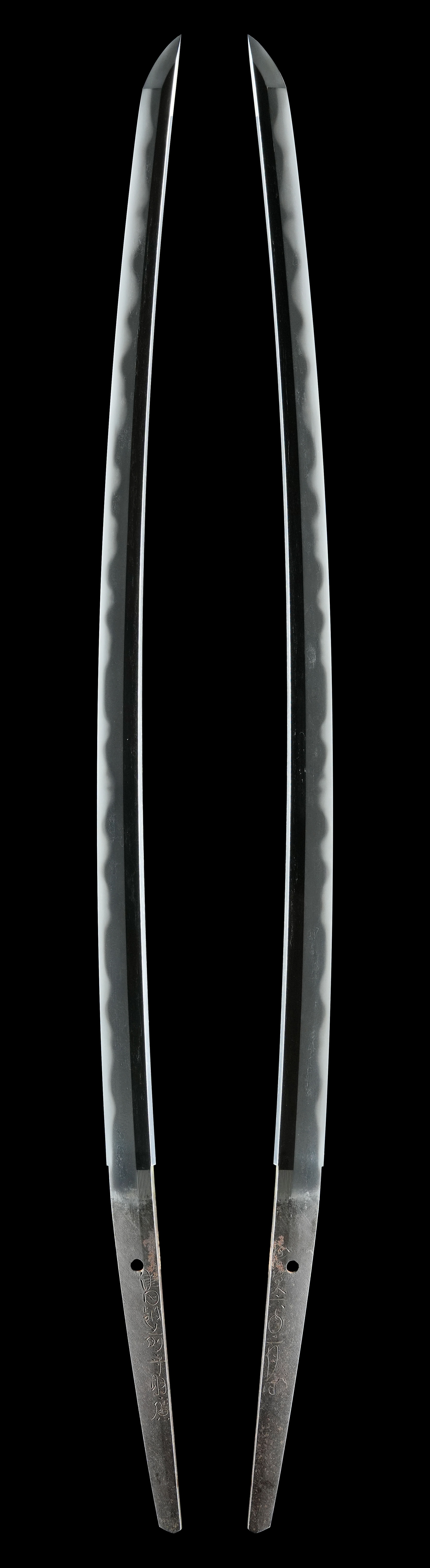
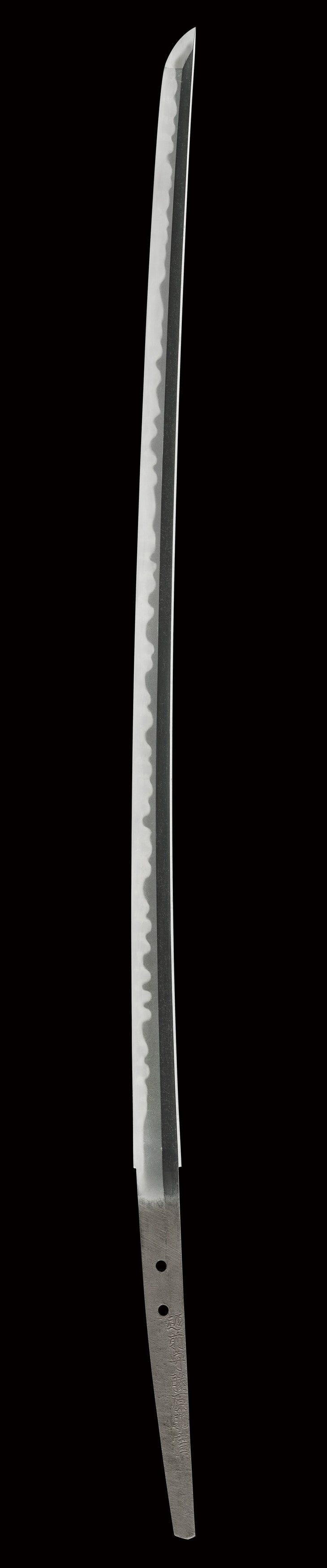
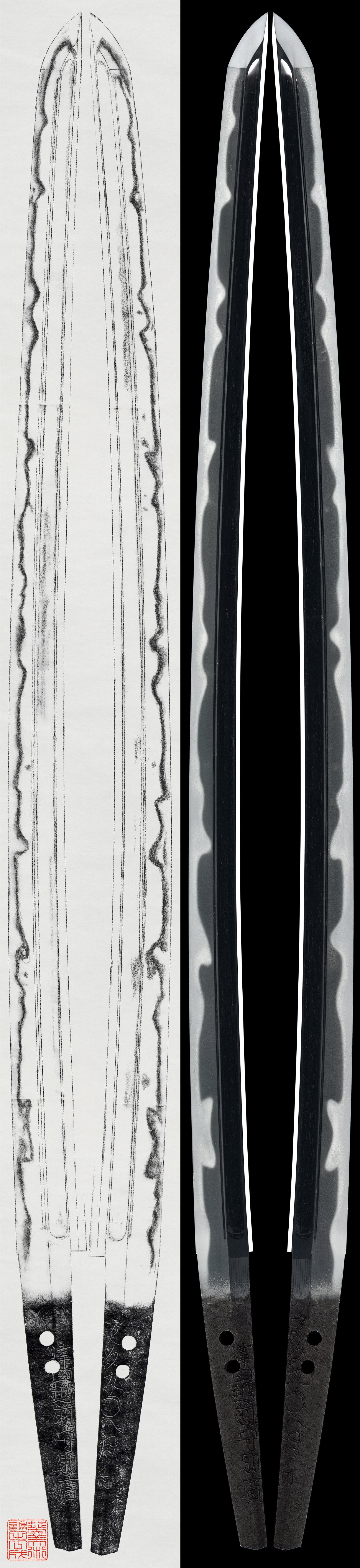
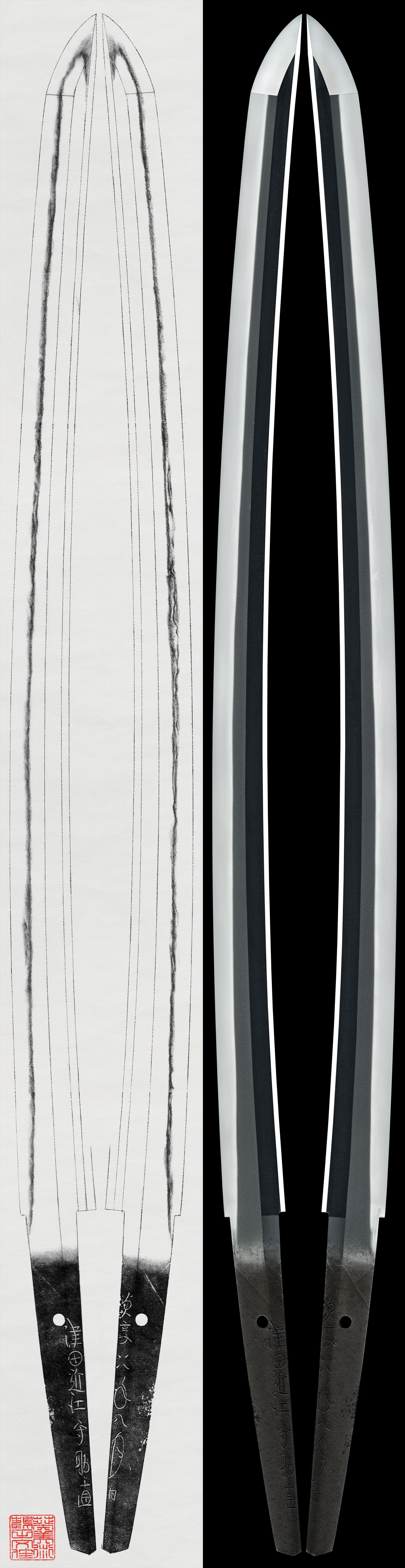
Description Keijō: , ; the tapers down sharply; wide with a slightly stout () impression; the difference between base and tip widths is not especially pronounced; high ; thick ; with a suggestion of ; rather shallow and an extended . : Tight ; thickly adhering ; fine well entered; the steel is clear (). : Wide ; abundant ; deep ; thickly adhering with patches of somewhat rough intermingled; overall, fine and appear throughout, with ; the is bright and clear (). : With a slight, shallow -tendency; turns back in with a somewhat deep return; the tip shows . : None. : ; tip ; file marks are in style (kōtsutsumi-yasuri); one . On the , just below the and close to the , there is a seven-character signature cut with a somewhat thick chisel. On the , above the a cursive date inscription begins by raising the character “Tei” (貞), cut with a somewhat finer chisel.
Artisan Tsuda Ōmi no Kami Sukenao (津田近江守助直)
Era Jōkyō era (貞享), 8th month, day (year unread)
Explanation Ōmi no Kami Sukenao was born in ’ei 16 (1639) at Takagi in Ōmi Province; his common name was Magotarō. He studied under Tsuda Sukehiro (the second generation), and it is said that he later became Sukehiro’s brother-in-law through marriage to his younger sister. After completing his training he returned to Takagi in Ōmi, but because his master Sukehiro died in Tenna 2 (1682), it seems that thereafter he took up permanent residence in Osaka.
Among his dated works, the earliest known is 8 (1668), and the latest is Genroku 6 (1693), made when he was fifty-five years of age. In style he faithfully inherited the tōran-midare pioneered by his master Sukehiro, yet he also produced other manners—such as , , and —and in each of these he was skillful. Typically, his work shows deep , well-adhering , and a bright, clear () ; among them are examples that come close to Sukehiro.
This shows a tightly forged with thick and finely entered . The is a wide with vigorous , deep , and thick , with places where slightly rough is intermixed. Throughout, fine and appear, together with , and both and are bright and clear ().
Although this is a comparatively rare example of Sukenao’s , its manner suggests that he took a model in the upper-ranking masters of , especially around Go Yoshihiro; this intention is particularly well reflected in the appearance of the tempered edge. It is an ambitious work that demonstrates one facet of Sukenao’s stylistic range. The forging is of excellent quality, and the of the is especially deep; thick adheres, the activities within the are conspicuous, and both and are bright and clear, giving a sense of force and presence. It is a work made with full inspiration (kaishin) and, moreover, it is valuable as documentary material for research into the breadth of this smith’s workmanship.
It may also be noted that among Sukenao’s works one not infrequently encounters of somewhat shorter dimensions, as in the present example.