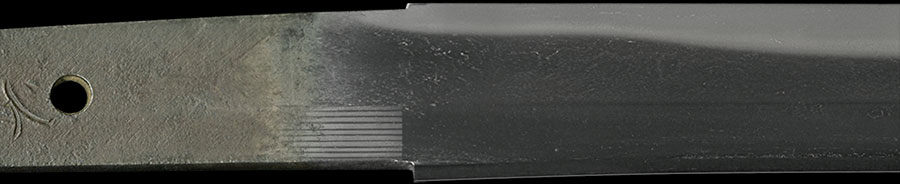
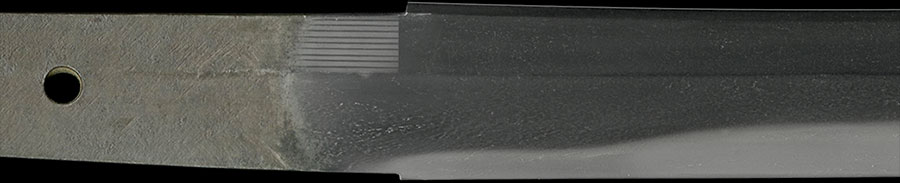
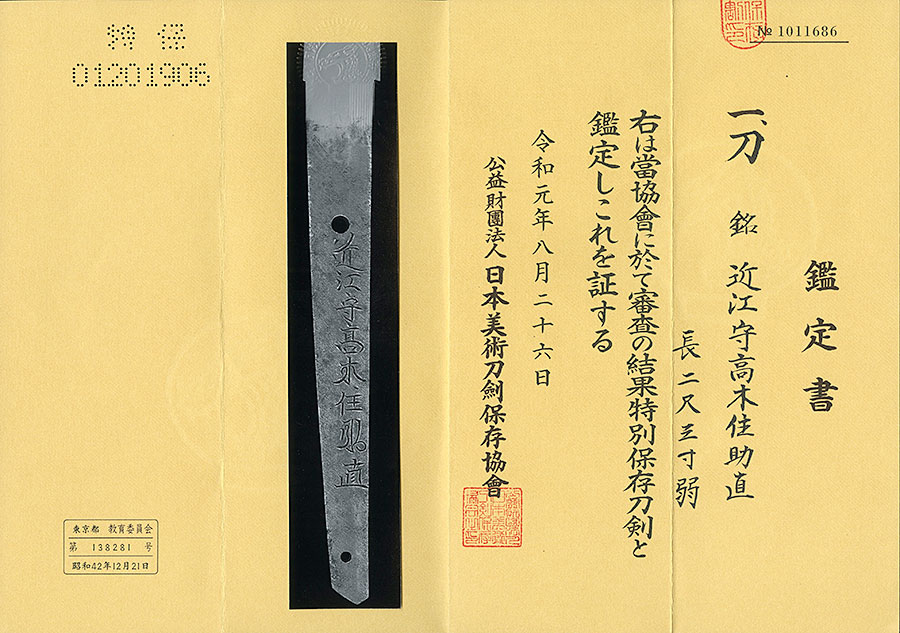
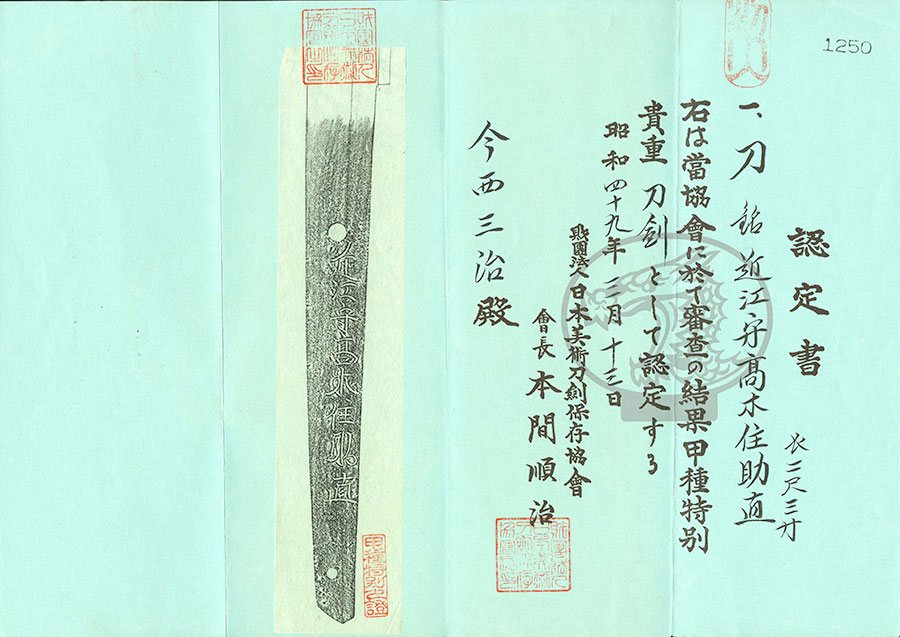
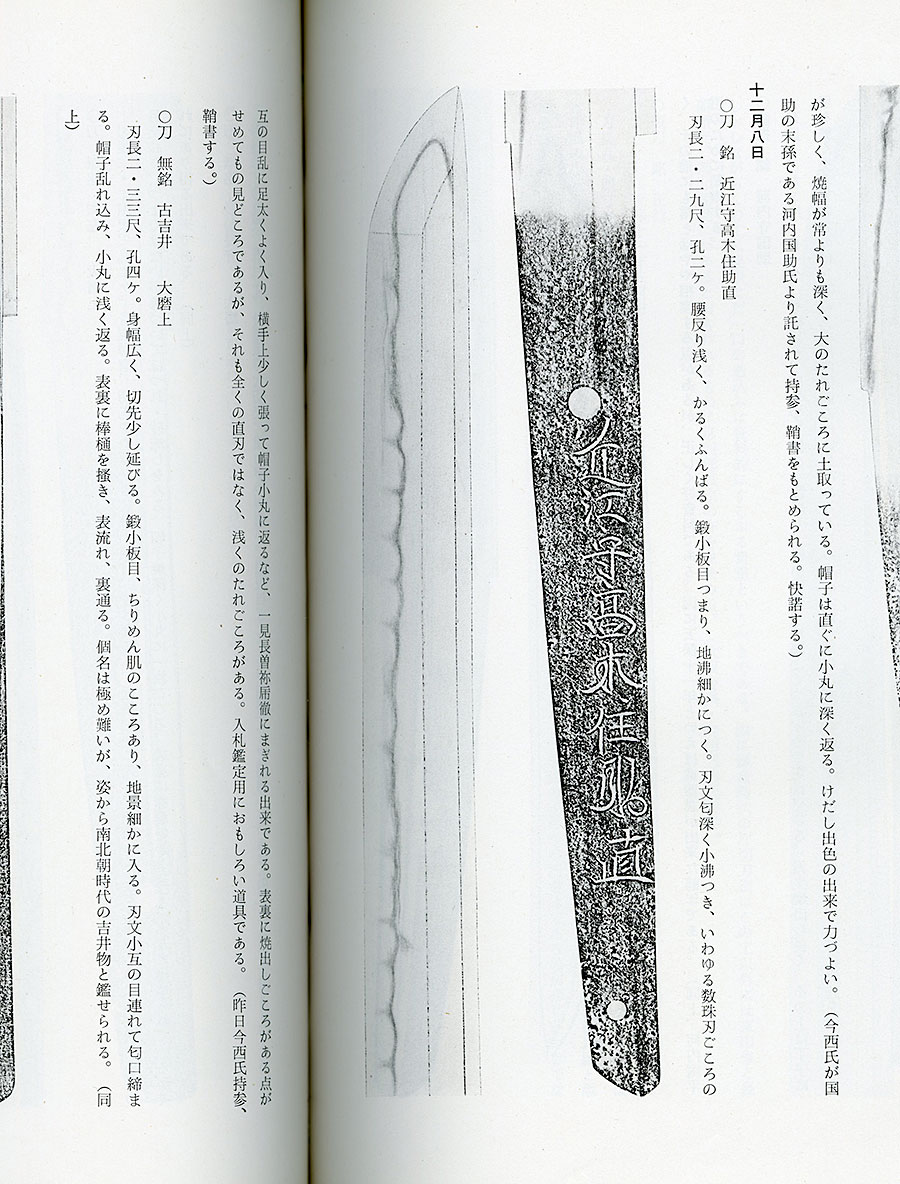
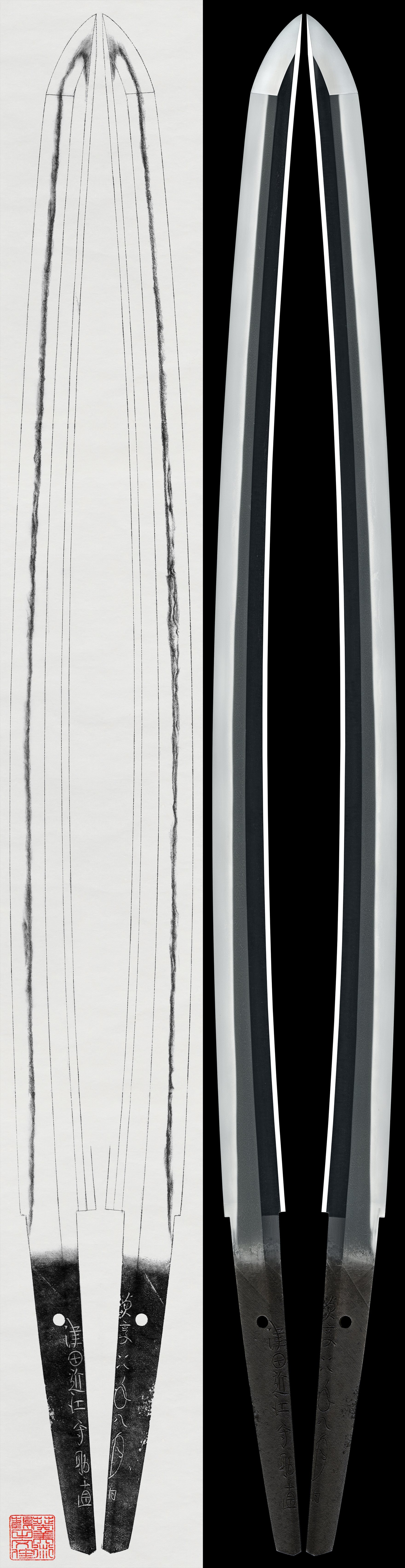
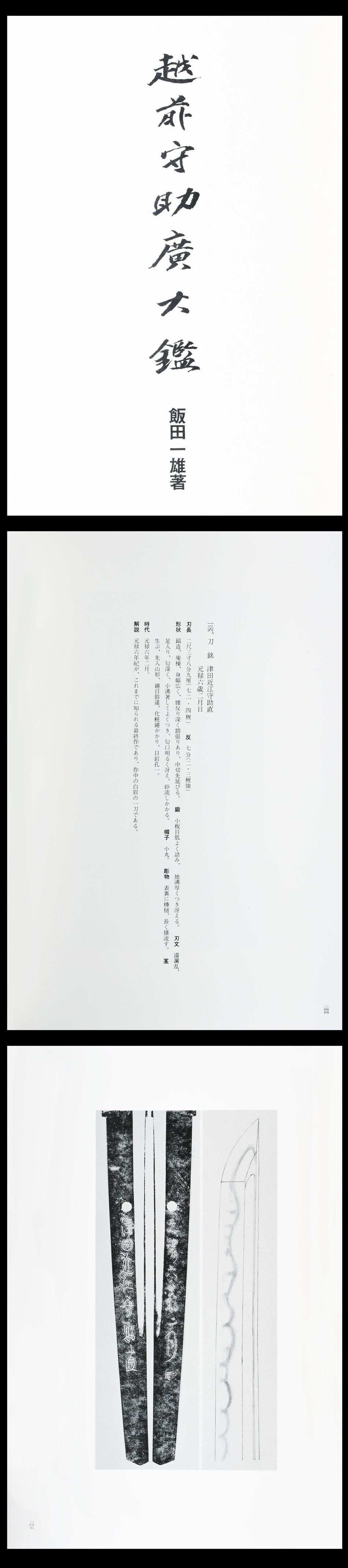
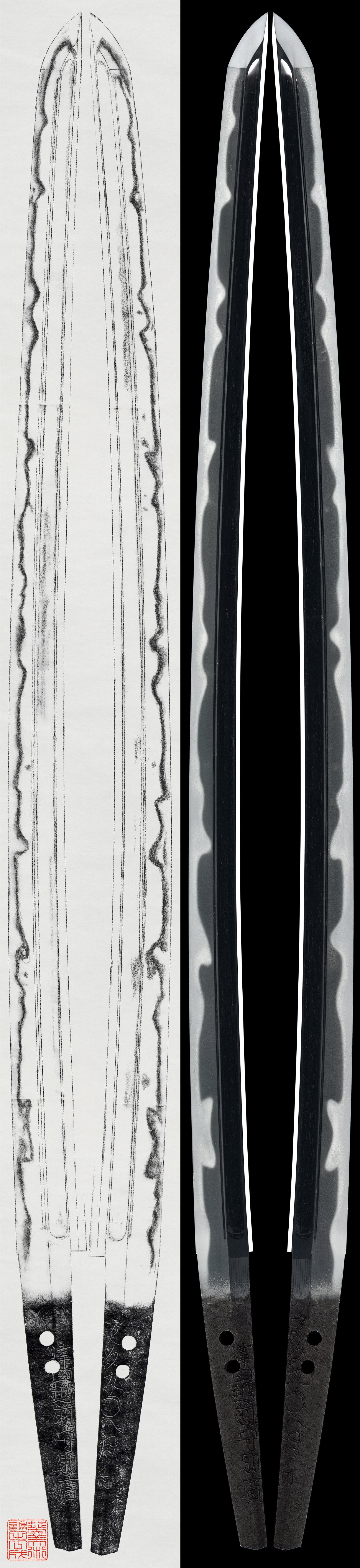
Sukenao was born in Kan'ei 16 (1639) at Takagi in Yasu District of Ōmi Province, common name Magotarō, and his dated blades run from Kanbun 8 (1668) to Genroku 6 (1693), the year he turned fifty-five. The published sources record that he first entered the school of the first-generation Soboro Sukehiro and then perfected his craft under the second, Tsuda Echizen no Kami Sukehiro, that he married into the house as Sukehiro's brother-in-law and so prefixed the Tsuda surname to his signature, and that after the master died in Tenna 2 (1682) he succeeded to that place and took up permanent residence in Osaka. He signs in several settled forms, Tsuda Ōmi no Kami Sukenao, Ōmi no Kami Takagi-jū Sukenao, and the plainer Sukenao, often adding the Genroku or Tenna date and his birthplace of Gōshū Takagi. Among the Tsuda pupils he is the one whose hand stands closest to the master, and the published commentary on a Tokubetsu Jūyō from his very latest years calls it 「師の助広と区別し難いほどの上出来」[[c:1]], so well made as to be difficult to tell apart from Sukehiro, displaying fully matured technique.
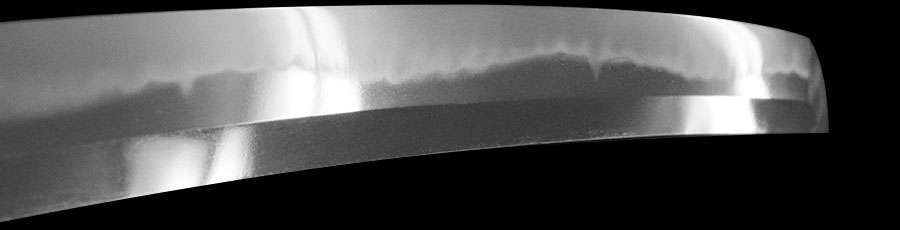
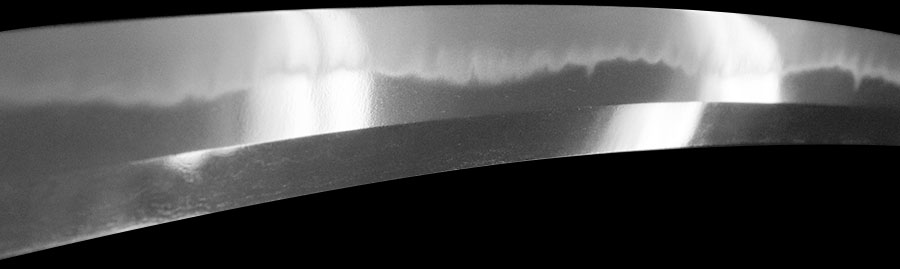
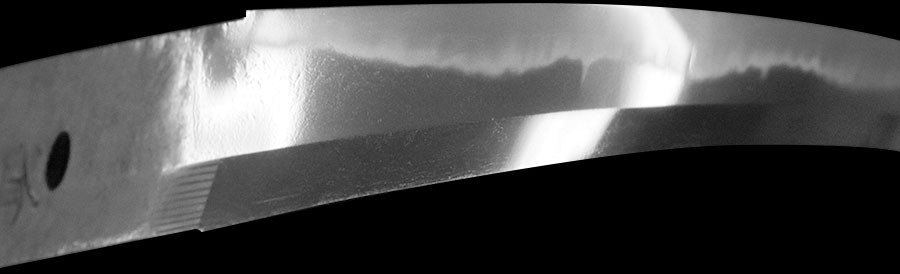
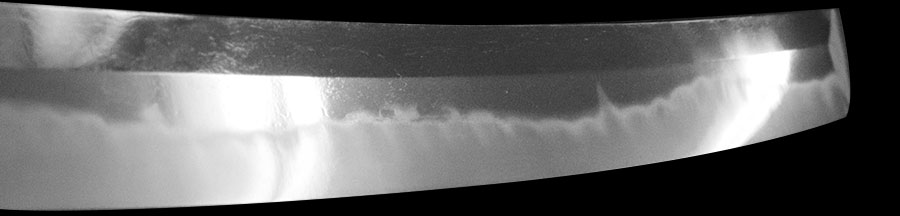
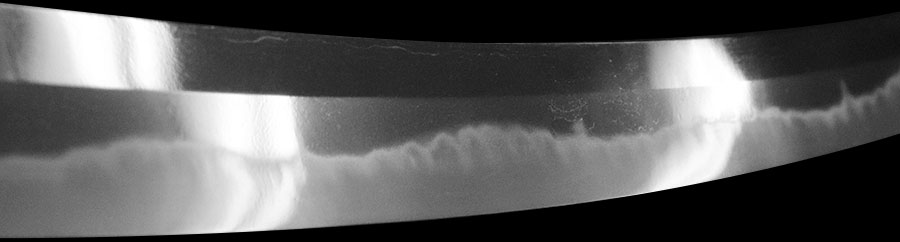
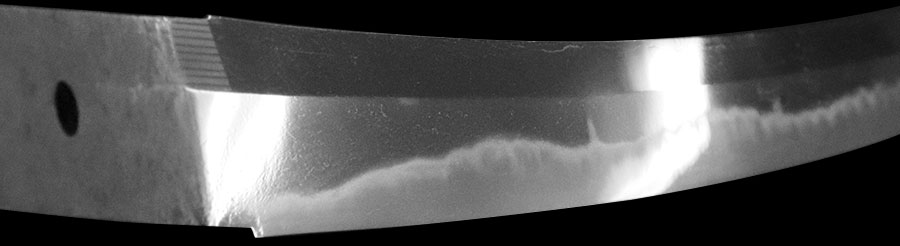
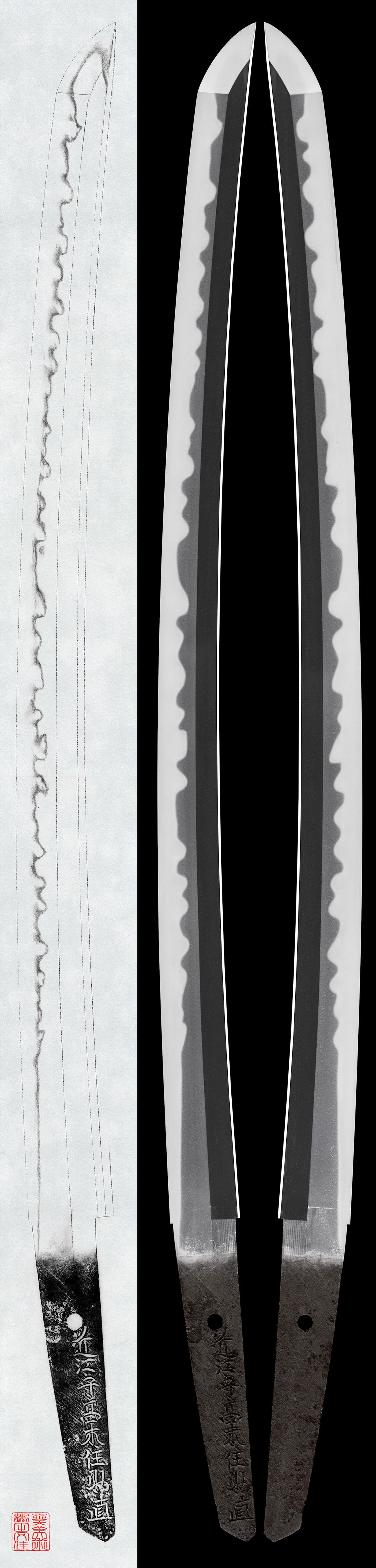
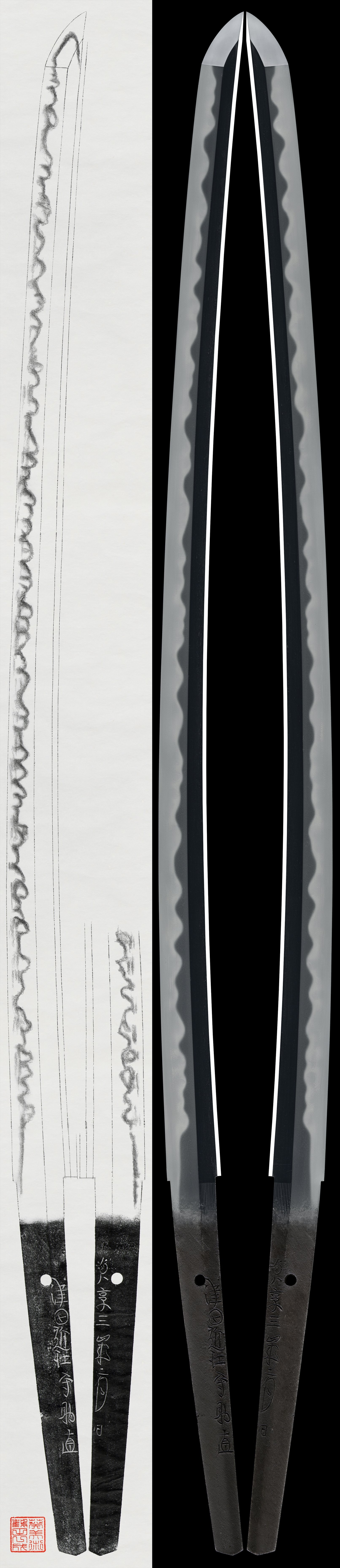
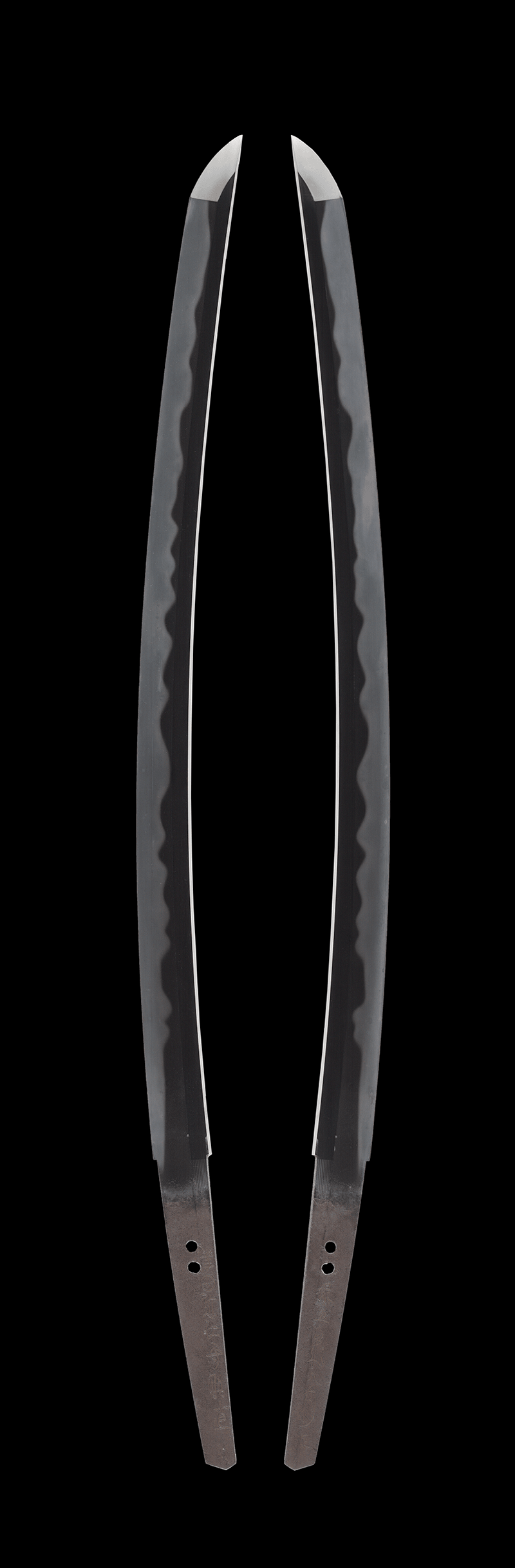
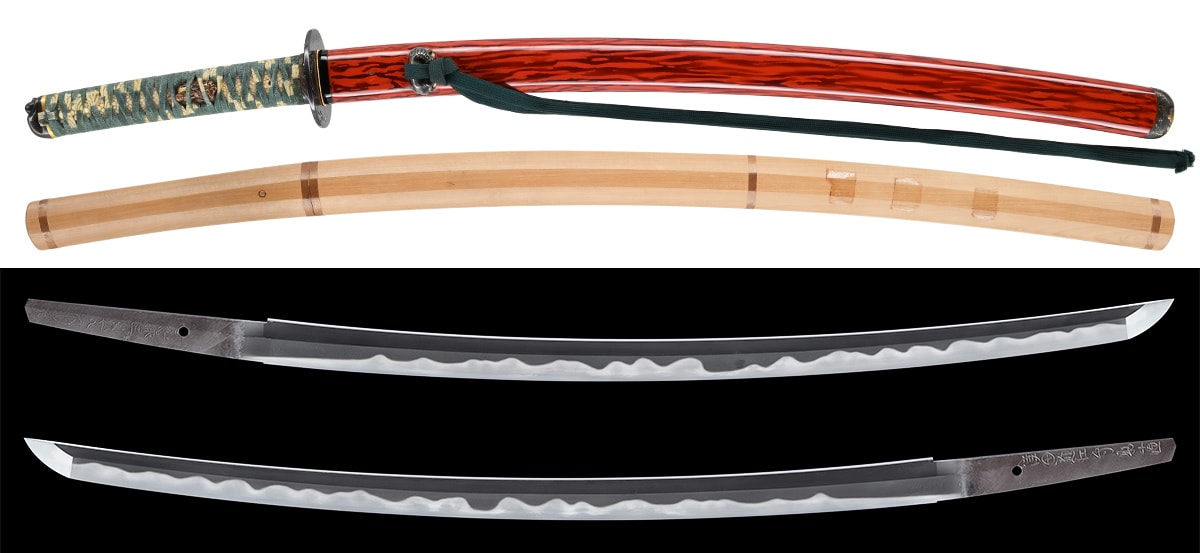
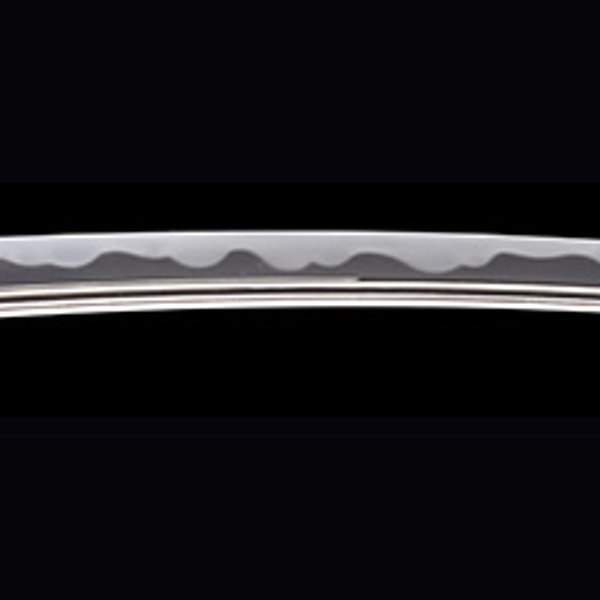
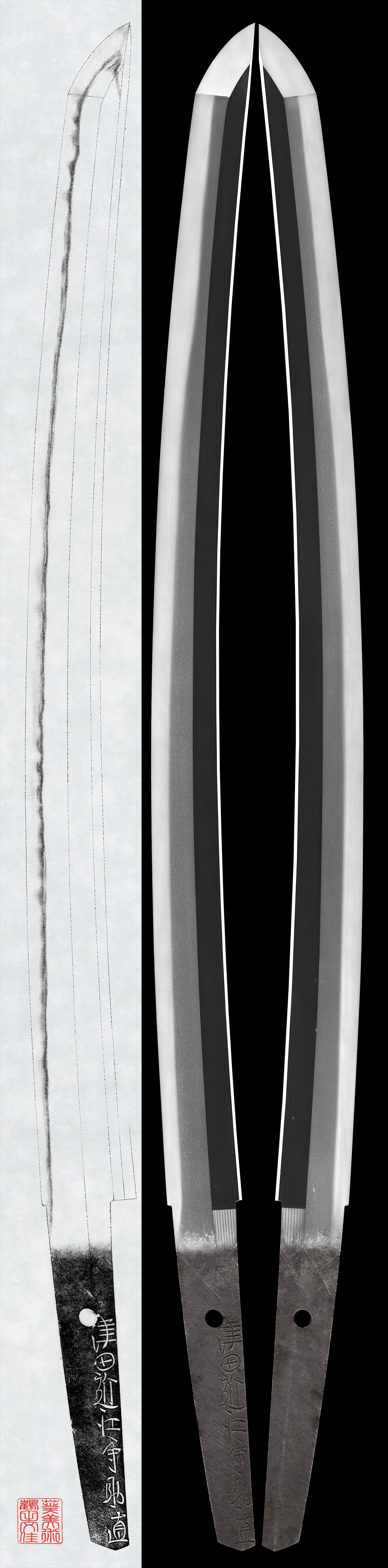
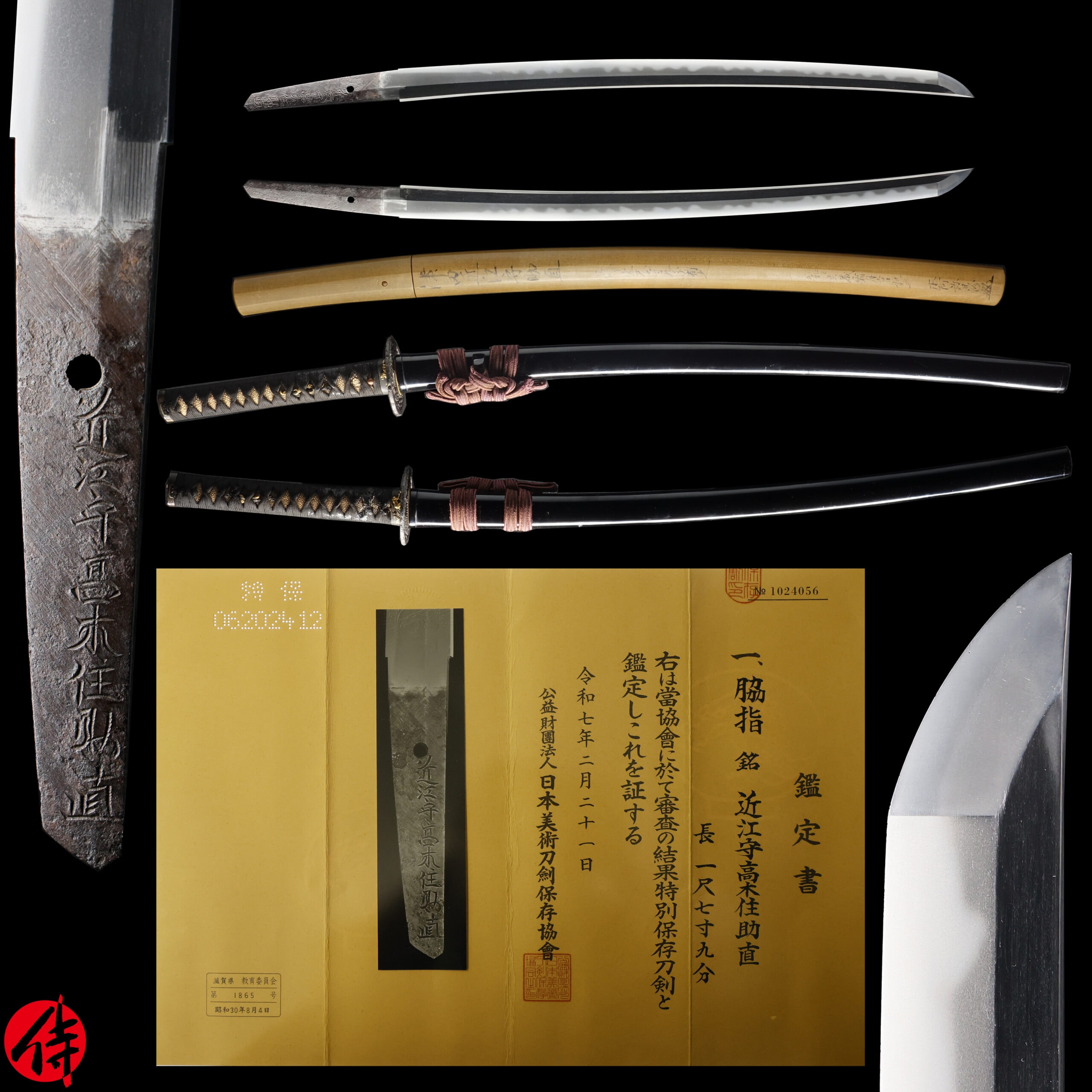
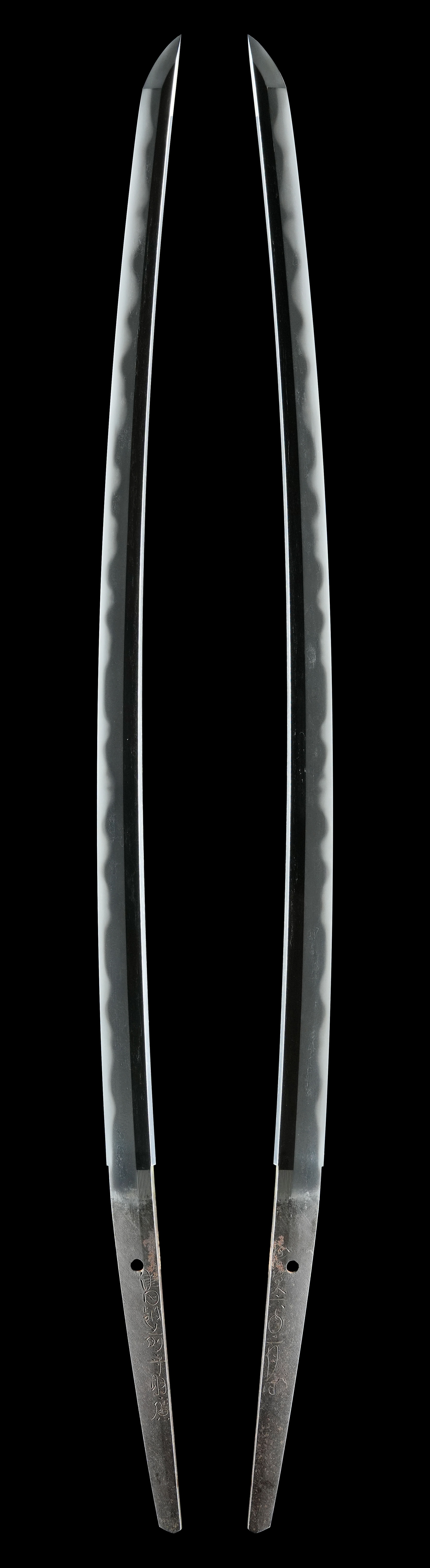
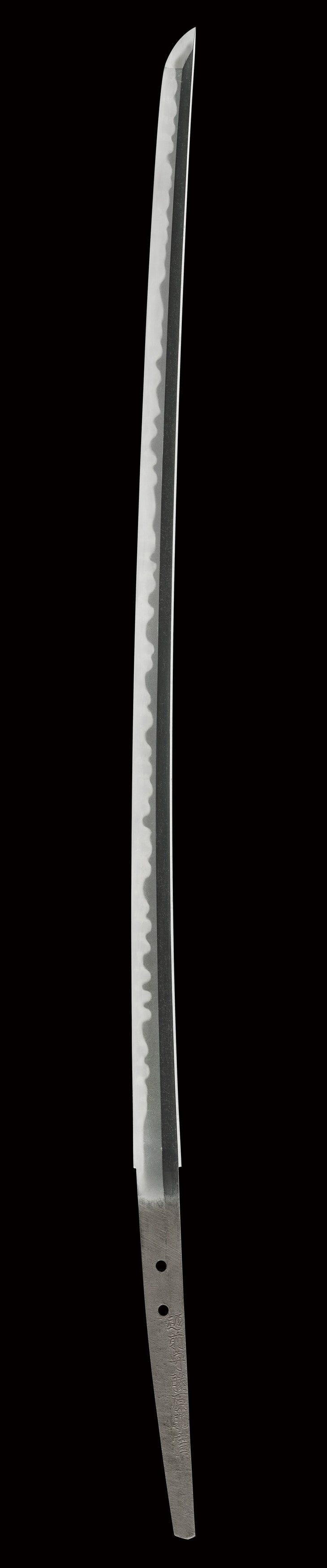
The manner for which Sukenao is known is the tōran-midare, the surging large-wave temper the published sources say he inherited from his master, who first established it. He opens the edge at the base with a straight suguha yakidashi, the Osaka Shintō start, then raises a body of large gunome mixed with chōji and ko-notare that rolls into the wave, long ashi entering, the nioi exceptionally deep, ko-nie thickly adhered, sunagashi and fine kinsuji running through, and at times a few tobiyaki above the line. The nioiguchi is bright and clear, and it is this brilliance, deep and lucid with well-gathered ko-nie, that the judges read as approaching Sukehiro. Where a difference shows it is in the sugata: his katana tend to run broad in body with a thick kasane and a chū-kissaki drawn slightly long, a more robust and dignified shape than the master's, so that even when the wave rivals Sukehiro the bearing remains his own.
The jigane is the constant beneath all his work. He forges a tightly packed ko-itame in which the ji-nie gathers densely and finely, a dust-like field with chikei entering and the steel clear, the bright Osaka jigane on which the wave is set. On the finest pieces the published sources describe a ji and ha both thickly covered in nie and clear throughout, and one Tokubetsu Jūyō is praised in exactly these terms, its forging a dense ko-itame with fine dust-like ji-nie adhering thickly and chikei entering, the whole called 「地刃に助直の特色と美点が十二分に示されている」[[c:2]], the distinctive features and merits of Sukenao fully manifested in both ji and ha. The bōshi across his blades runs straight to a ko-maru with a short return, sometimes with hakikake, the calm finish that closes even his most active tempers.
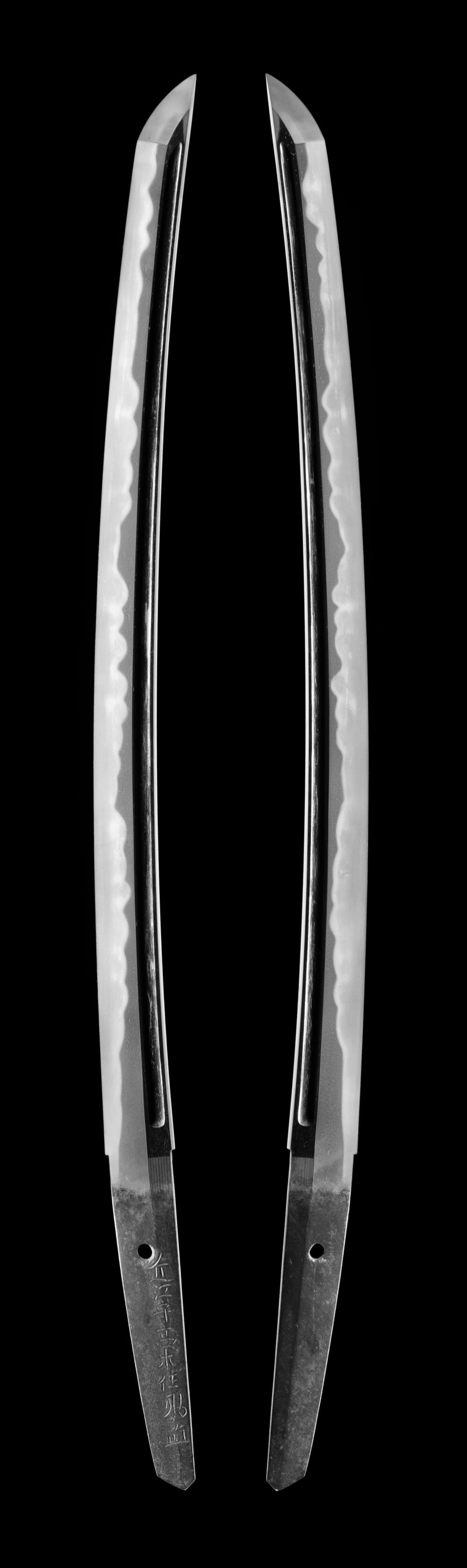
Beside the full tōran the published sources name two further registers, so that his oeuvre is read in three faces rather than one. The first is a gunome-midare and notare, the large gunome standing without rising fully into the wave, mixed with ko-notare and at times pointed elements, deep in nioi and well adhered in ko-nie. The second is a quiet suguha, at times a hiro-suguha, which he handled with skill even as the wave remained his renown. A Jūyō from Enpō 3, made while he was still working in his native Takagi, is tempered in a broad suguha with a tendency to nagare and ko-gunome at the yakidashi, and the published commentary, granting it is calm, adds 「流石に堂々たる出来である」[[c:3]], that it is dignified work all the same. On one dated wakizashi the judges note that he 「他にこの脇指の如く直刃も巧みにこなしている」[[c:4]], handles suguha with great skill beyond his usual wave. The carving on his blades stays to a simple bō-hi; the devotional kurikara and hataboko that appear on a few of his pieces were cut by horimono specialists such as Nagasaka Yūhōken, not by his own hand.
What sets Sukenao apart within the Tsuda line is the closeness of the resemblance held in check by his own shape. The published sources repeatedly read his finest blades as rivalling the master, one Tokubetsu Jūyō called 「一見師助広を髣髴とさせる助直の秀作」[[c:5]], an excellent work that at a glance calls Sukehiro to mind, while noting that his body runs broader than the master's and conveys a more imposing presence. He stands, then, as the faithful heir who carried the tōran-midare forward after Sukehiro's early death rather than as an innovator, the brightness of his nioiguchi and the robustness of his sugata the marks that distinguish his hand from the source it descends from. The three registers, the surging wave, the gunome notare, and the calm suguha, are the published record's own division of his work, and in each he is held to be a superior hand.
Sukenao is graded Jō-jō saku by Fujishiro and ranks among the leading names of Osaka Shintō. He has no National Treasures and no Important Cultural Properties; his record runs instead through the higher modern tiers, with four blades at the Tokubetsu Jūyō rank and the larger body at Jūyō, sixty-three across the two tiers in all, almost all of them signed and many dated. His provenance is recorded in only a few cases, among them a blade once held in the Imperial collection and another from the Matsudaira Chikahiro line, the rest of recorded whereabouts unrecorded. Because so few of his blades change hands, and because most designated work of his standing is held rather than traded, a signed and dated Sukenao comes to market only from time to time, a katana in his full tōran-midare the more sought when it does; a privately held example, broad in body and bright in nioiguchi, is a fine thing for a collector to encounter, the work of the pupil who came closest of all to Tsuda Sukehiro.