NihontoWatch Mon

NihontoWatchBETA

MarketAuctions
Encyclopedia
NihontoWatch Mon

NihontoWatchBETA

MarketAuctions
Encyclopedia

Description

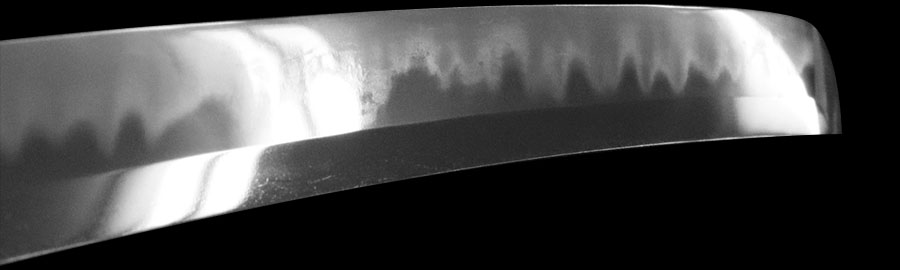
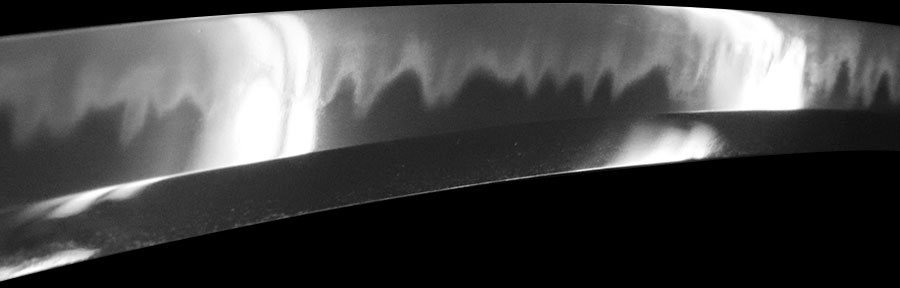
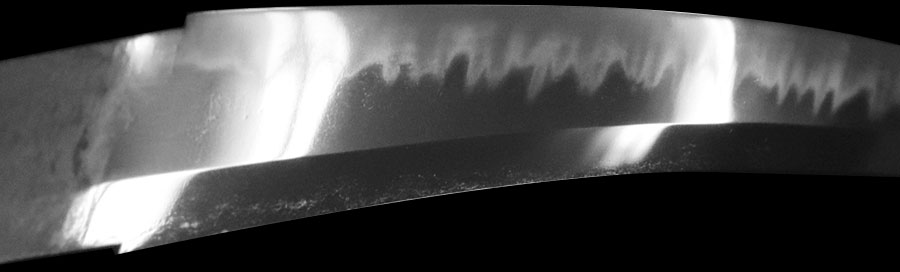
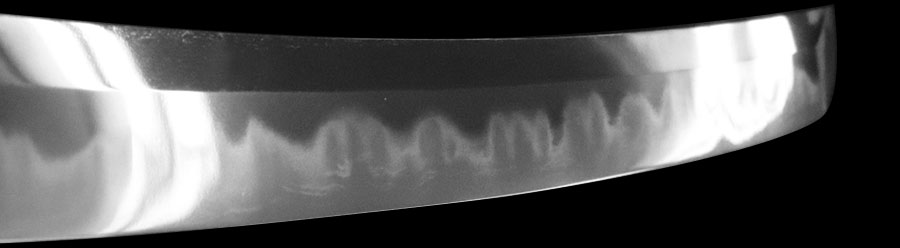
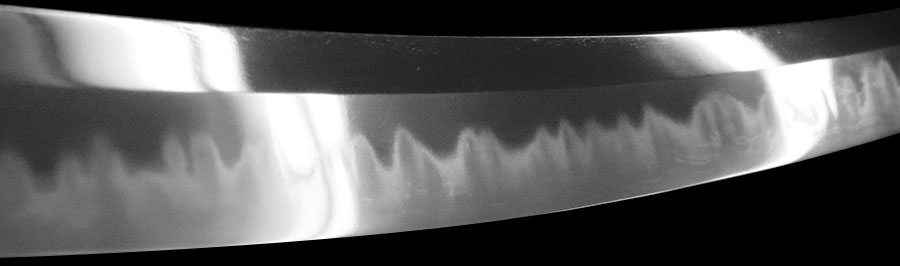
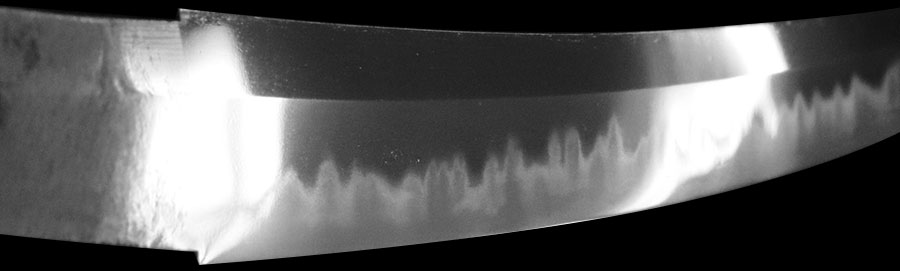
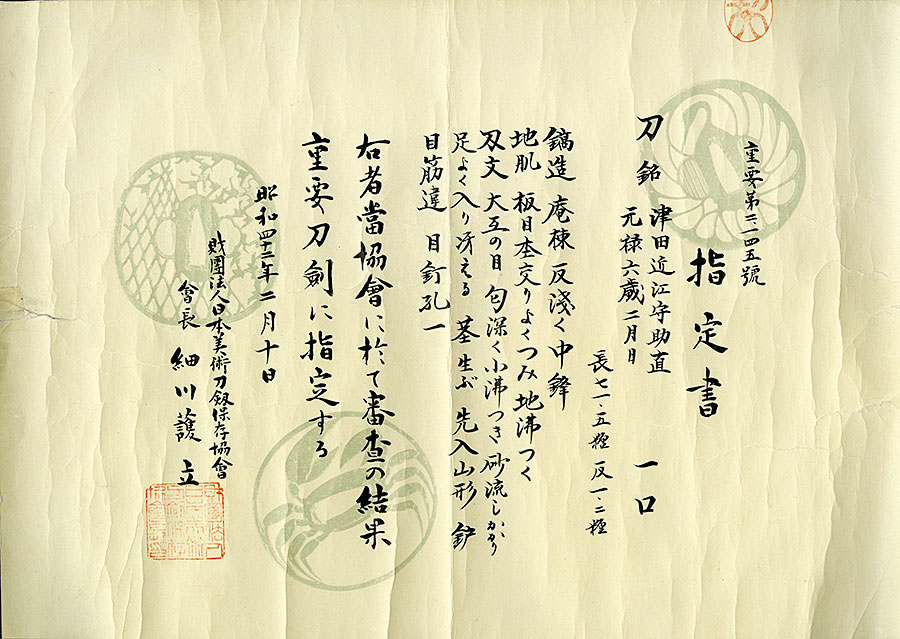
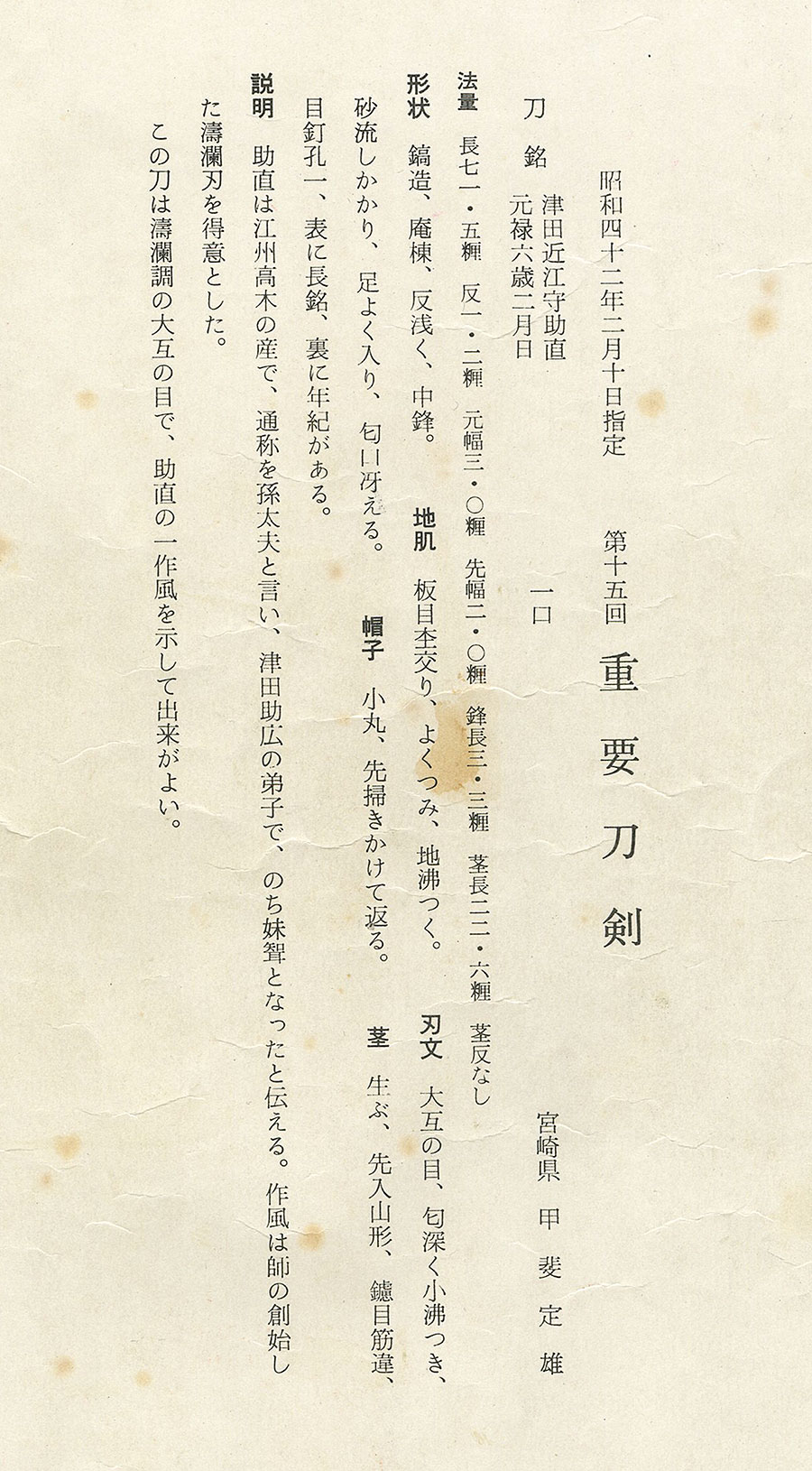
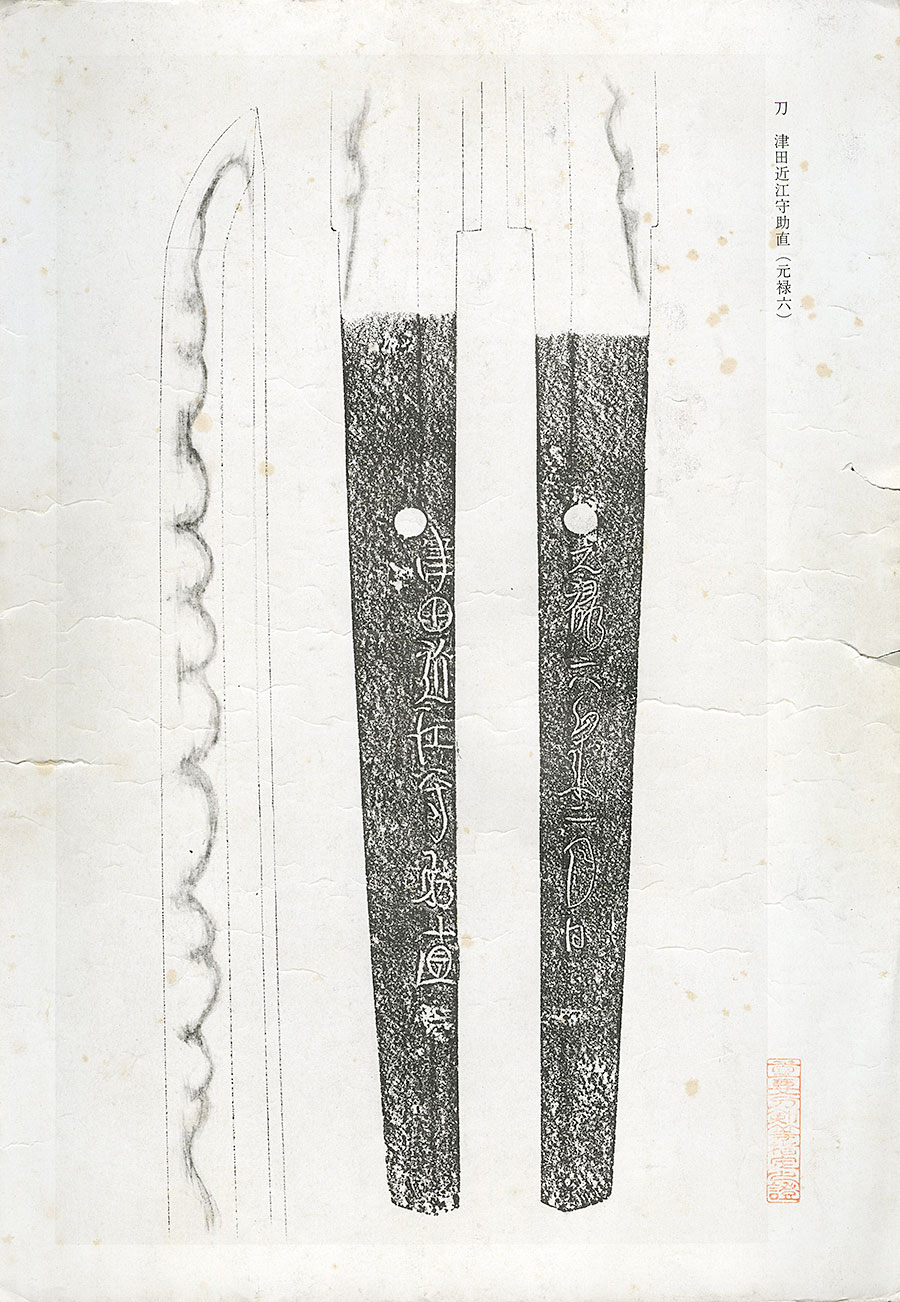
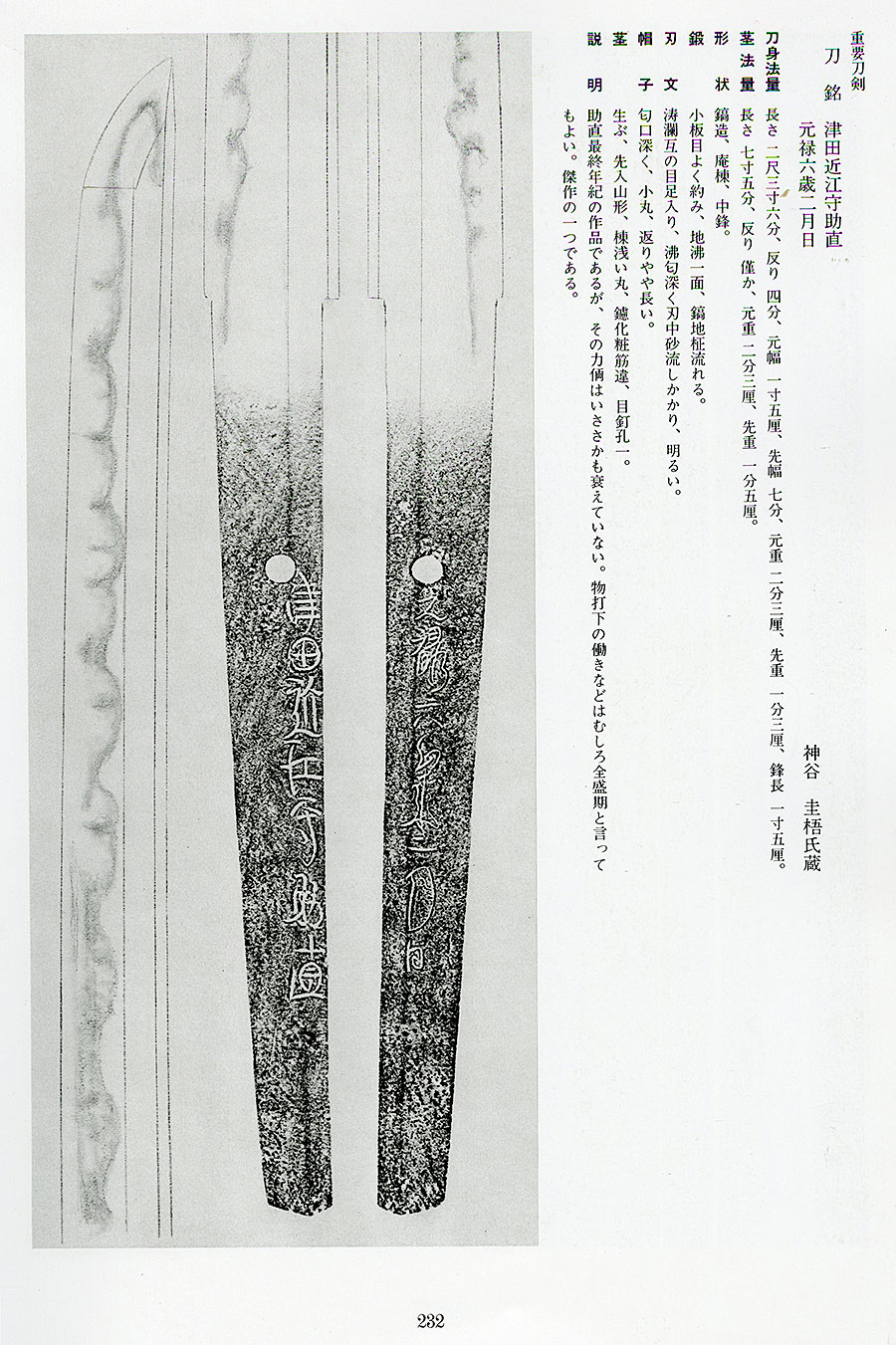
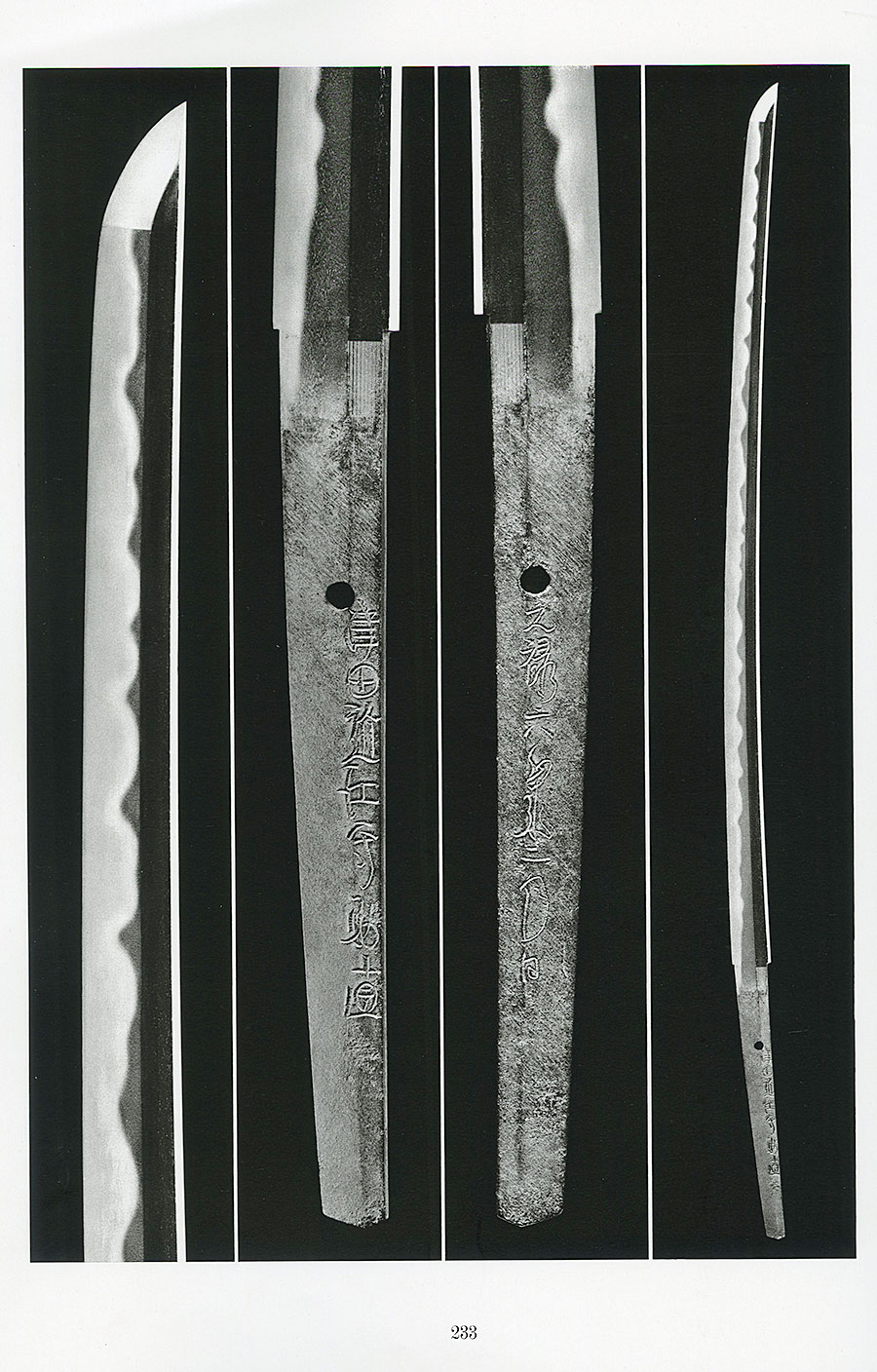
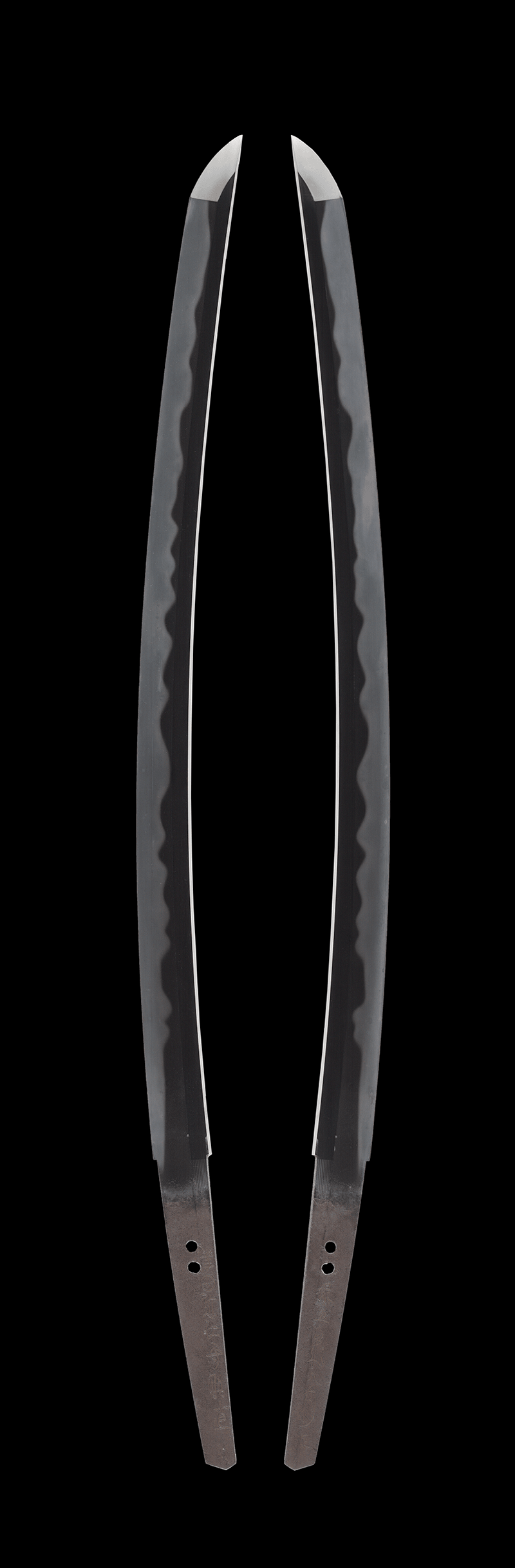
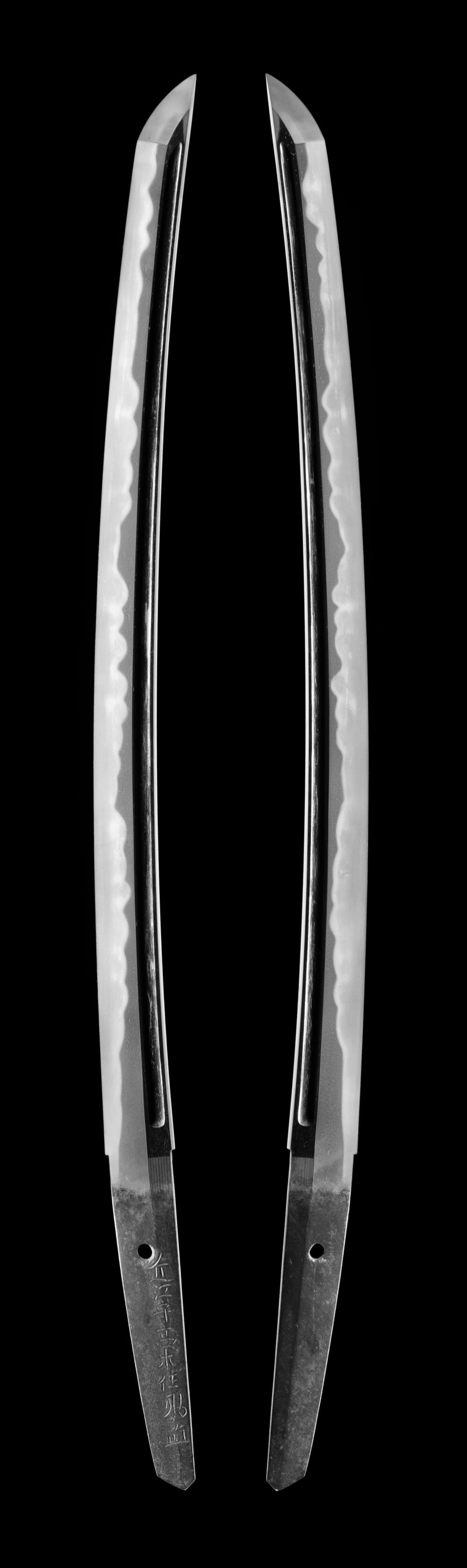
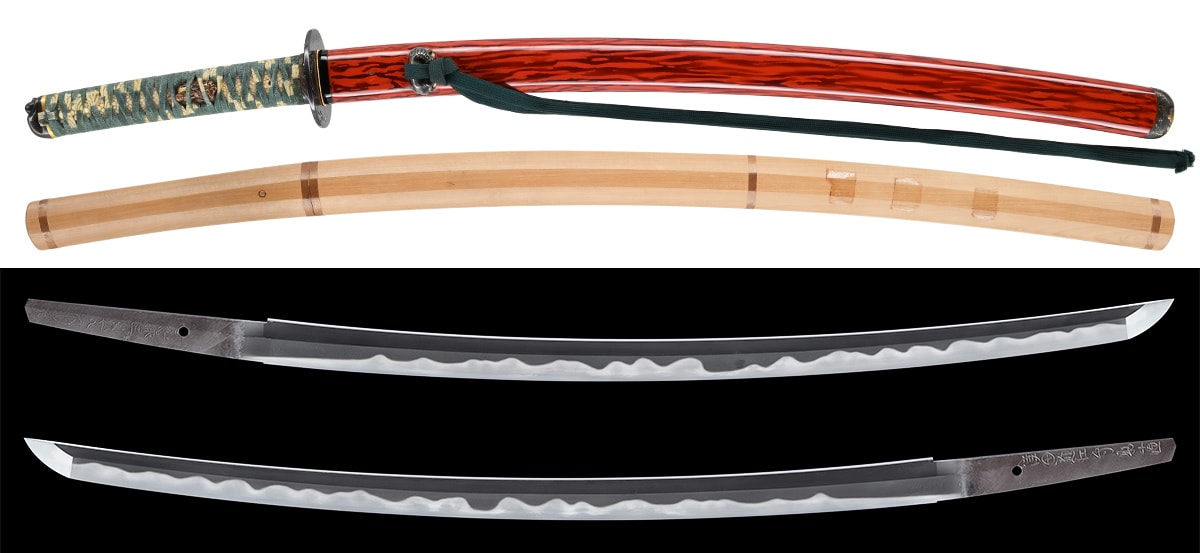
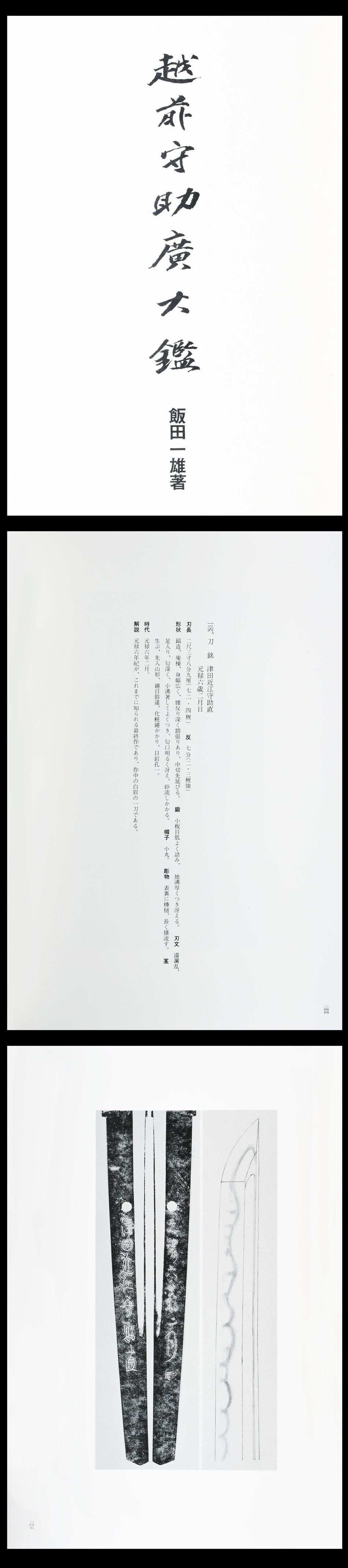
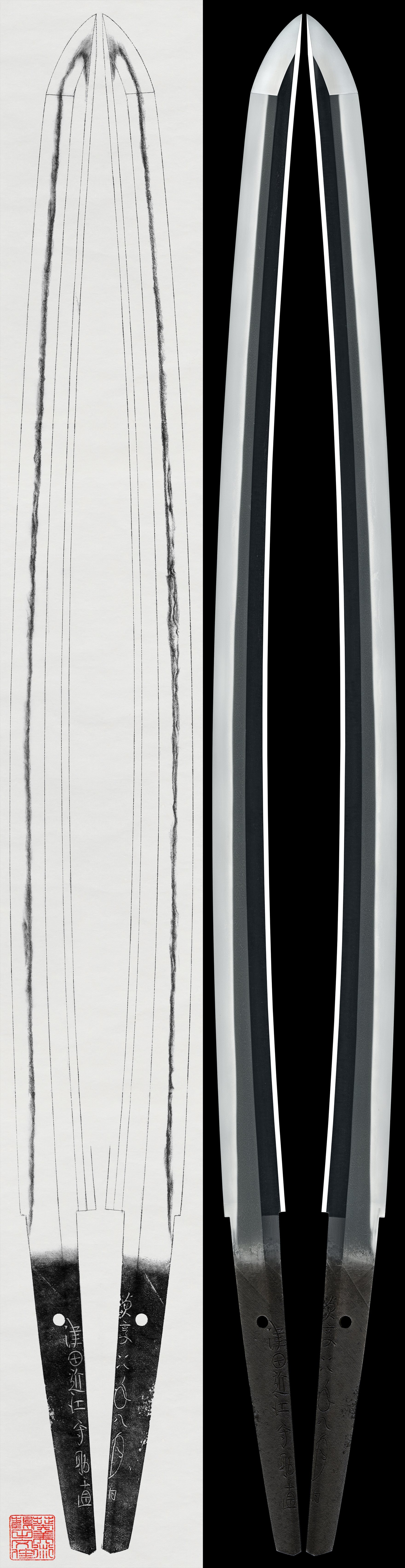
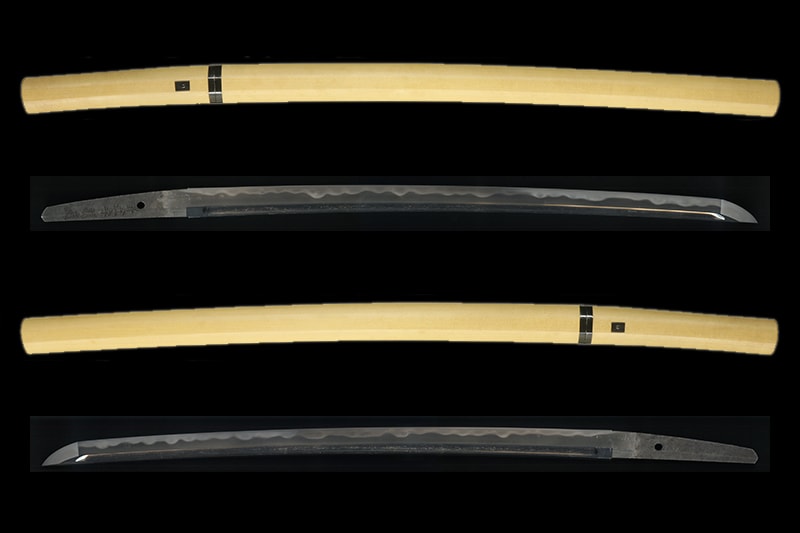
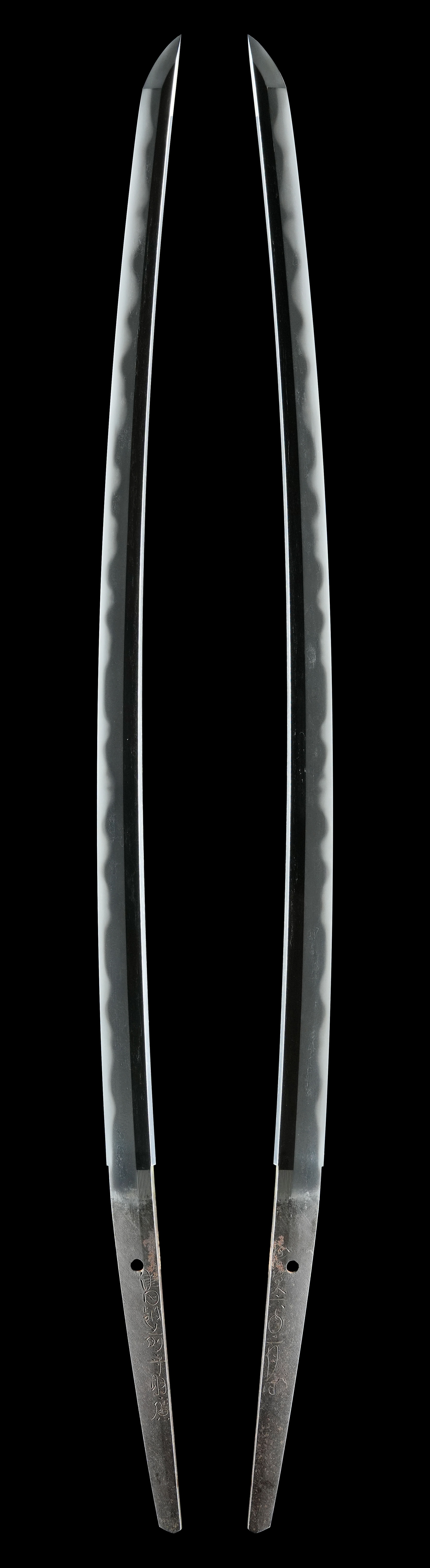
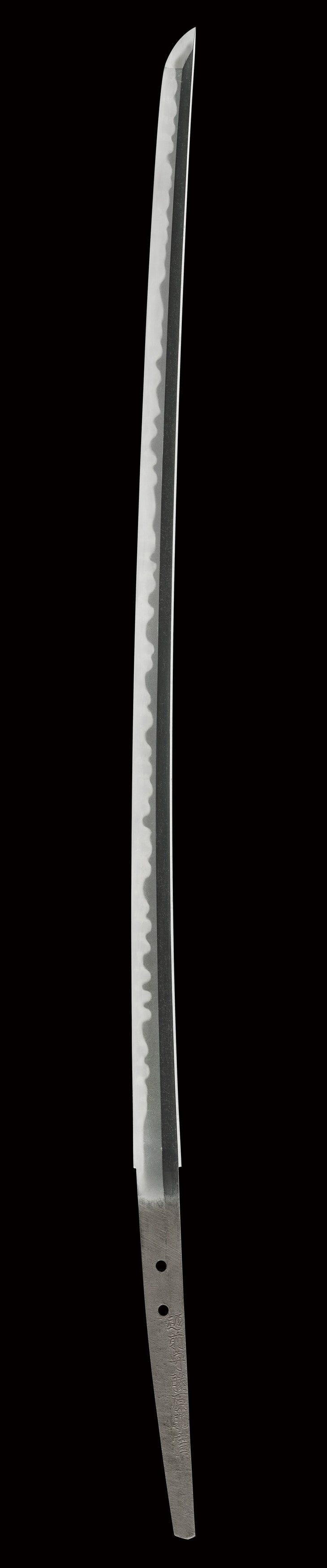
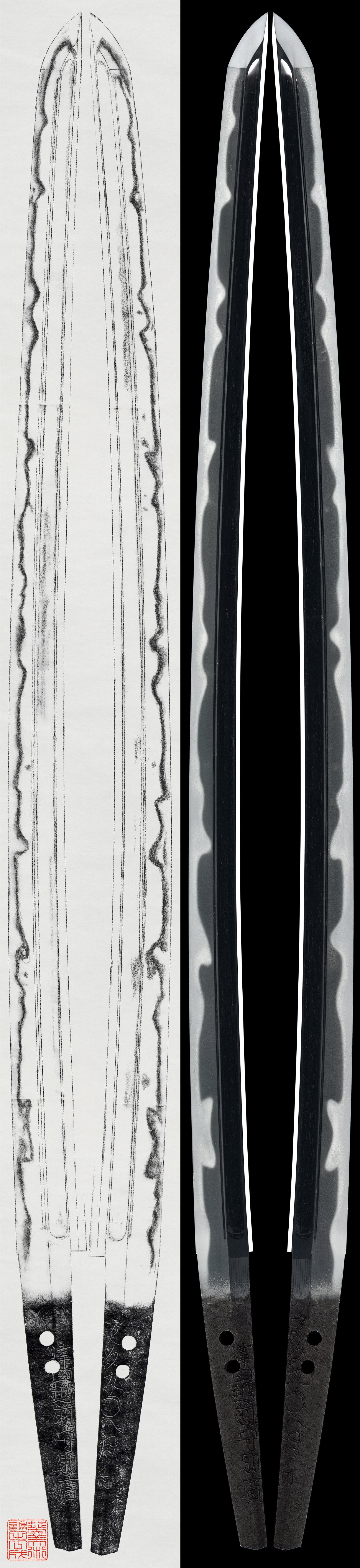
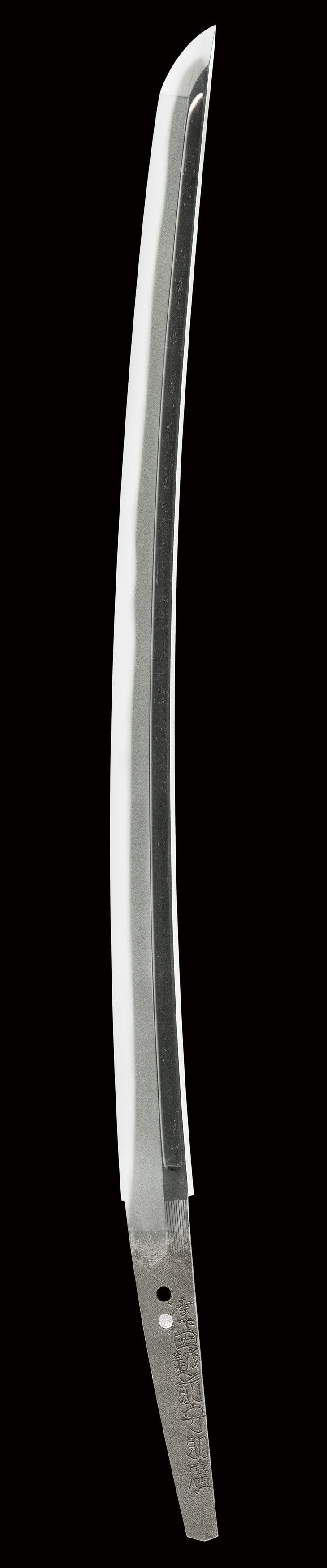
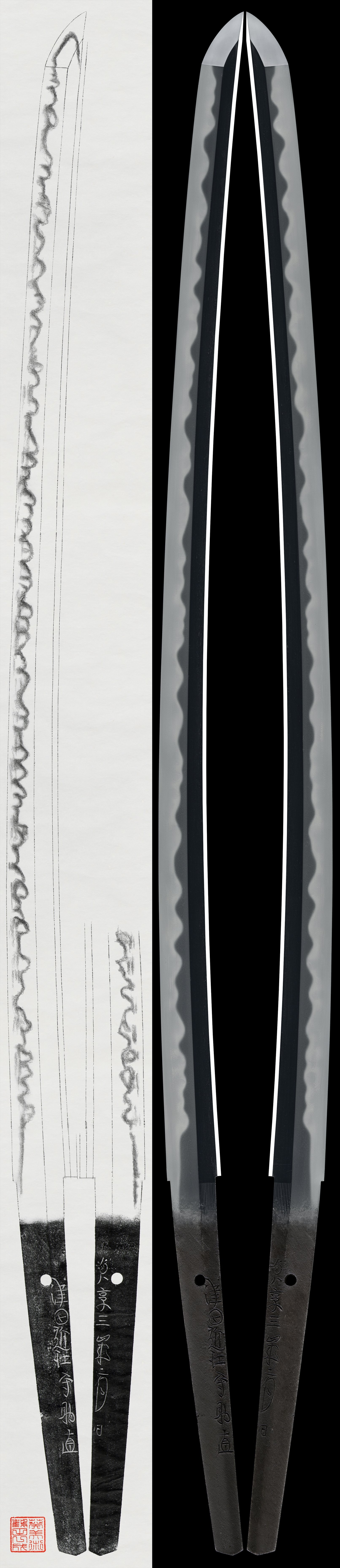
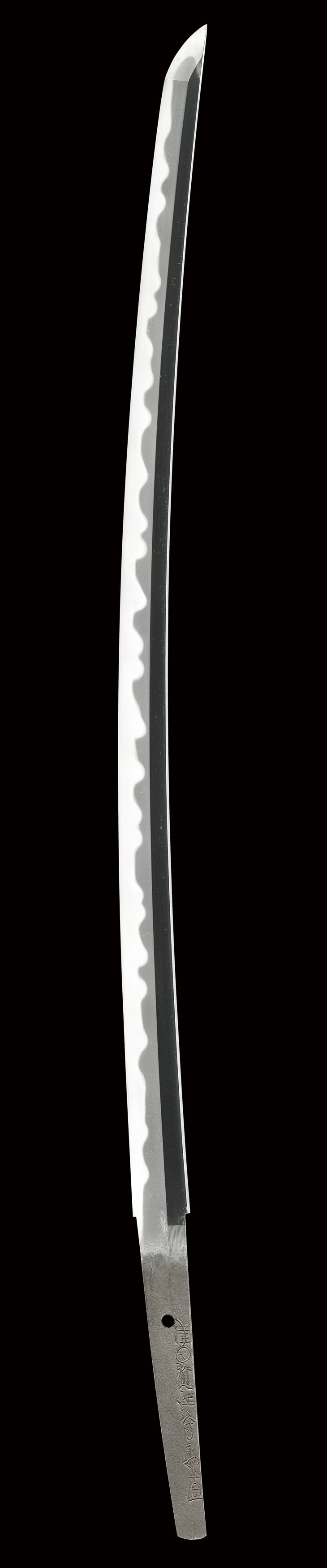
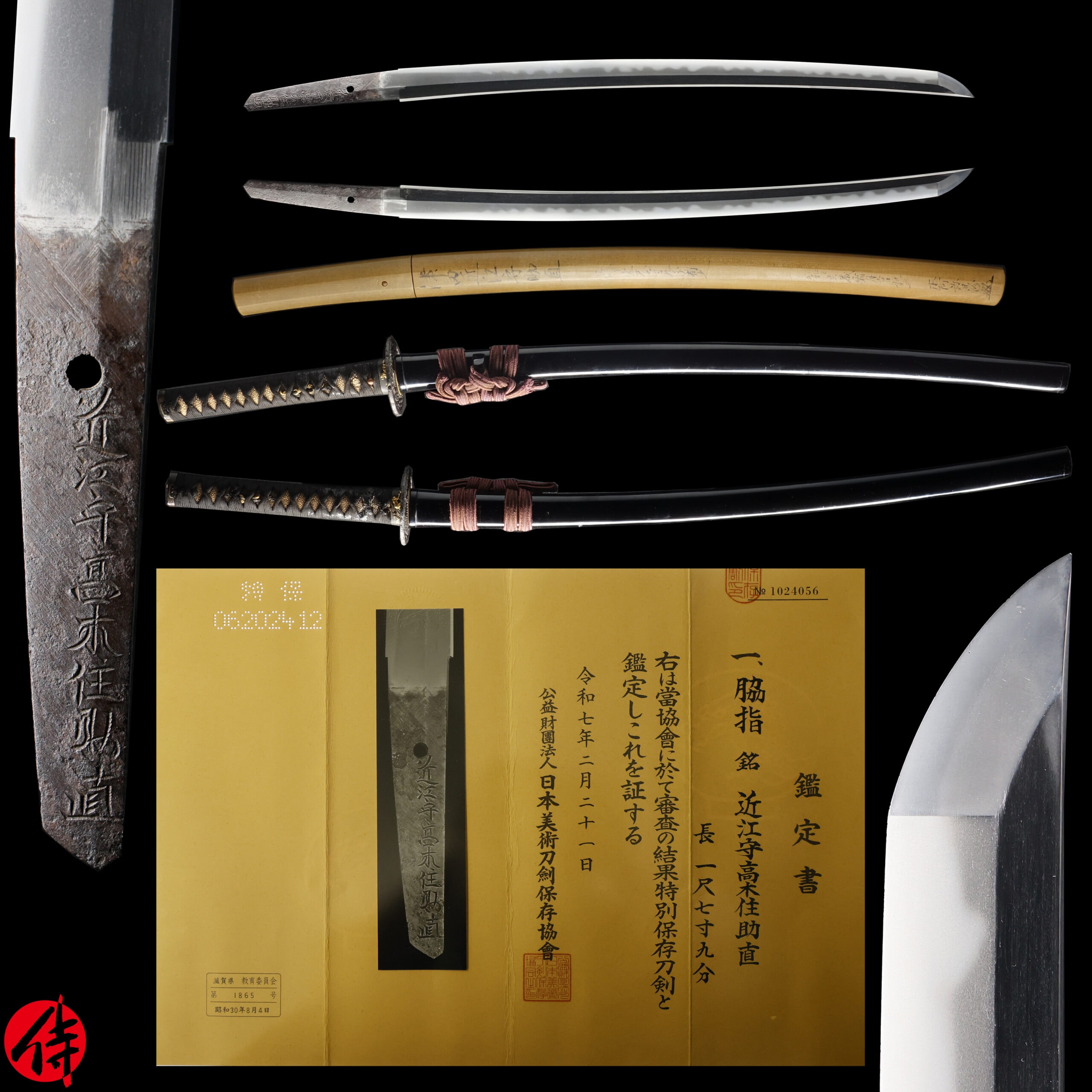
The maker of this sword, Tsuda Omi no Kami Sukenao, is famous as the brother-in-law (married to the younger sister) of the grand champion of Osaka Shinto, Tsuda Echizen no Kami Sukehiro. He was born in Kanei 16 (1639) (383 years ago) in Takagi Village, Yasu District, Omi Province (Shiga Prefecture), near Shinohara Station on the Tokaido Main Line on the east bank of the Biwako Bridge; his zokumei was Magotayu. This sword was crafted in Genroku 6 (1693) (329 years ago) when Tsuda Omi no Kami Sukenao was 54 years old. In Enpo 3 (1675) (at age 36), Sukenao's exceptional skill was recognized, and he was invited to marry Sukehiro's younger sister, taking the Tsuda surname. Following the death of his brother-in-law Tsuda Echizen no Kami Sukehiro in Tenna 2 (1682), Sukenao, then 43, began carving his mei on both the omote and ura in the Konoe-ryu sosho style, just like Sukehiro. This sword exhibits an elegant sugata with a wide moto-mihaba and a distinct difference from the saki-mihaba, featuring a shallow sori. The jigane is a finely packed ko-itame hada with magnificent jinie. The hamon is a gunome-ba in the toran-ba style with ashi, deep nie and nioi, and sunagashi within the blade, creating a bright yakiba that stands as a masterpiece equal to the works of Tsuda Echizen no Kami Sukehiro. While the Edo-period book "Kaji Biko" stated that Tsuda Omi no Kami Sukenao died in Genroku 2 at the age of 51, the discovery of this sword served as the evidence to correct that record for future generations. This Genroku 6 work is a historically significant commemorative piece representing the final years of Tsuda Omi no Kami Sukenao's career. In the "Sukehiro Taikan," this specific sword by Sukenao is highly acclaimed, stating that his power had not diminished in the slightest, and the hataraki below the monouchi is a masterpiece that could be called his absolute prime. Please enjoy this historically valuable sword, a single precious work that represents the pinnacle of Tsuda Omi no Kami Sukenao's craftsmanship. On this occasion, an elderly connoisseur has entrusted us with this piece, saying, "I have grown old, so please pass this on to the next generation at a low price." Although it was reportedly purchased for approximately 13 million yen at the time, we are offering it at a special discount. Please do not miss this opportunity to enjoy this famous sword by Tsuda Omi no Kami Sukenao, the flower of the precious Osaka Shinto.

NihontoWatch MonNihontoWatchBETA
MarketAuctionsEncyclopedia
Swords›Sukehiro›Sukenao›Juyo Katana by Tsuda Ominokami Sukenao, dated Genroku 6th year, 2nd month
katanaJūyō
Sukehiro Sukenao

Juyo Katana by Tsuda Ominokami Sukenao, dated Genroku 6th year, 2nd month

Enpo (1673-1681) · nagasa 71.4cm · sori 1.1cm

Price on request
Visit seller website →
Sukehiro Sukenao — 1 of 28
Sukehiro Sukenao — 2 of 28
Sukehiro Sukenao — 3 of 28
Sukehiro Sukenao — 4 of 28
Sukehiro Sukenao — 5 of 28
Sukehiro Sukenao — 6 of 28
Sukehiro Sukenao — 7 of 28
Sukehiro Sukenao — 8 of 28
Sukehiro Sukenao — 9 of 28
Sukehiro Sukenao — 10 of 28
Sukehiro Sukenao — 11 of 28
Sukehiro Sukenao — 12 of 28
Sukehiro Sukenao — 13 of 28
Sukehiro Sukenao — 14 of 28
Sukehiro Sukenao — 15 of 28
Sukehiro Sukenao — 16 of 28
Sukehiro Sukenao — 17 of 28
Sukehiro Sukenao — 18 of 28
Sukehiro Sukenao — 19 of 28
Sukehiro Sukenao — 20 of 28
Sukehiro Sukenao — 21 of 28
Sukehiro Sukenao — 22 of 28
Sukehiro Sukenao — 23 of 28
Sukehiro Sukenao — 24 of 28
Sukehiro Sukenao — 25 of 28
Sukehiro Sukenao — 26 of 28
Sukehiro Sukenao — 27 of 28
Sukehiro Sukenao — 28 of 28
1 / 28
1 / 28
Sukehiro Sukenao — 1 of 28Sukehiro Sukenao — 2 of 28Sukehiro Sukenao — 3 of 28Sukehiro Sukenao — 4 of 28Sukehiro Sukenao — 5 of 28Sukehiro Sukenao — 6 of 28Sukehiro Sukenao — 7 of 28Sukehiro Sukenao — 8 of 28Sukehiro Sukenao — 9 of 28Sukehiro Sukenao — 10 of 28Sukehiro Sukenao — 11 of 28Sukehiro Sukenao — 12 of 28Sukehiro Sukenao — 13 of 28Sukehiro Sukenao — 14 of 28Sukehiro Sukenao — 15 of 28Sukehiro Sukenao — 16 of 28Sukehiro Sukenao — 17 of 28Sukehiro Sukenao — 18 of 28Sukehiro Sukenao — 19 of 28Sukehiro Sukenao — 20 of 28Sukehiro Sukenao — 21 of 28Sukehiro Sukenao — 22 of 28Sukehiro Sukenao — 23 of 28Sukehiro Sukenao — 24 of 28Sukehiro Sukenao — 25 of 28Sukehiro Sukenao — 26 of 28Sukehiro Sukenao — 27 of 28Sukehiro Sukenao — 28 of 28
Measurements & details
Smith
Sukehiro Sukenao
Type
Katana
School
Sukehiro
Period
Around 1668–1693(Enpo)
Province
近江
Measurements
Nagasa 71.4cmSori 1.1cmMotohaba 3.17cmSakihaba 2.06cmKasane 0.75cm
Description

The maker of this sword, Tsuda Omi no Kami Sukenao, is famous as the brother-in-law (married to the younger sister) of the grand champion of Osaka Shinto, Tsuda Echizen no Kami Sukehiro. He was born in Kanei 16 (1639) (383 years ago) in Takagi Village, Yasu District, Omi Province (Shiga Prefecture), near Shinohara Station on the Tokaido Main Line on the east bank of the Biwako Bridge; his zokumei was Magotayu. This sword was crafted in Genroku 6 (1693) (329 years ago) when Tsuda Omi no Kami Sukenao was 54 years old. In Enpo 3 (1675) (at age 36), Sukenao's exceptional skill was recognized, and he was invited to marry Sukehiro's younger sister, taking the Tsuda surname. Following the death of his brother-in-law Tsuda Echizen no Kami Sukehiro in Tenna 2 (1682), Sukenao, then 43, began carving his mei on both the omote and ura in the Konoe-ryu sosho style, just like Sukehiro. This sword exhibits an elegant sugata with a wide moto-mihaba and a distinct difference from the saki-mihaba, featuring a shallow sori. The jigane is a finely packed ko-itame hada with magnificent jinie. The hamon is a gunome-ba in the toran-ba style with ashi, deep nie and nioi, and sunagashi within the blade, creating a bright yakiba that stands as a masterpiece equal to the works of Tsuda Echizen no Kami Sukehiro. While the Edo-period book "Kaji Biko" stated that Tsuda Omi no Kami Sukenao died in Genroku 2 at the age of 51, the discovery of this sword served as the evidence to correct that record for future generations. This Genroku 6 work is a historically significant commemorative piece representing the final years of Tsuda Omi no Kami Sukenao's career. In the "Sukehiro Taikan," this specific sword by Sukenao is highly acclaimed, stating that his power had not diminished in the slightest, and the hataraki below the monouchi is a masterpiece that could be called his absolute prime. Please enjoy this historically valuable sword, a single precious work that represents the pinnacle of Tsuda Omi no Kami Sukenao's craftsmanship. On this occasion, an elderly connoisseur has entrusted us with this piece, saying, "I have grown old, so please pass this on to the next generation at a low price." Although it was reportedly purchased for approximately 13 million yen at the time, we are offering it at a special discount. Please do not miss this opportunity to enjoy this famous sword by Tsuda Omi no Kami Sukenao, the flower of the precious Osaka Shinto.

About the maker

Sukenao

助直

Tsuda Sukehiro line, Osaka Shinto (Settsu / Omi) · Settsu · around 1668-1693

Fujishiro Jo-jo saku · Tōken Taikan top 14%

10 pieces on the market now

›

Sukenao was born in Kan'ei 16 (1639) at Takagi in Yasu District of Ōmi Province, common name Magotarō, and his dated blades run from Kanbun 8 (1668) to Genroku 6 (1693), the year he turned fifty-five. The published sources record that he first entered the school of the first-generation Soboro Sukehiro and then perfected his craft under the second, Tsuda Echizen no Kami Sukehiro, that he married into the house as Sukehiro's brother-in-law and so prefixed the Tsuda surname to his signature, and that after the master died in Tenna 2 (1682) he succeeded to that place and took up permanent residence in Osaka. He signs in several settled forms, Tsuda Ōmi no Kami Sukenao, Ōmi no Kami Takagi-jū Sukenao, and the plainer Sukenao, often adding the Genroku or Tenna date and his birthplace of Gōshū Takagi. Among the Tsuda pupils he is the one whose hand stands closest to the master, and the published commentary on a Tokubetsu Jūyō from his very latest years calls it 「師の助広と区別し難いほどの上出来」[[c:1]], so well made as to be difficult to tell apart from Sukehiro, displaying fully matured technique.

The manner for which Sukenao is known is the tōran-midare, the surging large-wave temper the published sources say he inherited from his master, who first established it. He opens the edge at the base with a straight suguha yakidashi, the Osaka Shintō start, then raises a body of large gunome mixed with chōji and ko-notare that rolls into the wave, long ashi entering, the nioi exceptionally deep, ko-nie thickly adhered, sunagashi and fine kinsuji running through, and at times a few tobiyaki above the line. The nioiguchi is bright and clear, and it is this brilliance, deep and lucid with well-gathered ko-nie, that the judges read as approaching Sukehiro. Where a difference shows it is in the sugata: his katana tend to run broad in body with a thick kasane and a chū-kissaki drawn slightly long, a more robust and dignified shape than the master's, so that even when the wave rivals Sukehiro the bearing remains his own.

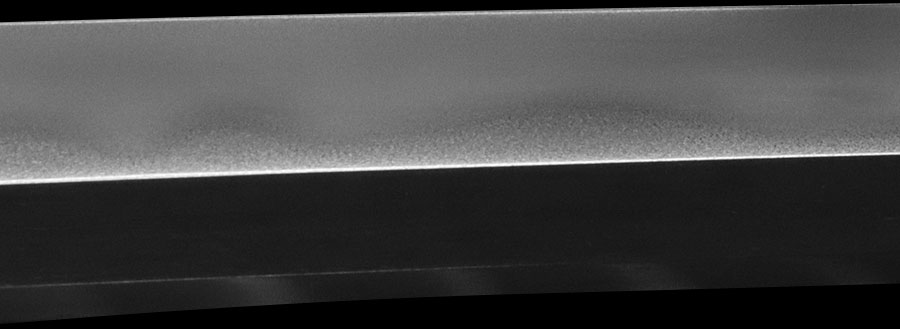
The jigane is the constant beneath all his work. He forges a tightly packed ko-itame in which the ji-nie gathers densely and finely, a dust-like field with chikei entering and the steel clear, the bright Osaka jigane on which the wave is set. On the finest pieces the published sources describe a ji and ha both thickly covered in nie and clear throughout, and one Tokubetsu Jūyō is praised in exactly these terms, its forging a dense ko-itame with fine dust-like ji-nie adhering thickly and chikei entering, the whole called 「地刃に助直の特色と美点が十二分に示されている」[[c:2]], the distinctive features and merits of Sukenao fully manifested in both ji and ha. The bōshi across his blades runs straight to a ko-maru with a short return, sometimes with hakikake, the calm finish that closes even his most active tempers.

Beside the full tōran the published sources name two further registers, so that his oeuvre is read in three faces rather than one. The first is a gunome-midare and notare, the large gunome standing without rising fully into the wave, mixed with ko-notare and at times pointed elements, deep in nioi and well adhered in ko-nie. The second is a quiet suguha, at times a hiro-suguha, which he handled with skill even as the wave remained his renown. A Jūyō from Enpō 3, made while he was still working in his native Takagi, is tempered in a broad suguha with a tendency to nagare and ko-gunome at the yakidashi, and the published commentary, granting it is calm, adds 「流石に堂々たる出来である」[[c:3]], that it is dignified work all the same. On one dated wakizashi the judges note that he 「他にこの脇指の如く直刃も巧みにこなしている」[[c:4]], handles suguha with great skill beyond his usual wave. The carving on his blades stays to a simple bō-hi; the devotional kurikara and hataboko that appear on a few of his pieces were cut by horimono specialists such as Nagasaka Yūhōken, not by his own hand.

What sets Sukenao apart within the Tsuda line is the closeness of the resemblance held in check by his own shape. The published sources repeatedly read his finest blades as rivalling the master, one Tokubetsu Jūyō called 「一見師助広を髣髴とさせる助直の秀作」[[c:5]], an excellent work that at a glance calls Sukehiro to mind, while noting that his body runs broader than the master's and conveys a more imposing presence. He stands, then, as the faithful heir who carried the tōran-midare forward after Sukehiro's early death rather than as an innovator, the brightness of his nioiguchi and the robustness of his sugata the marks that distinguish his hand from the source it descends from. The three registers, the surging wave, the gunome notare, and the calm suguha, are the published record's own division of his work, and in each he is held to be a superior hand.

Sukenao is graded Jō-jō saku by Fujishiro and ranks among the leading names of Osaka Shintō. He has no National Treasures and no Important Cultural Properties; his record runs instead through the higher modern tiers, with four blades at the Tokubetsu Jūyō rank and the larger body at Jūyō, sixty-three across the two tiers in all, almost all of them signed and many dated. His provenance is recorded in only a few cases, among them a blade once held in the Imperial collection and another from the Matsudaira Chikahiro line, the rest of recorded whereabouts unrecorded. Because so few of his blades change hands, and because most designated work of his standing is held rather than traded, a signed and dated Sukenao comes to market only from time to time, a katana in his full tōran-midare the more sought when it does; a privately held example, broad in body and bright in nioiguchi, is a fine thing for a collector to encounter, the work of the pupil who came closest of all to Tsuda Sukehiro.


Historical importance

Where Sukenao stands among comparable artisans: across all of nihontō, and within tradition, era, and period. The tiers (Foremost · Leading · Major · Notable) weigh official designations from the NBTHK and Japan's Agency for Cultural Affairs, together with historical honors of lasting repute such as the Sansaku and Meibutsu-chō.

随一
Foremost
屈指
Leading
有数
Major
著名
Notable

Select a lens to see how it's measured.

Designation record
66 designated works
Gyobutsu (Imperial)
2
Tokubetsu Jūyō
4
Jūyō
60
10 works by Sukenao on the market→
Sukenao — full profileTsuda Sukehiro line, Osaka Shinto (Settsu / Omi) school

Dated Works

Years he was demonstrably active, proven by signed-and-dated blades

Active period
1674–1692Editorial estimate: 1668–1693
30 of 63 designated works carry a date
1670
1680
1690
1700
About the school

Sukehiro

助広

Shinto · Settsu

25 pieces on the market now

›

The Sukehiro line worked in Osaka through the middle decades of the Edo period, its center of gravity in the Kanbun and Enpō years when the city's swordsmiths set the fashion for the age. The first generation, traditionally said to have begun as a kazūchi (mass-production) smith of Tsuda in Kokuga-shō, Harima, went to Osaka and studied under the first-generation Kawachi no Kami Kunisuke; from the added inscription sōhorō on his signed blades he is commonly called Soboro Sukehiro. Learn more →

3 recorded smiths172 designated works
Leading smiths
SmithEraDesignated
Sukehiro助廣1657-1682103
Sukenao助直1668-169366
Takato高任1673-16810
Hirosuke廣助1661-16730
Sukehiro助廣1684-16880
Explore the Sukehiro school →
NBTHK Certificate
Jūyō Tōken重要刀剣
Important Sword
›

A blade of top-grade workmanship and condition, formally judged to rank with a nationally recognized Important Art Object (Jūyō Bijutsuhin). Awarded only at the NBTHK’s competitive annual examination.

Of Japan’s roughly 2.5 million registered swords, only 12,307 (about 1 in 203) have ever attained Jūyō.

About the NBTHK›

The NBTHK (Nihon Bijutsu Tōken Hozon Kyōkai, the Society for the Preservation of Japanese Art Swords) is a public-interest incorporated foundation founded in 1948 and supervised by Japan’s Agency for Cultural Affairs (Bunkachō); it is based at the Japanese Sword Museum in Tokyo. Its expert panels physically examine each submitted work (shinsa) and issue a certificate (kanteishō) ranking it by artistic and historical merit. NBTHK papers are the most widely recognized standard of authentication for Japanese swords and fittings.

NBTHK official site→
Seller
N
Nipponto
Established 1953 · 73 yrs on the market
🇯🇵Ships from Japan
›
✓Verified dealernipponto.co.jp
✓Ships worldwide✓English supportPayPalCredit card
Return policy

For returns due to customer circumstances, the cost is the customer's responsibility. For returns due to our mis-shipment or a defective item, we bear the cost.

View all of Nipponto’s listings→View this item on the dealer’s site→

More works by Sukehiro Sukenao

View all →
Aoi Art
Tokuho
Katana - Tokuho - by Sukehiro Sukenao - Tsuda Omi Kami SukenaoKatana - Tokuho - by Sukehiro Sukenao - Tsuda Omi Kami Sukenao

Katana

BySukehiro Sukenao
¥3,300,000
Kanda Toukodo
Tokuho
Katana - Tokuho - by Sukehiro Sukenao - Omi no Kami Takagi Ju SukehiroKatana - Tokuho - by Sukehiro Sukenao - Omi no Kami Takagi Ju Sukehiro

Katana

BySukehiro Sukenao
¥2,800,000
Iida Koendo
Jūyō
Wakizashi - Jūyō - by Sukehiro Sukenao - Tsuda Oumi no Kami SukenaoWakizashi - Jūyō - by Sukehiro Sukenao - Tsuda Oumi no Kami Sukenao

Wakizashi

BySukehiro Sukenao
¥4,400,000
World Seiyudo
Tokuho
Wakizashi - Tokuho - by Sukehiro Sukenao - Tsuda Omi-no-kami Sukenao - Tokubetsu Hozon TokenWakizashi - Tokuho - by Sukehiro Sukenao - Tsuda Omi-no-kami Sukenao - Tokubetsu Hozon Token

Wakizashi

BySukehiro Sukenao
¥4,000,000
Aoi Art
Tokuho
Wakizashi - Tokuho - by Sukehiro Sukenao - Tsuda Omi no Kami SukemnaoWakizashi - Tokuho - by Sukehiro Sukenao - Tsuda Omi no Kami Sukemnao

Wakizashi

BySukehiro Sukenao
¥800,000
Shoubudou
Hozon
Wakizashi - Hozon - by Sukehiro Sukenao - Oumi no Kami Takagi jyu SukenaoWakizashi - Hozon - by Sukehiro Sukenao - Oumi no Kami Takagi jyu Sukenao

Wakizashi

BySukehiro Sukenao
¥1,200,000
Token-Net
Tokuho
Wakizashi - Tokuho - by Sukehiro Sukenao - Omi no Kami Takagi ju SukenaoWakizashi - Tokuho - by Sukehiro Sukenao - Omi no Kami Takagi ju Sukenao

Wakizashi

BySukehiro Sukenao
Ask
Nipponto
Tokuho
Katana - Tokuho - by Sukehiro Sukenao - Katana by Tsuda Ominokami Sukenao, dated Genroku 6th year (1693), with Tokubetsu Hozon certificateKatana - Tokuho - by Sukehiro Sukenao - Katana by Tsuda Ominokami Sukenao, dated Genroku 6th year (1693), with Tokubetsu Hozon certificate

Katana

BySukehiro Sukenao
Ask

Previously sold by Sukehiro Sukenao

Choshuya
Wakizashi - by Sukehiro Sukenao - Tsuda Omi no Kami Sukenao, Genroku 3rd Year, AugustWakizashi - by Sukehiro Sukenao - Tsuda Omi no Kami Sukenao, Genroku 3rd Year, August
Sold

Wakizashi

BySukehiro Sukenao
SOLD
Choshuya
Wakizashi - by Sukehiro Sukenao - Omi no Kami Takagi Ju Sukenao (Ryowazamono)Wakizashi - by Sukehiro Sukenao - Omi no Kami Takagi Ju Sukenao (Ryowazamono)
Sold

Wakizashi

BySukehiro Sukenao
SOLD
Giheiya
Tokuho
Wakizashi - Tokuho - by Sukehiro Sukenao - Tokubetsu Hozon Token: Omi no Kami Sukenao Wakizashi with ShirasayaWakizashi - Tokuho - by Sukehiro Sukenao - Tokubetsu Hozon Token: Omi no Kami Sukenao Wakizashi with Shirasaya
Sold

Wakizashi

BySukehiro Sukenao
SOLD
Samurai Nippon
Tokuho
Katana - Tokuho - by Sukehiro Sukenao - Tsuda Ouminokami SukenaoKatana - Tokuho - by Sukehiro Sukenao - Tsuda Ouminokami Sukenao
Sold

Katana

BySukehiro Sukenao
SOLD
Japanese Sword Books and Tsuba
Katana - by Sukehiro Sukenao - Omi no Kami SukenaoKatana - by Sukehiro Sukenao - Omi no Kami Sukenao
Sold

Katana

BySukehiro Sukenao
SOLD
Choshuya
Wakizashi - by Sukehiro Sukenao - Omi no Kami Takagi Ju Sukenao (Ryowazamono)Wakizashi - by Sukehiro Sukenao - Omi no Kami Takagi Ju Sukenao (Ryowazamono)
Sold

Wakizashi

BySukehiro Sukenao
SOLD
World Seiyudo
Jūyō
Katana - Jūyō - by Sukehiro Sukenao - Tsuda Omi no Kami Sukenao - Juyo TokenKatana - Jūyō - by Sukehiro Sukenao - Tsuda Omi no Kami Sukenao - Juyo Token
Sold

Katana

BySukehiro Sukenao
SOLD
Samurai Museum
Tokuho
Wakizashi - Tokuho - by Sukehiro Sukenao - Antique Japanese Sword Wakizashi Signed by Sukenao NBTHK Tokubetsu Hozon CertificateWakizashi - Tokuho - by Sukehiro Sukenao - Antique Japanese Sword Wakizashi Signed by Sukenao NBTHK Tokubetsu Hozon Certificate
Sold

Wakizashi

BySukehiro Sukenao
SOLD

More from the Sukehiro school

View all →
Samurai Nippon
Tokuho
Katana - Tokuho - by Sukehiro - Echizen no Kami Fujiwara no Sukehiro (2nd Gen. Sukehiro, early mei)Katana - Tokuho - by Sukehiro - Echizen no Kami Fujiwara no Sukehiro (2nd Gen. Sukehiro, early mei)

Katana

BySukehiro
¥2,300,000
Aoi Art
Tokuho
Daisho - Tokuho - by Sukehiro - Daisho: Tsuda Sukehiro and Osafune YasumitsuDaisho - Tokuho - by Sukehiro - Daisho: Tsuda Sukehiro and Osafune Yasumitsu

Daishō

BySukehiro
¥3,500,000
Touken Sakata
Jūyō
Katana - Jūyō - by Sukehiro - Tsuda Echizen no Kami Sukehiro (Shinto, Saijo Saku, O-Wazamono)Katana - Jūyō - by Sukehiro - Tsuda Echizen no Kami Sukehiro (Shinto, Saijo Saku, O-Wazamono)

Katana

BySukehiro
¥10,000,000
Bushido Antique Japanese Swords
Tokuho
Katana - Tokuho - by Sukehiro - Tsuda Echizen No Kami Sukehiro DaitoKatana - Tokuho - by Sukehiro - Tsuda Echizen No Kami Sukehiro Daito

Katana

BySukehiro
¥35,000
Toushin
Tokuho
Katana - Tokuho - by Sukehiro - Tsuda Echizen no Kami Sukehiro - Dated March, Enpo 6 (1678)Katana - Tokuho - by Sukehiro - Tsuda Echizen no Kami Sukehiro - Dated March, Enpo 6 (1678)

Katana

BySukehiro
Ask
Token-Net
Tokuho
Katana - Tokuho - by Sukehiro - Tsuda Echizen no Kami Sukehiro, February 12th, Kanbun 12 (Settsu) (Goki)Katana - Tokuho - by Sukehiro - Tsuda Echizen no Kami Sukehiro, February 12th, Kanbun 12 (Settsu) (Goki)

Katana

BySukehiro
Ask
Samurai Nippon
Tokuho
Wakizashi - Tokuho - by Sukehiro - Tsuda Echizen no Kami Sukehiro (Kakutsuda Mei)Wakizashi - Tokuho - by Sukehiro - Tsuda Echizen no Kami Sukehiro (Kakutsuda Mei)

Wakizashi

BySukehiro
¥2,950,000
Tokka Biz
Tokuho
Wakizashi - Tokuho - by Sukehiro School - Omi no Kami Takagi ju Sukenao sakuWakizashi - Tokuho - by Sukehiro School - Omi no Kami Takagi ju Sukenao saku

Wakizashi

BySukehiro School
¥1,100,000

Swords

  • Katana
  • Wakizashi
  • Tantō
  • Tachi
  • Naginata
  • Yari

Fittings

  • Tsuba
  • Fuchi-Kashira
  • Kozuka
  • Menuki

By Certification

  • Tokujū
  • Jūyō
  • Tokuho
  • Hozon

Resources

  • Dealer Directory
  • Artist Directory
  • Glossary
  • Browse All
Nihontowatch© 2026
TermsPrivacyCookiesAbout

Description

The maker of this sword, Tsuda Omi no Kami Sukenao, is famous as the brother-in-law (married to the younger sister) of the grand champion of Osaka Shinto, Tsuda Echizen no Kami Sukehiro. He was born in Kanei 16 (1639) (383 years ago) in Takagi Village, Yasu District, Omi Province (Shiga Prefecture), near Shinohara Station on the Tokaido Main Line on the east bank of the Biwako Bridge; his zokumei was Magotayu. This sword was crafted in Genroku 6 (1693) (329 years ago) when Tsuda Omi no Kami Sukenao was 54 years old. In Enpo 3 (1675) (at age 36), Sukenao's exceptional skill was recognized, and he was invited to marry Sukehiro's younger sister, taking the Tsuda surname. Following the death of his brother-in-law Tsuda Echizen no Kami Sukehiro in Tenna 2 (1682), Sukenao, then 43, began carving his mei on both the omote and ura in the Konoe-ryu sosho style, just like Sukehiro. This sword exhibits an elegant sugata with a wide moto-mihaba and a distinct difference from the saki-mihaba, featuring a shallow sori. The jigane is a finely packed ko-itame hada with magnificent jinie. The hamon is a gunome-ba in the toran-ba style with ashi, deep nie and nioi, and sunagashi within the blade, creating a bright yakiba that stands as a masterpiece equal to the works of Tsuda Echizen no Kami Sukehiro. While the Edo-period book "Kaji Biko" stated that Tsuda Omi no Kami Sukenao died in Genroku 2 at the age of 51, the discovery of this sword served as the evidence to correct that record for future generations. This Genroku 6 work is a historically significant commemorative piece representing the final years of Tsuda Omi no Kami Sukenao's career. In the "Sukehiro Taikan," this specific sword by Sukenao is highly acclaimed, stating that his power had not diminished in the slightest, and the hataraki below the monouchi is a masterpiece that could be called his absolute prime. Please enjoy this historically valuable sword, a single precious work that represents the pinnacle of Tsuda Omi no Kami Sukenao's craftsmanship. On this occasion, an elderly connoisseur has entrusted us with this piece, saying, "I have grown old, so please pass this on to the next generation at a low price." Although it was reportedly purchased for approximately 13 million yen at the time, we are offering it at a special discount. Please do not miss this opportunity to enjoy this famous sword by Tsuda Omi no Kami Sukenao, the flower of the precious Osaka Shinto.

NihontoWatch MonNihontoWatchBETA
MarketAuctionsEncyclopedia
Swords›Sukehiro›Sukenao›Juyo Katana by Tsuda Ominokami Sukenao, dated Genroku 6th year, 2nd month
katanaJūyō
Sukehiro Sukenao

Juyo Katana by Tsuda Ominokami Sukenao, dated Genroku 6th year, 2nd month

Enpo (1673-1681) · nagasa 71.4cm · sori 1.1cm

Price on request
Visit seller website →
Sukehiro Sukenao — 1 of 28
Sukehiro Sukenao — 2 of 28
Sukehiro Sukenao — 3 of 28
Sukehiro Sukenao — 4 of 28
Sukehiro Sukenao — 5 of 28
Sukehiro Sukenao — 6 of 28
Sukehiro Sukenao — 7 of 28
Sukehiro Sukenao — 8 of 28
Sukehiro Sukenao — 9 of 28
Sukehiro Sukenao — 10 of 28
Sukehiro Sukenao — 11 of 28
Sukehiro Sukenao — 12 of 28
Sukehiro Sukenao — 13 of 28
Sukehiro Sukenao — 14 of 28
Sukehiro Sukenao — 15 of 28
Sukehiro Sukenao — 16 of 28
Sukehiro Sukenao — 17 of 28
Sukehiro Sukenao — 18 of 28
Sukehiro Sukenao — 19 of 28
Sukehiro Sukenao — 20 of 28
Sukehiro Sukenao — 21 of 28
Sukehiro Sukenao — 22 of 28
Sukehiro Sukenao — 23 of 28
Sukehiro Sukenao — 24 of 28
Sukehiro Sukenao — 25 of 28
Sukehiro Sukenao — 26 of 28
Sukehiro Sukenao — 27 of 28
Sukehiro Sukenao — 28 of 28
1 / 28
1 / 28
Sukehiro Sukenao — 1 of 28Sukehiro Sukenao — 2 of 28Sukehiro Sukenao — 3 of 28Sukehiro Sukenao — 4 of 28Sukehiro Sukenao — 5 of 28Sukehiro Sukenao — 6 of 28Sukehiro Sukenao — 7 of 28Sukehiro Sukenao — 8 of 28Sukehiro Sukenao — 9 of 28Sukehiro Sukenao — 10 of 28Sukehiro Sukenao — 11 of 28Sukehiro Sukenao — 12 of 28Sukehiro Sukenao — 13 of 28Sukehiro Sukenao — 14 of 28Sukehiro Sukenao — 15 of 28Sukehiro Sukenao — 16 of 28Sukehiro Sukenao — 17 of 28Sukehiro Sukenao — 18 of 28Sukehiro Sukenao — 19 of 28Sukehiro Sukenao — 20 of 28Sukehiro Sukenao — 21 of 28Sukehiro Sukenao — 22 of 28Sukehiro Sukenao — 23 of 28Sukehiro Sukenao — 24 of 28Sukehiro Sukenao — 25 of 28Sukehiro Sukenao — 26 of 28Sukehiro Sukenao — 27 of 28Sukehiro Sukenao — 28 of 28
Measurements & details
Smith
Sukehiro Sukenao
Type
Katana
School
Sukehiro
Period
Around 1668–1693(Enpo)
Province
近江
Measurements
Nagasa 71.4cmSori 1.1cmMotohaba 3.17cmSakihaba 2.06cmKasane 0.75cm
Description

The maker of this sword, Tsuda Omi no Kami Sukenao, is famous as the brother-in-law (married to the younger sister) of the grand champion of Osaka Shinto, Tsuda Echizen no Kami Sukehiro. He was born in Kanei 16 (1639) (383 years ago) in Takagi Village, Yasu District, Omi Province (Shiga Prefecture), near Shinohara Station on the Tokaido Main Line on the east bank of the Biwako Bridge; his zokumei was Magotayu. This sword was crafted in Genroku 6 (1693) (329 years ago) when Tsuda Omi no Kami Sukenao was 54 years old. In Enpo 3 (1675) (at age 36), Sukenao's exceptional skill was recognized, and he was invited to marry Sukehiro's younger sister, taking the Tsuda surname. Following the death of his brother-in-law Tsuda Echizen no Kami Sukehiro in Tenna 2 (1682), Sukenao, then 43, began carving his mei on both the omote and ura in the Konoe-ryu sosho style, just like Sukehiro. This sword exhibits an elegant sugata with a wide moto-mihaba and a distinct difference from the saki-mihaba, featuring a shallow sori. The jigane is a finely packed ko-itame hada with magnificent jinie. The hamon is a gunome-ba in the toran-ba style with ashi, deep nie and nioi, and sunagashi within the blade, creating a bright yakiba that stands as a masterpiece equal to the works of Tsuda Echizen no Kami Sukehiro. While the Edo-period book "Kaji Biko" stated that Tsuda Omi no Kami Sukenao died in Genroku 2 at the age of 51, the discovery of this sword served as the evidence to correct that record for future generations. This Genroku 6 work is a historically significant commemorative piece representing the final years of Tsuda Omi no Kami Sukenao's career. In the "Sukehiro Taikan," this specific sword by Sukenao is highly acclaimed, stating that his power had not diminished in the slightest, and the hataraki below the monouchi is a masterpiece that could be called his absolute prime. Please enjoy this historically valuable sword, a single precious work that represents the pinnacle of Tsuda Omi no Kami Sukenao's craftsmanship. On this occasion, an elderly connoisseur has entrusted us with this piece, saying, "I have grown old, so please pass this on to the next generation at a low price." Although it was reportedly purchased for approximately 13 million yen at the time, we are offering it at a special discount. Please do not miss this opportunity to enjoy this famous sword by Tsuda Omi no Kami Sukenao, the flower of the precious Osaka Shinto.

About the maker

Sukenao

助直

Tsuda Sukehiro line, Osaka Shinto (Settsu / Omi) · Settsu · around 1668-1693

Fujishiro Jo-jo saku · Tōken Taikan top 14%

10 pieces on the market now

›

Sukenao was born in Kan'ei 16 (1639) at Takagi in Yasu District of Ōmi Province, common name Magotarō, and his dated blades run from Kanbun 8 (1668) to Genroku 6 (1693), the year he turned fifty-five. The published sources record that he first entered the school of the first-generation Soboro Sukehiro and then perfected his craft under the second, Tsuda Echizen no Kami Sukehiro, that he married into the house as Sukehiro's brother-in-law and so prefixed the Tsuda surname to his signature, and that after the master died in Tenna 2 (1682) he succeeded to that place and took up permanent residence in Osaka. He signs in several settled forms, Tsuda Ōmi no Kami Sukenao, Ōmi no Kami Takagi-jū Sukenao, and the plainer Sukenao, often adding the Genroku or Tenna date and his birthplace of Gōshū Takagi. Among the Tsuda pupils he is the one whose hand stands closest to the master, and the published commentary on a Tokubetsu Jūyō from his very latest years calls it 「師の助広と区別し難いほどの上出来」[[c:1]], so well made as to be difficult to tell apart from Sukehiro, displaying fully matured technique.

The manner for which Sukenao is known is the tōran-midare, the surging large-wave temper the published sources say he inherited from his master, who first established it. He opens the edge at the base with a straight suguha yakidashi, the Osaka Shintō start, then raises a body of large gunome mixed with chōji and ko-notare that rolls into the wave, long ashi entering, the nioi exceptionally deep, ko-nie thickly adhered, sunagashi and fine kinsuji running through, and at times a few tobiyaki above the line. The nioiguchi is bright and clear, and it is this brilliance, deep and lucid with well-gathered ko-nie, that the judges read as approaching Sukehiro. Where a difference shows it is in the sugata: his katana tend to run broad in body with a thick kasane and a chū-kissaki drawn slightly long, a more robust and dignified shape than the master's, so that even when the wave rivals Sukehiro the bearing remains his own.

The jigane is the constant beneath all his work. He forges a tightly packed ko-itame in which the ji-nie gathers densely and finely, a dust-like field with chikei entering and the steel clear, the bright Osaka jigane on which the wave is set. On the finest pieces the published sources describe a ji and ha both thickly covered in nie and clear throughout, and one Tokubetsu Jūyō is praised in exactly these terms, its forging a dense ko-itame with fine dust-like ji-nie adhering thickly and chikei entering, the whole called 「地刃に助直の特色と美点が十二分に示されている」[[c:2]], the distinctive features and merits of Sukenao fully manifested in both ji and ha. The bōshi across his blades runs straight to a ko-maru with a short return, sometimes with hakikake, the calm finish that closes even his most active tempers.

Beside the full tōran the published sources name two further registers, so that his oeuvre is read in three faces rather than one. The first is a gunome-midare and notare, the large gunome standing without rising fully into the wave, mixed with ko-notare and at times pointed elements, deep in nioi and well adhered in ko-nie. The second is a quiet suguha, at times a hiro-suguha, which he handled with skill even as the wave remained his renown. A Jūyō from Enpō 3, made while he was still working in his native Takagi, is tempered in a broad suguha with a tendency to nagare and ko-gunome at the yakidashi, and the published commentary, granting it is calm, adds 「流石に堂々たる出来である」[[c:3]], that it is dignified work all the same. On one dated wakizashi the judges note that he 「他にこの脇指の如く直刃も巧みにこなしている」[[c:4]], handles suguha with great skill beyond his usual wave. The carving on his blades stays to a simple bō-hi; the devotional kurikara and hataboko that appear on a few of his pieces were cut by horimono specialists such as Nagasaka Yūhōken, not by his own hand.

What sets Sukenao apart within the Tsuda line is the closeness of the resemblance held in check by his own shape. The published sources repeatedly read his finest blades as rivalling the master, one Tokubetsu Jūyō called 「一見師助広を髣髴とさせる助直の秀作」[[c:5]], an excellent work that at a glance calls Sukehiro to mind, while noting that his body runs broader than the master's and conveys a more imposing presence. He stands, then, as the faithful heir who carried the tōran-midare forward after Sukehiro's early death rather than as an innovator, the brightness of his nioiguchi and the robustness of his sugata the marks that distinguish his hand from the source it descends from. The three registers, the surging wave, the gunome notare, and the calm suguha, are the published record's own division of his work, and in each he is held to be a superior hand.

Sukenao is graded Jō-jō saku by Fujishiro and ranks among the leading names of Osaka Shintō. He has no National Treasures and no Important Cultural Properties; his record runs instead through the higher modern tiers, with four blades at the Tokubetsu Jūyō rank and the larger body at Jūyō, sixty-three across the two tiers in all, almost all of them signed and many dated. His provenance is recorded in only a few cases, among them a blade once held in the Imperial collection and another from the Matsudaira Chikahiro line, the rest of recorded whereabouts unrecorded. Because so few of his blades change hands, and because most designated work of his standing is held rather than traded, a signed and dated Sukenao comes to market only from time to time, a katana in his full tōran-midare the more sought when it does; a privately held example, broad in body and bright in nioiguchi, is a fine thing for a collector to encounter, the work of the pupil who came closest of all to Tsuda Sukehiro.

Historical importance

Where Sukenao stands among comparable artisans: across all of nihontō, and within tradition, era, and period. The tiers (Foremost · Leading · Major · Notable) weigh official designations from the NBTHK and Japan's Agency for Cultural Affairs, together with historical honors of lasting repute such as the Sansaku and Meibutsu-chō.

随一
Foremost
屈指
Leading
有数
Major
著名
Notable

Select a lens to see how it's measured.

Designation record
66 designated works
Gyobutsu (Imperial)
2
Tokubetsu Jūyō
4
Jūyō
60
10 works by Sukenao on the market→
Sukenao — full profileTsuda Sukehiro line, Osaka Shinto (Settsu / Omi) school

Dated Works

Years he was demonstrably active, proven by signed-and-dated blades

Active period
1674–1692Editorial estimate: 1668–1693
30 of 63 designated works carry a date
1670
1680
1690
1700
About the school

Sukehiro

助広

Shinto · Settsu

25 pieces on the market now

›

The Sukehiro line worked in Osaka through the middle decades of the Edo period, its center of gravity in the Kanbun and Enpō years when the city's swordsmiths set the fashion for the age. The first generation, traditionally said to have begun as a kazūchi (mass-production) smith of Tsuda in Kokuga-shō, Harima, went to Osaka and studied under the first-generation Kawachi no Kami Kunisuke; from the added inscription sōhorō on his signed blades he is commonly called Soboro Sukehiro. Learn more →
3 recorded smiths172 designated works
Leading smiths
SmithEraDesignated
Sukehiro助廣1657-1682103
Sukenao助直1668-169366
Takato高任1673-16810
Hirosuke廣助1661-16730
Sukehiro助廣1684-16880
Explore the Sukehiro school →
NBTHK Certificate
Jūyō Tōken重要刀剣
Important Sword
›

A blade of top-grade workmanship and condition, formally judged to rank with a nationally recognized Important Art Object (Jūyō Bijutsuhin). Awarded only at the NBTHK’s competitive annual examination.

Of Japan’s roughly 2.5 million registered swords, only 12,307 (about 1 in 203) have ever attained Jūyō.

About the NBTHK›

The NBTHK (Nihon Bijutsu Tōken Hozon Kyōkai, the Society for the Preservation of Japanese Art Swords) is a public-interest incorporated foundation founded in 1948 and supervised by Japan’s Agency for Cultural Affairs (Bunkachō); it is based at the Japanese Sword Museum in Tokyo. Its expert panels physically examine each submitted work (shinsa) and issue a certificate (kanteishō) ranking it by artistic and historical merit. NBTHK papers are the most widely recognized standard of authentication for Japanese swords and fittings.
NBTHK official site→
Seller
N
Nipponto
Established 1953 · 73 yrs on the market
🇯🇵Ships from Japan
›
✓Verified dealernipponto.co.jp
✓Ships worldwide✓English supportPayPalCredit card
Return policy

For returns due to customer circumstances, the cost is the customer's responsibility. For returns due to our mis-shipment or a defective item, we bear the cost.

View all of Nipponto’s listings→View this item on the dealer’s site→

More works by Sukehiro Sukenao

View all →
Aoi Art
Tokuho
Katana - Tokuho - by Sukehiro Sukenao - Tsuda Omi Kami SukenaoKatana - Tokuho - by Sukehiro Sukenao - Tsuda Omi Kami Sukenao

Katana

BySukehiro Sukenao
¥3,300,000
Kanda Toukodo
Tokuho
Katana - Tokuho - by Sukehiro Sukenao - Omi no Kami Takagi Ju SukehiroKatana - Tokuho - by Sukehiro Sukenao - Omi no Kami Takagi Ju Sukehiro

Katana

BySukehiro Sukenao
¥2,800,000
Iida Koendo
Jūyō
Wakizashi - Jūyō - by Sukehiro Sukenao - Tsuda Oumi no Kami SukenaoWakizashi - Jūyō - by Sukehiro Sukenao - Tsuda Oumi no Kami Sukenao

Wakizashi

BySukehiro Sukenao
¥4,400,000
World Seiyudo
Tokuho
Wakizashi - Tokuho - by Sukehiro Sukenao - Tsuda Omi-no-kami Sukenao - Tokubetsu Hozon TokenWakizashi - Tokuho - by Sukehiro Sukenao - Tsuda Omi-no-kami Sukenao - Tokubetsu Hozon Token

Wakizashi

BySukehiro Sukenao
¥4,000,000
Aoi Art
Tokuho
Wakizashi - Tokuho - by Sukehiro Sukenao - Tsuda Omi no Kami SukemnaoWakizashi - Tokuho - by Sukehiro Sukenao - Tsuda Omi no Kami Sukemnao

Wakizashi

BySukehiro Sukenao
¥800,000
Shoubudou
Hozon
Wakizashi - Hozon - by Sukehiro Sukenao - Oumi no Kami Takagi jyu SukenaoWakizashi - Hozon - by Sukehiro Sukenao - Oumi no Kami Takagi jyu Sukenao

Wakizashi

BySukehiro Sukenao
¥1,200,000
Token-Net
Tokuho
Wakizashi - Tokuho - by Sukehiro Sukenao - Omi no Kami Takagi ju SukenaoWakizashi - Tokuho - by Sukehiro Sukenao - Omi no Kami Takagi ju Sukenao

Wakizashi

BySukehiro Sukenao
Ask
Nipponto
Tokuho
Katana - Tokuho - by Sukehiro Sukenao - Katana by Tsuda Ominokami Sukenao, dated Genroku 6th year (1693), with Tokubetsu Hozon certificateKatana - Tokuho - by Sukehiro Sukenao - Katana by Tsuda Ominokami Sukenao, dated Genroku 6th year (1693), with Tokubetsu Hozon certificate

Katana

BySukehiro Sukenao
Ask

Previously sold by Sukehiro Sukenao

Choshuya
Wakizashi - by Sukehiro Sukenao - Tsuda Omi no Kami Sukenao, Genroku 3rd Year, AugustWakizashi - by Sukehiro Sukenao - Tsuda Omi no Kami Sukenao, Genroku 3rd Year, August
Sold

Wakizashi

BySukehiro Sukenao
SOLD
Choshuya
Wakizashi - by Sukehiro Sukenao - Omi no Kami Takagi Ju Sukenao (Ryowazamono)Wakizashi - by Sukehiro Sukenao - Omi no Kami Takagi Ju Sukenao (Ryowazamono)
Sold

Wakizashi

BySukehiro Sukenao
SOLD
Giheiya
Tokuho
Wakizashi - Tokuho - by Sukehiro Sukenao - Tokubetsu Hozon Token: Omi no Kami Sukenao Wakizashi with ShirasayaWakizashi - Tokuho - by Sukehiro Sukenao - Tokubetsu Hozon Token: Omi no Kami Sukenao Wakizashi with Shirasaya
Sold

Wakizashi

BySukehiro Sukenao
SOLD
Samurai Nippon
Tokuho
Katana - Tokuho - by Sukehiro Sukenao - Tsuda Ouminokami SukenaoKatana - Tokuho - by Sukehiro Sukenao - Tsuda Ouminokami Sukenao
Sold

Katana

BySukehiro Sukenao
SOLD
Japanese Sword Books and Tsuba
Katana - by Sukehiro Sukenao - Omi no Kami SukenaoKatana - by Sukehiro Sukenao - Omi no Kami Sukenao
Sold

Katana

BySukehiro Sukenao
SOLD
Choshuya
Wakizashi - by Sukehiro Sukenao - Omi no Kami Takagi Ju Sukenao (Ryowazamono)Wakizashi - by Sukehiro Sukenao - Omi no Kami Takagi Ju Sukenao (Ryowazamono)
Sold

Wakizashi

BySukehiro Sukenao
SOLD
World Seiyudo
Jūyō
Katana - Jūyō - by Sukehiro Sukenao - Tsuda Omi no Kami Sukenao - Juyo TokenKatana - Jūyō - by Sukehiro Sukenao - Tsuda Omi no Kami Sukenao - Juyo Token
Sold

Katana

BySukehiro Sukenao
SOLD
Samurai Museum
Tokuho
Wakizashi - Tokuho - by Sukehiro Sukenao - Antique Japanese Sword Wakizashi Signed by Sukenao NBTHK Tokubetsu Hozon CertificateWakizashi - Tokuho - by Sukehiro Sukenao - Antique Japanese Sword Wakizashi Signed by Sukenao NBTHK Tokubetsu Hozon Certificate
Sold

Wakizashi

BySukehiro Sukenao
SOLD

More from the Sukehiro school

View all →
Samurai Nippon
Tokuho
Katana - Tokuho - by Sukehiro - Echizen no Kami Fujiwara no Sukehiro (2nd Gen. Sukehiro, early mei)Katana - Tokuho - by Sukehiro - Echizen no Kami Fujiwara no Sukehiro (2nd Gen. Sukehiro, early mei)

Katana

BySukehiro
¥2,300,000
Aoi Art
Tokuho
Daisho - Tokuho - by Sukehiro - Daisho: Tsuda Sukehiro and Osafune YasumitsuDaisho - Tokuho - by Sukehiro - Daisho: Tsuda Sukehiro and Osafune Yasumitsu

Daishō

BySukehiro
¥3,500,000
Touken Sakata
Jūyō
Katana - Jūyō - by Sukehiro - Tsuda Echizen no Kami Sukehiro (Shinto, Saijo Saku, O-Wazamono)Katana - Jūyō - by Sukehiro - Tsuda Echizen no Kami Sukehiro (Shinto, Saijo Saku, O-Wazamono)

Katana

BySukehiro
¥10,000,000
Bushido Antique Japanese Swords
Tokuho
Katana - Tokuho - by Sukehiro - Tsuda Echizen No Kami Sukehiro DaitoKatana - Tokuho - by Sukehiro - Tsuda Echizen No Kami Sukehiro Daito

Katana

BySukehiro
¥35,000
Toushin
Tokuho
Katana - Tokuho - by Sukehiro - Tsuda Echizen no Kami Sukehiro - Dated March, Enpo 6 (1678)Katana - Tokuho - by Sukehiro - Tsuda Echizen no Kami Sukehiro - Dated March, Enpo 6 (1678)

Katana

BySukehiro
Ask
Token-Net
Tokuho
Katana - Tokuho - by Sukehiro - Tsuda Echizen no Kami Sukehiro, February 12th, Kanbun 12 (Settsu) (Goki)Katana - Tokuho - by Sukehiro - Tsuda Echizen no Kami Sukehiro, February 12th, Kanbun 12 (Settsu) (Goki)

Katana

BySukehiro
Ask
Samurai Nippon
Tokuho
Wakizashi - Tokuho - by Sukehiro - Tsuda Echizen no Kami Sukehiro (Kakutsuda Mei)Wakizashi - Tokuho - by Sukehiro - Tsuda Echizen no Kami Sukehiro (Kakutsuda Mei)

Wakizashi

BySukehiro
¥2,950,000
Tokka Biz
Tokuho
Wakizashi - Tokuho - by Sukehiro School - Omi no Kami Takagi ju Sukenao sakuWakizashi - Tokuho - by Sukehiro School - Omi no Kami Takagi ju Sukenao saku

Wakizashi

BySukehiro School
¥1,100,000

Swords

  • Katana
  • Wakizashi
  • Tantō
  • Tachi
  • Naginata
  • Yari

Fittings

  • Tsuba
  • Fuchi-Kashira
  • Kozuka
  • Menuki

By Certification

  • Tokujū
  • Jūyō
  • Tokuho
  • Hozon

Resources

  • Dealer Directory
  • Artist Directory
  • Glossary
  • Browse All
Nihontowatch© 2026
TermsPrivacyCookiesAbout
NihontoWatch Mon

NihontoWatchBETA

MarketAuctions
Encyclopedia
NihontoWatch Mon

NihontoWatchBETA

MarketAuctions
Encyclopedia