 NihontoWatchNihontoWatch
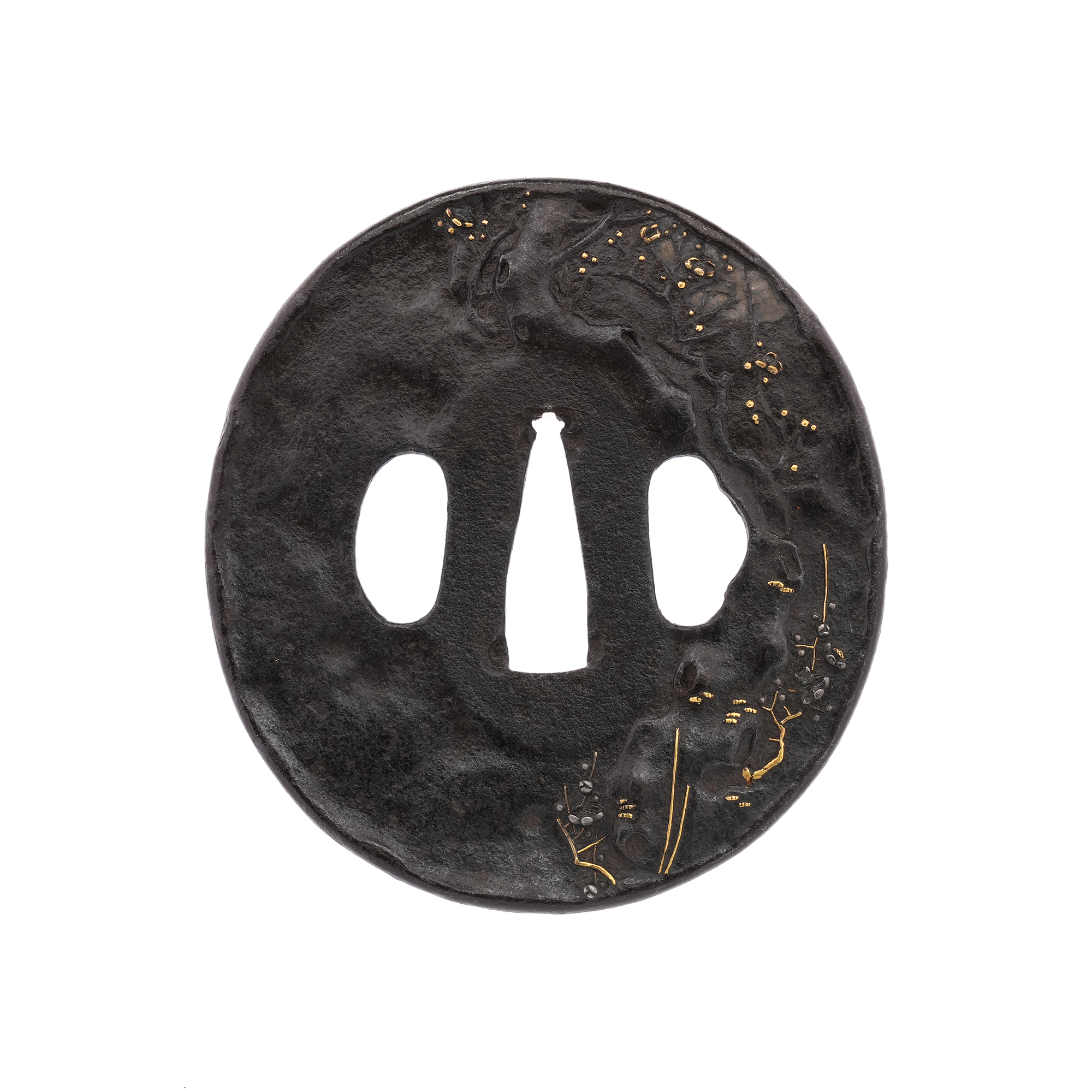
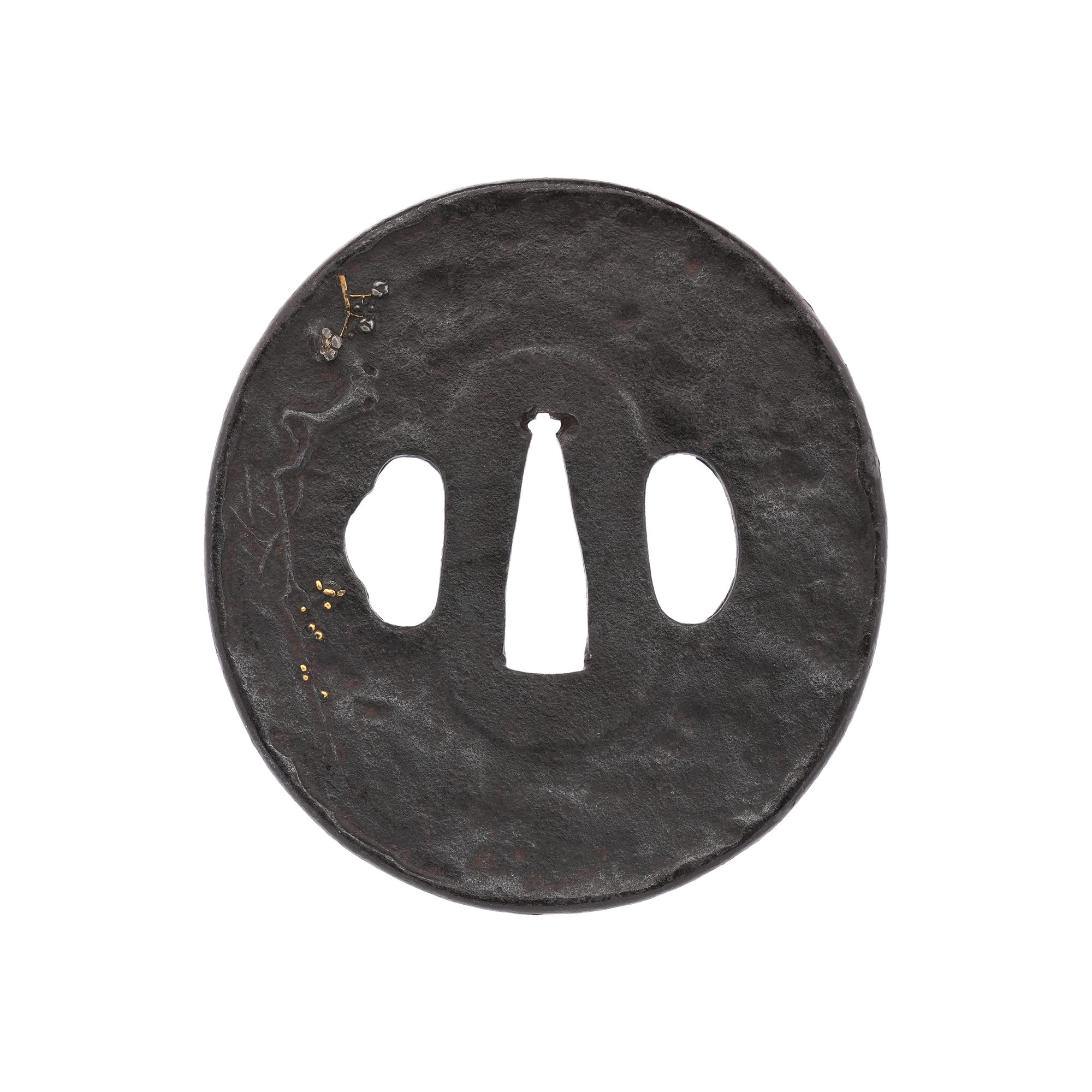
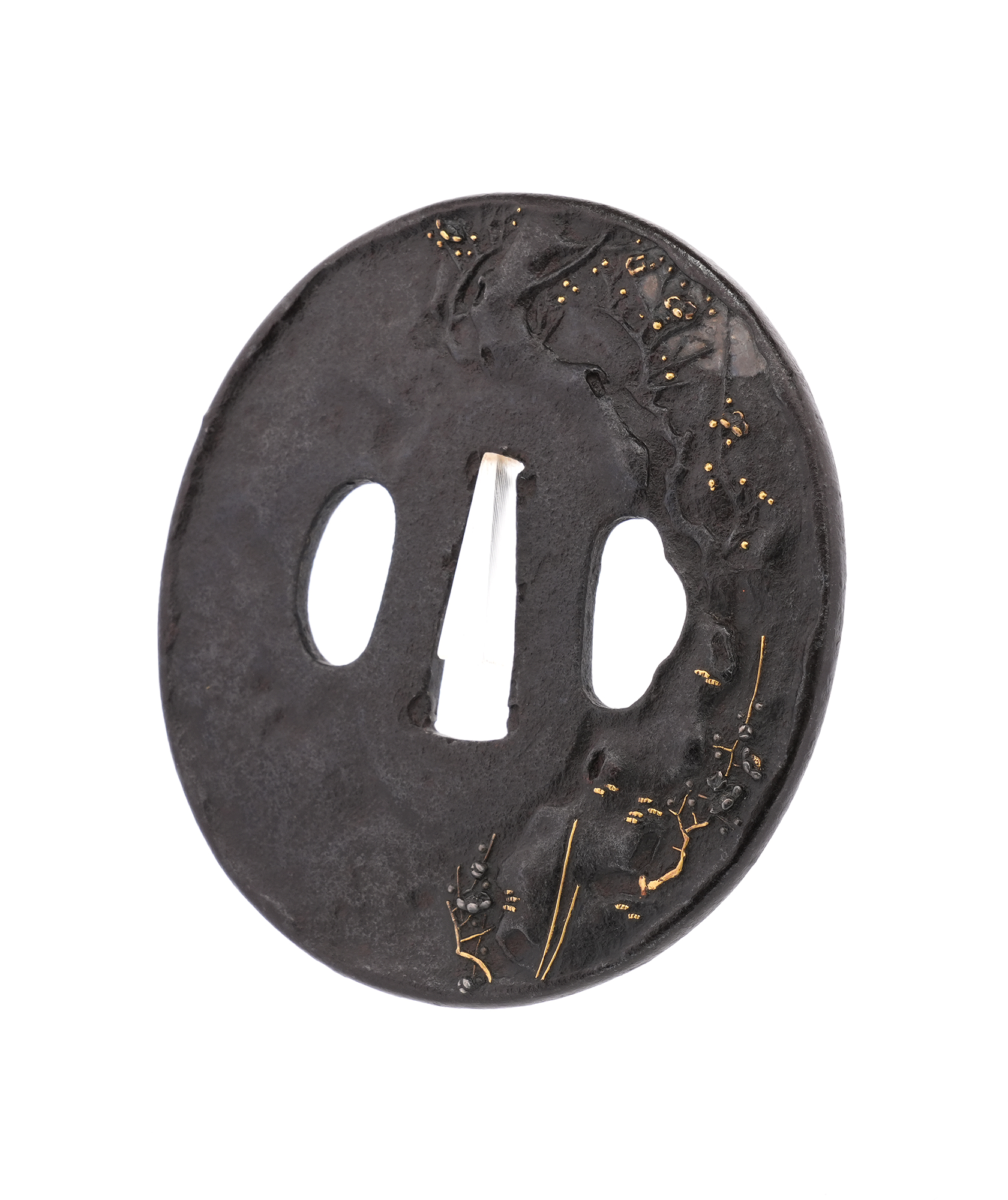
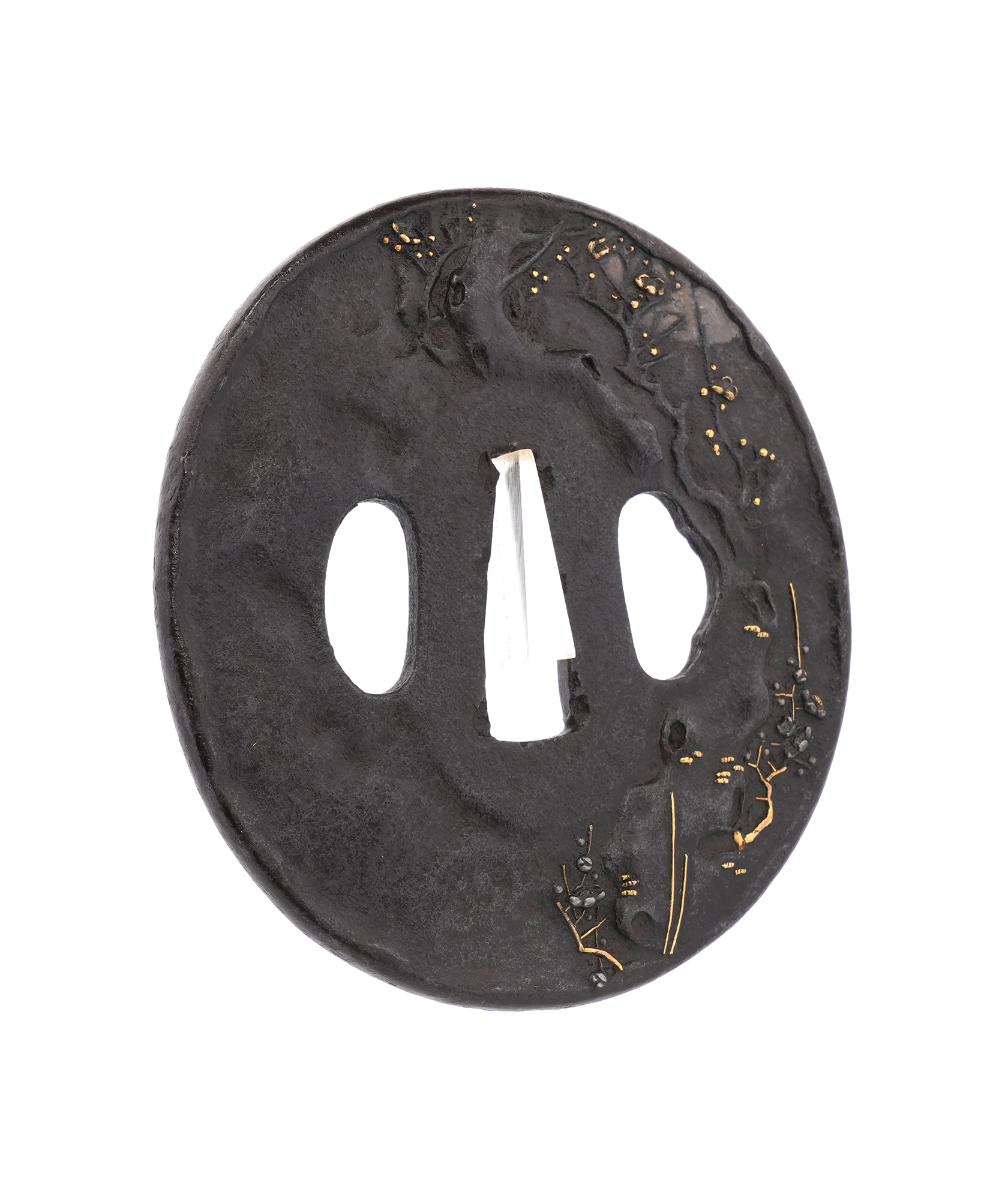
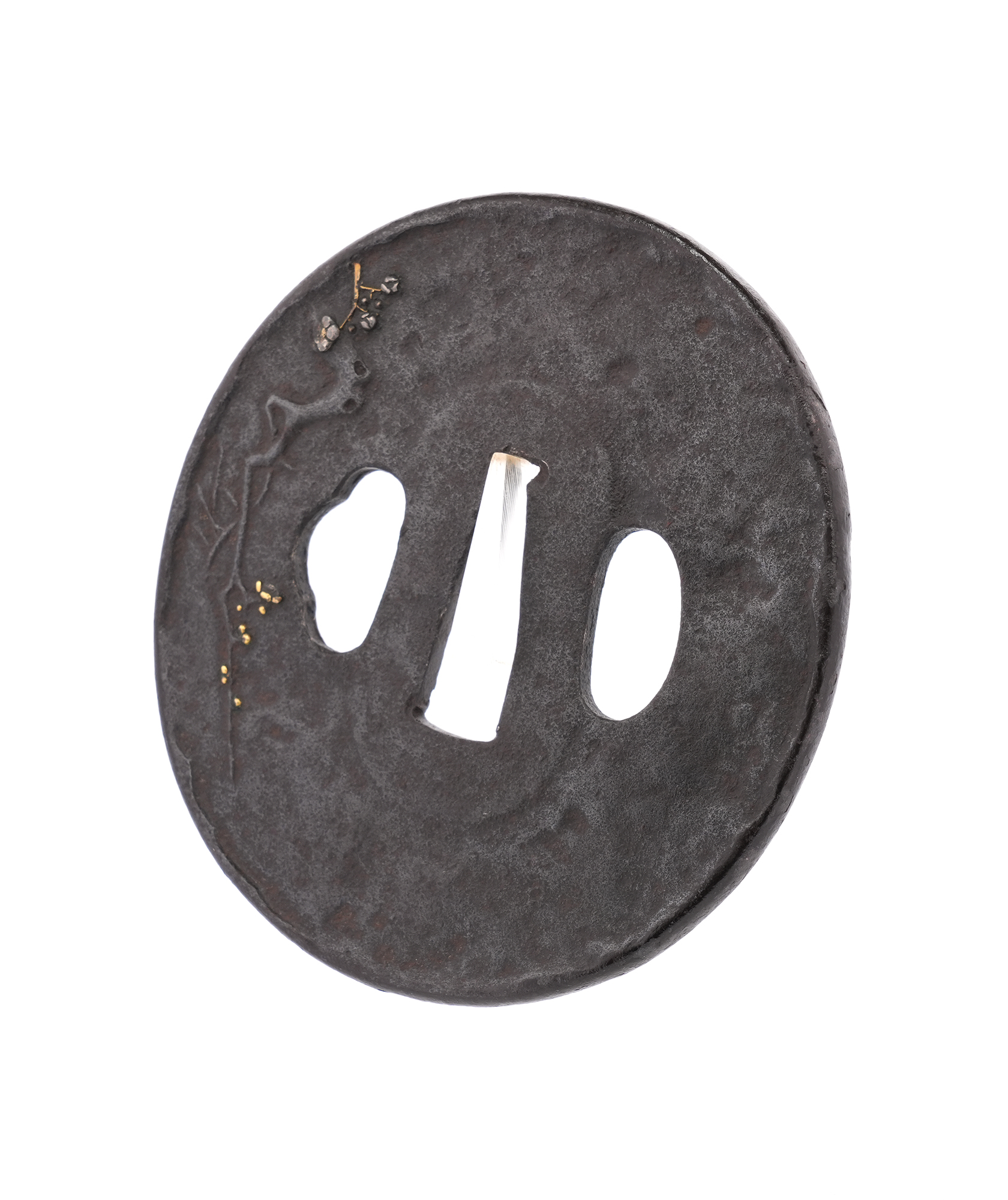
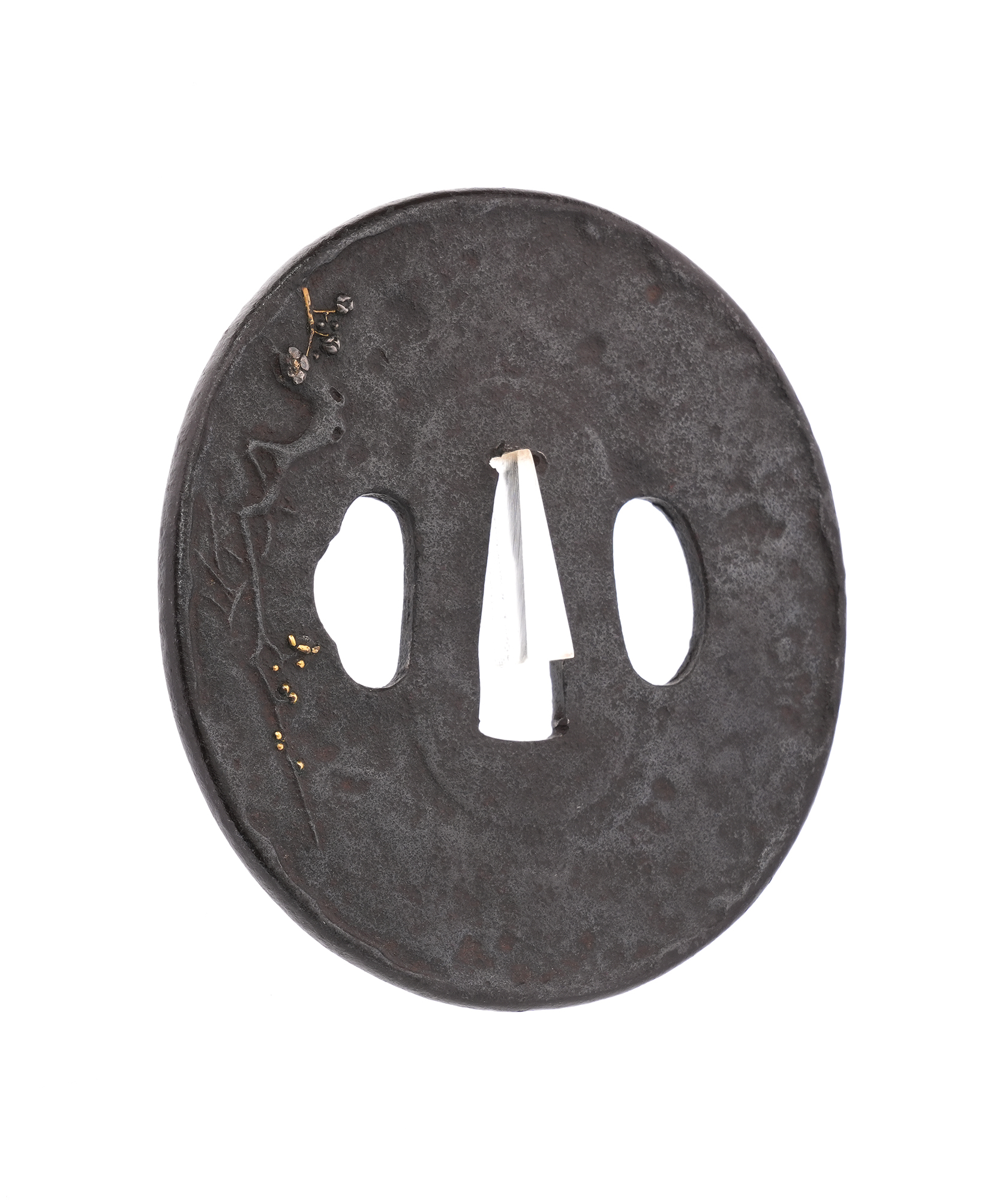
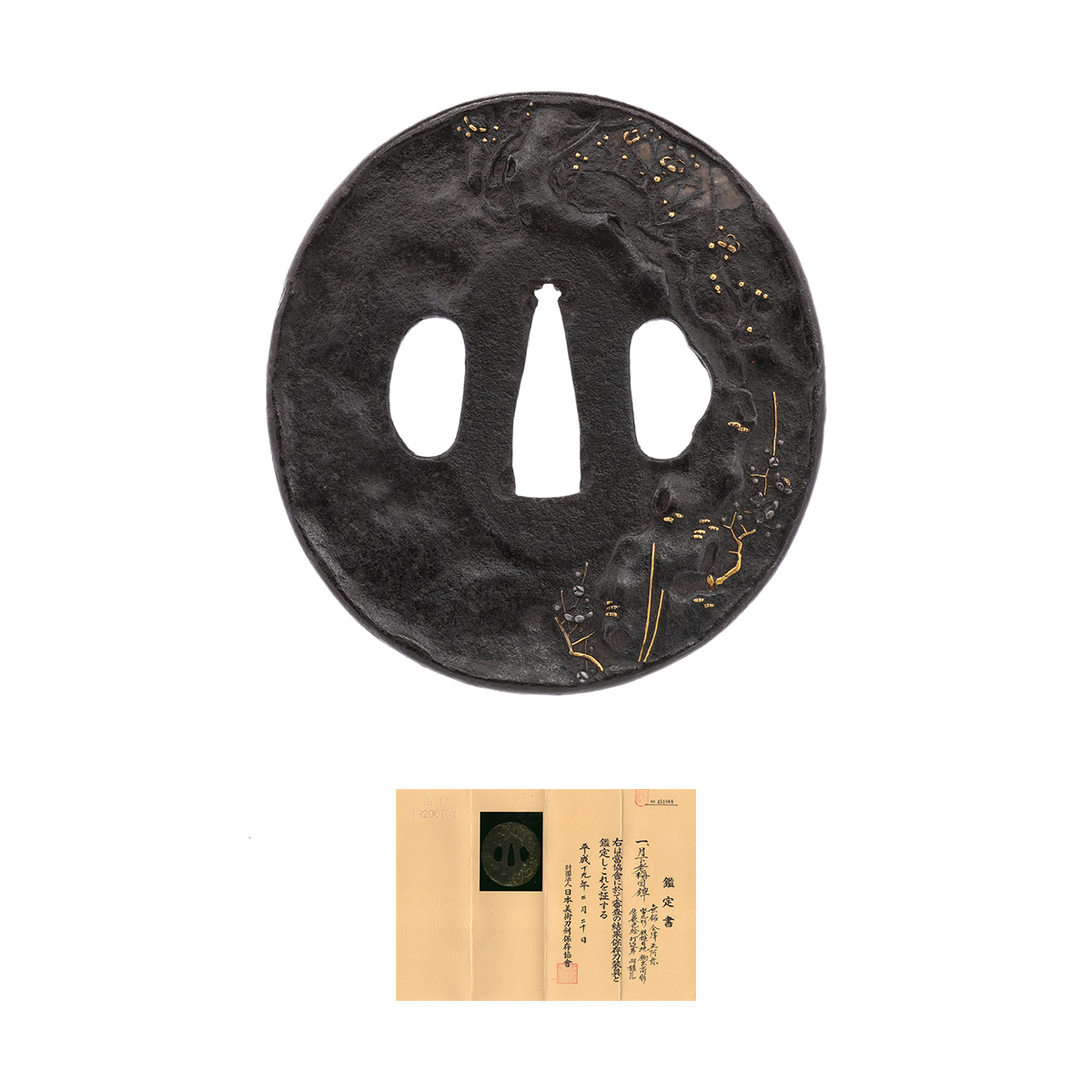
Shoami is a major lineage of tsubako that developed around Kyoto from around the end of the Muromachi period and spread to various regions during the Edo period, and Aizu Shoami refers to the group of Shoami lineage tsubako who were active in Aizu; with extant works signed Aizu Ju Shoami held in the Tokyo National Museum and "Aizu Shoami Tsuba" listed as City Designated Cultural Properties in the cultural property records of Aizu-Wakamatsu City, it can be seen that they were a lineage of tosogu kinko rooted in Aizu, and works combining carvings, zogan, and iroe while based on tetsu-ji are also known. This piece is a tate-maru gata tetsu tsuchime-ji plate with sukidashi takabori depicting an old plum tree under the moon through zogan iroe, and the composition, which deliberately leaves most of the frame as tetsu-ji yohaku while placing the old plum tree bending greatly to one side, has a unique charm reminiscent of the quiet night air; the trunk and branches are expressed three-dimensionally by utilizing the undulations of the tetsu-ji itself, and the kin-iroe placed in key areas makes the plum blossoms and branches stand out while the inclusion of silver-colored zogan adds a restrained brilliance to the calm scenery of the tetsu-ji. The composition, which shows the old plum tree unfolding across the omote and ura as a single scene, is also skillful, expressing the elegance of an old tree standing under the moon through the tetsu-aji, carving, and a small amount of iroe without relying on gaudy decoration; combined with the calm tetsu-aji on the mimi that has aged over time, it is a piece where one can appreciate the beauty of yohaku and the flavor of kotan.
NihontoWatchOffered by Toushin

As written by the shop
Machine translation from the shop's Japanese · may contain errors ·
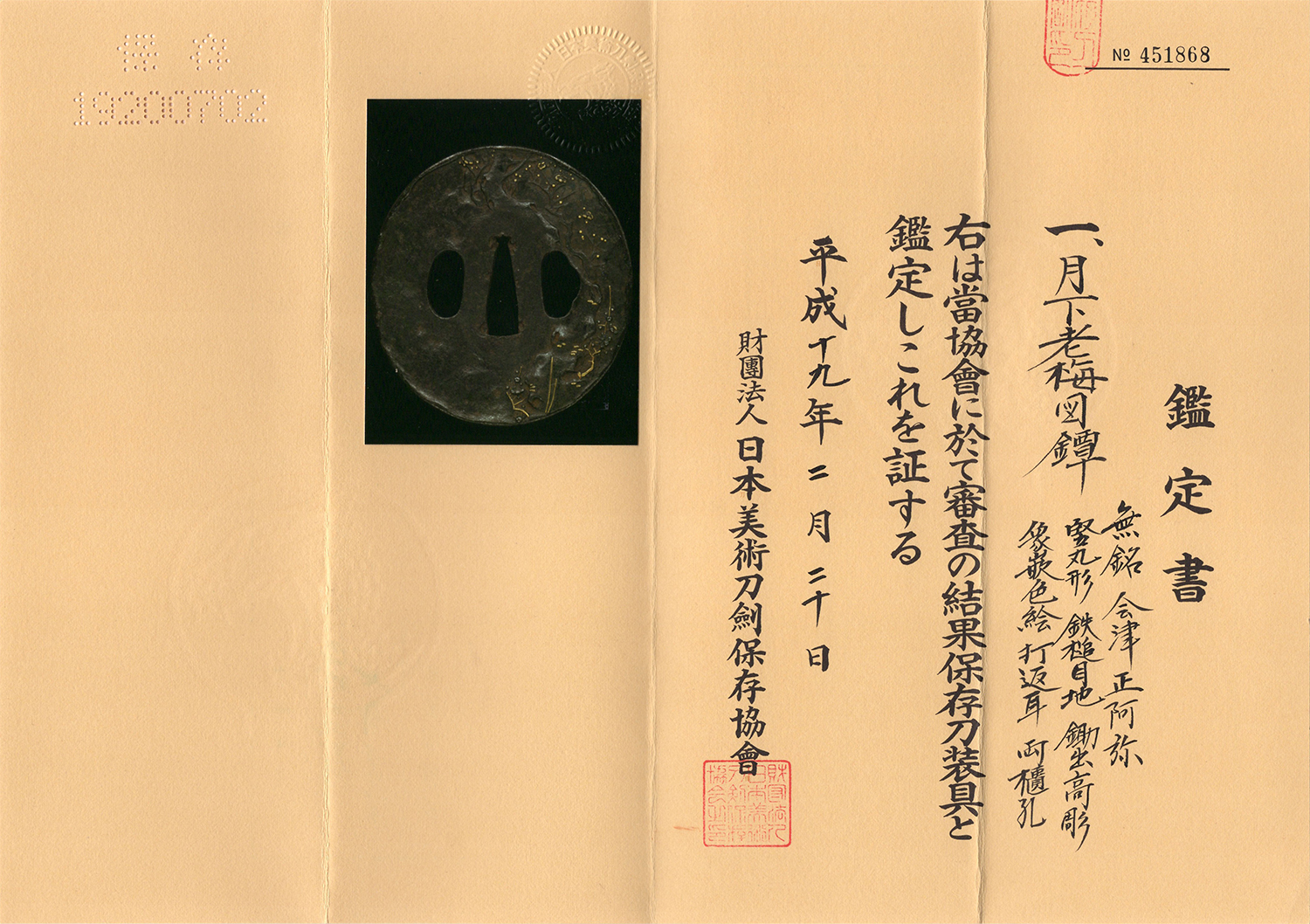
Certifies a genuine fitting worth preserving: a correct signature, or, if unsigned, an identifiable era and school, with recognized artistic and craft value.
The NBTHK (Nihon Bijutsu Tōken Hozon Kyōkai, the Society for the Preservation of Japanese Art Swords) is a public-interest incorporated foundation founded in 1948 and supervised by Japan’s Agency for Cultural Affairs (Bunkachō); it is based at the Japanese Sword Museum in Tokyo. Its expert panels physically examine each submitted work (shinsa) and issue a certificate (kanteishō) ranking it by artistic and historical merit. NBTHK papers are the most widely recognized standard of authentication for Japanese swords and fittings.
NBTHK official siteAs a rule we do not accept returns, except when we have sent a different item from the one ordered or when there is a significant discrepancy between the description and the item. If you wish to return an item, please contact us within 3 days of its arrival and then send it back.
¥275,000