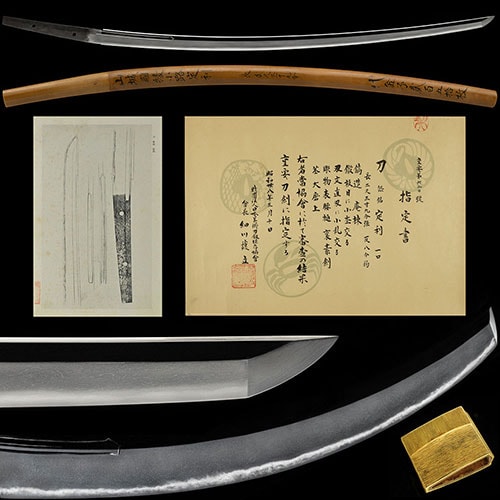
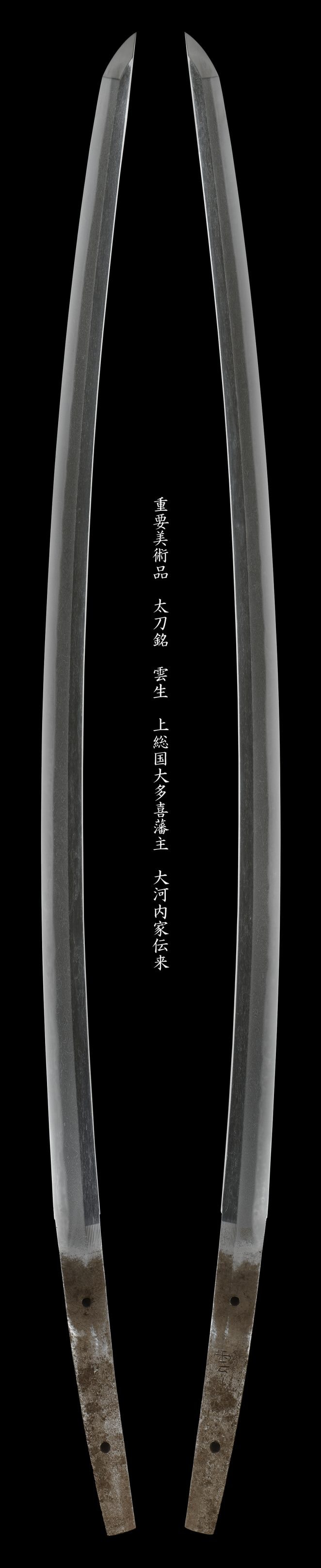
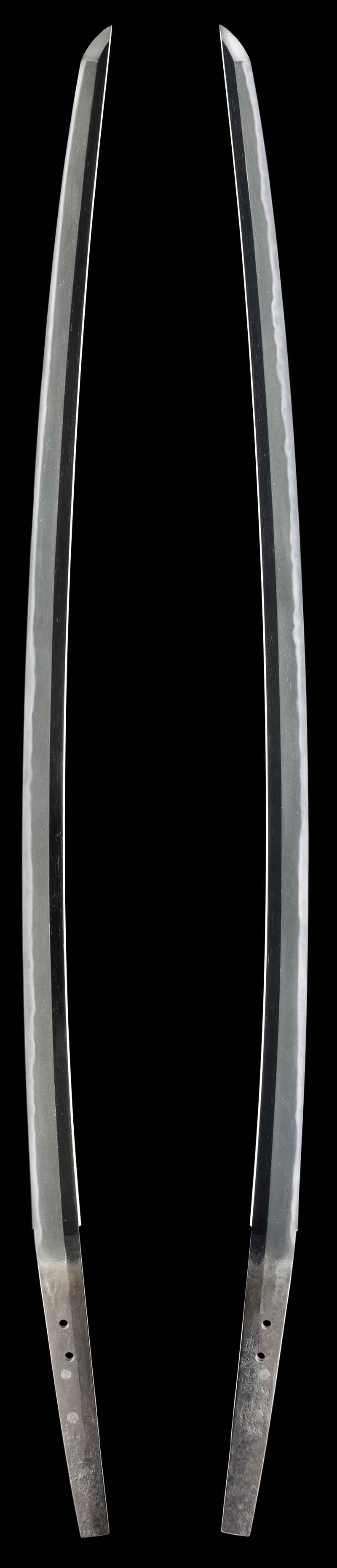
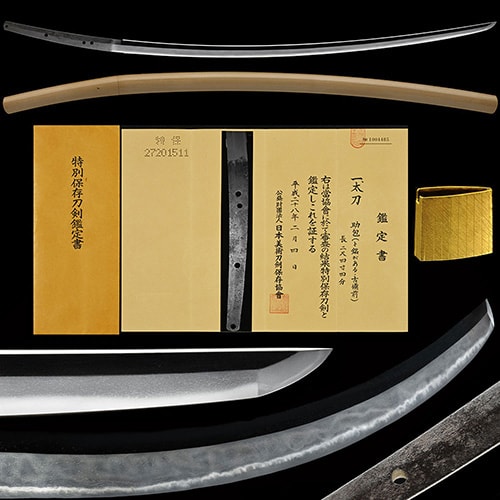
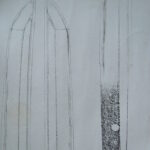
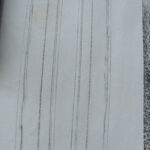
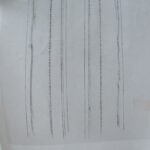
This is an osuriage mumei tachi attributed to the Yamato Taema school, designated Juyo Token by the NBTHK. It features strong Yamato characteristics, rich nie activities, and comes with a sayagaki by Tanobe Michihiro. The blade is in excellent polish and housed in a fine shirasaya with a double gold foil habaki.
 NihontoWatch
mumei · Taema · Koto · nagasa 64.4cm · sori 1.1cm
A blade of top-grade workmanship and condition, formally judged to rank with a nationally recognized Important Art Object (Jūyō Bijutsuhin). Awarded only at the NBTHK’s competitive annual examination.
Of Japan’s roughly 2.5 million registered swords, only 12,307 (about 1 in 203) have ever attained Jūyō.
The NBTHK (Nihon Bijutsu Tōken Hozon Kyōkai, the Society for the Preservation of Japanese Art Swords) is a public-interest incorporated foundation founded in 1948 and supervised by Japan’s Agency for Cultural Affairs (Bunkachō); it is based at the Japanese Sword Museum in Tokyo. Its expert panels physically examine each submitted work (shinsa) and issue a certificate (kanteishō) ranking it by artistic and historical merit. NBTHK papers are the most widely recognized standard of authentication for Japanese swords and fittings.
NBTHK official site3-day return window from receipt.
This is an osuriage mumei tachi attributed to the Yamato Taema school, designated Juyo Token by the NBTHK. It features strong Yamato characteristics, rich nie activities, and comes with a sayagaki by Tanobe Michihiro. The blade is in excellent polish and housed in a fine shirasaya with a double gold foil habaki.
NihontoWatchmumei · Taema · Koto · nagasa 64.4cm · sori 1.1cm
A blade of top-grade workmanship and condition, formally judged to rank with a nationally recognized Important Art Object (Jūyō Bijutsuhin). Awarded only at the NBTHK’s competitive annual examination.
Of Japan’s roughly 2.5 million registered swords, only 12,307 (about 1 in 203) have ever attained Jūyō.
The NBTHK (Nihon Bijutsu Tōken Hozon Kyōkai, the Society for the Preservation of Japanese Art Swords) is a public-interest incorporated foundation founded in 1948 and supervised by Japan’s Agency for Cultural Affairs (Bunkachō); it is based at the Japanese Sword Museum in Tokyo. Its expert panels physically examine each submitted work (shinsa) and issue a certificate (kanteishō) ranking it by artistic and historical merit. NBTHK papers are the most widely recognized standard of authentication for Japanese swords and fittings.
NBTHK official site3-day return window from receipt.