The twentieth century nearly killed the craft twice: wartime distortion, then the occupation ban. The NBTHK’s founding in 1948 and licensed forging from 1953 rebuilt the sword as an art, crowned by Living National Treasures and the mukansa rank.
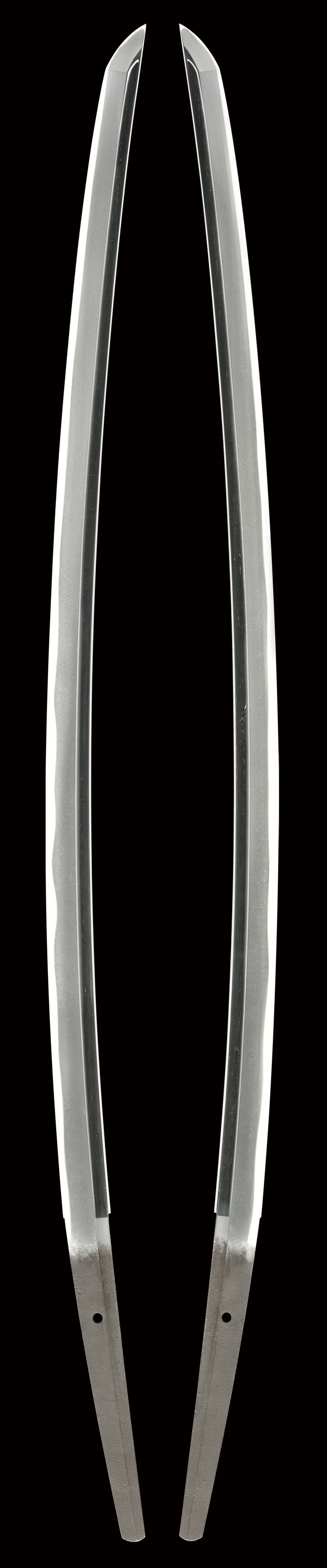
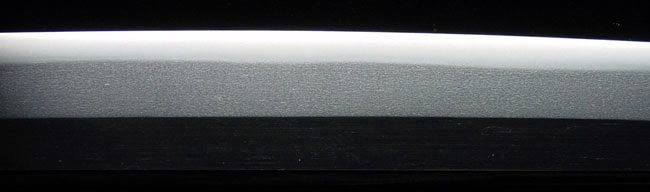
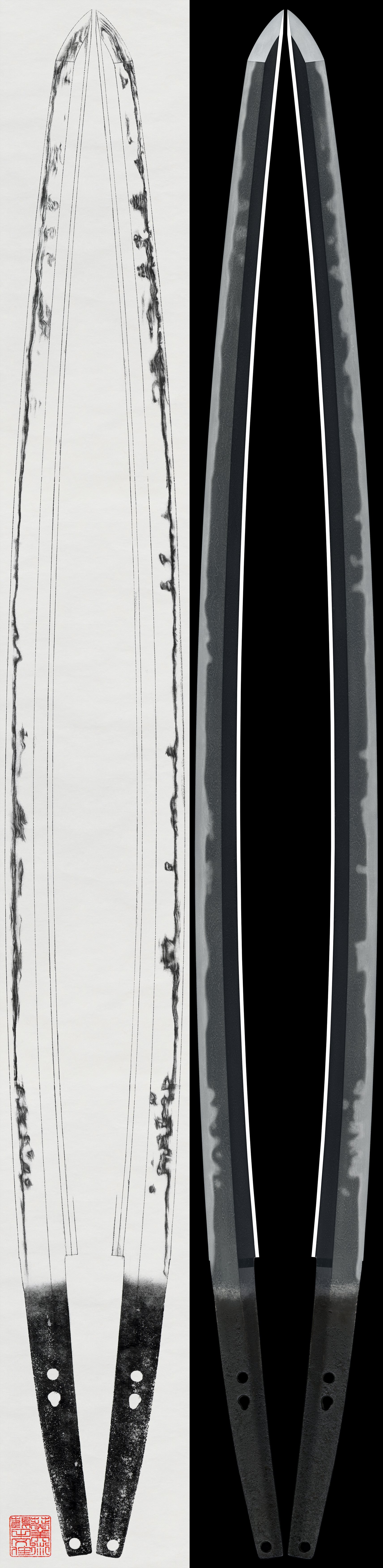
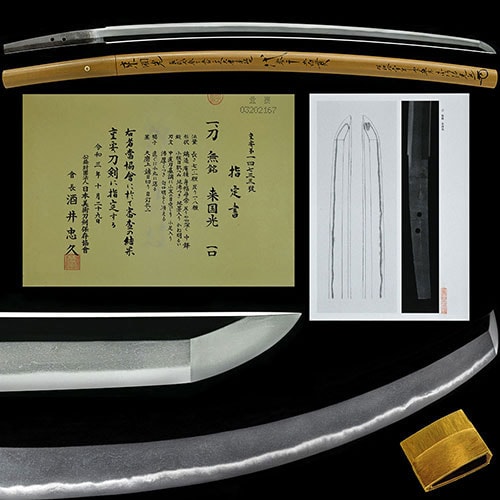
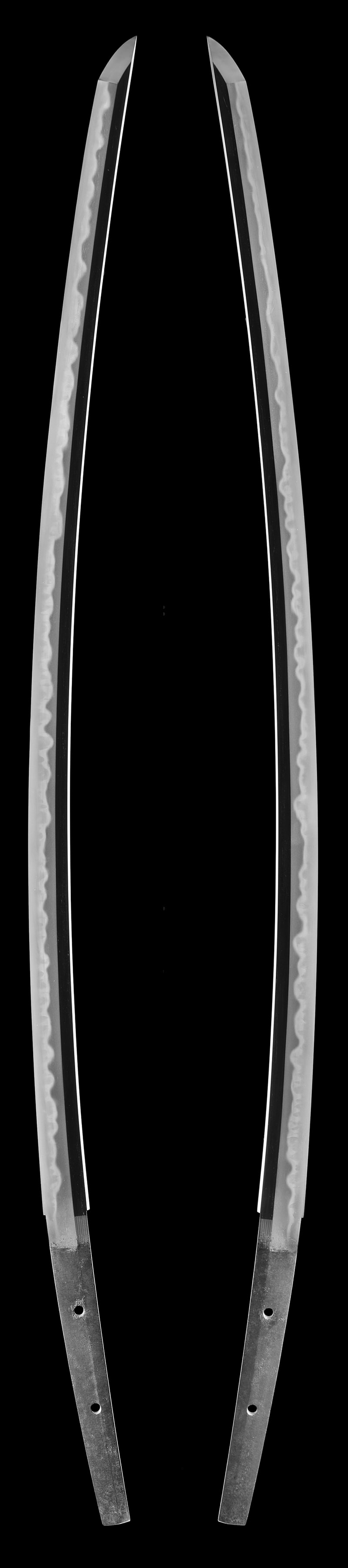
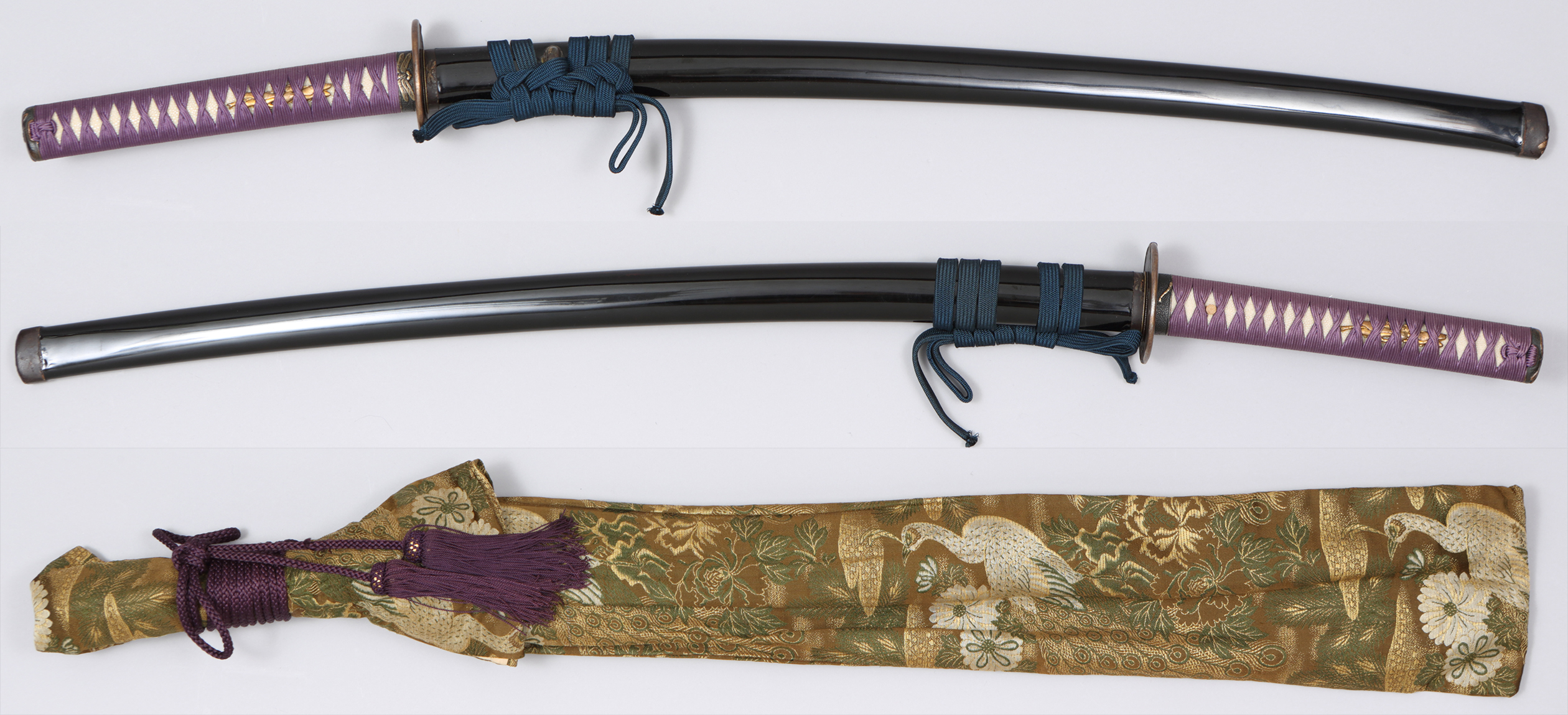
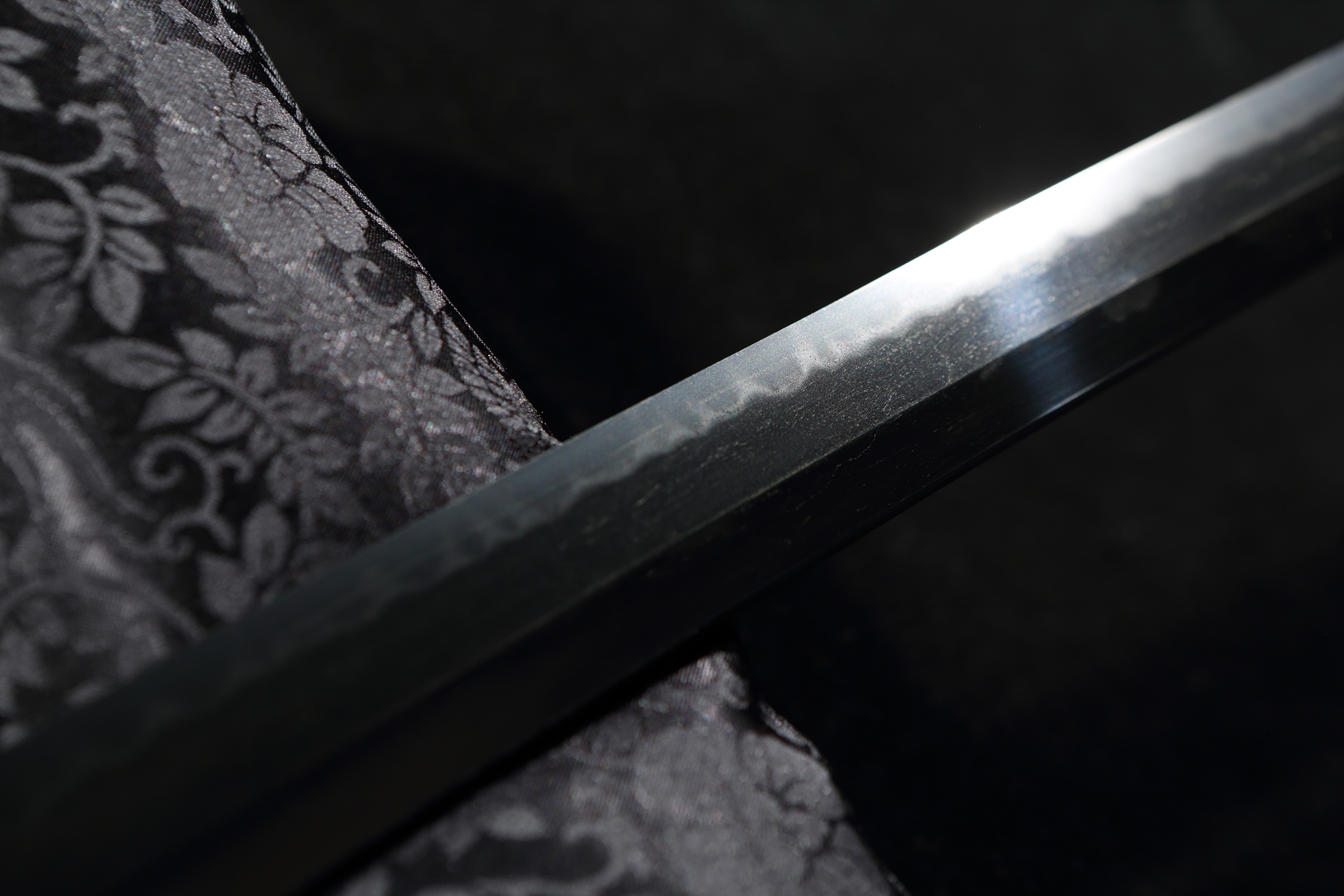
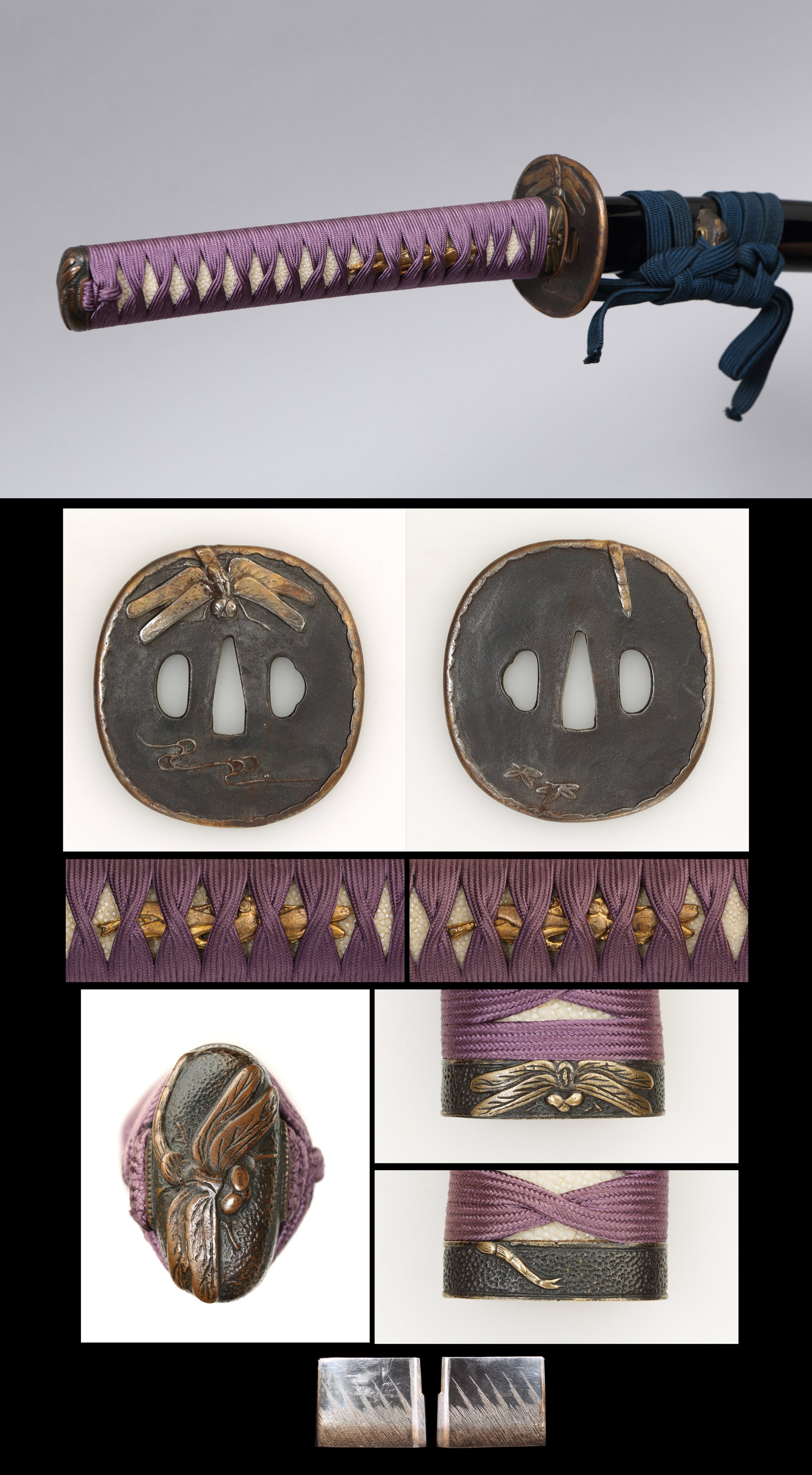
This is a katana by Unshu ju Yoshitsugu, a smith from Shimane Prefecture who made military swords during wartime. Dated Showa 31 (1956), it exhibits a sharp style with excellent cutting ability, reflecting the smith's dedication to practical swordsmanship even in the post-war era. The blade features a koshi-zori, a well-forged masame-nagare jigane, and a midare-ba with gunome and choji mixed with nie and sunagashi.
 NihontoWatch

Izumo · around 1926-1989
Shōwa to the present: destruction and revival
The twentieth century nearly killed the craft twice: wartime distortion, then the occupation ban. The NBTHK’s founding in 1948 and licensed forging from 1953 rebuilt the sword as an art, crowned by Living National Treasures and the mukansa rank.
We could not find an authenticity certificate on the seller’s listing. Japanese swords and fittings are normally papered by the NBTHK (or the NTHK). Without one, the attribution is the seller’s own assessment and has not been independently verified — treat it with caution and ask the dealer about certification before buying.
If you judge that the condition of the delivered item differs significantly from the photos or description on our site, a return is possible. However, the return shipping cost is the customer's responsibility. To use cooling-off, please apply in writing by postal mail within one week of the item's arrival. The return shipping cost is the customer's responsibility.
This is a katana by Unshu ju Yoshitsugu, a smith from Shimane Prefecture who made military swords during wartime. Dated Showa 31 (1956), it exhibits a sharp style with excellent cutting ability, reflecting the smith's dedication to practical swordsmanship even in the post-war era. The blade features a koshi-zori, a well-forged masame-nagare jigane, and a midare-ba with gunome and choji mixed with nie and sunagashi.
NihontoWatchIzumo · around 1926-1989
Shōwa to the present: destruction and revival
The twentieth century nearly killed the craft twice: wartime distortion, then the occupation ban. The NBTHK’s founding in 1948 and licensed forging from 1953 rebuilt the sword as an art, crowned by Living National Treasures and the mukansa rank.
We could not find an authenticity certificate on the seller’s listing. Japanese swords and fittings are normally papered by the NBTHK (or the NTHK). Without one, the attribution is the seller’s own assessment and has not been independently verified — treat it with caution and ask the dealer about certification before buying.
If you judge that the condition of the delivered item differs significantly from the photos or description on our site, a return is possible. However, the return shipping cost is the customer's responsibility. To use cooling-off, please apply in writing by postal mail within one week of the item's arrival. The return shipping cost is the customer's responsibility.