Sengoku Seki was an industry: smiths organized under their tutelary Kasuga shrine, arming the war bands of central Japan. Magoroku Kanemoto’s sanbonsugi and the finest Kanesada work prove quality survived inside mass production.
 NihontoWatchNihontoWatch
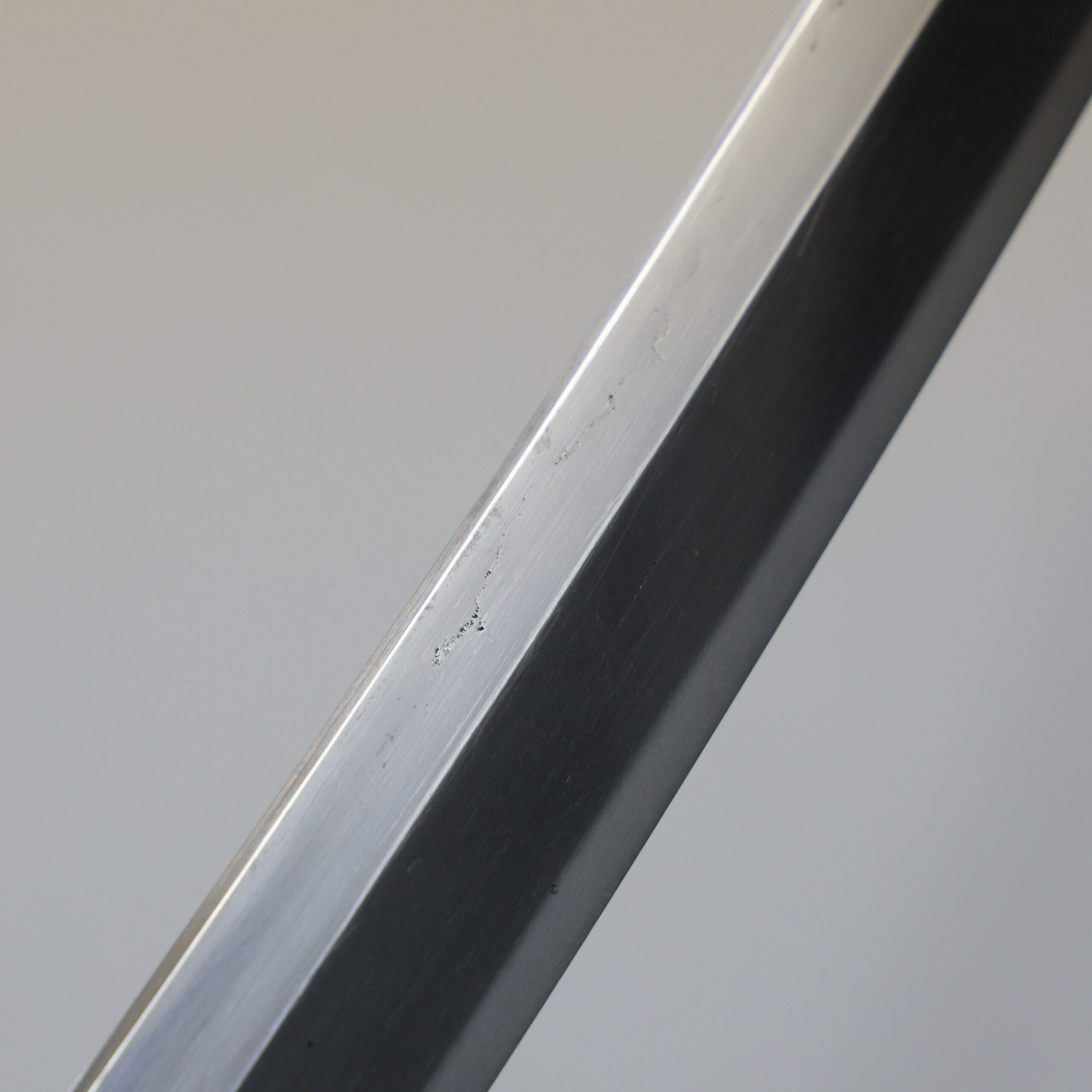
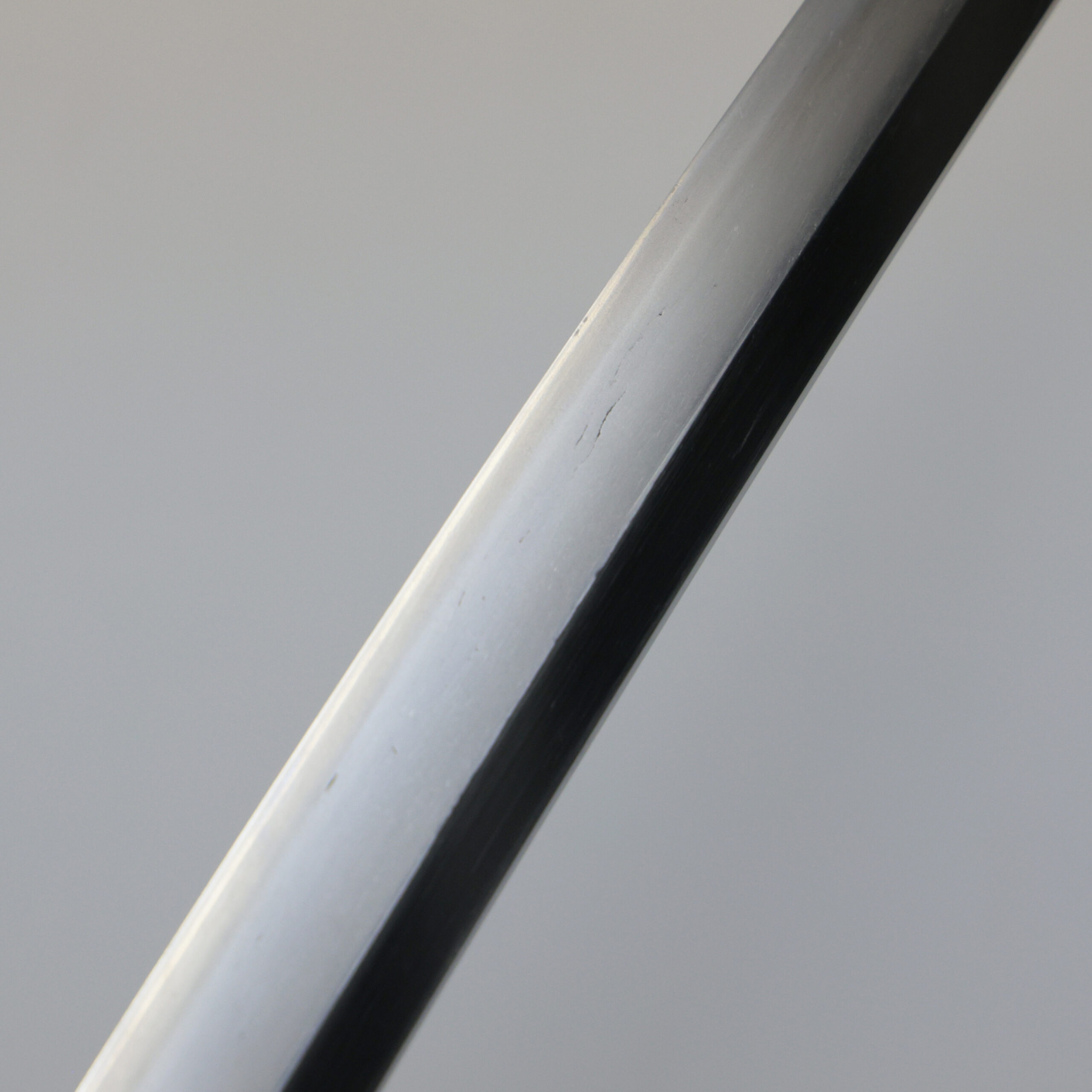
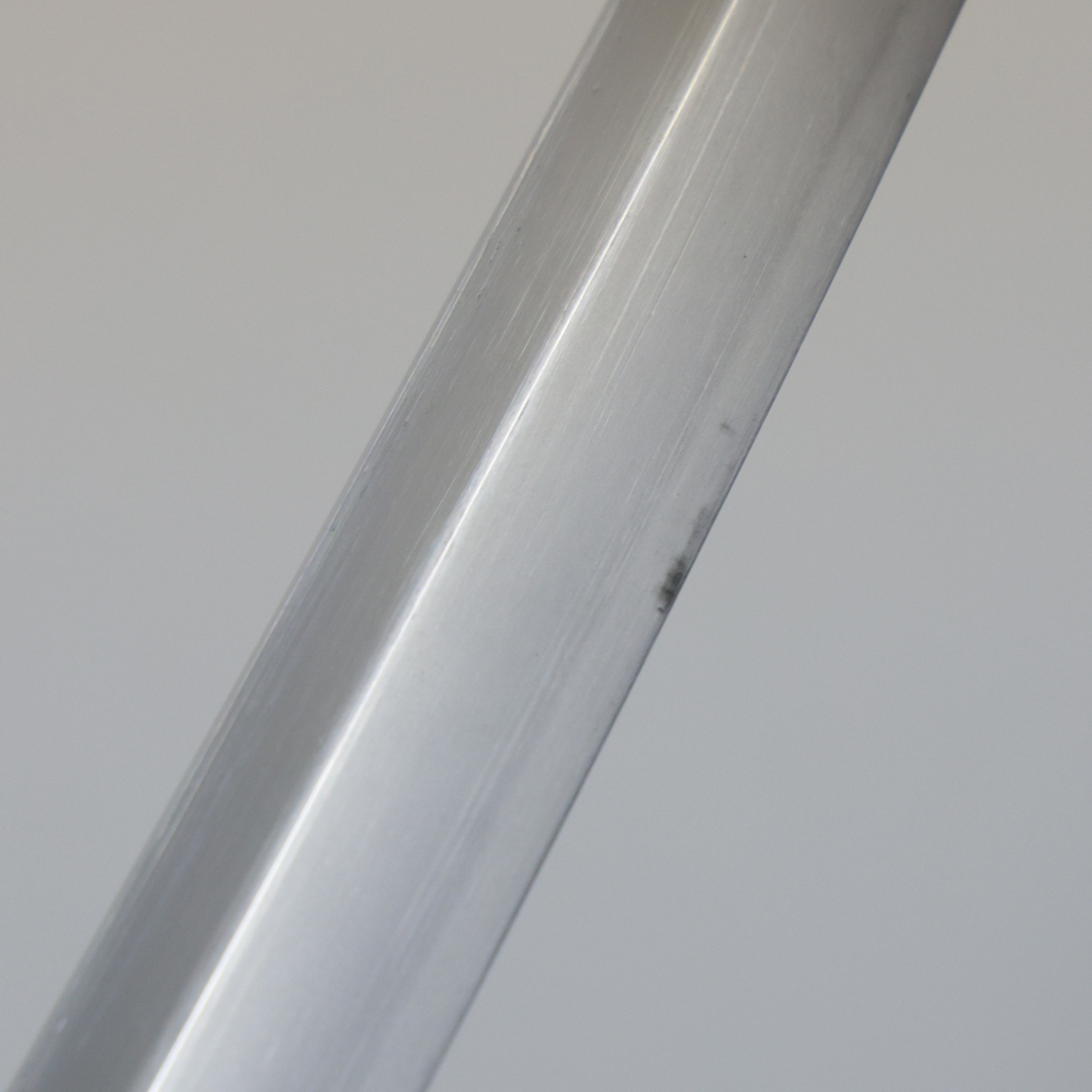
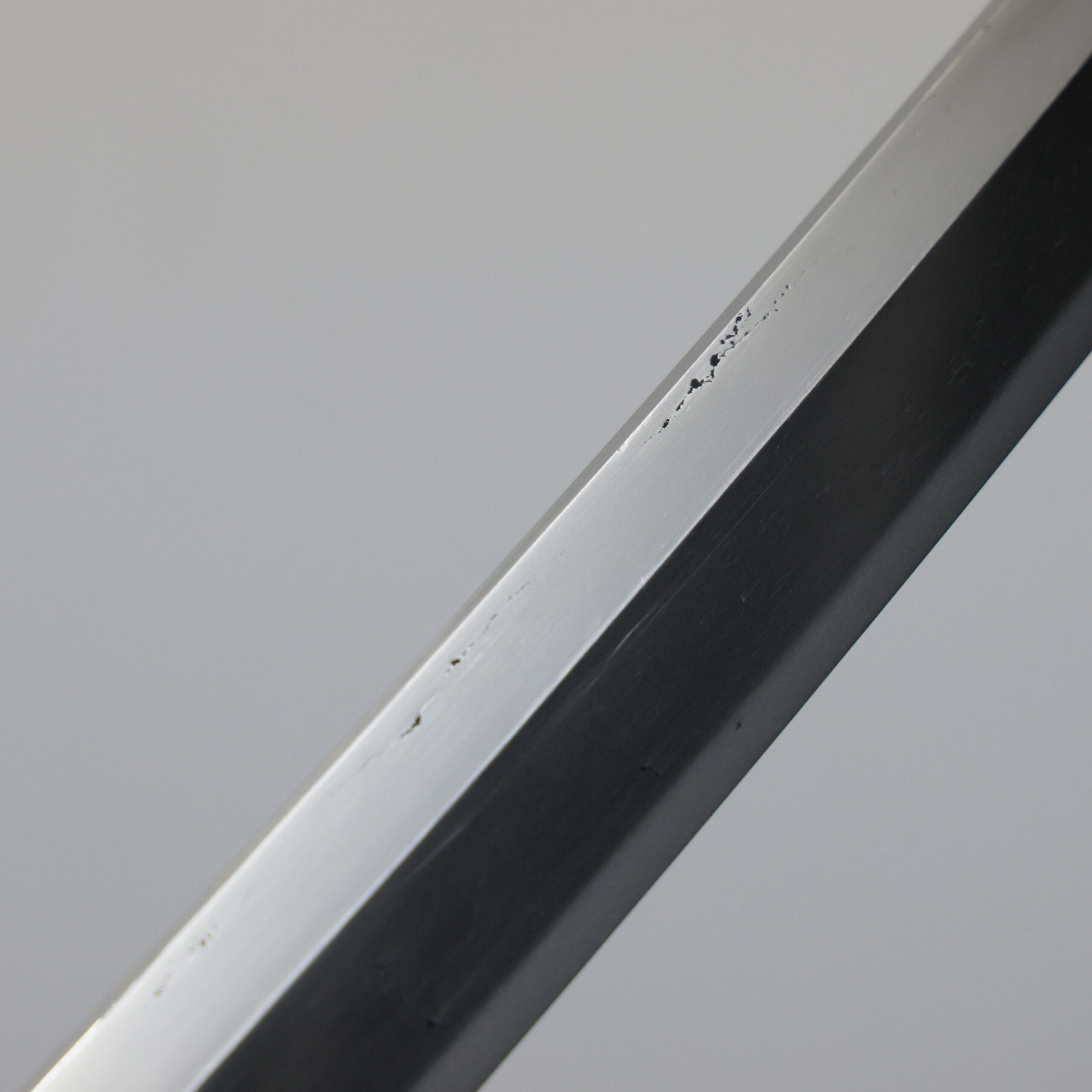
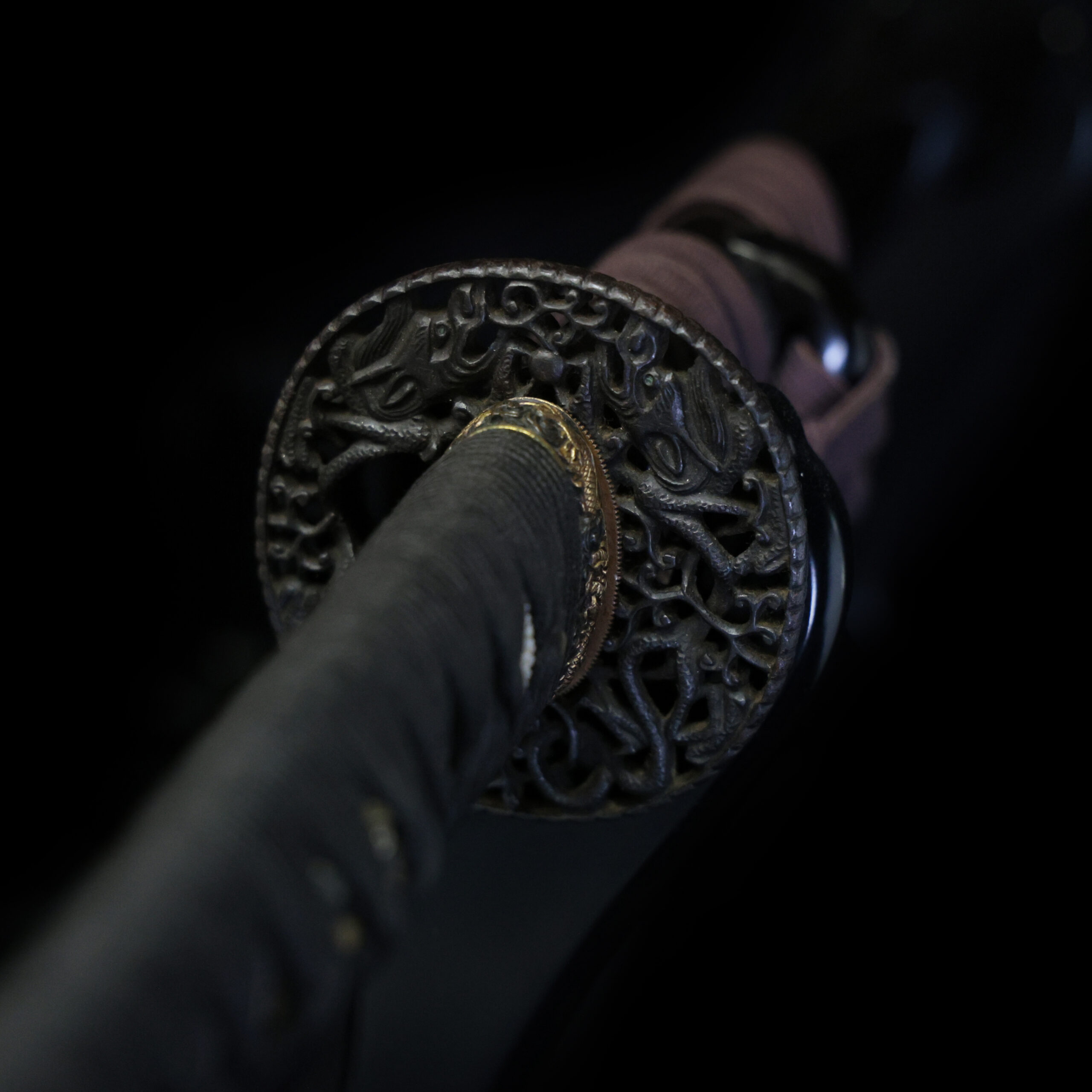
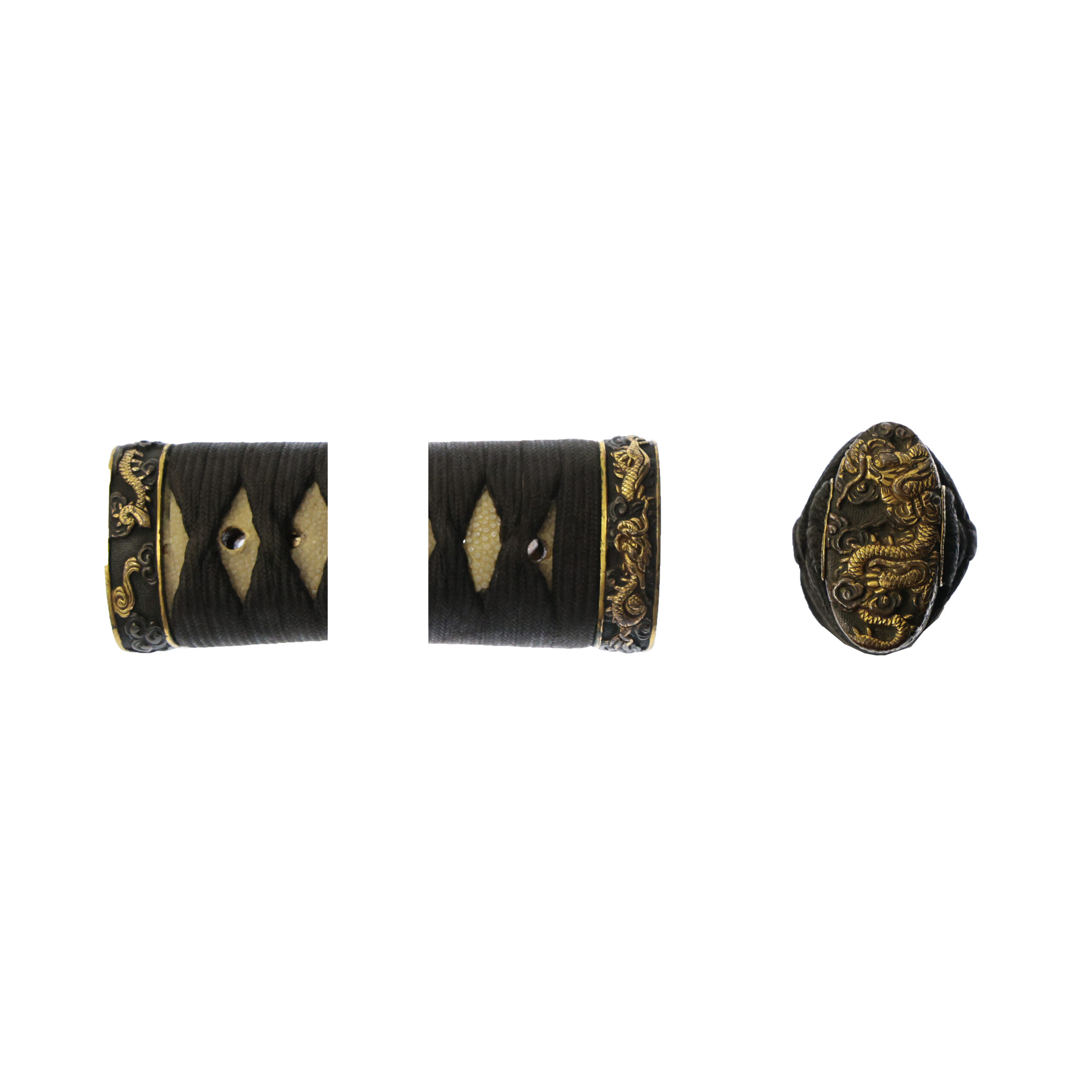
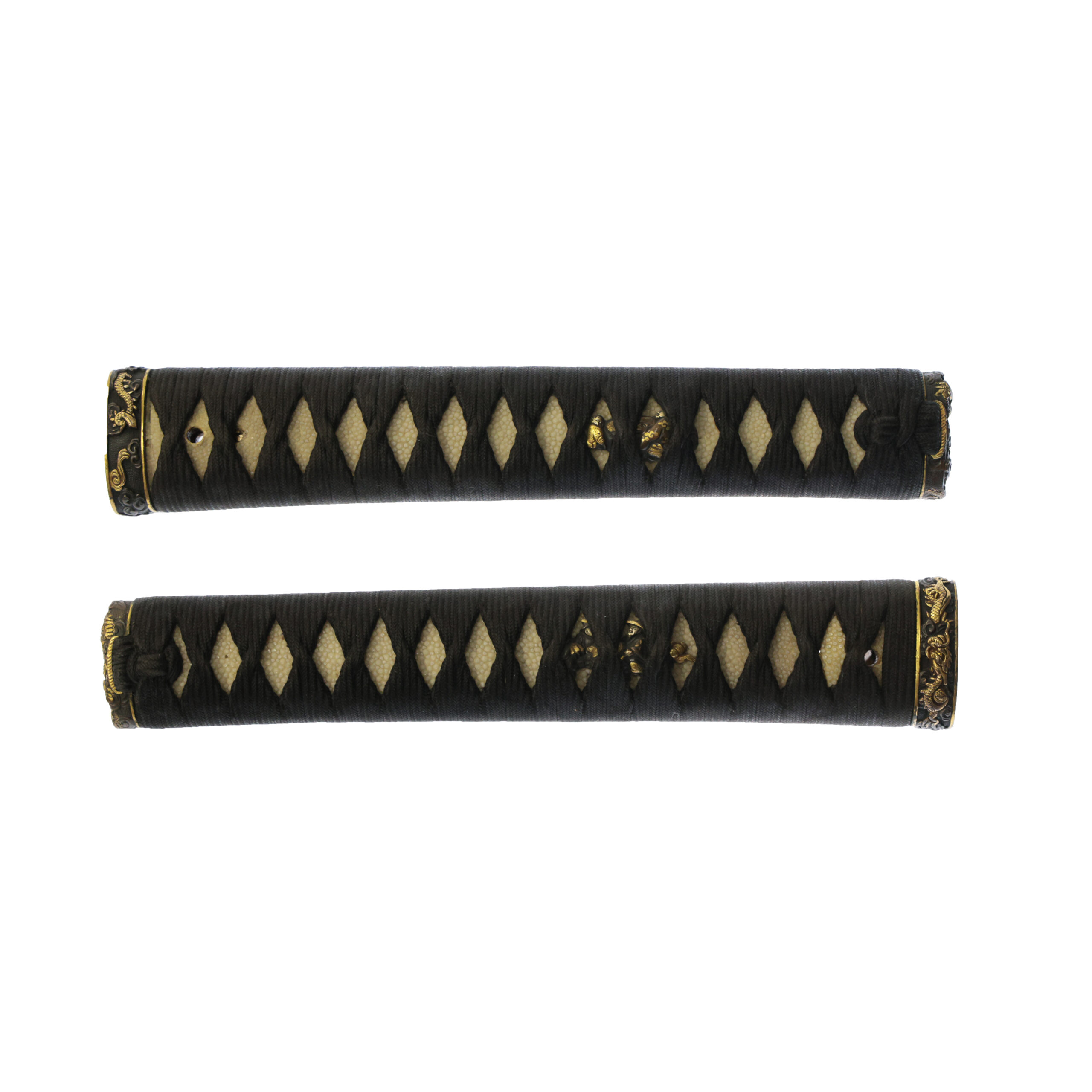
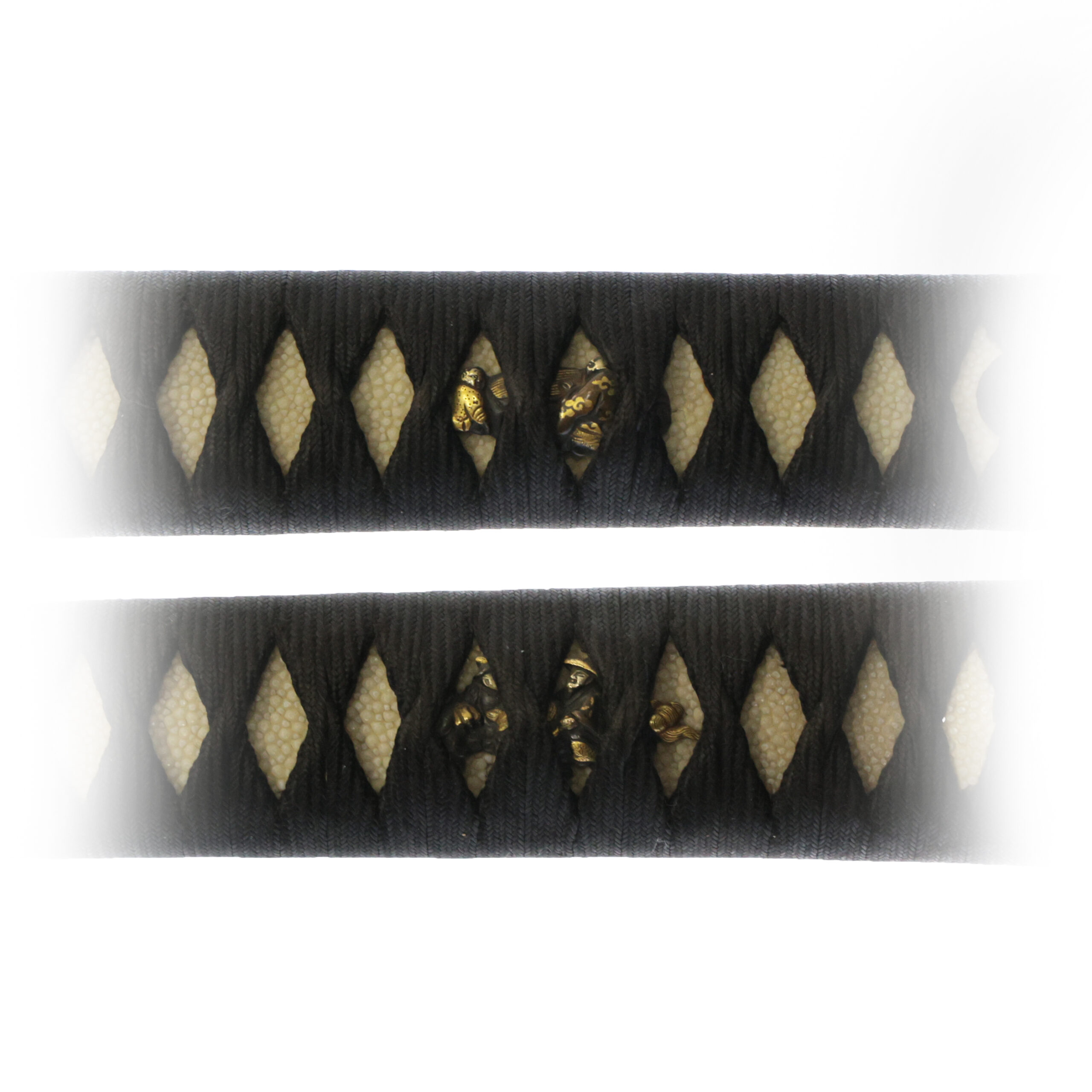
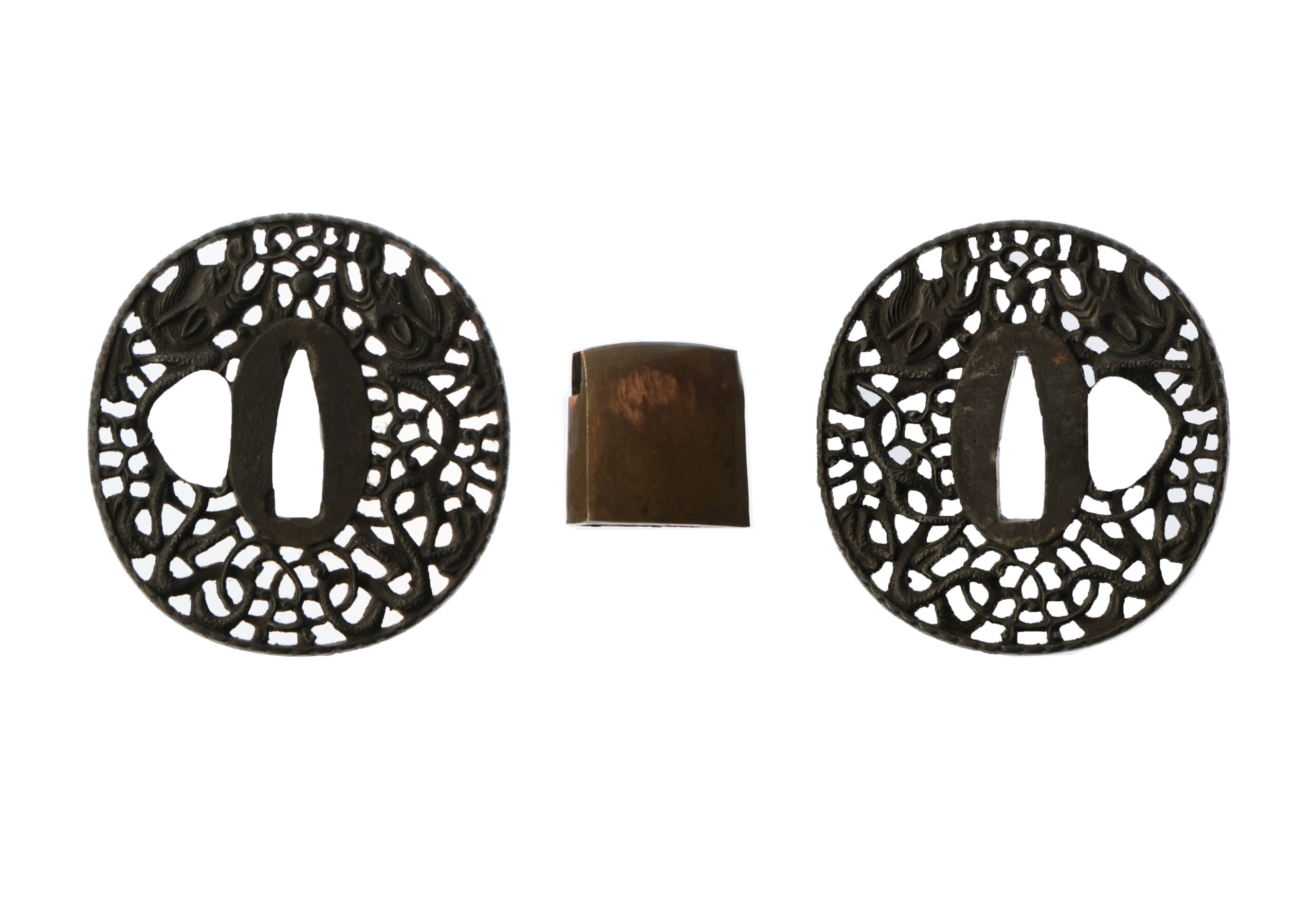
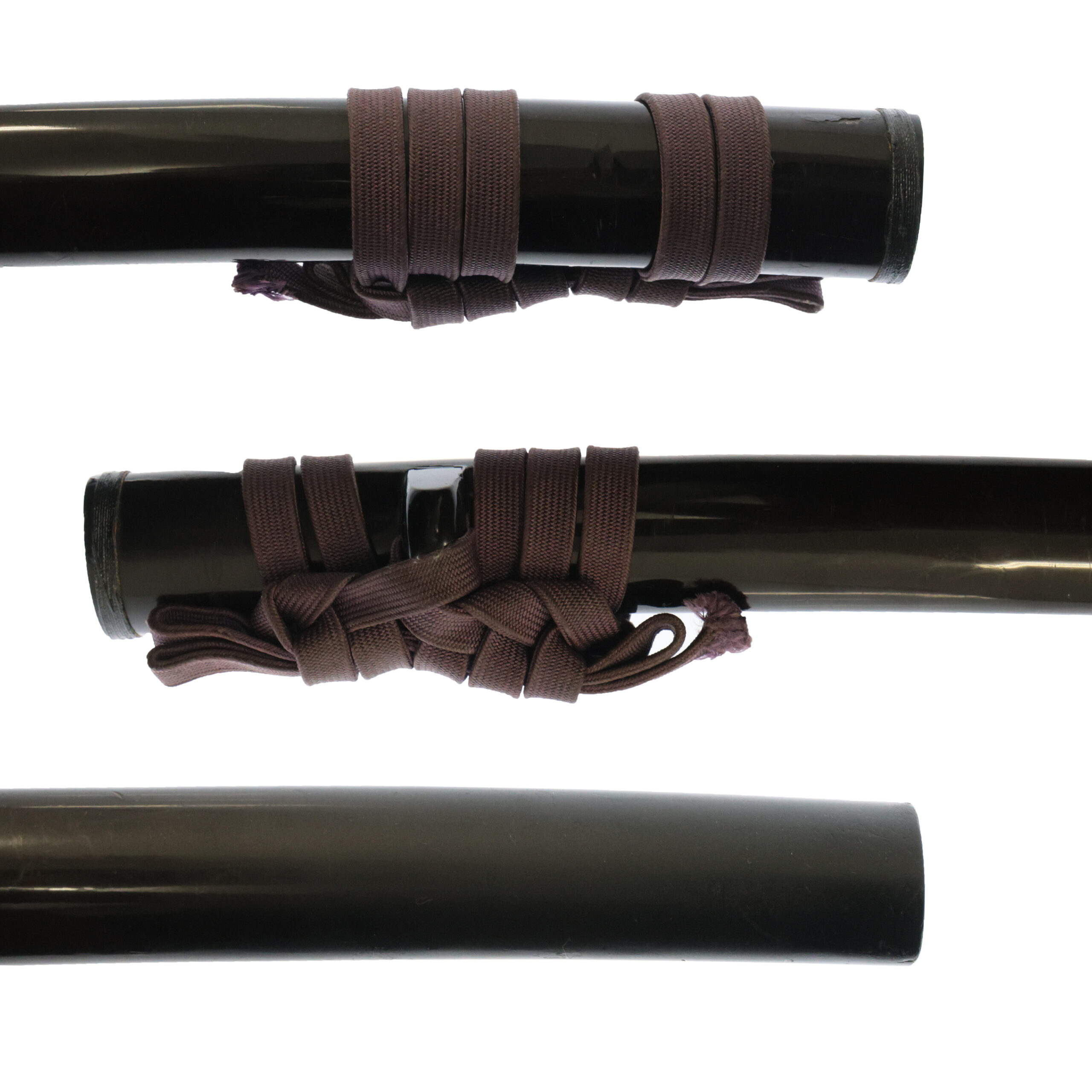
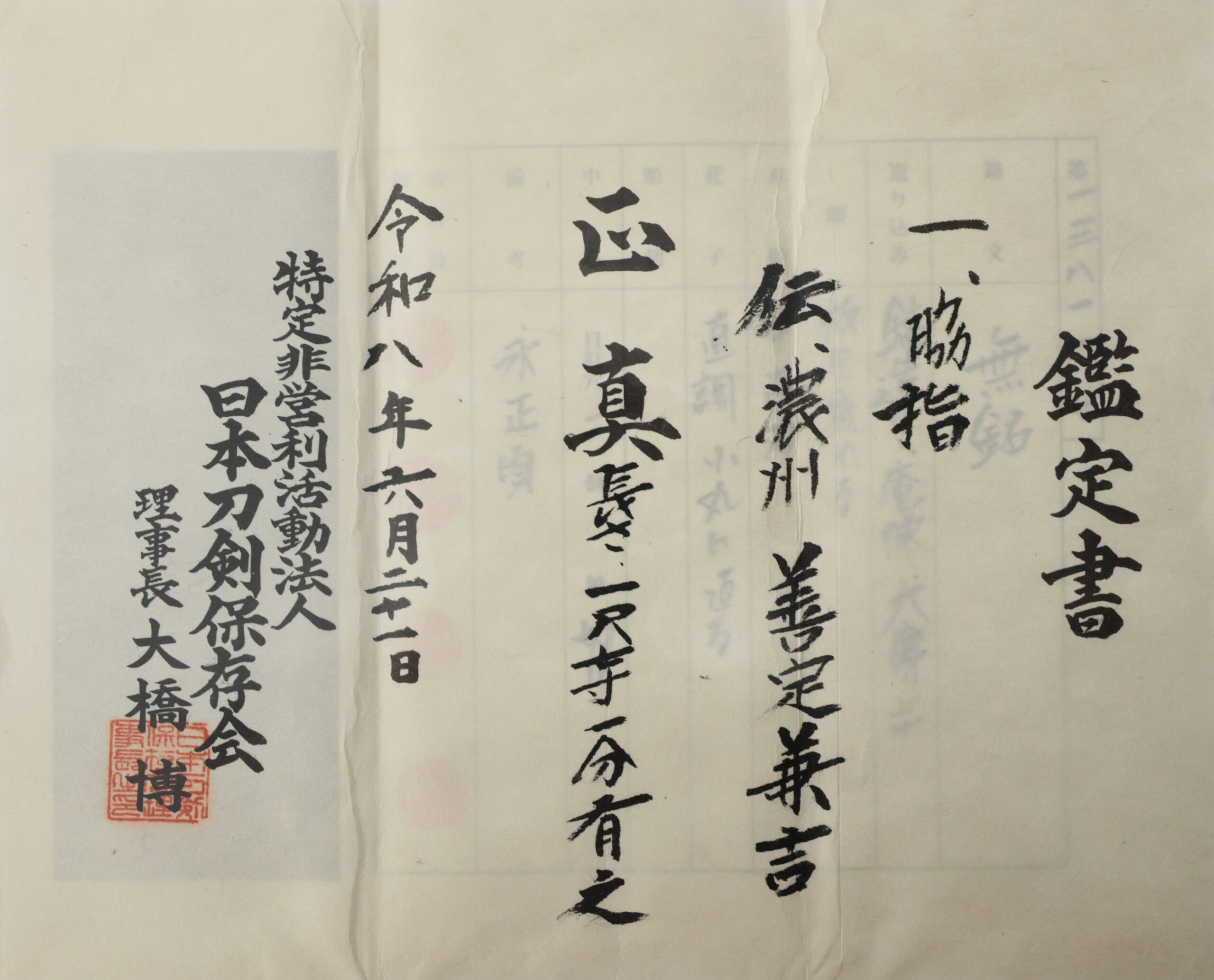
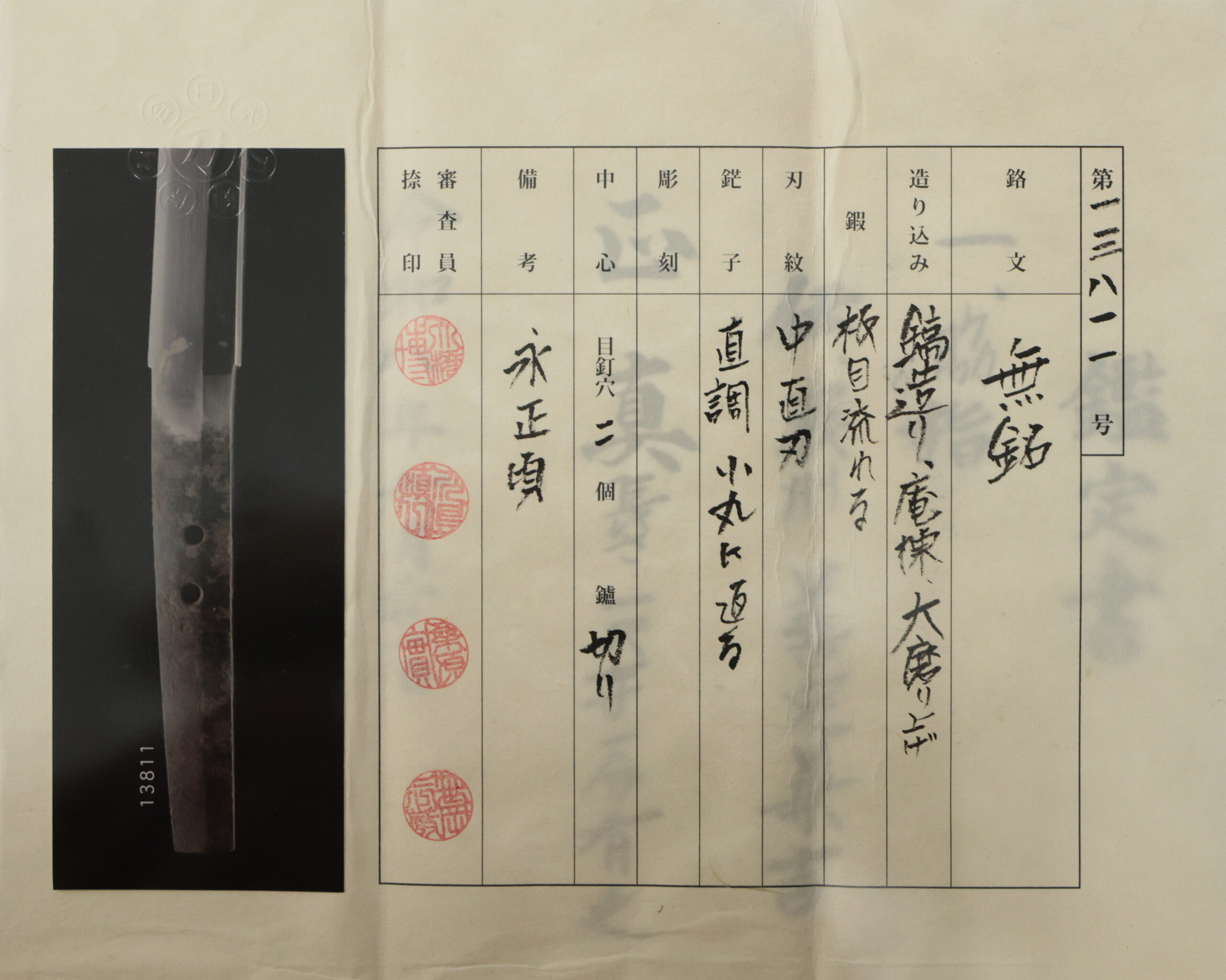
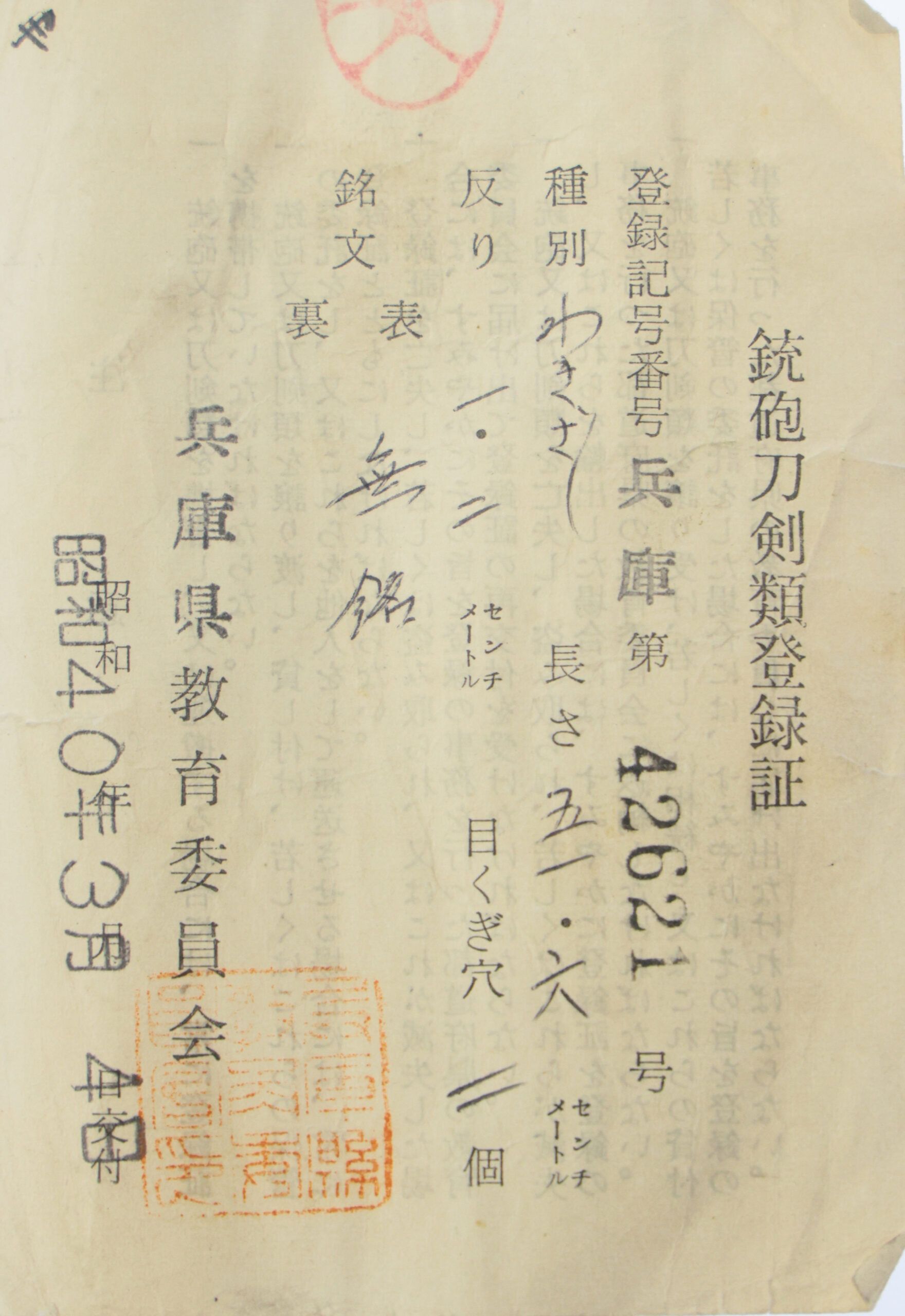
Summary This blade is attributed to Den Nōshū Zenjō Kaneyoshi (伝濃州善定兼吉). According to the NTHK certificate, this blade was forged during the Eishō era of the Muromachi period (1504–1521). The name Kaneyoshi was passed down through several generations of swordsmiths from the early to the late Muromachi period. During this period, Seki was the most important center of sword production in Mino and one of Japan’s leading sword-making regions. The first-generation Kaneyoshi was originally named Seijirō (清次郎). After becoming a Buddhist monk, he took the religious name Zenjō (善定), from which the Zenjō School (善定派) takes its name. He is regarded as the founder of this school, which later became one of the seven major swordsmith groups of Mino Province. The swordsmiths who resided in Mino province developed particular sword-forging tradition called MINO-DEN. Its characteristic is the TOGARI(Pointed shapes protruding from the Hamon ) in a classic straight line and random temper line with some white Utsuri. MINO-DEN had its origin from YAMATO-DEN in the late KAMAKURA period(1280-1330). It flourished in the MUROMACHI period(1333-1573) and continued until the EDO period(1603-1868). MINO-DEN especially prospered during Sengoku Jidai(Warring State period) due to the high demand for weapons. And the location of Mino province beat others. Akechi Mitsuhide controlled Mino province, and Nobunaga Oda ruled Owari province, and Tokugawa Ieyasu was the lord of Suruga (Neighboring areas). There was high demand from those powerful feudal lords and their retainers. Furthermore, so many wars occurred between the Kanto region and the Kyoto area. Mino was located in the middle, making feudal lords feel convenient to order swords from MINO-DEN. The blades forged in MINO provinces also had the reputation of its practical design and sharpness. Many feudal lords demanded swords forged in the Mino province. *Please keep in mind that there are a few Kitae Kizu and some black rusts on this blade. Fuchi-Kashira The Unryu (雲竜) theme is engraved on this Fuchi-Kashira. This design is a combination of dragons and clouds. Clouds bring blessed rain and snow, and their movements significantly affect the day’s weather. Due to its supernatural power, a theory says that gods, spirits, and dragons dwell in the clouds. In Japan, there is a belief that dragons are worshipped as water gods. Since rice cultivation has flourished in this country, people always treat water as an essential resource. We imagine some people wished for a plentiful harvest in this combination. From such a religious aspect, we could infer that dragon designs were familiar to people. Tsuka and Menuki This menuki features the motif of a Tōjin-zu (唐人図) design. Tō (唐, 618–907) refers to the Tang dynasty of China. In this context, Tōjin broadly denotes foreign figures, particularly those of Chinese origin. Their attire and appearance convey a distinct exotic character, reflecting the fascination with continental culture in Japanese decorative arts. Tsuba and Habaki The theme of this circular iron tsuba (sword guard) is a combination of twin dragons and scrolling arabesque vines. The surface of the tsuba is decorated using a traditional openwork technique known as sukashi. By carefully cutting away portions of the iron plate, the craftsman created an elegant composition featuring two dragons intertwined with flowing karakusa (唐草, arabesque vine) patterns. The motif of twin dragons (双竜, Sōryū) symbolizes strength, protection, and auspicious power. In East Asian culture, dragons are not regarded as evil creatures as they often are in Western traditions. Instead, they are revered as sacred beings associated with water, the heavens, wisdom, and divine protection. For this reason, dragon motifs have long been used in Japanese swords, armor, temple architecture, and various forms of traditional decorative art. The karakusa pattern originally came to Japan through continental cultural influences and became one of the most popular decorative motifs in Japanese art. Because vines continuously grow and spread without interruption, the pattern came to symbolize vitality, prosperity, longevity, and the continued flourishing of a family line. Saya This Saya is covered with black lacquer. Due to its high waterproof effect, lacquer has been used since ancient times in Asia. The blade of a Japanese sword is made of iron, and moisture is the greatest enemy of iron. For the purpose of carrying the blade without degrading it, people devised a method of coating the scabbard with lacquer. To prevent not only moisture but also rain and snow from penetrating the inside of the scabbard, it was necessary to apply multiple layers of lacquer. The Nushi (塗師, lacquerers) was born precisely because advanced techniques were required to handle the complicated processes. Authentication Paper NTHK, also known as NPO Nihon Touken Hozon Kai, is the oldest organization for sword authentication of Japanese swords in modern times. It was established in 1910 during the post-Samurai era. They authenticated the blade on June 21st in the 8th year of Reiwa (2026). Registration Number It is called Jyu Hou Touken Rui Torokusho (銃砲刀剣類登録証).
Offered by Samurai Museum
This piece has sold
3 on the market
Get an email when a new Zensho Kaneyoshi piece hits the market.

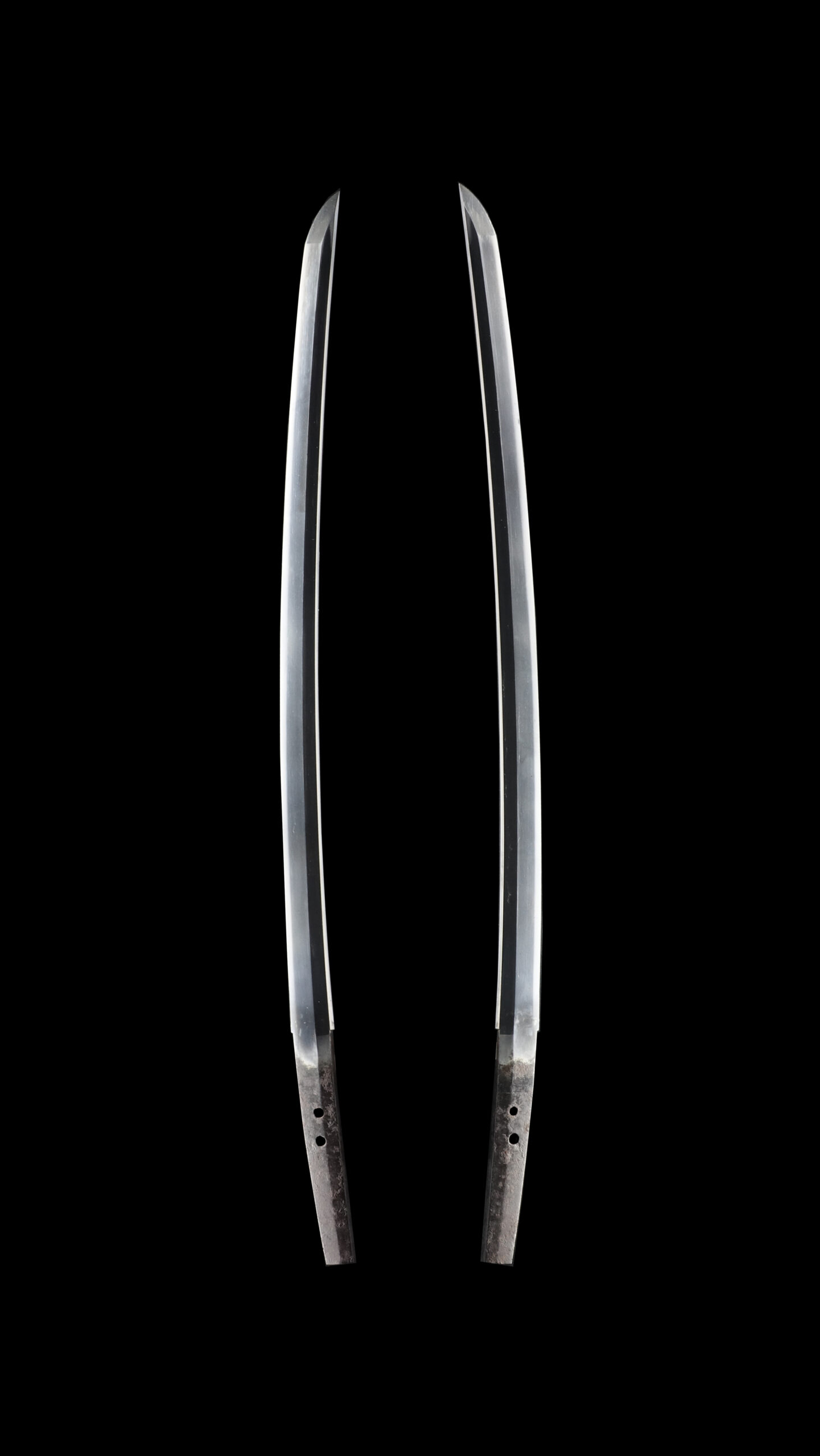
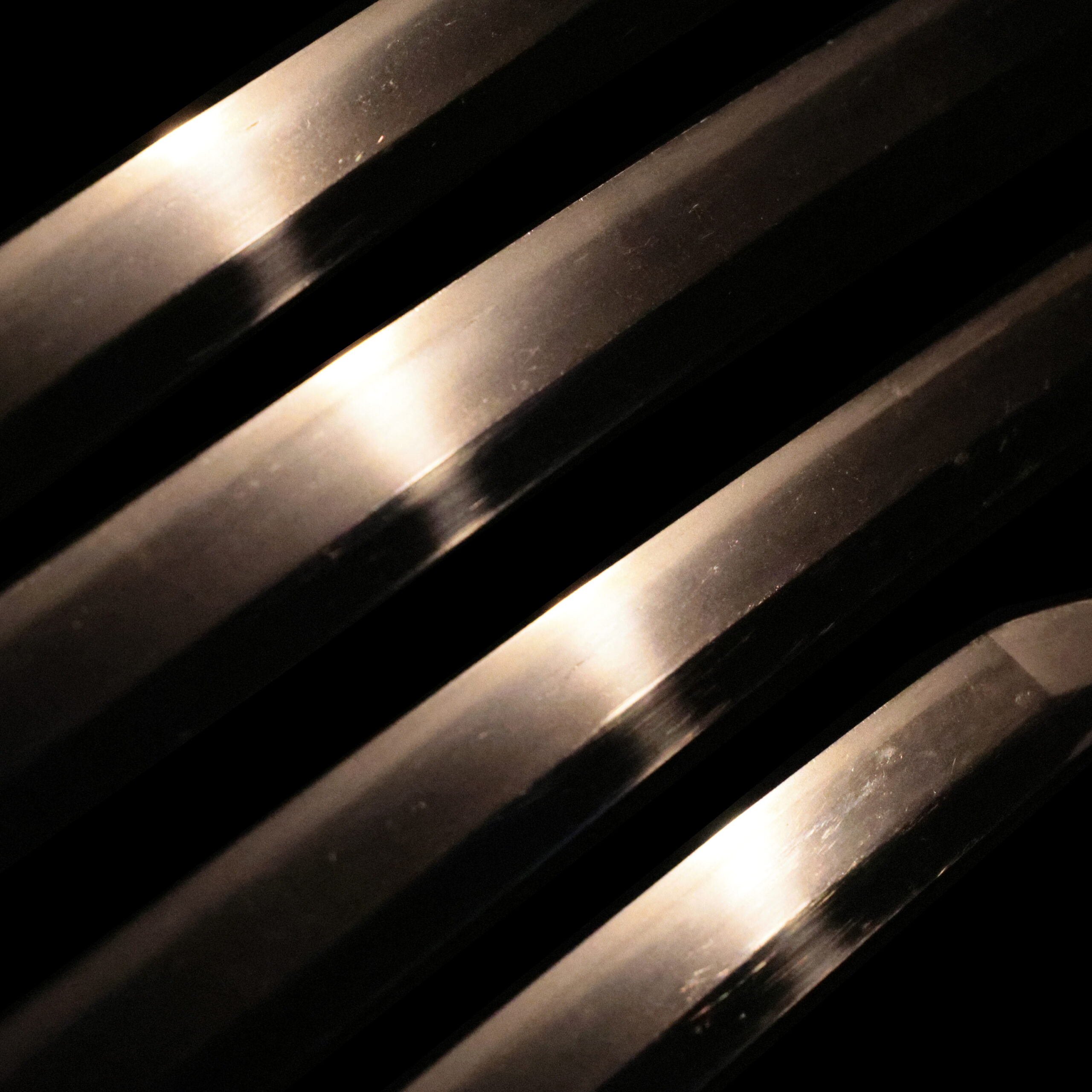
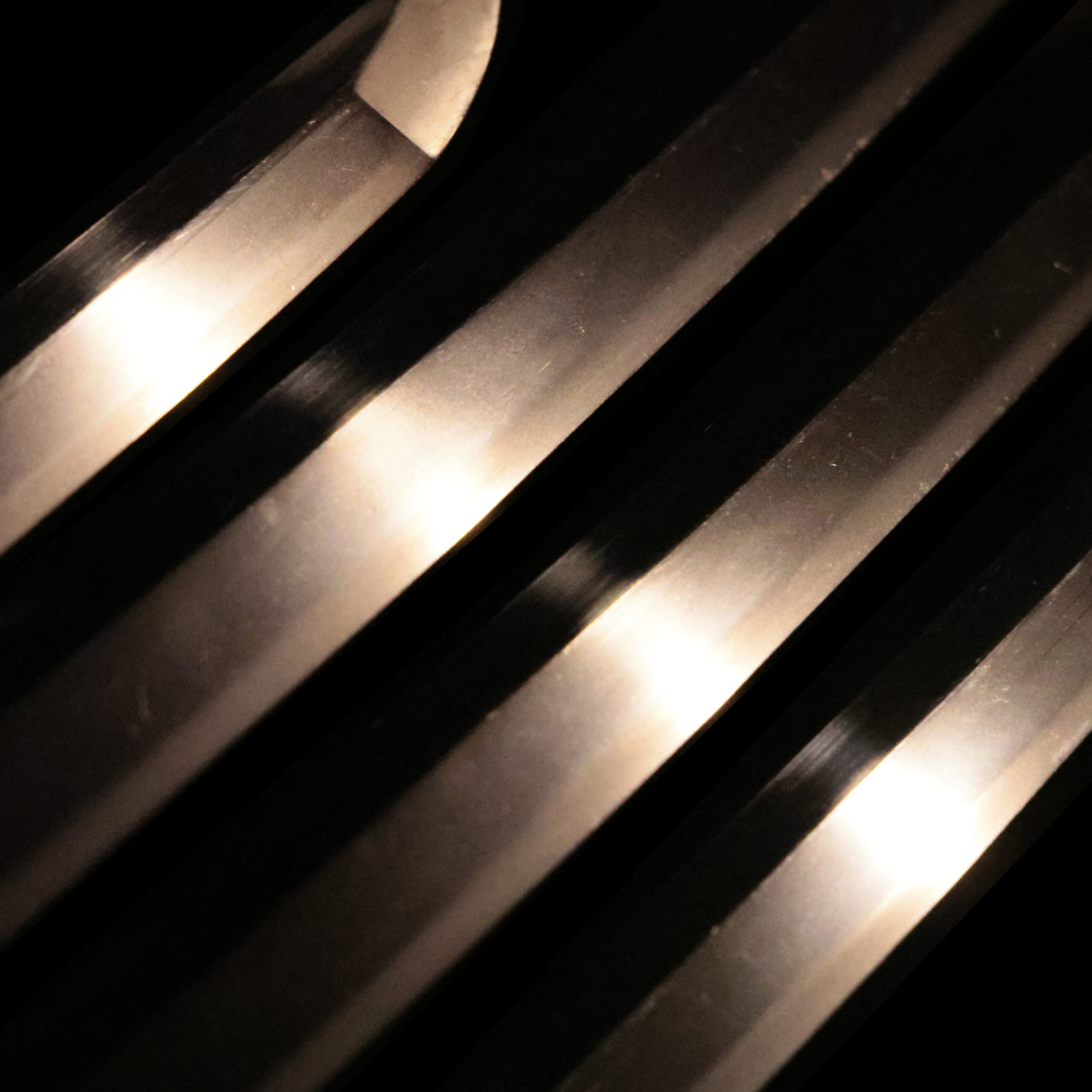
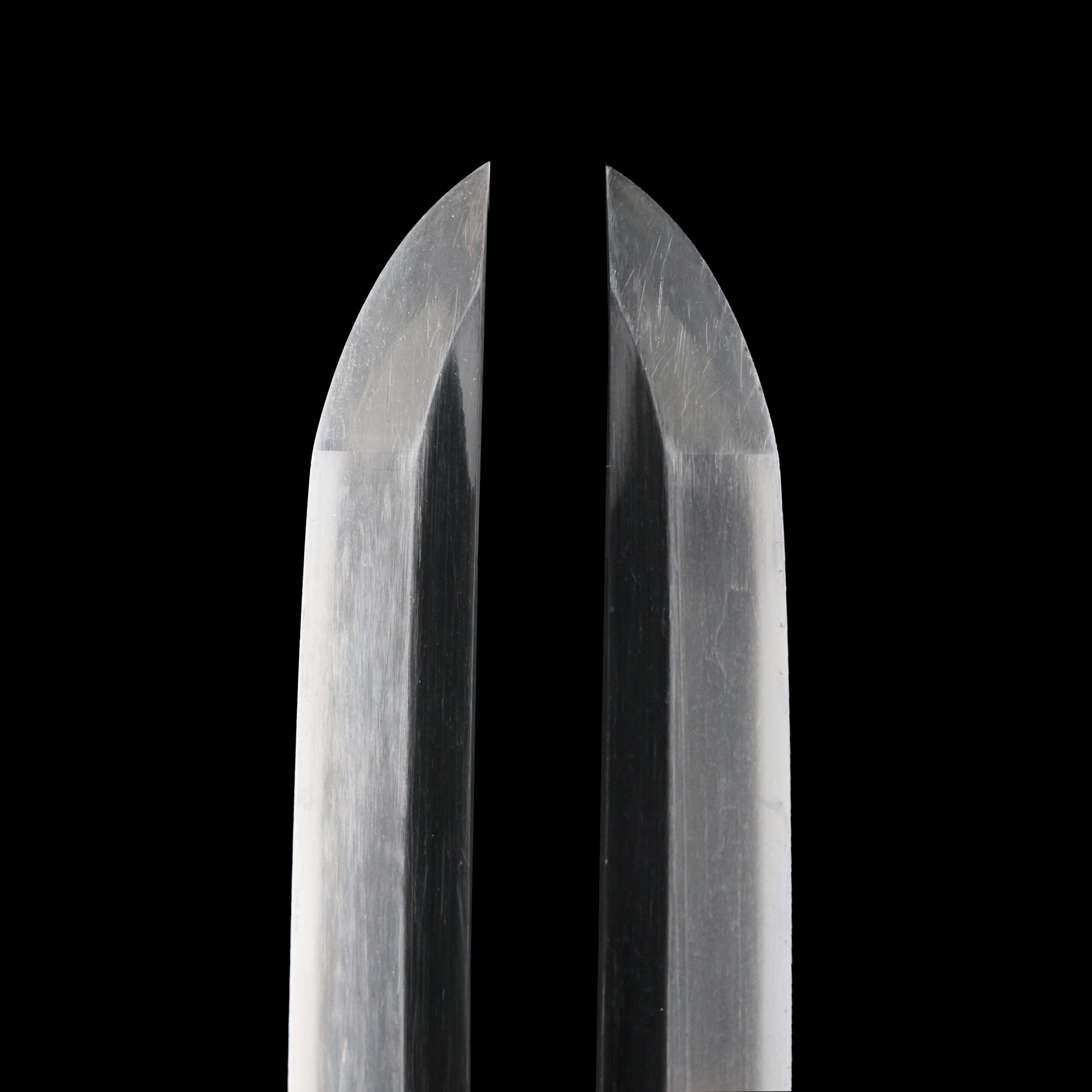
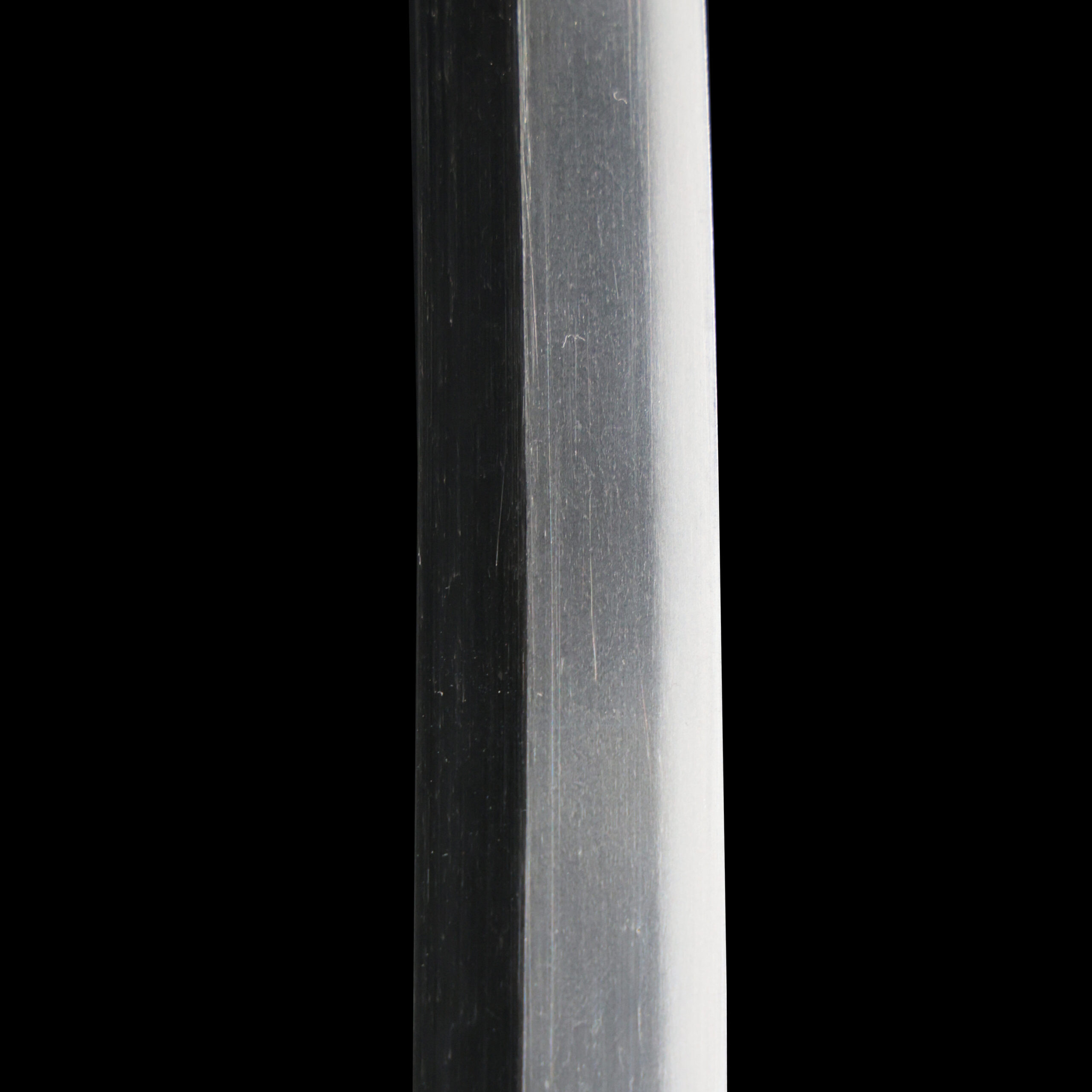
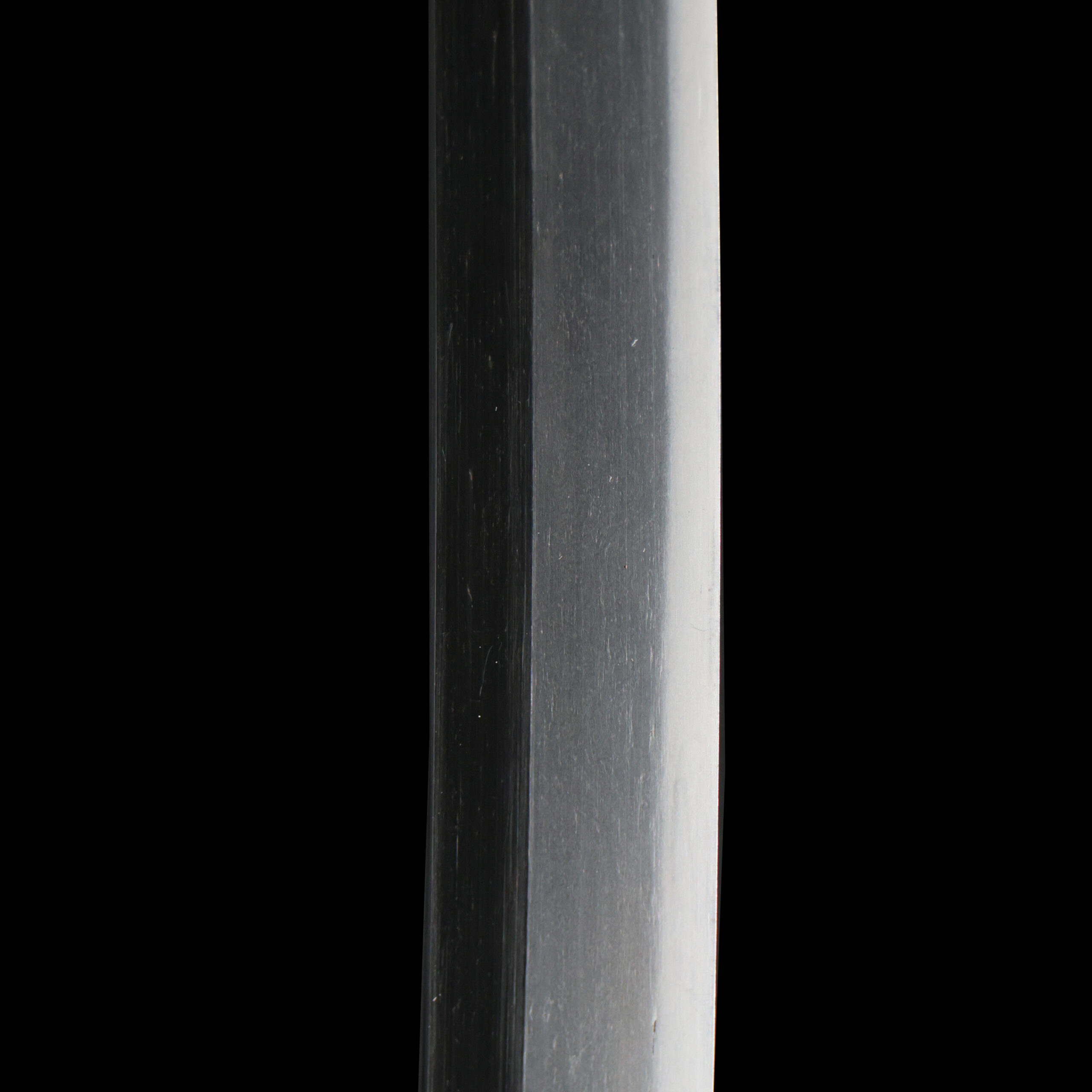
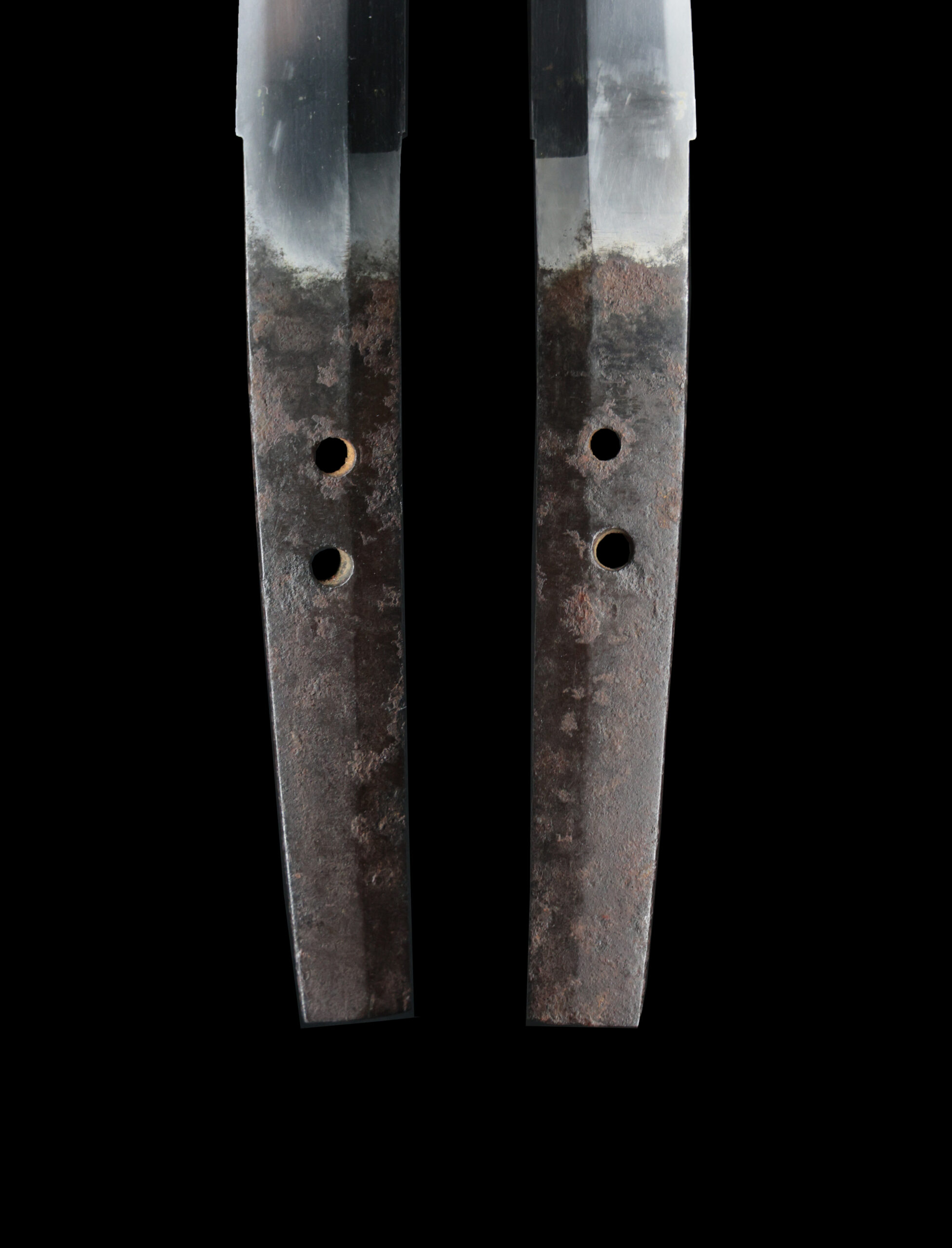
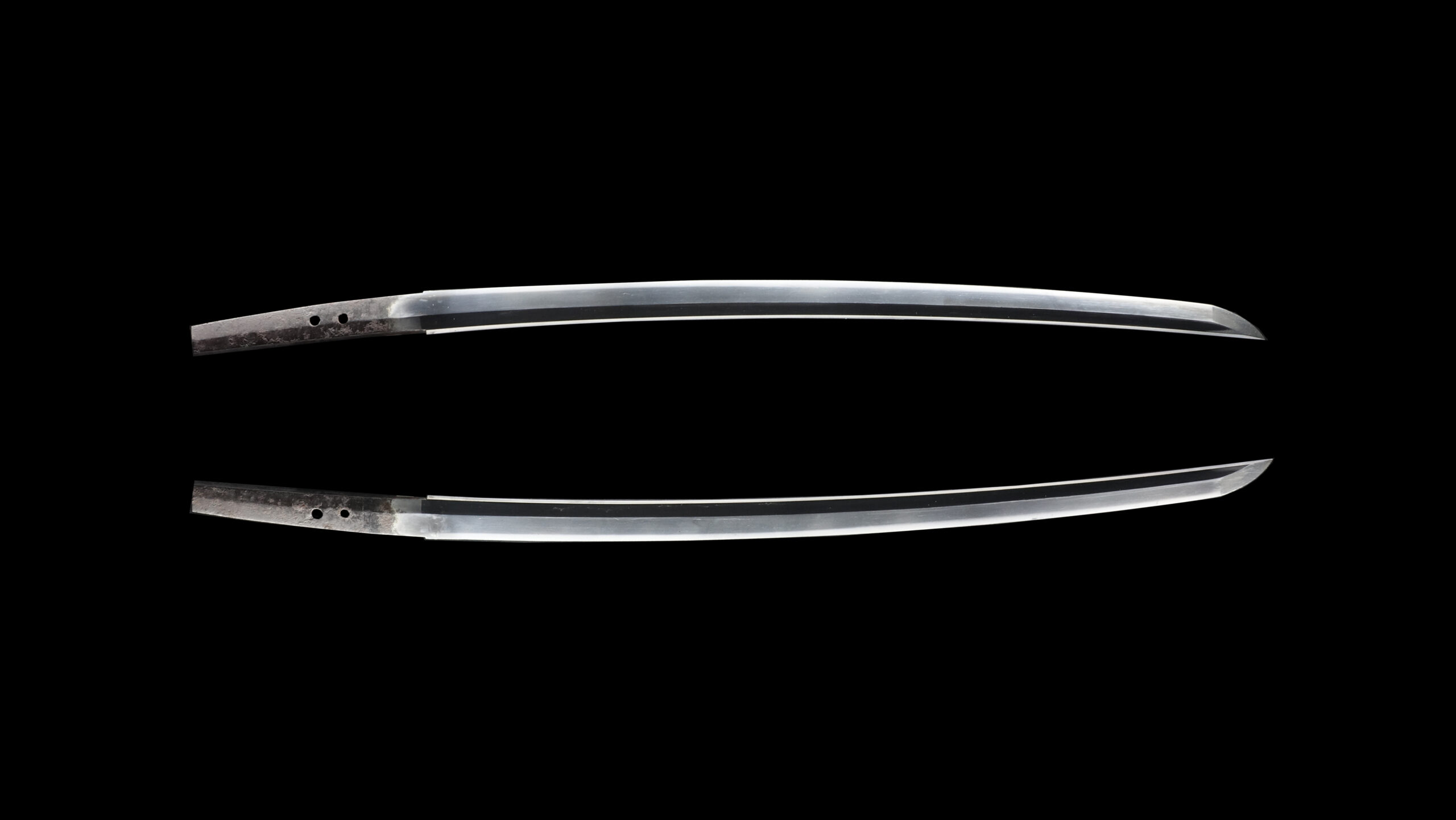
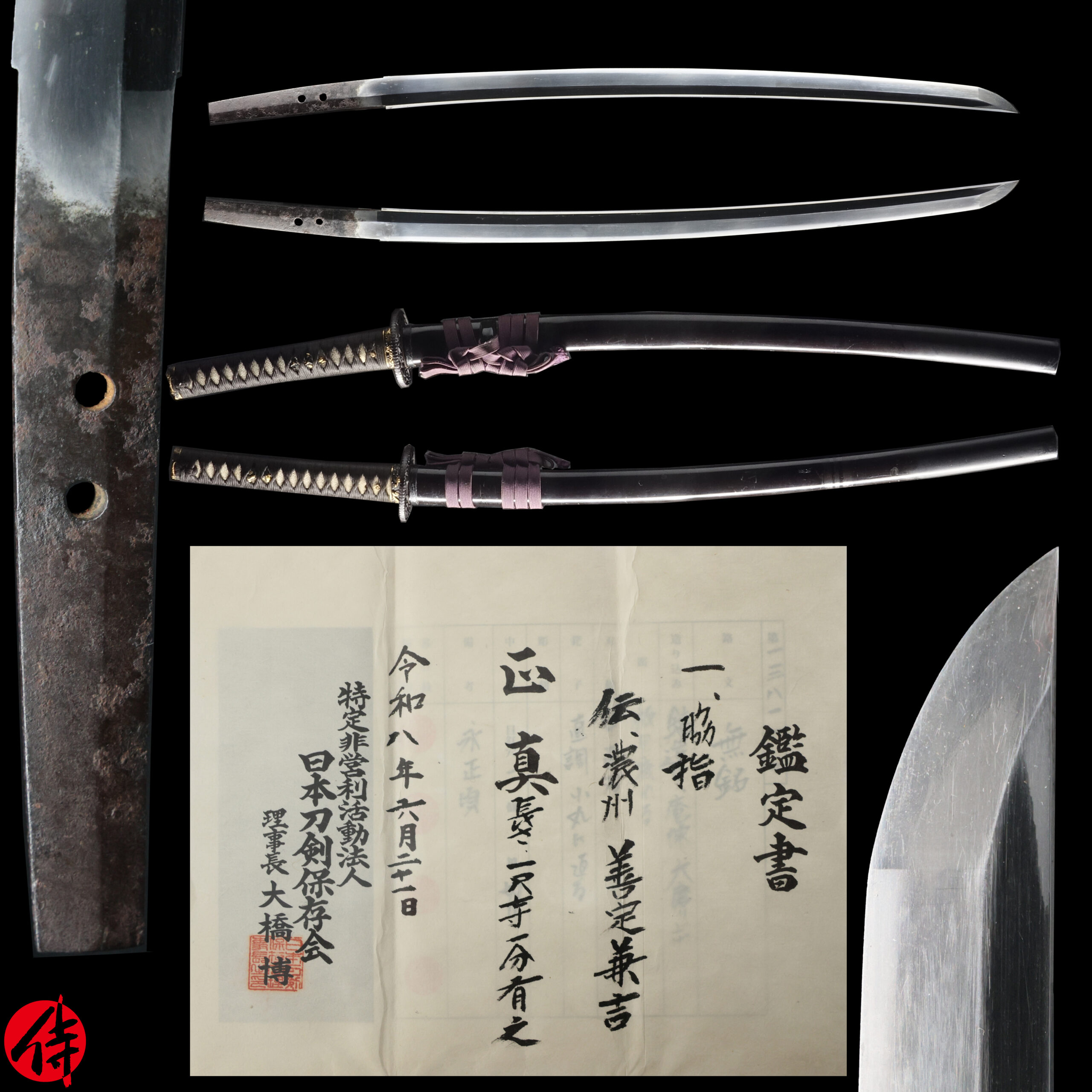
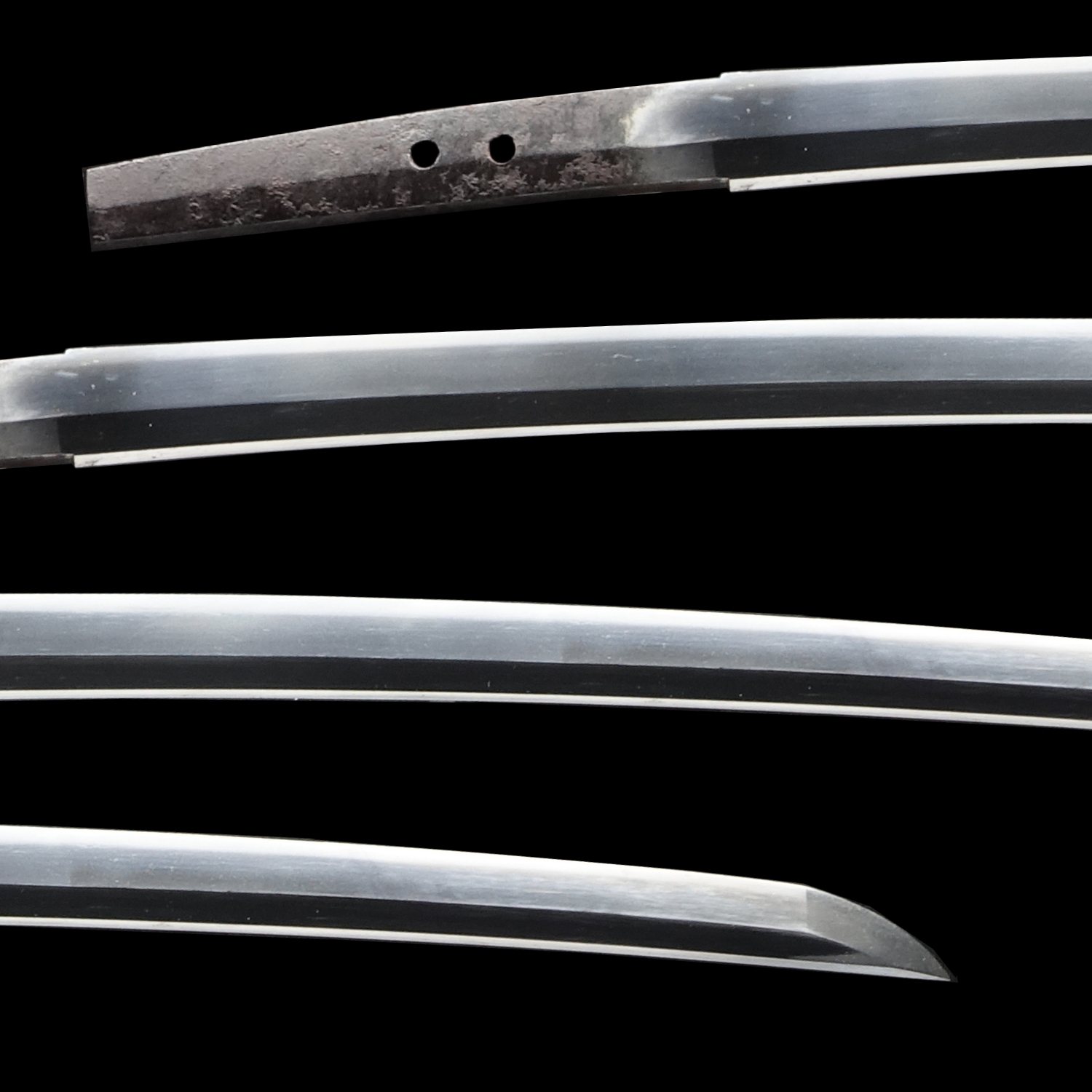
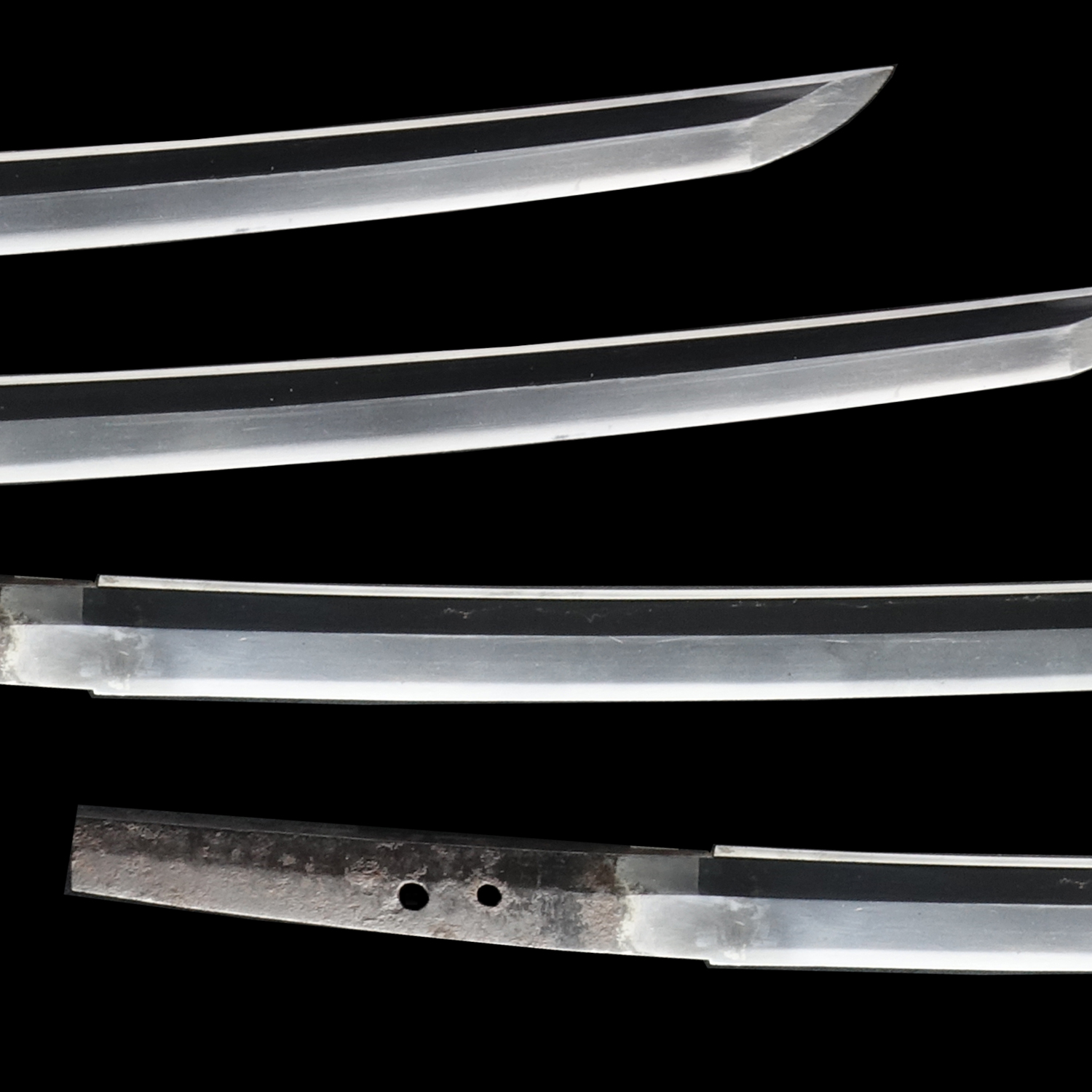
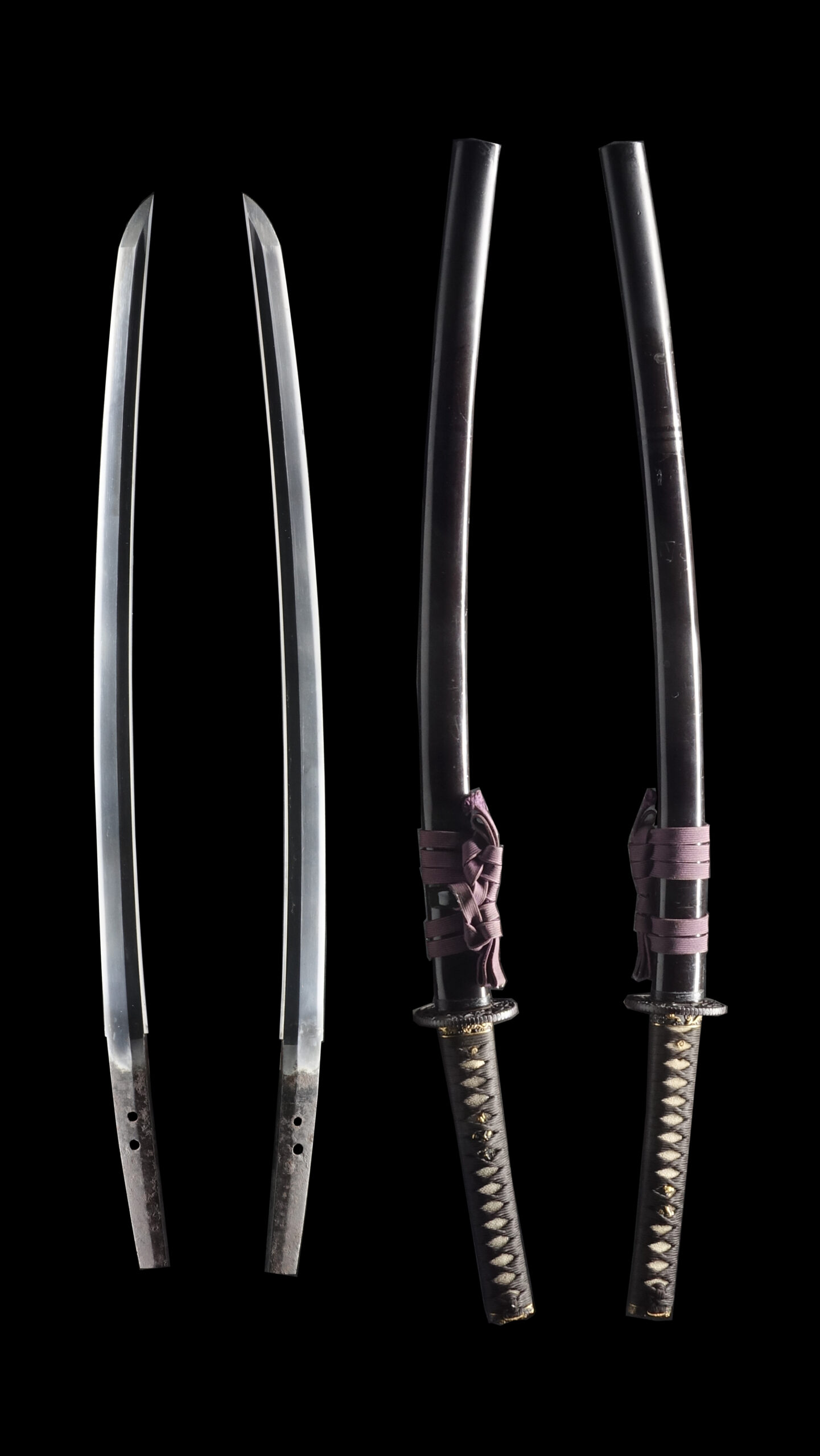
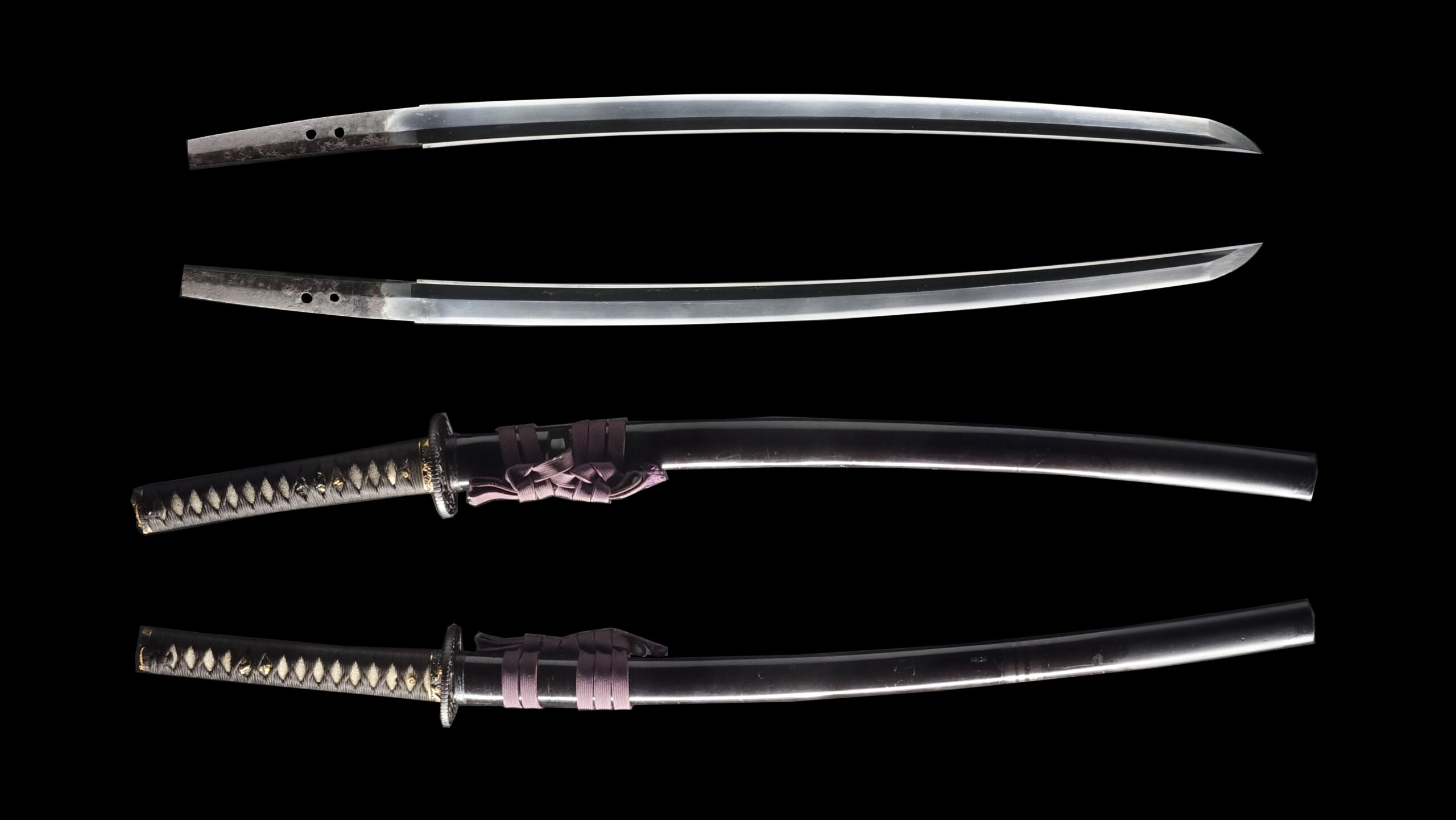
Mino-den · Mino · around 1390-1394
Tōken Taikan top 37%
Where Kaneyoshi stands among comparable artisans: across all of nihontō, and within tradition, era, and period. The tiers (Foremost · Leading · Major · Notable) weigh official designations from the NBTHK and Japan's Agency for Cultural Affairs, together with historical honors of lasting repute such as the Sansaku and Meibutsu-chō.
Select a lens to see how it's measured.
Mino-den · Mino
3 pieces on the market now
| Smith | Era | Designated |
|---|---|---|
| Kaneshige兼重 | 1504-1521 | 0 |
| Kaneyoshi兼吉 | 1854-1860 | 0 |
| Kanekado兼門 | 1428-1429 | 0 |
| Yoshikado吉門 | 1624-1644 | 0 |
| Chikanori近則 | 1818-1864 | 0 |
Mino in the Muromachi period
Sengoku Seki was an industry: smiths organized under their tutelary Kasuga shrine, arming the war bands of central Japan. Magoroku Kanemoto’s sanbonsugi and the finest Kanesada work prove quality survived inside mass production.
The NTHK’s principal certificate, issued for a blade of considerable quality. It confirms a genuine signature, or, for an unsigned (mumei) work, records the judges’ attribution to a smith or school. The paper carries a detailed worksheet with a numerical point score.
The NTHK (Nihon Tōken Hozon Kai, the Society for the Preservation of the Japanese Sword) is the oldest of Japan’s sword-appraisal bodies, founded in 1910, decades before the NBTHK. After the death of its long-serving head it divided into two successor societies, the NTHK and the NTHK-NPO, both of which continue to hold shinsa. NTHK certificates are known for a detailed worksheet that records a numerical point score alongside the judges’ written opinion, and the society is especially respected for its attribution of unsigned (mumei) work.
Returns/exchanges limited to defects caused by shipping (except willful misconduct or gross negligence by the company); customers must contact within 72 hours of receiving the product.