
Around 1800 Suishinshi Masahide argued in his writings that the craft must return to the old masters’ methods: the fukkotō revival. His greatest successor Naotane worked convincingly in Bizen and Sōshū manners that had been dead for centuries.
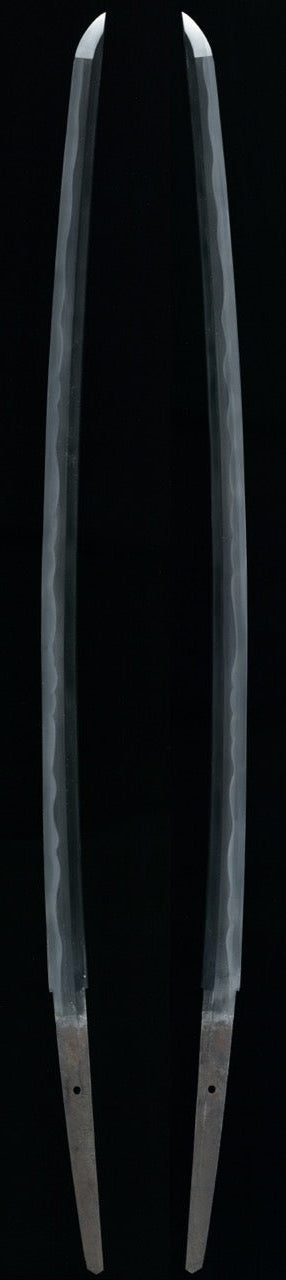
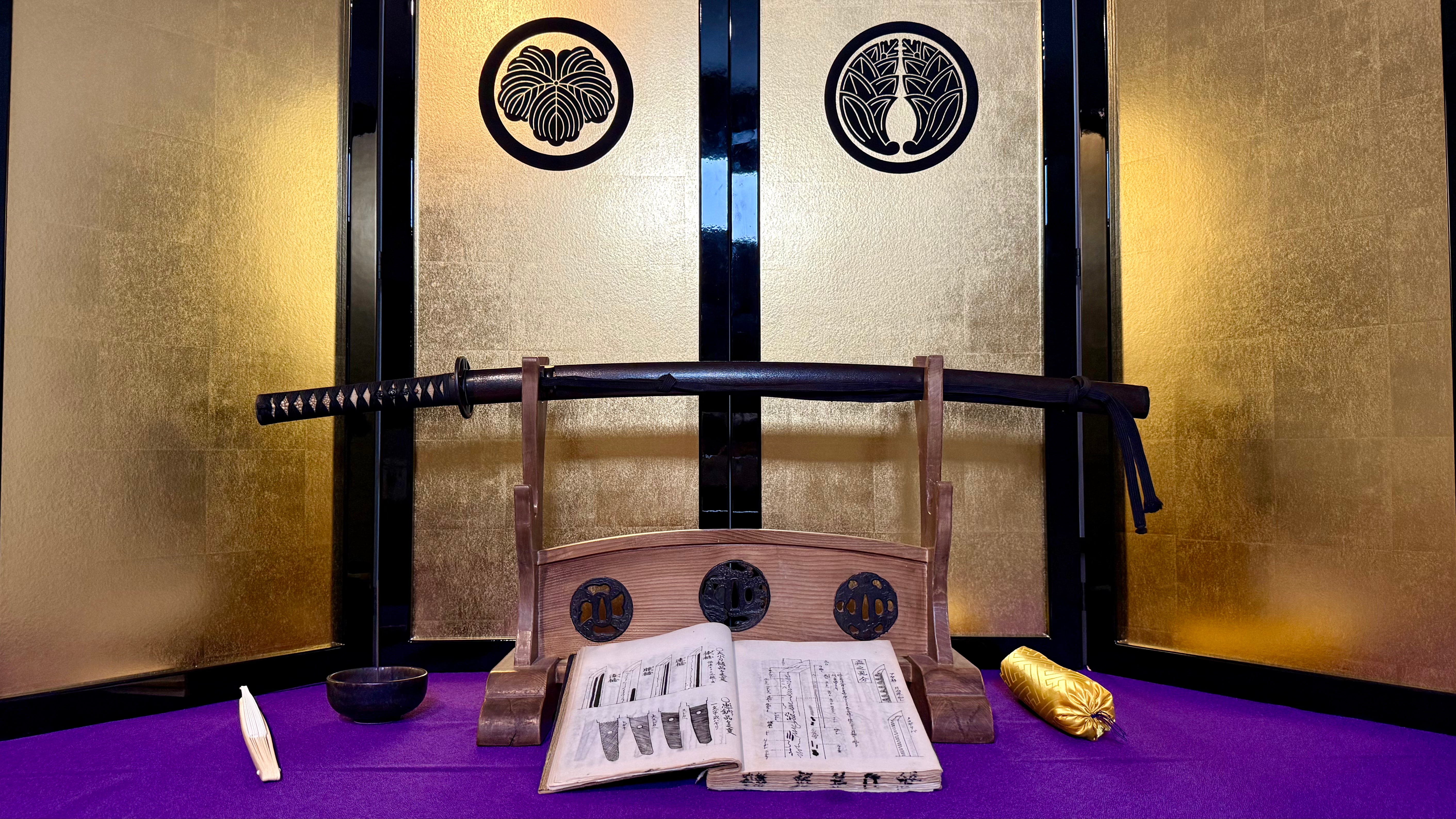
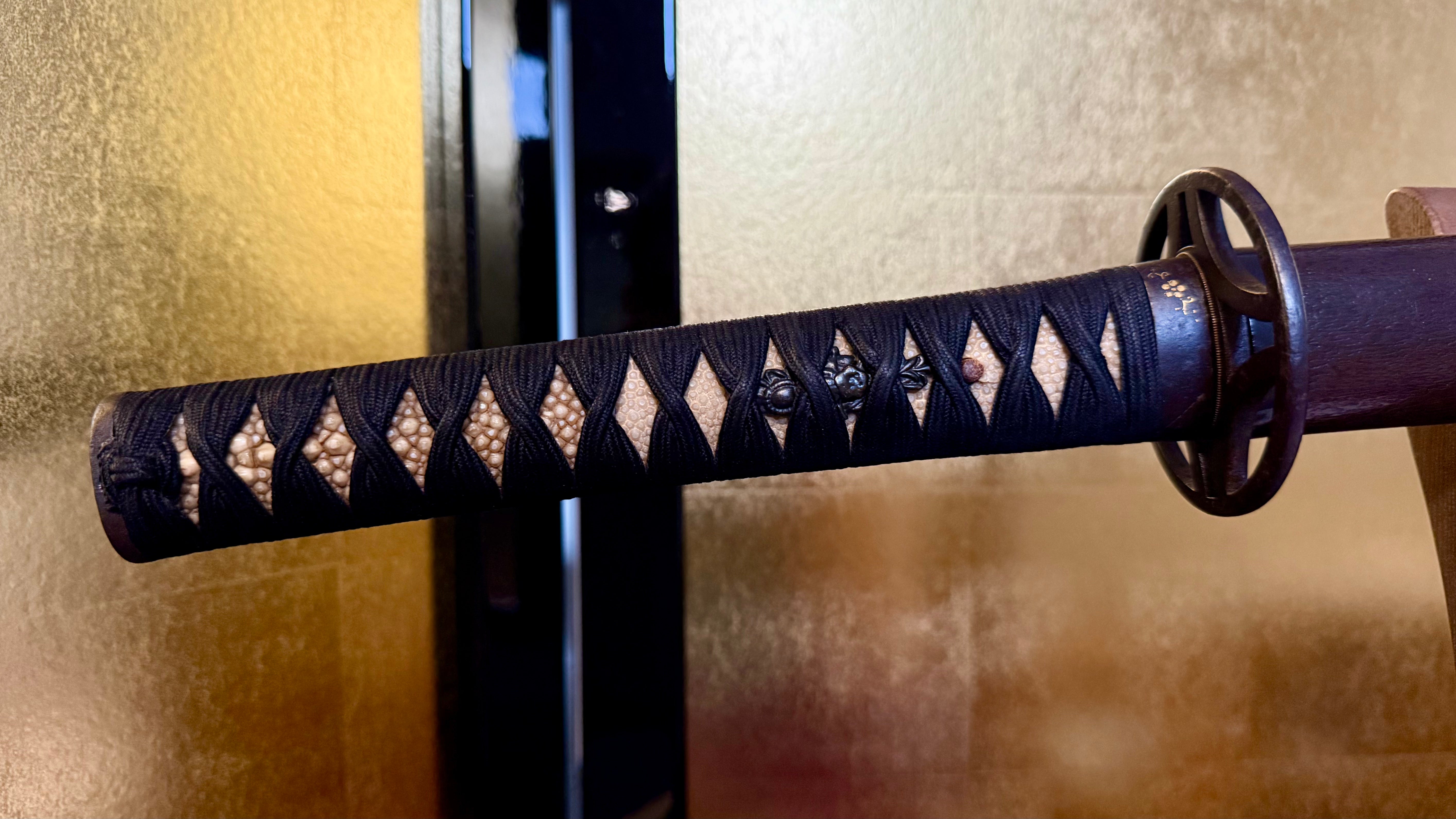
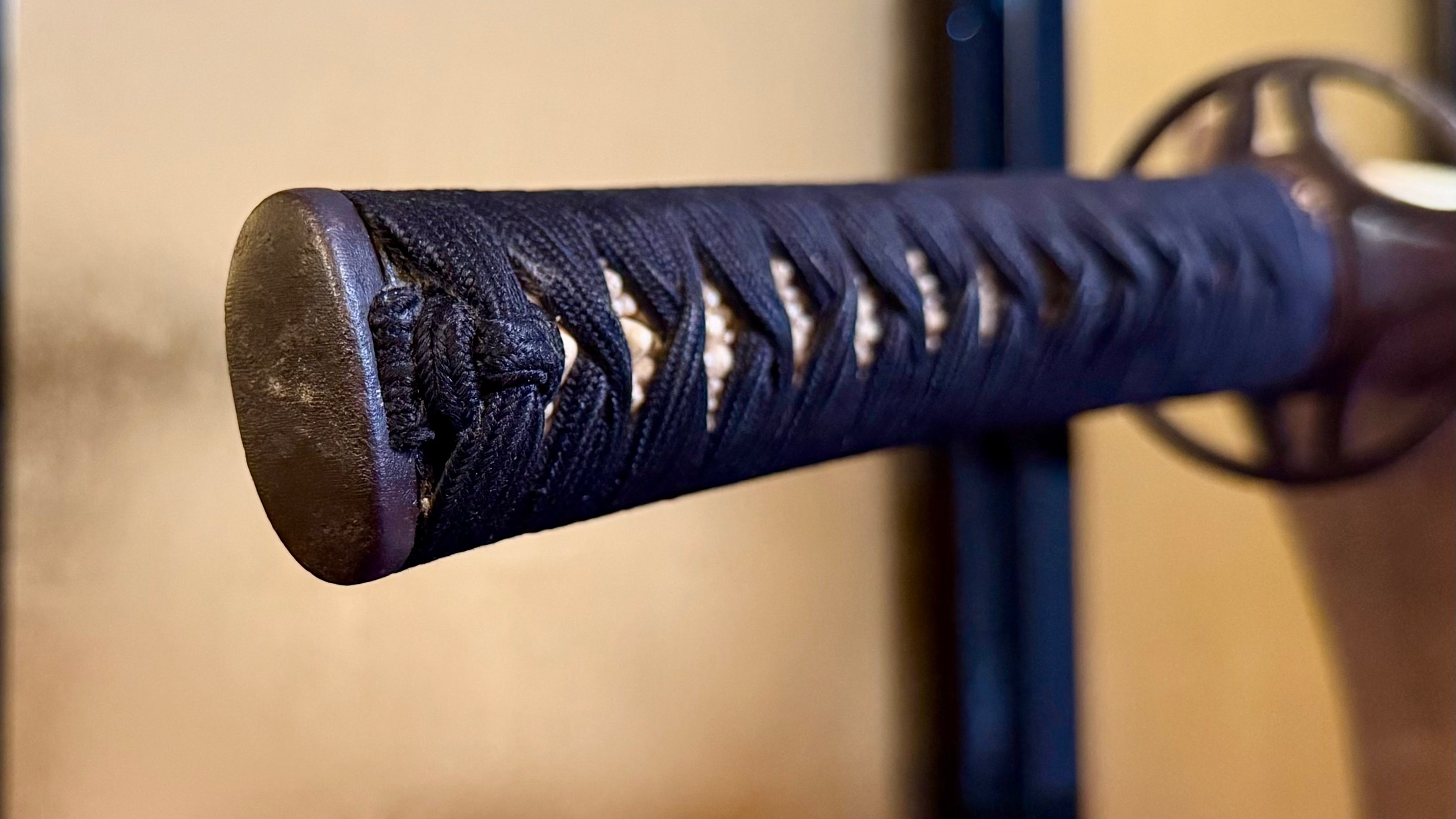
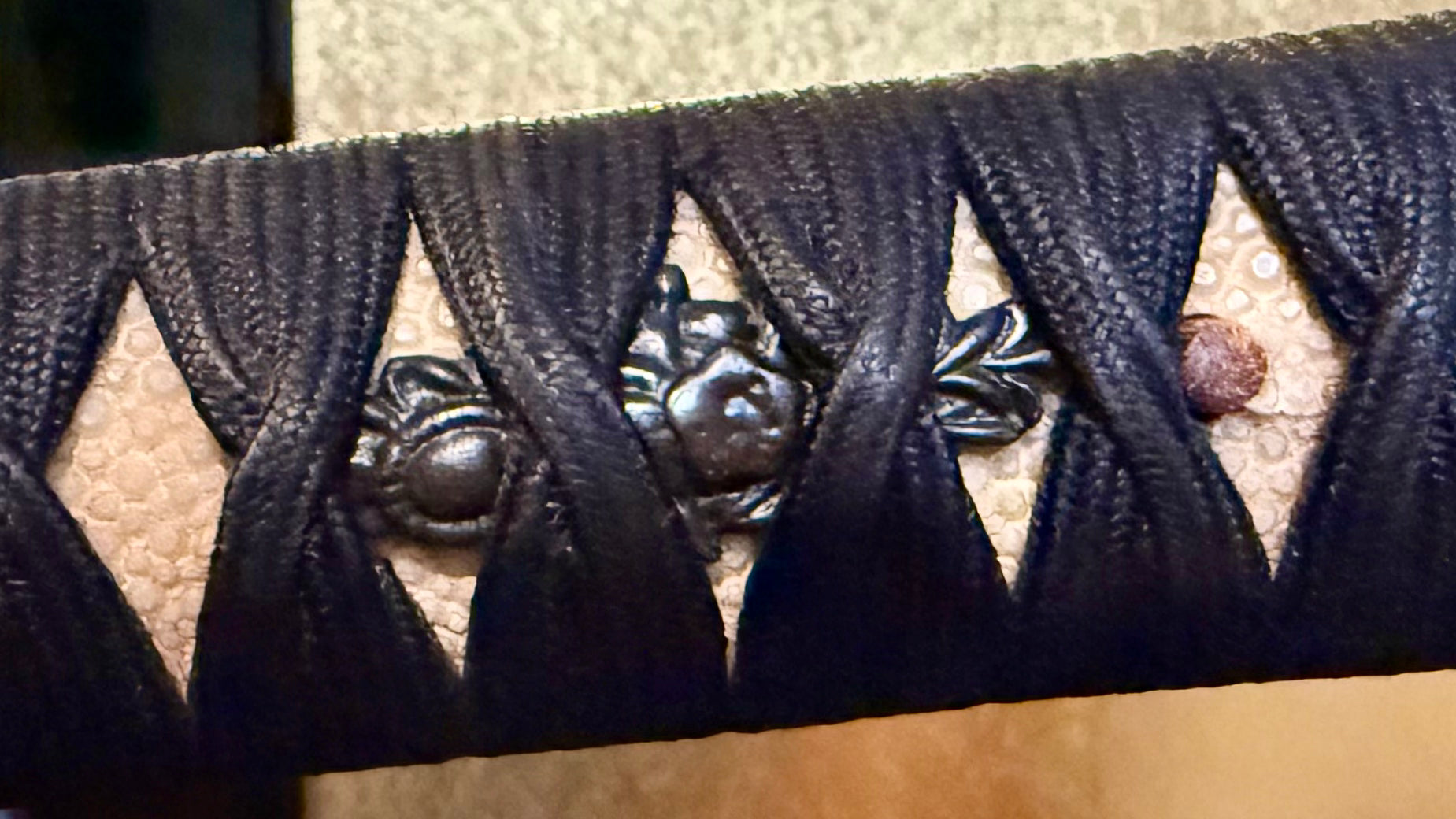
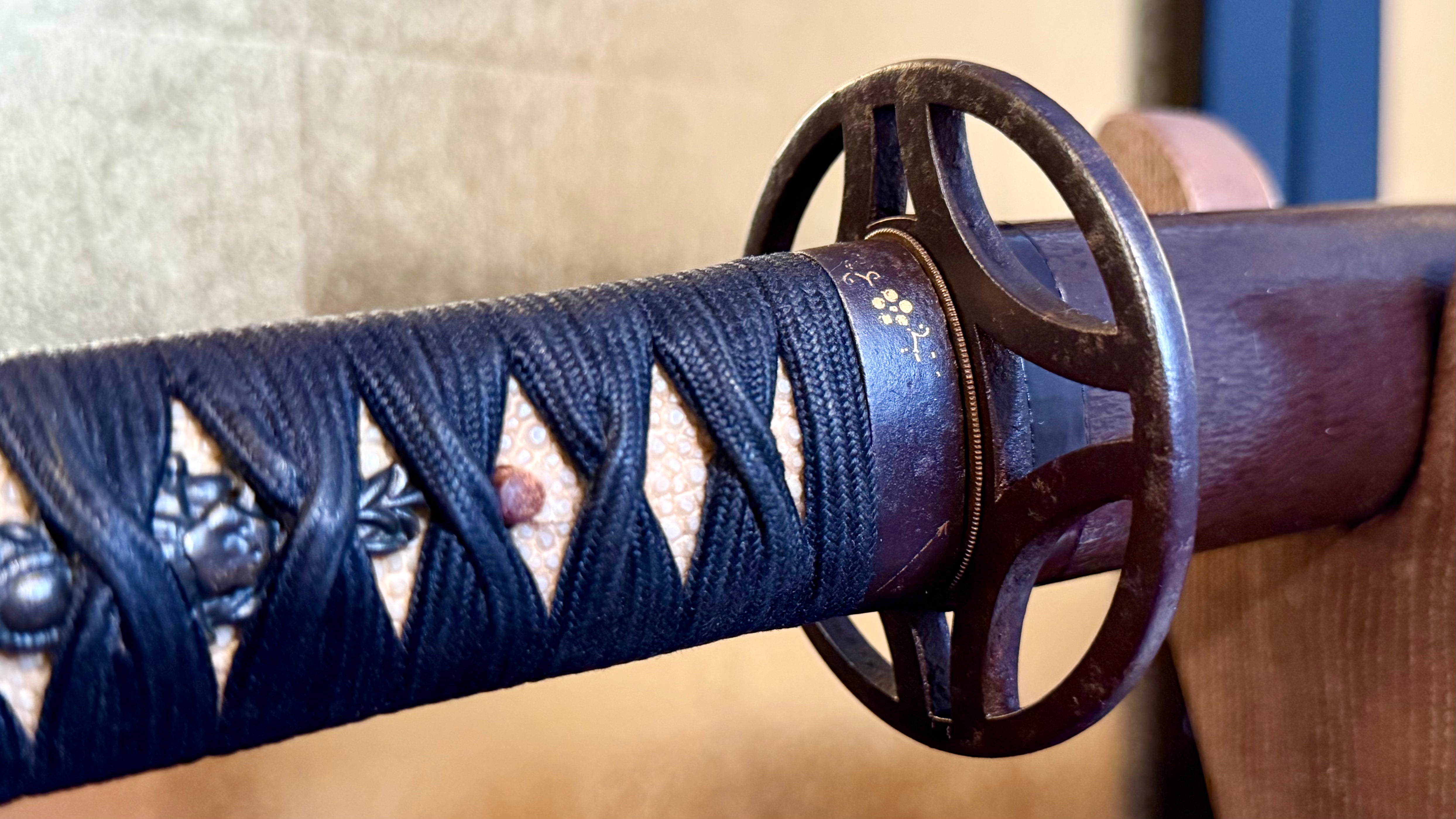
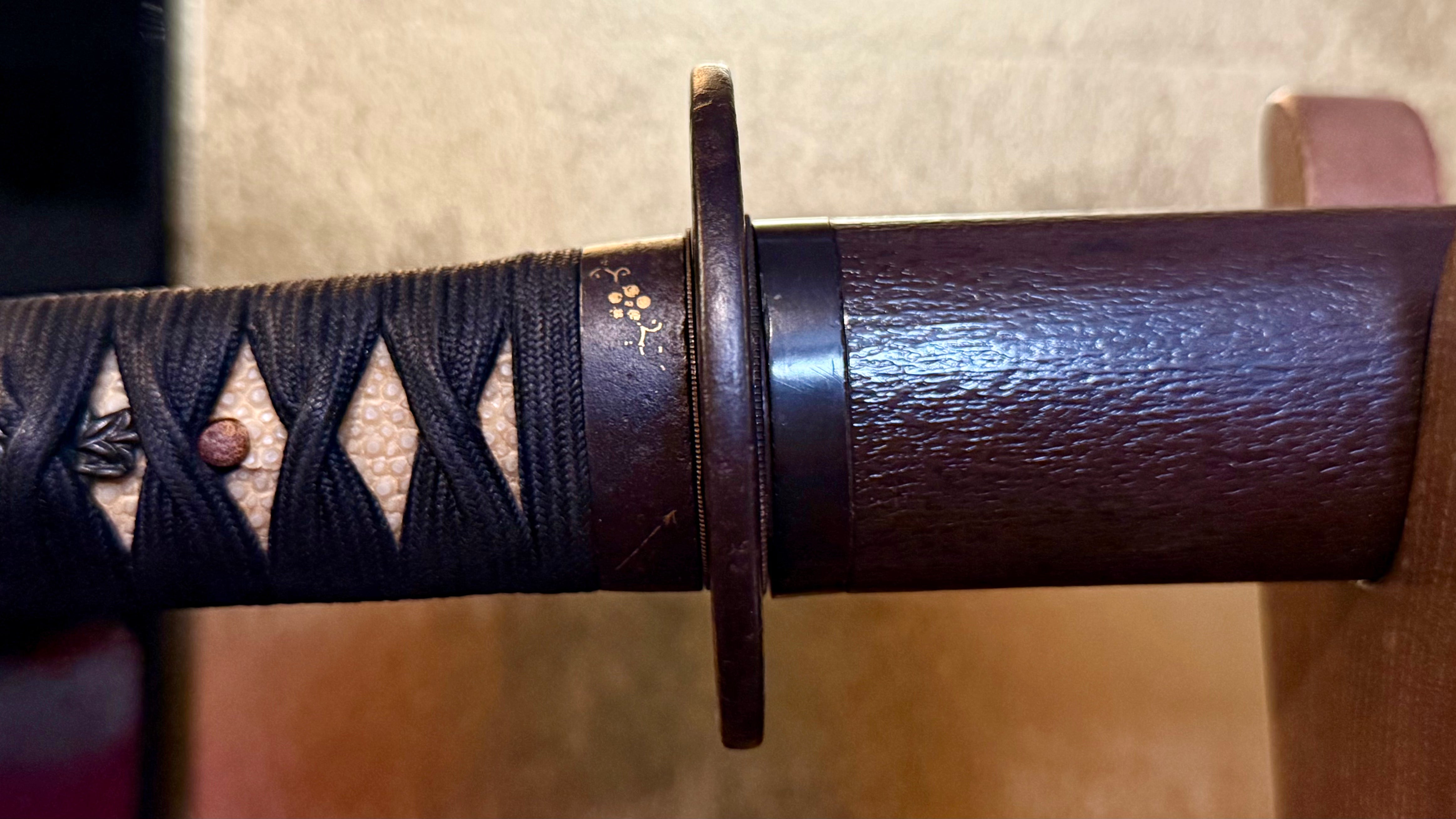
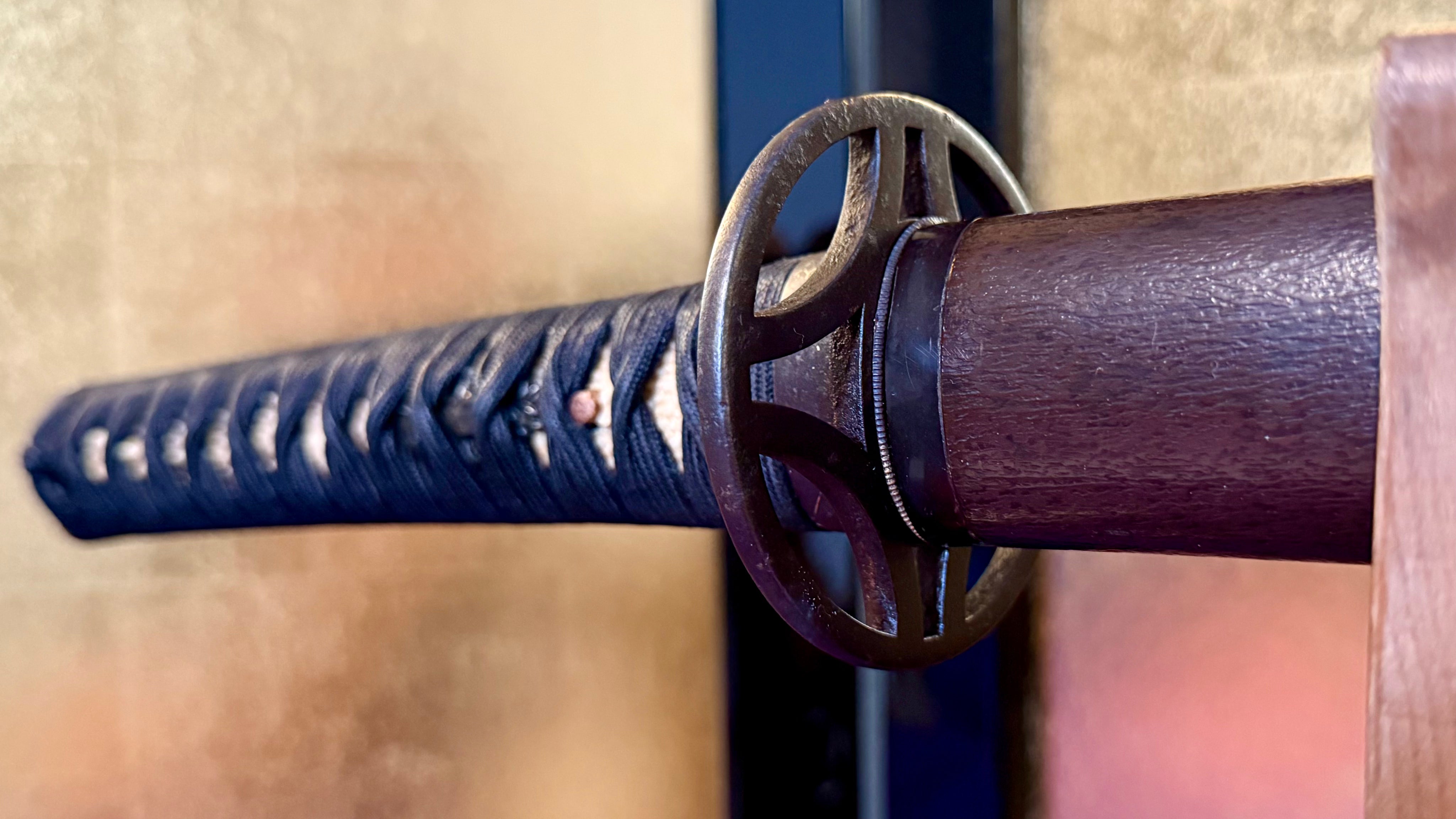
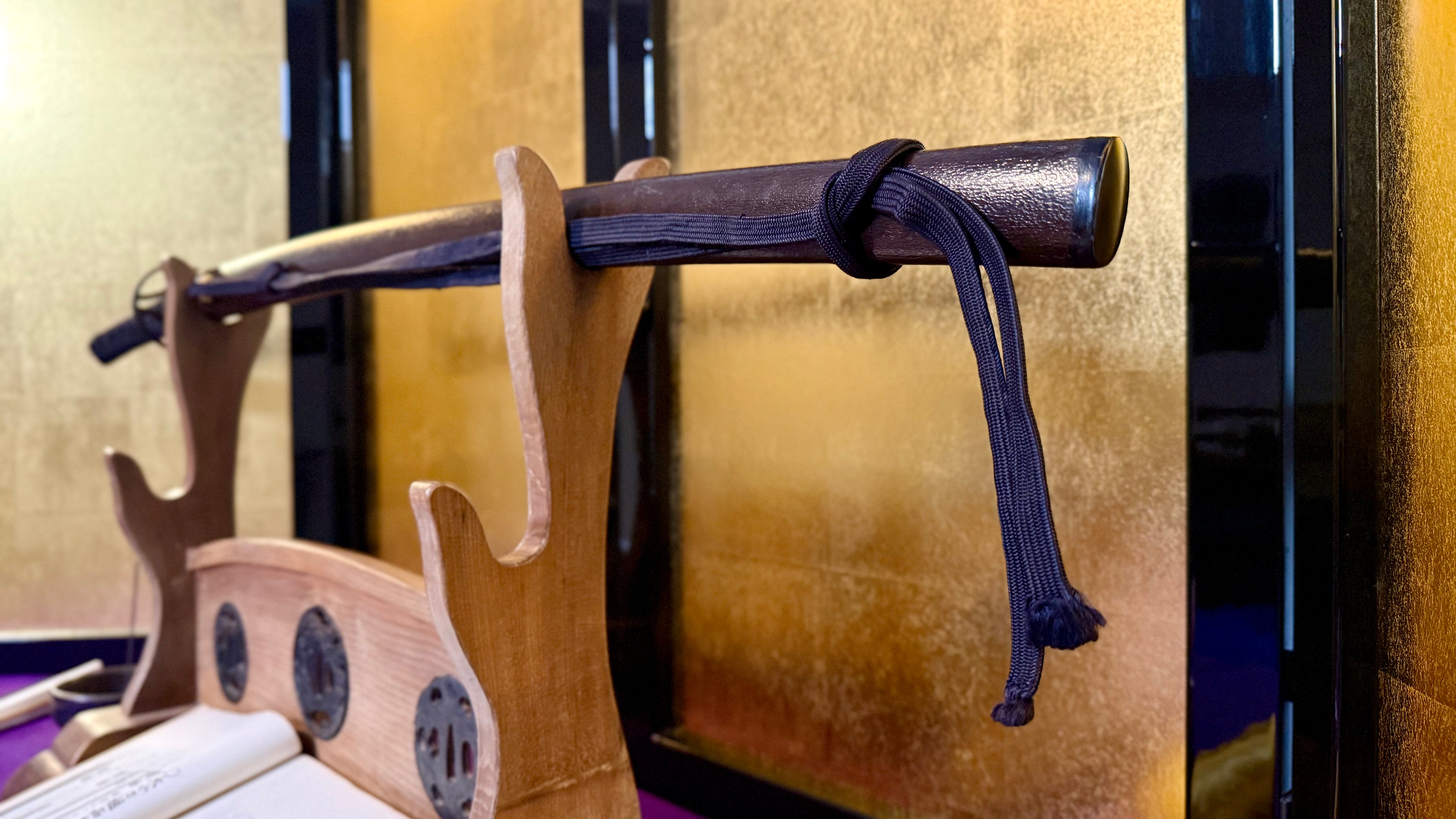
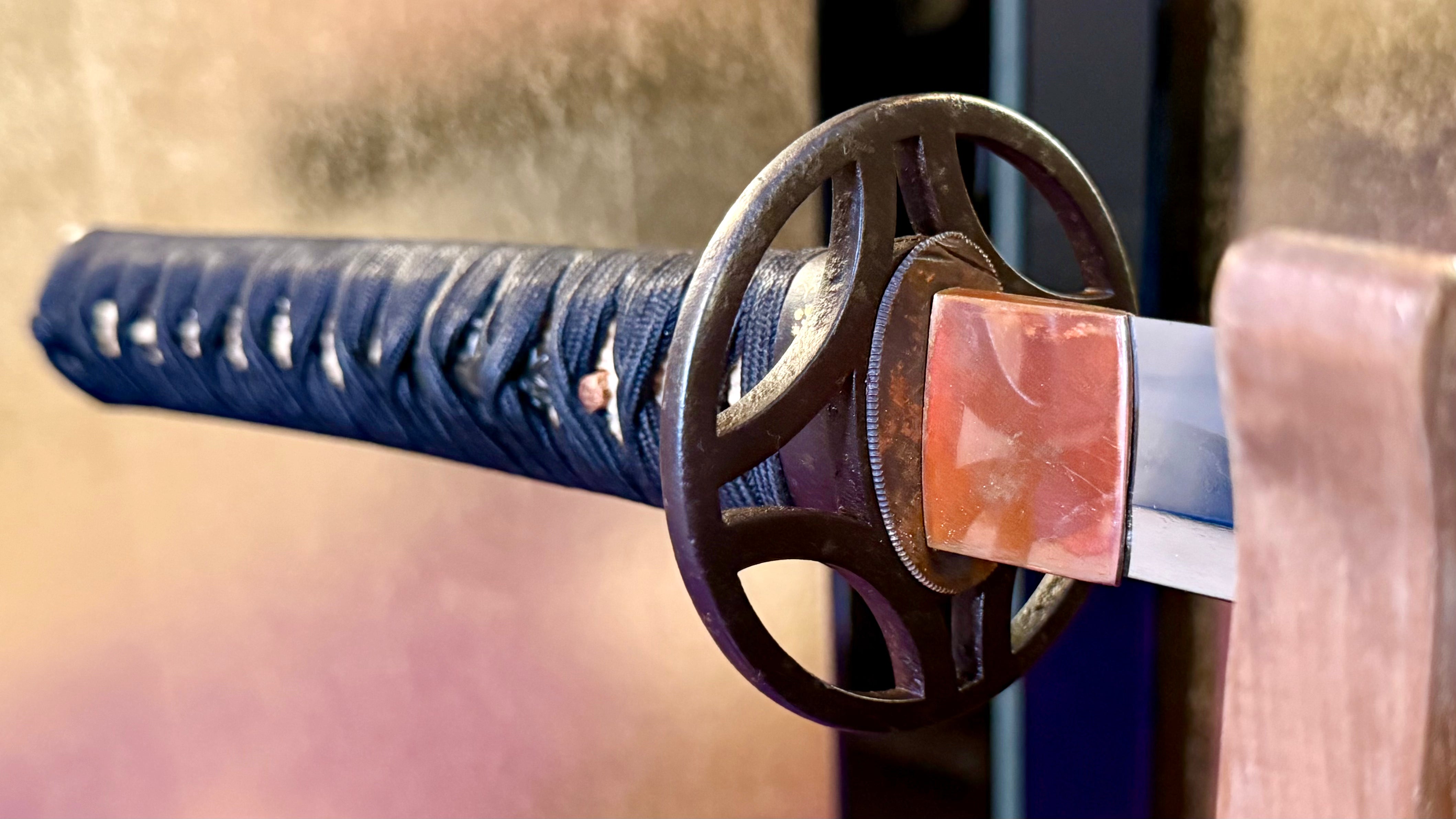
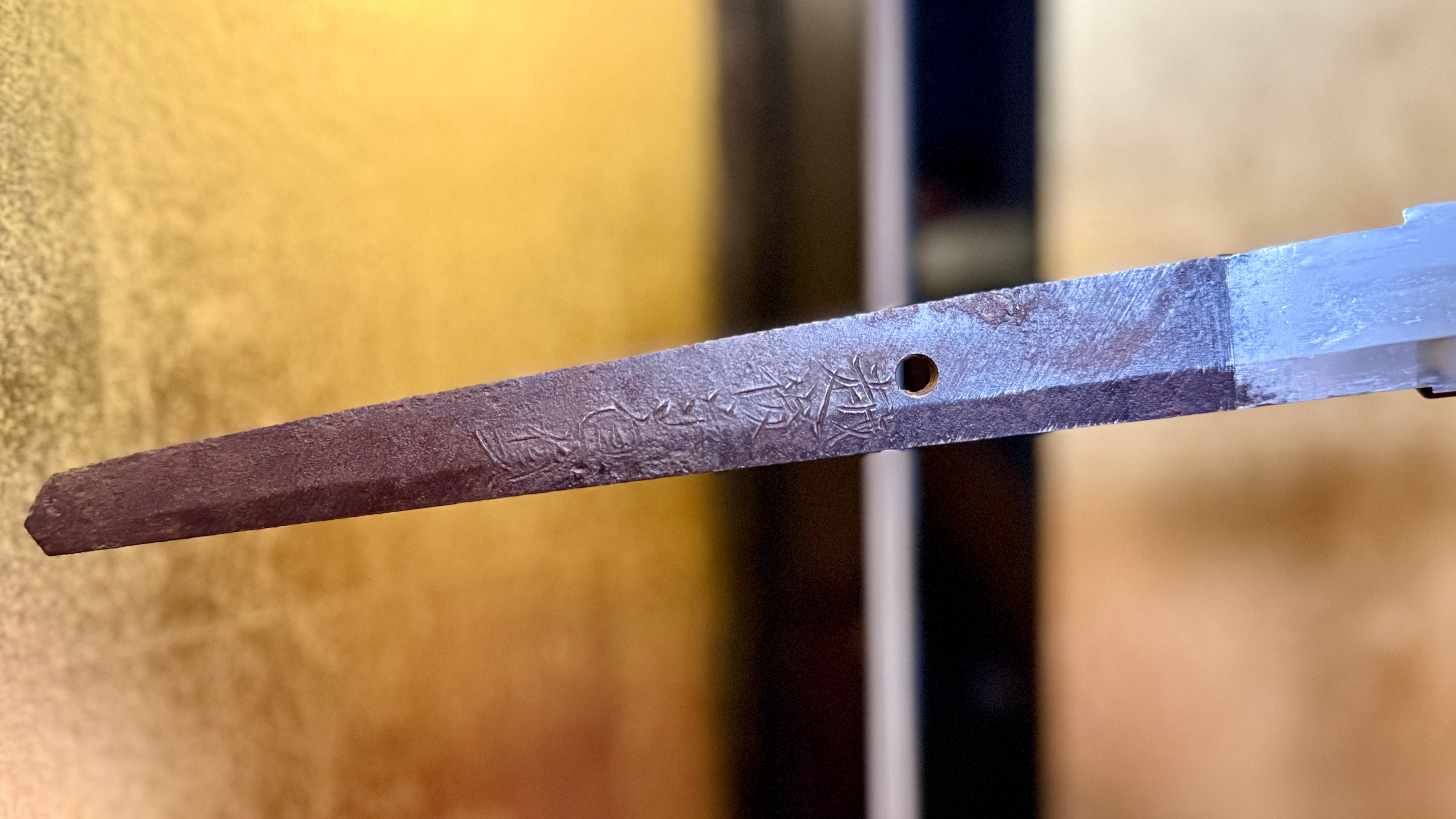
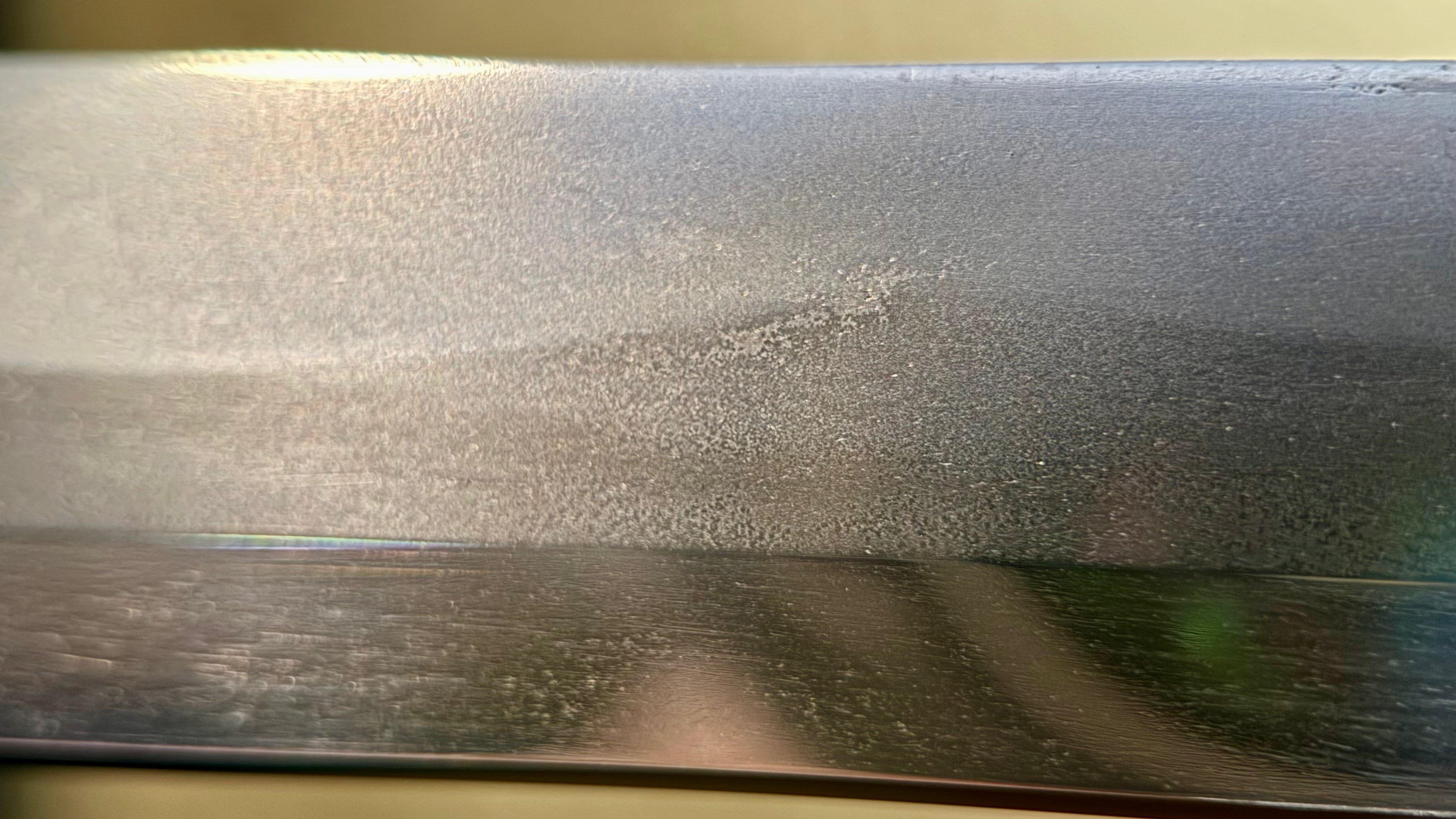
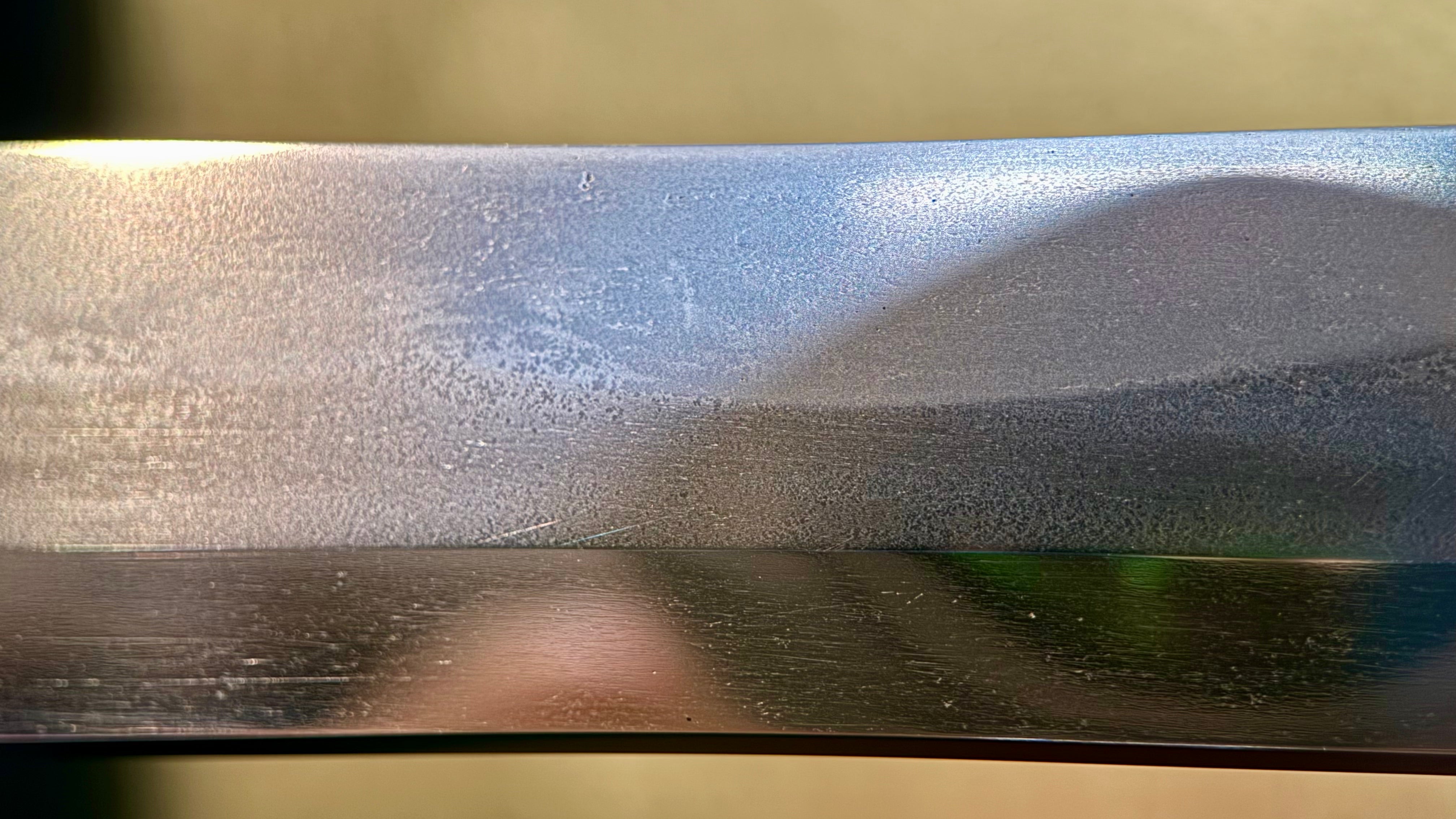
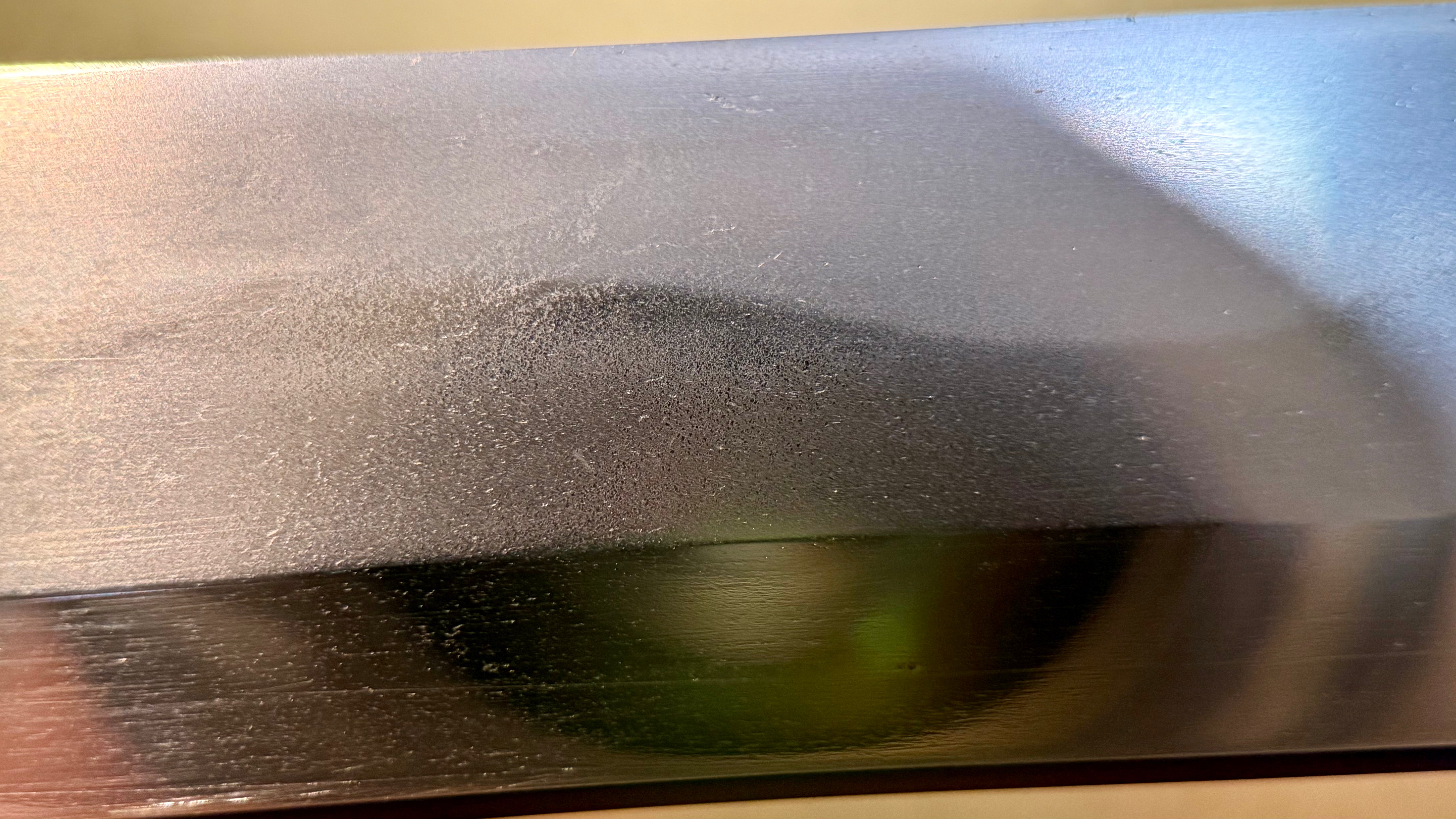
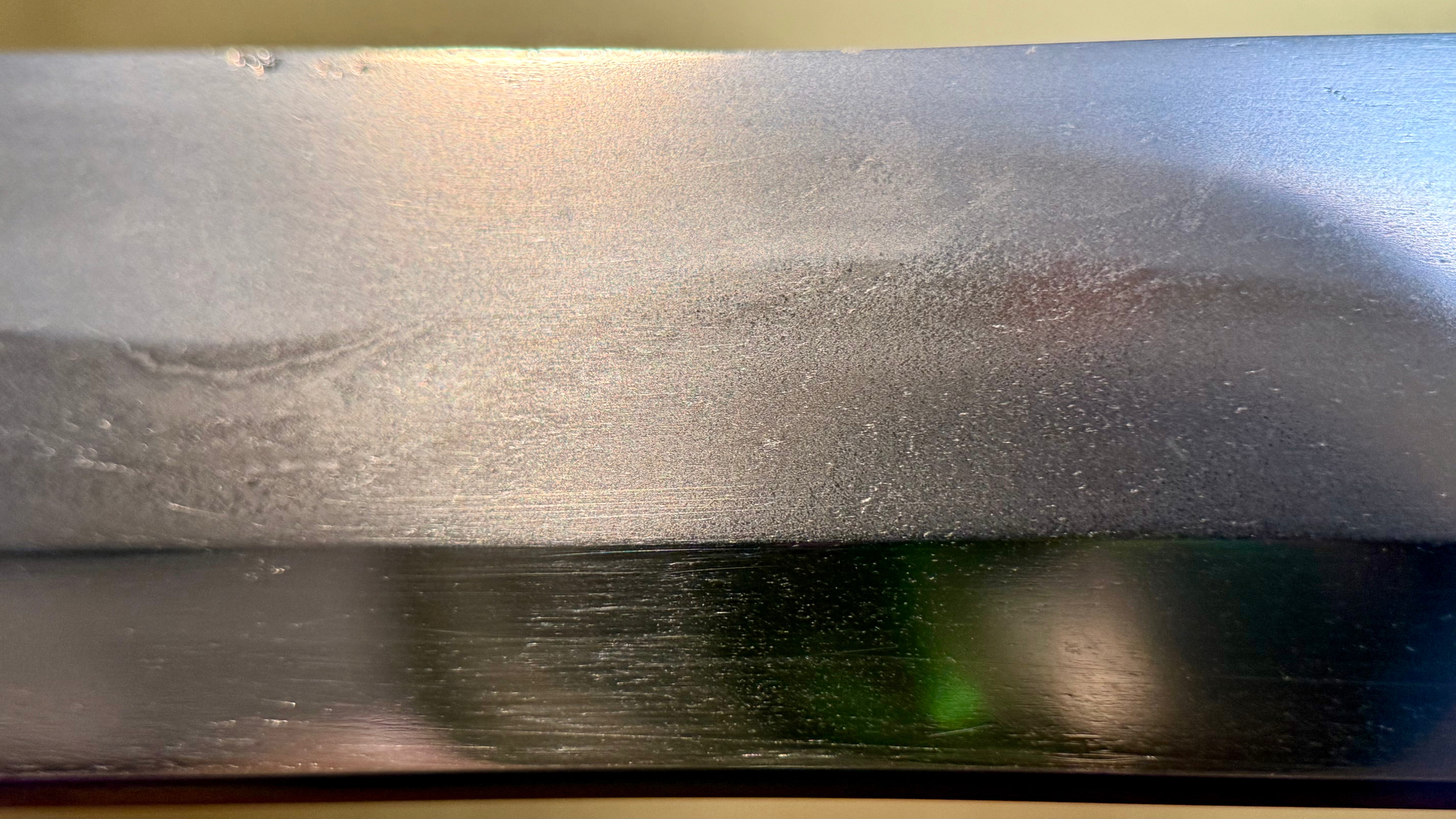
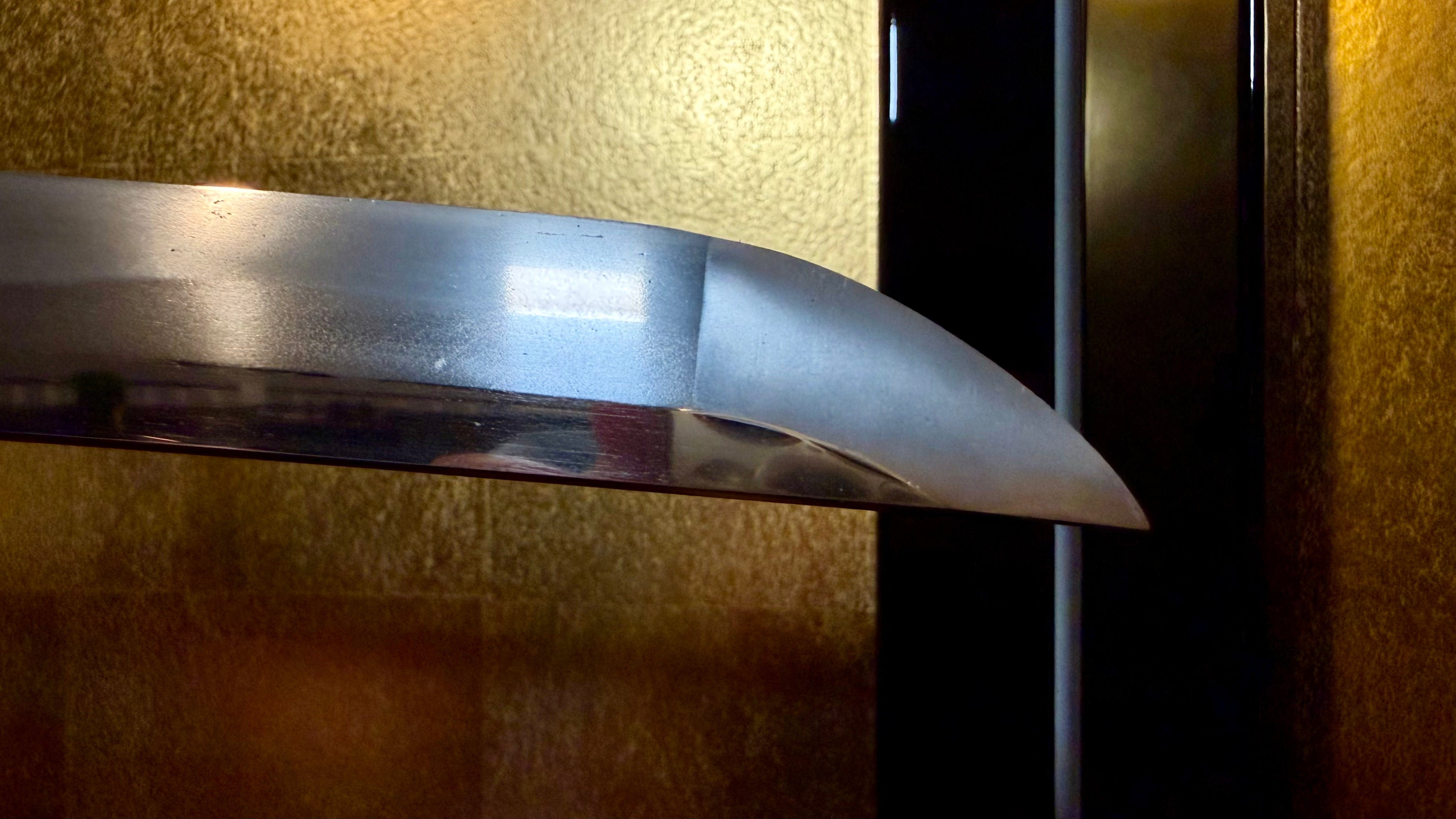
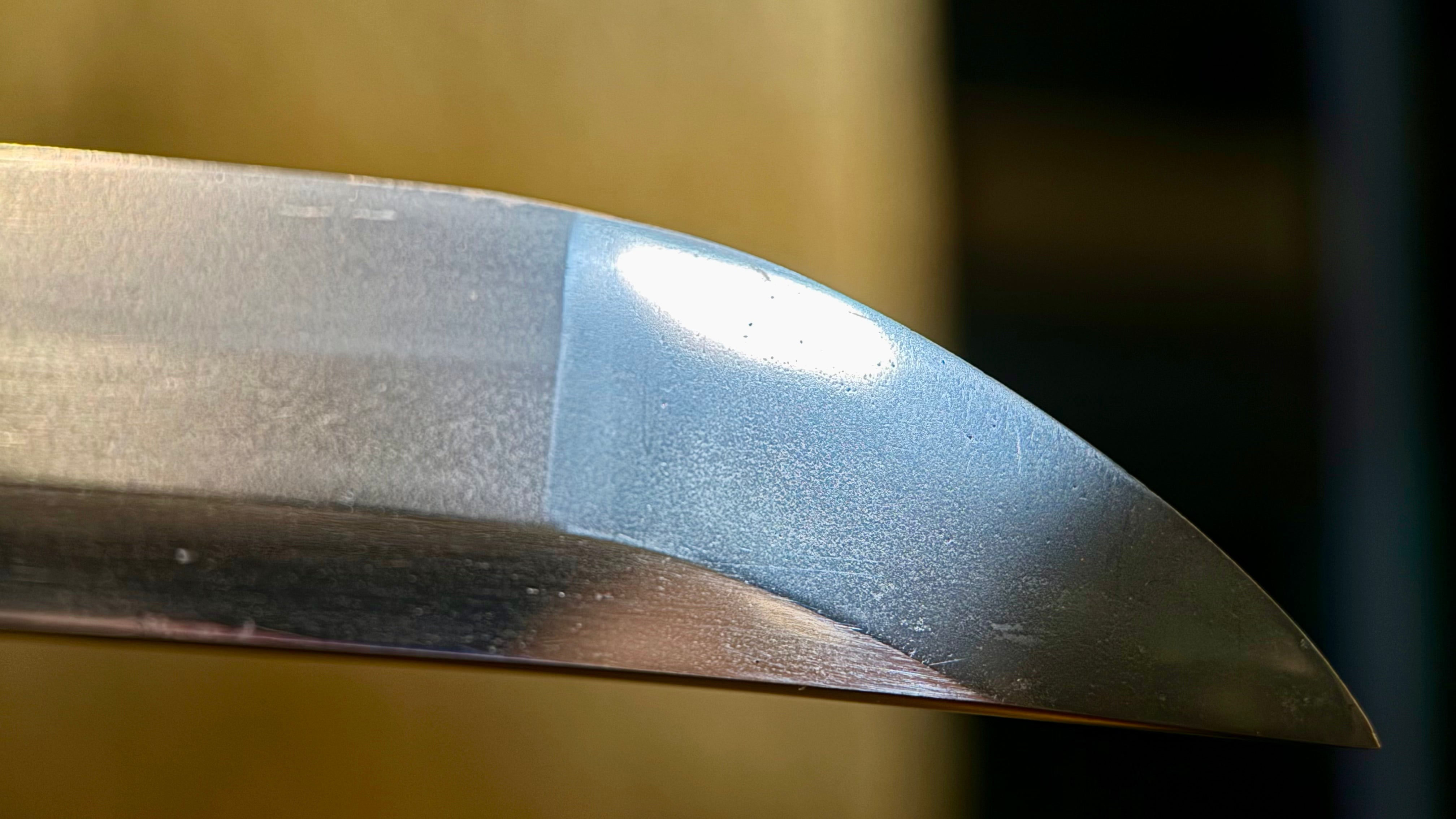
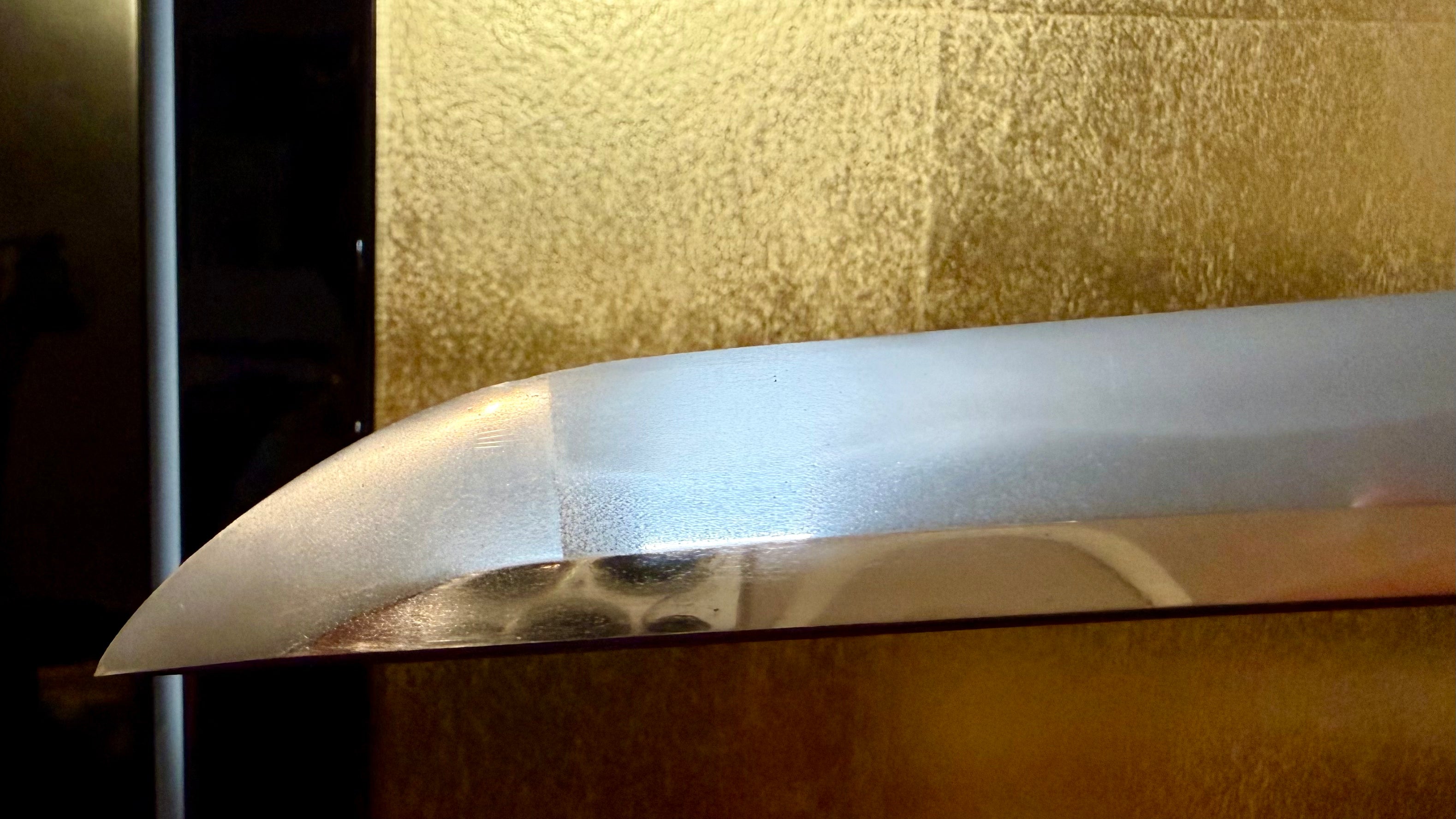
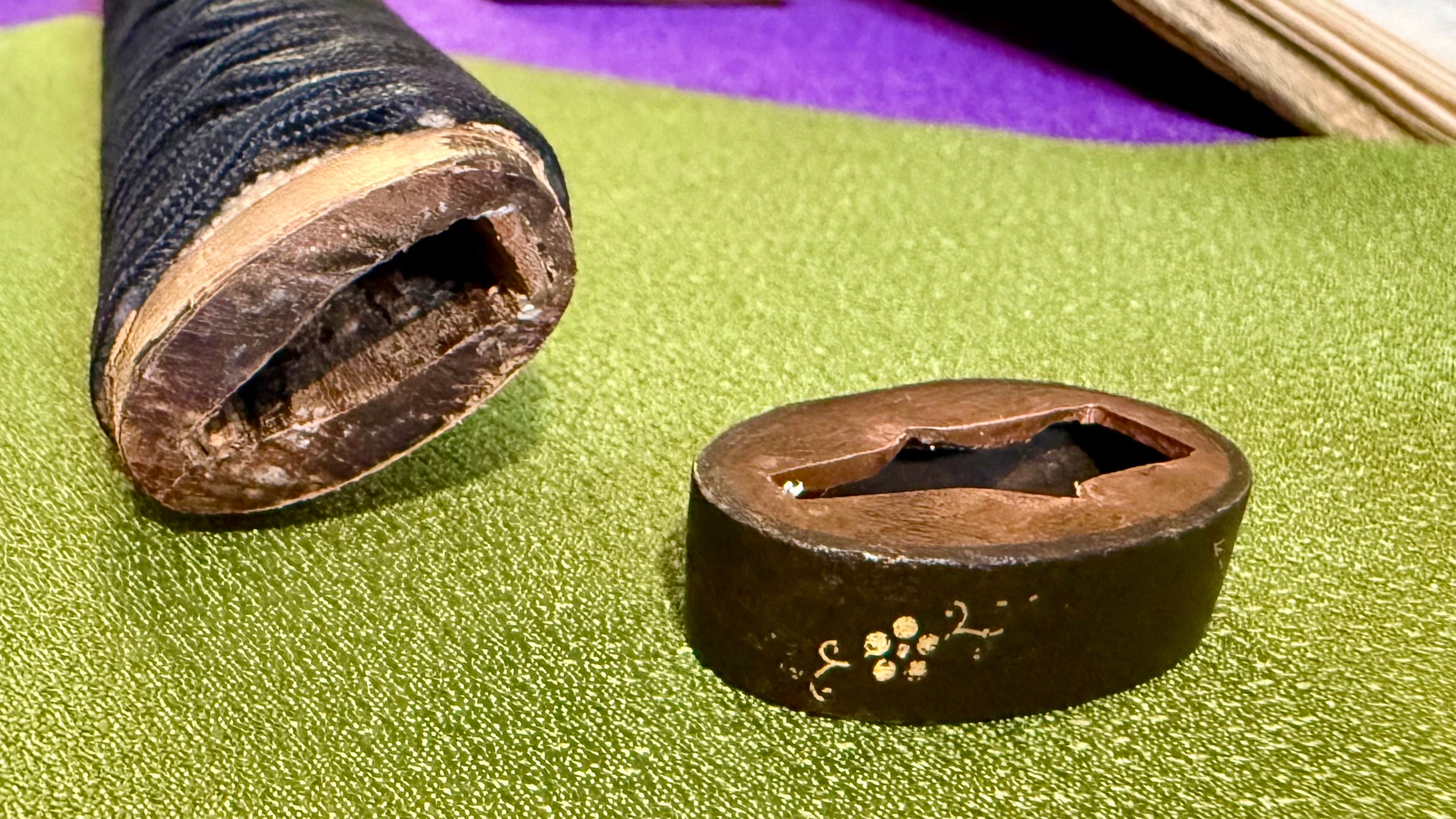
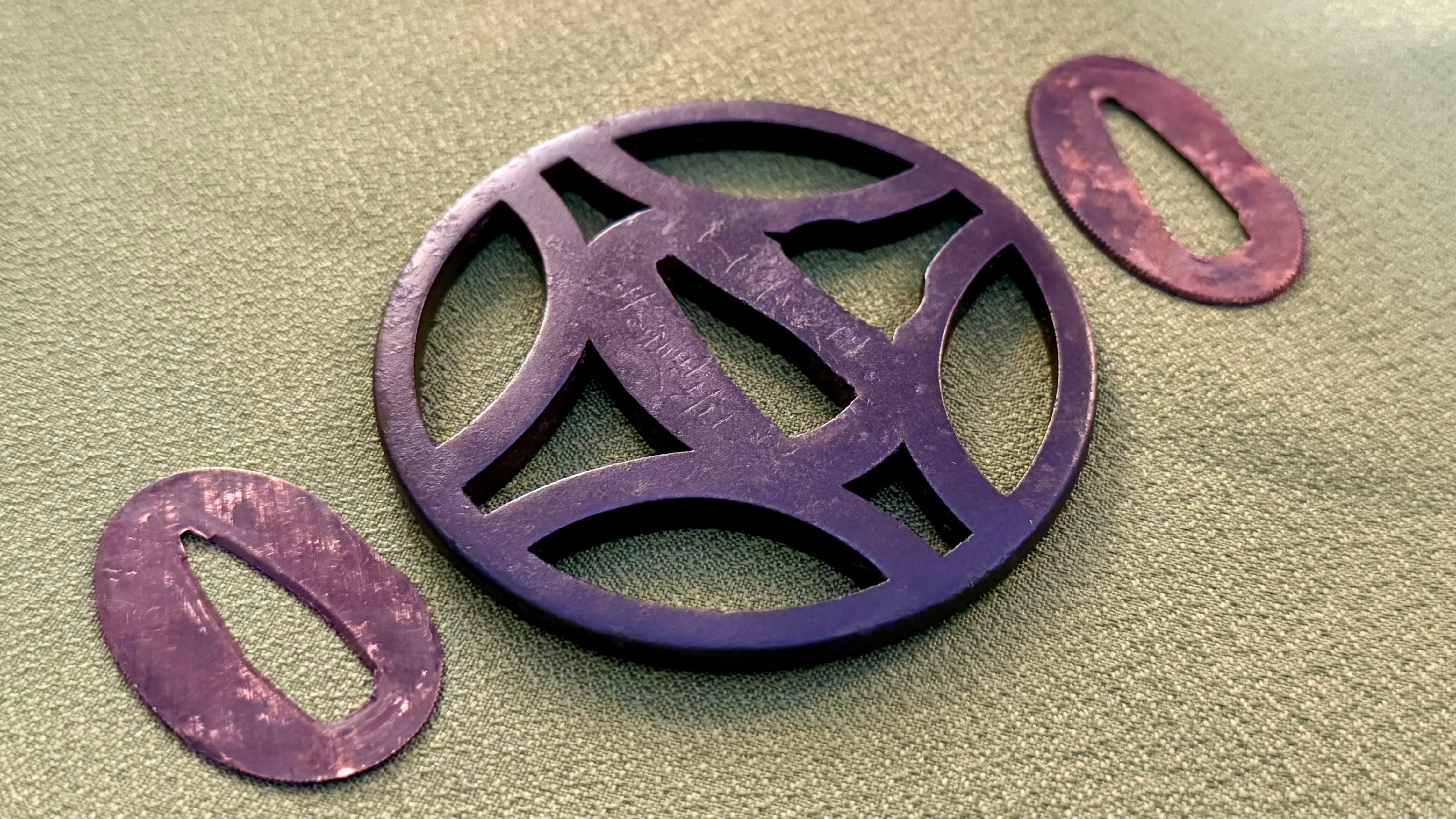
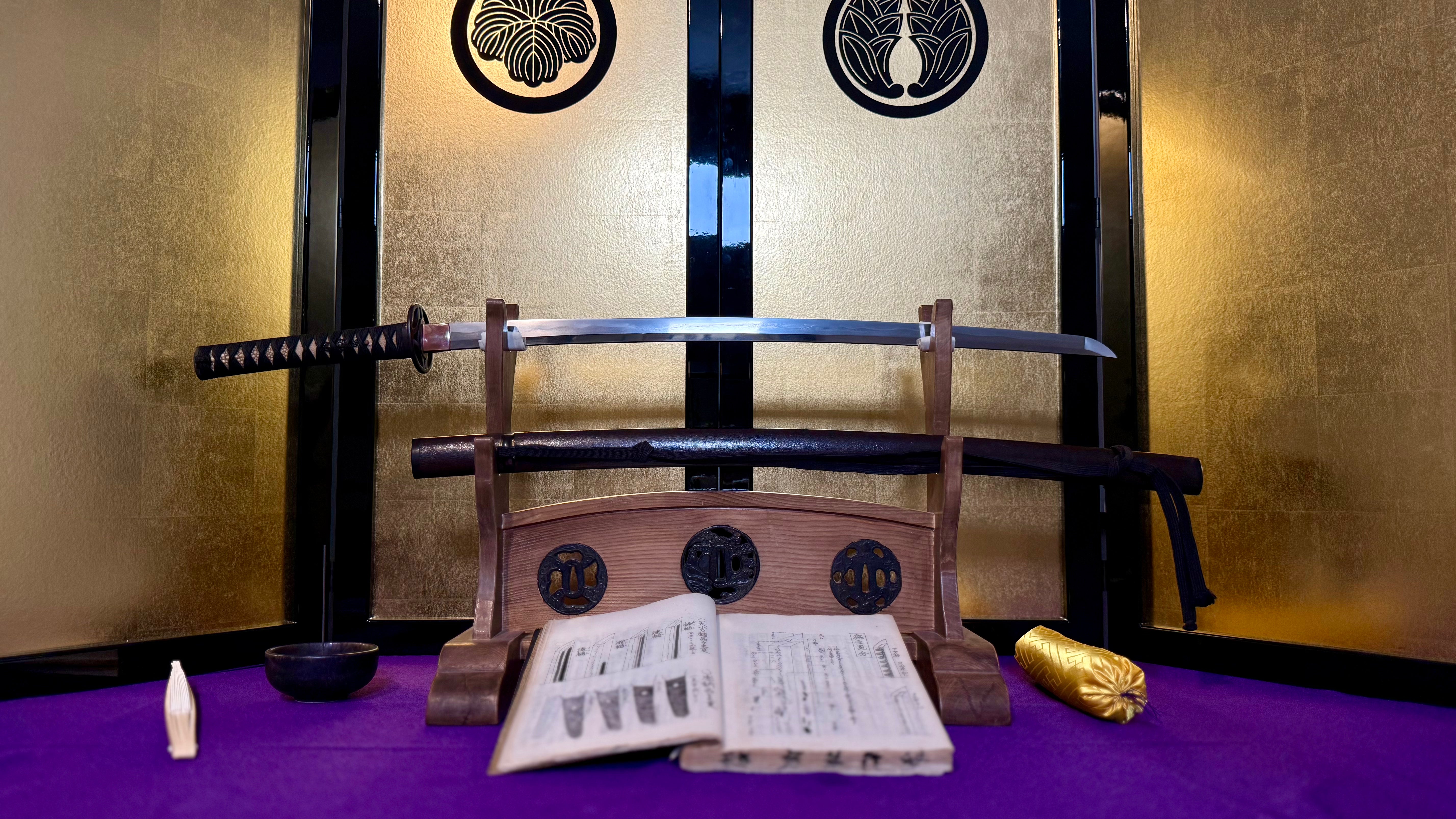
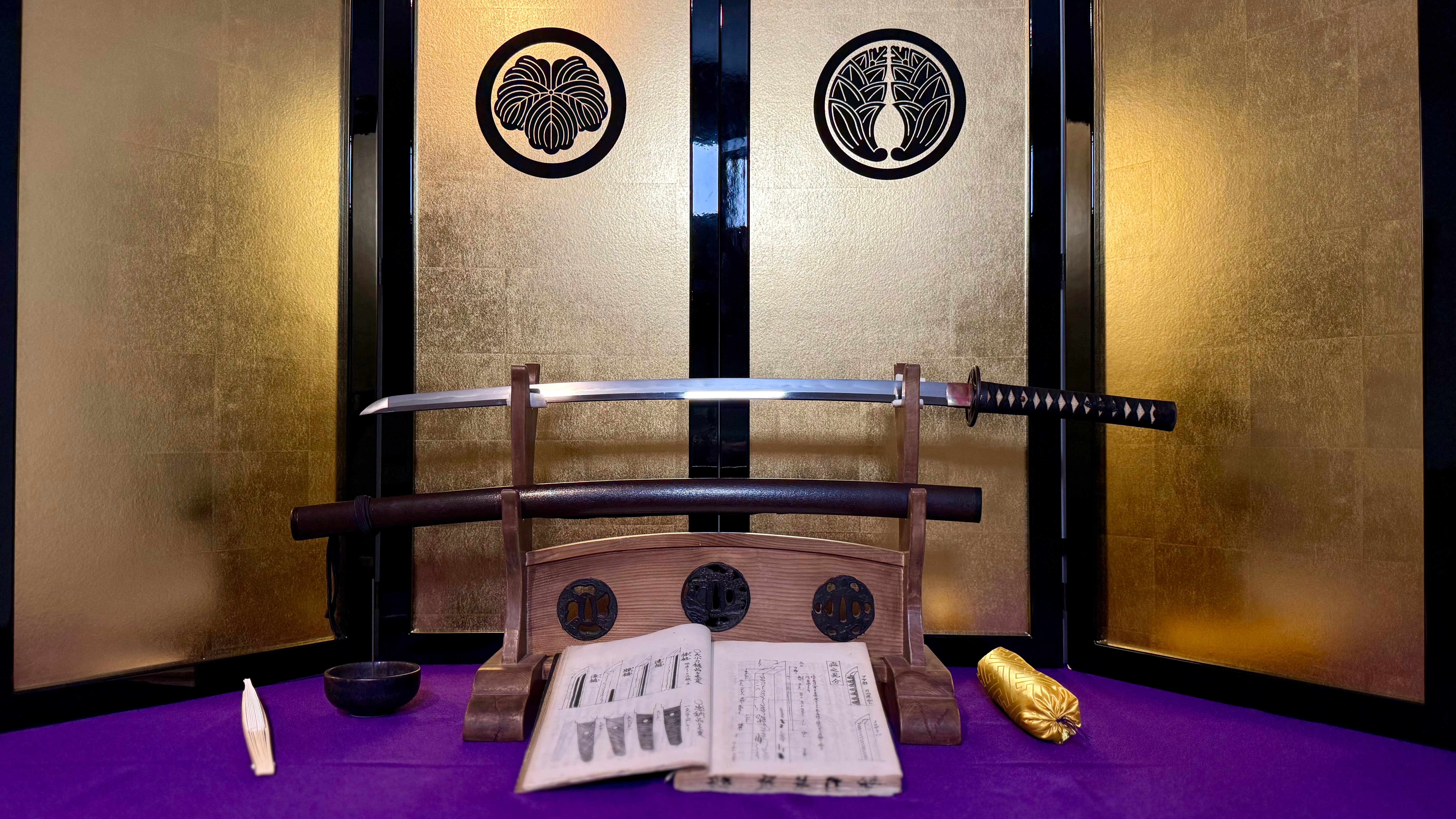
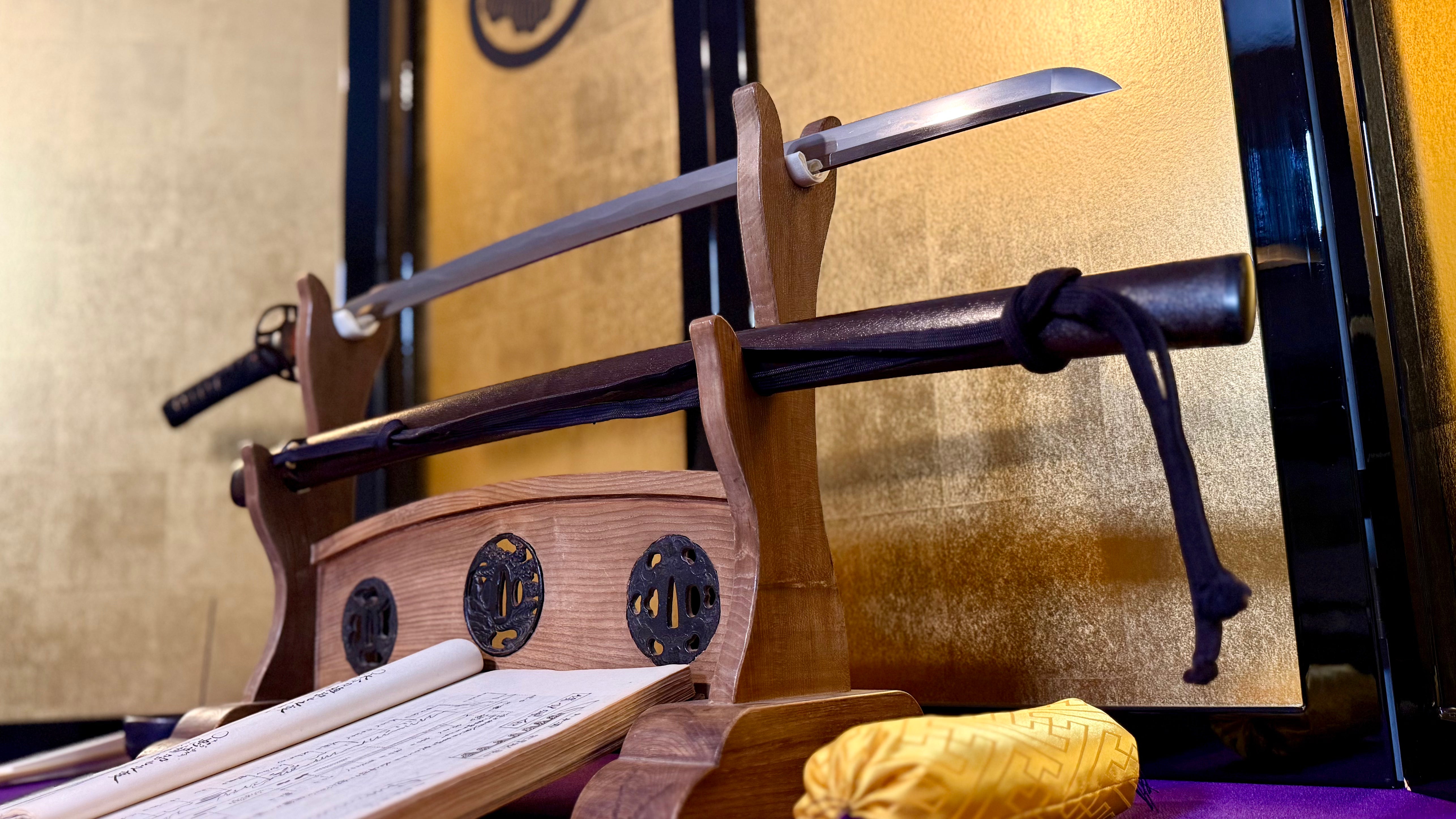
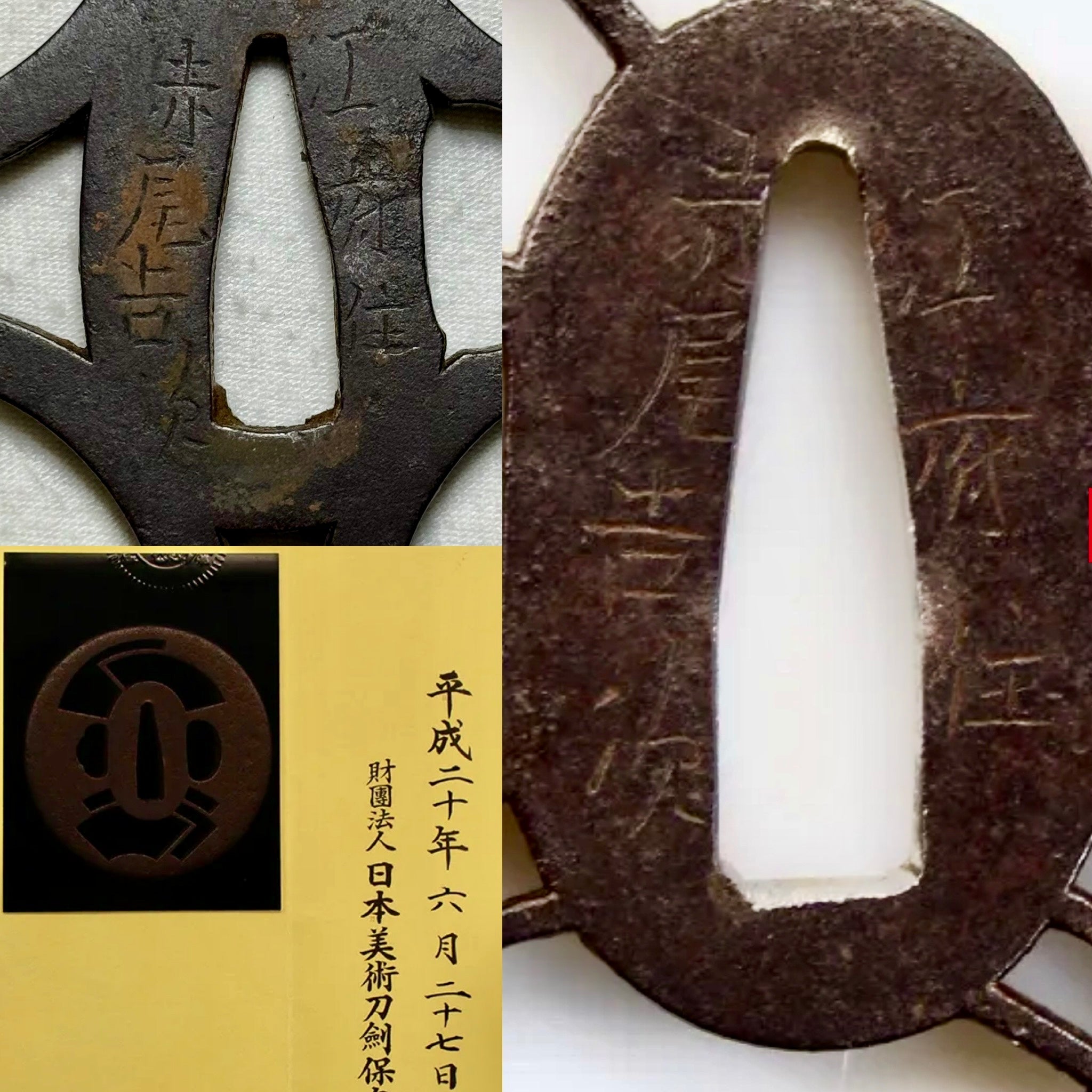
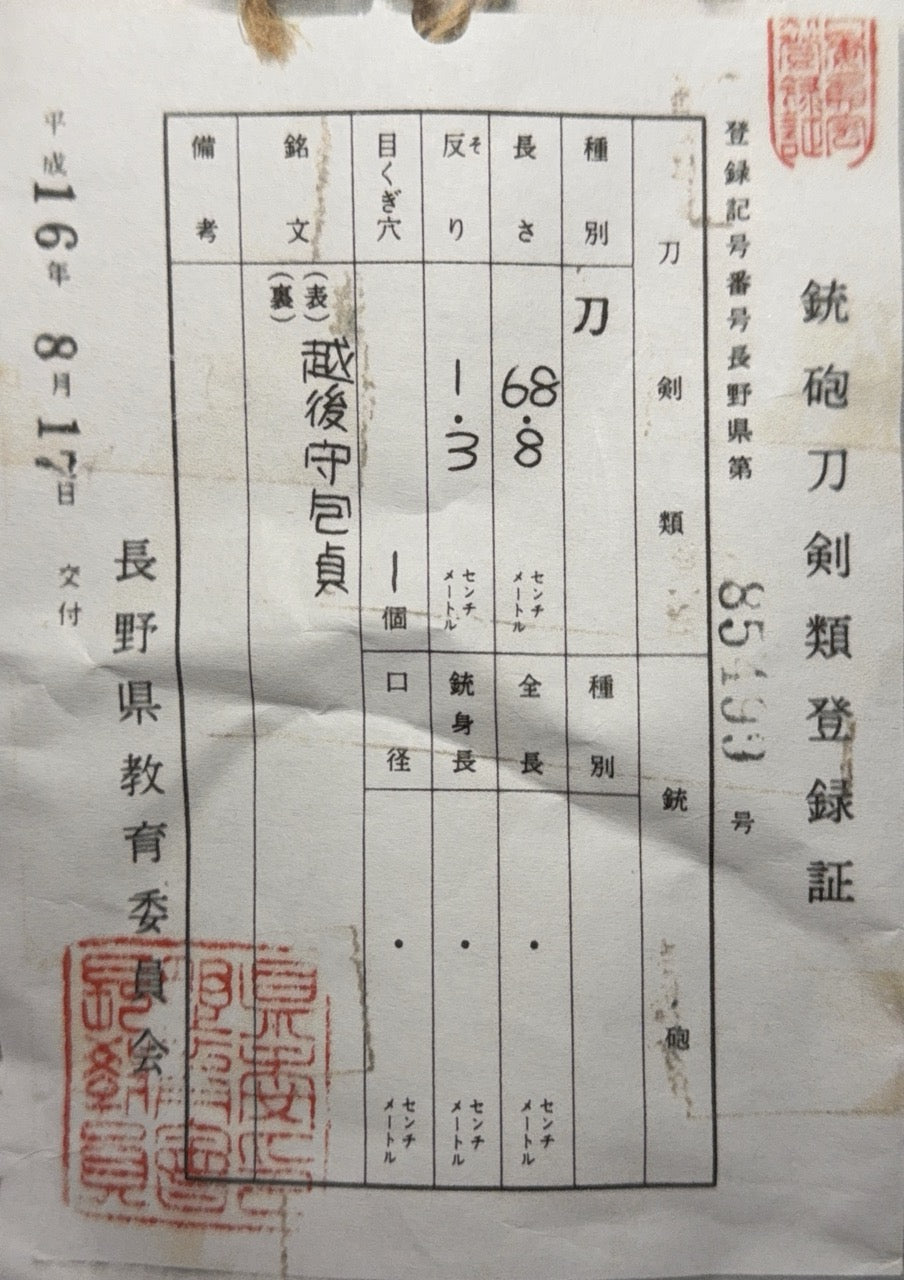
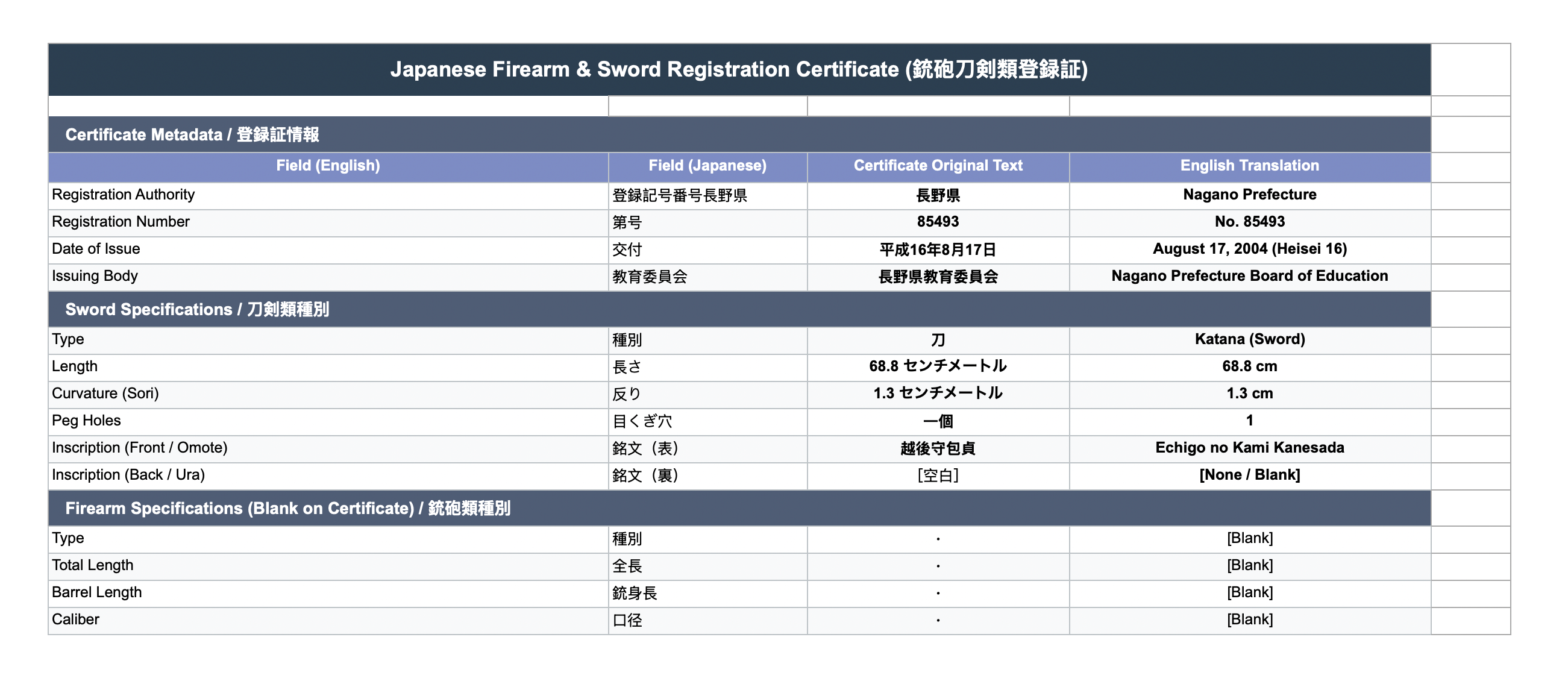
Overview: This sword appears to be a Shinshinto era gimei tribute to Echigo no Kami Kanesada. It features a lot of the hallmarks as the pieces it is based on, but it is clear it is not in the same category as the originals. That does not mean this is not an interesting sword however... Firstly we find it mounted in katate-uchi koshirae. The nakago is long enough that it absolutely could be mounted with a two handed tsuka. Speaking of which, the tsuka does not appear to be "modern" in a traditional sense but was modified at some point and had a quarter panel of samegawa added featuring large emperor nodes. It is clear it was an addition. The koshirae itself is fully functional and Iai\Tameshigiri ready. Next and probably the most unfortunate part is a false kesho polish that appears to be buffed in by machine. While not etched, it is clear it was not applied by traditional methods. Based on other characteristics of the steel, the "polisher" seems to have followed the original toran-ba temper line. Some very clear nie is present and they sword itself appears to have been a quality forged sword with no critical flaws. Lastly and possibly the most interesting part is the tsuba. It is signed "Efu-ju Akao Yoshitsugu" and when compared to known rated examples, it appears to be a match. It is possible this could be sent for paper. As I always say, every sword has a story to tell, and while it may be a quality gimei tribute to Echigo no Kami Kanesada, the unassuming Akao school tsuba appears to be authentic. Ready to use as a one handed sword, used two handed by smaller hands/frames or, to have a new two handed tsuka produced.
Offered by Ashigaru Armory
The dealer notes the signature isn’t original. Please judge it as an unsigned piece. — Hoshi


As written by the shop
The Shinshintō revival
Around 1800 Suishinshi Masahide argued in his writings that the craft must return to the old masters’ methods: the fukkotō revival. His greatest successor Naotane worked convincingly in Bizen and Sōshū manners that had been dead for centuries.
We could not find an authenticity certificate on the seller’s listing. Japanese swords and fittings are normally papered by the NBTHK (or the NTHK). Without one, the attribution is the seller’s own assessment and has not been independently verified — treat it with caution and ask the dealer about certification before buying.
$1,400