The twentieth century nearly killed the craft twice: wartime distortion, then the occupation ban. The NBTHK’s founding in 1948 and licensed forging from 1953 rebuilt the sword as an art, crowned by Living National Treasures and the mukansa rank.
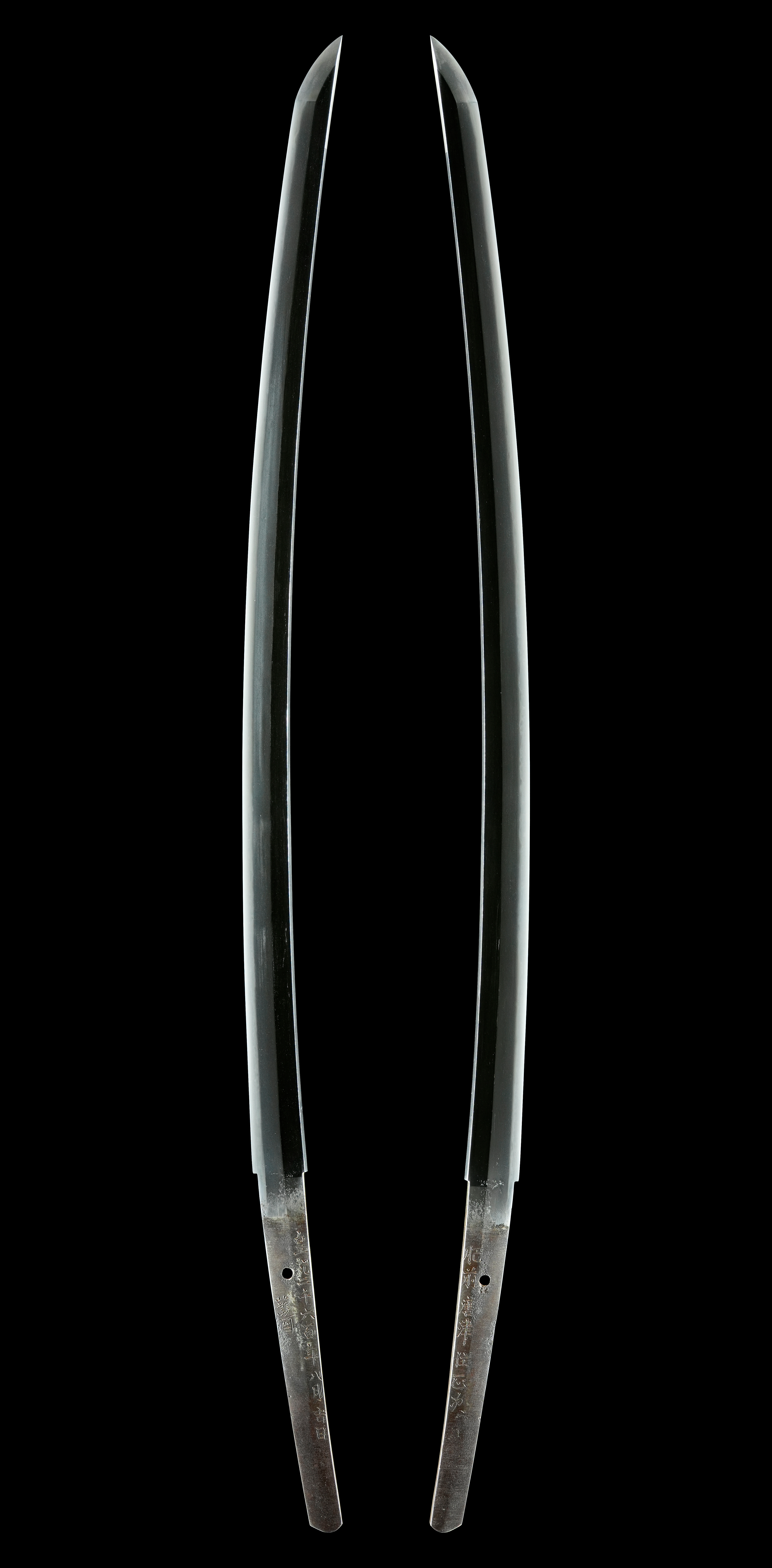
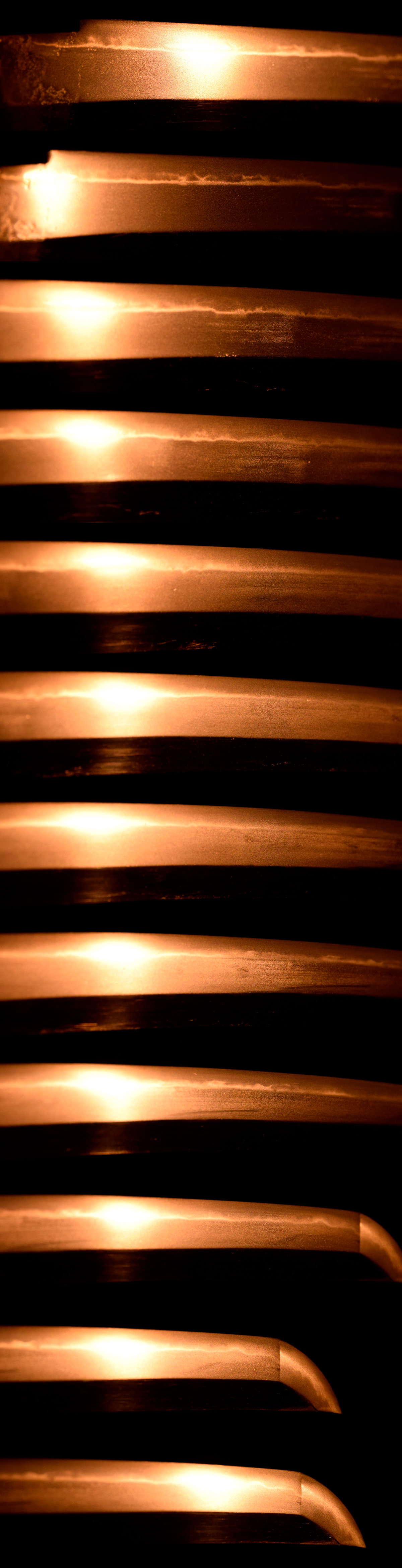
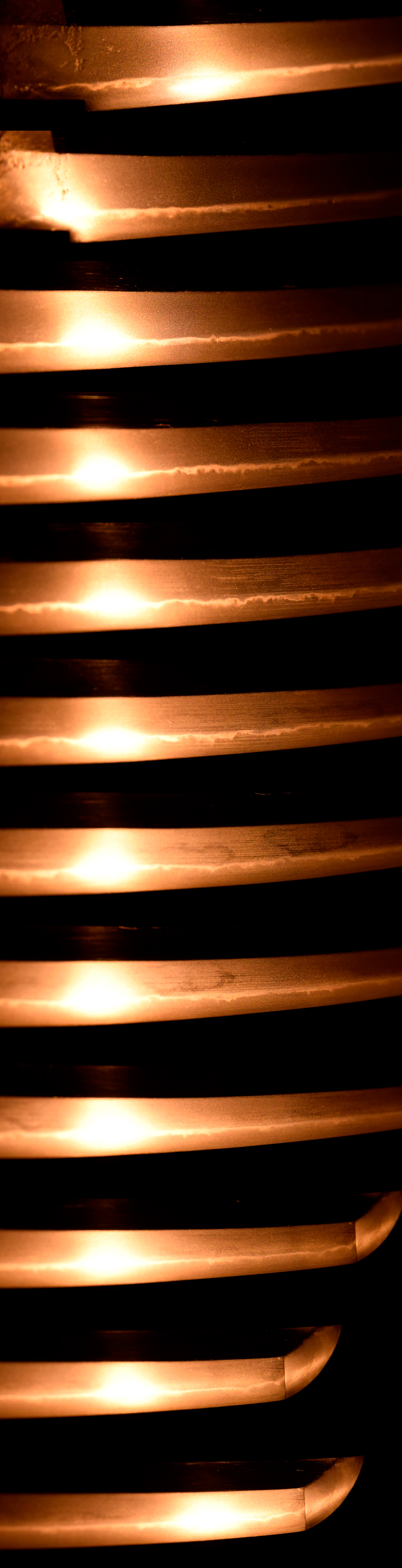
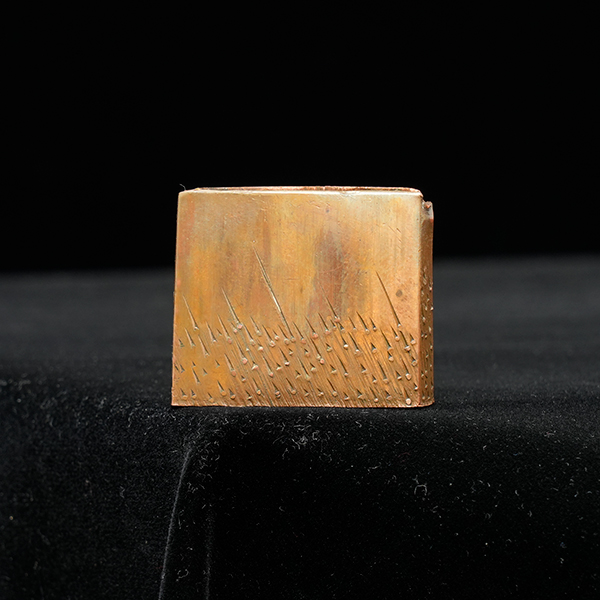
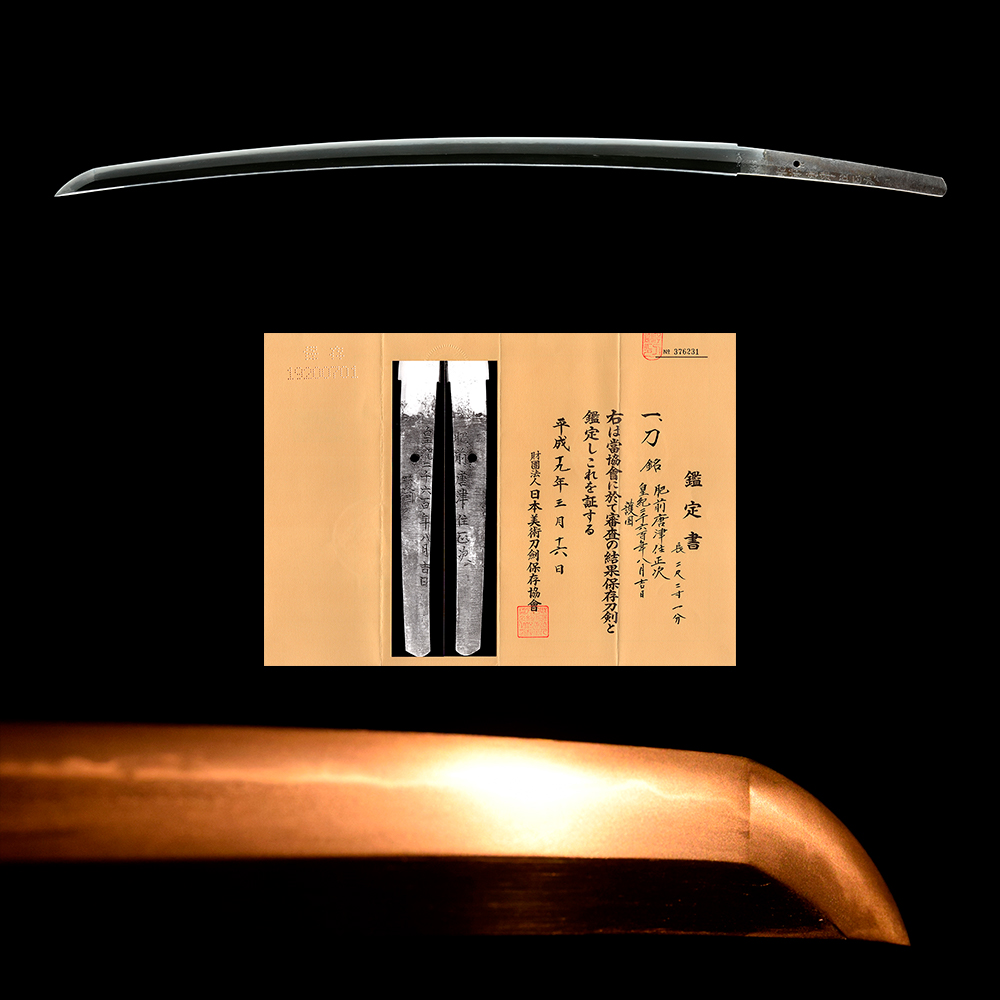
Real name, Taguchi Kiichi. Born July 28, Meiji 37. Resident of Hachiman-cho, Karatsu-shi, Saga-ken. From a family of retained smiths of the Karatsu domain for generations, he researched the forging methods of Suishinshi Masahide together with his father from around Showa 10. Later, he studied under Kurihara Akihide. In Showa 14 and around Showa 15, he exhibited at the 5th Nihonto Tenrankai. He received the Gold Medal and the Minister of the Navy Award. In Showa 16, he was appointed as a Rikugun Jumei Tosho. He was selected for the Rikugun Gunto Gijutsu Shoreikai. He received the Gold Prize and the Minister of the Navy Award. Forging swords even after the war, he is a famous master of the Showa era who won the Doryoku-sho, Shorei-sho, and other awards, earning a brilliant reputation. After the war, from Showa 33 to Showa 38, he exhibited at the Sakuto Gijutsu Happyokai. He received the Shorei-sho, Doryoku-sho, and other awards. The smith Tadataka was his disciple; he also forged swords after the war and received the Doryoku-sho and Shorei-sho. He is a famous master of the Showa era who gained a brilliant reputation. This katana has a good difference between the width at the moto and saki, and the kissaki is slightly extended. The jitetsu is ko-itame, well-kneaded and tight, with ji-nie and chikei, appearing refined and beautiful. The hamon has a bright and clear nioiguchi, based on suguha with ko-ashi and ko-choji midare; inside the ha, yo and kinsuji appear. The boshi on the omote is based on suguha with a slight midare-gokoro and tsukiage, while the ura is based on suguha with a slight midare-gokoro and a maru tip; both are yaki-sage below the yokote. Although not very noticeable to the naked eye, as you can see in the photographs, there are hiké from cleaning, so the sashi-omote appears white in the pictures. Because this is a very well-forged work with many highlights, we would like you to enjoy it by giving it a kesho-naoshi or re-polishing, and we introduce it at an affordable low price.
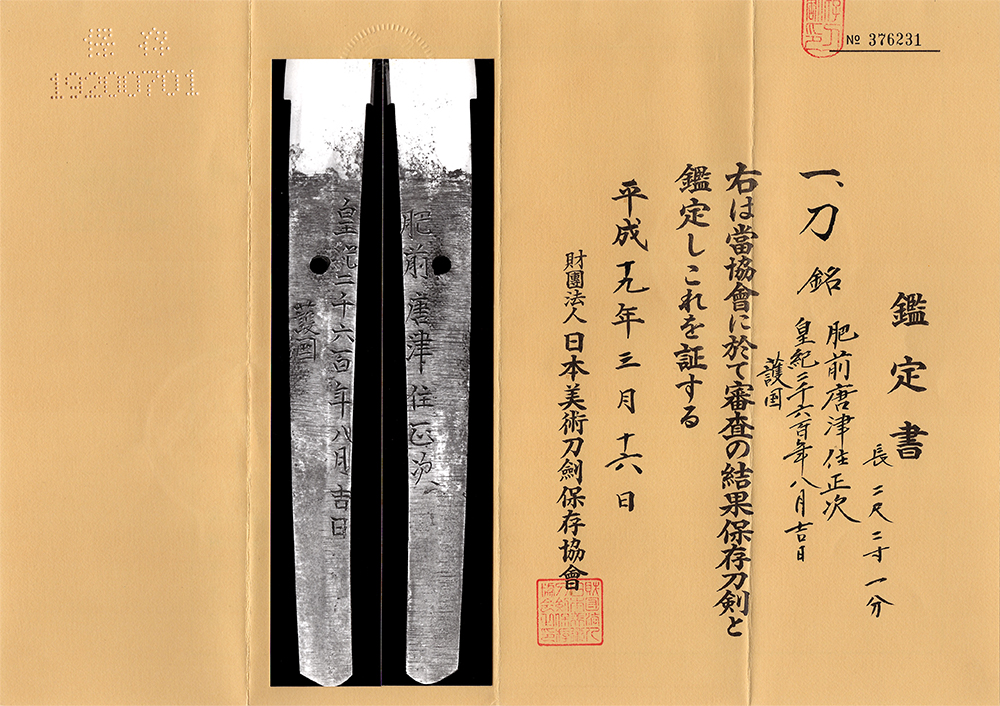
Certificate reading — 銘 肥前唐津住正次 皇紀二千六百年八月吉日 護國
Offered by Toushin


As written by the shop
Machine translation from the shop's Japanese · may contain errors ·
Osaka · around 1926-1989
2 pieces on the market now
Shōwa to the present: destruction and revival
The twentieth century nearly killed the craft twice: wartime distortion, then the occupation ban. The NBTHK’s founding in 1948 and licensed forging from 1953 rebuilt the sword as an art, crowned by Living National Treasures and the mukansa rank.
Certifies a genuine blade worth preserving: a signature confirmed correct, or, if unsigned, an era, province, and school that the NBTHK can reliably identify.
The NBTHK (Nihon Bijutsu Tōken Hozon Kyōkai, the Society for the Preservation of Japanese Art Swords) is a public-interest incorporated foundation founded in 1948 and supervised by Japan’s Agency for Cultural Affairs (Bunkachō); it is based at the Japanese Sword Museum in Tokyo. Its expert panels physically examine each submitted work (shinsa) and issue a certificate (kanteishō) ranking it by artistic and historical merit. NBTHK papers are the most widely recognized standard of authentication for Japanese swords and fittings.
NBTHK official siteAs a rule we do not accept returns, except when we have sent a different item from the one ordered or when there is a significant discrepancy between the description and the item. If you wish to return an item, please contact us within 3 days of its arrival and then send it back.
¥385,000