Edo was the sword’s age of connoisseurship: the Hon’ami appraisers, the shogunal register of famous blades of 1719, and a thriving literature turned the sword into an object of study even as it ceased to be drawn in war.
 NihontoWatchNihontoWatch
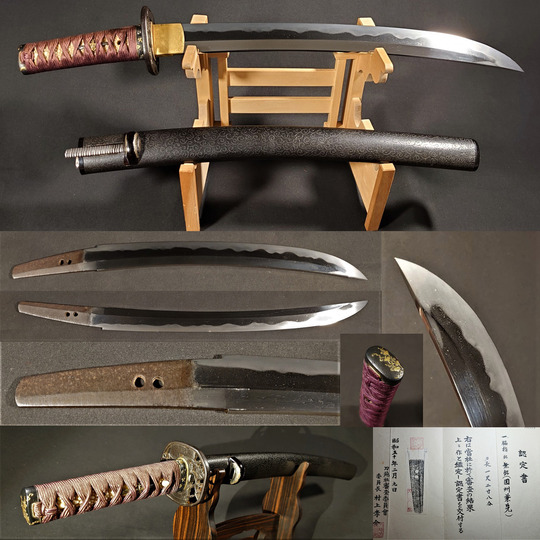
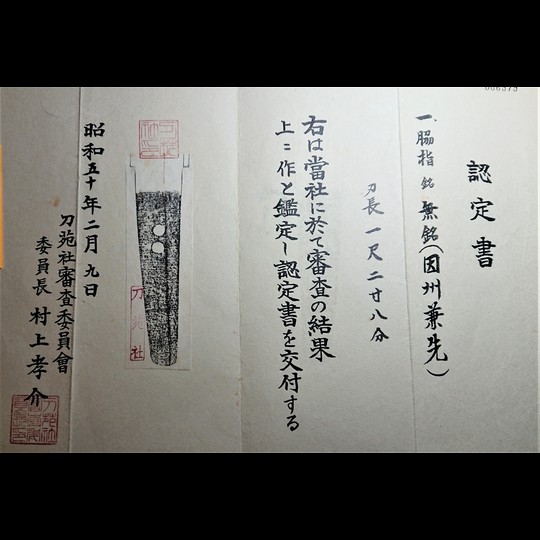
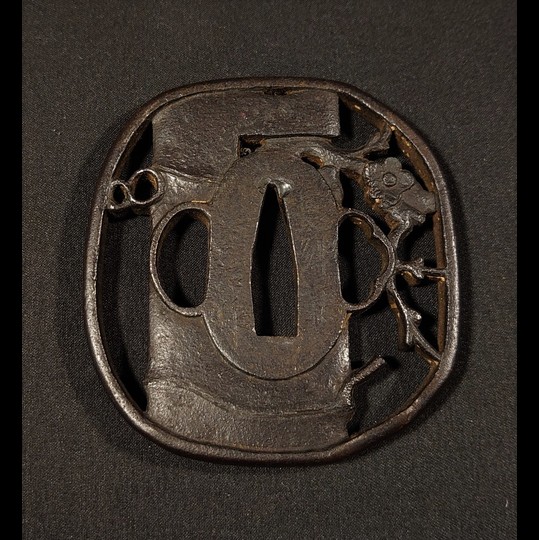
HOME » 日本刀 » 【販売済】【豪壮】脇差 無銘 因州兼先 江戸初期 刀苑社上々作鑑定書付き 【38.8cm 1尺2寸8分・鞘払717g】 本体価格29万円 YW-08 【販売済】【豪壮】脇差 無銘 因州兼先 江戸初期 刀苑社上々作鑑定書付き 【38.8cm 1尺2寸8分・鞘払717g】 本体価格29万円 YW-08 国・時代 江戸初期頃 因幡国 鳥取 スペック 刃長 38.8cm(1尺2寸8分) 反り 1.2mm 穴 2 刃文 互ノ目 元幅 33mm 元重 7mm 物打幅 30mm 切先から15cm 物打重 6.8mm 横手幅 横手重 裸身 480g 鞘払い 718g 備考:付け鍔 時代竹梅図長州萩河治作 113g 7.0×6.6cm 厚さ6.1cm 柄 尾張金具秋草図 13.5cm 縁38mm 頭32mm 目貫 桐図 小柄笄 時代銀無垢 2所物(割り笄) 付属:時代金具拵え、小柄笄付き 刀苑社 上々作鑑定書付き 白鞘つなぎ 【販売済】【豪壮】脇差 無銘 因州兼先 江戸初期 刀苑社上々作鑑定書付き 【38.8cm 1尺2寸8分・鞘払717g】 本体価格29万円 YW-08 販売価格 0円(税込) 在庫 在庫切れ 返品についての詳細はこちら お客様の声を見る この商品について問い合わせる 友達にメールですすめる この商品のURLを携帯に送る 再入荷通知 シェア ツイート 状態評価 1 2 3 4 5 重心 4 先(切先) やや先 中間 やや手前 手前(鍔) 斬り 2 竹斬り 藁竹両様 藁斬り 藁良斬り 藁特良斬り 刃音 1 樋なし 音弱い 音並 音良い 音特良い 鑑賞 5 要鑑賞研ぎ 鍛傷・ヒケ・錆 ヒケ 、 少鍛傷、 うす錆少有 ほぼキレイ 研ぎ上げ済 柄 4 要工作修理 巻きほつれ有 使用可能 差し表退色有 新工作済 鞘 3.5 要工作修理 ひび割れ少 塗り少傷 有 鯉口内傷少、 新工作済 ■コメント 兼先の本国は美濃です。室町時代大永頃(1521年)から始まります。 江戸期になると多くの美濃鍛冶と同じく、各地の大名に招かれて地方へ移住しています。 本刀兼先は新刀期に鳥取池田藩の招きで因州鳥取に移住した兼先の事です。 名鑑によれば業物に列せられています。後は代々連綿と幕末まで続いております。 さて、お刀を見ていきます。 身幅元先差が付かず、重も厚く、ふくらも肉付いてゴリっとした豪壮な体配、鵜の首造りにも見えますが、薙刀直しの脇差を模した薙刀直し造りと思われます。 地金は板目、鎬地と刃よりは正目かかり美濃の特徴が表れています。 刃紋は尖り刃を交えた互ノ目乱れ、帽子は乱れて入って小丸に長めに返っています。 茎は生で切り鑢です。 外装は全て時代金具です。 縁頭は尾張拵え秋草図、目貫は桐図メッキの剥がれも見られず、美品です。 鍔は竹梅図 在銘長州萩河治作 で撫で角鍔です。 鞘は本漆雲紋黒石目塗りの本歌鞘です。差し裏にひっかき傷や峰側に小へこみも有りますが、 時代鞘としては綺麗な方だと思います。 付属の 銀無垢小柄笄 だけでも5万円はすると思います。 栗型シトド目金具 も珍しい形です。 刀苑社、上々作鑑定付きです。 刀苑社は日本刀保存協会を立ち上げた、今は亡き本間薫山先生、佐藤寒山先生、村上剣掃先生のうち、村上剣掃(孝介)先生が委員長を務めた日本刀鑑定団体です。 武道的に見ますと、居合試斬稽古や形稽古の添え差しに如何でしょうか。 または室内戦を模した短刀脇差の小太刀形稽古に最適です。 脇差だけでもズシリと差しごたえ存在感があり、仮に室内で襲われても太刀打ちできるのではないか... 大刀の一撃も受けれるのではないか、どう捌いて相手の間合いに入るか... 竜馬の差料が短刀でなければどうなっただろう...等々 色々考えさせられます。 人とは一味違う脇差をお探しの方はこの機会に、ぜひとも宜しくお願い致します。 お気軽にご相談ください。 ↑鞘裏にひっかき傷あり ↑差し表と裏で経年による、柄色の退色が見られます↓ ↑在銘 長州萩 河治作 VISA Master JCB AMEX Diners カード各種、分割払い・ボーナス払い ローソン ファミマ ミニストップ コンビニ払い 楽天Edy VIZA 分割払い、現金+カード支払い、下取り刀+カード支払い等、 お支払方法の相談にも対応致します。 お気軽にご相談ください。 ※スペックについては手計の為、多少の誤差があります。物打は切先から約20cmで計測しています。 ※元幅はハバキのすぐ上を計測、物打は切先から約20cmで計測しています。斬りについては体配についての評価です。刀の状態によっては試斬研ぎを必要とする場合があります。(別途相談) ※状態評価については店主の主観です。状態を保証するものではありません。
NihontoWatchKanesaki兼先
Offered by Token Hasegawa
Inaba · around 1624-1644
Tōken Taikan top 91%
3 pieces on the market now
The Edo period (1615 to 1868)
Edo was the sword’s age of connoisseurship: the Hon’ami appraisers, the shogunal register of famous blades of 1719, and a thriving literature turned the sword into an object of study even as it ceased to be drawn in war.