Muromachi turned sword making into an industry: the uchigatana rose with massed infantry warfare, Osafune and Seki produced bundle swords beside custom orders, and the Ming trade carried Japanese blades abroad by the tens of thousands.
 NihontoWatchNihontoWatch
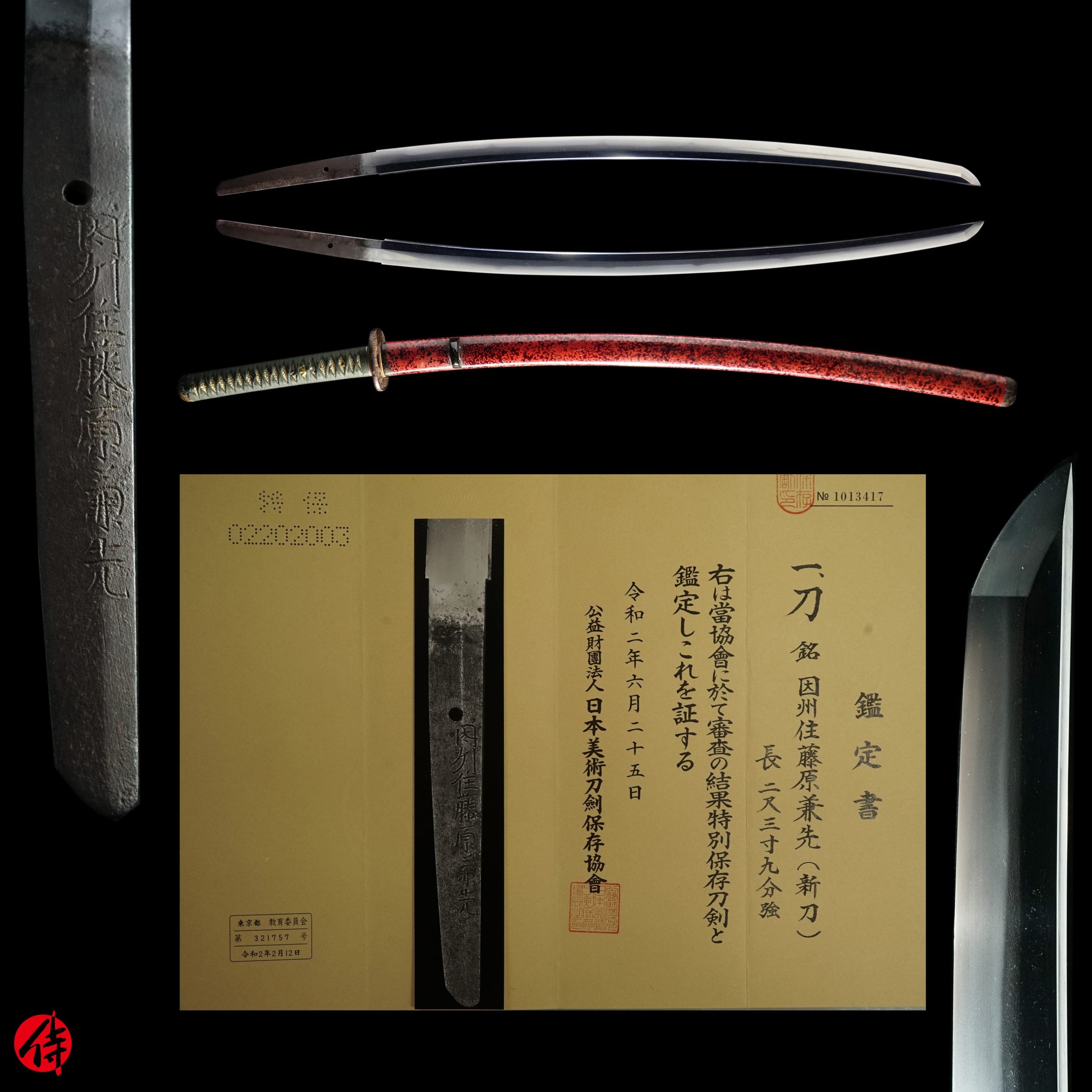
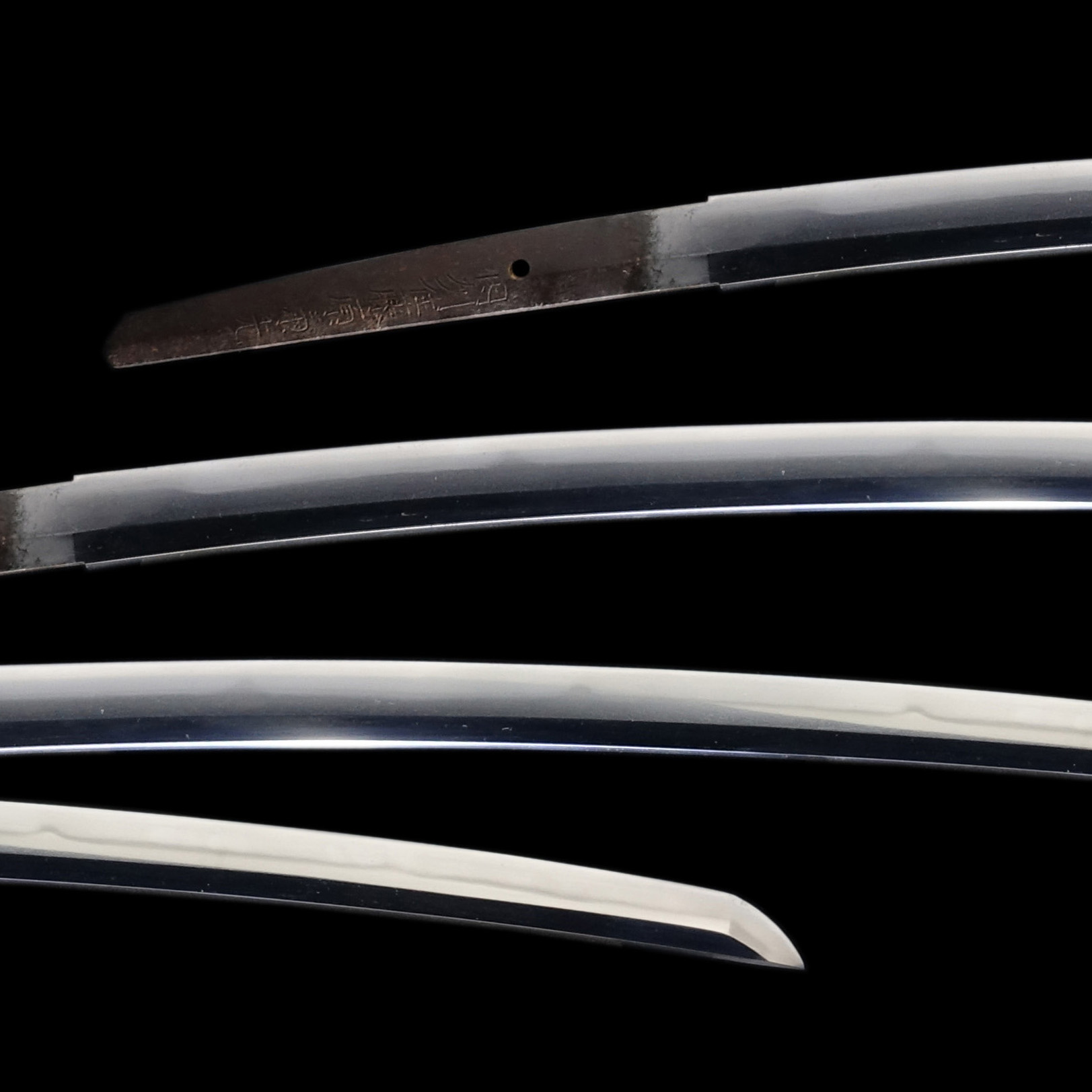
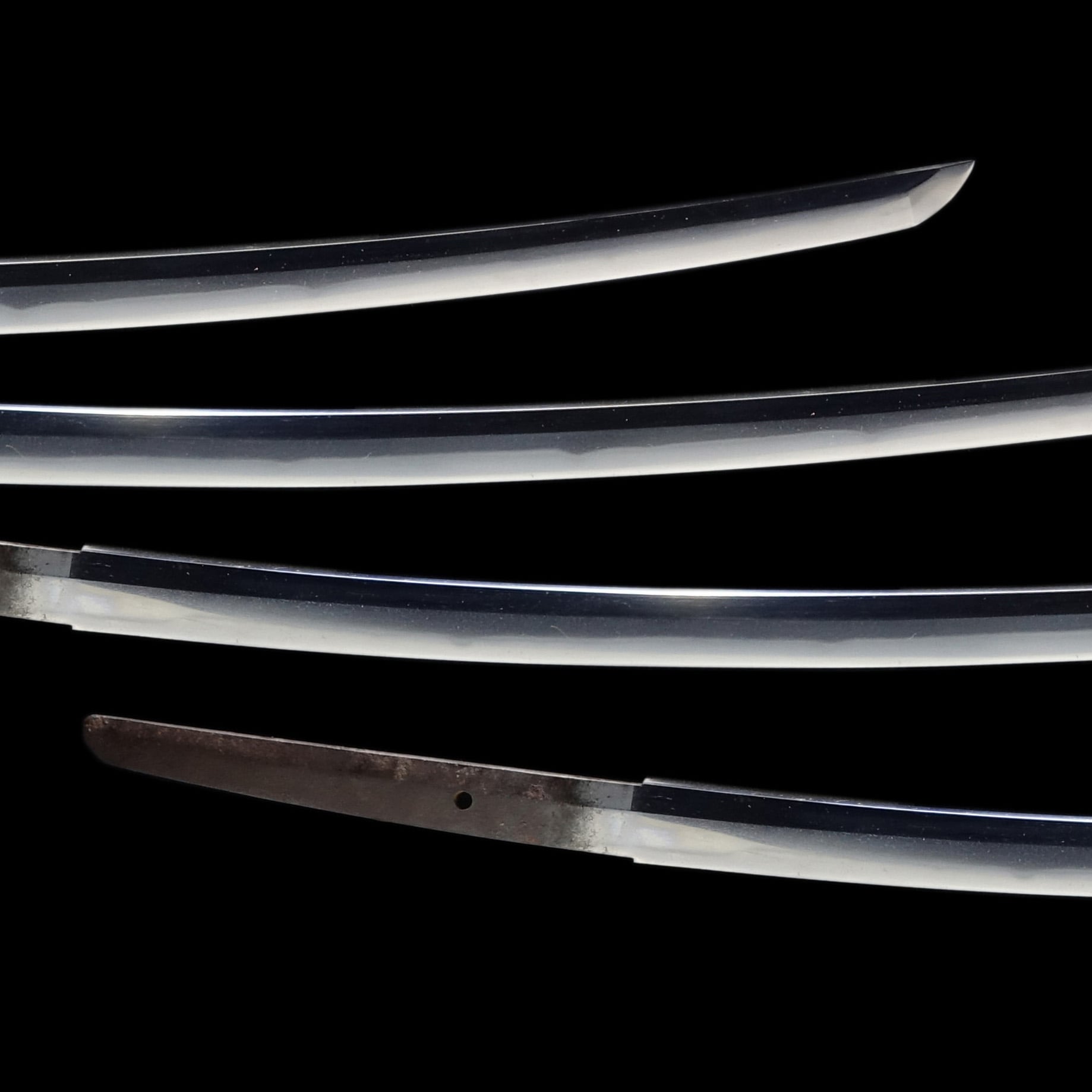
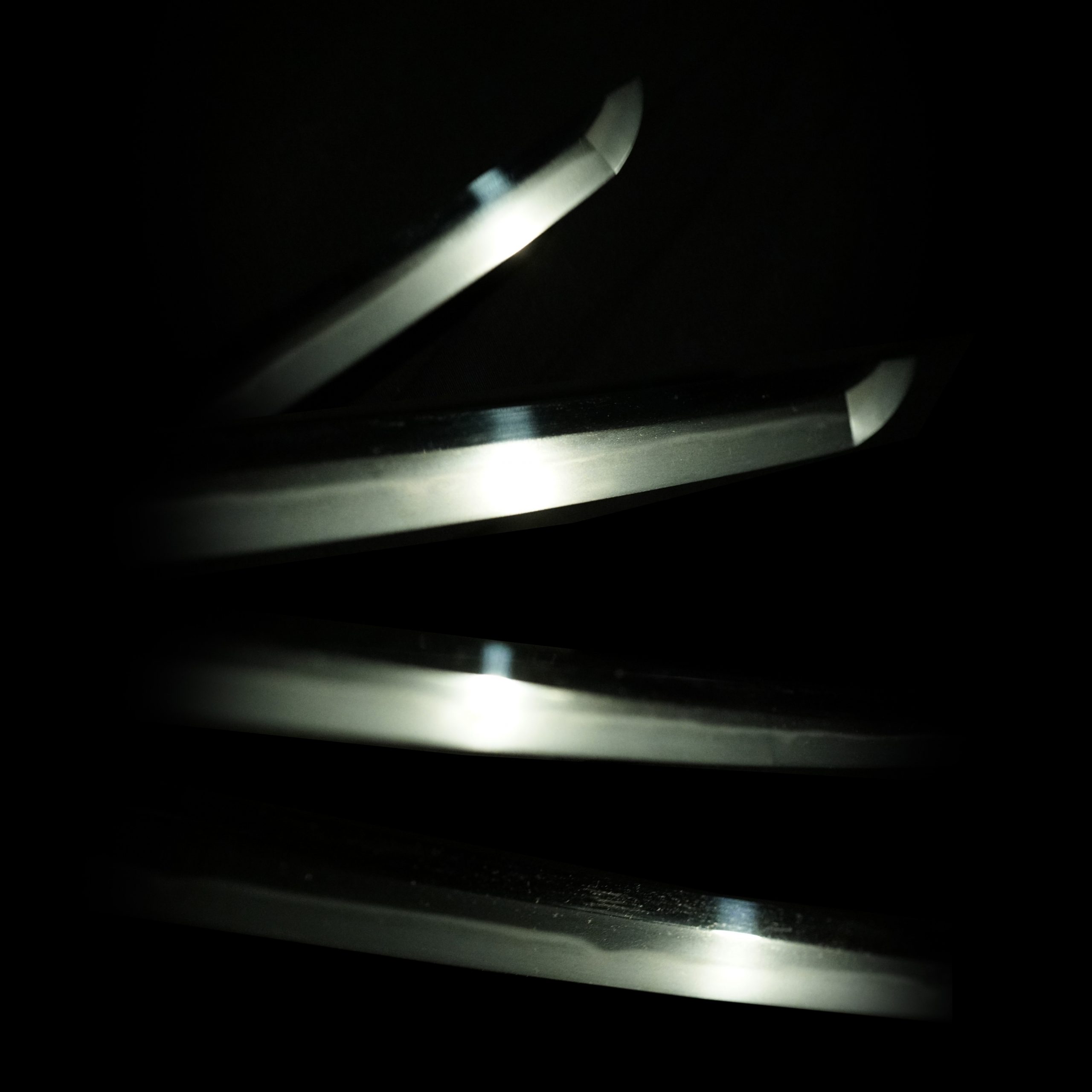
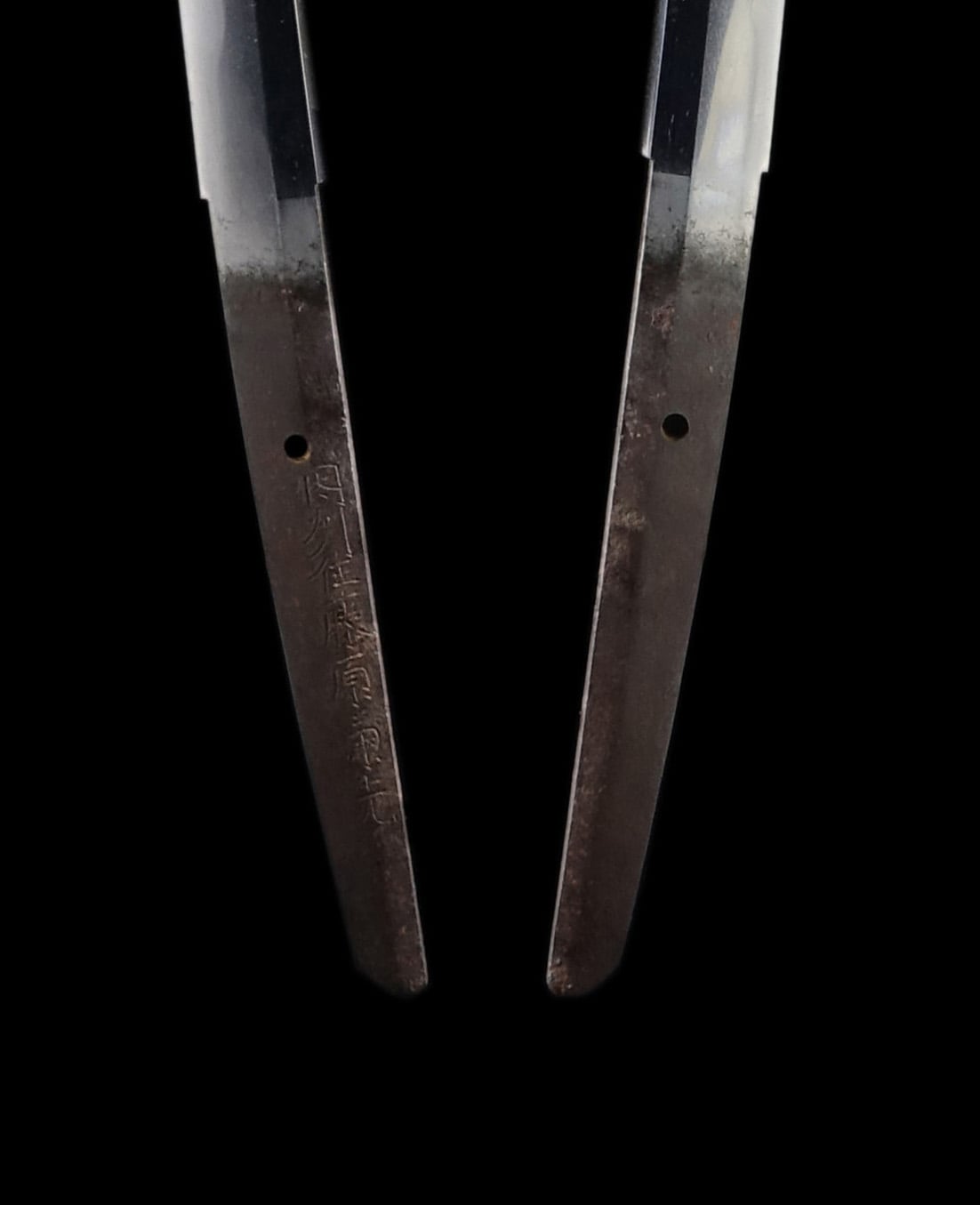
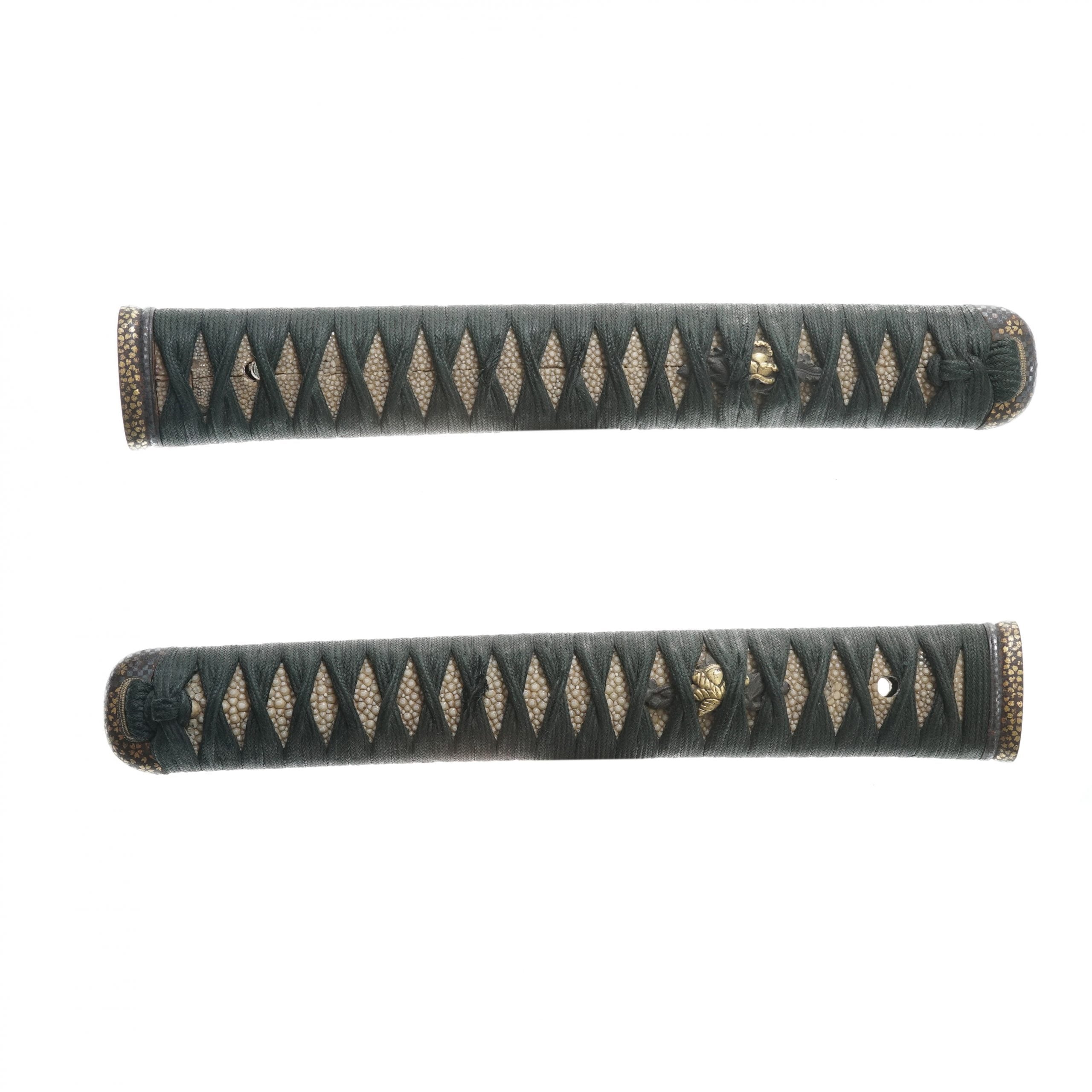
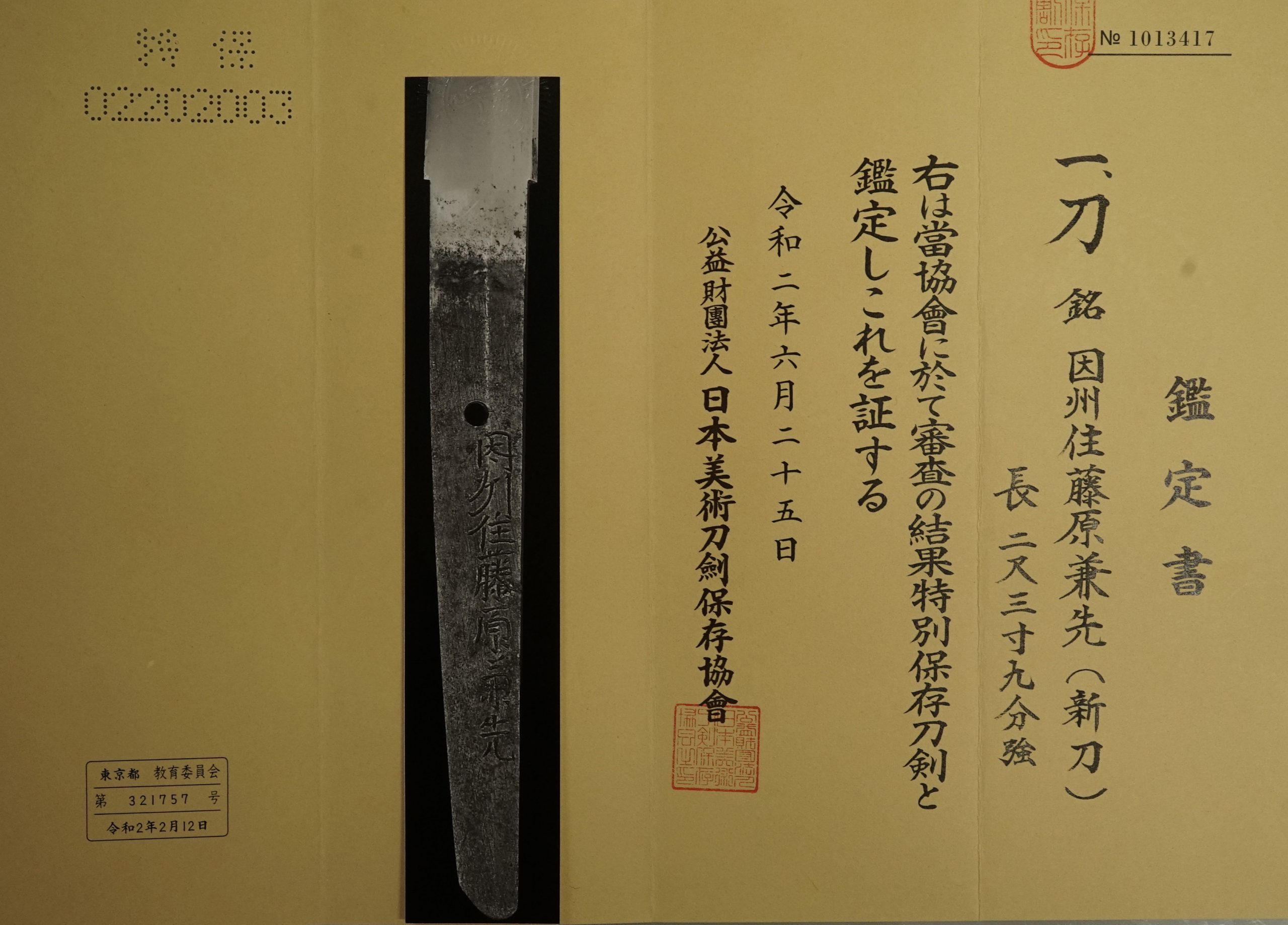
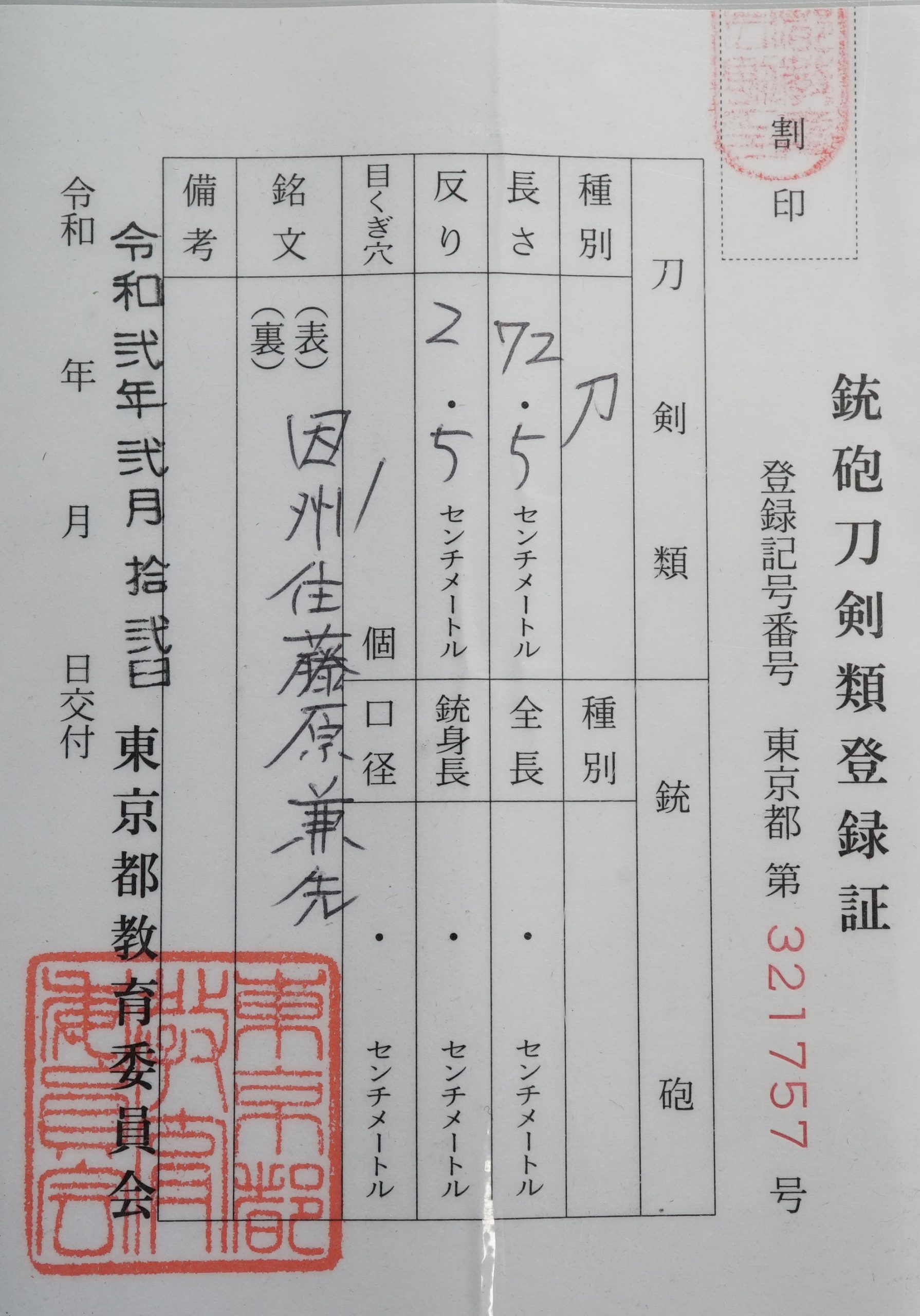
Antique Japanese Sword Katana Signed by Kanesaki with NBTHK Tokubetsu Hozon Certificate 【Description】 Inshu Zumi Fujiwara Kanesaki(因州住藤原兼先) forged swords in the early Edo period. He first started his career in Mino province(Gifu prefecture), mastering MINO-DEN(one of the most famous Japanese sword styles). He is ranked in top-tier MINO-DEN swordsmiths in the early to mid-Edo period. He moved from Mino province to Tottori province and served the Ikeda clan, who ruled the Tottori prefecture(Tottori domain) for about 240 years. Ikeda clan was one of the most powerful feudal lines in that region.It was a privilege to work for the feudal family, and only highly skilled swordsmiths were entitled to this honor. Tottori prefecture is located in western Japan . He forged swords near Tottori castle. The swordsmith name’s Kanesaki (the total of 11th generations)lasted at the end of the Edo period when feudal society turned to modern society, and the Samurai government lost their authority. The MINO swordsmiths style, also known as MINO-DEN, basically has the TOGARI(Pointed shapes protruding from the Hamon )in a classic straight line and random temper line with some white Utsuri. MINO-DEN had its origin from YAMATO-DEN in the late KAMAKURA period(1280-1330). It flourished in the MUROMACHI period(1333-1573) and continued until the EDO period(1603-1868). MINO-DEN especially prospered during Sengoku Jidai(Warring State period) due to the high demand for weapons. And the location of Mino province beat others. Akechi Mitsuhide controlled Mino province, and Nobunaga Oda ruled Owari province, and Tokugawa Ieyasu was the lord of Suruga (Neighboring areas). There was high demand from those powerful feudal lords and their retainers. Furthermore, so many wars occurred between the Kanto region and the Kyoto area. Mino is located in the middle, making feudal lords feel convenient to order swords from MINO-DEN. The blades forged in MINO provinces also had the reputation of its practical design and sharpness. Many feudal lords demanded swords forged in the Mino province. The tradition of excellent sword forging skills had been passed to the Edo period, and Kanesaki is a good example. This sword has a Tokubetsu Hozon certificate issued by NBTHK. This authentication paper was only given to Japanese swords, especially worth preserving by Nihon Bijutsu Touken Hozon Kyokai(the Society for the Preservation of the Japan Art Sword). This sword comes with a beautiful red scabbard and intricate sword fitting. 【 Blade】 Cutting Edge Length(Nagasa) : 72.5 cm(28.5 inches) Curvature(Sori) : 2.5 cm(0.98 inches) Hamon : The blade pattern created by the tempering process. Jimon : Visible surface pattern on the steel Nakago : It has the signature of Inshu Zumi Fujiwara Kanesaki Fuchi-Kashira : A pair of matching sword fittings that cover the upper and bottom parts of its sword hilt. The Fuchi Kashira is decorated with Ichimatsu pattern and cherry blossoms. Ichimatsu pattern is a kind of geometric pattern that repeats dark and light colors squares. This design became popular in the middle of the Edo period (around in 1741). There was a famous Kabuki actor, Ichimatsu Sanogawa. He wore the Hakama (long pleated Japanese trousers) with the Ichimatsu design, and it came into fashion among ladies. So, this pattern was named by his name. As the Ichimatsu pattern continues without interruption, it represents prosperity. Based on this meaning, people consider it as the symbol of business expansion, and prosperity for future generations. Cherry blossom is one of the seasonal things of spring, and it has been loved for a long time. Its pattern is designed not only for sword mountings but also for Kimono (traditional Japanese costume) or furnishings. It is believed the god of grain exists in cherry blossoms. Therefore this flower pattern has been treated as the symbol of an abundant harvest. In ancient times, people held traditional events under cherry blossom trees to pray for a bum
NihontoWatchOffered by Samurai Museum


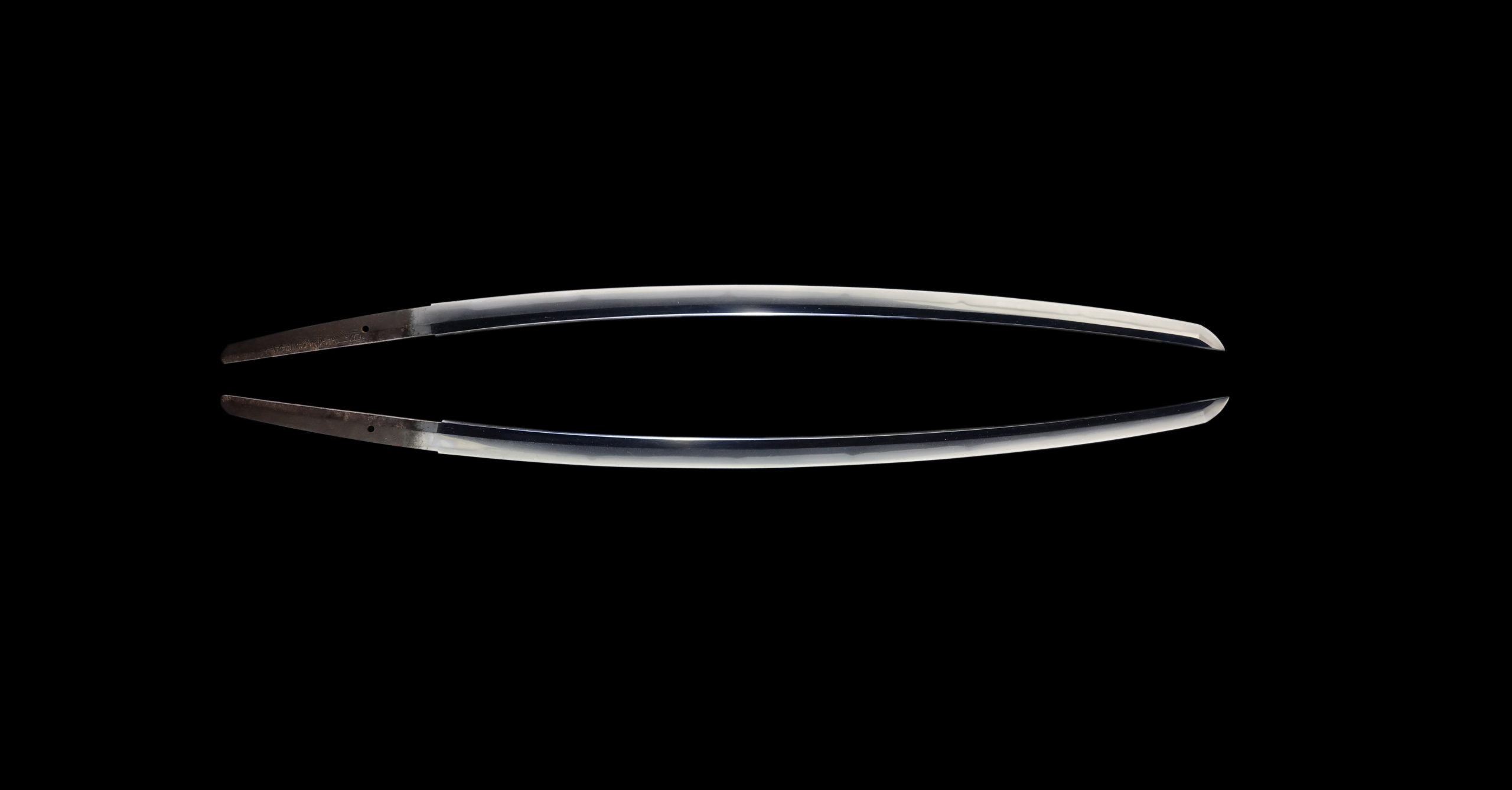
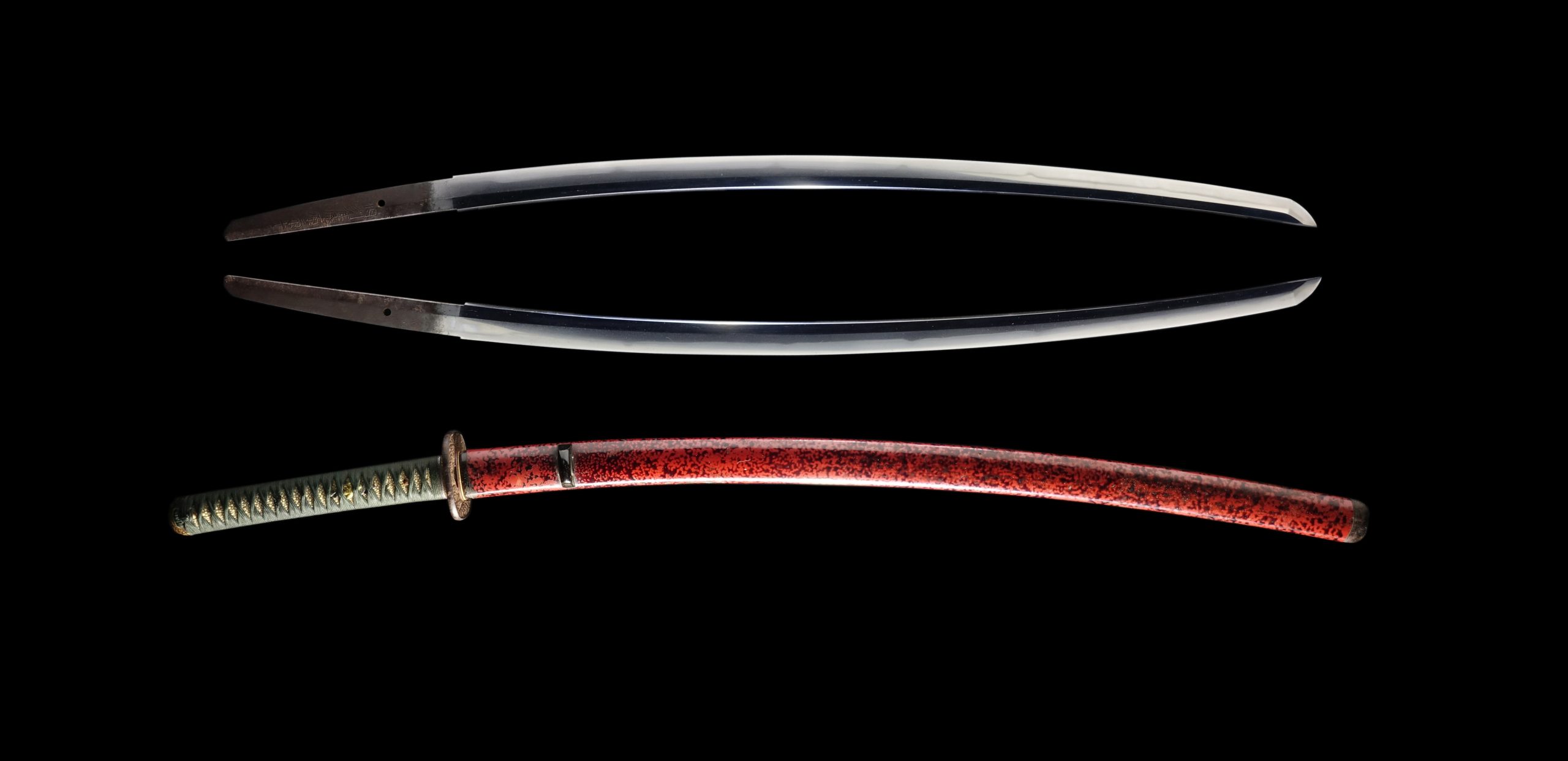
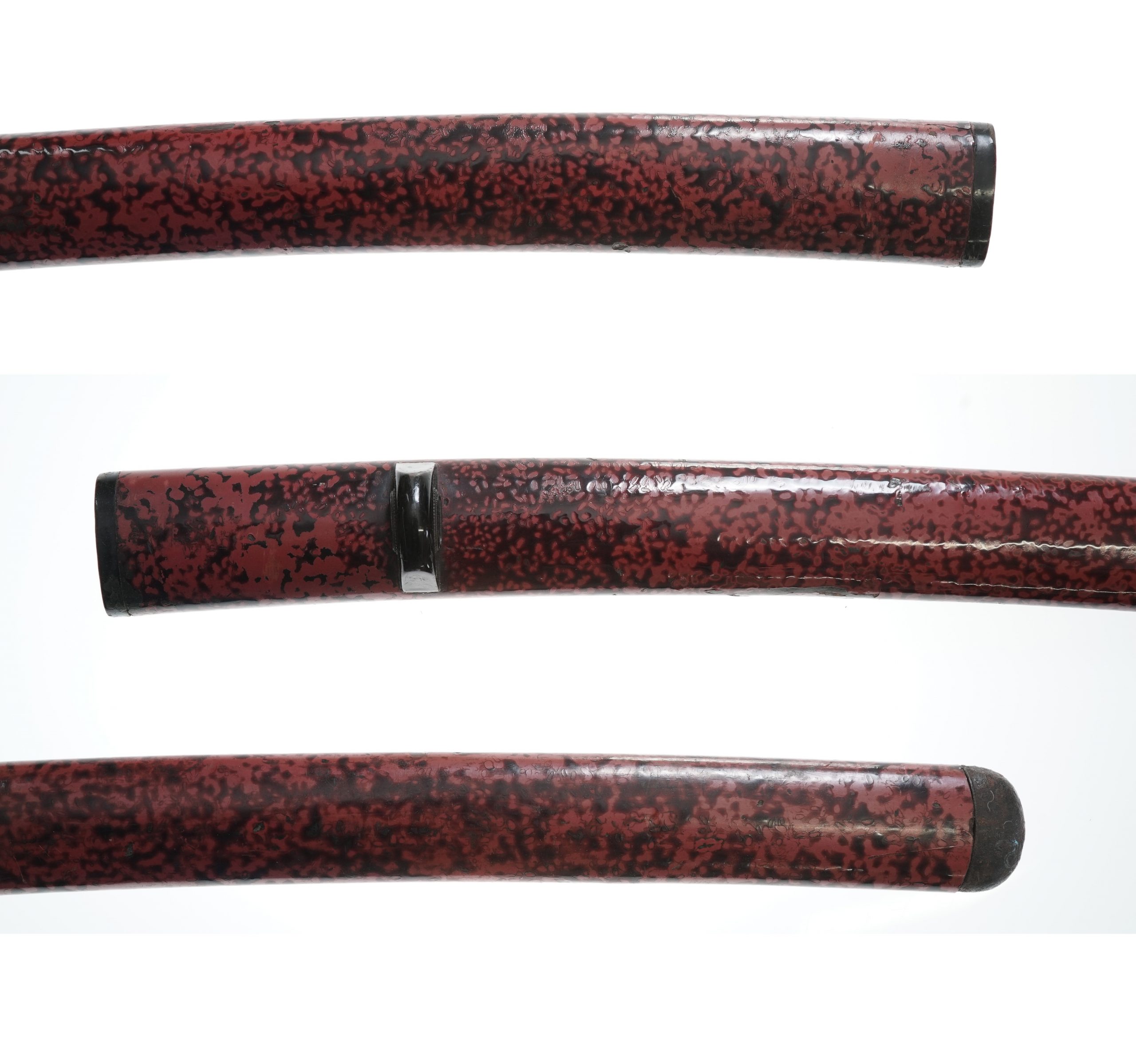
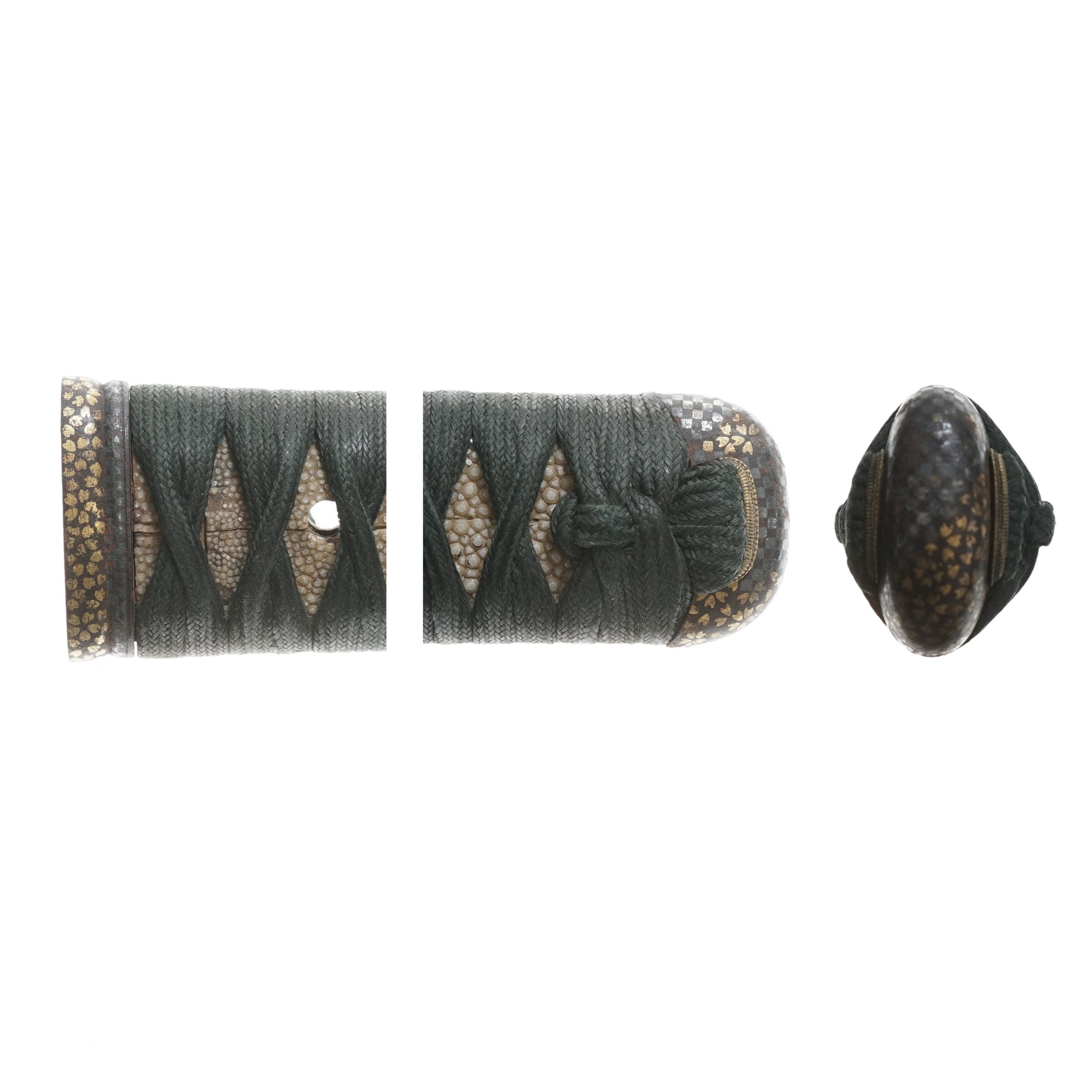
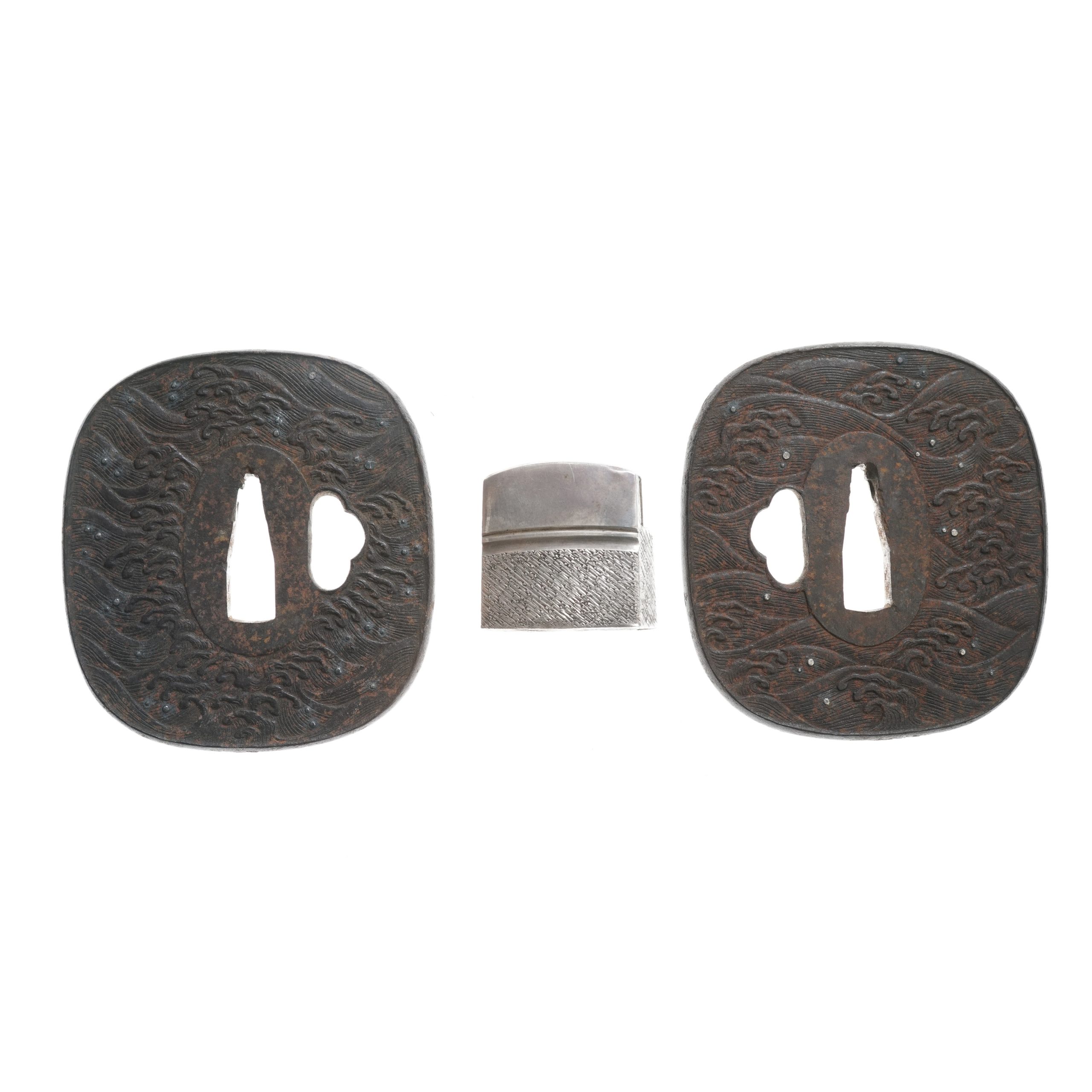
Inaba · around 1624-1644
Tōken Taikan top 91%
3 pieces on the market now
The Muromachi period (1392 to 1573)
Muromachi turned sword making into an industry: the uchigatana rose with massed infantry warfare, Osafune and Seki produced bundle swords beside custom orders, and the Ming trade carried Japanese blades abroad by the tens of thousands.
A Hozon-certified blade judged to show notably superior workmanship and a better state of preservation. The bar is higher: re-tempered blades and most unsigned Muromachi/Edo works are excluded.
The NBTHK (Nihon Bijutsu Tōken Hozon Kyōkai, the Society for the Preservation of Japanese Art Swords) is a public-interest incorporated foundation founded in 1948 and supervised by Japan’s Agency for Cultural Affairs (Bunkachō); it is based at the Japanese Sword Museum in Tokyo. Its expert panels physically examine each submitted work (shinsa) and issue a certificate (kanteishō) ranking it by artistic and historical merit. NBTHK papers are the most widely recognized standard of authentication for Japanese swords and fittings.
NBTHK official siteReturns/exchanges limited to defects caused by shipping (except willful misconduct or gross negligence by the company); customers must contact within 72 hours of receiving the product.