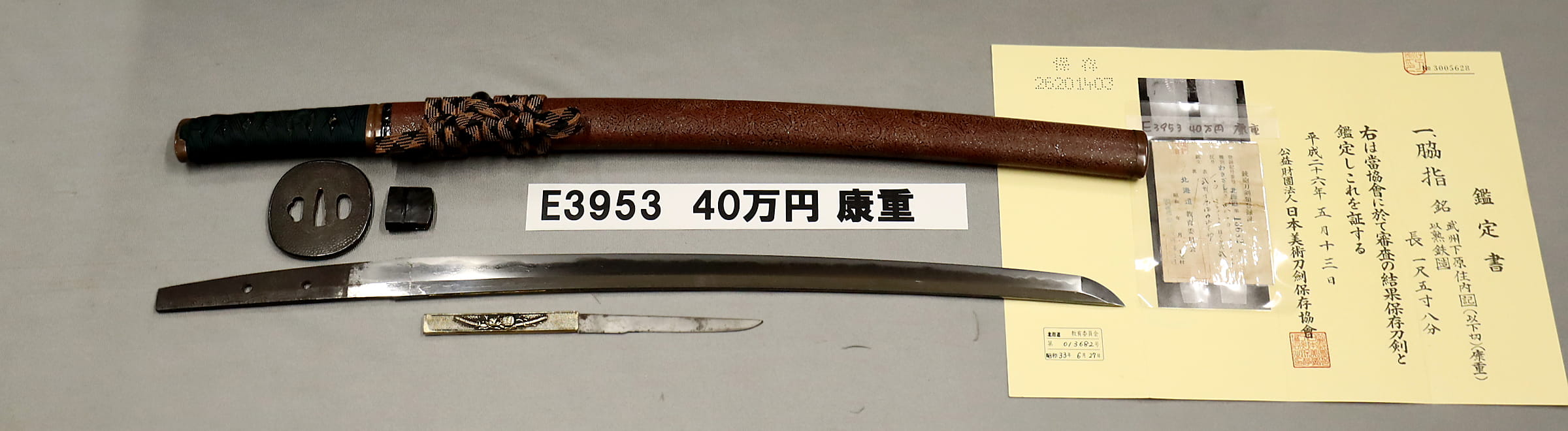
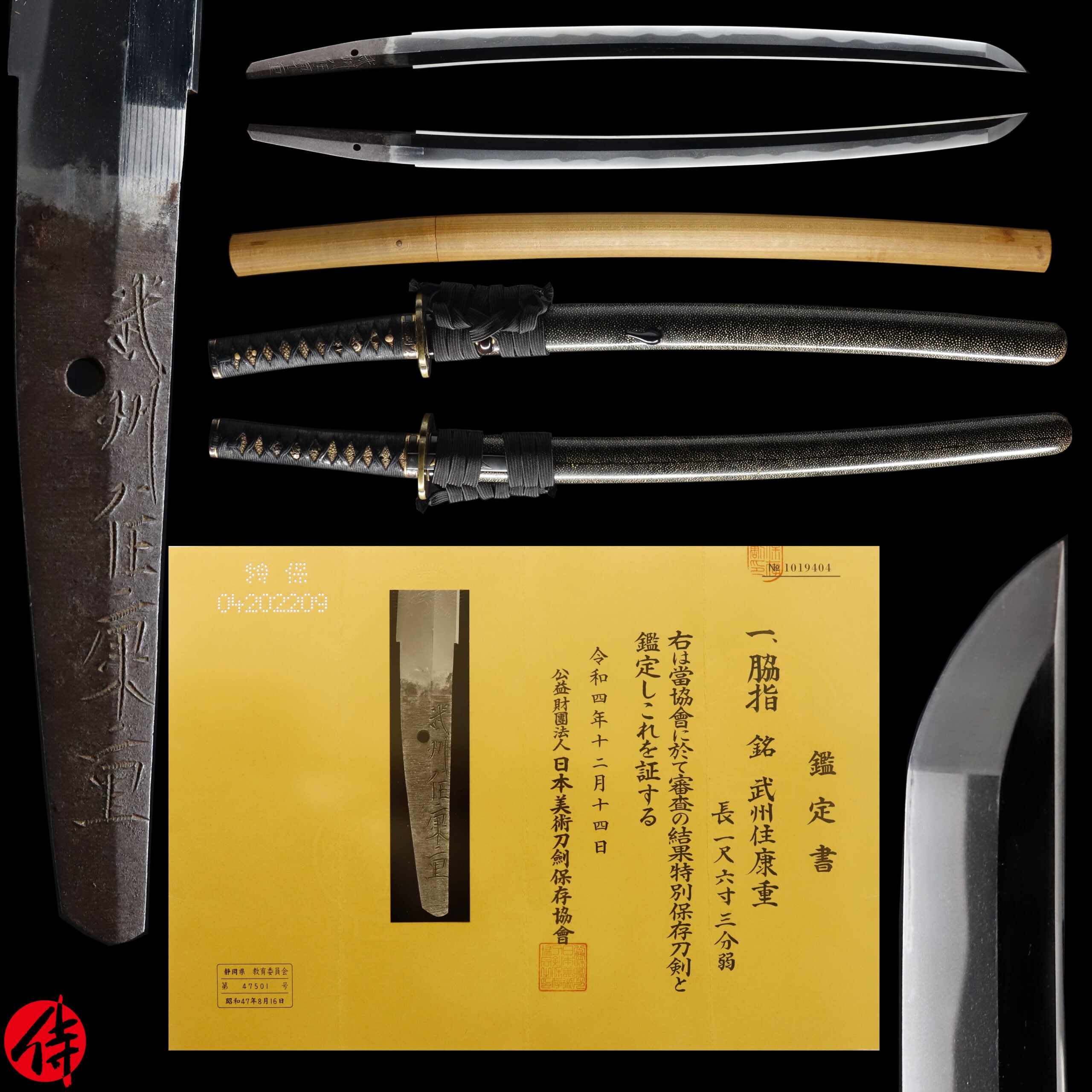
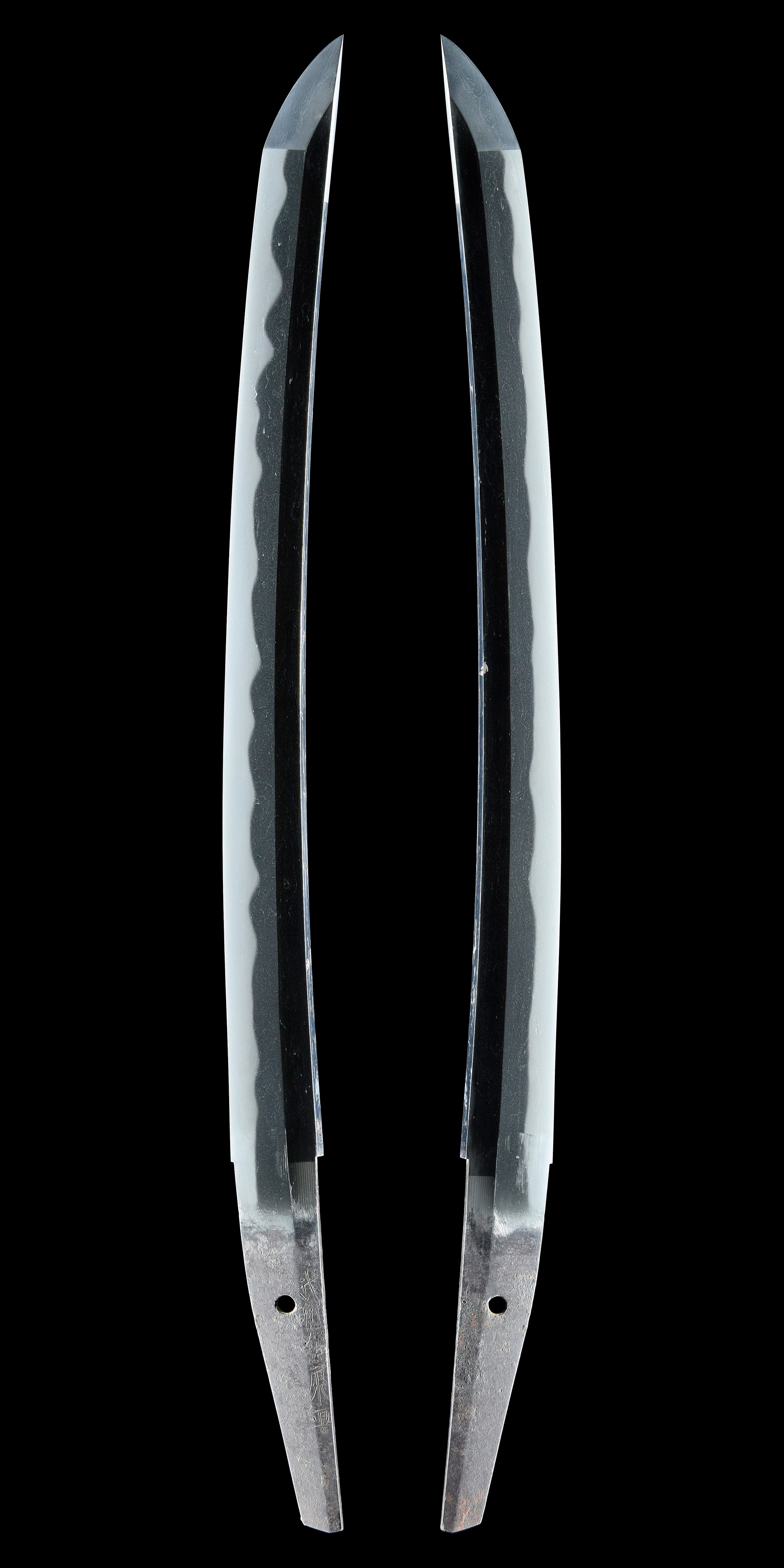
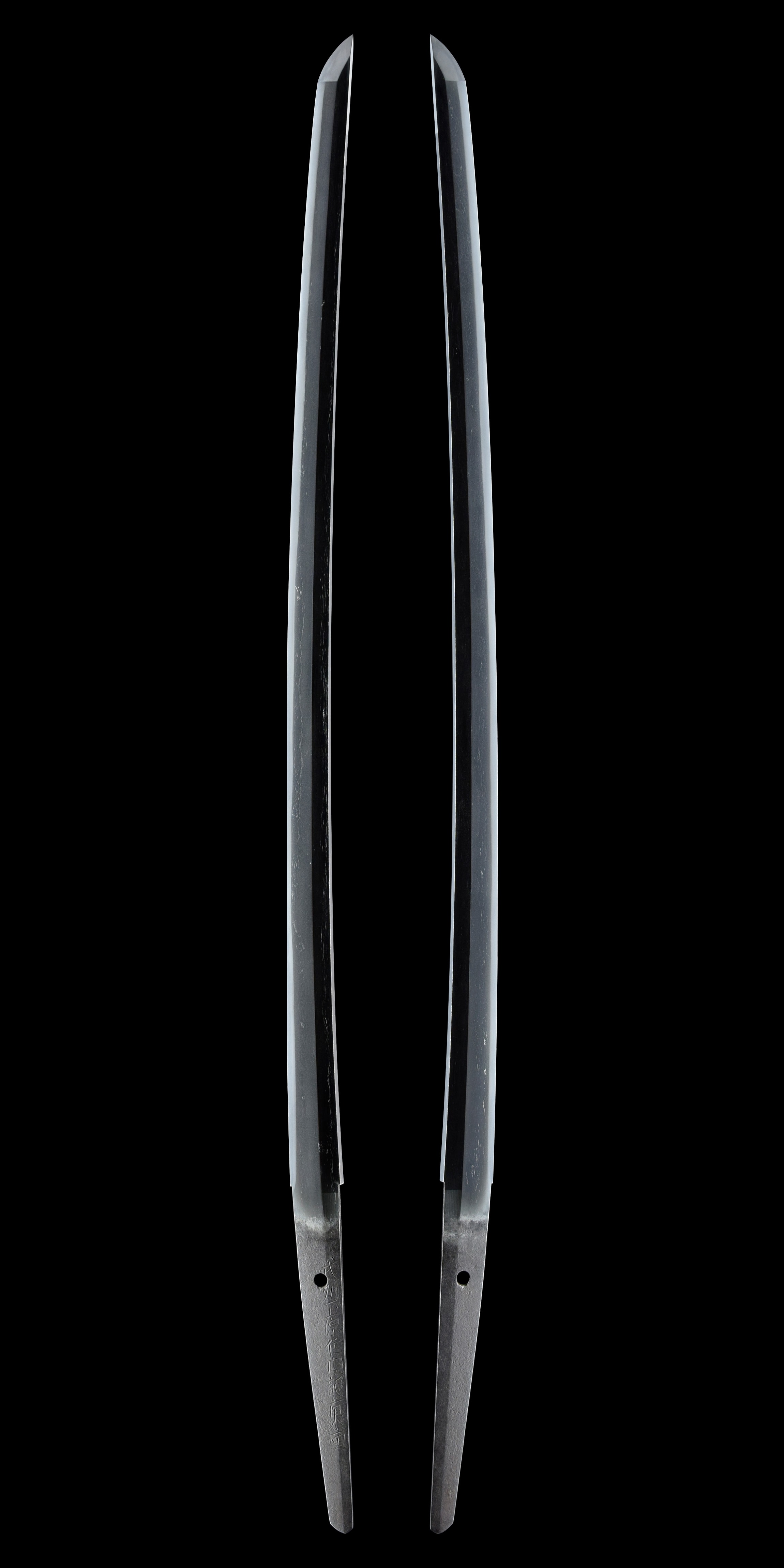
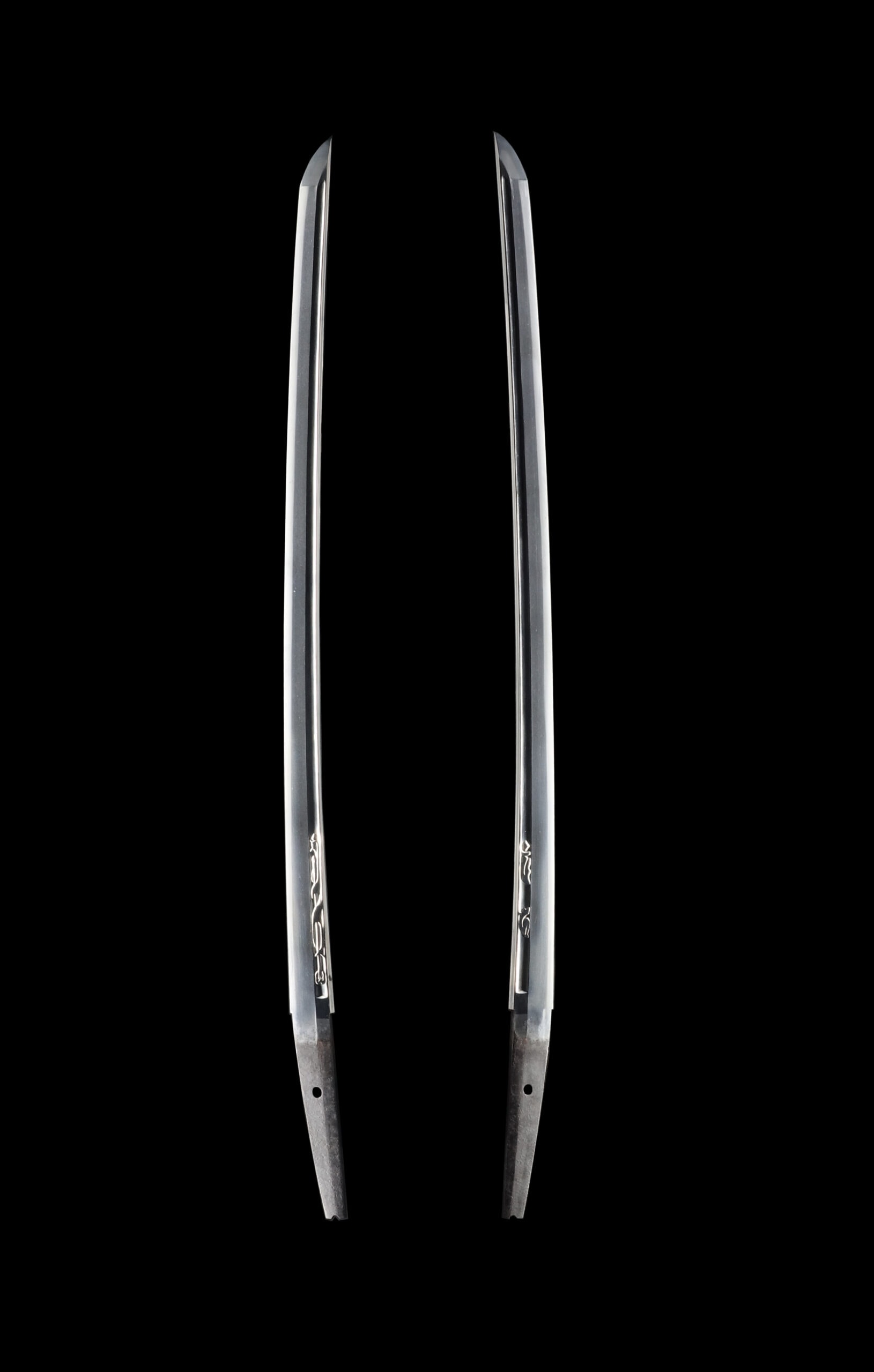
The Shitahara group (下原) worked at Hachiōji in Bushū, the old province of Musashi, from the end of the Muromachi period and carried its forge on into the Edo period. The setsumei place the lineage among the swordmakers of Musashi in the kotō age and name Terushige, Yasushige, Hiroshige, and Chikashige as its leading hands, with the meikan recording Terushige across three generations: a shodai in Kyōroku, a nidai in Eiroku, and a sandai in Tenshō. " That same blade was made to order, in this case from Hagiwara Kaminao of Kōshū, marking the group as a working provincial forge serving its region. In the forging the setsumei return repeatedly to an itame-hada freely mixed with mokume that stands up rather than lying flat, the grain described as hada-datsu, often running to nagare near the edge and taking on an ayasugi-like, whorled or vortex-like cast in the jigane. The temper is a moderately undulating notare into which gunome enter, frequently in regular paired sequences, with pointed togariba, a chōji-like feeling at times, and ko-nie clinging along a nioiguchi that can settle into a subdued shizumi tone; sunagashi and ashi appear within the ha, and the bōshi tends to run midare-komi and turn back in maru. One katana shows a wet-looking nureba surface with angular irregularities and hakikake.
The setsumei read this hand as a synthesis drawing on late Sōshū and the Muramasa line together with late Mino tendencies, which together account for the standing grain and the paired gunome. For kantei the markers are consistent: the risen mokume with its ayasugi turn, the regularly paired gunome, and a build suited to the uchigatana of the closing Muromachi years, often with pronounced sakizori and an extended chū-kissaki. Carving recurs, including bō-hi, bonji, gomabashi, and a deeply cut kurikara-ryū whose coiling tail the NBTHK singles out as characteristic. Named and dated pieces anchor the group: the Yamamoto Genjirō Terushige naginata, uncommon as a double-edged ryōba form, and a Terushige katana appraised between Eiroku and Tenshō that the register calls the hakubi of the school. The setsumei note that Shitahara work survives in number into the shintō period while outstanding examples remain few, which sets these designated blades apart within the lineage. Learn more →