Edo was the sword’s age of connoisseurship: the Hon’ami appraisers, the shogunal register of famous blades of 1719, and a thriving literature turned the sword into an object of study even as it ceased to be drawn in war.
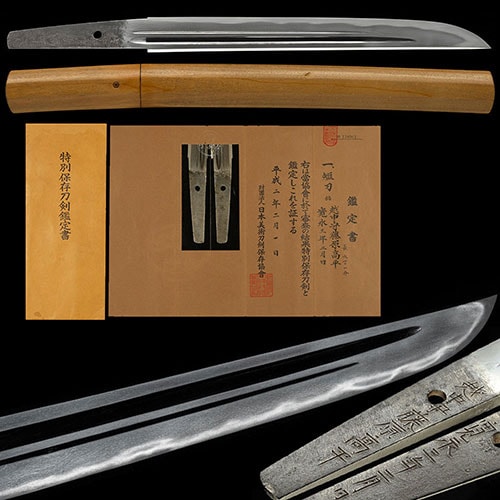
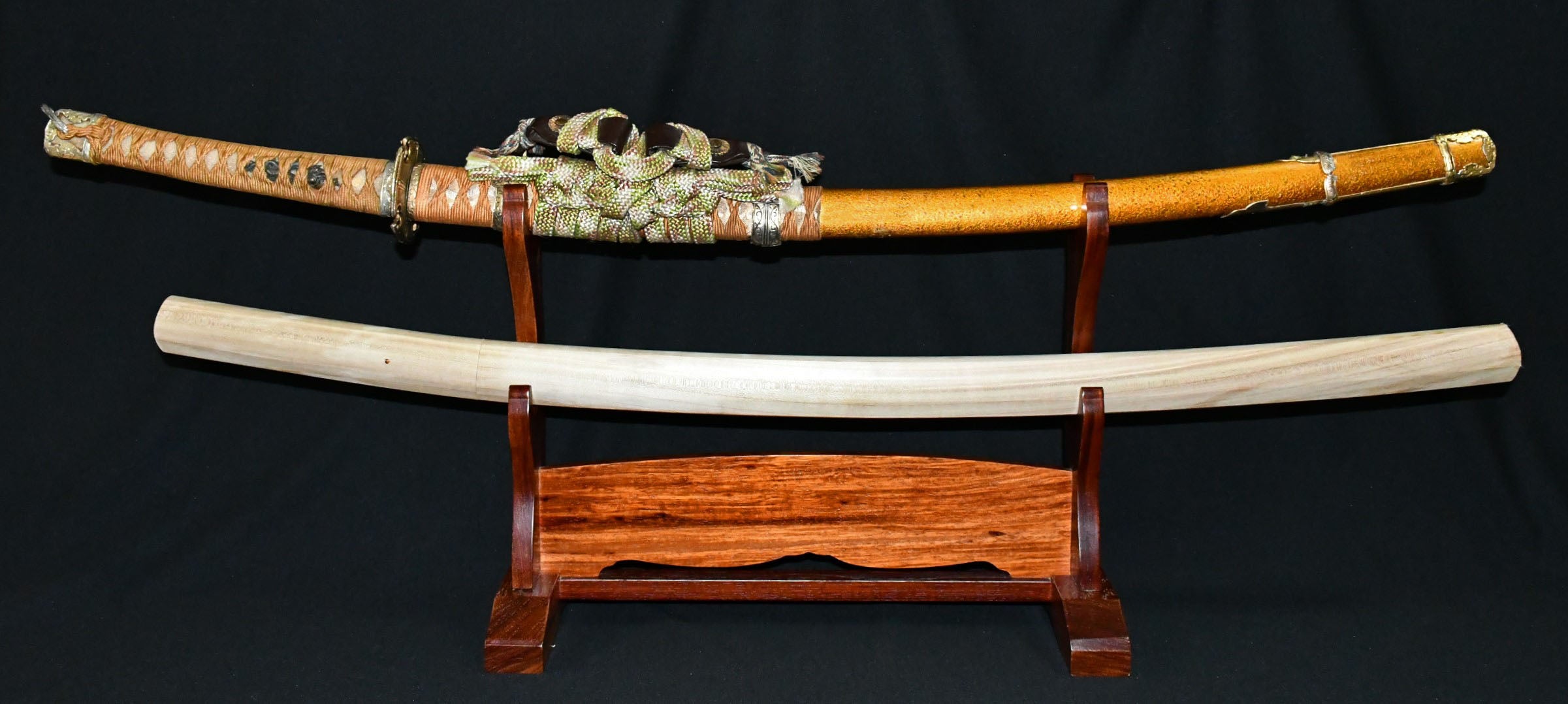
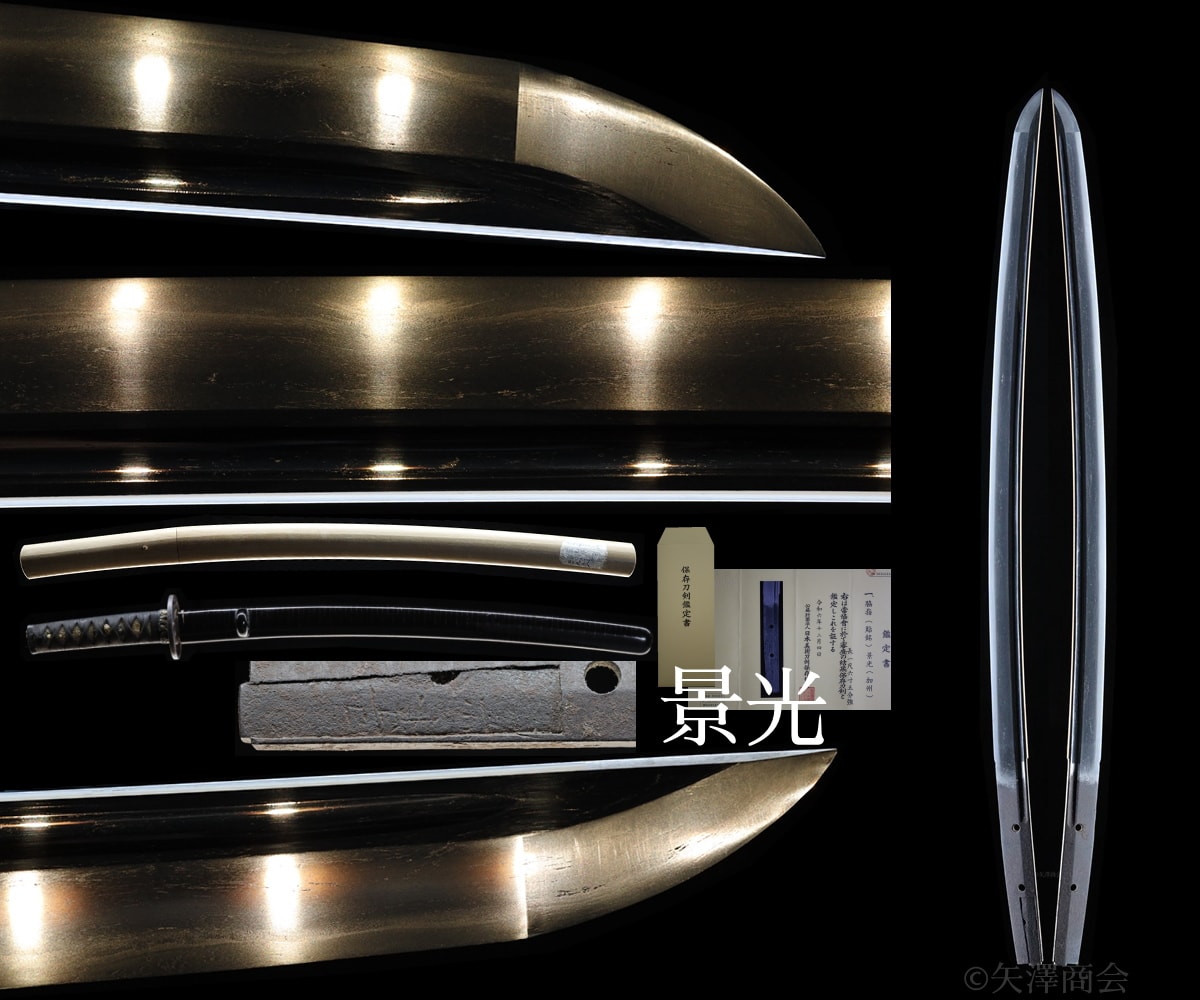
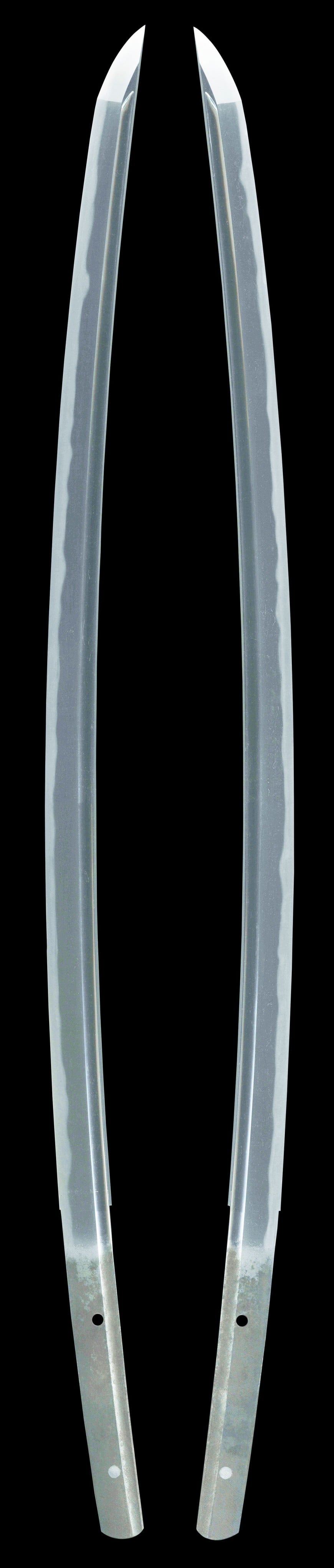
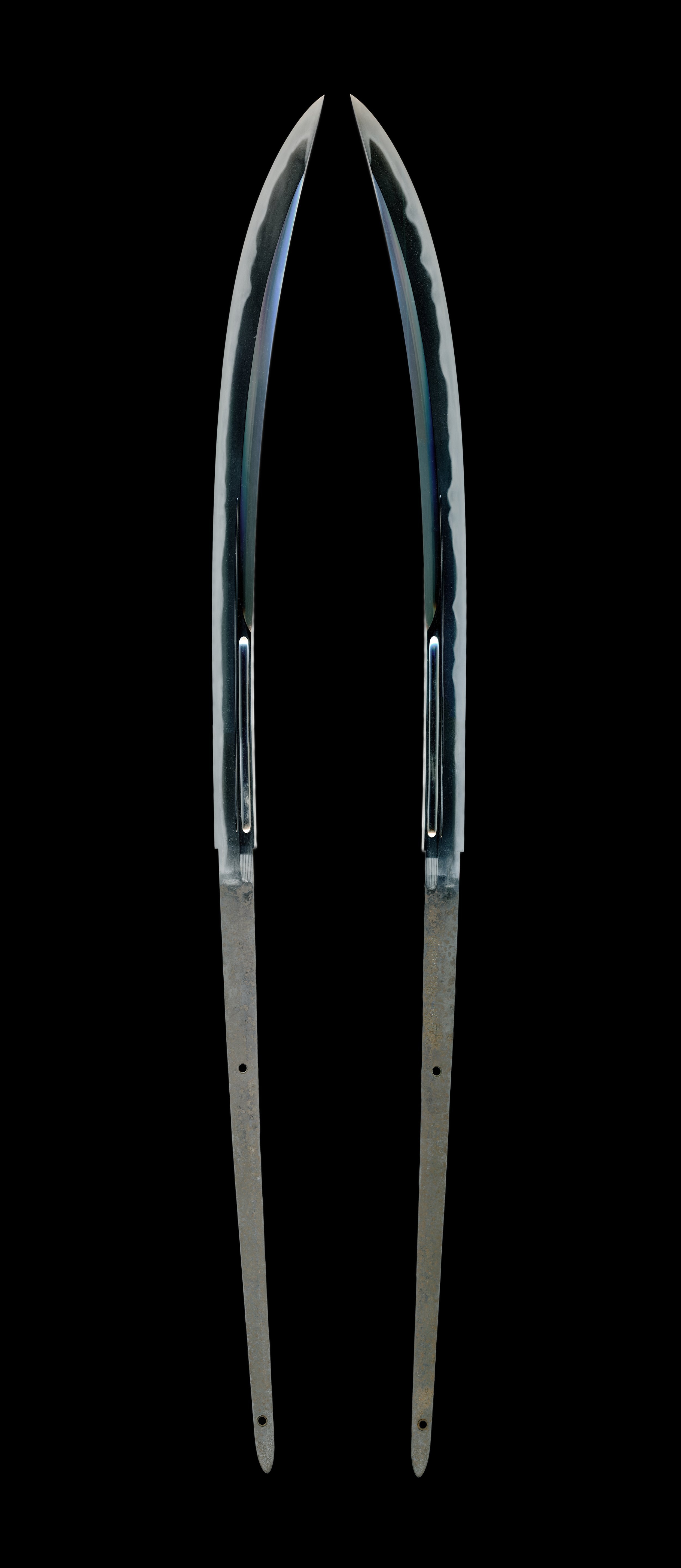
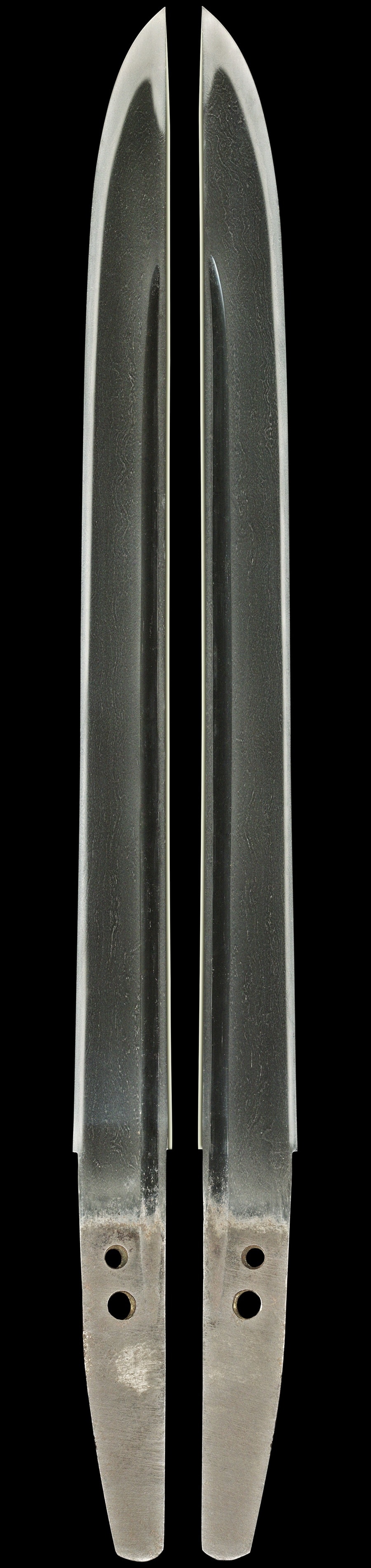
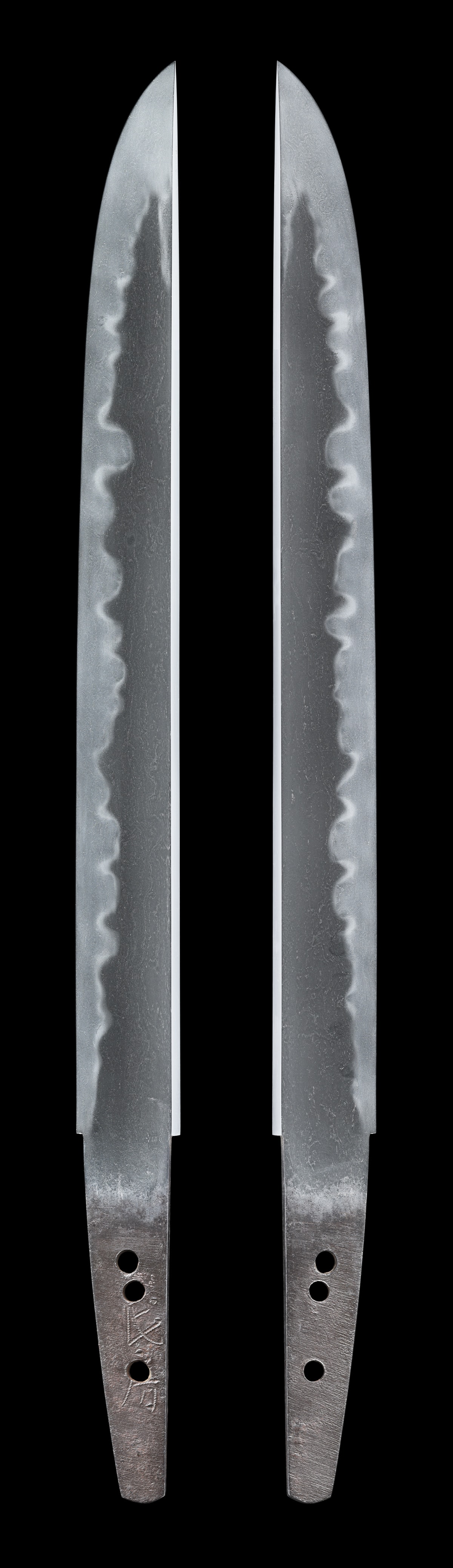
This is a wakizashi by Kaga Dewa no Kami Fujiwara Takahira, known for his wide suguha hamon. The blade features a shinogi-zukuri form with a broad, straight hamon. It comes with a shirasaya and is certified as Tokubetsu Hozon by the NBTHK.
 NihontoWatch
mei · Shinto · nagasa 45.45cm · sori 1.45cm
Kaga (Kanewaka / Tsujimura line, Mino-den) · Kaga · around 1621-1644
Tōken Taikan top 14%
1 piece on the market now
Etchu-no-kami Fujiwara Takahira is the later name of Kashu Kanewaka, the head of the Tsujimura line of Kaga smiths, and a katana of his dated Genna 7 (1621) is treated by the published sources not merely as a fine blade but as documentary evidence, called 'valuable material for clarifying' the long-standing questions over his court title. The line was Mino in origin: its forebears were Seki men who relocated north to Kaga and worked there under the name Kanewaka, the first generation styling himself Tsujimura Shiroemon-no-jo. Around Genna 5 (1619) this smith received the title Etchu-no-kami and signed Takahira thereafter, and the commonly accepted view identifies him with Kanewaka, though whether he was the first or the second generation of that name, and the exact circumstances of the title, remained matters the published commentary holds open for further research. What is not in question is the hand: Mino forging carried into Kaga, more vigorous than its Seki parent and unmistakably his own in the box-shaped temper the published sources single out as his.
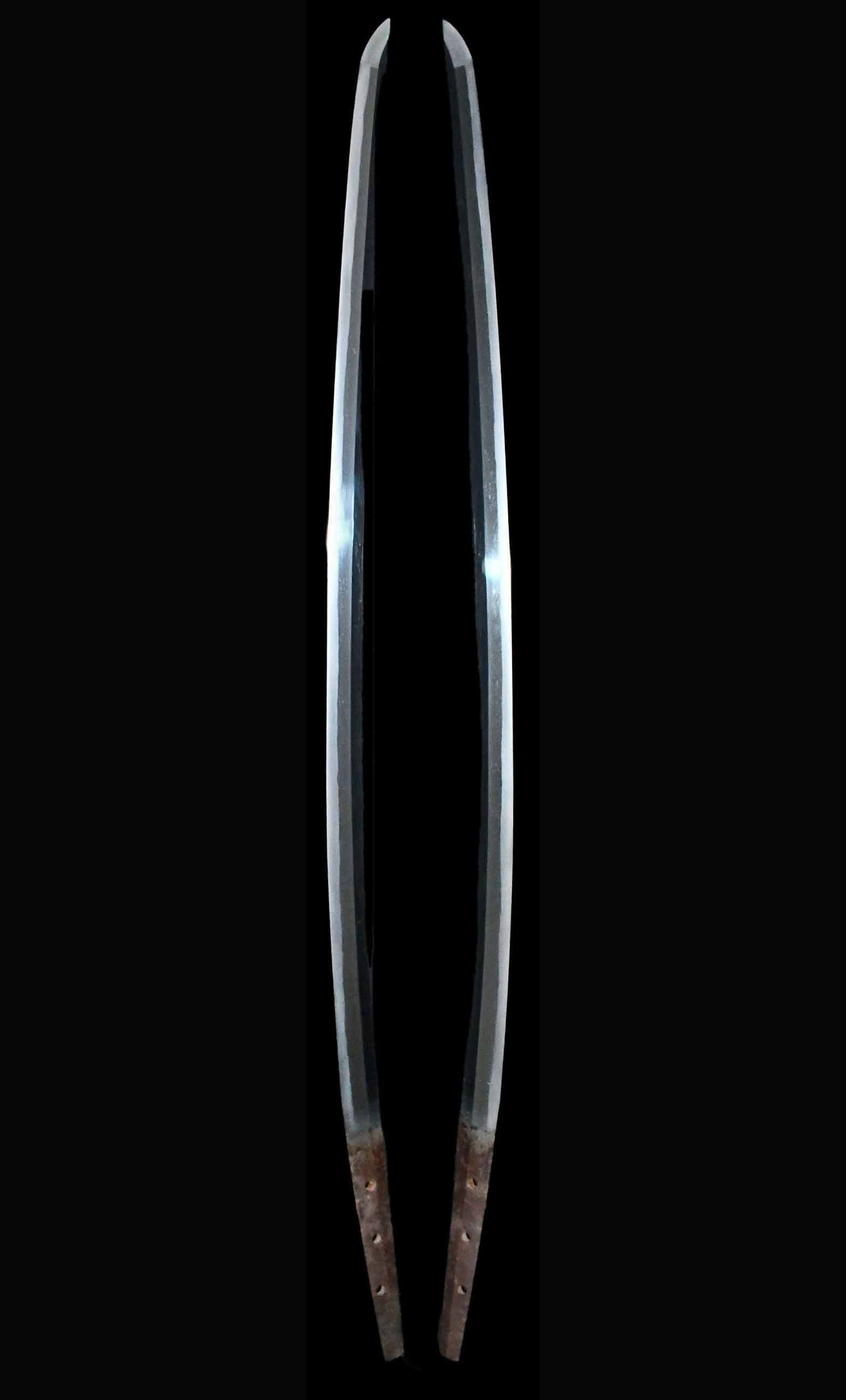
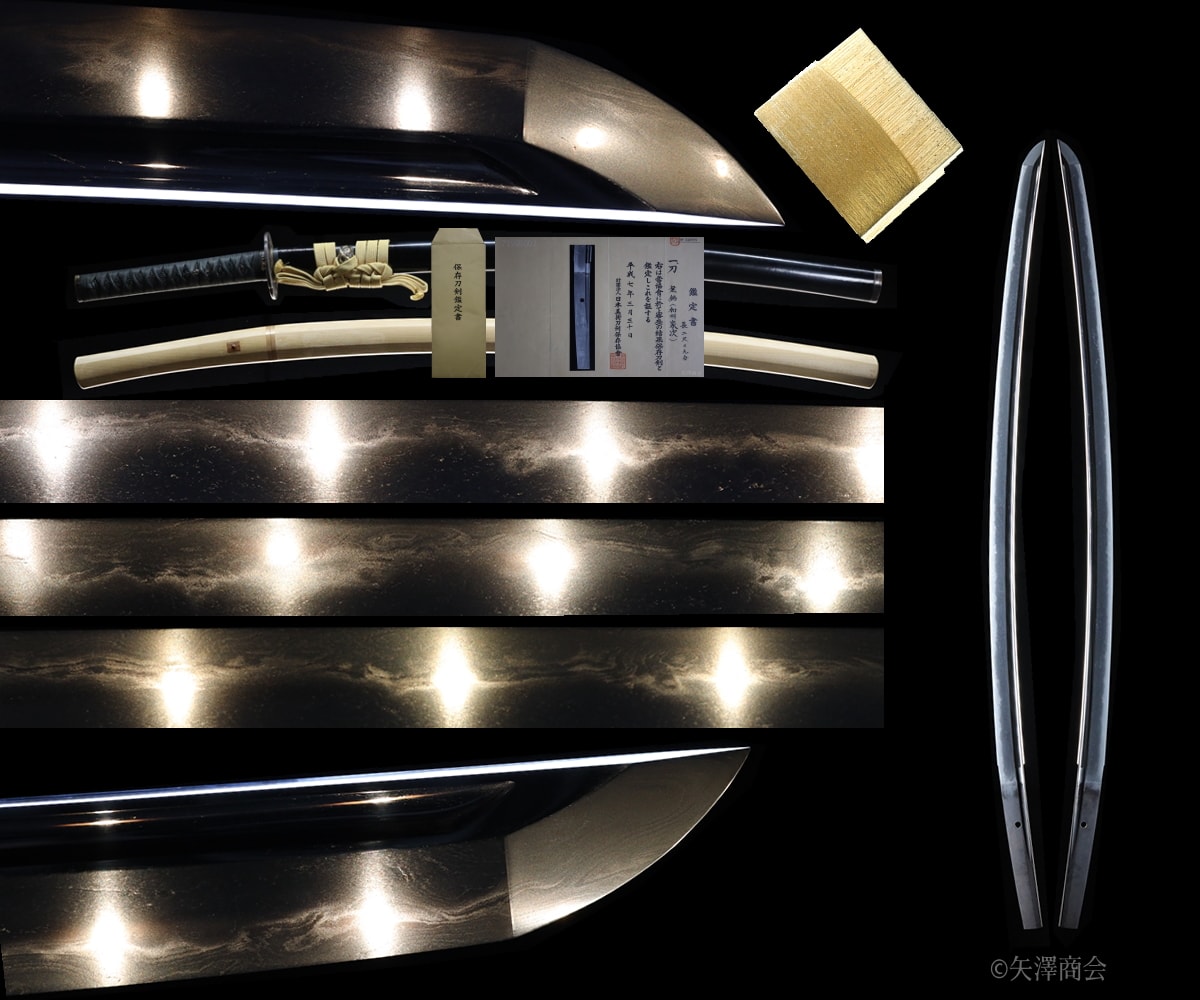
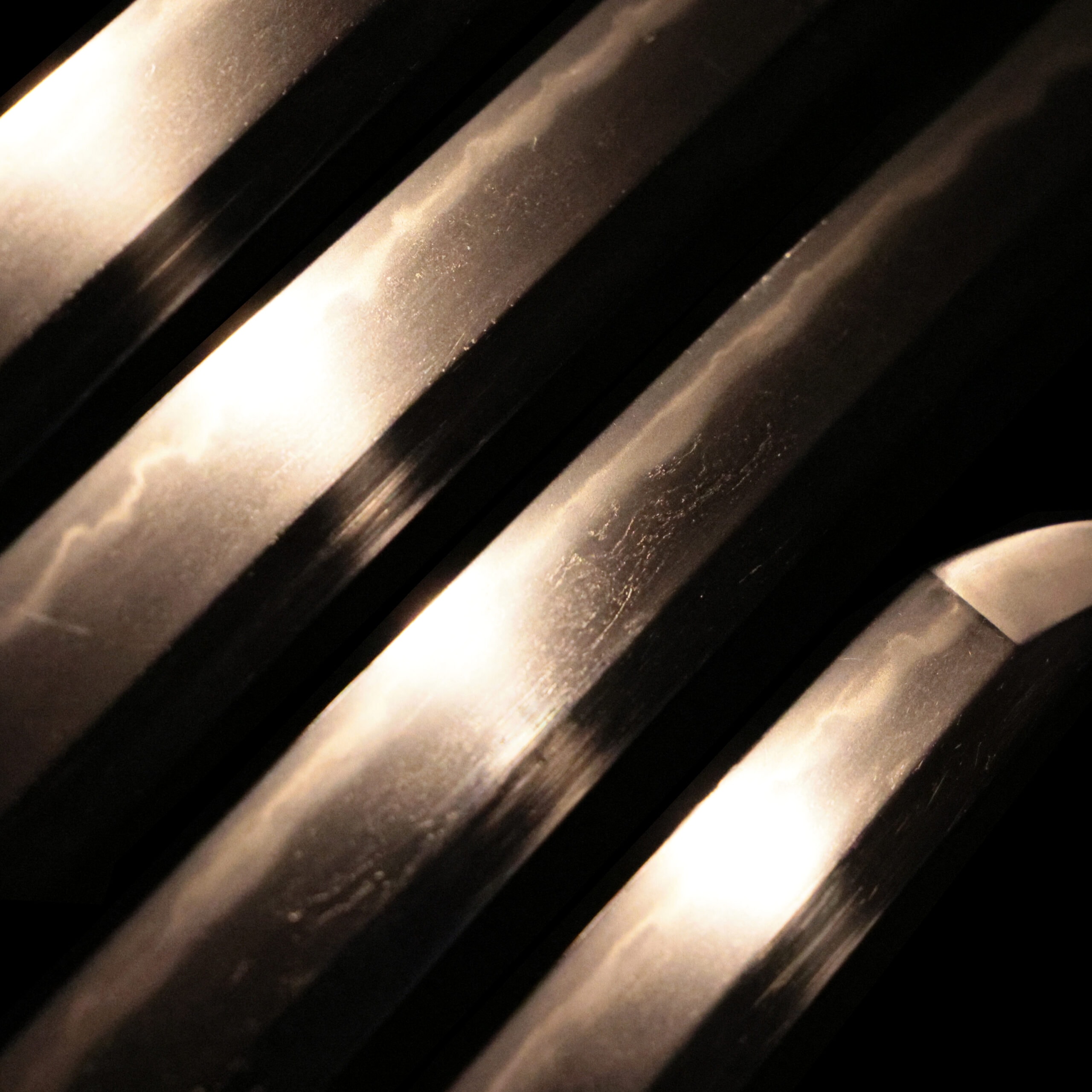
The feature that most distinguishes his work is a box-shaped, hako-midare element worked into the temper, which the published sources describe as a 'box-shaped, wet-looking temper'[[c:1]] and name outright as what is most characteristic of him. It does not stand alone. His hamon is a notare base into which gunome and pointed togariba enter, the box-shaped heads forming where the undulations broaden and flatten, the nioiguchi deep with ko-nie and coarser nie gathering in places, sunagashi running frequently through the ha and kinsuji entering. Ashi and yo fall into the temper, and on the wider blades a faint hotsure frays its upper edge. The whole is a Mino temper given Kaga weight, the pointed forms of Seki softened into the rounded box that the eye learns to read as Takahira before any other tell.
Beneath it the jigane is itame that runs into a flowing nagare-hada, the steel standing somewhat with ji-nie attaching and chikei entering, the shinogi-ji frequently masame. The flow is the Mino origin showing through the surface, and it is nearly constant across his work, on the early pieces standing more openly and on the densest late blades tightening toward a ko-itame with the ji-nie falling as fine particles. The boshi is mixed and characteristic of the line rather than uniform: it turns back in ko-maru on one face while the other runs to hakikake and a pointed tip, and on some blades it enters as midare-komi with a slight thrust before the turn. The carving is varied for a provincial shinto smith, from futasuji-hi and bo-hi to an openwork kurikara and a Hachiman invocation, and on one wakizashi a pair of deep relief inscriptions whose reading the published sources puzzle over.
The published record draws two periods across his career. In the early Keicho years, signing Kanewaka, he made broad, sun-nobi blades with extended points in the Keicho-shinto stance, the itame mixed with nagare standing more, the temper a shallow notare laced with gunome and togariba, so that the whole 'recalls the work of old Shizu'[[c:2]], as the sources put it. As the years fall from Genna into Kanei and the Takahira signature takes over, the proportions return toward a normal width with a wider taper and a chu-kissaki, the itame tightens, the nioiguchi deepens, and it is in this later manner that the box-midare becomes prominent. He worked katana, sun-nobi hira-zukuri wakizashi and the ko-wakizashi the sources note he made from time to time, and the published sources record that he 'particularly excelled at producing works with broad mihaba and slightly elongated proportions'[[c:3]]. His long signature, cut toward the mune with Tsujimura Etchu-no-kami and Fujiwara arranged in two lines and Takahira and a kao below, is itself a habit the sources describe, as is the curious recurrence, on several blades and for reasons unclear, of the date 'third day of the third month'.
Within the larger world of swordsmithing his is a school hand placed by lineage rather than by a famous teacher: the Mino-den manner worked in Kaga steel, the bridge by which the Seki tradition took root in the north. The Shizu resemblance the sources draw is the genuine one and belongs to his own early blades, where the broad sun-nobi sugata and the notare-and-togari temper genuinely echo the old Mino master; it is a resemblance of manner, not an attribution problem, and it sits beside his own box-midare rather than replacing it. His bright, deep-nioi notare with its box-shaped heads and flowing nagare-hada set him apart from the plainer Kaga work around him, and his dated, signed blades make him one of the more exactly knowable Kaga smiths of his generation, the succession of the Kanewaka name traceable in part through the very pieces the NBTHK designates.
Seven of his blades are recorded at Juyo, all signed, spanning katana and the sun-nobi wakizashi in which he is most often seen, and two further tanto signed in full as Tsujimura Etchu-no-kami Fujiwara Takahira are held by the Imperial Family, the latter among the most distinguished provenance a smith of his rank can carry. He has no National Treasure or Important Cultural Property on this record, and his Toko Taikan standing places him in the solid middle of the shinto field rather than at its summit, which is the honest measure of him: a fine, characterful provincial master, not one of the great names. For a private collector this makes him a realistic aspiration where the first rank is not. His Juyo blades are held, as designated swords generally are, and come to market only from time to time and with patience; when one does appear, the box-shaped wet temper and the flowing Mino jigane declare him at a glance, and a signed, dated example of recorded whereabouts is a satisfying thing to encounter, a documented work by the smith whose own blades the NBTHK reads as the key to the Kanewaka succession.
Where Takahira stands among comparable artisans: across all of nihontō, and within tradition, era, and period. The tiers (Foremost · Leading · Major · Notable) weigh official designations from the NBTHK and Japan's Agency for Cultural Affairs, together with historical honors of lasting repute such as the Sansaku and Meibutsu-chō.
Select a lens to see how it's measured.
Years he was demonstrably active, proven by signed-and-dated blades
Mino-den · Kaga
27 pieces on the market now
The Kaga inlay tradition (Kaga zōgan) emerged in Kaga Province during the early Edo period, centered on the castle town of Kanazawa under the patronage of the Maeda clan. This distinctive form of hira-zōgan is said to have developed when craftsmen specializing in stirrup decoration (abumi-shi) adapted their metalworking techniques to tsuba and other sword fittings, flourishing from the early seventeenth century through the Kyōhō era (1716–1736). Working against polished grounds of shakudō, shibuichi, or occasionally refined copper (suaka), these artisans created works characterized by their compositional sophistication and technical precision, establishing a regional aesthetic that would influence later generations of metalworkers. The hallmark of Kaga workmanship lies in its masterful deployment of multiple colored metals—gold, silver, copper, shakudō, and shibuichi—inlaid in flat relief against dark, highly polished grounds. Motifs range from naturalistic subjects such as autumn grasses, butterflies, and mandarin ducks beneath willows to more formal designs including paulownia crests and brocade wrappers, all rendered with meticulous kebori line engraving that adds refinement to the broader inlay work.
The compositions typically extend across the entire surface of the guard, creating an effect of visual richness and decorative abundance. Against jet-black shakudō or the warm tonality of suaka, the multicolored inlays achieve a luminous clarity, producing works of elegant splendor (fūryū) that balance technical virtuosity with restrained taste. The tradition's influence extended beyond its geographic center, with works attributed to Kaga methods appearing in collections throughout Japan. Large-scale presentation pieces demonstrate the school's capacity for ambitious design, while the consistent quality of execution across surviving examples suggests a well-established workshop system with shared technical standards. Though individual makers within the tradition rarely signed their work, the distinctive aesthetic—characterized by full-surface compositions, polished dark grounds, and precise multicolor inlay—remains immediately recognizable, preserving the legacy of Kanazawa's metalworking excellence through the Edo period. Learn more →
| Smith | Era | Designated |
|---|---|---|
| Sanekage真景 | 1362-1368 | 47 |
| Takahira高平 | 1621-1644 | 9 |
| Kagemitsu景光 | 1362-1368 | 3 |
| Ietsugu家次 | 1528-1558 | 1 |
| Kagehira景平 | 1661-1673 | 1 |
The Edo period (1615 to 1868)
Edo was the sword’s age of connoisseurship: the Hon’ami appraisers, the shogunal register of famous blades of 1719, and a thriving literature turned the sword into an object of study even as it ceased to be drawn in war.
A Hozon-certified blade judged to show notably superior workmanship and a better state of preservation. The bar is higher: re-tempered blades and most unsigned Muromachi/Edo works are excluded.
The NBTHK (Nihon Bijutsu Tōken Hozon Kyōkai, the Society for the Preservation of Japanese Art Swords) is a public-interest incorporated foundation founded in 1948 and supervised by Japan’s Agency for Cultural Affairs (Bunkachō); it is based at the Japanese Sword Museum in Tokyo. Its expert panels physically examine each submitted work (shinsa) and issue a certificate (kanteishō) ranking it by artistic and historical merit. NBTHK papers are the most widely recognized standard of authentication for Japanese swords and fittings.
NBTHK official siteThis is a wakizashi by Kaga Dewa no Kami Fujiwara Takahira, known for his wide suguha hamon. The blade features a shinogi-zukuri form with a broad, straight hamon. It comes with a shirasaya and is certified as Tokubetsu Hozon by the NBTHK.
NihontoWatchmei · Shinto · nagasa 45.45cm · sori 1.45cm
Kaga (Kanewaka / Tsujimura line, Mino-den) · Kaga · around 1621-1644
Tōken Taikan top 14%
1 piece on the market now
Etchu-no-kami Fujiwara Takahira is the later name of Kashu Kanewaka, the head of the Tsujimura line of Kaga smiths, and a katana of his dated Genna 7 (1621) is treated by the published sources not merely as a fine blade but as documentary evidence, called 'valuable material for clarifying' the long-standing questions over his court title. The line was Mino in origin: its forebears were Seki men who relocated north to Kaga and worked there under the name Kanewaka, the first generation styling himself Tsujimura Shiroemon-no-jo. Around Genna 5 (1619) this smith received the title Etchu-no-kami and signed Takahira thereafter, and the commonly accepted view identifies him with Kanewaka, though whether he was the first or the second generation of that name, and the exact circumstances of the title, remained matters the published commentary holds open for further research. What is not in question is the hand: Mino forging carried into Kaga, more vigorous than its Seki parent and unmistakably his own in the box-shaped temper the published sources single out as his.
The feature that most distinguishes his work is a box-shaped, hako-midare element worked into the temper, which the published sources describe as a 'box-shaped, wet-looking temper'[[c:1]] and name outright as what is most characteristic of him. It does not stand alone. His hamon is a notare base into which gunome and pointed togariba enter, the box-shaped heads forming where the undulations broaden and flatten, the nioiguchi deep with ko-nie and coarser nie gathering in places, sunagashi running frequently through the ha and kinsuji entering. Ashi and yo fall into the temper, and on the wider blades a faint hotsure frays its upper edge. The whole is a Mino temper given Kaga weight, the pointed forms of Seki softened into the rounded box that the eye learns to read as Takahira before any other tell.
Beneath it the jigane is itame that runs into a flowing nagare-hada, the steel standing somewhat with ji-nie attaching and chikei entering, the shinogi-ji frequently masame. The flow is the Mino origin showing through the surface, and it is nearly constant across his work, on the early pieces standing more openly and on the densest late blades tightening toward a ko-itame with the ji-nie falling as fine particles. The boshi is mixed and characteristic of the line rather than uniform: it turns back in ko-maru on one face while the other runs to hakikake and a pointed tip, and on some blades it enters as midare-komi with a slight thrust before the turn. The carving is varied for a provincial shinto smith, from futasuji-hi and bo-hi to an openwork kurikara and a Hachiman invocation, and on one wakizashi a pair of deep relief inscriptions whose reading the published sources puzzle over.
The published record draws two periods across his career. In the early Keicho years, signing Kanewaka, he made broad, sun-nobi blades with extended points in the Keicho-shinto stance, the itame mixed with nagare standing more, the temper a shallow notare laced with gunome and togariba, so that the whole 'recalls the work of old Shizu'[[c:2]], as the sources put it. As the years fall from Genna into Kanei and the Takahira signature takes over, the proportions return toward a normal width with a wider taper and a chu-kissaki, the itame tightens, the nioiguchi deepens, and it is in this later manner that the box-midare becomes prominent. He worked katana, sun-nobi hira-zukuri wakizashi and the ko-wakizashi the sources note he made from time to time, and the published sources record that he 'particularly excelled at producing works with broad mihaba and slightly elongated proportions'[[c:3]]. His long signature, cut toward the mune with Tsujimura Etchu-no-kami and Fujiwara arranged in two lines and Takahira and a kao below, is itself a habit the sources describe, as is the curious recurrence, on several blades and for reasons unclear, of the date 'third day of the third month'.
Within the larger world of swordsmithing his is a school hand placed by lineage rather than by a famous teacher: the Mino-den manner worked in Kaga steel, the bridge by which the Seki tradition took root in the north. The Shizu resemblance the sources draw is the genuine one and belongs to his own early blades, where the broad sun-nobi sugata and the notare-and-togari temper genuinely echo the old Mino master; it is a resemblance of manner, not an attribution problem, and it sits beside his own box-midare rather than replacing it. His bright, deep-nioi notare with its box-shaped heads and flowing nagare-hada set him apart from the plainer Kaga work around him, and his dated, signed blades make him one of the more exactly knowable Kaga smiths of his generation, the succession of the Kanewaka name traceable in part through the very pieces the NBTHK designates.
Seven of his blades are recorded at Juyo, all signed, spanning katana and the sun-nobi wakizashi in which he is most often seen, and two further tanto signed in full as Tsujimura Etchu-no-kami Fujiwara Takahira are held by the Imperial Family, the latter among the most distinguished provenance a smith of his rank can carry. He has no National Treasure or Important Cultural Property on this record, and his Toko Taikan standing places him in the solid middle of the shinto field rather than at its summit, which is the honest measure of him: a fine, characterful provincial master, not one of the great names. For a private collector this makes him a realistic aspiration where the first rank is not. His Juyo blades are held, as designated swords generally are, and come to market only from time to time and with patience; when one does appear, the box-shaped wet temper and the flowing Mino jigane declare him at a glance, and a signed, dated example of recorded whereabouts is a satisfying thing to encounter, a documented work by the smith whose own blades the NBTHK reads as the key to the Kanewaka succession.
Where Takahira stands among comparable artisans: across all of nihontō, and within tradition, era, and period. The tiers (Foremost · Leading · Major · Notable) weigh official designations from the NBTHK and Japan's Agency for Cultural Affairs, together with historical honors of lasting repute such as the Sansaku and Meibutsu-chō.
Select a lens to see how it's measured.
Years he was demonstrably active, proven by signed-and-dated blades
Mino-den · Kaga
27 pieces on the market now
The Kaga inlay tradition (Kaga zōgan) emerged in Kaga Province during the early Edo period, centered on the castle town of Kanazawa under the patronage of the Maeda clan. This distinctive form of hira-zōgan is said to have developed when craftsmen specializing in stirrup decoration (abumi-shi) adapted their metalworking techniques to tsuba and other sword fittings, flourishing from the early seventeenth century through the Kyōhō era (1716–1736). Working against polished grounds of shakudō, shibuichi, or occasionally refined copper (suaka), these artisans created works characterized by their compositional sophistication and technical precision, establishing a regional aesthetic that would influence later generations of metalworkers. The hallmark of Kaga workmanship lies in its masterful deployment of multiple colored metals—gold, silver, copper, shakudō, and shibuichi—inlaid in flat relief against dark, highly polished grounds. Motifs range from naturalistic subjects such as autumn grasses, butterflies, and mandarin ducks beneath willows to more formal designs including paulownia crests and brocade wrappers, all rendered with meticulous kebori line engraving that adds refinement to the broader inlay work.
The compositions typically extend across the entire surface of the guard, creating an effect of visual richness and decorative abundance. Against jet-black shakudō or the warm tonality of suaka, the multicolored inlays achieve a luminous clarity, producing works of elegant splendor (fūryū) that balance technical virtuosity with restrained taste. The tradition's influence extended beyond its geographic center, with works attributed to Kaga methods appearing in collections throughout Japan. Large-scale presentation pieces demonstrate the school's capacity for ambitious design, while the consistent quality of execution across surviving examples suggests a well-established workshop system with shared technical standards. Though individual makers within the tradition rarely signed their work, the distinctive aesthetic—characterized by full-surface compositions, polished dark grounds, and precise multicolor inlay—remains immediately recognizable, preserving the legacy of Kanazawa's metalworking excellence through the Edo period. Learn more →
| Smith | Era | Designated |
|---|---|---|
| Sanekage真景 | 1362-1368 | 47 |
| Takahira高平 | 1621-1644 | 9 |
| Kagemitsu景光 | 1362-1368 | 3 |
| Ietsugu家次 | 1528-1558 | 1 |
| Kagehira景平 | 1661-1673 | 1 |
The Edo period (1615 to 1868)
Edo was the sword’s age of connoisseurship: the Hon’ami appraisers, the shogunal register of famous blades of 1719, and a thriving literature turned the sword into an object of study even as it ceased to be drawn in war.
A Hozon-certified blade judged to show notably superior workmanship and a better state of preservation. The bar is higher: re-tempered blades and most unsigned Muromachi/Edo works are excluded.
The NBTHK (Nihon Bijutsu Tōken Hozon Kyōkai, the Society for the Preservation of Japanese Art Swords) is a public-interest incorporated foundation founded in 1948 and supervised by Japan’s Agency for Cultural Affairs (Bunkachō); it is based at the Japanese Sword Museum in Tokyo. Its expert panels physically examine each submitted work (shinsa) and issue a certificate (kanteishō) ranking it by artistic and historical merit. NBTHK papers are the most widely recognized standard of authentication for Japanese swords and fittings.
NBTHK official site