This is a katana by the second-generation Takahira, a smith from the prestigious Kanewaka School of Kaga province, known for its high-quality steel. Signed and dated to 1681, the blade features a clean masame hada and a bright gunome midare hamon. It comes with a remarkable, possibly original, Edo period koshirae with a quince flower tsuba and gold shisa lion menuki.
 NihontoWatchBETA
mei · Kanewaka School · Enpo (1673-1681) · nagasa 69.7cm · sori 2.4cm
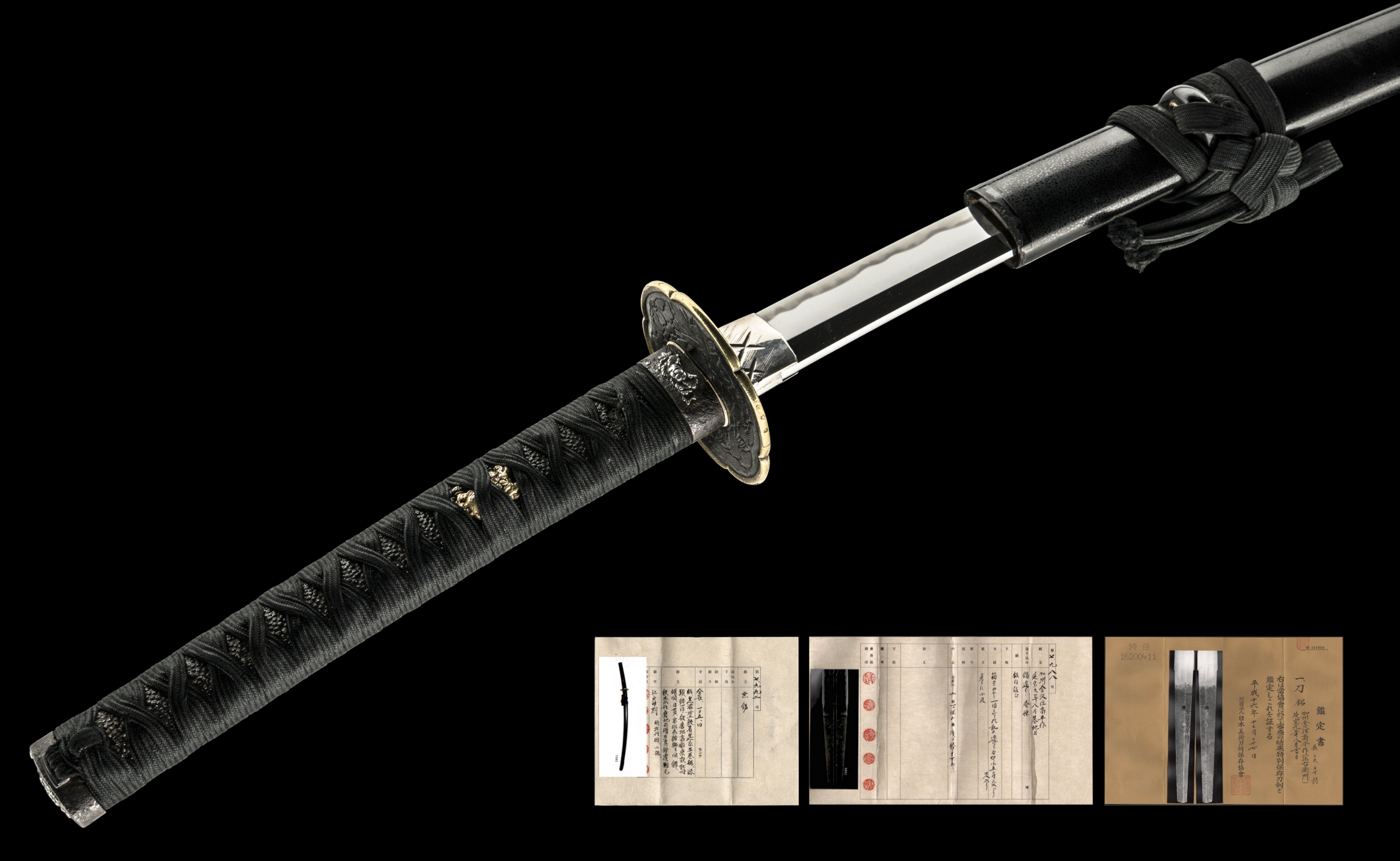
Shinto · Kaga · around 1673-1681
Fujishiro Jo saku · Tōken Taikan top 37%
1 piece on the market now
Where Takahira stands among comparable artisans: across all of nihontō, and within tradition, era, and period. The tiers (Foremost · Leading · Major · Notable) weigh official designations from the NBTHK and Japan's Agency for Cultural Affairs, together with historical honors of lasting repute such as the Sansaku and Meibutsu-chō.
Select a lens to see how it's measured.
Shinto · Kaga
5 pieces on the market now
Among the shintō workshops of the northern provinces, the Kanewaka line of Kaga (Kashū) traces its root to Mino. The setsumei record that the first-generation smith was a son of Shihōsuke Kanewaka of Seki and that, though he stood in the lineage of the Seki smiths, he forged his blades in Kaga. " The second generation, Matasuke, was the third son of the first, born in Keichō 17 (1612), active from Kan'ei through Enpō, and dead in Enpō 5 (1677) at sixty-six. Learn more →
| Smith | Era | Designated |
|---|---|---|
| Kanewaka兼若 | 1596-1619 | 10 |
| Kanewaka兼若 | 1673-1681 | 4 |
| Kanewaka兼若 | 1624-1644 | 2 |
| Takahira高平 | 1673-1681 | 1 |
| Yukimitsu行光 | 1469-1487 | 1 |
A Hozon-certified blade judged to show notably superior workmanship and a better state of preservation. The bar is higher: re-tempered blades and most unsigned Muromachi/Edo works are excluded.
The NBTHK (Nihon Bijutsu Tōken Hozon Kyōkai, the Society for the Preservation of Japanese Art Swords) is a public-interest incorporated foundation founded in 1948 and supervised by Japan’s Agency for Cultural Affairs (Bunkachō); it is based at the Japanese Sword Museum in Tokyo. Its expert panels physically examine each submitted work (shinsa) and issue a certificate (kanteishō) ranking it by artistic and historical merit. NBTHK papers are the most widely recognized standard of authentication for Japanese swords and fittings.
NBTHK official siteAll swords come with a three-day inspection period beginning from the date of delivery. If not satisfied, the sword may be returned within this period for a full refund of the purchase price. Outside of this period, all sales are final. Swords purchased on a layaway payment plan are not eligible for the three-day inspection period.
This is a katana by the second-generation Takahira, a smith from the prestigious Kanewaka School of Kaga province, known for its high-quality steel. Signed and dated to 1681, the blade features a clean masame hada and a bright gunome midare hamon. It comes with a remarkable, possibly original, Edo period koshirae with a quince flower tsuba and gold shisa lion menuki.
NihontoWatchBETAmei · Kanewaka School · Enpo (1673-1681) · nagasa 69.7cm · sori 2.4cm
Shinto · Kaga · around 1673-1681
Fujishiro Jo saku · Tōken Taikan top 37%
1 piece on the market now
Where Takahira stands among comparable artisans: across all of nihontō, and within tradition, era, and period. The tiers (Foremost · Leading · Major · Notable) weigh official designations from the NBTHK and Japan's Agency for Cultural Affairs, together with historical honors of lasting repute such as the Sansaku and Meibutsu-chō.
Select a lens to see how it's measured.
Shinto · Kaga
5 pieces on the market now
Among the shintō workshops of the northern provinces, the Kanewaka line of Kaga (Kashū) traces its root to Mino. The setsumei record that the first-generation smith was a son of Shihōsuke Kanewaka of Seki and that, though he stood in the lineage of the Seki smiths, he forged his blades in Kaga. " The second generation, Matasuke, was the third son of the first, born in Keichō 17 (1612), active from Kan'ei through Enpō, and dead in Enpō 5 (1677) at sixty-six. Learn more →
| Smith | Era | Designated |
|---|---|---|
| Kanewaka兼若 | 1596-1619 | 10 |
| Kanewaka兼若 | 1673-1681 | 4 |
| Kanewaka兼若 | 1624-1644 | 2 |
| Takahira高平 | 1673-1681 | 1 |
| Yukimitsu行光 | 1469-1487 | 1 |
A Hozon-certified blade judged to show notably superior workmanship and a better state of preservation. The bar is higher: re-tempered blades and most unsigned Muromachi/Edo works are excluded.
The NBTHK (Nihon Bijutsu Tōken Hozon Kyōkai, the Society for the Preservation of Japanese Art Swords) is a public-interest incorporated foundation founded in 1948 and supervised by Japan’s Agency for Cultural Affairs (Bunkachō); it is based at the Japanese Sword Museum in Tokyo. Its expert panels physically examine each submitted work (shinsa) and issue a certificate (kanteishō) ranking it by artistic and historical merit. NBTHK papers are the most widely recognized standard of authentication for Japanese swords and fittings.
NBTHK official siteAll swords come with a three-day inspection period beginning from the date of delivery. If not satisfied, the sword may be returned within this period for a full refund of the purchase price. Outside of this period, all sales are final. Swords purchased on a layaway payment plan are not eligible for the three-day inspection period.




