Muromachi turned sword making into an industry: the uchigatana rose with massed infantry warfare, Osafune and Seki produced bundle swords beside custom orders, and the Ming trade carried Japanese blades abroad by the tens of thousands.
 NihontoWatchNihontoWatch
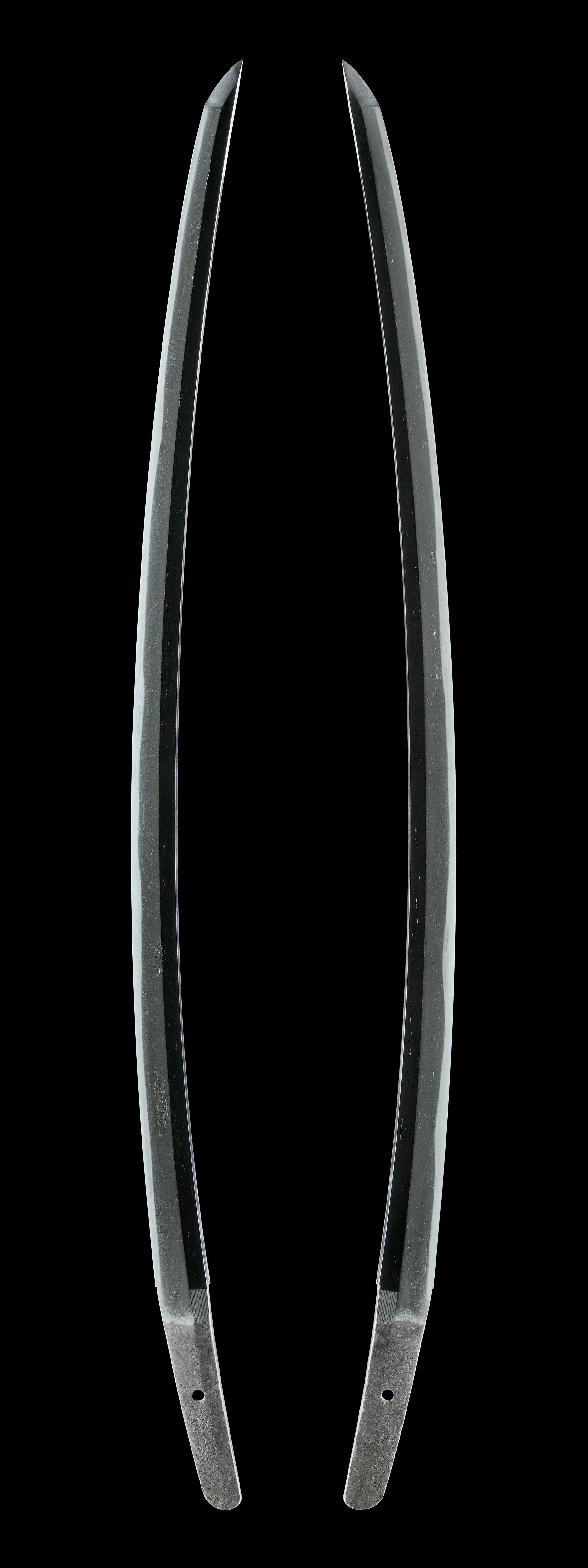
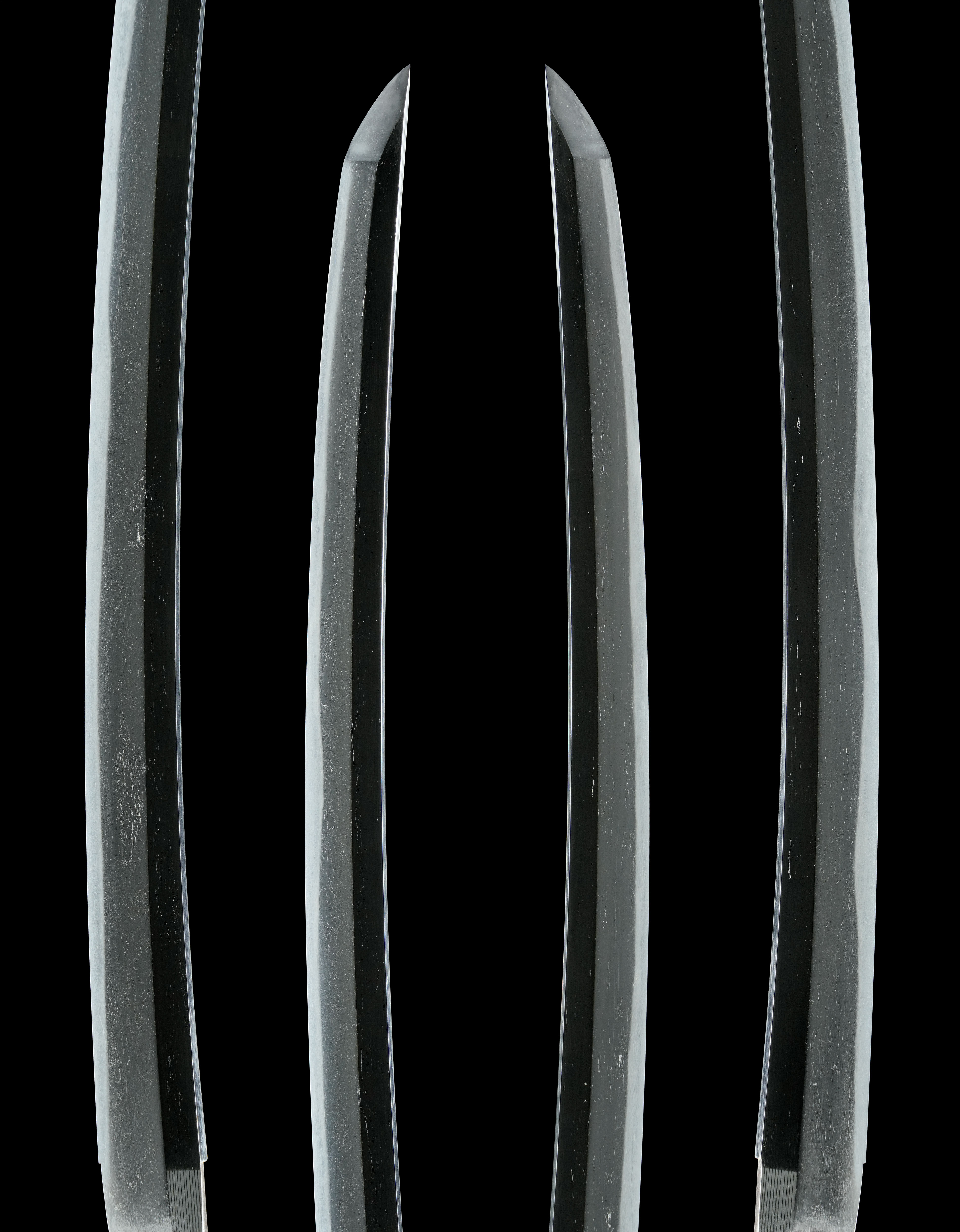
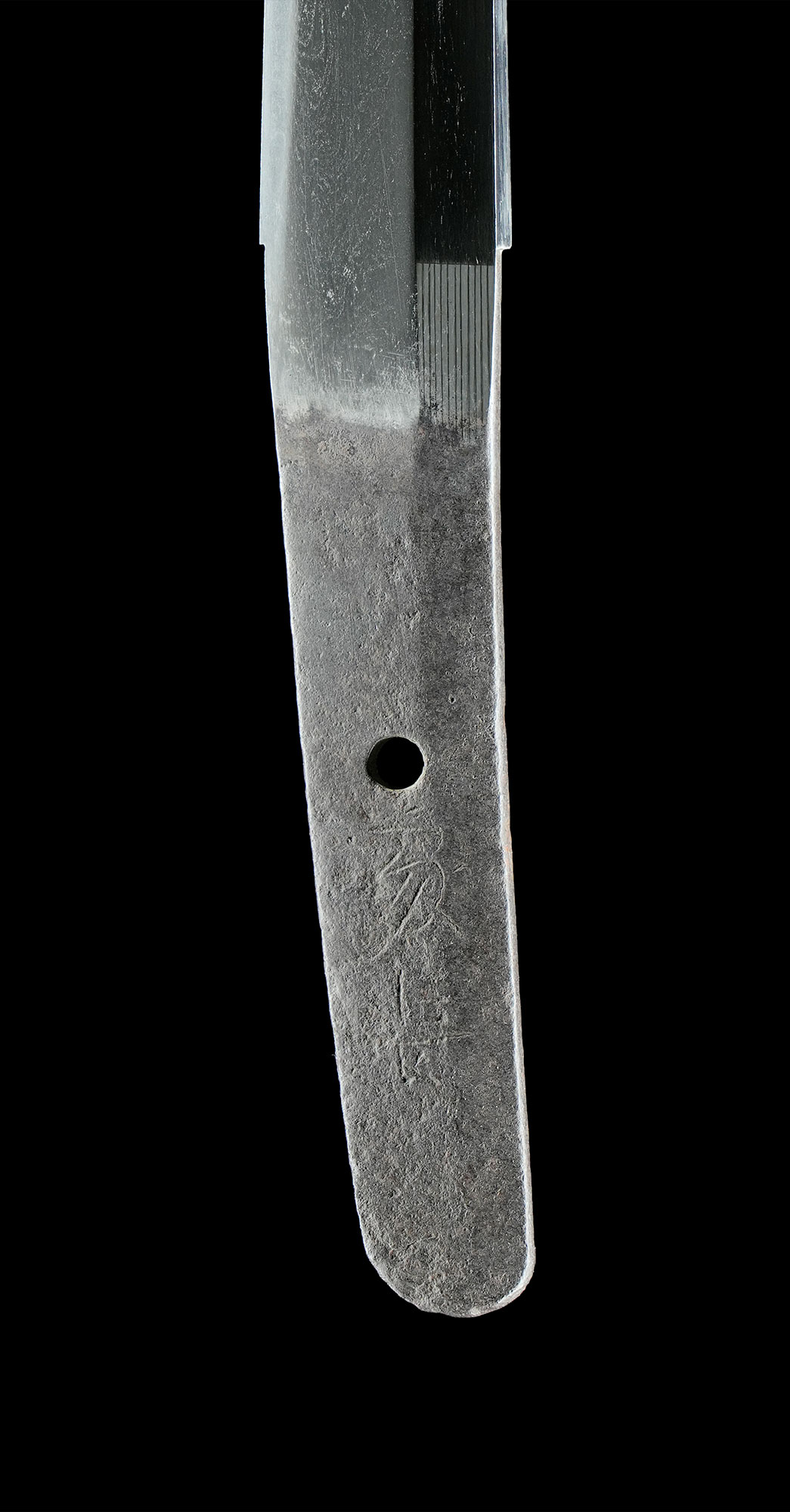
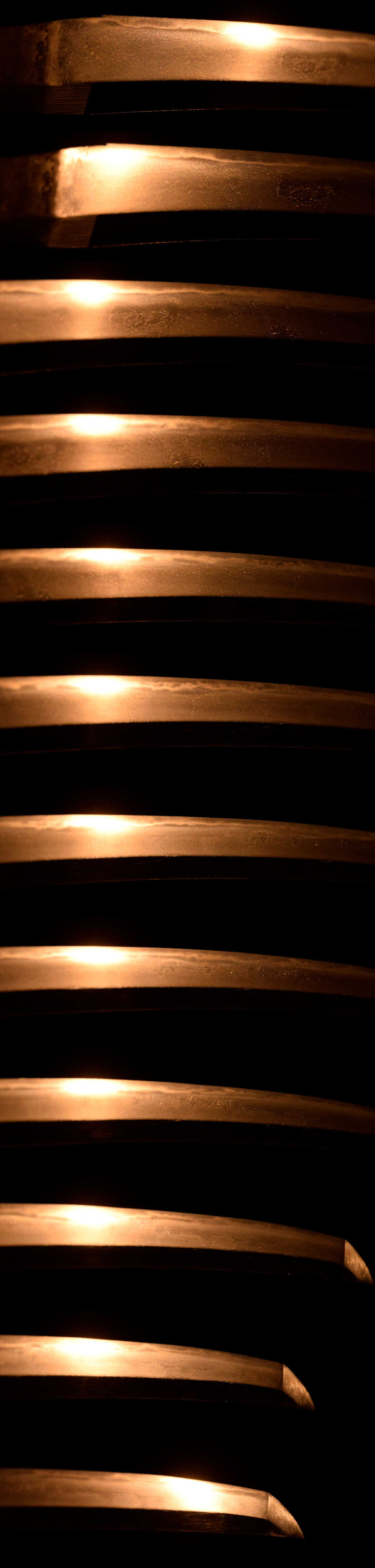
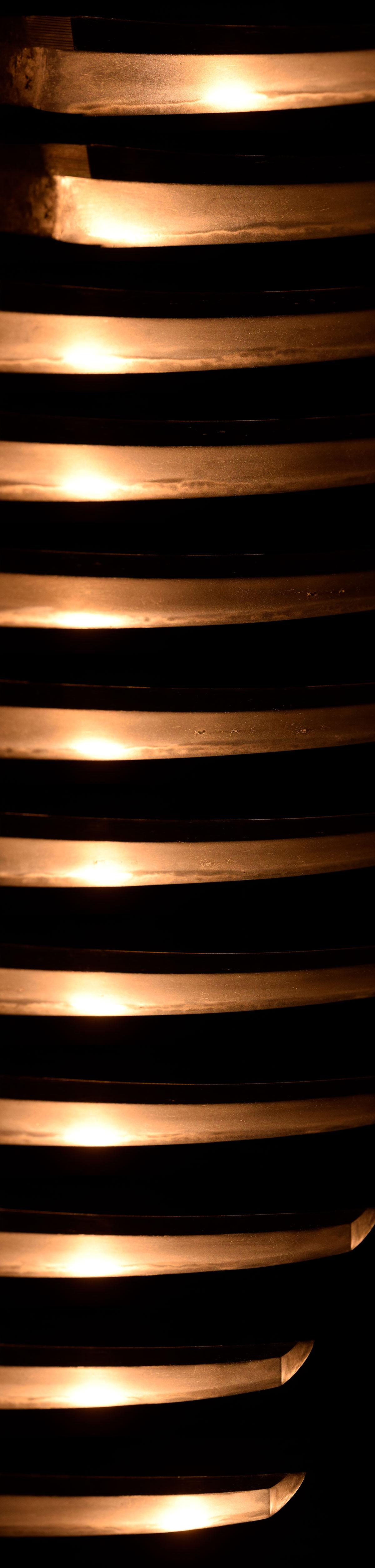
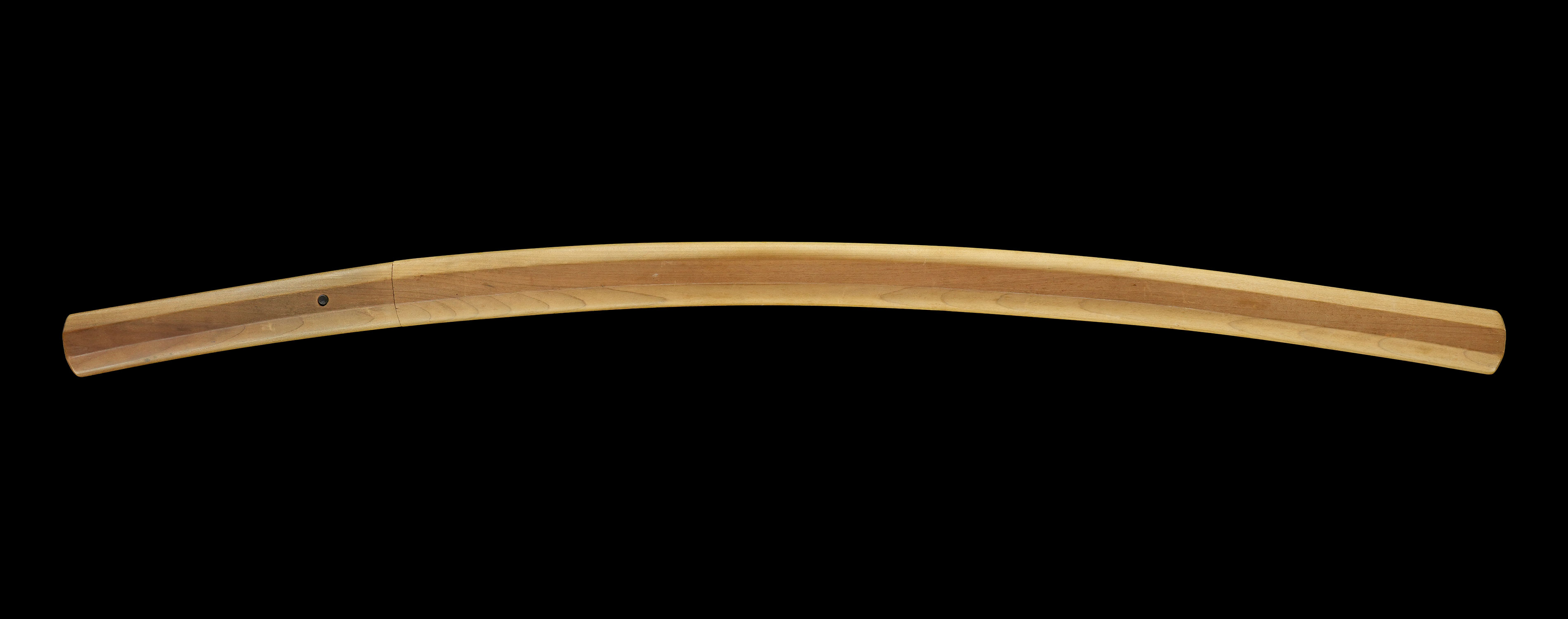
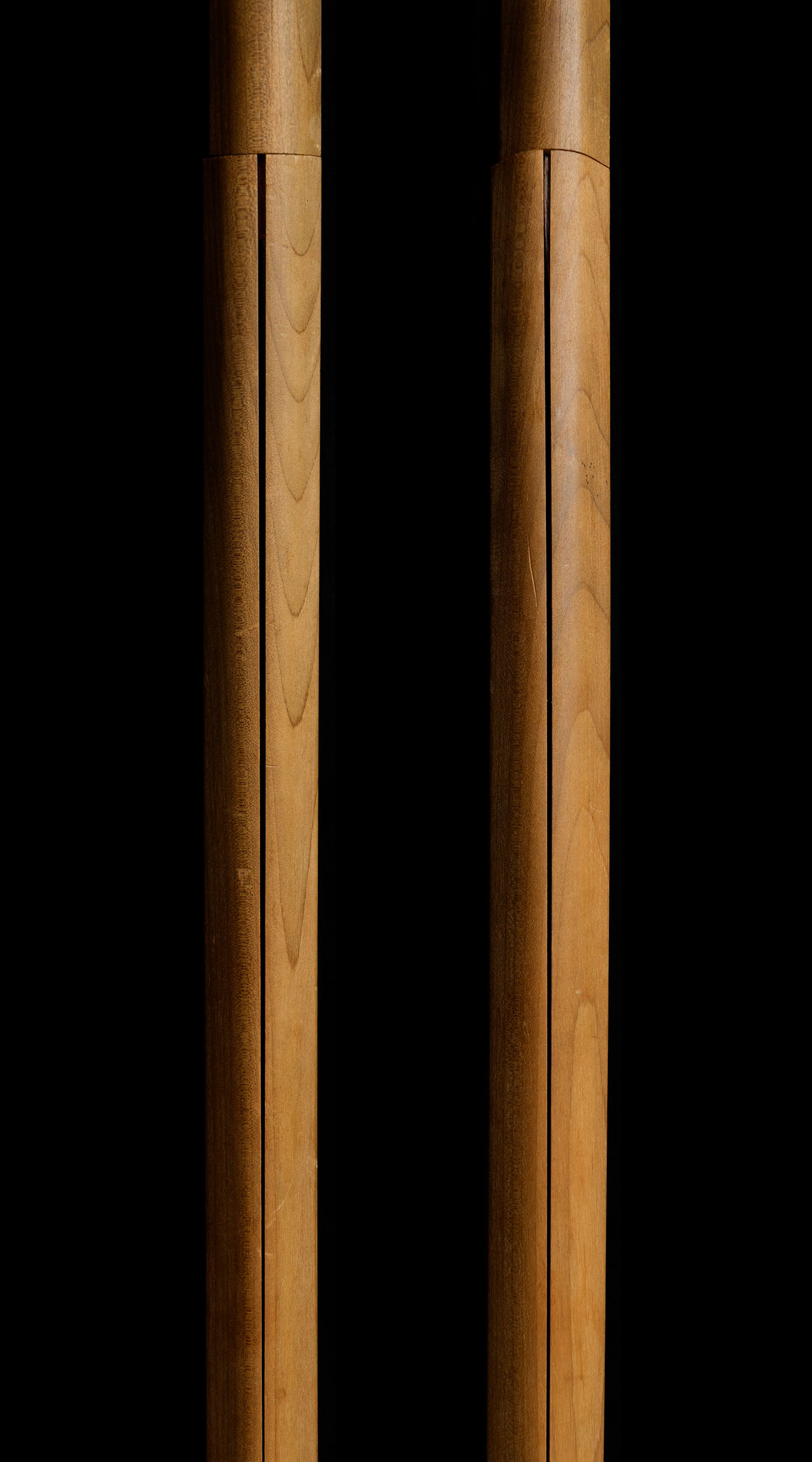
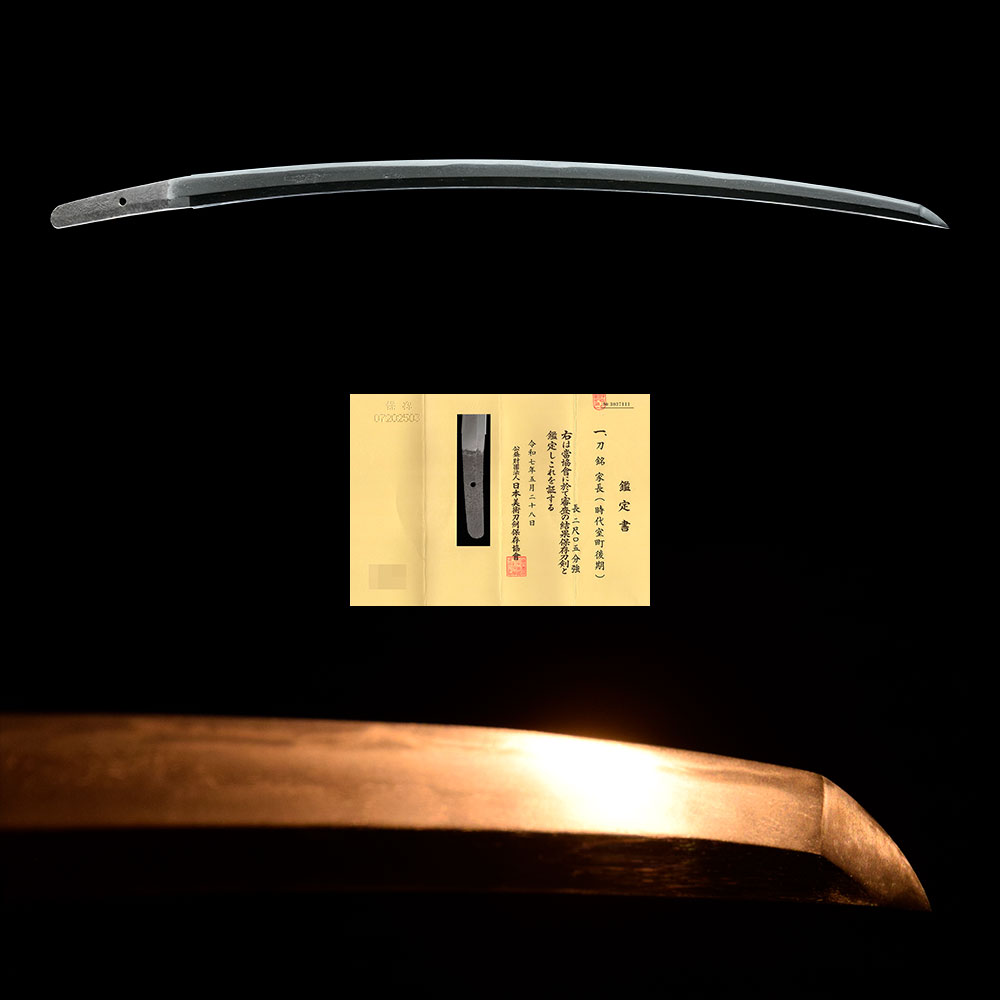
When consulting the meikan, many swordsmiths using the name Ienaga can be found, but this sword is considered a work by the Ienaga who forged in Kaga around the Eiroku era of the late Muromachi period, and it is a fine piece that well conveys the style of sue-koto. The sugata shows a difference in width between the moto and saki with funbari, and the chu-kissaki is slightly elongated. It has an appearance that truly suggests a focus on practical use. The jigane is ko-itame mixed with moku, slightly hadadachi, and bears a hint of utsuri, showing archaic characteristics. The hamon is based on suguha with shallow notare, containing ashi within the ha, mixed with sections forming ko-midare, and showing hataraki in various places such as yo and fine kinsuji and inazuma; while the boshi is somewhat indistinct, a portion seems to be kakedashi-gimi with a saki-maru kaeri. From the short nagasa and the short length of the nakago, it can be said that this work follows the sugata commonly called katate-uchi. The fact that it is ubu-nakago zaimei is also precious, making it an attractive sword as a sue-koto passed down in its original state. Furthermore, as it is an Ishikawa Prefecture daimyo registration sword from the quite early date of March, Showa 26, it conveys a good provenance to the present day, and is a work in which one can feel a connection to the Kaga Maeda family. As we are offering this at an affordable price, I believe it is a perfect blade for those who wish to experience an old work. The accompanying shirasaya has a large opening at the glued section, but we can undertake repairs for an additional 5,500 yen (tax included).
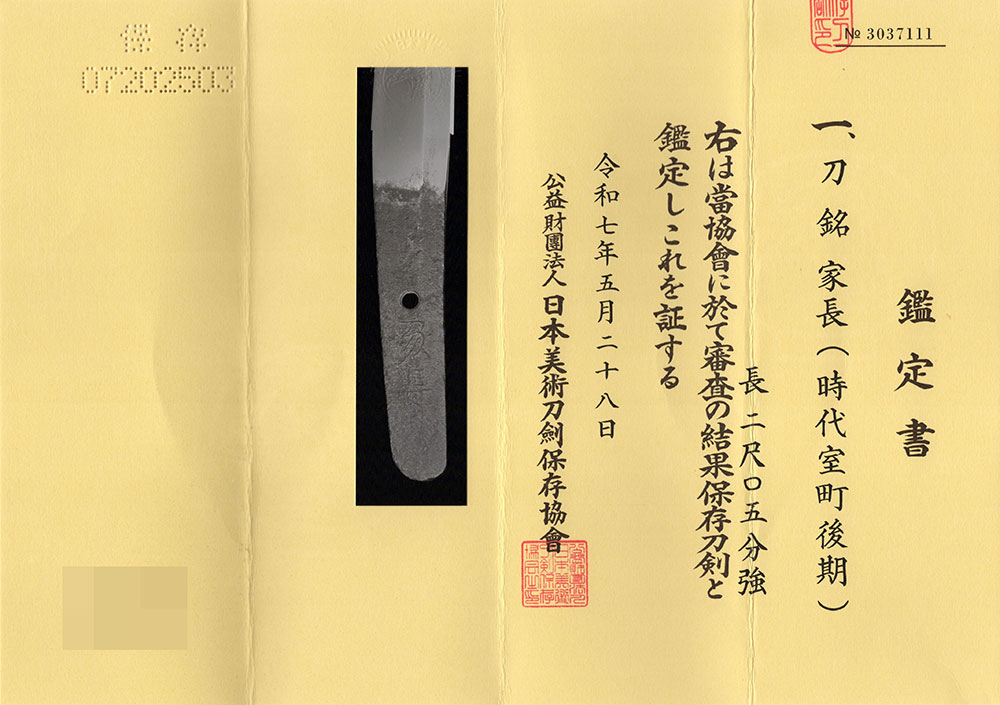
Certificate reading — 銘 家長
NihontoWatchOffered by Toushin

Machine translation of the shop's Japanese ·
Machine translation from the shop's Japanese · may contain errors ·
Kaga · around 1492-1501
Tōken Taikan top 37%
1 piece on the market now
The Muromachi period (1392 to 1573)
Muromachi turned sword making into an industry: the uchigatana rose with massed infantry warfare, Osafune and Seki produced bundle swords beside custom orders, and the Ming trade carried Japanese blades abroad by the tens of thousands.
Certifies a genuine blade worth preserving: a signature confirmed correct, or, if unsigned, an era, province, and school that the NBTHK can reliably identify.
The NBTHK (Nihon Bijutsu Tōken Hozon Kyōkai, the Society for the Preservation of Japanese Art Swords) is a public-interest incorporated foundation founded in 1948 and supervised by Japan’s Agency for Cultural Affairs (Bunkachō); it is based at the Japanese Sword Museum in Tokyo. Its expert panels physically examine each submitted work (shinsa) and issue a certificate (kanteishō) ranking it by artistic and historical merit. NBTHK papers are the most widely recognized standard of authentication for Japanese swords and fittings.
NBTHK official siteAs a rule we do not accept returns, except when we have sent a different item from the one ordered or when there is a significant discrepancy between the description and the item. If you wish to return an item, please contact us within 3 days of its arrival and then send it back.
¥330,000