Two courts, sixty years of war, and the most dramatic silhouettes in the sword’s history: broad blades, extended points, true ōdachi later cut down into the majestic katana collectors prize. The Sōshū manner was the style of the age.
 NihontoWatchNihontoWatch
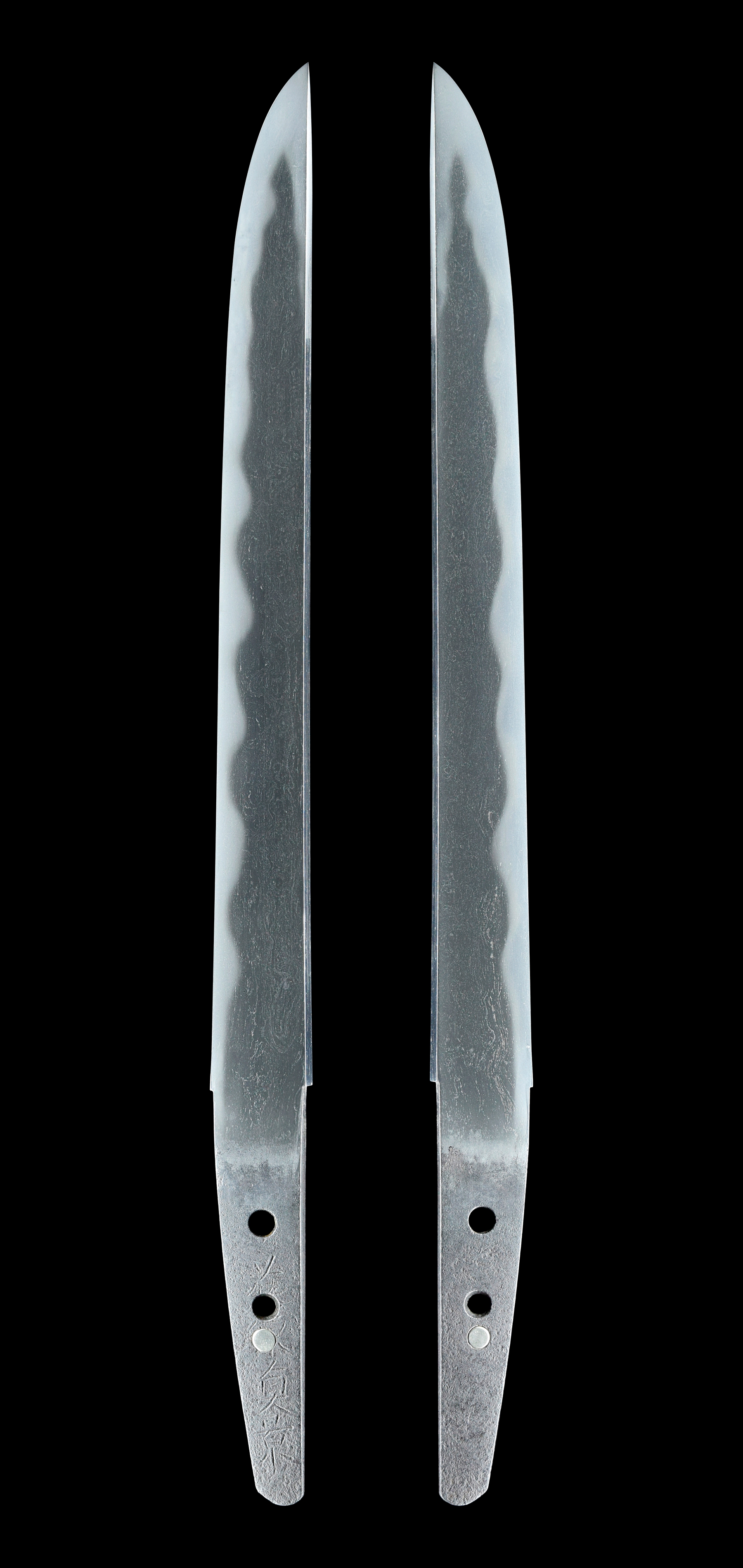
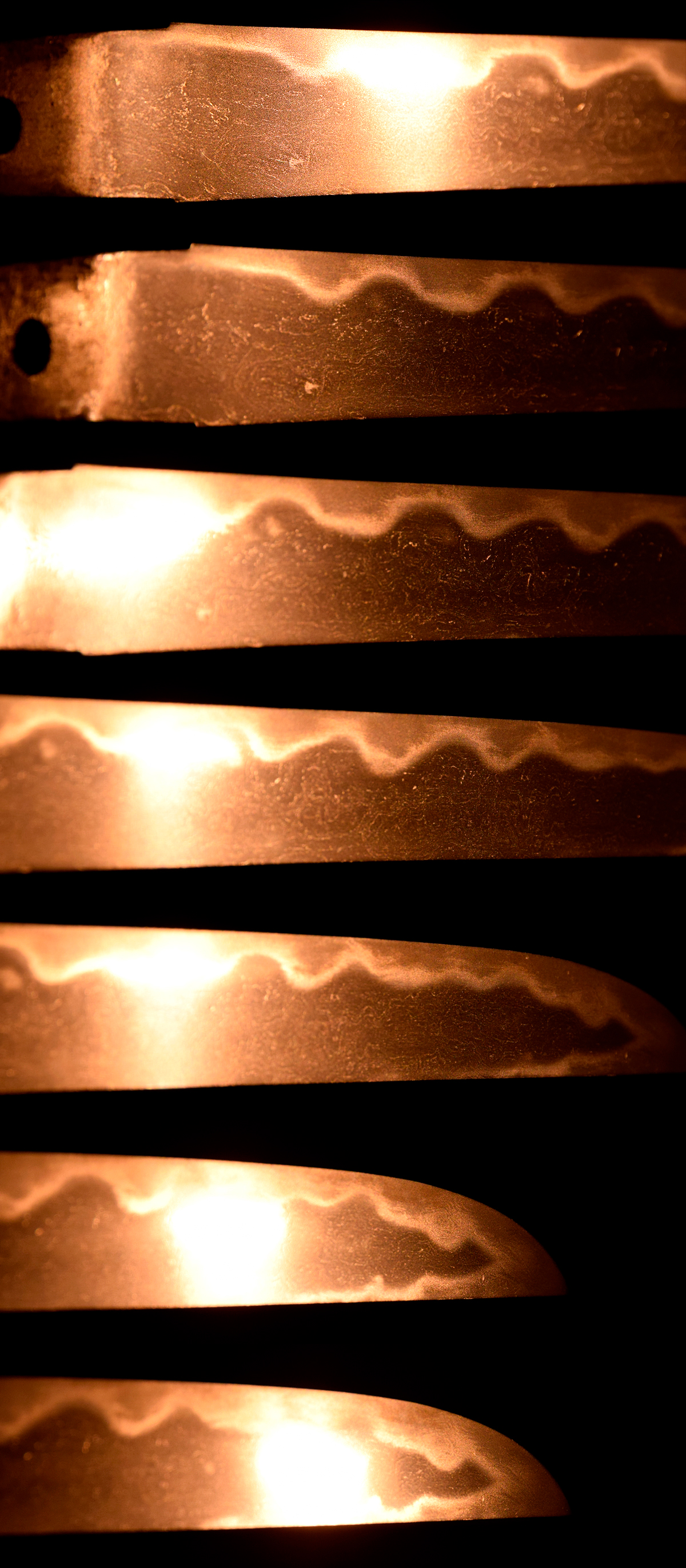
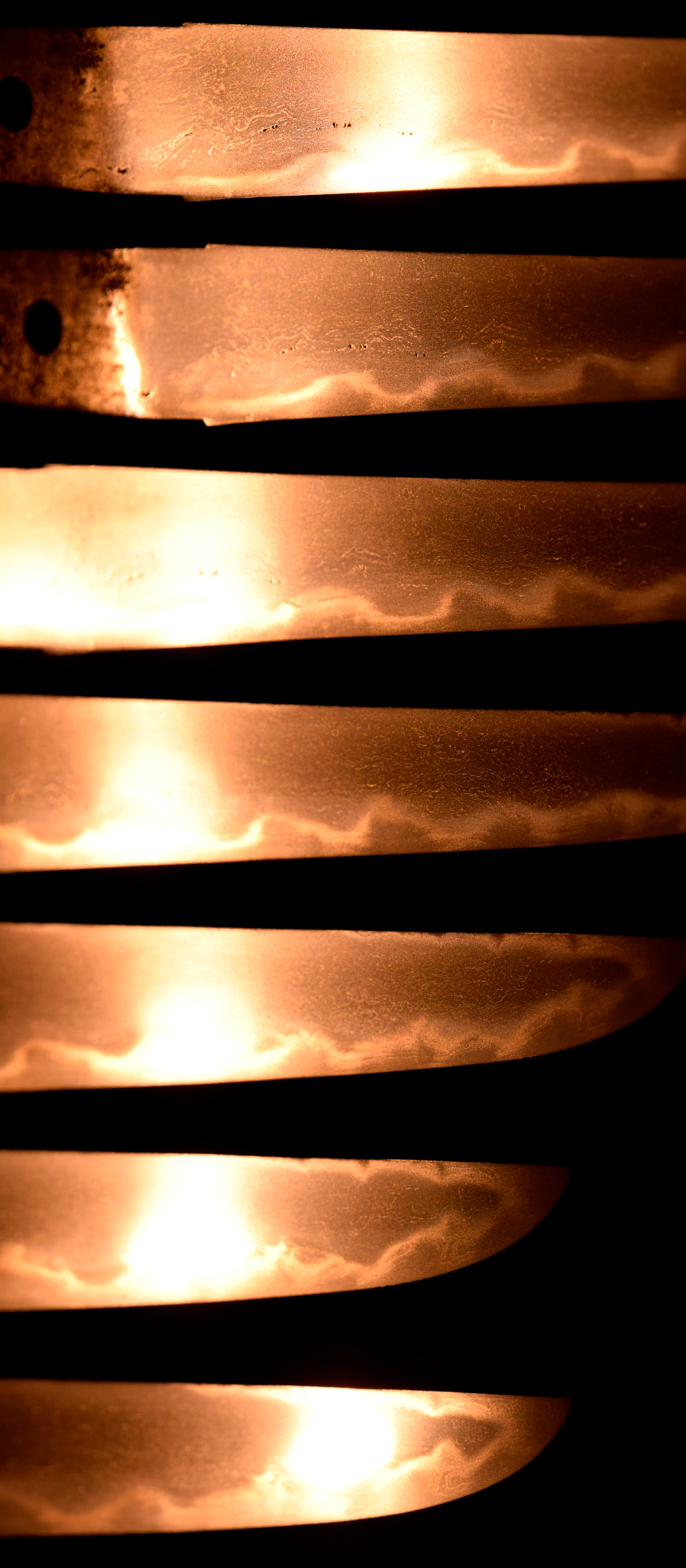
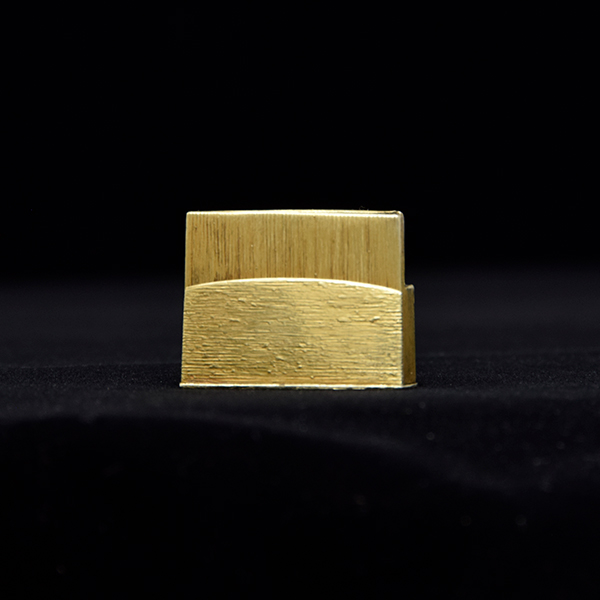
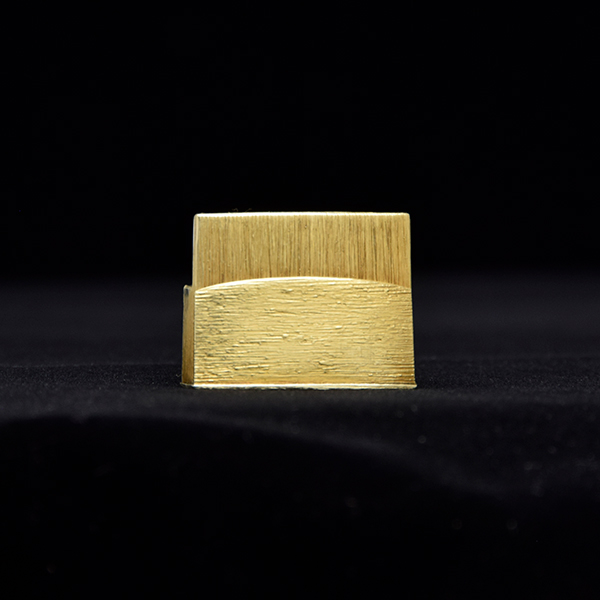
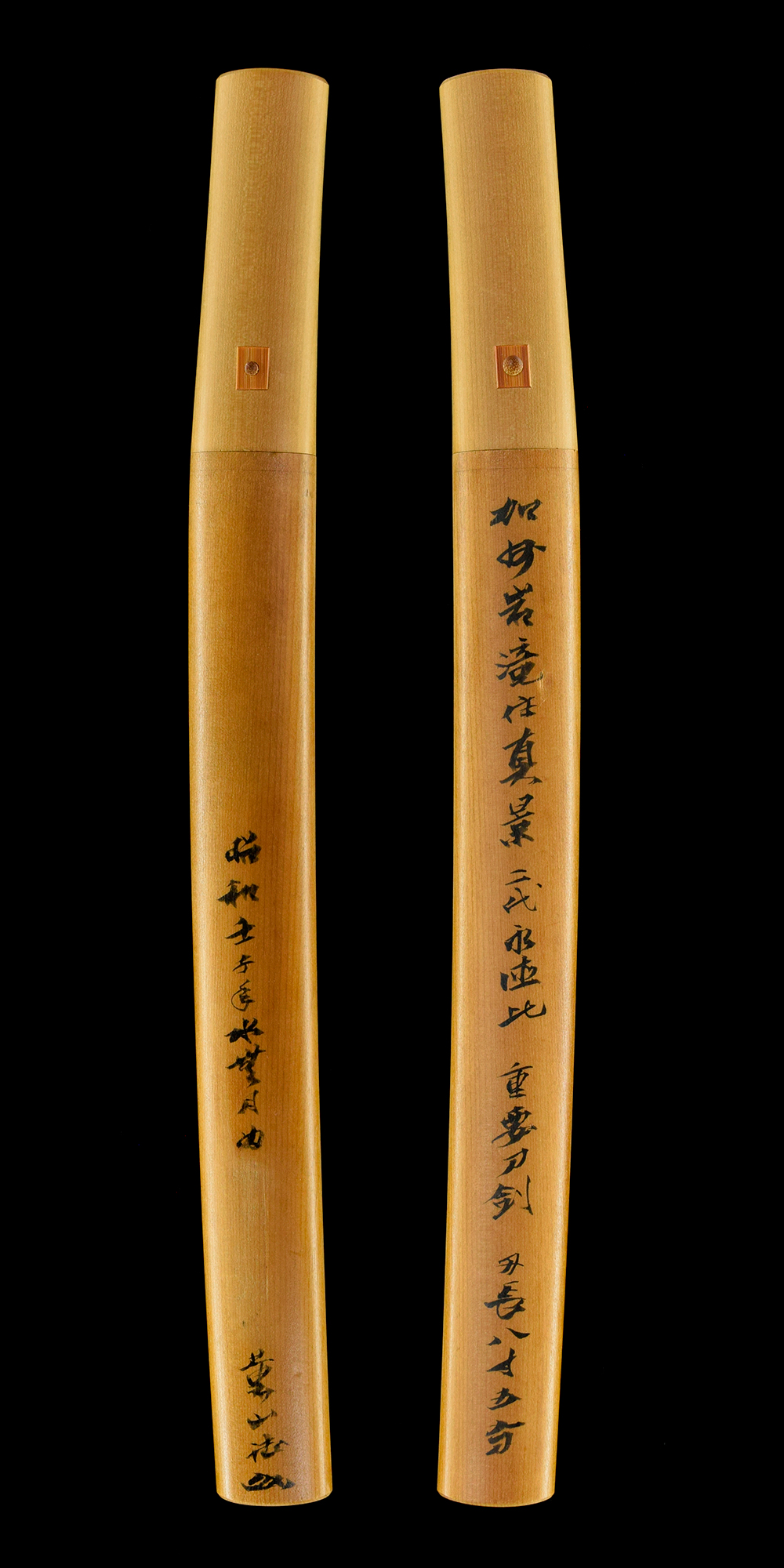
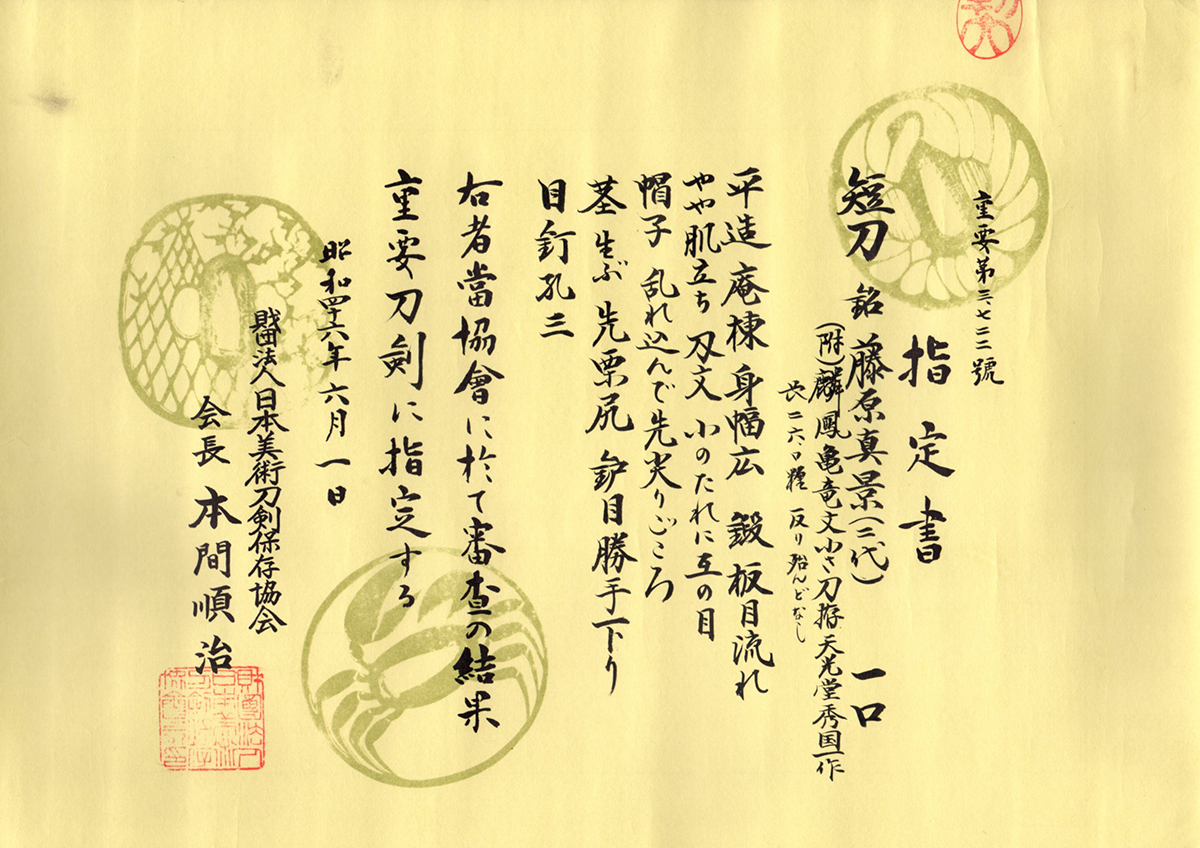
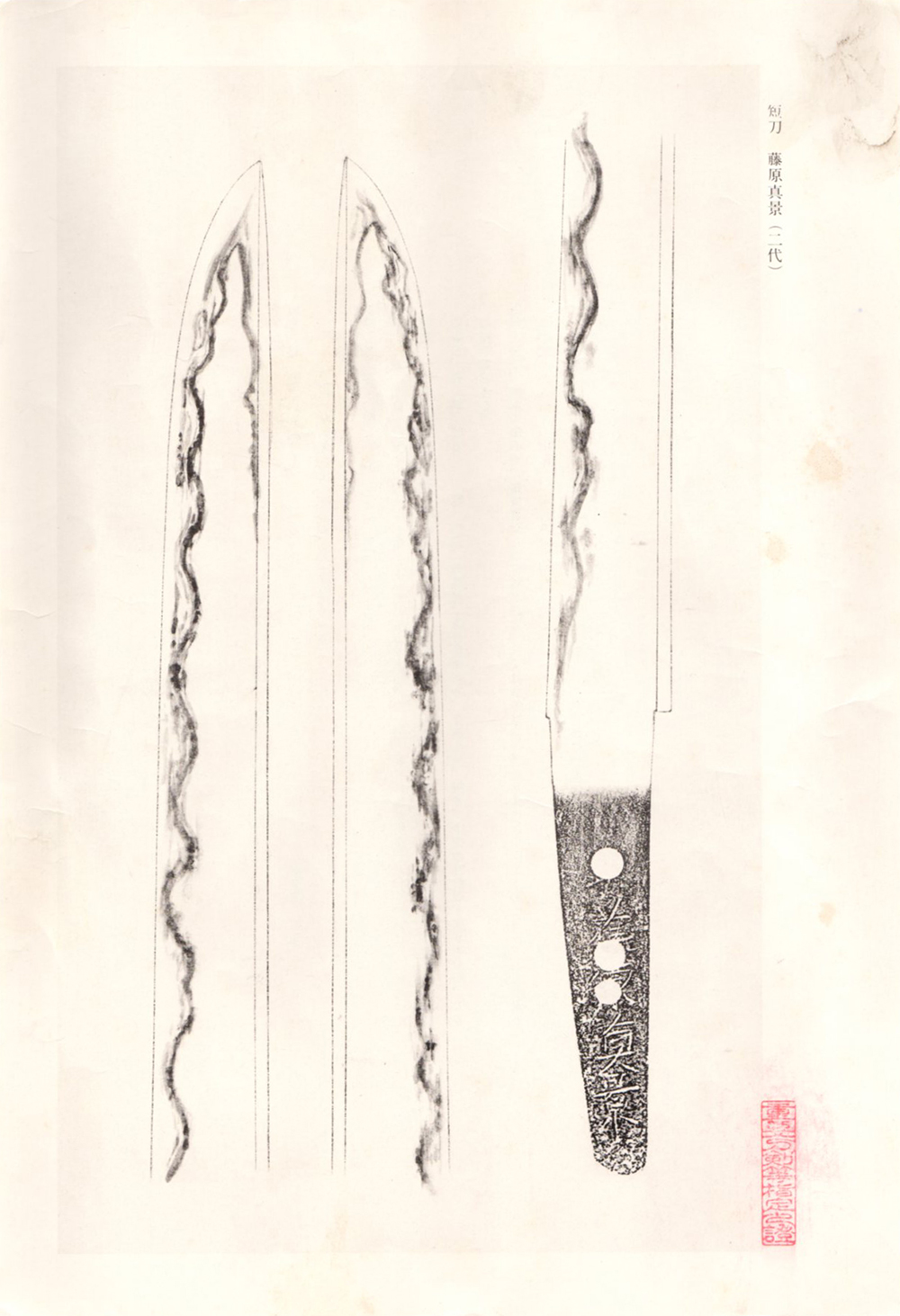
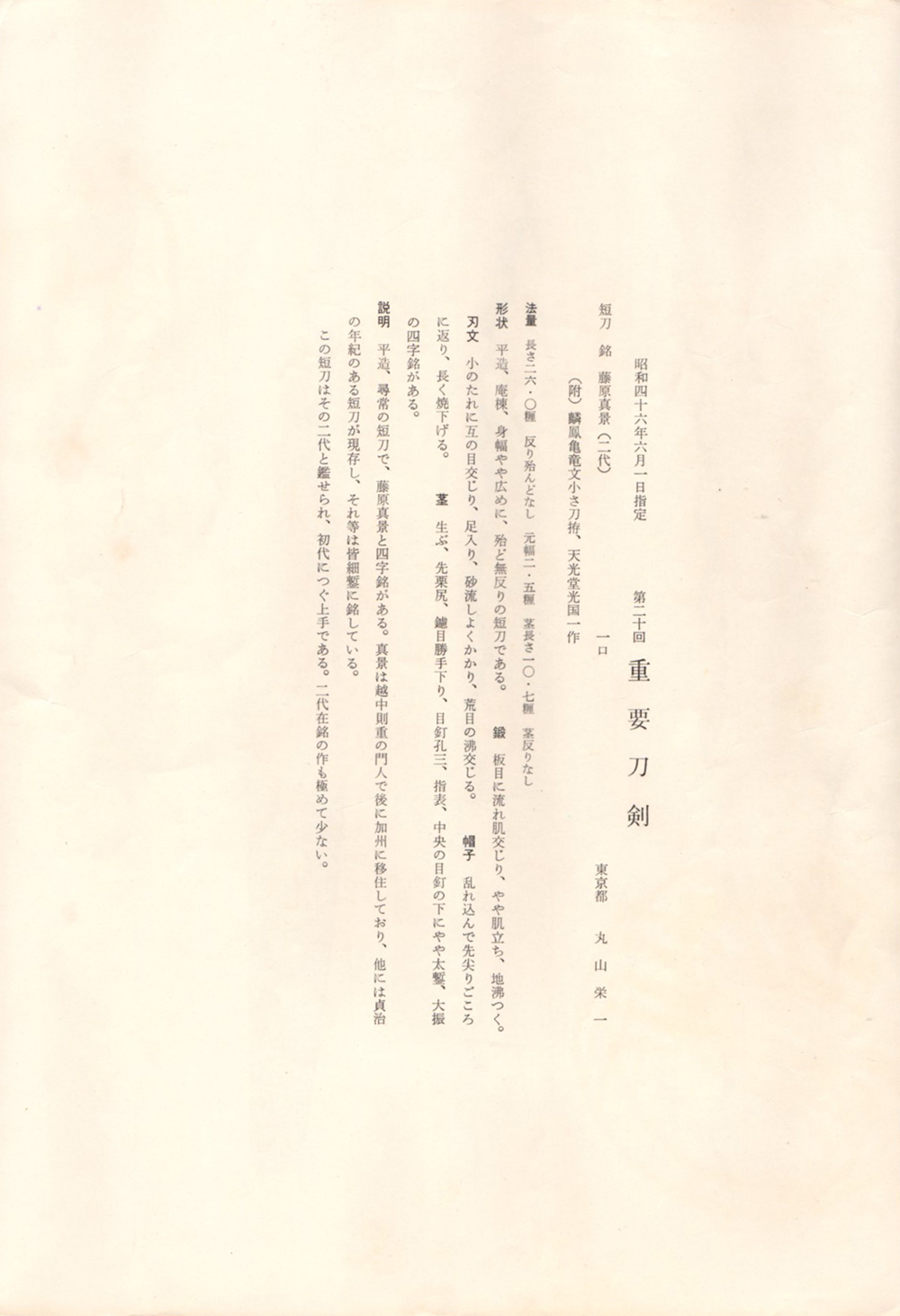
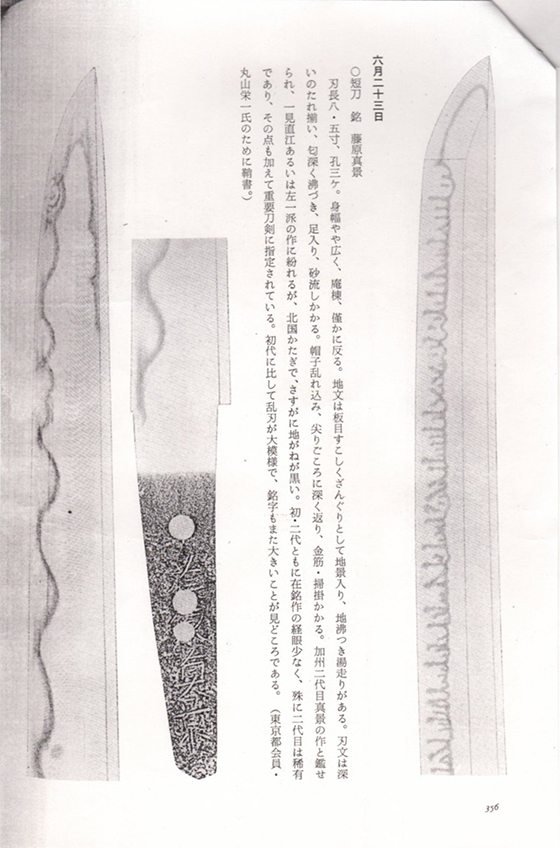
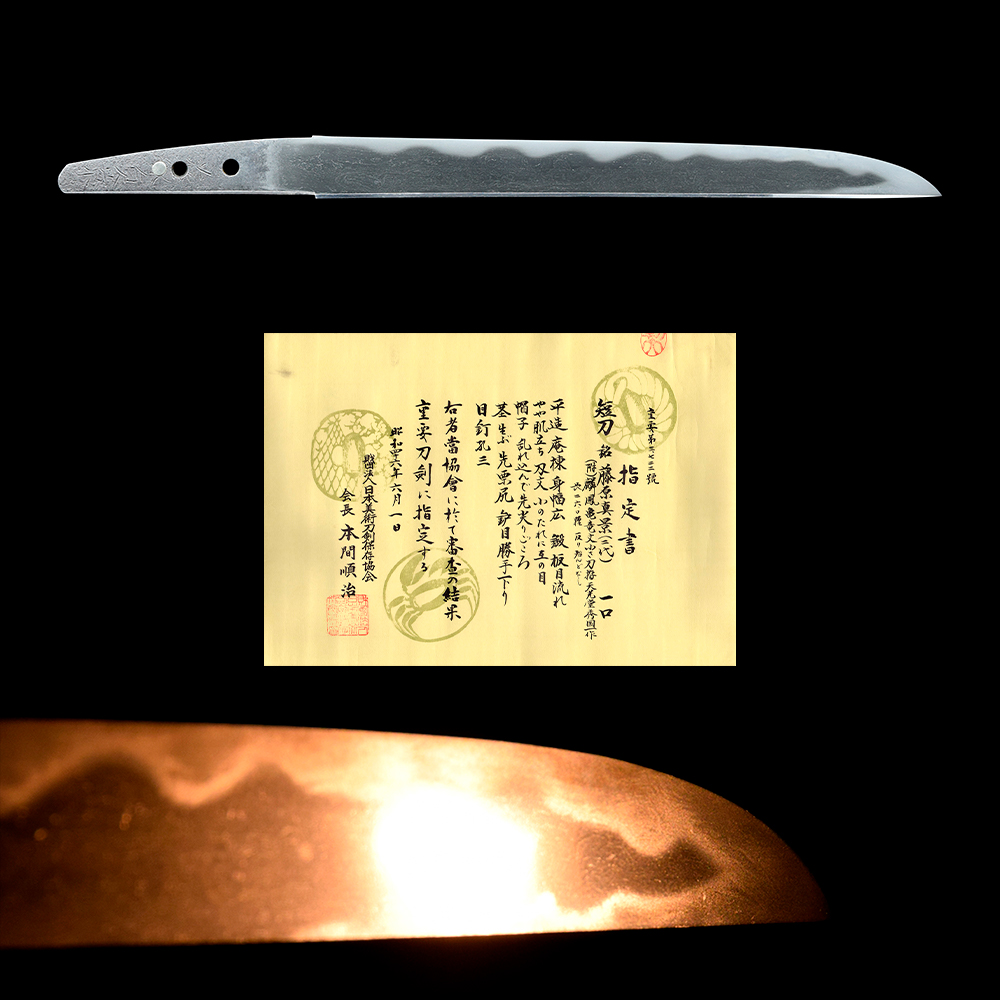
Latter Nambokucho period, Koryaku to Eitoku era (1379~) Published in Kanto Hibisho, published in Kusanagi no Ya Oshigata Hira-zukuri, a standard tanto, with a four-character mei reading Fujiwara Sanekage. Sanekage was a pupil of Etchu Norishige and later moved to Kashu; other extant tanto exist with Joji era dates, and those are all signed with fine chiseling. This tanto is appraised as the second generation, a master second only to the first generation. Signed works by the second generation are also extremely few. From the Juyo Token Zufu. This tanto is exceedingly healthy, the itame mixed with moku-me hada is well-forged and takes on a blackish tint, with o-hada mixed in and chikei entering to create a standing hada; the hamon has a bright nioiguchi, tempered in a notare style with elongated o-gunome, and within the ha, sunagashi and kinsuji appear everywhere; the habuchi is aptly described as being gently enveloped in nie, the boshi is midare-komi, and the kaeri is small, returning long while mixing in about three gunome; the nakago is black and moist, giving a sense of luster, and a grand, large-scale four-character mei is powerfully chiseled there, truly worthy of the phrase "a nakago worth a thousand ryo." The mune is iori-mune. The sayagaki handwritten by Honma Kunzan Sensei is also magnificent, and this sword is such a masterpiece that it is published in both "Kanto Hibisho" and "Kusanagi no Ya Oshigata." The Juyo Token certificate and Juyo Token Zufu state that a chiisagatana koshirae with matching fittings by Tenkodo Mitsukuni was attached, but due to some circumstances, it has unfortunately been dispersed; however, a Juyo Token designation marked as "tsuketari" (appended) is a designation for the blade itself, and the loss of the koshirae through dispersal or damage has no effect whatsoever. *Confirmed by the Nippon Bijutsu Token Hozon Kyokai Furthermore, the habaki has a kamigai made of solid gold weighing 9.9 grams, and the kamigai alone has a value exceeding 203,000 yen (as of March 23, 2026). The fact that such luxury could be lavished even on the habaki leaves no room for doubt that this was formerly owned by a certain Daimyo family. For those looking for a masterpiece suitable to hold as a family treasure, please take this opportunity to acquire a famous tanto with an ubu nakago and mei, of which few exist.
Offered by Toushin

As written by the shop
Machine translation from the shop's Japanese · may contain errors ·
Kaga · around 1394-1428
Tōken Taikan top 26%
1 piece on the market now
Where Sanekage stands among comparable artisans: across all of nihontō, and within tradition, era, and period. The tiers (Foremost · Leading · Major · Notable) weigh official designations from the NBTHK and Japan's Agency for Cultural Affairs, together with historical honors of lasting repute such as the Sansaku and Meibutsu-chō.
Select a lens to see how it's measured.
The Nanbokuchō period (1333 to 1392)
Two courts, sixty years of war, and the most dramatic silhouettes in the sword’s history: broad blades, extended points, true ōdachi later cut down into the majestic katana collectors prize. The Sōshū manner was the style of the age.
A blade of top-grade workmanship and condition, formally judged to rank with a nationally recognized Important Art Object (Jūyō Bijutsuhin). Awarded only at the NBTHK’s competitive annual examination.
Of Japan’s roughly 2.5 million registered swords, only 12,348 (about 1 in 202) have ever attained Jūyō.
The NBTHK (Nihon Bijutsu Tōken Hozon Kyōkai, the Society for the Preservation of Japanese Art Swords) is a public-interest incorporated foundation founded in 1948 and supervised by Japan’s Agency for Cultural Affairs (Bunkachō); it is based at the Japanese Sword Museum in Tokyo. Its expert panels physically examine each submitted work (shinsa) and issue a certificate (kanteishō) ranking it by artistic and historical merit. NBTHK papers are the most widely recognized standard of authentication for Japanese swords and fittings.
NBTHK official siteAs a rule we do not accept returns, except when we have sent a different item from the one ordered or when there is a significant discrepancy between the description and the item. If you wish to return an item, please contact us within 3 days of its arrival and then send it back.
¥4,620,000