 NihontoWatchNihontoWatch
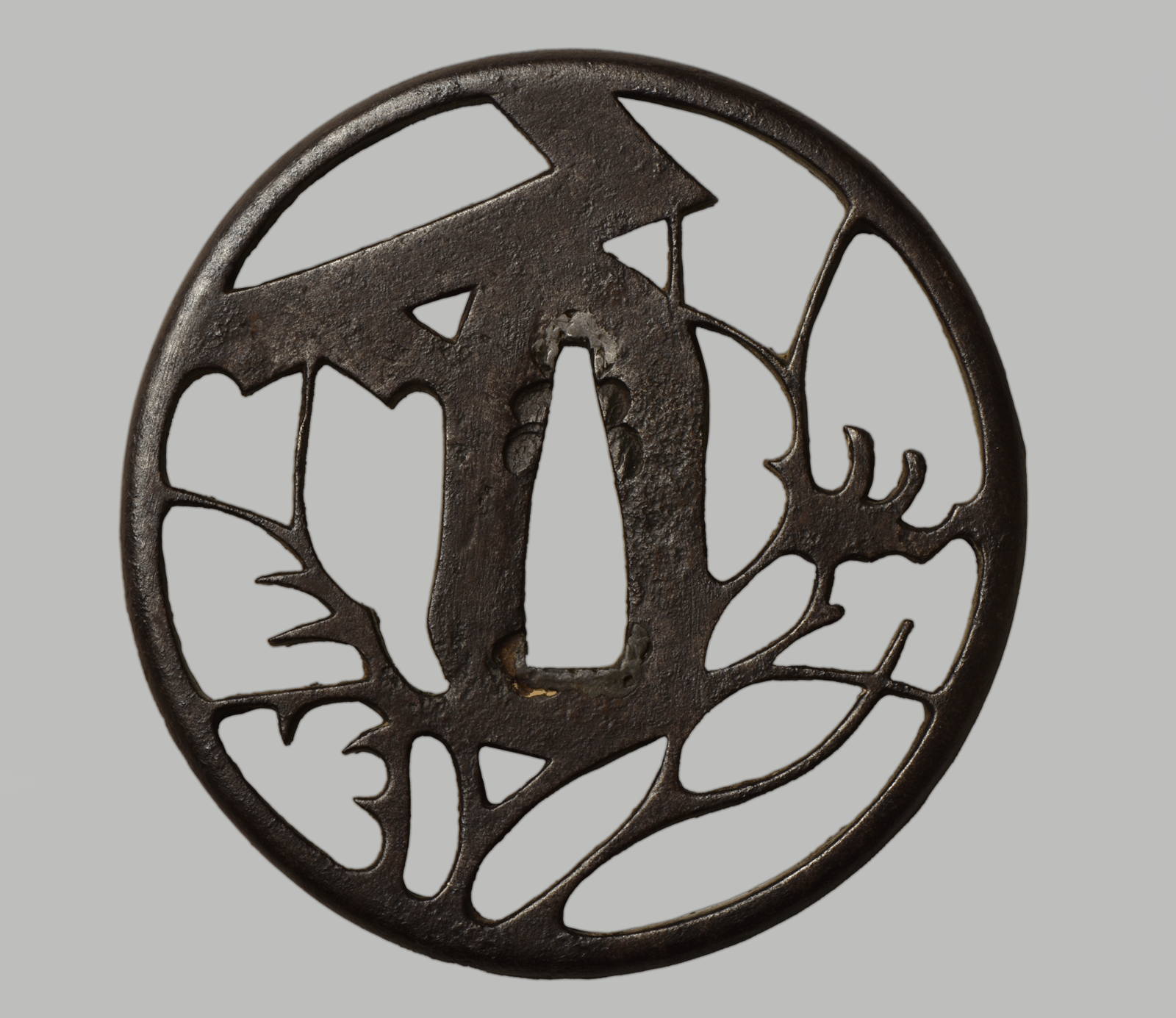
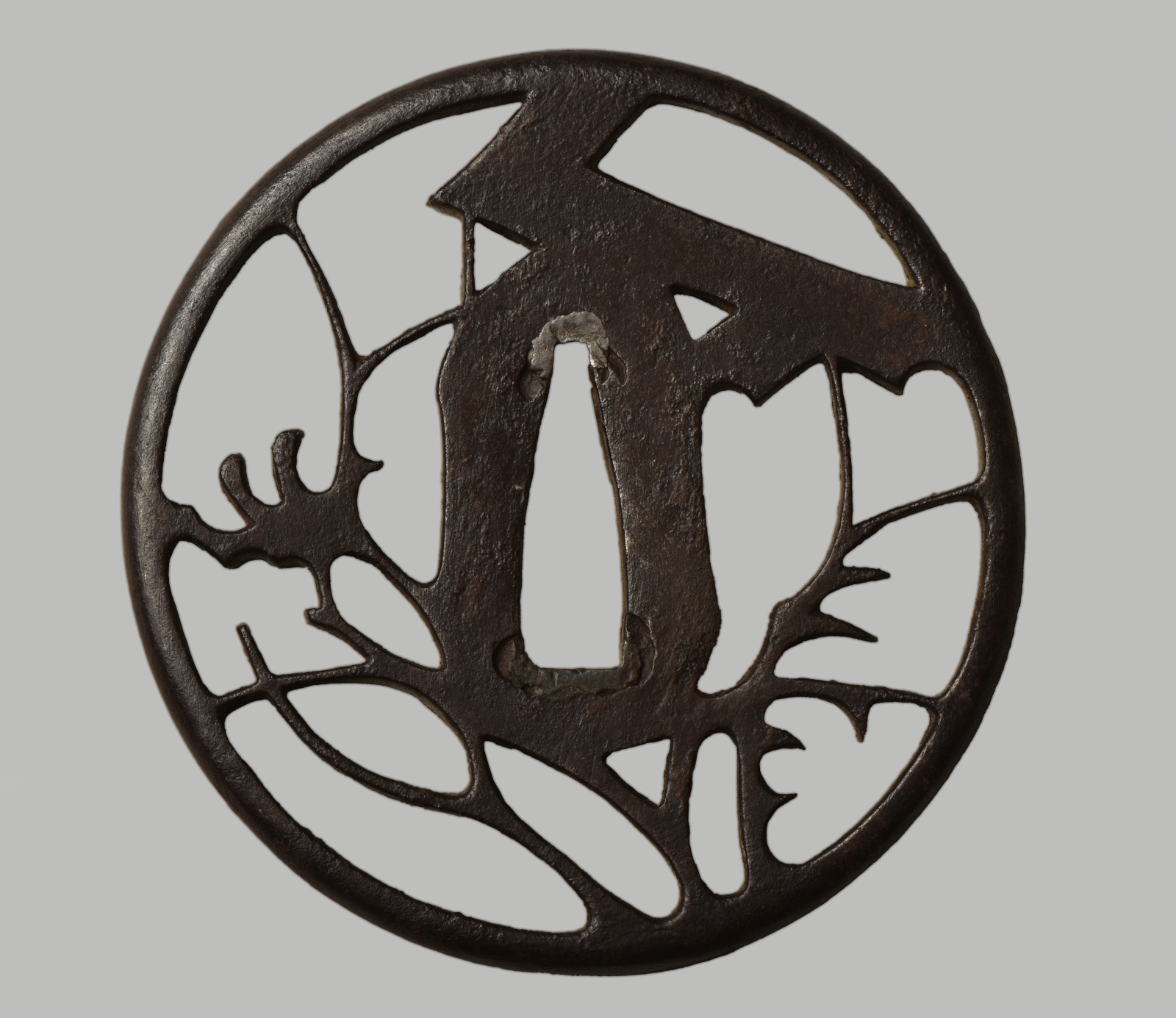
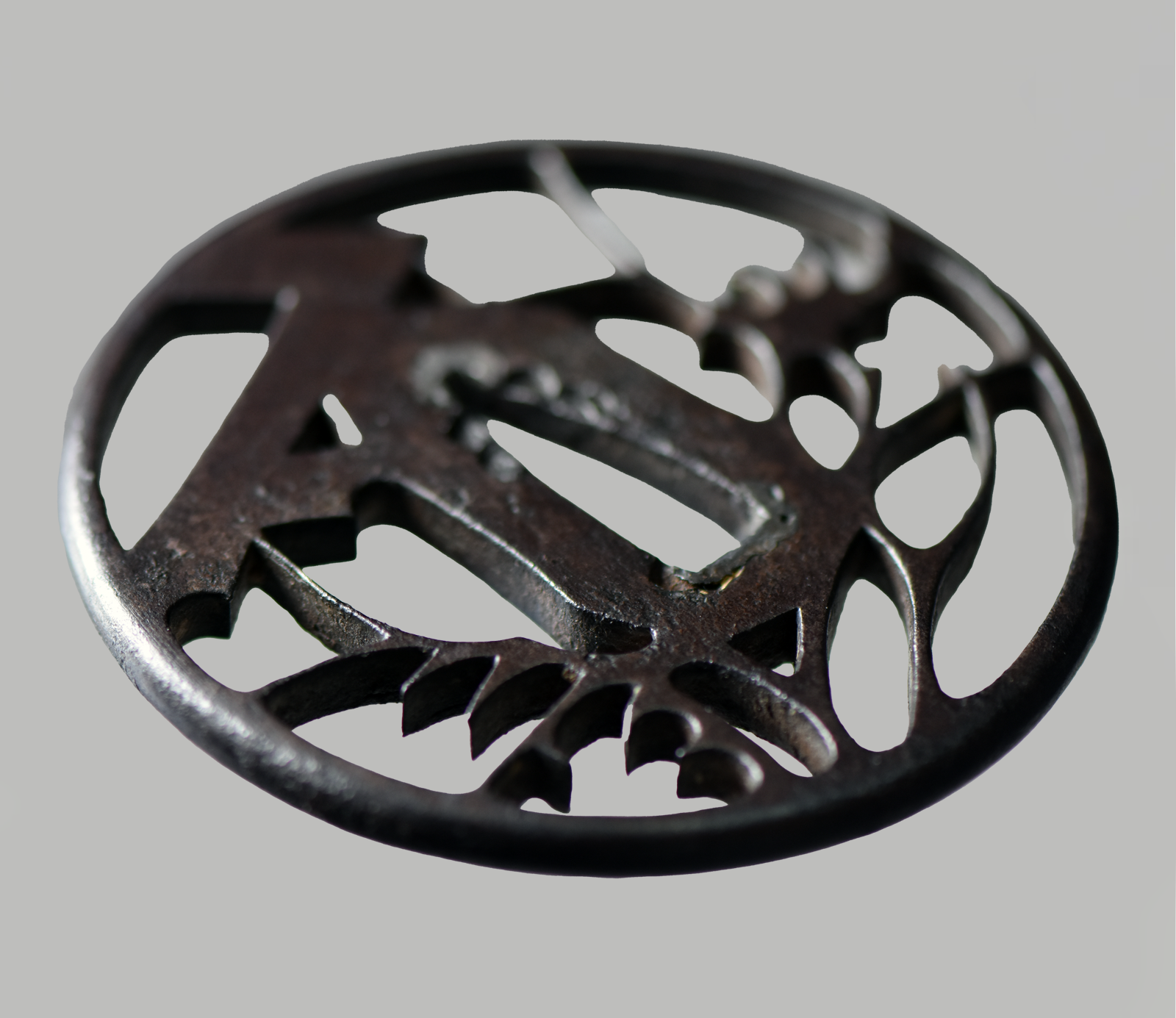
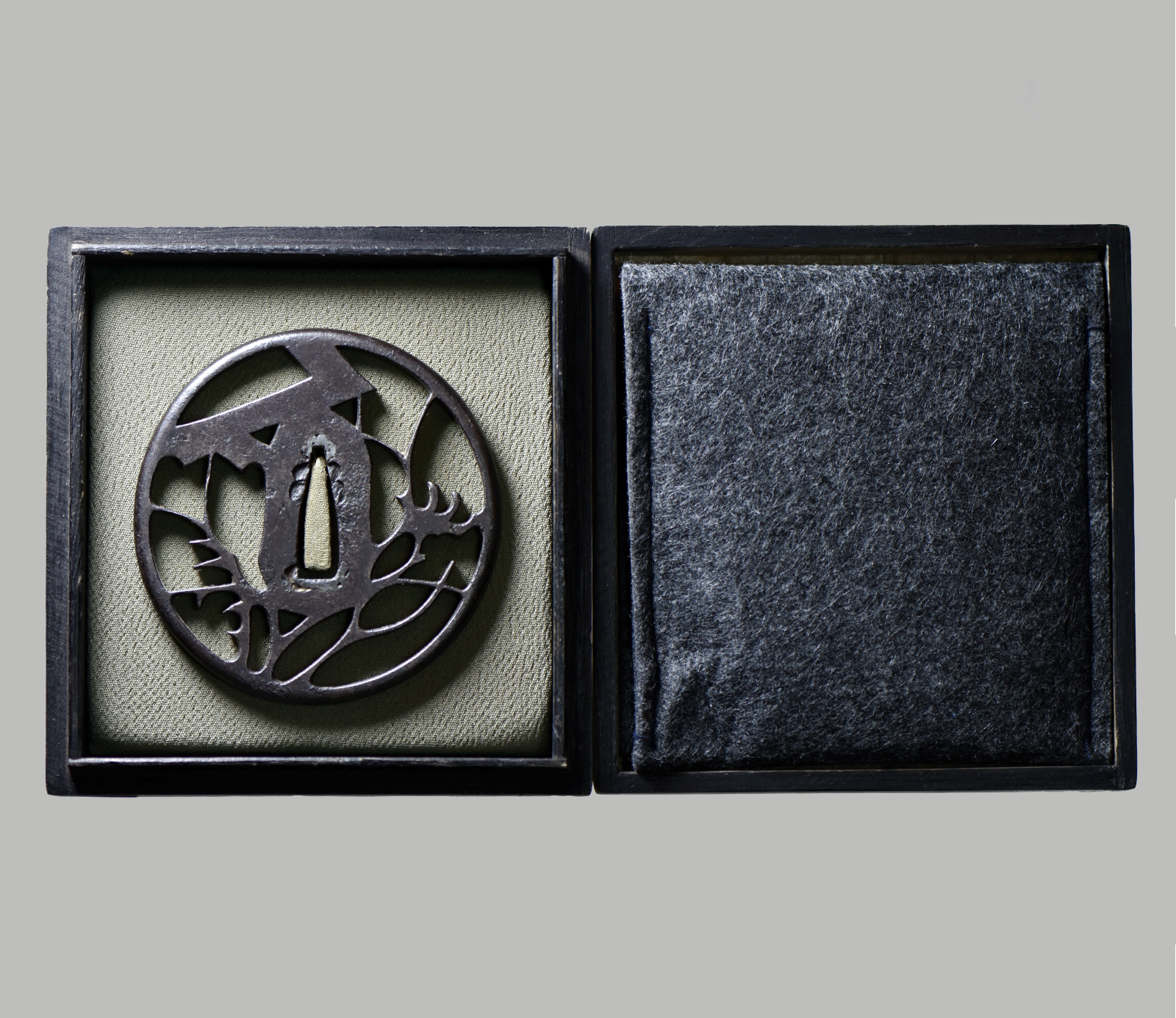
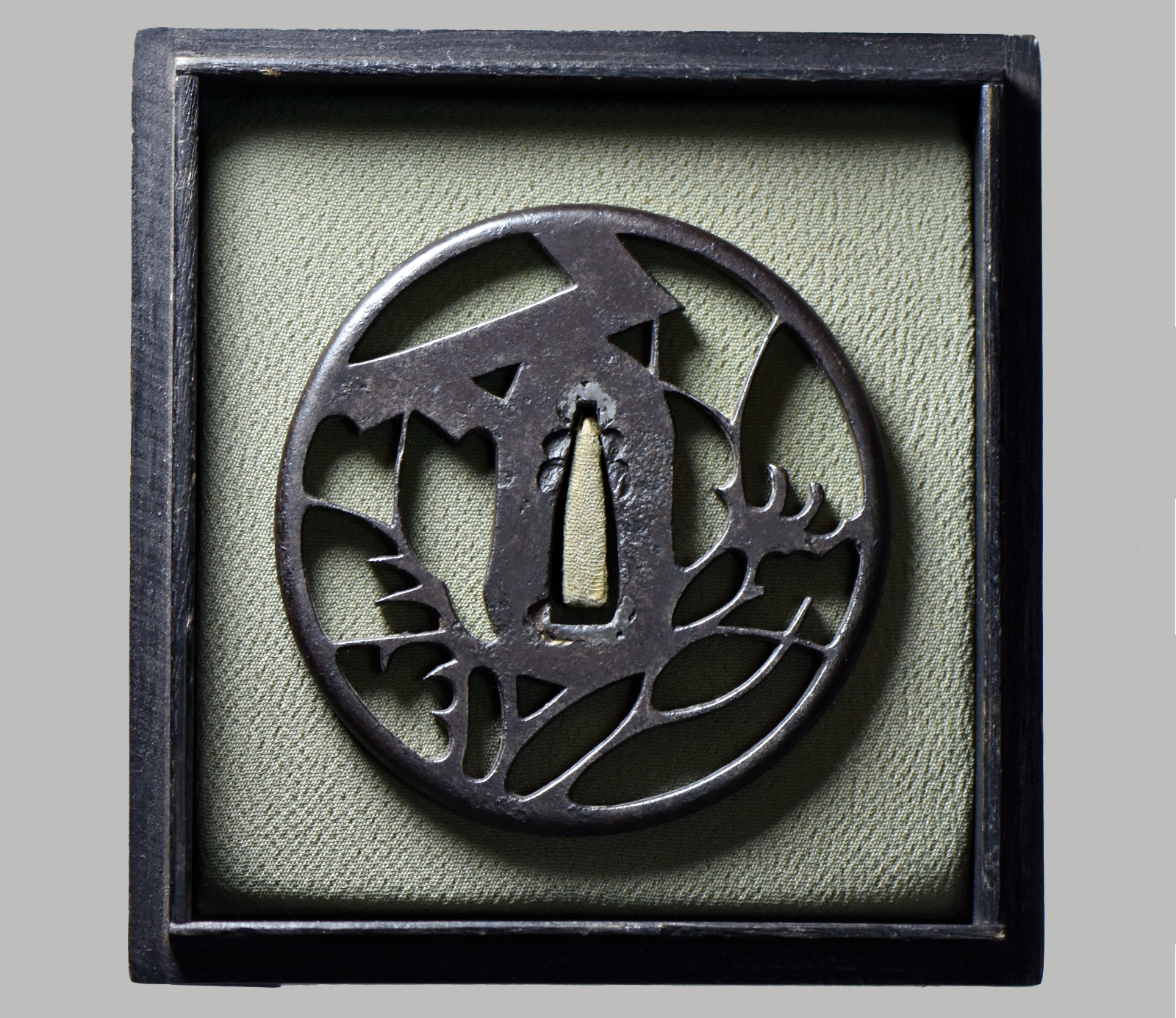
This tsuba is a refined example of the early Akasaka school and displays the characteristic qualities associated with the workshop, especially with similarities to the works in the tradition of the second master, Tadamasa. It has an almost round, slightly oval outline and is forged from dense, darkly patinated iron whose surface shows the depth, subtle texture, and calm presence that define the Ko-Akasaka period. The thickness of the rim and the strength of the plate feel well balanced, while the total weight of about 93 grams reflects the harmonious relationship between the substantial iron and the large openwork. The sukashi design is broad and confidently executed, fully in the spirit of early Akasaka aesthetics, which favor wide openings, flowing rhythm, and a well-judged interplay between positive and negative space. The pierced elements relate to one another organically, without angularity or stiffness, following a lively, almost calligraphic sense of movement that is typical of the Ko-Akasaka style. The depicted motif combines several classical themes. The prominent diagonal element at the top suggests three planks of the Yatsuhashi motif, the “Eight Bridges” from the Ise Monogatari, often abstracted and reduced to essential forms in Akasaka's work. The soft, curved lines and leaflike shapes in the lower part evoke the grasses of the Musashino plain, a poetic landscape motif that appears frequently in sukashi tsuba. Some of the rounded, lobed shapes can be interpreted as stylized chrysanthemum petals, rendered in the simplified silhouette manner favored by the early Akasaka masters. A design invented by Tadamasa and drawn at his peak of creativity. There is no paper with attribution included and the attribution is my personal thought. Taken as a whole, this tsuba embodies the essential qualities of the early Akasaka tradition: strong, well-forged iron; a lively yet harmonious openwork composition; classical themes from nature and literature; and an overall sense of calm refinement that reflects knowledgeable craftsmanship. The combination of Yatsuhashi, Musashino grasses, and chrysanthemum creates a subtly autumnal, poetic scene that fits seamlessly into the aesthetic associated with the Tadamasa lineage.
NihontoWatchOffered by Nihonto Art

The listing mentions papers that aren’t in our records yet. Papers can come from different bodies (the NBTHK, the NTHK and smaller societies), and only current NBTHK or NTHK shinsa papers are the independent check we rely on. Please ask the dealer which body issued them. — Hoshi

Iron-tsuba · Edo
56 pieces on the market now
The Akasaka school comprises a lineage of iron tsubako (鐔工) who relocated from Kyoto to the Akasaka district of Edo at the beginning of the Edo period, thereafter flourishing until the end of the Tokugawa shogunate. The founding master, Shozaemon Tadamasa (忠正), is traditionally held to have been active from the Kan'ei to Meireki eras (1624--1658); a genealogical statement (yui-shogaki) submitted during the Bunsei era records that shodai Tadamasa died in Meireki 3 (1657) and nidai Tadamasa in Enpo 5 (1677). The so-called "upper three generations" (jo sandai) of Ko-Akasaka -- shodai Tadamasa, nidai Tadamasa, and sandai Tadatora (忠虎) -- produced no confirmed signed works. It is only with the fourth generation, Hikojuro Tadatoshi[[c:1]], around the Genroku era, that signed pieces appear, bearing inscriptions such as "Bushu-ju Akasaka Hikojuro Tadatoshi saku"[[c:2]]; thereafter, through the ninth generation, the main line continued to bear the name Tadatoshi. A notable branch was established by Tayuemon Tadashige[[c:3]], who entered the school under the fourth-generation Tadatoshi -- his practical teacher being the fifth -- and whose eldest son Tadayoshi (忠好) carried on his line. As iron ji-sukashi (地透) tsuba makers, the Akasaka school is renowned alongside the Kyoto, Owari, and Higo traditions. In the school's ironwork one encounters a forging method referred to as sanmai-awase[[c:4]], a form of composite laminate construction. Their subjects frequently express natural scenery, famous places, and episodes from classical precedent (koji), rendered through inventive designs: established motifs include Hachi-no-ki, Shiguretei, Musashino, wind and bamboo, praying mantis, interlocking rings, and aged pines. In construction, the plate's nikuoki (肉置き) typically rises to a gentle central swell (nakadaka); the connecting bridges of the openwork broaden near the rim, producing a stable visual balance; and the rim is customarily finished as a rounded maru-mimi (丸耳).
The seppa-dai narrows toward the top into an almost pointed form, and the kogai-hitsu is typically smaller than the kozuka-hitsu -- a diagnostic feature especially pronounced in works of the first and second generations. In the earlier Ko-Akasaka phase, the workmanship is marked by a calm, restrained tsuchime (槌目) finish and a powerful maru-mimi, with designs unconstrained by strict symmetry, showing instead a free spirit and tenacious strength; one can sense the influence of Kyo-sukashi, Owari-sukashi, and early Ko-Shoami. The openwork carving possesses a distinctive, sharply pointed character, and striped iron bones (tekkotsu) visible on the rim further convey an old style of pronounced dignity. One of the principal attractions of Akasaka tsuba lies in the novelty of their compositions, and in this regard the school's most celebrated later master, Tadashige, is outstanding. A long-lived artisan whose late-life signature "at the age of eighty-four, made by Tadashige"[[c:5]] is recorded, he has been praised as among the finest of all Akasaka masters from the fourth through ninth generations. His progressive temperament led him to incorporate decorative pattern ideas associated with Ogata Korin, and his designs -- such as the sankai-matsukaze (三階松風) motif, which is his own invention "not found even among Higo tsuba" -- demonstrate a striking originality within the iron sukashi idiom. His work displays a characteristic reduction of volume at the rim edge, superb forging, and a patinated rust tone possessing a distinctive sheen. Together with the dignified unsigned works of Ko-Akasaka and the refined productions of Tadayoshi, the Akasaka school's body of work testifies to a tradition that synthesized the elegance of Kyoto openwork with the strength of Owari into a distinctive Edo aesthetic -- one whose "true specialty," in the words of the NBTHK examiners, "is a stylish and tasteful openwork aesthetic" (iki na sukashi o honryo to shita). Learn more →
| Smith | Era | Designated |
|---|---|---|
| Tadamasa忠正 | 1624-1657 | 5 |
| Tadashige忠重 | 1730-1816 | 5 |
| Tadatoki忠時 | 1704-1764 | 0 |
| Juchiku/Toshitake寿竹 | — | 0 |
| Tadanori忠則 | 1730-1780 | 0 |
We could not find an authenticity certificate on the seller’s listing. Japanese swords and fittings are normally papered by the NBTHK (or the NTHK). Without one, the attribution is the seller’s own assessment and has not been independently verified — treat it with caution and ask the dealer about certification before buying.
14-day return window in original/unused condition; antique items (swords, menuki, tsuba and similar) are expressly excluded from exchange; EU consumers retain a 14-day cancellation right; refunds within 10 business days of approval.