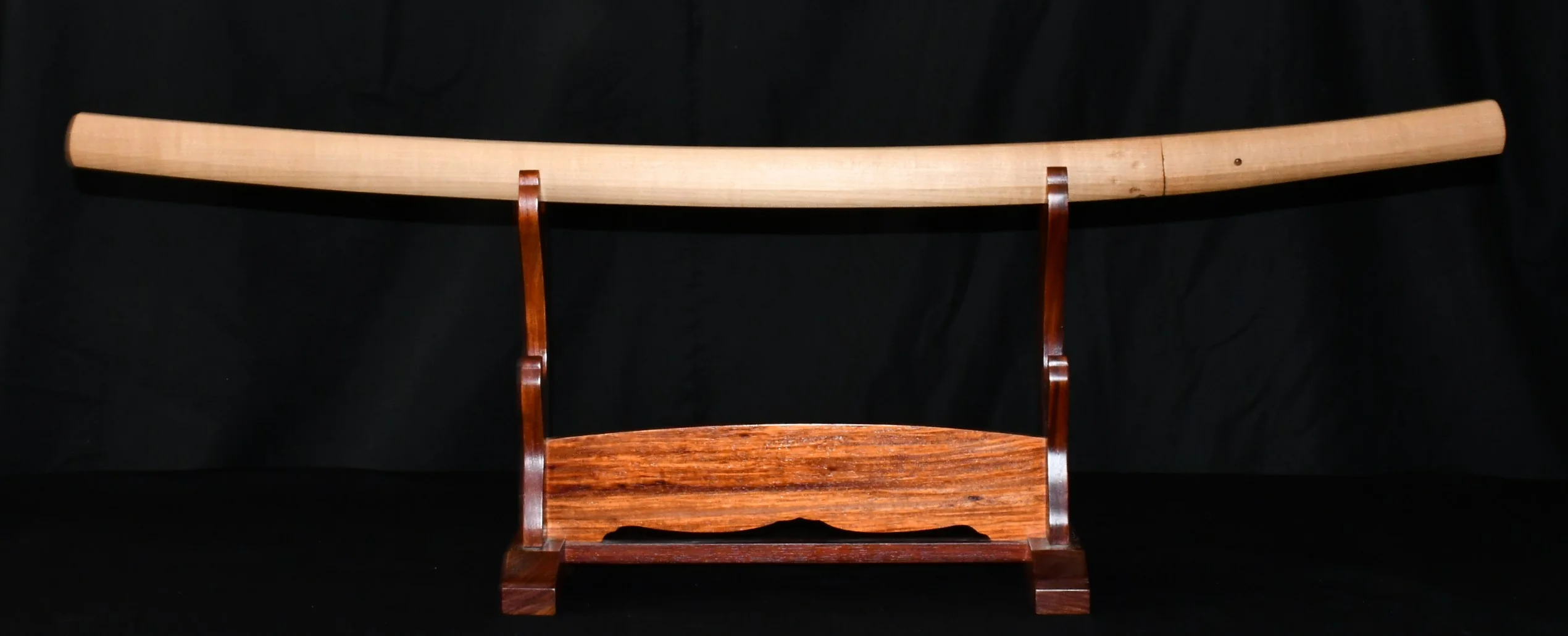
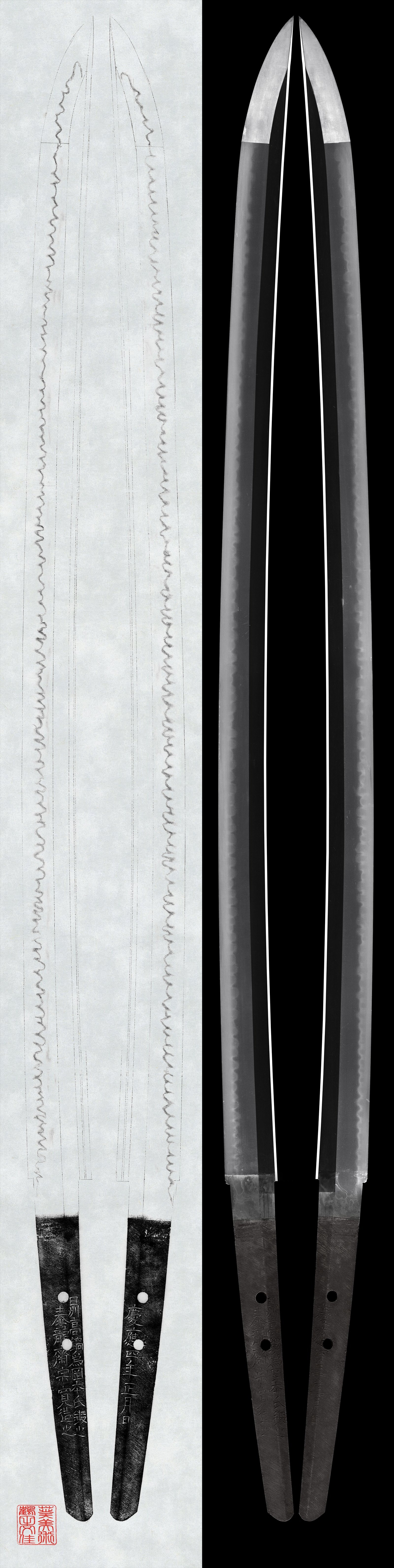
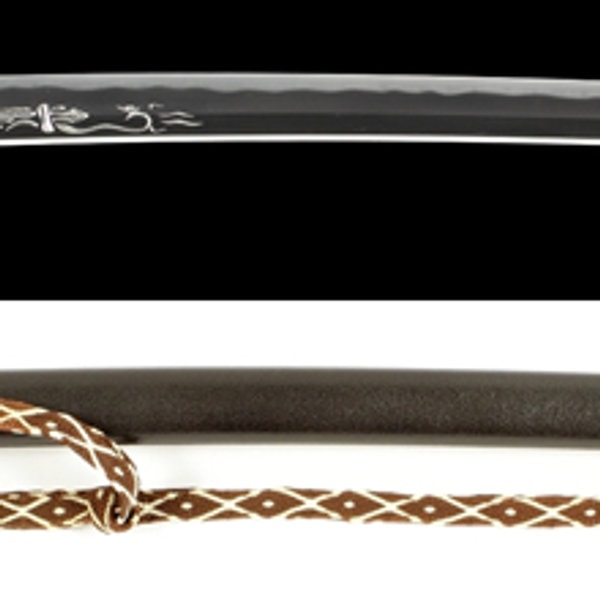
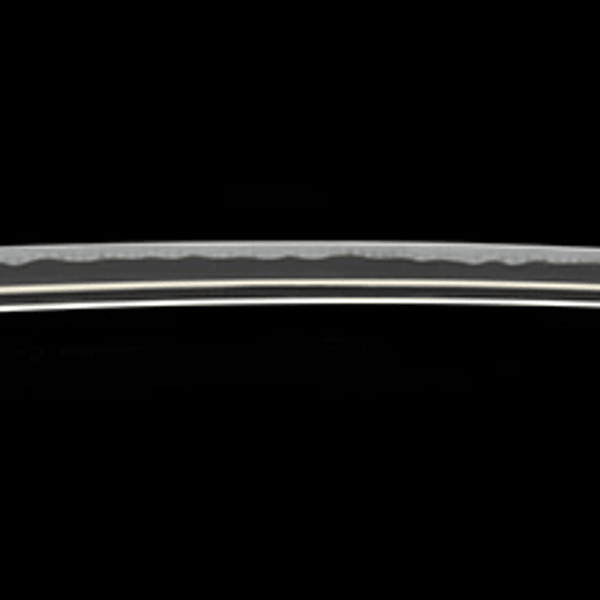
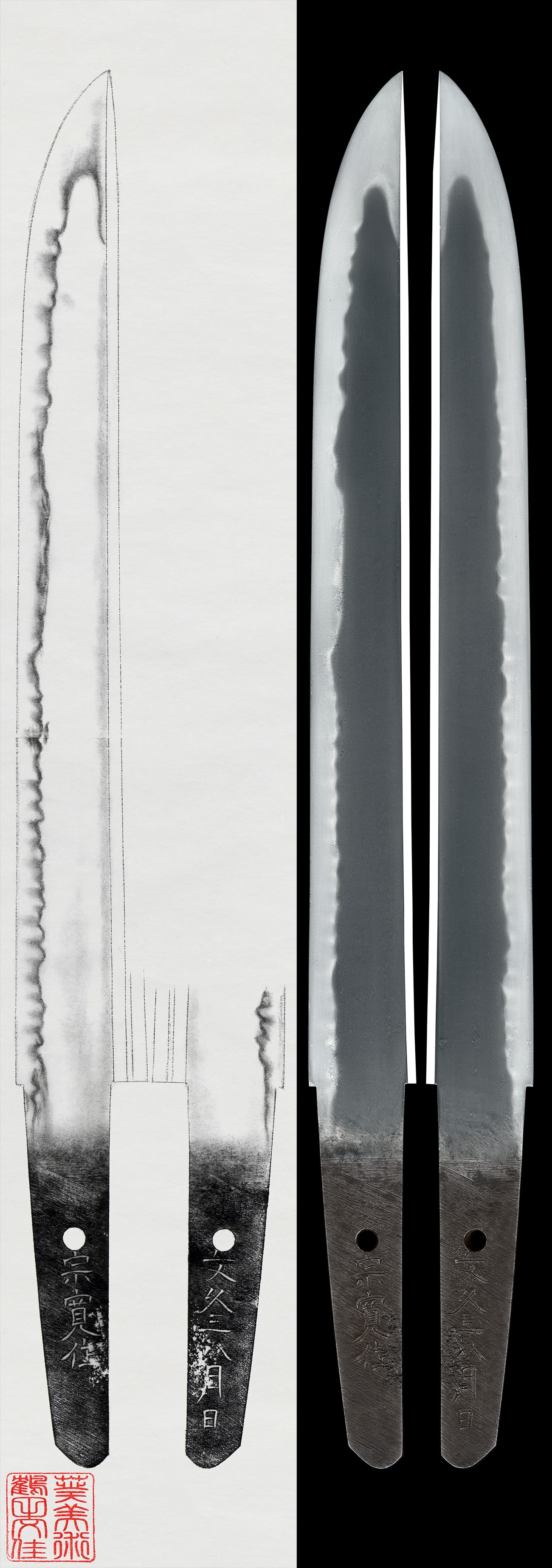
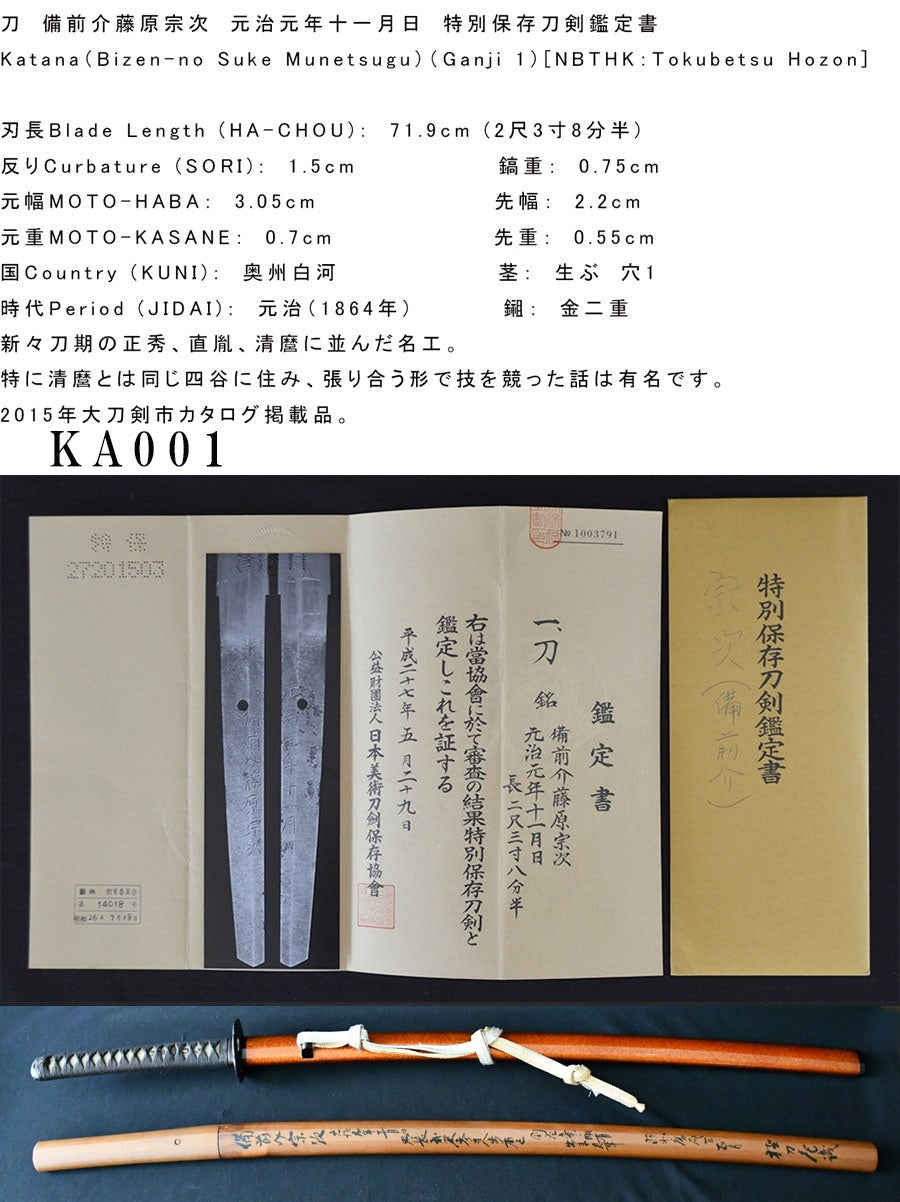
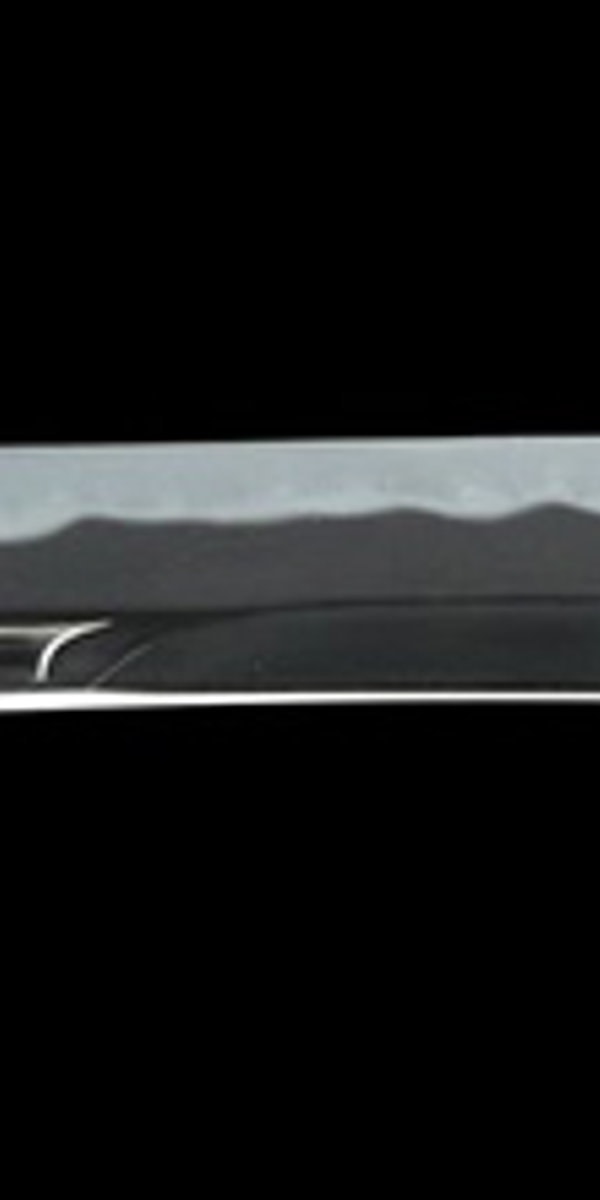
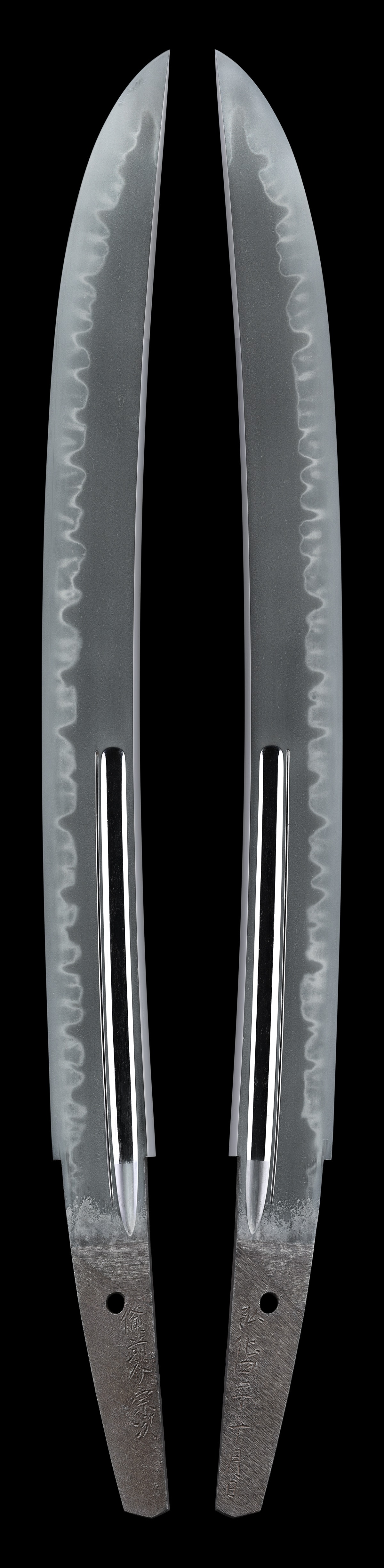
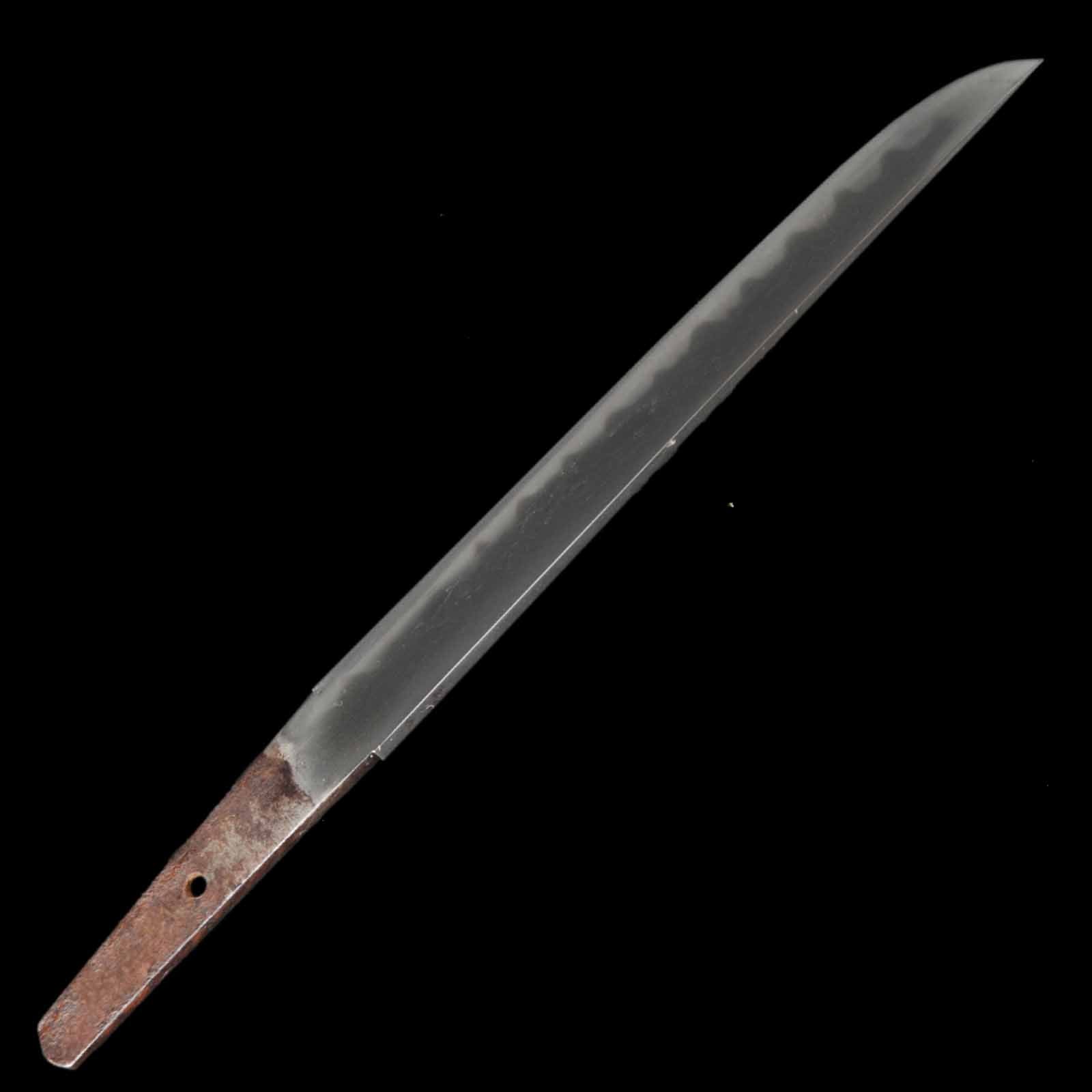
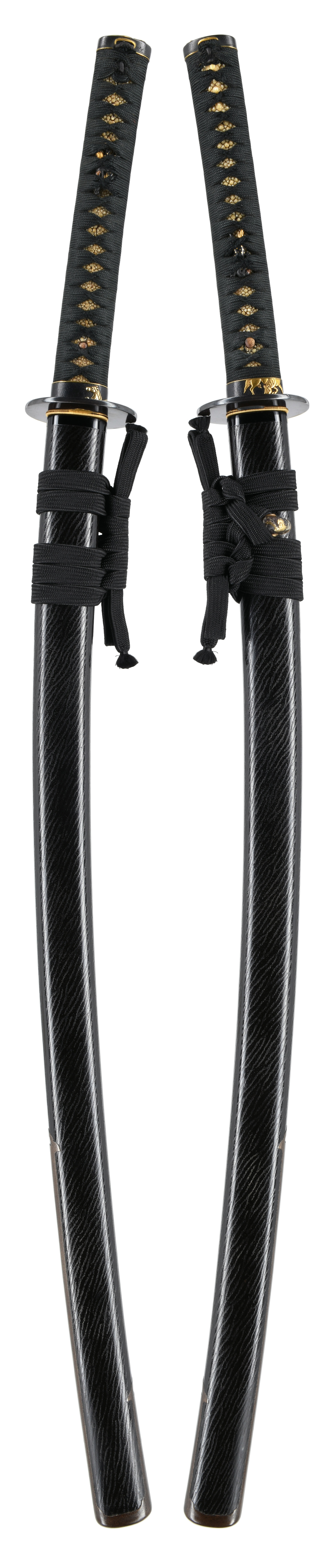
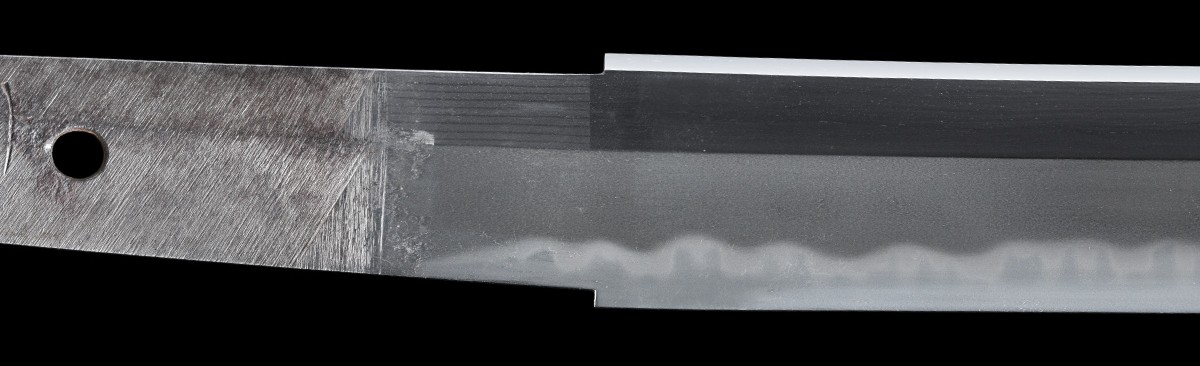
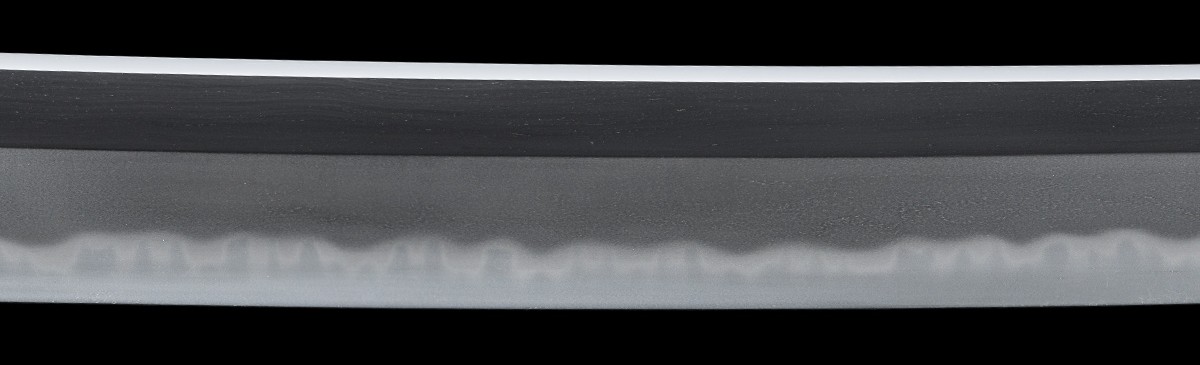
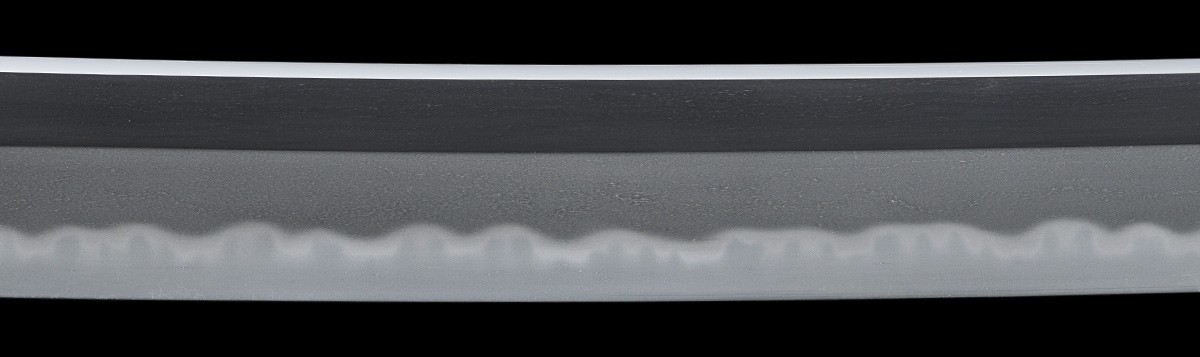
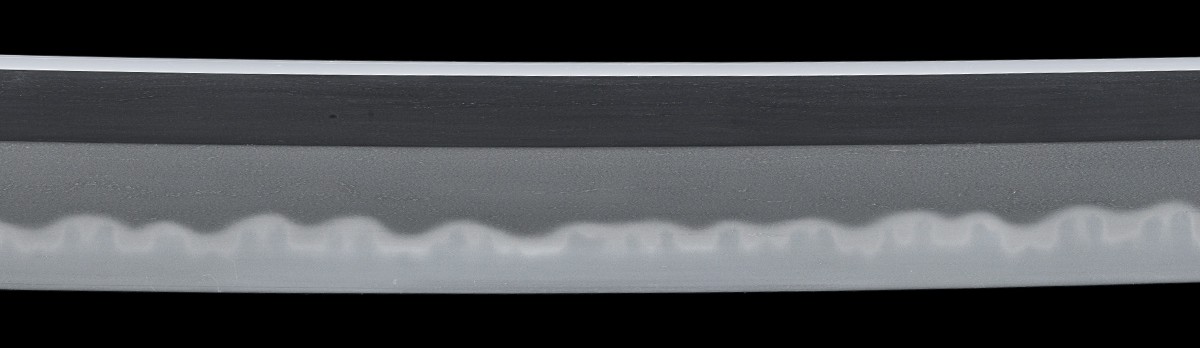
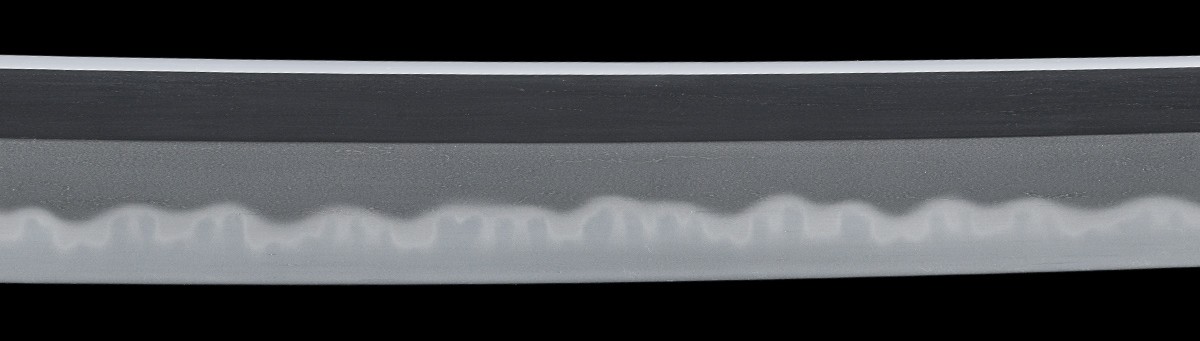
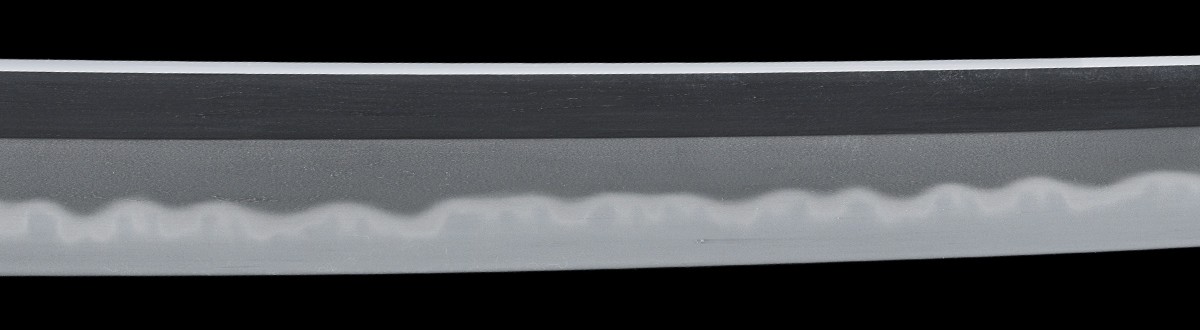
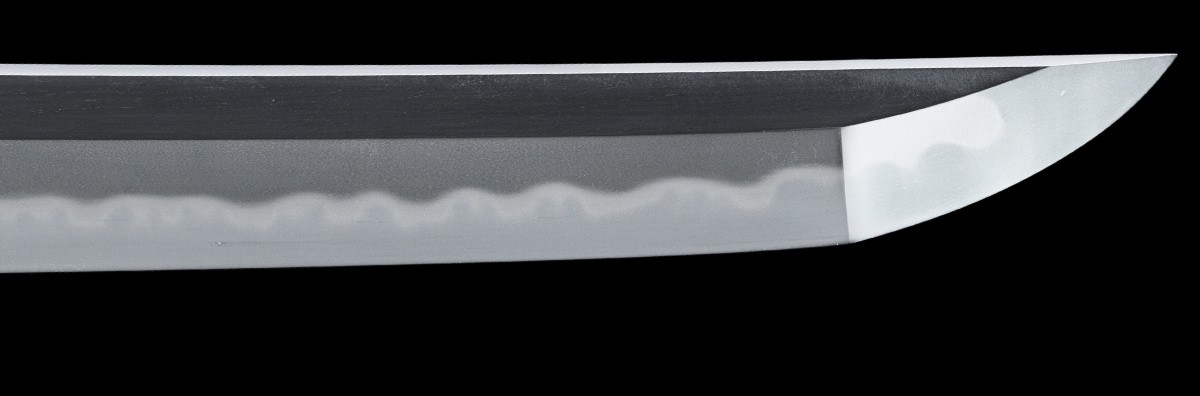
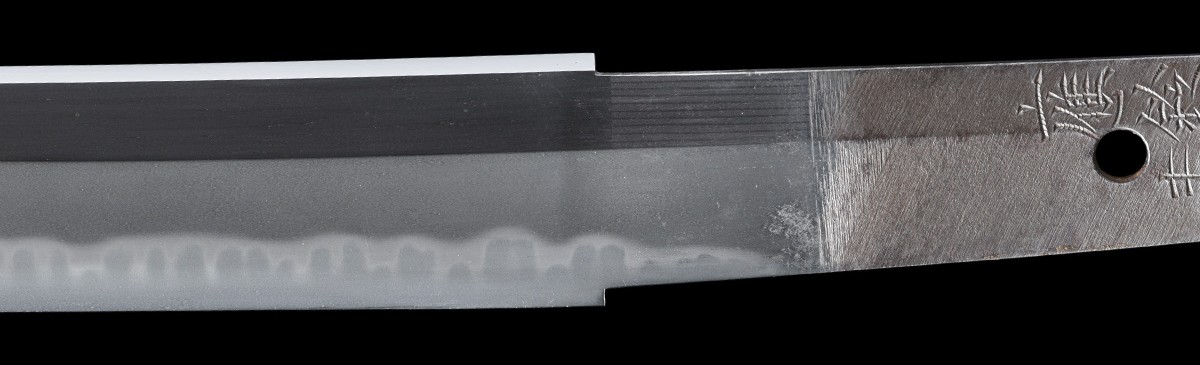
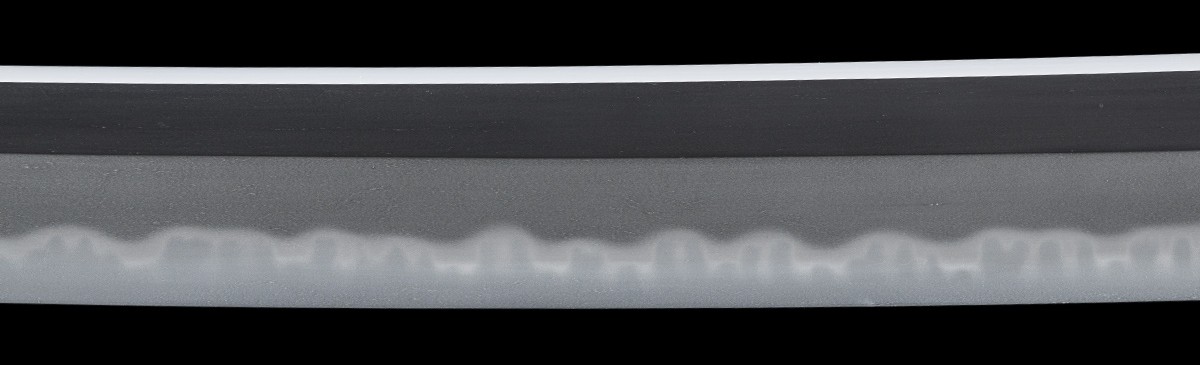
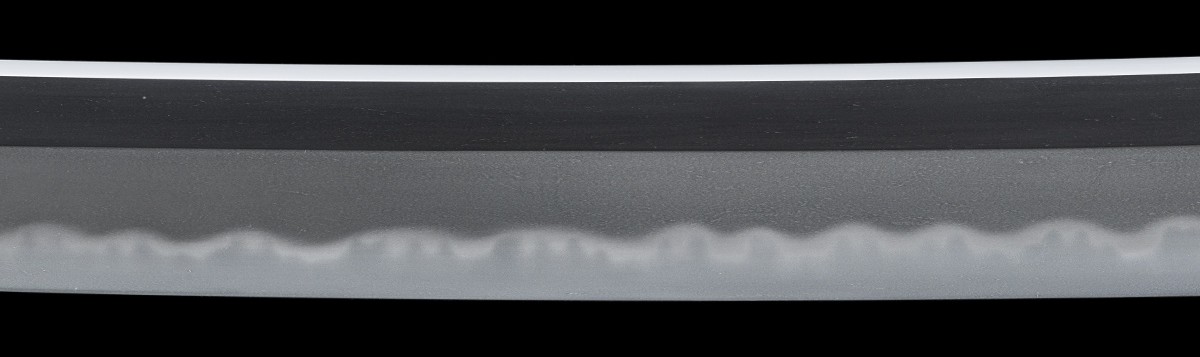
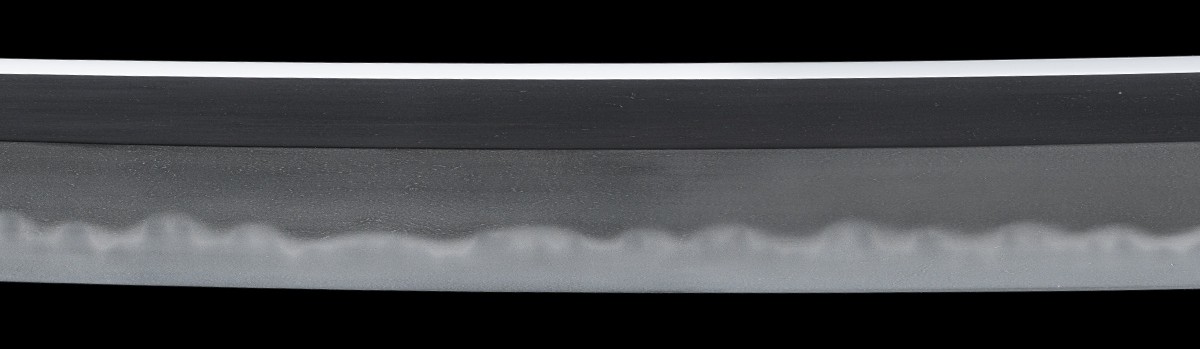
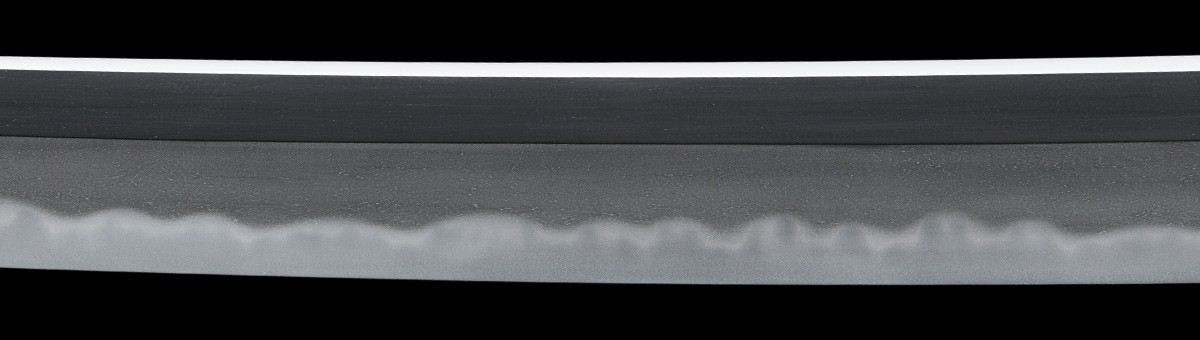
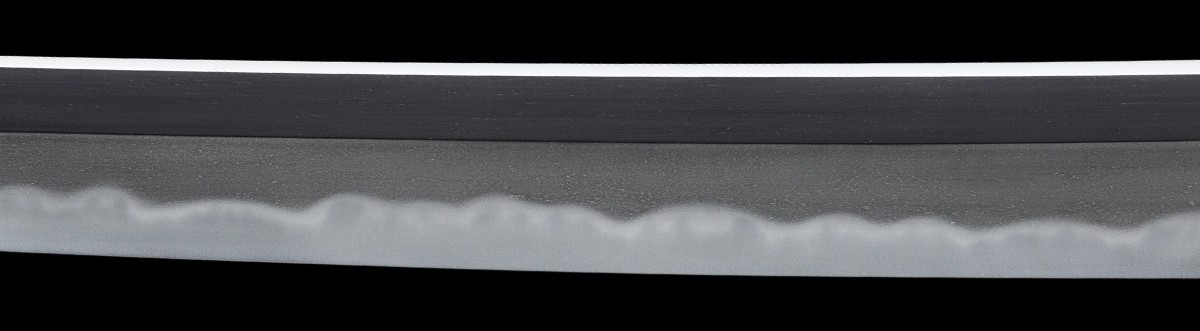
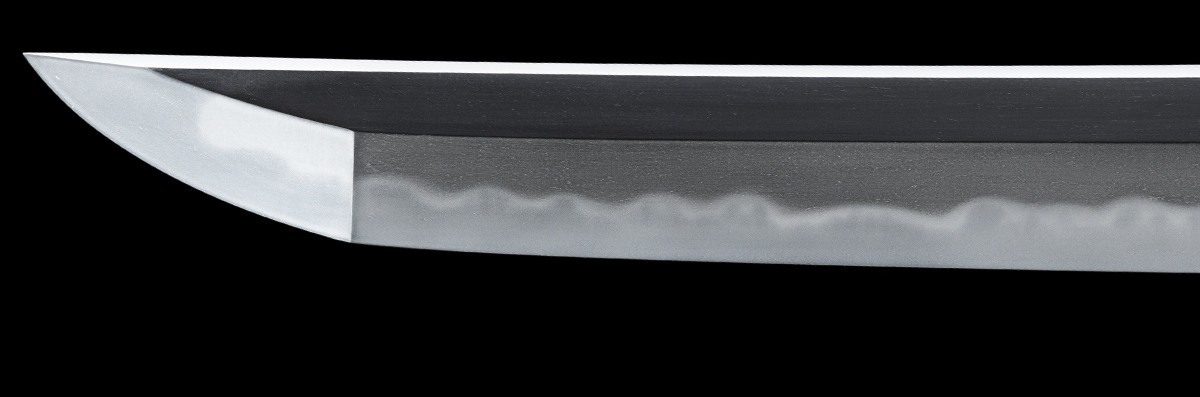
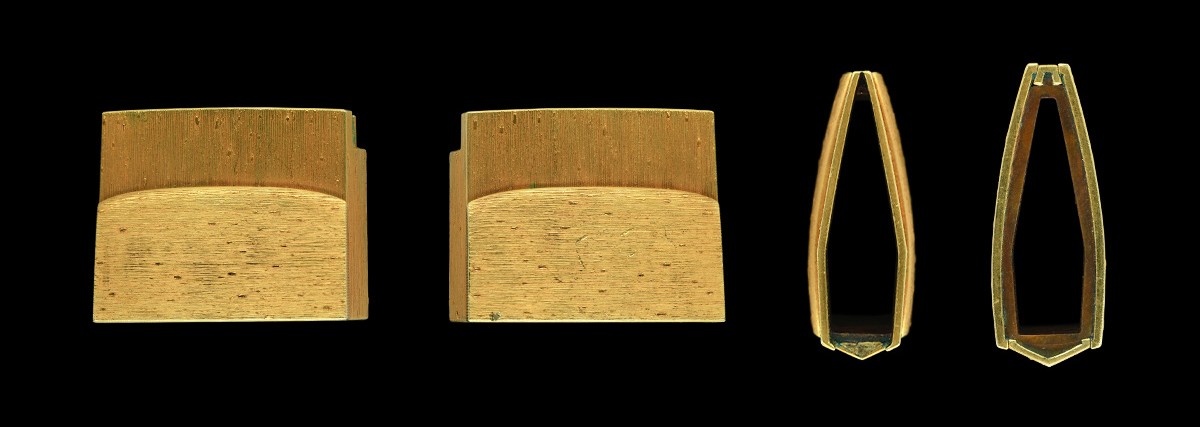
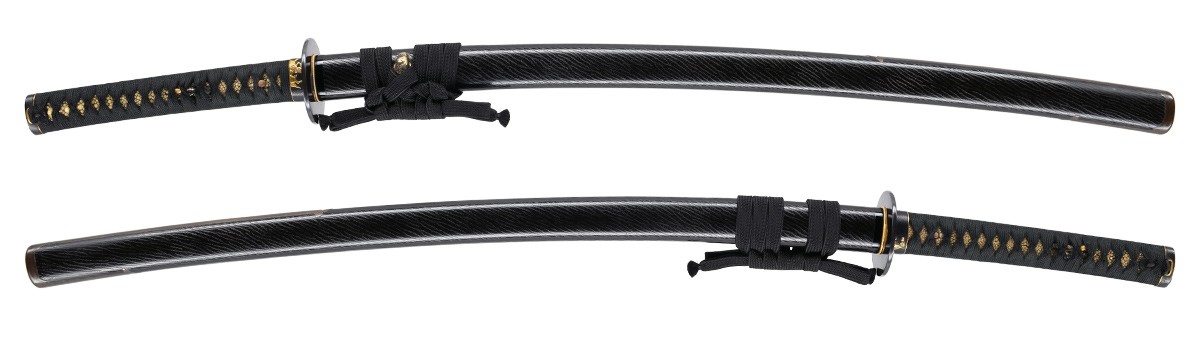
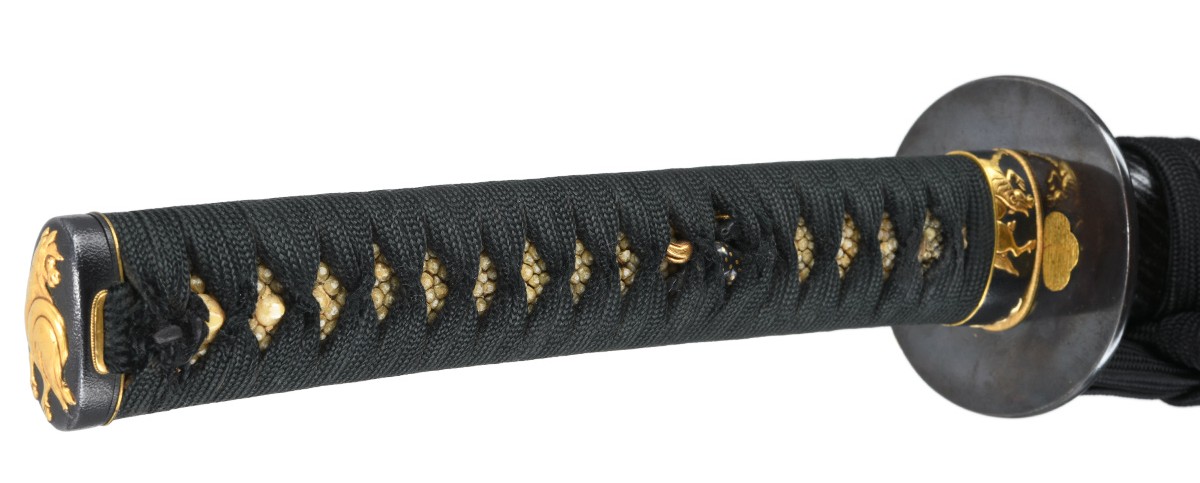
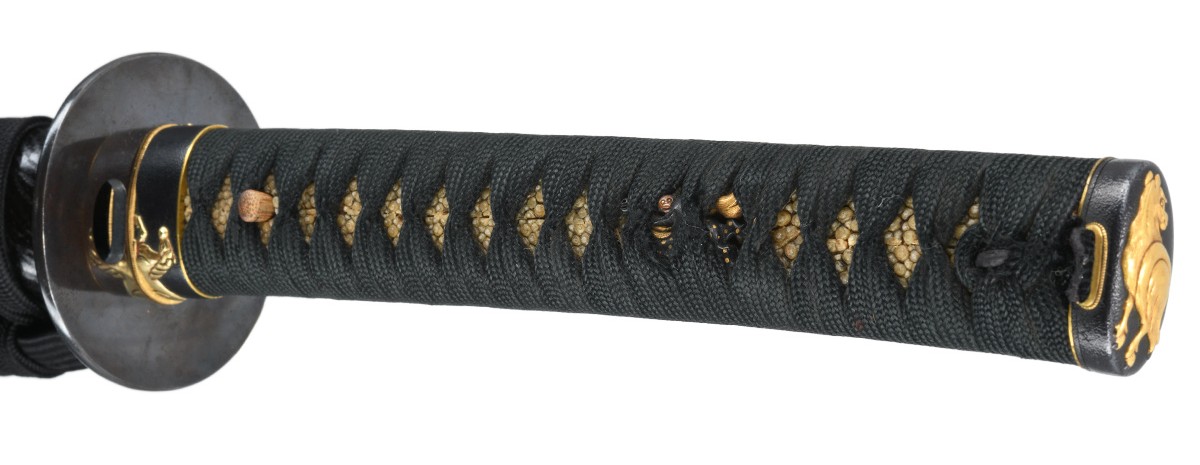
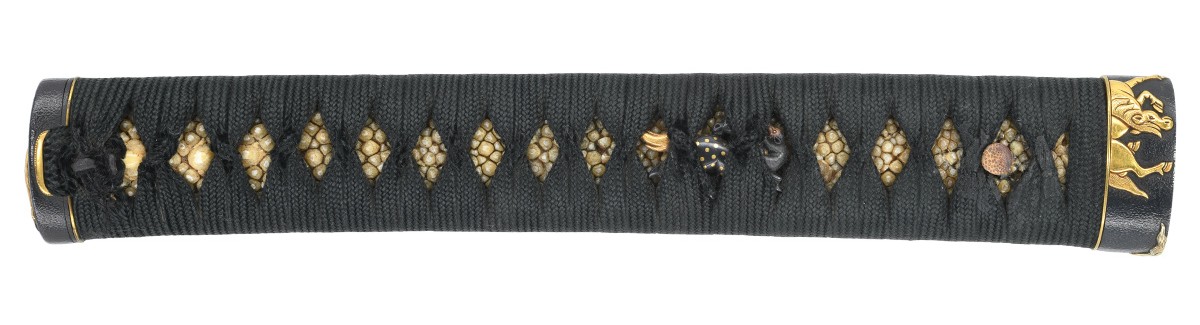
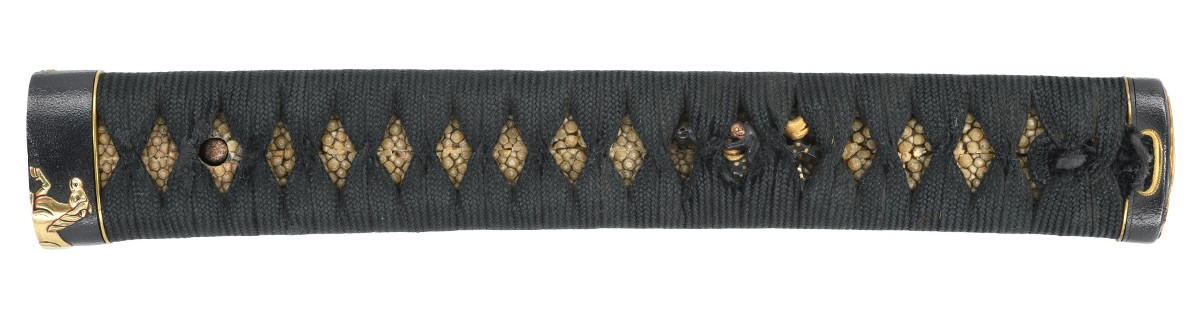
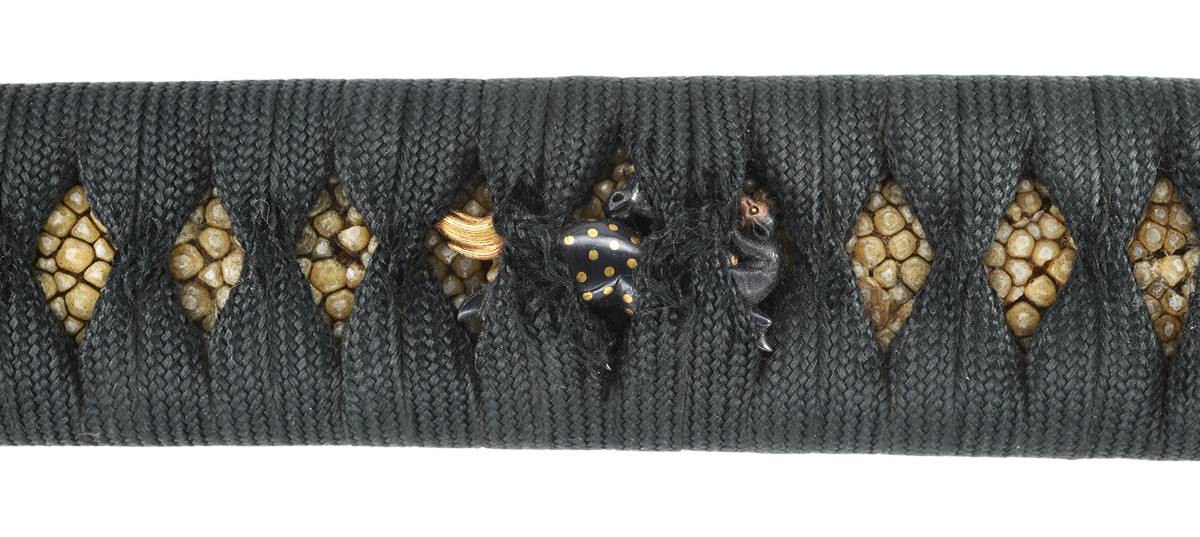
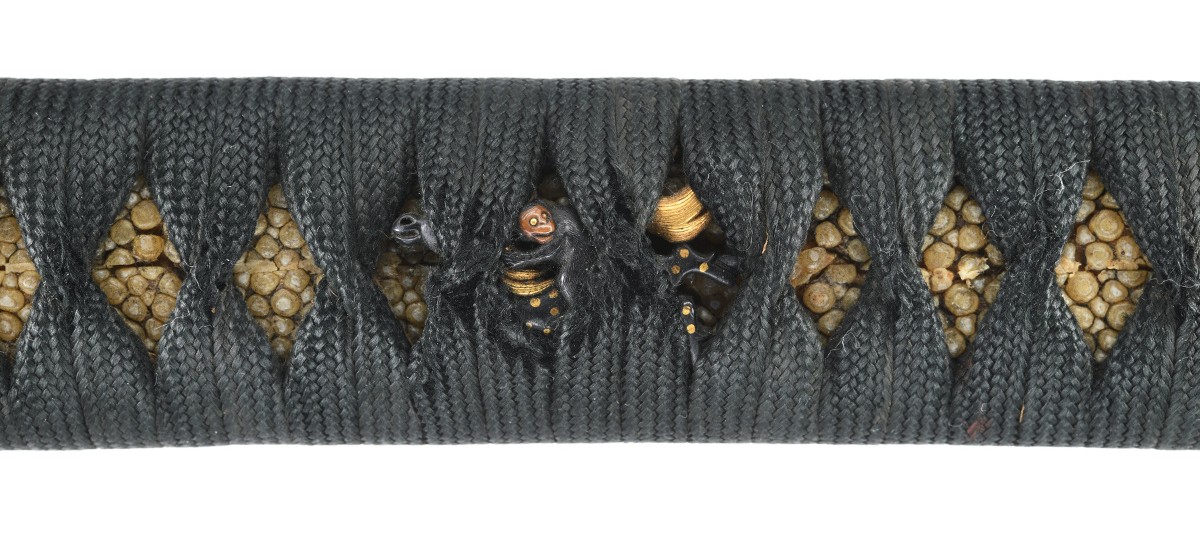
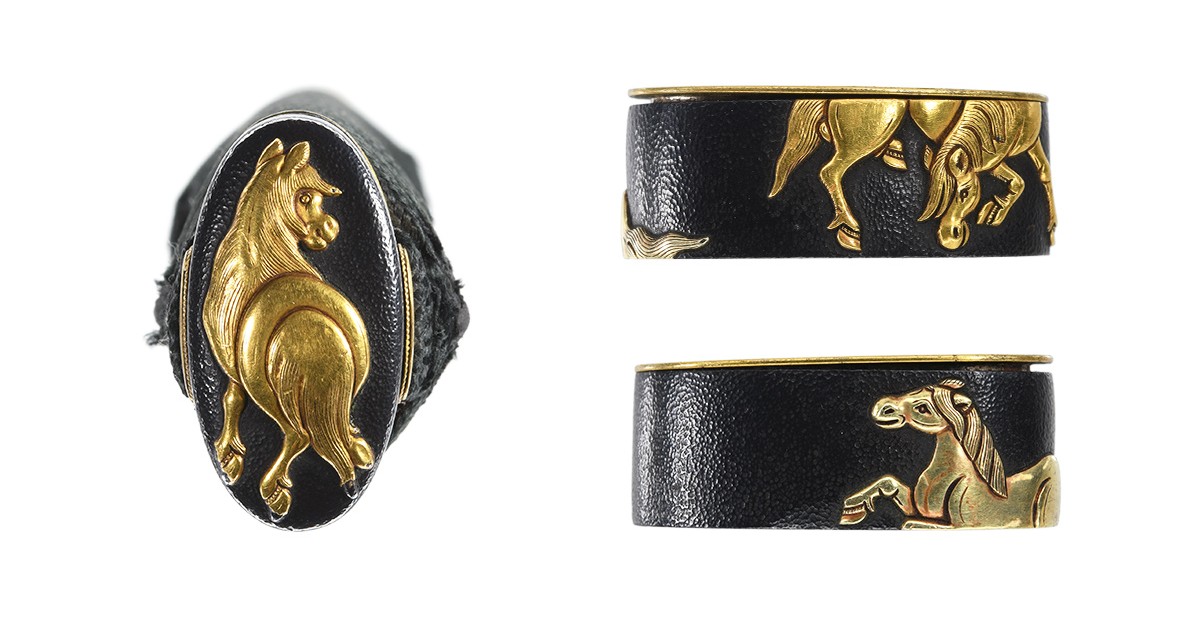
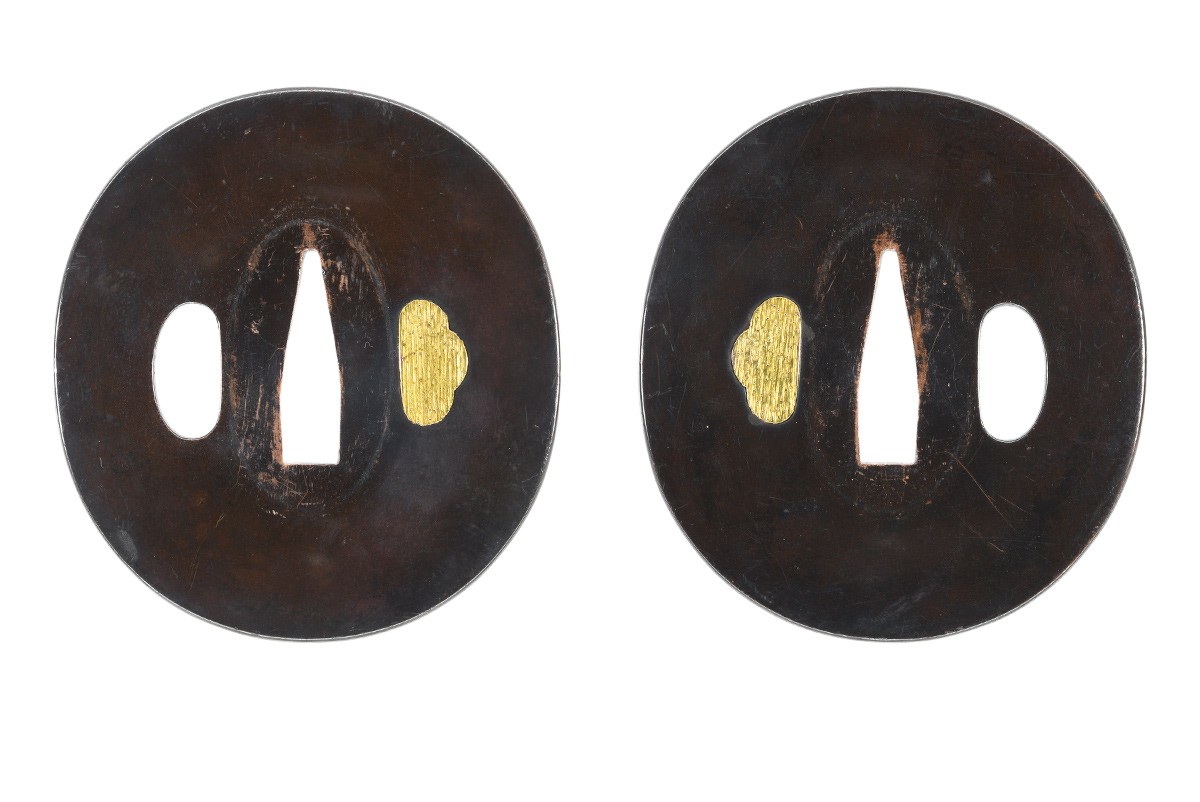
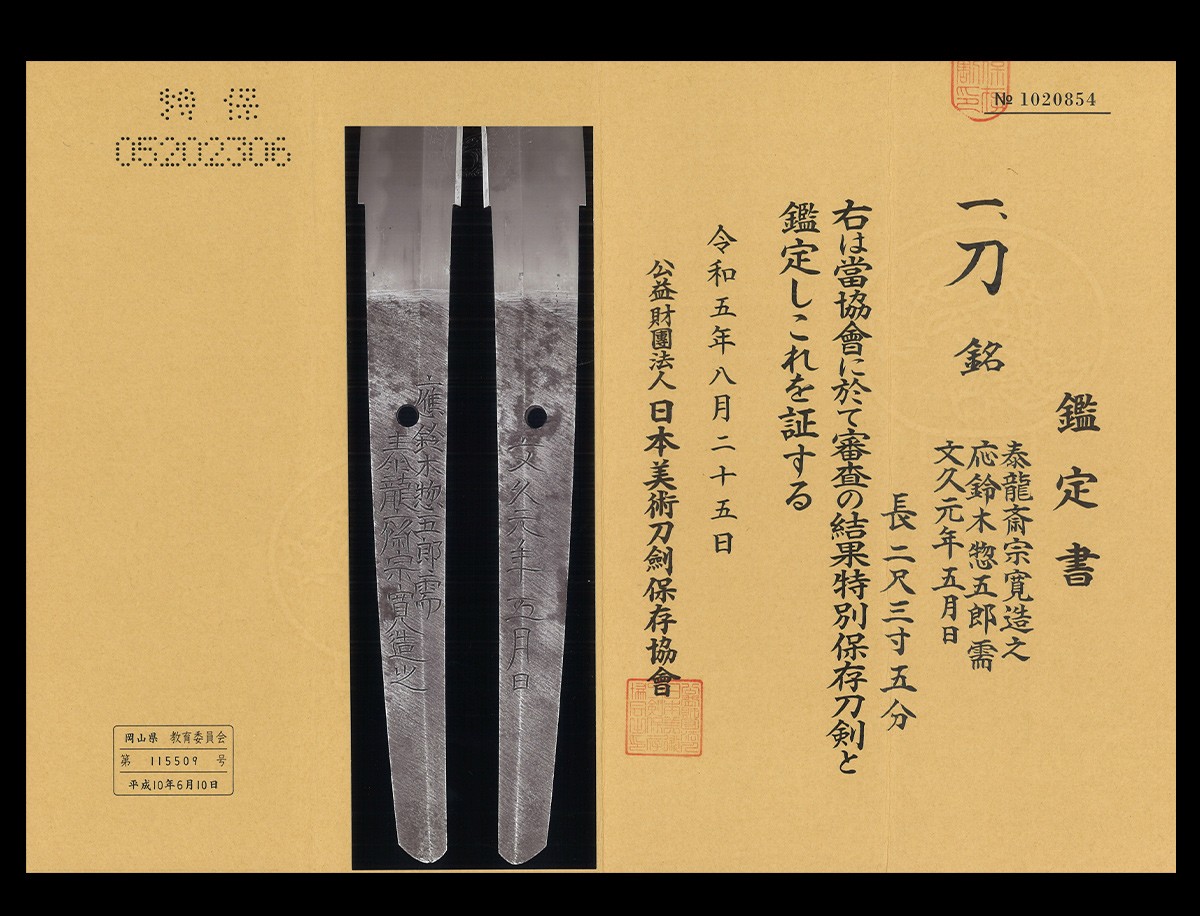
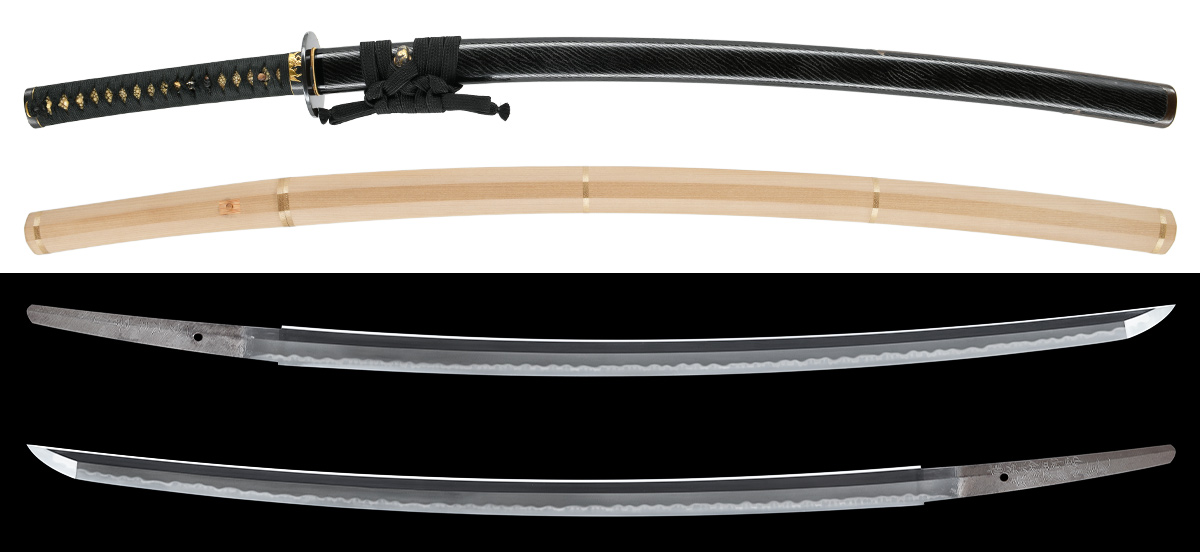
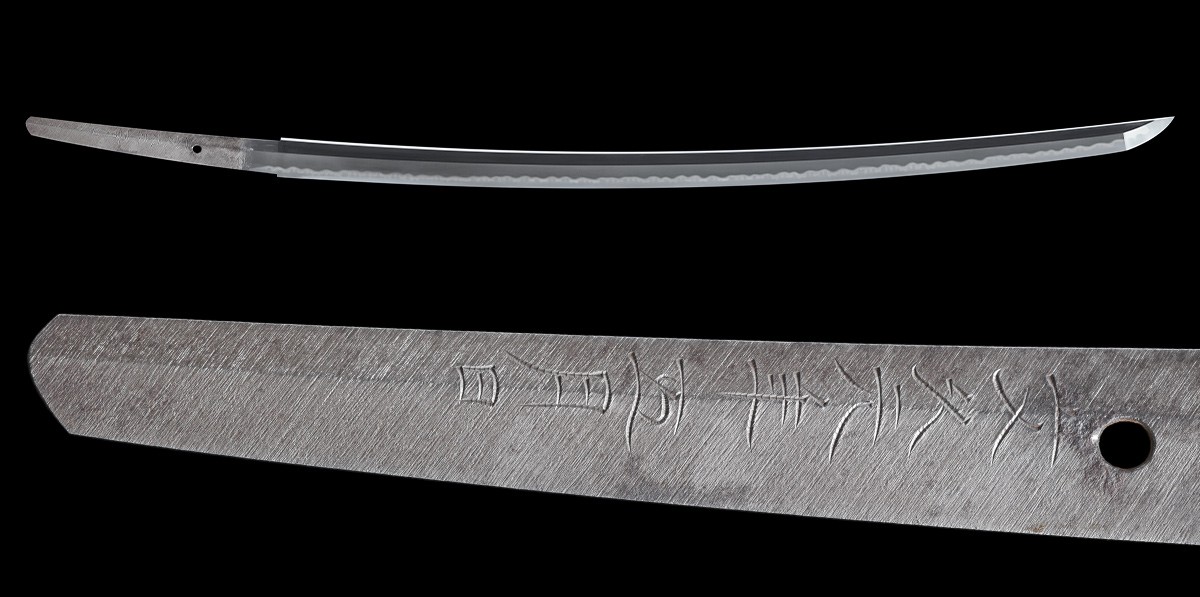
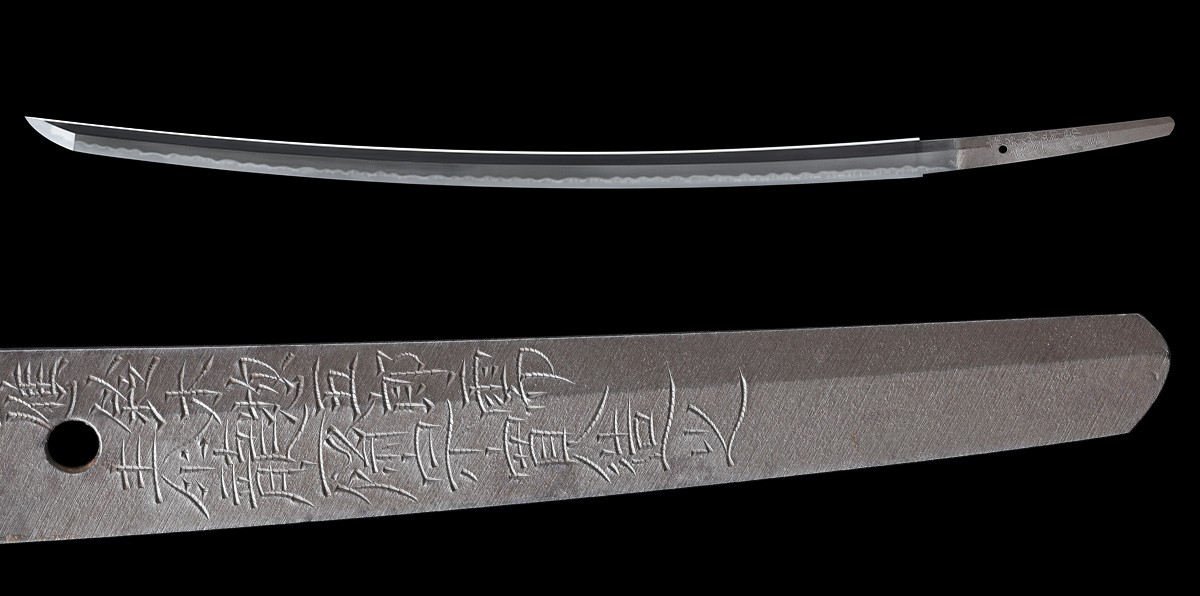
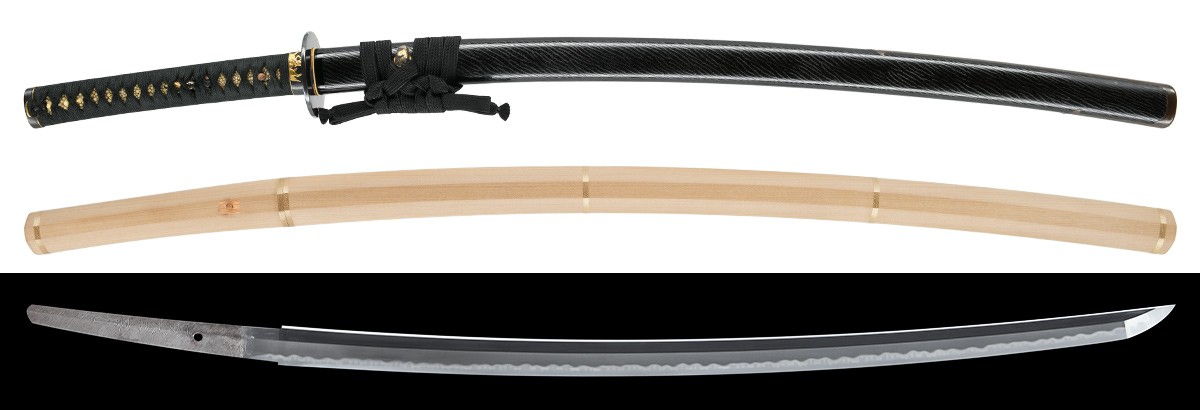
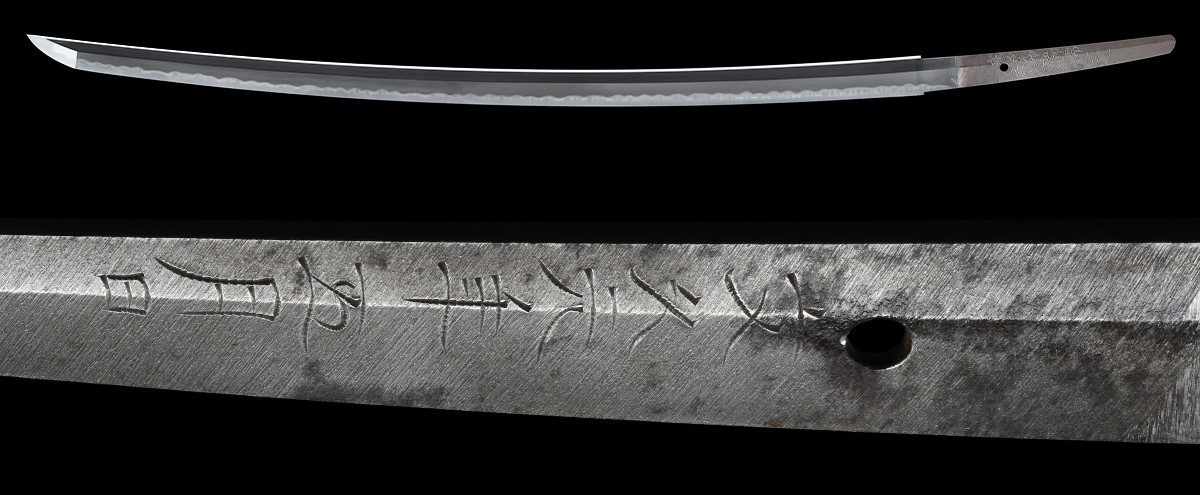
This is a katana by Tairyusai Soukan, born in 1819 and active in Musashi province during the late Edo period. It features a shinogizukuri shape with koitame jigane and a hamon of ko-gunome, togariba, and ko-choji. The blade comes with a shirasaya, a gold foil habaki, and a koshirae, and is accompanied by an NBTHK Tokubetsu Hozon Token certificate.
 NihontoWatchBETA
mei · Keio (1865-1868) · nagasa 71.3cm · sori 1.8cm

Shinshinto · Musashi · around 1850-1868
Tōken Taikan top 49%
7 pieces on the market now
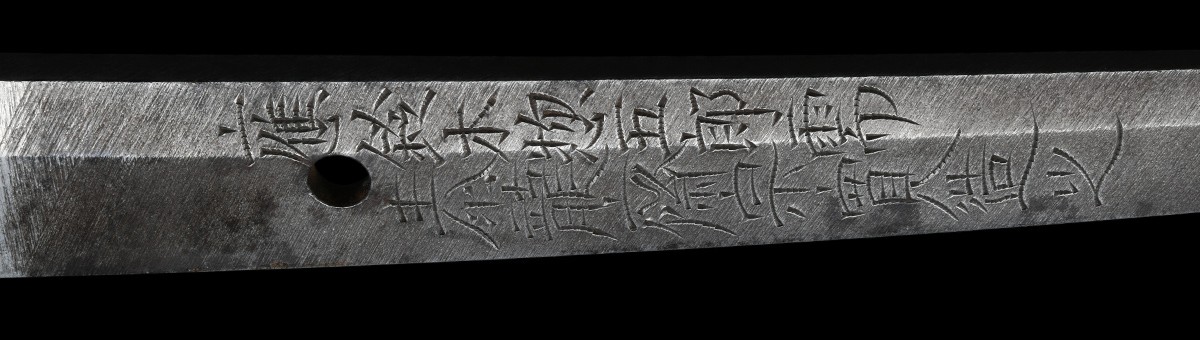
Sokan was born in the early Bunsei era (1818-1830) as the son of Ono Heizo, in the castle town of Shirakawa in Oshu. His teacher in swordmaking was Koyama Munetsugu, and his forging career appears to have begun around the end of the Tempo era (1830-1844). From around the beginning of the Kaei era he served as a retained smith of the Shimosa Furukawa Domain. Among his later works are examples signed "Abukuma-gawa Sokan," in which he adopted as a surname the Abukuma River of his native region. He began regularly using the art name Tairyusai from around Ansei 1 (1854). His residence in Edo was at Fukagawa Hakozaki. Initially cutting his signatures in kaisho (standard script), from around the eighth month of Ansei 4 (1857) he changed to reisho (clerical script). He was also adept at carving on sword blades and likely served as a capable assistant to his teacher. He continued making swords into the Meiji era, but no works are seen after the Haitorei; he died on January 23, Meiji 16 (1883).
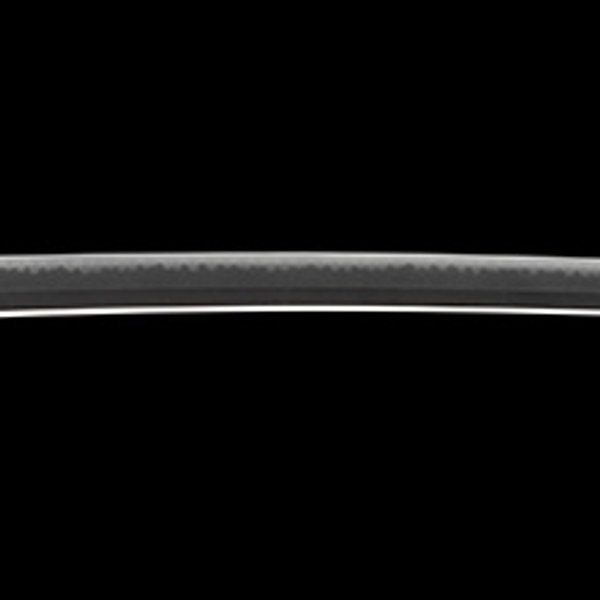
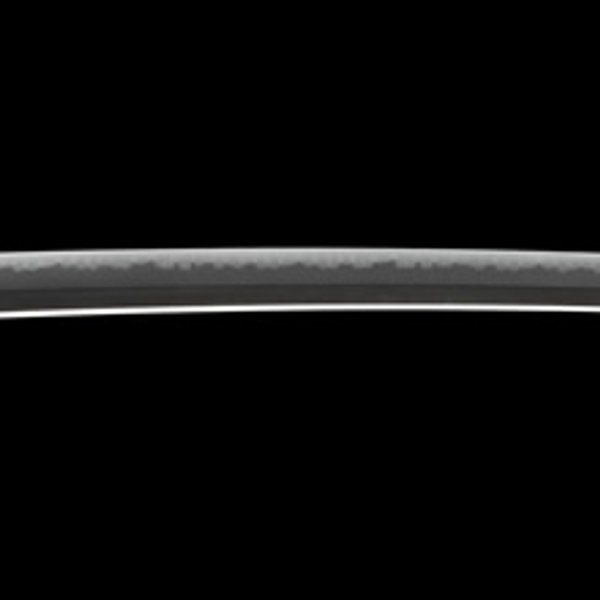
Sokan's blades present the bold, imposing sugata characteristic of the shinshinto period: wide mihaba, thick kasane, shallow sori, and large kissaki, imparting a powerful appearance. The forging shows tightly packed ko-itame with thickly adhering ji-nie and abundant fine chikei; the faintly standing, distinctive midare-utsuri characteristic of this smith also appears. The hamon is based on choji mixed with ko-gunome, gunome, and angular-headed forms, with long ashi entering well; the temper is nioi-dominant with ko-nie and occasional ara-nie, with fine kinsuji and sunagashi, and a bright and clear nioiguchi. In his comparatively early works the choji rises and falls with pronounced variation, producing a more splendid and flamboyant effect, while later works feature a linked succession of somewhat smaller-patterned temper elements. The boshi characteristically runs in midare-komi with ko-maru and a long kaeri.
The NBTHK recognizes Sokan as a smith of high technical ability whose finest works demonstrate that capability to its fullest. His earlier pieces are noted for greater variation within the choji pattern, with the hardened edge displaying noticeable change and a more brilliant effect, while late works show the bright, clear edge standing out strikingly against the robust form. Both ji and ha in his superior examples are described as kenzen (sound and well-preserved), a recurring evaluative commendation. The cutting-test inscriptions that frequently accompany his blades, often by Iga Norishige — counted among the "Four Heavenly Kings" of late-Bakumatsu connoisseurship — are noted as possessing great documentary value, further attesting to the esteem in which Sokan's work was held among warrior patrons of the period.
Where Sokan stands among comparable artisans: across all of nihontō, and within tradition, era, and period. The tiers (Foremost · Leading · Major · Notable) weigh official designations from the NBTHK and Japan's Agency for Cultural Affairs, together with historical honors of lasting repute such as the Sansaku and Meibutsu-chō.
Select a lens to see how it's measured.
Years he was demonstrably active, proven by signed-and-dated blades
Shinshinto · Musashi
18 pieces on the market now
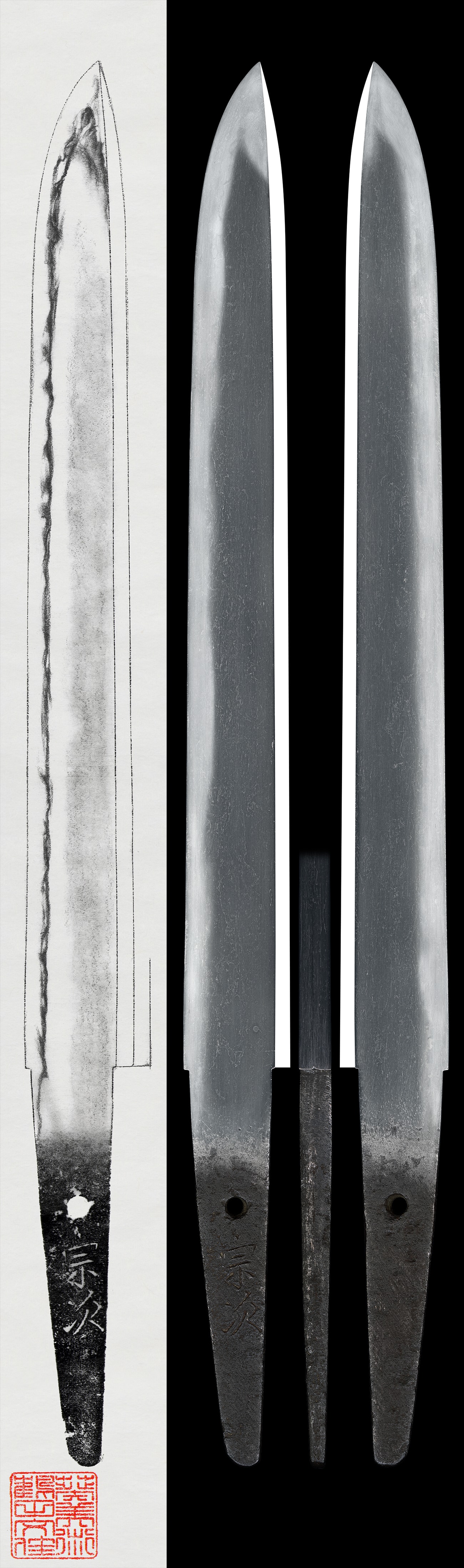
Born in Kyōwa 3 (1803) at Shirakawa in Ōshū, Koyama Munetsugu (固山宗次) carried a smith's name read variously in the setsumei as Munobei or Sōbei, working under the art-names Issensai and Seiryōsai. He came up alongside elder brothers Munehira and Munetoshi, and although his teacher is traditionally given as Katō Tsunahide, the NBTHK readers repeatedly note that the hand of Katō Tsunatoshi shows through his work more plainly. Learn more →
| Smith | Era | Designated |
|---|---|---|
| Munetsugu宗次 | 1830-1870 | 51 |
| Sokan宗寛 | 1850-1868 | 4 |
| Tairyusai泰龍齋 | 1854-1860 | 1 |
A Hozon-certified blade judged to show notably superior workmanship and a better state of preservation. The bar is higher: re-tempered blades and most unsigned Muromachi/Edo works are excluded.
The NBTHK (Nihon Bijutsu Tōken Hozon Kyōkai, the Society for the Preservation of Japanese Art Swords) is a public-interest incorporated foundation founded in 1948 and supervised by Japan’s Agency for Cultural Affairs (Bunkachō); it is based at the Japanese Sword Museum in Tokyo. Its expert panels physically examine each submitted work (shinsa) and issue a certificate (kanteishō) ranking it by artistic and historical merit. NBTHK papers are the most widely recognized standard of authentication for Japanese swords and fittings.
NBTHK official siteNo cooling-off period or returns; refund only if the purchased sword is proven fake, capped at purchase price (excludes commission sales, accessories, auction items).
This is a katana by Tairyusai Soukan, born in 1819 and active in Musashi province during the late Edo period. It features a shinogizukuri shape with koitame jigane and a hamon of ko-gunome, togariba, and ko-choji. The blade comes with a shirasaya, a gold foil habaki, and a koshirae, and is accompanied by an NBTHK Tokubetsu Hozon Token certificate.
NihontoWatchBETAmei · Keio (1865-1868) · nagasa 71.3cm · sori 1.8cm
Shinshinto · Musashi · around 1850-1868
Tōken Taikan top 49%
7 pieces on the market now
Sokan was born in the early Bunsei era (1818-1830) as the son of Ono Heizo, in the castle town of Shirakawa in Oshu. His teacher in swordmaking was Koyama Munetsugu, and his forging career appears to have begun around the end of the Tempo era (1830-1844). From around the beginning of the Kaei era he served as a retained smith of the Shimosa Furukawa Domain. Among his later works are examples signed "Abukuma-gawa Sokan," in which he adopted as a surname the Abukuma River of his native region. He began regularly using the art name Tairyusai from around Ansei 1 (1854). His residence in Edo was at Fukagawa Hakozaki. Initially cutting his signatures in kaisho (standard script), from around the eighth month of Ansei 4 (1857) he changed to reisho (clerical script). He was also adept at carving on sword blades and likely served as a capable assistant to his teacher. He continued making swords into the Meiji era, but no works are seen after the Haitorei; he died on January 23, Meiji 16 (1883).
Sokan's blades present the bold, imposing sugata characteristic of the shinshinto period: wide mihaba, thick kasane, shallow sori, and large kissaki, imparting a powerful appearance. The forging shows tightly packed ko-itame with thickly adhering ji-nie and abundant fine chikei; the faintly standing, distinctive midare-utsuri characteristic of this smith also appears. The hamon is based on choji mixed with ko-gunome, gunome, and angular-headed forms, with long ashi entering well; the temper is nioi-dominant with ko-nie and occasional ara-nie, with fine kinsuji and sunagashi, and a bright and clear nioiguchi. In his comparatively early works the choji rises and falls with pronounced variation, producing a more splendid and flamboyant effect, while later works feature a linked succession of somewhat smaller-patterned temper elements. The boshi characteristically runs in midare-komi with ko-maru and a long kaeri.
The NBTHK recognizes Sokan as a smith of high technical ability whose finest works demonstrate that capability to its fullest. His earlier pieces are noted for greater variation within the choji pattern, with the hardened edge displaying noticeable change and a more brilliant effect, while late works show the bright, clear edge standing out strikingly against the robust form. Both ji and ha in his superior examples are described as kenzen (sound and well-preserved), a recurring evaluative commendation. The cutting-test inscriptions that frequently accompany his blades, often by Iga Norishige — counted among the "Four Heavenly Kings" of late-Bakumatsu connoisseurship — are noted as possessing great documentary value, further attesting to the esteem in which Sokan's work was held among warrior patrons of the period.
Where Sokan stands among comparable artisans: across all of nihontō, and within tradition, era, and period. The tiers (Foremost · Leading · Major · Notable) weigh official designations from the NBTHK and Japan's Agency for Cultural Affairs, together with historical honors of lasting repute such as the Sansaku and Meibutsu-chō.
Select a lens to see how it's measured.
Years he was demonstrably active, proven by signed-and-dated blades
Shinshinto · Musashi
18 pieces on the market now
Born in Kyōwa 3 (1803) at Shirakawa in Ōshū, Koyama Munetsugu (固山宗次) carried a smith's name read variously in the setsumei as Munobei or Sōbei, working under the art-names Issensai and Seiryōsai. He came up alongside elder brothers Munehira and Munetoshi, and although his teacher is traditionally given as Katō Tsunahide, the NBTHK readers repeatedly note that the hand of Katō Tsunatoshi shows through his work more plainly. Learn more →
| Smith | Era | Designated |
|---|---|---|
| Munetsugu宗次 | 1830-1870 | 51 |
| Sokan宗寛 | 1850-1868 | 4 |
| Tairyusai泰龍齋 | 1854-1860 | 1 |
A Hozon-certified blade judged to show notably superior workmanship and a better state of preservation. The bar is higher: re-tempered blades and most unsigned Muromachi/Edo works are excluded.
The NBTHK (Nihon Bijutsu Tōken Hozon Kyōkai, the Society for the Preservation of Japanese Art Swords) is a public-interest incorporated foundation founded in 1948 and supervised by Japan’s Agency for Cultural Affairs (Bunkachō); it is based at the Japanese Sword Museum in Tokyo. Its expert panels physically examine each submitted work (shinsa) and issue a certificate (kanteishō) ranking it by artistic and historical merit. NBTHK papers are the most widely recognized standard of authentication for Japanese swords and fittings.
NBTHK official siteNo cooling-off period or returns; refund only if the purchased sword is proven fake, capped at purchase price (excludes commission sales, accessories, auction items).