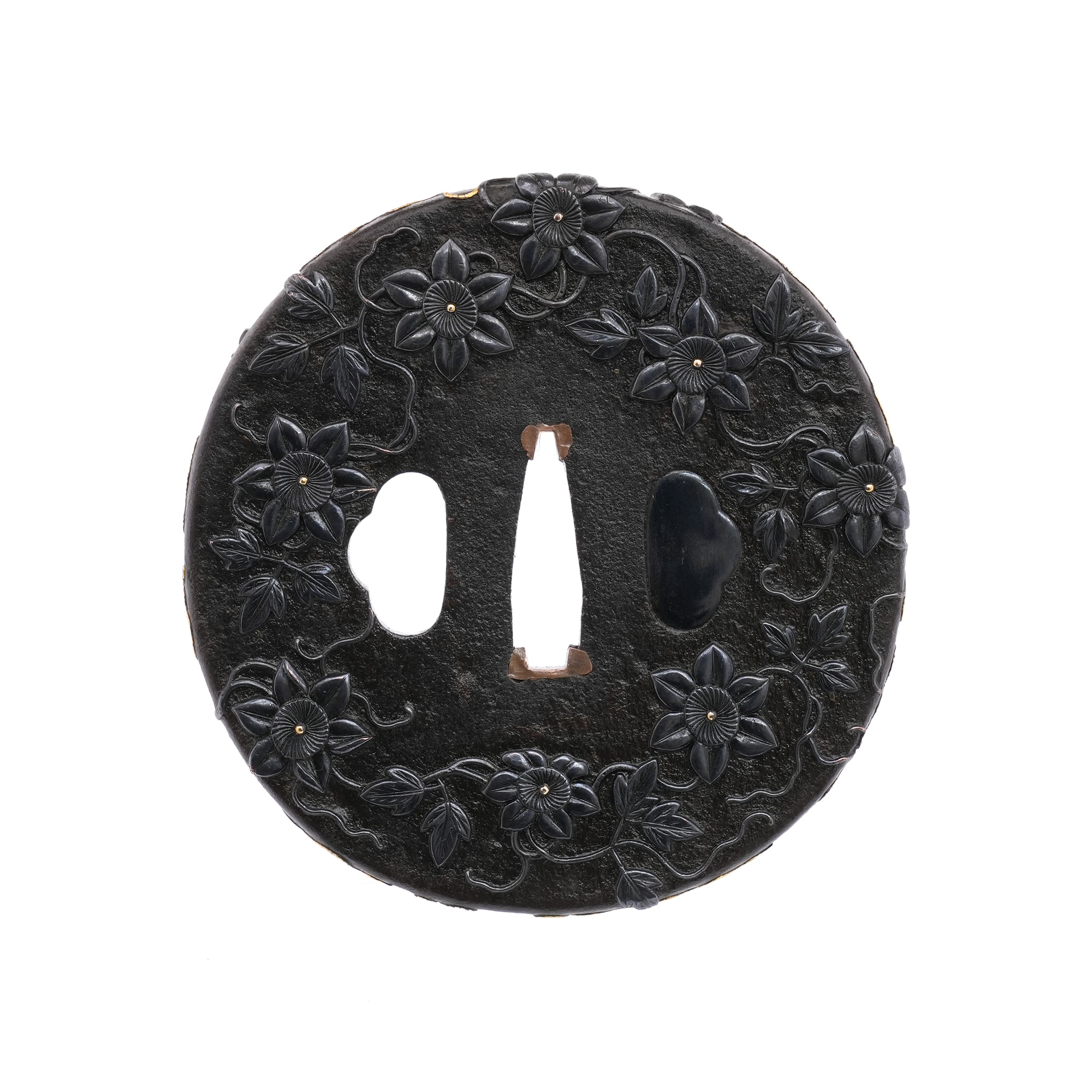
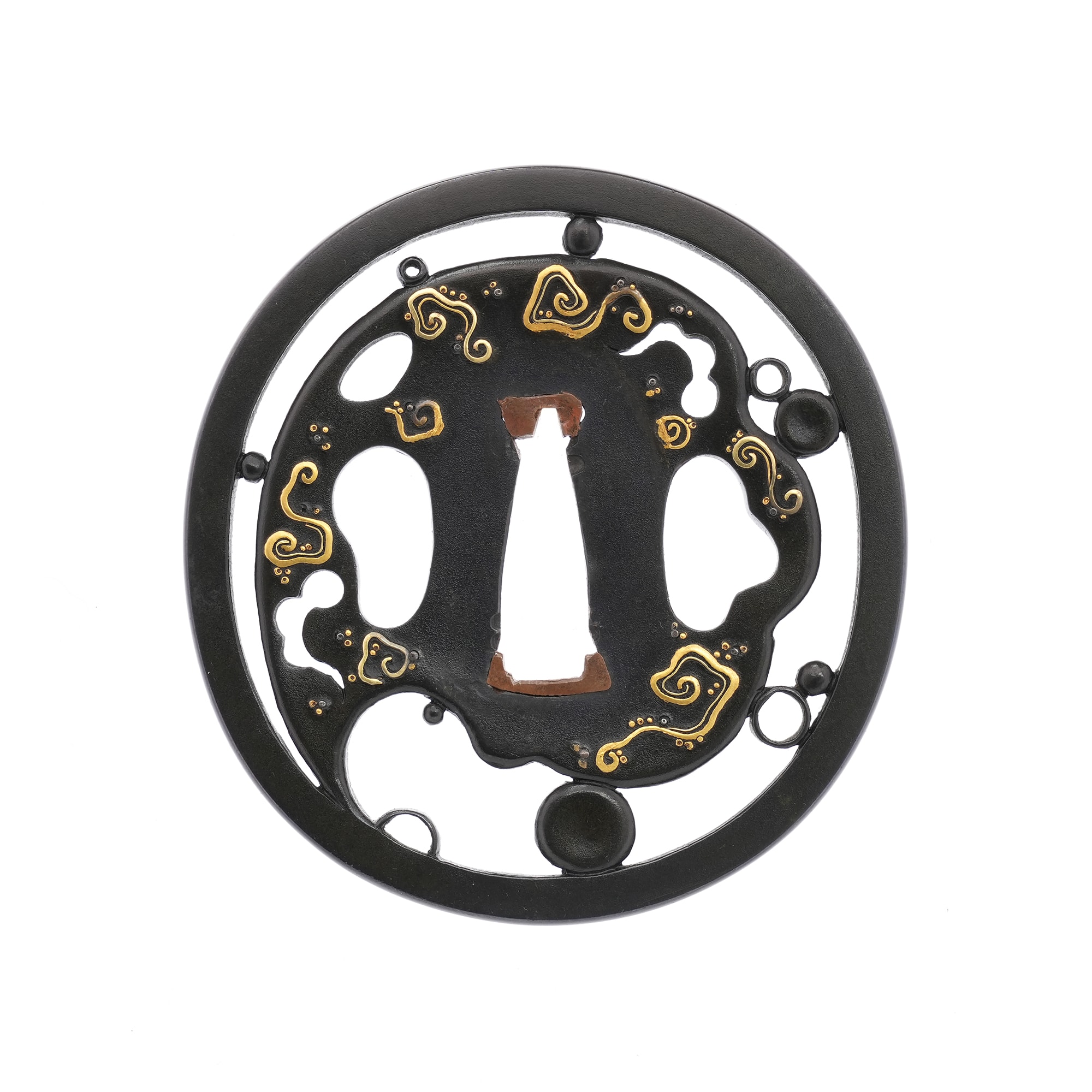
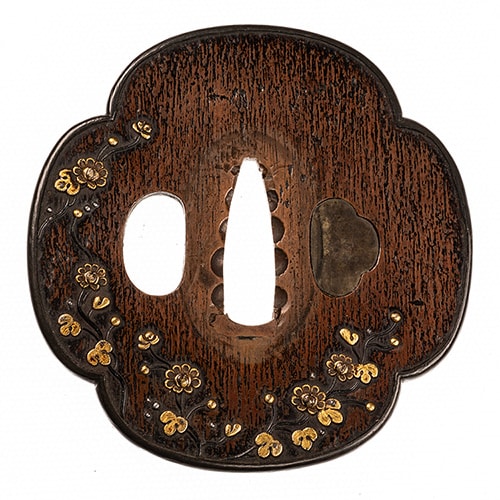
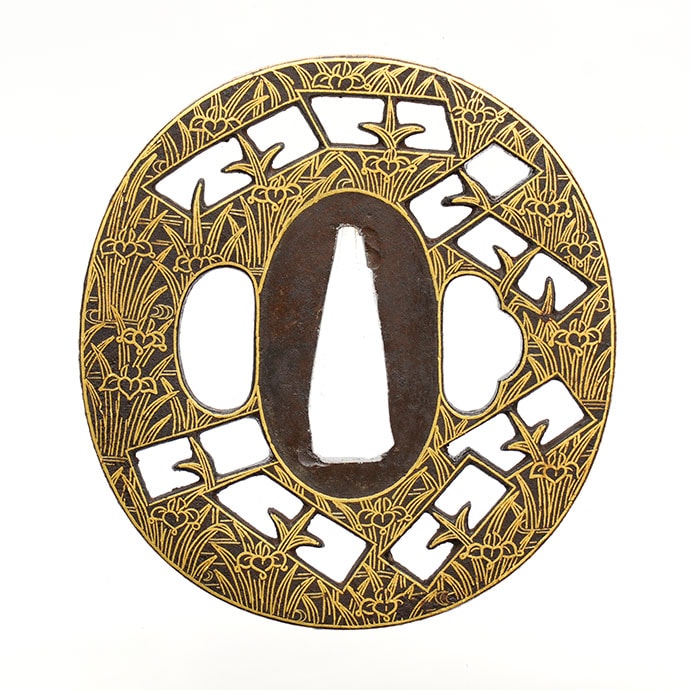
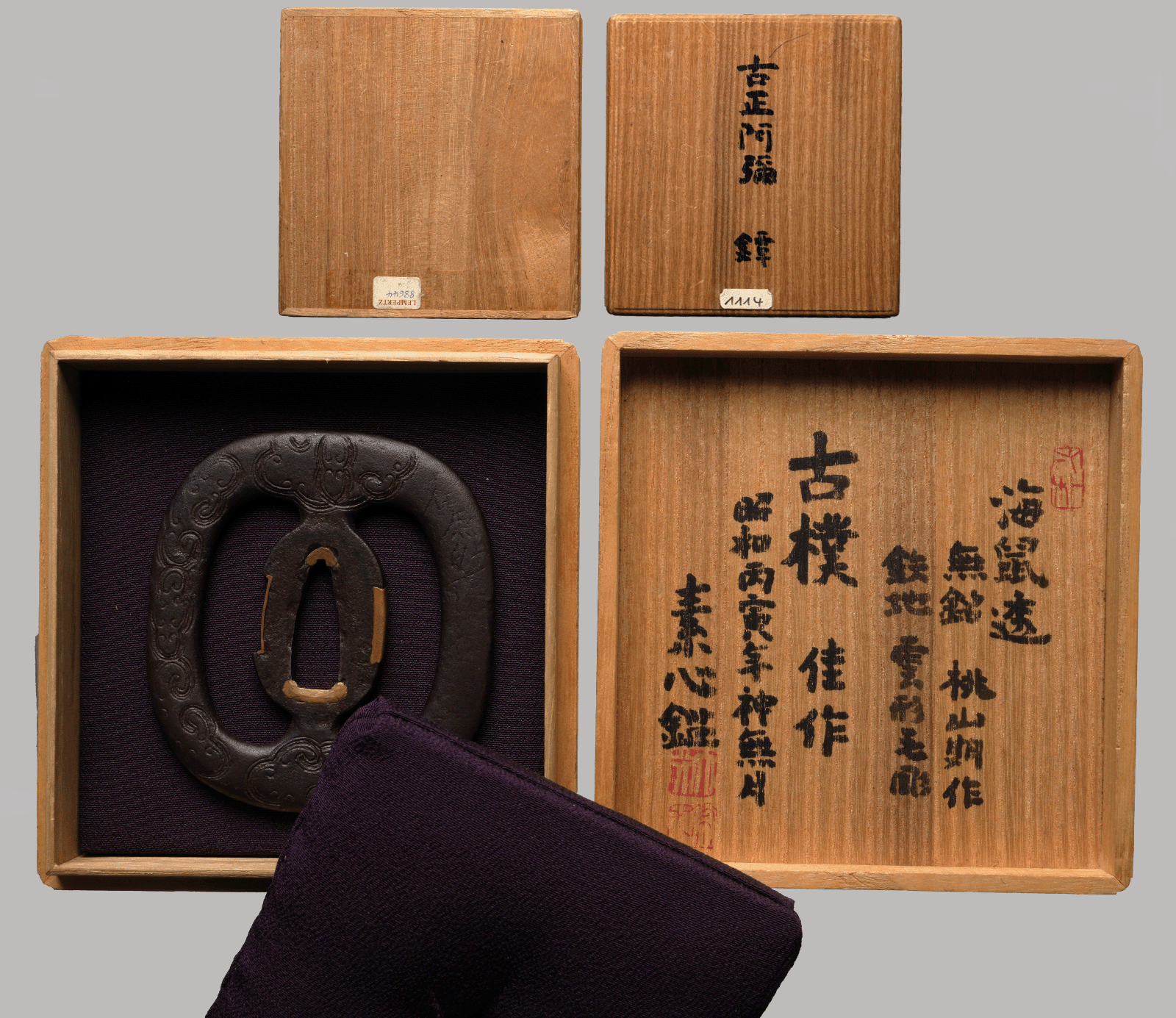
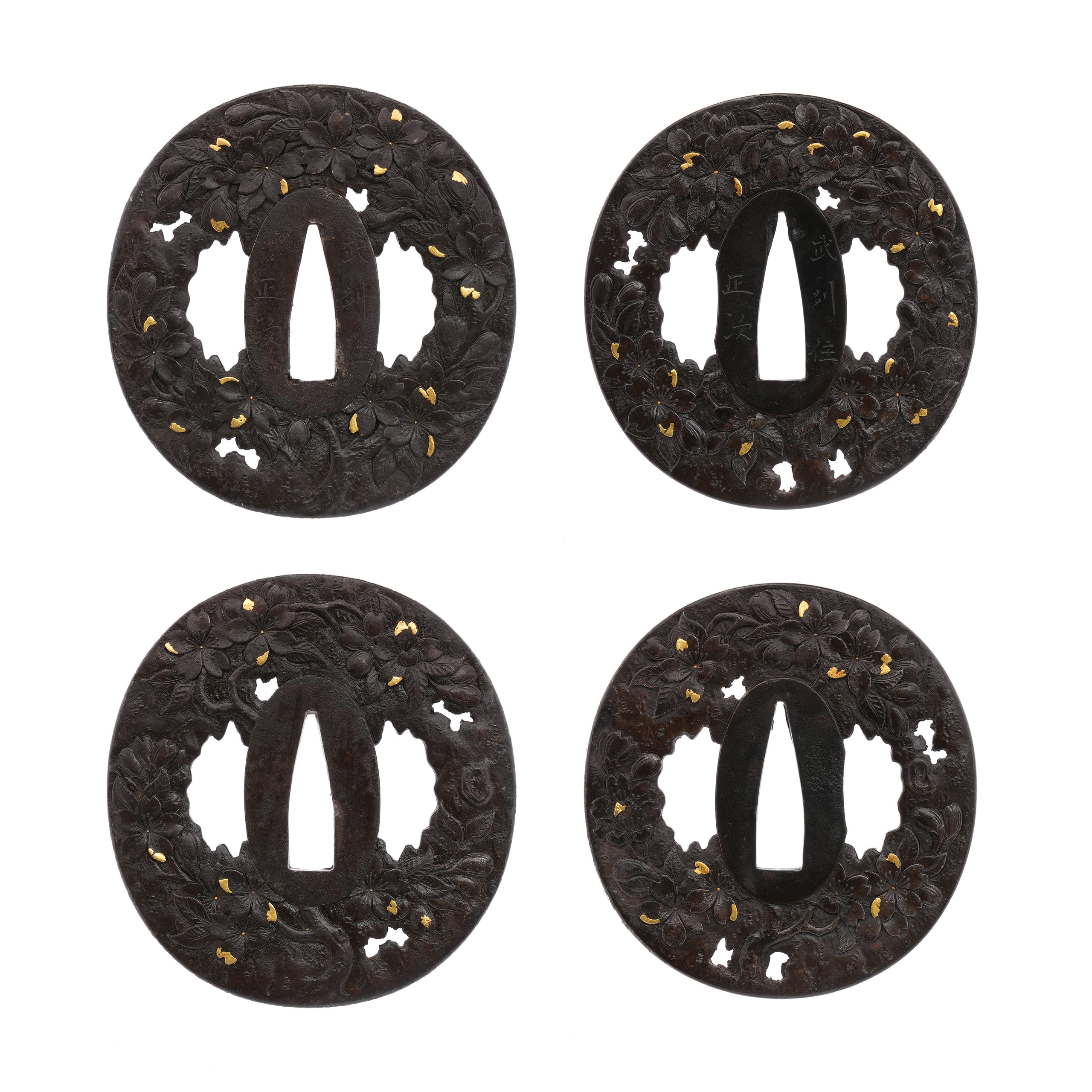
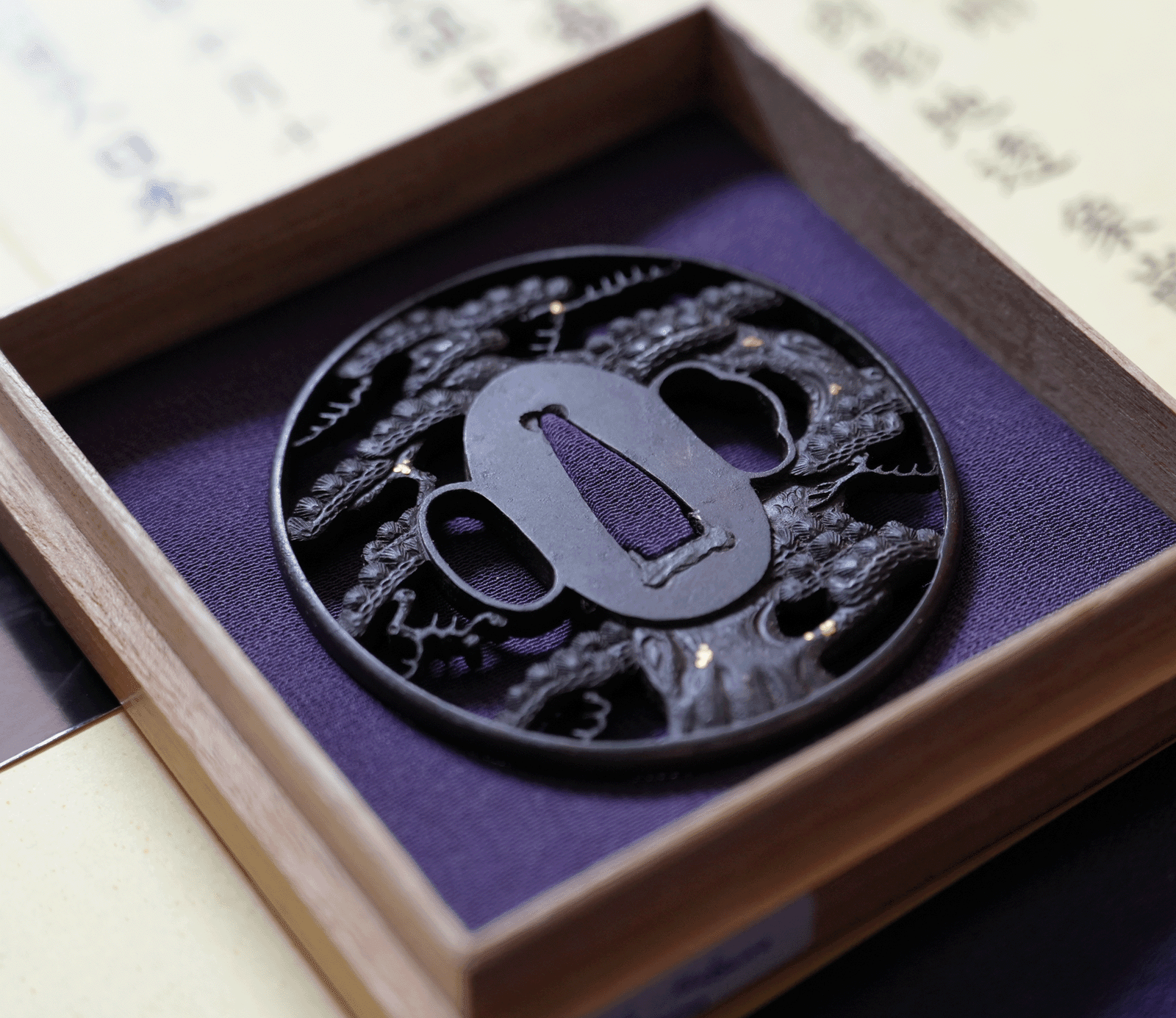
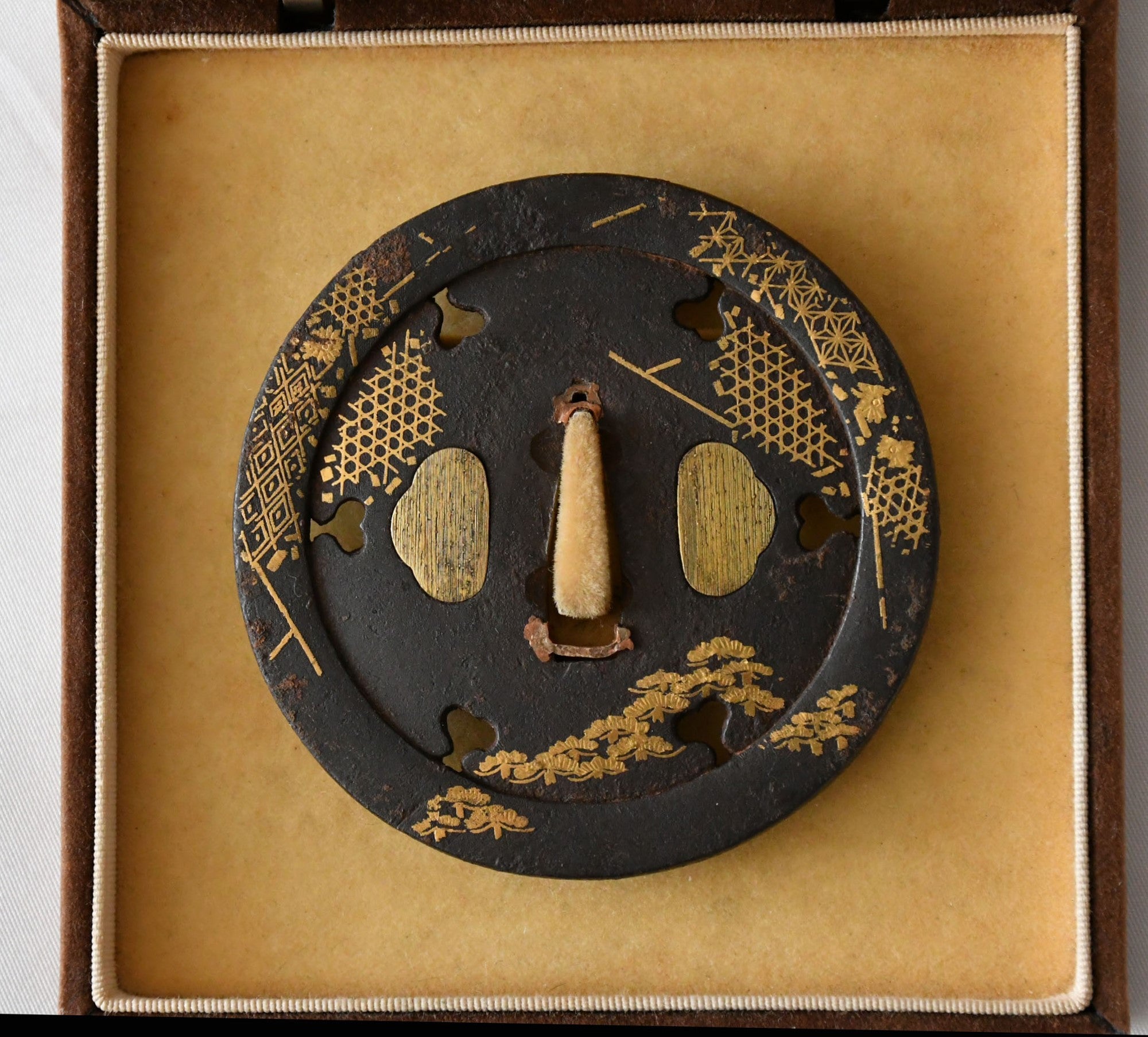
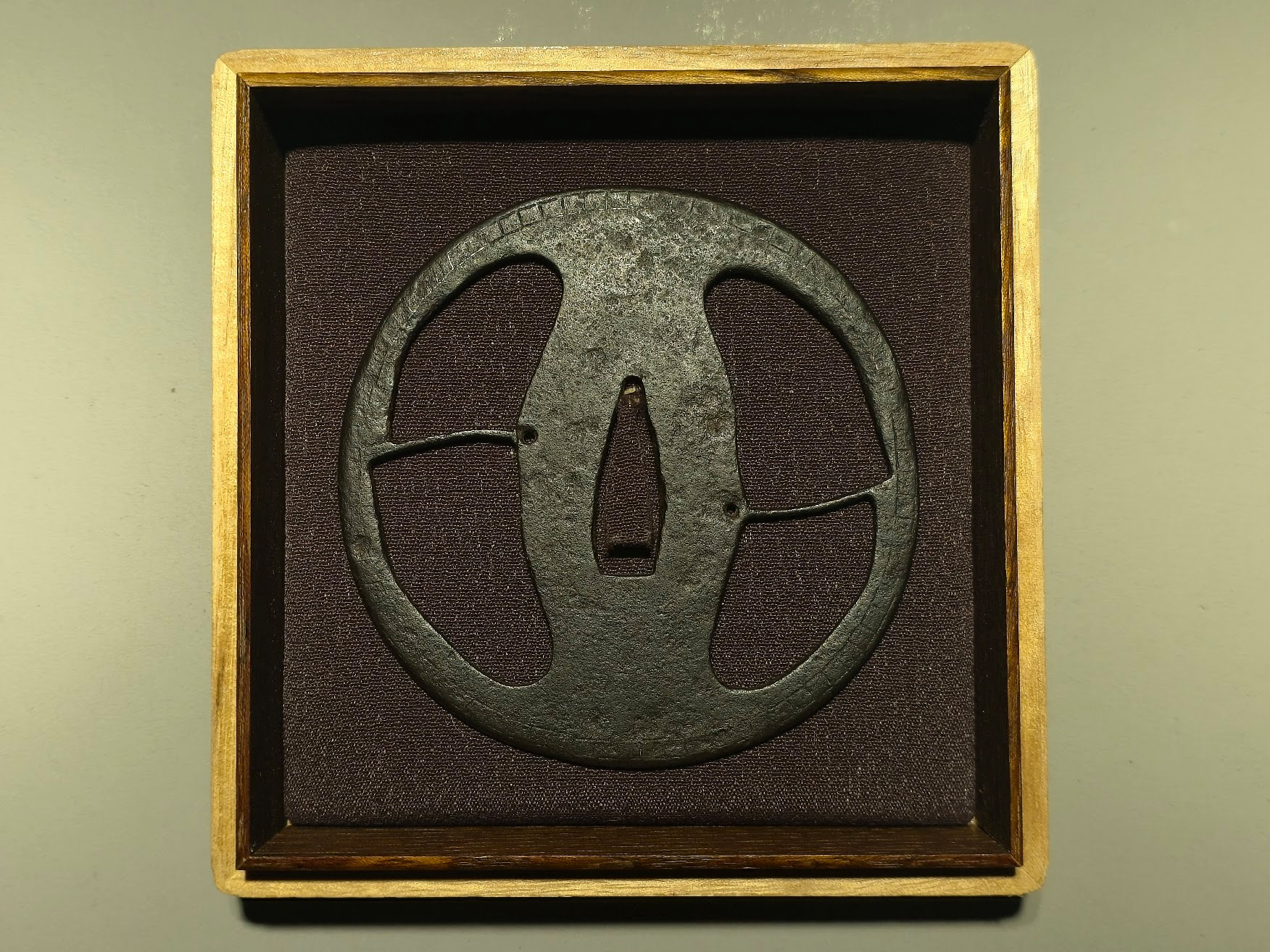
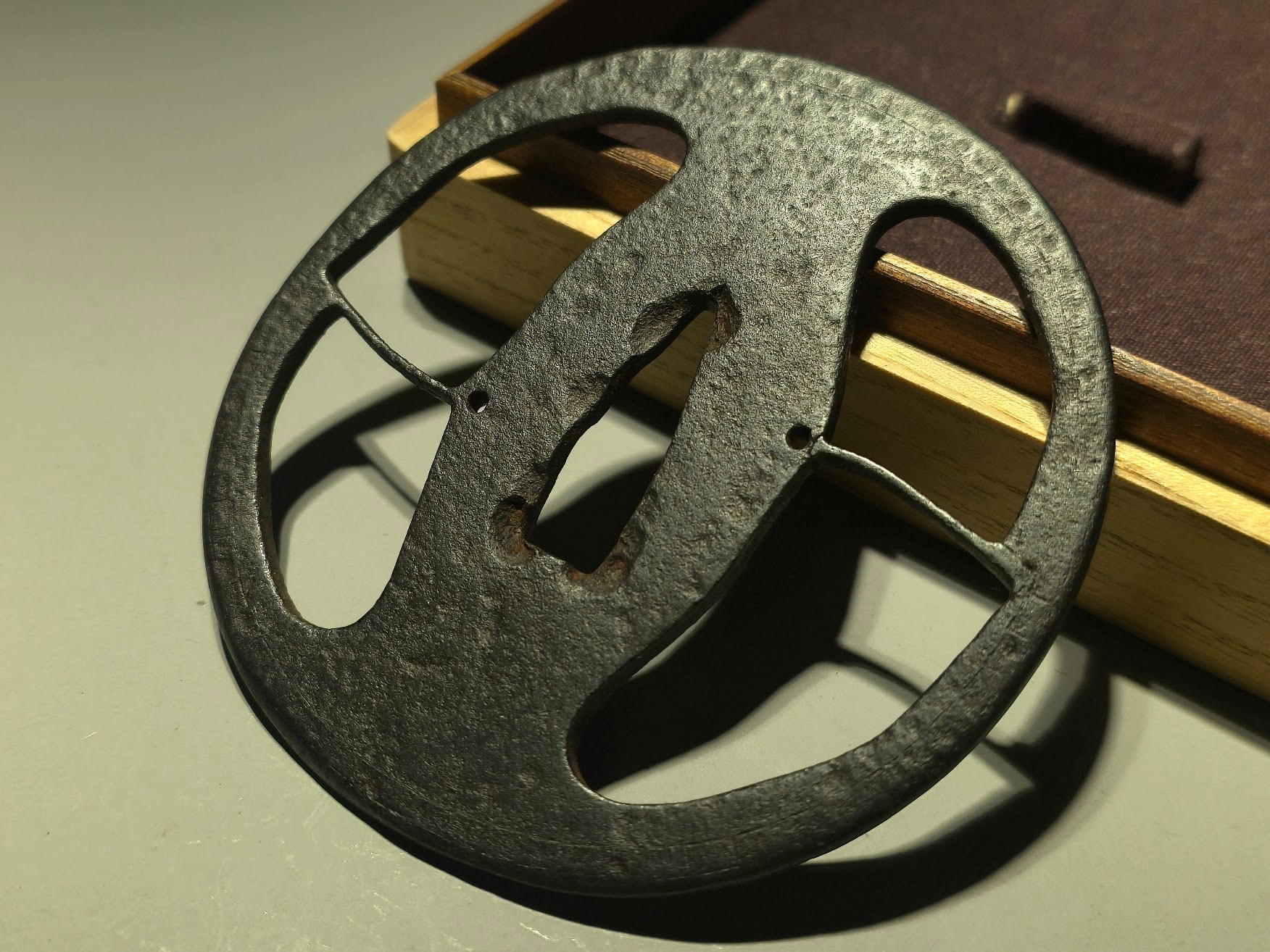
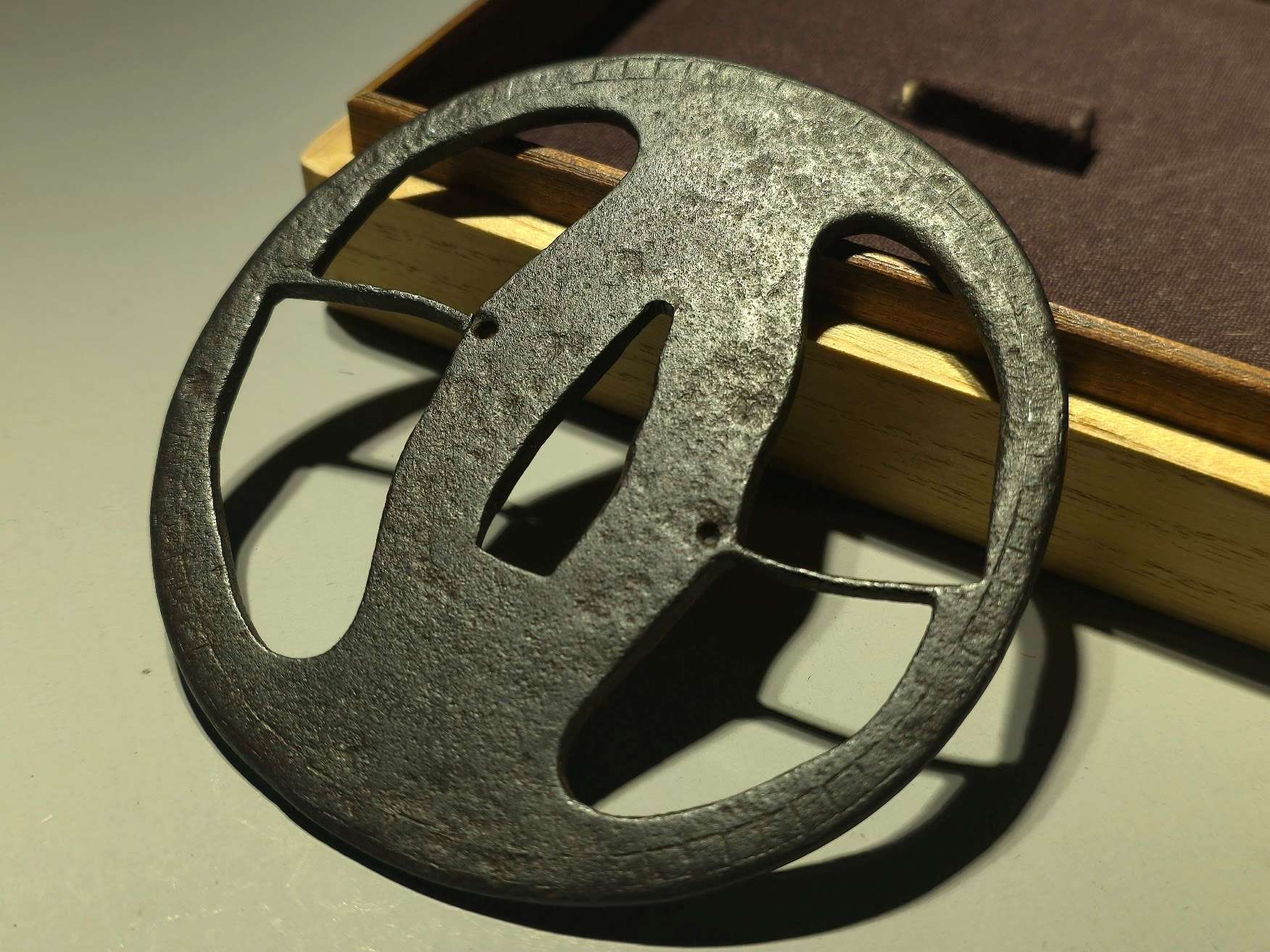
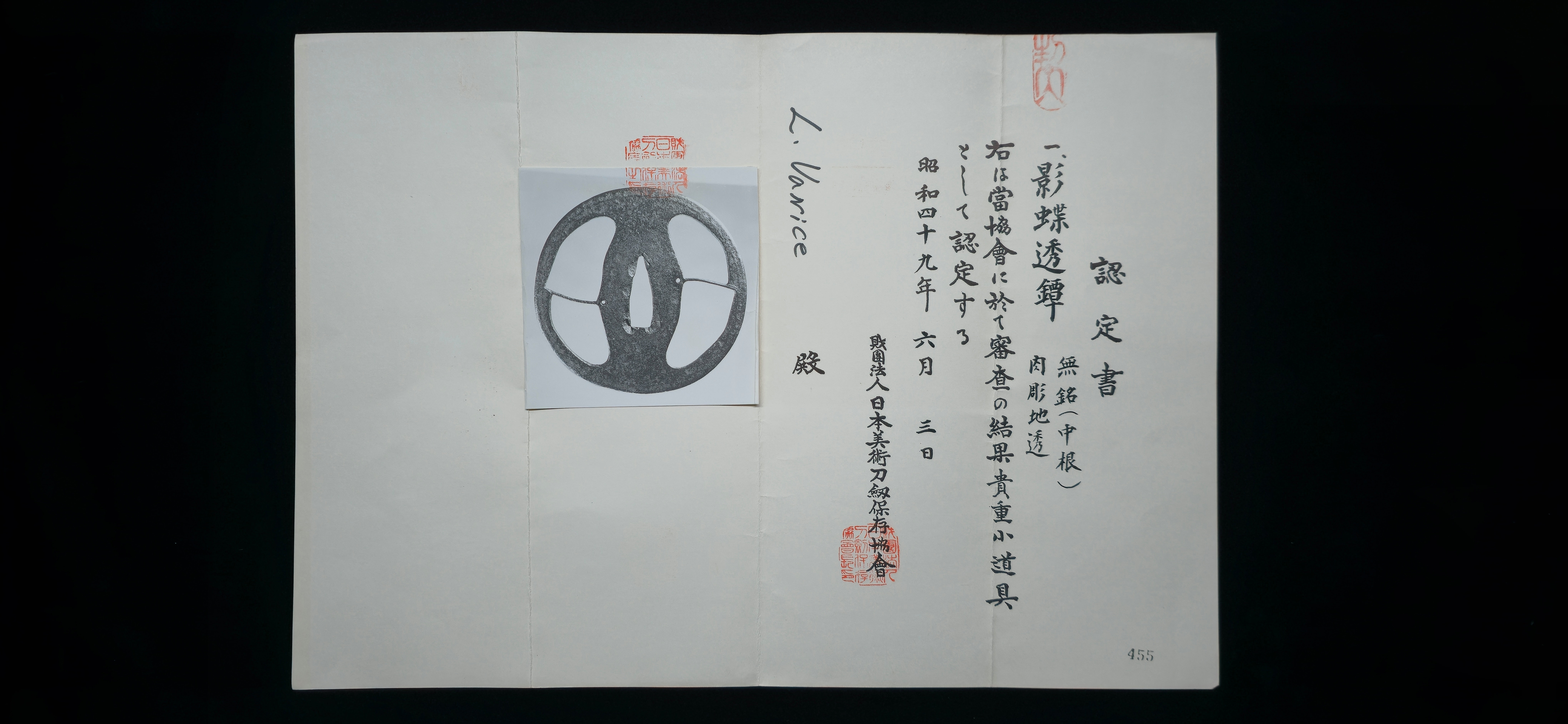
This sukashi tsuba, made by Nakane Heihachiro, features a good iron patina with silver fret inlay along the rims. The motif appears to be two butterflies or eboshi hats. It comes with an NBTHK Kicho certificate from Showa 49 (1974).
 NihontoWatchBETA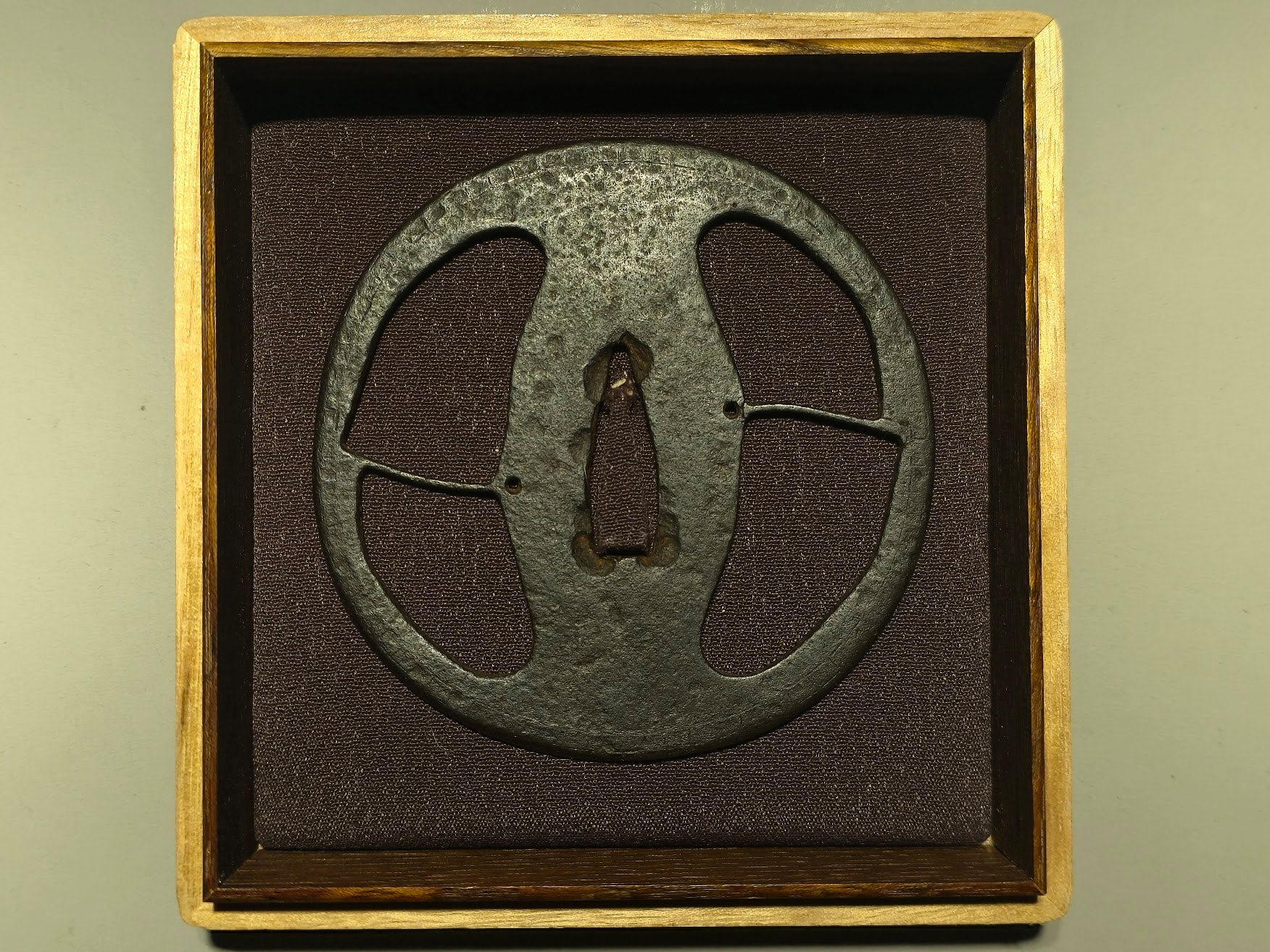
Shoami Heihachiro
Edo
Higo
Signed
Iron-tsuba
1 piece on the market now
Iron-tsuba · Kyoto
189 pieces on the market now
The Shoami (正阿弥) school arose in Kyoto as one of the principal lineages among the specialist tsuba makers who came to the fore from the middle through the late Muromachi period. Its roots lie in the capital's communities of ami-shū, who served as dōbōshū (attendant artisans) and within whose circles Shōami lineages existed; the prevailing view today is that these artisans originally worked as makers of tōsōgu in general and later became specialized tsuba craftsmen. Learn more →
| Smith | Era | Designated |
|---|---|---|
| Denbei傳兵衛 | — | 13 |
| Shoami Katsuyoshi正阿弥勝義 | — | 7 |
| Matashichi又七 | — | 0 |
| Yoshikazu吉一 | — | 0 |
| Jihachiro治八郎 | — | 0 |
This work carries older NBTHK “Kichō”-era papers, which the NBTHK no longer issues and now regards as unreliable. To confirm the attribution, submission to an official Japanese examination body (such as the NBTHK or NTHK) for modern certification could be considered.
This sukashi tsuba, made by Nakane Heihachiro, features a good iron patina with silver fret inlay along the rims. The motif appears to be two butterflies or eboshi hats. It comes with an NBTHK Kicho certificate from Showa 49 (1974).
NihontoWatchBETAShoami Heihachiro
Edo
Higo
Signed
Iron-tsuba
1 piece on the market now
Iron-tsuba · Kyoto
189 pieces on the market now
The Shoami (正阿弥) school arose in Kyoto as one of the principal lineages among the specialist tsuba makers who came to the fore from the middle through the late Muromachi period. Its roots lie in the capital's communities of ami-shū, who served as dōbōshū (attendant artisans) and within whose circles Shōami lineages existed; the prevailing view today is that these artisans originally worked as makers of tōsōgu in general and later became specialized tsuba craftsmen. Learn more →
| Smith | Era | Designated |
|---|---|---|
| Denbei傳兵衛 | — | 13 |
| Shoami Katsuyoshi正阿弥勝義 | — | 7 |
| Matashichi又七 | — | 0 |
| Yoshikazu吉一 | — | 0 |
| Jihachiro治八郎 | — | 0 |
This work carries older NBTHK “Kichō”-era papers, which the NBTHK no longer issues and now regards as unreliable. To confirm the attribution, submission to an official Japanese examination body (such as the NBTHK or NTHK) for modern certification could be considered.