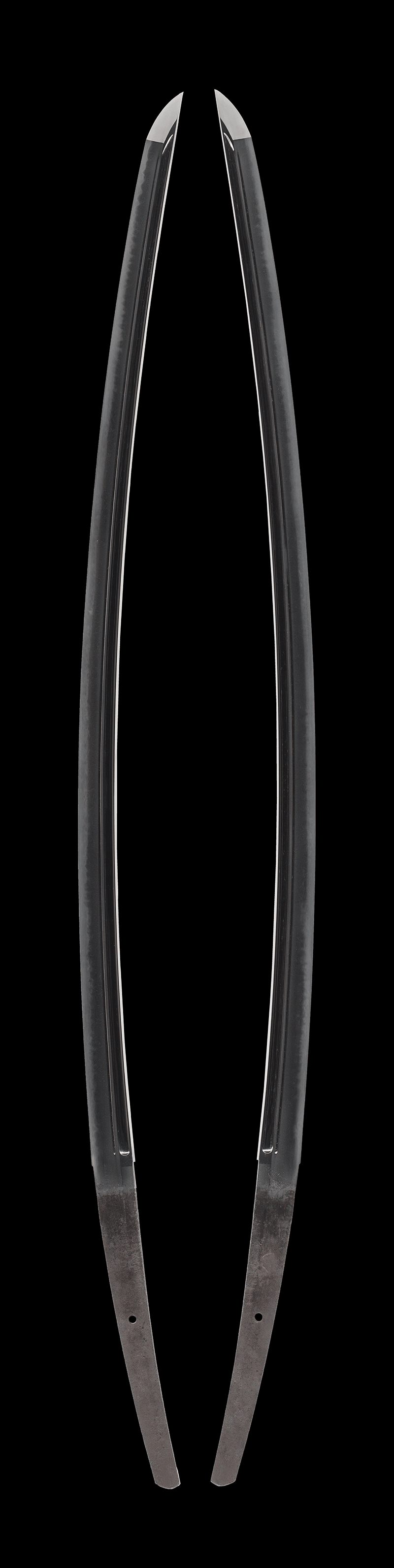
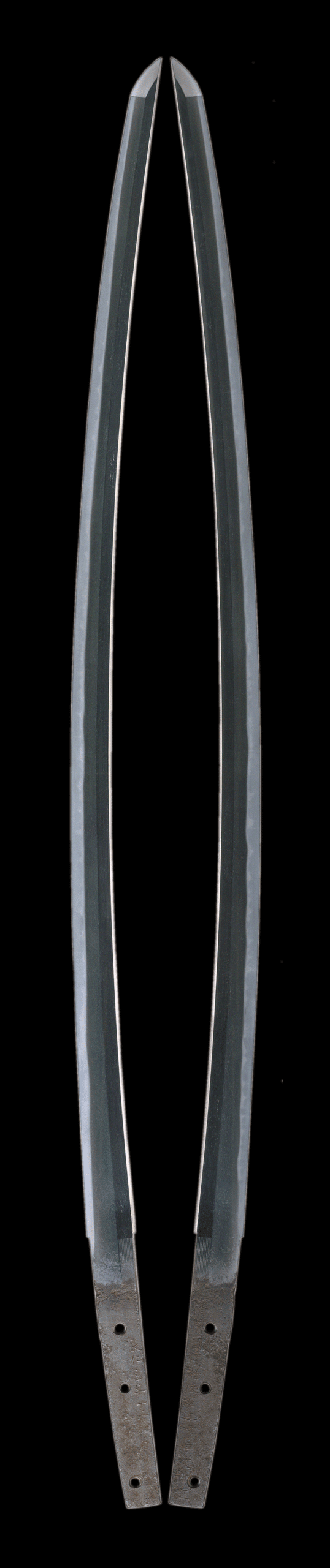
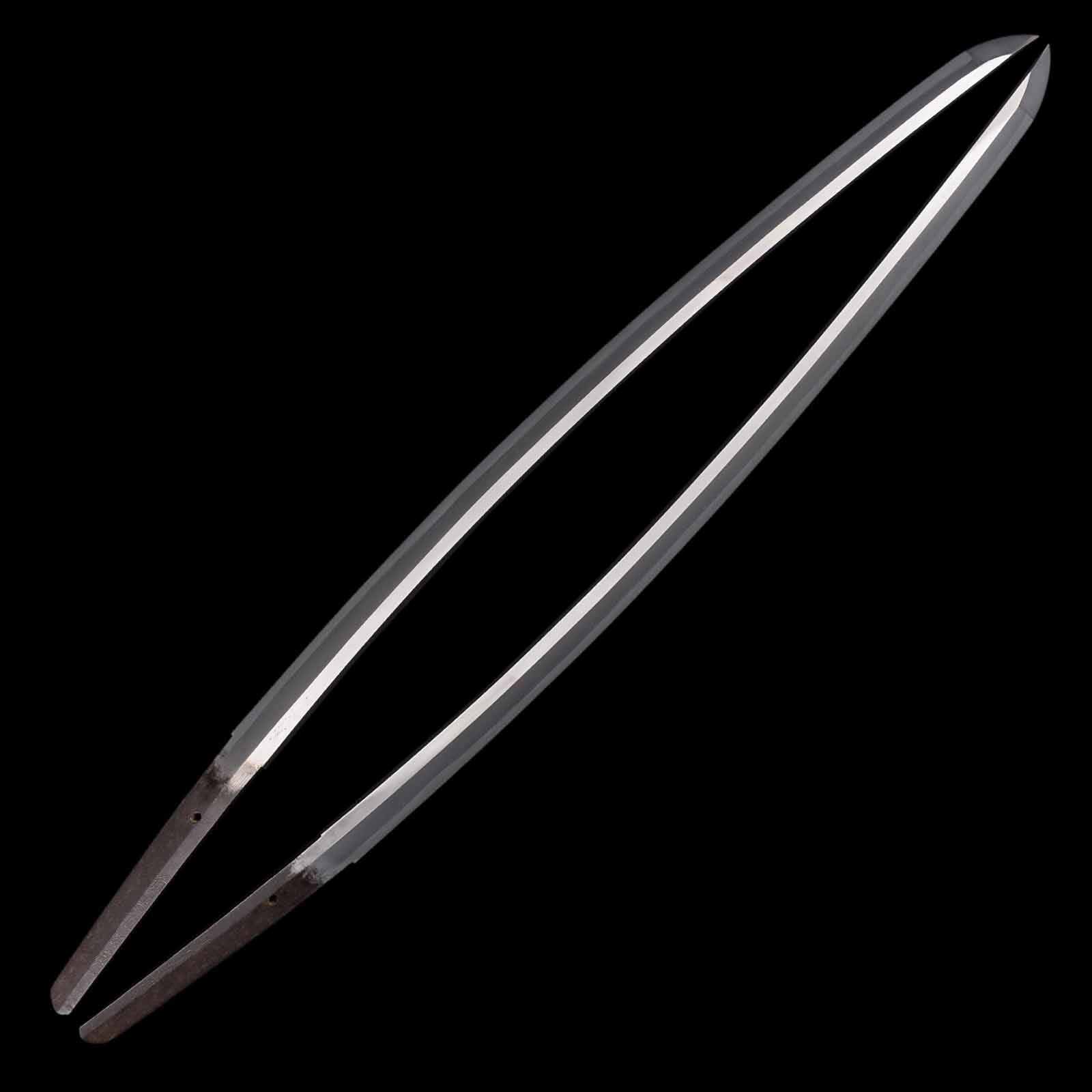
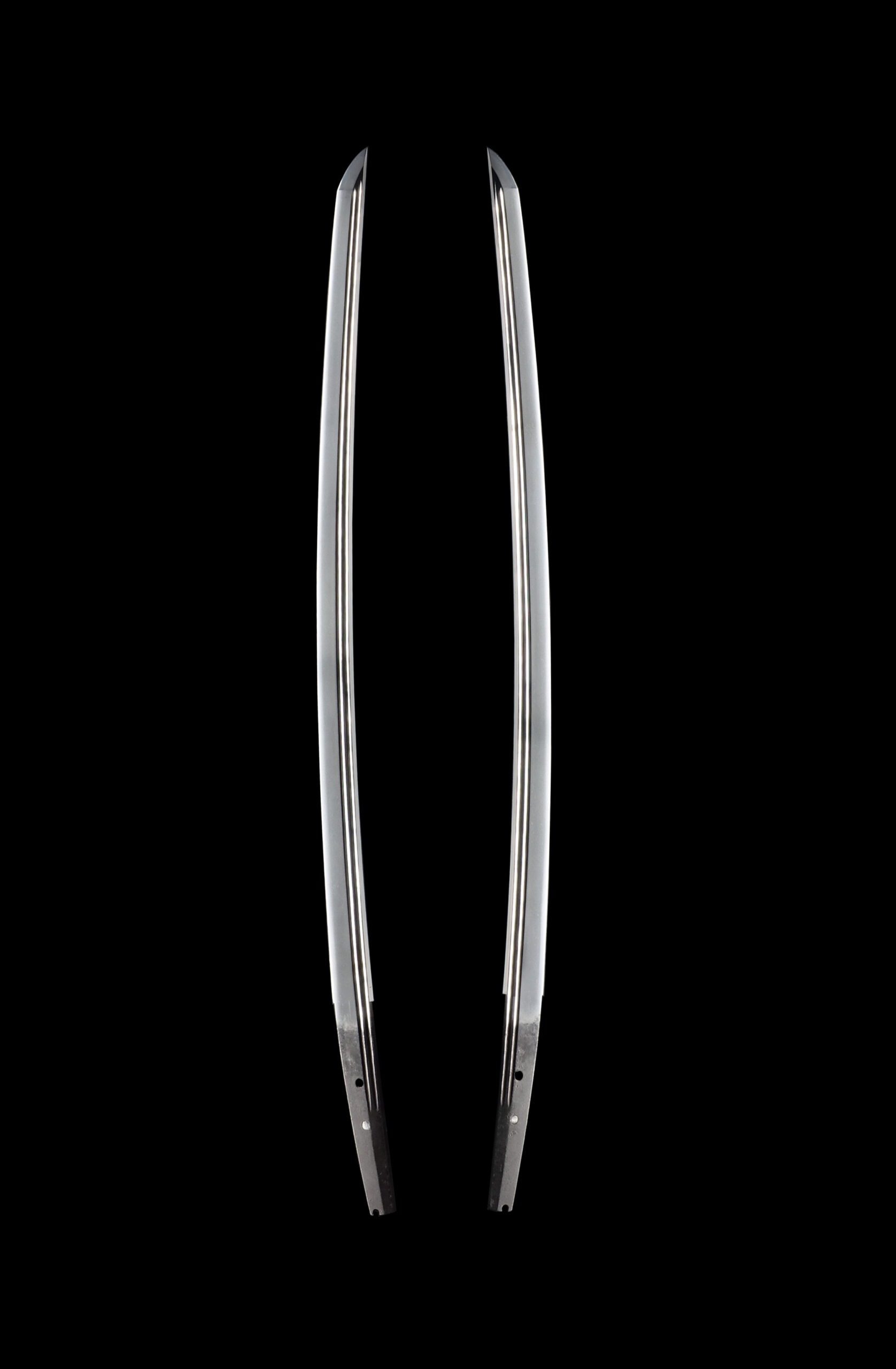
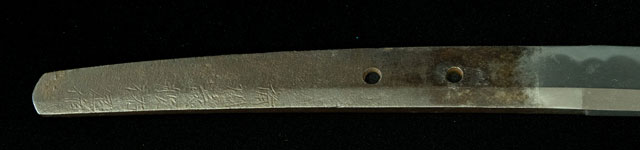
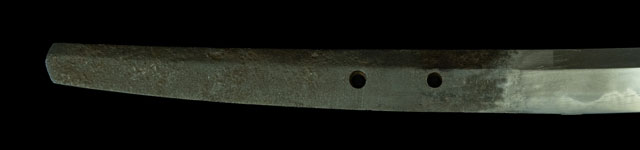
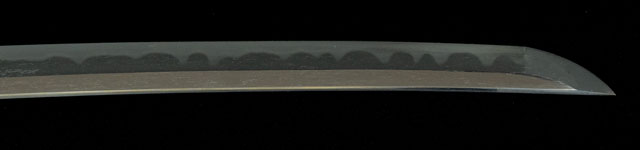
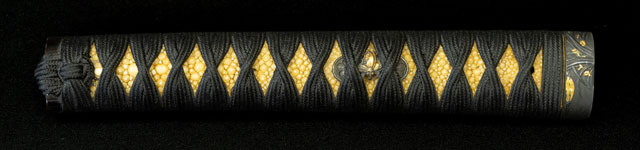
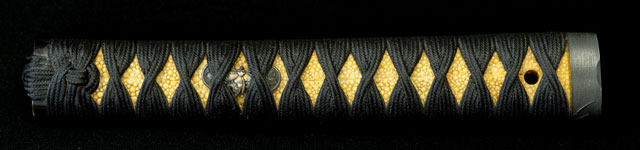
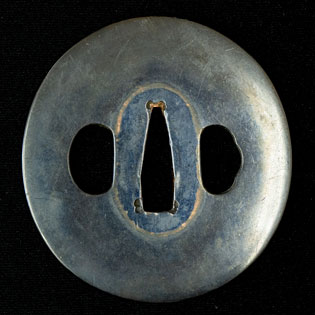
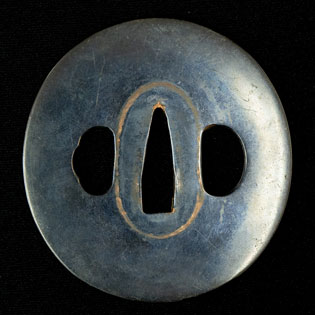
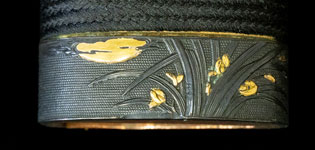
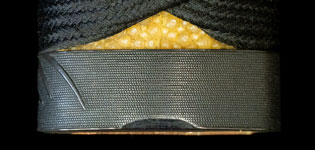
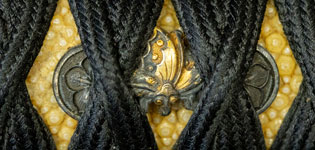
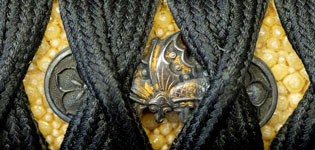
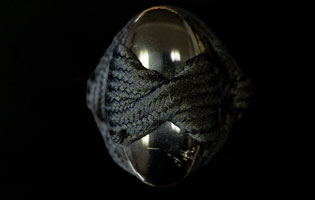
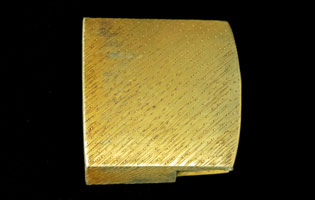
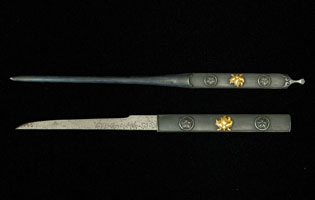
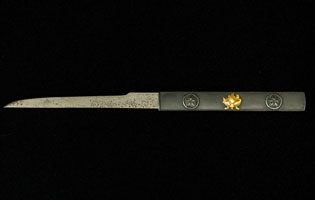
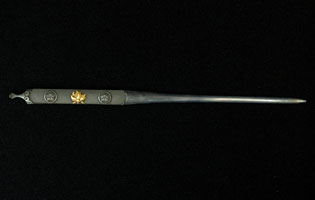
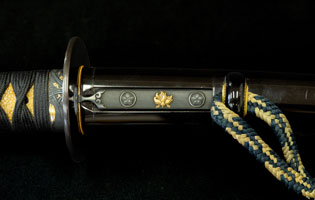
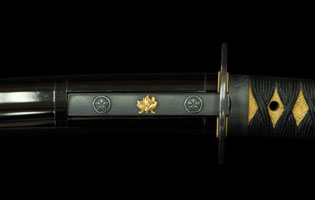
Hozonkai Kanteisho Katana Mei: Bishu Osafune Sukesada Saku Item Number 31-2542 Katana Bisyu Osafune Sukesada Province / Period Bizen / Mid-Muromachi With Koshirae Nagasa 66.9cm (2 shaku 2 sun 1 bun) Sori 2.4cm (8 bu - rin) Motohaba 2.76cm Sakihaba 2.00cm Moto-kasane 6.5mm Saki-kasane 3.9mm Toshin Weight Bare blade 570g Excluding saya 860g Nakago Suriage Mekugi-ana 2 Hamon Gunome Price 600,000 Yen (Tax included) This is a Sukesada "Kaniba" (crab-claw) Katana. It is called Kaniba because the gunome resembles the claws of a crab. It is like looking at the work of Oei-period Morimitsu. It is among the older examples of Sukesada, and the kanteisho attributes it to around the Eisho era. Jigane is ko-mokume hada with utsuri appearing; hamon is nioi-deki with ko-ashi entering. The koshirae includes a kozuka and kogai, making it a denchu-zashi (palace-style mounting).
 NihontoWatchBETA
signed · Osafune · Koto · nagasa 66.9cm · sori 2.4cm





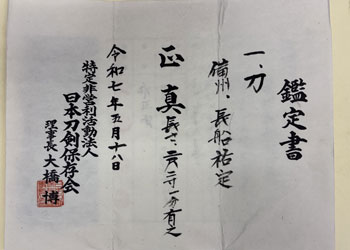
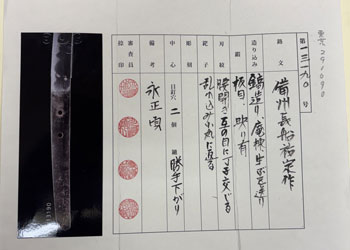
The NTHK’s principal certificate, issued for a blade of considerable quality. It confirms a genuine signature, or, for an unsigned (mumei) work, records the judges’ attribution to a smith or school. The paper carries a detailed worksheet with a numerical point score.
The NTHK (Nihon Tōken Hozon Kai, the Society for the Preservation of the Japanese Sword) is the oldest of Japan’s sword-appraisal bodies, founded in 1910, decades before the NBTHK. After the death of its long-serving head it divided into two successor societies, the NTHK and the NTHK-NPO, both of which continue to hold shinsa. NTHK certificates are known for a detailed worksheet that records a numerical point score alongside the judges’ written opinion, and the society is especially respected for its attribution of unsigned (mumei) work.
Please request cooling-off within 8 days of the item's arrival. Items that have been altered cannot be handled. Return shipping is the customer's responsibility. If the destination is overseas, returns and refunds are not available.
Hozonkai Kanteisho Katana Mei: Bishu Osafune Sukesada Saku Item Number 31-2542 Katana Bisyu Osafune Sukesada Province / Period Bizen / Mid-Muromachi With Koshirae Nagasa 66.9cm (2 shaku 2 sun 1 bun) Sori 2.4cm (8 bu - rin) Motohaba 2.76cm Sakihaba 2.00cm Moto-kasane 6.5mm Saki-kasane 3.9mm Toshin Weight Bare blade 570g Excluding saya 860g Nakago Suriage Mekugi-ana 2 Hamon Gunome Price 600,000 Yen (Tax included) This is a Sukesada "Kaniba" (crab-claw) Katana. It is called Kaniba because the gunome resembles the claws of a crab. It is like looking at the work of Oei-period Morimitsu. It is among the older examples of Sukesada, and the kanteisho attributes it to around the Eisho era. Jigane is ko-mokume hada with utsuri appearing; hamon is nioi-deki with ko-ashi entering. The koshirae includes a kozuka and kogai, making it a denchu-zashi (palace-style mounting).
NihontoWatchBETAsigned · Osafune · Koto · nagasa 66.9cm · sori 2.4cm
The NTHK’s principal certificate, issued for a blade of considerable quality. It confirms a genuine signature, or, for an unsigned (mumei) work, records the judges’ attribution to a smith or school. The paper carries a detailed worksheet with a numerical point score.
The NTHK (Nihon Tōken Hozon Kai, the Society for the Preservation of the Japanese Sword) is the oldest of Japan’s sword-appraisal bodies, founded in 1910, decades before the NBTHK. After the death of its long-serving head it divided into two successor societies, the NTHK and the NTHK-NPO, both of which continue to hold shinsa. NTHK certificates are known for a detailed worksheet that records a numerical point score alongside the judges’ written opinion, and the society is especially respected for its attribution of unsigned (mumei) work.
Please request cooling-off within 8 days of the item's arrival. Items that have been altered cannot be handled. Return shipping is the customer's responsibility. If the destination is overseas, returns and refunds are not available.