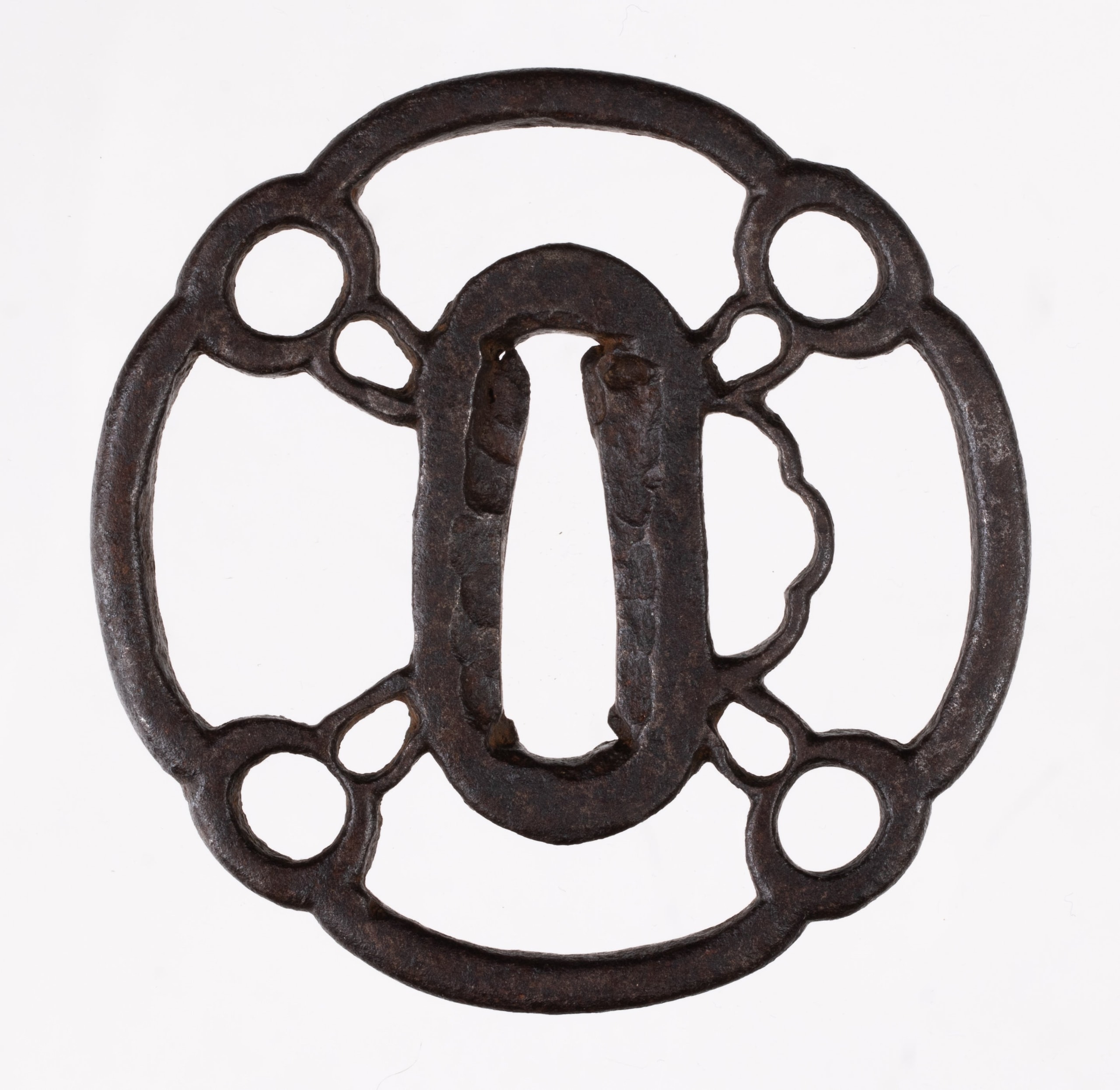
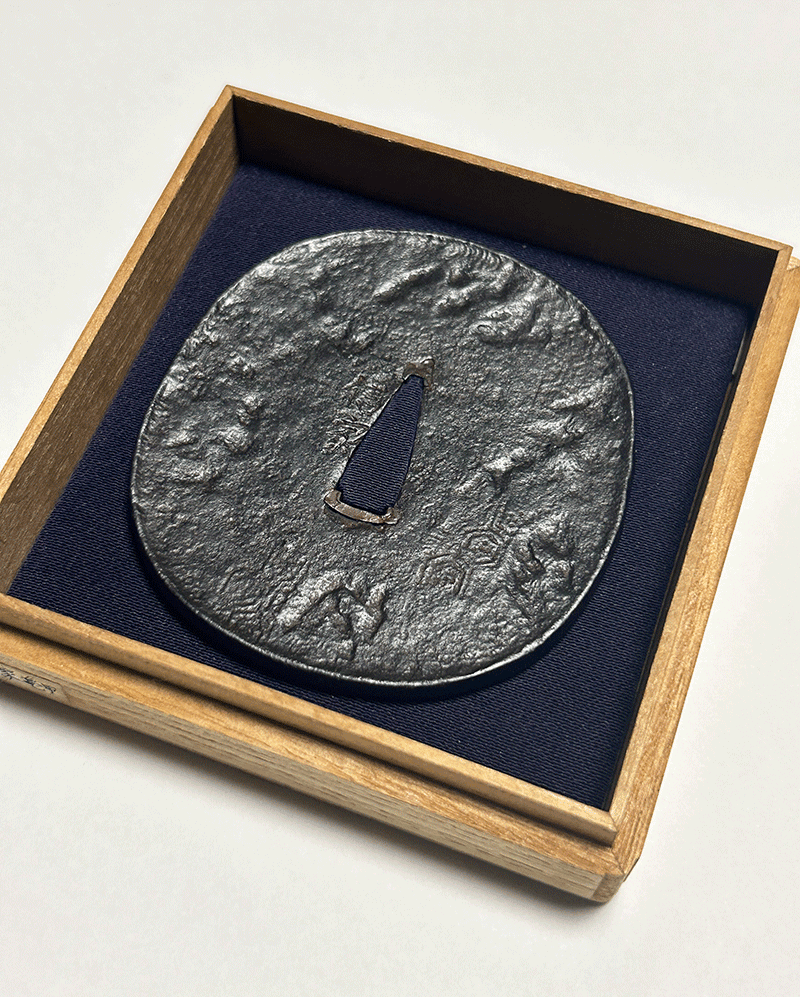
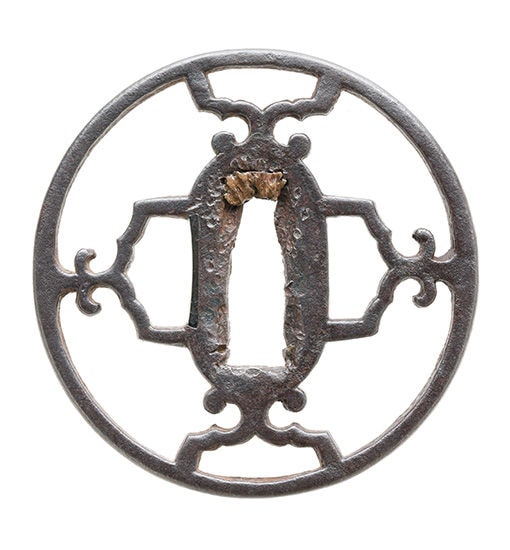
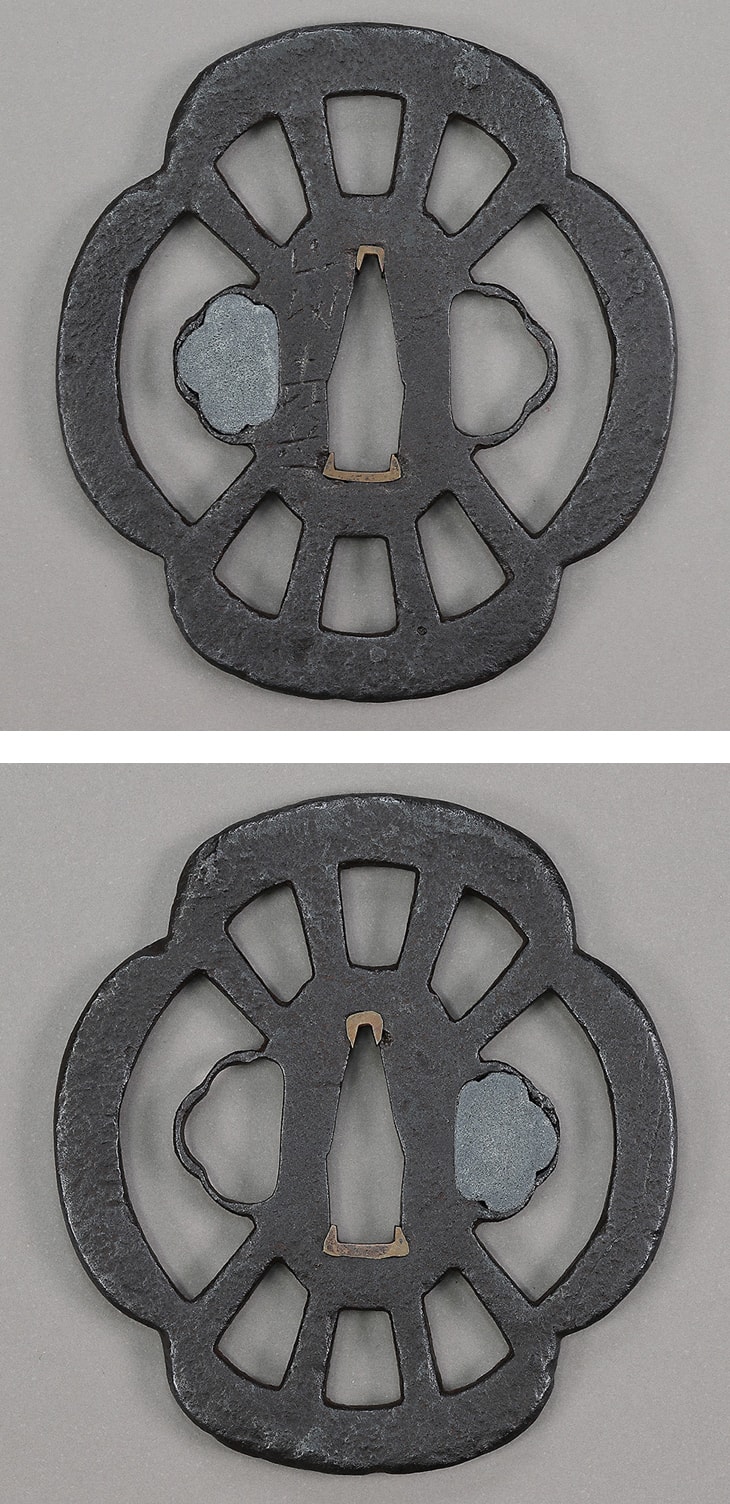
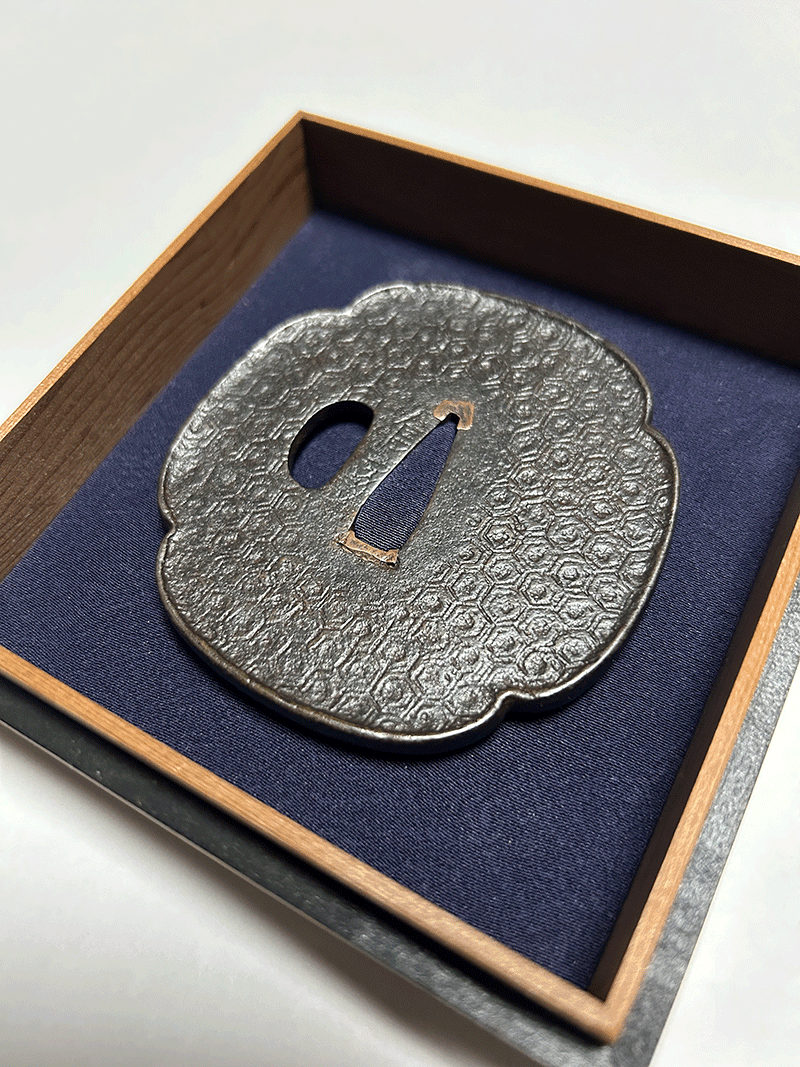
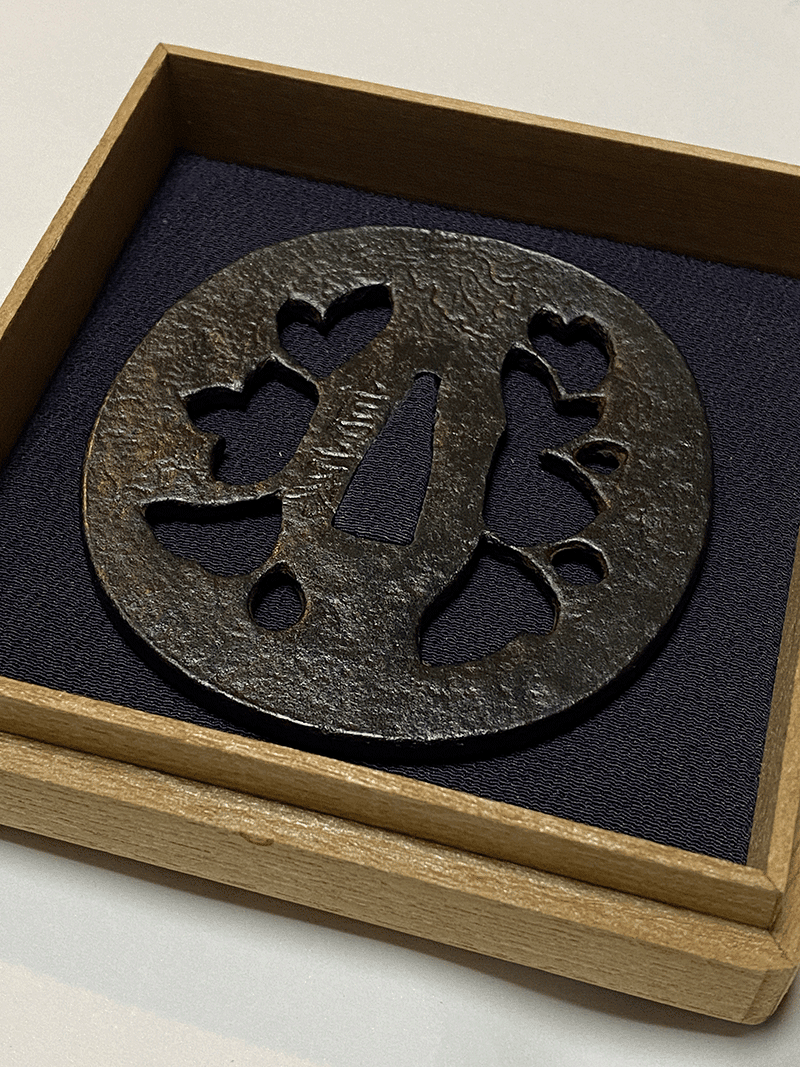
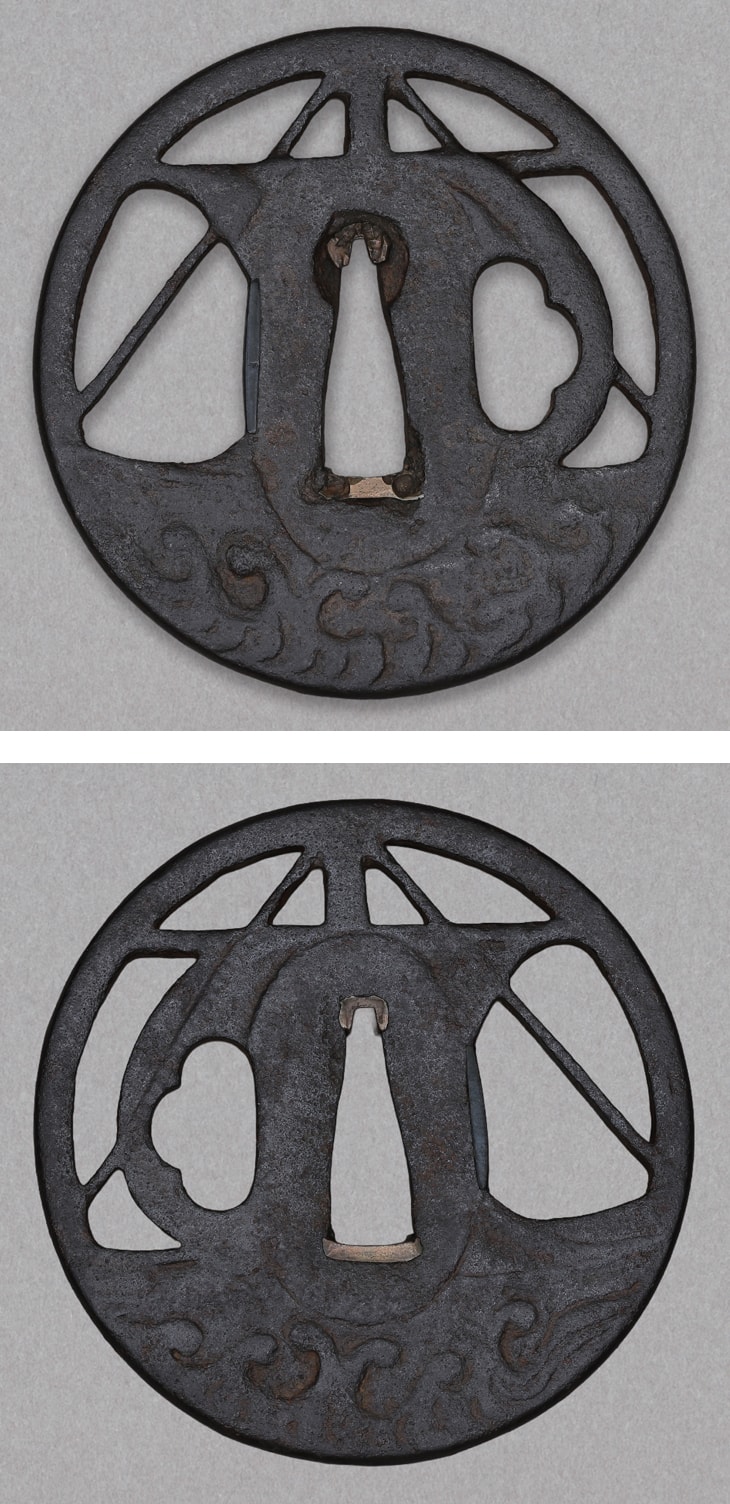
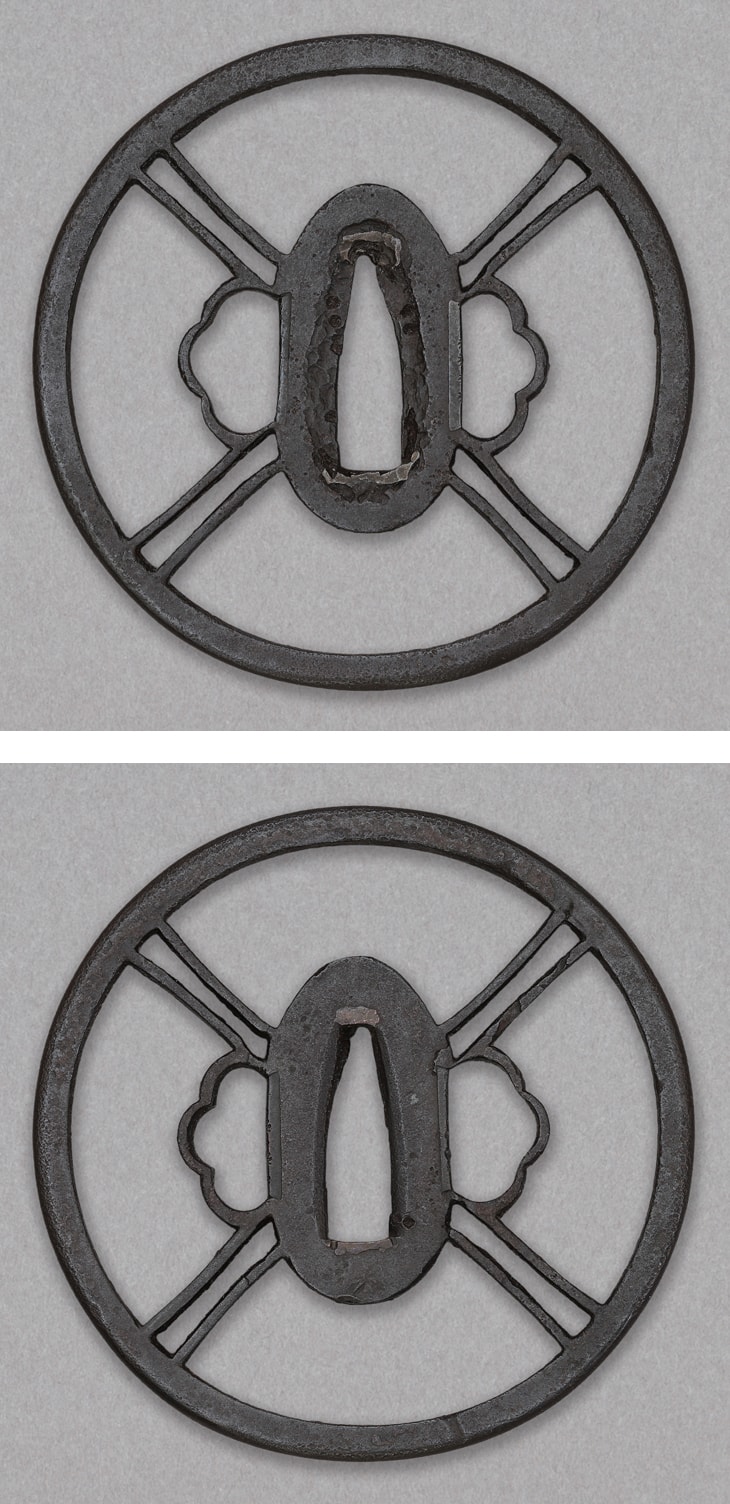
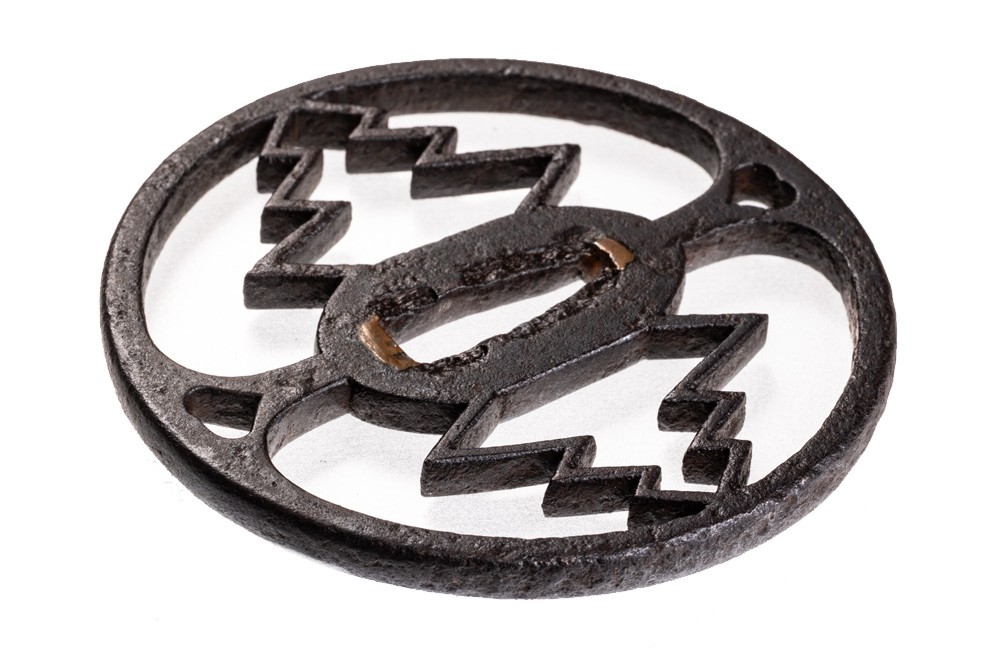
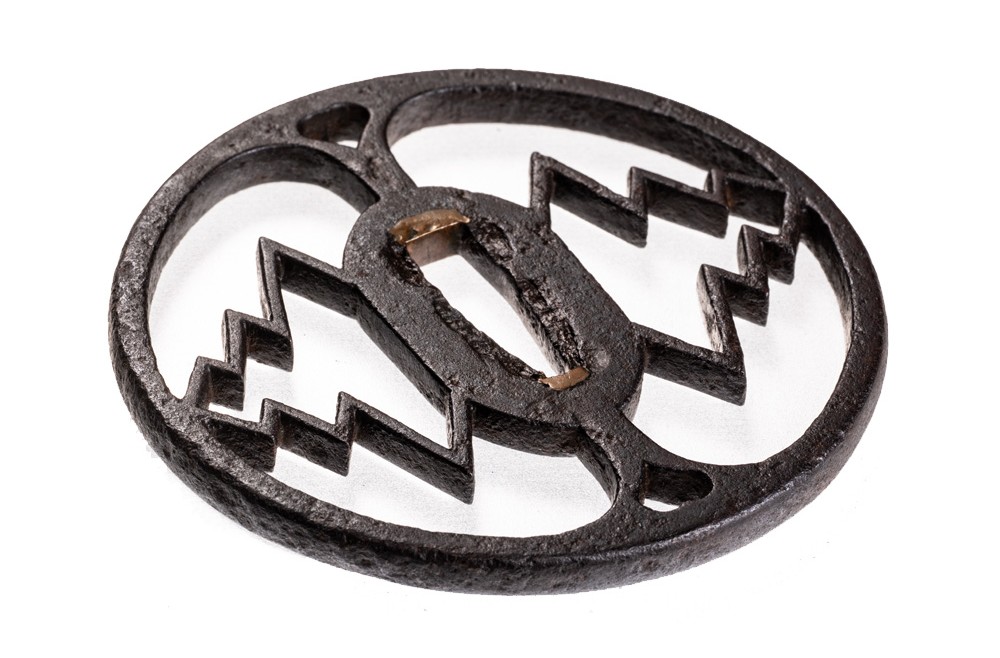
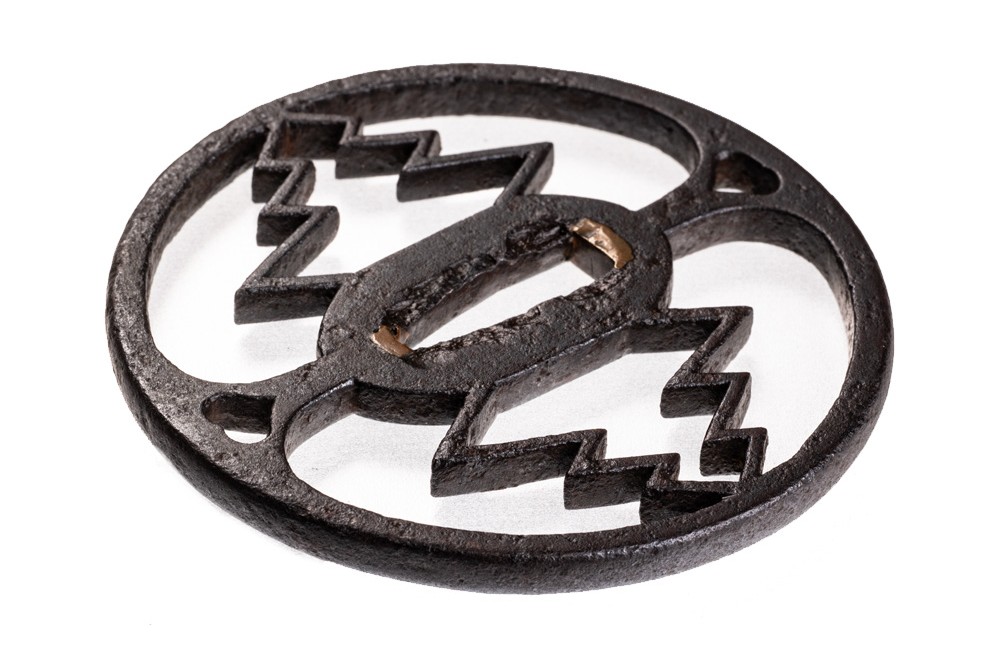
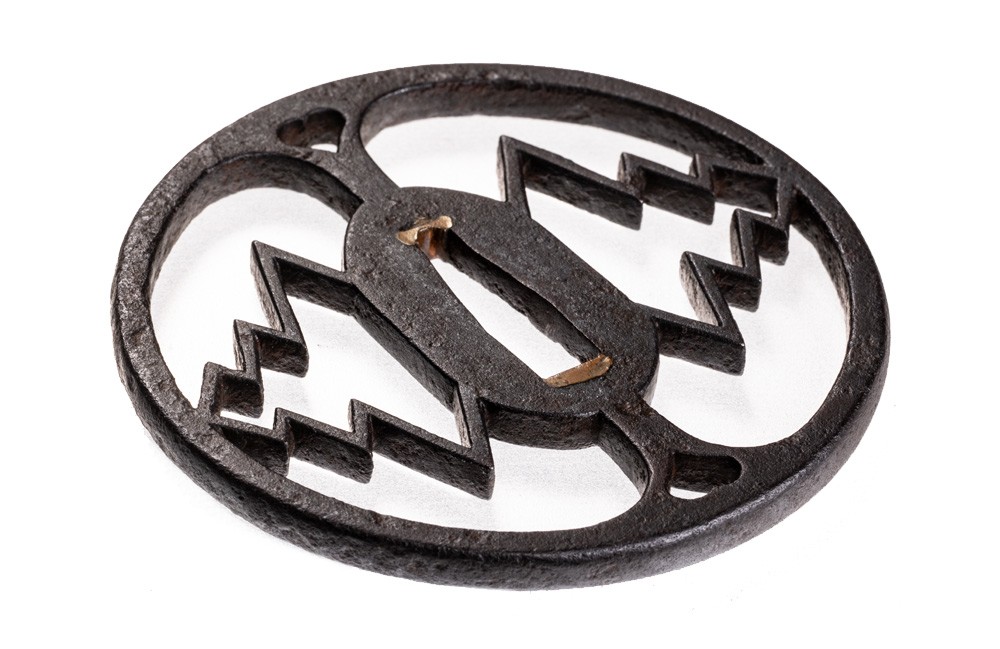
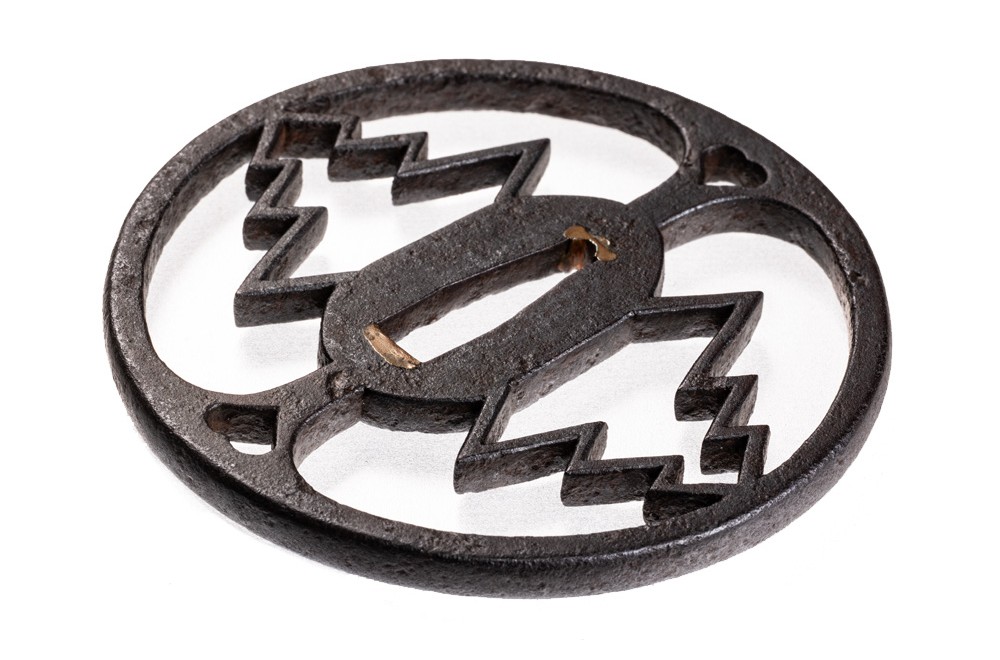
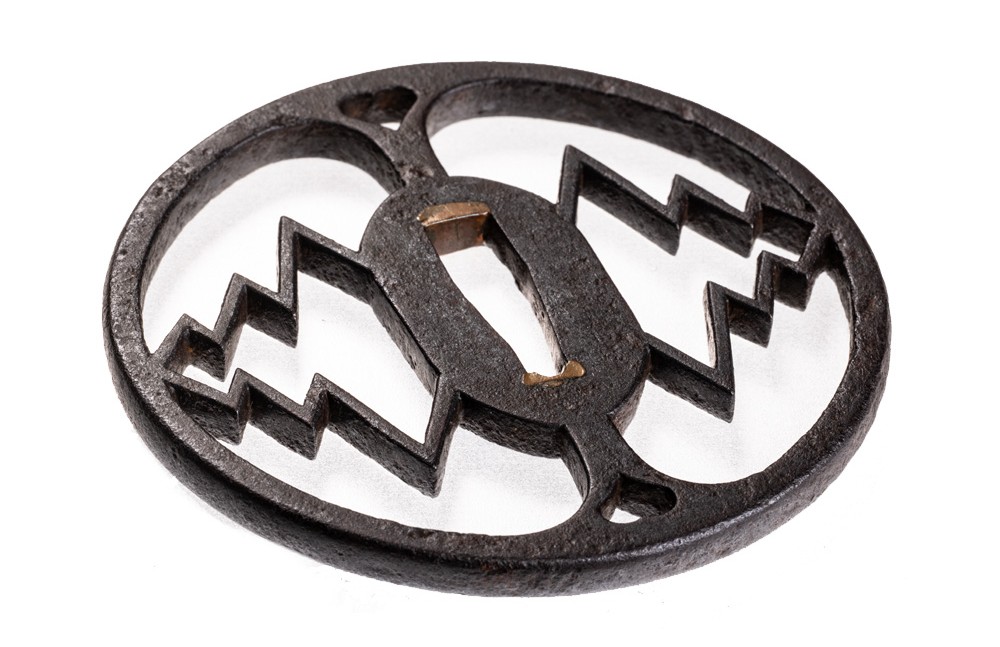
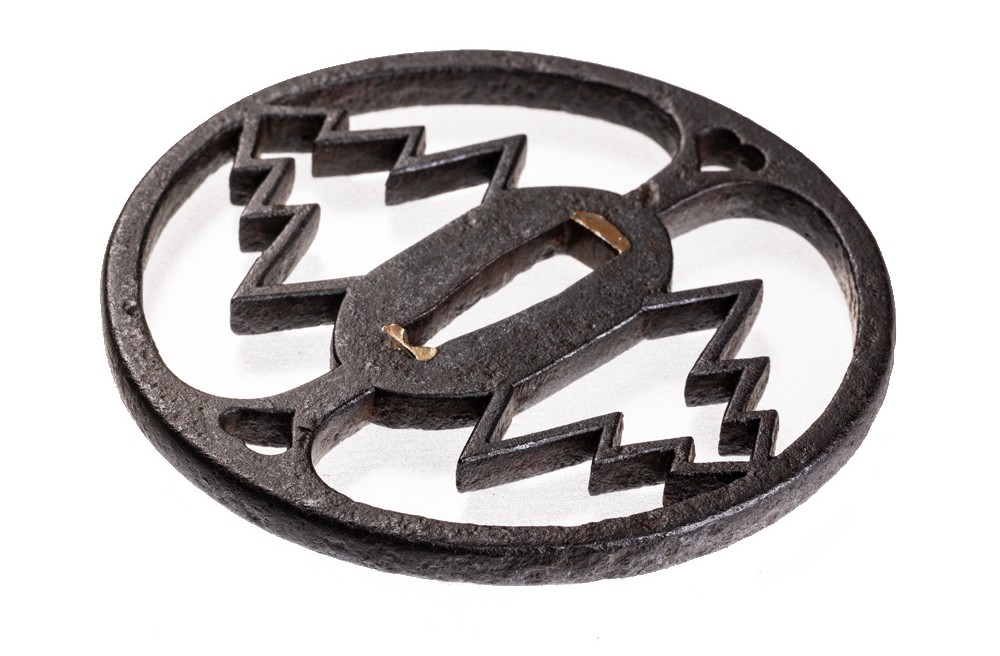
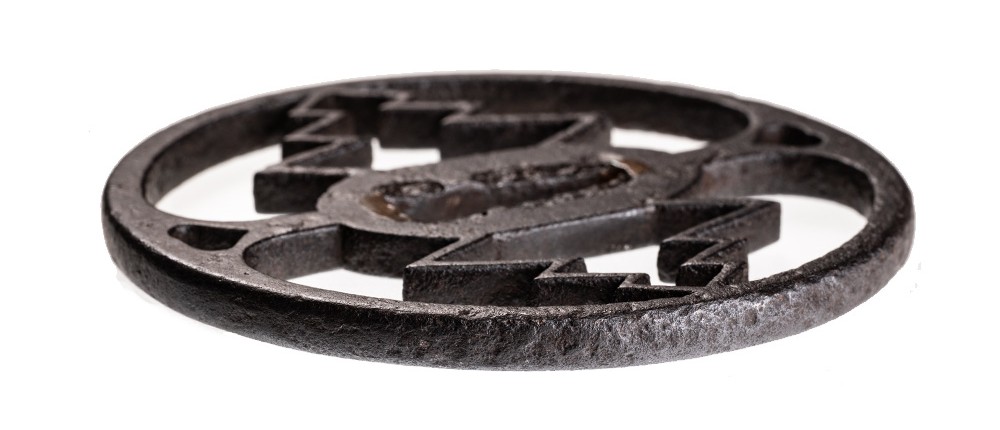
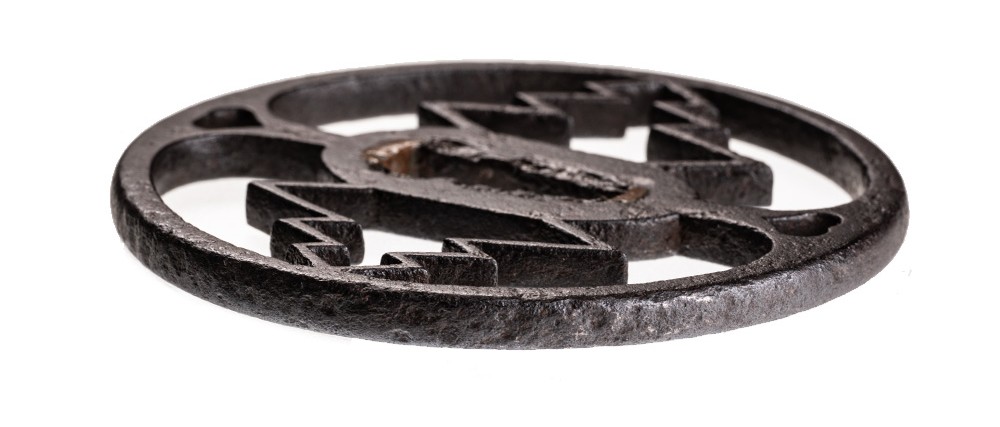
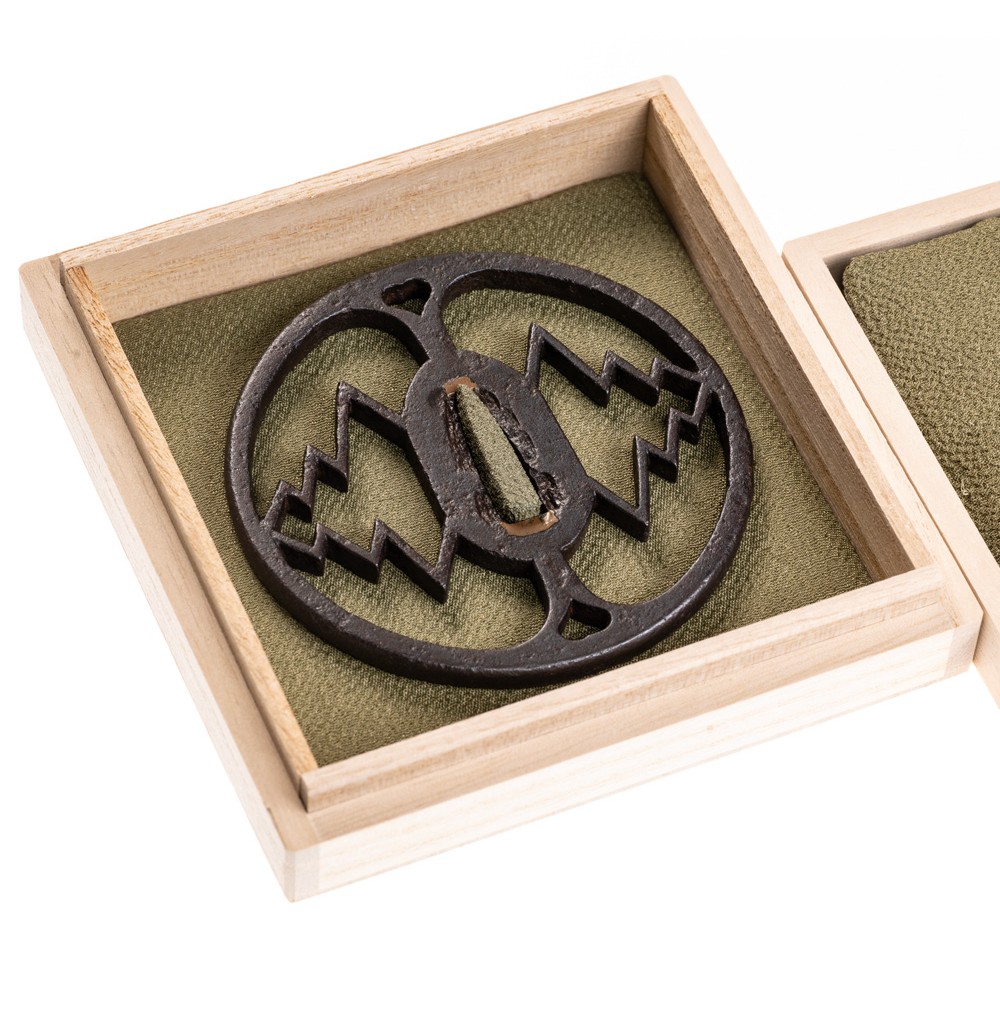
This is an Owari Sangai-Sukashi Tsuba, certified Hozon by the NBTHK. It features a round shape with iron ground and openwork design, characteristic of Owari tsuba from the late Muromachi to early Edo period. The dimensions are 8.18cm in height, 8.22cm in width, and 0.47cm in seppadai thickness, weighing 89.7g.
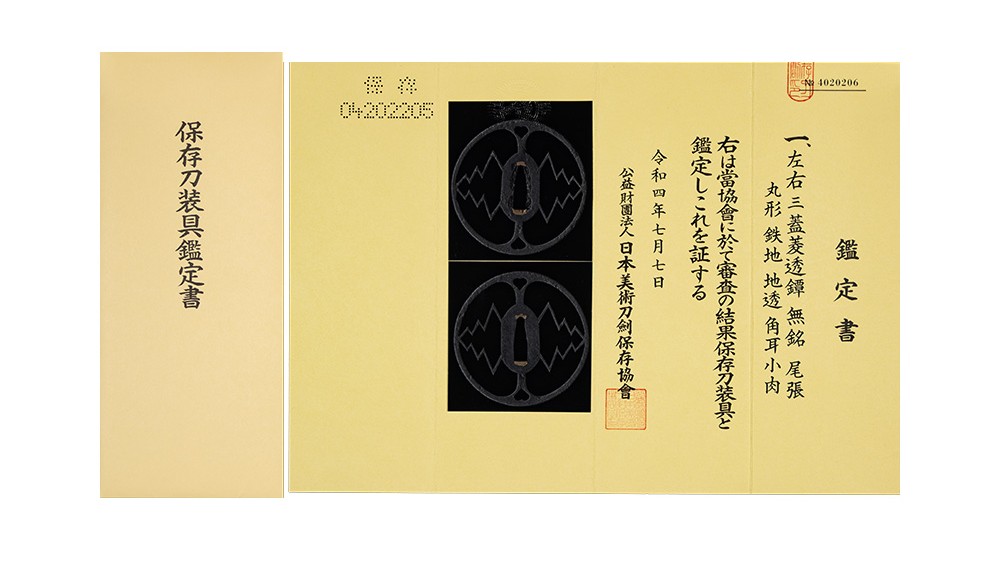
Certificate reading — 無銘(尾張)
 NihontoWatchBETA
Owari · Muromachi
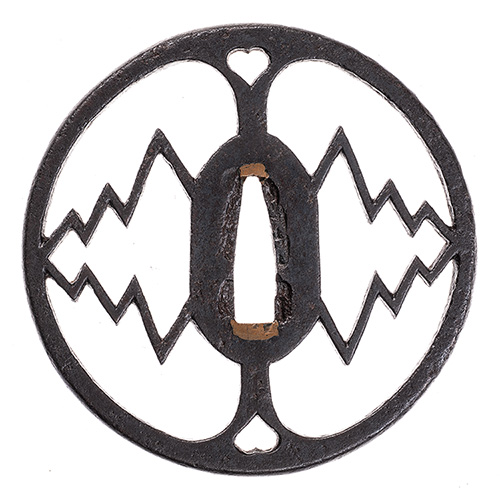
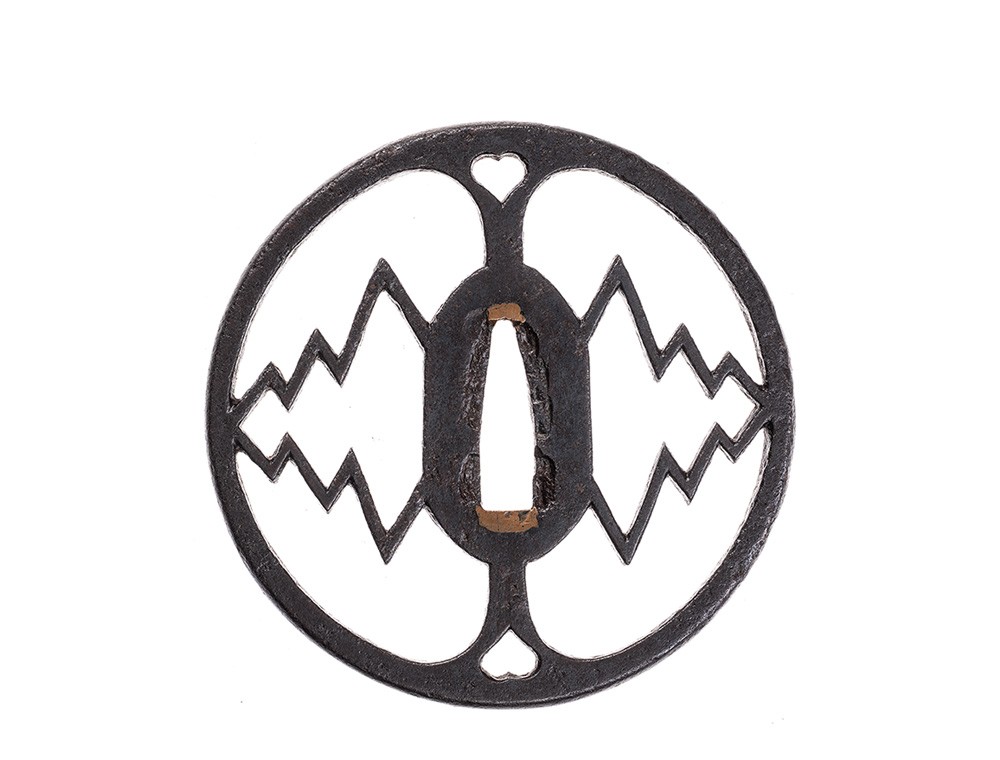
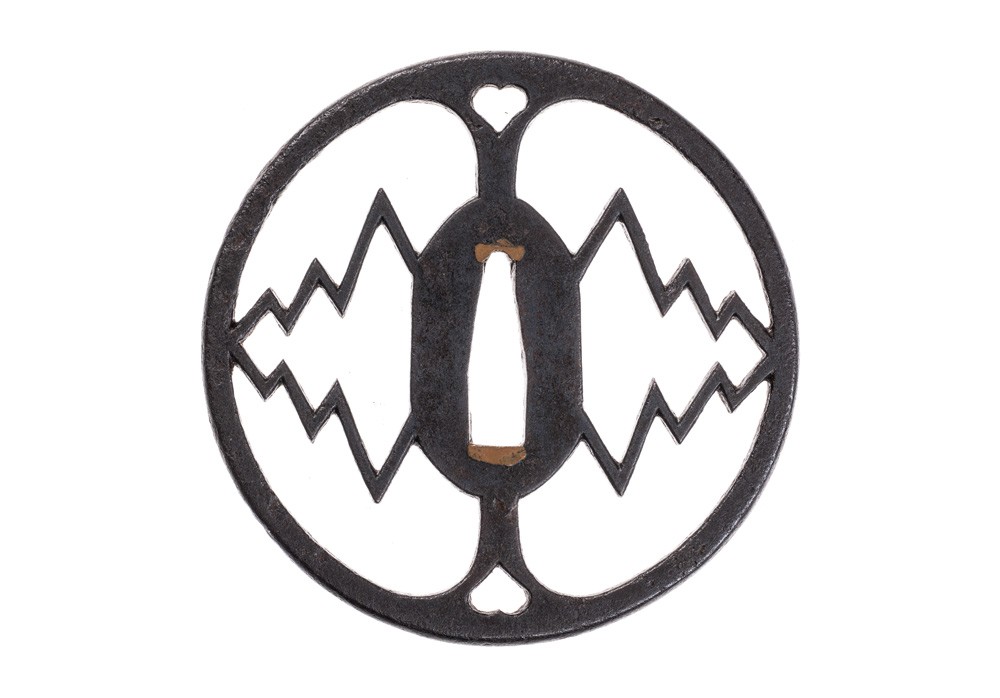

Owari School
Muromachi
Owari
Hozon (NBTHK)
Iron-tsuba · Owari
84 pieces on the market now
The Owari school represents one of the twin pillars of Japanese iron openwork tsuba production, standing alongside the Kyō tradition as a defining force in the art of ji-sukashi (ground openwork) guards. The school's origins lie in the Owari province (modern Aichi prefecture), where production began in the early to middle Muromachi period and continued across a sustained span extending into the Edo period. Learn more →
| Smith | Era | Designated |
|---|---|---|
| Nobuie信家 | — | 56 |
| Hiko’emon彦右衛門 | — | 0 |
| Katsuaki克明 | — | 0 |
| Shigemasa重正 | — | 0 |
| Norisuke則亮 (Norisuke/Koreyoshi | — | 0 |
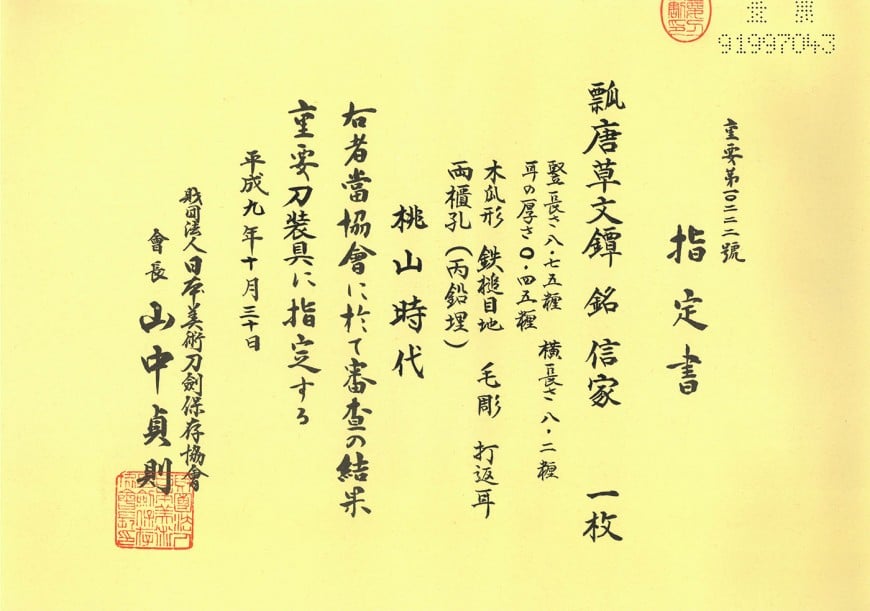
Certifies a genuine fitting worth preserving: a correct signature, or, if unsigned, an identifiable era and school, with recognized artistic and craft value.
The NBTHK (Nihon Bijutsu Tōken Hozon Kyōkai, the Society for the Preservation of Japanese Art Swords) is a public-interest incorporated foundation founded in 1948 and supervised by Japan’s Agency for Cultural Affairs (Bunkachō); it is based at the Japanese Sword Museum in Tokyo. Its expert panels physically examine each submitted work (shinsa) and issue a certificate (kanteishō) ranking it by artistic and historical merit. NBTHK papers are the most widely recognized standard of authentication for Japanese swords and fittings.
NBTHK official siteReturns/exchanges/cancellations not accepted after shipment except for significant defects; if defective, return/exchange possible within 3 days of arrival (return shipping paid by customer).
This is an Owari Sangai-Sukashi Tsuba, certified Hozon by the NBTHK. It features a round shape with iron ground and openwork design, characteristic of Owari tsuba from the late Muromachi to early Edo period. The dimensions are 8.18cm in height, 8.22cm in width, and 0.47cm in seppadai thickness, weighing 89.7g.
Certificate reading — 無銘(尾張)
NihontoWatchBETAOwari · Muromachi
Owari School
Muromachi
Owari
Hozon (NBTHK)
Iron-tsuba · Owari
84 pieces on the market now
The Owari school represents one of the twin pillars of Japanese iron openwork tsuba production, standing alongside the Kyō tradition as a defining force in the art of ji-sukashi (ground openwork) guards. The school's origins lie in the Owari province (modern Aichi prefecture), where production began in the early to middle Muromachi period and continued across a sustained span extending into the Edo period. Learn more →
| Smith | Era | Designated |
|---|---|---|
| Nobuie信家 | — | 56 |
| Hiko’emon彦右衛門 | — | 0 |
| Katsuaki克明 | — | 0 |
| Shigemasa重正 | — | 0 |
| Norisuke則亮 (Norisuke/Koreyoshi | — | 0 |
Certifies a genuine fitting worth preserving: a correct signature, or, if unsigned, an identifiable era and school, with recognized artistic and craft value.
The NBTHK (Nihon Bijutsu Tōken Hozon Kyōkai, the Society for the Preservation of Japanese Art Swords) is a public-interest incorporated foundation founded in 1948 and supervised by Japan’s Agency for Cultural Affairs (Bunkachō); it is based at the Japanese Sword Museum in Tokyo. Its expert panels physically examine each submitted work (shinsa) and issue a certificate (kanteishō) ranking it by artistic and historical merit. NBTHK papers are the most widely recognized standard of authentication for Japanese swords and fittings.
NBTHK official siteReturns/exchanges/cancellations not accepted after shipment except for significant defects; if defective, return/exchange possible within 3 days of arrival (return shipping paid by customer).