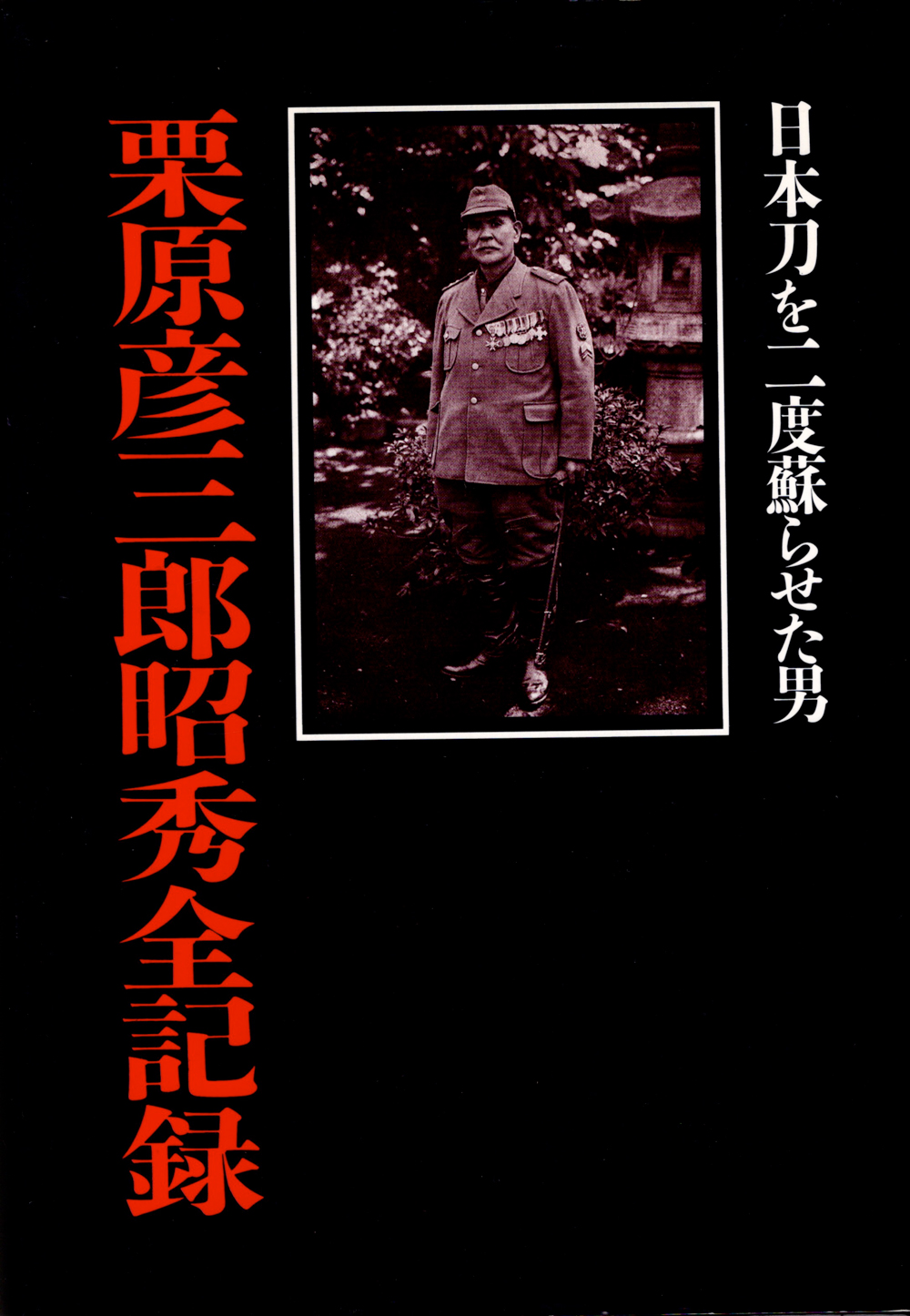
Recorded in the Kurihara Hikosaburo Akihide Zen Kiroku
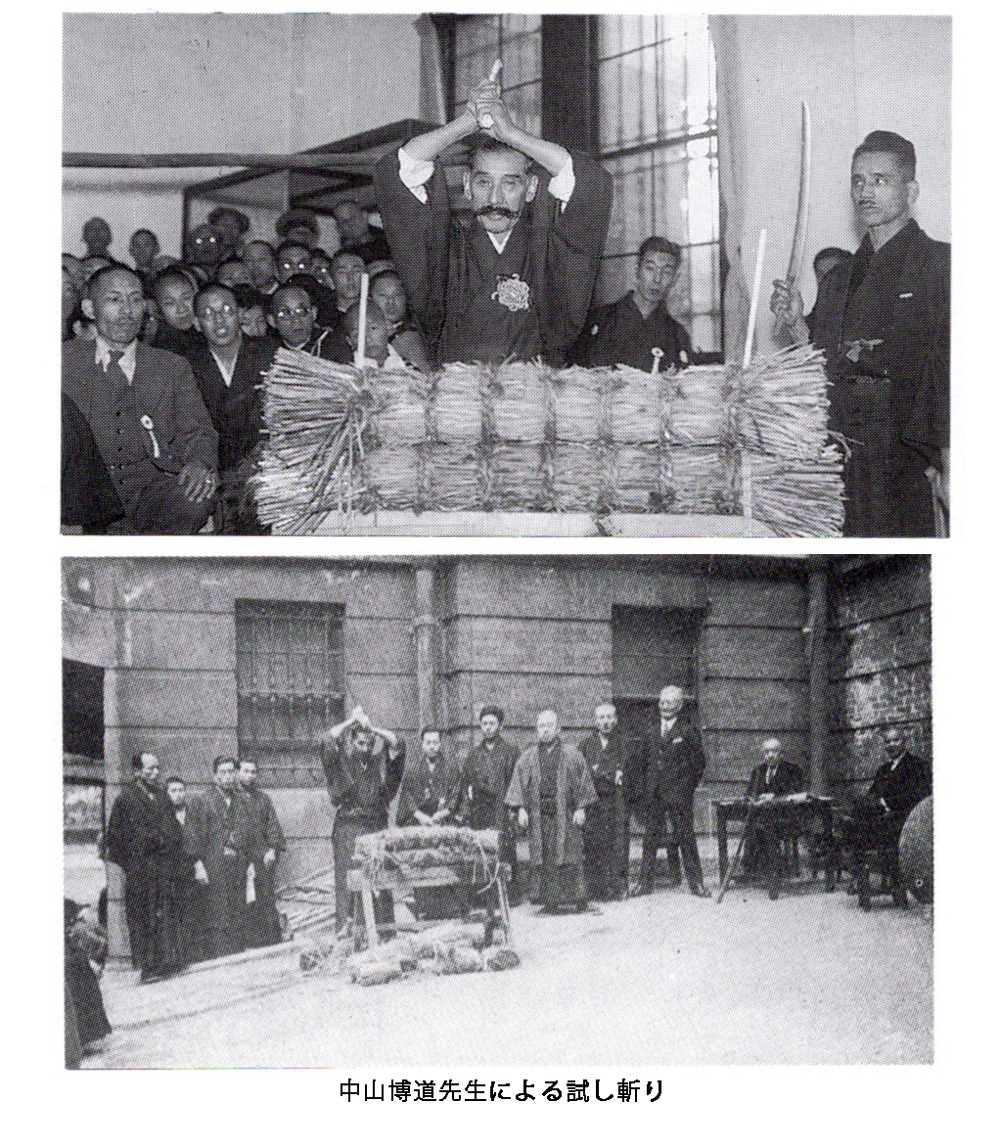
Test cut by the Showa Kensei and god of swordsmanship, Nakayama Hakudo Sensei
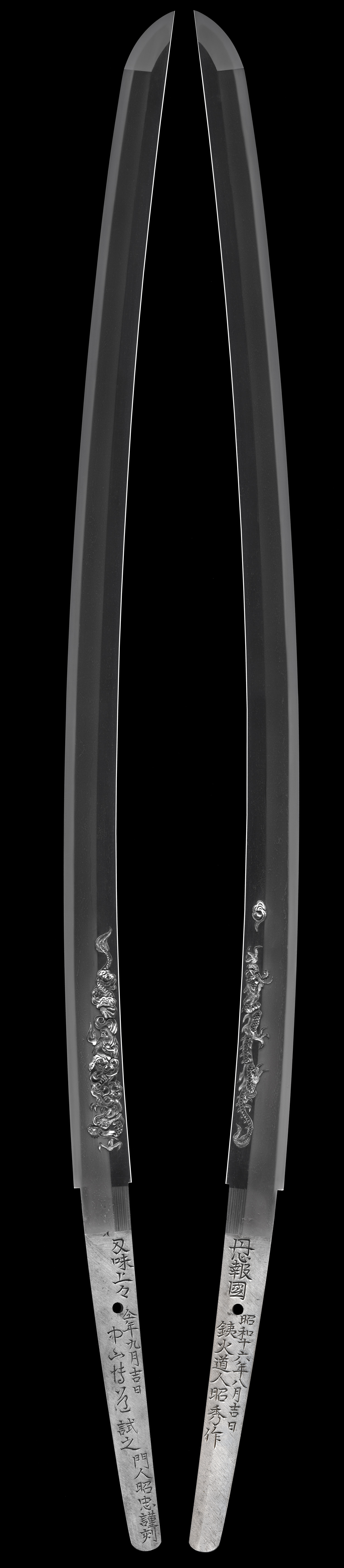
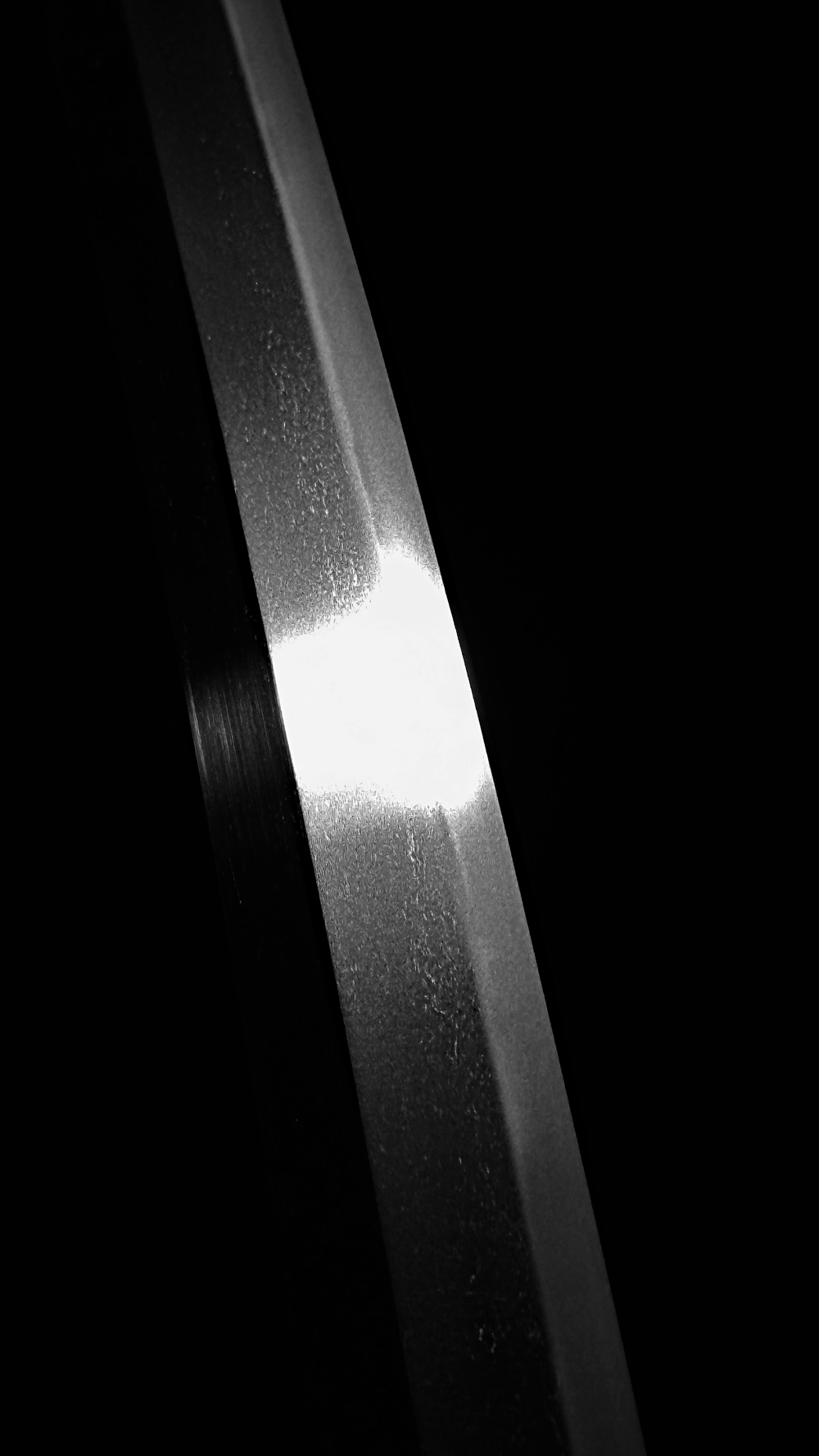
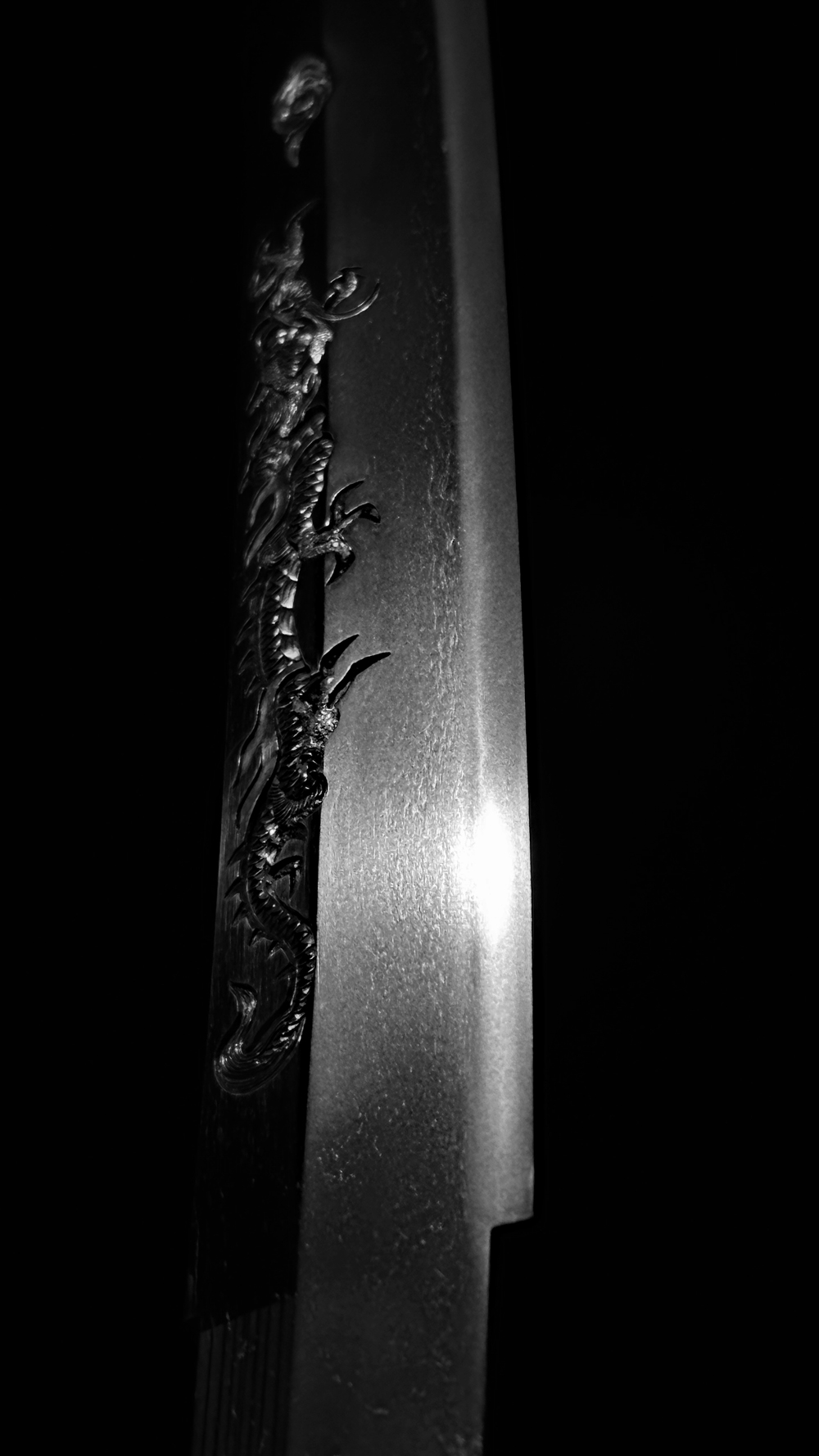
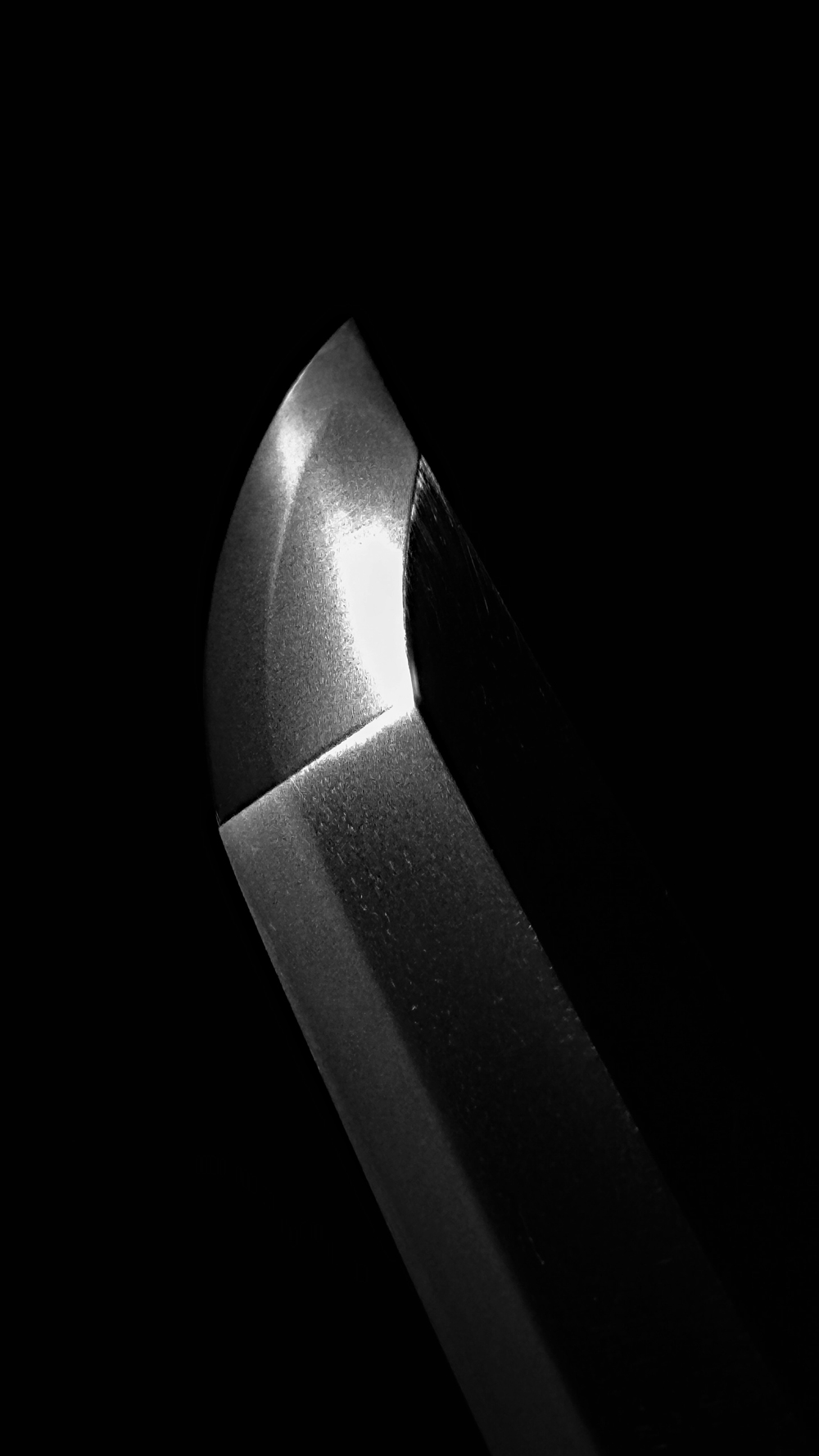
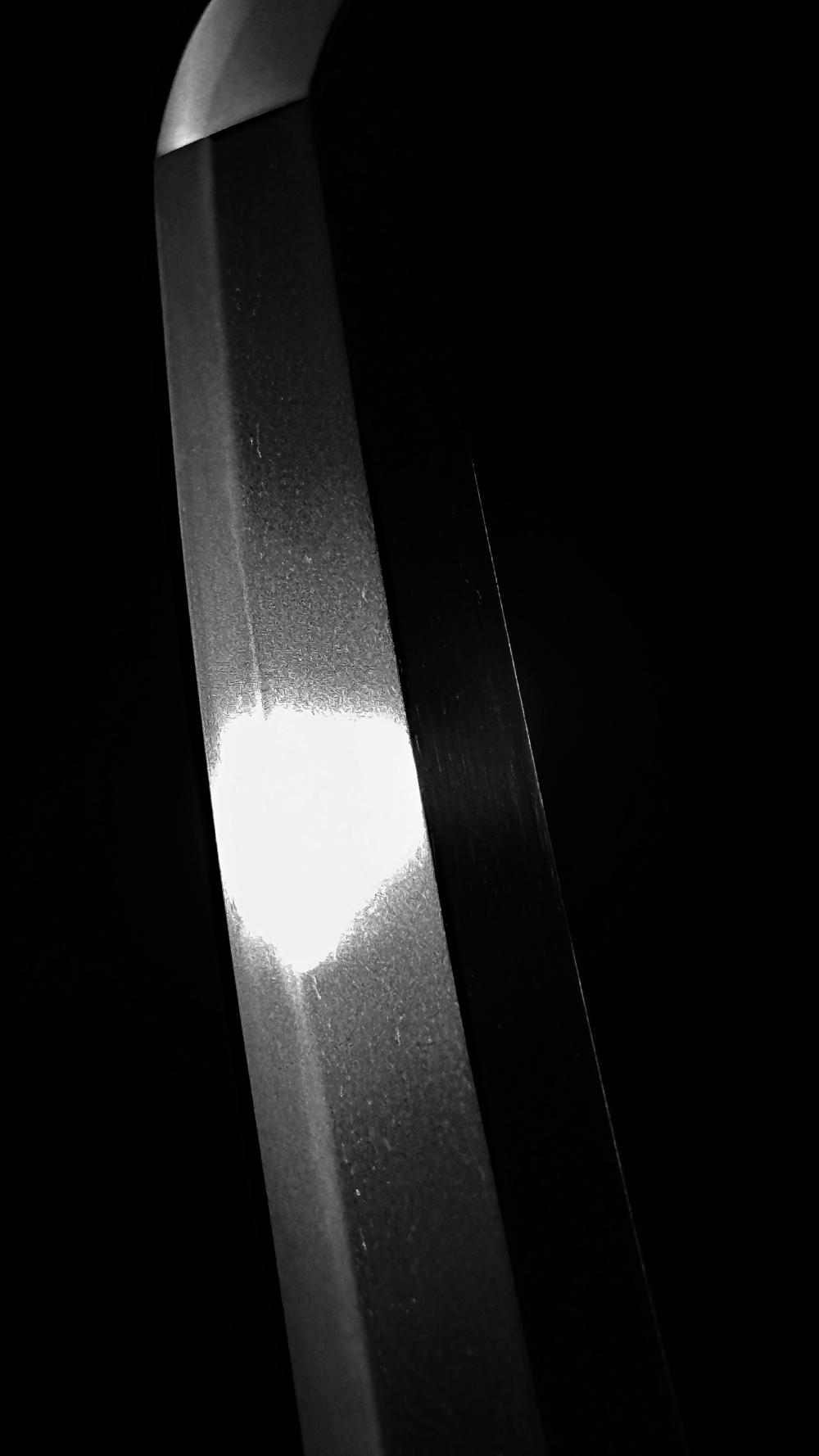
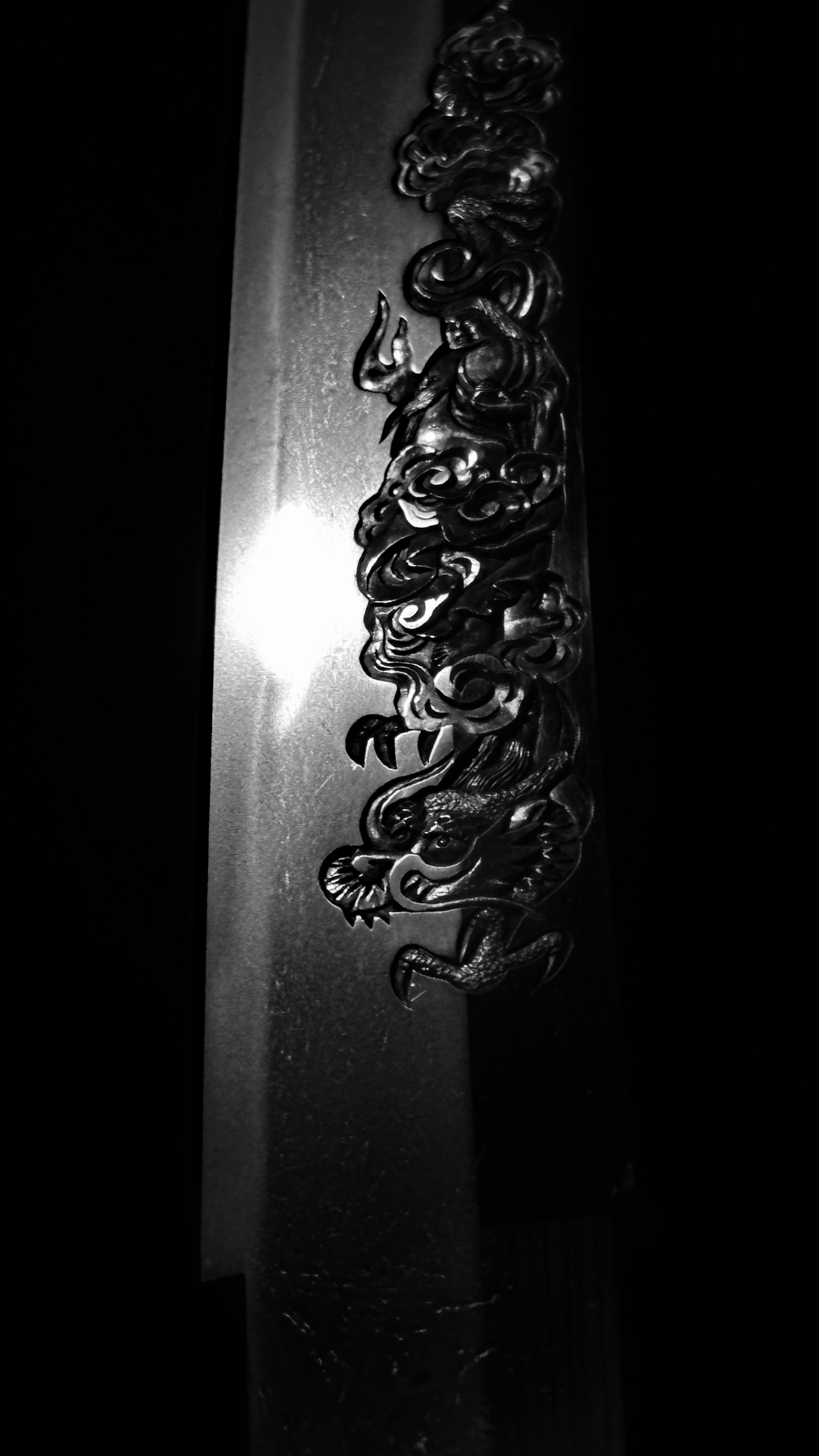
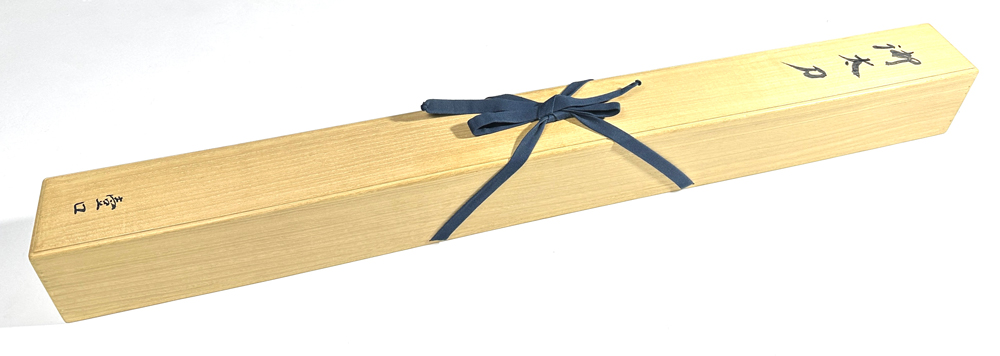
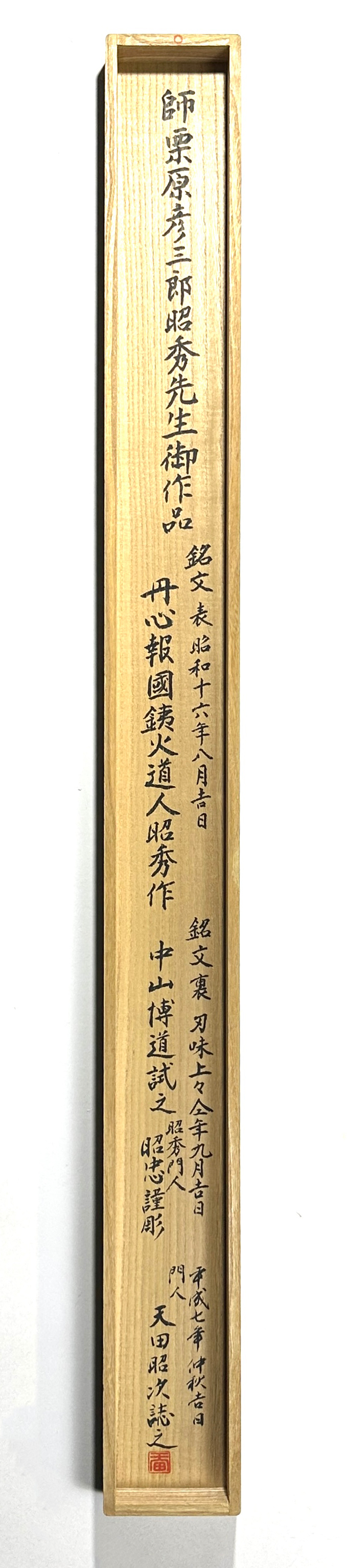
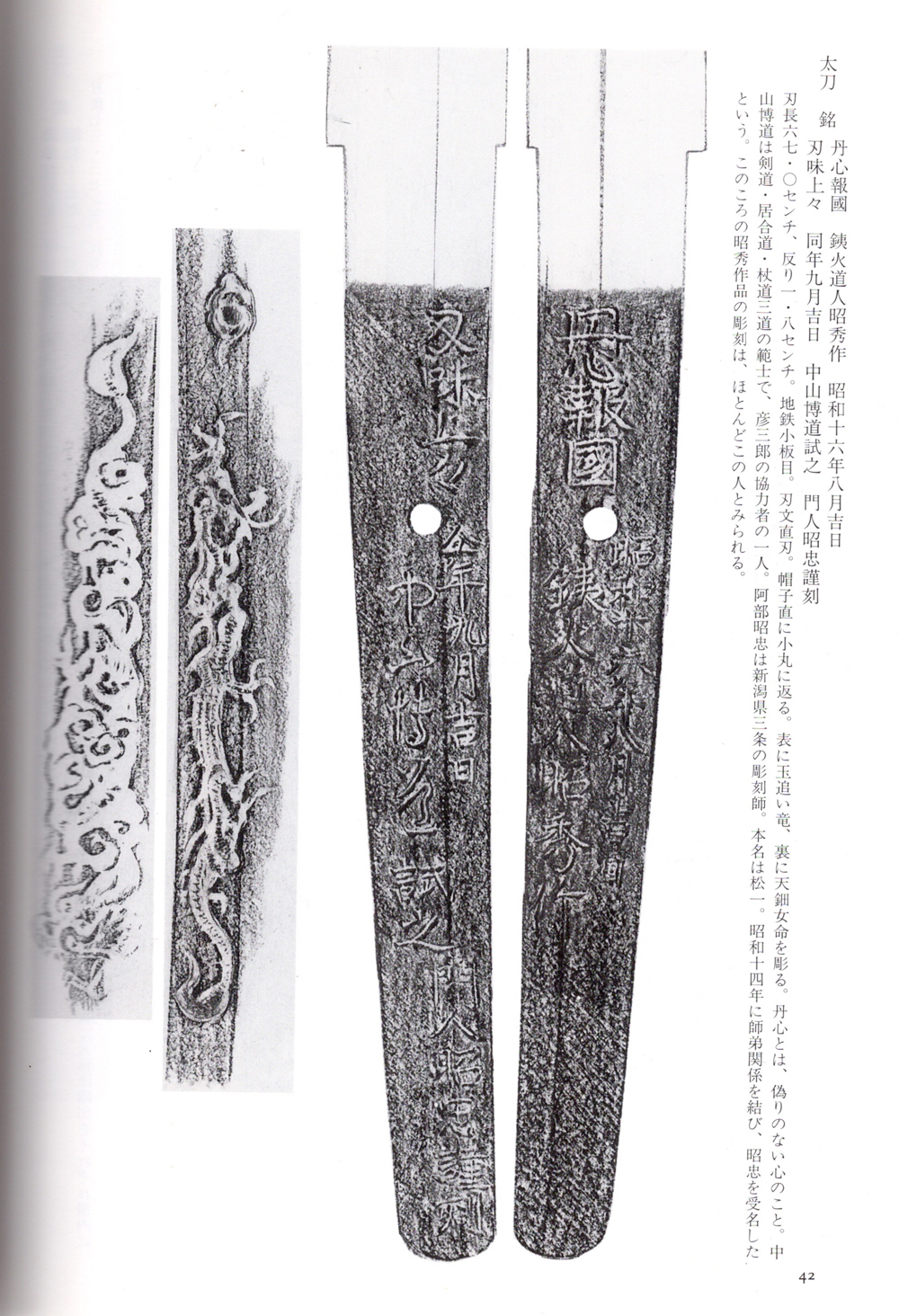
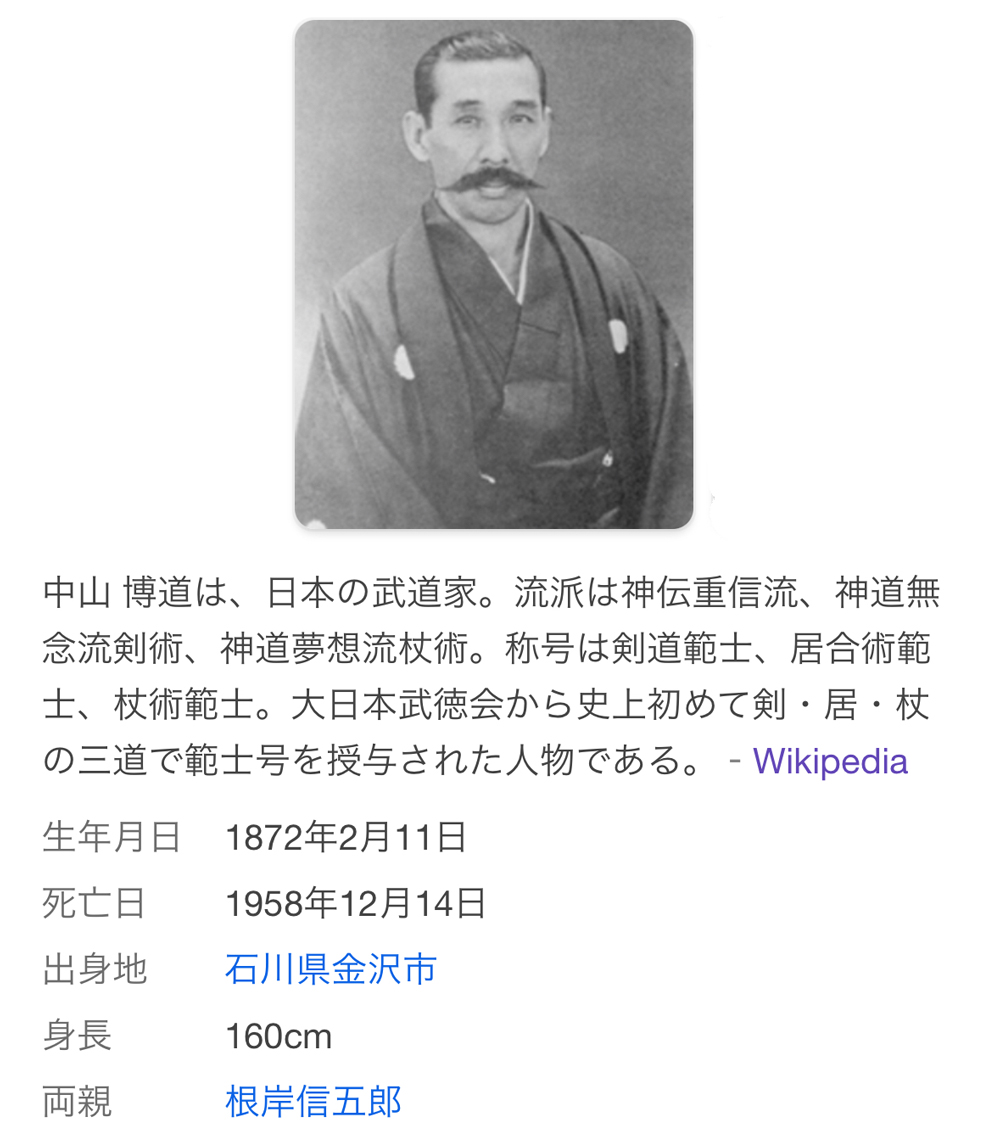
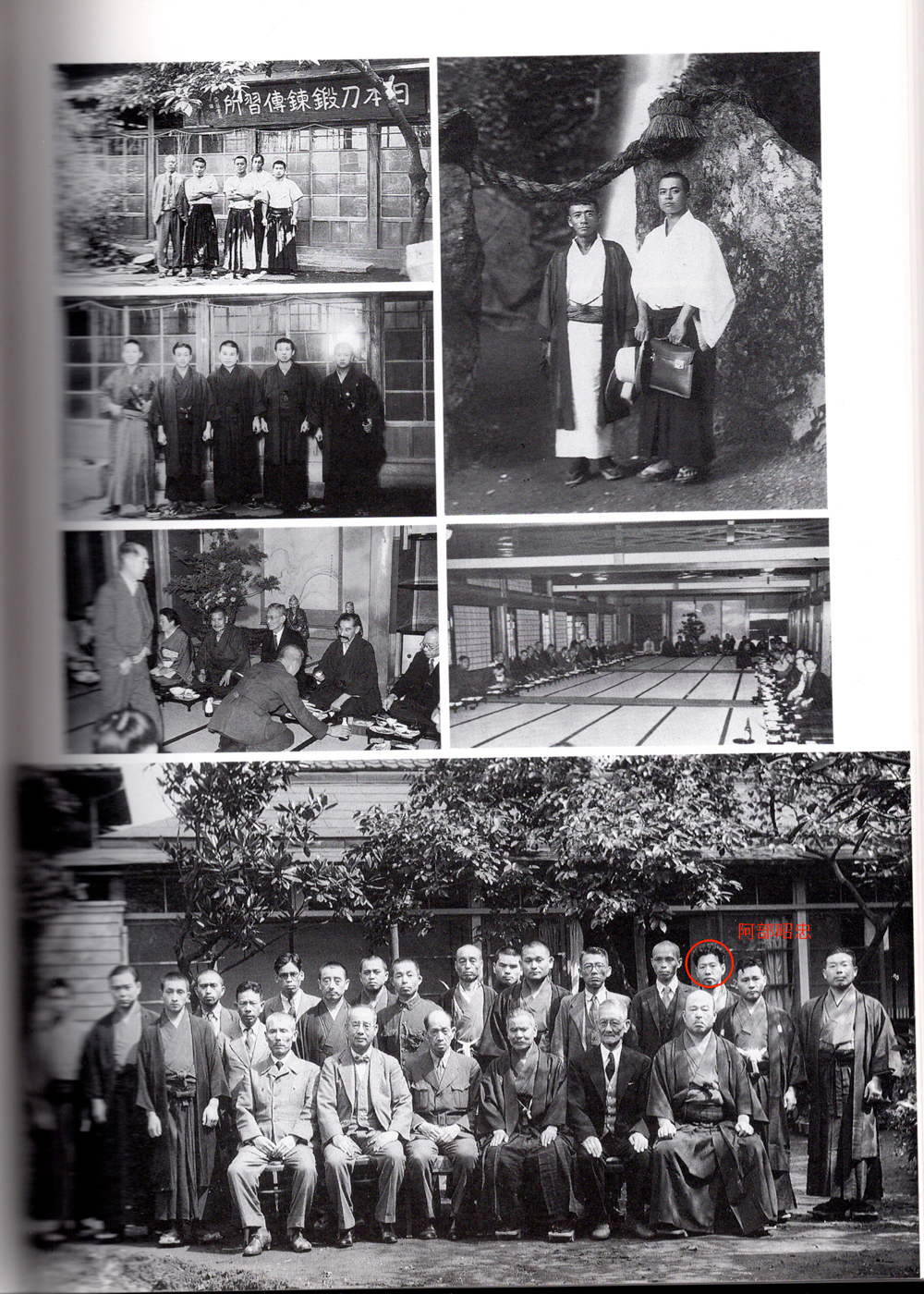
Kurihara Hikosaburo Akihide was from Shizuma no Sato, Aso-gun, Tochigi Prefecture (present-day Sano City), and was a former member of the House of Representatives. From an early age he favored swords, having a particular interest in forging, and studied under the second generation Masa-o. He established the Nihonto Denshusho within the garden of his residence in Akasaka Hikawa-cho, inviting Kasama Shigetsugu and others to serve as teachers and opening the way for the instruction of students. Among his students were many including the Ningen Kokuho swordsmiths Miyairi Akihira (Yukihira) and Amada Akitsugu. In Showa 10, he held a Nihonto exhibition sponsored by the Nihonto Denshusho and supported by the Ministry of Education. While striving to hold this annually thereafter, he published the journals "Nihonto" and "Nippon Shumi" as affiliated organs. He was a man of merit in this field who promoted the prosperity of swordsmiths, polisher, and scabbard makers. Nakayama Hakudo was the greatest collaborator of Kurihara Akihide, a master swordsman described as the "Showa Kensei" and the "Last Bugeisha." In 1957 (Showa 32), he was approached by the All Japan Kendo Federation to be awarded the first "Kendo Judan," but he opposed the tenth-dan system and did not accept it. He was the first person in history to be awarded the title of Hanshi in the three arts of Ken, I, and Jo by the Dai Nippon Butokukai (a foundational juridical person that operated for the purpose of promoting, educating, and honoring martial arts in pre-war Japan). During World War II, at the request of the Army and Navy, he performed tameshigiri on more than 500 gunto in a single day. He personally owned about 200 swords, but because he presented them to students departing for the front, almost none remained in his possession after the war. This work is a masterpiece of Kurihara Akihide's utmost effort, and the horimono by Abe Akitada is also magnificent. Nakayama Hakudo, who performed the tameshigiri, evaluated the sharpness as excellent. The accompanying tomobako has a hakogaki by the late Ningen Kokuho Amada Akitsugu. It is also recorded in the Kurihara Hikosaburo Akihide Zen Kiroku.
Details from the shop
商品番号
No,K00258
銘
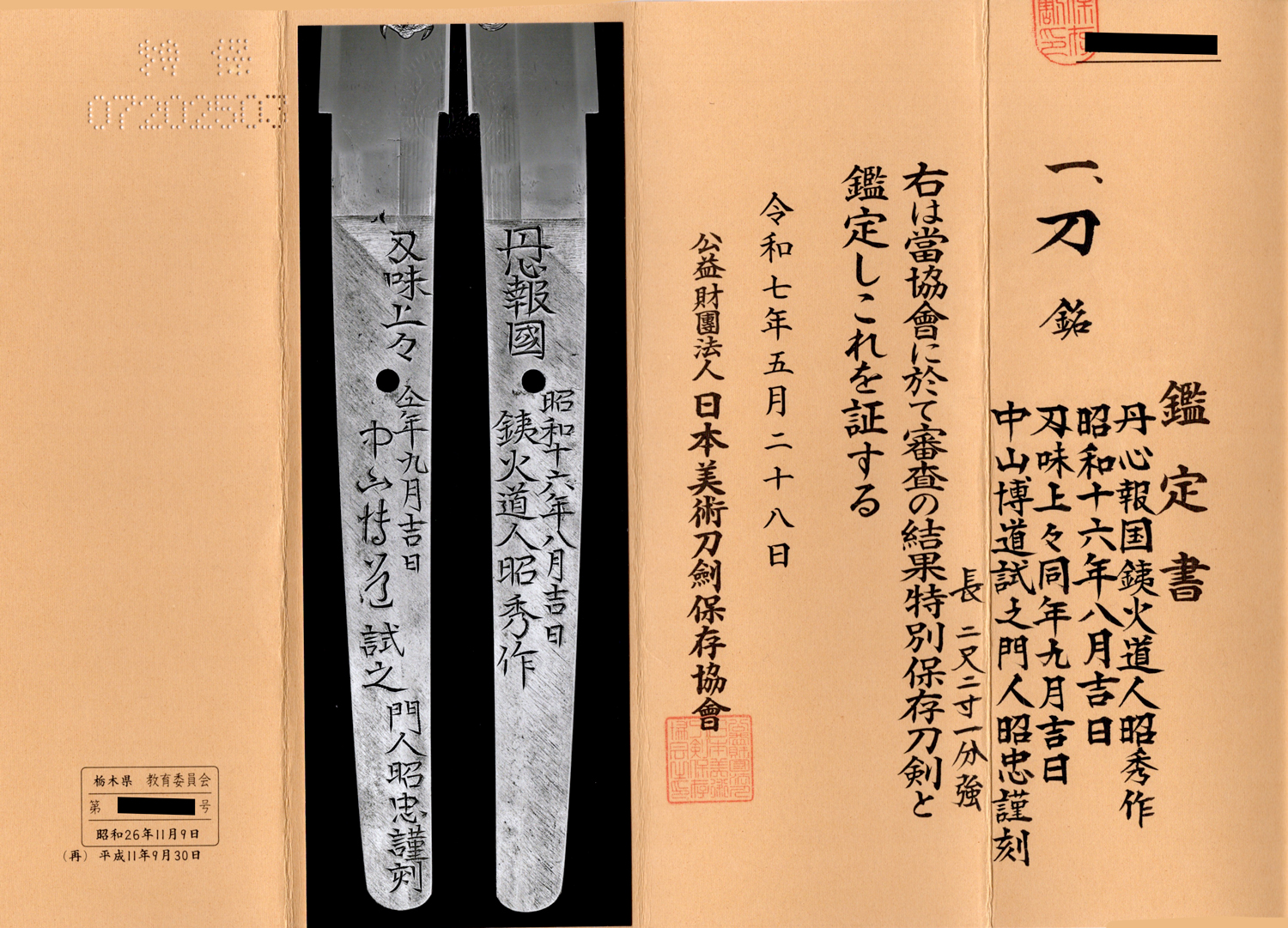
刀 丹心報国銕火道人昭秀作
昭和十六年八月吉日
刃味上々同年九月吉日
中山博道試之門人昭忠謹刻
登録証
栃木県昭和26年11月9日交付
鑑定書
特別保存刀剣 NBTHK Tokubetsu Hozon Paper (公財)日本美術刀剣保存協会 特別保存刀剣鑑定書
Machine translation from the shop's Japanese · may contain errors ·
Recorded in the Kurihara Hikosaburo Akihide Zen Kiroku
Test cut by the Showa Kensei and god of swordsmanship, Nakayama Hakudo Sensei
Kurihara Hikosaburo Akihide was from Shizuma no Sato, Aso-gun, Tochigi Prefecture (present-day Sano City), and was a former member of the House of Representatives. From an early age he favored swords, having a particular interest in forging, and studied under the second generation Masa-o. He established the Nihonto Denshusho within the garden of his residence in Akasaka Hikawa-cho, inviting Kasama Shigetsugu and others to serve as teachers and opening the way for the instruction of students. Among his students were many including the Ningen Kokuho swordsmiths Miyairi Akihira (Yukihira) and Amada Akitsugu. In Showa 10, he held a Nihonto exhibition sponsored by the Nihonto Denshusho and supported by the Ministry of Education. While striving to hold this annually thereafter, he published the journals "Nihonto" and "Nippon Shumi" as affiliated organs. He was a man of merit in this field who promoted the prosperity of swordsmiths, polisher, and scabbard makers. Nakayama Hakudo was the greatest collaborator of Kurihara Akihide, a master swordsman described as the "Showa Kensei" and the "Last Bugeisha." In 1957 (Showa 32), he was approached by the All Japan Kendo Federation to be awarded the first "Kendo Judan," but he opposed the tenth-dan system and did not accept it. He was the first person in history to be awarded the title of Hanshi in the three arts of Ken, I, and Jo by the Dai Nippon Butokukai (a foundational juridical person that operated for the purpose of promoting, educating, and honoring martial arts in pre-war Japan). During World War II, at the request of the Army and Navy, he performed tameshigiri on more than 500 gunto in a single day. He personally owned about 200 swords, but because he presented them to students departing for the front, almost none remained in his possession after the war. This work is a masterpiece of Kurihara Akihide's utmost effort, and the horimono by Abe Akitada is also magnificent. Nakayama Hakudo, who performed the tameshigiri, evaluated the sharpness as excellent. The accompanying tomobako has a hakogaki by the late Ningen Kokuho Amada Akitsugu. It is also recorded in the Kurihara Hikosaburo Akihide Zen Kiroku.
The twentieth century nearly killed the craft twice: wartime distortion, then the occupation ban. The NBTHK’s founding in 1948 and licensed forging from 1953 rebuilt the sword as an art, crowned by Living National Treasures and the mukansa rank.
A Hozon-certified blade judged to show notably superior workmanship and a better state of preservation. The bar is higher: re-tempered blades and most unsigned Muromachi/Edo works are excluded.
About the NBTHK›
The NBTHK (Nihon Bijutsu Tōken Hozon Kyōkai, the Society for the Preservation of Japanese Art Swords) is a public-interest incorporated foundation founded in 1948 and supervised by Japan’s Agency for Cultural Affairs (Bunkachō); it is based at the Japanese Sword Museum in Tokyo. Its expert panels physically examine each submitted work (shinsa) and issue a certificate (kanteishō) ranking it by artistic and historical merit. NBTHK papers are the most widely recognized standard of authentication for Japanese swords and fittings.
For cooling-off, contact us within 3 days including the day you received the item, and ship it so that it arrives within 8 days. After 8 days a return cannot be accepted. Returning an item after 8 days will be treated as a buy-back.

 NihontoWatch