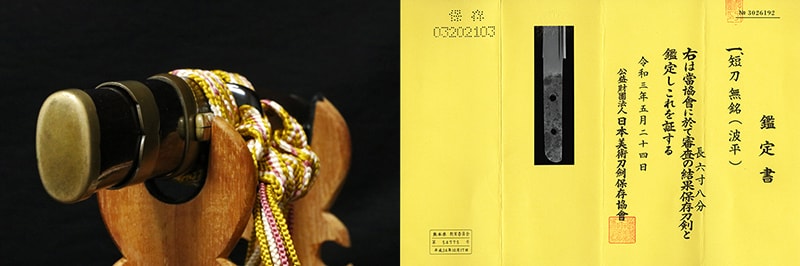
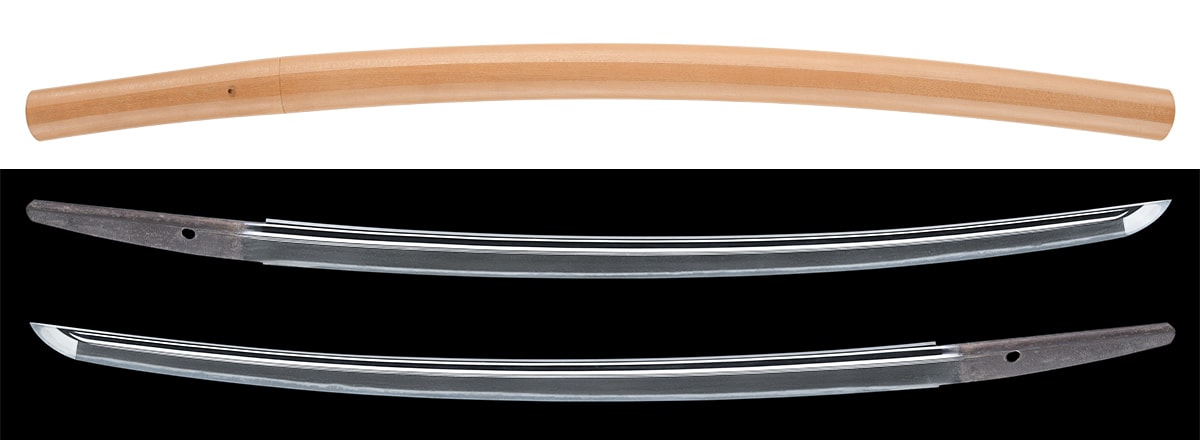
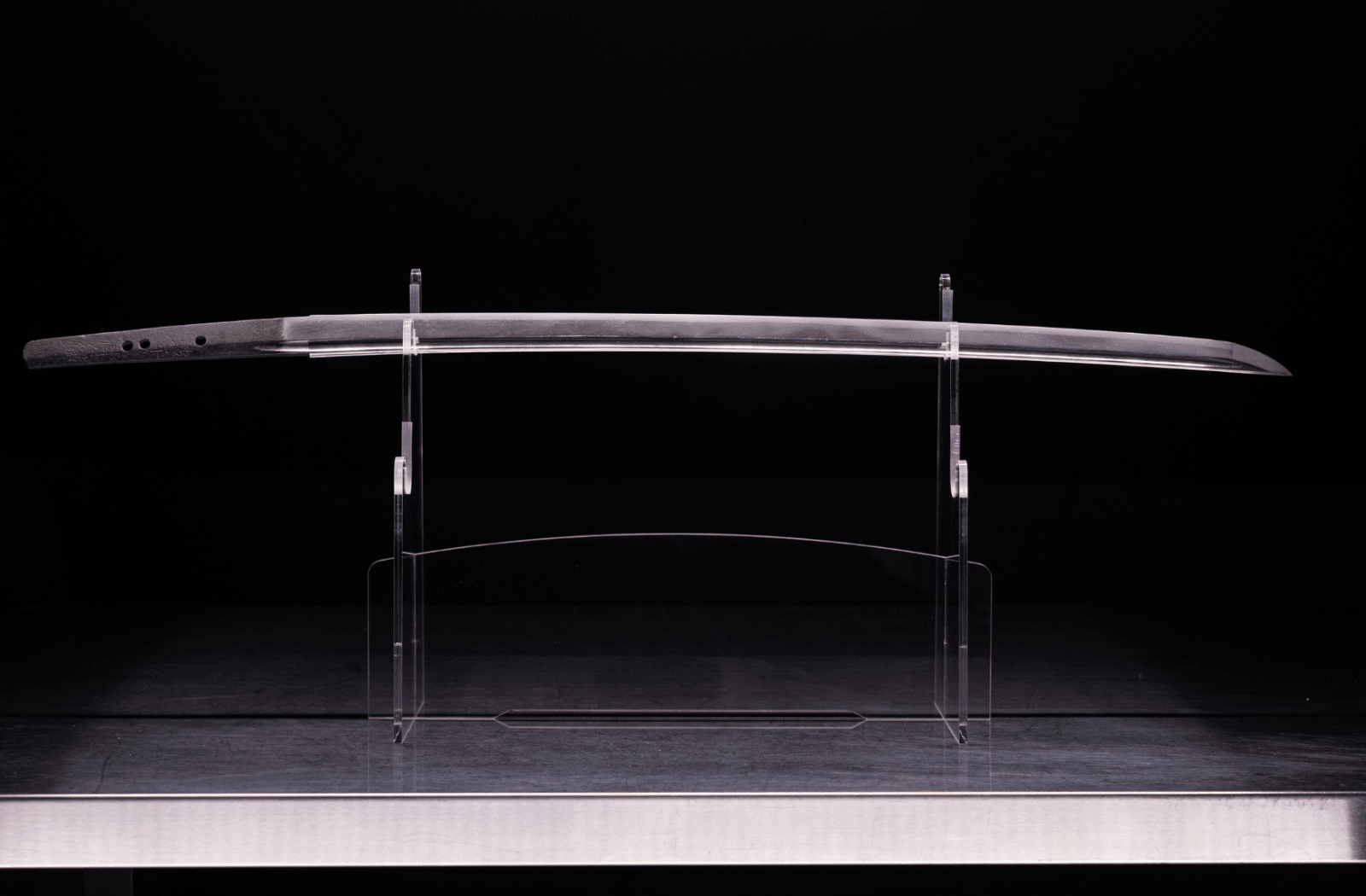
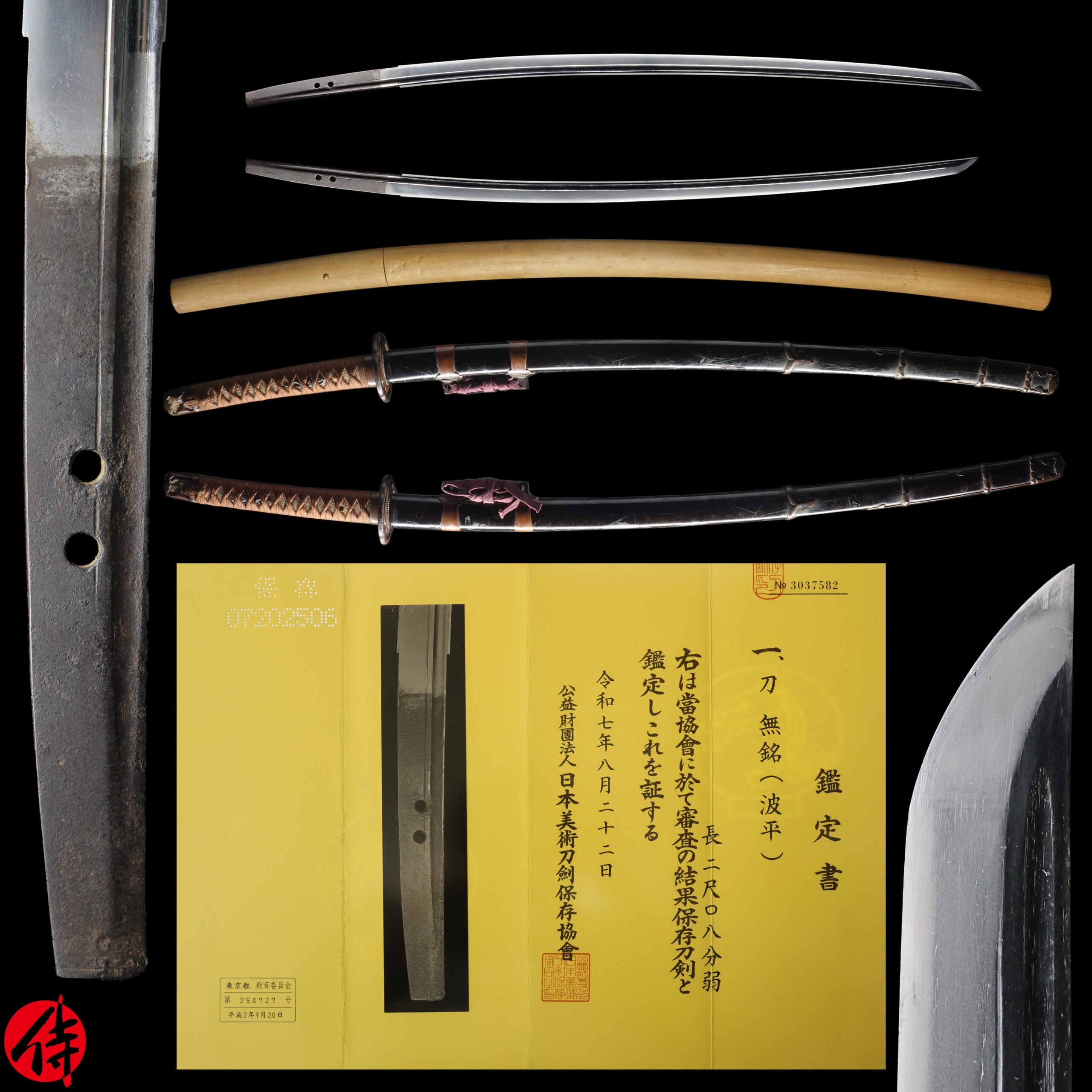
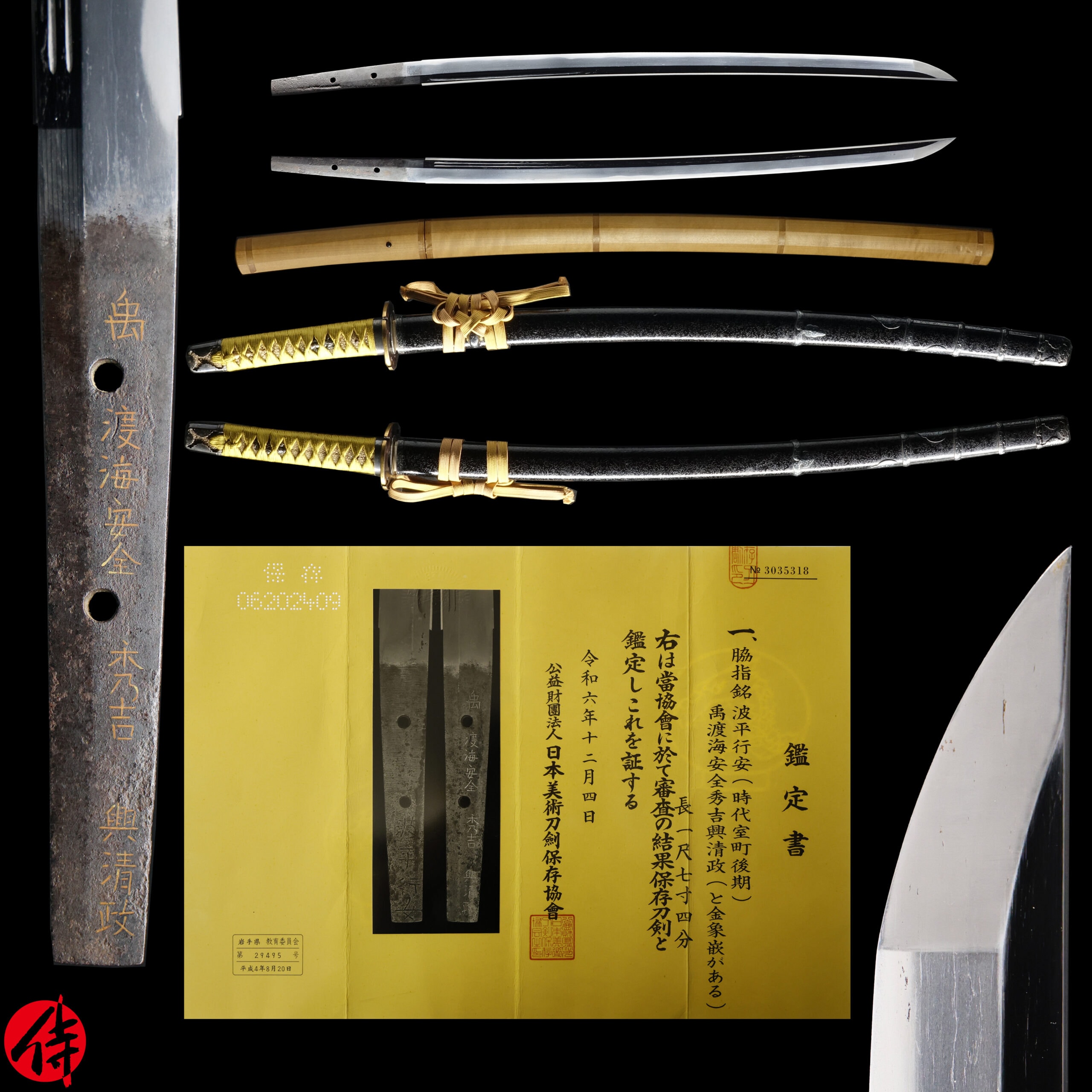
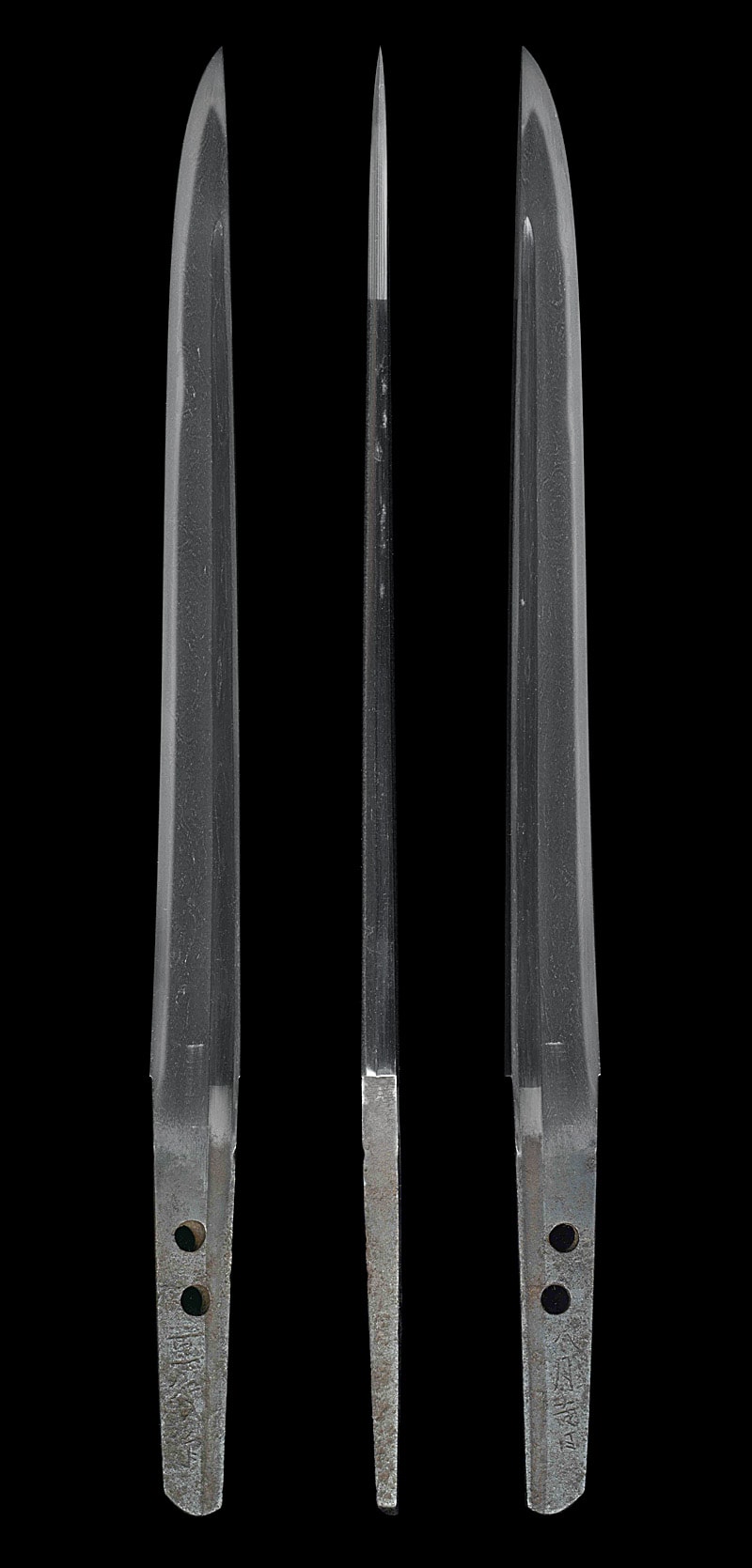
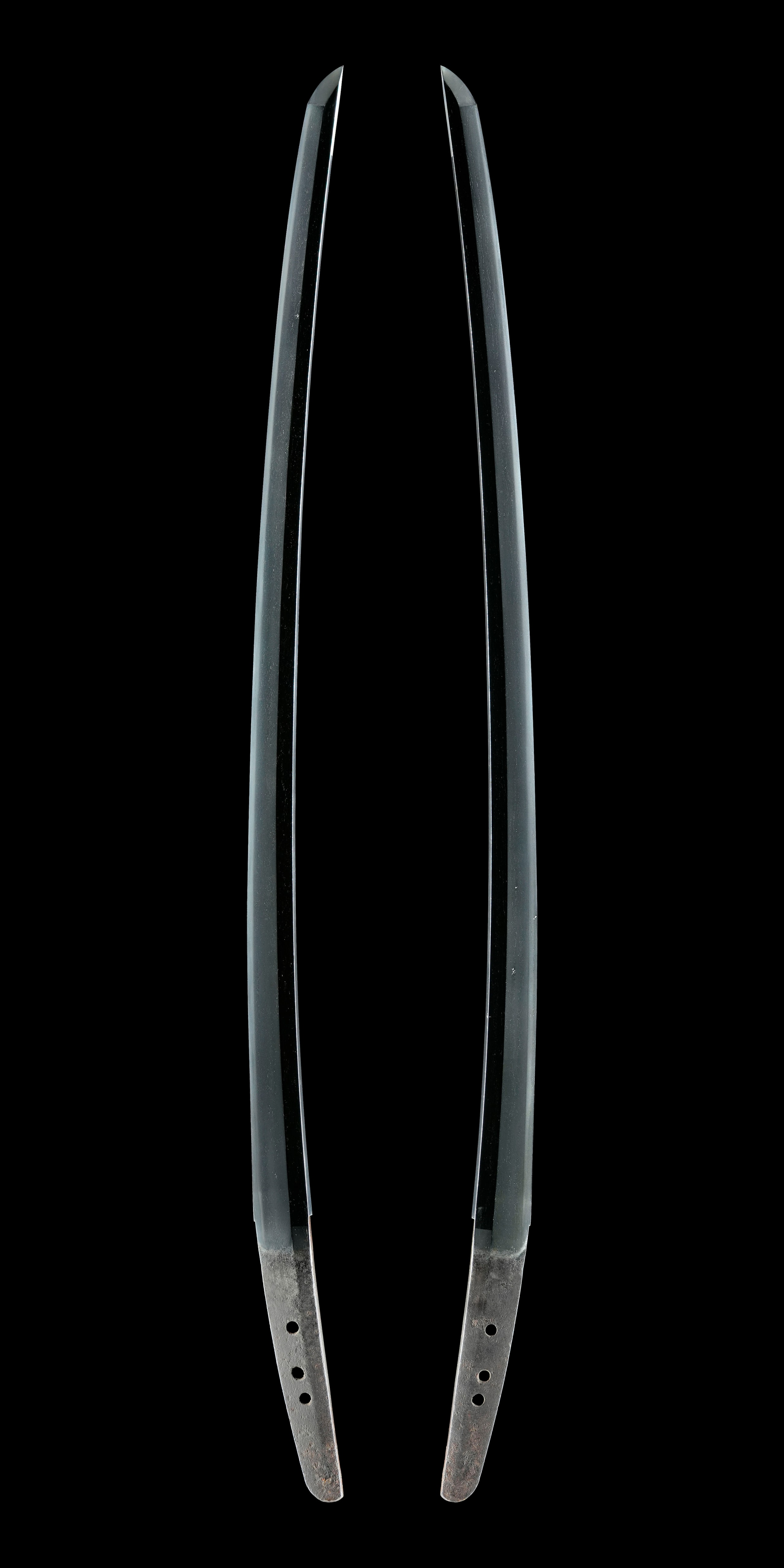
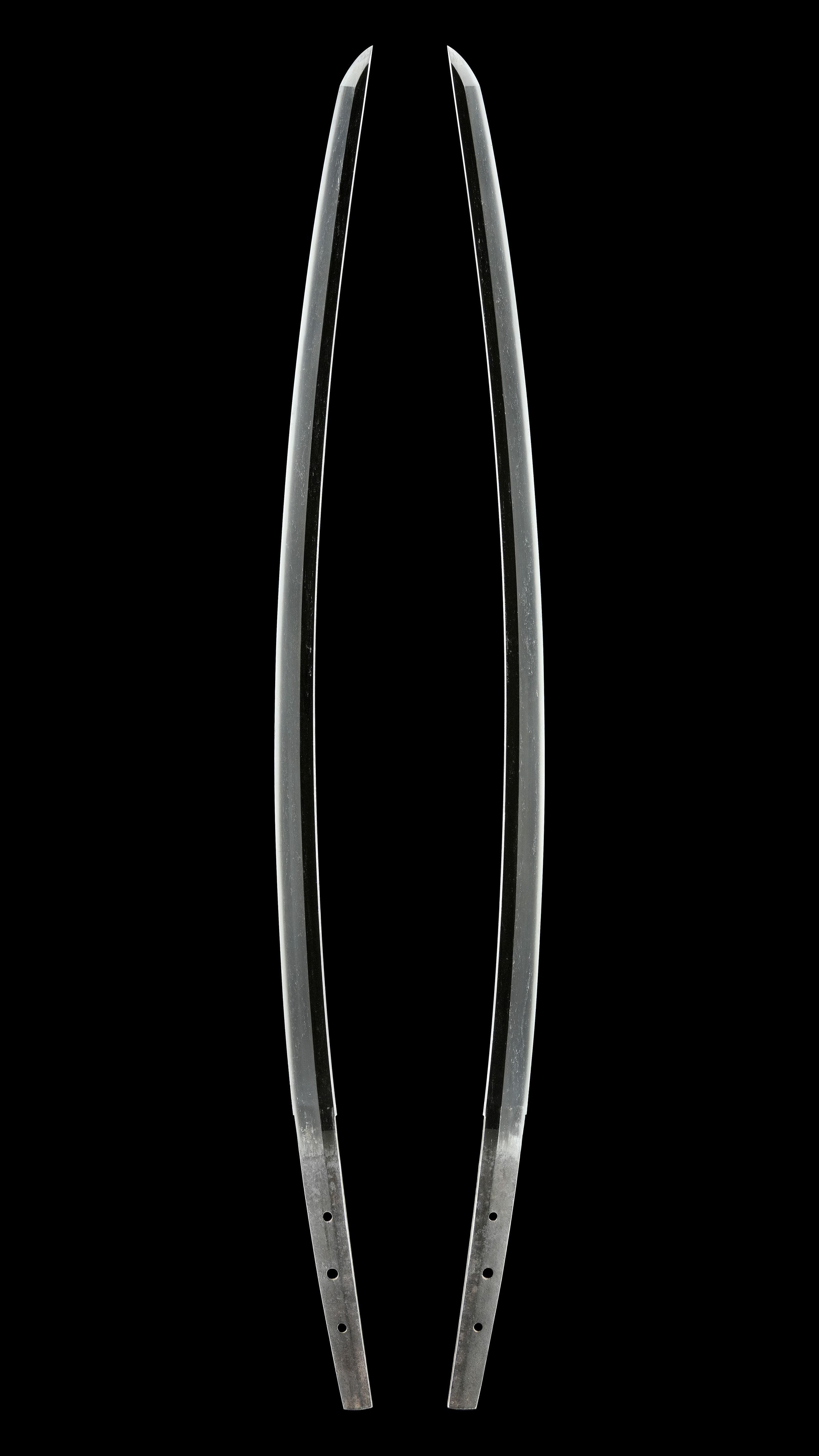
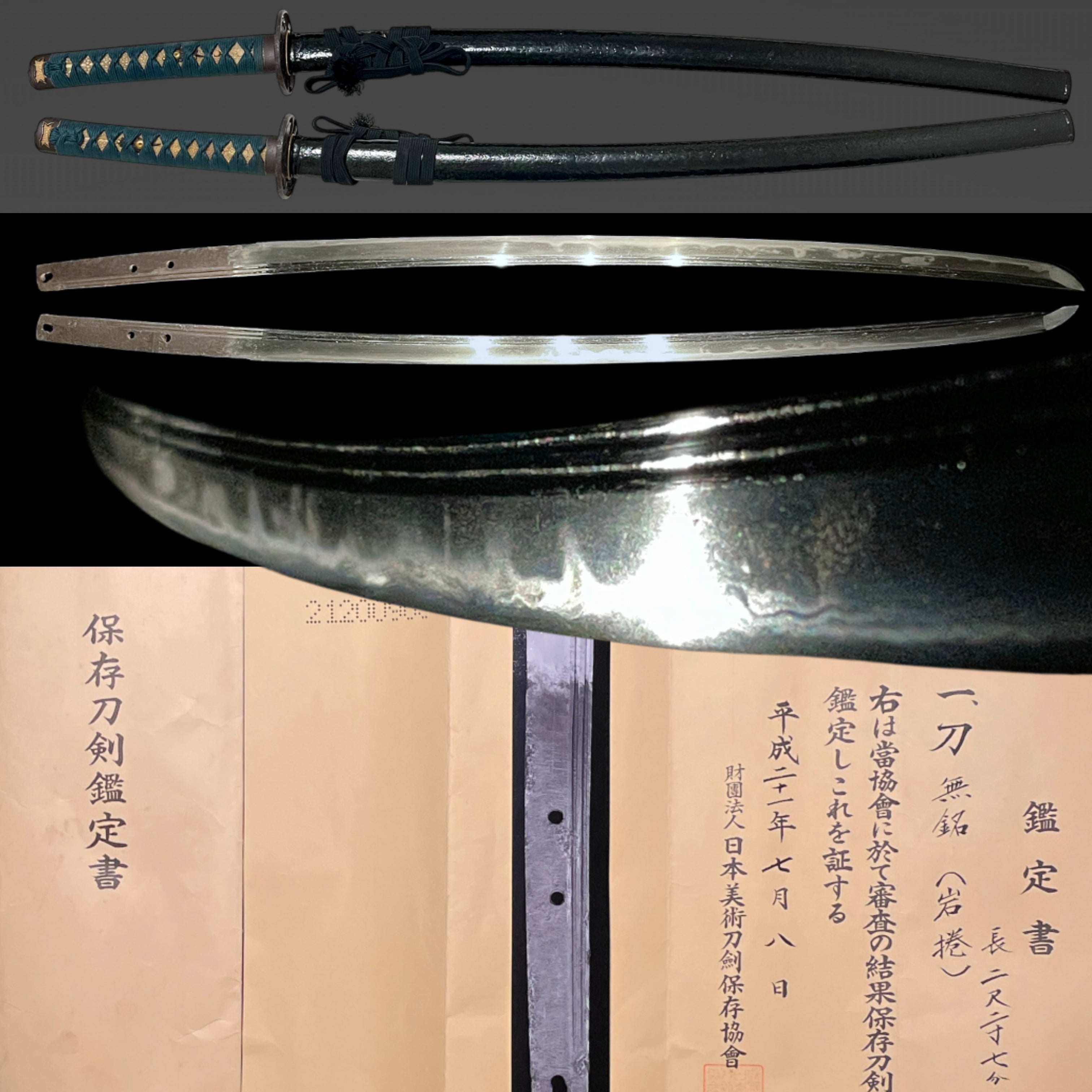
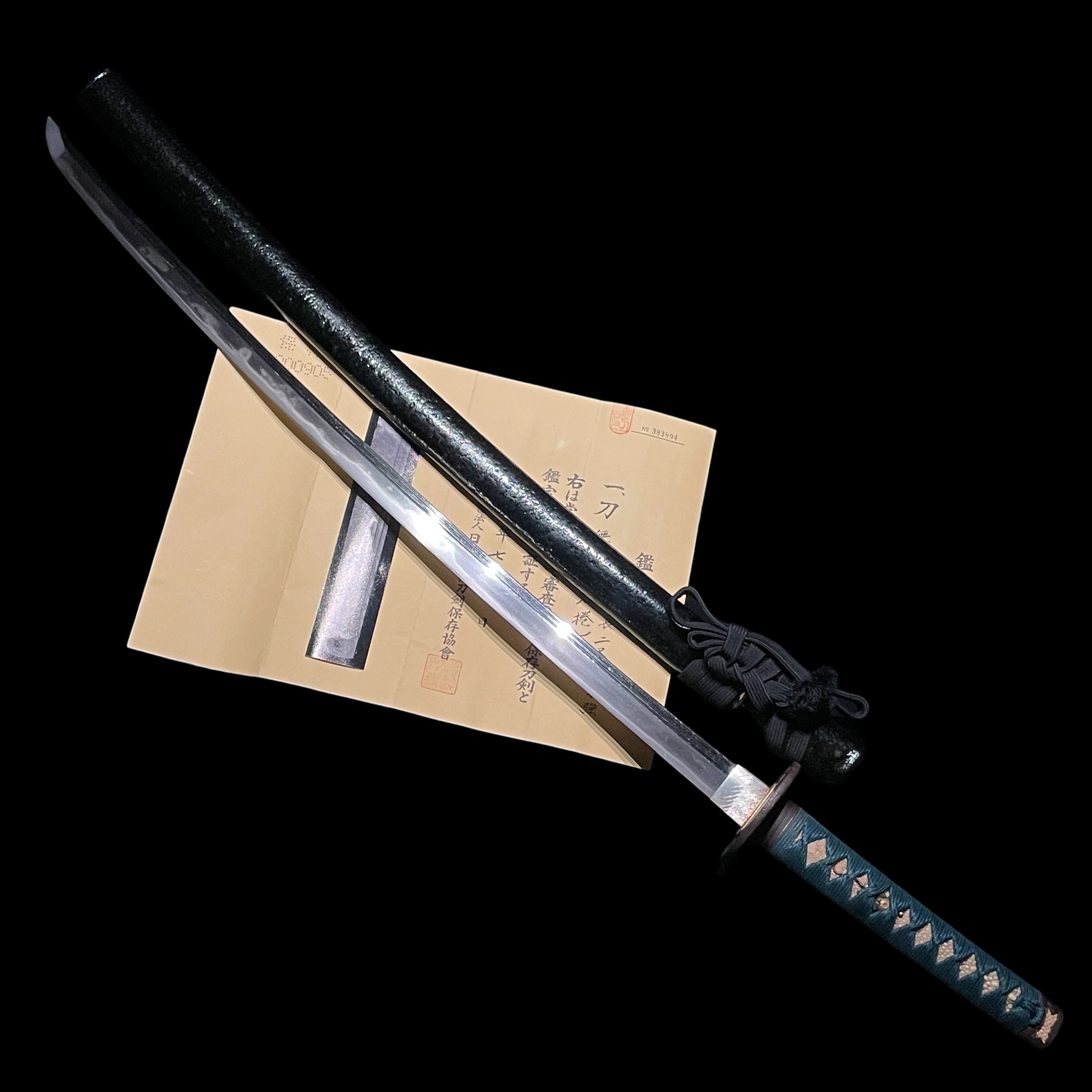
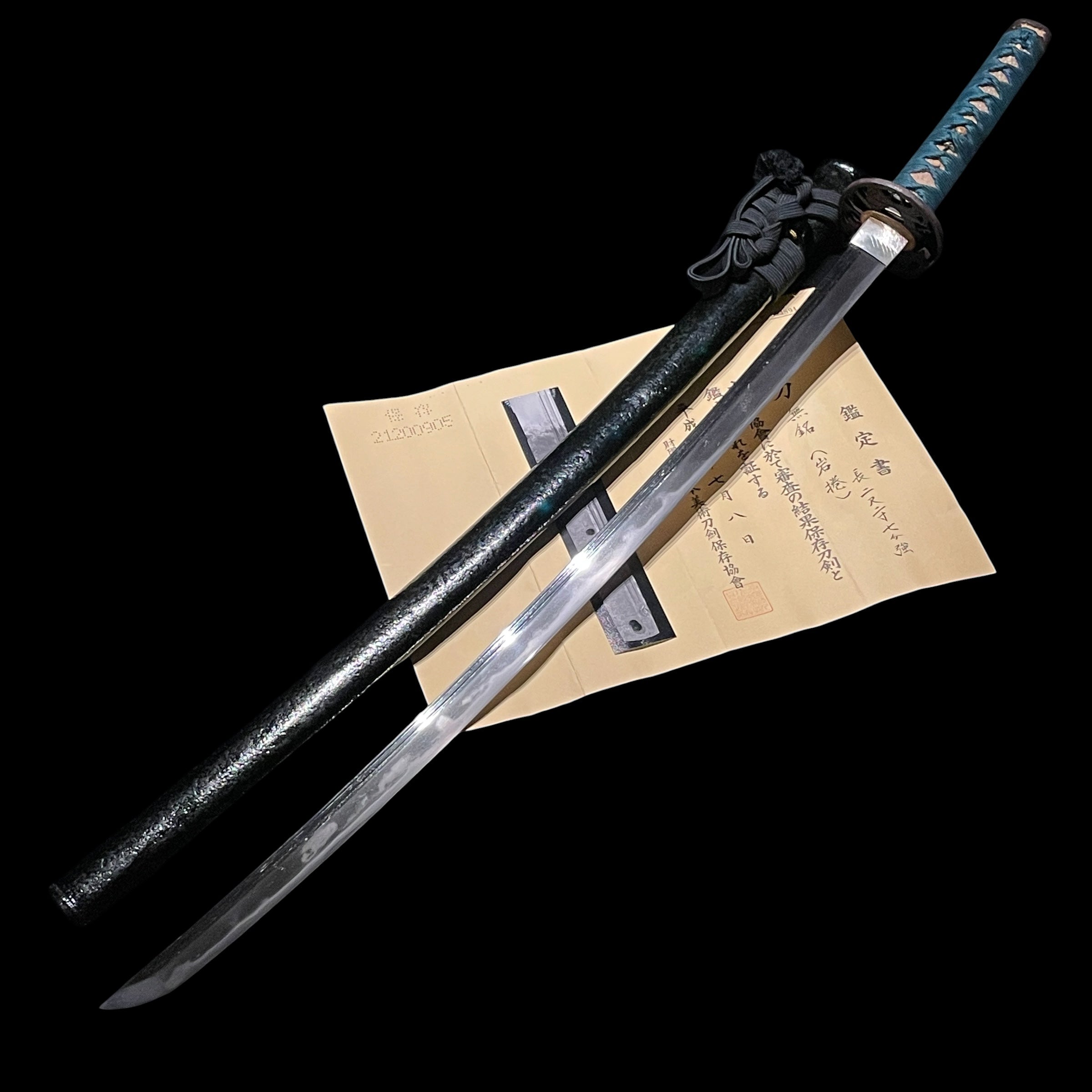
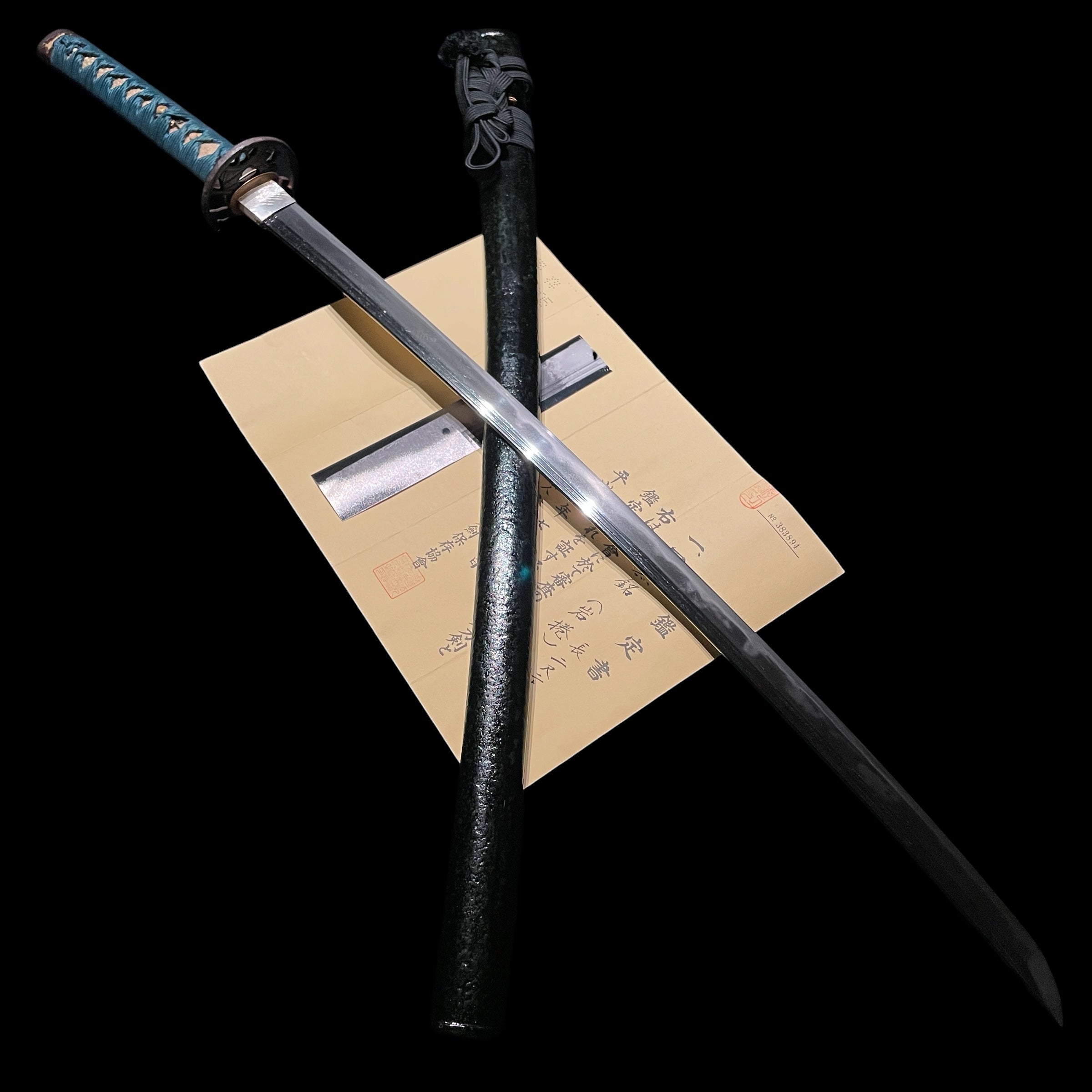
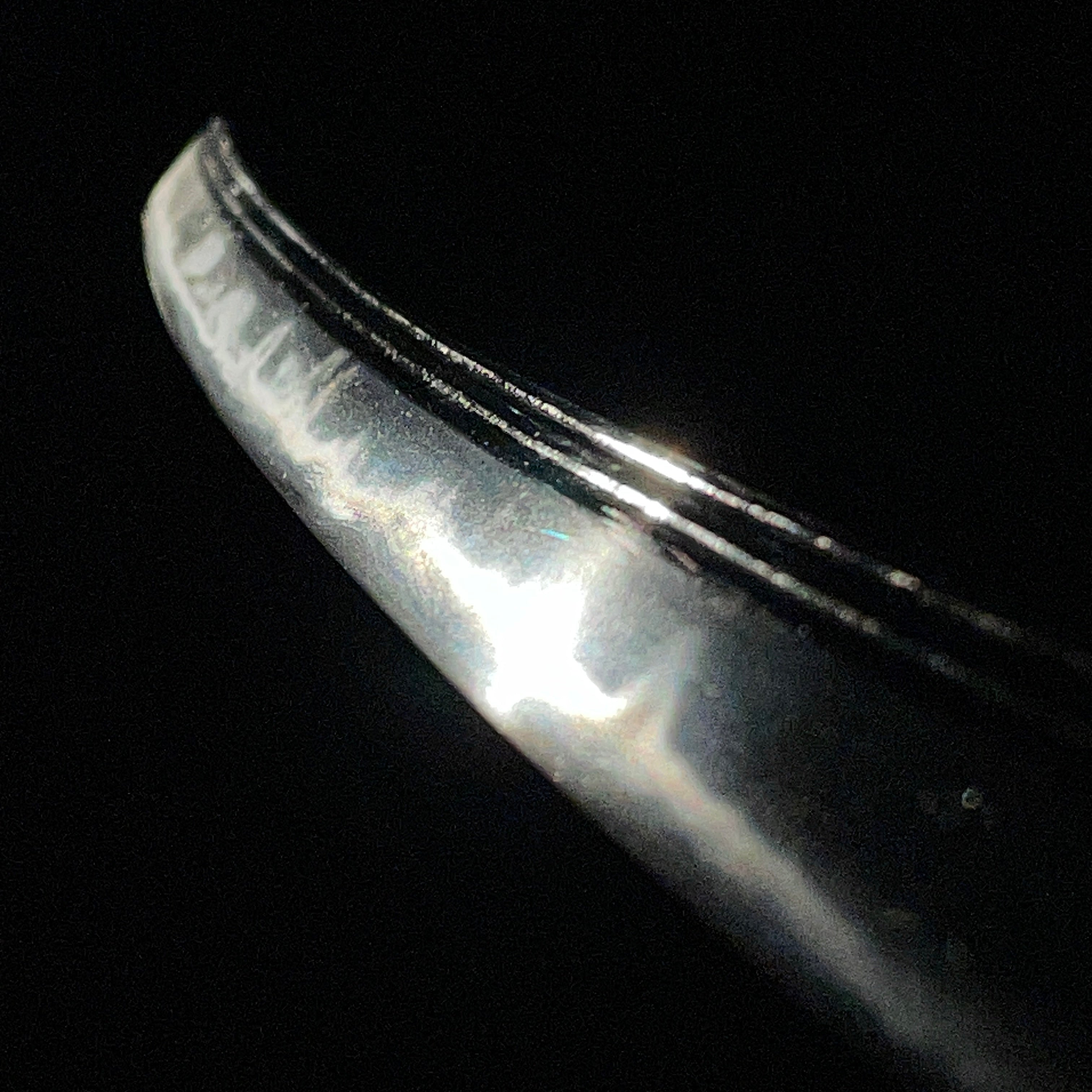
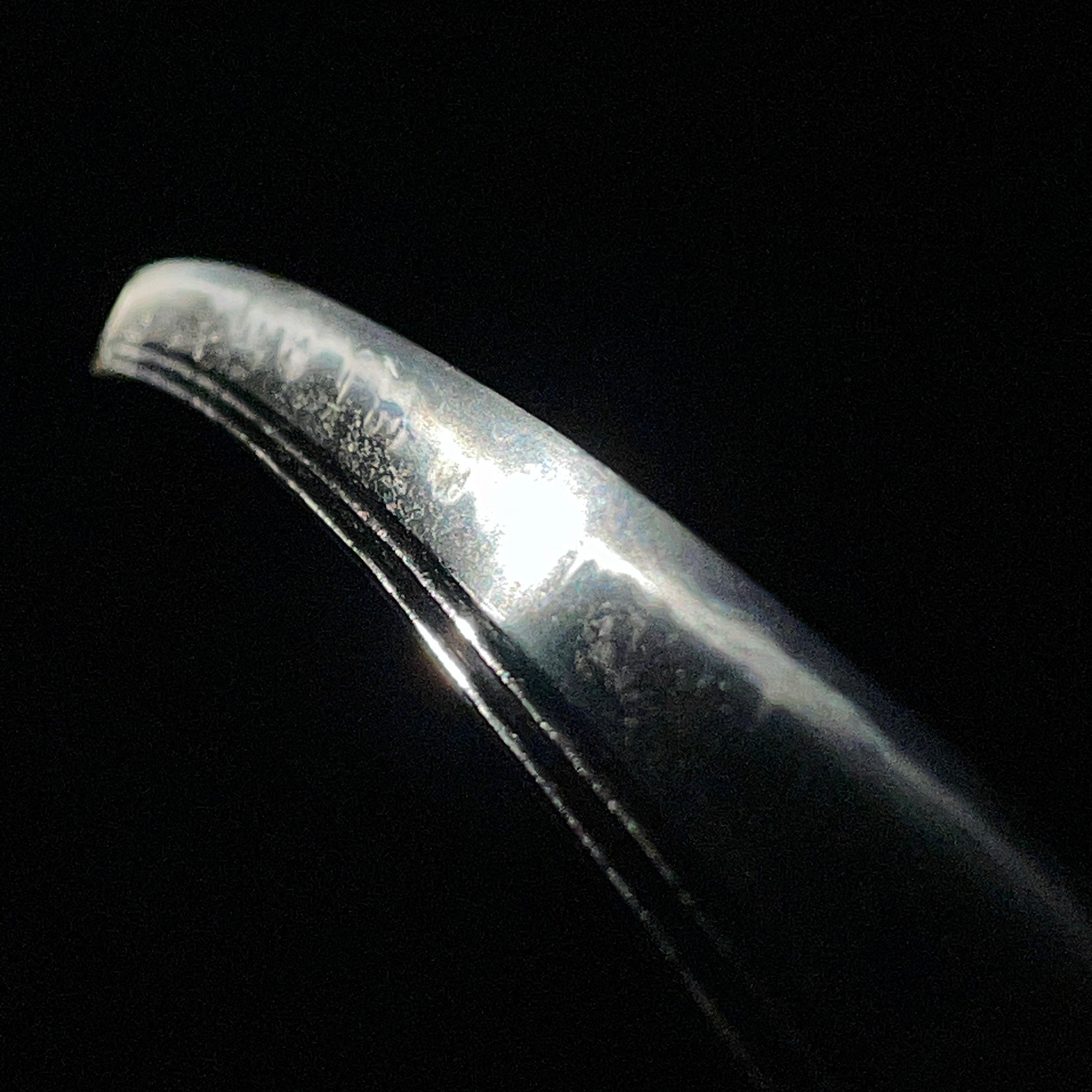
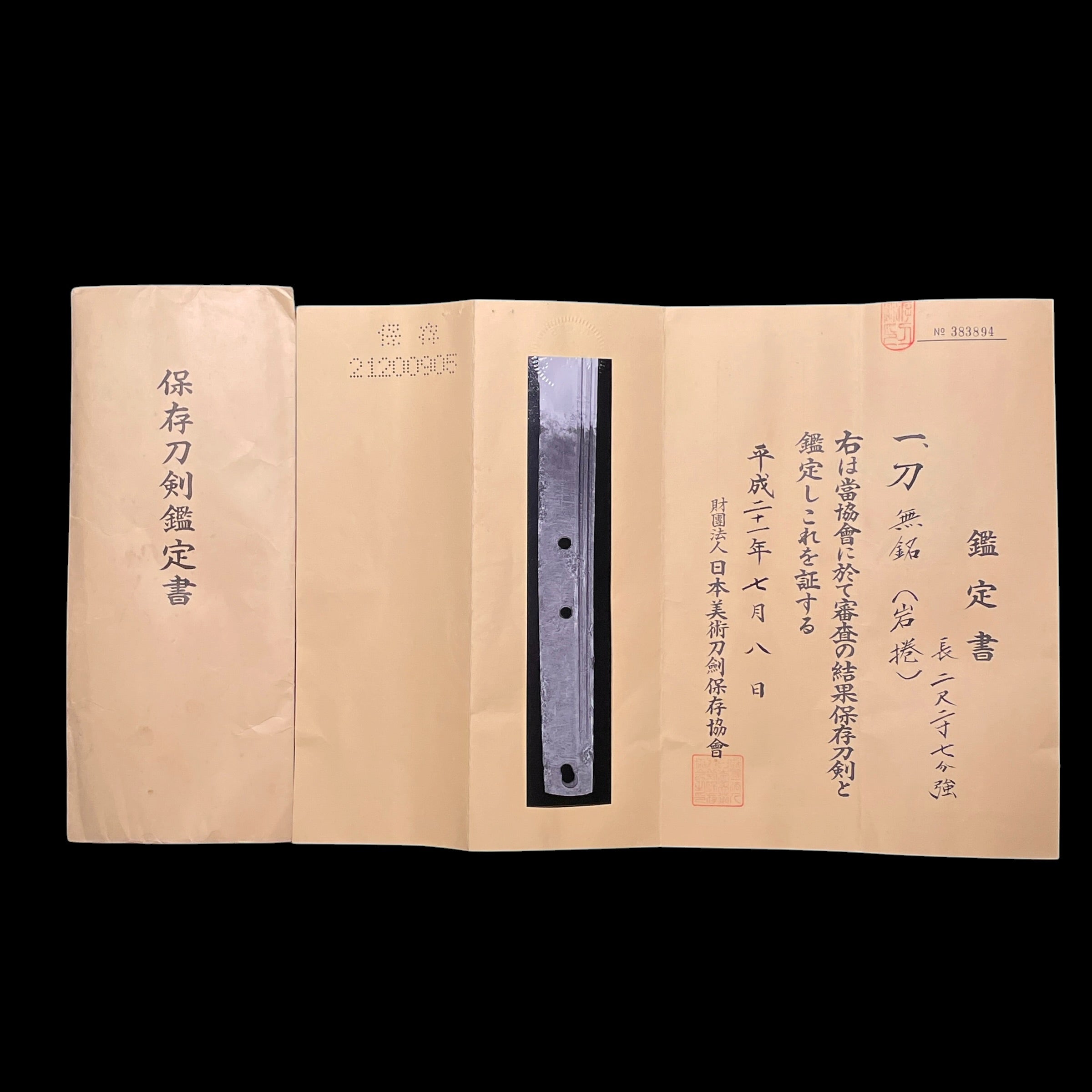
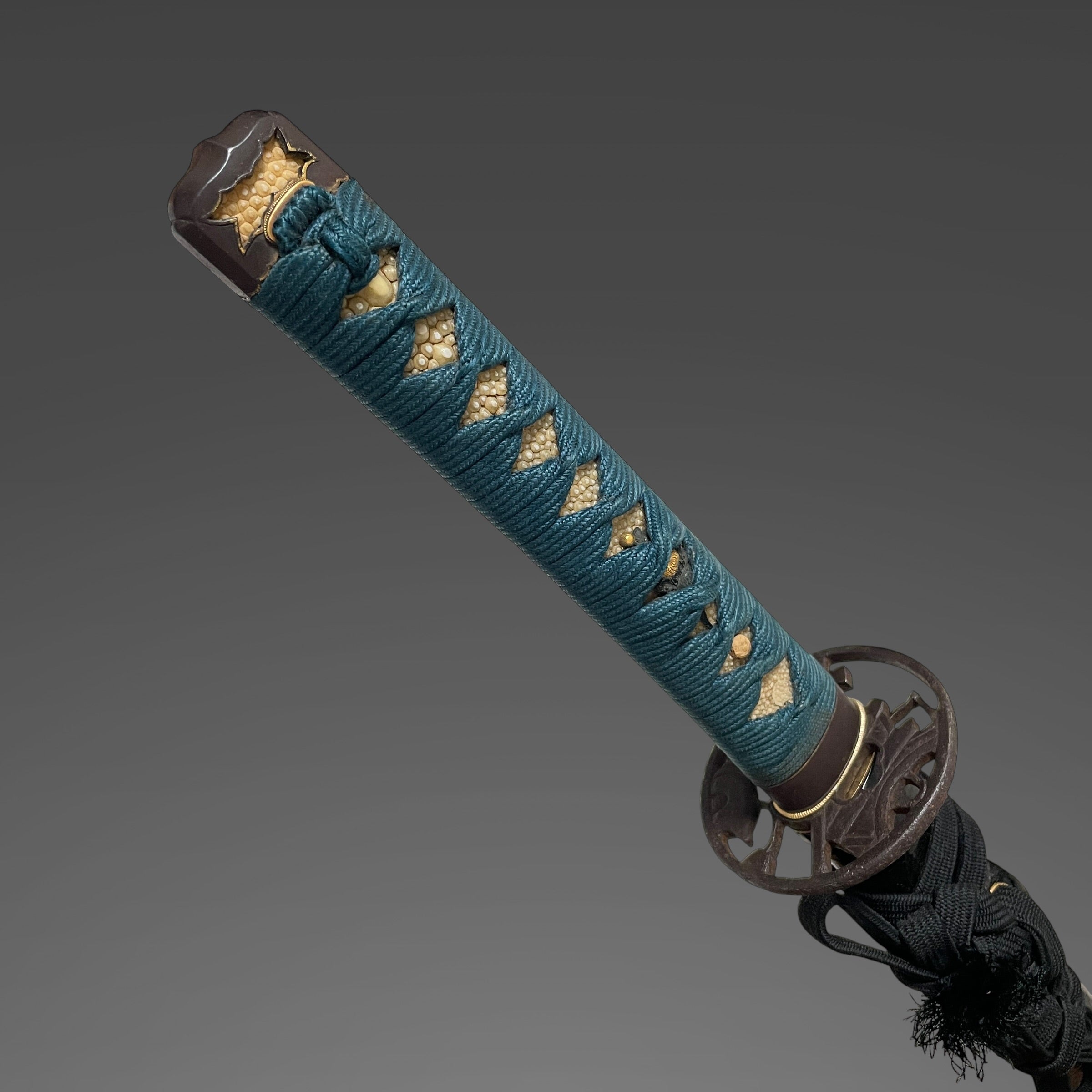
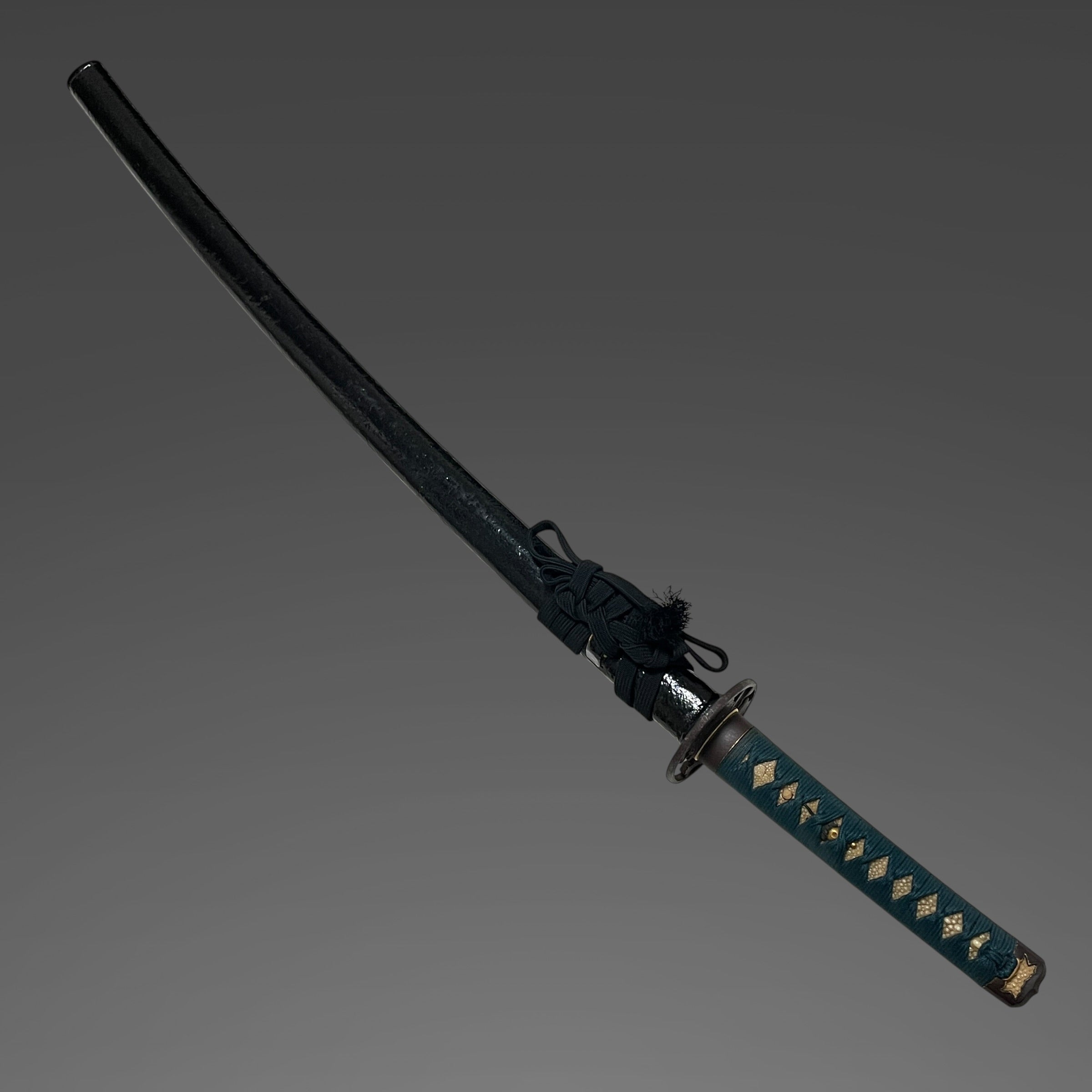
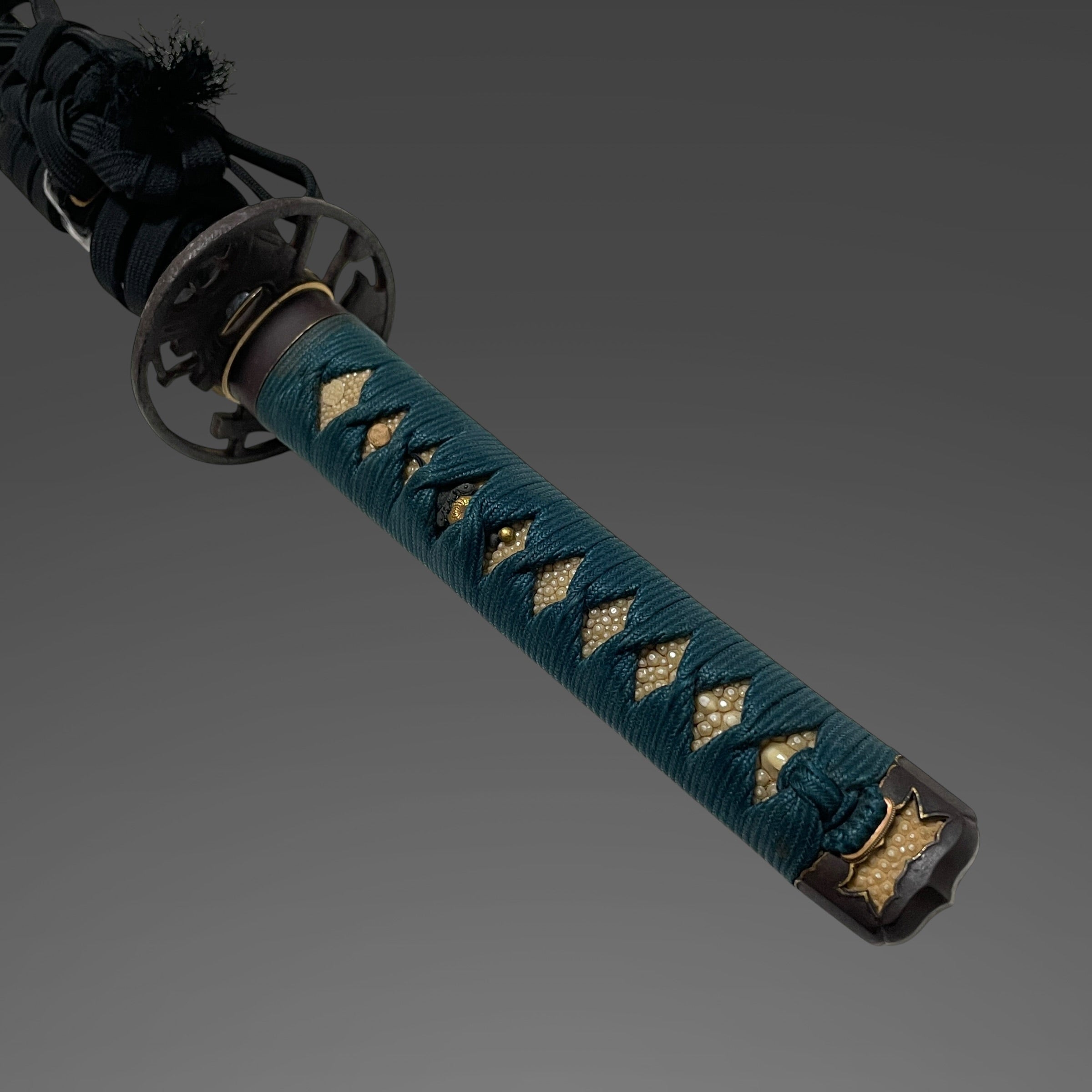
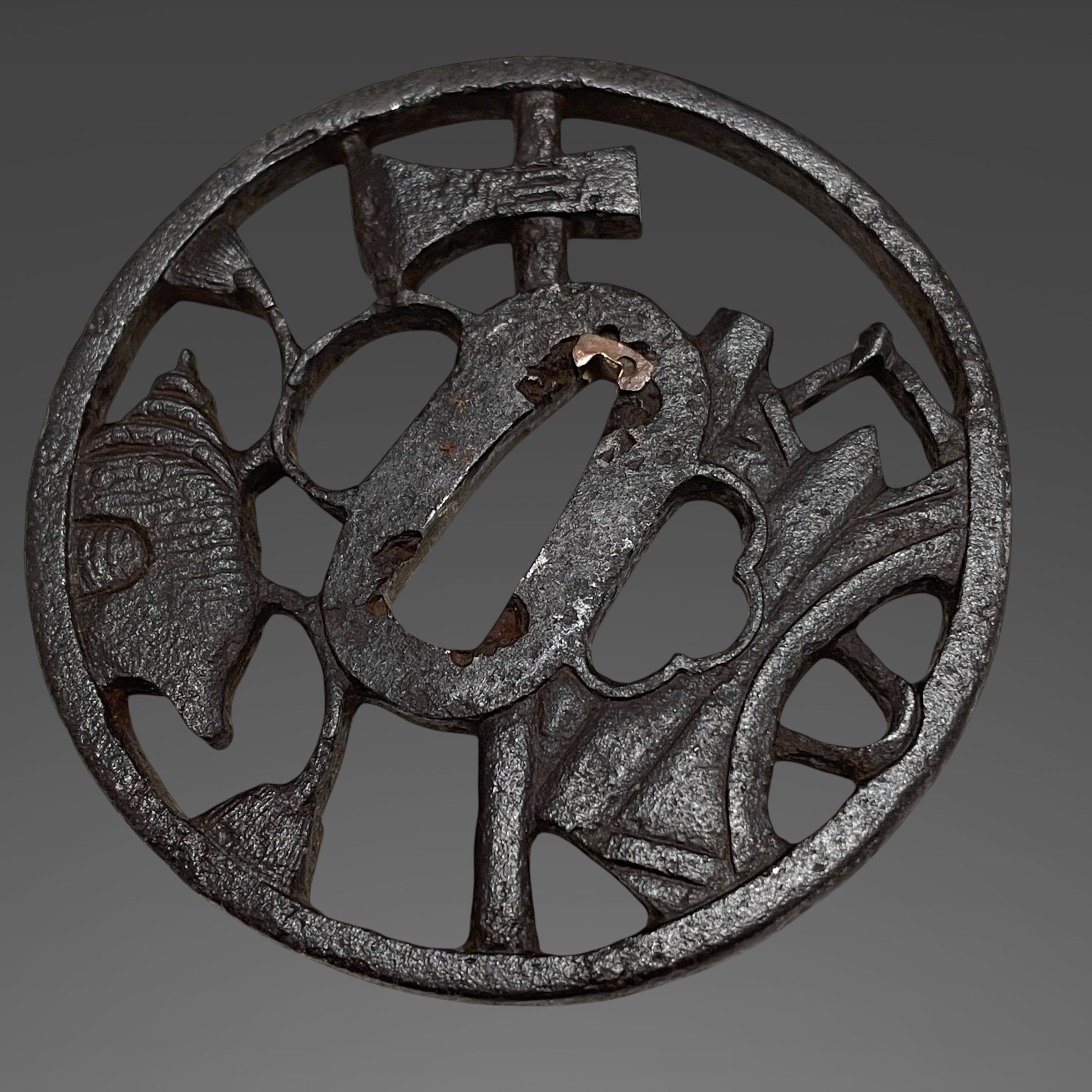
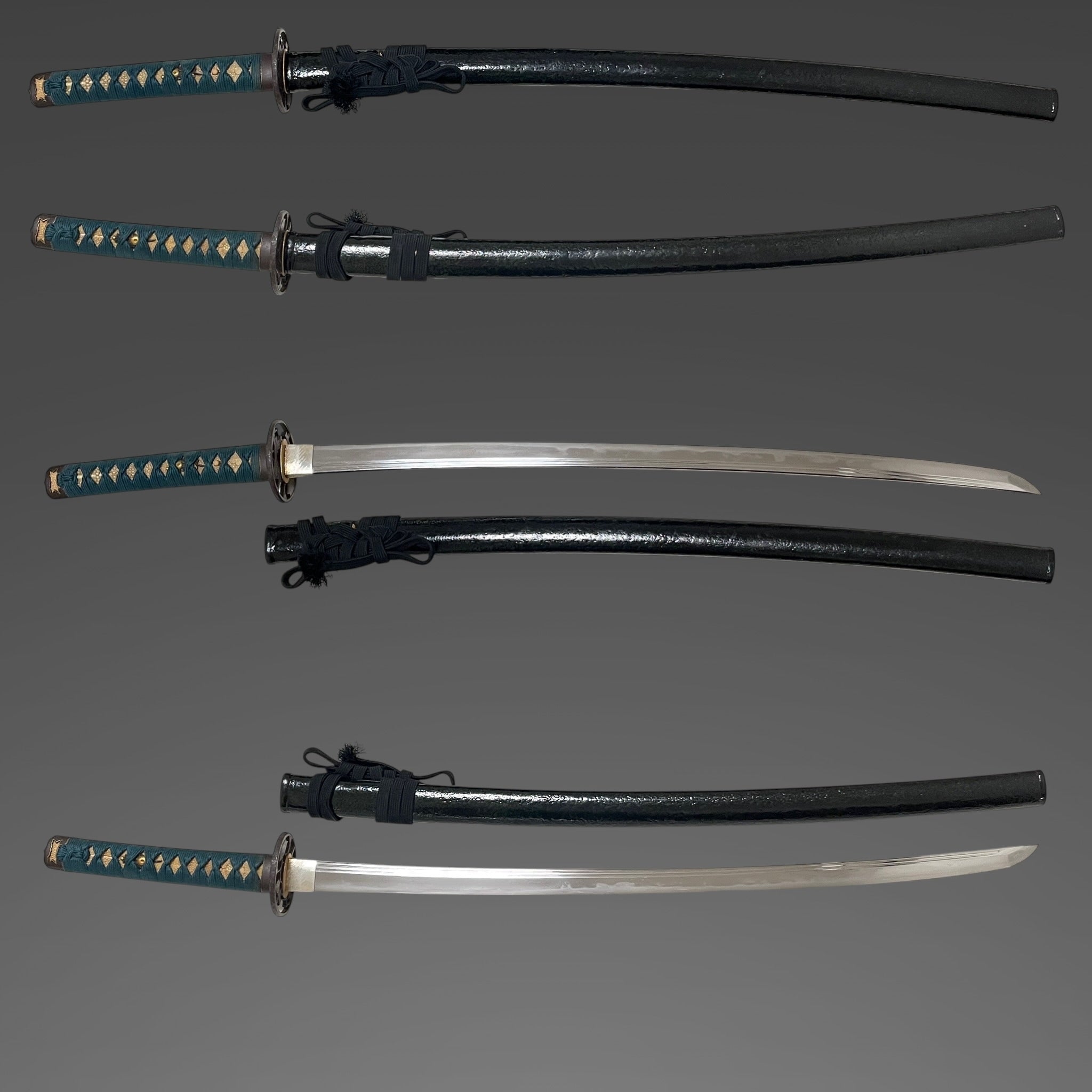
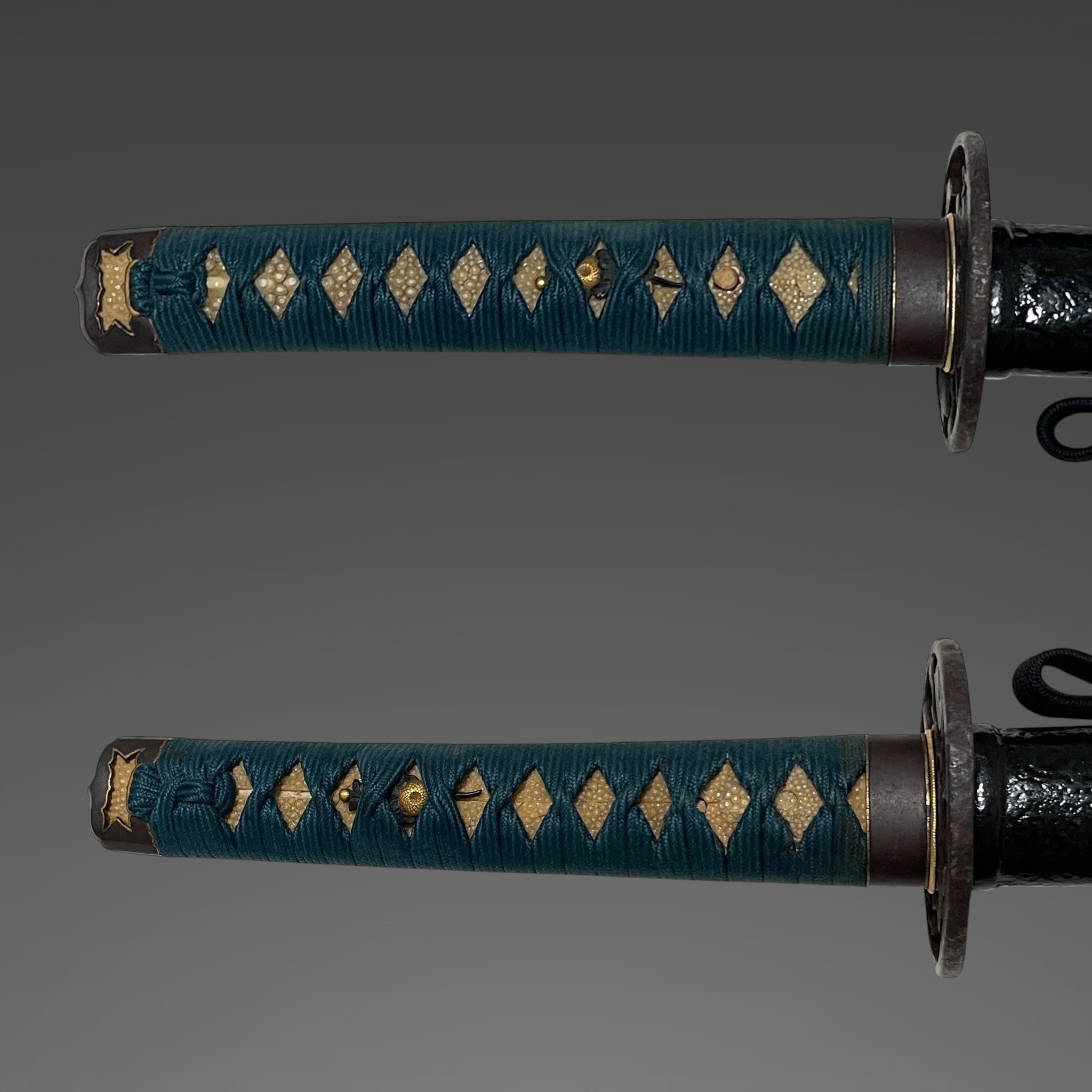
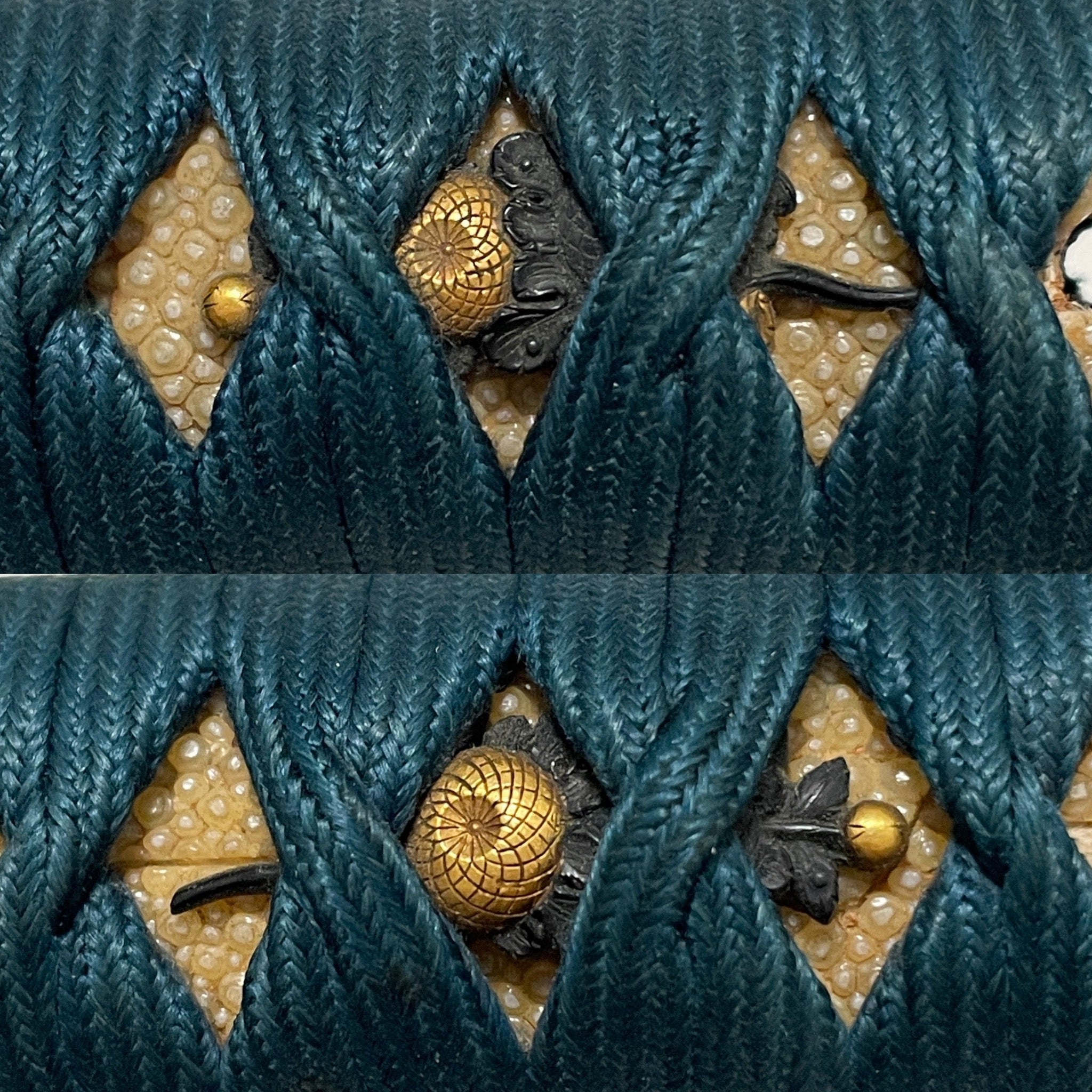
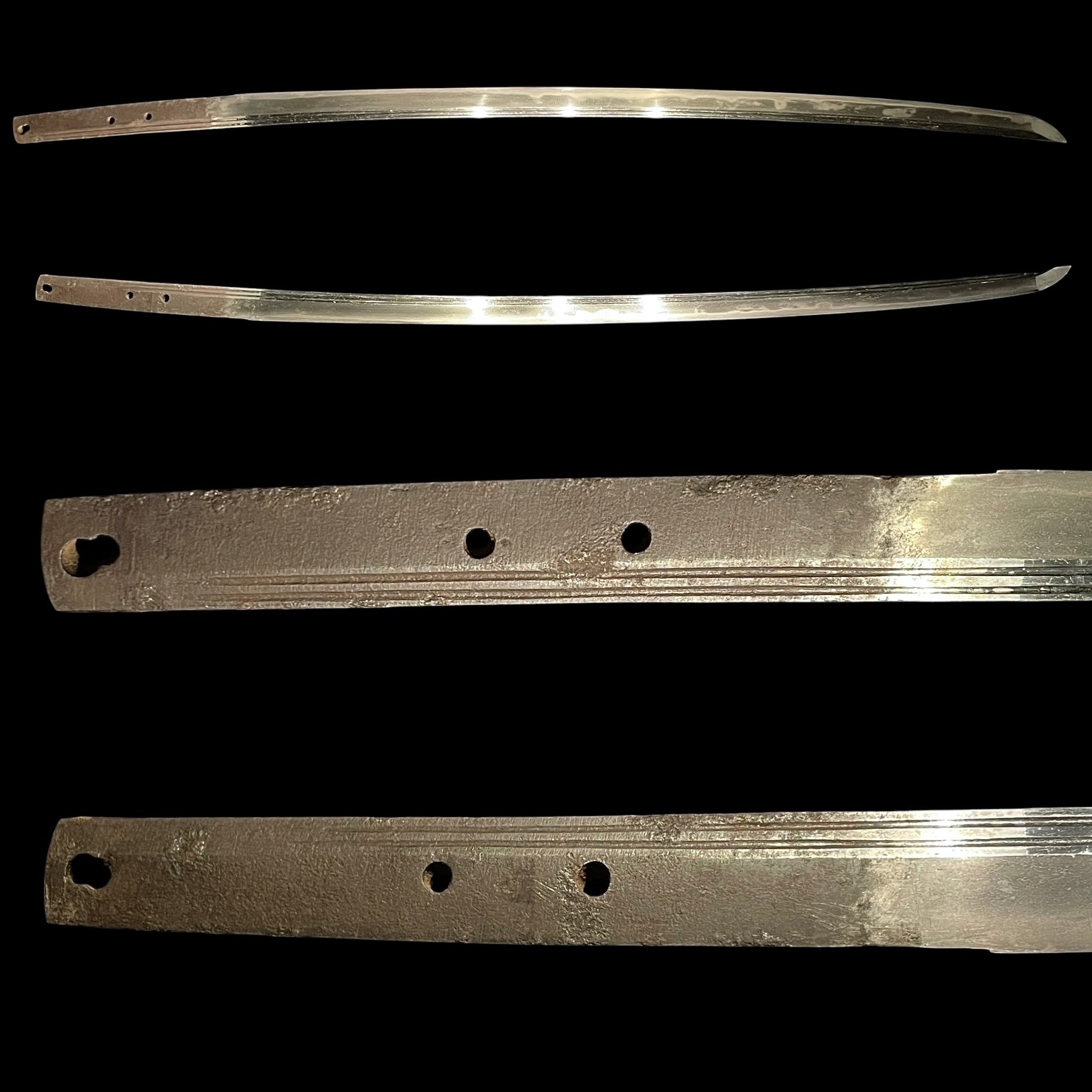
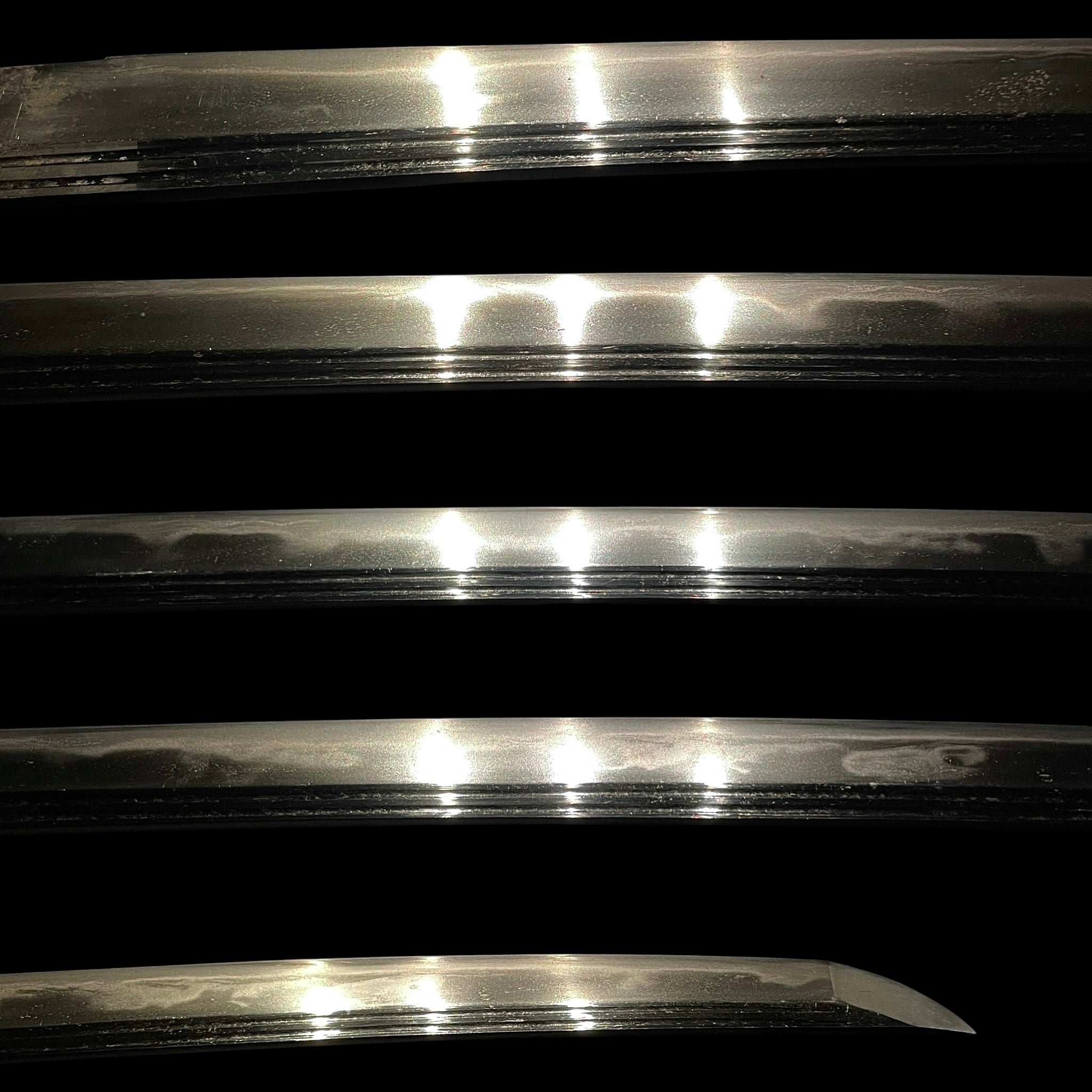
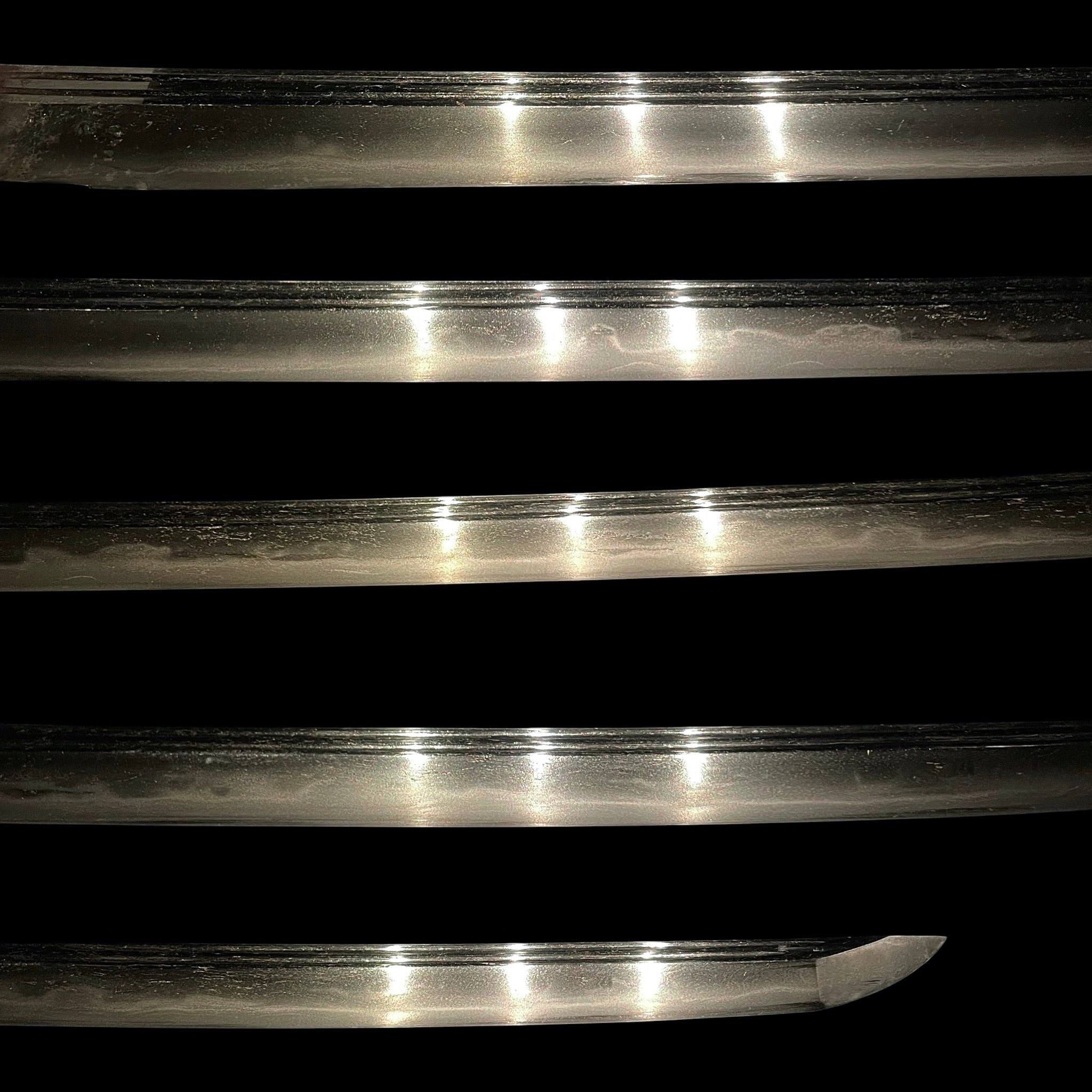
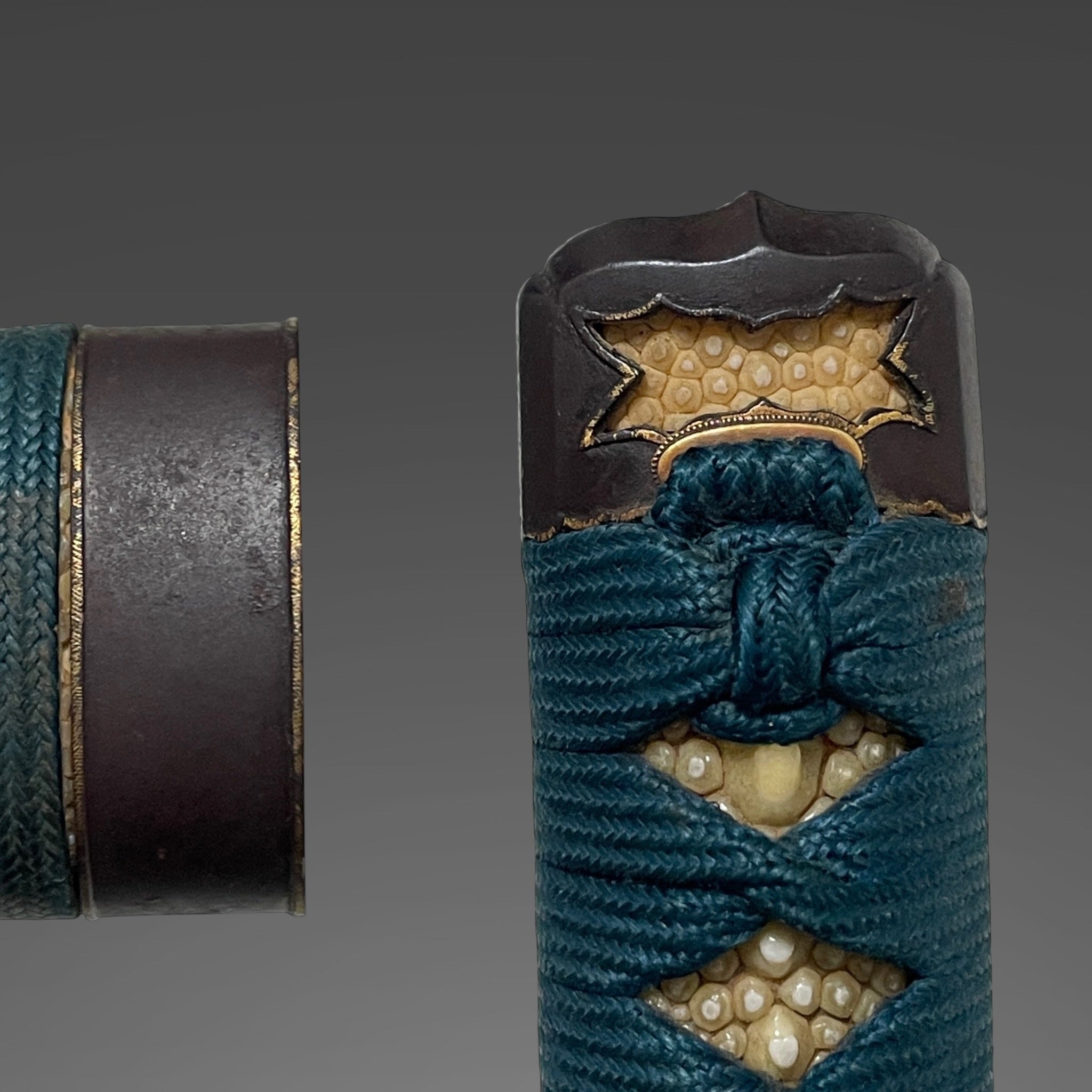
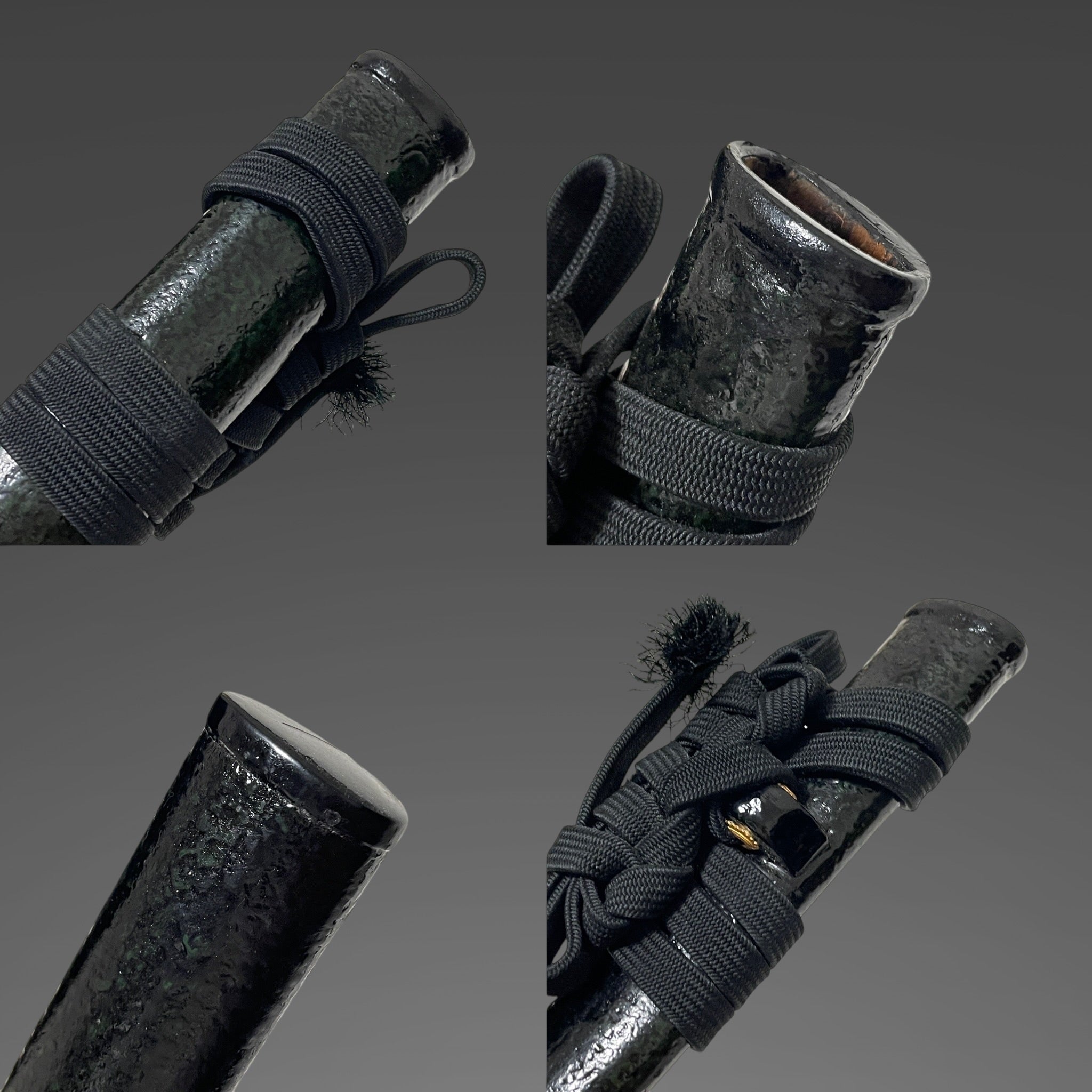
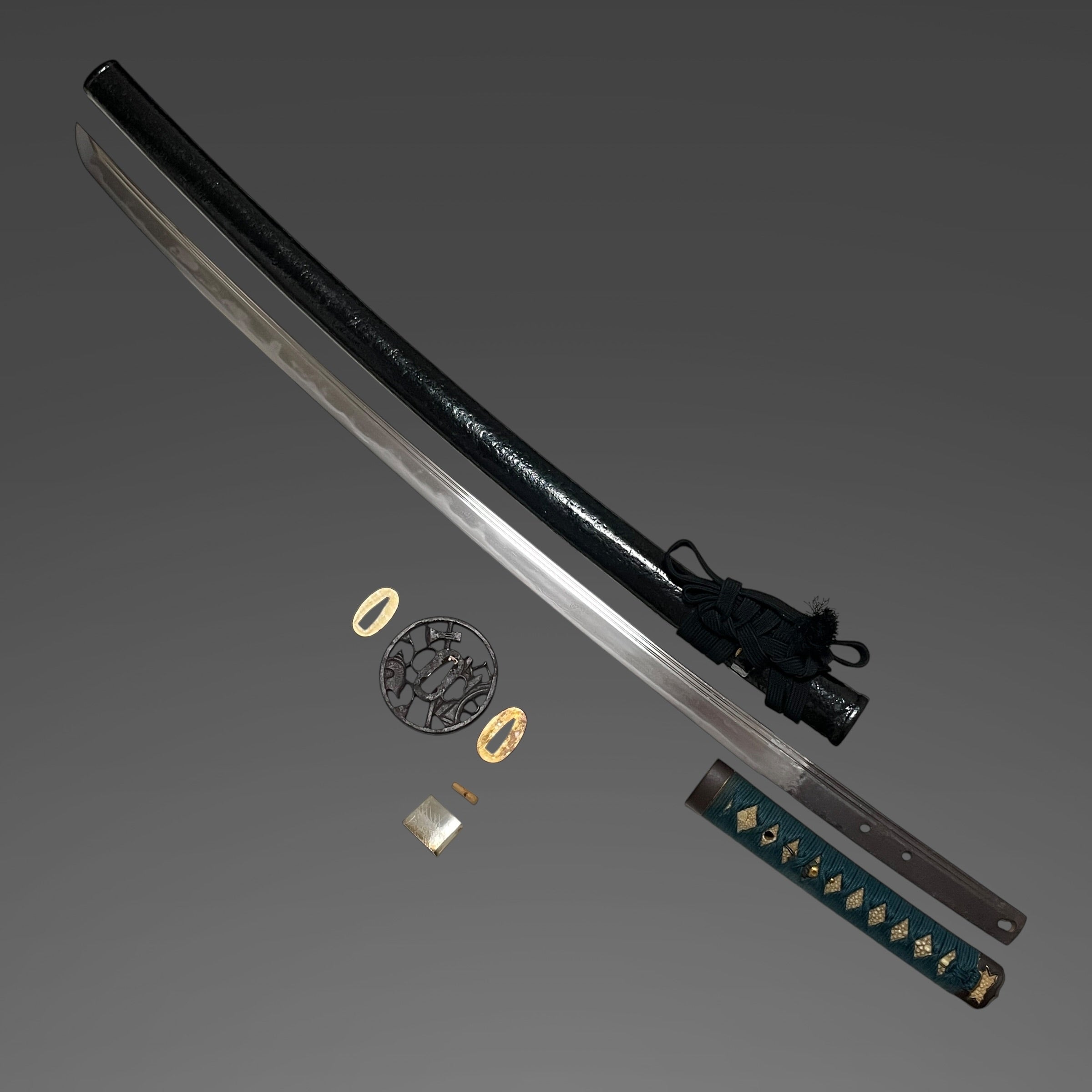
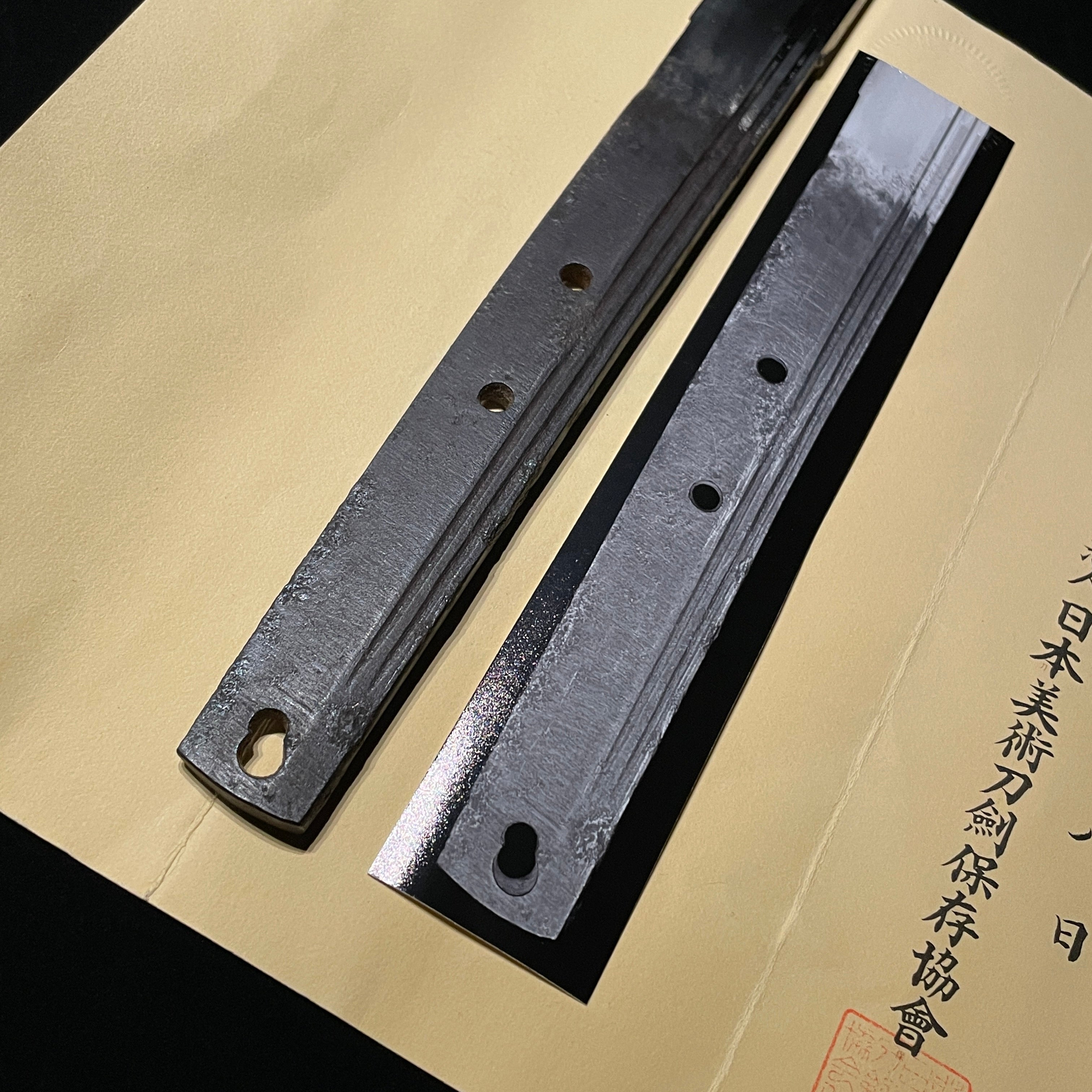
This is a mumei katana attributed to Ganmaku of the Mino school, dating to the early Edo period. It features futasujihi (double grooves) and comes with an NBTHK certificate. The blade has a nagasa of 69.0 cm and weighs 655g.
 NihontoWatchBETA
mumei · Mino · Edo · nagasa 69cm · sori 1.5cm
Wakimono · Satsuma
17 pieces on the market now
The Naminohira school traces its origins to the late Heian period, when a swordsmith named Masakuni migrated from Yamato Province and established himself at Naminohira in Taniyama District, Satsuma Province. His son Yukiyasu succeeded him, and the lineage continued unbroken into the late Edo shinshintō era. The collective term Ko-Naminohira designates smiths and works dating no later than the Nanbokuchō period, distinguishing the school's formative generations from later practitioners. Learn more →
| Smith | Era | Designated |
|---|---|---|
| Yukiyasu行安 | 1308-1311 | 10 |
| Yasutsugu安次 | 1375-1381 | 0 |
| Yasuyoshi安吉 | 1469-1487 | 0 |
| Fuji藤 | 1394-1428 | 0 |
| Yasutsugu安次 | 1224-1225 | 0 |
We could not find an authenticity certificate on the seller’s listing. Japanese swords and fittings are normally papered by the NBTHK (or the NTHK). Without one, the attribution is the seller’s own assessment and has not been independently verified — treat it with caution and ask the dealer about certification before buying.
Swords are non-returnable (blades cannot be re-imported to Japan). Insured shipping; damage/loss claims reported within 5 days of receipt. Cancellation fee 10% before shipment; not possible after shipment.
This is a mumei katana attributed to Ganmaku of the Mino school, dating to the early Edo period. It features futasujihi (double grooves) and comes with an NBTHK certificate. The blade has a nagasa of 69.0 cm and weighs 655g.
NihontoWatchBETAmumei · Mino · Edo · nagasa 69cm · sori 1.5cm
Wakimono · Satsuma
17 pieces on the market now
The Naminohira school traces its origins to the late Heian period, when a swordsmith named Masakuni migrated from Yamato Province and established himself at Naminohira in Taniyama District, Satsuma Province. His son Yukiyasu succeeded him, and the lineage continued unbroken into the late Edo shinshintō era. The collective term Ko-Naminohira designates smiths and works dating no later than the Nanbokuchō period, distinguishing the school's formative generations from later practitioners. Learn more →
| Smith | Era | Designated |
|---|---|---|
| Yukiyasu行安 | 1308-1311 | 10 |
| Yasutsugu安次 | 1375-1381 | 0 |
| Yasuyoshi安吉 | 1469-1487 | 0 |
| Fuji藤 | 1394-1428 | 0 |
| Yasutsugu安次 | 1224-1225 | 0 |
We could not find an authenticity certificate on the seller’s listing. Japanese swords and fittings are normally papered by the NBTHK (or the NTHK). Without one, the attribution is the seller’s own assessment and has not been independently verified — treat it with caution and ask the dealer about certification before buying.
Swords are non-returnable (blades cannot be re-imported to Japan). Insured shipping; damage/loss claims reported within 5 days of receipt. Cancellation fee 10% before shipment; not possible after shipment.