
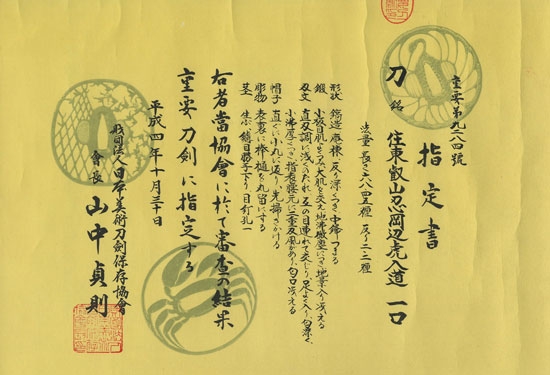
-, 38th Session — Designated October 30, 1992
, : Nagasone Kotetsu Nyūdō (長曽祢虎徹)
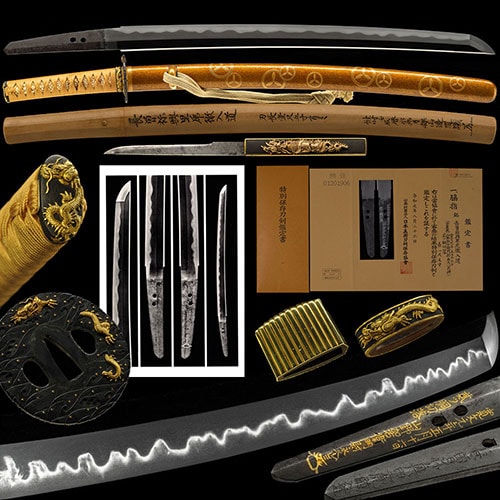
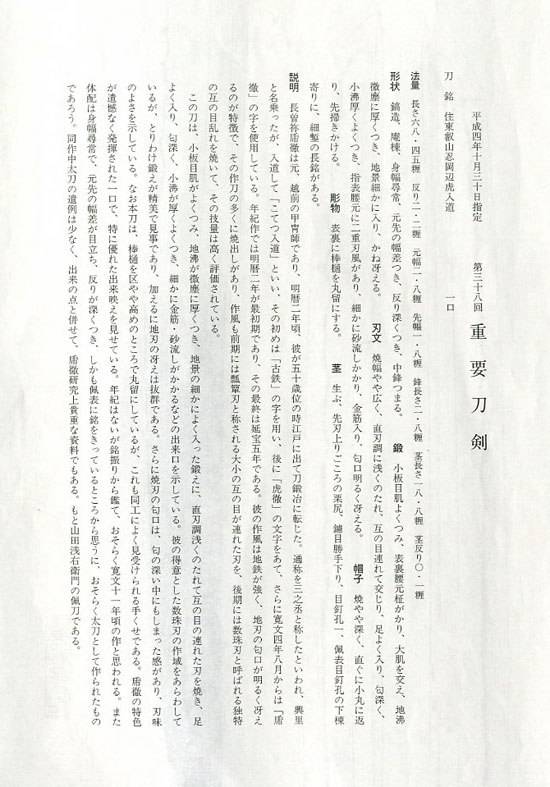
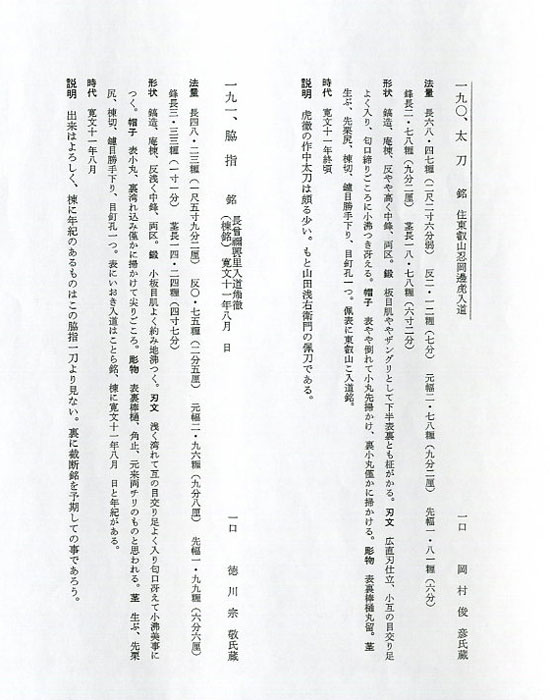
Measurements 68.45 cm, 2.2 cm, 2.8 cm, 1.8 cm, 2.8 cm, 18.8 cm, 0.1 cm
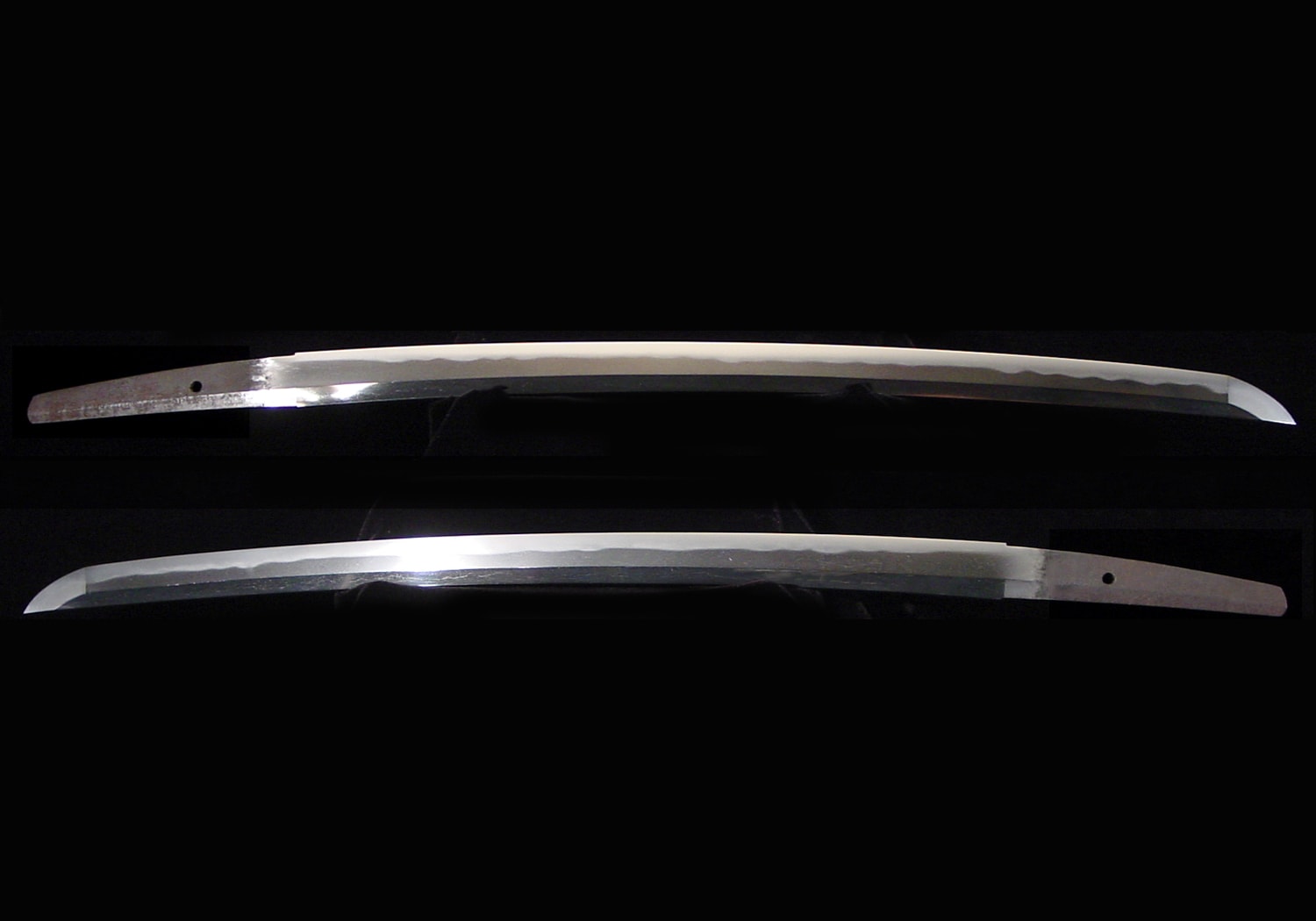
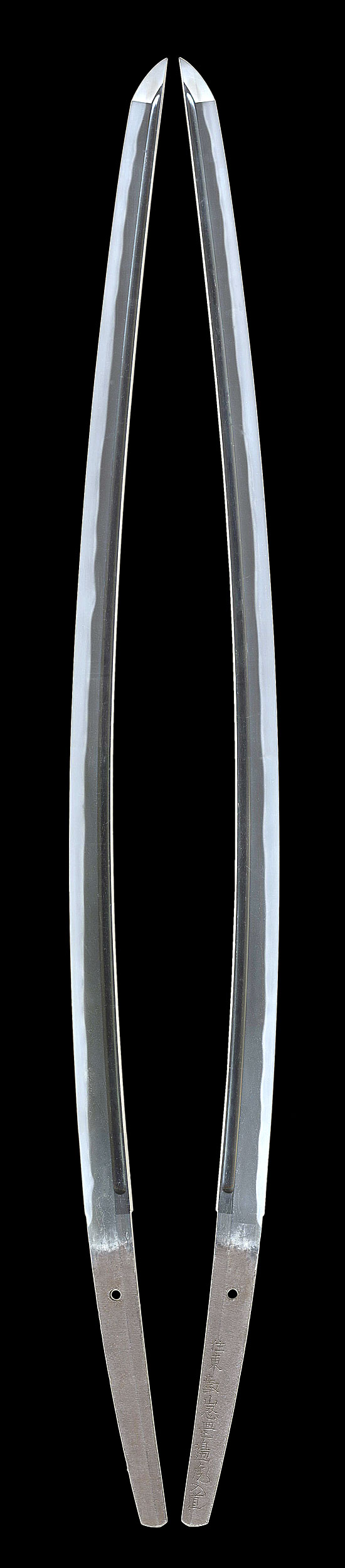
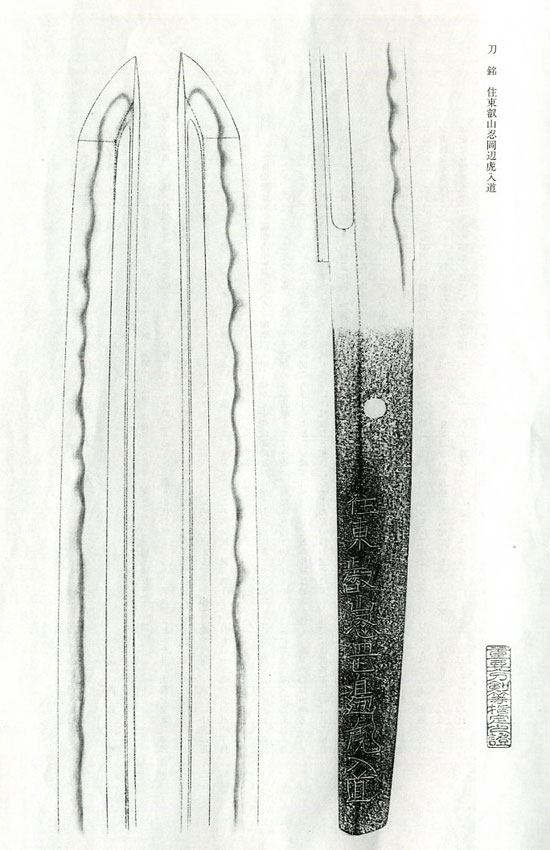
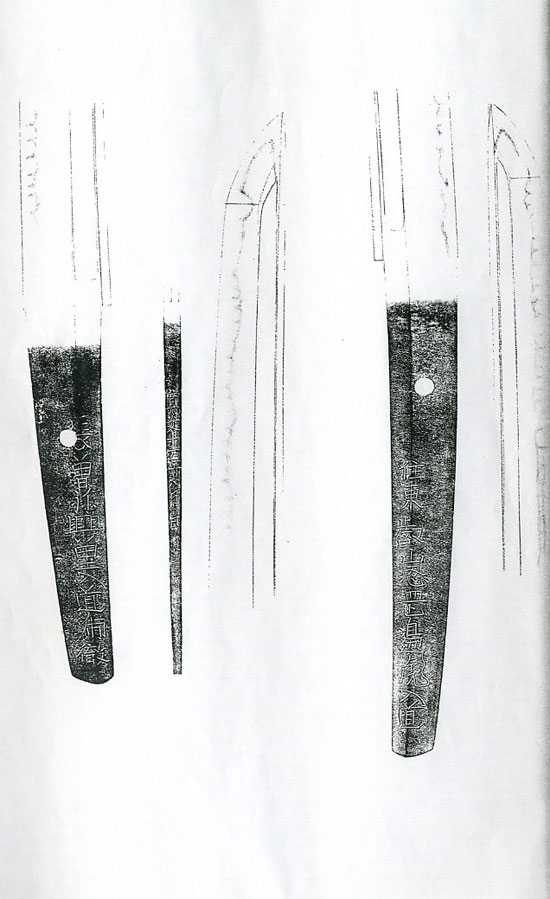
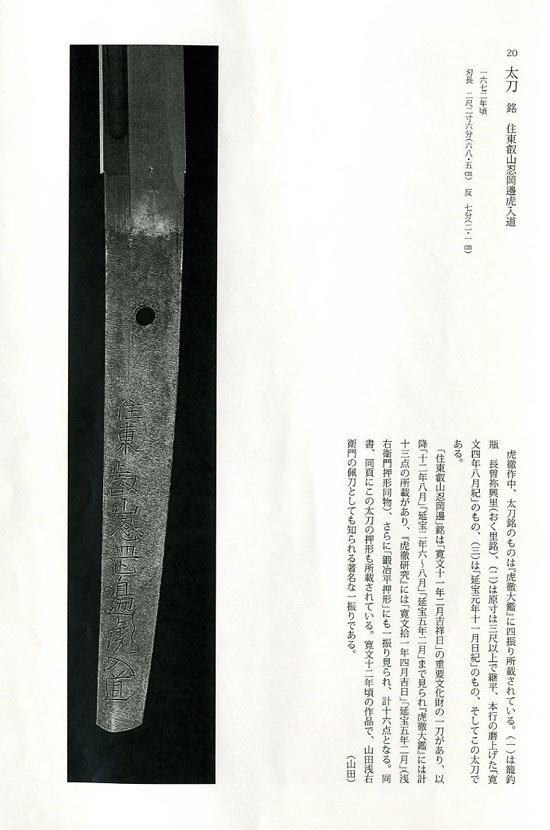
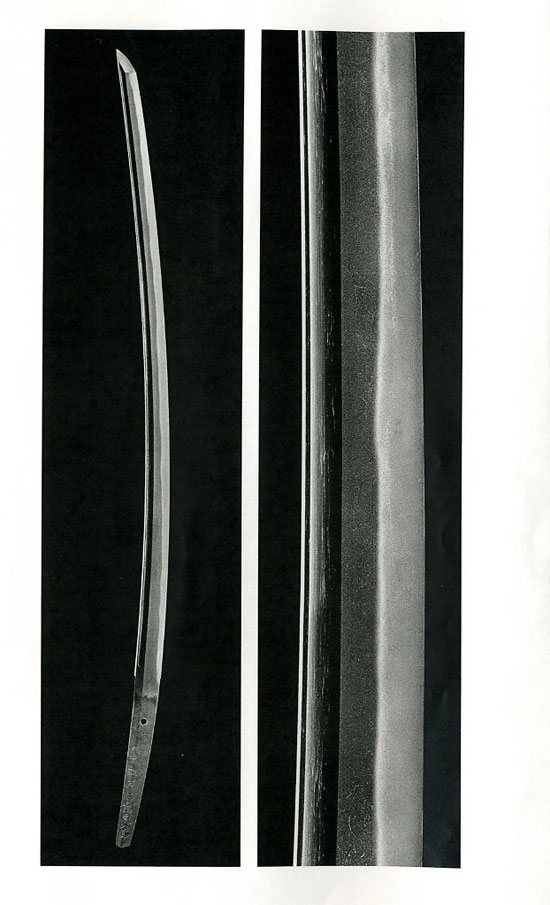
Description Keijō: , ; of standard width, with noticeable taper from to ; deep ; that is somewhat compact. : Tight ; at the on both sides it inclines toward , mixing some ō-hada; adheres. : -haba is somewhat broad; a -toned, shallow mixed with connected ; enter well; is deep. : Somewhat deeply tempered; turns back in to ; the tip shows . : On both sides, with . : ; ; ; one ; on the , below the and toward the , there is a long signature cut with a fine chisel.
Artisan Nagasone Kotetsu Nyūdō (長曽祢虎徹)
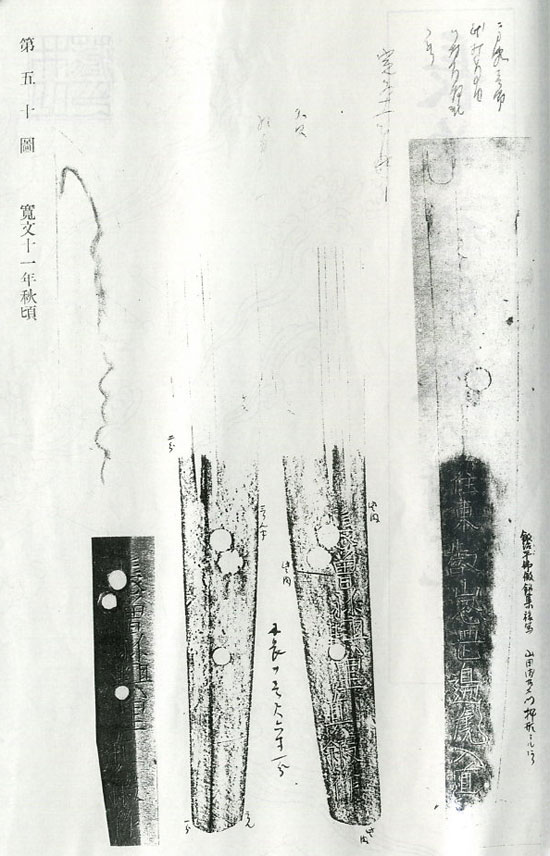
Era period, ca. 11 (c. 1671) [inferred]
Explanation Nagasone Kotetsu was originally an armor maker in Province. Around Meireki 2 (1656), when he was about fifty years old, he went to and turned to sword forging. It is said that his common name was Sannojō. He signed with the name Okisato, and after taking the tonsure was called “Kotetsu Nyūdō.” At first he used the characters 古鉄 for “Kotetsu,” later adopted the characters 虎徹, and from 4 (1664), eighth month, he used the characters 馬徹. Among his dated works, the earliest are from Meireki 2, and the latest extend to Enpō 5 (1677).
His workmanship is characterized by powerful and a bright, clear in both and . Many of his blades show . In his earlier period he tempered a linked sequence of large and small referred to as hyōtan-ba; in his later period he produced a distinctive known as . His skill has long been held in high esteem.
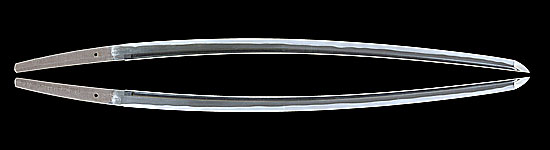
This shows a well-packed with fine in (very fine) particles, and abundant fine . The is a -based shallow mixed with connected , with well-entering and deep . Thick adheres well; at the on the sashiwaza- there appears a -like effect, and fine together with can be seen. The is bright and clear.
Although it reflects the area of work for which he excelled—his characteristic —the forging is especially refined and superb, and in addition the clarity of both and is outstanding. Moreover, within the depth of the hardened edge the also has a sense of tightness, indicating excellent cutting quality (haji). The are terminated in at a slightly raised position, a habitual mannerism often encountered in this smith’s work.
This is an outstanding example in which the distinctive characteristics of Bateketsu are fully expressed, showing particularly superior workmanship. Although it is not dated, judging from the manner of the signature it is likely a work from around 11 (1671). The overall form is of standard width, with conspicuous taper and deep curvature; moreover, since the signature is cut on the , it is likely that the blade was made originally as a . Extant examples of among this maker’s works are few, and together with its excellence of workmanship this sword also constitutes valuable material for research on Bateketsu.
Formerly, it was the personal sword (haitō) of Yamada Asaemon.