Edo was the sword’s age of connoisseurship: the Hon’ami appraisers, the shogunal register of famous blades of 1719, and a thriving literature turned the sword into an object of study even as it ceased to be drawn in war.
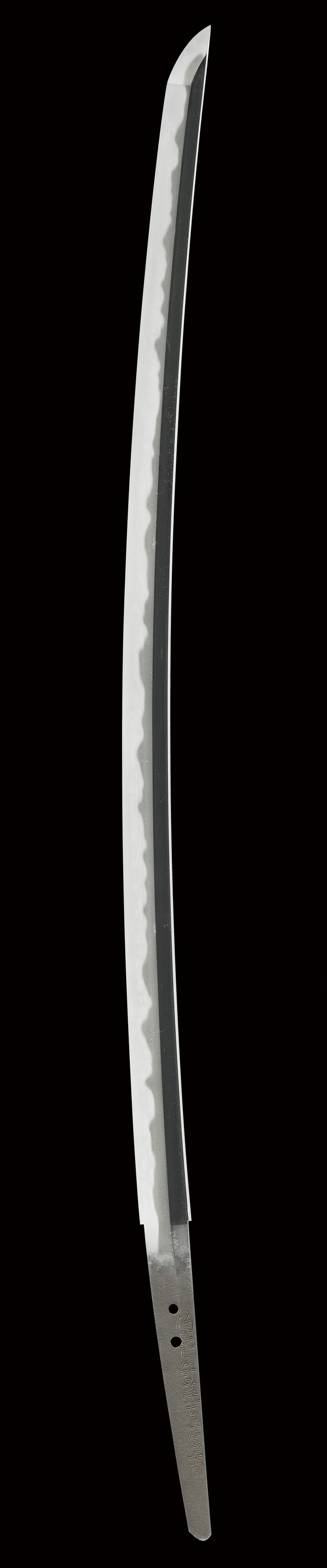
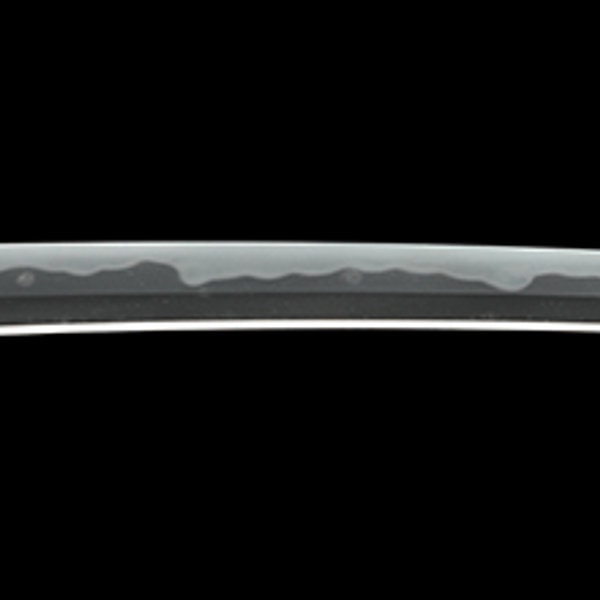
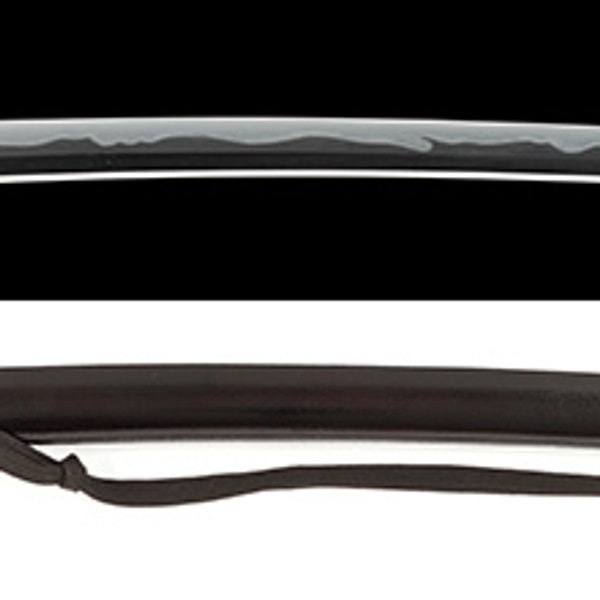
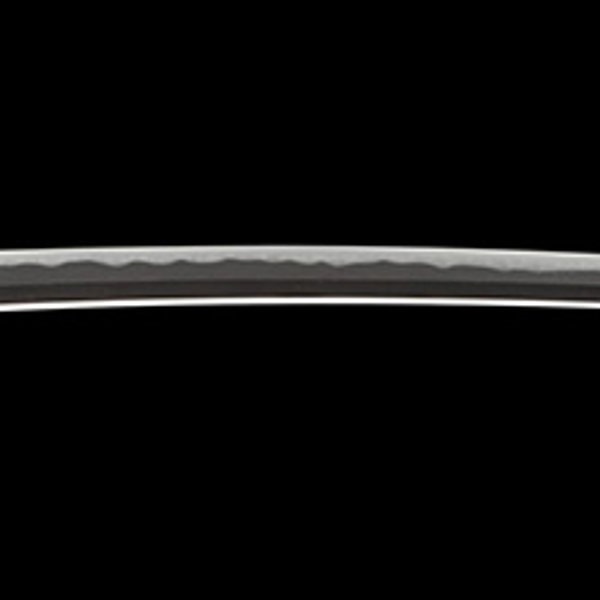
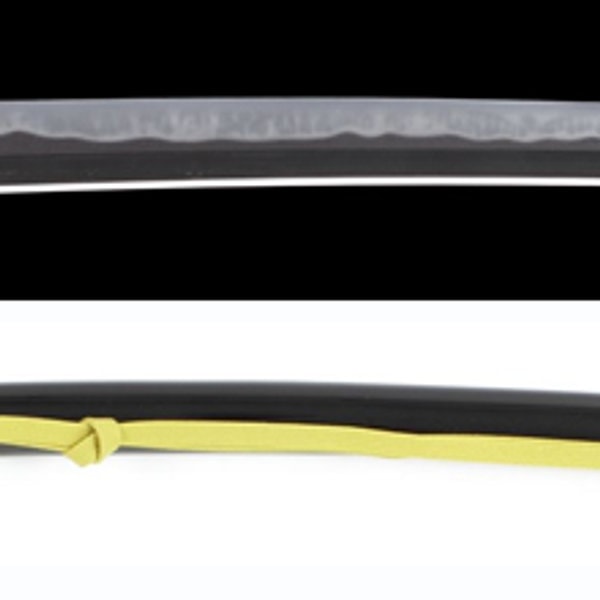
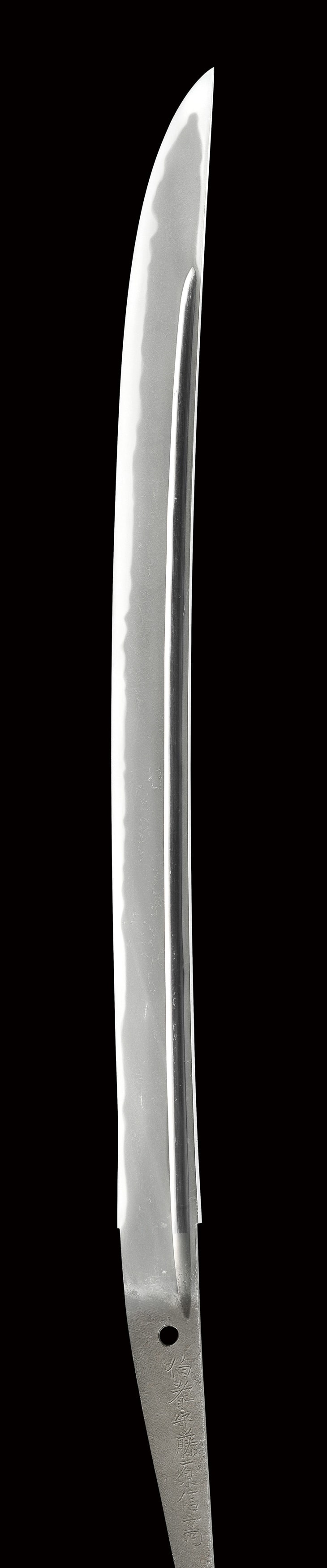
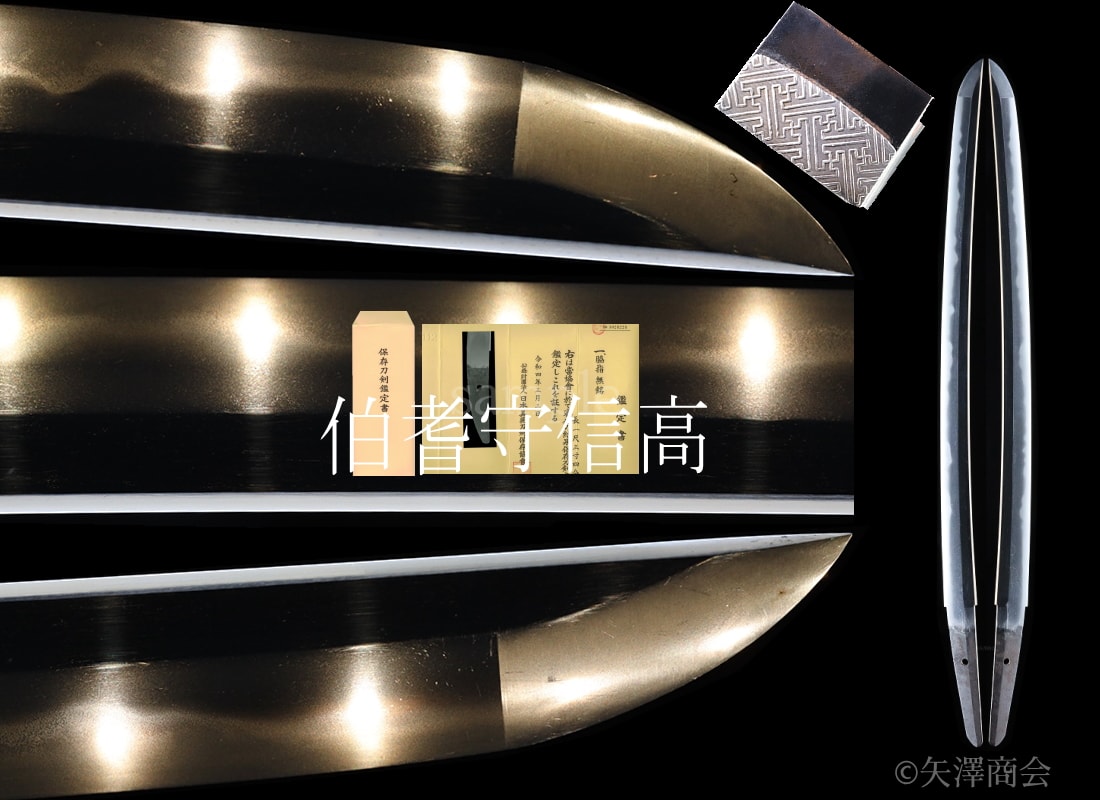
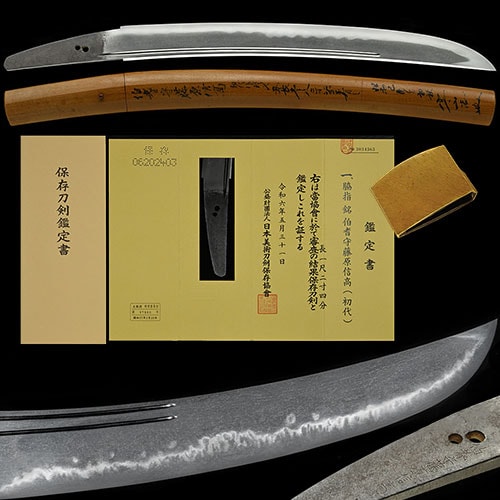
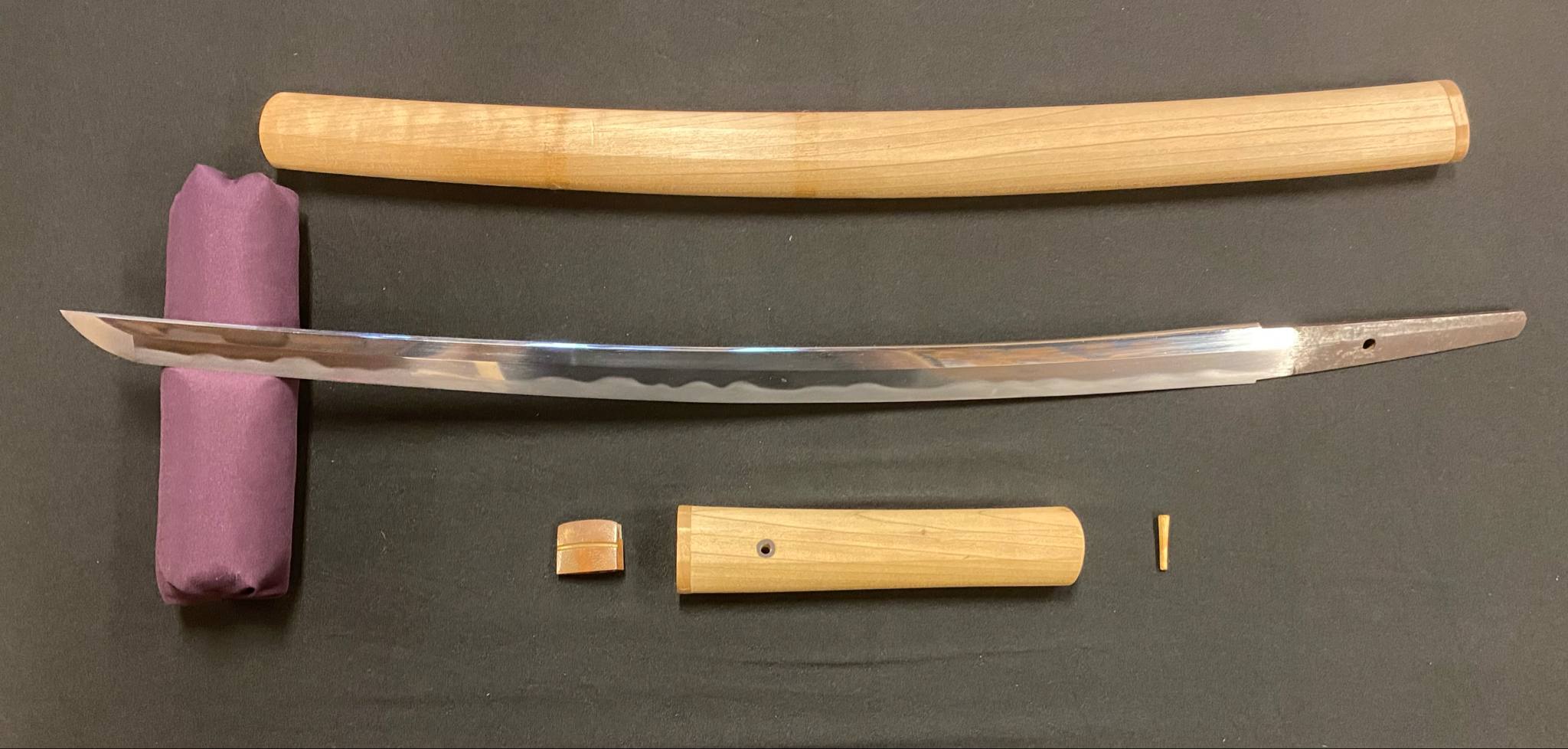
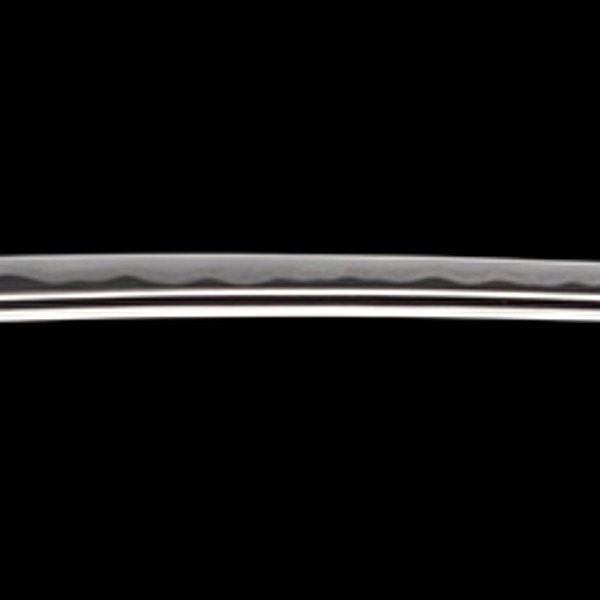
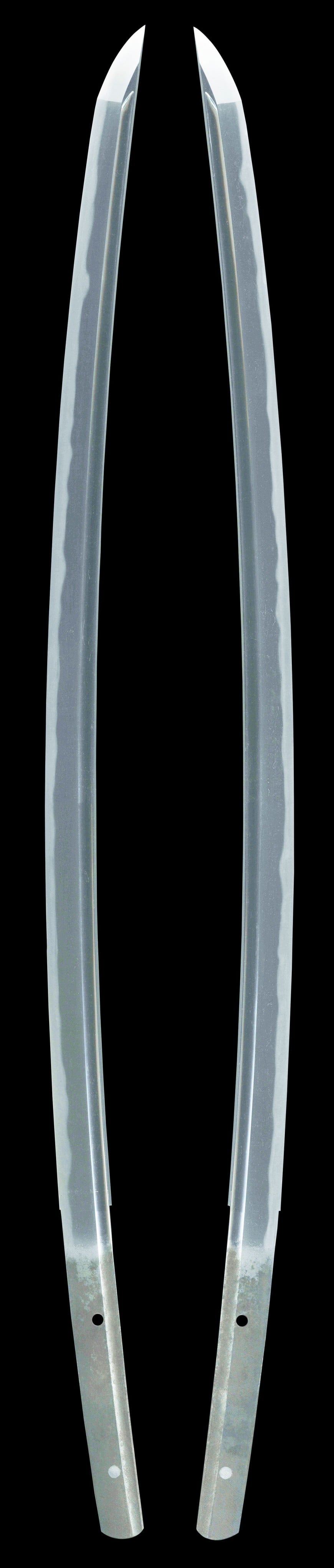
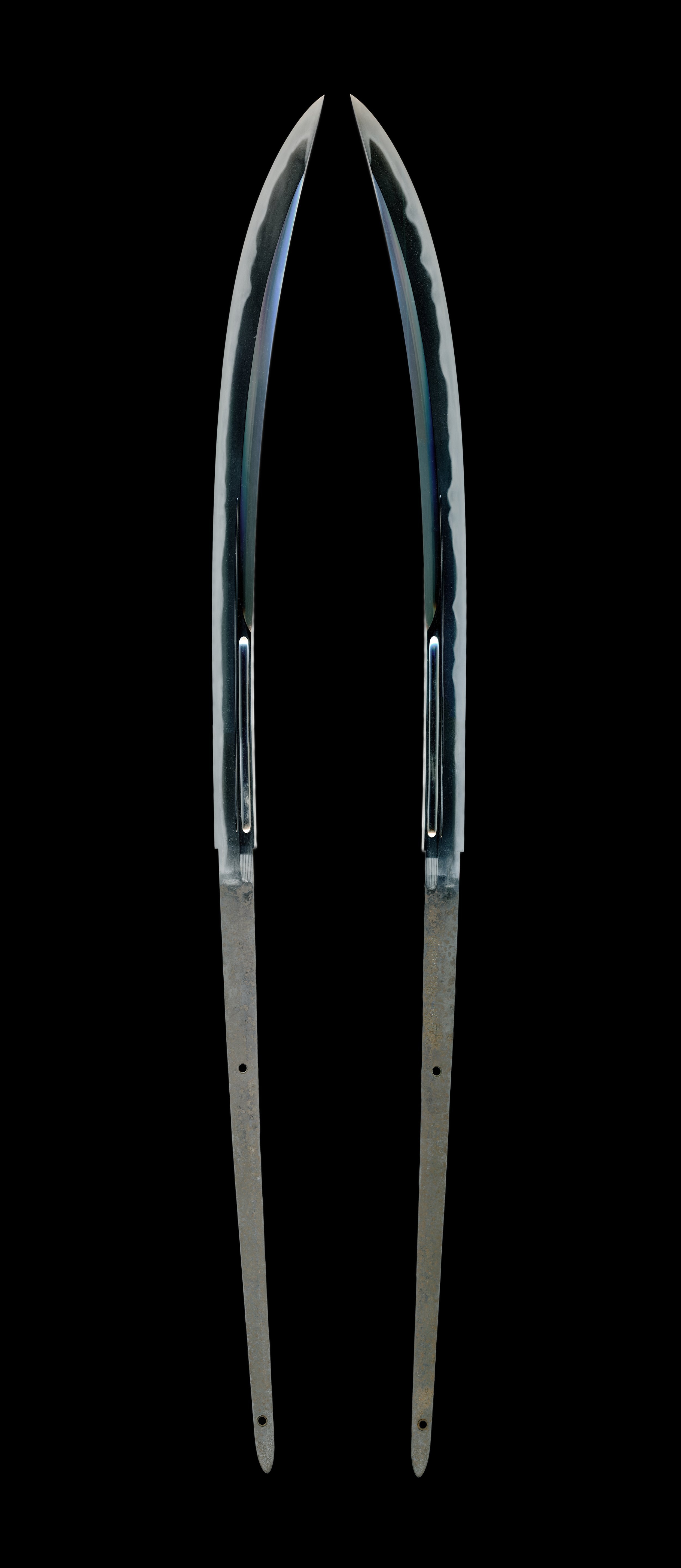
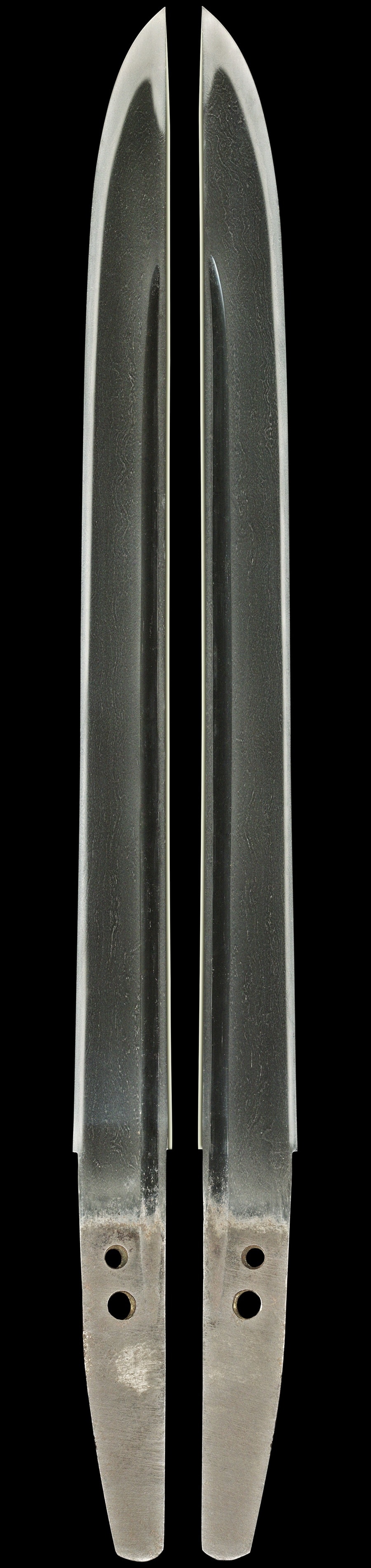
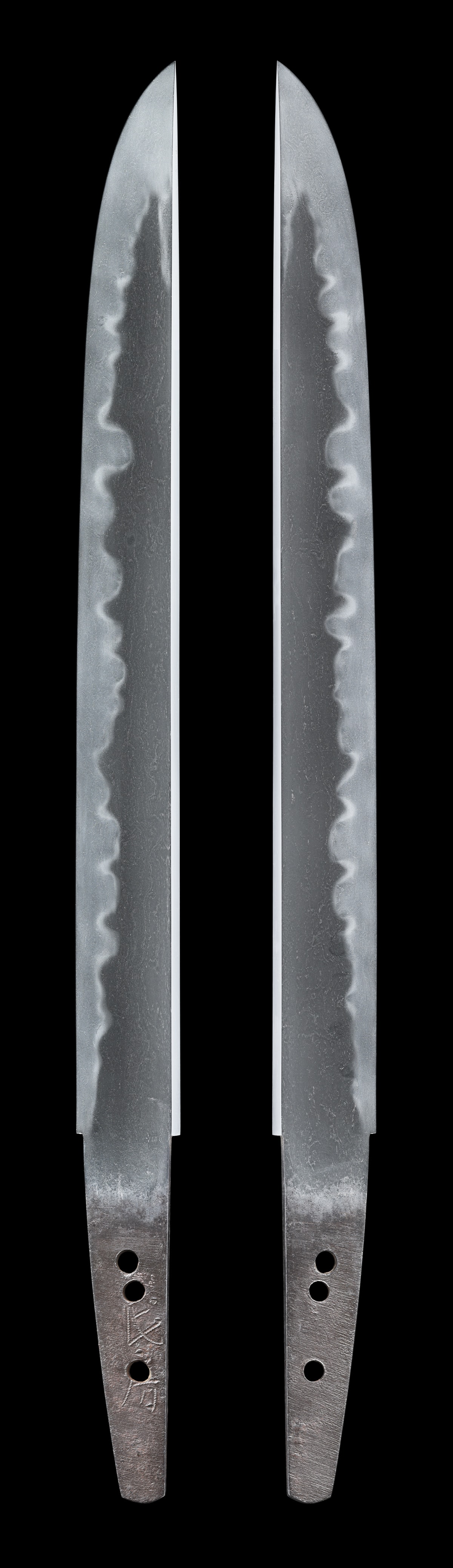
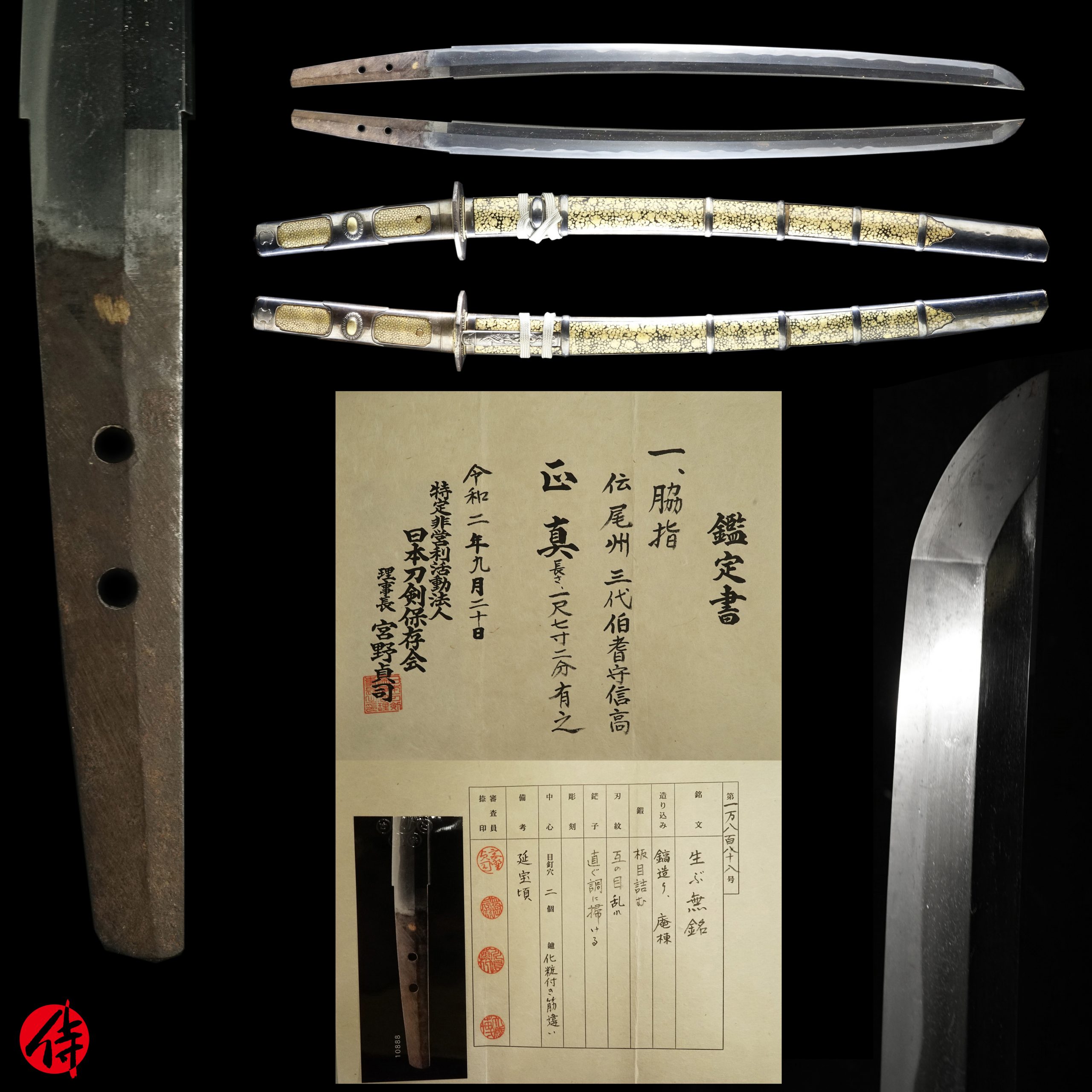
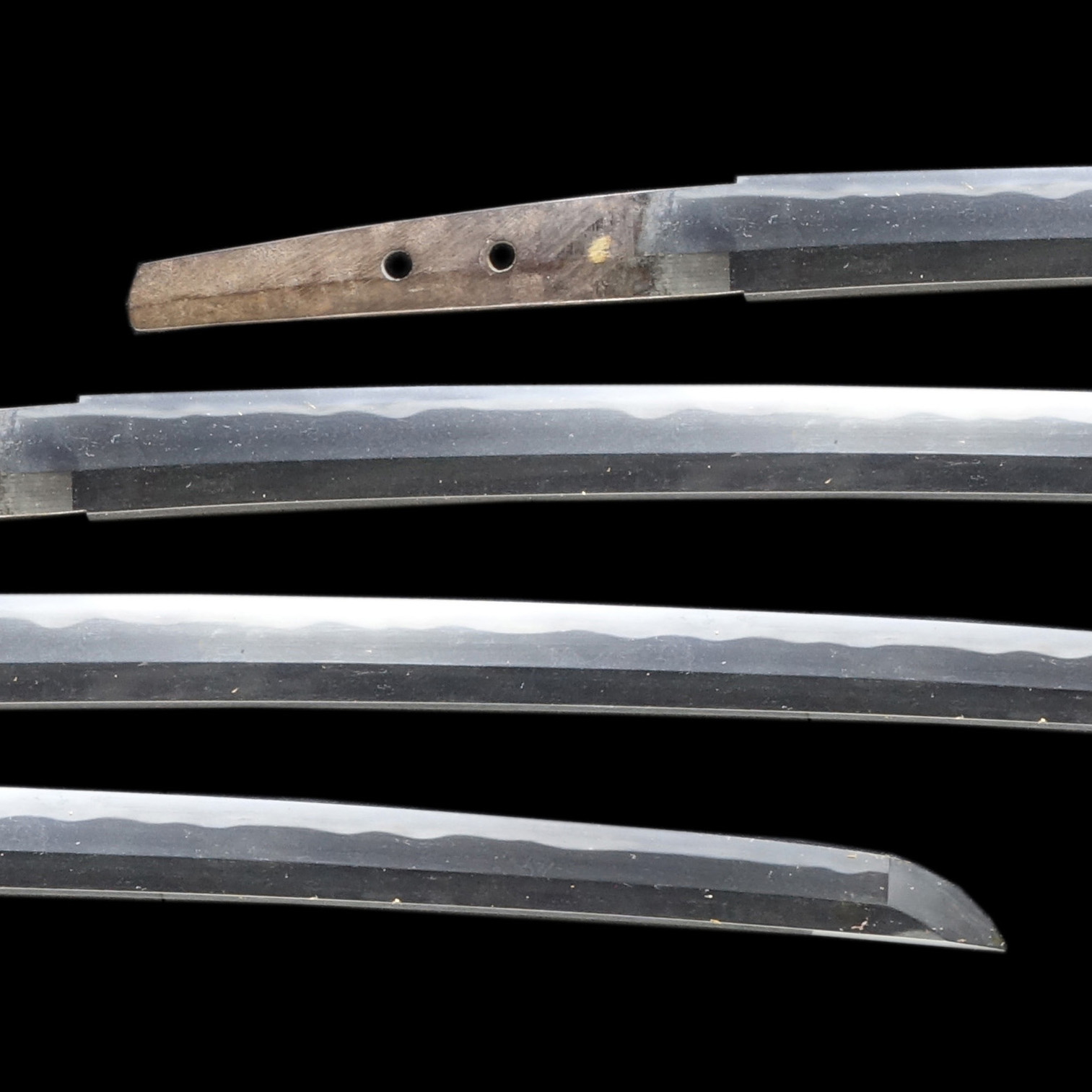
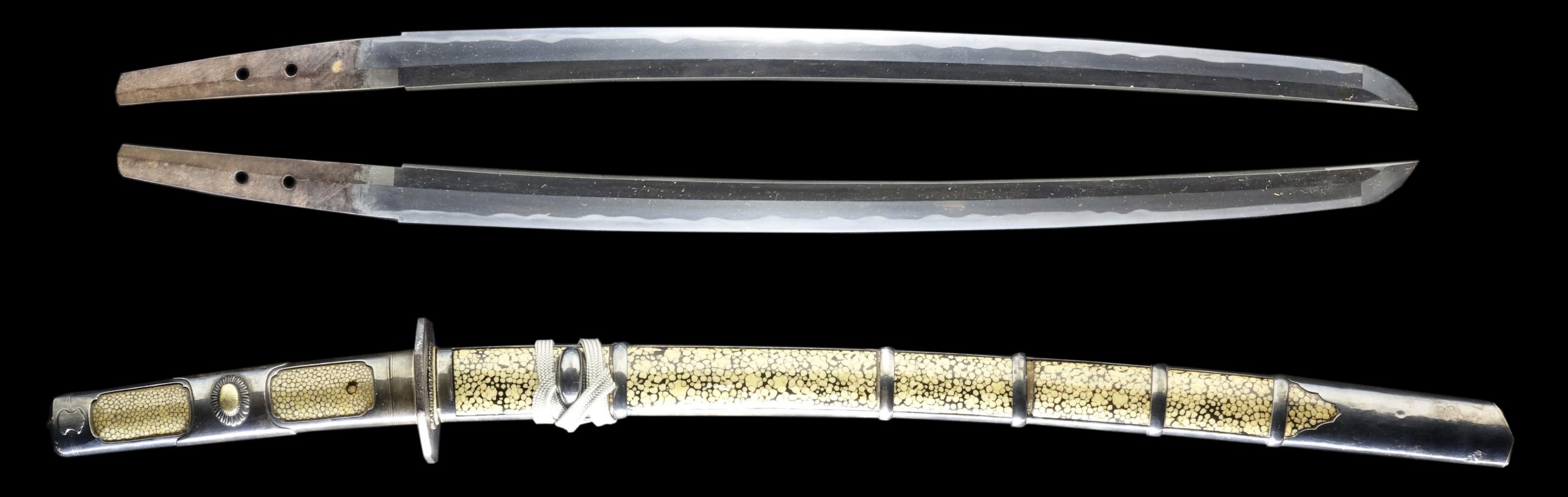
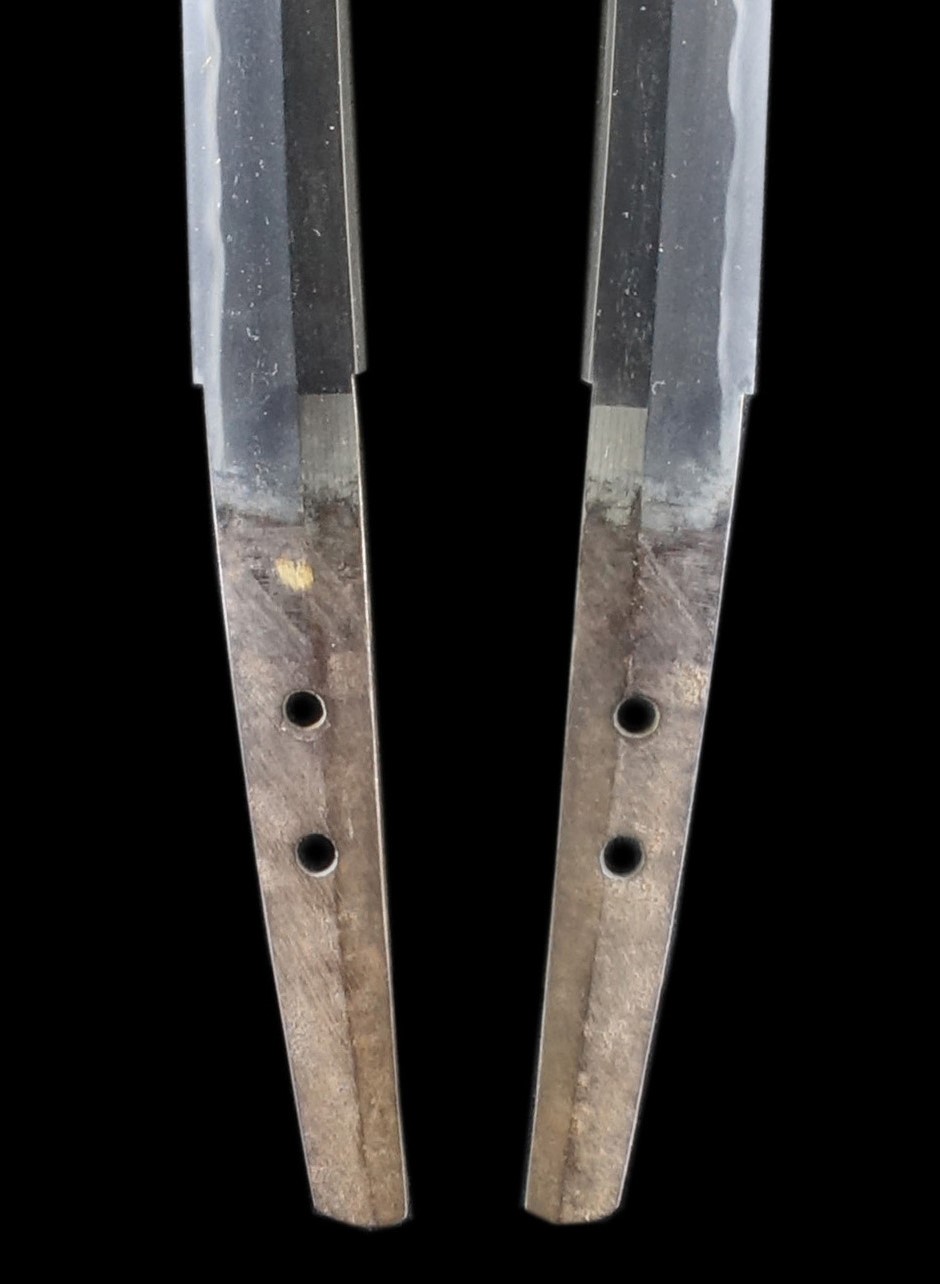
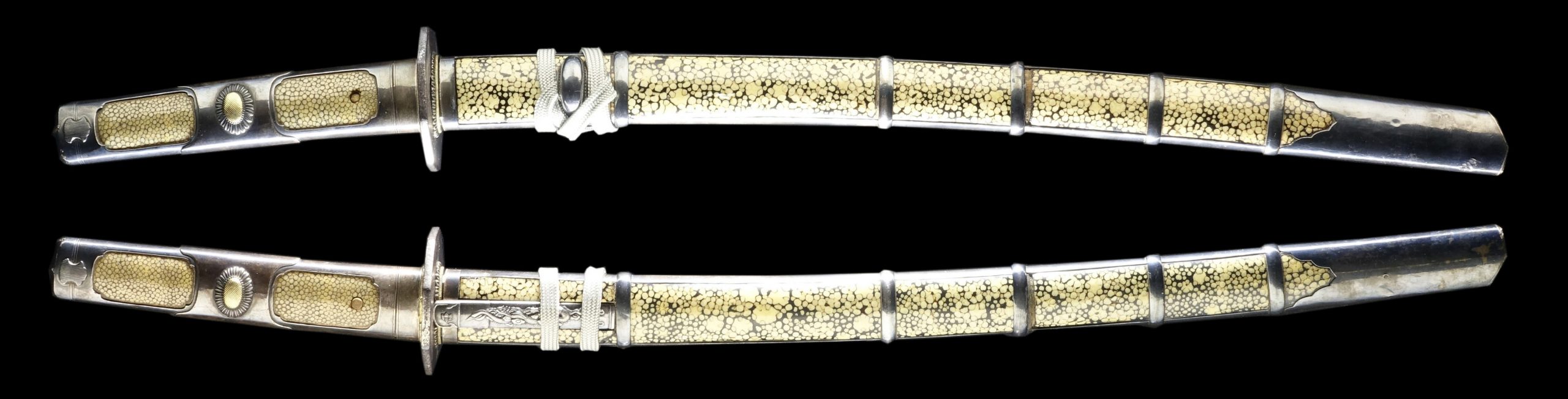
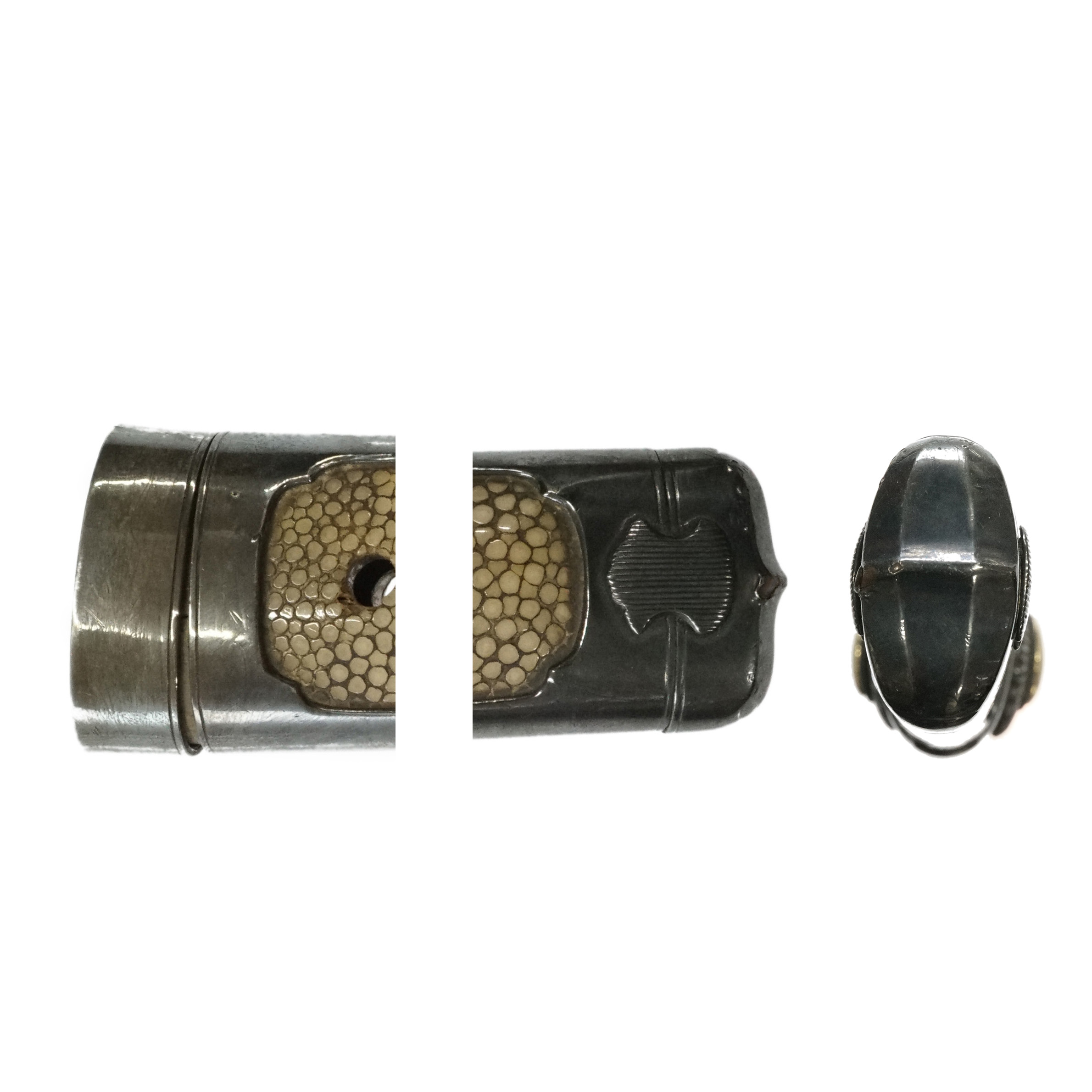
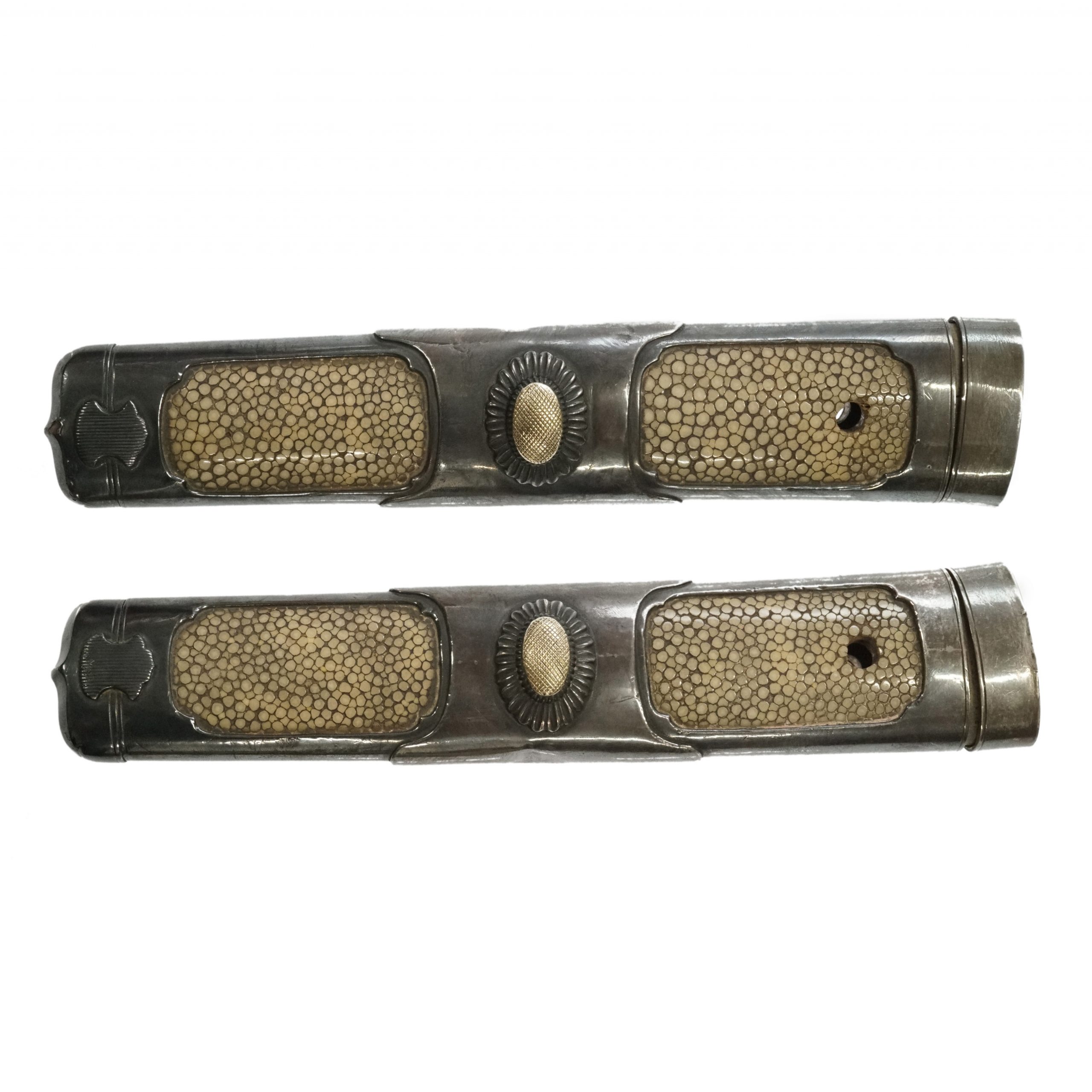
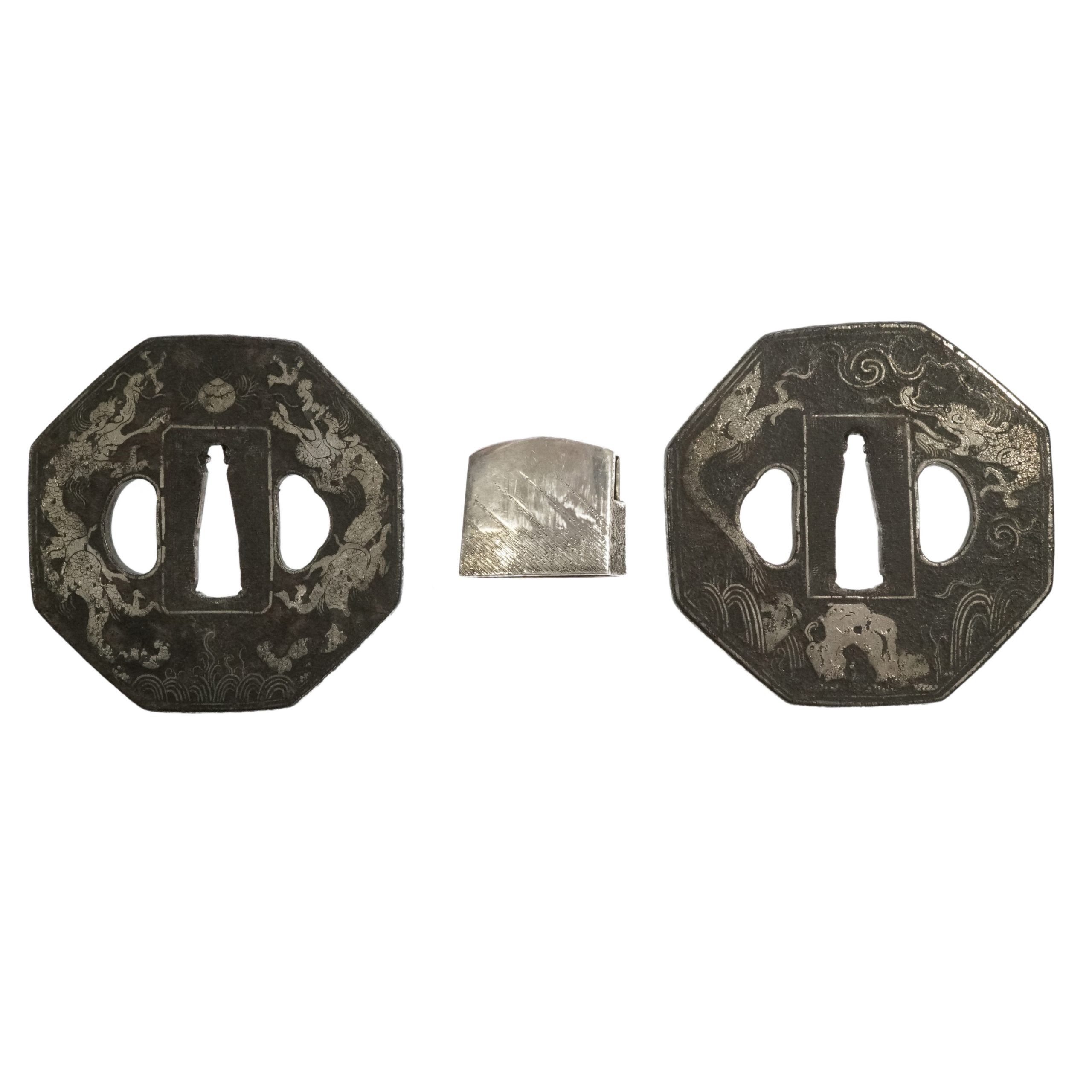
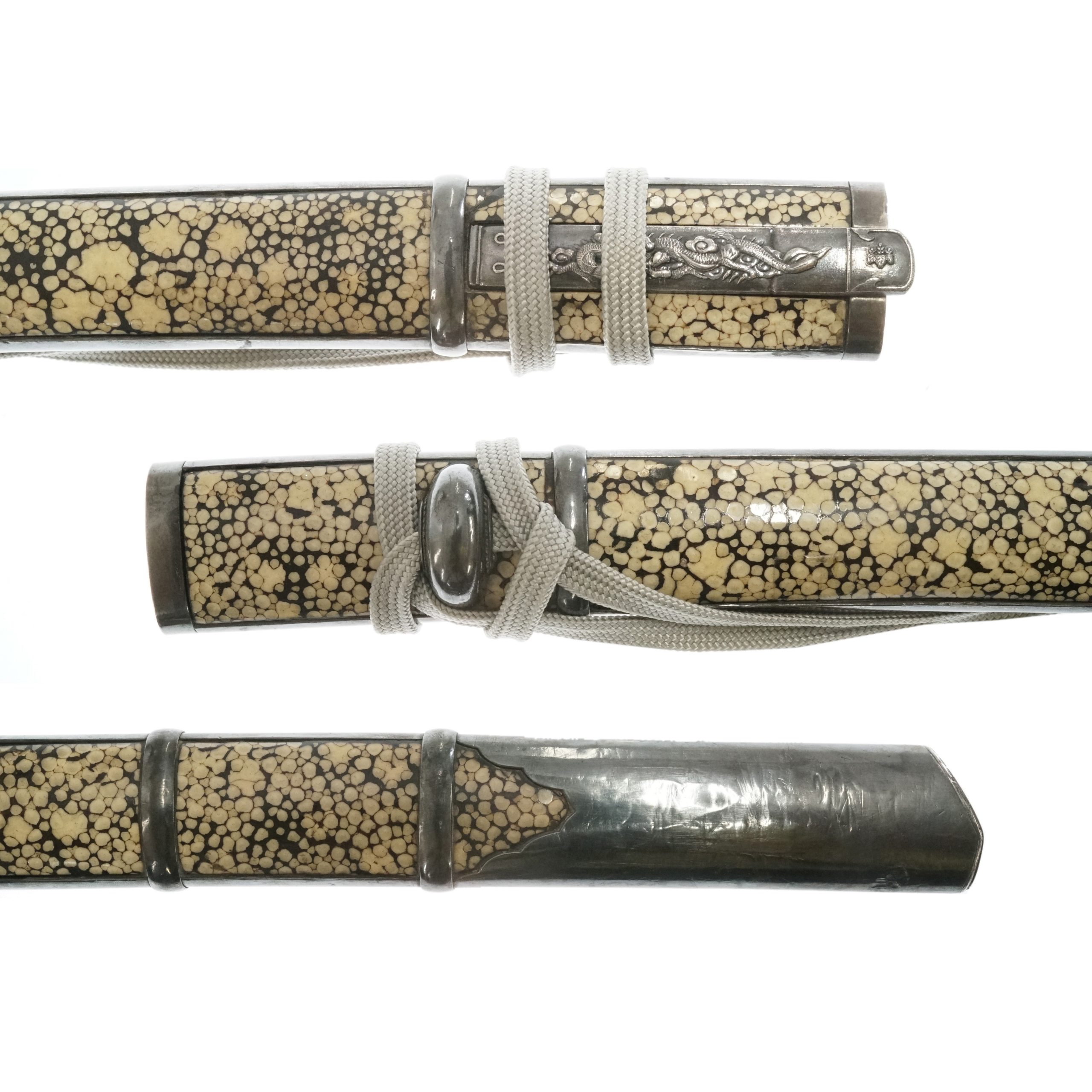
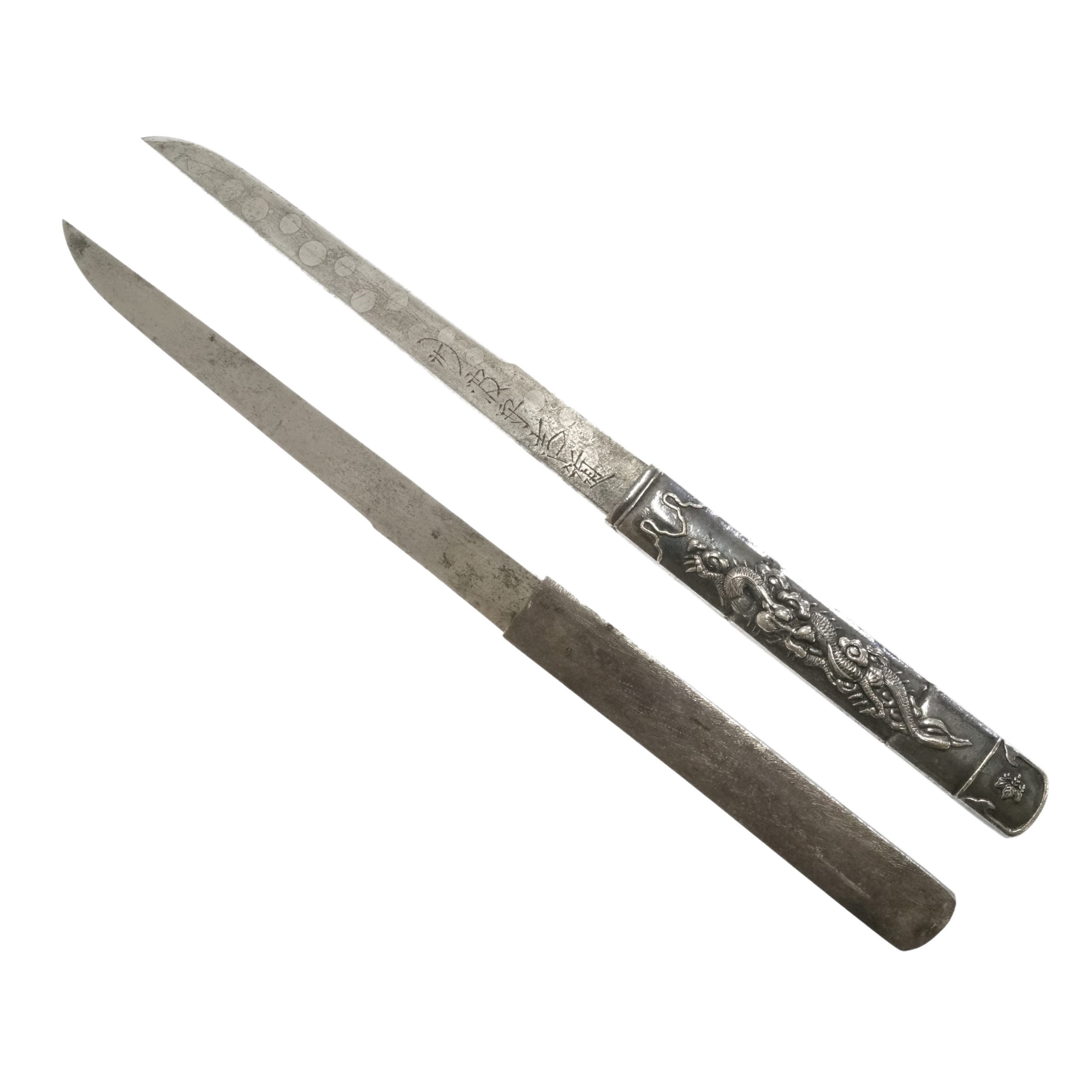
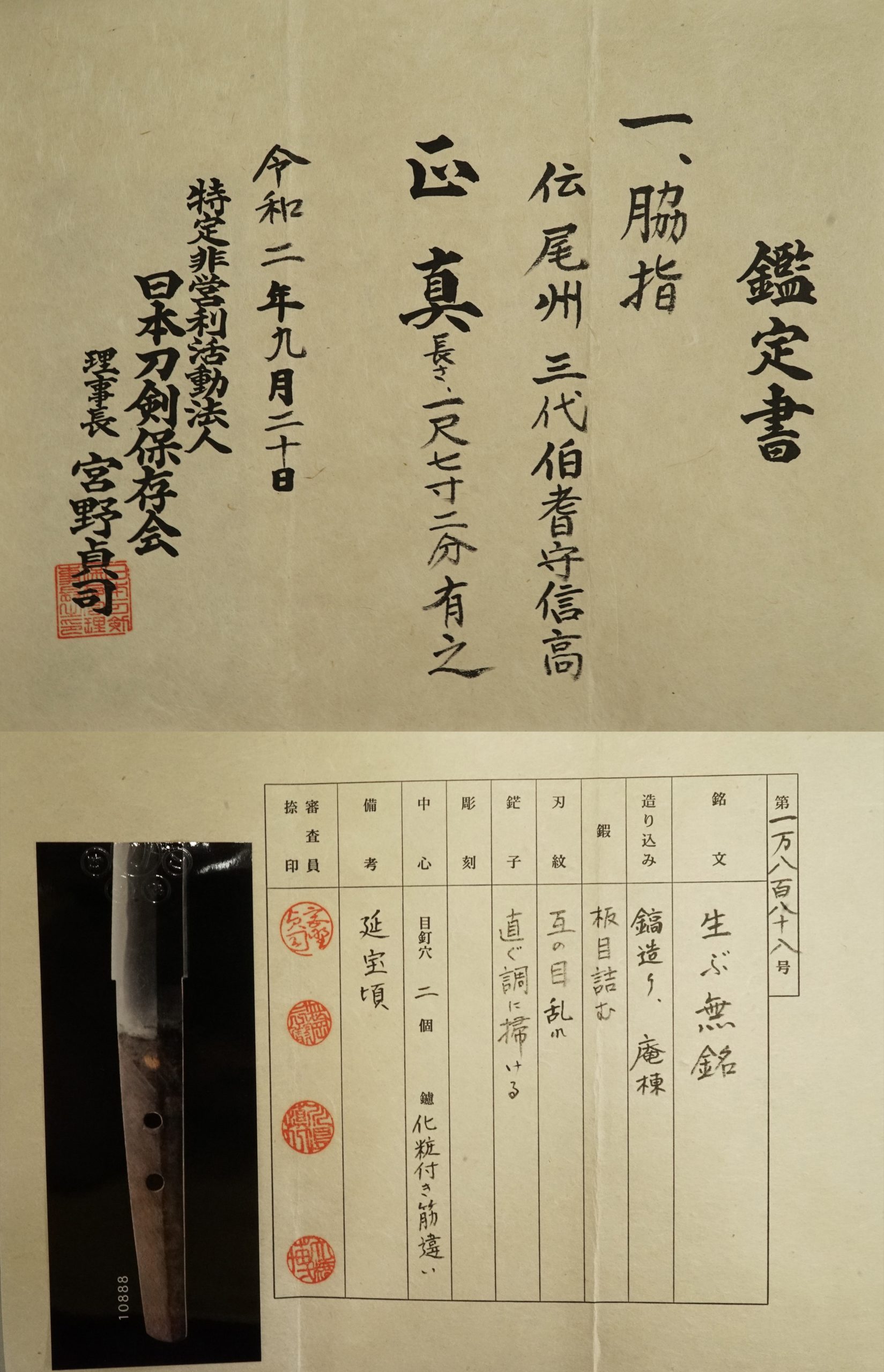
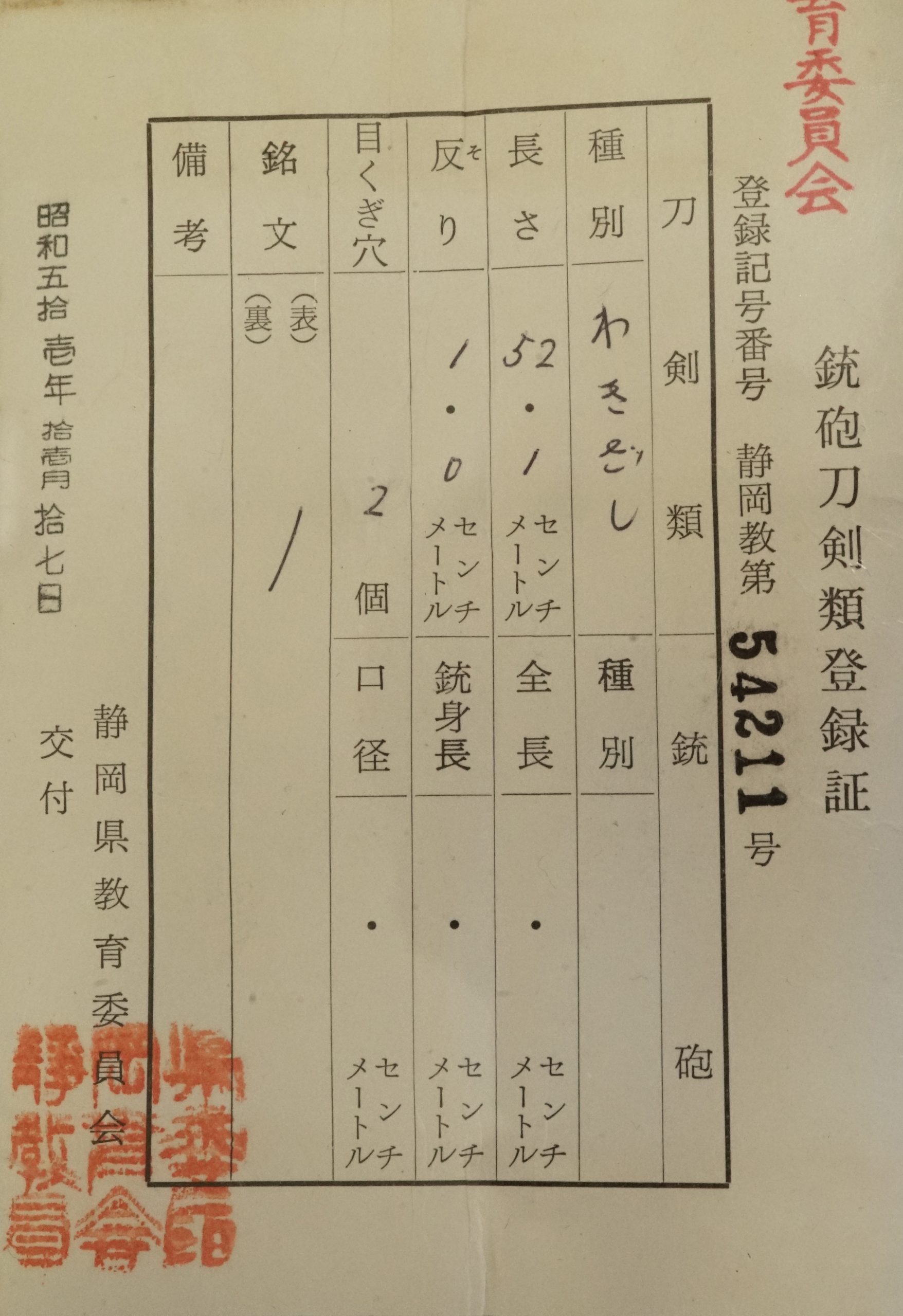
This is an antique Wakizashi from the early Edo period, attributed to the third generation Hoki no Kami Nobutaka of Owari province. The blade is unsigned but comes with an NTHK Kanteisho certificate, appraising it based on its distinctive Hamon, Jigane, and shape. It is accompanied by a complete Koshirae mounting featuring stingray skin and silver, with a chrysanthemum-patterned Menuki and a dragon-themed Tsuba.
 NihontoWatch
mumei · Enpo (1673-1681) · nagasa 52.1cm · sori 1cm
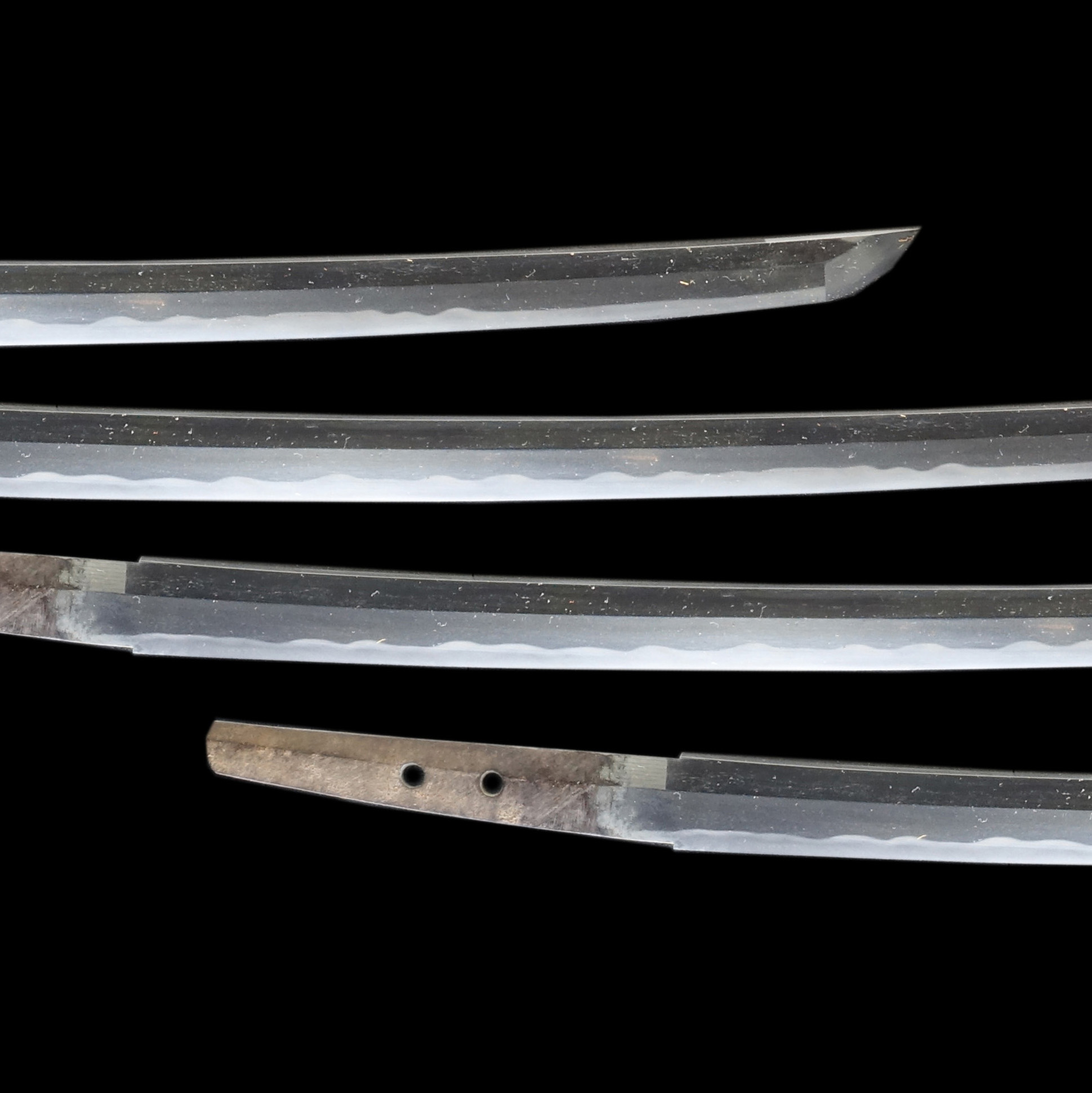
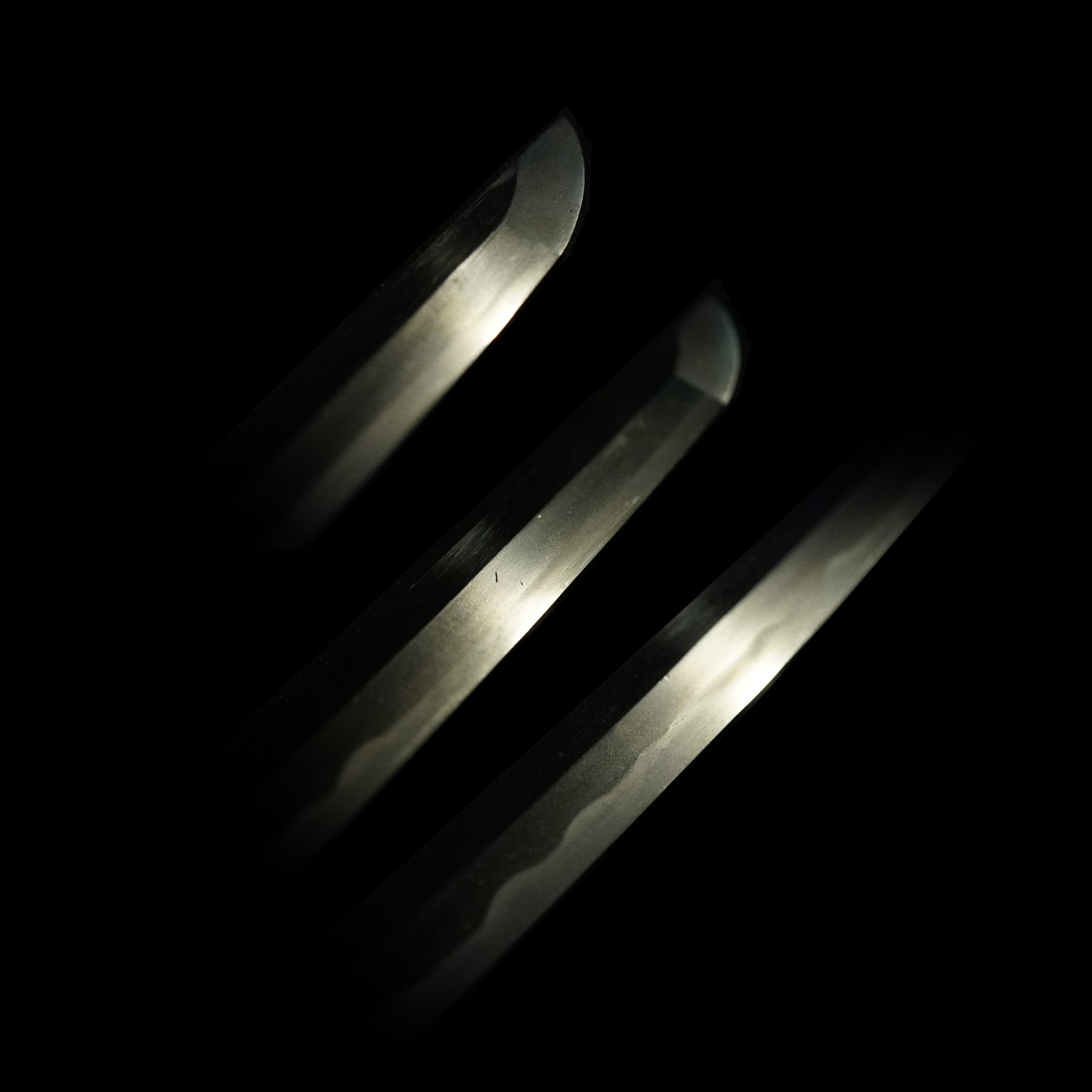
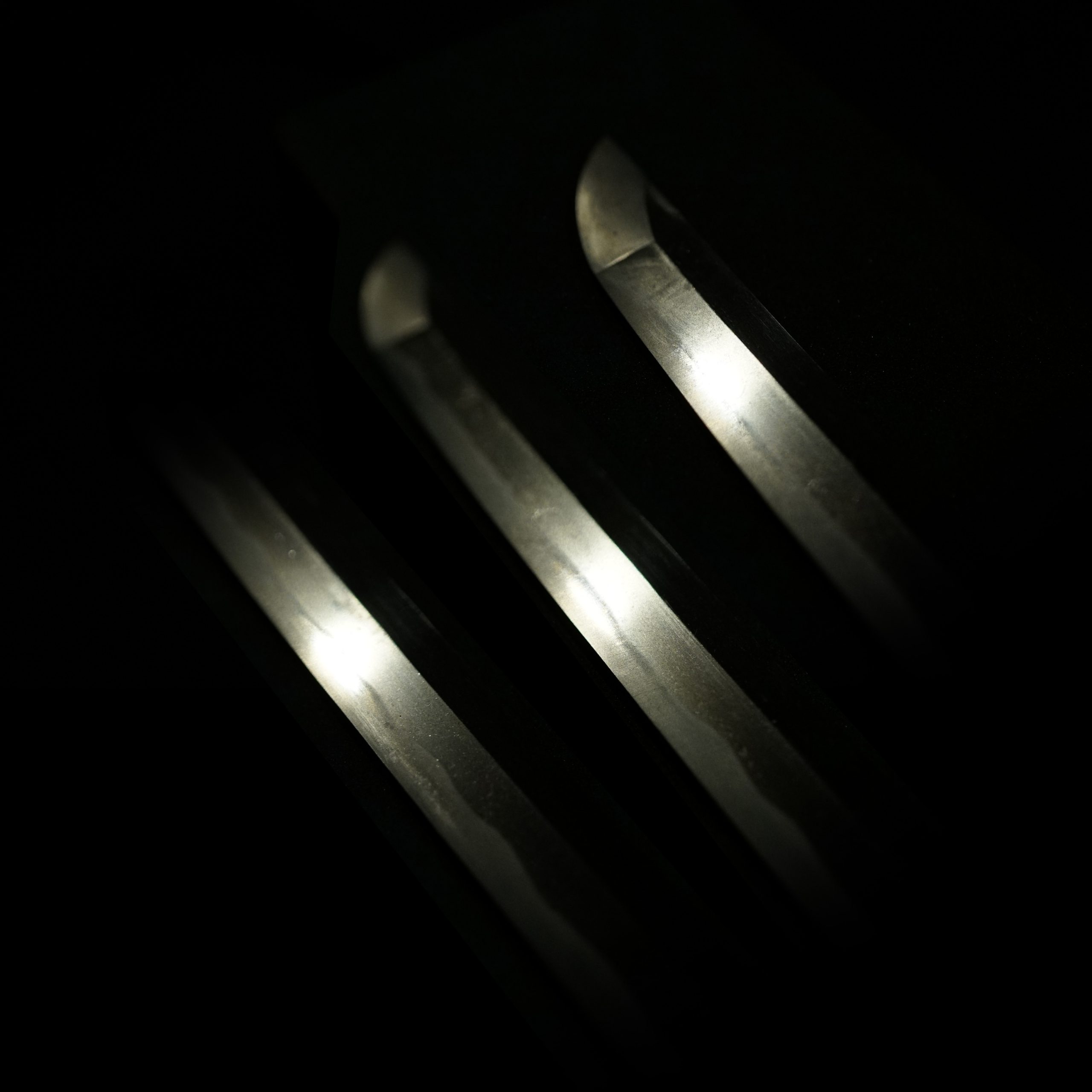

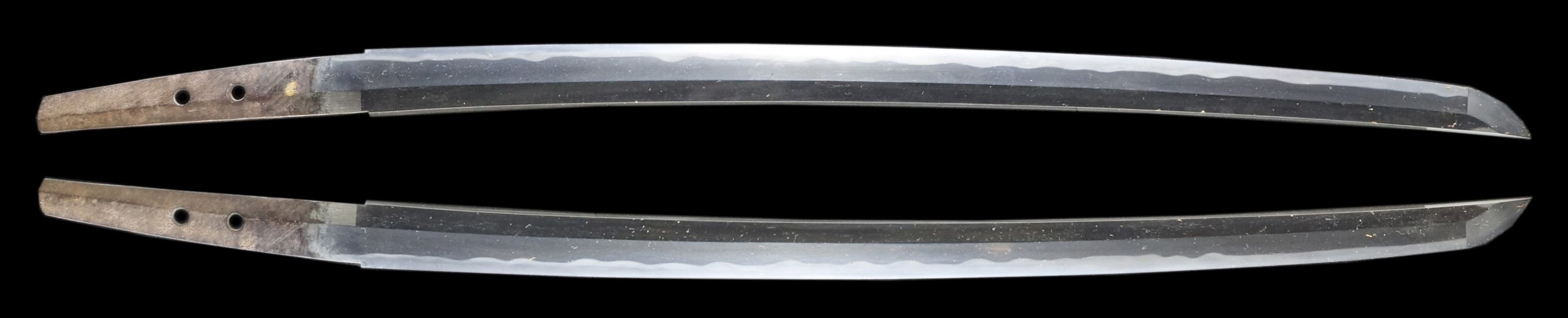
Mino-den · Owari · around 1673-1681
Fujishiro Jo saku · Tōken Taikan top 49%
3 pieces on the market now
Where Nobutaka stands among comparable artisans: across all of nihontō, and within tradition, era, and period. The tiers (Foremost · Leading · Major · Notable) weigh official designations from the NBTHK and Japan's Agency for Cultural Affairs, together with historical honors of lasting repute such as the Sansaku and Meibutsu-chō.
Select a lens to see how it's measured.
Mino-den · Mino
11 pieces on the market now
The San'ami line takes its root in Mino Province, where its head smith Kanenori (兼則) worked as one of the so-called Seki Seven Schools. The setsumei place Kanenori from the close of the Nanbokuchō period into the Ōei era of the early Muromachi, alongside Kanemoto and Kanesada among the representative hands of Sue-Seki, and the earliest extant signed tachi of his is appraised as no later than Ōei. A second early smith, Kanekuni (兼国), is recorded as belonging to the San'ami lineage and is judged to predate the Sue-Seki group proper; the remote ancestry given for him runs variously to a disciple of Naoe Kanetomo, to Yamato Kanekuni, or to Kanenori, though the setsumei note that nothing survives to confirm so distant a descent. From this Mino stock came Hōki no Kami Fujiwara Nobutaka (信高), born at Kami-Ōchi in Mino in 1563 and said to descend from San'ami Kanekuni. After receiving the title Hōki no Kami in Tenshō 9 (1581) he moved to Kiyosu in Owari and, serving Tokugawa Yoshinao, later settled at Nagoya, carrying the line into the early Shintō era through a second generation who took the tonsure in Kanbun 2 (1662). Across the corpus the jigane is itame, often closely forged and tending to nagare-hada or flowing grain along the edge, with ji-nie and a frequent standing of the grain (hada-dachi); a faint whitish cast (shirake) marks the older Mino work of Kanenori and Kanekuni. The temper rests on suguha as a base. In the early hands it is a tight, clear (saete) suguha in nioi-deki, sometimes mixed with small gunome, angular elements and pointed ha, carrying ashi, hotsure and scattered tobiyaki.
The Nobutaka works open this out: a broad suguha shifting to shallow notare, ko-notare with a gunome-flavored edge, deep nioi with nie unevenly applied and partly coarse, nie-kuzure at the yakigashira, kuichigai-ba, kinsuji, sunagashi, yubashiri and tobiyaki that climb into the shinogi-ji until the upper half reads as hitatsura. The bōshi runs to sugu with ko-maru, at times midare-komi, pointed, or hakikake, and the early swords keep a slender, high-sori tachi shape while Nobutaka's carry the wide-bodied, ō-kissaki form of the Momoyama transition. The hand is recognized in this pairing of a flowing Mino itame with a suguha core that, in the descendants, breaks toward bold hitatsura. For kantei, the setsumei fix several anchors. In Kanenori's signature the scooped chisel at the fourth stroke of the character kane (兼) is read as a trait of late Nanbokuchō through Ōei work, matched in dated Kaneyoshi mei; the clear suguha of Kanekuni is likened to a Zenjō Kaneyoshi masterpiece. The jizō-flavored bōshi and the nagare-mixed itame in Nobutaka are named as the surviving stamp of the Mino root beneath his Owari manner, and one of his katana is recorded as an Inabae-utsushi. Provenance runs through the corpus: a Kanekuni bears kinzōgan recording it as the sashiryō of Ōkubo Genban-no-jō Tadanari, lord of Odawara in Sagami, worn at the age of ninety-three; Kanenori's tachi descended in the Yamanouchi family. Among the Owari yari makers beginning with Masatsune, Nobutaka's yari of extraordinary length is held in particular regard, and the second-generation Nobutaka is judged no less skilled than his father, with the finest extant Nobutaka works counted to his hand. Learn more →
| Smith | Era | Designated |
|---|---|---|
| Nobutaka信高 | 1581-1615 | 3 |
| Kanekuni兼國 | 1455-1457 | 1 |
| Kanenori兼則 | 1370-1372 | 1 |
| Nobutaka信高 | 1624-1644 | 1 |
| Nobutaka信高 | 1673-1681 | 1 |
The Edo period (1615 to 1868)
Edo was the sword’s age of connoisseurship: the Hon’ami appraisers, the shogunal register of famous blades of 1719, and a thriving literature turned the sword into an object of study even as it ceased to be drawn in war.
The NTHK’s principal certificate, issued for a blade of considerable quality. It confirms a genuine signature, or, for an unsigned (mumei) work, records the judges’ attribution to a smith or school. The paper carries a detailed worksheet with a numerical point score.
The NTHK (Nihon Tōken Hozon Kai, the Society for the Preservation of the Japanese Sword) is the oldest of Japan’s sword-appraisal bodies, founded in 1910, decades before the NBTHK. After the death of its long-serving head it divided into two successor societies, the NTHK and the NTHK-NPO, both of which continue to hold shinsa. NTHK certificates are known for a detailed worksheet that records a numerical point score alongside the judges’ written opinion, and the society is especially respected for its attribution of unsigned (mumei) work.
Returns/exchanges limited to defects caused by shipping (except willful misconduct or gross negligence by the company); customers must contact within 72 hours of receiving the product.
This is an antique Wakizashi from the early Edo period, attributed to the third generation Hoki no Kami Nobutaka of Owari province. The blade is unsigned but comes with an NTHK Kanteisho certificate, appraising it based on its distinctive Hamon, Jigane, and shape. It is accompanied by a complete Koshirae mounting featuring stingray skin and silver, with a chrysanthemum-patterned Menuki and a dragon-themed Tsuba.
NihontoWatchmumei · Enpo (1673-1681) · nagasa 52.1cm · sori 1cm
Mino-den · Owari · around 1673-1681
Fujishiro Jo saku · Tōken Taikan top 49%
3 pieces on the market now
Where Nobutaka stands among comparable artisans: across all of nihontō, and within tradition, era, and period. The tiers (Foremost · Leading · Major · Notable) weigh official designations from the NBTHK and Japan's Agency for Cultural Affairs, together with historical honors of lasting repute such as the Sansaku and Meibutsu-chō.
Select a lens to see how it's measured.
Mino-den · Mino
11 pieces on the market now
The San'ami line takes its root in Mino Province, where its head smith Kanenori (兼則) worked as one of the so-called Seki Seven Schools. The setsumei place Kanenori from the close of the Nanbokuchō period into the Ōei era of the early Muromachi, alongside Kanemoto and Kanesada among the representative hands of Sue-Seki, and the earliest extant signed tachi of his is appraised as no later than Ōei. A second early smith, Kanekuni (兼国), is recorded as belonging to the San'ami lineage and is judged to predate the Sue-Seki group proper; the remote ancestry given for him runs variously to a disciple of Naoe Kanetomo, to Yamato Kanekuni, or to Kanenori, though the setsumei note that nothing survives to confirm so distant a descent. From this Mino stock came Hōki no Kami Fujiwara Nobutaka (信高), born at Kami-Ōchi in Mino in 1563 and said to descend from San'ami Kanekuni. After receiving the title Hōki no Kami in Tenshō 9 (1581) he moved to Kiyosu in Owari and, serving Tokugawa Yoshinao, later settled at Nagoya, carrying the line into the early Shintō era through a second generation who took the tonsure in Kanbun 2 (1662). Across the corpus the jigane is itame, often closely forged and tending to nagare-hada or flowing grain along the edge, with ji-nie and a frequent standing of the grain (hada-dachi); a faint whitish cast (shirake) marks the older Mino work of Kanenori and Kanekuni. The temper rests on suguha as a base. In the early hands it is a tight, clear (saete) suguha in nioi-deki, sometimes mixed with small gunome, angular elements and pointed ha, carrying ashi, hotsure and scattered tobiyaki.
The Nobutaka works open this out: a broad suguha shifting to shallow notare, ko-notare with a gunome-flavored edge, deep nioi with nie unevenly applied and partly coarse, nie-kuzure at the yakigashira, kuichigai-ba, kinsuji, sunagashi, yubashiri and tobiyaki that climb into the shinogi-ji until the upper half reads as hitatsura. The bōshi runs to sugu with ko-maru, at times midare-komi, pointed, or hakikake, and the early swords keep a slender, high-sori tachi shape while Nobutaka's carry the wide-bodied, ō-kissaki form of the Momoyama transition. The hand is recognized in this pairing of a flowing Mino itame with a suguha core that, in the descendants, breaks toward bold hitatsura. For kantei, the setsumei fix several anchors. In Kanenori's signature the scooped chisel at the fourth stroke of the character kane (兼) is read as a trait of late Nanbokuchō through Ōei work, matched in dated Kaneyoshi mei; the clear suguha of Kanekuni is likened to a Zenjō Kaneyoshi masterpiece. The jizō-flavored bōshi and the nagare-mixed itame in Nobutaka are named as the surviving stamp of the Mino root beneath his Owari manner, and one of his katana is recorded as an Inabae-utsushi. Provenance runs through the corpus: a Kanekuni bears kinzōgan recording it as the sashiryō of Ōkubo Genban-no-jō Tadanari, lord of Odawara in Sagami, worn at the age of ninety-three; Kanenori's tachi descended in the Yamanouchi family. Among the Owari yari makers beginning with Masatsune, Nobutaka's yari of extraordinary length is held in particular regard, and the second-generation Nobutaka is judged no less skilled than his father, with the finest extant Nobutaka works counted to his hand. Learn more →
| Smith | Era | Designated |
|---|---|---|
| Nobutaka信高 | 1581-1615 | 3 |
| Kanekuni兼國 | 1455-1457 | 1 |
| Kanenori兼則 | 1370-1372 | 1 |
| Nobutaka信高 | 1624-1644 | 1 |
| Nobutaka信高 | 1673-1681 | 1 |
The Edo period (1615 to 1868)
Edo was the sword’s age of connoisseurship: the Hon’ami appraisers, the shogunal register of famous blades of 1719, and a thriving literature turned the sword into an object of study even as it ceased to be drawn in war.
The NTHK’s principal certificate, issued for a blade of considerable quality. It confirms a genuine signature, or, for an unsigned (mumei) work, records the judges’ attribution to a smith or school. The paper carries a detailed worksheet with a numerical point score.
The NTHK (Nihon Tōken Hozon Kai, the Society for the Preservation of the Japanese Sword) is the oldest of Japan’s sword-appraisal bodies, founded in 1910, decades before the NBTHK. After the death of its long-serving head it divided into two successor societies, the NTHK and the NTHK-NPO, both of which continue to hold shinsa. NTHK certificates are known for a detailed worksheet that records a numerical point score alongside the judges’ written opinion, and the society is especially respected for its attribution of unsigned (mumei) work.
Returns/exchanges limited to defects caused by shipping (except willful misconduct or gross negligence by the company); customers must contact within 72 hours of receiving the product.