The Shintō era was largely invented in Kyōto: Umetada Myōju’s workshop trained the movement, Horikawa Kunihiro raised a generation, and the Hon’ami appraisers, who held no forge, governed the meaning of famous blades.
 NihontoWatchNihontoWatch
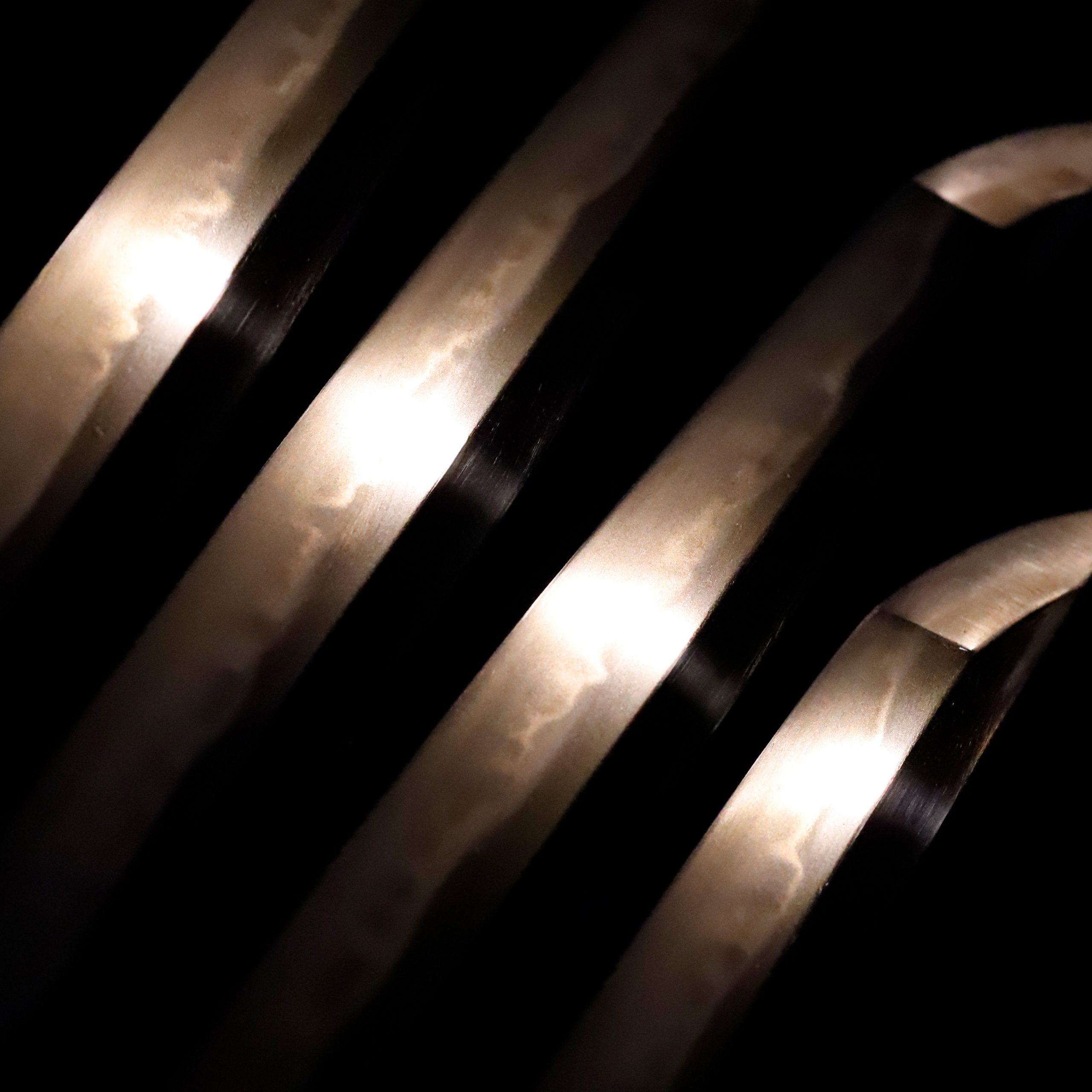
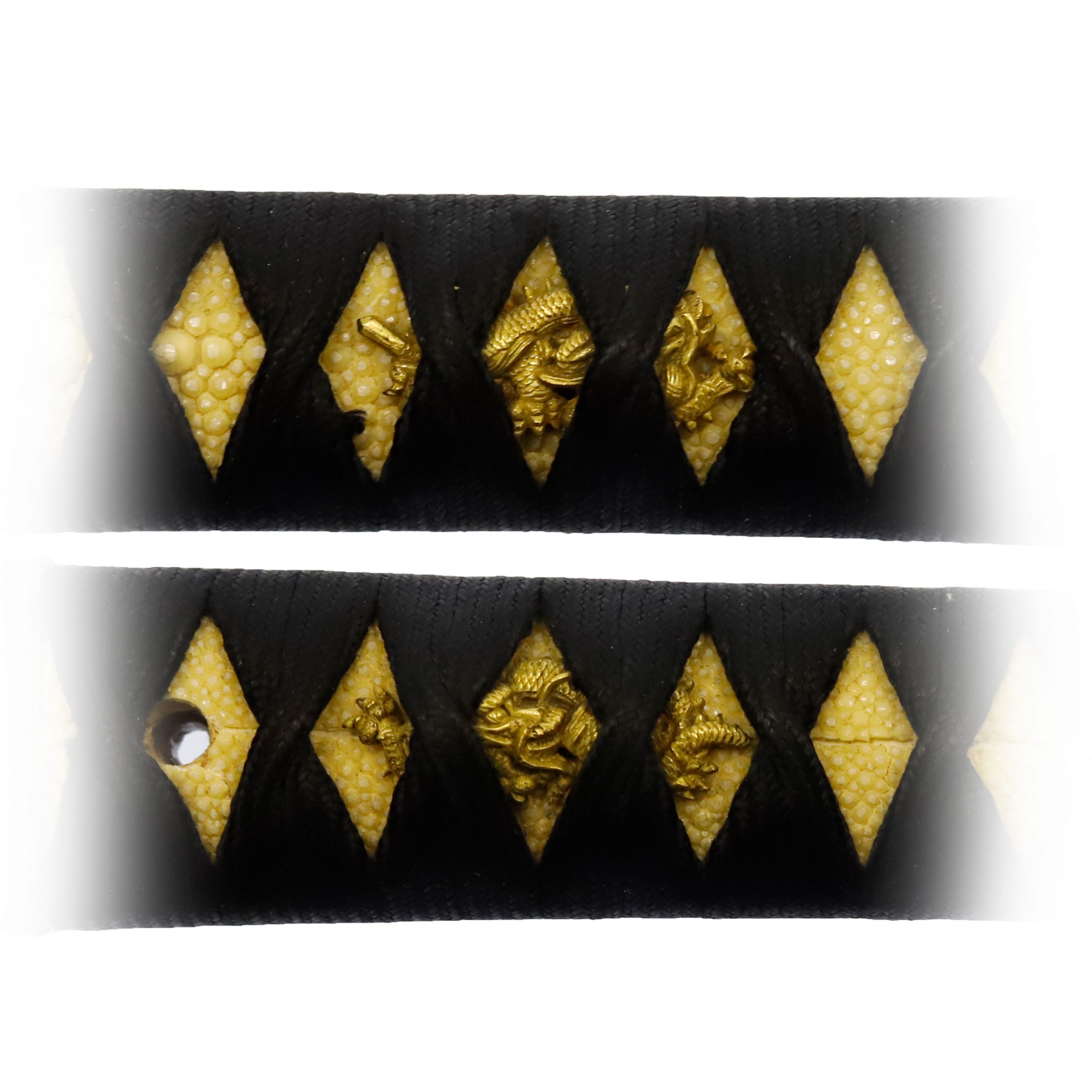
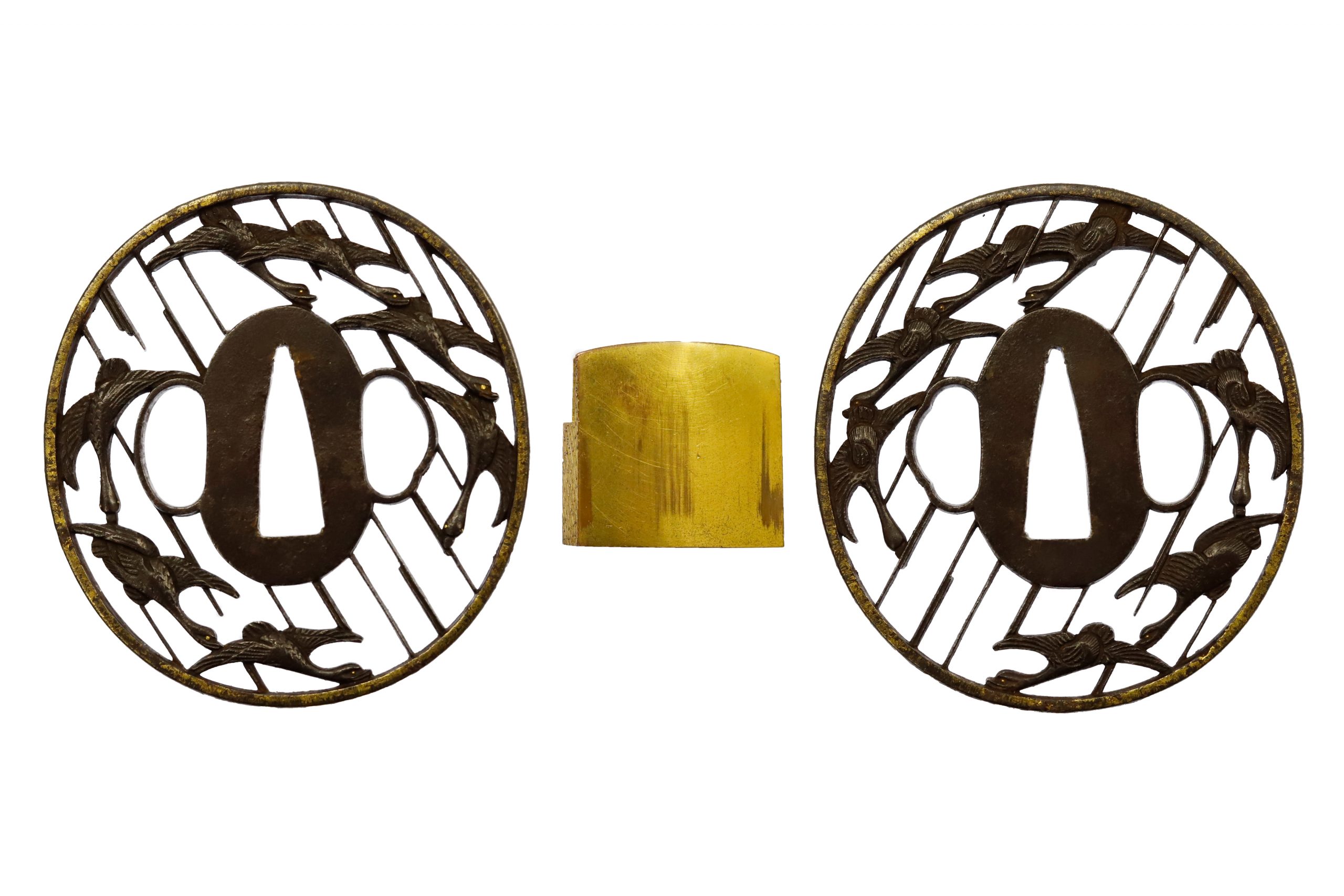
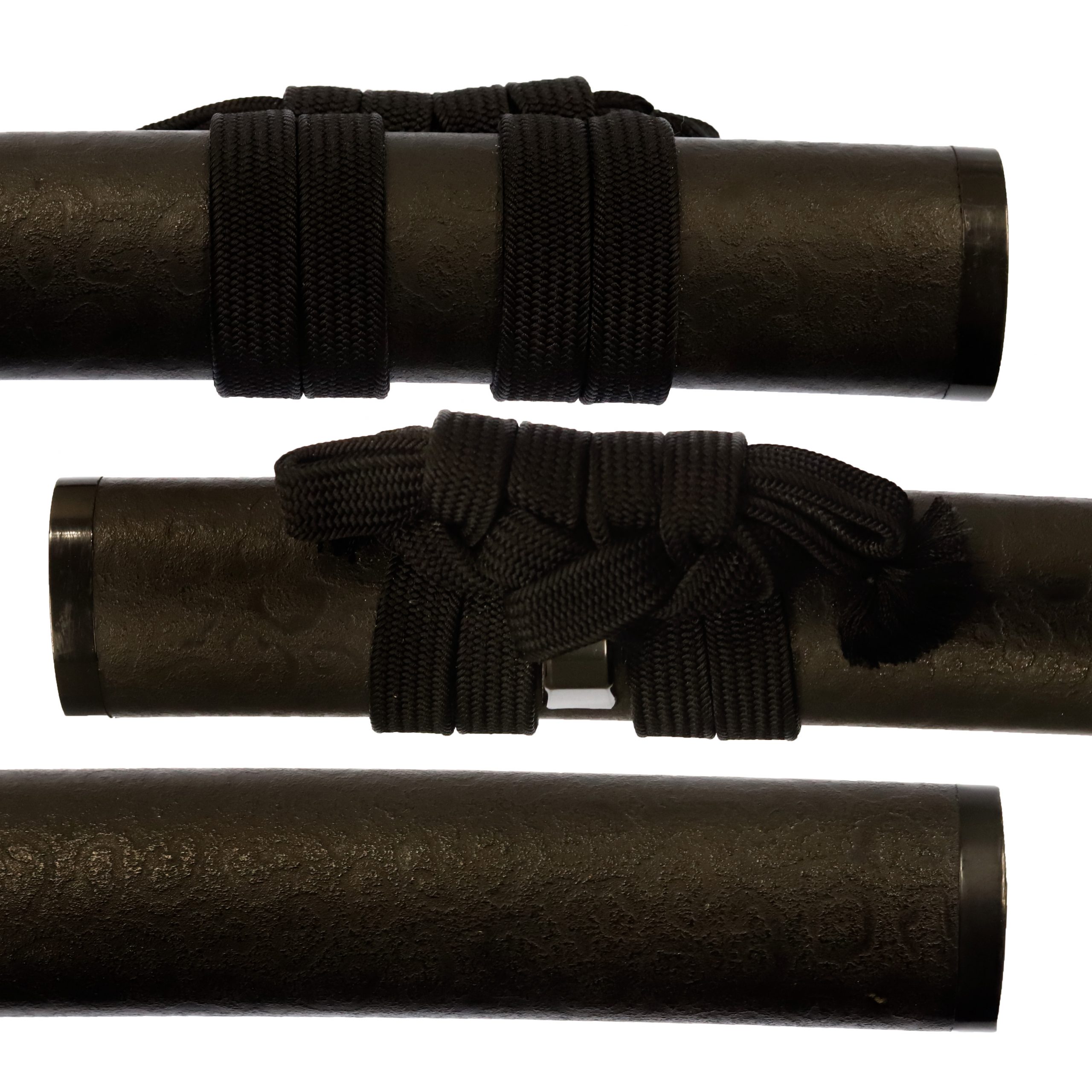
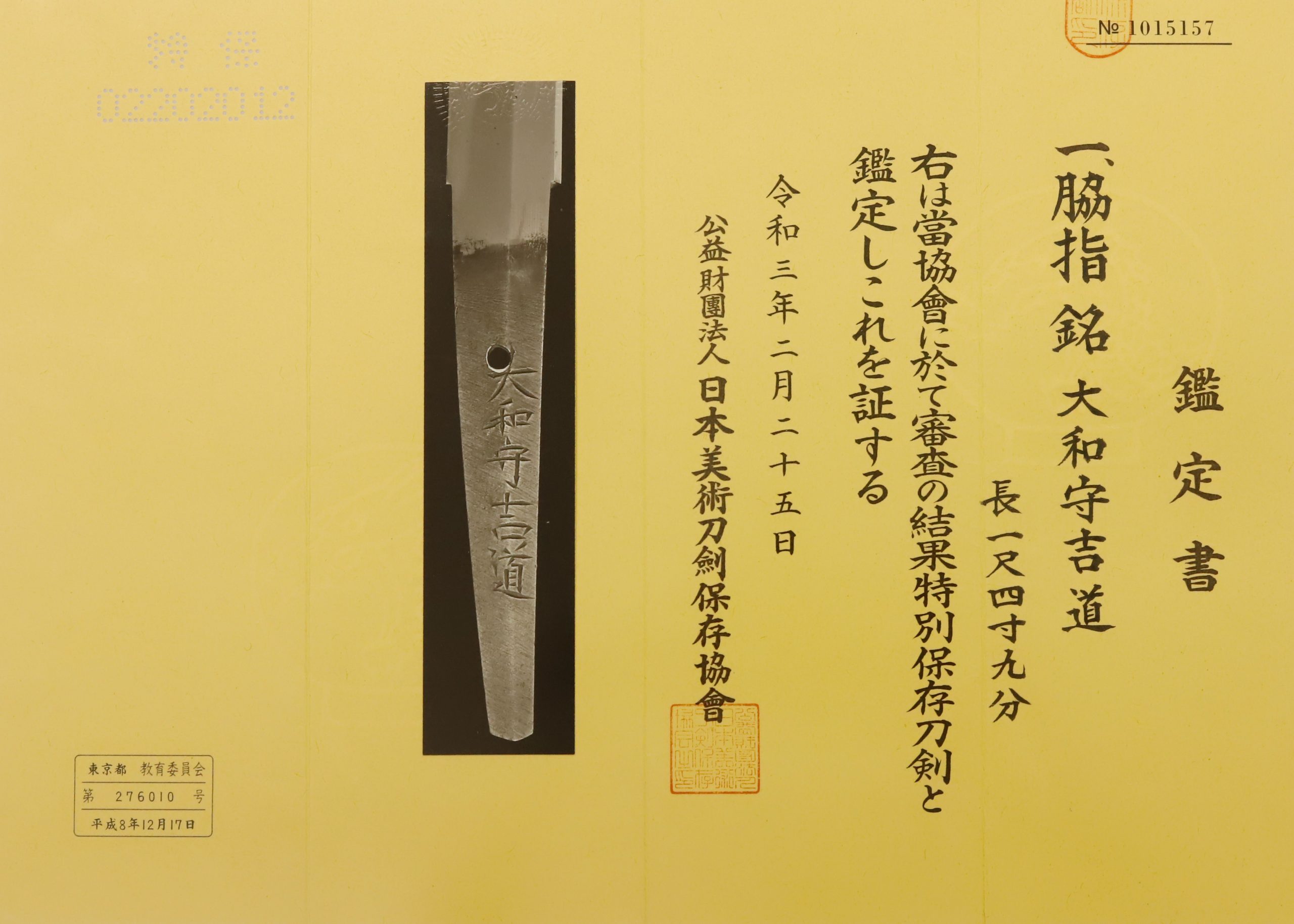
Summary This blade was signed by Yamato no Kami Yoshimichi(大和守吉道), whose real name was Mishina Uemon (三品宇右衛門). He was active in sword-forging during the early Edo period(1652-1675) in Osaka. He was the second son of the first-gen Osaka Tanba no Kami Yoshimichi(大阪丹波守吉道). Yamato no Kami Yoshimichi belonged to Osaka Mishina school, so as his father. Osaka Mishina School &His father Mishina school’s founder Kanemichi(兼道) was originally from Mino province, exclusively forging blades for Shingen Takeda, a famous feudal lord. Later on, he moved to Kyoto by bringing his four sons and founded his school named Mishina(三品) in Kyoto. Mishina school was one of the most prospered ones during the early Edo period. One of Kanemichi’s sons was Tanba no Kami Yoshimichi, the father of the first-gen Osaka Tanbo no Kami Yoshimichi. They were also known as very famous swordsmiths. Osaka Tanba no Kami Yoshimichi initially forged swords under his father’s school in Kyoto but moved to Osaka and founded Osaka Mishina school. Yamato no Kami Yoshimichi was his son and dedicated his career to gaining the fame of Osaka Mishina school with his father in Osaka during the early Edo period. And we assume this Wakizashi was originally made for a high-ranked Samurai officer. Yamato no Kami Yoshimichi There are quite a few types of tempering lines (Hamon) in Japanese swords. And one of the most popular designs is Choji Midare(Irregular wavy tempering line). Yamato no Kami Yoshimichi was very good at forging blades with this particular tempering line and known as a master of Choji Midare in the Osaka area. His workmanship was widely recognized, and he received the honorable title of Yamato no Kami by the emperor for his excellent craftsmanship. The blades forged by Yamato no Kami Yoshimichi are categorized as Osaka Shinto. Shinto is Japanese Sword terminology that refers to the swords forged during 1596-1781. The blades made in the Osaka area during this period are called Osaka Shinto. There are many famous swordsmiths in this Osaka Shinto era. After Hideyoshi Toyotomi built Osaka castle, Osaka city flourished as a castle town and became the business center. Many swordsmiths moved to Osaka to look for better opportunities. They not only forged swords for those Samurai who lived in Osaka but also for feudal lords nationwide. One of the most notable characteristics of Osaka Shinto is its beauty in Jigane. Jigane is a visible steel surface pattern created by folding and hammering during the forging process), which made it possible by the location of Osaka. Osaka had close access to the Tamahagane(special carbon steel to make Japanese swords) production sites. The swordsmiths residing in Osaka were able to get high-quality carbon steel from these sites. This blade is appraised as a Tokubetsu Hozon Token(特別保存刀剣) issued by NBTHK(Nihon Bijutsu Touken Hozon Kyokai:日本美術刀剣保存協会). Fuchi-Kashira Dragons are designed for this Fuchi Kashira. It seems some parts were initially colored with golden paint. These dragons twist their slender bodies and coil up. Their majestic figures are beautifully engraved in this small space. Originally, the dragon was an imaginary creature found in ancient foreign traditions or myths. Furthermore, it is regarded as a symbol of auspicious signs. Its body is likened to nine animals: antlers are deer, the head is a camel, eyes are demons, the neck is a snake, belly is the Mizuchi (蛟, a mythical animal in Japan that looks like a snake and has a horn and four legs), scales are fish, claws are falcons, palms are tigers, and ears are cows. It was thought that the dragon would reign at the top of all animals because of its odd-looking appearance. The dragon design is found on many sword mountings. It shows lots of Samurais favored this dignified beast motif. Tsuka and Menuki Same as the Fuchi Kashira, this Menuki’s motif is also the dragon. Golden paint is applied to it and remains in good condition. If you focus on the upper side Menuki, you will find that it brings a ball-shaped object in this dragon’s hand. It is the Nyoi Houju (如意宝珠, Cintāmaṇi); a fantasy jewel that fulfills any desire and gives out treasure, clothes, food, and drinks. Moreover, it heals illness and suffering, removes evils, purifies muddy water, and prevents disasters. It is said this magical item is taken from the brain of the king of the dragon. Tsuba and Habaki Oval-shaped Tsuba that has Kozuka and Kougai holes. The figure of birds flying in a flock is engraved, and these birds are probably wild geese. The wild goose is a migratory bird that represents fall. According to a theory, people thought this bird would bring welcome news and carry letters from ancestors. Its pattern is also called Karigane (雁金), and some families used this motif for their family crests. As wild geese make flocks, the Karigane pattern represents a bond. This Tsuba’s design comes from such an auspicious motif. Authentication Paper They authenticated the blade on Feb 25th in the 3rd year of Reiwa (2021). They appraised it as Tokubetsu Hozon Touken, the blade especially worth preserving for Japanese society.
Offered by Samurai Museum

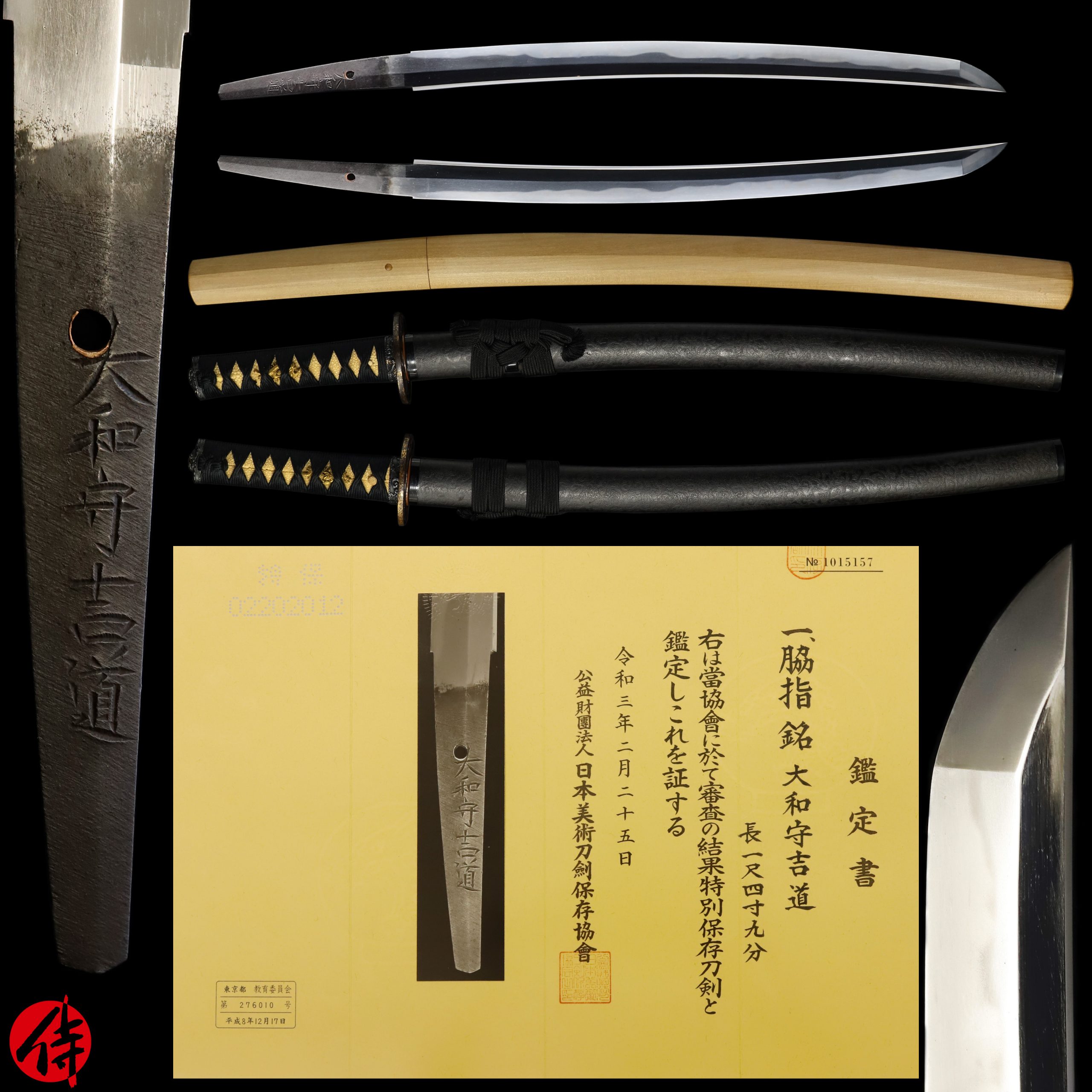
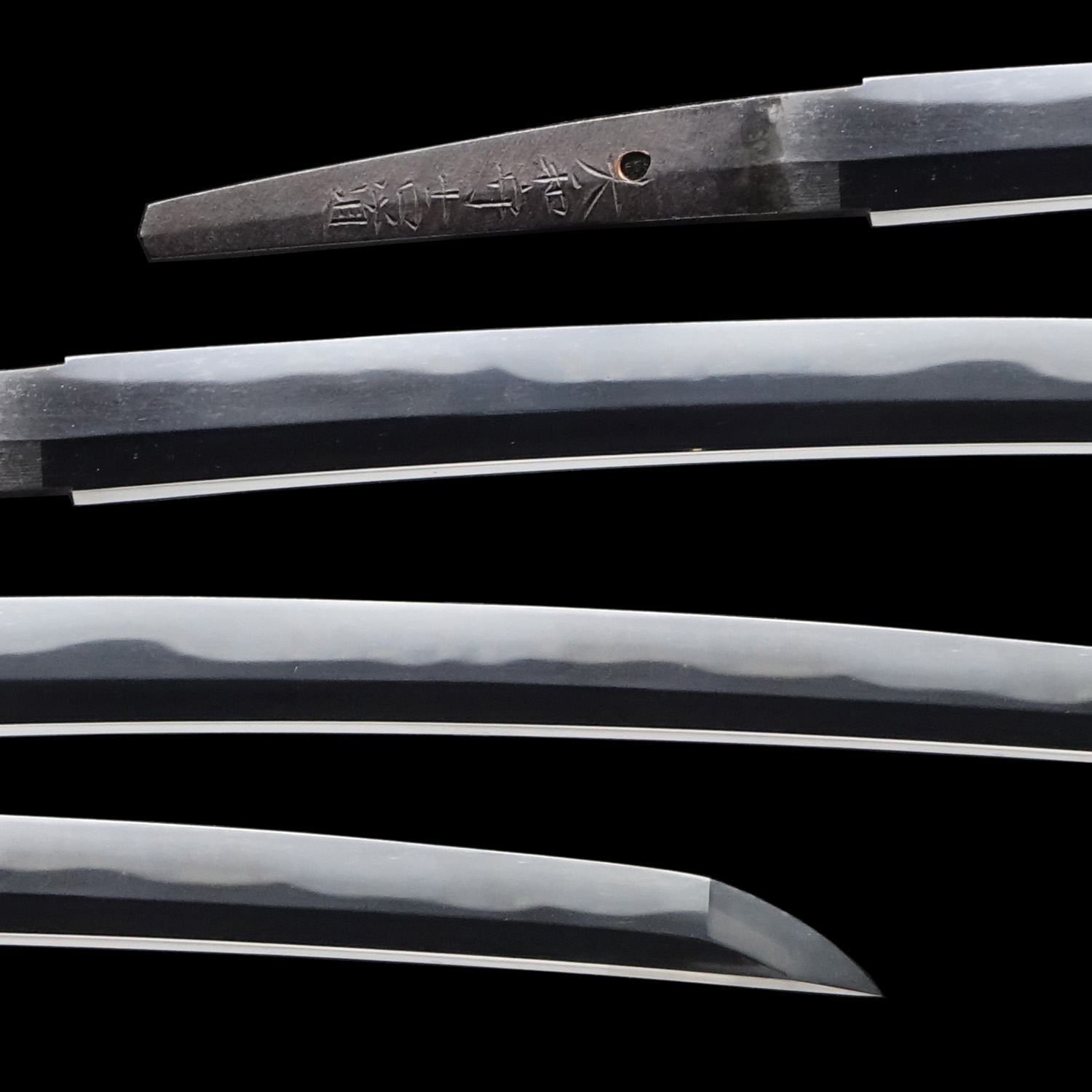
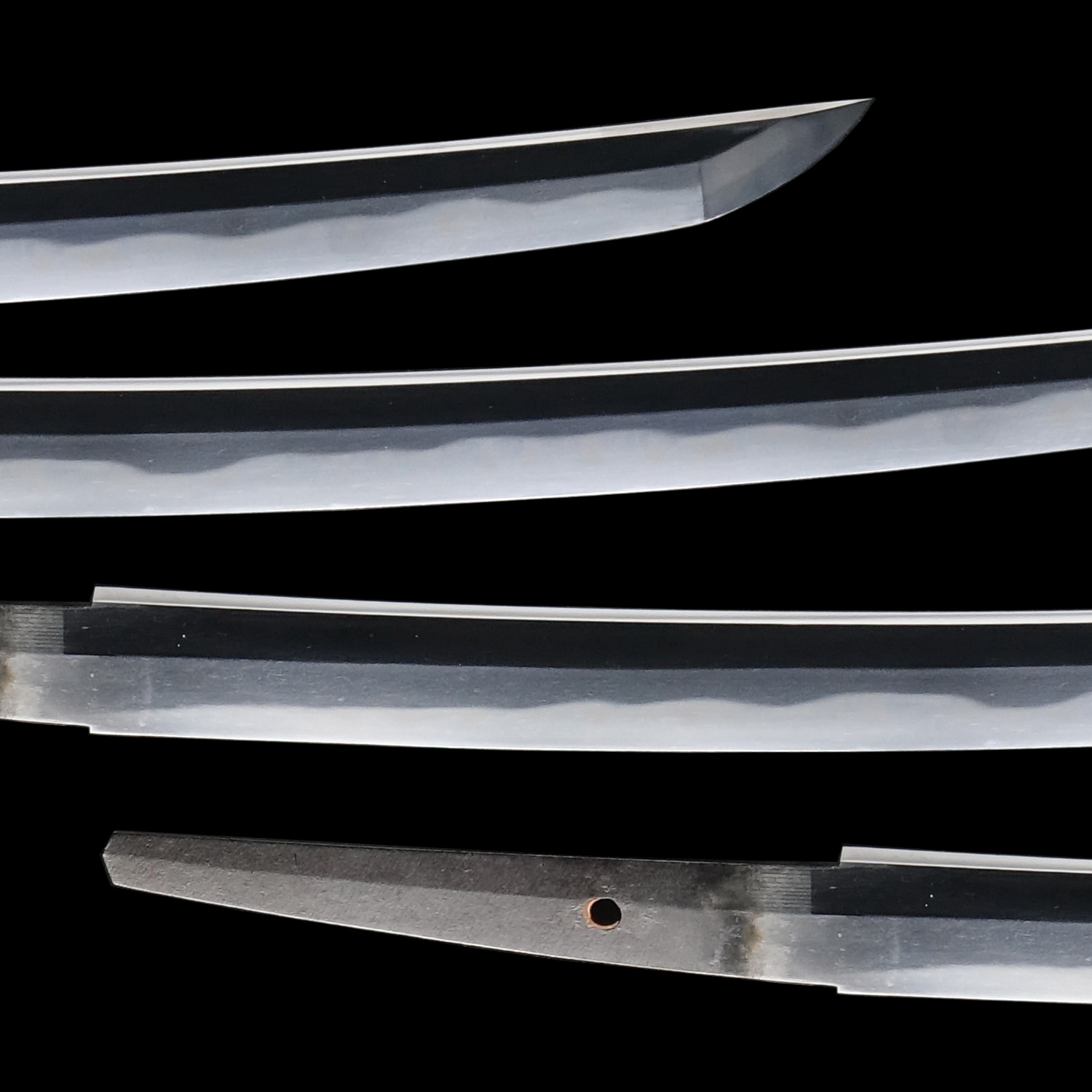
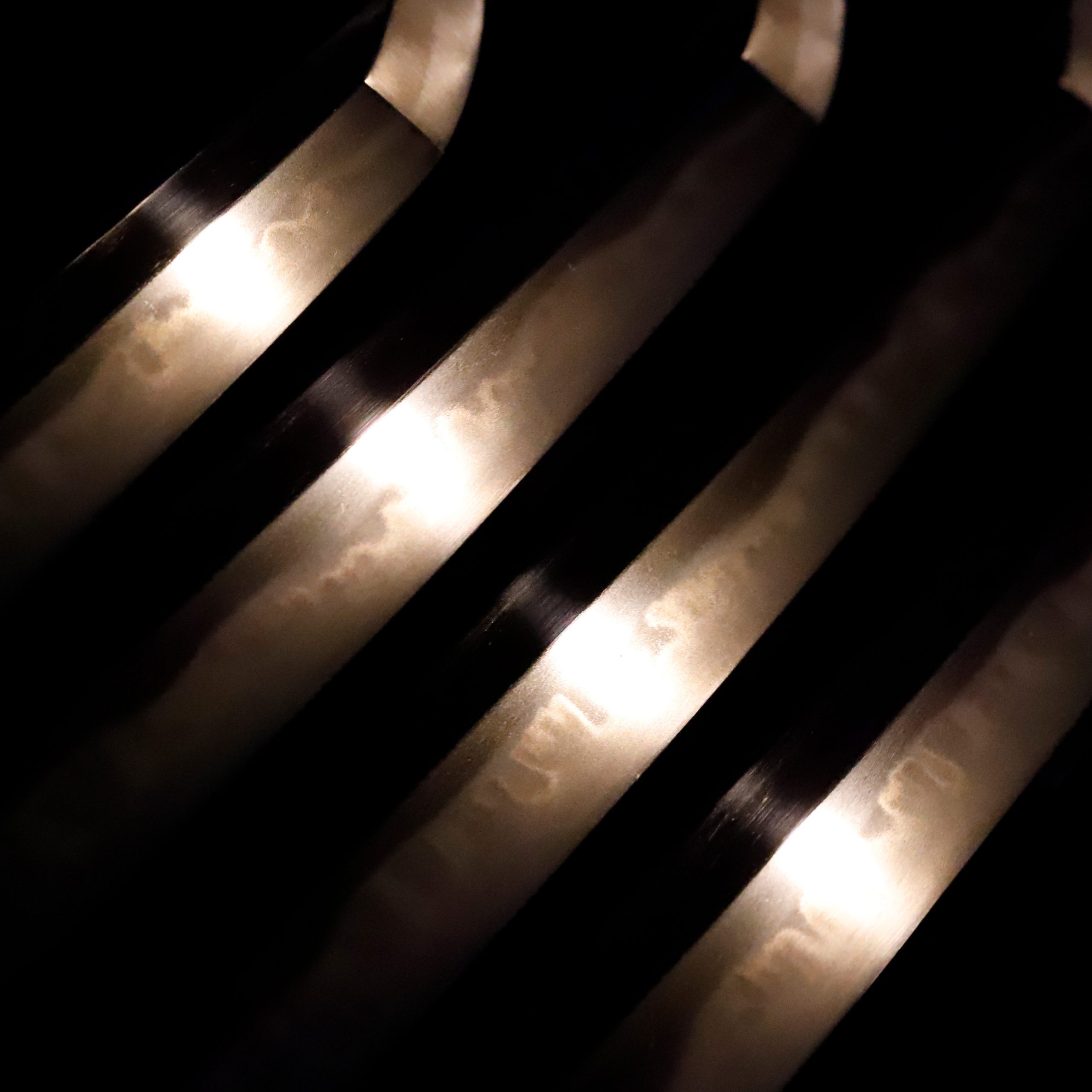
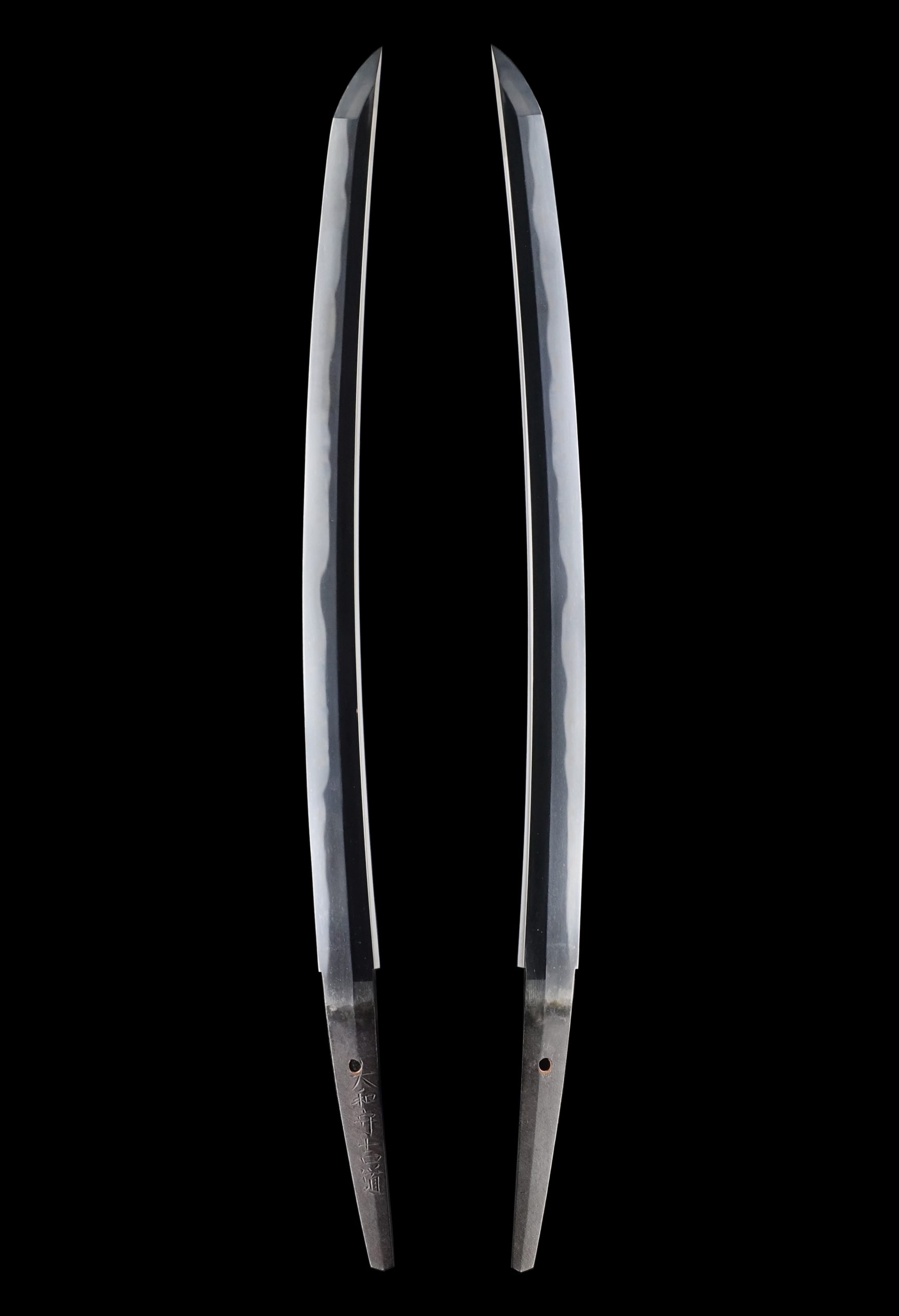
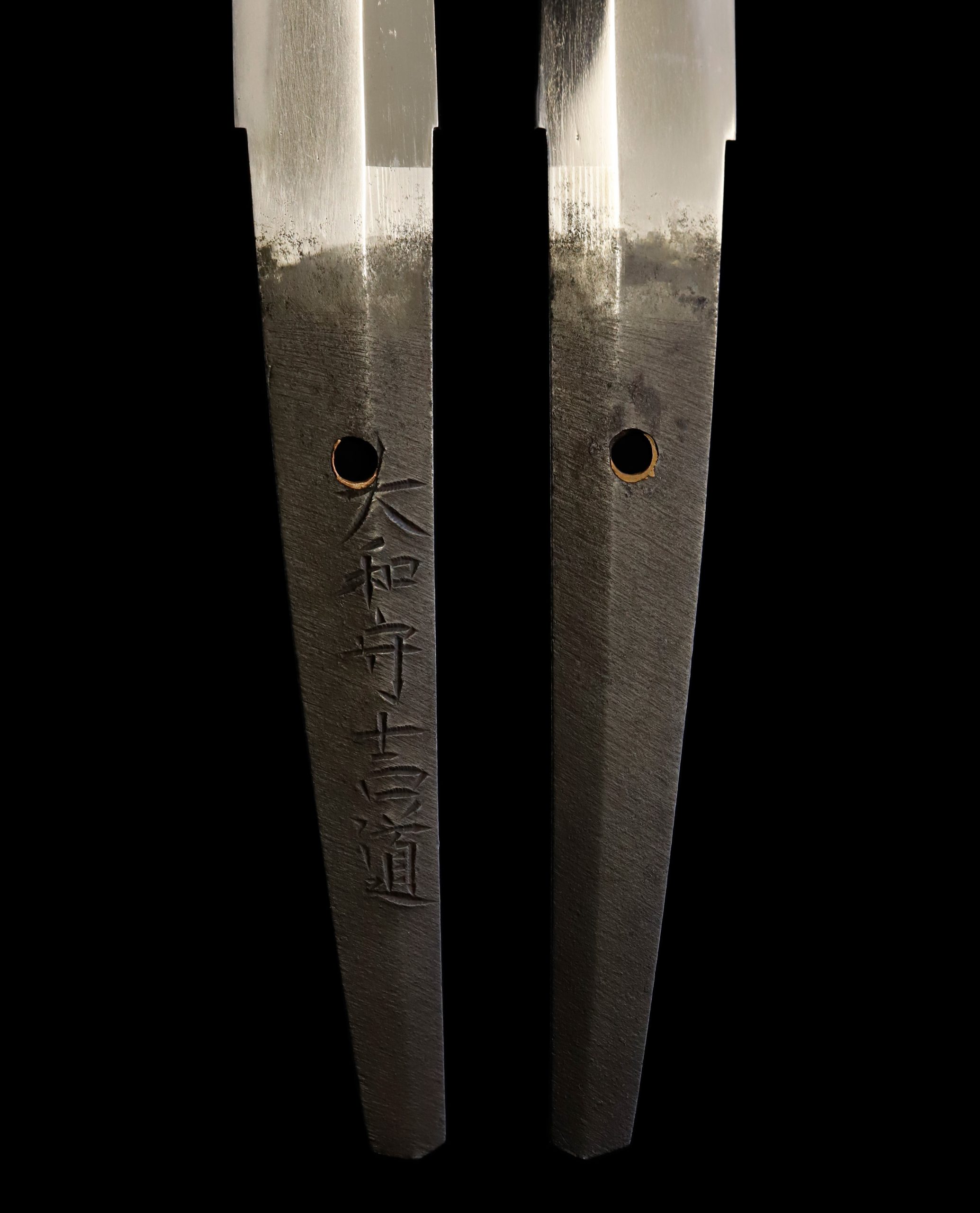
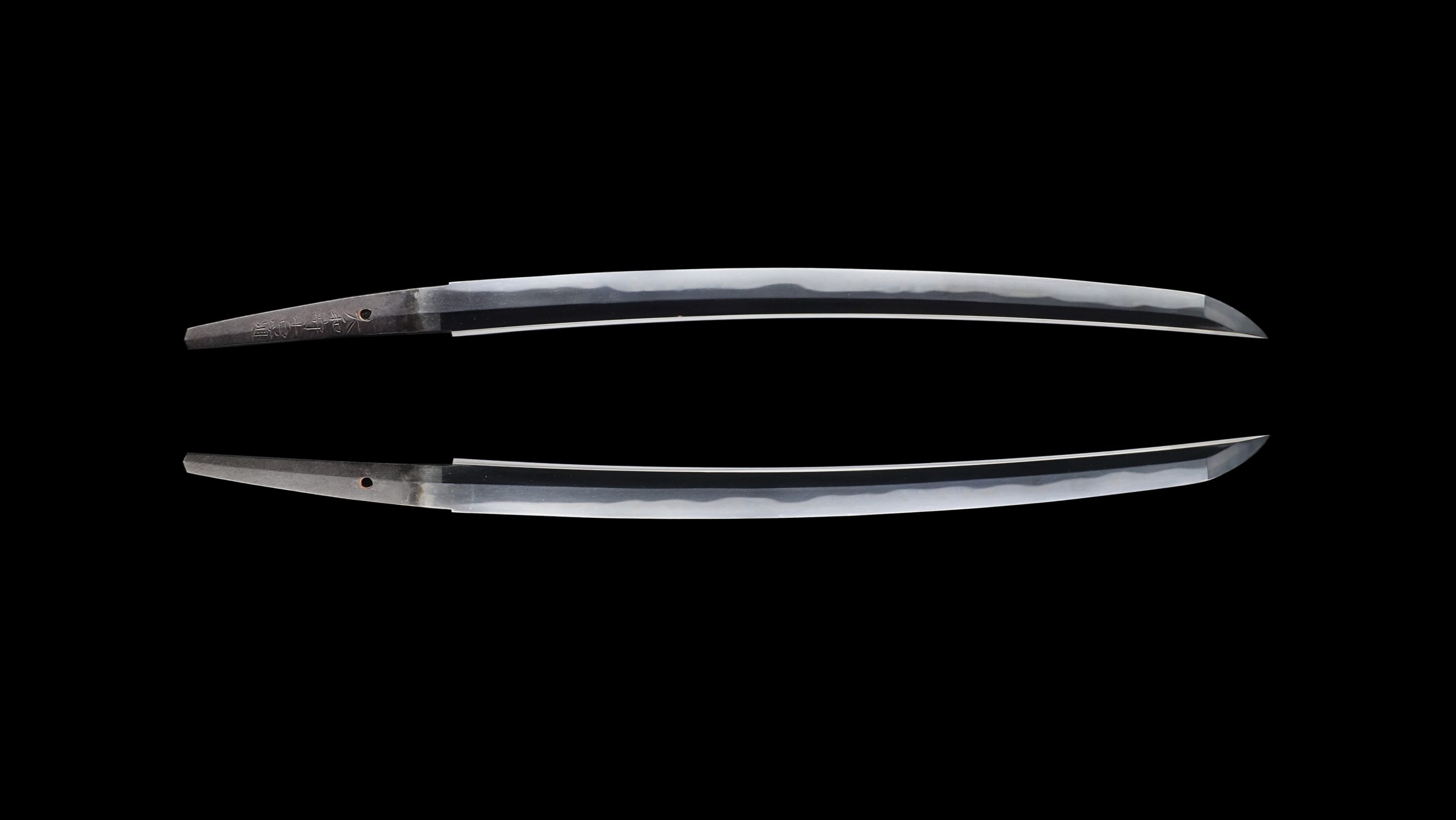
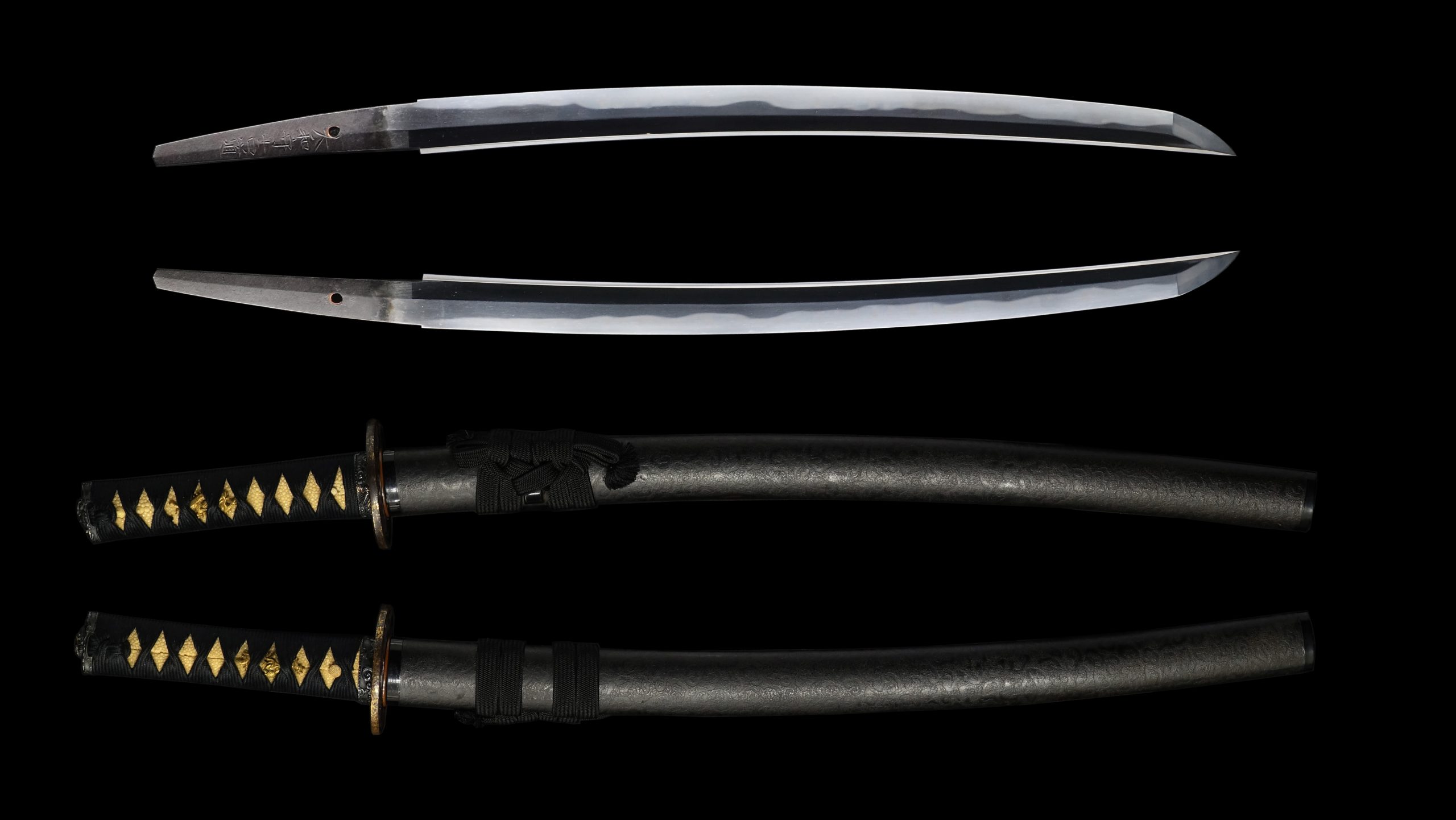
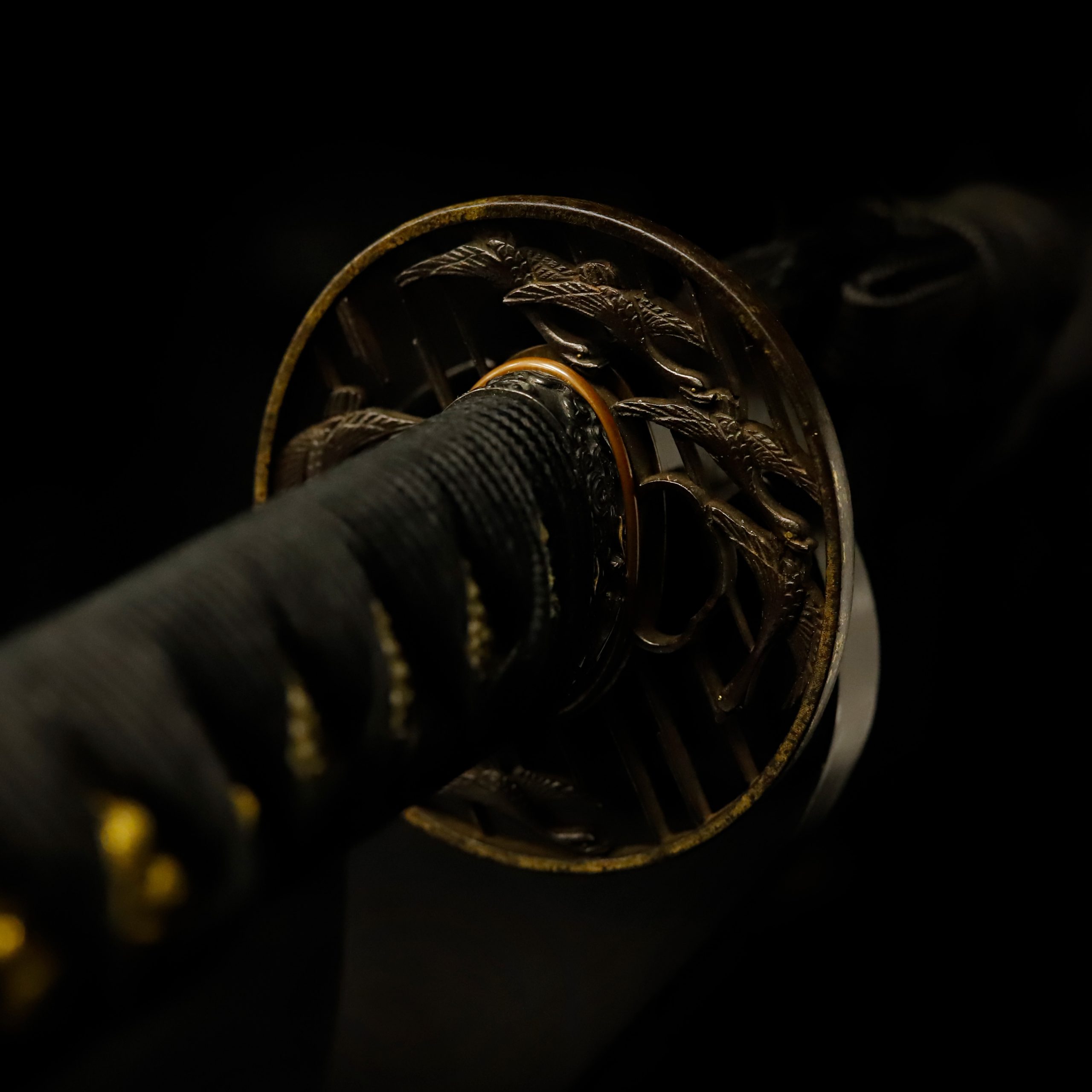
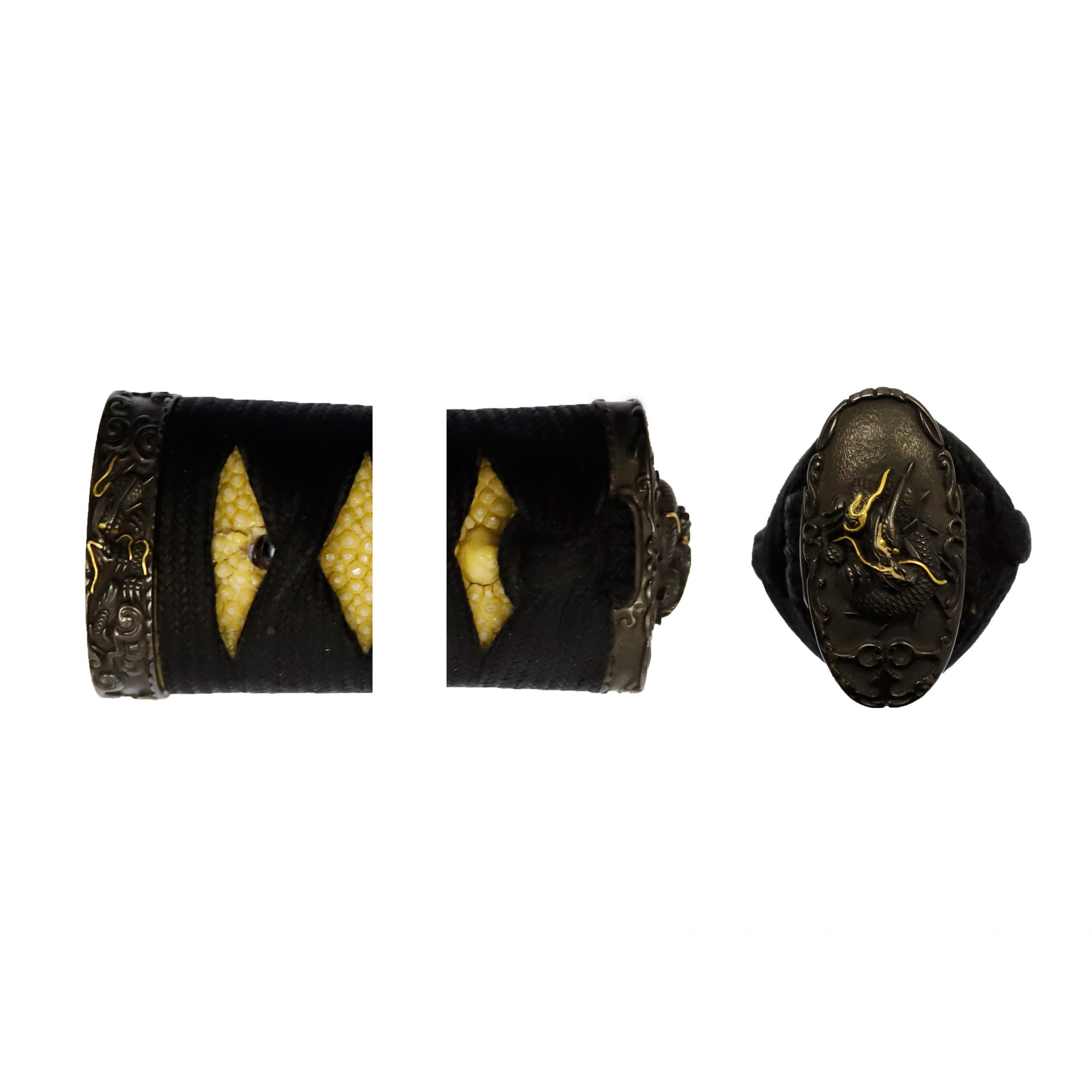
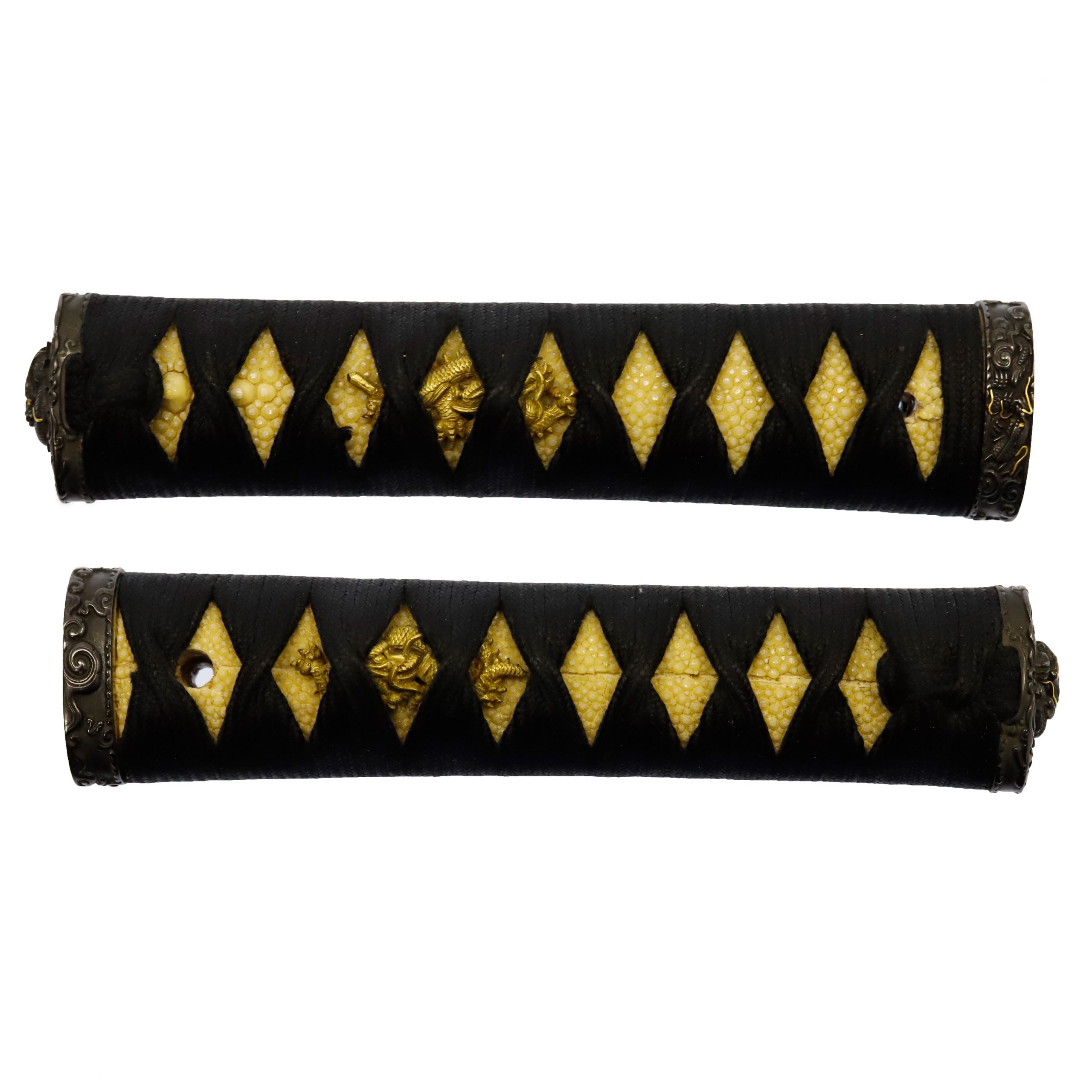
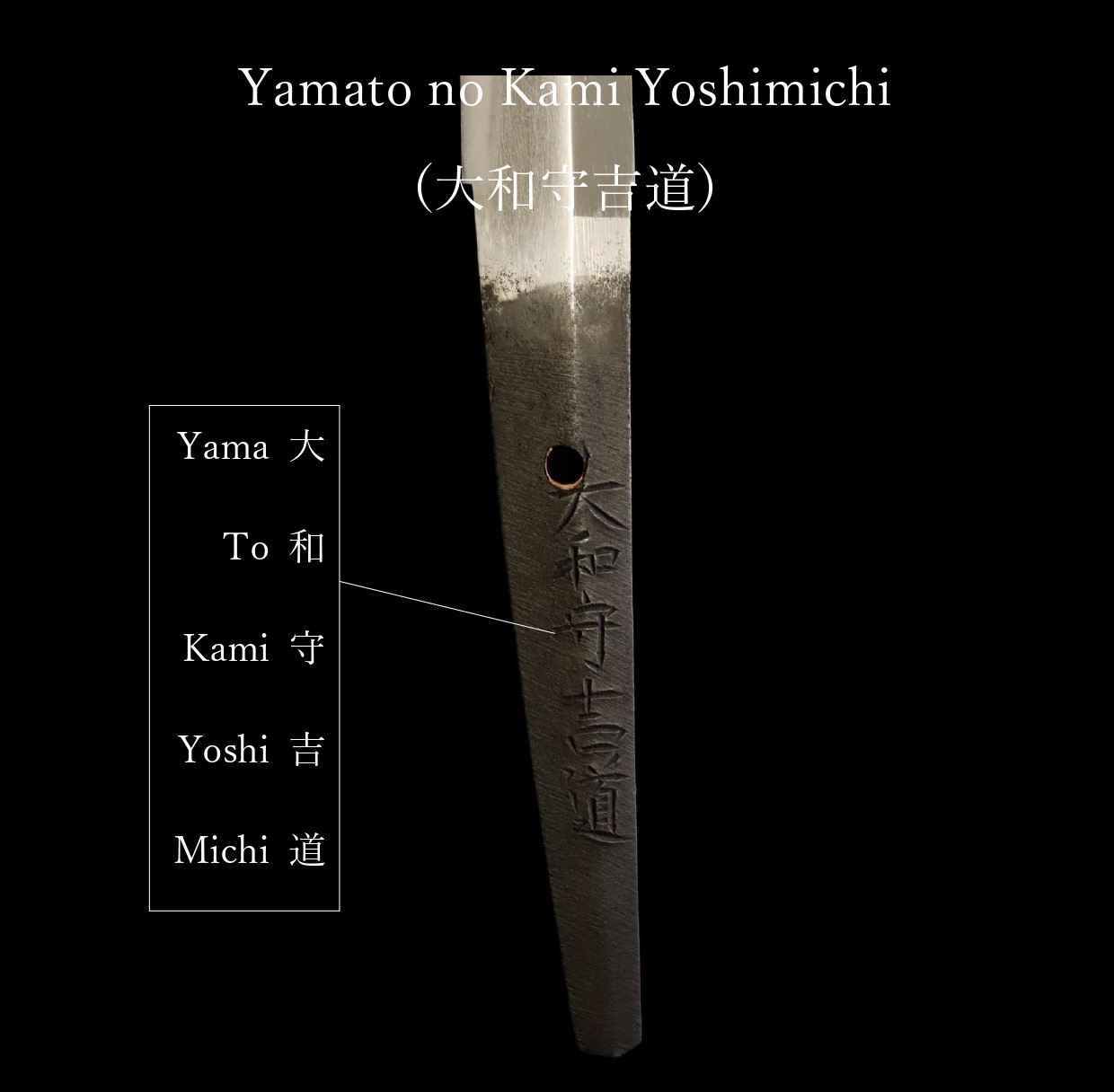
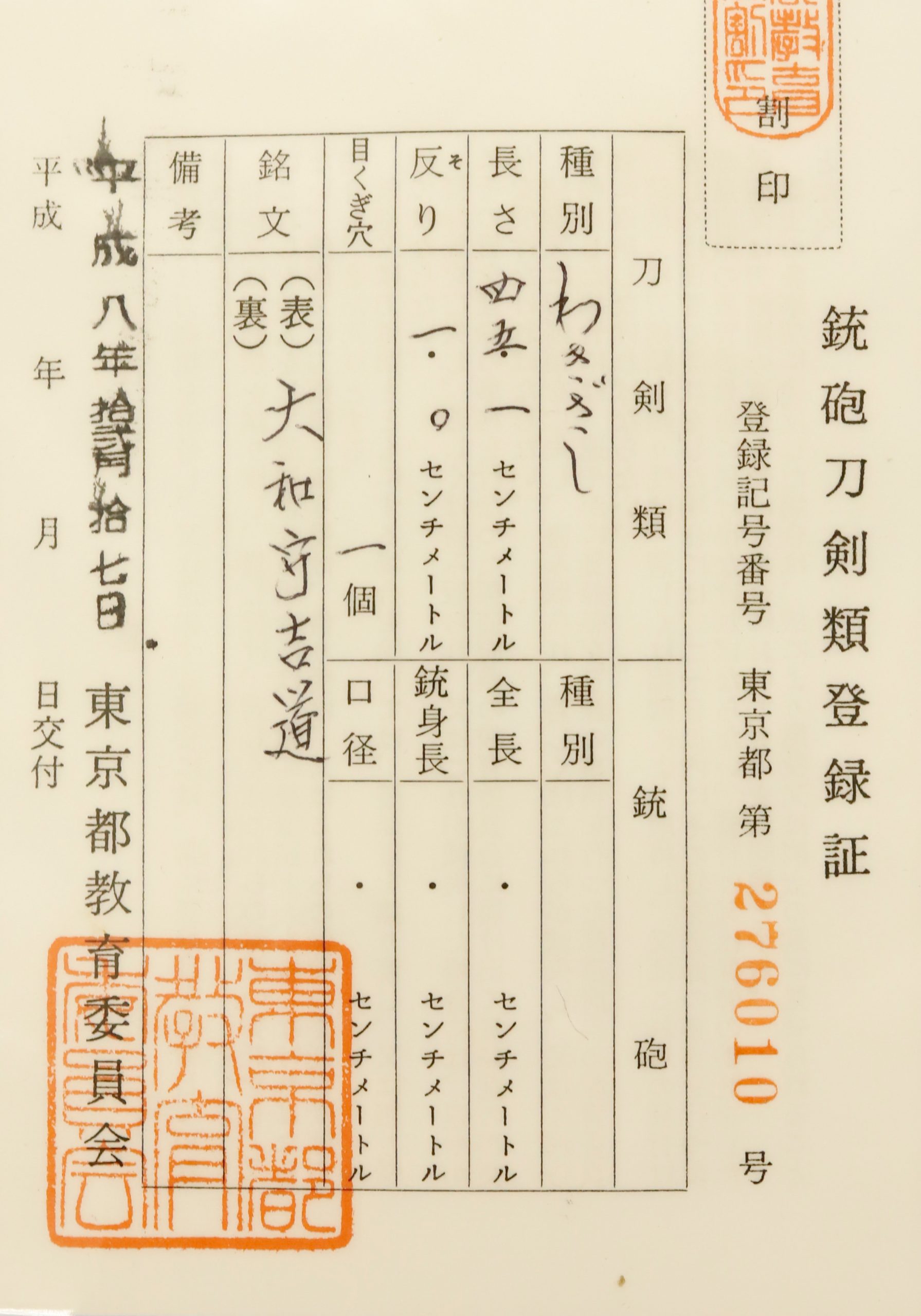
Shinto · Settsu · around 1652-1675
2 pieces on the market now
Where Yoshimichi stands among comparable artisans: across all of nihontō, and within tradition, era, and period. The tiers (Foremost · Leading · Major · Notable) weigh official designations from the NBTHK and Japan's Agency for Cultural Affairs, together with historical honors of lasting repute such as the Sansaku and Meibutsu-chō.
Select a lens to see how it's measured.
Shinto · Yamashiro
59 pieces on the market now
The Mishina school (三品), one of the two dominant smithing groups of early Edo Kyoto beside the Horikawa, grew from the late-Mino workshop of Kanemichi of Seki, whose dated blades run through the Tenbun, Eiroku, and Tenshō eras. During the closing decades of the sixteenth century Kanemichi came up to the capital with his four sons and settled at Nishinotōin Ebisugawa, where the eldest, Iga no Kami Kinmichi, is recorded as having greatly raised the name of the line. The brothers, Kinmichi together with Izumi no Kami Rai Kinmichi, Tanba no Kami Yoshimichi, and Etchū no Kami Masatoshi, became known collectively as the Sanpin (三品) makers, and the published sources count Kinmichi head of the Kyō go-kaji, the five Kyoto smiths. From the second generation the house held a hereditary right to recommend smiths to the court for their titles and added that by-line to its signatures. The name continued under the same appellation to the end of the Tokugawa period, throwing off branches that included the Tango no Kami line working at Ōsaka into the Genroku years, though the published record consistently holds the founding generation the most outstanding of the line. Beneath every branch lies a shared vocabulary carried up from Mino-Seki. The jigane is the constant: an itame mixed with mokume that flows into nagare-hada and tends toward masame near the mune, the grain standing, with thick fine ji-nie and frequent chikei. Over it the Mino-derived gunome and togariba are refined toward a Kyoto manner, the nie strong and at times coarse, gathering unevenly, kinsuji and vigorous striped sunagashi running throughout. Two tells bind the house. The first is the Mishina bōshi, a notare or midare run-in pointed at the tip and swept with vigorous hakikake, the form Masatoshi shows at its clearest, described as if drawn from a picture. The second is sudareba, the bamboo-blind temper in which layered sunagashi and yubashiri stripe into parallel bands; Tanba no Kami Yoshimichi devised it, and the first-generation hand keeps it a free, semi-cursive disorder where his heirs would regularize it into a fixed lattice.
The lines diverge from that common ground. Kinmichi and his younger brother Masatoshi both excelled in a Shizu manner, the large midare of Mino grafted onto Sōshū nie, with Masatoshi the most versatile, ranging across Shizu, Mino sanbon-sugi, Yamato suguha, and Sōshū hitatsura. The later Ōsaka Tanba branch held to the sudareba alone, opening from a straight yakidashi, while the second Tango no Kami Kanemichi cast off the family chōji for a flamboyant tōran-style large gunome in alternating two-joined and three-joined groups, and a deep-nioi suguha read in the manner of Inoue Shinkai. To kantei Mishina is to read these two house marks first. The pointed, hakikake-swept bōshi and the striped sudareba, set over a standing itame that flows to masame, place a blade within the line before any signature is weighed; the sunagashi, far heavier than on a Bizen ji, is the very material from which the temper is built. Within the house the founding generation sets the standard. Fujishiro grades Kinmichi and Masatoshi Jō-jō saku, the Ōsaka Tanba shodai Jō-saku, and the second Tango no Kami Chū-jō saku, the sources judging the later Kyoto and Ōsaka generations markedly inferior to the founders as the manner thinned toward a single uniform pattern. Provenance on record runs through samurai and collector hands rather than great museums: a Kinmichi katana among the cherished swords of Tani Tateki, a Yoshimichi katana made for Naitō Kuroemon and another now in the Kyoto National Museum, Masatoshi blades passing through Oda Urakusai and the Imperial household, and a second Tango no Kami katana descending from the Aoyama wardens of Ōsaka castle. The brothers' blades are signed and knowable, dated examples rare, so the manner of the mei joins the workmanship in placing them; for the Ōsaka and Kyoto branches the cut of the character 守 separates one hand from the next. Most designated work is held rather than traded, so a signed founding-generation Mishina blade comes to light only from time to time, and with it the temper in which one of the most recognizable hamon of the Shintō era was first being worked out. Learn more →
| Smith | Era | Designated |
|---|---|---|
| Kinmichi金道 | 1596-1615 | 25 |
| Yoshimichi吉道 | 1596-1615 | 36 |
| Masatoshi正俊 | 1596-1615 | 29 |
| Kanemichi兼道 | 1681-1704 | 5 |
| Eisen来栄泉 | 1673-1688 | 3 |
Kyōto: the revival workshop
The Shintō era was largely invented in Kyōto: Umetada Myōju’s workshop trained the movement, Horikawa Kunihiro raised a generation, and the Hon’ami appraisers, who held no forge, governed the meaning of famous blades.
A Hozon-certified blade judged to show notably superior workmanship and a better state of preservation. The bar is higher: re-tempered blades and most unsigned Muromachi/Edo works are excluded.
The NBTHK (Nihon Bijutsu Tōken Hozon Kyōkai, the Society for the Preservation of Japanese Art Swords) is a public-interest incorporated foundation founded in 1948 and supervised by Japan’s Agency for Cultural Affairs (Bunkachō); it is based at the Japanese Sword Museum in Tokyo. Its expert panels physically examine each submitted work (shinsa) and issue a certificate (kanteishō) ranking it by artistic and historical merit. NBTHK papers are the most widely recognized standard of authentication for Japanese swords and fittings.
NBTHK official siteReturns/exchanges limited to defects caused by shipping (except willful misconduct or gross negligence by the company); customers must contact within 72 hours of receiving the product.