Edo was the sword’s age of connoisseurship: the Hon’ami appraisers, the shogunal register of famous blades of 1719, and a thriving literature turned the sword into an object of study even as it ceased to be drawn in war.
 NihontoWatchNihontoWatch
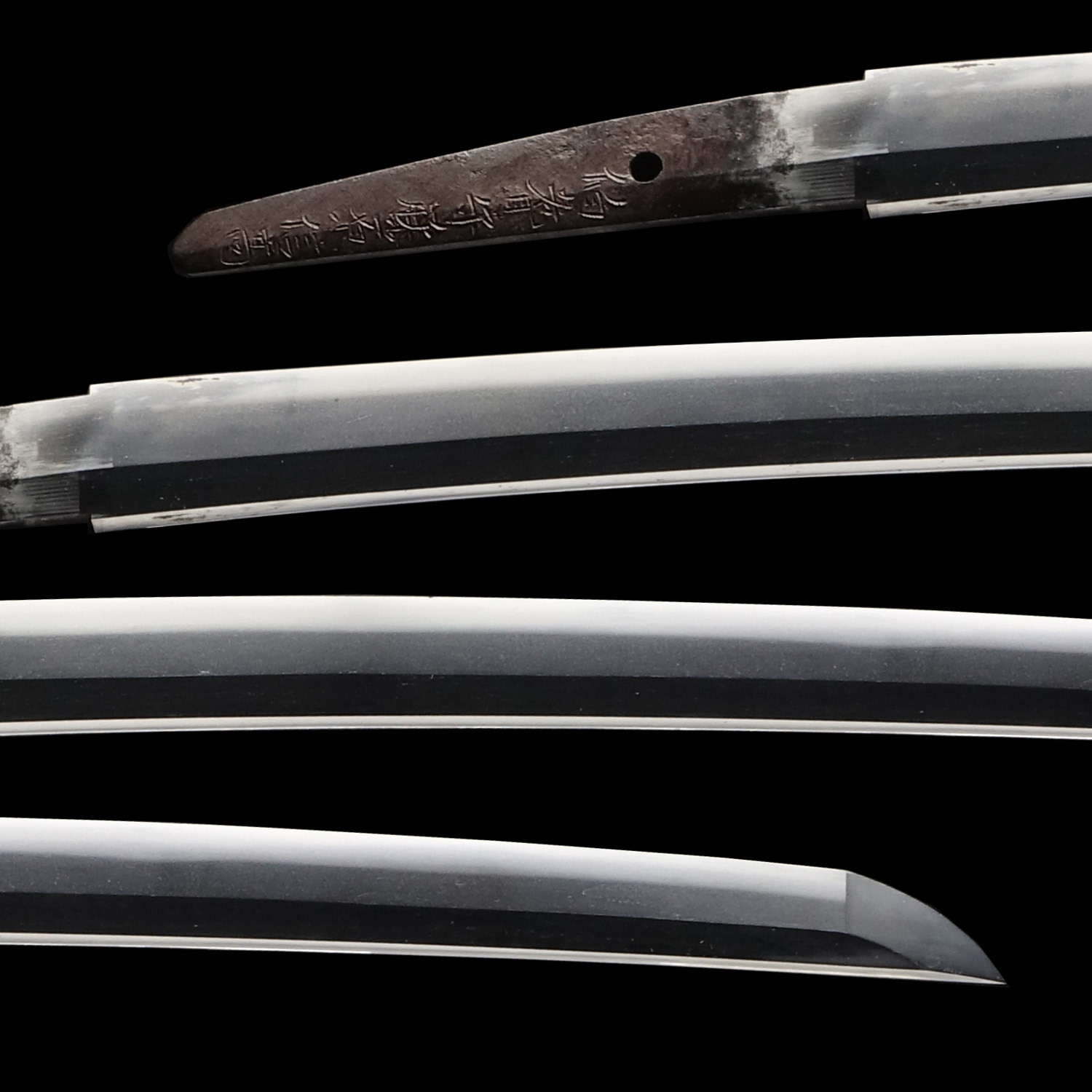
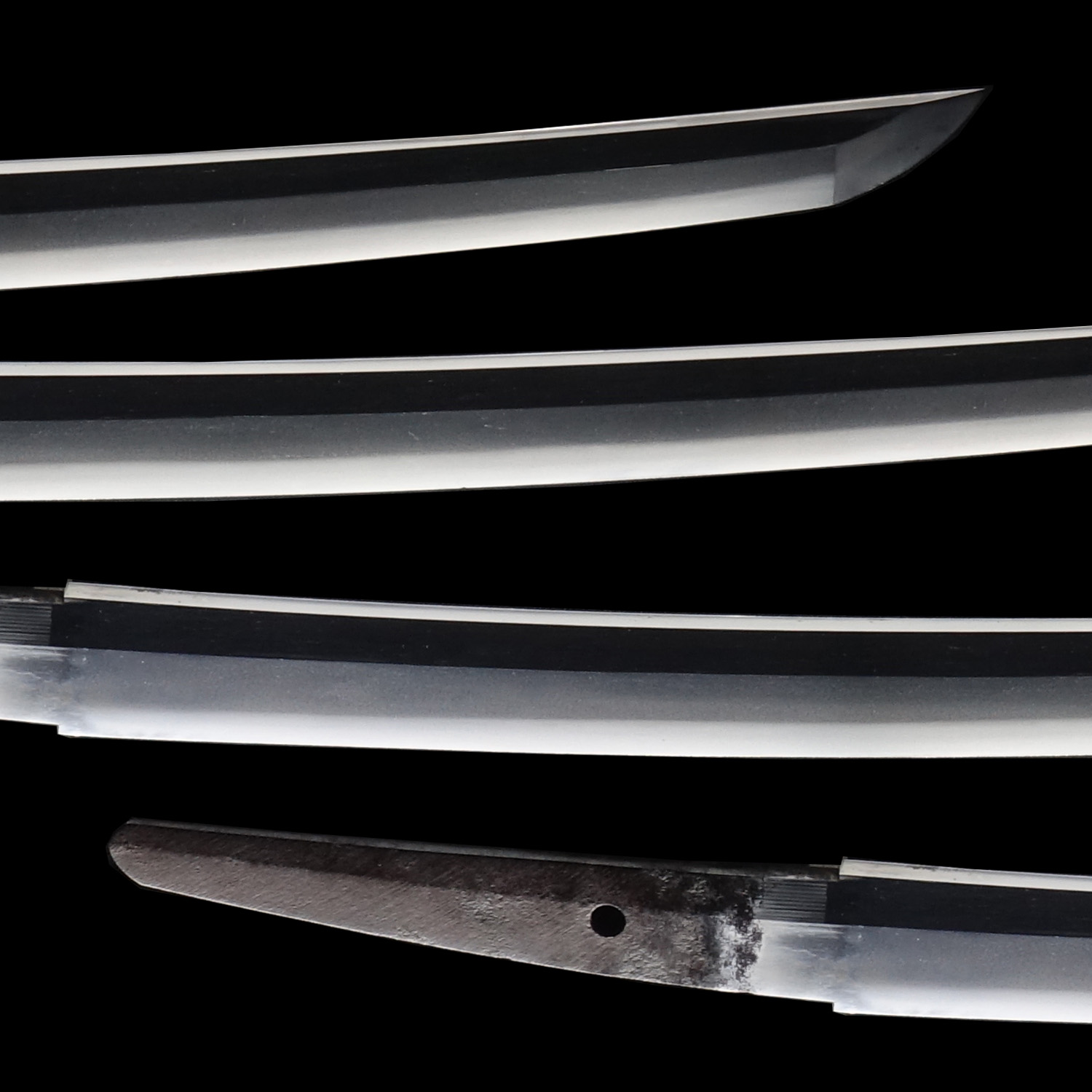
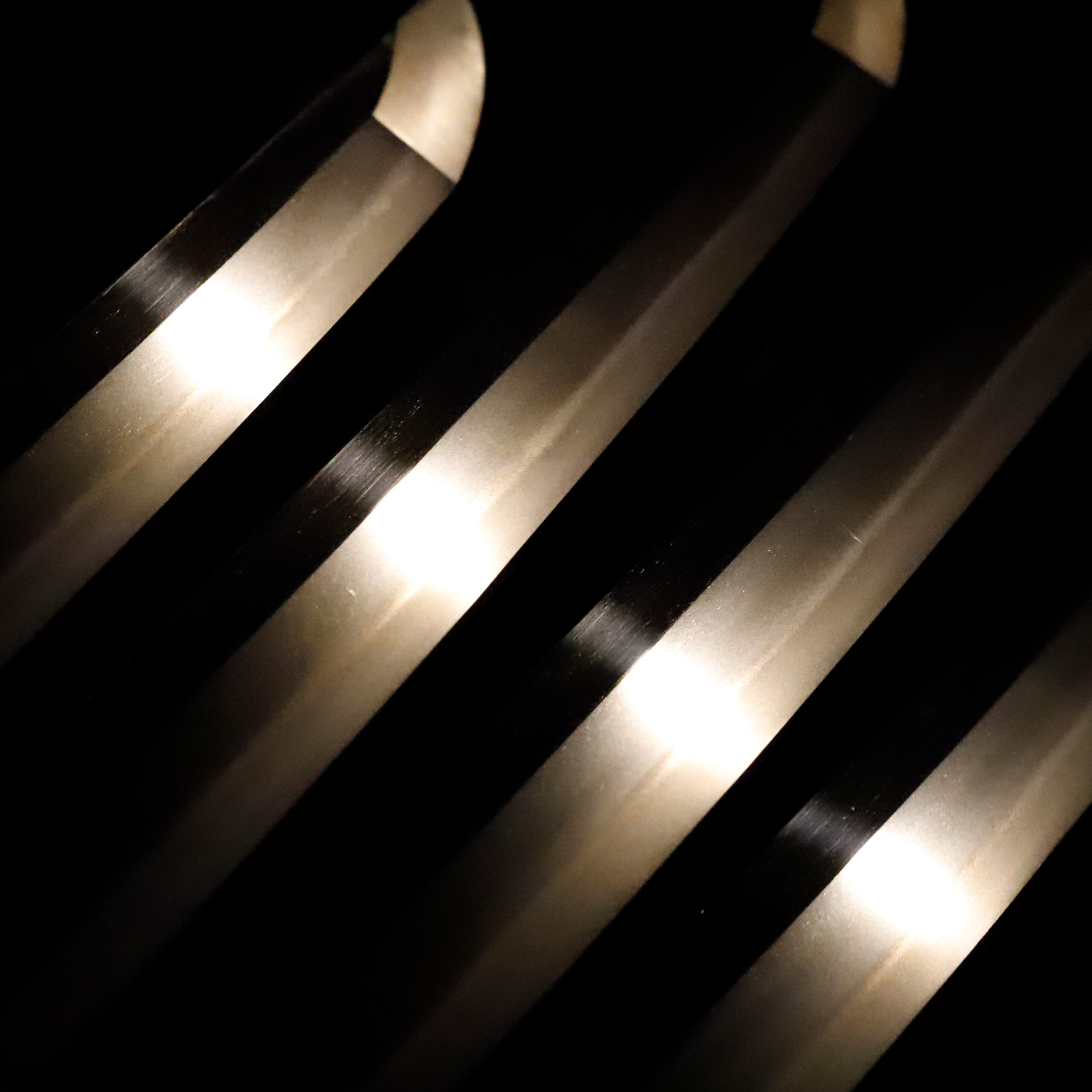
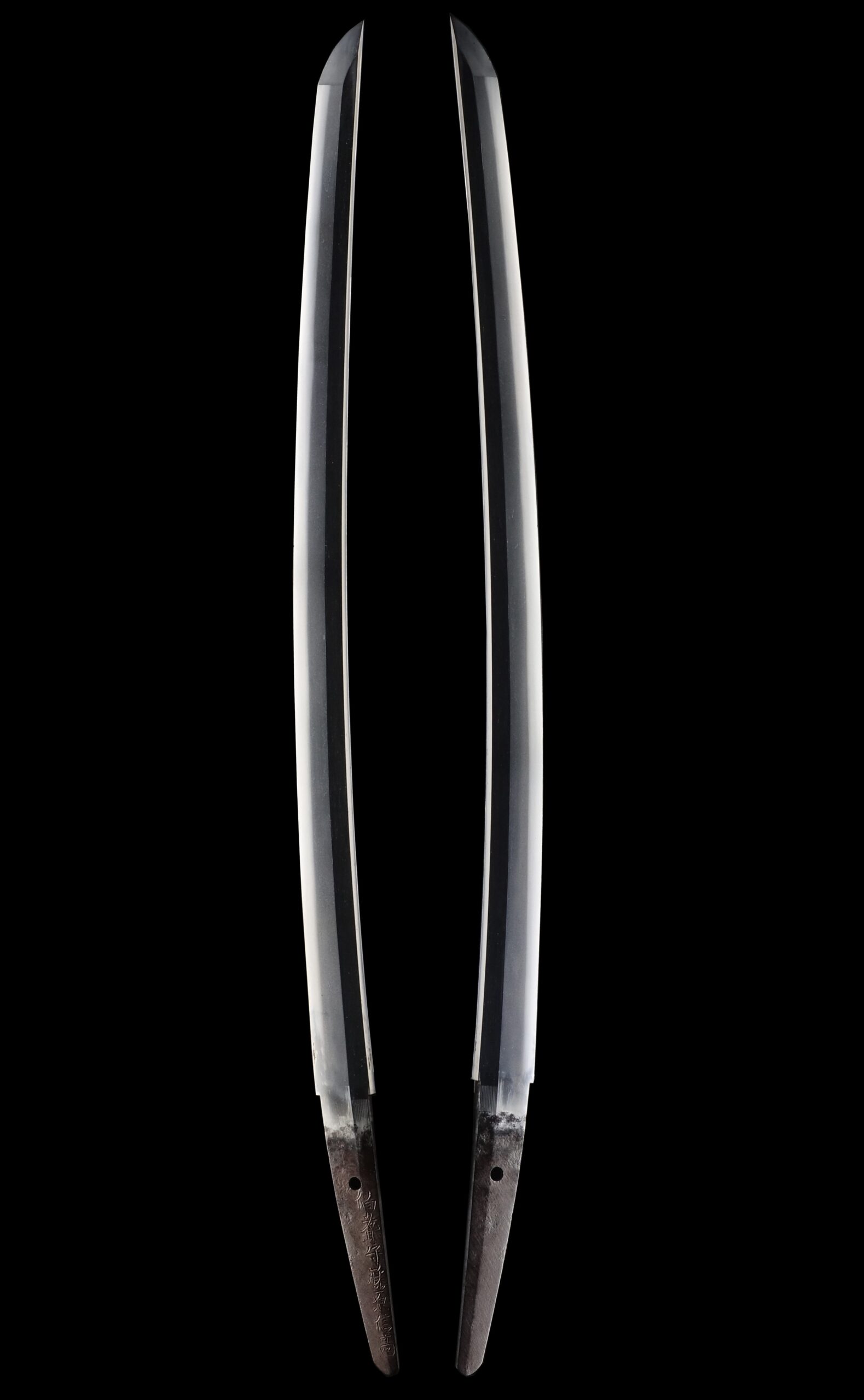
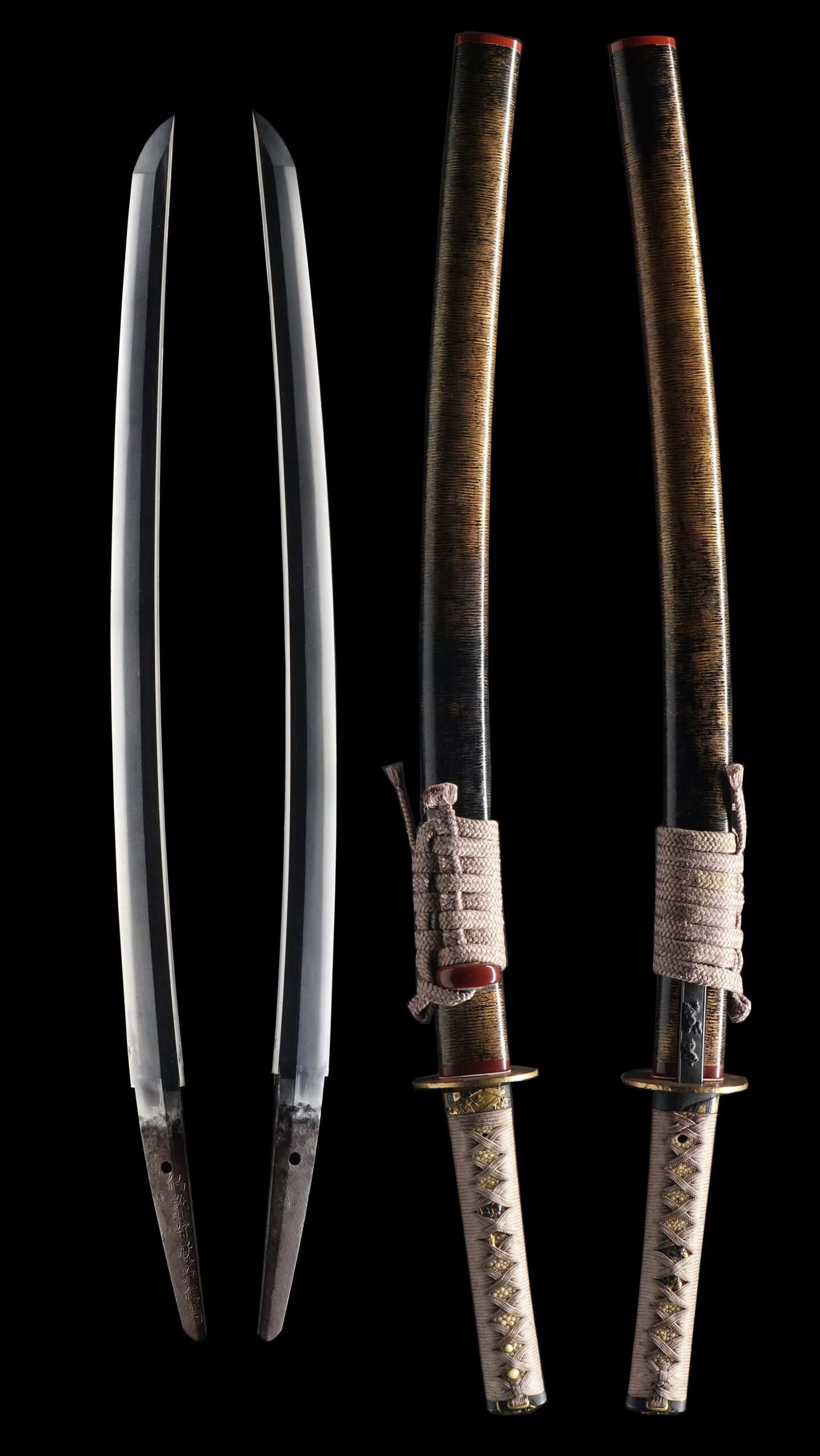
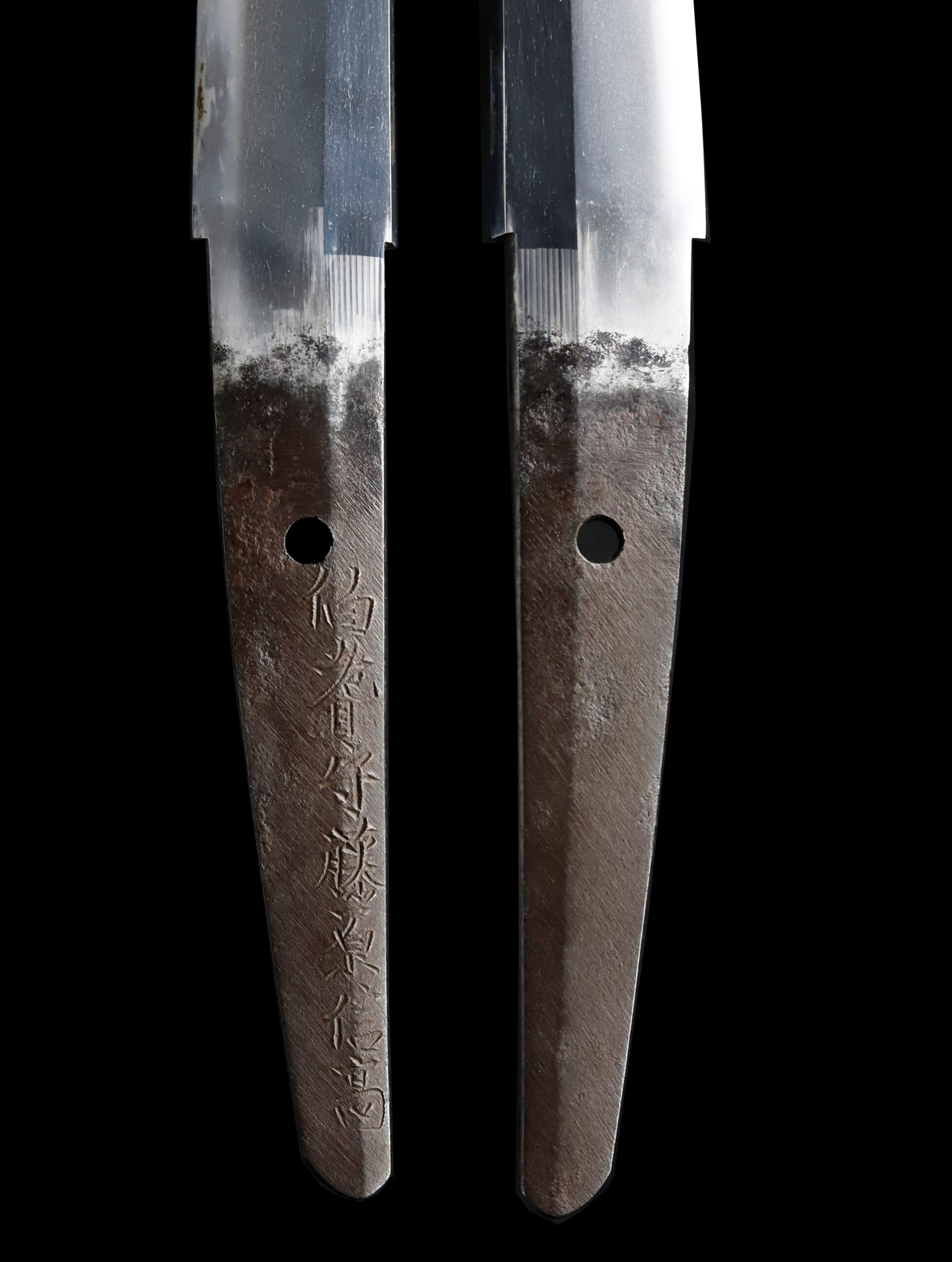
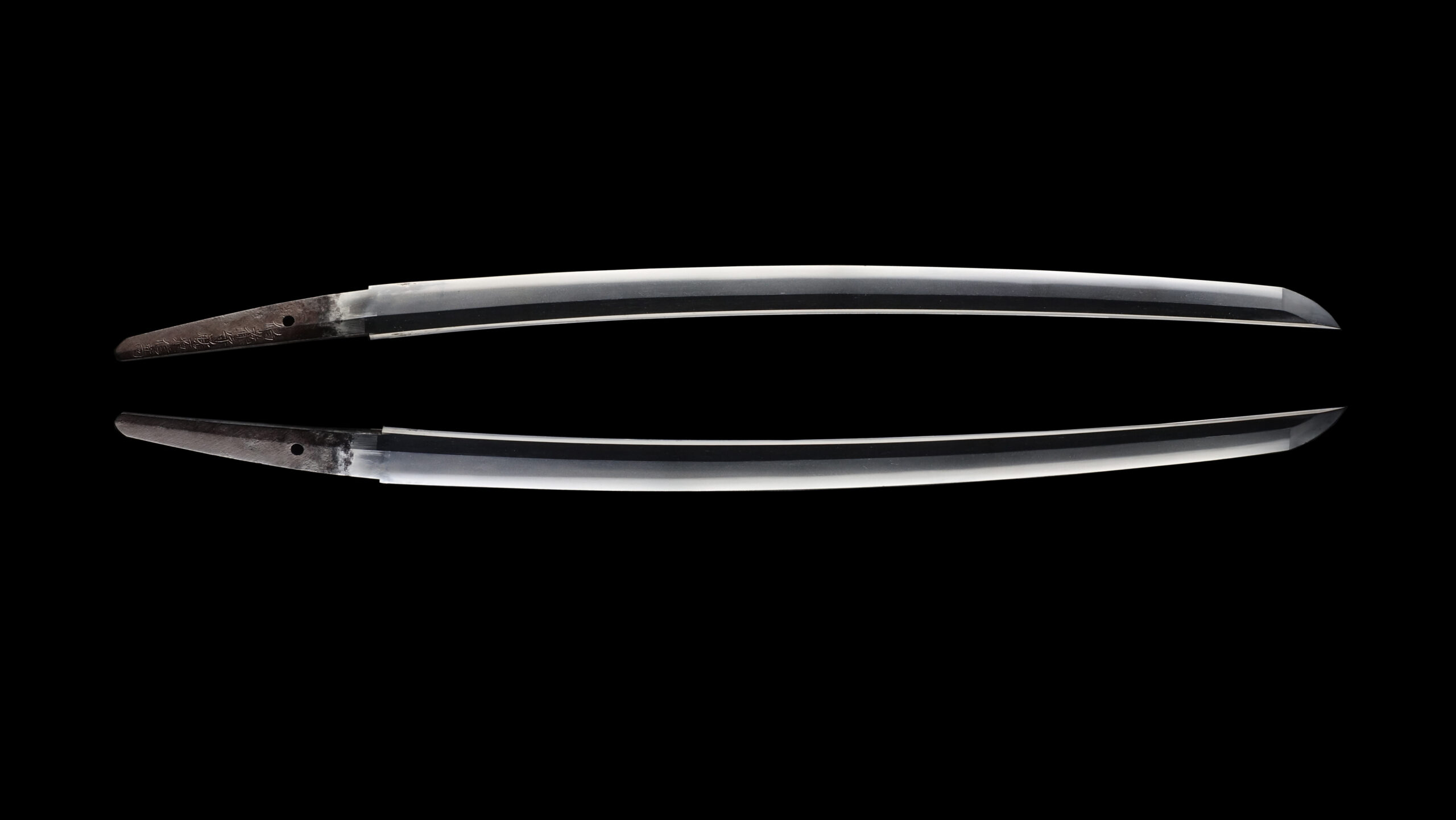
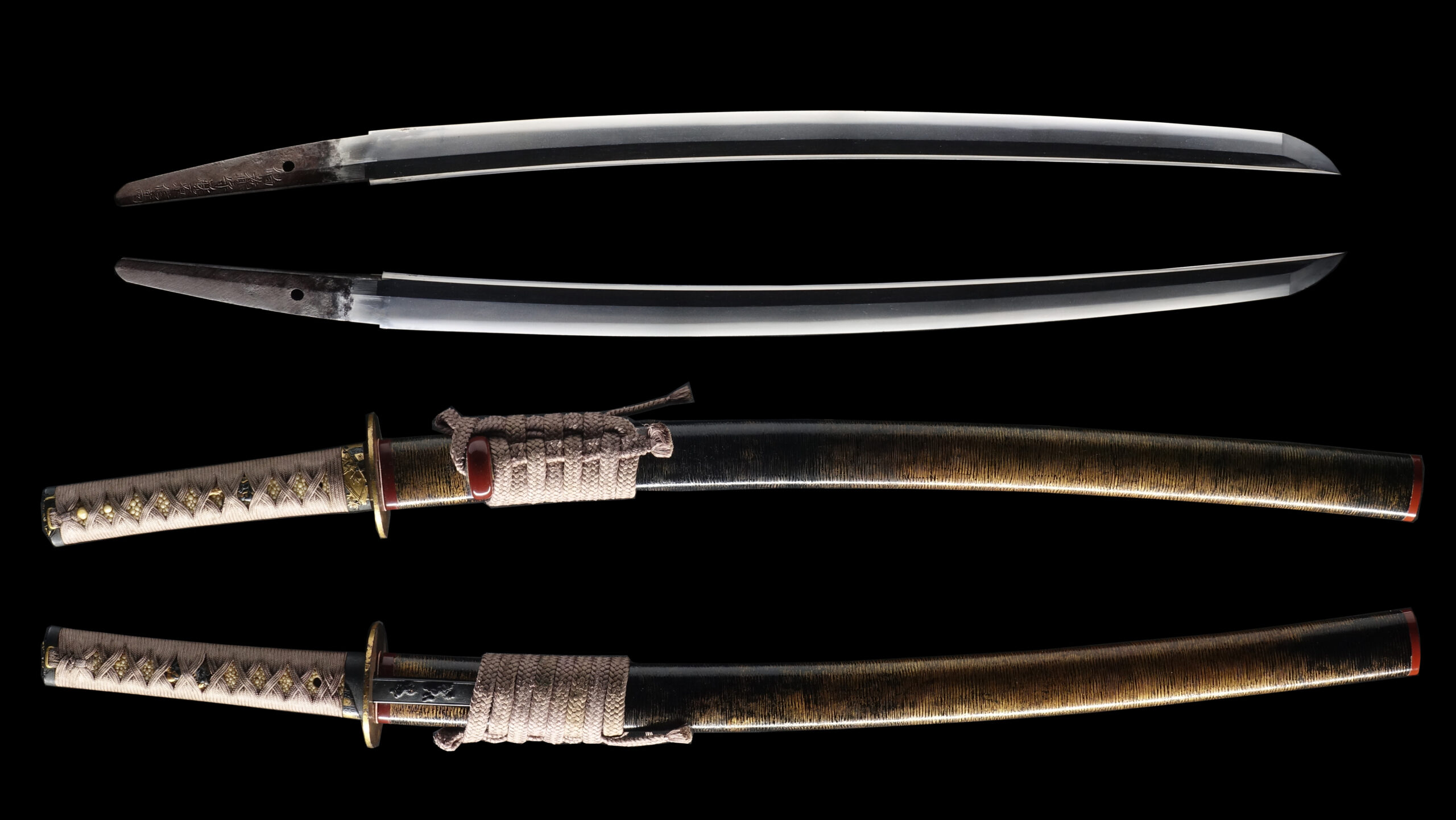
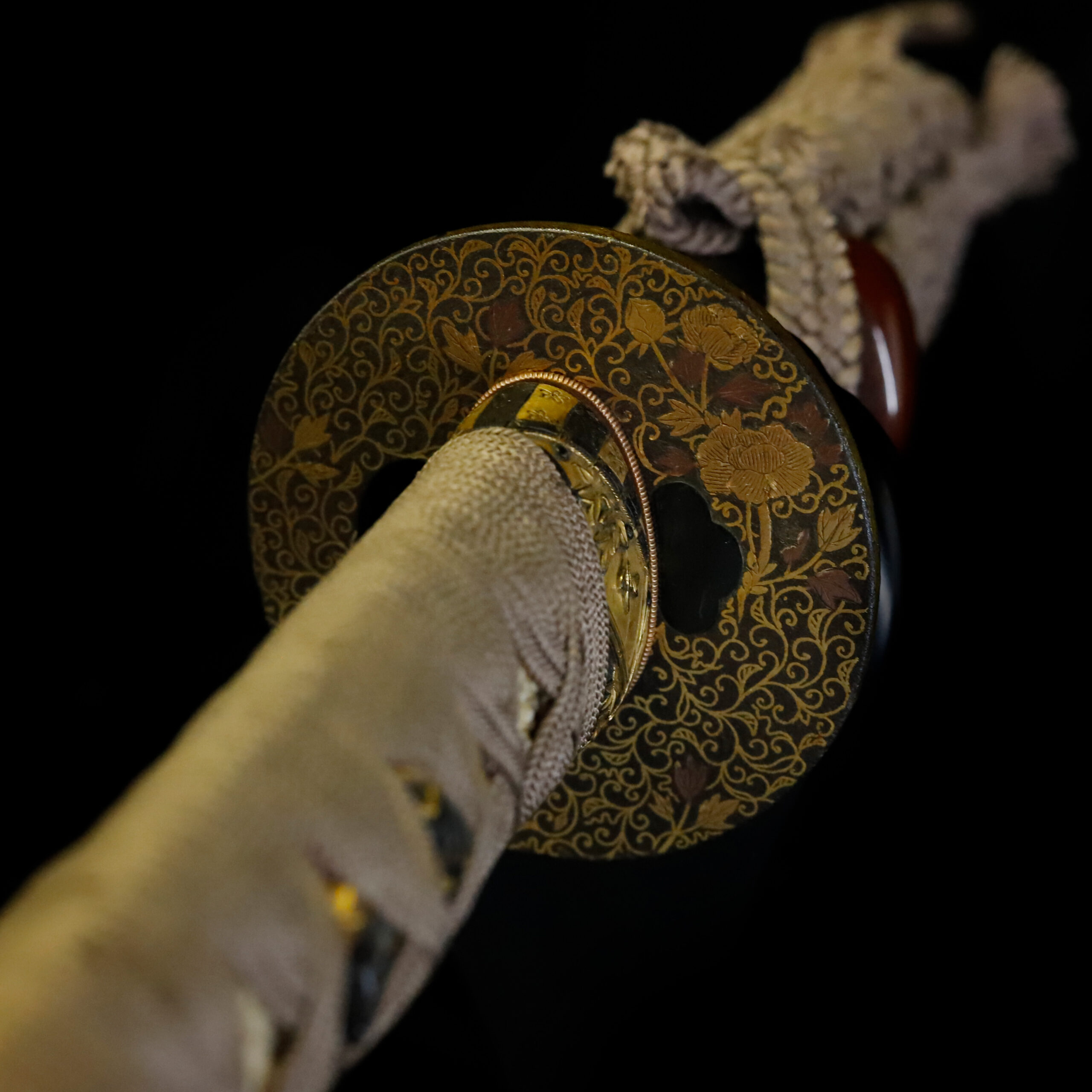
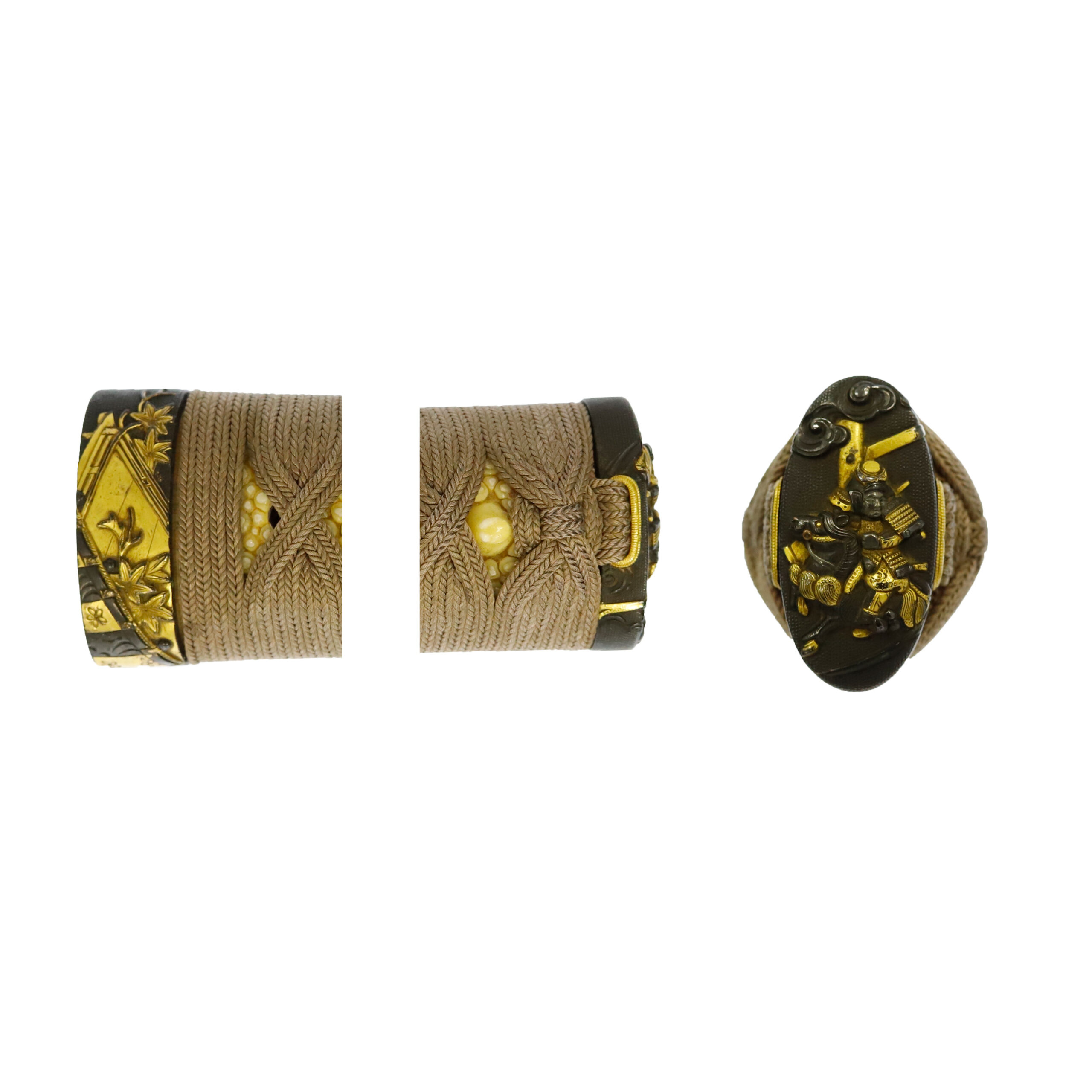
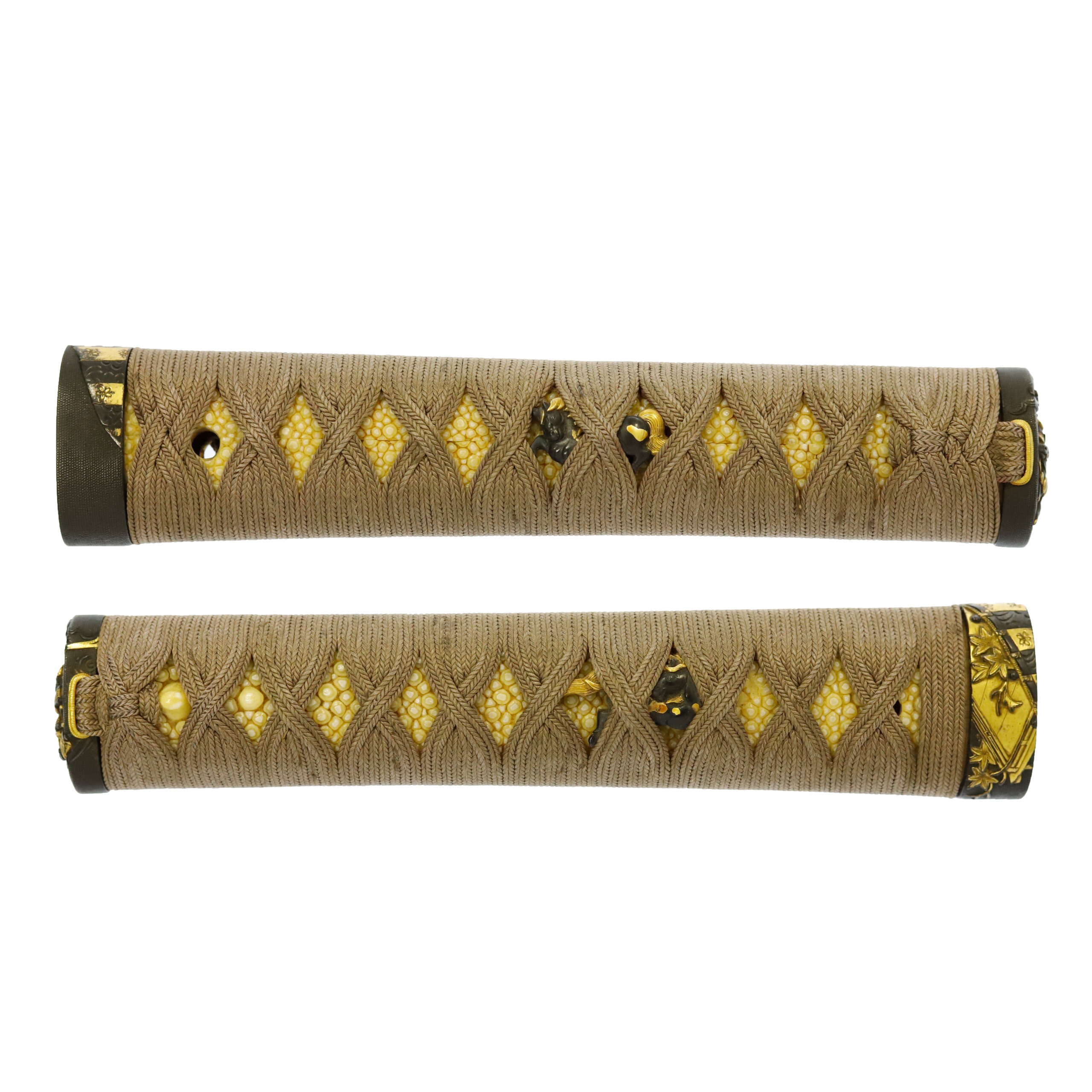
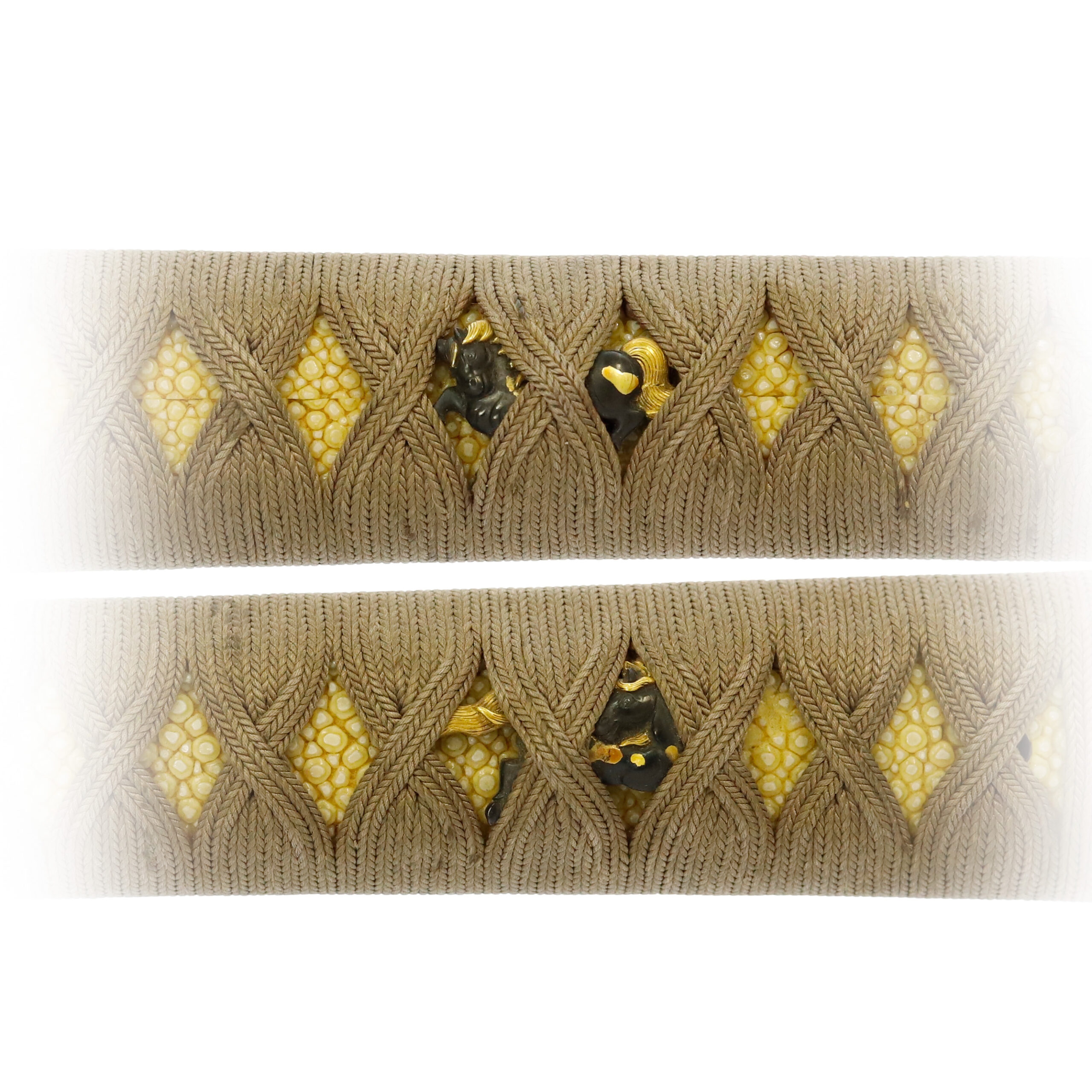
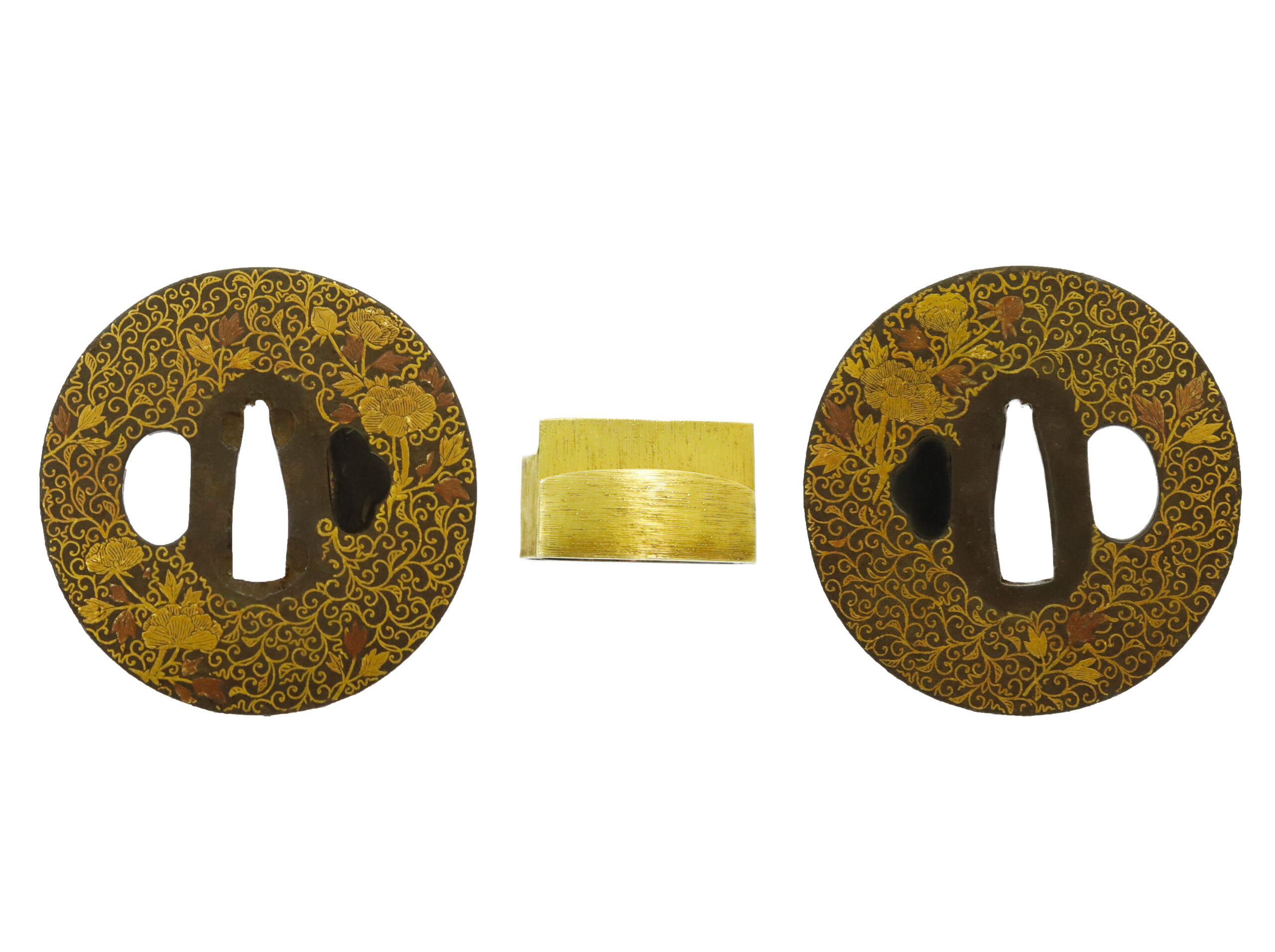
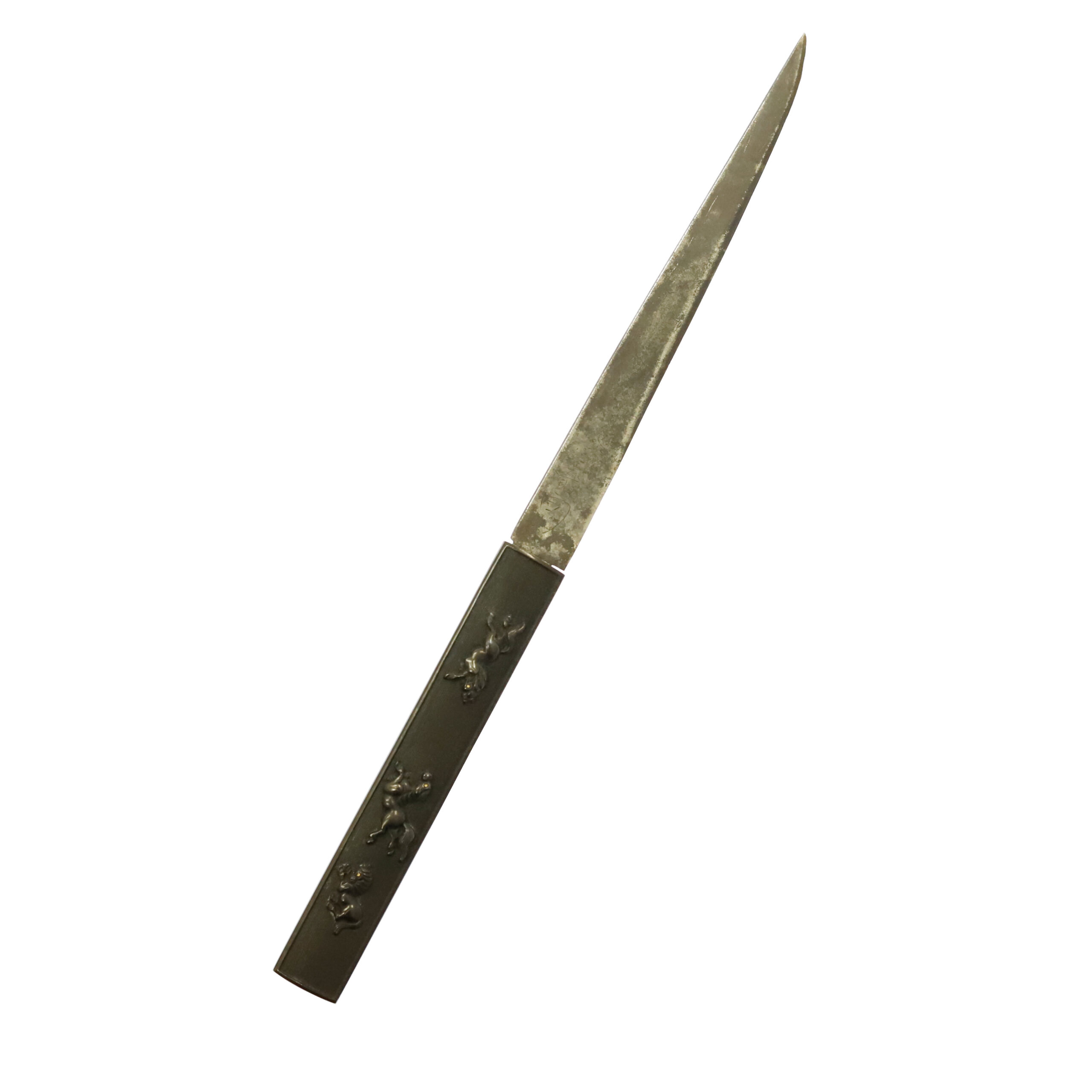
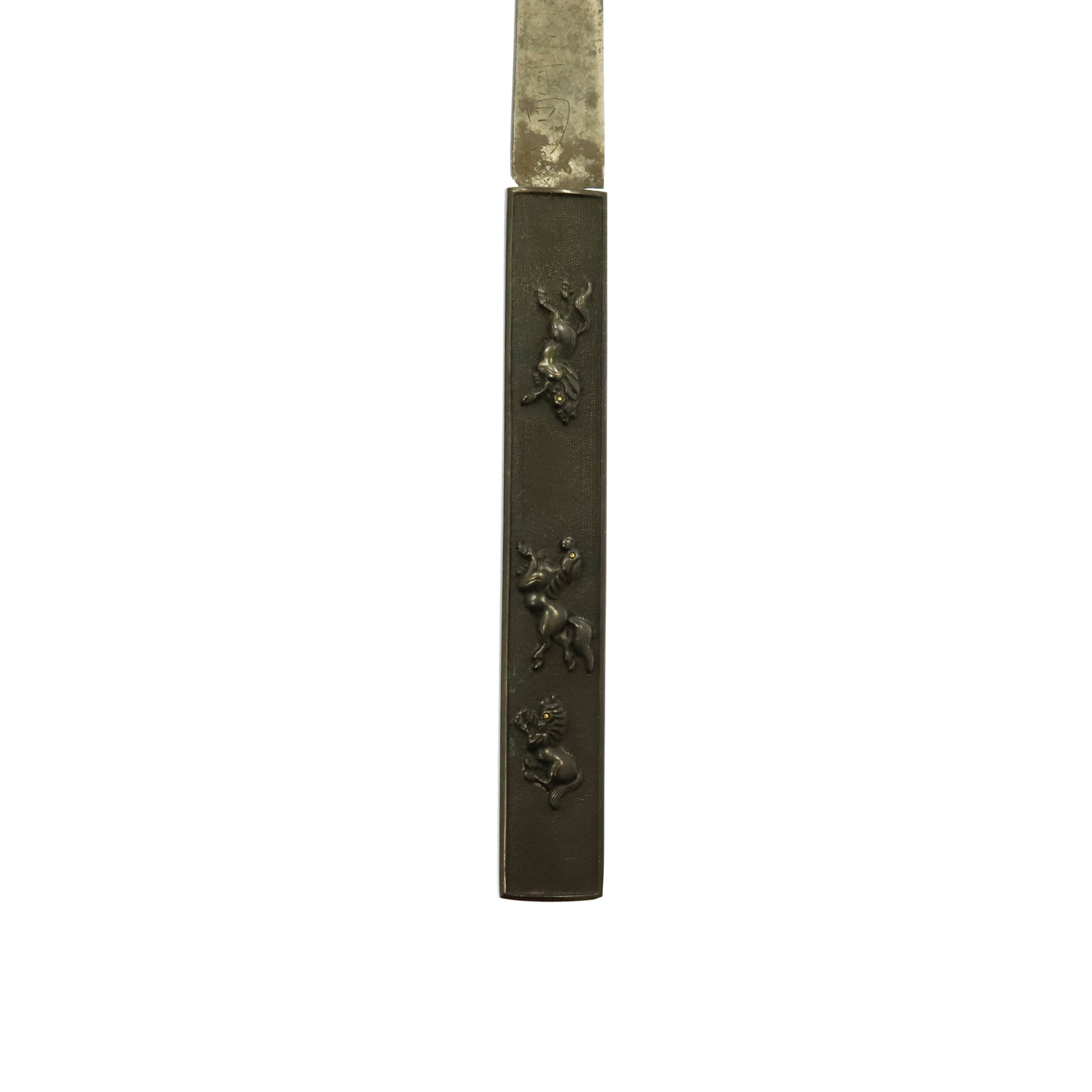
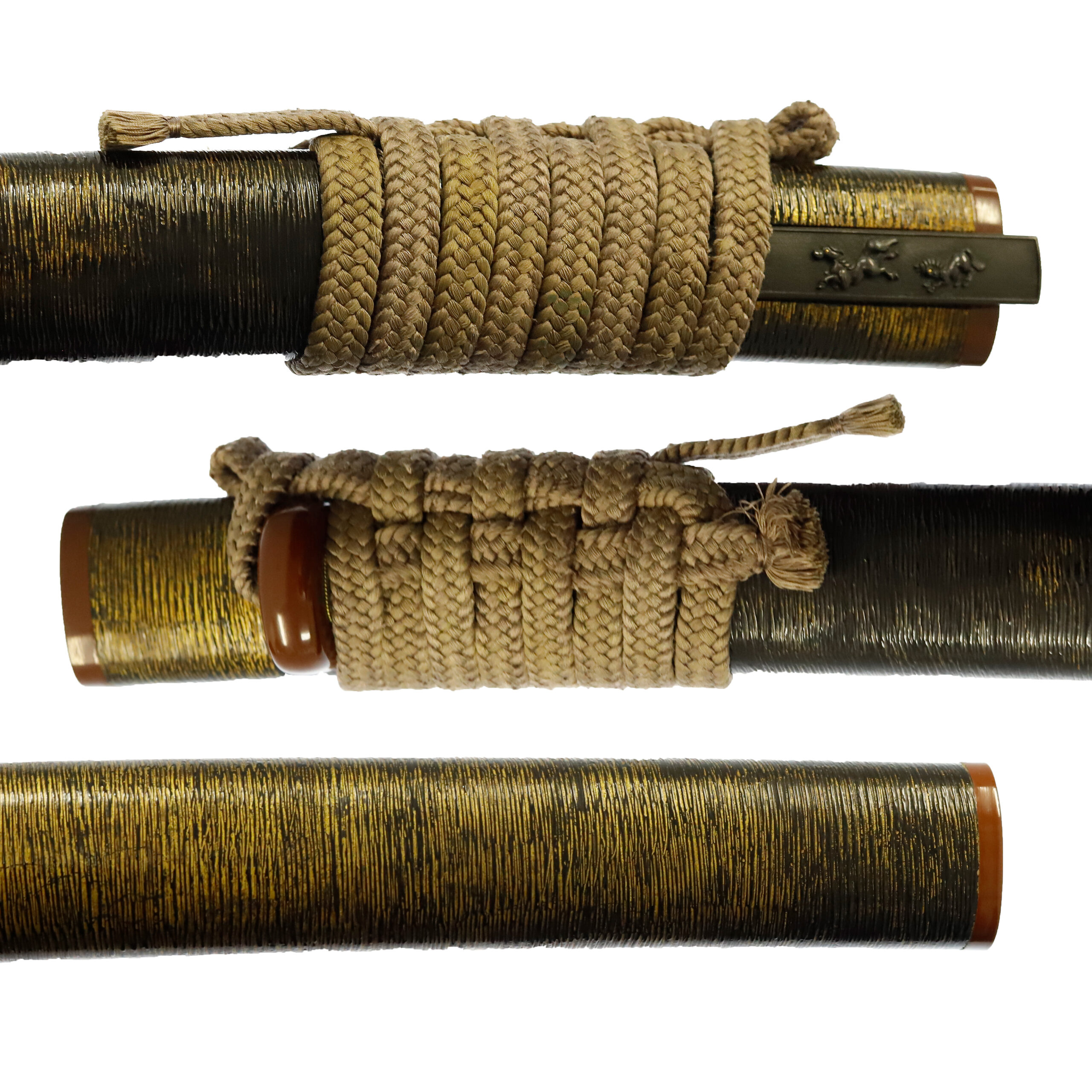
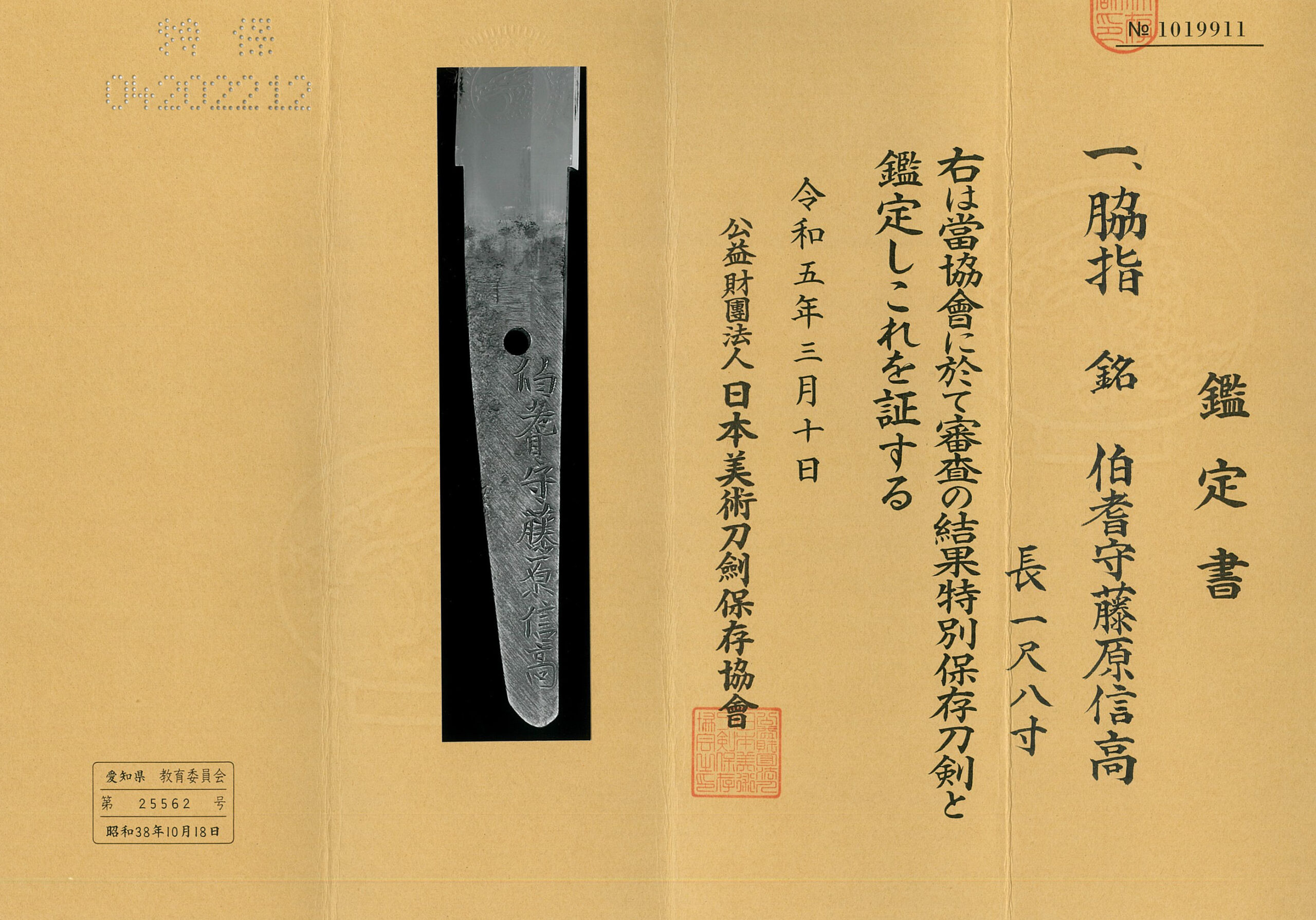
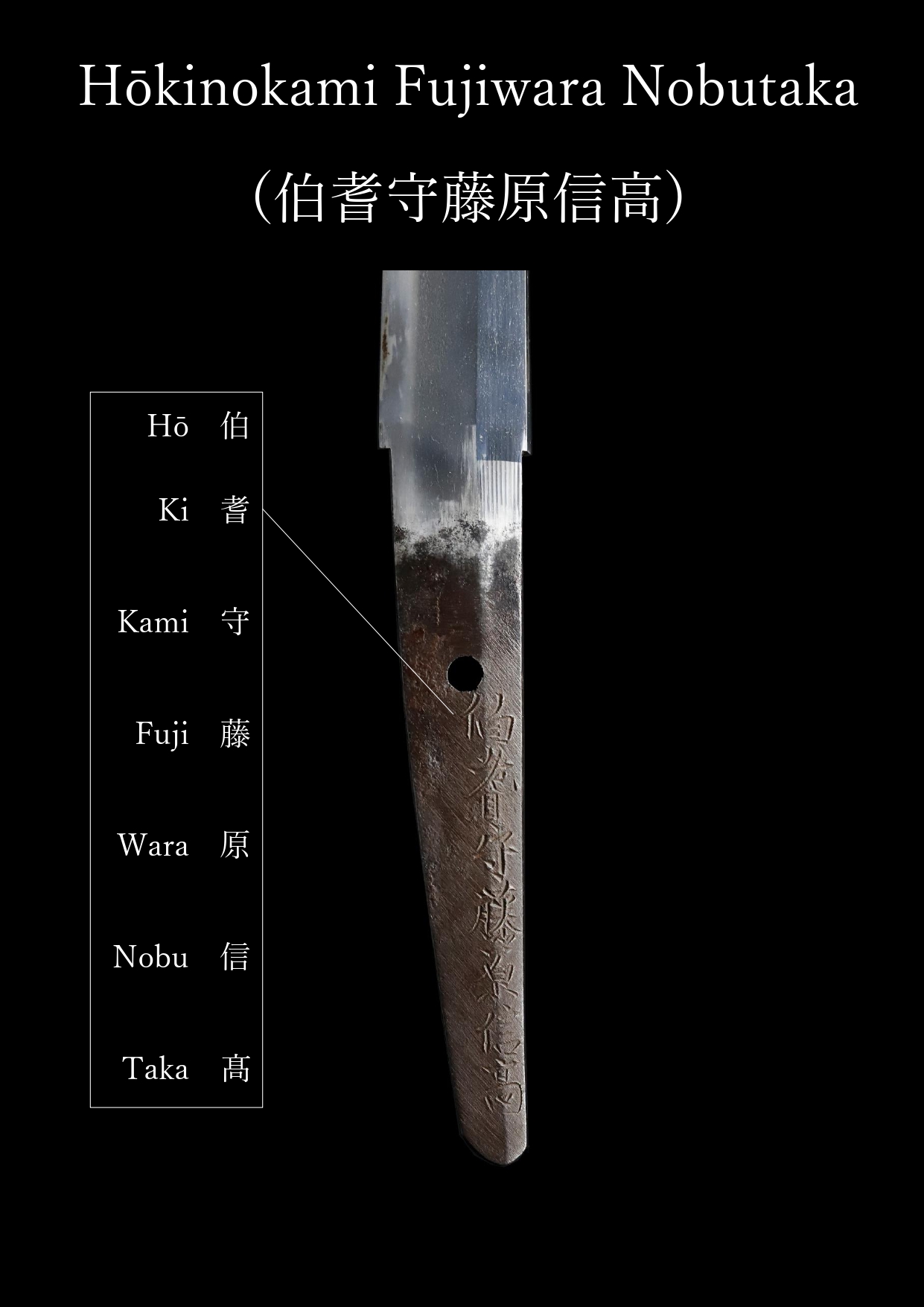
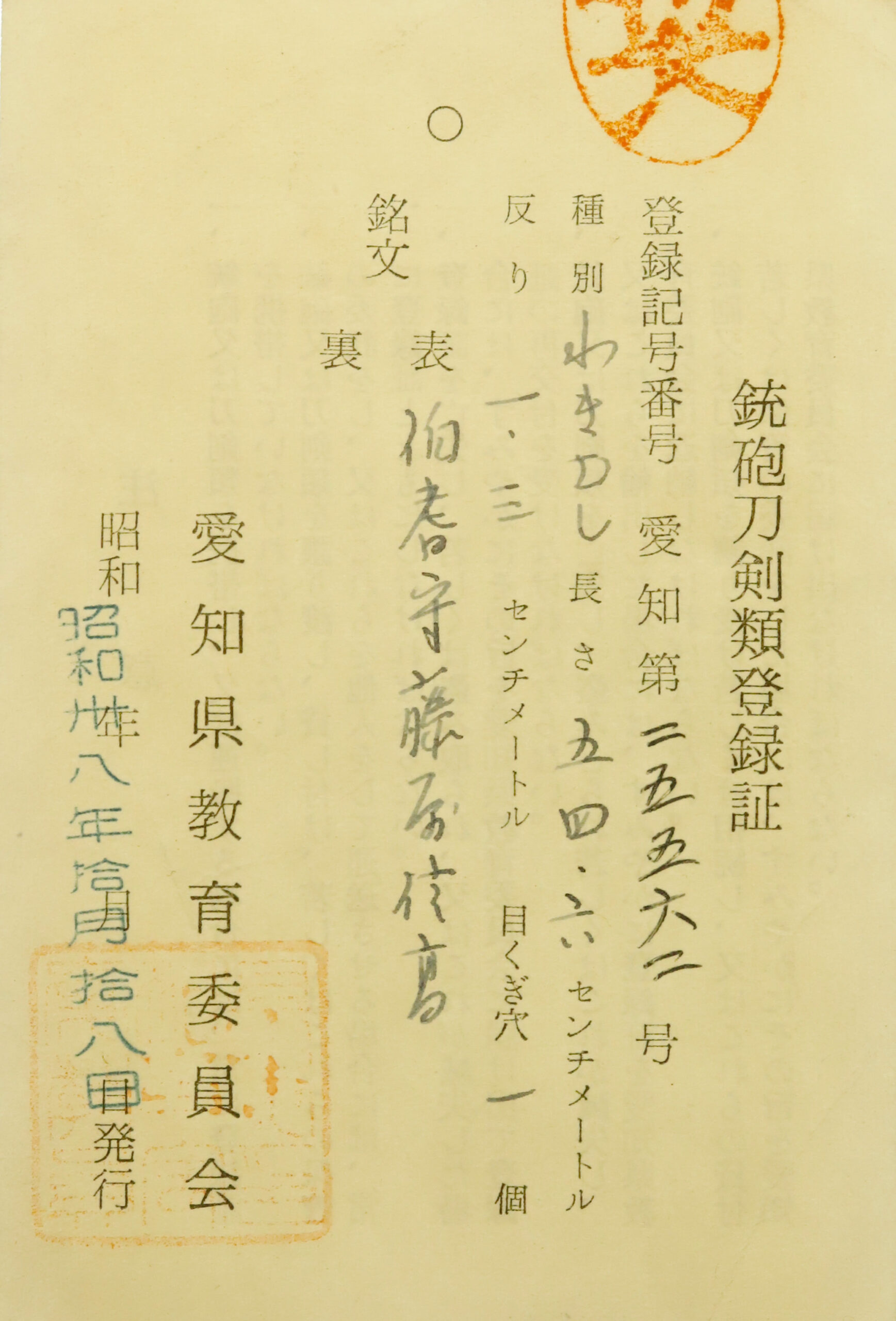
This blade was signed by Hoki no Kami Fujiwara Nobutaka (伯耆守藤原信高). Based on the characteristic of the signature, we believe the second-gen Nobutaka forged it. The second-gen was active in Owari province during 1624-1644( Kan-Ei era: Early Edo period). The swordsmith’s name “Nobutaka” lasted 6th generation during the Edo period. Hoki no Kami was an honorable title given to this swordsmith, and the 1st-5th generation received this title. It is said that Nobutaka was a descendant of Kanekuni who belonged to Mino koku San-Ami school. Nobuta was one of the most famous swordsmiths in the Owari province. The generations of Nobutaka served Owari Tokugawa clan, a relative family of Tokugawa Shogunate who ruled Edo government during the Edo period. The second-gen Nobutaka( real name Kawamura Hoki) was born as the son of the first-gen Nobutaka in the 8th year of the Keicho era(1603) in Owari province(today’s Aichi prefecture). The second-gen received Hoki no Kami title in the 10th year of the Kanei era(1633) when he was 31 years old. He was appointed as an Okakaekaji for Tokugawa Yoshinao, the first-gen head of Owari Tokugawa clan in his career. Okakaekaji is a swordsmith who exclusively served a particular clan or feudal lord. He let his son(the third-gen Nobutaka) run his school in the second year of the Kanbun era(1662) when he was 60 years old. After that, he became a Buddist priest, and he changed his name to Sangetsu Heiyu(山月閉遊). There is a record of him signing Nobutaka Nyudo(信高入道). Nyudo indicates that he was a monk when he signed a blade. He died at the age of 87 in the second year of the Genroku era(1689). The first-gen Nobutaka was originally from Mino province, which is famous for Japanese sword tradition, MINO-DEN. The first-gen moved to Owari castle at the beginning of the Keicho era(the late 1590s). And he relocated to Nagoya after Nagoya castle was built. There were many swordsmiths from Mino province who moved to Owari province. They are called Owari Seki. The most famous swordsmiths categorized as Owari Seki are the first-gen Hoki no Kami Nobutaka, Hida no Kami Ujifusa, and Sagami no Kami Masatsune. All the highly refined sword-forging techniques the first-gen Nobutaka had passed down to the second-gen. You can see outstanding craftsmanship from this blade. As Owari province(today’s Aichi prefecture) was active in martial arts during the early Edo period, there was much demand among high-class Samurai to order swords forged by the second-gen Nobutaka. He often worked with his son(the third-gen Nobutaka), and there is some remaining work where both signatures are found. Since this blade was registered in Aichi prefecture where Nobutaka had resided, we can assume that it was passed down among descendants of Samurai in this area. This blade is appraised as a Tokubetsu Hozon Token(特別保存刀剣) issued by NBTHK(Nihon Bijutsu Touken Hozon Kyokai:日本美術刀剣保存協会). *Please keep in mind that there is a couple of visible black rust on this blade. Also, there is very tiny chip on the blade. We will happy to have these parts polished without additional costs. There might be trace of black rust after being polished and it will take additional 1-2 months for plishing . Fuchi-Kashira The surface of this Fuchi Kashira is decorated with the Nanako-Ji (魚子地) technique. This process makes a uniform minimal protrusions pattern by hitting the Nanako-Ji Tagane (魚子地鏨, a chisel for this technique) on a metal surface. This decorative technique is often seen on sword mountings. About the design, we estimate it depicts a seaside battlefield scenery. We could find a Samurai on the Kashira part. He wears gorgeous armor and rides on his horse. We assume he is a high-ranked warrior from his appearance. On the Fuchi part, we could see something like banners designed with family crests. Overall, this Fuchi Kashira is carefully engraved in detail, and the effective use of gold coloring makes it a gorgeous work. Tsuka and Menuki You could find a horse figure on each side of this handle. Although some colorings have already faded due to aging, it seems golden paint was initially applied to their surface. Horses have been around human life for a long time, not only as our food but also for transportation or carriage of luggage. In Japan, horses were thought of as vehicles for gods to be dedicated to shrines in ancient times. It is said it is the origin of Ema (絵馬, picture tablet used as an offering at a shrine) today. Horses had been used as a tool for rituals and festivals. After the age of the Samurai warriors appeared, wearing large armor or performing archery and riding a hose became martial arts. Equestrian tactics became the pillar of military action and security activities. According to a theory, that is the reason that the Japanese sword began to have a curve to make it suitable for slashing (the Japanese sword was straight in the beginning). Tsuba and Habaki This Tsuba has an ornamental look. The theme of its design is the Botan Karakusa (牡丹唐草) pattern. It is a combination of Botan (牡丹, peony) flowers and the Karakusa (唐草, arabesque) pattern. Peony represents happiness, wealth, nobleness, and gorgeousness. This flower pattern has been treated as a kind of good-omen motif; people regarded it as a rich harvest sign. As mentioned above, a peony is called the Botan in Japanese. When we write this flower’s name in Kanji characters, its second letter means mountain hermit medicine that would give us eternal youth. Based on the meaning of this letter, the peony pattern symbolizes eternal youth and longevity. The Karakusa pattern is a design in which vine stems, and leaves are twined and make curves. Since ivy has a strong vitality and grows up without interruption, people regarded this design as a symbol of prosperity and longevity. Among the Karakusa patterns, the Botan Karakusa pattern has been favored as a representative design of Karakusa patterns since the Muromachi period. Kozuka A Kogatana (小刀, small knife) is stored in the Kozuka. Same with the Menuki, horses are designed on this Kozuka. Among the horse patterns, there is a design called the Hidari-Uma (左馬). The letter “馬” means a horse and describes the figure of a horse running to the left. And the Hidari-Uma pattern refers to a picture of a horse running to the right. It shows the turning over of the “horse (Uma).” There is the word Mau (舞う, dancing) in Japanese; people thought happiness would come down in association with “turning the horse” and “dancing.” Also, the horse pattern has been loved as an amulet to pray for prosperity in business. Authentication Paper They authenticated the blade on March 10th in the 5th year of Reiwa (2023). They appraised it as Tokubetsu Hozon Touken, the blade especially worth preserving for Japanese society.
Offered by Samurai Museum
This piece has sold
Get an email when a new Sanami Nobutaka piece hits the market.

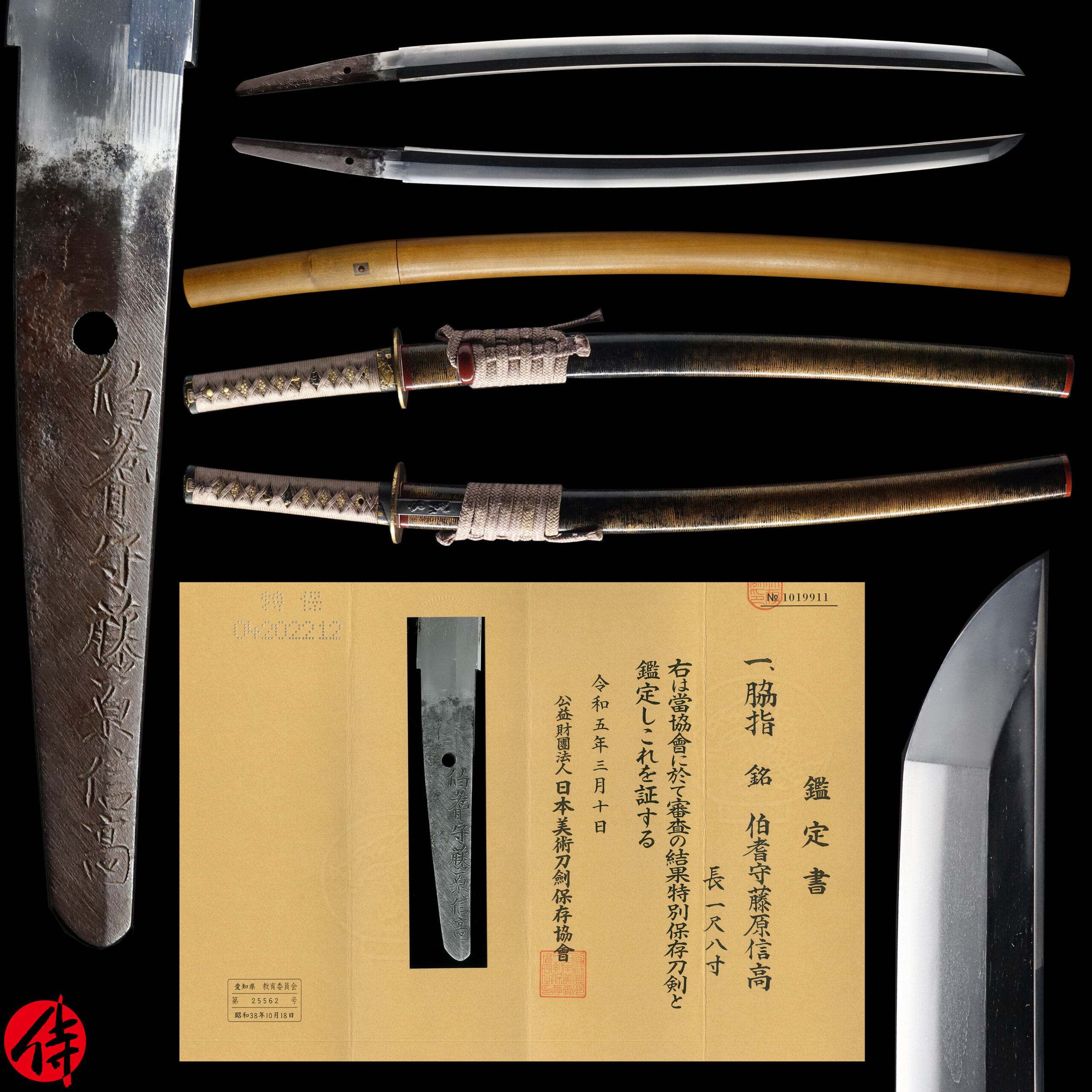
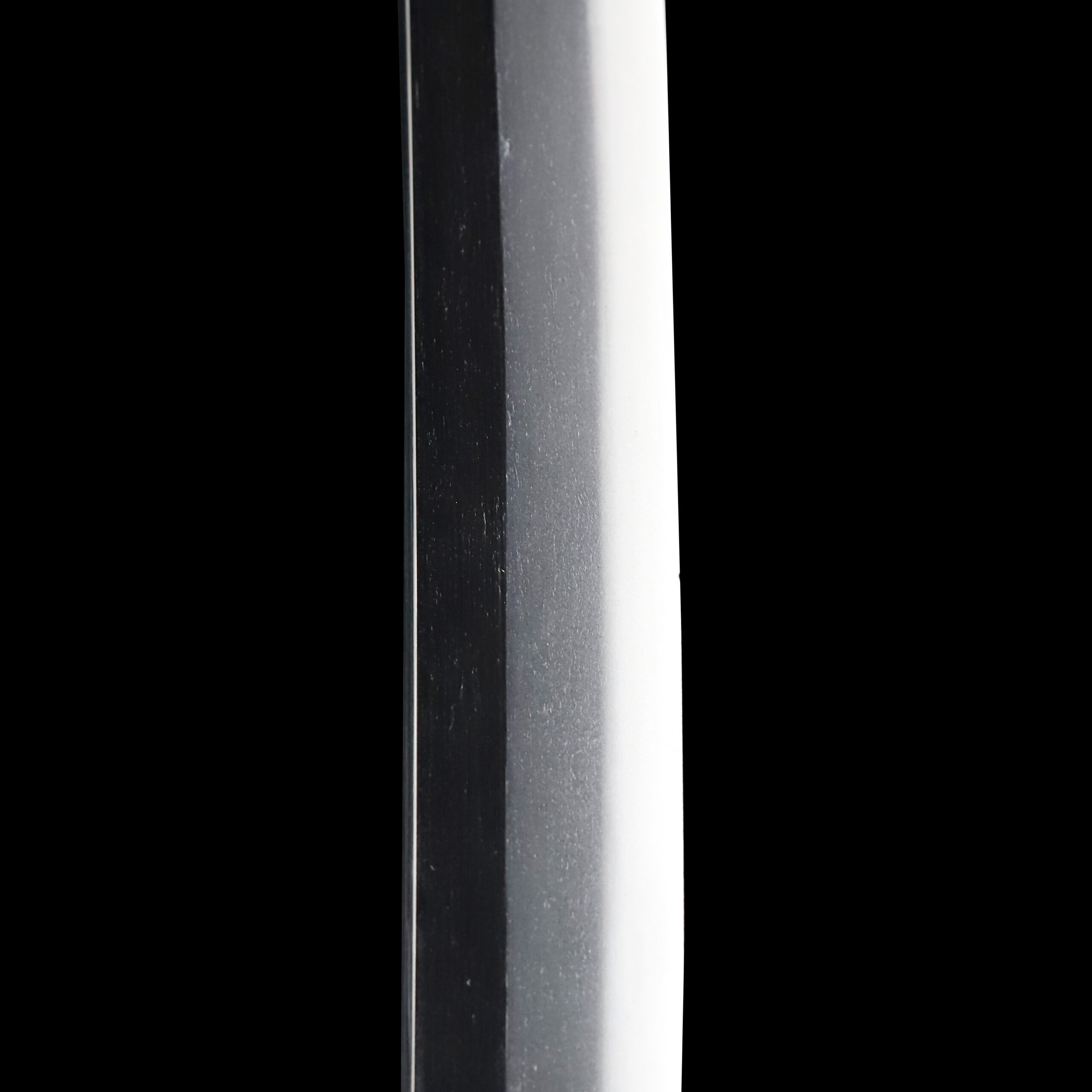
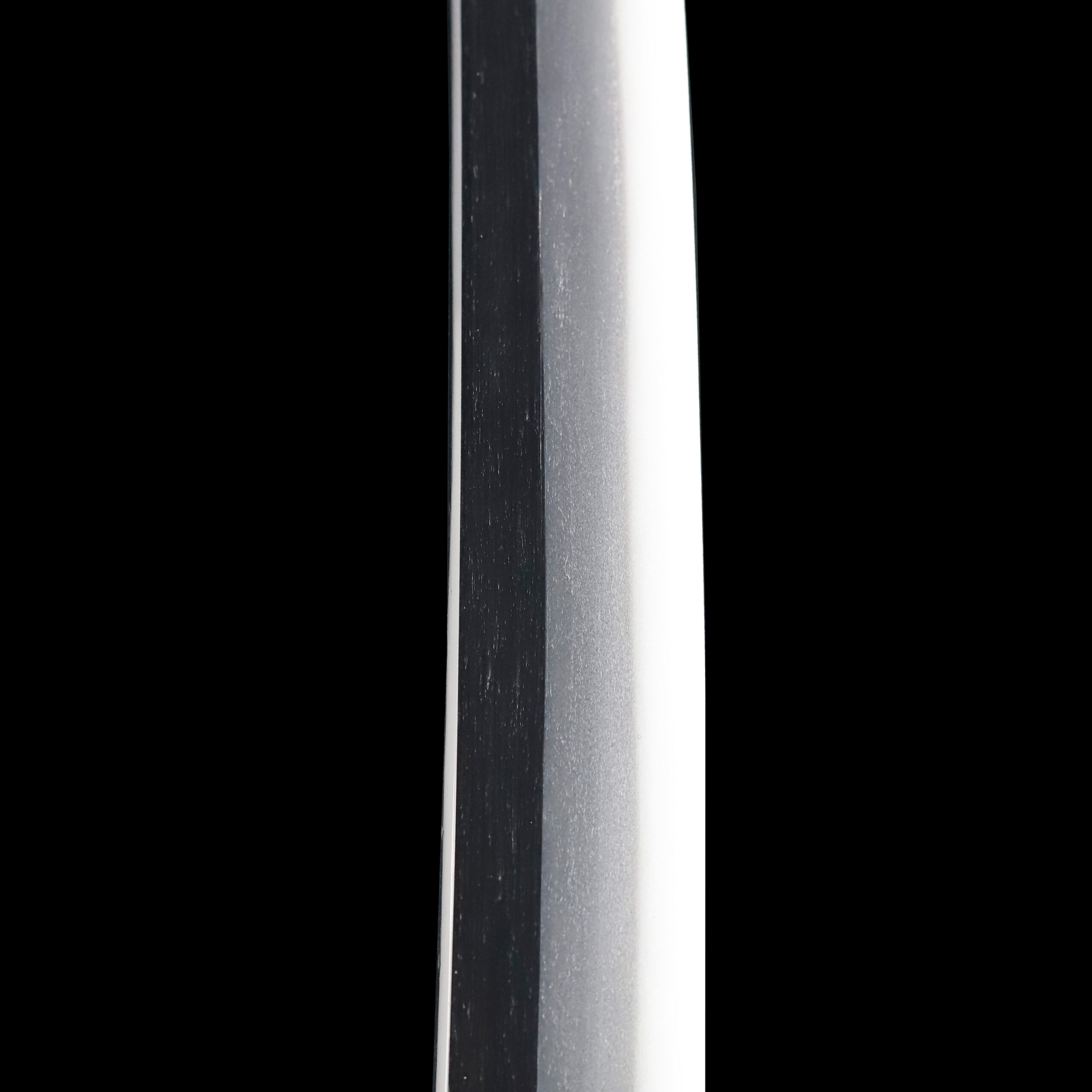
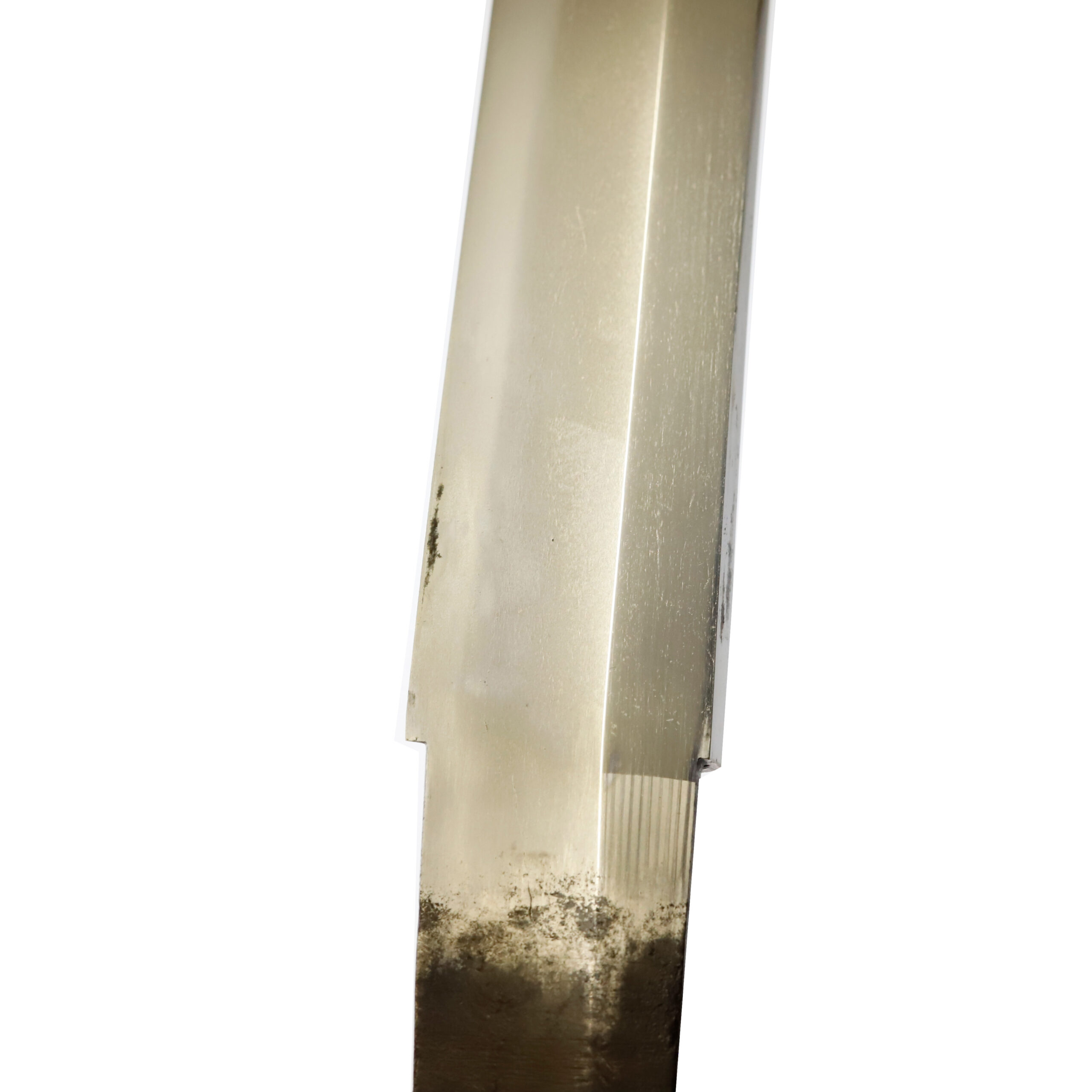
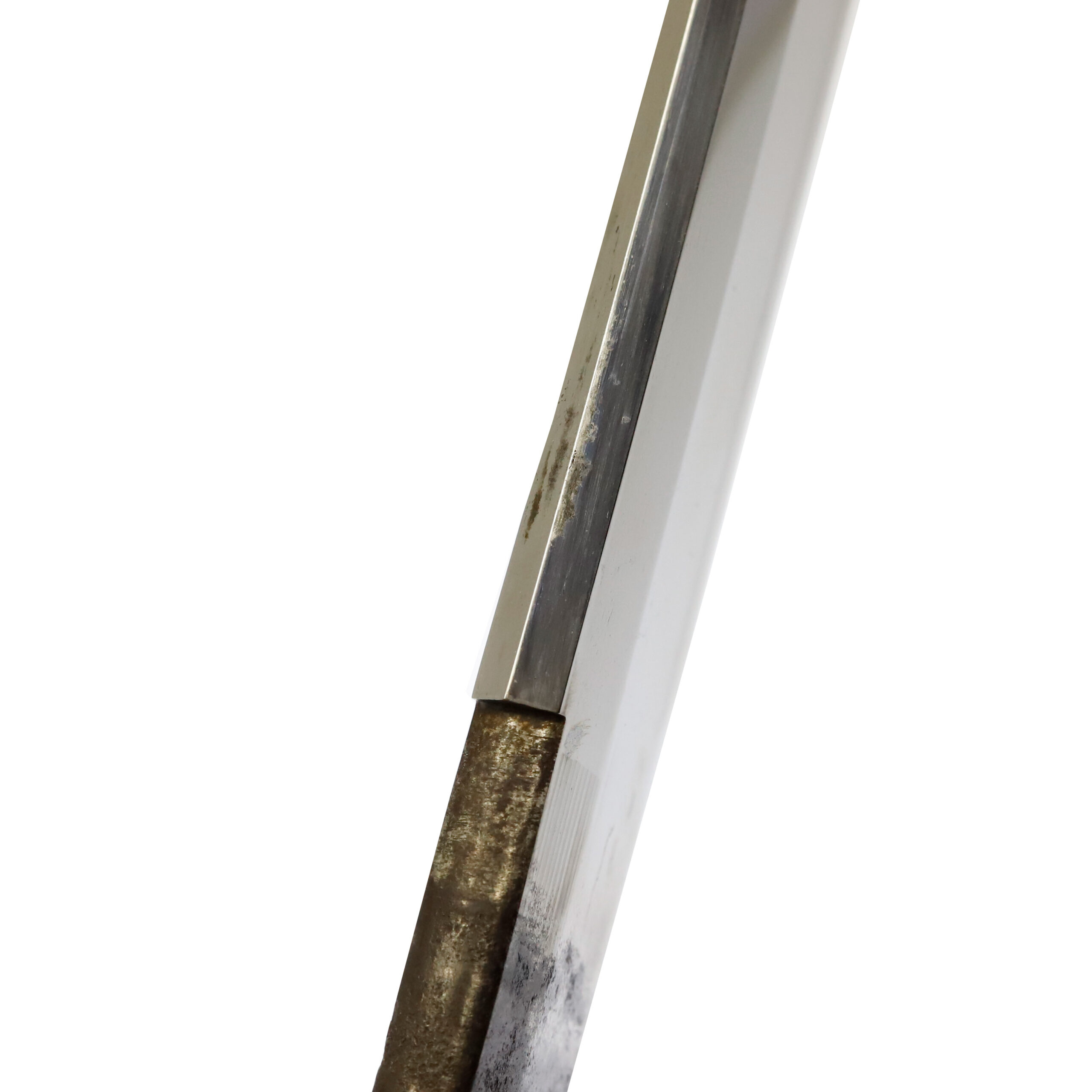
Mino-den · Owari · around 1624-1644
Fujishiro Jo saku · Tōken Taikan top 37%
1 piece on the market now
Where Nobutaka stands among comparable artisans: across all of nihontō, and within tradition, era, and period. The tiers (Foremost · Leading · Major · Notable) weigh official designations from the NBTHK and Japan's Agency for Cultural Affairs, together with historical honors of lasting repute such as the Sansaku and Meibutsu-chō.
Select a lens to see how it's measured.
Mino-den · Mino
8 pieces on the market now
The San'ami line takes its root in Mino Province, where its head smith Kanenori (兼則) worked as one of the so-called Seki Seven Schools. The setsumei place Kanenori from the close of the Nanbokuchō period into the Ōei era of the early Muromachi, alongside Kanemoto and Kanesada among the representative hands of Sue-Seki, and the earliest extant signed tachi of his is appraised as no later than Ōei. A second early smith, Kanekuni (兼国), is recorded as belonging to the San'ami lineage and is judged to predate the Sue-Seki group proper; the remote ancestry given for him runs variously to a disciple of Naoe Kanetomo, to Yamato Kanekuni, or to Kanenori, though the setsumei note that nothing survives to confirm so distant a descent. From this Mino stock came Hōki no Kami Fujiwara Nobutaka (信高), born at Kami-Ōchi in Mino in 1563 and said to descend from San'ami Kanekuni. After receiving the title Hōki no Kami in Tenshō 9 (1581) he moved to Kiyosu in Owari and, serving Tokugawa Yoshinao, later settled at Nagoya, carrying the line into the early Shintō era through a second generation who took the tonsure in Kanbun 2 (1662). Across the corpus the jigane is itame, often closely forged and tending to nagare-hada or flowing grain along the edge, with ji-nie and a frequent standing of the grain (hada-dachi); a faint whitish cast (shirake) marks the older Mino work of Kanenori and Kanekuni. The temper rests on suguha as a base. In the early hands it is a tight, clear (saete) suguha in nioi-deki, sometimes mixed with small gunome, angular elements and pointed ha, carrying ashi, hotsure and scattered tobiyaki.
The Nobutaka works open this out: a broad suguha shifting to shallow notare, ko-notare with a gunome-flavored edge, deep nioi with nie unevenly applied and partly coarse, nie-kuzure at the yakigashira, kuichigai-ba, kinsuji, sunagashi, yubashiri and tobiyaki that climb into the shinogi-ji until the upper half reads as hitatsura. The bōshi runs to sugu with ko-maru, at times midare-komi, pointed, or hakikake, and the early swords keep a slender, high-sori tachi shape while Nobutaka's carry the wide-bodied, ō-kissaki form of the Momoyama transition. The hand is recognized in this pairing of a flowing Mino itame with a suguha core that, in the descendants, breaks toward bold hitatsura. For kantei, the setsumei fix several anchors. In Kanenori's signature the scooped chisel at the fourth stroke of the character kane (兼) is read as a trait of late Nanbokuchō through Ōei work, matched in dated Kaneyoshi mei; the clear suguha of Kanekuni is likened to a Zenjō Kaneyoshi masterpiece. The jizō-flavored bōshi and the nagare-mixed itame in Nobutaka are named as the surviving stamp of the Mino root beneath his Owari manner, and one of his katana is recorded as an Inabae-utsushi. Provenance runs through the corpus: a Kanekuni bears kinzōgan recording it as the sashiryō of Ōkubo Genban-no-jō Tadanari, lord of Odawara in Sagami, worn at the age of ninety-three; Kanenori's tachi descended in the Yamanouchi family. Among the Owari yari makers beginning with Masatsune, Nobutaka's yari of extraordinary length is held in particular regard, and the second-generation Nobutaka is judged no less skilled than his father, with the finest extant Nobutaka works counted to his hand. Learn more →
| Smith | Era | Designated |
|---|---|---|
| Nobutaka信高 | 1581-1615 | 3 |
| Nobutaka信高 | 1624-1644 | 2 |
| Kanekuni兼國 | 1455-1457 | 1 |
| Kanenori兼則 | 1370-1372 | 1 |
| Nobutaka信高 | 1673-1681 | 0 |
The Edo period (1615 to 1868)
Edo was the sword’s age of connoisseurship: the Hon’ami appraisers, the shogunal register of famous blades of 1719, and a thriving literature turned the sword into an object of study even as it ceased to be drawn in war.
A Hozon-certified blade judged to show notably superior workmanship and a better state of preservation. The bar is higher: re-tempered blades and most unsigned Muromachi/Edo works are excluded.
The NBTHK (Nihon Bijutsu Tōken Hozon Kyōkai, the Society for the Preservation of Japanese Art Swords) is a public-interest incorporated foundation founded in 1948 and supervised by Japan’s Agency for Cultural Affairs (Bunkachō); it is based at the Japanese Sword Museum in Tokyo. Its expert panels physically examine each submitted work (shinsa) and issue a certificate (kanteishō) ranking it by artistic and historical merit. NBTHK papers are the most widely recognized standard of authentication for Japanese swords and fittings.
NBTHK official siteReturns/exchanges limited to defects caused by shipping (except willful misconduct or gross negligence by the company); customers must contact within 72 hours of receiving the product.