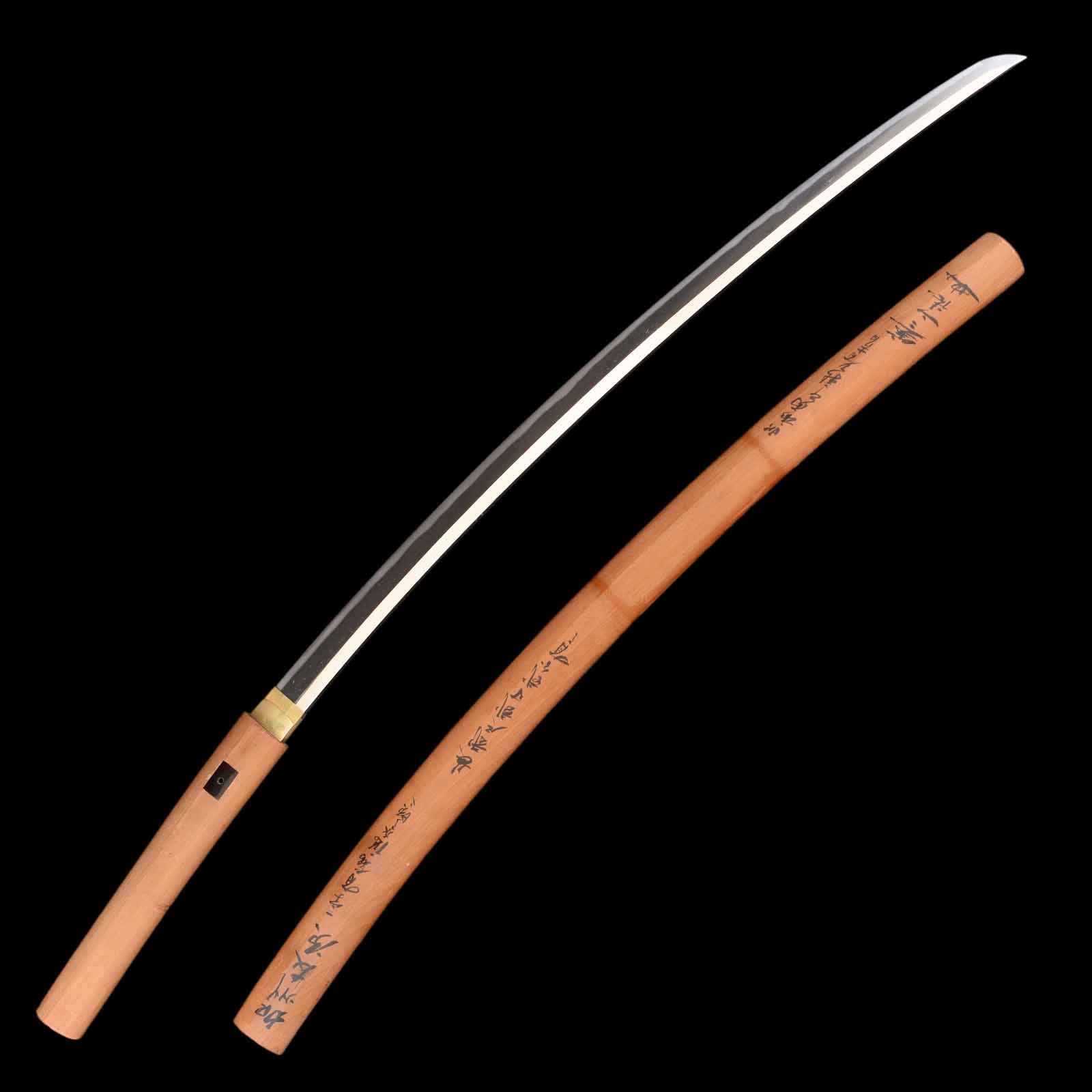
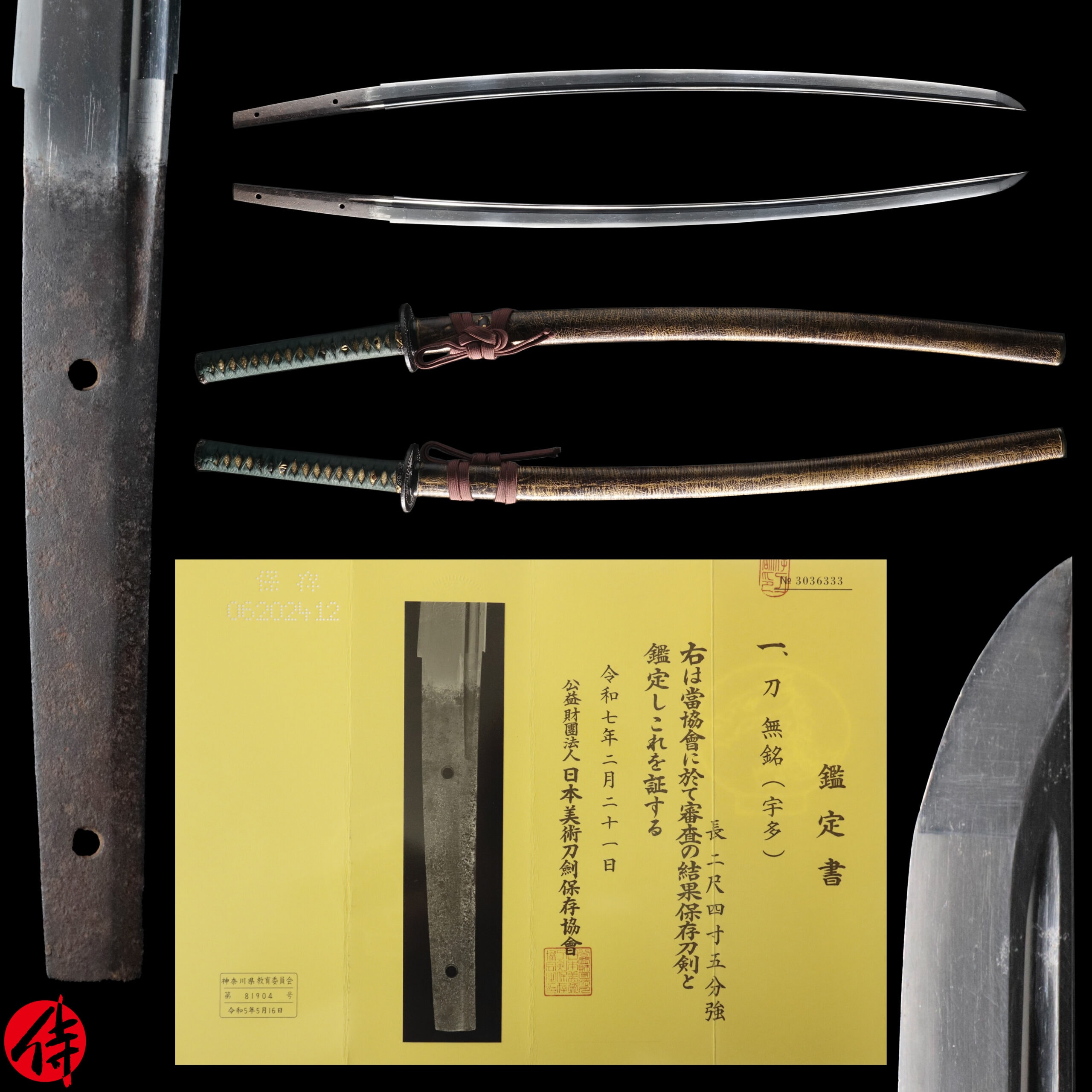
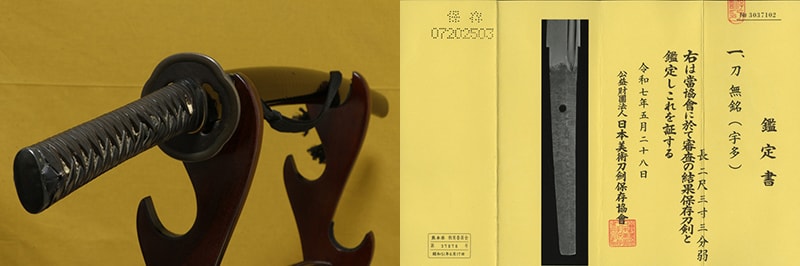
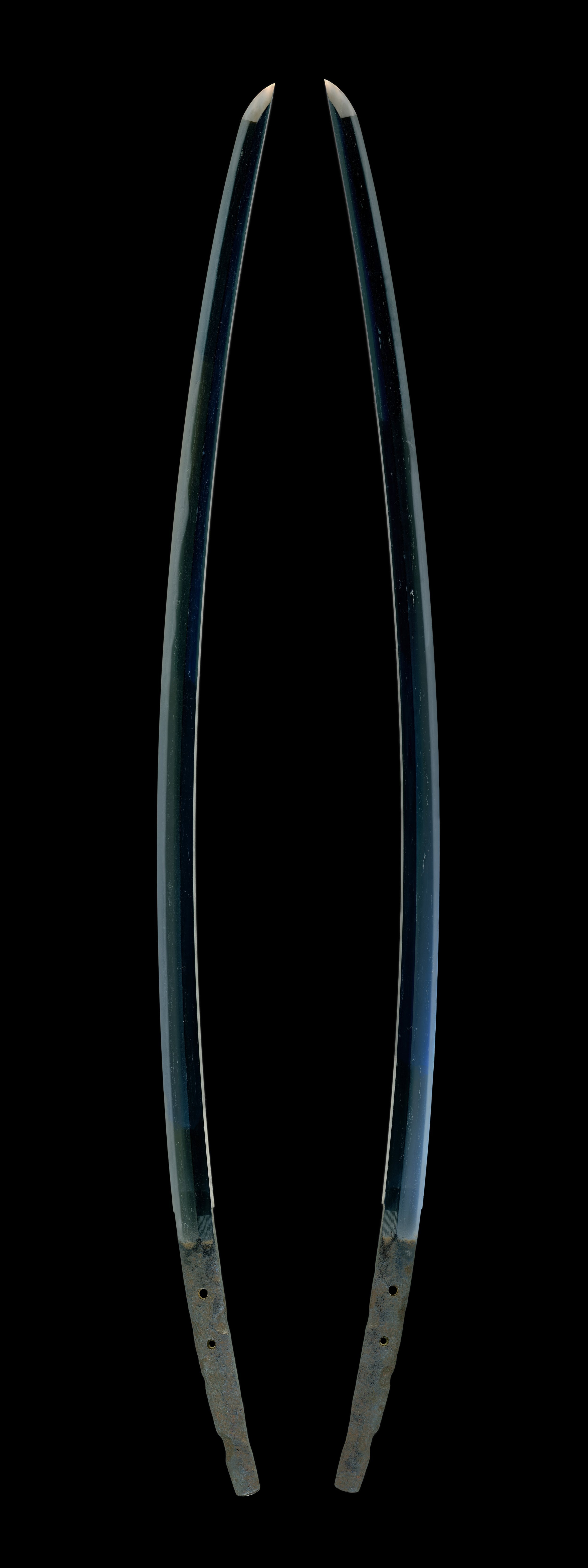
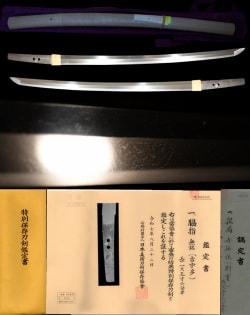
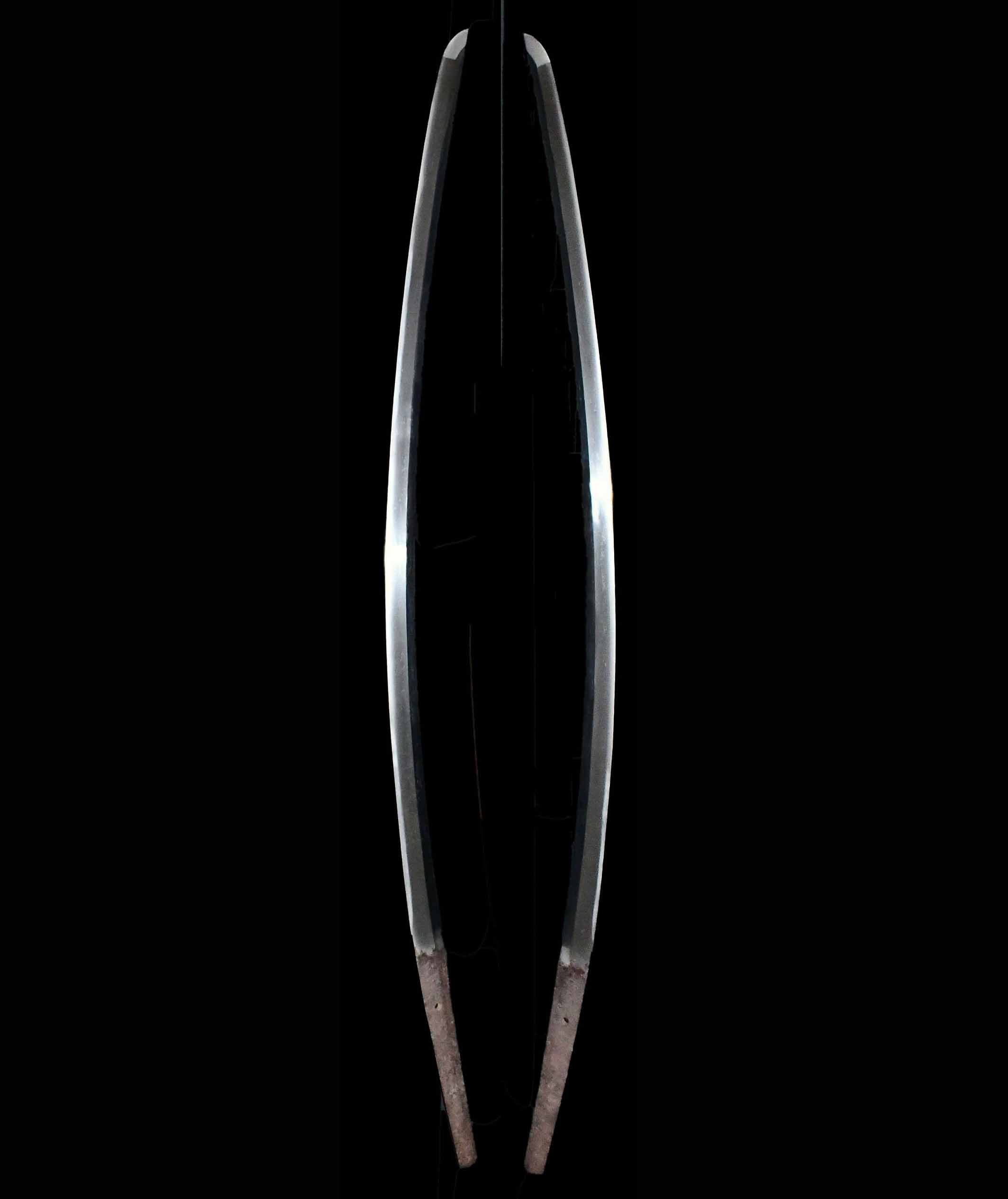
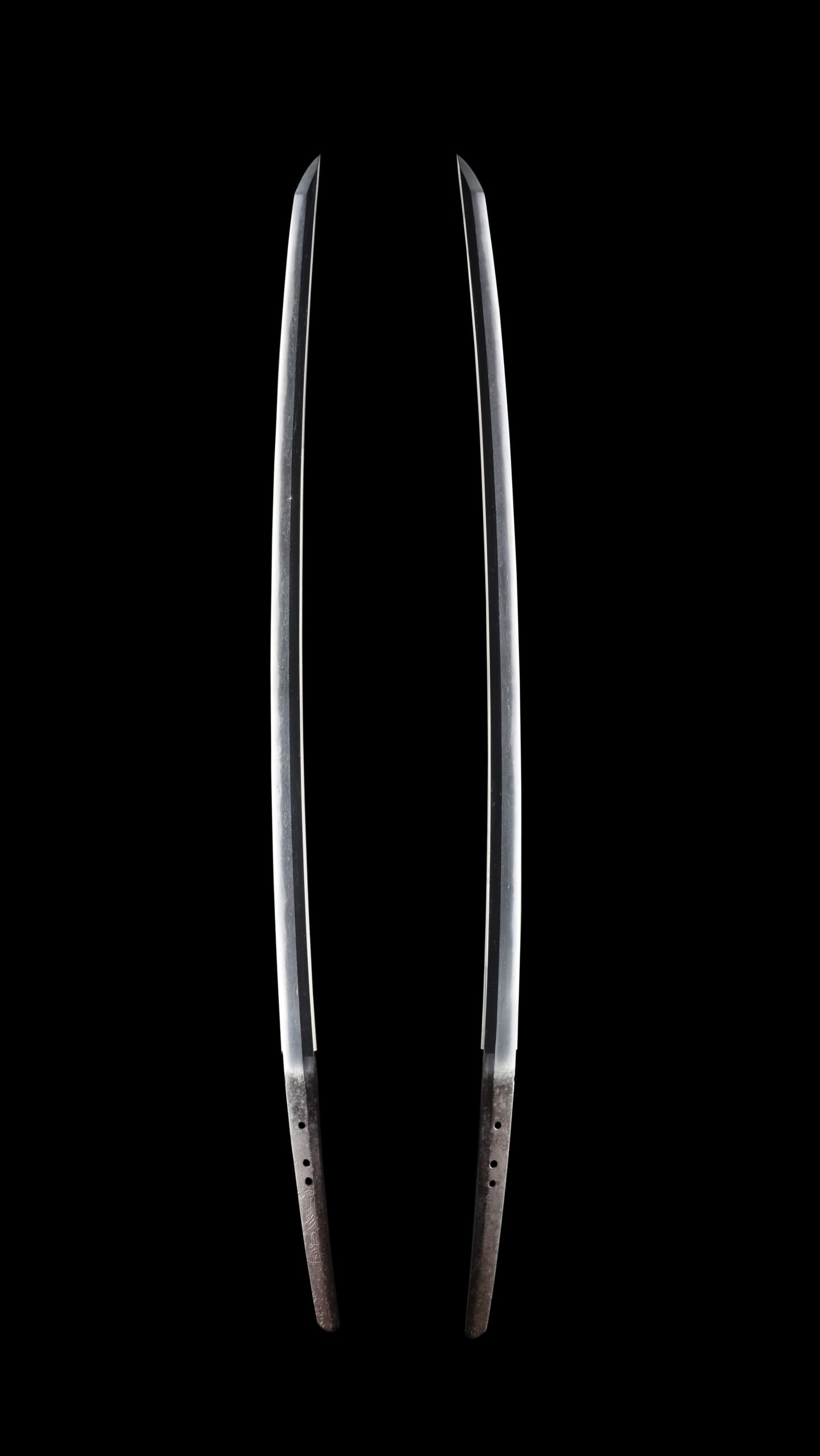
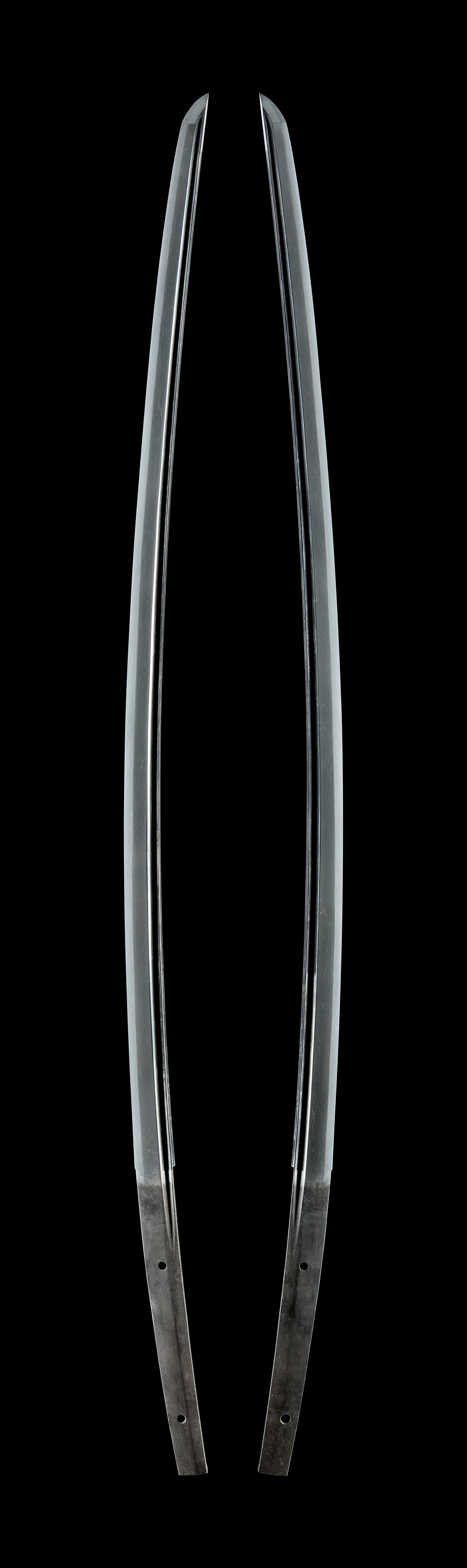
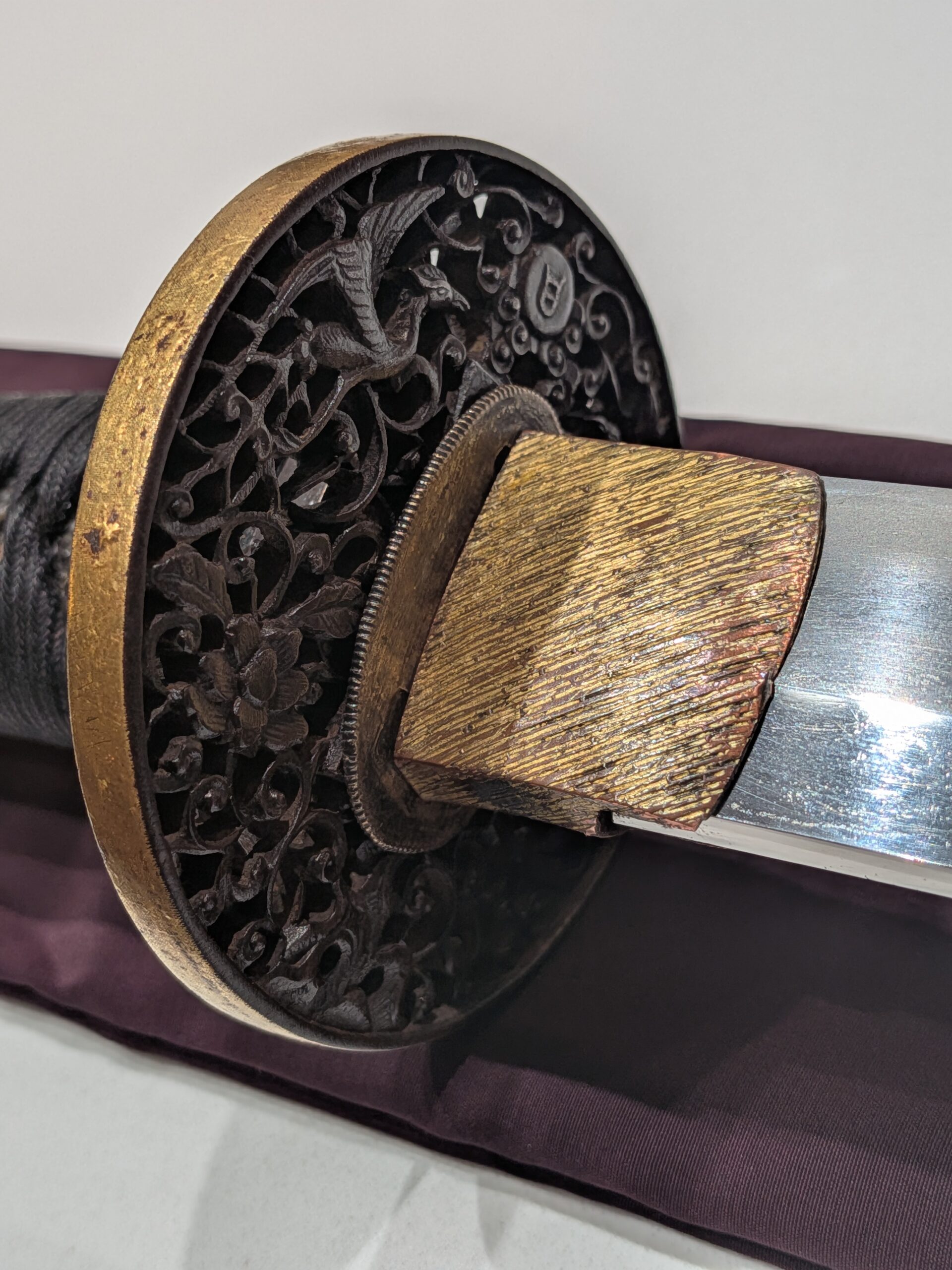
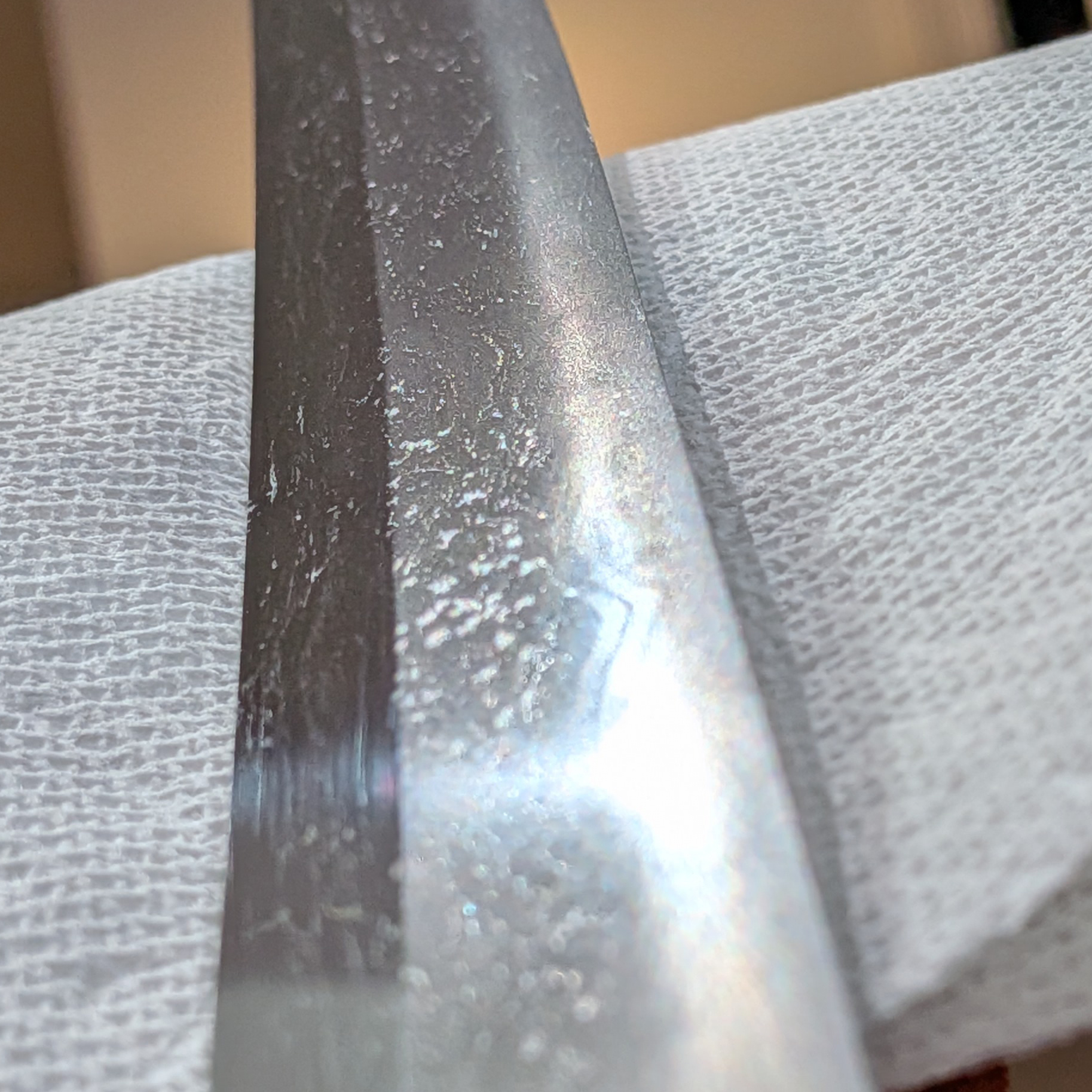
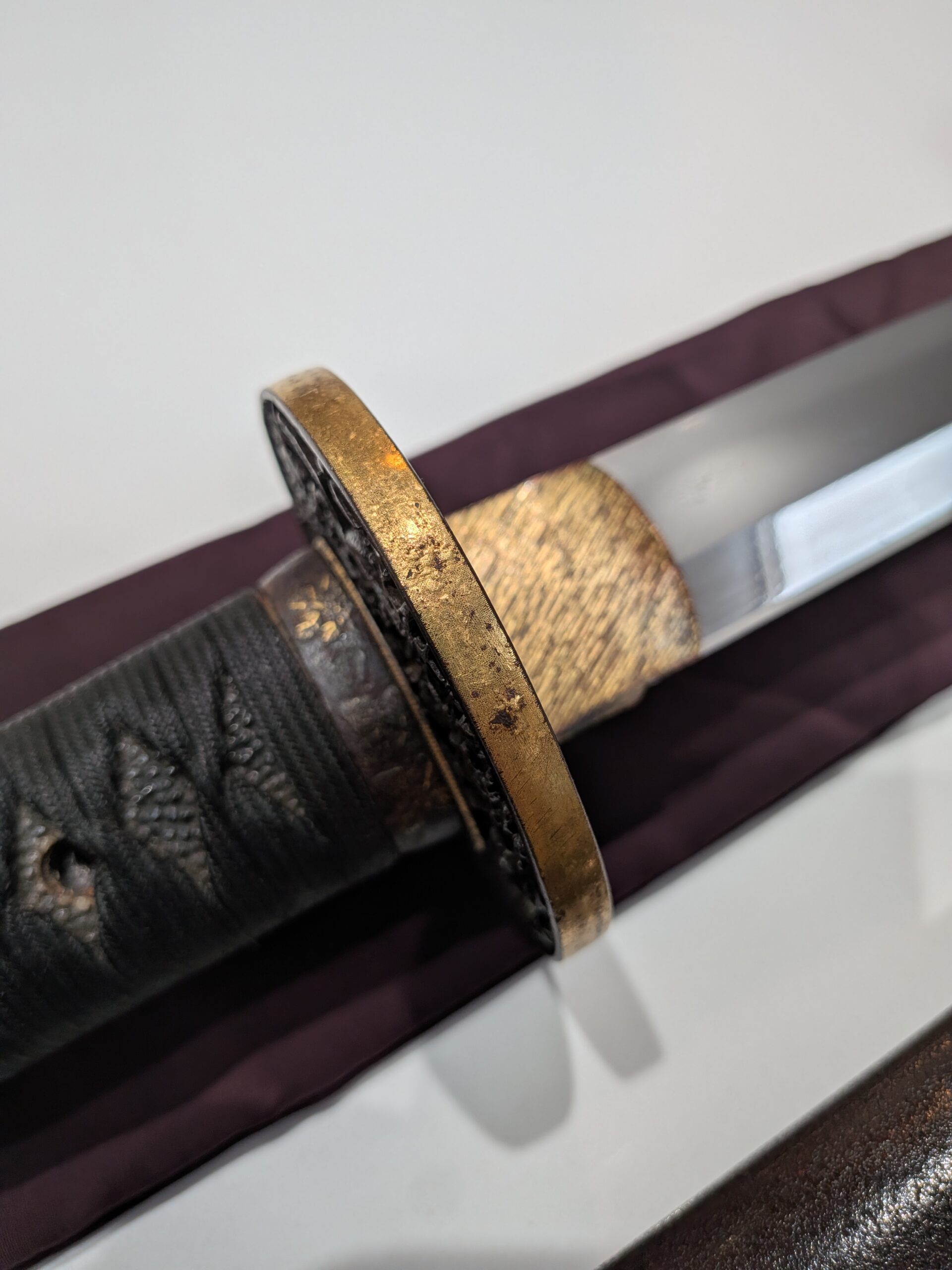
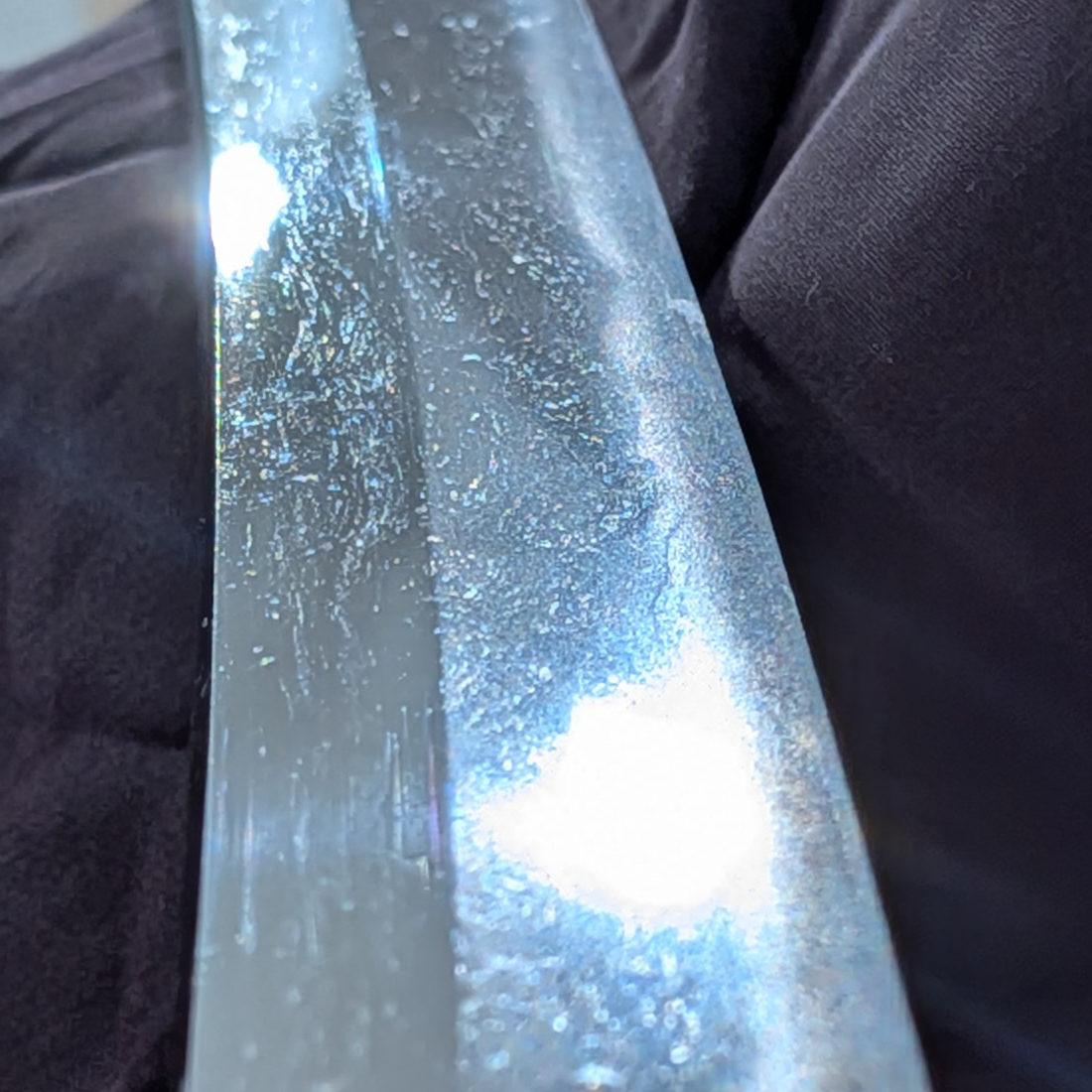
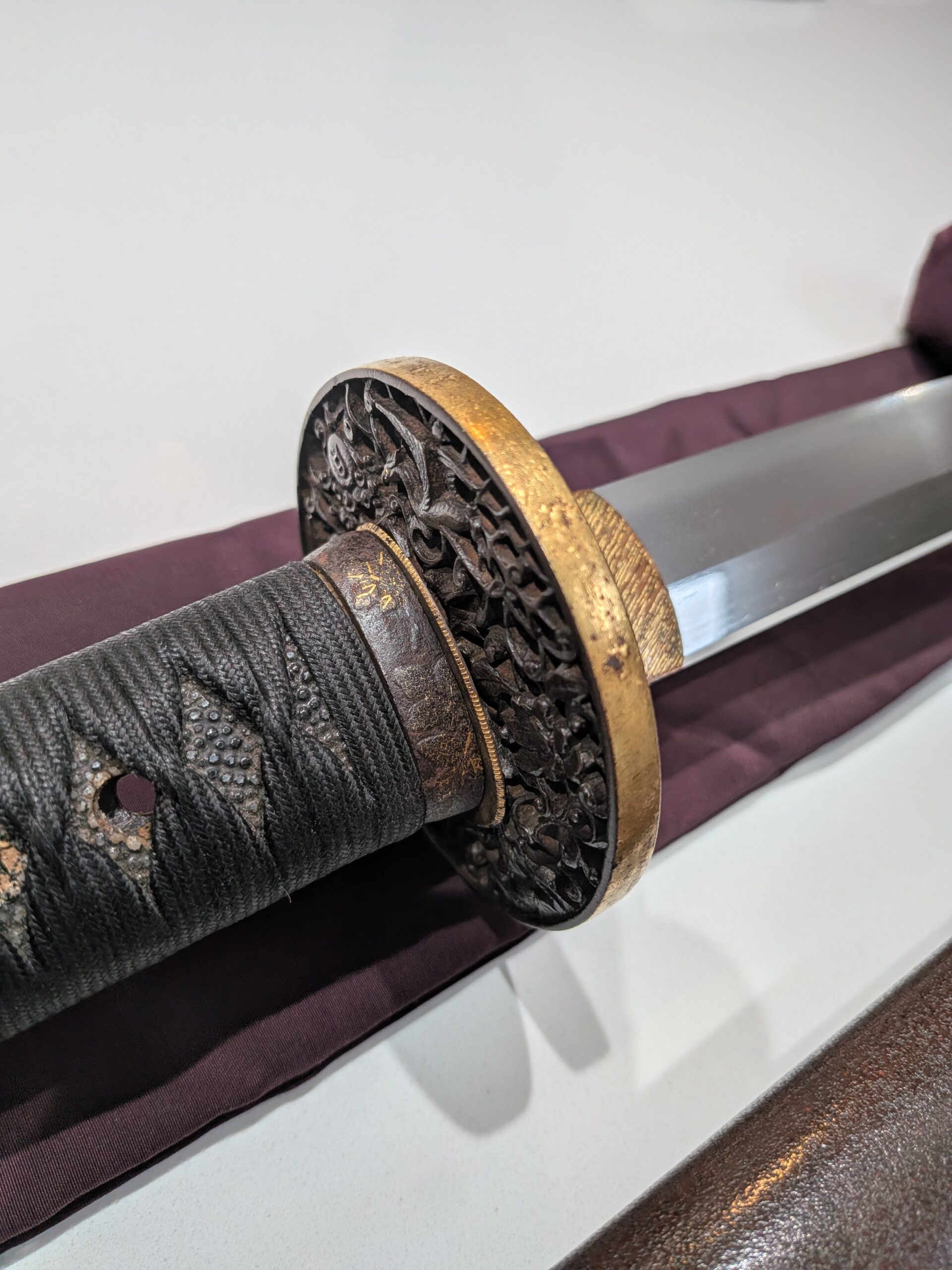
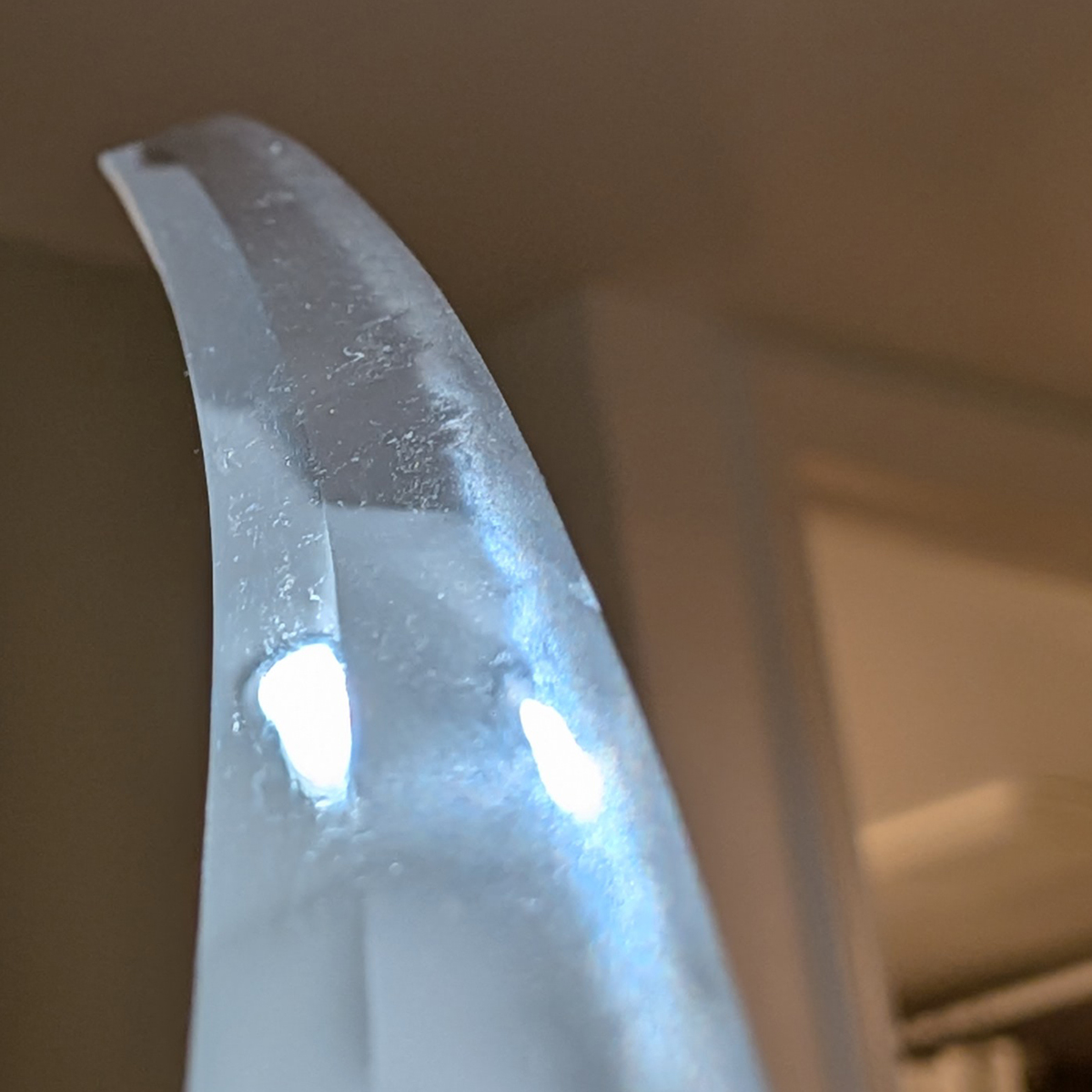
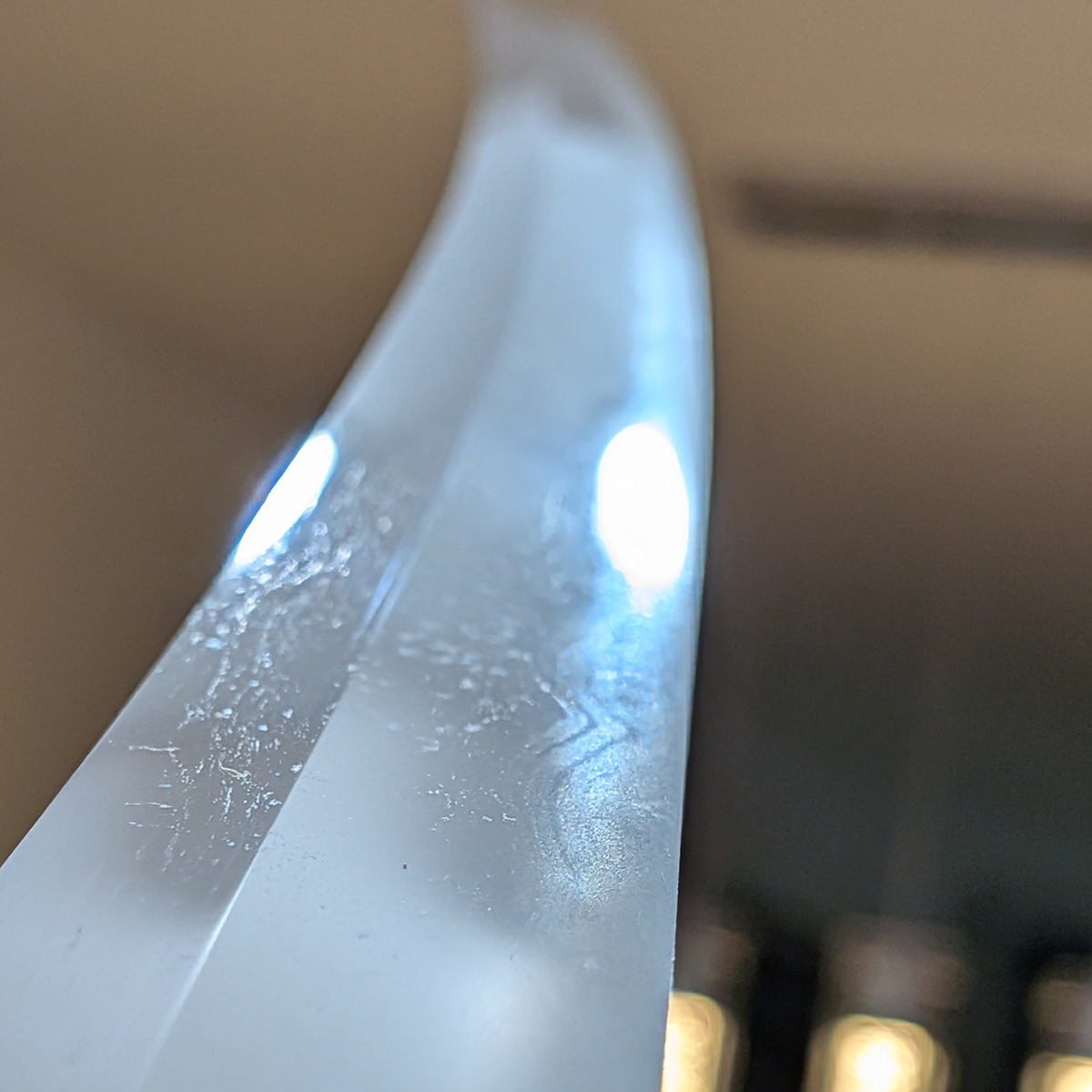
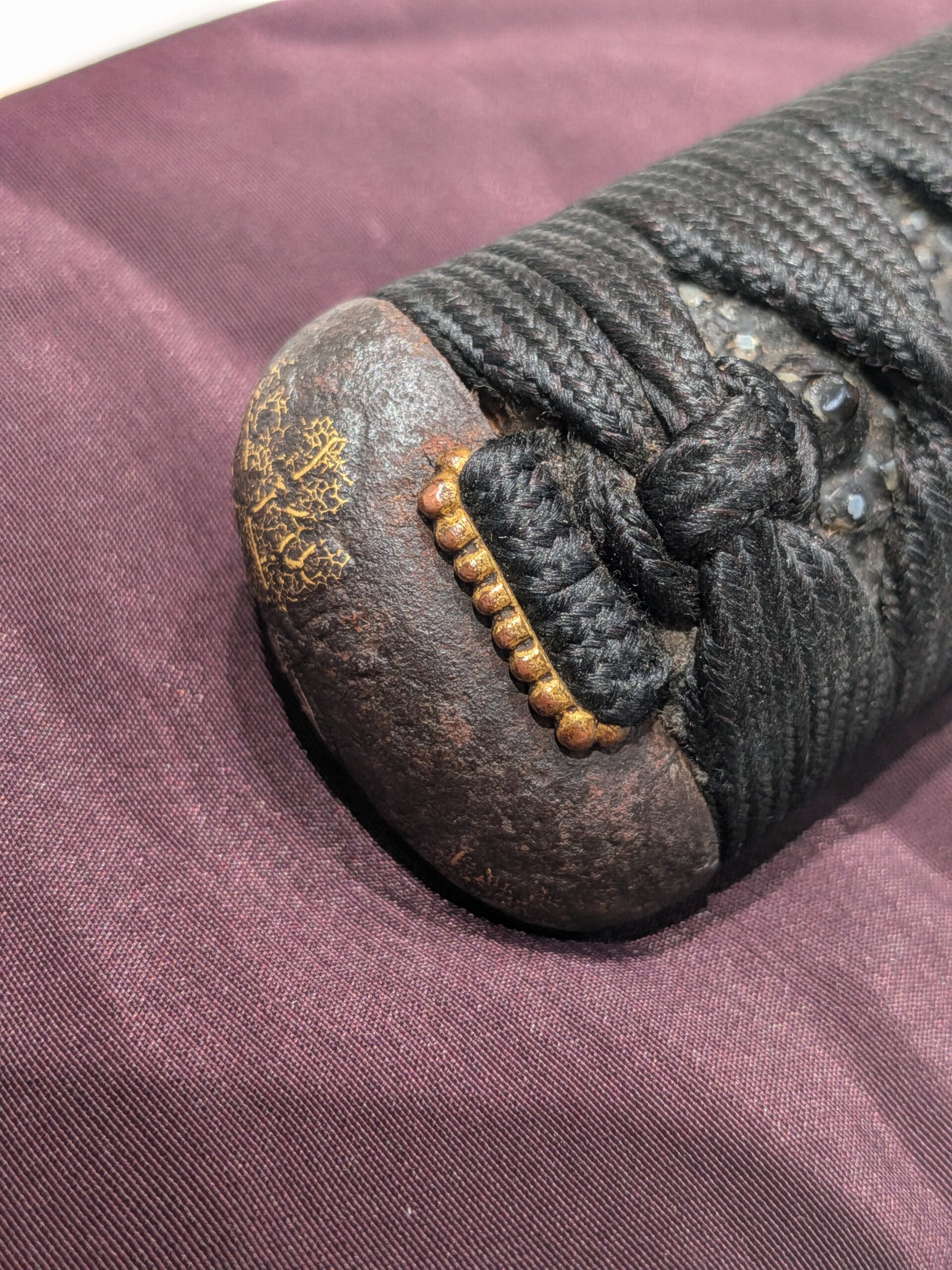
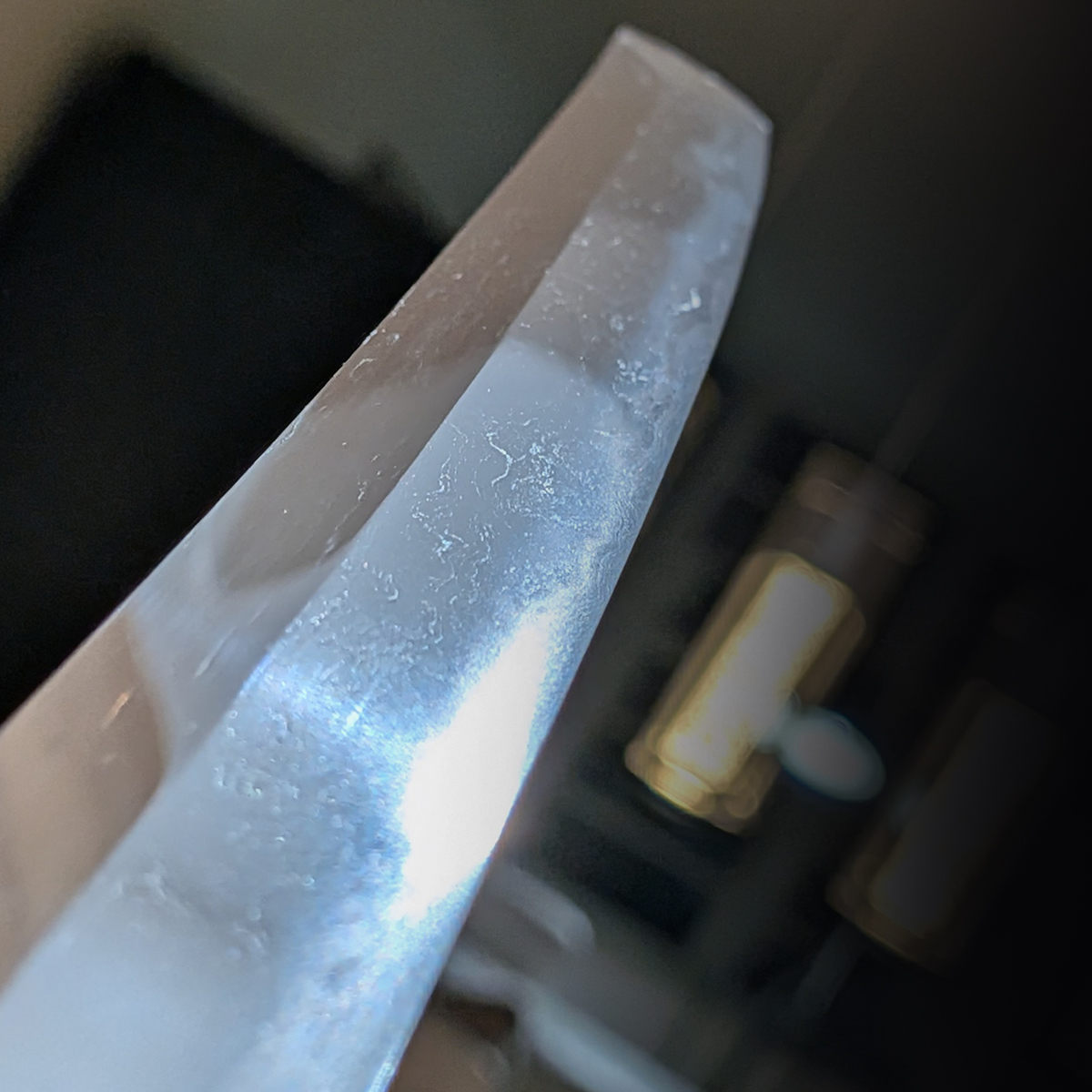
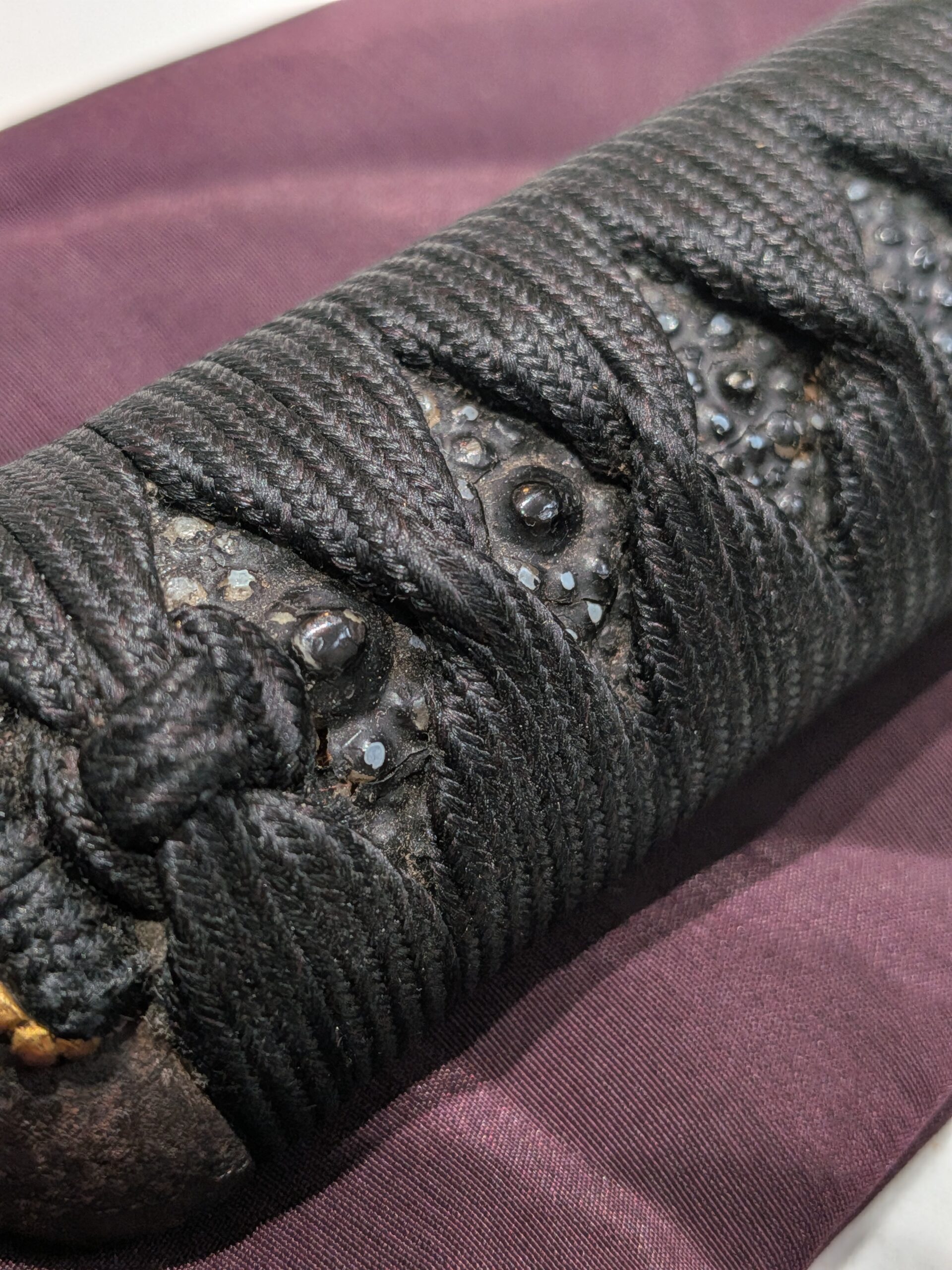
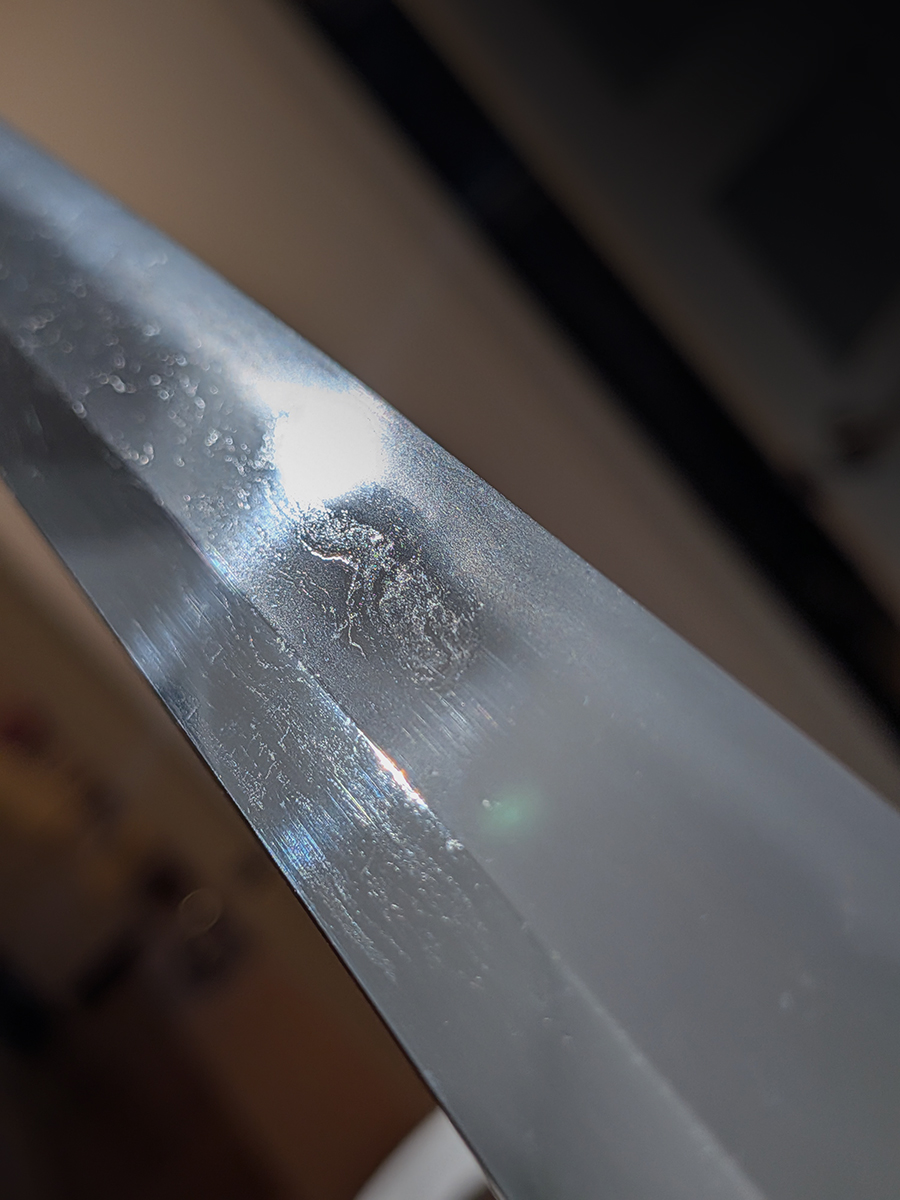
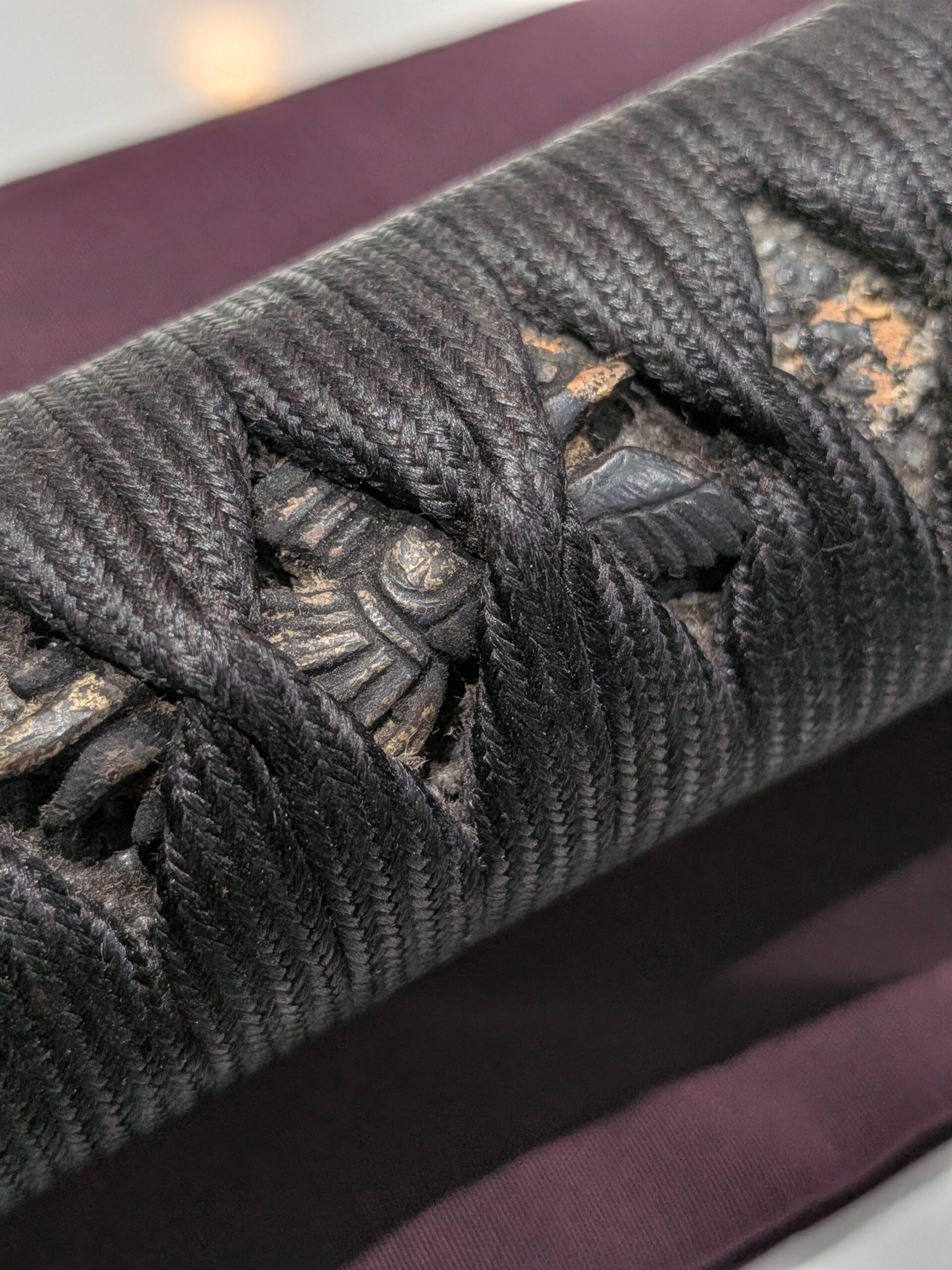
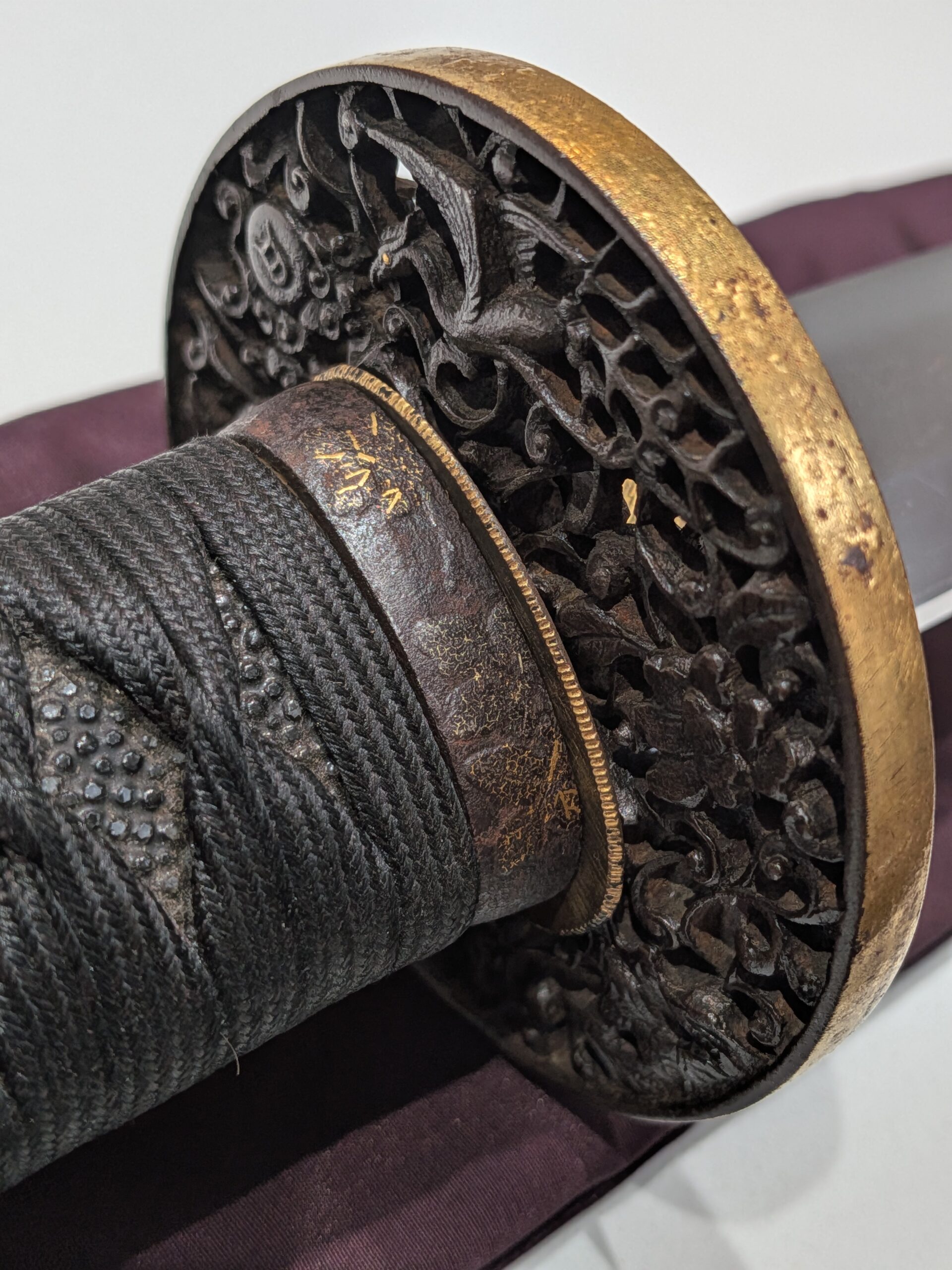
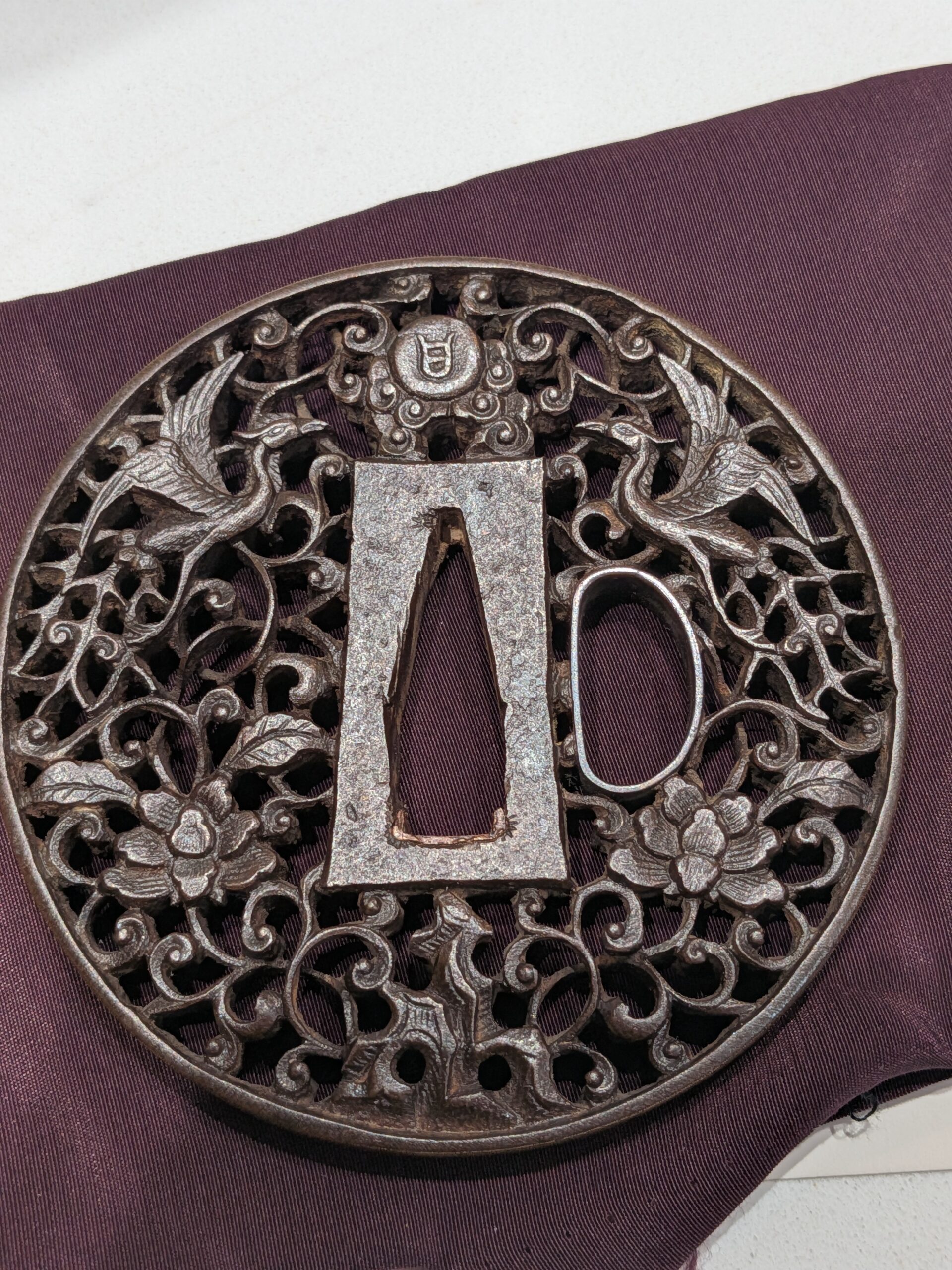
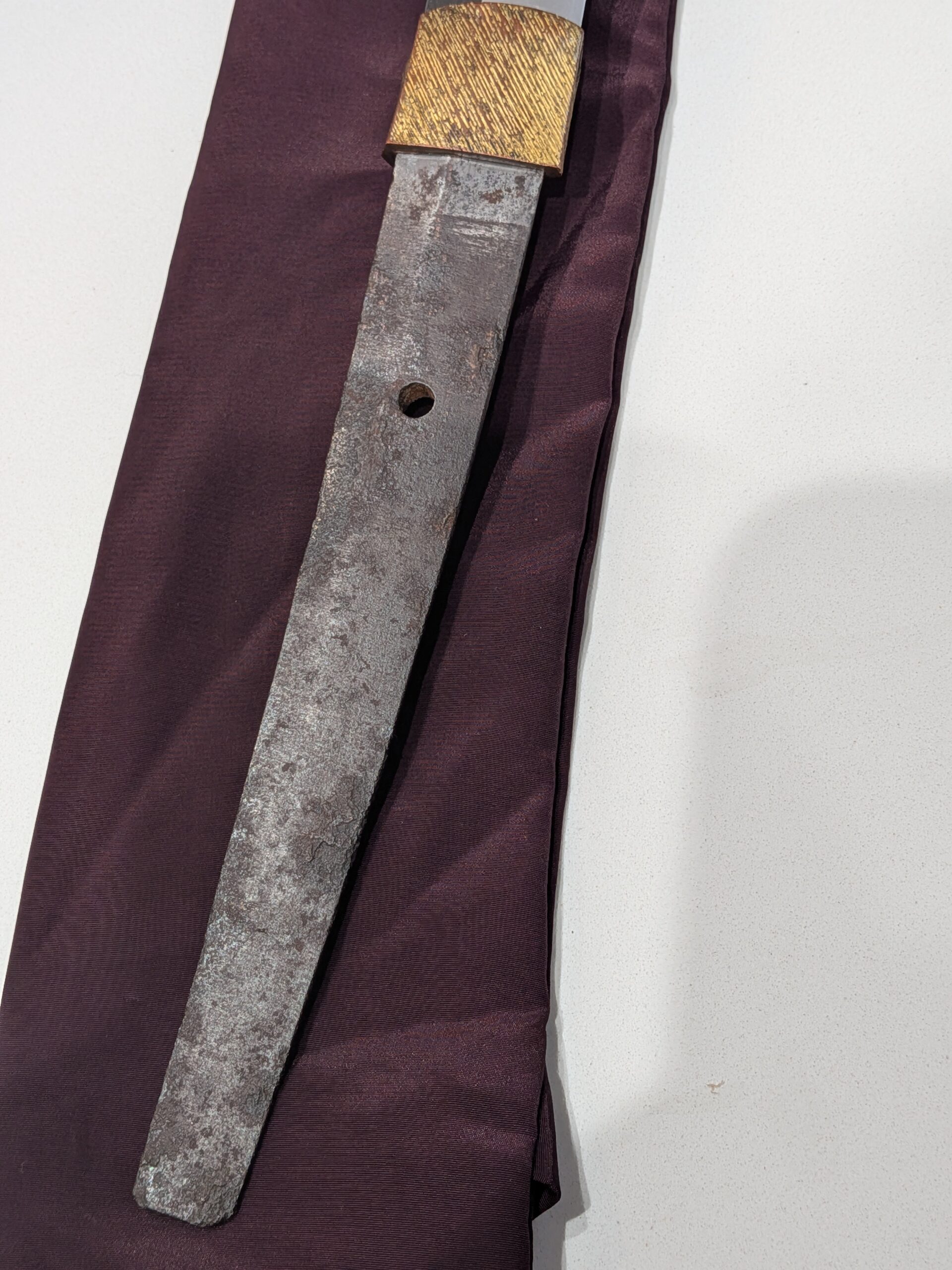
This is a Nanbokucho period katana from the Etchu (no) kuni Ko-Uda school. It has Edo period Higo koshirae, with a Nanban tsuba, red lacquer saya, and iron Higo fuchigashira. The hamon has great depth and resembles a juyo Etchu Norishige.
 NihontoWatchBETA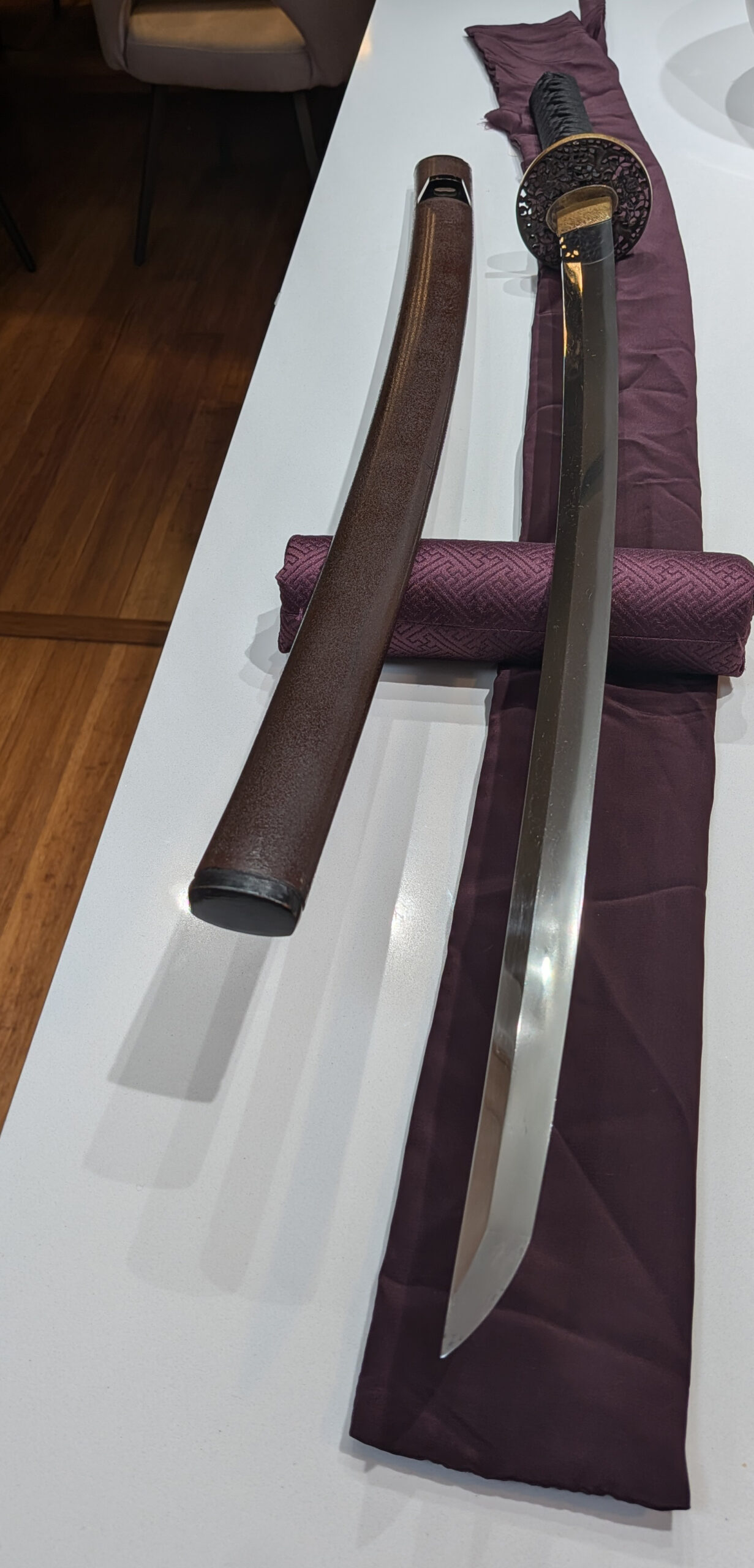
Wakimono · Etchu
36 pieces on the market now
Among the provincial lineages that carried the Yamato-den northward, the Uda school (宇多) of Etchu province holds a distinct place. Its origin lies in the late Kamakura period, when the monk-smith Kunimitsu, remembered as Ko-Nyudo Kunimitsu, migrated from Uda District in Yamato to Etchu around the close of the era. Learn more →
| Smith | Era | Designated |
|---|---|---|
| Kunihisa國久 | 1394-1428 | 10 |
| Kunimune國宗 | 1429-1479 | 6 |
| Kunifusa國房 | 1455-1457 | 3 |
| Tomotsugu友次 | 1381-1384 | 3 |
| Kunitsugu國次 | 1469-1487 | 3 |
We could not find an authenticity certificate on the seller’s listing. Japanese swords and fittings are normally papered by the NBTHK (or the NTHK). Without one, the attribution is the seller’s own assessment and has not been independently verified — treat it with caution and ask the dealer about certification before buying.
This is a Nanbokucho period katana from the Etchu (no) kuni Ko-Uda school. It has Edo period Higo koshirae, with a Nanban tsuba, red lacquer saya, and iron Higo fuchigashira. The hamon has great depth and resembles a juyo Etchu Norishige.
NihontoWatchBETAWakimono · Etchu
36 pieces on the market now
Among the provincial lineages that carried the Yamato-den northward, the Uda school (宇多) of Etchu province holds a distinct place. Its origin lies in the late Kamakura period, when the monk-smith Kunimitsu, remembered as Ko-Nyudo Kunimitsu, migrated from Uda District in Yamato to Etchu around the close of the era. Learn more →
| Smith | Era | Designated |
|---|---|---|
| Kunihisa國久 | 1394-1428 | 10 |
| Kunimune國宗 | 1429-1479 | 6 |
| Kunifusa國房 | 1455-1457 | 3 |
| Tomotsugu友次 | 1381-1384 | 3 |
| Kunitsugu國次 | 1469-1487 | 3 |
We could not find an authenticity certificate on the seller’s listing. Japanese swords and fittings are normally papered by the NBTHK (or the NTHK). Without one, the attribution is the seller’s own assessment and has not been independently verified — treat it with caution and ask the dealer about certification before buying.