Edo was the sword’s age of connoisseurship: the Hon’ami appraisers, the shogunal register of famous blades of 1719, and a thriving literature turned the sword into an object of study even as it ceased to be drawn in war.
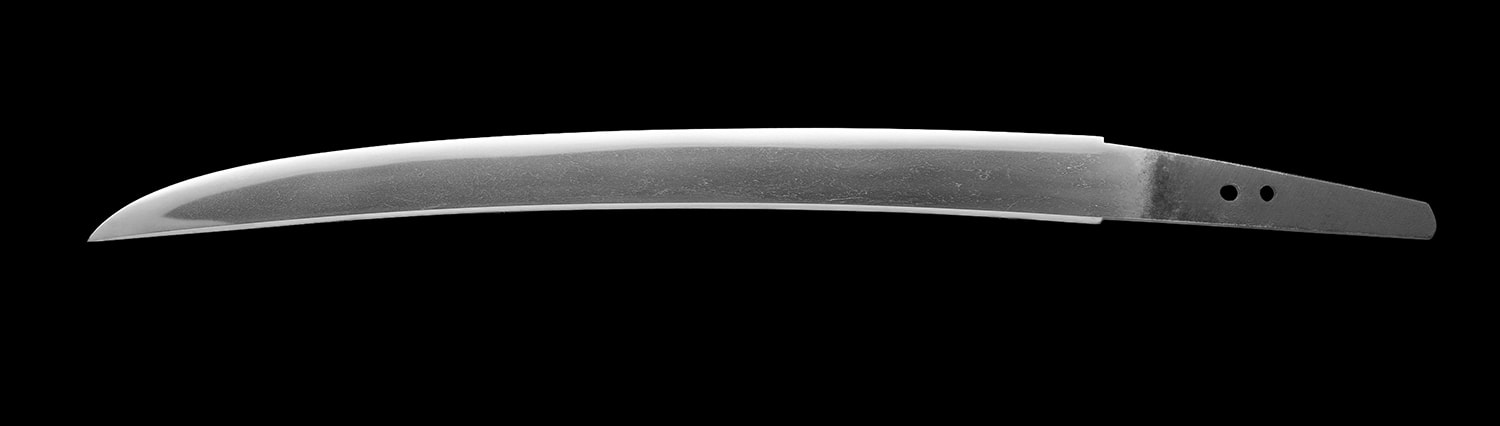
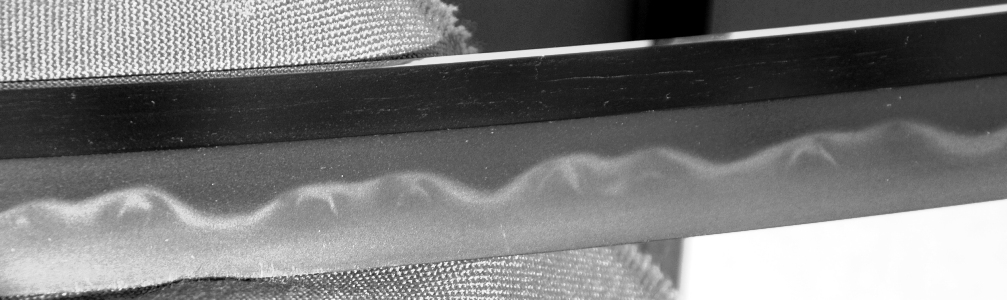
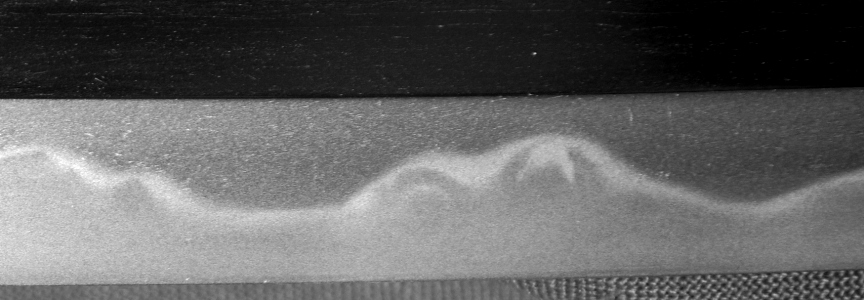
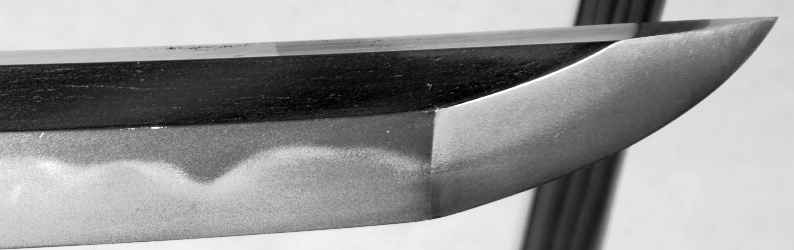
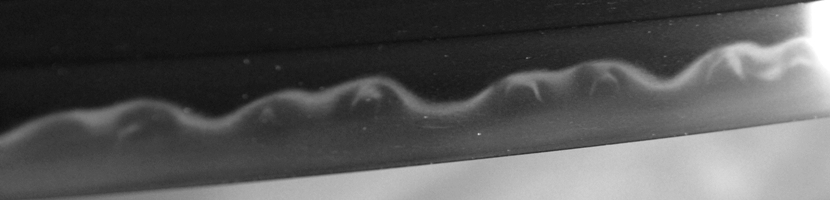
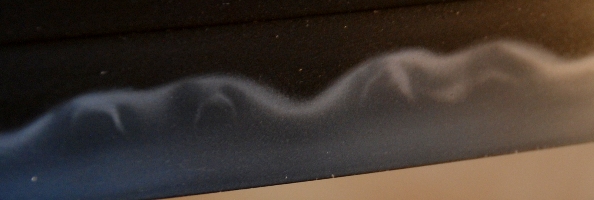
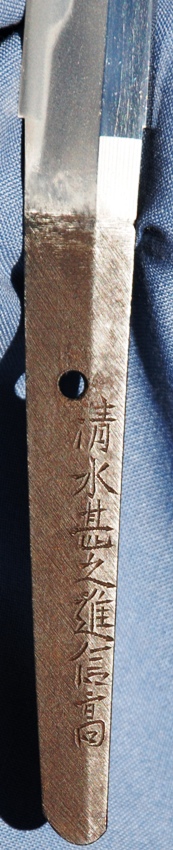
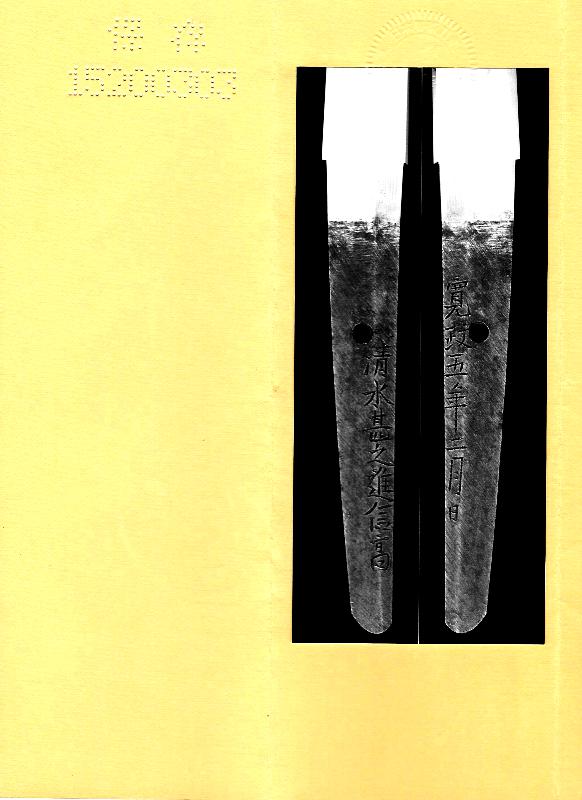
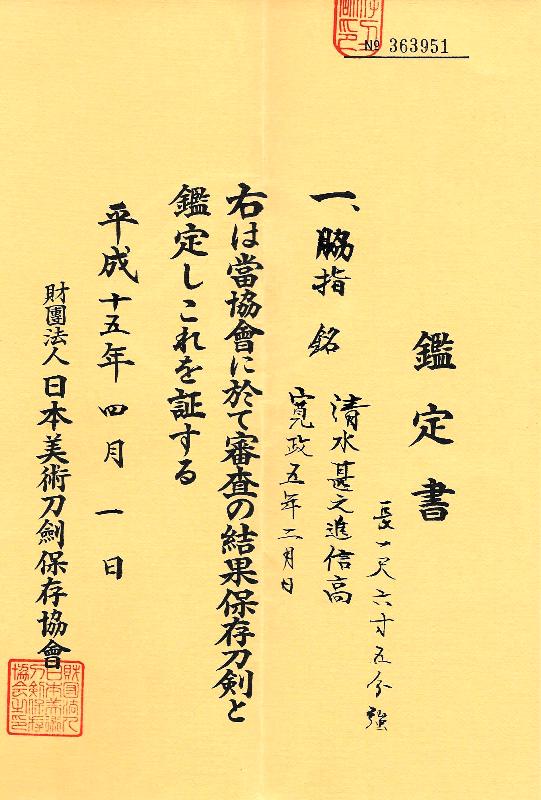
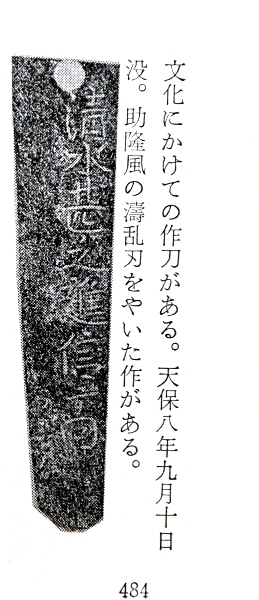
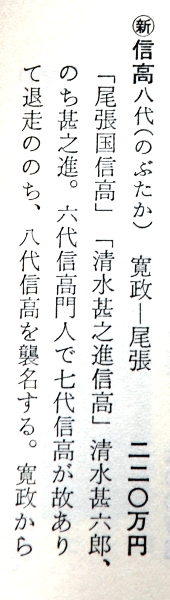
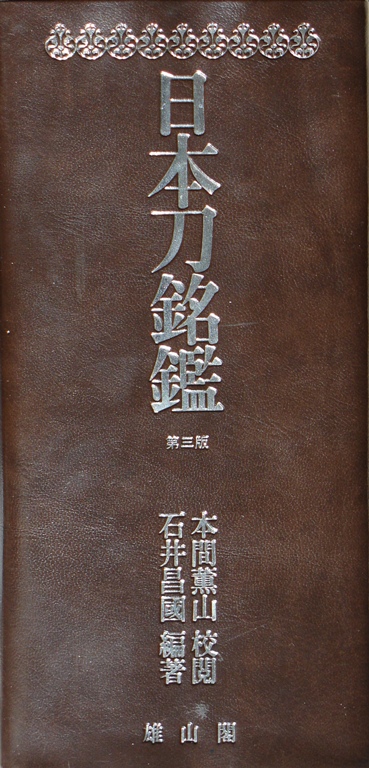
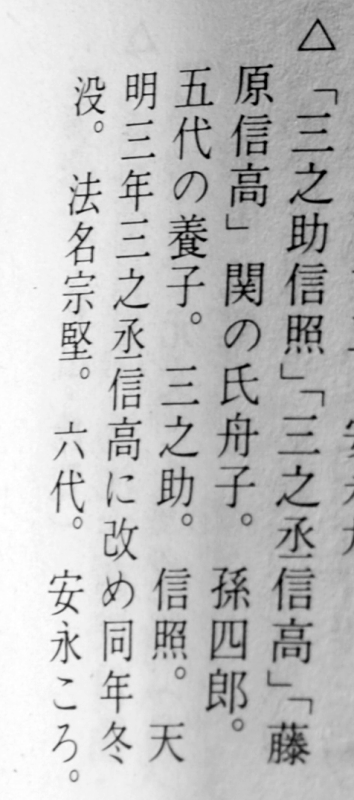
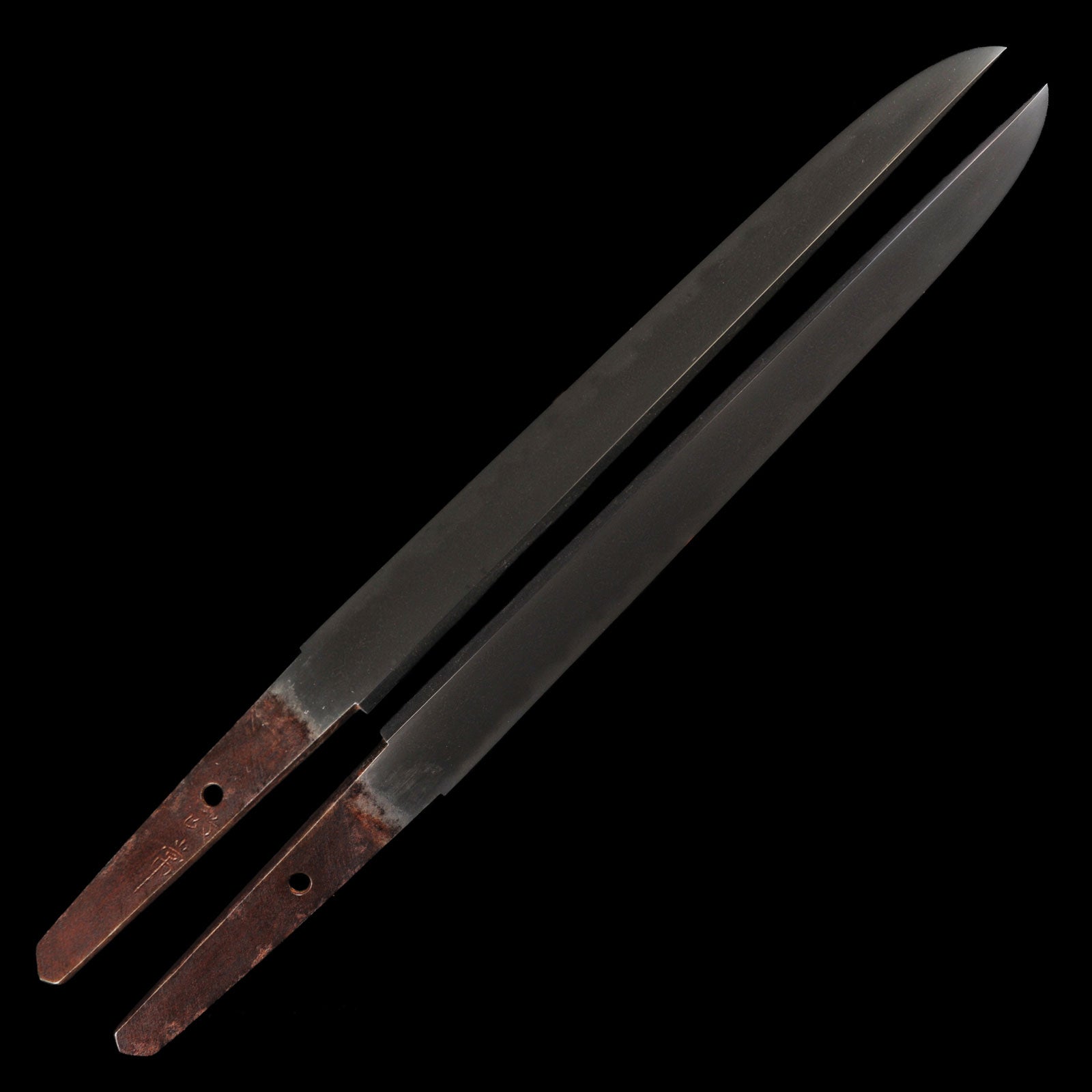
This is an early, large wakizashi by the sixth generation Nobutaka, signed Shimizu Jinnoshin Nobutaka and dated February 1794. It features a bright, tight ko-itame jigane with a hint of masame, and a nie deki o-gunome hamon with crab claw patterns. The blade is in excellent Japanese polish, housed in a shirasaya with a niju gold foil habaki, and holds an NBTHK Hozon certification.
Certificate reading — 銘 清水甚之進信高 寛政五年二月日
 NihontoWatch
mei · Owari · Genbun (1736-1741) · nagasa 50cm




Owari · around 1736-1741
1 piece on the market now
The Edo period (1615 to 1868)
Edo was the sword’s age of connoisseurship: the Hon’ami appraisers, the shogunal register of famous blades of 1719, and a thriving literature turned the sword into an object of study even as it ceased to be drawn in war.
Certifies a genuine blade worth preserving: a signature confirmed correct, or, if unsigned, an era, province, and school that the NBTHK can reliably identify.
The NBTHK (Nihon Bijutsu Tōken Hozon Kyōkai, the Society for the Preservation of Japanese Art Swords) is a public-interest incorporated foundation founded in 1948 and supervised by Japan’s Agency for Cultural Affairs (Bunkachō); it is based at the Japanese Sword Museum in Tokyo. Its expert panels physically examine each submitted work (shinsa) and issue a certificate (kanteishō) ranking it by artistic and historical merit. NBTHK papers are the most widely recognized standard of authentication for Japanese swords and fittings.
NBTHK official siteThree day, no penalty, inspection on every item. Returns must be in the same condition as shipped. Actual costs will be charged on returned items. No restocking fee. If you did not like the item is a good enough reason for return.
Price on request
This is an early, large wakizashi by the sixth generation Nobutaka, signed Shimizu Jinnoshin Nobutaka and dated February 1794. It features a bright, tight ko-itame jigane with a hint of masame, and a nie deki o-gunome hamon with crab claw patterns. The blade is in excellent Japanese polish, housed in a shirasaya with a niju gold foil habaki, and holds an NBTHK Hozon certification.
Certificate reading — 銘 清水甚之進信高 寛政五年二月日
NihontoWatchmei · Owari · Genbun (1736-1741) · nagasa 50cm
Owari · around 1736-1741
1 piece on the market now
The Edo period (1615 to 1868)
Edo was the sword’s age of connoisseurship: the Hon’ami appraisers, the shogunal register of famous blades of 1719, and a thriving literature turned the sword into an object of study even as it ceased to be drawn in war.
Certifies a genuine blade worth preserving: a signature confirmed correct, or, if unsigned, an era, province, and school that the NBTHK can reliably identify.
The NBTHK (Nihon Bijutsu Tōken Hozon Kyōkai, the Society for the Preservation of Japanese Art Swords) is a public-interest incorporated foundation founded in 1948 and supervised by Japan’s Agency for Cultural Affairs (Bunkachō); it is based at the Japanese Sword Museum in Tokyo. Its expert panels physically examine each submitted work (shinsa) and issue a certificate (kanteishō) ranking it by artistic and historical merit. NBTHK papers are the most widely recognized standard of authentication for Japanese swords and fittings.
NBTHK official siteThree day, no penalty, inspection on every item. Returns must be in the same condition as shipped. Actual costs will be charged on returned items. No restocking fee. If you did not like the item is a good enough reason for return.
Price on request